This week on Episode 599 of the InSession Film Podcast, we continued our year-by-year retrospective series by taking a look at 2000, a little bit of a mixed bag on the whole. It wasn’t the greatest year for Hollywood mainstream films, with a few notable exceptions, but it was a spectacular year for auteurs and foreign film. The year 2000 saw greatness from our best filmmakers, including Claire Denis, Ang Lee, the Coen brothers, Spike Lee, Lars von Trier, Edward Yang and Jim Jarmusch. We were also introduced to the amazing Sofia Coppola and Lynn Ramsay. As for Hollywood, it was a banner year for Steven Soderbergh, who famously had two films nominated for Best Picture, all while winning the Oscar for Best Director. Cameron Crowe had a stellar year with Almost Famous and his Oscar for writing. And, of course, the legendary Ridley Scott with his Best Picture winning Gladiator. Maybe not the best year overall, but the top-end of 2000 was still excellent. That said, what would be your Top 10?
NOTE: We spend most of our time only discussing our Top 10 movies of 2000, however, as you’ll see below, we have listed our full Top 20 lists from that year.
JD
1) Almost Famous
2) O Brother, Where Art Thou?
3) Crouching Tiger, Hidden Dragon
4) Dancer in the Dark
5) Yi Yi
6) Beau Travail
7) Bamboozled
8) Traffic
9) Ratcatcher
10) Unbreakable
11) Requiem for a Dream
12) The Virgin Suicides
13) Gladiator
14) Cast Away
15) Ghost Dog: The Way of the Samurai
16) State and Main
17) American Psycho
18) You Can Count On Me
19) George Washington
20) Shadow of the Vampire
Brendan
1) Almost Famous
2) Yi Yi
3) Dancer in the Dark
4) Love & Basketball
5) O Brother, Where Art Thou?
6) Crouching Tiger, Hidden Dragon
7) Erin Brockovich
8) Beau Travail
9) The Virgin Suicides
10) Cast Away
11) Unbreakable
12) State and Main
13) Girl Fight
14) American Psycho
15) Gladiator
16) Bamboozled
17) Ghost Dog: The Way of the Samurai
18) Bring It On
19) Remember the Titans
20) Ratcatcher
Hopefully you guys enjoyed our lists and if you agree or disagree with us, let us know in the comment section below. Clearly there are a lot of other contenders from 2000 that battled for our lists, that just missed the cut. That being said, what would be your Top 10? Leave a comment in the comment section or email us at [email protected].
Film reviewer Conor Truax noted that L’Autre Laurens (2023) features a “Dadaist sense of causality” but that descriptor doesn’t fully capture how deeply strange the film’s unique rhythms can feel when you’re watching it. This Belgian neo-noir/Western feels very much of the moment and, like many products of the European arthouse circuit, it takes its primary inspiration from American B-movies and classic genre films. It captures a sense of disillusionment and bitterness that is commonly found in films of its ilk but possesses a brash spirit that sets it apart from its contemporaries.
Zita Short had the opportunity to speak to director Claude Schmitz about the film.
Zita Short: What drew you towards telling a story that incorporates typical neo-noir genre tropes?
Claude Schmitz: With The Other Laurens, I wanted to make an investigative film, but one with a double purpose: both the “detective” side, with a detective and all the rest, and an investigation into the question of gender in all its forms. The film questions gender archetypes, in every sense of the word. It tackles several film genres at once, mutating as it develops. I also wanted to work with contrasting effects. It starts out as something of a neo-polar, then turns into a buddy movie between uncle and niece, that then turns into a film noir, that then turns into a B-movie action flick, ending up as a tale or fable. But for me, the whole of The Other Laurens is in fact what it ends with, a tale about the collapse of a way of representing the world that I was given to see throughout my adolescence. It was precisely through North American genre films that I was introduced to this representation, in which there was a whole series of archetypal figures. And I wanted to situate these figures in a territory that was both real and imaginary, playing with pretense. And so I had fun recounting the dissolution of these figures in favor of that of a young woman who is less archetypal, or who in any case gradually manages to extricate herself from this mode of representation, this North American imaginary, and to rid herself of all this heritage, both literally and figuratively.
Zita Short: Which influences have shaped your specific comic sensibility and approach to addressing provocative material?
Claude Schmitz: First of all, there’s a whole narrative architecture that has to do with Shakespeare. Because it must be said that this fable I’m talking about, which takes elements from genre films, in fact carries a kind of meta-dramaturgy that would be the corpus in the broadest sense of Shakespeare’s theater. For example, there are obvious references to Hamlet. The first scene, with the vision of the Spanish gangster, is a direct reference to the first scene of Hamlet, in which two guards think they see Hamlet’s ghost. There’s also the nightclub, the Helsingor, which is in fact the real name of Elsinore, where Hamlet takes place. And the identity crisis of Gabriel Laurens’ character, who becomes his brother’s double, also refers to Hamlet’s own identity crisis. And in this sort of Shakespearean corpus, there are also the characters of the two cops, who function a little like Shakespeare’s jester characters, providing a counterpoint to a dramatic situation while at the same time constituting a sort of variation on the same theme. The situation they see and comment on is the same, and they approach it from a comedic, burlesque angle.
So in The Other Laurens, there’s this idea of creating a whole “meta-dramaturgy” that would also have the effect of producing a baroque object, like Shakespeare’s plays. What is baroque is what we define as bicorn, something that isn’t made up of extremely coherent bits. So I wanted to create an object in which the tragic and the burlesque could coexist, all to the benefit of a fable and a tale. In fairy tales, the characters are archetypal and the objects have an almost magical function. There’s also a fetishistic dimension to this relationship with objects. I liked having these motifs, which also meant that we weren’t dealing with naturalism, that we were in a story and a film that had fun with its own ingredients. And the cops have this function of standing back from the narrative, saying at one point that it’s starting to look like a bad movie. This line is very important, because I’m constantly trying to defuse things. But it’s also linked to the strange sensation of finally having a budget, and being amazed myself at making a “cinema” film. And working with a whole panoply of objects – guns, beautiful cars, helicopters – that belong to a certain idea of cinema.
Zita Short: The almost picaresque storytelling devices employed in the narrative feel out of step with many trends in modern cinema. Do you think this style of narrative has fallen out of fashion in this contemporary era?
Claude Schmitz: I’m not really aware of that… I have the impression that there are many trends in contemporary cinema, going in opposite directions. But a certain type of cinema has interested me and still does… often films from the 70s. Strangely enough, it’s a decade I still can’t quite shake off. There was so much going on in Europe and the United States at that time. Herzog, Pasolini, Peckinpah, Cassavettes, Fassbinder, Fellini … All men, I must admit, and I regret it. After that, I have to say that someone like David Lynch had a very strong impact on me.
You speak of picaresque. But at the same time, there’s a contradiction in the film. There’s a kind of immobility in the action and in the film in general. The characters seem to be going around in circles. The fact that we show them getting into their cars to go from one place to another paradoxically produces this stagnation, as if they were going in circles. It’s a kind of action film that has trouble getting going and never gets going. And in keeping with the idea of this commentary on the aging of genre and/or action films, with aging figures, the fact that it struggles to get off the ground is consistent. Moreover, in the last part of The Other Laurens, with the helicopter escape, there’s also the arrival of a kind of lyricism, coupled with a little irony. And once again, the escape doesn’t really happen, they just jump around and it ends up in the desert. What’s paradoxical is that the film plays with pretenses and stereotypes that belong to American cinema, such as the replica of the White House, which is the Laurens’ home, or the Spanish border, which is treated like the Mexican border. And then there’s the desert at the end, which is in Spain, but is assimilated into the Grand Canyon, which has also been a location for many spaghetti westerns. You never get out of this schizophrenic, mirror-like relationship with the United States.
The Other Laurens continually plays with the irony of looking through a glass or a mirror at the influences that have nurtured him. In the end, just as Gabriel reproduces the same patterns and mistakes as his brother, the film reproduces the same patterns as these stereotypes of American cinema. And however much it tries to distance itself from them, in the end, it’s just repeating the same thing, the same circle. But you never know who’s influencing who, when it comes down to it, as the communicating vessels effect. For example, the “replica” of the White House in the film is in fact the original model used to create the one in Washington DC. The Bardenas Reales desert in Spain obviously existed before spaghetti westerns, but was co-opted to shoot films supposedly set in the USA. There really is a very schizophrenic relationship between European and American cinema in The Other Laurens, which can be likened to the relationship between twin brothers, in which it’s no longer clear who influences the other. It’s also quite obvious in the attitude of the bikers, who keep reacting to the presence of the Americans by saying “they’re not going to take the law into their own hands,” even though they’re wearing all the North American paraphernalia they’ve imported from Hell’s Angels. It’s as if the characters can’t define their own identity. It’s really a film about this quest for identity, which is in itself a question of identity. In fact, all I’m interested in is the “trans” question, transgenderism, transgression, creating narratives that summon up the baroque, the biscorn, the association of things that aren’t meant to cohabit a priori.
Zita Short: How do you think that Belgian cinema is viewed abroad and what accounts for the enormous popularity of Belgian arthouse films in the Anglosphere?
Claude Schmitz: I don’t know what Belgian cinema means. If you look at what’s being done in Belgium, it’s hard to say what links all the cinematographic proposals. Belgium is a strange, composite, fragmented territory. It’s almost a non-country. It’s more like an idea… What’s certain is that this country is so blurred, that its identity is so strange, that it creates peculiar forms. Perhaps this strangeness is the source of baroque objects…
Zita Short: One also assumes that the Western genre served as a significant influence on the thematic material featured in the film. Why have the genre conventions and moral conflicts that serve as the root of many Westerns continued to endure through the ages?
Claude Schmitz: The Western is a typically American genre. It was therefore somewhat inevitable that it should appear as a watermark in the film. As I was saying, for example, I wanted to end the film in a desert, which is a place in Europe where spaghetti Westerns were made. It’s hard to miss this kind of evocation if you’re making a film that looks at how European and American cinema have influenced each other. Mirror effects, including stylistic ones, are everywhere.
Zita Short: In reviews of the film, much has been made of the dichotomy between European and American perspectives on the concept of the American Dream. Why do you think that the contrast between these outlooks remains so pronounced?
Claude Schmitz: In my opinion, the American dream is a European dream and the European dream is an American dream. The two feed each other. We live on myths and stories. These are ideas. Everyone looks at the other’s story. The film is about that. How our stories are made by others and vice versa. It’s an intertwining that’s impossible to disentangle.
Zita Short: How did you settle on the idea of drawing 9/11 and, more broadly, the atmosphere of post-9/11 hysteria in the United States into the film’s plot?
Claude Schmitz: In the 80s and 90s I went to boarding school and the movies we were shown in the evenings were American B-movies. Stallone, Chuck Norris, Steven Seagal, and so on. Films we called “Reagannian.” Not very clever stuff that glorified masculine power while offering a Manichean discourse, a caricatured vision of the world, and a rather primitive patriotism. Without realizing it, my imagination was colonized by these patriarchal narratives, and it took me a long time to take a critical look at these films.
I’m not saying I was totally fooled… but all the same, these films imposed a vision of the world. On September 11, when I was barely twenty years old, I saw, beyond the tragedy, this power that had been conveyed to me so many times shattered. Literally, both towers collapsed as I opened my eyes. I understood that the colossus had feet of clay, and that all the tales of power I’d been told were lies. I’m obviously not talking about conspiracy theories. I’m talking about what fathers give their sons or daughters to see. I use the term “fathers” because, at the time, these were essentially stories – movies – invented by men. Power stories are all lies.
And the film I made is about that. In a way, Jade’s character is a bit like me. During the film, she painfully realizes that her father is lying to her, and that the figures around her who stand in for him are lying too. So the world falls apart for her… but that finally leaves room for her to start inventing her own stories. So the film is about the end of a world. The world I knew as a teenager, populated by dominant males, father figures… all the characters you’d find in the B-movies I was talking about. You have to kill the father, as they say. The “father” for me was these movies I watched when I was a teenager, and these movies happened to be American. So as I wanted to be quite honest in the film, and even though I disguised myself as a girl – Jade – I wanted September 11 to be part of the story, because for me this tragic event also represented a breaking point in my way of believing or not believing in stories.
This week on the InSession Film Podcast, we continue our 2000 Retrospective as we discuss the year in cinema and dive into our Top 10 Movies of 2000! Plus, a few thoughts on the Megalopolis trailer debacle from last week.
Check out this week’s show and let us know what you think in the comment section. Thanks for listening and for supporting the InSession Film Podcast!
– Megalopolis Trailer (6:00) Before we dive into our 2000 Retrospective, we had to talk about the insane Megalopolis from last week that included fake quotes from real critics that were derived using ChatGPT. It was a fun trailer, but making it all up was…uh…a bold move. It was too crazy for us to ignore.
– 2000 Retrospective (15:40) As always, we begin our retrospective by talking about the year as a whole and the movies that shaped its narrative. Roger Ebert famously stated that 2000 was a “bad” year for movies, and while there are always great films up at the top, it wasn’t the greatest year overall. Although, there are some notable exceptions. It was, however, a spectacular year for auteurs and foreign films.
– Top 10 Movies of 2000 (50:35) 2000 might lack in depth overall, but the films up at the top feature some all-timers. There are some incredibly influential movies that still resonate today. Some of them are sprawling and bleak, but the power they exude is undeniable. Regardless of how it all shakes out, we are fully in love with these movies and had a great time talking about them.
If you want to help support us, there are several ways you can help us and we’d absolutely appreciate it. Every penny goes directly back into supporting the show and we are truly honored and grateful. Thanks for your support and for listening to the InSession Film Podcast!
Director: John Woo Writers: Brian Helgeland, Josh Campbell, Matt Stuecken Stars: Nathalie Emmanuel, Omar Sy, Sam Worthington
Synopsis: An assassin tries to make amends in an effort to restore the sight of a beautiful young singer.
The most mind boggling aspect of The Killer is that the filmmakers are trying to gaslight their audience into thinking that Jenn (Diana Silvers), an American singer mixed up with drug dealers in Paris, wrote a song. The song that Sey (Omar Sy), a police officer on the case of the drug dealers, claims no one knows and cannot be found on Shazam. It’s a very famous song. It’s the song “Let’s Live for Today” by The Grass Roots. The song has sold a million copies. It’s been featured in many films set in the ’60s. The song itself is an English language cover of an Italian song. This is a known song. What possible purpose could the filmmakers have to try and pass it off as anything different?
It’s maybe because this film is a ghost of an imitation of the original 1989 film. The saddest aspect of which is that the producers got the original filmmaker, John Woo, on board for this. It’s not the first time this has happened. Alfred Hitchcock made a film in 1934 titled The Man Who Knew Too Much and 22 years later put out a different version with the same title, but bigger stars, a bigger budget, and a story that featured the talents of its stars better than the original. Unlike what happened with The Man Who Knew Too Much, The Killer of 2024, was produced by a major studio that put no more money into it than it would an indie it picked up from a different company. It isn’t any wonder that Universal dropped it onto Peacock instead of seeking a theatrical run.
The film, in spite of the CGI carnage and the harsh language, looks like it would belong on the USA network. The cameras and lights used make the film look like we forgot to turn off the motion smoothing on our television after watching a live event. It’s bright and has absolutely no texture. While most of the time evoking the score of the original film, composer Marco Beltrami, sometimes slips into absolutely cheesy elevator fare, which makes this seem like the straight to DVD/VOD/streaming type of film it is.
Director John Woo has lost his touch. There are many callbacks and instances of his favorite tropes like birds, abandoned buildings, motorcycles, and gunplay; but instead of being turned to eleven, he’s at about a four. It’s like someone took his joy of choreographed mayhem away. He’s fallen into the trap of many action films where they try and have the action live in the close up and cut so fast that you really don’t know what’s going on because the next image doesn’t always connect to the one before. The gunplay is less surgical, the hand to hand fighting less precise, and there weren’t enough cool slow motion moves that ooze sophistication and thought.
Though, there are things that still work. First and foremost the chemistry between Sey and Zee (Nathalie Emmanuel) is utterly fantastic. The two of them together are electric and their banter is light and has the right amount of sexual tension mixed with mutual respect. If the narrative focused on them more than the convoluted case the two of them are working on from different sides, this would have been a much more enjoyable film.
The same could be said of Sam Worthington as Finn, a lieutenant in a crime corporation. Why did studios waste so much time in the 2010s trying to make the wooden and lethargic Worthington into a leading man? Here he’s calculating, conniving, scary, and actually believable. His cold, blue eyes belie the machinations of his character. He plays a heavy very well and we should hope to see him expand his repertoire in this area.
While the plot is stunted and the film as a whole looks cheap, the action is exciting and the characters are intriguing. He fails to have the panache of his previous films, but John Woo, while stylistically reigned in to the detriment of the film, can still pull off a climactic abandoned church gun fight that has some incredible stakes and moves. It’s a pity he isn’t the filmmaker he once was and that he doesn’t take the chances he used to. Overall, if you just need an action film to put on after a dull week at work, The Killer isn’t a bad way to spend two hours, but if you want something gloriously and unabashedly over the top with the filmmaker in the midst of his renaissance, seek out the original The Killer from 1989.
Director: Stephen Soucy Writers: Jon Hart, Stephen Soucy Stars: John David Allen, Helena Bonham Carter, John Bright
Synopsis: Follows the history of the Merchant Ivory partnership, featuring interviews with James Ivory and close collaborators detailing and celebrating their experiences of being a part of the company.
Ismail Merchant and James Ivory are immediately recognizable names in movie history. In a period of 48 years and 43 films, their filmography, almost all literary adaptations, remains a worthy collection. A Room With A View, Maurice, Howard’s End, and The Remains Of The Day are among the masterpieces that have been critically revered for decades and a constant connection through this are two other collaborators. One is screenwriter Ruth Prawer Jhabvala, and the other is composer Richard Robbins. Sadly, only Ivory himself is alive to give his story. Yet, in the tale of Merchant Ivory, a privately volatile relationship between the two titular names was always present and consistently threatened to split them up for good.
The story starts with their origins, one that is nearly forgotten because of how their success was mainly in the ‘80s and ‘90s. But, in actuality, their beginning was due to an encounter at the Indian consulate in New York in 1961 with a screening of Ivory’s documentary The Sword and the Flute that Merchant, an Indian native, came to see and loved. Merchant, an Oscar-nominee for the documentary short The Creation of Woman, quickly connected with Ivory and soon became a couple. However, Ivory is rather shy about his romance with Merchant and the documentary notes how people did not want to go on record about this early period out of respect for Ivory.
It does not, however, avoid the open secret of Robbins having an affair with Merchant while working (and that Bonham Carter also was with Robbins), but to Ivory, who speaks with Edwardian sensibilities, it is a matter of acceptance of this side affair. The documentary comments on how homosexuality was seen at the time; in the UK, it was a criminal offense until 1967. Merchant was raised in a conservative Muslim household which he could never say he was gay while Ivory himself said that it was, in his family, never talked about. However, his family knew that Ivory and Merchant were more than friends. This clearly influenced some of their movies in which same-sex relations were depicted, and famously, they made Maurice in 1987 depicting the forbidden love affair at a time when homophobia was rampant during the AIDS crisis.
The tone is not of an expose with a behind-the-scenes look of the struggles to make these films, but a glossy, nostalgic trip with insight by those who were there. Most notably, the documentary details the struggle to make films with their low budgets and how Merchant, a man with relentless passion and energy, was able to make movies with not a complete budget and always avert disaster at the last minute. This sometimes conflicted with Ivory’s perfectionism, yet the yin & yang kept everything moving along and bringing back cast and crew to later movies. Interviews with numerous players including actors Hugh Grant, Emma Thompson, Helena Bonham Carter, and Vanessa Redgrave, plus costume designers Jenny Bevan and John Bright, editor Humphrey Dixon, and cinematographer Tony Pierce-Roberts contribute their knowledge to how every film was made and the intricacies of the famous partnership.
From the Indian period with the surprise success of Shakespeare Wallah to their mainstream success with A Room With A View, director Stephen Soucy puts together a chronicle of the highs and lows that carry a permanent legacy to be proud of. Even with the works that weren’t successful (Jefferson In Paris, The City Of Your Final Destination), they are defended and Ivory speaks fondly now at the age of 96 of what was accomplished. It is a walk through time of something that was much deeper intellectually and emotionally. Despite the sadness of Merchant’s sudden death and the unceremonial end to the whole period, Merchant Ivory puts to us a life’s worth of cinematic excellence that remains endearing to many fans.
This year’s Locarno Film Festival hasn’t had enough buzz or outreach compared to the recent ones. It is unfortunate because it is lenient toward giving more opportunities to rising or less-recognized directors rather than the big hitters of independent cinema. It may have to do with the program’s quality, with the focus being shifted onto the Piazza Grande and the fascinating retrospective (and celebration) of the 100 years of Columbia Pictures. But there were still plenty of features in the Concorso Internazionale that I would think of plenty of and would love to discuss. In this capsule review piece, I will discuss three multilayered pictures to screen in this year’s Locarno competition.
By the Stream (수유천) (Directed by. Hong Sang-soo)
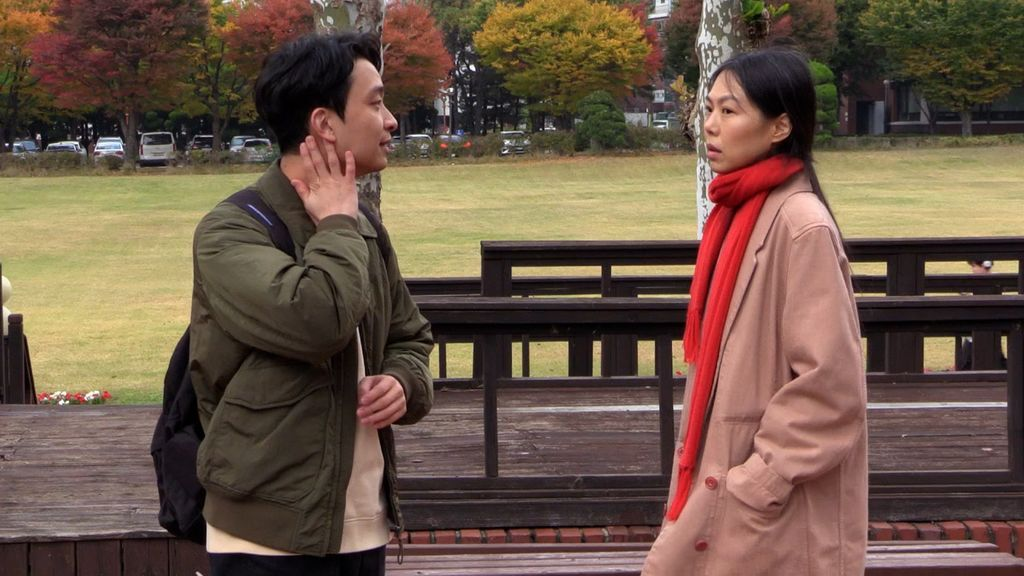
The first film in this capsule review piece of the Concorso Internazionale at Locarno is the second film by Hong Sang-soo to premiere at a festival this year, By the Stream (수유천). The hard-working and minimalist Korean filmmaker has always had an interesting way of directing, often creating features that might look or feel similar to previous ones. Yet, in their crux, the stories are different in many ways. Once you dive in, you begin to notice how richly detailed each character and their respective relationships are–showing the viewer that while his style has remained the same, Hong Sang-soo’s works are complex in their fine lining. His latest work, By the Stream, is no exception.
Hong Sang-soo crosses through more composite waters by offering a cultural critique of gender roles, interpersonal boundaries, and the creation of art. Filled with many scenes of characters having some meals, drinking, and smoking their occasional cigarette (as usual in Hong Sang-soo’s filmography), By the Stream follows Jeon-im (Kim Min-hee, who won the Best Actress award at the festival), a lecturer at an all women’s university who is trying to solve a situation with some of her students about a skit competition in which all departments must participate. She is short of students; three no longer attend the university because they dated the student director. In dire need of help, Jeo-nom calls up her retired actor uncle, Chu Si-eon (Kwon Hae-hyo).
Chu Si-eon is eager to help out; it gives him a place on a stage in which he isn’t permitted anymore, as he made some rude comments about a more famous actor and got “blacklisted”. He has his hopes up about helping and writing this skit. He is doing what makes him happiest: creating art and showcasing it to the world. Meanwhile, Jeon-im is an artist of her own, yet one who is more reclusive about her tapestry sketches and weavings. Chu and Jeon-im converse about many things, like art and the situation’s politics. However, the element that Hong Sang-soo highlights is the beauty and admiration for the creation of art, whether it is a play (which we end up seeing later in the narrative) or a fabric.
How Hong Sang-soo approaches this theme reminds me of Kelly Reichardt’s Showing Up. Both films show an artist’s struggle while making art and honor them by showing the elaborateness of the creative process. There’s a cinematic contradiction of some sort, as the Korean filmmaker keeps everything simplistic–everything kept up to its most limited version–on a visual level. But its subtext–where art is the gateway for us to analyze our own struggles and contemplations, whether we consume or produce it–is so multilayered that it gives the images produced by Sang-soo a more substantial feel. Writing film reviews isn’t deemed the most palatable form of creating art. But it sure is a way of self-expression, so I felt very moved by what Hong Sang-soo is doing in one half of By the Stream.
Grade: B+
Moon (Mond) (Directed by. Kurdwin Ayub)
The second film in this capsule review piece is Moon (Mond) by Kurdwin Ayub, which won the Special Jury Prize. The Vienna-based Kurdish filmmaker has spent most of her directorial career crafting stories about young girls and their respective rebellious acts that pave the way for their liberation. Her debut feature, Sonne, touched upon this theme while tackling immigrant life and religious identity as well. Ayub could not put all of this together cohesively. However, the project was authentic through the performances that showed glimpses of Ayub being an actors’ director more than a visually expressionistic one. Even though some instances show a bit of flair, it ultimately feels like a forced attempt to create a “vibe” or sensation.
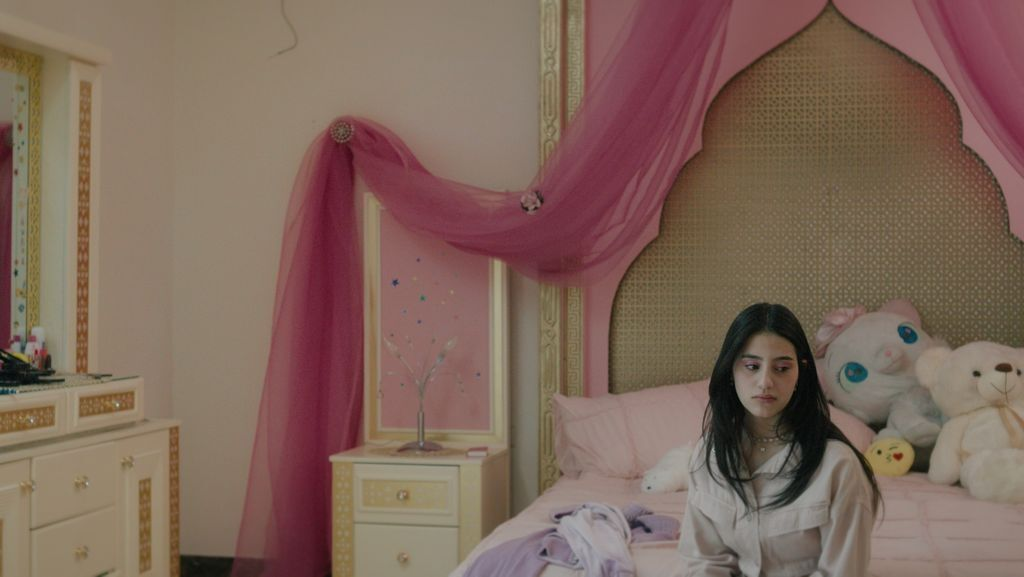
All these, good and bad, return to her latest work, Moon. You can see how Ayub still has plenty of room to grow as a storyteller, but she is getting better at her craft with each project. The film follows a former kickboxer named Sarah (Florentina Holzinger), who is having difficulty making ends meet as a trainer to young girls wanting to learn self-defense. Sarah does not know what else to do monetary-wise; she is at the point where she will accept the first offer that pops into her inbox. This is why Sarah unquestioningly agrees with the proposal of a wealthy family’s heir to train his three adolescent sisters in Jordan–heading to another country with a different set of politics that rid women of their rights.
The girls Sarah tries to train are not even paying attention to her techniques. She wants to motivate them and teach them about self-defense. However, they prefer to hang out at the mall with Sarah and ask her to use her phone for some time on social media. What’s interesting about Moon is the double realization that the lead character has during these situations, which subjugates the film to form a thriller-like atmosphere. Sarah sees the girls as more attentive to their trainer’s freedom than her kickboxing assets. In addition, she notices that they are held hostage by their family and society. Sarah is now trapped in this situation and is becoming a prisoner of a nearly inescapable jail.
The girls are hostages of a society that takes away their liberties, freedom of expression, and, in the most harsh of situations, their sense of self. Hopelessness is reflected in their demeanor when not within Sarah’s eye. Their minds slowly succumb to the realization that they might never have a life of free will, unlike the woman who “trains” them. You are fascinated by this dynamic and the injustices of that type of society until Ayub starts to rely on Sarah’s superiority in her freedom so much that it dissipates her film’s effectiveness tonally and thematically. In the beginning, this relationship between the characters adds a sense of mystery and uneasiness that lurks in the house of the heir and the streets of Jordan. But, as the narrative develops, it becomes a convenience in more ways than one.
Grade: C
The Sparrow in the Chimney (Der Spatz im Kamin) (Directed by. Ramon Zürcher)
The third and final in this capsule review piece is the best film I saw at this year’s Locarno Film Festival, The Sparrow in the Chimney (Der Spatz im Kamin) by Ramon Zürcher, which ended up empty-handed during the festival’s awards. But it makes sense due to its distancing storytelling and darkly comedic sensibilities, which I admire. The Zürchers (Ramon and Silvan Zürcher) are very poetic and crafty filmmakers who later rely on simplistic visual aesthetics to place them into a web of mysterious character dynamics. The titles of their films alone (The Strange Little Cat, The Girl and the Spider) show how they can hint at some kind of enigma forged through the Zürchers’ intricate observations about connection and liberation.
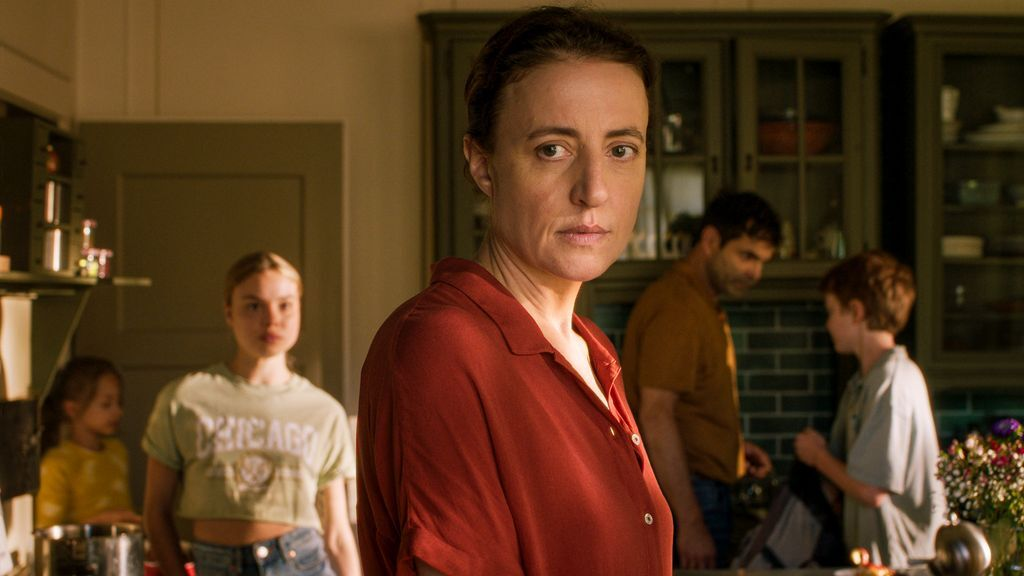
Their latest work, The Sparrow in the Chimney, is (coincidentally tying with the placement in this piece) the third and final addition to this “Animal” truly that is vastly fascinating, as the brothers, with Ramon working solo on the director’s chair and Silvan opting for the producer role, use an array of techniques that makes this film feel like a departure from what they have done previously. The Sparrow in the Chimney is set on a sunny day meant for celebration yet ends in psychological cataclysm, with edges of subdued violence smeared sporadically like a nice spread. There are two families, two sisters distanced by an experience with their mother that has scarred them until this very day: Karen (Maren Eggert) and Julie (Britta Hammelstein). The two live distanced yet similar lives with their respective husbands and children.
Think of them as polar opposites tied by the same trauma. Karen is colder and holds onto the ancestral home; meanwhile, Julie is more of an extrovert in comparison and lives far away to avoid all of the bad memories from her childhood at all costs. When Julie pops up with her family to celebrate the birthday of Karen’s husband, Markus (Andreas Döhler), tension between the two families arises. Secrets are revealed; people are brutally open to one another. The coldness of Karen’s behavior elicits an entry for the breaking point and rebirth of this bond held hostage by the tragedy in that same house many years ago. The “partygoers” are suffocated dually by the memorabilia of the past and the beautiful yet mystifying nature surrounding their ancestral grounds.
This inability to free themselves from what scarred them manipulates how the day will pan out; an inferno of bottled angst, worries, and insecurities is produced. Through various icy and darkly comedic dialogue, as well as subdued horror elements that are scattered in the atmosphere, Zürcher talks about the beauty and trepidation of human relationships–what happens when toxicity, created by broken power relations and enriched desolation, starts to consume the tie that binds this family. The animal motif presented in The Sparrow in the Chimney relates to how these characters break the mottled roles of fathers, mothers, and children to let in their inner animal nature, in which they become wild, untamable beasts on the hunt. What are they hunting? The weak spirit and sentimentality that one has been torn down by unwarranted cruelty and increased tension.
You begin to feel uncomfortable as this family starts to lose their humanity and tend to the rule of the animal kingdom. Their defiant nature prevents them from healing until everything has broken apart. I perceived through this scenario the jealousy and the desire for the sisters to be loved, which their mother rid them of. This is why the birthday celebration escalates into something unrepairable. However, it paves the way for understanding between the two of them. After many years of bottling up all of their family-related woes, they are now free of the chokehold of trauma and our dark memories. Unlike the other features, Zürcher tends to be more experimental when approaching this problematic family dynamic. Yet, he still maintains that humanist essence that makes this whole ordeal feel more personal and potent.
On this episode, we begin our 2000 Retrospective by reviewing Cameron Crowe’s iconic coming-of-age movie Almost Famous! The year 2000 was arguably the weakest of the decade, however; there were some all-timers up at the time, including the greatness that is Almost Famous. It was really fun to finally dig into this movie that we wholeheartedly love.
Stay tuned for Episode 599 as we discuss our Top 10 Movies of 2000!
Review: Almost Famous(4:00) Director: Cameron Crowe Writers: Cameron Crowe Stars: Patrick Fugit, Billy Crudup, Frances McDormand, Kate Hudson
On this episode, Shadan and Erica discuss Justin Baldoni’s new film It Ends With Us, starring Blake Lively! There is certainly a lot to talk about with the film given its subject matter, but we also had to dive into the controversies surrounding its marketing and arguable lack of sensitivity.
Review: It Ends With Us(4:00) Director: Justin Baldoni Writers: Christy Hall Stars: Blake Lively, Justin Baldoni, Jenny Slate
Synopsis: When tech billionaire Slater King meets cocktail waitress Frida at his fundraising gala, he invites her to join him and his friends on a dream vacation on his private island. As strange things start to happen, Frida questions her reality.
You know where Blink Twice is going. There aren’t going to be many who go to this film that don’t understand exactly where this film is headed within the opening minutes. It isn’t the large, sustained trigger warning at the top of the film, which is necessary and appreciated, it’s that the fantasy is too good to be true.
The scariest piece of Zoë Kravitz and E.T. Feigenbaum’s story isn’t its climax, though that’s an unease of its own ilk, but that Blink Twice is a startlingly plausible plot for a rom-com. You have the billionaire who meets the waitress sneaking into the event he’s hosting. The two of them have a sort of meet-cute. A rivalry with another woman is inflamed. A bestie who is game and encouraging comes along for the ride. Glamorous and exotic pampering, the likes of which these two working class women have never seen, abound. Fun, sun, lots of sexual tension, and adorable glances build the romance of our heroine’s dreams. We have built an industry to convince people that love is a snap of the fingers. Kravitz and Feigenbaum are here to disabuse us of that fantasy.
Their script unfolds like a person noticing a scab on otherwise perfect skin. They try to ignore it, but something about its existence begs to be probed. The scab has to be picked and once the seal is broken, the blood seeps forth. The scab is in the background of this rom-com setup. It takes a decidedly unrom-com moment for that blood to come forth. Once it does and all hell breaks loose, the film goes toward its conclusion, which is where it suffers.
You know where Blink Twice is going, or rather, where it’s been. For the majority of the film, Kravitz and editor Kathryn J. Schubert alter time. There are jump and smash cuts to pull us forward and backward, but never fully grounding us in a known present, just an assumed one. The sound design by Jon Flores also comes into play as what we hear throughout takes on new meanings. It’s a way to keep us guessing, but the problem is we already know. We’ve figured it out and while it’s still filled with palpable tension, there is a noticeable drag on the story as the characters figuring things out becomes tedious until the film reaches its inevitable crossroads.
Blink Twice has all of these elements that build toward the inevitability of its final direction, but the charm of Channing Tatum as Slater King challenges all our notions. It’s quite a heel turn for Tatum. He’s an irresistible on screen persona and to see him not let loose, but to so easily and naturally slip into the skin of a demon, is harrowing. As King, he smiles and makes you feel as if you’re the only person in the world. His charm is the mask that covers a deeply disturbed man. Tatum is enthralling as he becomes repulsive.
There are a great deal of close ups in the film, which play on the themes of the masks these people are wearing on this trip. Kravitz and cinematographer Adam Newport-Berra feature Frida’s (Naomi Ackie) face a great deal. We see every inch of it, from profile to below, above and straight on. It gives us an understanding of Frida’s moods, her emotions, and triggers. We see the full gamut of Frida’s experience and we see her face so we can’t forget it. We can’t forget her infatuation with Slater King, her love of Jess (Alia Shawkat), or her horror as she remembers everything.
Blink Twice is a film that’s not easy to forget. It’s a film that not only condemns abusers, but those that do nothing or let it go on because there’s no changing it. It’s a film with a conclusion that mileage may vary depending on which way a person feels about how someone should try and move forward after coming to terms with their trauma. Blink Twice takes on a heavy topic in a genre way, but fails to build to the depth its premise promises. It’s not as empty as Slater King’s apology video at the beginning of the film, but it tries very hard to be clever when it’s really playing with its cards facing the audience.
This week on Women InSession, we talk about some of the young actors in Hollywood who have recently been dubbed the “Rodent Men” of the industry, and why that label isn’t very appealing. There are obvious reasons as to why it’s a bit icky, but there are a few others that have gross historical implications as well.
On that note, check out this week’s show and let us know what you think in the comment section. Thanks for listening and for supporting the InSession Film Podcast!
On this episode, JD is joined by Ben Miller to discuss Greg Kwedar’s beautiful movie Sing Sing, starring the great Colman Domingo! We were highly anticipating this film given its incessant praise at last year’s Toronto International Film Festival, and it did not disappoint. Sing Sing will make you sing all of its praises with its incredible warmth and thoughtfulness.
Review: Sing Sing(4:00) Director: Greg Kwedar Writers: Clint Bentley, Greg Kwedar Stars: Colman Domingo, Clarence Maclin, Sean San José, Paul Raci
This week on Episode 598 of the InSession Film Podcast, in preparation for our upcoming Best of the Decade Awards, we decided to talk about our Top 5 scenes of the 2000s. Where does one begin when trying to narrow down all of the great scenes from 10 years of great movies? We’ve done this once before for the 2010s, and while it was a ton of fun, it was one of the most challenging exercises we’ve ever done. The 2000s was equally full of great movies and moments that will unequivocally go down as some of the best of all-time. Whether it be artistically, emotionally, comedically or intellectually, or a combination of all those aspects, these are the scenes that provoked us in the deepest ways in the last decade. It’s been almost 10 years leading up to this moment, and it was fun to begin our Best of the Decade Awards with this list. That said, here are our lists:
JD
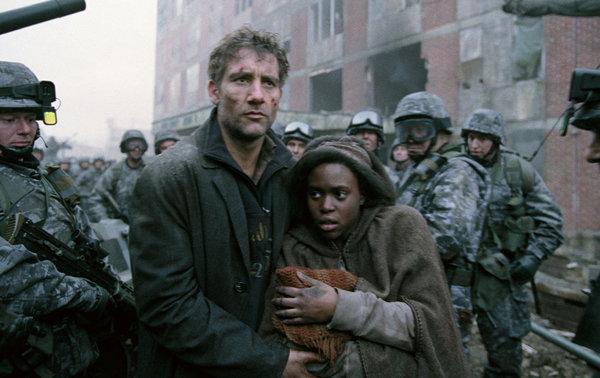
1) Miracle Cease-Fire – Children of Men
2) Final Role Place Scene – In the Mood for Love
3) Ending Scene – A.I. Artificial Intelligence
4) Lake Fight Sequence – Hero
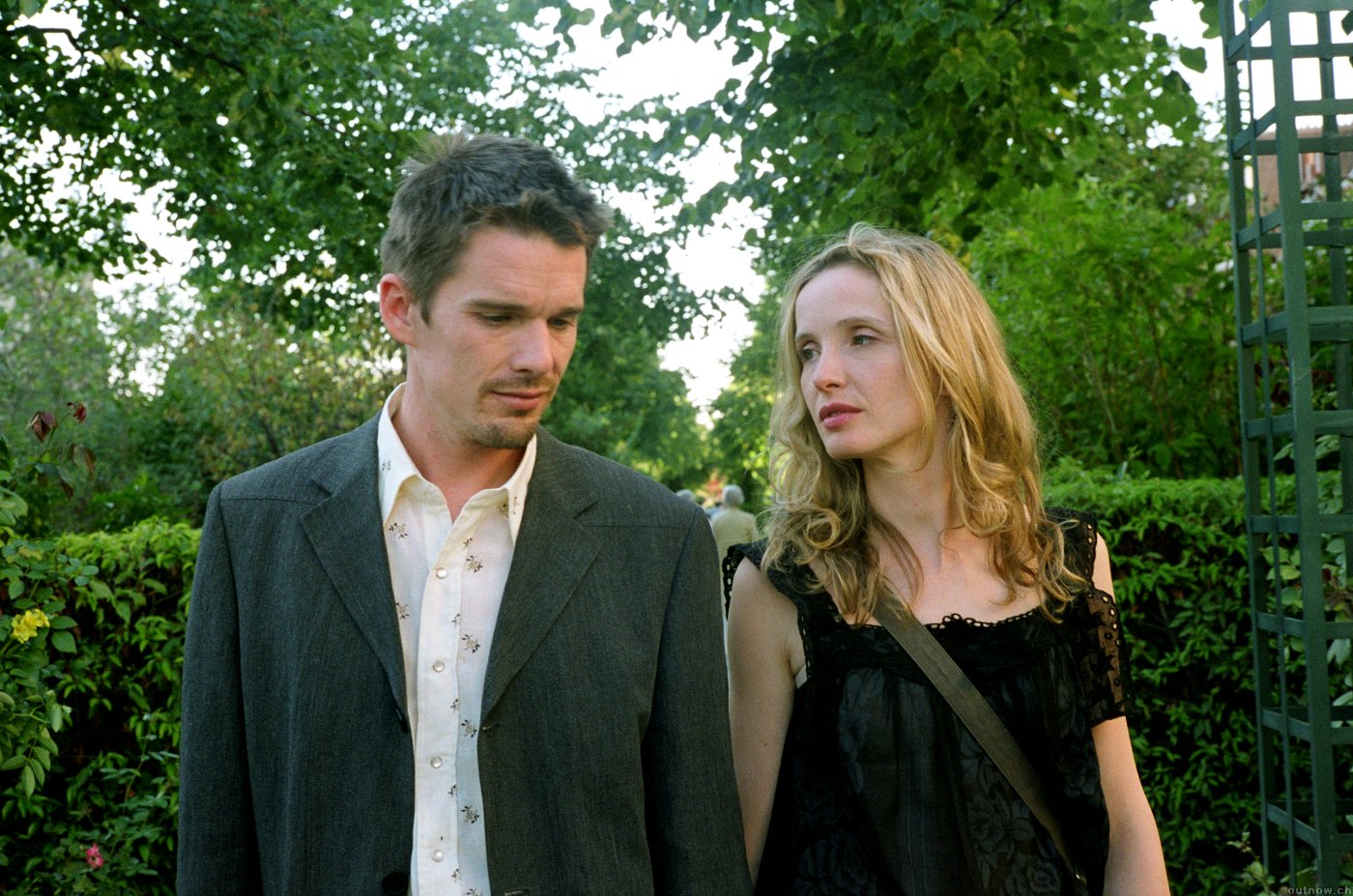
5) Cab Ride Conversation – Before Sunset
Brendan
1) Ego’s Final Review – Ratatouille
2) Ending Scene – A.I. Artificial Intelligence
3) Oil Rig Explosion Scene – There Will Be Blood
4) Luisa’s Catharsis – Y tu mamá también
5) Making of “It’s Hard Out Here For a Pimp” – Hustle & Flow
Honorable Mentions (Combined)
Fight Scenes – Crouching Tiger, Hidden Dragon
“Been a Rough Year” – The Royal Tenenbaums
Bell’s Spirituality – No Country for Old Men
Ending Beach Scene – Where the Wild Things Are
Uncool Scene – Almost Famous
Tiny Dancer – Almost Famous
Ending Scene – The Assassination of Jesse James by the Coward Robert Ford
“My Favorite Things” – Dancer in the Dark
Ending Letter Scene – The New World
“Go Get ‘Em Tiger” – Spider-Man 2
Aunt May’s Speech – Spider-Man 2
A Man of Constant Sorrow – O Brother, where art thou?
Falling Slowly – Once
Buckbeat’s Flight – The Prisoner of Azkaban
Harry Yelling “Expecto Patronum” – The Prisoner of Azkaban
“You’ll Never Know Love” – The Order of the Phoenix
Dunkirk Tracking Shot – Atonement
Robbie Finding the Dead Children – Atonement
Space Dance – WALL-E
TV Show Satire – Bamboozled
Ending Scene – Wendy & Lucy
Hallway Fight – Oldboy
“Thou Shall Not Pass” – Fellowship of the Ring
Helm’s Deep – The Two Towers
Sam Carrying Frodo to Mount Doom – Return of the King
Asthma Scene – Signs
Jack Sparrow’s Entrance / Final Fight Scene – The Curse of the Black Pearl
Will Finishes Ed’s Story – Big Fish
The Rest of the Film – Hero
Joker Scenes – The Dark Knight
Kym Talking About Younger Brother – Rachel Getting Married
Opening Sequence – Up
Club Silencio – Mulholland Drive
Ending Sequence – Moulin Rouge!
Joel and Clementine – Eternal Sunshine of the Spotless Mind
Bob and Charlotte – Lost in Translation
Exchange Between Japanese and American Soldiers – Letters From Iwo Jima
Other Scenes from The Wrestler, Synecdoche New York, Pan’s Labyinth, Adatpation, Punch Drunk-Love, Solaris, City of God, Finding Nemo, Master and Commander, The Incredibles, Kill Bill: Vol 2, Cache, Nobody Knows, Man Push Cart, Brick, Juno, The Diving Bell and the Butterfly, Hunger, Fantastic Mr. Fox and many others
Hopefully you guys enjoyed our lists, and if you agree or disagree with us, let us know in the comment section below. There are obviously many more scenes from the last decade that we didn’t have time to mention. That is to say, your list could look very different than ours given the amount of great films we saw during the 2000s. That being said, what would be your Top 5? Leave a comment in the comment section or email us at [email protected].
For more lists done by the InSession Film crew and other guests, be sure see our Top 3 Movie Lists page.
Much of the American media coverage of the Russian Invasion of Ukraine has focused on the geopolitical tensions between the East and the West and the efforts of soldiers stepping out onto the battlefield. There has been a limited effort to engage with the works of Ukrainian artists responding to the trauma and devastation that the conflict has wrought. For Ukrainian-American filmmaker David Gutnik it was essential to highlight the perspectives of those who use artistic expression as a form of resistance to wartime repression. His documentary Rule of Two Walls (2023) focuses on a diverse set of artists and intellectuals who attempt to continue practicing their crafts in the face of unimaginable horrors. It arrives at a time when calls to preserve Ukrainian culture have become particularly urgent and necessary and manages to perceptively address the concerns of the present moment.
Zita Short spoke with David Gutnik about the Washington Post article that inspired the making of the documentary, his own family history in Ukraine and the long-lasting legacy of Aleksandr Dovzhenko.
Zita Short: This documentary primarily focuses on the role that artists play in documenting and responding to the devastating effects of wartime aggression. How would you say that your documentary engages with the debate over whether artists and intellectuals can meaningfully contribute to resistance movements?
David Gutnik: My family is from Ukraine…my mother’s side is from the East, my father’s side is from the West, my great-grandparents are from Crimea. I have inherited a colonized sense of my own identity, it has been distorted by colonization. My first language is Russian and not Ukrainian. I don’t know my mother tongue and neither do my parents. I began to question the manner in which my origins, my history, my heritage had been discussed. I think this distortion occurs because history is written by the winners. Ukraine has been subsumed and dominated by Russia for three centuries and it has only been a free nation for a little more than three decades. That’s not enough time to write your own history. I am also an artist so I went to Ukraine thinking that I was going to tell a story about refugees but while I was there I read an article in the Washington Post about these artists in Ukraine. Everything switched for me after reading this article.
I was on a bus into Ukraine and I got in touch with the director of the Lviv Municipal Arts Centre. I don’t know if I’ve answered your question but I would make the case that every film is political. Superhero films are political. They come embedded with a pro-military-industrial complex mindset and help to support American cultural imperialism. When a superhero movie plays in Bangladesh, those values are being exported. When a big American film plays in Bangladesh, it means that smaller local productions are being crowded out of the cinema. You grapple with politics when you focus on the dissemination of information. This has been weaponized in the Russia-Ukraine War to an extreme degree. Putin has stated that Ukraine doesn’t exist and doesn’t have its own history and doesn’t have its own culture. That misinformation is used to justify waging war and committing genocide. The information space is a frontline. It’s a war of identity, it’s a war of memory. We are questioning who gets to tell the story of Ukrainian history. When you’re a journalist or an artist engaged in this conflict your work has life or death stakes. I don’t say this to minimize the contributions of soldiers who are risking their lives and losing their lives. I don’t mean to relativize. However, I think it’s plain to see that the spread of false information can have dire effects in this conflict.
Zita Short: There is also a great emphasis placed on the process of Russification in the documentary. You question how Ukrainian culture can survive in the face of forced cultural assimilation. How do you, as someone with roots in Ukraine, respond to art produced in this region during the Soviet Period. How do you feel about the works of, say, Dovzhenko, who had to find a balance between making concessions to Soviet authorities and presenting an authentic portrait of Ukrainian culture?
David Gutnik: I recently made a short film in tribute to my grandmother, who recently passed away, and I was using snippets from old silent films in it. I was talking about it with my producer and she noted that Dovzhenko’s films are still very well-received in Ukraine. You can’t cancel Dovzhenko. I am not somebody who is going to sit here and say who gets to survive these kinds of historical dialogues. There are realities that artists have to face. Filmmakers like Dovzhenko had to make concessions to government officials. It sorts of reminds me of how French New Wave filmmakers fell in love with directors like Nicholas Ray and Howard Hawks who managed to work within the Hollywood system while still smuggling their own ideas into films that had been heavily censored. Maybe it’s a bit like that.
Zita Short: How did you contact a lot of the people involved in the documentary and how did you get them to agree to take part?
David Gutnik: I didn’t know anyone when the war began. I reached out to Stefan, a cinematographer who had worked on the Sergei Loznitsa film Maidan (2014). I reached out to him over Signal and told him I was a fan of his work. I asked him if he was safe and told him I was coming to Ukraine. I said I wanted to help and was hoping to make a film. He messaged me back and we started talking every night. We got close and then he connected me with his producer, who was very well-established in Ukraine. After the war, began she became a resistance fighter overnight. Whatever career she had before, she left it behind to become a fixer. We started talking quite a bit and she helped me to get military clearance to shoot in Ukraine. She also helped me to get journalist credentials. I reached out to her after reading the Washington Post article and she said that it resonated with her too. She also helped me to get my director of photography and my great sound guy. That meant I already had a crew in place when I arrived in Ukraine.
Zita Short: In the press notes, you state that your daughter was born shortly after you made the film. You make the point that it is important to preserve Ukrainian history and culture for the generations still to come and for members of the Ukrainian diaspora. What role do you think the diaspora can play in preserving Ukrainian culture and supporting the war effort?
David Gutnik: I think the Ukrainian diaspora has been playing a big role. I think many members of the diaspora are victims of this rewriting of Ukrainian history. My family arrived in America before the fall of the Soviet Union. We are like hornets in a nest and we were still and dormant for a long time. Then the invasion occurred and Ukraine resisted. Suddenly, it was like all of the hornets in the nest were able to break free and announce their existence to the world. I think there has been a global awakening among members of the diaspora. My mother and I have never agreed on a single thing politically until this full-scale war began. For a long time, she misidentified as a Russian but now she’s ready to step onto the front lines. There’s been an incredible movement of support for Ukraine that, even if it’s not vocal or financial, has been significant on a cultural level. This is an important part of the story of Ukrainian history and we have a role to play in defending Ukraine.
While it may be the least looked-at European festival out of the big four (Cannes, Berlinale, Venice), the Locarno is a fascinating film festival. It gives most of its program spaces to emerging or lesser-known filmmakers and those curious to experiment with their style and craft. Many films are playing at this year’s Locarno that felt ingenious and had their own sense of exploration. In this capsule review piece, I will talk about three of them that I felt had a vibrant eye in terms of directorial singularity– two from the Concorso Internazionale (Bogancloch, Transamazonia) and the other from Fuori Concorso (Dragon Dilatation). Some of them worked better than others. But ultimately, there is plenty to take away from them.
Bogancloch (Directed by. Ben Rivers)
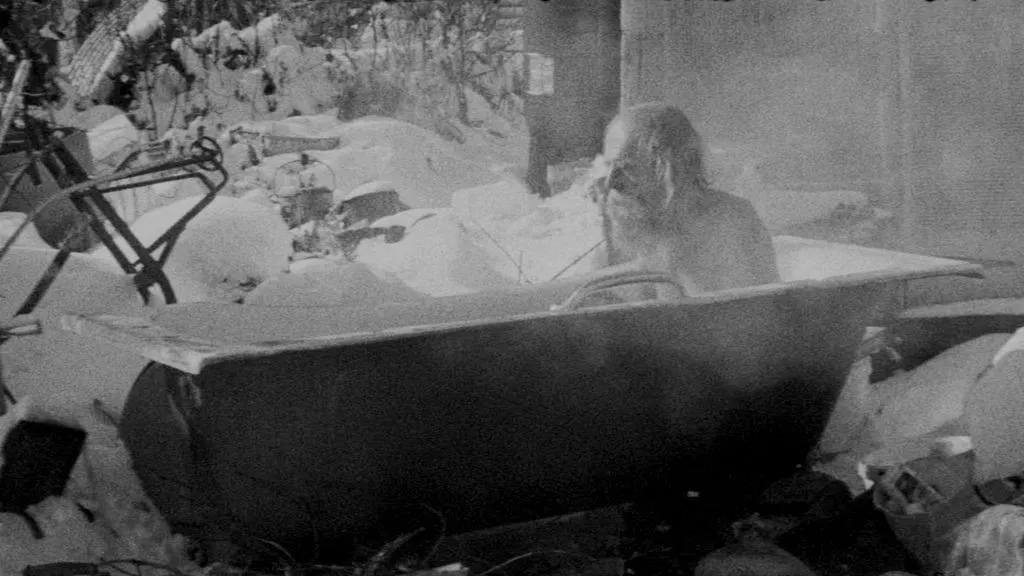
The first film in this capsule review piece from Locarno is experimental filmmaker Ben Rivers’ latest documentary, Boganloch (screening at the Concorso Internazionale). For the past few years, Rivers has been documenting the life of a man named Jake Williams. Rivers describes him as a man with a different sense of time, living alone in the Abudeshire forest in Scotland. Beginning with This is My Land in 2007, Rivers made a fly-on-the-wall, fragmentary piece on this fascinating person that captured his life daily. You started to ponder about his mental state after all of this time being isolated. Williams is an expert Mandolin player, and he has plans for creating hedges with bird feeders, as well as other things he has in mind with the objects he never throws away.
After various shorts and documentaries on him, Rivers again turns to Jake Williams for inspiration and further explores his life in Bogancloch. Twelve years after not knowing where the man in the woods has been, we are back in his life–seeing what has changed and stayed the same, literally and figuratively. This film’s title is taken from the name of the forest in which Williams resides, lying deep in the Scottish Highlands in a remote cottage he has constructed with his bare hands. Bogancloch covers more ground than Rivers’ previous works as it covers more than a few days of his life. This time, we see the seasons change. The sun lights his made-shift residence, and snow covers the roof like a white quilt.
No matter the weather, Williams is prepared for everything. Williams is a man who embraces nature, both in its beauty and hardships. He does not try to control or dominate it to his favor regarding the living situation. Instead, Williams succumbs to it, as if he wants to live in symbiosis with the flora and fauna surrounding him. It is fascinating to see how he prepares for each change in the climate and does his daily activities accordingly. And Rivers’ camera and vision remain humanistic throughout the film’s entirety. Other filmmakers might want to tether the fine line of intrigue and exploitation by dwelling on poverty porn and miserabilism. But Rivers respects his subject too much to do that. He remains empathetic through his realism, respecting Williams’ views and values.
What draws Bogancloch back is its repetitiveness and lack of analysis during its first half. Although it is a different scenario than before, the structure and format feel similar to what Rivers has done previously with Williams. To warrant its runtime, it must do more to separate itself from these projects. The last twenty minutes dictate the reasoning for this project and why we are back to the Scottish lands. In these minutes, Rivers, with the help of Williams, explores the ever-changing world compared to the subject’s view and perception of time. Bogancloch is still a very intriguing and experimental project worth dissecting. But if you have delved into its 2011 predecessor, Two Years at Sea, there isn’t much left.
Grade: C+
Dragon Dilatation (Directed by. Bertrand Mandico)
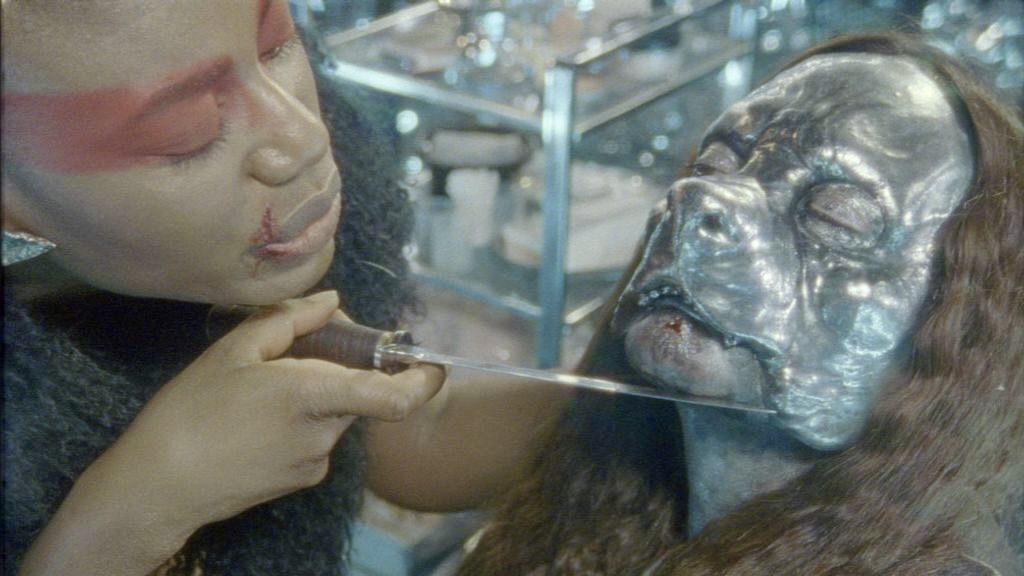
The second film in this capsule review piece is the latest experiment by French iconoclast Bertrand Mandico, who has presented an artistic dual filmic essay that is as flashy as it is metatextual and provocative, Dragon Dilatation (screening on the Fuori Concorso section of the festival). A usual at Locarno, Mandico has shocked attendees for years now; he has shown his queer versions of sci-fi westerns (After Blue) and Conan the Barbarian (She is Conann) previously. Now, he is back with something way different, an artistic expression of two writings–’Petrouchka’ and ‘La Déviante Comédie’–through his erotic and poetic lens. It is a project that exalts personality and originality while, at the same time, calling back to his previous material.
Divided into two sections, with the split screen format Gaspar Noé recently used in his films Lux Æterna and Vortex to give the film a hypnotic effect, Dragon Dilatation covers these essays concurrently. Mandico plays both of them to place the idea that we are traveling through a gyre of his weirdest creations, incorporating the techniques he has acquired through his many years as a director, from Loving Still Life to The Wild Boys. On one side, you see ‘Petrouchka’, a re-reading of Igor Stravinsky’s ballet of the same name. This is originally the story of the lives of three puppets and how love and jealousy devour them as they are brought to life.
On the other side of the screen, there’s ‘La Déviante Comédie’, which can be seen as Mandico’s rendition of “The Divine Comedy”, but with his knack of adding eroticism to each corporal gesture. This segment is constructed with sequences from an unpublished performance rehearsed at the Théâtre des Amandiers. Each movement, whether from the ballet or the exhibition at the French theater, has this angst and liberation to them, just like Rainer (Elina Löwenson) encourages the characters in ‘La Déviante Comédie’ to experience so they can reach a level of ecstasy that will “cure” them. The scenarios in which the characters embark are haphazard and treacherous. Yet they thrive for pleasure, and euphoria fuels their souls and guides them.
Most of Mandico’s films cover these grounds. He tends to make stories that tether between bliss and violence so that the protagonists in them can end their respective journeys with an understanding that there isn’t love or pleasure without suffering. Mandico makes their ventures like an emotional vortex that leads to a rhapsody of seven heavens, at least depending on the respective characters’ version of such. Dragon Dilatation is ambiguous and provocative, like all of Mandico’s works. But what I like most about him is how he captures society’s tendency to put labels on people’s bodies through creative and imaginative dark imagery.
Grade: B+
Transamazonia (Directed by. Pia Marais)
The third (and final) film in this capsule review piece is Pia Marais’ first film in over a decade, Transamazonia (screening at the Concorso Internazionale). It was back in 2013 when we last saw Marais directing a film with Layla Fourie, a story about a single mother in South Africa who becomes a part of a genre of lies amidst accepting a job as a polygraphist. It centered around a society dealing with its dark past. Her latest work has some thematic connection, as Transamazonia also deals with the ghosts of the dark past and the lines that cover them up in camouflage. Transamazonia’s main narrative gadget is a plane crash in which a young girl named Rebecca survived.
Her survival is deemed a miracle, a blessing from the gods who saved the youngling. Nine years later, we flash forward to Rebecca (now played by Helena Zengel) and her U.S. missionary father, Lawrence (Jeremy Xido), finding themselves at the center of a small community near where the plane crashed. Rebecca is seen as an essential figure to the villagers, serving as an acclaimed “spiritual healer” who can cure their mental or illness-related woes. Their lives seem to be filled with a lie or a misconception tampered with by Lawrence, who takes advantage of this scenario. This relationship between Lawrence and the villagers he’s evangelizing fractures when loggers invade their safe place.
Their evangelical acts are now presented in a bigger spotlight, showing flaws and intrusiveness. Pia Marias uses the miracle of surviving a plane crash and taking advantage of the miraculous situation as a way to talk about bigotry and vehemence in religion. But, due to the Amazonic setting, many other themes, like colonization and deforestation, come to fruition. In terms of visual language, made possible by cinematographer Mathieu de Montgrand, it is seen through a mystifying eye, where nature and religion clash to get Transamazonia and its atmosphere further from a grounded state. An example of this is Rebecca’s nightmares throughout the film. Ants eat and cover up her body to reflect the ever-consuming feeling of deceit from religious zeal.
While all of this sounds fascinating and is vast imagery-wise, many holes in the screenplay impede Parais from further commenting on the aforementioned themes. Parais immerses you in this journey as her directorial eye focuses on the beauty and destruction of her character’s mental state and the nature surrounding them. Yet, as she crosses into the fractured nature of their relationships and how they tie to deforestation and religion, Parais does not know how to tie the knots. It takes you out of the mythical experience she is building at the forefront of this story. Transamazonia is still a fascinating project with a unique vision that captivates the viewer from a visual standpoint and through the performances and use of sound. Unfortunately, the project is held down by a weak script.
This week on the InSession Film Podcast, we (sort of) begin our Best of the Decade Awards as we discuss our Top 5 scenes of the 2000s! We also talk a little box office, Disney/Star Wars and pay tribute to the late-great Gena Rowlands.
Check out this week’s show and let us know what you think in the comment section. Thanks for listening and for supporting the InSession Film Podcast!
– Box Office (12:10) After some opening banter, we continue our recurring segment of “Is the Parade On or Off?” talking about the box office. This time around we talk about the success of Alien: Romulus, which is now has the second best opening weekend ever for the Alien franchise. After the bleakness of May, the summer has taken a massive step forward. We are very happy to see theaters thriving, however; we still continue to question the types of movies that Hollywood will be pushing.
– Disney & Star Wars / Gena Rowlands (27:18) It was announced this week that Disney is pulling the plug on the Star Wars show The Acolyte, and it provoked us to talk about the future of the franchise. The last few years have been extremely volatile for Star Wars, and Disney+ format doesn’t seem to be helping matters much. It’s just not a great structure for their shows and we talk about why that needs to change.
– Top 5 Scenes of the 2000s (1:20:27) Where does one begin when trying to narrow down all of the great scenes from 10 years of great movies? We’ve done this once before for the 2010s, and while it was a ton of fun, it was one of the most challenging exercises we’ve ever done. The 2000s was equally full of great movies and moments that will unequivocally go down as some of the best of all-time. Whether it be artistically, emotionally, comedically or intellectually, or a combination of all those aspects, these are the scenes that provoked us in the deepest ways in the last decade. It’s been almost 10 years leading up to this moment, and it was fun to begin our Best of the Decade Awards with this list. That said, what would be your top 5?
If you want to help support us, there are several ways you can help us and we’d absolutely appreciate it. Every penny goes directly back into supporting the show and we are truly honored and grateful. Thanks for your support and for listening to the InSession Film Podcast!
Synopsis: REAL aims to delve into the ongoing metamorphoses triggered by our relationship with digital technologies, through an associative mosaic of stories, shedding light on different aspects of living in a hyper-connected reality.
Eight years ago, Eduardo Williams premiered a film at the Locarno Film Festival that not only won him the Golden Leopard–one of the top coveted prizes in Europe–but silently redefined modern filmmaking and the visual language as we know it. That film was The Human Surge, a fragmentary piece about the alienation of today’s youth and how technology has both helped and distanced them through these social media-induced times. Not so many people have heard about this film. Upon its release, it did not make much of a splash in the U.S. cinema market; Williams’ cinematic experiment caused more waves across Europe and Asia. However, as the years have passed and people have grown more dependent on technology, The Human Surge has become more prominent worldwide.
More people have started to bask on what drew the 2016 Locarno jury into Williams’ inventive world. It is a creative and transcending feature that looks vastly different from most films we see today. With the use of virtual reality, he put the audience in a trance where we were stuck in between realms: physical existence and the artificial one caused by technology. The Human Surge was an out-of-body experience; the images stuck with you for days and maybe weeks. You kept thinking about the film even though, from the initial viewing, it was hard to express your thoughts about it. Williams followed it up with The Human Surge 3. Although it was a bit messier than its predecessor, he created yet another fascinating, experimental portrait of our hyper-connected world.
Illusory imagery covered the canvas throughout the film via Williams’ use of the Insta360 titan camera. That helped him cover the world around him, traveling from one country to another like a ghostly presence. Director Adele Tulli has taken these two films as an influence to tell us her own thoughts about people and their connection to technology, both as a remedy for this lonely, cold world and an excuse not to explore your surroundings. For her latest work, REAL (screening at this year’s Locarno Film Festival at the Concorso Cineasti del Presente program), Tulli delves into the relationship we all have with social media, told through a mosaic-like structure that shows the different variations of this bond.
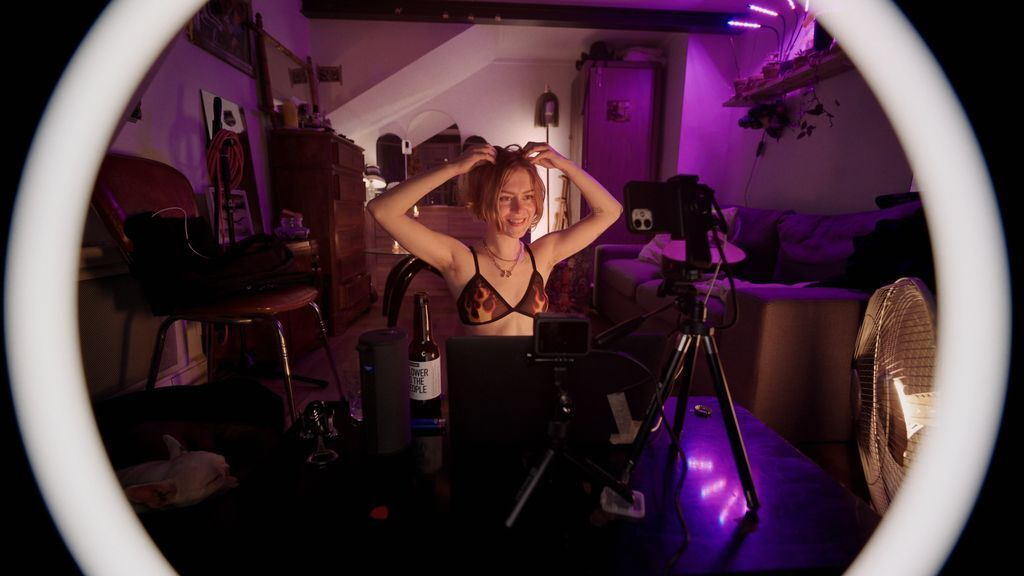
There is no narrative structure to REAL. Instead, we get small fragments into people’s lives worldwide and their format of choice. Whether vlogging on Twitch or YouTube, going on Only Fans, or just talking to an assistive A.I. like Siri or Alexa, these people we see on screen are all using these programs daily, acting like their own obsessions. Even though the title of this film suggests that there is a form of tangibility or palpable human element able to be perceived by all five senses, Tulli more so prompts how this means of communication and connection is “real” and emotionally perceptible to these people. Some of them even get a chance to speak more broadly about why they stream or do videos, particularly during a montage of recollections in which we see content creators opening up about their struggles and how their community helps them feel better.
Even though you might have a specific misconception or be dubious about content creators or influencers, you understand them deeply. The world is cold, and many people fear the harmful things that happen once they open up to the world. So, they use social media, video games, and other outlets to express themselves more profoundly. Through the networks, you have more room to find people with the same interests, sensibilities, and preferences as ever. Everybody has found friends in these mediums, yet, somehow, there is still this preconception made by our addiction to them. Adele Tulli does not shy away from the drawbacks that social media has on us. But that exploration comes across as rather bland and too on the nose.
Tulli is more interested in the positives than the negatives, which makes her project lack that long-lasting curiosity about our “dependence”. If you are covering this topic, you should be open to dissecting it thoroughly, especially since it is very prevalent. Nevertheless, Tulli immerses herself and the audience in this hyper-connected world, like a world tour, to see various perspectives. What Tulli does here is similar to the two Human Surge films that Williams has made so far. The latest documentary by Benjamin Ree, The Remarkable Life of Ibelin, also comes to mind. The acclaimed Sundance doc centered on parents finding out after their son’s death that he was not lonely or living an isolated life; he had hundreds of online friends who cherished him.
It is yet another exemplary work that showcases the impact of the bonds we make through the Internet. There is less experimental cinematography and a weaker visual language in comparison with the works of Williams and Ree. But the montage style offers a passage into these people’s lives–their joy, anguish, and lingering sadness as the online community saves and deteriorates them slowly but surely–that is fascinating even if the structure itself is flimsy. The whole project has a PowerPoint presentation layout, which hinders the effectiveness of its depiction of topics. Despite its poor editing and lack of a more gripping visual language, everything presented rings true and makes viewers think about their involvement in this hyper-connected world.
It’s very hard, if not impossible, to declare one year as “the best ever” in the history of film. 1955, 1977, and 1999 are all common candidates for this title holder among critics and audiences, but one can never be too definitive about art. These years all received their praise in retrospect, as we look back several decades later and realize the impact many of these films have had on culture, and film as an art. Charles Laughton’s Night of the Hunter, for example, was totally dismissed upon its release in 1955, but is now rightfully recognized as a masterpiece and major influence upon modern day cinema. To declare that the current year we are living in was the “greatest year” before the year is even over would be ridiculous, right? Well, the big studio execs in 1938 didn’t think so.
In 1938, movies were seeing a slight dip in attendance for reasons financial, cultural, and social. In order to combat this crisis, a group of Hollywood executives from all the major studios banded together in an effort to promote moviegoing. They did so through an ill-conceived public relations campaign titled “Motion Pictures’ Greatest Year”. Introduced in the summertime, the campaign challenged the average American to see as many movies as they could within the last six months of the year as a sort of duty to the nation’s well being. Advertisements and articles essentially guilted consumers into going to the movies to help stimulate the economy and promote the common good, and created contests in which audiences could win cash prizes by answering trivia about the year’s films.
This didn’t work.
Generally, 1938 is a largely forgotten year in film history. At this time, critics and audiences felt unheard in their demands to studios to actually consider the quality of their movies over quantity. But studios appeared to have finally got the message the following year in 1939, a year which critics and historians actually call “the greatest” in film history.
The amount of classics to come out of 1939 is staggering. Why this happened probably evades explanation, but it perhaps has something to do with what came after this year, that is, the second world war, which would fundamentally change the cinematic landscape and make audiences nostalgic for the time “before”. After this, everything will change. 1939 had a bit of everything for everyone which allowed for waves of moviegoing and some of the most financially successful films of all time. Now, 85 years later, we have the gift of retrospect to help us understand why that year was so important. In order to better understand what made this year so great, I have tried to pin down and elaborate on just five of the many contributing factors, from the films themselves, to the people that made them, to us, the audience.
Enter John Wayne
By 1939, John Wayne had been acting for well over a decade as an extra and in supporting roles. He was a familiar face around the Hollywood backlot, but it is John Ford’s seminal western Stagecoach where “The Duke” would make his real entrance on the world stage. In the film, a group of four passengers take a coach on a southwestern trail. On the way, they are halted by Ringo Kid, a dangerous outlaw played by Wayne. “Hold it!” he shouts. The camera zooms in as he twirls his shotgun in his hand in front of a desert backdrop, and a star is born. This moment in Wayne’s career is undeniable, and indicates the power of the movie star in Hollywood’s golden age. Throughout the 1930s, the western which had defined the years of early moviemaking had been largely discarded by studios in favor of stories of urban living, but 1939 was a year that helped revive the genre. And with the war just over the horizon, Wayne and a stable of other western stars would come to define a new era of cinema and mid-century American masculinity.
Gone with the Wind Makes Bank
To say that Gone with the Wind was a phenomenon would be a vast understatement. Adjusted for inflation, it is recognized as the highest-grossing film of all time, no small feat for a female-led period piece with a four-hour runtime. The craze around the film even preceded its production, as the quest to find the perfect Scarlett O’Hara was greatly publicized in order to generate more buzz. Today, we can watch a handful of screen tests from starlets of the era testing for the role, but none come even close to matching the genius of Vivien Leigh, who as a British stage actress seems to have almost been born to play the iconic southern spitfire. Her co-star, the devilishly handsome Clark Gable, was so famous as to be dubbed “The King of Hollywood” of his era as the natural successor to Douglas Fairbanks. My own grandmother, who saw the film in Northern Ireland during the war, specifically remembers swooning over Mr. Gable along with her girlfriends and the rest of the audience. Visually, the film is stunning, and a terrific example of early three-strip Technicolor. It does, however, show its age in its story and themes. Even at the time, critic Frank S. Nugnent for the New York Times called the undoubtedly ambitious film “a major event in the history of the industry but only a minor achievement in motion-picture art.”
It would be wilfully ignorant to not mention the vast controversy elicited by the film then and now. At the time, Black critics called attention to the film’s nostalgic view of the South’s efforts during the Civil War and its perpetuation of the Lost Cause mythology, which claims that the Confederacy was motivated by heroic and noble preservation of southern heritage rather than the right to keep slaves. Writes Melvin B. Tolson:
“Birth of a Nation was such a barefaced lie that a moron could see through it. Gone with the Wind is such a subtle lie that it will be swallowed as truth by millions of whites and blacks alike”
The film was nominated for thirteen Oscars at the 12th Academy Awards, and won eight, the most notable being that of supporting actress Hattie McDaniel. McDaniel plays “Mammy,” one of the film’s many stereotypical Black characters who misguidedly portray a friendly, mutually respectful relationship between slaves and plantation owners. Still, within this highly offensive role, McDaniel manages to portray the character with nuance and sympathy, offering a consistently vibrant and memorable performance. McDaniel would be the first Black person to ever be nominated for and receive an Academy Award, and her reaction, which can also be viewed on Youtube, is very moving. She seems to be genuinely touched by the honor. Unfortunately, even her groundbreaking success in this moment was not enough to launch her into greater stardom. She continued to play supporting archetypal roles as maids and cooks. Perhaps most heartbreakingly, her deserved wish to gain the respect and fair treatment by mainstream society was unreachable even in death, as she was denied burial at the Hollywood Forever Cemetery because it was reserved for Whites Only.
“We must be Over the Rainbow!”
On a cultural level, it is perhaps impossible to name another film with a greater legacy than The Wizard of Oz. Its impact on yours truly cannot be overstated. From perhaps the greatest use of Technicolor of all time, to iconic imagery like the Emerald City and the Yellow Brick Road, masterful supporting performances from the likes of Frank Morgan and Margaret Hamilton, and its importance to the LGBTQ community as a tale of self-discovery and chosen family. Not to mention the score and the soundtrack full of instantly recognizable hits, composed and written by Harold Arlen and E.Y. “Yip” Harburg. Of all the memorable tunes, none stands the test of time, or moves listeners more than “Over The Rainbow”. The song comes early in the film, while we are still surrounded by sepia-toned Kansas farmland. Dorothy, played by the incomparable Judy Garland, sings to the sunlight poking through the clouds, Toto at her side, as she dreams of another world far from home. The song won that year’s Oscar for Best Original Song at the Academy Awards, and was recognized by the American Film Institute as the number one song in the history of American cinema. They don’t make em’ like this anymore, that’s for sure. But what’s so special about The Wizard of Oz is that there had never been anything like it beforehand, and nothing can even come close to matching its magic.
Garbo Laughs!
By 1939, Swedish actress Greta Garbo had been just about the biggest name in Hollywood for over a decade. She was one of the few actors to successfully transition from silent films to talkies, despite (or perhaps because of) her European accent and deep voice. Her foreignness made her excitingly exotic for the time period, and her androgynous appearance made her all the more attractive to men and women alike. From the late 1920s and throughout the 1930s, she played the part of the temptress, the diva, or the tragic romantic lead who often found herself dead by the end of her films or in some state of heartbreak. That’s what makes her performances as the titular role in Ernst Lubitsch’s Ninotchka all the more special.
In the film, Garbo plays Nina Ivanovna Yakushova, a stoic Soviet agent who travels to Paris to study the ways of the western world, and soon finds herself in love with a French bachelor and man-about-town. She finds herself in a role like never before, showing audiences a totally different side of herself and her talents. To promote the film, posters featuring the smiling actress proclaimed “Garbo Laughs!” to drive home just how special an occasion it was that the great drama queen of 1930s Hollywood was trying her hand at comedic acting. To put it one way, she is very “cute” in the film, a word that could rarely be applied to Garbo and I in no way mean that disparagingly. Her deadpan humor early in the film is spot on, and soon turns into a charming, childlike fascination with the finesse of French society and luxury of western excess.
What makes this film all the more important is its position within Garbo’s filmography, that is, at the end. This would be the second to last film of Garbo’s illustrious career. She would go on to make one more comedy, The Two Face Woman, which didn’t go over so well with critics or audiences, and she soon after ended her contract with MGM. She had always been at odds with the conceit of film stardom, and generally preferred to be alone. With this as her (almost) swan song, Garbo left behind a far more dynamic legacy as an actress of supreme talent, one who can shatter expectations and adapt to the most unpredictable of circumstances.
Jean Renoir breaks the rules
Jean Renoir, son of the notable French painter Pierre-Auguste, was already a well-respected director by 1939, with classic titles like La Grande Illusion and La Bête under his belt. But it is his 1939 project, The Rules of The Game, which would go on to be both his most controversial, and eventually his most celebrated.
The film takes place at a French countryside chateau over the course of a few days, as the refinement of the upper classes quickly descends into debaucherous chaos. In this French Comedy of manners, the oncoming war is conspicuously omitted in order to illustrate the bubble within which the upper crust so happily operates.
The film was heavily promoted and very expensive. Though it caused significant fanfare upon release, its notoriety was for all the wrong reasons and would eventually lead to its downfall. Much of its early criticism came from French rightwing groups who found the film distasteful and unpatriotic. To salvage his and the film’s reputation, Renoir cut up the film into pieces, resulting in an 85 minute runtime which only lead to further criticism that the film was rushed and convoluted. The film was soon banned for, in the spirit of Socrates, having a corrupting influence on the youth of France.
For some time, the film was thought to be lost completely. In a story all too familiar to the early decades of cinema, the lab that held the original negative was destroyed in a bombing during the war. Thankfully, an 85-minute print was discovered in 1946, and it did the rounds at cinematheques and began to be recognized as an unappreciated work of satire. In the 1950s, film enthusiasts found negative prints of the original version of the film and other materials to ultimately restore the film to a 106-runtime. Renoir was reportedly delighted upon viewing the restoration, and the film would soon be regarded as a masterpiece of French cinema. Two decades removed, and with the New Wave on the horizon, critics praised the prescient criticism of the upper classes and trivials rules of society. Renoir, for his part, is regularly named as a major influence on a number of the world’s premiere filmmakers. Today, it routinely finds itself highly ranked on “greatest of all time” lists, and stands as a point of pride in the history of French cinema.
The greatest or not, it is impossible to deny that 1939 was one of the most important and impactful years in the history of film. If you are someone daunted by the scope and variety of the earlier decades of cinema, I imagine this would be a pretty great place to start. If you consider the classic days of filmmaking to be boring and uninteresting, I invite you to seek out this year and its abundance of classics to perhaps change your mind.
On this episode, JD and Brendan discuss Fede Álvarez and his latest entry into the Alien franchise with Alien: Romulus! If you follow us on social media, you may already know where we land on this film, but be assured that our frustrations come from recognizing what is truly great about the film. We talk about those nuances and how we could come around on Romulus in the future.
Review: Alien: Romulus(4:00) Director: Fede Álvarez Writers: Fede Álvarez, Rodo Sayagues Stars: Cailee Spaeny, David Jonsson, Isabela Merced
This week on Chasing the Gold, Shadan and Erica discuss their list of candidates who are likely to get their first-time Oscar nominations in the near future! There are many actors and actresses who find themselves in the moment, and are hot on the trail for a nomination, but who will be the first to get their nominations? We talk about our favorites who are well on their way to the Oscars.
On that note, check out this week’s show and let us know what you think in the comment section. Thanks for listening and for supporting the InSession Film Podcast!
Director: Cesar Diaz Writer: Cesar Diaz Stars: Bérénice Bejo, Fermín Martínez, Leonardo Ortizgris
Synopsis: A Guatemalan activist battles a corrupt dictatorship in 1976 and flees to Mexico, leaving her son. Ten years later he joins her, forcing a choice between motherhood and her cause.
Last year, Chilean filmmaker Manuela Martelli presented us with her Hitchcockian thriller, Chile ‘76. The film created a fearless depiction of the Pinochet dictatorship through the eyes of a wealthy woman who had to hide an activist. The film covered a few months in the life of people undergoing an authoritarian regime, and paranoia and fear were felt at every moment. And that sensation is replicated by the audience watching. This political nail-biter was made to show a portrait of how it was to live during that time, and the effects of rebellious acts, even in their slightest, felt like you have people tracking your every move. Martelli focused on the blurring of the mind induced by the dread in the atmosphere.
There is a hesitation behind each decision made and its outcomes, and Chile ‘76 thrives in its pressure-cooker suspense built from the possibility of the characters getting caught in their activist acts. Like Martelli, Belgian-Guatemalan film director and Camera d’Or-winner César Díaz wants to capture a particular time in Guatemalan history that was riddled with violent political turmoil caused by cruel dictators with irremovable blood on their hands. In his sophomore feature, Mexico 86 (playing in the Piazza Grande at this year’s Locarno Film Festival), Díaz paints a portrait of an activist who has to take on the role of being a mother and the division she faces upon her revolutionary actions and the parental ones she must adapt.
César Díaz takes his own life as inspiration for this political thriller to develop a more personal delicate lining to the narrative. While it may not be as compelling or gripping as Martelli’s aforementioned film, Díaz ensures that we are sunk into the dramatic elements he presents, as poverty, racism, and social exclusion are prevalent during this period. The film begins in Guatemala in 1976. We hear tons of clamoring through the halls and streets. The bloody-handed police are searching for somebody–an activist part of a revolutionary group that is protesting the cruel, corrupt injustices plaguing the country via its mad dictator. That person is Maria (Berenice Bejo), who is trying to hatch a plan to escape the country after her rebellious actions have alerted the government and put her family in great danger.
As she holds her infant son in her arms and sees the body of her murdered husband on the other side of the street, Maria heads to her mother’s house. She grabs the essentials and says her goodbyes–leaving her son behind so that this dangerous act does not hinder his chance at a better life. During these initial minutes, Díaz showers the scenery with urgency and worry. The camera shakes as the characters restlessly get everything together so that Maria can hide from the world elsewhere. You get that sensation of persecution, a life-and-death situation that makes the audience feel anxious to a heightened degree. And with the nail in the coffin that is a mother having to leave her son behind for his safety–the ultimate sacrifice a parent in this situation must make–adds more impact to the story being developed.
Maria heads to Mexico, and as the title suggests, the film flashes forward a decade into her life in hiding. She is still an activist. But she is working from afar–handling and moving guns to the other activists in her region. Her current life mainly focuses on teaching young journalists in a newspaper company to make pieces and scriptures that target the Guatemalan government. Maria does not reveal to them her true intentions or involvement in the matter. Yet she shifts their perspectives and makes them see the cruelty happening nearby. The problems arise when her past catches up with her upon the arrival of a secret document that might place her under fire and her ailing mother bringing back her son Marco (Mattheo Labbe).
This is where Mexico 86 thrives, the tension boiling between a mother and son, both of whom have not been a part of each other’s lives, amidst the political turmoil blazing the setting’s streets aflame. Díaz takes part of his own life to fuel the two sides his latest work is divided into: the political thriller from Maria’s revolutionary past and the mother-son drama about fractured relationships and understanding. Both the director and the characters are performing a balancing act. While the former forges thrilling set-pieces and touching moments between its leads, Maria and Marco (particularly the latter) deal with this new connection as they are searched for. This cinematic forge does not mend to its potential; the division keeps the story tied up in genre tropes that take you away from the turmoil.
One continuous-shot chase sequence is exceptionally made with excellent, muscular direction. But the rest of the time spent on the thriller side of the story does not suffice, nor does it reach the effectiveness of the introduction. Nevertheless, the drama is where Mexico 86 finds its heart and captivates the audience watching. In essence, Marco is not Maria’s son, as she did not raise him. So, Marco must learn how to construct this relationship forged by blood, yet the person he is supposed to be attached to is a total stranger. Not only does Marco not recollect his mother, but he has never seen a picture of Maria to keep her identity secret. What the Our Mothers director brilliantly does is not make this young kid constantly question why she left him behind.
Instead, Marco understands her situation and tries to learn how this new relationship could work, considering her activism. Meanwhile, Maria must decide whether to develop a new life away from her activist work to be with her son or try to balance both, which might end in a sticky situation. This complexity elevates Mexico 86 to a point of narrative fruition. You begin to wonder about the multiple stories similar to this one and how each person felt about having a parent absent from your life to provide change for a great cause. Through Díaz’s vision in the film, it is clear that what happened is still affecting him to this day. It is a mixture of endearment and understanding. He does so with a delicateness that helps bring out the importance behind his story, although one might feel overwhelmed by the weak thriller elements that come with it.