



Director: Tatsuya Yoshihara
Writer: Hiroshi Seko
Stars: Kikinosuke Toya, Reina Ueda, Fairouz Ai
Synopsis: In a brutal war between devils, hunters, and secret enemies, a mysterious girl named Reze has stepped into Denji’s world, and he faces his deadliest battle yet, fueled by love in a world where survival knows no rules.
During the opening half of Chainsaw Man: The Movie – Reze Arc, a continuation of MAPPA’s hit 2022 anime series, protagonist Denji (Kikinosuke Toya) goes on his first date with his biggest crush, Makima (Tomori Kusinoki). Instead of doing something rather traditional, Makima takes Denji on a cinema-hopping trip, where, by journeying through different cinemas in the city, they watch (read: criticize) several popular movies until their final film – an obscure, auteur-driven work – inside an empty venue, blows them away. The two cry and wonder why a seemingly irrelevant segment in an otherwise esoteric film brought them to tears, while the populist works they had viewed beforehand did not affect them.
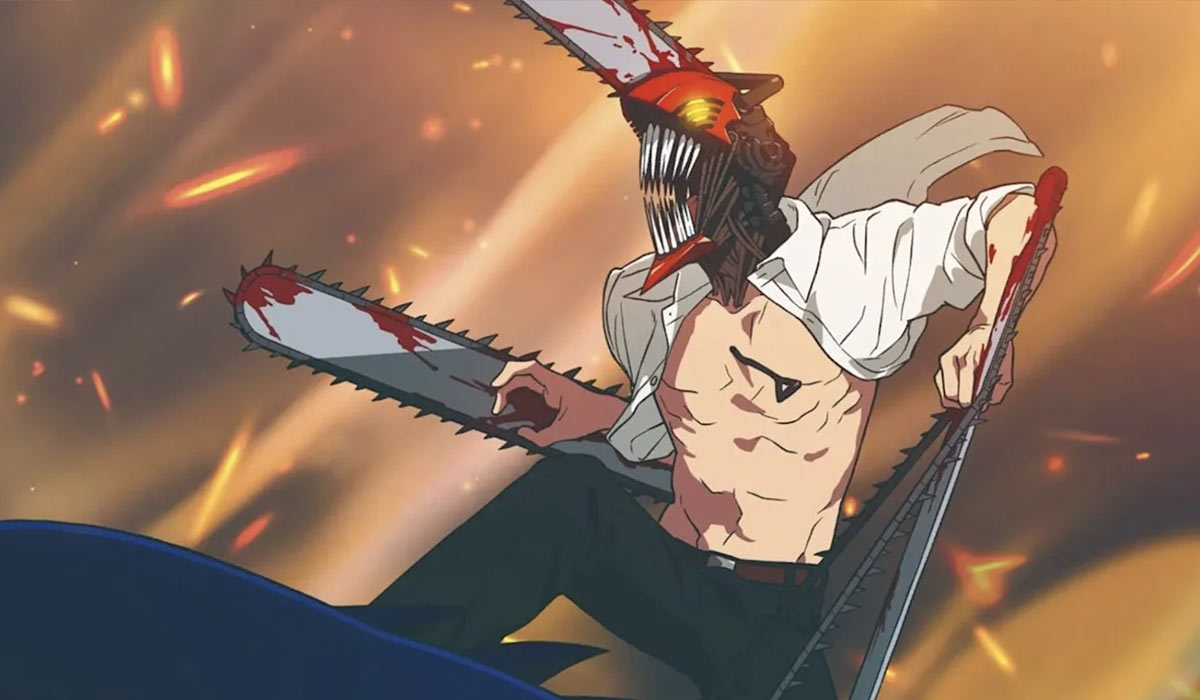
Answering this question, Makima then says to Denji, “I only find one good movie for every ten movies I watch, too. But one of those was a movie that changed my life.” That line cuts especially deep because, in an era where movies have lost their artistic value and are turned into mindless pieces of “content” with little cultural relevance, a film like Chainsaw Man: The Movie – Reze Arc feels like that life-changing work of art Makima is talking about. It’s not only the year’s best animated film, but completely redefines anime storytelling for the big screen, pushing the artform into completely new emotional – and artistic – horizons that I’m not even sure MAPPA knew they were capable of doing until they made it.
Unlike another popular anime film based on a preexisting IP, with Demon Slayer: Kimetsu no Yaiba – Infinity Castle, one does not need to have seen MAPPA’s Chainsaw Man to understand the story being told here. However, the character dynamics – specifically, Denji’s attraction to Makima and the relationship he had with Pochita, the Chainsaw Devil, who transfers his power to the protagonist after sacrificing himself – might not be cleared up if you don’t make the effort to view what is, in my humble opinion, the best anime of this decade. It’s an often complex and surprisingly emotional fantasy actioner that, yes, dazzles with its array of impressive, squirm-inducing setpieces, but never loses sight of deepening what matters most on a show like this one.
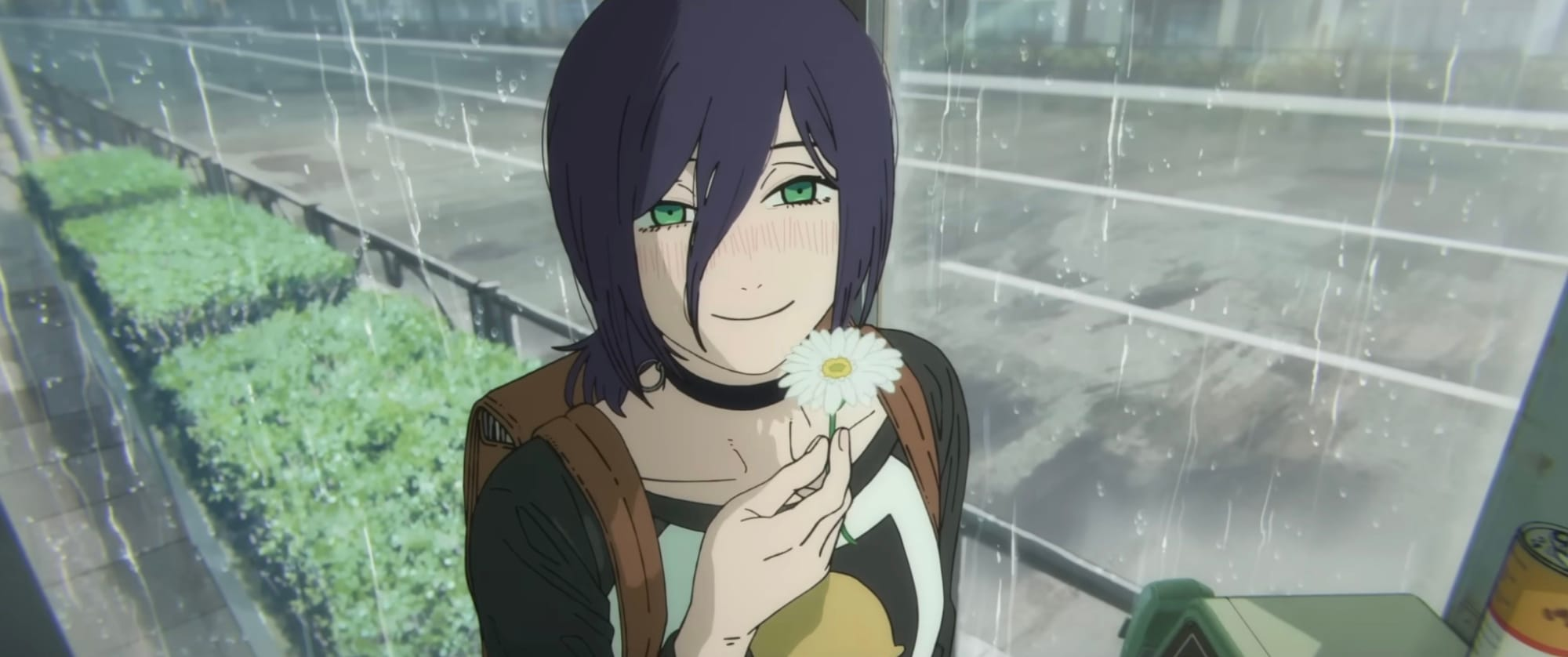
At the end of Chainsaw Man, tears – in the most unexpected ways – may flow down your face, whether through fleeting, innocuous gestures (such as the act of smoking cigarettes) or in sitting with the protagonists as they realize the decisions they make will inevitably lead them further into loneliness. Reze Arc doesn’t shy away from doing the same thing, although it primarily focuses on a “love triangle” of sorts between Denji, Makima, and the “new girl” on the block, Reze (Reina Ueda). She begins to hang out with the Chainsaw Man after the two meet cute in a phone booth, and progressively fall in love. Denji wants to devote his entire romantic impulses to Makima, yet he can’t help feeling the same affection Reze has towards him, until, predictably, she is not what she initially says she is.
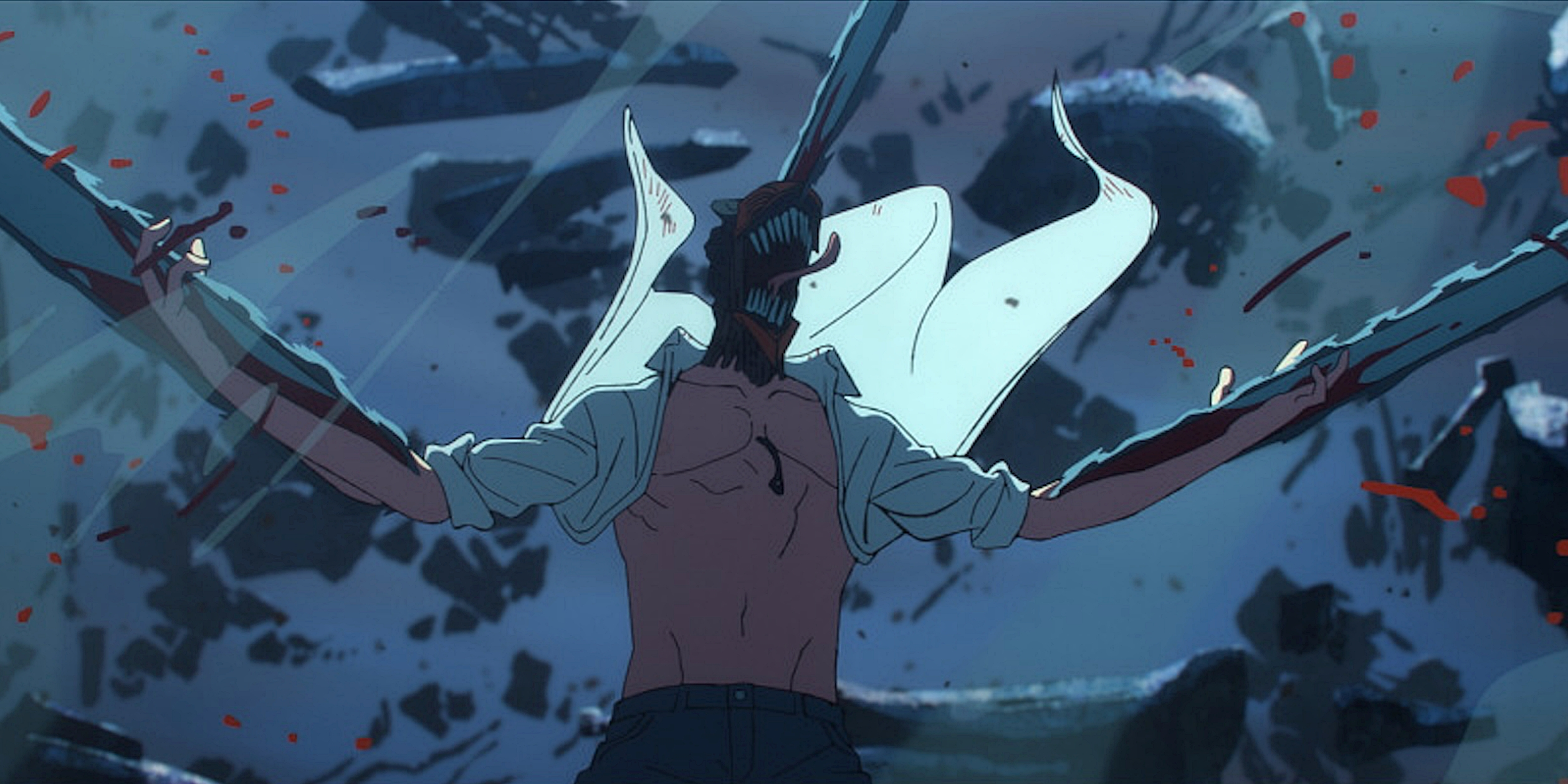
I’ll leave it at that, as the plot is best experienced with knowing as little as possible. Still, it’s pretty apparent to anyone familiar with the source material (Tatsuki Fujimoto’s manga) that Reze is not of the human kind. When this is revealed, the next hour of Tatsuya Yoshihara’s feature-length “episode” is an endless action sequence that astounds both emotionally and kinetically. The “cinematic” language of MAPPA’s anime series is stretched to grander heights on an IMAX screen, perfectly demonstrating the animation studio’s malleability in transitioning from the small-scale confines of television to the large canvas of a gargantuan screen. The film also shifts from a quasi-realistic “slice of life” picture (the burgeoning romance between Denji and Reze, which is deliberately paced) to an all-out explosion of artful colors and images that are as jaw-dropping as they nourish and stun the soul.
Fragments of a future life will be shown through different animation styles (one seemingly adopts watercolor-like movements), or sections of a fight scene will slowly shift tone and color to exacerbate the punishing ordeal Denji is currently feeling. One specific sequence is entirely in black and white, but the punches, which are lit with a bright orange, turn each hit into the fire of a thousand flames. It’s maximalist and hyperviolent, sure, but Yoshihara never forgets that, within the action, especially in anime, the characters grow and have profound experiences that change their perception of the world they live in forever.
I don’t want to compare apples to oranges (or, in this case, MAPPA vs. Ufotable), but last month’s Demon Slayer film was a perfect demonstration of this. Director Haruo Sotozaki would frequently halt the momentum of a present-day action sequence to fill out his lengthy runtime with as many flashbacks as possible, contextualizing the significance of the challenges Tanjiro (and the other antagonists) must endure. In Reze Arc, Yoshihara always captures each major action beat through the characters first, before distancing his camera to explode the screen with images of great intensity, only when the connection between the audience and the protagonists is made.
There’s also a real sense of humanism in the storytelling that is sorely lacking in most Hollywood animated offerings. The movie never talks down to the audience. It offers fully-fledged, mature characters they can latch onto, who, no matter how insane a given situation may become, especially in how humans and demons essentially coexist in this world, are fundamentally flawed. For instance, Aki Hayakawa (Shogo Sakata) wants to die, and he makes it clear to his colleagues that this world has offered him nothing in return ever since Himeno’s death. Yet, he finds a new purpose when Reze upends the stability of his – and everyone else’s – life. I won’t spoil what happens, but the sheer heroism he enacts during one key sequence instills in him that perhaps this life is worth something before he’ll eventually rejoin Himeno in the great beyond.
Yoshihara is also unafraid of confronting audiences with the grim moviegoing landscape we’re in, both in terms of the quality of motion pictures and the decline of cinema-going as a whole (cinema-hopping sounds fun, though). He does this before showing them what movies can – and should – look like in the last hour, so bracingly exhilarating it may very well make you emotional based on the sheer artistry on display, and then wreck you with how it ultimately wraps up. It remembers to stay as human as it can before moving on to the next phase of the series, which will be much darker than this film.
That could be why Reze Arc may be defined as a watershed moment for animation as a whole, and not just anime, as Hollywood continues to figure out if this medium should be taken seriously or be strictly reserved “for kids.” Japan and China have beaten them at this game already, and will continue to do so until they get the message. Thankfully, audiences will soon realize that, like Makima, this film will stay with them for the rest of their existence, as they continue to plow one mediocre motion picture after another to find the next title that will inevitably change their lives…