



Director: Hlynur Pálmason
Writer: Hlynur Pálmason
Stars: Saga Garðarsdóttir, Sverrir Guðnason, Ída Mekkín Hlynsdóttir, Grímur Hlynsson
Synopsis: Captures a year in the life of a family as the parents navigate their separation. Through intimate vignettes and strange occurrences, the film explores the complexities of family, love, and the impact of shared memories.
Some Icelandic history off the top, to whet your appetites: Every proper Icelandic surname ends with one of two distinctions, “son” or “dottir,” and is preceded by the patriarch’s first name. If your father’s first name was, say, “Bjarna,” your last name would ultimately be “Bjarnason.” That was my grandfather’s name before he moved West and Americanized it, tossing an “r” at the end to make it somewhat simpler for folks with pronunciation troubles. That’s it’s my father has always been Jon Bjarnar, not Jon Vilhjálmurson; his father was Vilhjálmur Thorsteinn Bjarnar, a linguistics lecturer and a historian with a focus on Old Icelandic Literature at Cornell University for the back half of his life before he passed in 1993. I never met him, but it’s from him that I got my name. Well, him and my mom, who agreed with my dad that honoring his late father was an appropriate thing to do with their first born, but as a longtime educator herself, refused to put a “Vilhjálmur Thorsteinn Bjarnar II” into the throes of Upstate New York’s public school system. I thank her and Jon for reaching such a compromise every single day.
A touch of extraneous lore there, but I hardly ever get to talk about it. Most people just ask me how it’s pronounced, or whether I know Thor, or why the “j” isn’t hard, or why I’m not Norwegian. (I never know how to answer that one. I’m just… not.) But Icelandic names have always intrigued me. I find it fascinating that since the country’s first genealogical records, which were written in Old Norse between the 9th and 11th centuries and are called “The Sagas of Icelanders,” this is how Icelanders have been named. Had my mom and dad grown up in Iceland, I likely would have been a Bjarnason – and also a Vilhjálmur. (Note: Will isn’t short for anything. Mom also didn’t want a “Billy.”)
It’s fitting, then, that I was knocked upside down, frontwards, and back around again by Hlynur Pálmason’s The Love That Remains, not merely because its cast members all have “son” or “dottir” in their names, but because it’s the best Icelandic film since Fridrik Thor Fridriksson’s Academy Award-nominated Children of Nature that I can remember predominantly dealing with “sons” and “dottirs” in an intimate, grounded fashion. It’s astonishing and familiar, even if the family at its center and the place they live aren’t necessarily ones that I recognize, last names aside.
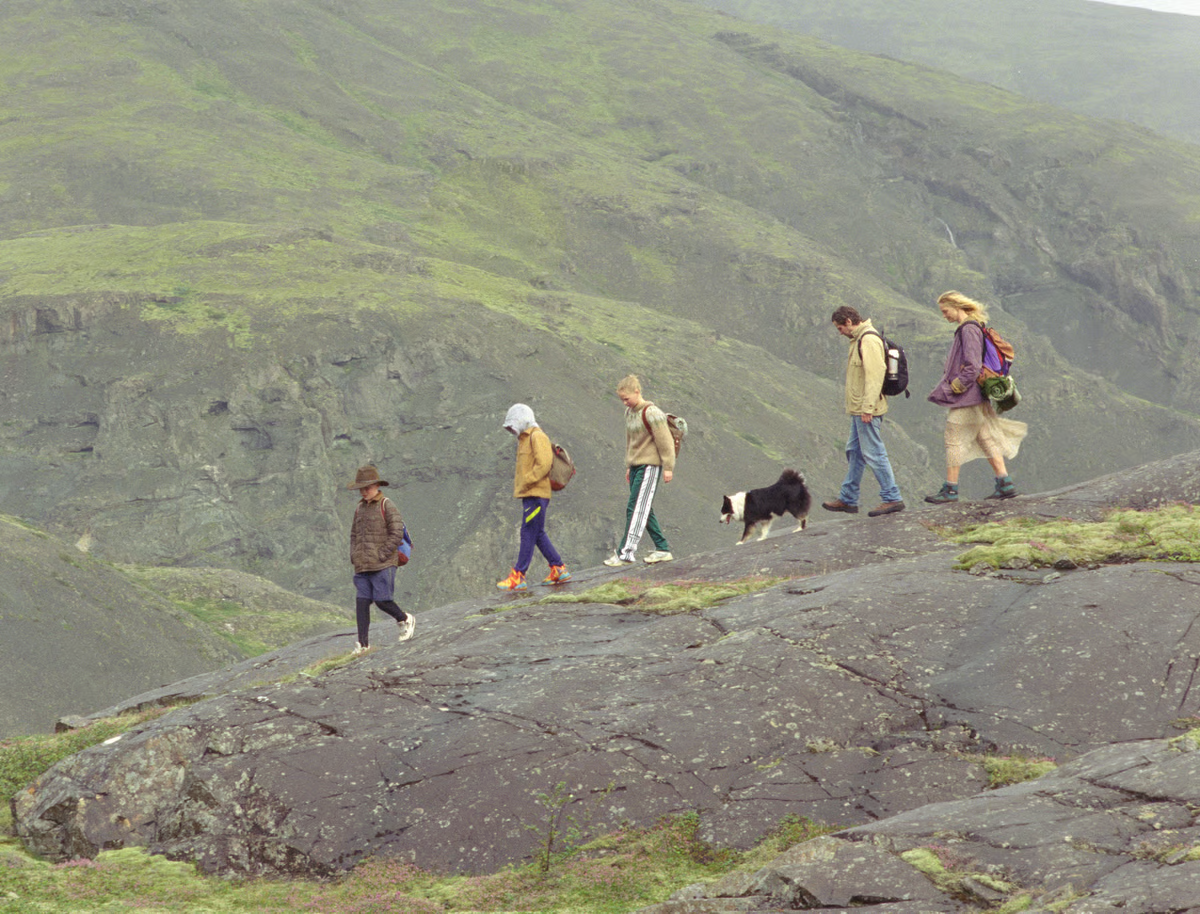
This might be due to its central narrative pillar, the separation of Anna (Saga Garðarsdóttir) and Magnús (Sverrir Gudnason), one that obviously impacts them individually while having a less definitive yet potentially more pivotal effect on their three children. (We see them coparent and struggle to communicate over the course of four seasons.) It could also have something to do with the intrinsic existence that names, sons, daughters, and families at large owe to their home land, especially one that continues to carry on ancient tradition that places an emphasis on blood relations. It’s not that most countries don’t, but there’s evidence in Pálmason’s impressionistic dramedy that the nation prioritizes connection more than most.
That’s best exemplified by the moments that are most closely rooted to that movement, one that relies far more on feelings than on fact. The family is a close-knit one, further complicating the nature of Anna and Magnús’s separation, though not necessarily in the expected manner. Their kids – who are all played by Pálmason’s own children, Ída Mekkin Hlyndsdóttir and twins þorgils and Grímur Hlynsson – speak frankly and, on occasion, inappropriately, suggesting if not ensuring that this household has a penchant for the intrusive. Of course, it makes for a film that highlights hilarity, one that views dark humor as one of its most powerful assets. (Keep an eye on the arrows that the youthful trio fire at a scarecrow donning knight’s armor, as one may or may not skewer your funny bone.)
But their familial rapport is much more of a distraction from their shared daily lives in the rural landscape they call home than a few mere cuss words and questions about why the chickens “let the rooster fuck them like that.” The joys they experience are genuine – and often aided by Panda the dog, who won Cannes’ top prize for canines in May and deservedly gets her own credit text – but their willingness to find anything that pulls their attention away from the marital dissolution occurring before them is just as concrete. It’s as if we’re watching routine after routine unfold through the reflection from a mirror with a crack through its center, though the split in the glass just seems to separate the picture into halves without warping the image.
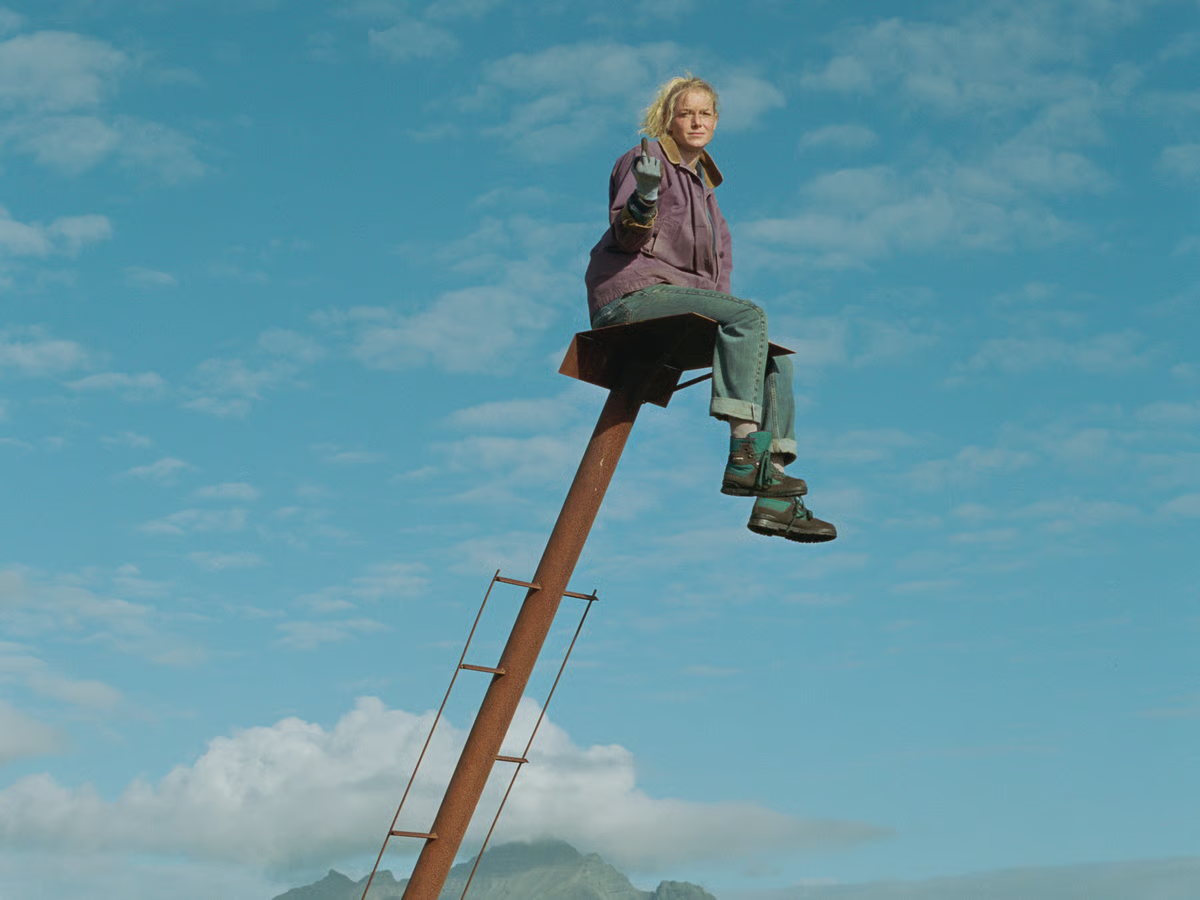
Pálmason’s filmmaking so often deals with “what surrounds us or where we come from,” as he told Variety about making this movie in particular, but it’s more evident here than ever. The performances – particularly from Garðarsdóttir, whose work with art in the film feels like free admission to a museum exhibit that has yet to be unveiled to the public – play with the sort of freedom typically reserved for less composed features than The Love That Remains, which is unmistakably and meticulously framed by Pálmason (who also serves as his own DP, shooting on gorgeous 35mm) but remains uninhibited by plot. It’s spontaneous, not unscripted; the former is often more difficult to capture, but is pure magic here in moments both imbued by the light and the dark.
Iceland’s fastest-rising filmmaker has been almost severely intrigued by melancholy since coming onto the scene with his 2017 debut Winter Brothers – a film that was similarly interested in the bonds siblings share – and has continued through his career, from 2019’s A White, White Day to 2022’s Godland. All are tremendous explorations of how displacement leads to discovery, and all wade through heartbreak like the world’s most resilient, picturesque canoe handling choppy white waters. The Love That Remains, however, pulls back the scope that those films had on one or two characters to capture a familial unit whose commanders are on the brink. The situation is knotty, and multiple parties are attempting to pull on separate ends believing that it will help loosen the tether; naturally, it only tightens the more they tug.
Better yet: It’s the struggle of a fisherman, like Magnús, battling with an unyielding cod, the hooked foe refusing to be lined and sinkered. It’s more compelling to watch spurned lovers grapple with the future of their relationship as opposed to giving up hope on it altogether, even if their disunion has occurred prior to the film’s prologue, but it’s heartbreaking, too, especially for a trio of preteens still in the primes of their youth. Then again, the parents are young enough to be considered well within their more seasoned salad days as well. Elation and dejection, as hand in hand as “sons” and “dottirs.” No matter what wins out, love remains.
The Love That Remains screened at the 63rd New York Film Festival and will be released in 2026 by Janus Films following its 2025 awards-qualifying run. It is Iceland’s official submission for Best International Feature Film at the 98th Academy Awards.