

Home Blog Page 102

Movie Review (Tribeca 2024): ‘Bang Bang’ is Tim Blake Nelson’s Time To Shine


Director: Vincent Grashaw
Writer: Will Janowitz
Stars: Tim Blake Nelson, Glenn Plummer, Andrew Liner

Synopsis: Tim Blake Nelson stars as ‘Bang Bang’ Rozyski, an eccentric retired pugilist obsessed with rectifying the sins of his past.


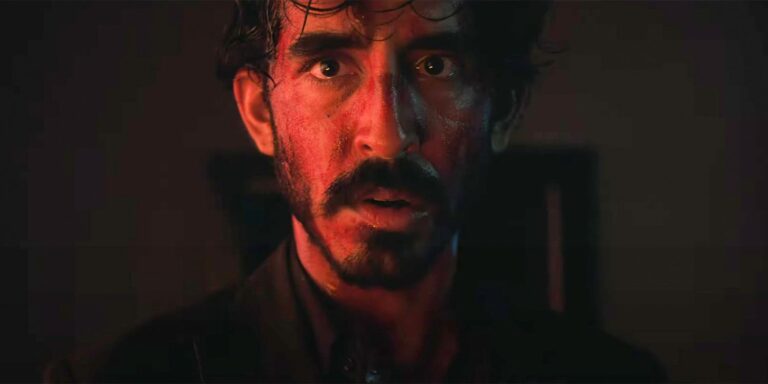
When weโ€™re first introduced to Bernard โ€œBang Bangโ€ Rozyski (Tim Blake Nelson), itโ€™s far from a pretty sight. Heโ€™s drunkenly dancing around his home in nothing but boxers, bottle of alcohol in hand. To be fair, what heโ€™s doing couldnโ€™t really be called dancing, I just donโ€™t know what else youโ€™d call it. Regardless, he appears to be having a bit of a breakdown. And heโ€™s just an absolute mess. But Vincent Grashawโ€™s Bang Bang isnโ€™t attempting to hide that fact. Instead, it puts the behavior on full display for the audience. Over the course of its runtime, this brazen behavior develops from comical for the viewer into something far more upsetting. Itโ€™s the slow realization that weโ€™re being introduced to a man who, at the end of this path, may not ever find a semblance of peace. Itโ€™s just a way to kill time in the hopes of wrapping it all up sooner.

As written earlier, Nelson portrays Bang Bang as a hurricane of curses and alcohol. His overall brash demeanor is also always on display. Heโ€™s consistently drenched in sweat. Heโ€™s beat-down, always popping pain medication for his hips. His clothes are mainly covered in stains, likely from the ketchup sandwiches he sustains himself on. His harsh attitude reaches new heights when, upon a surprise visit from his daughter and grandson, Justin (Andrew Liner), he outright refuses to provide any help in watching him for a bit while his mother is out of town. Eventually, he acquiesces upon being in the room with Justin again. This is such a great role for Nelson. Both his voice and particular look lend themselves incredibly well to such a stand-offish character. Yet, you fully believe him in his rare tender moments. It speaks to the talent Nelson has as a performer. For example, at one point in a supermarket, he literally drops all he is doing to help a stranger. A lesser actor would make this seem jarring after all the anger we have seen projected thus far. But here, it creates more of an enigmatic presence than anything else.

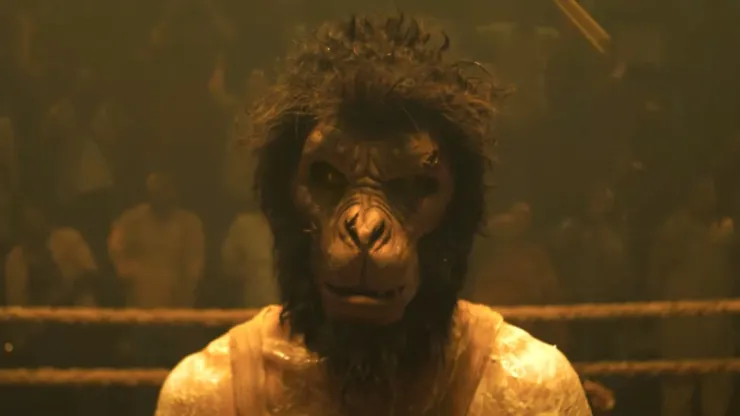
There’s no denying that this is a star vehicle for Nelson. But thereโ€™s more stewing beneath the surface of Bang Bang. The film is set in Detroit, although not being shot there hinders part of the film. Still, the script does not beat around the bush when it comes to all the turmoil and hardships the city has endured for decades. Bernard is a broken man in a seemingly broken city. He feels left behind. He feels like the world has left his home behind. He feels like those who he grew up around and fought against have left him behind. In the latter case, he details that most have ended up dead at a young age or in jail. Yes, heโ€™s angry at the hand heโ€™s been dealt in life. But he appears to be even more internally furious and pain-ridden that the hands donโ€™t stop getting dealt. So through Justin, we see him attempt to pick up the pieces. Maybe for all the pain heโ€™s dished out, heโ€™ll be able to channel it into something that will do some good for the family name. This is, in many ways, an inspirational sports story. But itโ€™s told with more vulgarity, violence, and vitriol than any youโ€™ve likely seen before. Those moments are when Bang Bang is at its best. Itโ€™s primarily everywhere else in the film that it begins to lose some steam.

It feels as if Bang Bang wants to say something about the history of Detroit, but never quite reaches a substantial point to make. Instead, there are simply general observations and musings on the city. It takes away a bit of the overall effect of the film, even if the film is not directly about the city itself. To link the character and the setting together so often in the film would have you think that it would amount to something in the end. And then the other perplexing element of this film is the moments in which it chooses to be tender. On one hand, thereโ€™s an interesting dichotomy at play between Bang Bang, who the public sees, and Bernard, who Sharon (Erica Gimpel) sees. The two are old friends, possibly even ex-lovers, who find themselves in the midst of a fling. At one point, Grashaw places the two of them into an incredibly vulnerable sequence. Itโ€™s unlike anything else in the film, and is handled very beautifully in terms of how the scene looks, as well as how it plays out in isolation. But within the feature as a whole, it seems to completely clash against everything around it. It feels as if itโ€™s pulled from a different film. To clarify: if taken completely out of the film and played on its own, itโ€™s a well-executed and performed scene. Thereโ€™s just such a stark contrast between the sequences that bookend it, let alone the rest of the film, that it doesn’t feel as if it earns this sudden turn. Thatโ€™s not to say the scene diminishes the character, but it just poses a series of questions that the film doesnโ€™t seem all that interested in.

But as I wrote earlier, this film basically operates as a vehicle for the always excellent Nelson. And itโ€™s in his hands that it thrives in any sort of way. He has the ability to hide a lot of pain behind mannerisms and phrases that leave you equal parts laughing and in shock. Early on, a cop tells Bang Bang that being nasty is overrated. It doesnโ€™t seem to faze him in the slightest. And to be honest, the audience wonโ€™t be either. This is due to the fact that Nelson plays this character with that vitriol in a way that is wildly refreshing for a sports drama. And then, in the final moments, thereโ€™s a radical shift. While not entirely earned as a character reveal, itโ€™s a touching and important disclaimer about the entire film. Again, this rides on the back of Nelson. Despite all his flaws, you canโ€™t help but be a bit endeared to his prickly persona. And then the film ends on a rather touching note. Itโ€™s one of much importance that I donโ€™t think should be held to the final moments. Whatโ€™s been alluded to throughout now serves as a dedication to those in similar real-world circumstances. Rather than frame those earlier tender moments as merely an event, perhaps it would have played better as a clearly broken man desperately trying to fill the hole in his heart. Bang Bang, at the very least, is an occasionally interesting film with a very strong-willed lead performance. It wouldnโ€™t hurt to have more sports films with as much grit and grime as this one. Importantly, it never glorifies the lifestyle. It admits that there are many ways in which the sport of boxing can ruin lives. Itโ€™s just up to the individual to decide how far they want to take it. The film just hopes the individuals have the ability to choose for themselves.

Bang Bang celebrated its world premiere at the Tribeca Film Festival in the Spotlight Narrative section. More information on the film can be found right here.

Grade: C-

Episode 590: Gentleman’s Agreement

This weekโ€™s episode is brought to you by Koffee Kult. Get 15% OFF with the code: ISF

This week on the InSession Film Podcast,we continue our Best Picture Movie Series with Elia Kazan’s 1947 winner Gentleman’s Agreement! We also talk Pixar, hot takes and Sony buying Alamo Drafthouse.

Check out this weekโ€™s show and let us know what you think in the comment section. Thanks for listening and for supporting the InSession Film Podcast!

– Pixar and Hot Takes (1:05)
After some opening banter, we begin the show this week with a massive Pixar rabbit hole. We talk everything from our Pixar movies, the latest discourse on Pixar hot takes and how we feel about the studio overall heading into their latest film in Inside Out 2.

– Sony Buys Alamo Drafthouse (49:37)
We had to spend at least a few minutes on the news that Sony, one of the few major film studios out there, has now re-entered the theatrical distribution market after buying up Alamo Drafthouse. It’s the first time in decades that a major studio has done something like this, and as you can imagine, it has many people worried as to what it could mean in the long run. 


RELATED: Listen to Episode 516 of the InSession Film Podcast where we discussed our Top 10 Movies of 2023!


– Best Picture Movie Series: Gentleman’s Agreement (1:03:26)
We continue our Best Picture Movie Series in the 1940s with Elia Kazan’s 1947 Oscar-winning film Gentleman’s Agreement! While you have to respect Kazan’s convictions and courage for making this film, there are unfortunately some major aspects that do not hold up well through a 2024 lens. There are good things and you can see why people at the time voted for it, but sadly this is a film that despite its affable intentions, it doesn’t quite hit the mark.

– Music
Bundle of Joy – Michael Giacchino
Gentleman’s Agreement – Alfred Newman

Subscribe to our Podcasts RSS
Subscribe to our Podcasts on iTunes
Listen on Spotify
Listen on Stitcher
InSession Film Podcast – Episode 588

Next week on the show:

Best Picture Movie Series: Hamlet

Help Support The InSession Film Podcast

If you want to help support us, there are several ways you can help us and we’d absolutely appreciate it. Every penny goes directly back into supporting the show and we are truly honored and grateful. Thanks for your support and for listening to the InSession Film Podcast!

VISIT OUR DONATE PAGE HERE

Movie Review: ‘Tiger Stripes’ Rebels Against the Patriarchal Prison


Director: Amanda Nell Eu
Writer: Amanda Nell Eu
Stars: Zafreen Zairizal, Deena Ezral, Piqa

Synopsis: An 11-year-old girl who is carefree until she starts to experience horrifying physical changes to her body.


Menarche and menstruation tales run through folklore and fairytales in almost every culture. Although some scholars make a distinction between mythology and folklore, they do tend to have crossovers when dealing with matters of the body (as opposed to finding explanations as to why it rains and the like). โ€˜Eveโ€™s curseโ€™ would be the most obvious example in the Judeo-Christian bible, but even apocryphal or syncretic texts such as tales of Lilith (Lilit, Lamia) the one who does not bend to Adam is demonic and a shapeshifter. Sleeping Beauty is a menarche tale with the pricking of the princessโ€™ finger on a spindle representing the shift into maidenhood โ€“ one that shares her curse with a kingdom. Werewolf tales have obvious connotations with the moon cycle and the menstrual cycle (The Company of Wolves and Ginger Snaps). Amanda Nell Euโ€™s Malaysian coming-of-age fantastique Tiger Stripes uses the image of the harimu jaidan or weretiger as an avatar of change for the pre-teen protagonist, Zaffan (Zafreen Zairizal) is experiencing bodily.

Zaffan and her friends Farah (Deena Ezral) and Mariam (Piqa) are in their final year of primary school and studying for their exams. Zaffan is already a wild thing โ€“ dancing with abandon to pop music in the bathrooms. Zaff is a lot freer than Farah and Mariam, but her freedom is based in innocence and curiosity. She wears a bra she found somewhere, experimenting with womanhood but not ready for it. Womanhood means shame. In a society where ignorance about female bodies and desire is built into patriarchal control does a girl want to โ€˜grow upโ€™?

Walking home after school the girls place puffy stickers on signs showing a rural Malaysia caught between emerging capitalism and provincialism. The lush forest is the place Zaff inhabits with an abandon that Farah resents. Zaff isnโ€™t afraid to pull off her hijab and throw herself into the local watering hole. Generally, Zaff isnโ€™t afraid until she is made to fear. The thing she is made to fear the most is her own body, and, in turn, her body becomes a site of fear.

Zaffโ€™s mother, Munah (June Lojong) has told her daughter nothing of what will happen to her body once she begins menstruating. All a shocked Zaff is told is that she is โ€œdirty now,โ€ and handed a sanitary product and told to wash. Farahโ€™s jealousy of Zaff is given free rein as she moves to ostracize her through organized bullying. Mariam watches with confusion as her friend becomes โ€˜otherโ€™ to everyone. Stories of a wild woman called Ina circulate; a woman who lives in a tree sent there because she did not keep herself clean. Before Zaffโ€™s body begins to shift into something else it is already monstrous in the eyes of her classmates. Zaff is a โ€˜slutโ€™ and โ€˜whoreโ€™ who stinks and brings with her evil spirits according to Farah and her new coterie of followers.

Zaff is changing shape. Small things which could be explained by hormonal changes such as hair loss, changes in appetite, and skin issues become, over time, her becoming a supernatural being. But as disturbing as these changes are initially and as painful and grotesque; they are not where the fear in Euโ€™s work resides. Zaff becomes a shadow of her former self because she is oppressed by women and girls acting on behalf of a religious and social environment which has made them loathe themselves. Zaff hides in plain sight for as long as she can trying to fit in with what is expected of her until her animal power is provoked and lashes out.

Amanda Nell Eu is bringing a specifically South Asian flavor to an old tale, but she is also placing it specifically in the context of Malaysia now. A place where women hold jobs but are still taught โ€˜The father goes to workโ€™ and โ€˜The mother cooks at homeโ€™ in English language classes. Where girls participate in Cadet activities and are expected to do well in school to get scholarships yet are bound by cultural shame over a biological function.

Zaff is considered a point of contagion where other women and girls begin to experience mass psychogenic reactions when in contact with her. An exorcist is called in (something which is remarkably common) to rid the school and community of the evil inside a girl. Dr. Rahim (Shaheizy Sam) and his obvious scam to provide spiritual purity to the area and stop the hysteria does more harm than a โ€˜tigerโ€™ being left alone.

Amanda Nell Euโ€™s Tiger Stripes employs its fantastical elements with a deft hand. The film isnโ€™t asking the viewer to see realistic โ€˜monstersโ€™ in the girls and women who have been ostracized, because they arenโ€™t monsters at all. For Mariam, Zaff is her friend who is just one step ahead of her in the line to self-actualization. Whatever has taken hold of Zaff isnโ€™t a threat to Mariam but rather something intoxicating and liberating. Instead of forming part of a pack who would hunt Zaff down, she asks her friend to show her the โ€˜UwUโ€™ โ€“ reminding the audience that they are young girls.


Tiger Stripes is sharp-clawed but soft-pawed. Eu is angry at the patriarchal prison which cages girls and sees their emerging bodies and desires as monstrous. Inside the anger, however, is a story about a young rebel, her best friend, and the beauty of their ferocity when they no longer have to keep it hidden. A thrilling addition to the empowered rebel and feral girl canon.

Grade: B+

Movie Review (Tribeca 2024): ‘Sacramento’ is Charming But Lacking


Director: Michael Angarano
Writers: Michael Angarano, Christopher Nicholas Smith
Stars: Kristen Stewart, Rosalind Chao, Michael Angarano

Synopsis: Rickey, an energetic and free-spirited young man who convinces Glenn, his long-time friend who’s settled into domestic life, to go on an impromptu road trip from Los Angeles to Sacramento.


Whenever I think of my small group of close-knit friends, I canโ€™t help but feel lucky. I look back to a time when I considered my friend group to be massive. Growing up, I was a loud mouth who always wanted to crack jokes. But at the end of the day, I had very few people who I could actually consider a friend. We did everything together, but now, almost two decades later, we chat maybe once a year, and itโ€™s the social pleasantries of saying happy birthday or something similar. As I said, to have the friends I have now makes me feel very lucky. A few of them Iโ€™ve known for half of my life at this point. But whenever I think back on those past friendships, I canโ€™t help but feel a sense of yearning. Your first friends in life. Theyโ€™ll mean something to you forever. But of course, as we grow up, we become different people in a way. And do those new sets of people still have what held the friendship together in the first place? With his latest directorial effort, Sacramento, the multi-hyphenate Michael Angarano makes the attempt.

I use that phrase because, more often than not, a lot of relationships are maintained through making an attempt. The effort of reaching out goes a long way. For a society that has now found itself structured around these instant communicators in our pocket, why do we sometimes find it so hard to reach out? It has never been easier in the history of human existence. But even still, we often donโ€™t send that text or make that call. And I can write that not only from personal experience, but can confidently say that many of us have shared a similar sentiment. There may be a reason for not reaching out. But it could also just be the simple passage of time. Thatโ€™s the case for Glenn (Michael Cera) and Rickey (Angarano), two lifelong friends who have grown apart in recent years. This may seem like a shock to Rickey, but Glenn tells Rosie (Kristen Stewart), his wife, the reason behind his choices. Beyond time merely pulling them apart, Glenn and Rosie are expecting a baby. And Glenn merely feels that Rickey has not made it to that stage of his life yet. Angarano plays the role of an immature free spirit. Itโ€™s not difficult to imagine heโ€™s never really held a steady job or a long-term relationship. Part of it certainly stems from personal choice and feeling like heโ€™d rather enjoy what life has to offer. And while we can still do that at any point in our lives, there does come a time when we need to accept the new responsibilities that come with time. From how we meet Rickey, itโ€™s clear that heโ€™s not ready for that commitment to maturity.

We first see him, alone in the woods, sitting naked on a chair. He hears somebody shout to him about his exposed genitalia with jest in her voice. They are separated by a lake, and decide to meet in the middle. Rickey jumps in without a second thought, only for Tallie (Angaranoโ€™s real-life wife, Maya Erskine) to change her mind. This is the story of how Rickey meets Tallie. We cut to hours later, and the two are sharing casual banter while quickly realizing they have nothing in common. But that doesnโ€™t matter, because itโ€™s apparent this is a whirlwind meeting of two people who have undeniable chemistry. We jump in time a year, and while Tallie is nowhere to be seen, this idea of a whirlwind relationship is again seen between Rickey and Glenn. The former shows up, unannounced, and asks Glenn to lunch. Glenn, a clear bundle of nerves and panic-related anger issues, is flabbergasted. This is added to when he sees that Rickey is driving the car they seemingly grew up driving together. Itโ€™s been all fixed up at a cost greater than the initial purchase price. Itโ€™s here we begin to feel sad for Rickey. Glenn merely wants to get the lunch over with, but Angarano plays the character in such a way that you canโ€™t help but empathize with. Heโ€™s forcefully holding onto whatever friendships he can in whatever ways he can manage. One gets the sense that Glenn is the only person left in his life. And while Glenn and Rosie are expecting a child, it seems as if Glenn isnโ€™t much different than Rickey. Rosie repeatedly says as much throughout the film, voicing her frustrations with Glennโ€™s inability to care for himself, or his lack of releases in the form of other relationships.

While this does feel like a film solely interested in the dynamics of adult male friendships, the ways in which Erskine and Stewart are relegated to the outskirts is a bit upsetting. Theyโ€™re obviously both very talented and have great screen presence whenever in the film. But one canโ€™t help but feel their characters are underserved. Stewart for example, is in maybe 5-7 minutes of the film, mostly to poke fun at Ceraโ€™s character. But in this comedy lies the opportunity for poignant observations from partners about immature men who feign having it all together. It just feels as if their lack of screen time undercuts the overall drama of the script at large. To flesh out both Rosie and Tallie a bit more would likely go a long way in making the entire cast of characters feel more three-dimensional. But even with such flaws, Sacramento is constantly charming, and consistently funny. 

Angarano and Cera play well off one another, and the film sticks with them for a large swath of its short runtime. It also plays up the pains that come with aging, even if we still may be considered young. I personally felt seen when Cera, fighting a hangover, details how heโ€™s โ€œonly a manโ€ when relaying the three beers and two shots he had. Sacramento examines this idea of aging affecting us all in different ways in ways that are often interesting, but always comical. Time may pull us apart, and aging certainly takes its toll on us all. But itโ€™s with the company we keep, and the memories we have made over a lifetime thus far that will help us weather the storm in the end. Maybe we can revisit those connections we once held but let fall to the wayside. Maybe those once-a-year dinners or quarterly texts could grow into something beautiful again.

Sacramento celebrated its world premiere at the Tribeca Film Festival in the U.S. Narrative Competition section. More information on the film can be found right here.

Grade: C

Chasing the Gold: 2024 Cannes Recap (Part 2)

This week on Chasing the Gold, Shadan is joined by Hรฉctor Gonzรกlez once again to discuss his experience at this year’s Cannes Film Festival! This time around Hรฉctor talks about the films he really loved at Cannes and why these films will resonate at the end of the year.

Movies Covered in Part 2:
13. Something New, Something Old, Something Borrowed
12. Universal Language
11. The Other Way Around
10. All We Imagined as Light
9. Oh, Canada
8. Blue Sun Palace
7. Anora
6. Misericordia
5. Caught by the Tides
4. The Shrouds
3. The Hyperboreans
2. The Substance
1. It’s Not Me

On that note, check out this week’s show and let us know what you think in the comment section. Thanks for listening and for supporting the InSession Film Podcast!

Subscribe to our Podcasts RSS
Subscribe to our Podcasts on iTunes
Listen on Spotify
Listen on Stitcher
Chasing the Gold – 2024 Cannes Recap (Part 2)

Help Support The InSession Film Podcast

If you want to help support us, we would greatly appreciate it! For more info, CLICK HERE.

Movie Review: ‘The Imaginary’ is Breathtakingly Full of Magic


Director: Yoshiyuki Momose
Writer: Yoshiaki Nishimura
Stars: Louie Rudge-Buchanan, Evie Kiszel, Hayley Atwel

Synopsis: In rural Western Massachusetts, 11-year-old Lacy spends the summer of 1991 at home, enthralled by her own imagination and the attention of her mother, Janet. As the months pass, three visitors enter their orbit, all captivated by Janet.


Some say animation is not cinema. Yet, the new Netflix streaming film The Imaginary is a breathtaking example that challenges even the most cynical and closed-minded views of what makes film an art form. 

After last yearโ€™s embarrassment of riches like the transcendent Spider-Man: Across the Spider-Verse, the exquisite artistry of The Boy and the Heron, and the shell-shockin’ good time of Teenage Mutant Ninja Turtles: Mutant Mayhem, can we finally let the genre have a home of its own in the cinema lexicon?

The Imaginary is one of those filmsโ€”a wonderful and creative breath of fresh air that is destined to be hailed by critics and audiences alike. The animation is gorgeous, and the story lives up to the limitless possibilities. This family film of unparalleled empathy and unspeakable compassion sparks a passionate fascination with what movies are and what so-called cinema can be.

Thereโ€™s magic in it.

The story (and we will be going with the American voice cast) follows Amanda (Evie Kiszel), who has been struggling living in a single parent household. She has begun to distract herself with her best friend, Rudger (Louie Rudge-Buchanan), who happens to be a figment of her imagination. The imaginary Rudger can only be seen and interacted with by Amanda, and her mother, for obvious reasons, Lizzie (Hayley Atwell), cannot see him.

However, things come to a head when a nefarious character named Mr. Blunting (Jeremy Swift) comes to town, even to the family’s front door. He is looking for Amanda, and she is shocked when she finds out that the creepy man can see her imaginary friend and knows who Rudger is. After avoiding him and his little minion, who looks like a rip-off of Wednesday Addams, Amanda is injured, taken to the hospital, and has yet to wake up.

Rudger now faces the possibility of disappearing because if Amanda dies, he will go away, and no one will remember him. However, he runs into the precocious Emily (Sky Katz), the delightful Hippo, Snowflake (Roger Craig Smith), and a talking feline with heterochromia, Zinzan (Kal Penn), who takes him to the Town of Imaginaries, where they think Mr. Blunting is a folklore or urban legend. The question then becomes: can Rudger get back to Amanda before Mr. Blunting can get to him or before he fades into eternity?

The Imaginary is an adaptation of the book of the same name by A. F. Harrold and illustrated by Emily Gravett. There is an eye-opening team behind this project. Directed for the big (and small) screen by Yoshiyuki Momose and written by two-time Academy Award nominee Yoshiaki Nishimura, it is a stunning film by any standard, live-action or animation. The eclectic use of animation almost seems capricious at times, but the joyful madness on the screen is ambitious and stunning to take in.

And itโ€™s no wonder, considering Momose, the legendary animator, cut his teeth working with the iconic Studio Ghibli on Hayao Miyazaki films such as Princess Mononoke, Porco Rosso, Whisper of the Heart, and Spirited Away. Here, he has crafted a movie as good as those. There is a sense of magic, wonder, and even hair raising dread with Momoseโ€™s vision, which comes to astonishing light.

The script is a pitch-perfect adaptation, bringing such ambitious source material to life. In particular, the ingenious way the story shifts subjects between the first and second acts while opening up a world of possibilities genuinely captures the audience’s fascination. The third act, which tests preconceptions of social constructs, is bold and teaches valuable lessons. You know, besides staying away from a creepy guy chasing kids, but themes of love, loss, and grief are deeply felt here. 

The Imaginary is worth watching because it evokes wonderment, explores modern cultural themes, and employs innovative storytelling techniques. Not to mention its use of what has been described as “groundbreaking hand-drawn animation with first-of-their-kind techniques” using light and shadows.

The result is visible on the screen. Even the most minor scenes are intensely vibrant and engaging. Momose utilizes this technique to evoke emotions, employing precise lighting to immerse the viewer in a holistic experience. There is even a poignant scene near the end of the film with motion that’s almost lyrical, bringing some gravitas and real stakes to the story.

Sure, almost all the characters resemble Precious Moments figurines, but aside from that, everything about The Imaginary works harmoniously. It features unexpected moments that many studios wouldnโ€™t dare attempt in crucial plot points. This is bold, ambitious, and exciting filmmaking that will awaken the child in you while occasionally delivering a punch of emotional resonance.

As I said, there’s magic in it.

Grade: A

Movie Review: ‘Just the Two of Us’ Reveals a Chilling Reality


Director: Valรฉrie Donzelli
Writer: Audrey Diwan, Valรฉrie Donzelli, ร‰ric Reinhardt
Stars: Virginie Efira, Melvil Poupard, Dominique Raymond

Synopsis: Follows Blanche Renard, who meets Greg Lamoureux and believes he is the one. However, she soon finds herself caught up in a toxic relationship with a possessive and dangerous man.


โ€œIf you loved me, you wouldnโ€™t let me be a monster.โ€ โ€“ Grรฉgoire to Blanche

Valรฉrie Donzelli directs and, with Audrey Diwan, adapts the novel โ€œL’amour et les forรชts.โ€ Starring Virginie Efira in twin roles, Just the Two of Us flirts with heightened genre flourishes but pulls back to reveal a simple chilling reality: domestic abuse.ย 

Blanche Renard is the white to her twin sister Roseโ€™s red. Or at least that is how it appears on the surface. Blanche is the more cautious sister, the intellectual who teaches French literature. Rose is the for the moment party girl who has to cajole and convince Blanche to come to parties in the breezy summer of their hometown in Normandy. 

At one of the parties Blanche is recognised by an old acquaintance, Grรฉgoire Lamoureaux (Melvil Poupard) who hones in on her with a brash charm that disarms her. A well-dressed banker who once wanted to be a pilot, Grรฉgoire sweeps Blanche off her feet. He insists he is her โ€˜perfect matchโ€™ and Blanche doesnโ€™t doubt it as they dance together encircled by mutual desire. The halcyon blush of true romance colors Blancheโ€™s cheeks and makes her bed a sanctuary where she and Grรฉgoire discuss literature and make love. 

Rose isnโ€™t entirely convinced by Grรฉgoire nor the speed the relationship develops. She genuinely wants Blanche to be happy but to be so completely consumed by another is accompanied in her mind by eventual loss such as their widowed mother faced with their beloved father. Unable to articulate her discomfort to Blanche, Rose finds herself being pushed to the side as Grรฉgoire starts to undermine Blancheโ€™s familial ties.

Soon, Blanche is pregnant and although she is unsure she wants to keep the fetus, Grรฉgoire finds the idea of them as a family unit perfect. Small signs that he might be a little too possessive pass Blanche by as she readies herself for motherhood and an unexpected relocation from Normandy to Metz. Despite the literature she taught warning her that in Racineโ€™s words which Grรฉgoire repeats, โ€˜And I even loved the teardrops I made her shed,โ€™ Blanche acquiesces to him repeatedly.ย 

Grรฉgoire is relentless with his manipulation leaving Blanche psychologically unanchored. In a small and cold town surrounded by woods, the mother of a small daughter and soon pregnant again Blanche isnโ€™t precisely sure when she surrendered her autonomy or whether it was taken from her. Either way, even the smallest resistance to Grรฉgoireโ€™s routine and rules means an escalating barrage of recriminations. In a house with no doors on the bedrooms Blancheโ€™s world is claustrophobic. 

Even her teaching job in a nearby town is a threat to Grรฉgoire. If she is celebrated for her intellectual skills, he feels emasculated. If she is seen by others, she is declaring herself apart from him. His possession of her and the children runs deep. A song sung in the van on the way to Metz, โ€œI will love you until the day I dieโ€ is a more immediate promise than Blanche first realised.

The twist in Just the Two of Us is there is no twist. Told in segmented flashbacks to a lawyer, Blanche speaks of shame keeping her tethered to a situation that becomes increasingly deadly. Valรฉrie Donzelli employs techniques to make the viewer feel inside Blancheโ€™s reality. Laurent Tangyโ€™s cinematography shifts hues โ€“ red for passion becomes in retrospect red for danger, but the greatest danger isnโ€™t even given a color. It is the light in the kitchen in the morning. It is the flattened affect of slow suffocation. It is a bedroom, a bathroom, a phone screen, a view from a windscreen or a window. 

The use of Racine, Moliere, and Flaubert is a touch on the overly symbolic side just as the target practice with Blancheโ€™s one time lover is. What keeps these parabolic elements from becoming too affected is Virginie Efira’s performance. Efira wears the weight of over seven years with a man who has caused continual fight or flight exhaustion where neither action appears feasible. If she leaves, is she dooming her children and herself to a lifetime of looking over their shoulders? If she stays, will she have a lifetime at all? Efira is an actor for whom emotional and physical interpretations are intellectual and corporeal. Her attraction to Grรฉgoire is carnal but not reckless. Blanche isnโ€™t a fool, but she is fooled.

โ€œI just want you to myselfโ€ are words used painted as romantic or committed. Rarely do people think of them as a warning that they are a possession, yet domestic violence, coercive control, and spousal abuse are epidemic. On average, in France, a woman is killed by her partner or ex-partner every three to four days.ย 

Just the Two of Us is horrifying because it doesnโ€™t stretch credibility or imagination. There is no ultimate revenge and no firm end. An everyday fight for survival which happens across class and cultural milieus. Virginie Efira and Valรฉrie Donzelli force the audience to hold their breath and even as the credits roll it may be difficult to exhale.

Grade: B+

Movie Review: ‘Ghostlight’ is an Astonishing Creation


Directors: Kelly O’Sullivan, Alex Thompson
Writer: Kelly O’Sullivan
Stars: Keith Kupferer, Katherine Mallen Kupferer, Tara Mallen

Synopsis: When a construction worker unexpectedly joins a local theater’s production of Romeo and Juliet, the drama onstage starts to mirror his own life.


The ghost light is a theater practice of placing a light center stage for safety reasons so that in the completely dark theater, one can see their way around obstacles or danger. Though, like many things in the theater, it’s also a superstition. A ghost light is away to ward off or encourage the spirits that haunt theaters. It is a connection between our world and the spirit realm. It’s like the connection between an actor and their role.ย 

There’s an alchemy to channeling someone else’s existence through our body. Performance is a form of possession, taking over the person in front of us, stripping them away. Ghostlight is a film about many things, but it’s very much a film about developing empathy through acting. From the perspective of Dan (Keith Kupferer) we’re transported into a community of actors. Actors who see and feel in a completely different way than Dan is used to. Being with those people, giving himself to the process brings out what Dan hasn’t been willing to say, or think, or feel as he deals with his grief.

Writer Kelly O’Sullivan has built a deeply layered film. She slowly, beautifully creates the narrative in stages, calling our attention to details, feeding our brains pieces of a puzzle that our heart begins to work out through context. This isn’t a film of grand exposition, preamble, or aside. Ghostlight is a film that gives us everything we need when we need it and not a second sooner. You can see the ghosts, the small ideas written into the script, on the screen in a way that’s magical. It’s a story that will unfold in your head for hours after watching it as your brain stitches together the brilliance of the nuance in every scene and every word spoken. Ghostlight’s characters drive us forward, build the tension, and break our hearts. The script attains that rare balance of true human drama with very funny comedy, often within the same scene.

There is a scene of the production of ‘Romeo and Juliet’ when the players are rehearsing the play’s final moments. Directors O’Sullivan and Alex Thompson stage the scene perfectly with Dan in the wings like an audience member and two of his fellow castmates, the veteran Rita (Dolly De Leon) as Juliet and the enthusiastically hammy Lucien (Tommy Rivera-Vega) as Romeo. As the scene progresses and Lucien keeps us enthralled by his antics with the poison bottle, editor Mike S. Smith cuts over to a visibly upset Dan. There is a back and forth that continues until Dan finds his voice, his anger and his relief about finally telling his castmates about his real life tragedy. We go from chuckling at the ludicrous acting choices of Lucien to weeping with Dan as the rest of the cast does. It’s a masterful balance for the scene and the film.

These types of scenes wouldn’t work if it weren’t for the incredible cast of Ghostlight. They have a brilliant authenticity to their characters and know them intimately. Dolly De Leon steals every scene she’s in because her character feels so lived in, like she’s known Rita, has been Rita. It’s the kind of intimacy brought by the actors playing our nuclear family because they are a nuclear family. Tara Mallen imbues Sharon with that staunch determination of a woman doing everything to hold her family together so much so that she feels she can’t exist in her own grief. Katherine Mallen Kupferer as Daisy has that incredible fiery tempered teenager mixed with theater kid drive and energy down pat. Keith Kupferer as Dan is an utter revelation.

Kupferer is so incredibly naturalistic in his role. He has these looks, these expressions, that play across his face. As a taciturn character Dan is rarely speaking his mind aloud. He’s a roiling mass of pent up emotions ready to explode. Kupferer finds that within his performance. His movements, presence, and at times, grace build into a towering life on screen.

Ghostlight is the kind of film that you didn’t know you needed until you’ve seen it. It captures the feelings of grief and empathy in a way that is simply astonishing. In true cinema fashion, we are stripped of the seat we’re in, the building around us, the screen we watch, and we become ghosts. We haunt the lives of these fully fleshed out characters experiencing their grief and their triumph. We laugh, we cry, and we remember what it is like when we let others into our lives, when we stop just existing and learn how to live again.


Not enough can be written or said about Ghostlight. It’s a film that goes beyond what you think a film like it can be. It’s perfectly paced, superbly acted, and it is one of the best written films of the decade. There is nothing else like it on screens now and it must be seen.

Grade: A

Midnights at Tribeca: The Films of the Program, and an Outlier That Fits the Bill

The so-called โ€œMidnightsโ€ section at any given film festival offers audiences a slate of films that aim to โ€œshake things upโ€, or to stray from mainstream programming. Something like Celine Songโ€™s Past Lives doesnโ€™t quite strike that chord, but movies like Jane Schoenbrunโ€™s I Saw the TV Glow and Chris Nashโ€™s In a Violent Nature most certainly fit the bill. At the Tribeca Festival, the films and the names involved in their making are on the smaller side, but the program is nonetheless stacked; frankly, its Midnight entrants are all the more intriguing for the festivalโ€™s overall makeup.

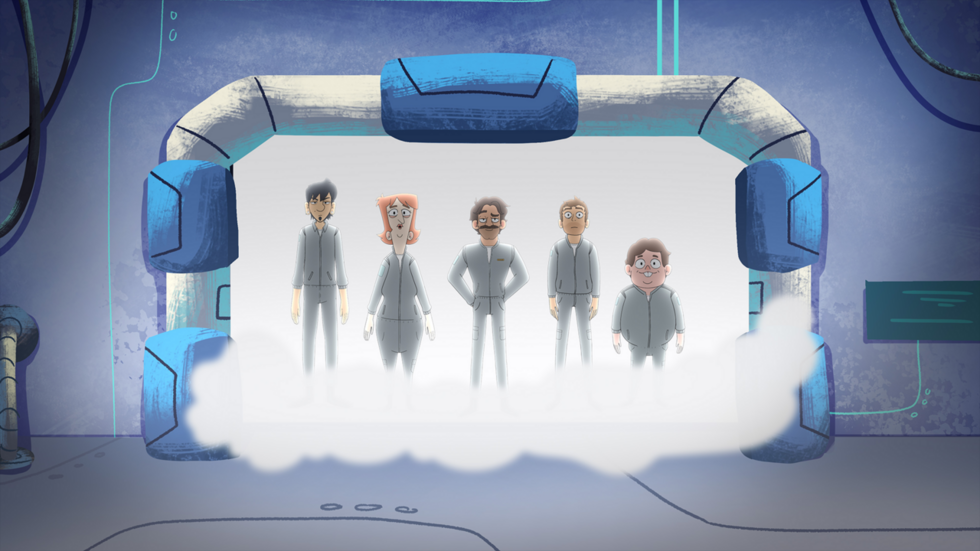
Take Mars, for example, the latest raunchfest from the comedy troupe, โ€œThe Whitest Kids Uโ€™ Knowโ€. The animated comedy follows a ragtag group of civilians that has been randomly selected by a billionaire named Elron Branson to take a trip to the red planet for shits and giggles. The filmโ€™s main character, Kyle, is something of a stick-in-the-mud dentist who is bored with his life, wishes to be rid of his maniacal fiancรฉ, and needs an easy way out. This fantastical sweepstakes couldnโ€™t have come at a better time, and his selection to join the crew sets off a slew of inane and insane gags that essentially turn a lesser Adult Swim skit into an 80-minute feature. 

Originally conceived as a live-action film by the groupโ€™s co-founders Zach Cregger (the writer-director of 2022โ€™s Barbarian), Sam Brown, and the late Trevor Moore, Mars is silly, stupid, and wholly inappropriate. In other words, itโ€™s quite literally what any Midnights section inclusion should set out to be. Elron Branson, the aforementioned billionaire behind this galactic extravaganza, has an obvious inspiration (or two) for his name, and is eager to tell anyone and everyone about how important it is that space travel has now been privatized in a manner that makes it out to be like a resort vacation. He gives every invention of his an acronymic name, including T.W.G.P.O.B.S.O.T.C.F, which somehow translates to โ€œshowerโ€, but actually stands for โ€œThere were good people on both sides of the Charlottesville fiasco.โ€

Evidently, Mars grows tired after a while. The โ€œFamily Guyโ€-style comedy and animation, the latter of which coming courtesy of the filmโ€™s director, Sevan Najarian, is far more fitting for a movie of this nature than whatever live-action plans the Whitest Kids had in mind, but its comedy is an exhausting blend of vulgarity and pop culture references that expired months ago, long before the spaceshipโ€™s 3-D food printer โ€“ known affectionately as the โ€œMurdered Midwestern Homosexual Teenagerโ€ โ€“ could generate it for consumption. My audience was entertained for a time, but plenty of viewers beelined for the exits before the credits rolled. Such is life at a festival premiere.

A similar fate awaited Daniel Oriahiโ€™s debut feature, The Weekend, a thriller about in-laws. (โ€œMy kind of movie!โ€, said no one ever.) This Get Out-inspired drama chronicles a tense, discomfiting journey of a young Nigerian couple back to the maleโ€™s home village where the family he chooses not to associate with โ€“ for reasons unknown โ€“ still resides. Luke (Bucci Franklin) is engaged to Nikya (Uzoamaka Aniunoh), a beautiful woman who, having been orphaned when she was a child,  is desperate for a familial connection. Nikya thus urges Luke to reconcile with his parents and sister, and they return to his childhood home to discover that his family is upholding a facade to mask the darkness at its core.

If youโ€™re imagining Guess Whoโ€™s Coming to Dinner by way ofโ€ฆ well, any example would give The Weekendโ€™s central-if-obvious twist away. (But letโ€™s just assume that youโ€™re on the right track.) Itโ€™s a debut that Oriahi proudly calls โ€œcompletely, 100-percent Nigerian,โ€ a fair statement about a film that, for all the posturing one of its characters does about being โ€œa man of substanceโ€ over the course of its bloated, 117-minute run time, lacks meat despite all the bones it discards in its unfolding wake. Its primary conceit is telegraphed within an inch of its life, to the point where audiences might feel foolish for having believed it was too easy for the film to fall back on. Guess again; The Weekendโ€™s intentions were painstakingly clear from the very beginning. Stylistically, it’s an achievement that shows promise for its filmmaker. Narratively, itโ€™s as weak a film as Iโ€™ve seen at a festival in recent memory.

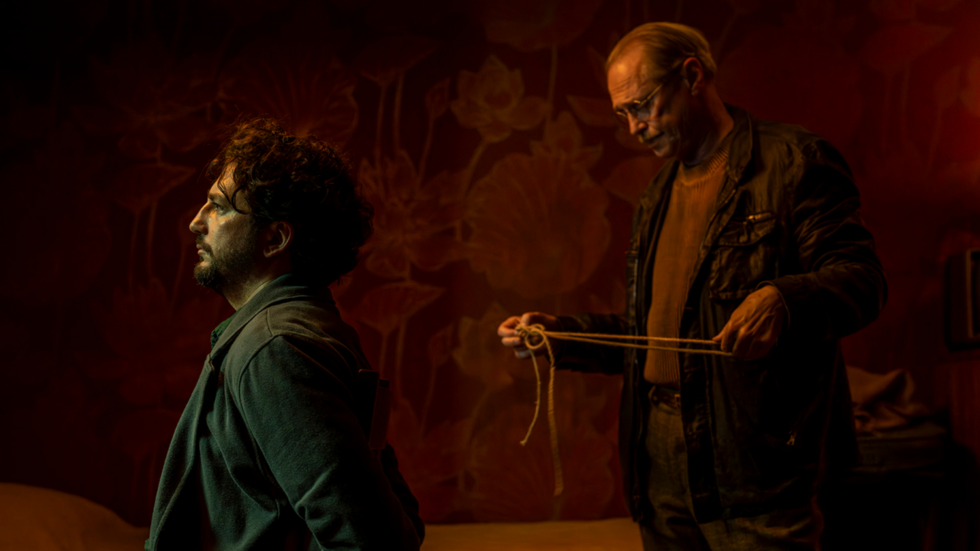
Better than both films combined yet somewhere adrift in a tonal space is The Shallow Tale of a Writer Who Decided to Write About a Serial Killer, a title so tailor-made for a Midnightsโ€™ premiere that the only reasonable explanation for its placement under the Spotlight Narrative umbrella is the fact that it stars Steve Buscemi, John Magaro, and Britt Lower. Writer-director Tolga Karacelikโ€™s third feature is the shallow tale โ€“ yup โ€“ of a struggling writer named Keane (Magaro), whose marriage to Suzie (an acidic Lower) is in complete shambles when he encounters Kollmick (Buscemi), a man claiming to be both Keaneโ€™s biggest fan and a retired serial killer. In a drunken act of desperation, not to mention that Kollmickโ€™s presence in their home unsettles Suzieโ€™s sleep, Keane decides not only to write about this serial killer for his next book as opposed to the love story circa 40,000 B.C. heโ€™d previously been toying with, but he convinces Suzie that Kollmick is a marriage counselor there to help them sort through their problems.

Not only are Keane and Kollmick the very real names of two very real characters in a movie, but Magaro and Buscemi turn this absurdist two-hander into an off-the-rails dark comedy that seems predestined to find its cult audience in due time. Buscemi turns in a wickedly curious performance as a man I can genuinely believe once killed for pleasure and now finds himself just itching to plop into his worn-out recliner to watch the Mets, while Magaro flexes his leading man muscles so vigorously that I can almost see them bursting through his knit cardigan. And yet itโ€™s Lower who steals the show, remaining icy and suspicious in equal measure as Keaneโ€™s actions deserve more suspicion and more frigidity in response. Itโ€™s as if Lowerโ€™s innie, to reference her character on Severanceโ€™s nightmarish fate, found herself in a loveless marriage with a pompous, flailing intellectual. Brava, I say.

The Shallow Taleโ€™s โ€œsinisterโ€ elements โ€“ you know, those involving a retired serial killer โ€“ never land without a laugh lingering around the corner. A batshit sequence involving a man screaming at a llama about potatoes somehow doesnโ€™t feel out of place; a taxidermied feline friend called Ada attends Keane and Suzieโ€™s therapy sessions, and theyโ€™re meant to talk to her. Somehow, Karacelikโ€™s feature ends up playing out like Zachary Wigonโ€™s Sanctuary on ketamine. All the more shocking: Somehow, it works.

You wonโ€™t find three films that are more โ€œdifferentโ€ with a capital โ€œoddโ€ at Tribeca this year, but isnโ€™t that kind of the point? Festival programs are meant to subvert and challenge our expectations, if not to render them moot altogether. That this round of Midnight selects โ€“ along with The Shallow Tale, too fun to be left out โ€“ succeeds in doing so even without the films themselves achieving success is a testament to the sectionโ€™s nature. Its films are odd, meant to be watched in the dark, and meant to make your jaw drop. Who cares if they actually screen at 9 p.m.? Itโ€™s the thought that counts.

Podcast Review: Evil Does Not Exist

On this episode, JD and Brendan discuss Ryusuke Hamaguchi’s phenomenal new film Evil Does Not Exist! Like the rest of the world, we were massive fans of Drive My Car a few years ago and we’ve been anticipating Hamaguchi’s latest ever since. Evil Does Not Exist did not disappoint.

Review: Evil Does Not Exist (4:00)
Director: Ryusuke Hamaguchi
Writers: Ryusuke Hamaguchi
Stars: Hitoshi Omika, Ryo Nishikawa, Ryuji Kosaka, Ayaka Shibutani

Subscribe to our Podcasts RSS
Subscribe to our Podcasts on iTunes
Listen on Spotify
Listen on Stitcher
InSession Film Podcast – Evil Does Not Exist

Movie Review: ‘Bonnard, Pierre et Marthe’ Flirts With Greatness


Director: Martin Provost
Writers: Marc Abdelnour, Martin Provost
Stars: Cรฉcile de France, Vincent Macaigne, Stacy Martin

Synopsis: Explores the art and love story of renowned French painters Pierre Bonnard and his wife Marthe.


Critics tend to approach biopics with relatively low expectations. When youโ€™ve been burned so many times before, you set yourself up to politely nod along with the relatively pedestrian entries in this genre that pass through the assembly line every year. Filmmakers seem to approach the task of dramatizing the lives of great people with a reverent touch that sucks all of the tension, suspense and meaning out of scenarios that could be vivified in a different context. In this spirit, I walked into my local screening of Bonnard, Pierre et Marthe (2023) in a nonchalant mood. It couldnโ€™t possibly reach the heights of In the City of Sylvia (2007) but it should, at least, keep me reasonably entertained for two hours.ย 

If nothing else, the film features a bevy of attractive French film stars who, in the manner of Old Hollywood actors, are willing to bring their own signature persona to every role. There is a certain novelty in seeing Vincent Macaigne portray Pierre Bonnard, a noted Post-Impressionist painter who was particularly active during the 1890s, as just another in a long line of winsome, gentle-spirited nebbishes that he has portrayed. He doesnโ€™t make a real attempt to alter his distinctive quirks to suit the social mores of the period in which the film is set and, in a sense, this gives him more breathing room as a performer. Rather than taking the viewer out of the film, Macaigneโ€™s warm, relaxed performance does far more to open up the film than any technique-heavy imitation could. 

His performance stands at the center of a biopic that briefly shows signs of wanting to be more than just a parade of famous faces before retreating back into convention. The filmโ€™s focus, as the title would suggest, is split between Pierre and his longtime muse Marthe de Mรฉligny (Cรฉcile de France). He is presented as a minor aristocrat turned high society artist who finds an outlet for his creative energies in the form of her intense, slightly belligerent manner. Before long, she has become the primary subject of much of his artistic output and the two shack up together in spite of the fact that they are unmarried. They purchase a house in the countryside and, for a time, live in a sort of earthly paradise. Cracks in their marriage start to appear when Marthe comes into conflict with the members of Pierreโ€™s Paris-based social set, as she hopes to remain secluded in the countryside for months on end while he maintains a completely separate life in the big city. 

A lot of this content is the sort of dispassionate, colorless stuff that you could find in a textbook and it doesnโ€™t translate all that well to the screen. Things start to get a bit more dynamic whenever Misia (Anouk Grinberg), a flamboyant socialite who may or not be Pierreโ€™s erstwhile lover, appears on screen. When the storyโ€™s main players are swanning around in Paris or arguing while trudging through swamps in the middle of nowhere, you can convince yourself that this is a mood piece that aims to capture the ambience of a specific time and place. When we return to the farmhouse and, more specifically, to scenes in which Martheโ€™s actions are shown to directly inspire some of Pierreโ€™s most famous paintings, youโ€™re reminded of what youโ€™re really working with here. 

In the tradition of many-a-biopic, it ultimately concerns itself with the scandalous sex lives of its subjects. While the film downplays Bonnardโ€™s real-life womanizing to a considerable degree, it only really begins to hit its stride when Renรฉe Monchaty (Stacy Martin) arrives on the scene. This being a French film, it is only a matter of time until this young, unworldly student is taken in hand by the bohemian freethinkers at the storyโ€™s center. Before long, she’s whisked away to the coupleโ€™s country estate; where she becomes the vessel through which they can re-energize their floundering sex life. In a surprising plot development, she quickly announces that sheโ€™s unhappy being the third wheel in this wildly imbalanced mรฉnage ร  trois and urges Pierre to abandon his wife and enter into a committed relationship with her.ย 

It is this turn that allows the film to come into its own, developing into more than just a portrait of generic amour fou. For a good thirty minutes, it appears as though the film is addressing the vicious, cutthroat treatment of women within the art world in a startlingly direct, unsentimental manner. As soon as Pierre makes the unexpected decision to give up his life with Marthe in order to run away to Italy with Renรฉe, the whole film downshifts into a radically different emotional tenor. For the first time, we are placed at an emotional remove from these characters and their inner thoughts are rendered opaque. Provost lingers on drawn-out sequences of Pierreโ€™s placid, unnervingly serene existence in what looks to be a hermetically sealed apartment. The distancing effects are heightened by Macaigneโ€™s performance, which is dialed back to a point where Pierre almost seems to be disappearing into himself. When this section of the film ends on an expertly staged, quietly horrifying note, I was prepared to embrace it as a darker retelling of a story that we have heard many times before. 

One gets the sense that he is aiming to evoke the spirit of Agnรฉs Vardaโ€™s Le Bonheur (1965), in which an ordinary family man calmly trades in his wife for another woman. That film represented a more radical stylistic experiment than anything that Provost achieves here. However, itโ€™s still intriguing to see Provost attempting to integrate such an abrasive, off-putting sensibility into a genre that isnโ€™t known for challenging its audience. He seems to undercut his point when he implies, later on in the film, that Pierre is willing, on some level, to wrestle with the weight of his actions. He still leaves some room for ambiguity, with regards to Martheโ€™s seeming impassivity in the face of the news of Renรฉeโ€™s death, but in order for the filmโ€™s coda to really hit hard, the film would have had to sustain the atmosphere of unease that it creates during its second act. It is, of course, difficult to end a film on such a sour note but thatโ€™s what delineates an artist like Varda from her many imitators.

Grade: B-

Movie Review (Tribeca 2024): ‘The Knife’ Examines Choice and Consequence


Director: Nnamdi Asomugha
Writers: Nnamdi Asomugha, Mark Duplass
Stars: Nnamdi Asomugha, Aja Naomi King, Melissa Leo

Synopsis: The story of an event that disrupts a family dynamic and begins to dismantle the illusions of their lives.


When watching Nnamdi Asomughaโ€™s debut film The Knife, I couldnโ€™t help but think of the line of logic Alfred Hitchcock often discussed. The king of suspense for a reason, he was of the belief that if the audience knows the truth within any given scene, it would create far more tension. Surprises that come out of nowhere to blindside you are obviously exciting. But with a film like this, so packed with tension and suspense, it leans into the former idea of suspense. And it does so time and time again, making for a taut drama that takes place in a single location over a handful of hours. The Knife is partly about how every choice, regardless of intent, has a consequence. But itโ€™s equally about how there are systems in place that make people feel as if certain choices have already been made for them. So rather than act from within, a decision has to be made based on survival instinct. It makes for a film thatโ€™s socially potent and observational. It also puts the audience in the driver’s seat as far as interpretation. Asomugha merely presents a scenario to the audience, and lets us fill in the blanks. Even upon seeing the film, we too make a series of choices that affect what we think of The Knife. The focus on choices and consequences is something we hear from Asomugha himself as Chris, a man working construction in his own home. Upon finishing what one can imagine as a hard dayโ€™s work, Chris prepares to get into bed just before 1AM without waking his wife Alex (Aja Naomi King). He may not have been entirely successful in that regard, but it doesnโ€™t matter. His entire house will be awake and on high alert within the hour. After Chris awakens to noises coming from the kitchen, he finds an unresponsive woman facing away from him. And just when the audience is fully primed to receive a jump scare, Asomugha delivers his title card.

We hard cut back to the bedroom where Alex wakes up to another loud sound. She walks into the kitchen to see Chris shaken up, with the woman lying face down in front of him. Asomugha wastes no time taking this film exactly where it needs to be. Barely over 80 minutes, The Knife is a briskly paced drama packed with thrills and real-life observations on fictional horror versus realistic horror. This isnโ€™t a home invasion film in the traditional sense. The immediate and clear threat of being awoken to a stranger in your home is quickly dispatched. Itโ€™s only upon the arrival of the police that the real threat of this film begins looming over the characters. Thereโ€™s a palpable sense of hesitation to call the police once the adrenaline settles for this family of five. But, against their better judgment, they decide itโ€™s the right thing to do. And now framed like a vampire film, the possible evil has been invited into the home. All Chris and his family can do now is prepare in the way they best see fit. For one of his daughters, Ryley (Aiden Gabrielle Price), she feels that all they need to do is tell the truth. But this is far from a fairy tale or fantasy film. Upon Alex making a last-minute decision, she reminds a rattled Chris that he is a Black man in America. With police pulling up to their home in the middle of the night, the truth is unfortunately not something as clear-cut as Ryley believes it to be.

And thus, The Knife positions itself as a horror/thriller of sorts. But the real nightmare for our lead family takes place after the initial premise is behind them. What makes this film such a remarkable and powerful debut is that the home invasion the film is most concerned with is the one thatโ€™s reluctantly invited into the home. The real threat stems from dialogue delivered by Officer Padilla (Manny Jacinto) and Detective Carlsen (Melissa Leo). Both veiled and wildly overt, Asomughaโ€™s film doesnโ€™t mince words when it comes to how subtle, or unsubtle, it wants to be. Its ideas, and the ways it goes about delivering them, are clear-cut. Any time the police in the film attempt to skirt around saying what theyโ€™re really trying to say, it becomes all the more menacing.

One of the more interesting ideas at play within The Knife keeps coming back to the truth. We hear it from Ryley before the police show up, and Detective Carlsen repeats it often. The most surefire way to wrap this long night up would be to detail exactly what happened, and all would be well. But again, this is a film that doesnโ€™t heighten itself to lean more into genre trappings or cinematic sequences. The suspense and tension stem from a very real threat revolving around the truth. At its very core, the truth obviously does matter. Both Chris and Alex likely agree with their daughter. But they are also aware that the police now circling around and isolating their family members from one another are part of a system that feels created to blur the truth. What happens when the system weโ€™re supposed to turn to and trust wholeheartedly instills a very real fear into telling it? By its very nature, it warps into something worse than unjust and immoral. Thereโ€™s a true horror to the villainous creatures who embrace their monstrous qualities. But thereโ€™s something far more sinister to be found in the villain who sees themselves as somebody delivering unbiased judgment and honor. Asomugha makes it clear that Detective Carlsen is a good detective. Leoโ€™s performance also goes a long way in making sure the audience never really knows what direction her character will go in. But again, The Knife doesnโ€™t find the need to be cryptic or subtle. It merely exists in the real world, and makes her actions as gray and questionable as the rest of the family, and the world at large when formulating our own responses.

The Knife may take place in a single location, but itโ€™s very representative of the society in its most current state. Too often does discourse end up circling one of two drains. But within nearly every scene of this film, Asomugha understands that reality is far more complicated. The choices any one individual makes might stem from a dozen different thoughts racing through their mind. What may seem like self-preservation to some may read as a critical error to others. Something as clear and straight-forward as self-defense during a break-in turns into an incredibly charged interrogation; Detective Carlsen goes so far as to proclaim as much to Alex when speaking with her. The choice to help an intruder has now begun to work against this family. To see such a response from those called in need of help is upsetting and disheartening. Asomughaโ€™s film doesnโ€™t have an easy way out. It just has a series of choices that, one way or the other, need to be made. And the fallout of those choices is what his debut film so perfectly captures.

The Knife celebrated its world premiere at the Tribeca Film Festival in the U.S. Narrative Competition section. Tickets for screenings and more information on the film can be found right here.

Grade: B+

Movie Review: ‘The Exorcism’ Evokes Nothing


Director: Joshua John Miller
Writers: M.A. Fortin, Joshua John Miller
Stars: Russell Crowe, Ryan Simpkins, Sam Worthington

Synopsis: A troubled actor begins to exhibit a disruptive behavior while shooting a horror film. His estranged daughter wonders if he’s slipping back into his past addictions or if there’s something more sinister at play.


What if the very act of filming a narrative about demonic possession was enough to unearth some demons? Literal and otherwise. What if cursed film sets were real? What if you wanted to make a version of The Exorcist but Blumhouse had already bought the rights? Enter The Exorcism, a movie so irredeemably awful that the biggest reaction it will provoke is wondering how Joshua John Millerโ€™s personal therapy session got greenlit.

Anthony Miller (Russell Crowe) is a fallen from grace actor with an uneasy relationship with his daughter Lee (Ryan Simpkins). After years of booze and drugs and the death of his wife, he is trying to stay sober and has a new acting job on โ€˜The Georgetown Projectโ€™ โ€“ where he will be playing the priest. All he wants to be is โ€˜good โ€“ if he can be.โ€™ย 

0O4A6278.CR2

Playing Father Arlington comes with baggage for Anthony. Thereโ€™s something that doesnโ€™t sit right with him with religion (his altar boy past), and heโ€™s coming in after the death of another actor in the role. However, the film is also his shot at redemption after his very public stint in rehab. It could also be a chance for him to connect with Lee who is hired as a PA on the set.

As the director, Peter (Adam Goldberg) aggressively points out, Tony is irredeemable like his priest character. A man who is being eaten alive by guilt. Pete is pushing Tony to admit to his sins through his character for an authentic performance โ€“ but perhaps his sins are so deep in his psyche that he will always be suspect to darkness. Itโ€™s clear where The Exorcism is leading โ€“ Anthony is the vessel.

โ€œItโ€™s a psychological drama wrapped in the skin of a horror film,โ€ states Pete (redundantly) about the film heโ€™s directing. The same could be said of The Exorcism if it managed to make a lick of psychological sense beyond the obvious parallels of Tonyโ€™s guilt and trauma making him susceptible to demonic influence. The demon Molech is evoked, and Tony is possessed. Apart from Lee and her new girlfriend, Blake Holloway (Chloe Bailey) who is the star of the in-universe movie, everyone is non-reactive about it. Even the on-set priest Father Conor (David Hyde Pierce) seems preternaturally calm about the whole situation. 

Written and directed by Joshua John Miller, the son of Jason Miller who played Father Karras in William Friedkinโ€™s The Exorcist. There was a chance that Miller could put his stamp on the franchise which shadowed his Pulitzer Prize winning fatherโ€™s career. Instead, what the audience is given is a dramatically and atmospherically inert piece of cinema centered around Joshua John Millerโ€™s issues with addiction, abuse, and uncertainty about both religion and the entertainment business.ย 

0O4A0495.CR2

Sixteen-year-old Lee is expelled from school. Sheโ€™s also a queer playwright who is struggling to get her fatherโ€™s attention although he loves her. Anthony Miller has addiction issues and was both damaged by the Catholic church and somehow redeemed by it. Fame is bad, but failure is worse. Instead of making a wildly inconsistent and dull film, Joshua John Miller could have kept that in his semi-autobiographical novel and flop movie The Mao Game.

Russell Crowe gives what he can with the role to create some level of gravitas โ€“ heโ€™s not giving a bad performance; he just has little to work with around him. Sam Worthington is in the film for a few forgettable scenes โ€“ one which is clearly not meant to be forgettable, but audience investment level dried up before he got his four minutes. It is difficult to evaluate Ryan Simpkinsโ€™ performance beyond โ€˜underwritten secondary protagonist there to react at thingsโ€™ โ€“ as an emotional anchor sheโ€™s got nothing because sheโ€™s given nothing.

The best way to describe The Exorcism is as a bunch of nothing. How a film which is obviously incredibly silly hobbles itself with self-seriousness is astonishing. At least the Friedkin adjacent The Popeโ€™s Exorcist starring Russell Crowe and his vespa and awful Italian accent was funny at times. The Exorcism doesnโ€™t even manage a jump scare. The tone and script are all over the place never resting somewhere interesting. The irony of David Hyde Pierceโ€™s Father Conor being around to keep everyone from freaking out is at least mildly amusing because of the comatose non-reaction of the crew on set.ย 


Overly serious, dull, and most unforgivably, not even vaguely menacing. The Exorcism is a somnambulant walk through a โ€˜universeโ€™ which is begging everyone to just stop trying to resurrect it in some manner. Skip The Exorcism and watch or rewatch the Joshua John Miller penned Final Girls instead.

Grade: D-

Movie Review: ‘Inside Out 2’ is Overhyped and Underwhelming


Director: Kelsey Mann
Writer: Meg LeFauve, Dave Holstein, Kelsey Mann
Stars: Amy Poehler, Maya Hawke, Kensington Tallman

Synopsis: Follows Riley, in her teenage years, encountering new emotions.


As a Pixar fanatic with an obsession with behaviorism, and considering Inside Out is firmly placed in my top three of the legendary studioโ€™s filmography, Inside Out 2 sounded like a surefire hit. On the surface, anyway. Yet, if the original Pixar modern classic taught us anything, itโ€™s all about whatโ€™s happening underneath. 

However, Inside Out 2 may be the most โ€œmehโ€ Pixar film the studio has ever made. The film isnโ€™t particularly funny and suffers from unusual tonal dissonance. The story packs very little emotional punch, which was sorely needed and missing from the originalโ€™s high standard. Finally, the script is cluttered with new animated characters representing emotions, removing the original voice castโ€™s chemistry that was top tier.

Inside Out 2 is clumsy, messy, and freneticโ€”yes, it represents puberty and teenage life. That doesnโ€™t mean the film works as entertainment but more as something I admire.

The story picks up with Riley (Kensington Tallman, replacing Kaitlyn Dias) as she becomes a teenager and prepares to transition to high school. The sweet, adorable blond child has developed anxiety and a pimple on her chin, seemingly overnight. The timing couldnโ€™t be worse since she is going to an ice hockey camp with her best friends, who then drop a life-altering bombshell โ€“ they have been redistricted to a different school next year.

That means significant changes for Joy (Amy Poehler), the super happy emotion who borders on toxic positivity. Joy has been running a clean ship for years, making her team pull out negative life experiences and toss them to the great beyond so Riley can stay sickly sweet and happy. Joy brightens the day of Sadness (Phyllis Smith), turns Anger (Lewis Black) down to a simmer, calms Fear (Tony Hale), and helps Disgust (Liza Lapira, replacing Mindy Kaling) see past her vain ways.

However, being a teenager means Rileyโ€™s body changes and brings new emotions to the forefront, which means a demotion for Joy and her team. Led by Anxiety (Maya Hawke), the new team includes Envy (The Bearโ€™s Ayo Edebiri), Ennui (an amusing Adรจle Exarchopoulos), and the adorable Embarrassment (Paul Walter Hauser), who bring out a new side of Riley. Anxiety thinks Riley should try to make new friends and act in ways that go against her character. Joy is desperate to keep Riley the way she is.

As often happens with complex emotions, they take over and send Joy and her team packing. Now, they have to navigate Riley’s holistic changes to get back to their stations (also known as the limbic system) and keep their sweet Riley from damaging her closest relationships and her reputation.

Inside Out 2 was directed by Kelsey Mann, who has been a Senior Pixar creative team member behind films such as Luca, Turning Red, Lightyear, and Elemental. Yes, those are some of the more underwhelming animated efforts in recent years, though all of them have their loyal supporters. Cutting his teeth as a storyboard artist, Mannโ€™s film is gorgeous to look at. The animation utilizes different forms in an out-of-place segment, and the film is ambitious with its visual world-building, making it a must-see in an elevated format.ย 

This is Mannโ€™s first time helming an animated feature. He works with a script from Meg LeFauve (My Fatherโ€™s Dragon) and Dave Holstein (Weeds), from a story by Mann thatโ€™s ambitious, to say the least. LeFauve wrote the original film, which attempts to tell the story of adolescent behaviorism. What comes with that is an internal struggle when it comes to psychological, social, and environmental stimuli that influence behaviors such as peer pressure, social dynamics, cognitive development, and the big one, emotional regulation.

The big moment Inside Out 2 works towards is conveying the message of how negative and positive emotions shape us and are necessary for growth. While the themes and subtext are suitable for children, especially girls growing into young women, I wonder if the message translates to younger ones and may be over the heads of most tweeners watching. That’s where Mann, LeFauve, and Holstein’s ambitions may have gotten the better of them. However, I’m always in favor of teaching up, not down.

Inside Out 2 is made for older teenagers and adults, not necessarily children. The storytelling has depth, with the subtext of healthy development addressing issues such as risk-taking, social interactions, and identity formation (though that is nothing to write Erikson about). Though the sacrifice has the unintended consequence of having fewer laughs and even less heart, that may be unfair since the story of a child in danger of her family breaking apart is notably hard to top. Still, there were opportunities here that were missed.

The big mistake Inside Out 2 makes is not centering the story on Rileyโ€™s two friends, Grace and Bree, so we never feel their connection and, thus, not truly feeling the anxiety of the potential loss. There is more screen time in the last two acts to do with older children Riley is trying to befriend, which doesnโ€™t allow the story of growing up and moving on to resonate. The story goes down familiar tropes by offending friends that is standard in far worse family films and has become a storytelling crutch. 


The animated film would have worked better by introducing just Anxiety, and having the team work from there. Instead, we have a weird side adventure that is excessive filler, even for a 96 minute movie. I certainly wouldnโ€™t fault anyone for enjoying the new Pixar with their families, but at theater prices, Inside Out 2 is overhyped and underwhelming family entertainment that strangely left me feeling apathetic about the experience.

Grade: C

Women InSession: Favorite Pride Films

This week on Women InSession, Jaylan offers up her favorite Pride films and why these films are essential to watch for Pride Month! There are some incredible LGBTQ movies over the years, however; we wanted to focus on a few here that have specifically resonated with us.

Panel: Kristin Battestella, Jaylan Salah

On that note, check out this week’s show and let us know what you think in the comment section. Thanks for listening and for supporting the InSession Film Podcast!

Subscribe to our Podcasts RSS
Subscribe to our Podcasts on iTunes
Listen on Spotify
Listen on Stitcher
Women InSession – Episode 88

Movie Review (Tribeca 2024): ‘Vulcanizodora’ Gives a Life of Horrors and Hope


Director: Joel Potrykus
Writer: Joel Potrykus
Stars: Scott Ayotte, Melissa Blanchard, Joshua Burge

Synopsis: Two friends take a trip through a Michigan forest, intent on carrying out a disturbing pact. When their plan fails, one confronts unsettling repercussions at home.


Joel Potrykusโ€™ Vulcanizadora begins with two men, Derek (Potrykus) and Marty (Joshua Burge), trudging through the woods. If working off appearances alone, Derek appears competent, at first glance. Heโ€™s got all the necessary camping gear strapped to his person, and seems to be leading the duo with a destination in mind. Marty, on the other hand, is in a world of his own. Heโ€™s got nothing but a drawstring backpack, and a hoodie tied around his waist. He couldnโ€™t look less prepared to spend any amount of time in the woods. And thus, from the very first gorgeous frame of Vulcanizadora, Potrykus plants a question in the mind of his viewer: What are these two doing here? And he doesnโ€™t answer that question for quite some time. To be honest, the way Potrykus goes about actively avoiding the intrigue of this setting is a marvel in its own right. Itโ€™s one of many wildly exciting aspects of this film. So consistently did it upend any expectations, that by the time its most shocking sequence left me reeling, the remainder of its runtime washed over me in the best way possible. But we will get to that in time. For now, it feels right to pull a page from the book of Vulcanizadora, and merely exist in the intrigue.

Shot on 16mm in the woods and beaches of Michigan, this film is an absolute beauty. Yet it feels odd to use that word to describe a film such as this. In that regard, Vulcanizadora is so multifaceted. Itโ€™s a film that, at barely 90 minutes, is able to shapeshift repeatedly. Yet through every change, one canโ€™t help but feel the despair wringing out of every frame. Thereโ€™s a shot early on in the film that has the two friends (if you can confidently call them that) playing with fireworks. Though, after a while, they skip the traditional method of using them. Instead, we see a pile of the guts that make up the firecrackers. Upon lighting them on fire, they begin rapidly expanding, seemingly being birthed from the flames of Hell to consume everything around it. As a choir kicks in, any sign of greenery and light is replaced by the all-consuming flame, and an ever-growing substance that seems to feed on the very earth around it. Itโ€™s an image that you canโ€™t look away from. Yet it feels so haunted and wrong. To me, itโ€™s the defining image of the film. As we come to learn, this trip isnโ€™t merely for two friends to bond and explore the woods. There are ulterior motives at play, set in motion by some of the most powerful emotions imaginable. Any sense of comedic flair injected by Potrykusโ€™ goofy Derek takes on new meaning as we learn more and more. But even at its darkest, Potrykusโ€™ film never shies away from the humorous elements. This is as much a jet-black comedy as it is a gripping psychological horror. Itโ€™s in these opposing tones that Vulcanizadora bombards you with repeated blows of brilliance.

So much of this film operates in the unknowns of life. Whatโ€™s going on in the minds of those around us? Can we rely on them in an essential moment if they arenโ€™t as steadfast as us? What really awaits us in the next life? These questions are all posed in Vulcanizadora both matter-of-factly and silently. This is a bleak, nihilistic film. It fully embraces the line of thinking that the possibility of infinite nothingness is more enticing than the possibility of another day of feeling awful. In the first half of this film, Marty remains a silent and unreadable force. The most memorable sentence we hear from him is one that seems to both unlock his character, but also open up an entirely new bevvy of questions. โ€œNothing matters anymore.โ€ Itโ€™s a phrase that can be found in many films, novels, songs, etc. Yet in this context, which at this moment of the film is a complete lack of any context whatsoever, it remains bone-chilling. The simple reason? Itโ€™s the first time that Potrykusโ€™ film ever reveals the darker hand itโ€™s hiding. And from the moment Potrykus puts his audience on edge with suspicion, itโ€™s already far too late. Weโ€™ve already become too charmed by Derekโ€™s ridiculous antics and mystified by Martyโ€™s glances of annoyance and steadfast determination. In the opening section of the film, itโ€™s legitimately laugh-out-loud funny. And a mere 30 minutes later or so does the realization hit that the laughter stemmed from unease. And only a few minutes after that, all we feel is dread. But what comes after?

One would expect the midpoint of Vulcanizadora to be the climax of a lesser film. Instead, Potrykus uses it to both recontextualize all weโ€™ve seen thus far, while also completely shifting the lens of whatโ€™s to come. Marty finds himself alone, in a world that he feels ought to punish him for all his actions. Yet he is unable to find solace at every turn. Forced to live with the weight of his actions, Marty is a man grappling with his innermost thoughts. It harkens back to something Derek mentioned earlier in the film about a man who temporarily experienced death. He said Hell wasnโ€™t constant torture with fire and brimstone. Instead, it was just a place that felt like an eternity of everybody feeling nervous and worried. That may sound like some peopleโ€™s daily life due to the anxieties of a rapidly changing world, but Marty begins to experience it on a profoundly real level in the back half of this film. But this line seems to also stem from Potrykusโ€™ initial idea that birthed his film. In a statement regarding the film, Potrykus said, โ€œVulcanizadora is my most heartfelt and personal, but not in a good way. Itโ€™s my most sincere and emotional, but also my bleakest and most haunting.โ€ This being Potrykusโ€™ first film in 6 years isnโ€™t the only major development that occurred in his life. In that time, he has become a father. And with that came an entirely new range of worries that seems to only unlock upon having a child.

For some people, they see the human experience as a straight line. We follow that line until, eventually, it comes to an end. When bringing a child into the world, I have to imagine that you see that line in a completely different light. You become hyper aware of just how short it is, or just how easily it can be cut short. You try to stretch every possible fiber of distance in the hopes that you can improve the path your child takes. If life is all just one big game we get to play, when a child comes into our life, weโ€™re now playing for keeps. The stakes rise exponentially, and those stakes are felt throughout Vulcanizadora. Here we have Marty, a man who is grappling with the idea that he has permanently altered the life of a child who hasnโ€™t even grasped the concept of life yet. The ways in which Burge highlights such a weight on Marty is palpable. Looking for any semblance of relief, we sometimes wonโ€™t be able to find it until we embrace the notion that the universeโ€™s plans arenโ€™t in our hands. But I can only imagine what that fact must feel like in the mind of a father. We can search endlessly for ways to escape our current experiences. But sometimes, we just have to accept all that comes with the dread we feel, and hope that weโ€™ll make it through to the other side.

Vulcanizadora celebrated its world premiere at the Tribeca Film Festival in the U.S. Narrative Competition section. Tickets for screenings and more information on the film can be found right here.

Grade: A-

Movie Review (Tribeca 2024): โ€˜Winter Spring Summer or Fallโ€™ is an Empty YA Romance


Director: Tiffany Paulsen
Writer: Dan Schoffer
Stars: Jenna Ortega, Percy Hynes White, Adam Rodriguez

Synopsis: It tells the story of two teens who meet and fall in love over four days of the year.


Romantic dramas like Tiffany Paulsenโ€™s Winter Spring Summer or Fall are rarely offered without good intentions. They tend to be easy to consume, disposable but not often toxic. They aim to either feel familiar or to show viewers a fantastical version of what love and lust โ€œcouldโ€ be if relationships were meant to unfold cinematically. Films of this ilk already overpopulate 2024โ€™s release calendar, from The Idea of You and Mรบsica to The Greatest Hits and Players. Of note: Each of those four titles belong to streamers.ย 

Perhaps thatโ€™s an indication of Winter Spring Summer or Fallโ€™s fate, and thatโ€™s before we note that the queen of Netflix, Jenna Ortega, helms the relatively empty drama in question. She stars as Remi, closer to a lab creation than a real character. Remi has just completed a fellowship at Google, has never partied, and is debating between attending Columbia and Harvard after high school. (Theyโ€™re both safety schools.) While on the train en route to a tour at the former Ivy, she meets Barnes Hayworth (Percy Hynes White, Ortegaโ€™s Wednesday co-star); Barnesโ€™ name was generated by an artificial intelligence software masquerading as F. Scott Fitzgeraldโ€™s personal library. He doesnโ€™t want to go to college, is a soulful, tortured stoner lookalike, and represents danger to all things educational.

The makings of their will-they-wonโ€™t-they affair arenโ€™t any more original, despite the natural chemistry Ortega and Hynes White have evidently built up over the course of a few years as screen partners. This New Jersey Transit meet-cute, as infuriating as it sounds, begins thanks to Barnesโ€™ familiarity with Remi due to the fact that his best friend PJ (Elias Kacavas) lives across the street from Remiโ€™s family. Barnes attempts to penetrate her steely facade by making her a playlist solely featuring the tunes of the Talking Heads, as 18-year-olds are prone to do. After Barnes directs Remi to an express train instead of a local, she lightens up a touch, and an acquaintance-ship is born. But she has โ€œa lot of important things going onโ€ that she wonโ€™t neglect in favor of โ€œsome cute guy I met on a train.โ€ This canโ€™t happen.

Until, of course, it does. Why else would we be watching? Over the course of what the filmโ€™s synopsis calls โ€œfour daysโ€, but would more accurately be considered four seasons, this duo falls in love. David Byrne and Buffalo Tom croon as these teens, who do manage to pose as teens despite being in their early 20s, gaze longingly into each otherโ€™s eyes and dream about saving turtles in Costa Rica. (Yes, really.) Yet despite the aforementioned connection between its stars, Winter Summer Spring or Fall is hardly ever convincing, let alone natural. Its script, from Rizzoli & Isles writer Dan Schoffer, is clunky and rote, with supporting characters like Adam Rodriguezโ€™s โ€œDadโ€ and Marisol Nicholsโ€™ โ€œMomโ€ that are forgettable to the point that they might as well be nameless. 

Clearly influenced by Richard Linklaterโ€™s Before trilogy, Paulsen and Schofferโ€™s right-place-wrong-time tale lacks the instinctive quality those masterworks, well, mastered en route to becoming cinematic treasures. Itโ€™s not that influences for oneโ€™s original film should be frowned upon, but when the references in question become an overwhelming framework yet fail to replicate everything the better film possesses in abundance, the new property suffers. Ortega and Hynes White arenโ€™t to blame for their inability to be Julie Delpy and Ethan Hawke; Winter Spring Summer or Fall is wholly to blame for trying to roll Sunrise, Sunset, and Midnight into one Y.A. weepy.


While Winter Spring Summer or Fall will likely nab the championship belt for being the cheesiest, most mainstream title youโ€™ll find at a major festival this year, it will invariably fall victim to a destiny as old as time: When a frustratingly vacant romantic drama falls in the content forest, and no one is around to watch it, does it make a sound? Once it lands on whatever Paramount+ plans on becoming, will fans of Ortegaโ€™s filmography pony up their subscription dollars for a film more likely to inspire fan edits on Tik Tok than it is to inspire a future sequel from Colleen Hooverโ€™s production company? (Derogatory.) The filmโ€™s true gift is its conclusion, not for breaking any new ground nor for any shocking revelations, but for the fact that we wonโ€™t be forced to watch its lifeless liaison unfold any longer. It was always a road to nowhere; no one will blame you for not wanting to come along.

Grade: D

Movie Review (Tribeca 2024): ‘The French Italian’ is New York, Through and Through


Director: Rachel Wolther
Writer: Rachel Wolther
Stars: Aristotle Athari, Chloe Cherry, Catherine Cohen

Synopsis: Neighbors prank each other, situation escalates comically amid NYC apartment complex’s cutthroat politics, exploring absurdity of conflict between residents.


To live in New York is to deal with annoying neighbors. In most cases, the way itโ€™s dealt with is just by ignoring it. I think back to the time when I lived beneath somebody who lived alone, and he would just shout in anger at all hours of the day and night. Having barely, if ever, interacted with him, I could only assume it had to do with the video games I could hear being played, or his professional life. If youโ€™re wondering what that profession might have been, I can assure you itโ€™s as nightmarish as you could imagine. Yes, he was a DJ. And no, the mixes my roommate and I became privy for the two years there were certainly not great. The constant loop of thrumming bass, over and over and over. It was awful. And what did we do about it? The same thing most New Yorkers tend to do: complain about it to everybody. Except, of course, to the person causing the problem. Personally speaking, thatโ€™s far too confrontational. I am of the belief that dealing with it internally is the best solution. We did once leave an anonymous note requesting, at the very least, that the loud music was played during reasonable hours of the day. Headphones do exist! It got better for a week or two, before starting from scratch yet again. The same bass looping ad infinitum.

What was I to do? Eventually, the bass became the soundtrack to my own thoughts about this stranger. Hereโ€™s a person who has no presence in my life, yet fundamentally affects my day-to-day thoughts on some level. It forced me to become curious about what heโ€™s doing when heโ€™s not DJing. The behavior of screaming into the void makes you wonder how self-aware he truly is.. I moved out of that apartment, and am living in a much quieter, and nicer, building. I havenโ€™t thought about my DJ neighbor since then, but Rachel Woltherโ€™s The French Italian certainly brought those memories back to me. And itโ€™s in the curiosity and self-imposed helplessness of a New Yorker that this film lives. Valerie (Cat Cohen) and Doug (Aristotle Athari) live in a rent-controlled brownstone on the Upper West Side. Their idyllic safe haven quickly falls apart when their downstairs neighbors begin constant screaming matches and karaoke sessions. Itโ€™s an immediate way to garner sympathy and mine countless comedic moments. Itโ€™s in this central conflict that Woltherโ€™s film takes shape, and examines the question of whether or not people do have self-awareness regarding their โ€œprivateโ€ lives.

The film opens with a delicious looking spread of baked goods from the legendary New York establishment, Zabarโ€™s. Valerie and Doug are on their way to a friendโ€™s dinner party with it. Upon arrival, they make the outrageous claim that the cookies are all homemade. It seems like a spur-of-the-moment decision on Valerieโ€™s part, but Doug instantly backs her up. If this film is bolstered by anything in its rough patches, itโ€™s in the relationship between our two leads. Described by another character as having achieved โ€œmind-meldโ€, the two are completely in sync with the idiosyncrasies of one another. Itโ€™s incredibly endearing, even as Wolther slowly reveals the layers showing these lead characters arenโ€™t necessarily bastions of moral integrity. The main reason we accept these two characters as the leads is because theyโ€™re who Wolther introduces us to. Going back to thinking about my DJ neighbor upstairs, Iโ€™m sure there were occasions where my films were played a bit too loud for his liking. Or maybe we did have a gathering that ran a bit too late. If weโ€™re operating under the assumption that most people live their life as if theyโ€™re the main character, the chances people see their own harmless actions as being in the wrong are highly unlikely. So yes, once Valerie and Doug hear โ€œLa Bambaโ€ (the perfect song for such a scenario) sung for the umpteenth time, the audience immediately sides with the two in their quest for revenge.

Admittedly, the central scheme The French Italian revolves around is a funny one. It makes for some really great gags, especially from theater actor/friend Wendy (a stand-out zany Ruby McCollister). Valerie and Doug decide to stage a fake play in order to lure ex-neighbor Mary (Chloe Cherry) into an audition and learn more about her, before eventually confronting her for the pain she and her partner had caused our protagonists. And while this makes for a lot of escalating hilarity, the film does feel at its strongest when grappling with these annoying neighbors through the lens of Valerie and Dougโ€™s imagination. Thereโ€™s perhaps nothing more relatable than crafting stories around the complete strangers in our lives who we just so happen to see or hear of regularly. And in that regard, we would learn just as much about Valerie and Doug through their โ€œdissectionsโ€ of the people around them. Some of the funniest sequences of the film involve just Valerie and Dougโ€™s expressions trying to pinpoint their neighbors’ ins and outs, or an event that lies unseen and unheard to the audience. 

New York, and the world at large, is full of enigmatic individuals weโ€™re likely to never fully engage with. But that allows our imaginations to run completely wild and make up stories about who they are. In the fantastic riffing between Cohen and Athariโ€™s performances is what allows Woltherโ€™s film to occasionally soar. These two people are wholly committed to their own views of themselves. When thinking of the self-awareness I mentioned earlier, these characters have none. Whatโ€™s worse; they feign having it, making their rationalizations amongst one another all the more funny. In reality, their scheme alone proves that theyโ€™re not all that great of people as they think they are. Constantly talking about having one’s life together doesnโ€™t equate to the lengths in which they take their stunt. The goofiness in which they go through life feels like a very clear diversion from the anger and resentment they feel about their situation. But it feels like Woltherโ€™s script is less interested in examining that than it is mining potential jokes for all theyโ€™re worth. Itโ€™s a comedy, so it can obviously coast on just being funny. But by the conclusion of the film, it does feel like The French Italian would benefit from an even slightly deeper layer of examination. But when Woltherโ€™s comedic strengths do hit, itโ€™s laugh-out-loud funny.

More than anything, The French Italian must be applauded for being a straight-up comedy. Thereโ€™s obviously no issue with blending genres together, but so few comedies nowadays feel as if thatโ€™s all they are aspiring to be. And Wolther, who when asked about the conception of this film, expressly voiced her anxieties of feeling like a hack, admirably commits to being a goofy comedy. It builds up situations that are then comically torn down. It also happens to feature a variety of wonderful performances from many recognizable New York character actors. This is a New York film through and through, even going so far as to disrupt a dolly shot abruptly in fear of a rat encounter on the street. Itโ€™s moments like those, or in Cherryโ€™s performance as a wildly obtuse actress, or the loving jabs taken at improv and poorly conceived plays, when Woltherโ€™s great sense-of-humor can be felt. New York is such an odd place to live, and every day here provides us with a new ridiculous story to tell our friends and loved ones. While it does feel like The French Italian writes itself into a corner at times, the sheer ridiculousness of it all, and the countless laugh-out-loud performances within, make it a worthy film about one of the many painful New York experiences.

The French Italian celebrated its world premiere at the Tribeca Film Festival in the U.S. Narrative Competition section. Tickets for screenings and more information on the film can be found right here.

Grade: C-

Podcast Review: Bad Boys: Ride or Die

On this episode, JD and Brendan are joined by the great Diego Crespo of the Waffle Press Podcast to discuss Will Smith and Martin Lawrence in Bad Boys: Ride or Die! We are big fans of this franchise and we couldn’t wait to dig into this latest entry. There’s just nothing that beats Mike and Marcus, and the craziness that comes with those two characters.

Review: Bad Boys: Ride or Dieย (4:00)
Director: Adil & Bilall
Writers: Chris Bremner, Will Beall
Stars: Will Smith, Martin Lawrence, Vanessa Hudgens, Alexander Ludwig

Subscribe to our Podcasts RSS
Subscribe to our Podcasts on iTunes
Listen on Spotify
Listen on Stitcher
InSession Film Podcast – Bad Boys: Ride or Die

Chasing the Gold: Best Picture Needs Some Action

If there is one film to thank for expanding the Best Picture category, it’s The Dark Knight. Praise for the film was nearly universal, from technical wizardry to tremendous performances. Yet, with only five slots, the Academy voters of the time chose more standard fare. For the 2009 Oscars, the race for Best Picture was between the literary adaptation The Reader, the expansive short story adaptation The Curious Case of Benjamin Button, the historical sparring match Frost/Nixon, the empowering biopic Milk, and the romantic drama Slumdog Millionaire.
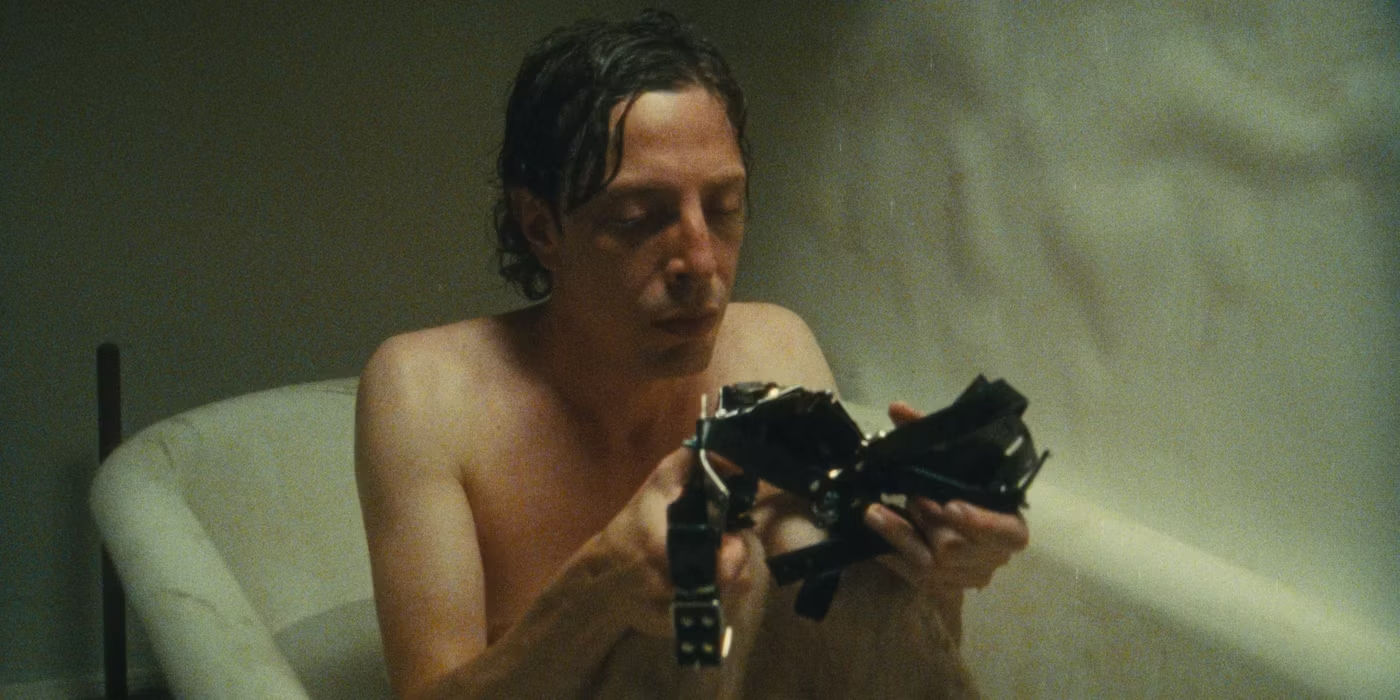
While there is diversity in the filmmaking style and subject matter, these films all firmly fall within the broad “drama” category. They’re all made to evoke the human struggle in some way or expose a universal truth. Even though it had the trappings of a superhero film, The Dark Knight also tackled some larger themes of our society at the time. It posed questions about the surveillance state and how to combat an enemy who has no compunction toward endangering civilians as a means to their end. The film is a philosophical conundrum about what lengths the “good guys” should go to in order to maintain order in the world. Above all, though, it’s an action movie, which has historically been undervalued by the Academy, especially in the Best Picture field.
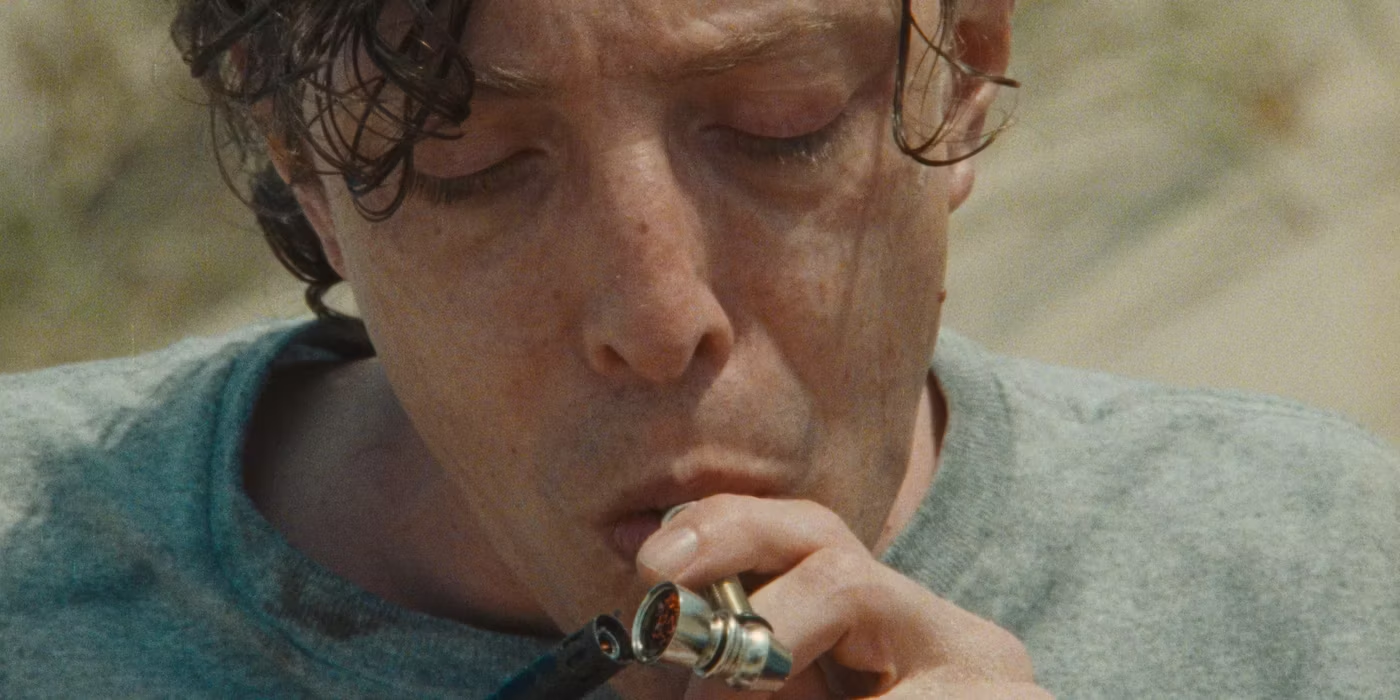
Heath Ledger in 2008’s “The Dark Knight.”

The Best Picture category has recognized action films throughout its history, but typically, the action is within the guise of a war drama. You’re allowed to have tough guys with one-liners as long as they’re spouting those one-liners at Nazis. It wasn’t until Best Picture’s expansion in 2010 that many genre films were listed amongst the nominees. However, gaining recognition for pure action films is still extremely rare. Most of the action films nominated are also sci-fi or fantasy, with those elements overtaking the action trappings.

Since the expansion of Best Picture, three action-oriented films have been nominated for the top prize. First, Captain Phillips (2013) follows a container ship captain (played by Tom Hanks) who keeps calm during a hostage situation with pirates. Although you could argue itโ€™s more of a dramatic thriller than an action film. Next is Ford v. Ferrari (2019), which is about the Ford Motor Company designing a car to beat Ferrari at the 1966 race at Le Mans. Despite the car racing sequences, it’s more of a weeper made for your dad than an out-and-out action flick. Lastly, Top Gun: Maverick (2022), in which a reckless, brilliant, over-the-hill pilot trains a new generation in air combat techniques. Director Joseph Kosinski has said he doesn’t consider his sequel an action film but rather a drama with action scenes.

The stage is ripe for an unapologetic action film to amass Oscar glory. Whether it’s a punch, shoot, and kick revenge saga (John Wick), an everyman burdened with being the only one to stop an extraordinary plot (Die Hard), or a sexy spy affair, this glass ceiling the Academy has imposed must be broken with bullets, bats or bodies. 

The strongest contender to break this barrier is Monkey Man. It’s an action film released earlier this year to waves of acclaim from critics and moviegoers alike. Monkey Man is a tremendous combination of elements that the Academy seeks out. Itโ€™s also got an Oscars pedigree with Dev Patel making his directorial debut, a Best Supporting Actor nominee for Lion (2016), and producer Jordan Peele who has a clutch of nominations and a win from his directorial debut, Get Out (2017). 

Monkey Man is about an underdog hero avenging the death of his mother and the people of his village. It’s a timely film steeped in Indian mythology and politics, even if the players look slightly different from their real-life counterparts. It’s got juicy supporting performances from Vipin Sharma as an unlikely mentor and a devilishly evil turn from Makrand Deshpande as the cruel power behind the throne. It also has awards-worthy technical elements. The costuming, makeup and hairstyling, editing, cinematography, sound, and production design are all fabulous. There’s a great script paired with Dev Patel’s superb and grueling lead performance. Monkey Man deserves to be listed amongst the nine other Best Picture nominees and should break the barriers that have held back many of the best action films of the last century.

As we are officially halfway through the movie year 2024, it’s a good time to debut a feature that will appear in my future Chasing the Gold columns. This will be a curated list of possible nominees amongst the films that have been theatrically released. It’s fun to speculate on what may be coming later in the year, but I’ll focus only on what has had its widest possible release at the time of publication. The list will evolve as the year progresses and we get closer to show time. At this stage, my list contains the 10 strongest contenders for Best Picture. The list will grow and change as more Oscar hopefuls are released. be split into three categories. 

The first category will be called “Safe Bet.” These films are the most likely to carry through the season and into the list of Oscar nominees. The next category will be called “Strong Potential.” These films have something going for them but may not have enough momentum to last the season. The final category will be called “Hopeful.” These are films that I want to highlight as worthy contenders that are likely to be ignored.

Safe Bet

  • Challengers
  • Dune: Part Two
  • Civil War

Strong Potential

  • Furiosa: A Mad Max Saga
  • Babes
  • Monkey Man
  • Hit Man

Hopeful

  • I Saw the TV Glow
  • Love Lies Bleeding
  • The Fall Guy