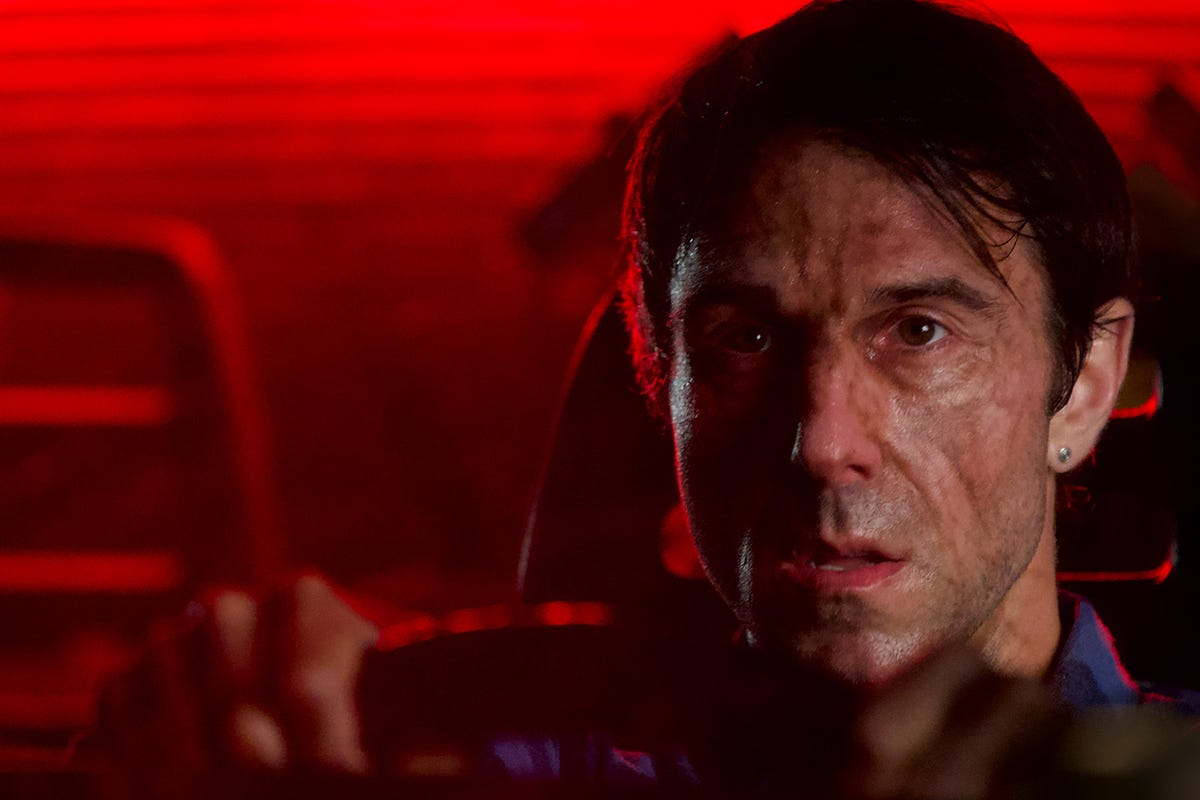
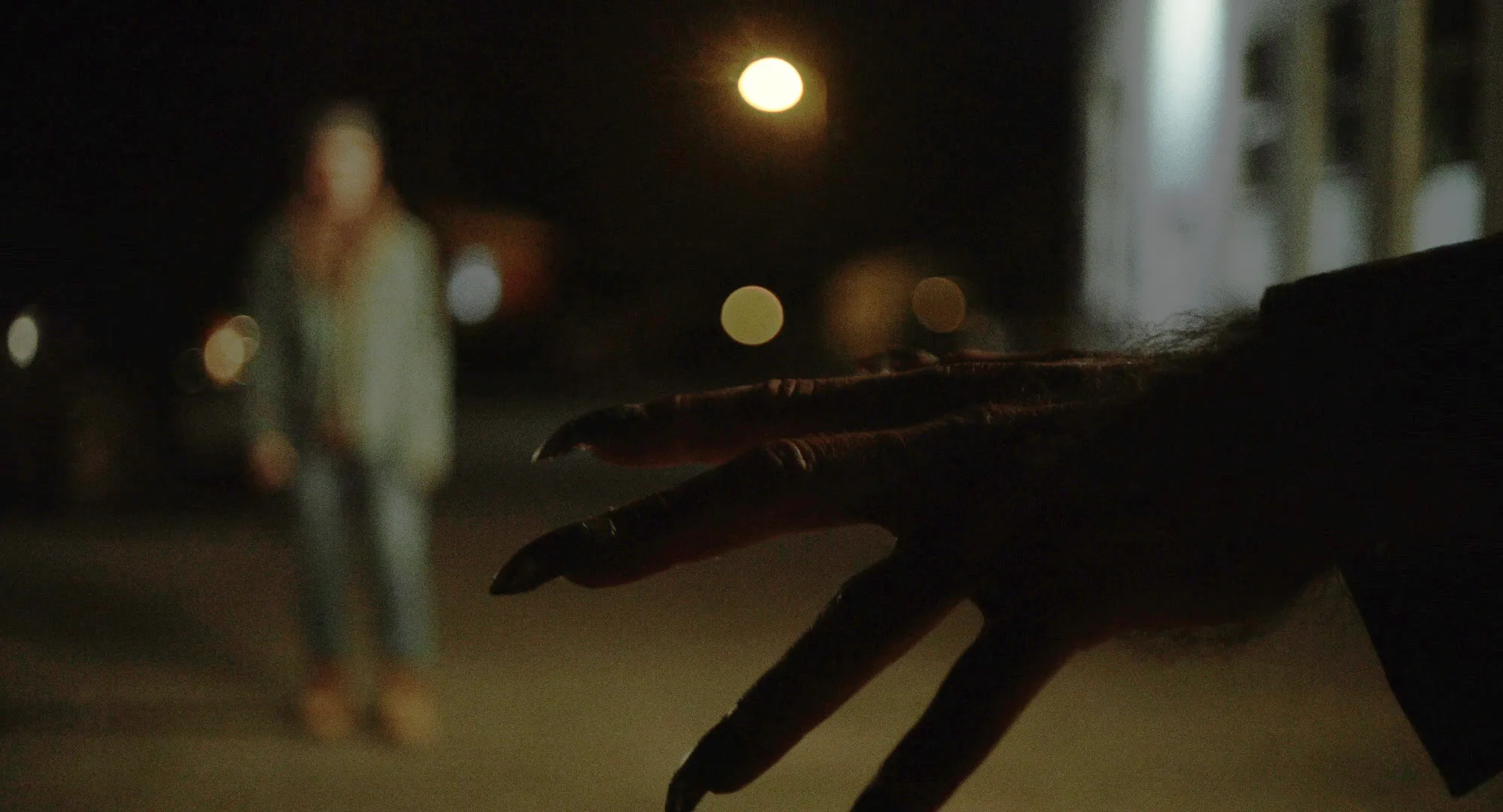
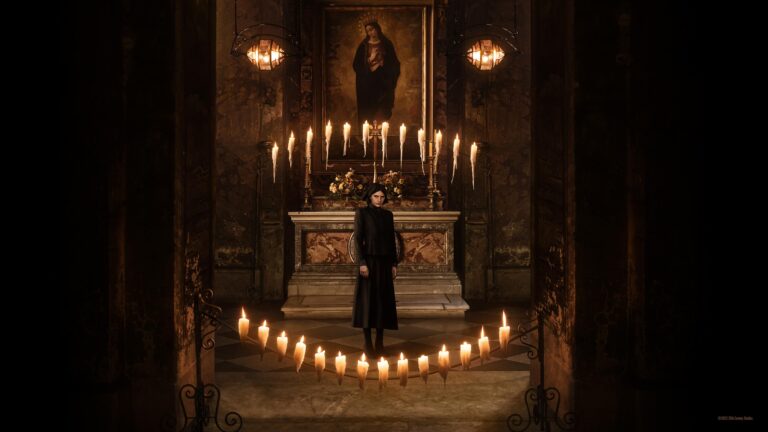
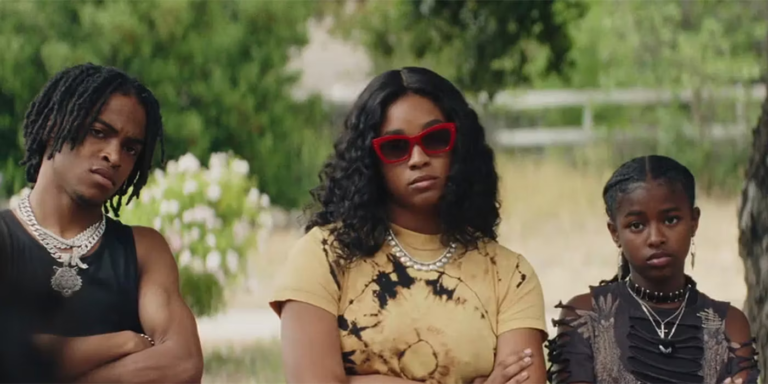
Director: Guy Ritchie Writers: Guy Ritchie, Paul Tamasy, Eric Johnson, Arash Amel Stars: Henry Cavill, Eiza González, Alan Ritchson
Synopsis: In 1940, a covert combat organization for Britain’s military that changes the course of World War II through its unconventional and entirely ‘ungentlemanly’ fighting techniques against the Nazis.
Guy Ritchie’s new film centers on a swath of righteous, bloodthirsty Brits — all played by ridiculously handsome Hollywood B-and-C-listers, some of whom are, indeed, British — and has a great deal of gore to offer, but is ultimately a comedy. Everyone talks fast and comes armed with clips full of bullets and quips to spare. They dress well, fitting in where they almost certainly should stand out, and kill loads of enemies with relative ease and minimal harm suffered, if any at all. By the end, they’ve achieved their goals, strutting into the night as heroes, often with explosive clouds of fire ballooning into the sky behind them, bodies at their feet, glory in their grasp.
I easily could have qualified that description with a cursory “stop me if you’ve heard this before” disclaimer, but that would rid us all of the fun realization that, in many ways, this project summary could serve as a half-decent sketch for most of Ritchie’s previous projects. The director of 15 feature films, six of which have been released in the last five years, never seems to rest; perhaps because another identifying feature of his body of work is the ease with which they go down, like a shot of zero-proof whiskey. The Ministry of Ungentlemanly Warfare, the film the top of review was actually teasing, is no exception to most of Ritchie’s rules; the only thing that differentiates it from his typical work, save for 2023’s Guy Ritchie’s The Covenant, is that this story is (at least partly) true. Well, that, and the lack of Hugh Grant popping up wearing curious glasses and smoking a pipe.
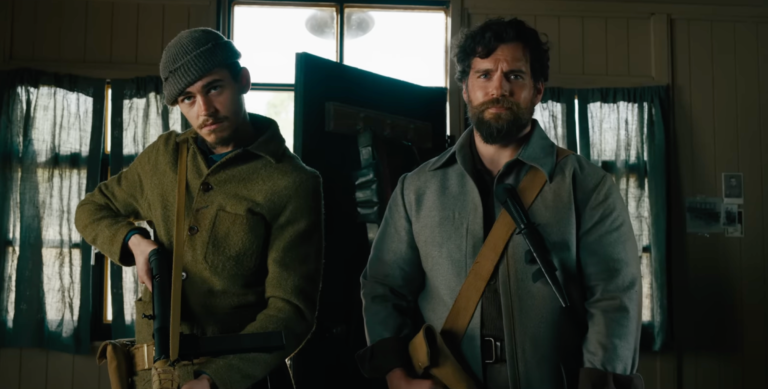
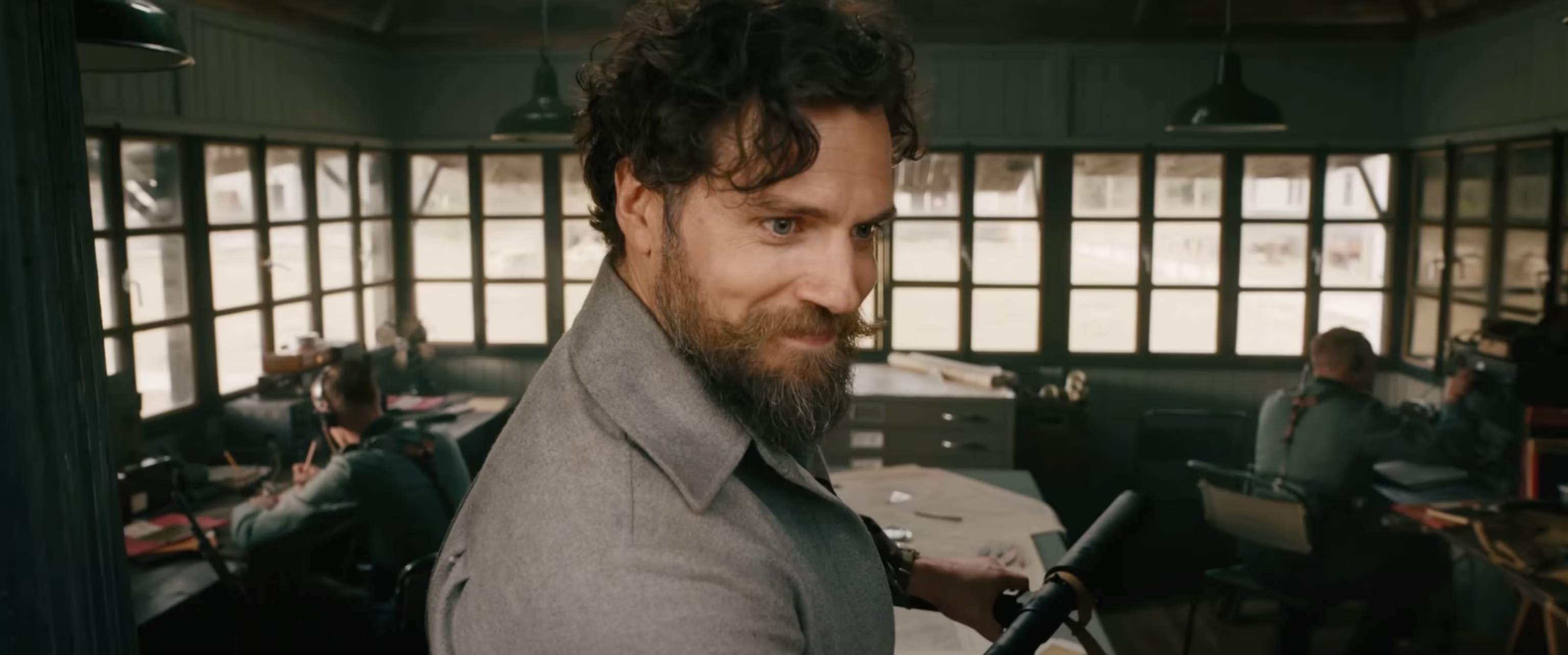
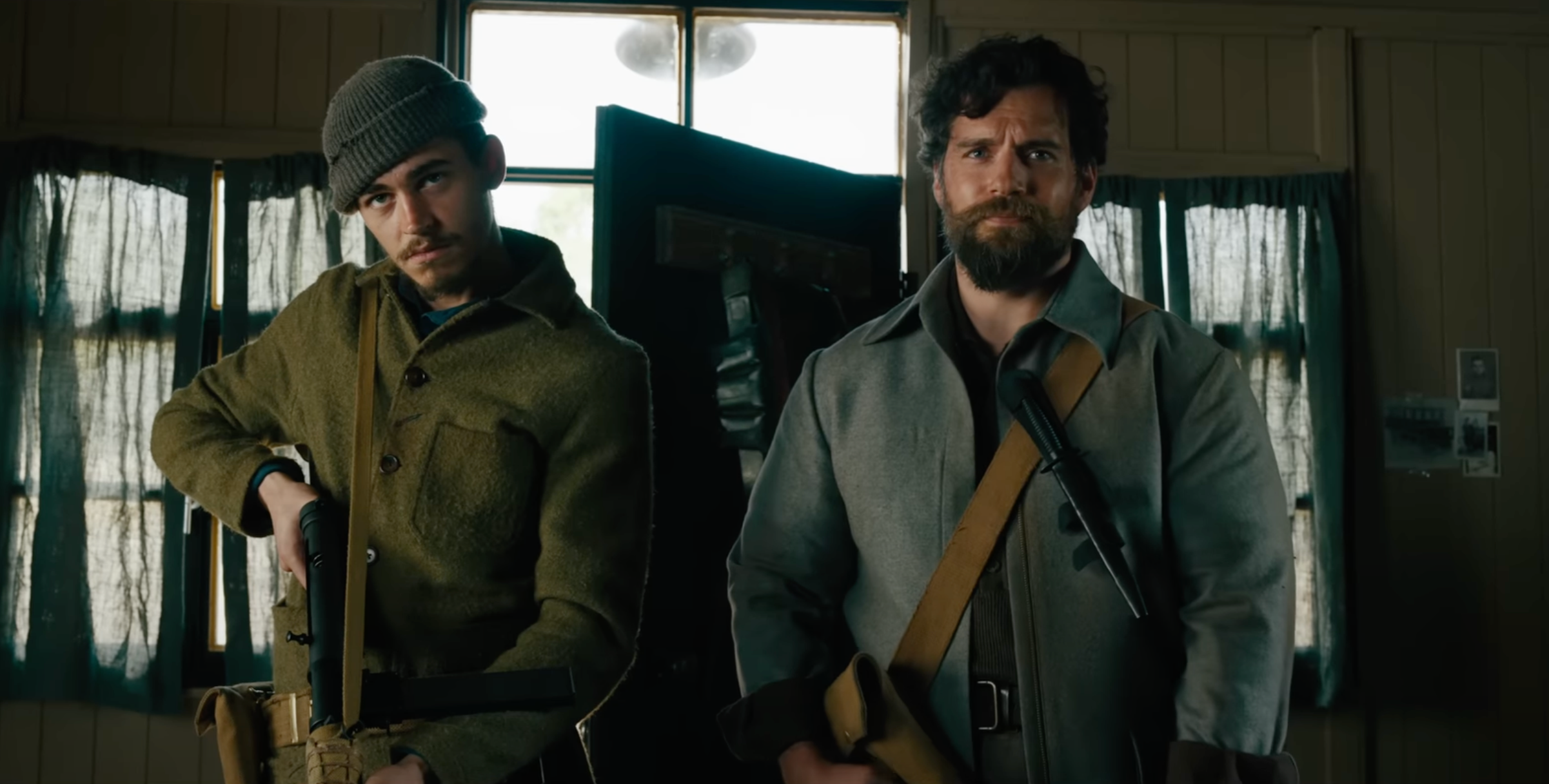
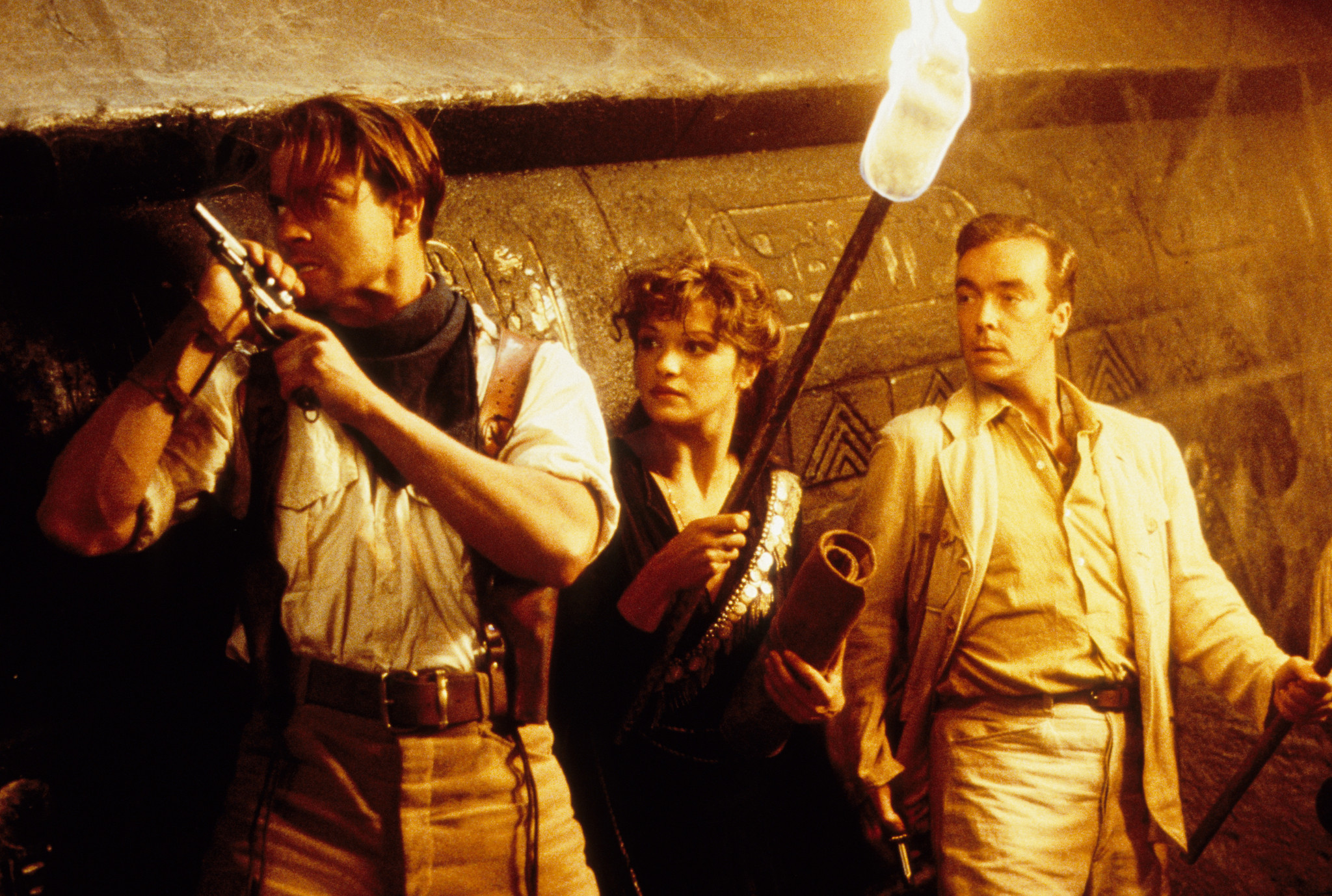
Based on Damian Lewis’s astonishingly-long-titled book, “Churchill’s Secret Warriors: The Explosive True Story of the Special Forces Desperadoes of WWII”, the similarly-wordy The Ministry of Ungentlemanly Warfare sees Ritchie operating squarely in his bag of tricks, for better and for worse. It sets out to do little beyond entertain — a good starting point for humorous action flicks heading to the big screen these days — and if we’re meant to judge a film based on that trait alone, it’s a resounding success. It charts the efforts of Gus March-Phillipps (Henry Cavill) and his bruising brotherhood of bonafide killing machines (Alan Ritschson, Henry Golding, Hero Fiennes Tiffin, and Alex Pettyfer), who set out to disrupt Nazi occupation in Europe through unorthodox methods of combat.
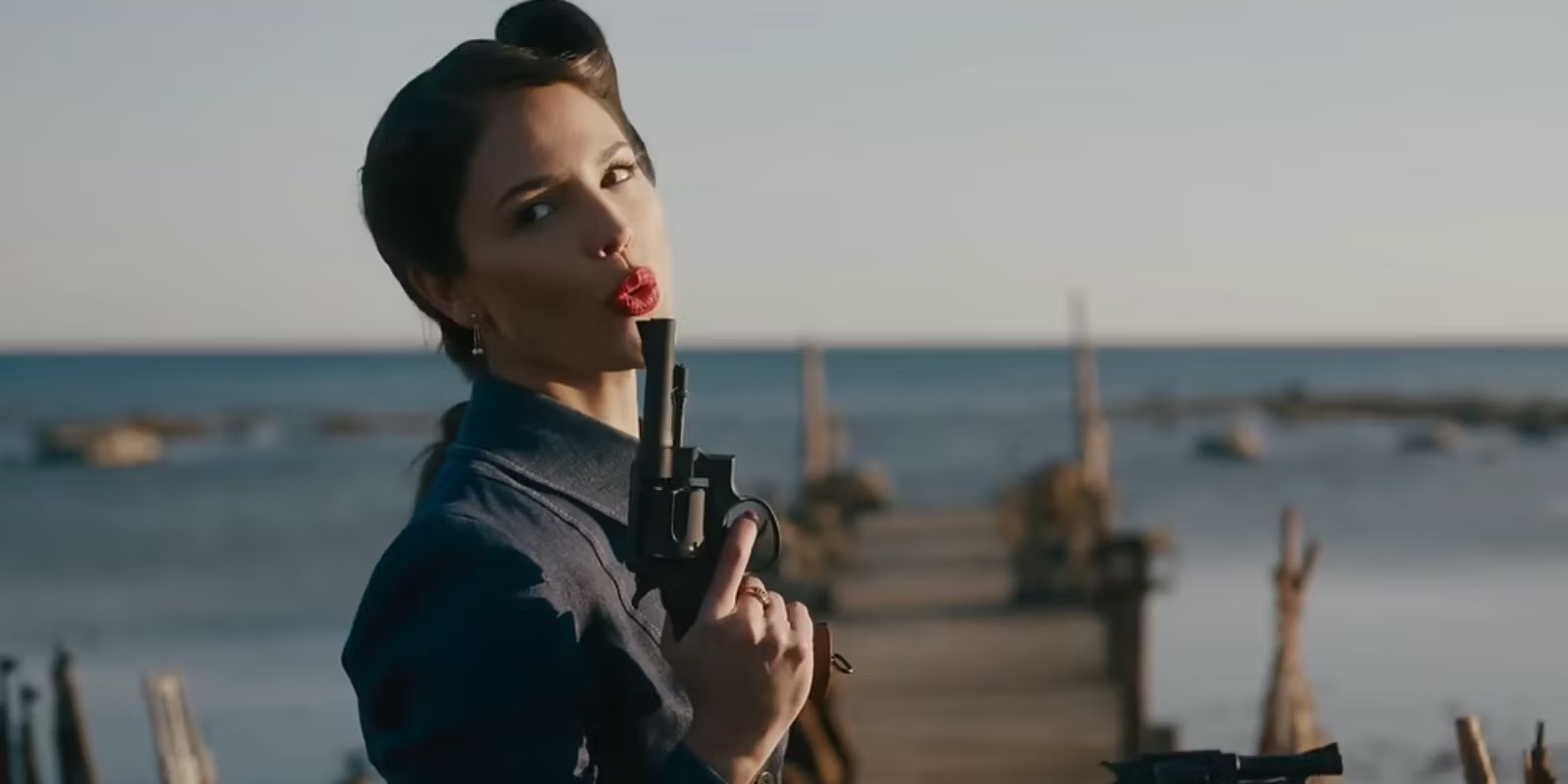
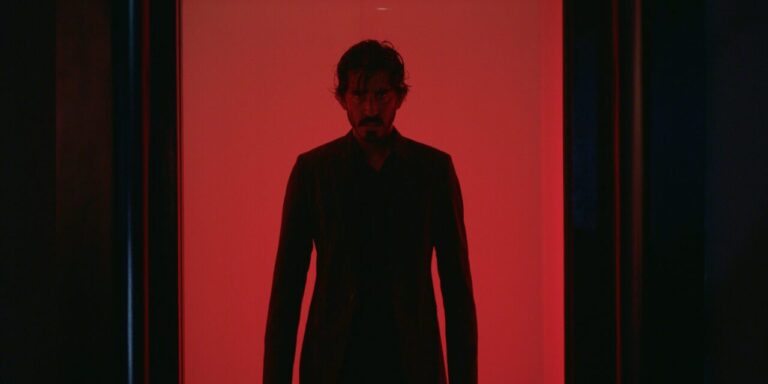
They all do quite a bit of shooting, stabbing, and exploding; espionage is the name of their game, with Marjorie Stewart and Mr. Heron (Eiza González and Babs Olusanmokun, respectively) taking on the bulk of informant responsibilities. Blood is shed, tricks are played, and dialogue is exchanged at alarming speeds. I mean, really, what more could you want from a globetrotting kill-fest starring a few of Hollywood’s lesser-seen hunks, all led by Zack Snyder’s Superman, who happens to be sporting a mustache Hercule Poirot would be proud to pin on his vision board?
But beyond that basic setup, The Ministry of Ungentlemanly Warfare’s substance is limited, if it exists somewhere in this 120-minute blow-em-up at all. It’s not quite a rip-off Inglourious Basterds, but if that must be the obvious comparison, suffice it to say that a Quentin Tarantino caper, this is not. Ritchie is perfectly capable of setting off visual fireworks in the form of gunfire, but he’s always lacked when it comes to stakes. Not that anyone necessarily needs stakes to latch onto when the primary purpose of this group’s mission is to take out Hitler’s henchmen by any means necessary; yet there’s a startling lack of ingenuity to this brand of excitement. Most audiences will buy tickets based on what the trailer promises: Guns, bombs, more guns, and a few more bombs. The question is whether or not they’ll be able to recall any specific moment from the film in which that weaponry was used, let alone recite a single line any of its characters uttered.
Which is not to say that Ritchie’s recent past projects have set out to do otherwise. If you’ll indulge me in a bit of time travel, we’ll start by revisiting his live-action Aladdin remake from 2019, a ghastly rendition of Disney’s animated classic that only gets remembered nowadays for Will Smith’s turn as the otherwise-iconic genie, something we’d all like to forget. Then, in 2020, Ritchie offered up The Gentlemen, a starry and often funny crime romp about the potential sale of a cannabis empire that sets off a wave of blackmail and revenge schemes in England’s criminal underworld. (Netflix recently released a spin-off series based on the film, helmed by Ritchie, though I’m curious to know the percentage of its viewers that know it was a movie first.) The following year brought Wrath of Man, a Jason Statham-starring entry that fit squarely in Ritchie’s long line of “guy seeks revenge” films. When you boil it all down, it is basically The Beekeeper without the bees.
And in 2023, the director’s prolific efforts reached their peak with two releases in the same calendar year. The first: Operation Fortune: Ruse de Guerre, an SEO nightmare starring Statham as a spy who has to put together a team to steal something called “The Handle” — think a low-budget version of “The Entity” from Mission Impossible: Dead Reckoning — from a very rich Hugh Grant. Next came Guy Ritchie’s The Covenant, an ultra-serious war drama starring Jake Gyllenhaal about a master sergeant in the U.S. Army and his Afghan interpreter, as they fight the odds to survive. The Covenant represented a departure of sorts from Ritchie’s typical points of interest, a heavy, emotional drama with human interest in mind and a hook centered around authenticity, not farcical violence nor humor.
It was refreshing to see Ritchie take on a narrative that carried weight of its own, the sort of tale you’d expect to see from the mind of someone not behind The Man from U.N.C.L.E.. Perhaps the success of that stray project, as we can fairly call it now, somewhat unfairly detracts from the experience when it comes to this one, but the problem with The Ministry of Ungentlemanly Warfare is that, at this point, a film of this nature doesn’t feel as much like a return to form for Ritchie as it does a retreat into safer territory.
What was once a fresh brand now feels inorganic and recycled, as though each of his films have gone through a find-and-replace process just painstaking enough to ensure that no self-plagiarism has been committed. In other words: Six of one, half a dozen of the other, a phrase just long enough to be the title of Ritchie’s next film. Maybe that one will bother to have the drawing board erased before going back to it.
This week on the InSession Film Podcast, we feature a movie draft where we discuss and select the movies of A24! We also talk about Damien Chazelle’s new film and the trailer for Ha Ha Land aka Joker: Folie à Deux.
Check out this week’s show and let us know what you think in the comment section. Thanks for listening and for supporting the InSession Film Podcast!
– Joker: Folie à Deux Trailer (7:15) We begin the show by discussing a little CinemaCon and the first trailer released for Joker: Folie à Deux. The conversation around the film has, of course, been normal and not at all weird. So, we wanted to dip our toes into those waters and give our thoughts on the trailer and how it’s mimicking its predecessor. We also spend a few minutes on the irony of Damien Chazelle’s new film for Paramount.
– A24 Draft (47:53) A24 has been around for a little more than a decade now, and has some incredible films under their umbrella, including two wins for Best Picture. It would have been to difficult to do a consensus ranking, so instead we opted for a draft! As we always do, there are 10 rounds and plenty of discussion to be had on all the great films that ended up being drafted. Be sure to listen and let us know which A24 draft you prefer. Are you Team JD or Team Brendan on this one?
If you want to help support us, there are several ways you can help us and we’d absolutely appreciate it. Every penny goes directly back into supporting the show and we are truly honored and grateful. Thanks for your support and for listening to the InSession Film Podcast!
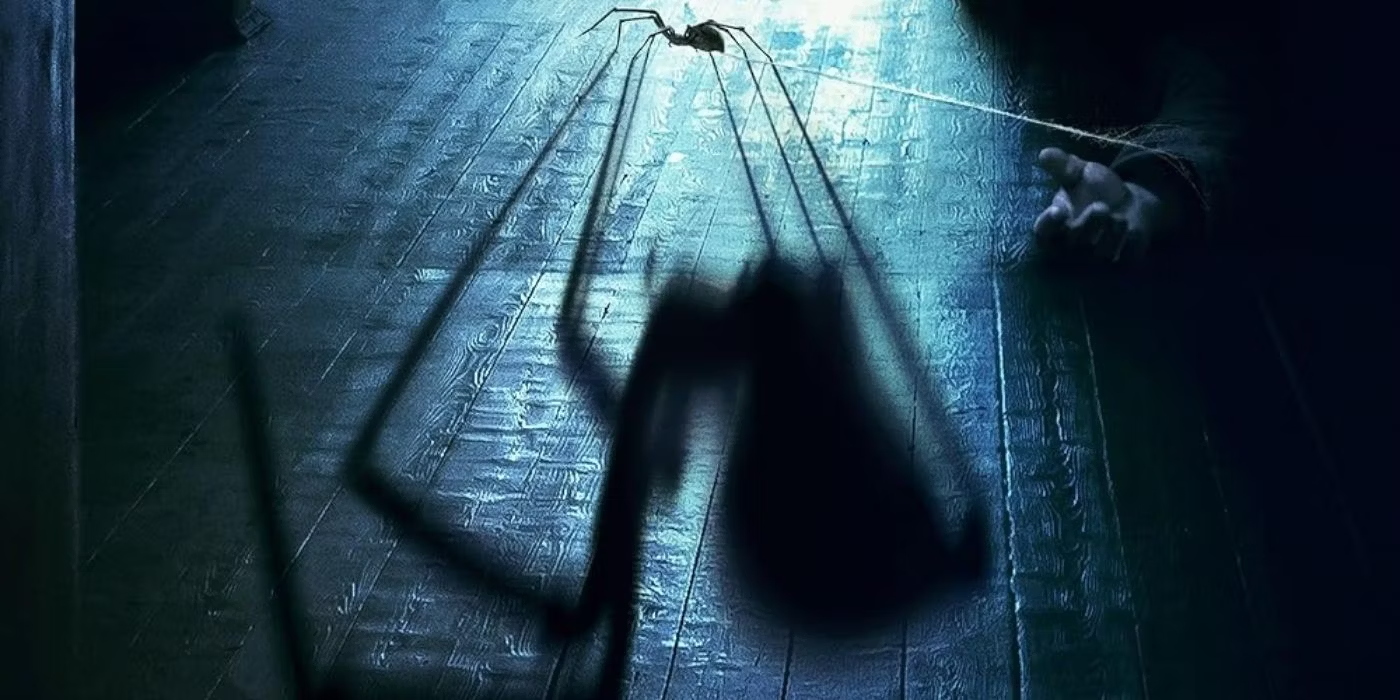
Synopsis: After raising an unnervingly talented spider in secret, 12-year-old Charlotte must face the facts about her pet and fight for her family’s survival when the once-charming creature rapidly transforms into a giant, flesh-eating monster.
Kiah Roache-Turner’s Sting had all the makings of a great spider horror flick, especially considering there hasn’t been a memorable one since the release of Ellory Elkayem’s Eight Legged Freaks. Of course, Frank Marshall’s Arachnophobia pioneered the subgenre, with its deft blend of spine-tingling scares and gut-busting laughs, which Sting seems to take heavy inspiration from, especially through the figure of Frank (Jermaine Fowler), the exterminator.
Frank receives a call from Helga (Noni Hazlehurst), who complains about a strange noise in her apartment, which the exterminator investigates with a rather frightening glare. Roache-Turner does a great job establishing the nature of the threat, with quick camera swishes that exacerbate the tension as Helga can’t comprehend what’s happening beyond her apartment’s walls. It’s also the film’s only legitimately terrifying scene, as it perfectly establishes how big the spider will eventually get and attack everyone inside the apartment complex as a massive snowstorm forces them to stay put.
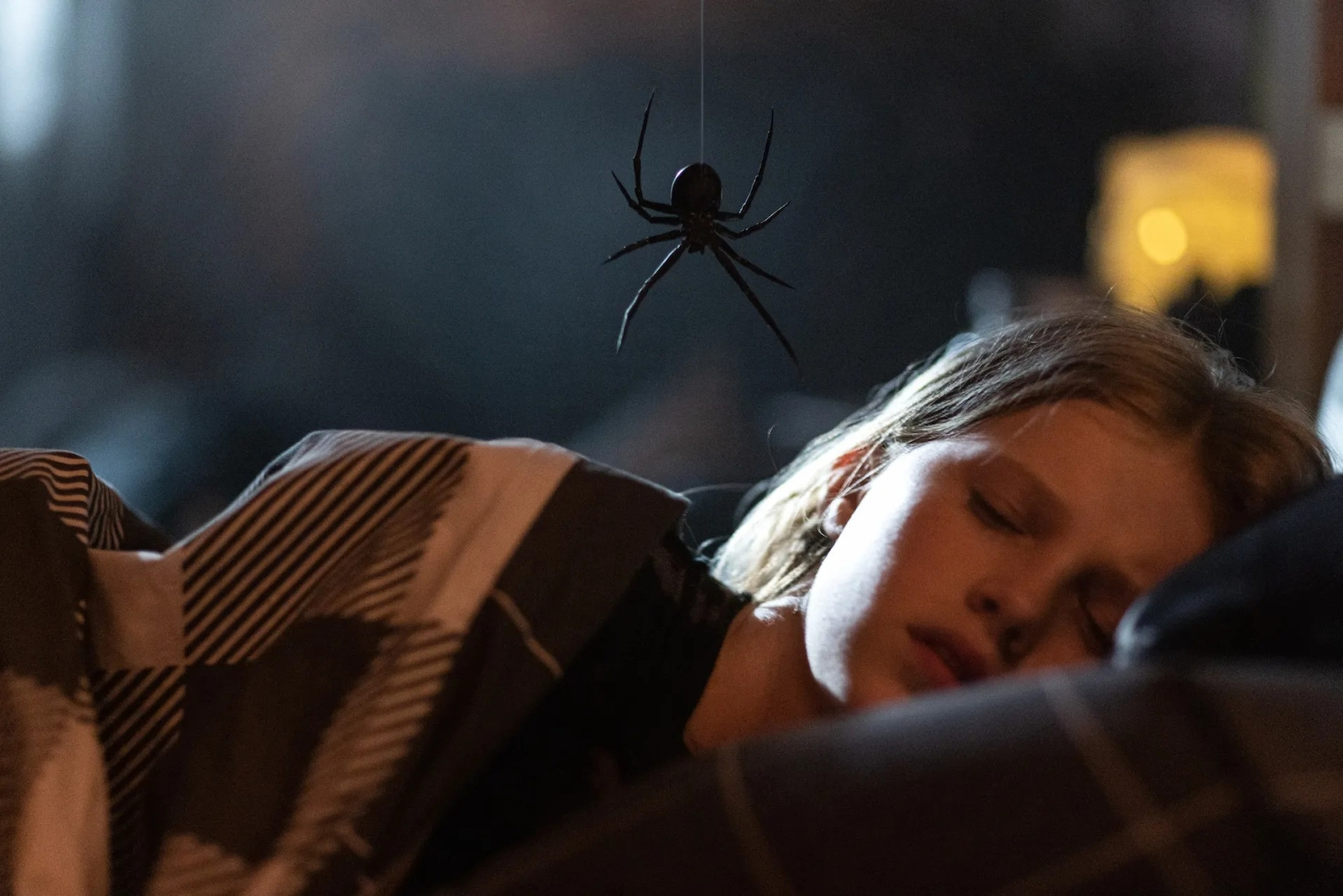
The movie then cuts back to four days earlier, when a small meteorite (you need to suspend your disbelief for a bit) crashes into the apartment complex, where an alien egg hatches and a spider emerges. As Charlotte (Alyla Browne) explores the apartment through the ventilation shaft, she sees a rather strange but fascinating spider and decides to catch (and raise) it, unbeknownst to her mother (Penelope Mitchell) and stepfather (Ryan Corr). Of course, those who’ve seen Joe Dante’s Gremlins know what will happen, as the spider (named Sting, though anyone expecting The Police will be disappointed) asks Charlotte to feed her through a special whistle.
Sting eventually grows in size, which puzzles the apartment’s anthropologist (Danny Kim), and what’s obviously going to happen happens: it starts killing people, and it’s now up to Charlotte to stop what she’s started. However, this is Roache-Turner’s cardinal mistake, none of the kills are shown on screen, despite the film’s R-rating. What is an R-rating good for if you don’t give the people what they want (bloody kills that accompany its staggering practical effects)?
No, the R-rating is only here because a few characters say the F-word more times than the PG-13 rating allows; otherwise, it probably would be a movie that most families can enjoy. The presentation is seemingly done akin to Roch Demers’ Tales for All, a series of (allegedly, I’ll never define them as such) family-friendly movies in Quebec that began in the mid-’80s, often involving otherworldly aspects that have traumatized a generation of children as they suffered either emotional (Cléo’s death in The Dog Who Stopped the War is the most famous example of this) or physiological distress (all copies of The Peanut Butter Solution should be burned to ensure future generations don’t develop PTSD at the age of 5).
You have a child protagonist involved in a larger-than-life situation where their own problems cause the people around them to be in danger, again similar to the Tales of All films. In that respect, Sting definitely has elements of family-friendly fare going for it, but its R-rating absolutely feels unjustified, almost as if it’s afraid to show any physical violence at kids when the Tales for All series (and its deviations) were far more violent and weren’t afraid to terrify child audiences to endless nightmares (no, really, Quebec’s family film industry needs to be studied).
So there’s no excuse for Sting to go full R-rating, even if Roache-Turner’s approach can be considered family-friendly. As a result, none of the kills feel effective, no matter the fun, practical effects, and dynamic cinematography on display. You can only go so far if one decision completely sinks the film’s pace and action, and Roache-Turner seems to forget that most (if not all) audiences are here for the spiders and to see people being gratuitously murdered by them. The rest is completely irrelevant, but would be welcomed if the character relationships are treated with care and emotional investment.
Unfortunately, none of the family dynamics work here. They’re all haphazardly written and check a box full of clichés without a single thought beyond appropriating their relationships above clichés. The performances aren’t entirely terrible, but there isn’t a single moment where the audience wants to latch onto the characters and feel for them as Sting begins to (predictably) kill the people inside the apartment. And when none of the kills or action scenes are in any way memorable, it’s a one-two punch of boredom as one wonders exactly when this ordeal will end. The movie’s ending does leave the door open for Sting 2, which isn’t something I’d be entirely against because the problems in this film are easily fixable, and it starts with fully leaning into your R-rating beyond foul language. Once that’s fixed, it may be easier to latch onto the characters since their story will complement the on-screen gore. Until then, Sting will remain one of the most disappointing movies of the year, one whose potential is immediately wasted by the time it’s clear the movie will be nothing more than a slightly edgier PG-13 horror flick with one-note protagonists populating its paper-thin and predictable story.
Synopsis: In the near future, emotions have become a threat. Gabrielle decides to purify her DNA in a machine that will immerse her in her past lives and rid her of any strong feelings. But when she meets Louis, she feels a powerful connection to him as if she has known him forever.
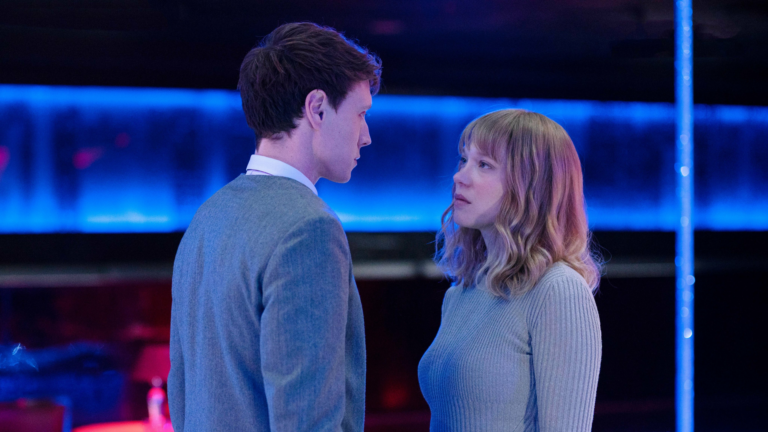
The opening moments of Bertrand Bonello’s reality-rooted time hopper, The Beast, focus entirely on a woman named Gabrielle (Léa Seydoux) acting against a green screen while clutching a kitchen knife. As Bonello’s own voice guides her through a scene in which she’s being hunted by some sort of, well, beast, or “bête”, her off-screen director details what will surround her once it’s all generated by computers in post. Not only is it the first moment, in a film chock-full of them, in which fear of artificiality is front and center for its characters, but it tees up a series of cinematic comments on what it means to emote, not matter your surroundings, and imagines what life might be like if we were able to rid ourselves of the trauma those feelings inflict.
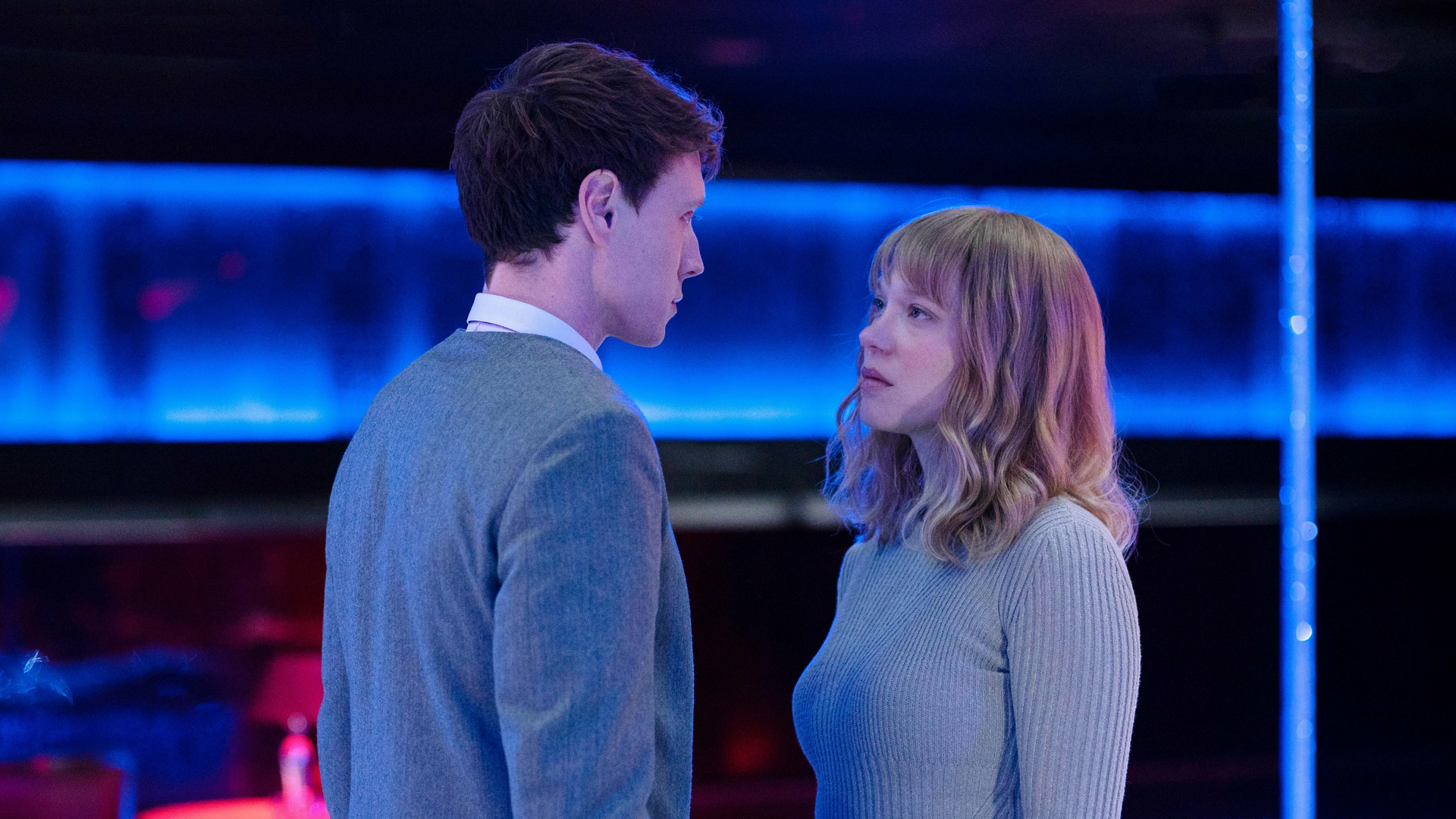
Startlingly prescient and wholly original, The Beast — which Bonello loosely adapted from Henry James’ 1903 novella, “The Beast in the Jungle” — could feasibly be reduced to a drama about star-crossed lovers, but its complications make it a significantly more curious piece to gnaw on. Indeed, Gabrielle and Louis (George MacKay, having quite the year) appear to have known each other for some time, but the early revelation that they seem to have been in one another’s orbit for centuries, across timelines and in different forms of themselves, elucidates the notion that not only are these beautiful, curious figures entangled in more ways than one, but that their lives will never not be entwined.
Whether that’s for worse or for better isn’t much of a question by the time Bonello’s latest mindfuck concludes on a perfect, volatile note, but the other questions it posits linger with a level of intensity most auteurs would kill to achieve. It’s not just about fear and love, but the fear of love; it’s a depiction of the terrors of possibility, and the inevitably of terror, a masterful one at that.
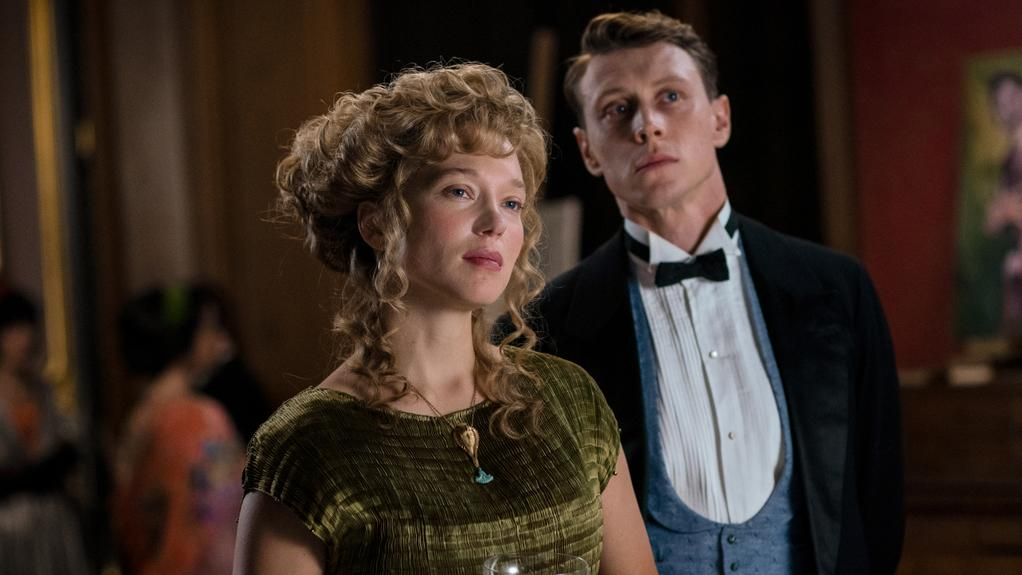
Following its opening sequence, The Beast travels through time, charting the history of Gabrielle and Louis’ eternal connection from Paris in 1910, where Gabrielle, a concert pianist, meets and falls for Louis, a doll manufacturer, at a party; in 2014, where Gabrielle is an isolated model/actress subletting a beautiful glass house in Los Angeles as Louis, now an Elliot Rodger-esque serial killing incel, hunts her every move, plotting her murder like Rodger did the many women he preyed upon during his real-life reign of terror; and in 2044, where Gabrielle is undergoing something called “DNA purification” by floating in a pool of thick, black goo that will undoubtedly draw deserving comparisons to the sinking floor in Under the Skinor the Harkonnen bathtubs in Denis Villeneuve’s Dune films. It’s through this process that Gabrielle and others are able (even beckoned) to purge themselves of emotions they may have felt in past lives.
That this invention has been made available to people in a future dominated by artificial intelligence is hardly a hushed comment on its prevalence in society today, from the world of technology to its ever-looming threat over filmmaking and cultural imports at large. Nor will it be lost on the viewer that, in Bonello’s imagined future, A.I. has turned the world into a series of taupe-walled hallways and glass doors, minimalistic features that some might find soothing in a therapist’s office, but many others will deem hollow, thus feeling hollow themselves. This procedure’s mission, after all, is to rid our past selves of any potentially-painful substance so that one’s present self can live on with emotionless abandon, not torn between worlds, lives, or loves.
You needn’t be surprised when things don’t exactly go as planned; it’s almost as though Bonello aims to comment on the unrealistic desires of a humanoid-run world. (Gee, I wonder.) But in dissecting these shared concerns about the direction our lives seem to be tumbling in, not once does The Beast neglect the things those unfamiliar with Bonello’s trademark extremism will itch to latch onto. The sequences he dedicates to unavoidable romantic longing, the danger of heartbreak be damned, could ostensibly warrant their own subheading, something like Past Lives; the film’s darkest moments, focusing on menacing obsession and the perils of unseen threats, befit a name along the lines of Fatal Attraction.
Seydoux and MacKay are more than game, and though Bonello’s staging makes for some remarkably tactile moments of dread — including a harrowing recreation of The Great Flood of Paris in 1910 — it’s their faces that do some of the film’s best work when it comes to reducing its highbrow escapades to a human level. Whereas Seydoux was a calculated and cunning messenger woman for the Bene Gesserit in Dune: Part Two, here she strives to swim against the current of calculation toward the sort of imbalance that is required in the real world. MacKay’s turn here is a bit more chameleonic, fitting for an actor who convincingly transformed into a tattooed, closeted street thug in this year’s exceptional Femme; though he’s some form of the Louis that Gabrielle knew, knows, and will come to know over the course The Beast’s entire 146-minute runtime, MacKay seems to have a knack for shedding his skin when necessary, inhabiting the soul of every assignment, never more apparent than it is here.
The Beast itself is also chameleonic in its invocation of its obvious influences, ranging from David Lynch to other time-bending science fiction films with similar ideas on their minds. But Bonello isn’t nearly as interested in what might happen in the future than he is curious to unravel how our past and present are already dictating its course. We are constantly making choices, he argues, whether it’s to embrace risk or run from it, to break a heart or to have ours broken, et cetera. As André Aciman wrote, “to feel nothing, so as not to feel anything—what a waste.” After all, who are we to rid reality of its authenticity? Something to chew on, perhaps.
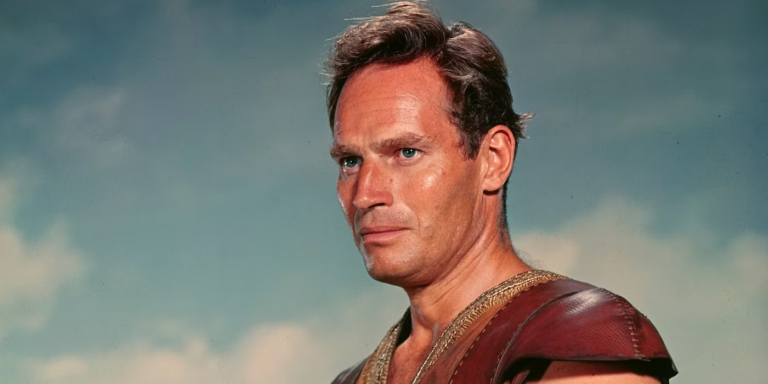
This week on Women InSession, we debate all of the good and bad regarding Charlton Heston! He may not be the greatest of actors, but there’s no denying the spectacle and successes he saw over his career. He’s been in some very memorable films and given audiences some iconic moments. At the same time, however; he also became controversial off-screen in ways that’s hard to ignore. So, yeah, we talk about all of that and more.
Panel: Kristin Battestella, Zita Short
On that note, check out this week’s show and let us know what you think in the comment section. Thanks for listening and for supporting the InSession Film Podcast!
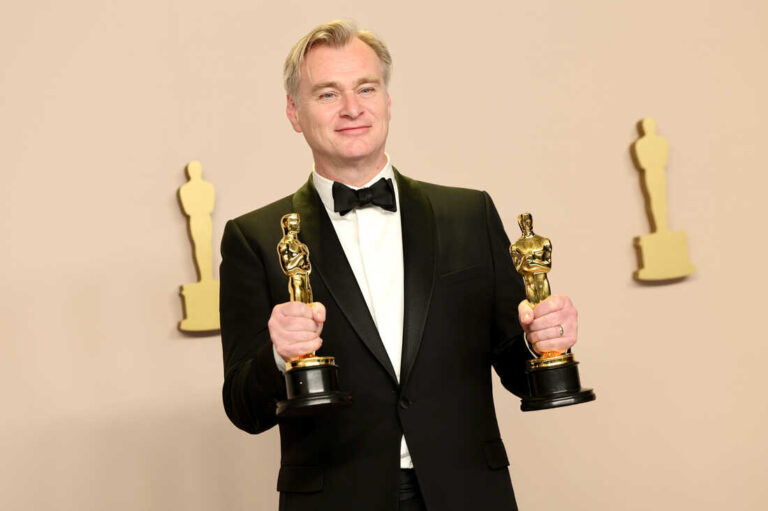
This week on Chasing the Gold, Shadan is joined by our very own Cameron Ritter to discuss the Best Director category, which he will be covering this year for our awards content!
On that note, check out this week’s show and let us know what you think in the comment section. Thanks for listening and for supporting the InSession Film Podcast!
Director: Alex Garland Writer: Alex Garland Stars: Nick Offerman, Kirsten Dunst, Jesse Plemons
Synopsis: A journey across a dystopian future America, following a team of military-embedded journalists as they race against time to reach DC before rebel factions descend upon the White House.
I cannot think of a more dangerous film to enter our lives at this very moment. Civil War is jaw-dropping, downright incendiary, and brutally obtuse in its stubborn frankness. Yet, the gloriously mercurial writer and director Alex Garland paints a picture of modern-day dystopian America in peril and the midst of a civil war. Initially, we thought we had the movie figured out, but after leaving your local Cineplex, you won’t be pondering which side you would choose to be on.
Instead, you’ll find yourself asking, “Which side of patriotic fervor won?”
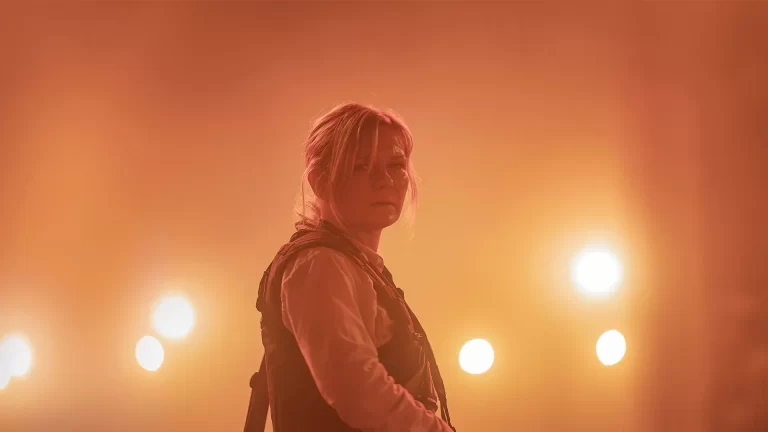
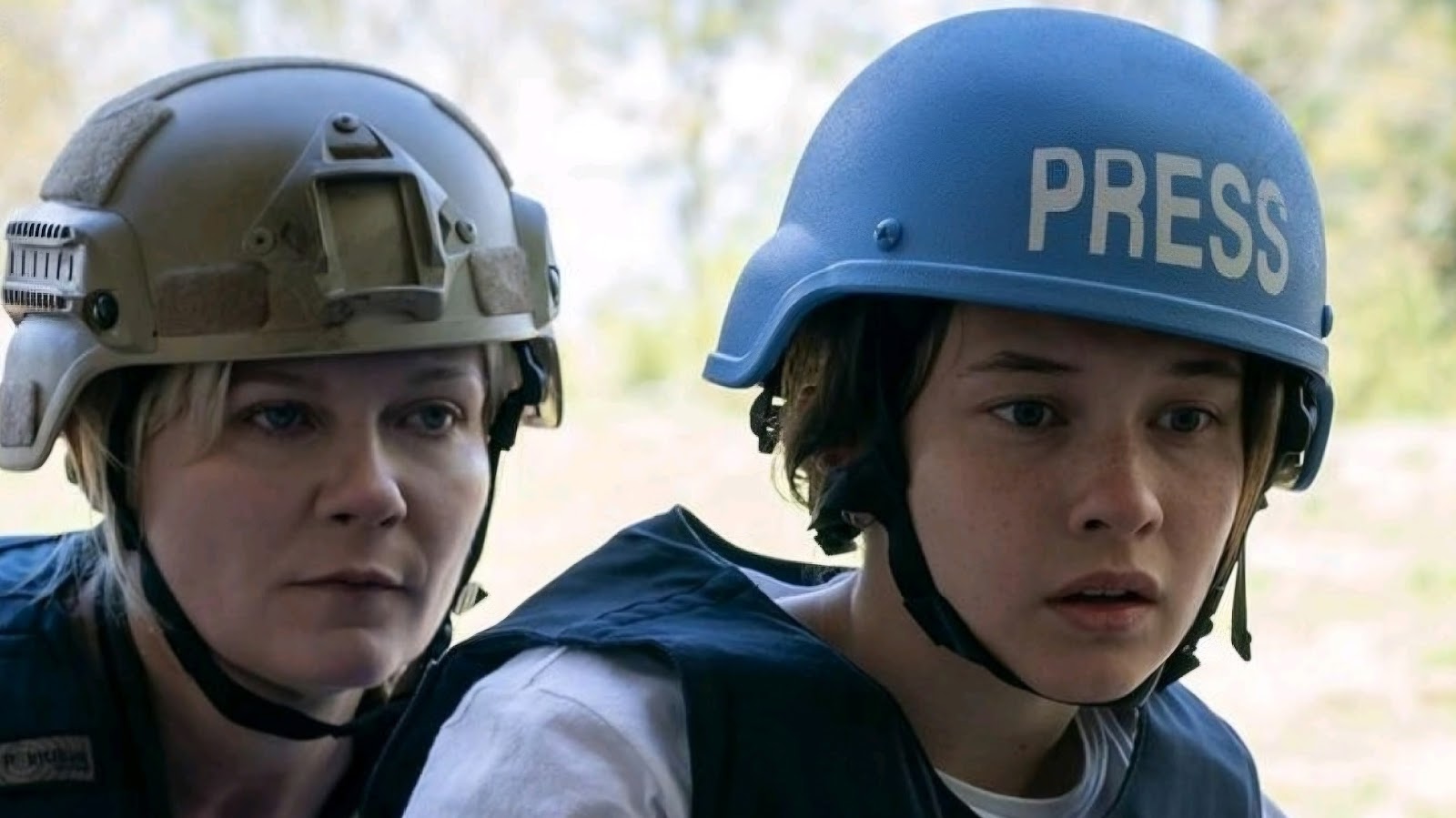
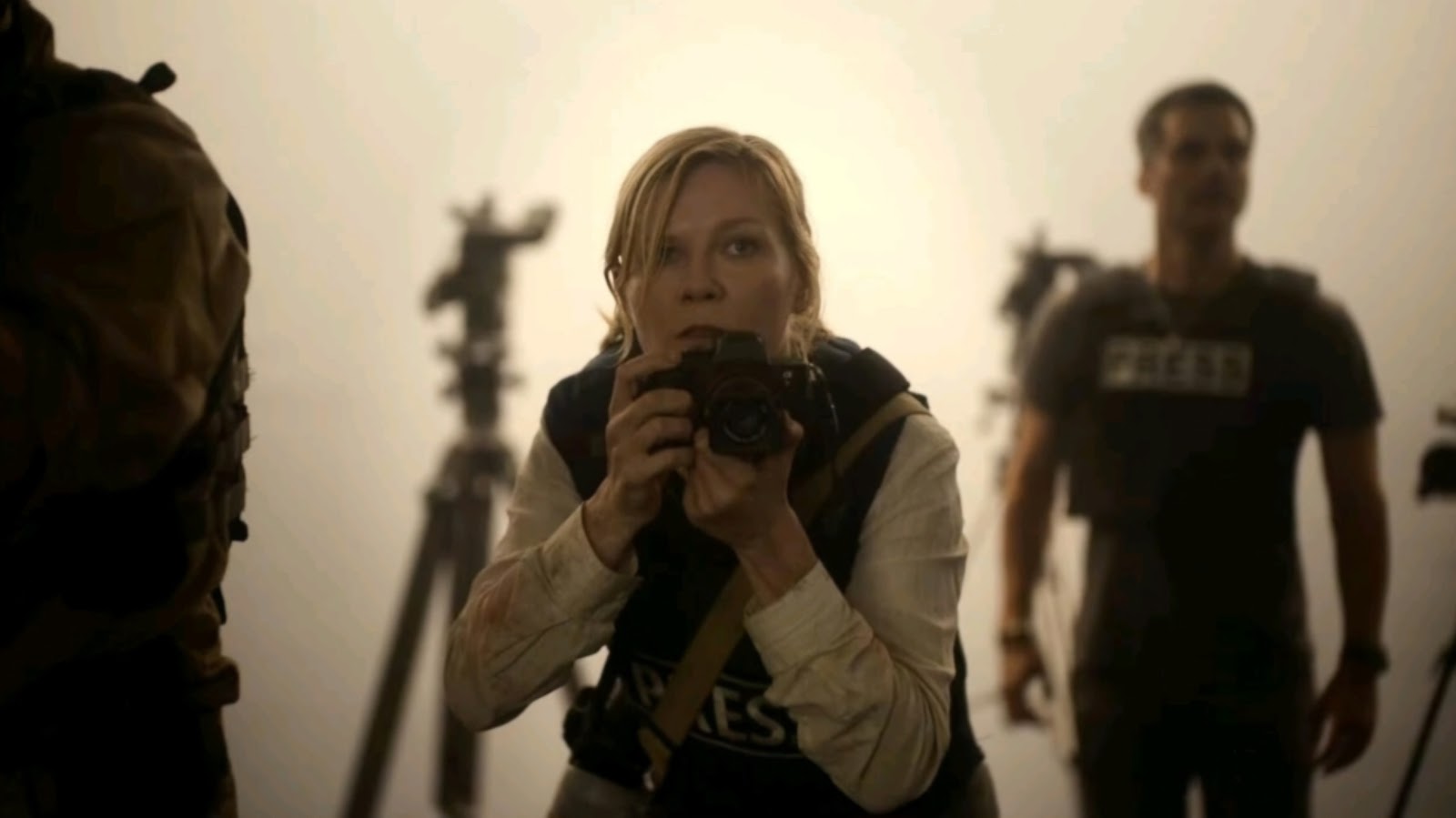
Civil War follows a group of wartime correspondents in New York. After a brilliant opening sequence, Lee (Kirsten Dunst) saves the life of a junior photojournalist, Jessie (Priscilla’sCailee Spaeny), when a bomb detonates in the heart of Brooklyn during a protest. Jessie tracks Lee back to her hotel and confesses how much she admires her, though Lee looks at Jessie, pondering whether she should shield the young woman from experiencing the struggles and horrors of the job.
Yet, Lee’s partner in crime, Joel (Mr. & Mrs. Smith’s Wagner Moura), a reporter (and man whore), invites Jessie along the next morning on their perilous journey, opting to take the long route to Washington, D.C., traveling from New York City to Pittsburgh to avoid dangerous outbreaks of war where survival is unlikely. Think Zombie meets Red Dawn, but with characters who should know better and none of Jesse Eisenberg’s feverish wordplay or a legendary Bill Murray cameo.
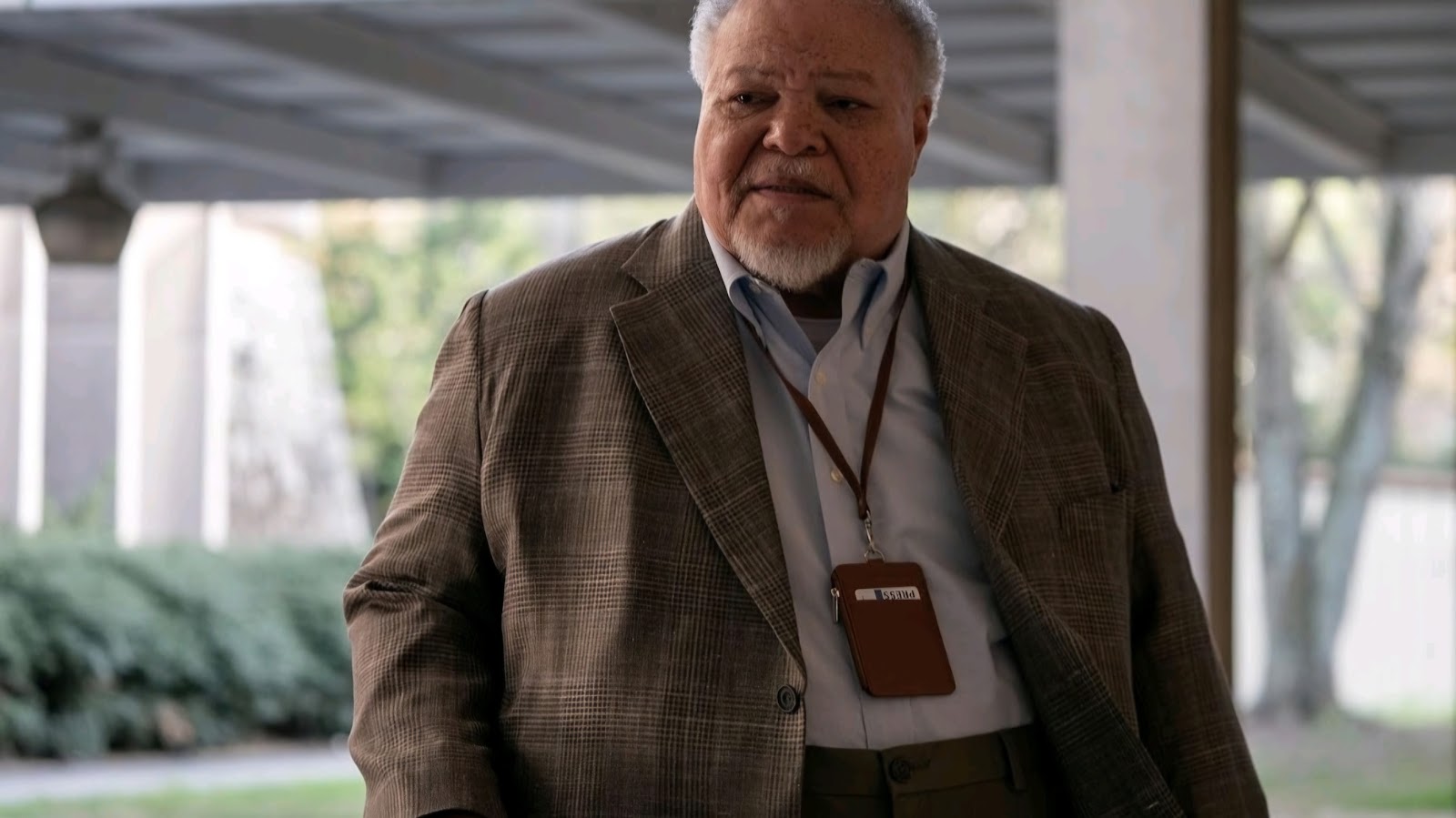
Joined by Lee’s mentor and seasoned newspaperman, Sammy (Dune’s Stephen McKinley Henderson), their mission is to obtain a photograph and quote from the current President (Origin’s Nick Offerman), who has been sequestered in a bunker in the White House. That’s, of course, if rebel fighters, rogue government forces, survivalists, civilian militias, or the plainly tormented and shell-shocked don’t kill them first.
These are the press member characters, depicted by a wonderful cast, who choose not to pick a side, just document to hold those accountable and for everyone to see. Dunst, who is always an underappreciated performer, is stellar in the role—the film’s conscience and steadily set the tone.
Moura is electric in his role, playing the classic roguish, swashbuckling, and wisecracking man of action who lives for the moment. And in this case, he gets more than he expects. In the case of Spaeny, like W.W. Beauchamp, she gets much more than she bargained for, seeing the real thing up close and personal.
Garland’s Civil War is a truly visceral experience that shows how to play both sides of the fence by allowing the viewer to tap into the film’s meticulous ambiguity, allowing the viewer to interpret which side you gravitate towards. Is the President a version of Donald Trump because he wears a red tie and he’s a White man in power? Are the good guys the ones fighting and brutally and ruthlessly killing soldiers in camo? Then why are the prisoners of war being executed with a ferocious machine gun by people wearing the same clothes?
As the film builds toward the big final showdown, can we say the rebels known as the “WF” are the good guys storming the White House? Did we forget the Capital Building Riots on January 6, 2021, where “proud” MAGA members stormed Washington? Even the much-talked-about and will go down as legendary Jesse Plemons cameo does not clear anything up for anyone, even if his character clearly is someone who is working to rid what he considers the world of non-White American inhabitants.
That’s what makes the film experience of the Civil Warso provocative, inflammatory, and dangerous. Anyone left in a dark room watching Garland’s film can be left on their own devices to come to their own conclusions. His tenacious, riveting, and staggering vision isn’t the American dream.
Director: Benjamin Brewer Writer: Michael Nilon Stars: Nicolas Cage, Jaeden Martell, Maxwell Jenkins
Synopsis: A father and his twin teenage sons fight to survive in a remote farmhouse at the end of the end of the world.
“I don’t want to rebuild it. I want to build something new.”
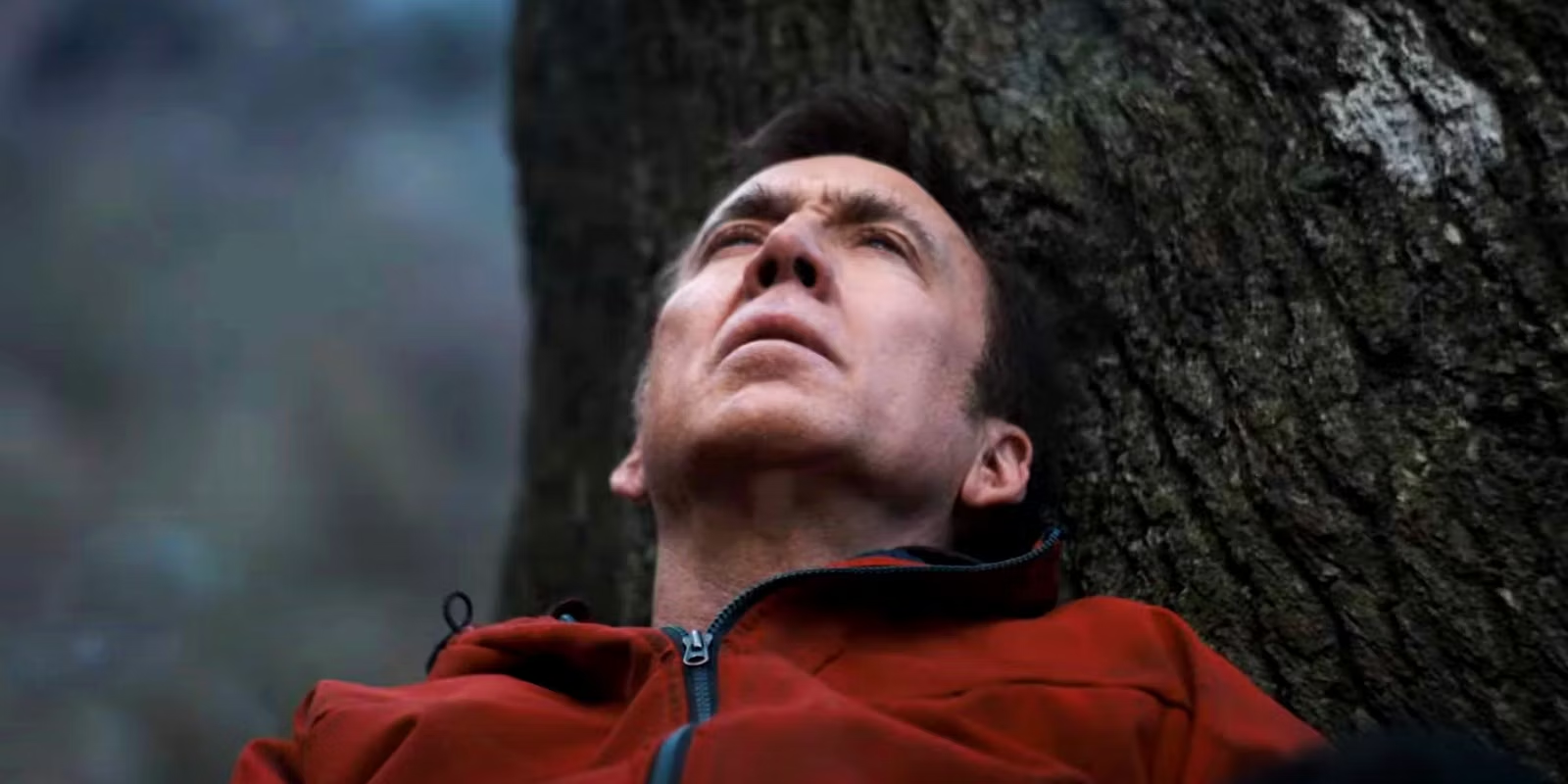
Benjamin Brewer and Michael Nilon’s Arcadian is a thrilling dive into the creature feature genre. An apocalyptic event has occurred leaving most of humanity near extinction and living a liminal existence between the safety of daylight and the terrors of night.
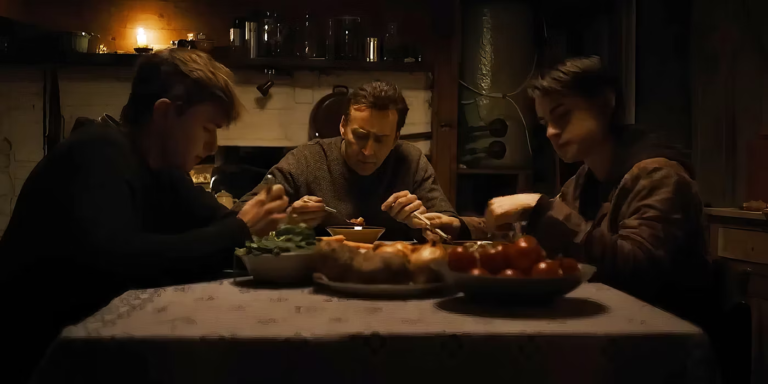
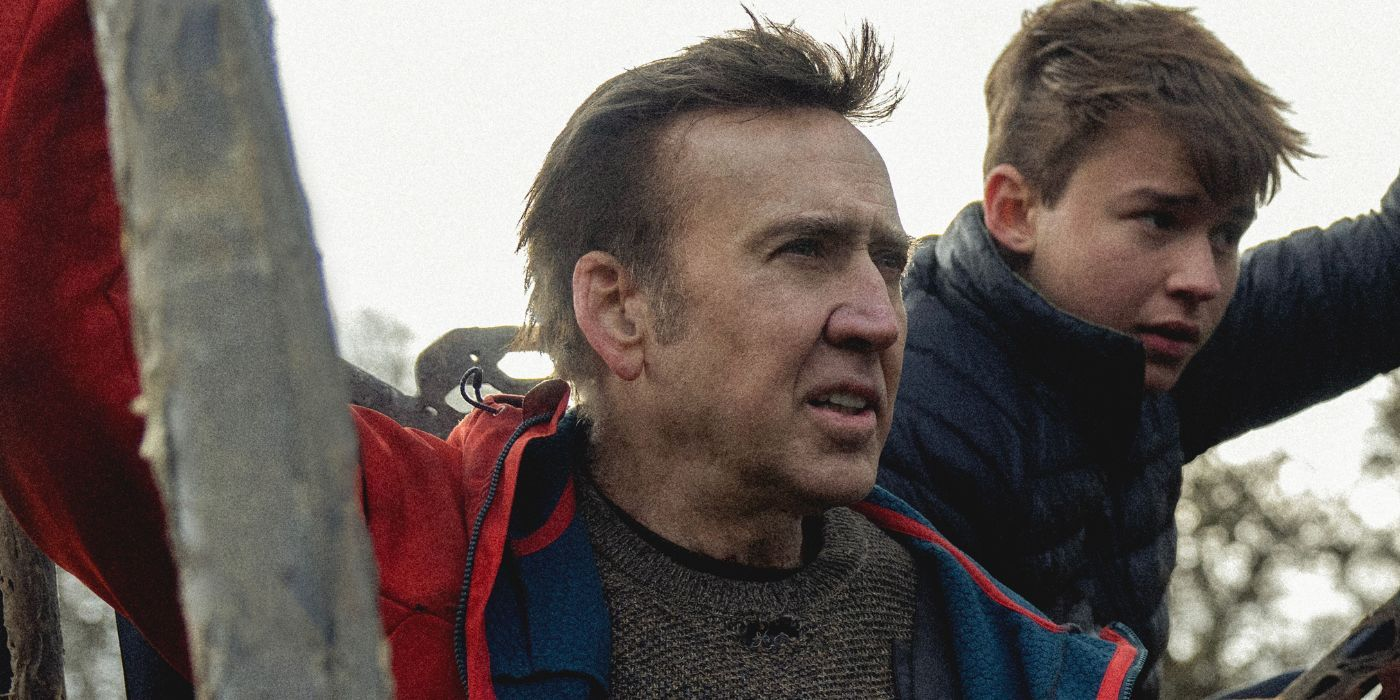
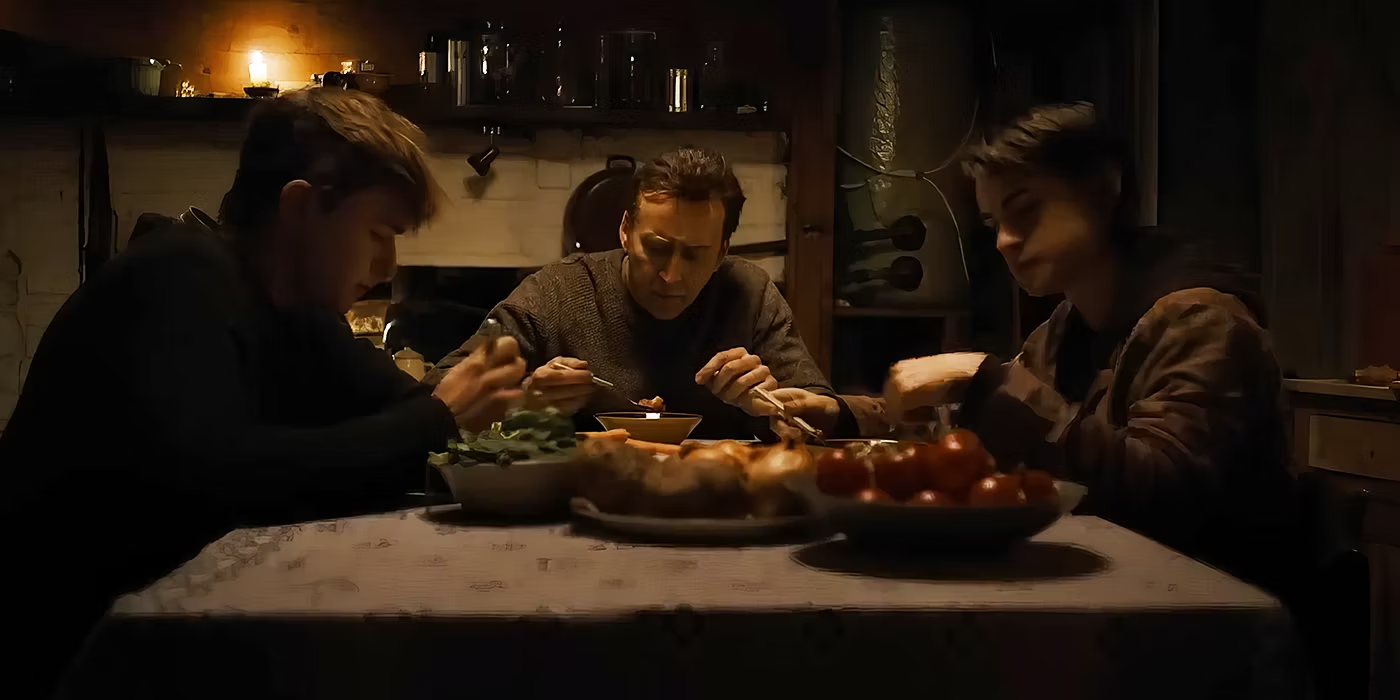
Brewer immediately throws the audience into the action as Paul (Nicolas Cage) runs through a collapsed city to get to his twin sons. Fifteen years later, Paul is dealing with Thomas (Maxwell Jenkins) and Joseph (Jaeden Martell) as teenagers. The brothers are at odds due to their distinct personalities. Thomas is wild and action oriented while Joseph is thoughtful, clinical, and scientific. Arcadian implies that Paul himself might have been partially responsible for the virus mutation which overtook humanity and created vicious insectoid monsters.
Now living on a remote property in what could be Ireland or could be any forested area substituting for bucolic and beautiful but also threatening environment; Paul is at odds with the collective farm run by Mr. and Mrs. Rose (Joe Dixon and Samantha Coughlan). Despite the apocalypse they are creating their own version of Arcadia. They grow flowers, harvest the land, and shepherd livestock behind a fortified gate with a gunman controlling it. They live an almost ne plus ultra life of self-sufficiency. It is little wonder that Thomas is beguiled not only by this seemingly idyllic Rose farm, but also their daughter Charlotte (Sadie Soverall).
Joseph is more precise and practical about trying to keep his family unit alive. He is the inventor and quiet genius. Thomas and Joseph are Paul’s sons, battling at times like Cain and Abel. They are also Paul’s flock and like a good shepherd he will not let a lamb stray.
There are biblical and mythological references galore in the film but what really works is the unrelenting tautness of the film. Snatched moments of time between teenage lovers can have dire consequences for the survival of both of them. In fact, it can have dire consequences for all the people still alive. Especially for Paul and Joseph.
Having similarities to other post-apocalyptic narratives, in particular 28 Days Later by Danny Boyle, and A Quiet Place, makes the plot of Arcadian appear somewhat overly familiar. However, Brewer ensures the audience is absolutely invested in the fate of Paul, Thomas, Joseph, and Charlotte. The bonds that cannot be broken between father and sons, brothers and lovers, parents and their children are tested during a time of monstrous extremity.
Brewer uses his skill as a VFX specialist to create hideous creatures who exist to sting and destroy. Part survival thriller and part eco-horror, Arcadian blends its genres seamlessly to create an edge of the seat experience. Frank Mobilio’s camera work is at times almost cinéma verité and at others discomfitingly abstract; along with Kristi Shimek’s editing it provides Arcadian with a rich and haunting texture. Where we cannot see because of the engulfing darkness the incredible sound design ensures we understand the impending threat.
The script by Michael Nilion, a regular collaborator with Cage, is layered and intelligent. It avoids exposition dumps to create the air of uncertainty around the events. It isn’t so much a case of what you see is what you get, but a case of what you see and what you don’t see is all you need.
The film’s tempo of pressure and brief respite follows the logic of the day and night world the characters inhabit. Everything becomes a race to get home, wherever that may be, and to be safe before the sun goes down and the creatures appear. Once we finally do see the creatures beyond mere glimpses and shadows, they are as abject and horrific as you can imagine unnaturally evolved insectoids being. They also work as hive creatures which means they are intelligent and organized in a way that the remaining humans have forgotten. Paul and Joseph act as a reminder that you can never let your guard down against pathogenic nature when it sets out to destroy.
Arcadian has recognizable influences, but the way Brewer has decided to concentrate on what humanity means at the end of the world through the lens clambering dread makes the film a heart pounding experience. Humanity is vestigial not only because there are few survivors, but because extending support to others is something that people who live in the Rose compound refuse to do. With little left to stay alive — limited medicine, food being scarce, the Eden or Arcadia of the Rose farm speaks to the foolishness of a collective which protects only those they arbitrarily deem worthy. Even at the end of the world, a class system remains in place.
Jaeden Martell is extraordinary and considering his supernal career thus far it is a testament to the direction and the script which channel his immense talent. Maxwell Jenkins is the perfect foil to Martell. The other face of a coin that needs to remain whole to ensure the survival of those he loves. Thomas’ blossoming romance with Charlotte is lovely, melancholy, and eventually extremely kick ass.
It is a maxim now that if you give Nic Cage the right material he can go into God Mode in seconds. Arcadian plays directly into his strengths as an actor. He doesn’t have to say much but every word he says is essential. When it comes to action, Cage does not skip a beat. At its heart, Arcadian is a story about family. The legacy they leave and the inspiration they pass on. Coming of age is tough enough under normal circumstances but doing so when you are facing extinction as a species is next level. Arcadian is moody, ominous, and ferocious but it is also about reconciliation and hope. To survive, and be worthy of survival, recollecting the good in humanity is key. Tense, visceral, and explosive – Arcadian is the real deal for creature features.
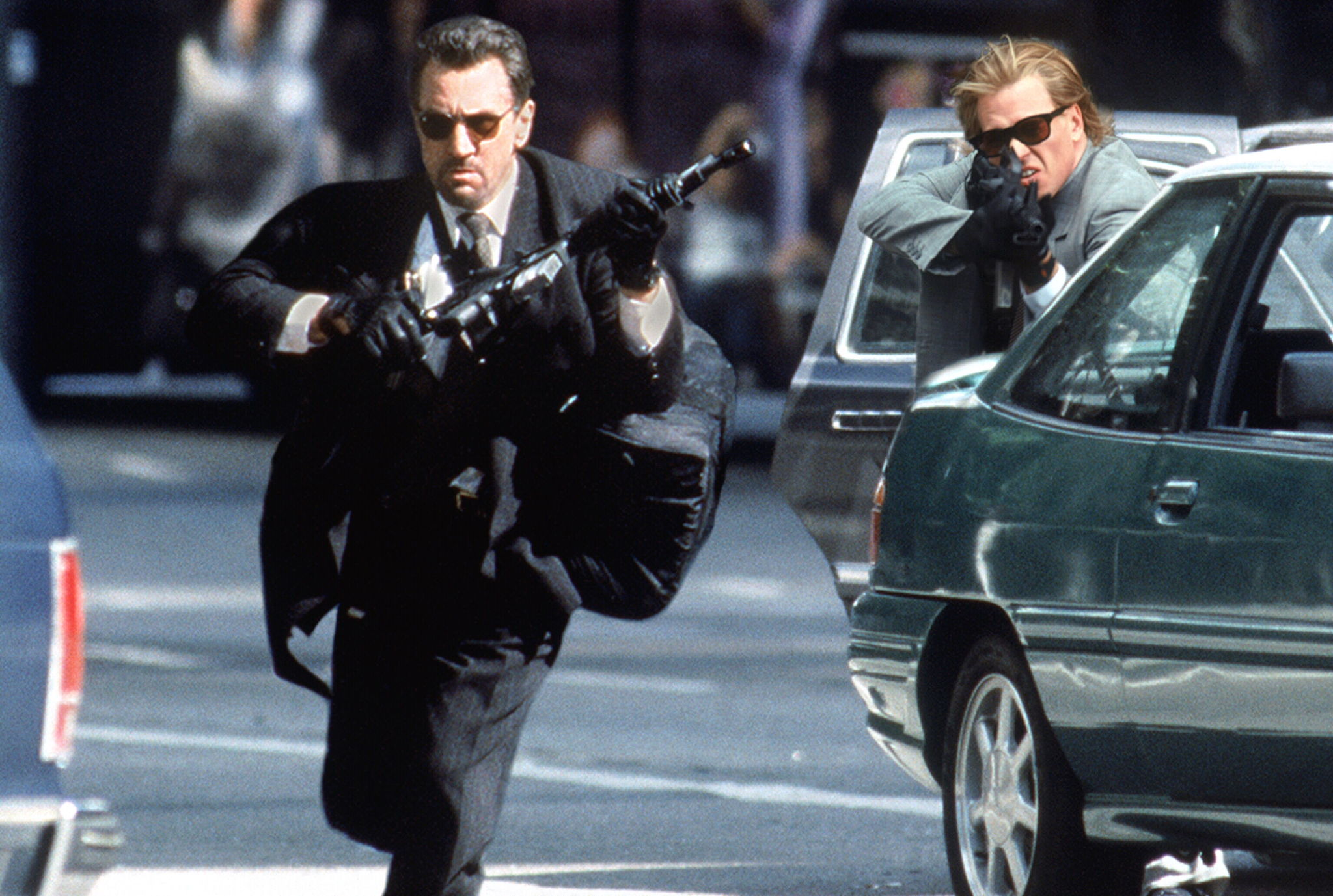
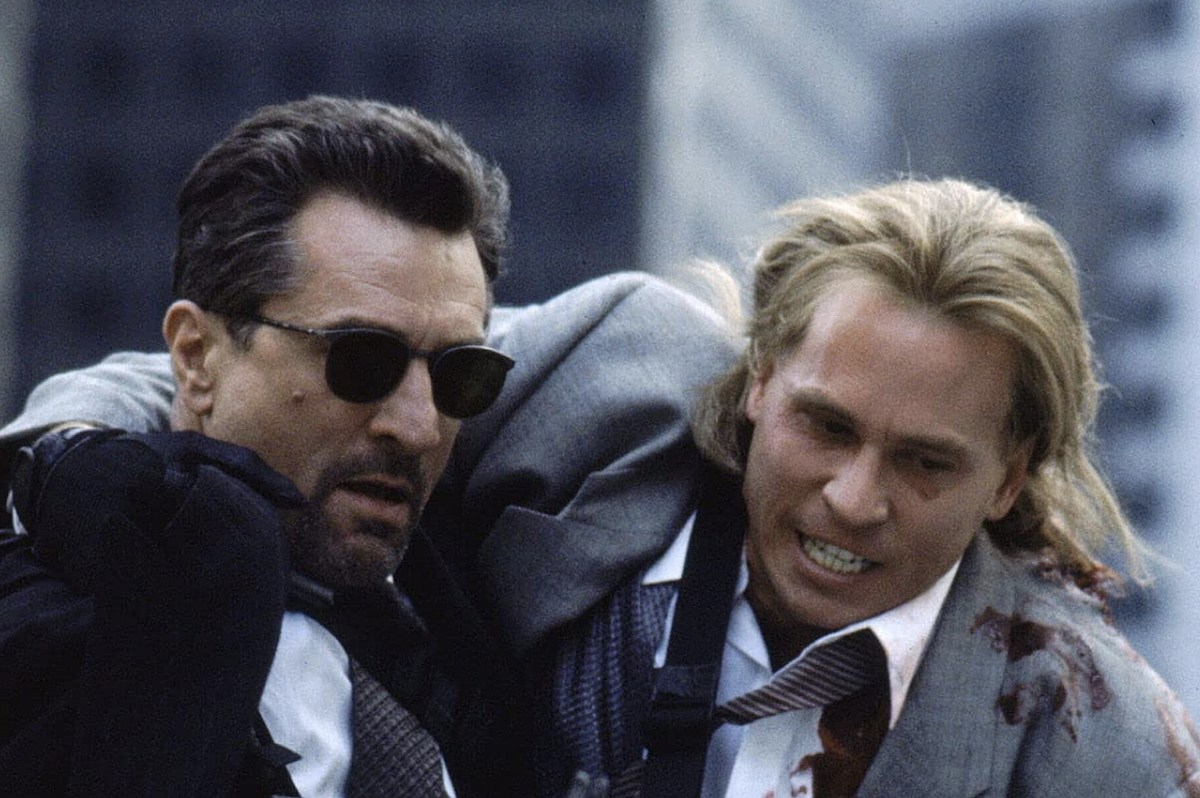
There’s a thrill to being a kid and playing cops and robbers. It’s black and white, good and bad, law and chaos. The game rarely has subtlety on the surface. Sure, many kids do add nuance. Sometimes, your cop has a chip on his shoulder. Sometimes, your robber is doing it because of a noble reason. It’s a game played because it’s fun to be on a team with a clear goal in mind. It’s, more often than not, boys pretending to be men, working together. Men that are the pinnacle. That even if the robbers rob for greed, they still get one over on “the man” and even if the cops don’t go by the book, they still get justice in the end. It’s often we see men in these roles on film. Men that fit the archetypes we’ve come to know. There’s no better writer and director better than Michael Mann when it comes to the crime genre.
As a director and screenwriter, Michael Mann has forever changed the nature of the crime movie. There are others who go their own way, but it’s obvious the tremendous impact Mann has had on the genre over the last 40 years. What the imitators never quite latch onto is the intrinsic and subtle masculinity to Mann’s men. It’s not full of toxicity, overconfidence, ignorance, or sexual dominance. It’s not about comparing the size of… case files with fellow officers, making empty threats to mobsters, or exhibiting hostility because they don’t understand how to express their feelings. Their masculinity is confident, compassionate, protective, and vulnerable. Michael Mann’s cops and robbers are elevated beyond their archetypes because of this ethos and it’s never more present than in his magnum opus, Heat.
So much of Heat relies on the incredible characters within, buttressed by immaculate robber Neil McCauley (Robert De Niro) and ultra-capable cop Vincent Hanna (Al Pacino). Yet, this original vision couldn’t have happened as well as it did if Michael Mann hadn’t cut his teeth on two adaptations first. With Thief, based on the novel “The Home Invaders” by Frank Hohimer; Mann films his version of the noble safecracker who dreams of a simple life to live after one more big score. For Manhunter, based on the novel “Red Dragon” by Thomas Harris; Mann films an investigator who can’t let more innocence be tainted by another psychopath. The two sides of the spinning coin that is Heat were informed by Mann’s work on the men in these two films. He found his role models within these masculine ideals.
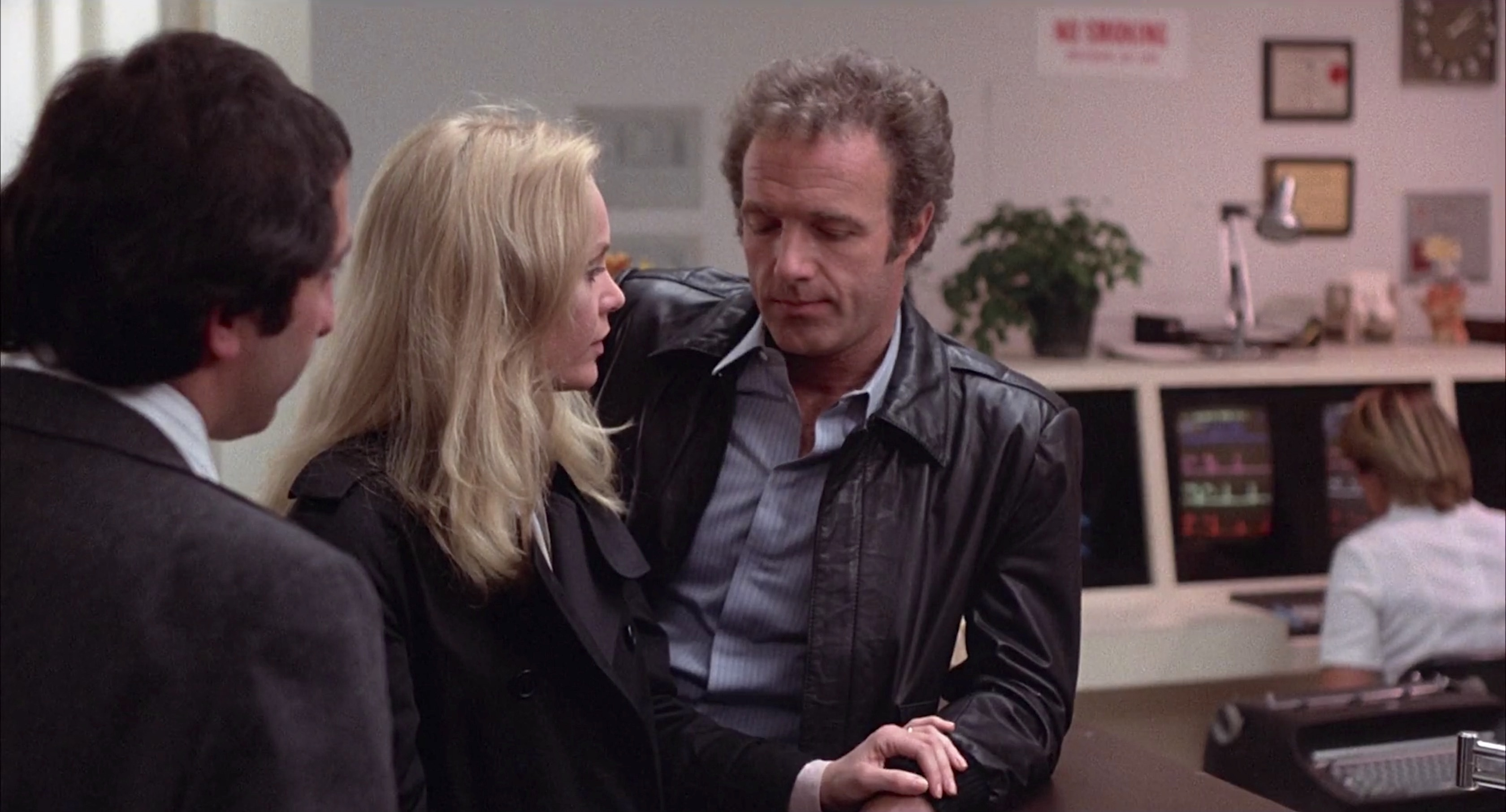
In Thief, there is a real man behind the swagger. Frank (James Caan) picks his jobs carefully. He limits risk to himself and his crew because he has a plan. He spent the majority of his life in prison and he isn’t going back, but he has no skills, except what was taught to him by his mentor, Okla (Willie Nelson). In four short years of freedom, Frank has amassed a modest fiefdom to launder the money from his heists. He rules over a used car lot and a small bar, coming and going from each as he makes sure his true line of work runs smoothly. Of course, peace can never last and Frank’s little fiefdom soon abuts a mighty kingdom, the kingdom of Leo (Robert Prosky), the biggest fence in Chicago. Leo offers the quickest path toward Frank’s way out; big scores, high yield investments, access to worlds he couldn’t even come near working his quick, small jobs. Like all greedy people who want to exploit someone more skilled than they are, Leo doesn’t pay Frank what he owes. Leo keeps Frank, yokes him, and tells him he’s going to do more, steal more, give up more. Frank soon finds a way to toss said yoke from his shoulders and become his own boss again, though it leaves him alone and drenched in blood.
It seems simple when it’s put this way, but the nuance Michael Mann brings out of the character, aided of course by James Caan’s superior performance, elevates Thief beyond its surface. Frank’s dream is simple: make enough money to support a family comfortably and live out the rest of his days as a private citizen. He carries around in his wallet a sort of innocent and childish collage he’s made of houses, women, children, and Okla, the man who let him dream. It’s private, but he eventually lets Jessie (Tuesday Weld) in on the plan. It takes some convincing as Frank unintentionally stands Jessie up for their date when he goes to retrieve money taken from him by Leo’s associates.
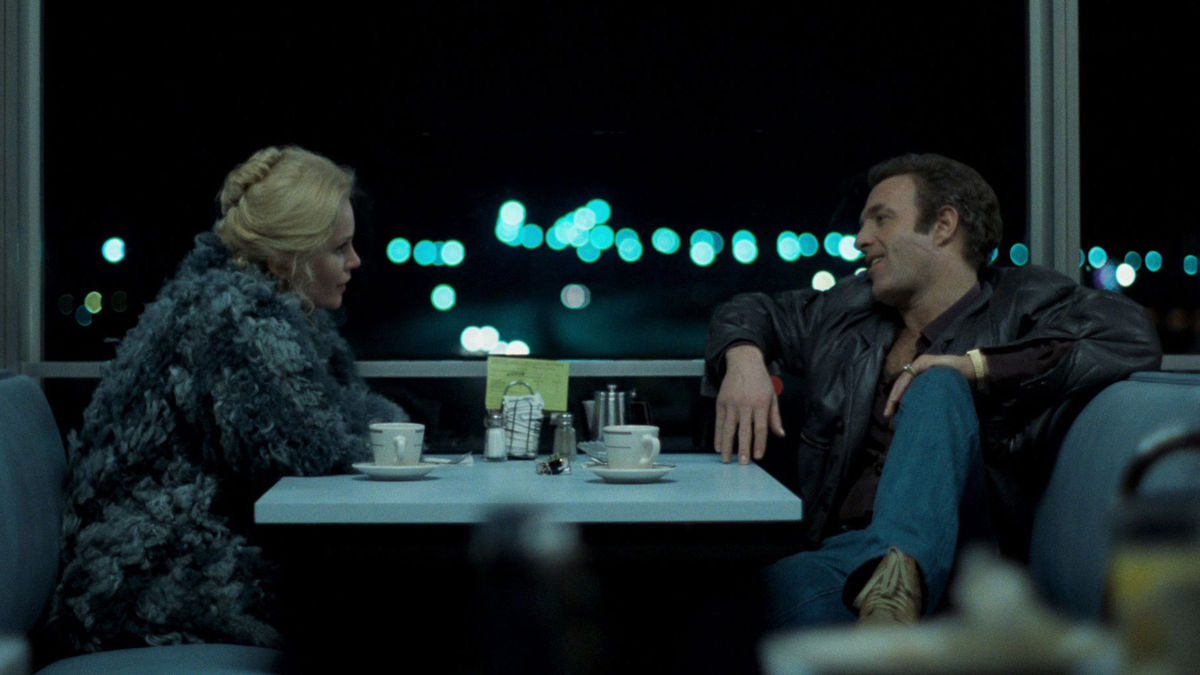
In a move that seems too aggressive and a notch against Frank, he pulls Jessie out of the bar she’s in and into his car. They shout at each other, Jessie more than Frank, but there’s a beat when Frank turns and his anger becomes bemusement. Not antagonistic, natural and vulnerable care, which softens Jessie quite a bit. The two of them end up in a late night coffee shop, but there’s still animosity coming from Jessie, so Frank lays it all out for her. He pours out his soul as the two of them get to know each other. Suddenly his scars, his limp, it all makes sense in the broader picture of why Frank is so guarded and so untrusting of most other people. Though, he always has in the back of his mind Okla’s sage advice, “Lie to no one. If there’s somebody close to you, you’ll ruin it with a lie.” In the emotional peak of the scene, as Jessie tries to give Frank one more out telling him she can’t have children, he shouts that they’ll adopt. Frank is all in. He is more than ready to “get on with this big romance.”
It’s so rare to find masculine vulnerability like this on film. So many men on screen who are tough don’t ever delve this deeply into themselves to try and make someone else understand them. So often they fail in the fundamentals of humanity in order to maintain a persona and to erase this kind of vulnerability. A character like Frank proves he can be a swaggering, confident, masculine man, but one who understands that in order for someone else to want to be with him, he has to let them in, let them see the real him.
It’s in a scene that follows that we see the right kind of masculine anger. When Jessie and Frank sit down with the adoption agent, Mrs. Knowles (Marge Kotlisky), she backs Frank into a corner because she doesn’t understand that the first line of his resume means he was a prisoner for the long stretch of years listed there. When he finally lets her in on it, the conversation immediately shuts down. His shouts and anger aren’t at the woman, but at the system she represents. It’s a system that will never allow a person like him, even with his stable income from legitimate businesses and his loving relationship, to adopt a child the legal way. In this tirade he plays his last card. He tells everyone in the office that he was a child in this system, he was “state raised.” Frank knows what these children face and what’s waiting for them on the outside. He can change a kid’s life, but because of who he’s been, he isn’t allowed to.
It’s this frustration that pulls Frank closer to Jessie. The two of them, in a scene without dialogue, sit in front of the fire, Frank cuddling into Jessie. She comforts him in his hour of need and makes him feel safe. This need for comfort isn’t weakness or a character flaw, but a self awareness that many men lack because of the toxicity of our society’s flawed masculine ideal. Frank is still adept, strong, smart, and just the right amount of aggressive. He doesn’t become soft because of Jessie, he allows himself to be open to a person who accepts him, which gives him strength in the conflict to come. That’s when Frank takes care of his budding family in the only way he knows how.
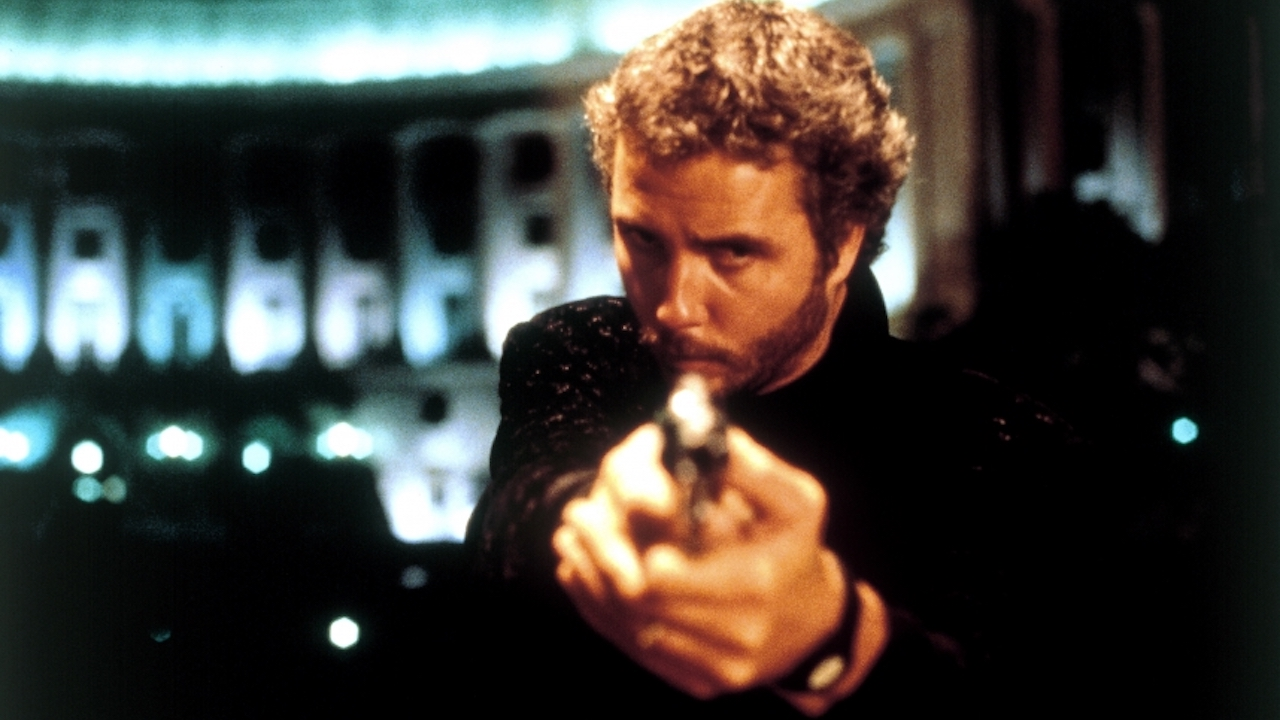
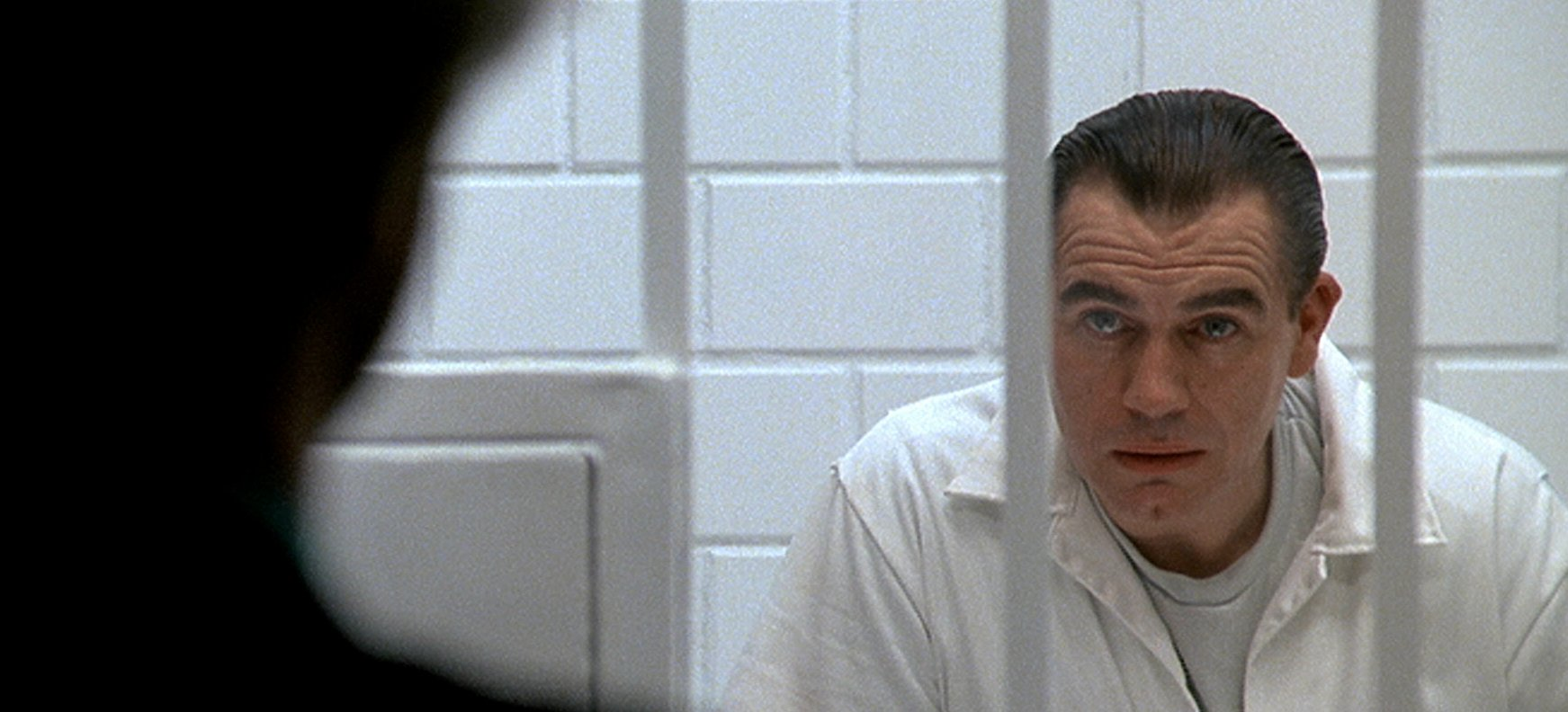
In Manhunter, a man is consumed by the thing he does best. Will Graham’s (William Peterson) talent for diving deeply into the minds of psychopaths chips away at his own being, leaving his mind disturbed by the scenarios he replays. Will is a former cop dragged back into profiling by his friend and former boss FBI agent, Jack Crawford (Dennis Farina). Will walks the recent crime scenes of a serial killer the media has dubbed the Tooth Fairy, but who the FBI finds out prefers the moniker Red Dragon (Tom Noonan). Will thinks of things the investigating officers didn’t because he has the pattern between both cases of horrendous murder. He pieces it slowly, but there’s something that nags at him, an opinion he doesn’t want, but needs, and he goes to the one man, the man who tried to disembowel him, Dr. Hannibal Lecktor (Brian Cox). Will opens a door with Lecktor that eventually leads to the Red Dragon, but it claims the life of a tabloid reporter, compromises his family’s safety, and makes him question his own judgment along the way. Stumbling on the key piece of evidence, Will and the full force of a police apparatus at his back charge in and stop Red Dragon from further mayhem, saving the latest would be victim from further harm.
It’s a classic police thriller. Cops win, bad guys lose. Yet, Will isn’t the typical cop and I’m not just referring to his potential. He has a strange empathy toward psychopaths that allows him to get inside their methods and motivations. Though, Will isn’t territorial about his investigations even if he insists on visiting crime scenes alone. So many cops in film are brash, “I know everything, you know nothing,” types. They claim ownership of things pertaining to the cathey work, they shut people out, try and get to something first, but Will isn’t like that. Will wants, above everything, above all the pettiness of jurisdiction and field authority, to stop a murderer from murdering by all the means at his disposal. Will has an ego, but he knows when it’s necessary to deploy it and when it must be tamped down to achieve his goal.
In this sense, he also knows that in order to find a demon he has to go to the devil for help. Will isn’t just nervous because he put Lecktor away, but because unlike the other criminals he’s helped to capture, Lecktor got close to Will. Lecktor stabbed into and then dragged his blade across Will’s abdomen. He didn’t just want to kill Will, he wanted Will to feel what it was like to die knowing how helpless he is. Yet, Will knows that Lecktor is the only person who could get into the head of the Red Dragon better than he can. He sits and he takes the needling, Lecktor’s attempts to psychologically get under his skin. It isn’t until Will runs out of the building that he lets his panic attack fully envelop him. Even in the panic, though, Will finds that Lecktor is more than a mere useful tool.
In a strange scene that’s far more comfortable in a teenage rom com, Will and Lecktor share a late night heart to heart. Lecktor in full comfort is laying on his bed with his feet propped on the concrete wall of his cell, his left arm draped over his forehead, bracing the receiver to his ear with his bicep and his right resting on his abdomen. Will is in a hotel room, smoking a cigarette, barefoot and, while he starts the conversation with animosity, he settles into it as he gets more interested. He drapes one of his legs over the arm of the chair he sits in and drinks in what Lecktor is philosophizing. It plays as two people who are intimate with each other. Even as the wheels in Will’s mind turn because Lecktor has, as he always does, told Will exactly what he needs to hear in the moment, Will still has an appreciative look as he pulls the phone away from his ear. It’s a scene that doesn’t need to take place as it does, but it conveys the intimacy of these two men. That in spite of their animosity, they crave understanding. They want for the other to see them the way they need to be seen. This is a hard thing for two men to do because of what is expected of men and how outsiders might view this kind of male intimacy.
It’s a scene that lends itself perfectly to the one in which Will and Kevin (David Seaman), his stepson, have a heart to heart. After boorish tabloid reporter, Freddie Lounds (Stephen Lang), publishes photos and an exposé detailing Will’s first visit to Lecktor, as well as deep background on Will, Kevin seems distant toward Will. Unlike many dads in his shoes, Will decides to meet the awkwardness between the two of them head on. He takes Kevin shopping and he lays it out for him. Kevin’s very understanding and they hug. This is very hard for Will or any father to do because fathers are a monolith in our society. They have to be strength incarnate, a bulwark against all forces coming for their family. Yet, dads have struggles, too. The more they speak to others about those times when they lack strength to go it alone, the better. Will understands that when he married Molly (Kim Greist) he took on more than a responsibility to protect, but also to seek comfort in people who love him. He doesn’t lay his burdens on them, but he doesn’t retreat into himself either. He has balance with them and he owes them a palatable version of the truth he sees everyday.
The lessons Michael Mann learned in adapting these previous works helped him shape his singular epic, Heat. There are several comparable aspects between Mann’s original work and his two adaptations. Like Frank in Thief, Neil McCauley falls for a woman, head over heels. Like Will in Manhunter, Vincent Hanna has entered a relationship where he’s a stepfather. Neil gets involved with a businessman, Van Zant (William Fichtner), who tries to get one over on him. Vincent comforts a grieving mother (Hazelle Goodman) at a crime scene much like Will comforts Reba (Jessica Lange) after he saves her from the Red Dragon. Though, it’s the divergence that makes Heat a watchable, and an endlessly rewatchable, film. The two men at the centers of Heat are older for a start.
Neil doesn’t have the starry eyed optimism of Frank. He’s a romantic for sure, but he has a darker pragmatism at his core. Unlike Frank, Neil begins by lying to Eady (Amy Brenneman) and if he hadn’t been backed into a corner, he would have continued lying to her. Though, unlike Chris (Val Kilmer), who feels like an adversary when it comes to his wife Charlene (Ashley Judd), not letting her go even if they’d both be better off, Neil offers Eady a way out as he goes into crisis mode. It’s an extension of his one rule. He wants Eady to take an out so he doesn’t have to see her face if he takes his. His one rule, his mantra, is that he walks away. No matter how he feels, no matter what he leaves behind, Neil walks away if he sees no way of having it all. It’s a form of masculine protection and is much better than if he did stay, forcing Eady to make hard choices she shouldn’t have to make.
Vincent too has made a strict code for himself. He doesn’t have the need, like Will, to share much with his wife, Justine (Diane Venora). He even goes so far as to say bottling up the horrors he encounters on the job is a way to “keep [his] edge.” The fact that Vincent can’t rely on Justine for support drives the two of them apart. They lash out at each other and hurt each other emotionally. It’s obvious they need each other from the way that they get under each other’s skin. It takes a near tragedy for Vincent to talk, really talk, with Justine. It’s not much, but it’s the hint of the man Vincent used to be and the man he wants to get back to. When he gets a fateful page on his beeper, he hesitates. Not in the way that people hesitate when they want to pretend like it’s the other person’s choice if they stay. He really and truly hesitates as he thinks about what Justine’s going through and the terror he experienced when he found Lauren (Natalie Portman) in his bathtub. In those seconds he’s thinking about how much he needs Justine as much as she needs him. When he does go he becomes the man Will has put behind him. He says to Justine that he doesn’t know if it could get better between them because, “It’s like you said. All I am is what I’m going after.” It could be interpreted that after he catches Neil, Justine is what he’s going after. It could be interpreted that without saying as much Vincent is asking for that second chance after all.
Heat sets itself apart from Mann’s early adaptations because it’s also an ambitious labyrinth of plot. Threaded through the thieves’ lives are the repercussions of the opening heist. We aren’t sure how he will fit into the story when he shows up, but the evil Waingro (Kevin Gage), takes full advantage of his chaotic disposition. He disrupts Team Neil’s dynamic during the first heist, throws more work at Vincent as he rapes and murders sex workers, and ultimately teams up with Van Zant to disrupt what is supposed to be Team Neil’s final score. Much like Waingro, we aren’t sure how Donald Breedan (Dennis Haysbert) fits into the tapestry until the last possible moment. Breedan especially is a tragic figure as a man released from prison, but put into an impenetrable box on the outside as the system fails him. He has no recourse against the cruel and corrupt restaurant manager (Bud Cort) who dangles parole violations in front of him to get him to work more for less. He does all he can to be lawful on the outside, but it doesn’t matter how much he wants to be better because he realizes, inside or outside, he’s not his own man. The heist is his last chance to take back his freedom. Heat is filled with dozens of characters, mostly men, who all have a certain amount of untapped depth to them.
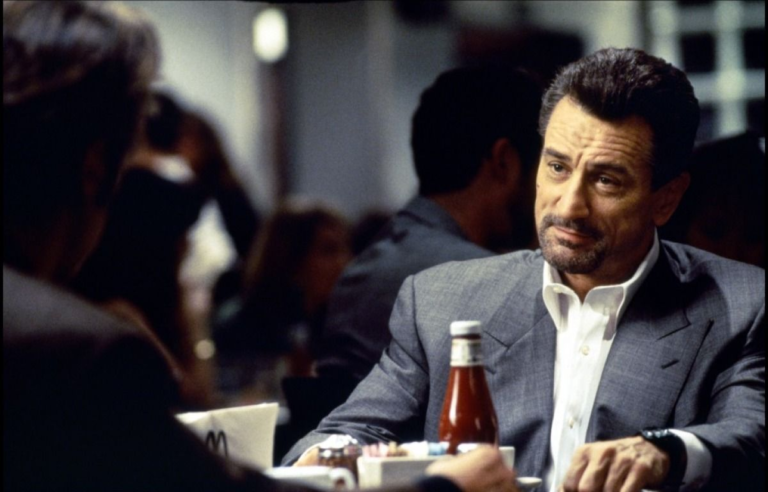
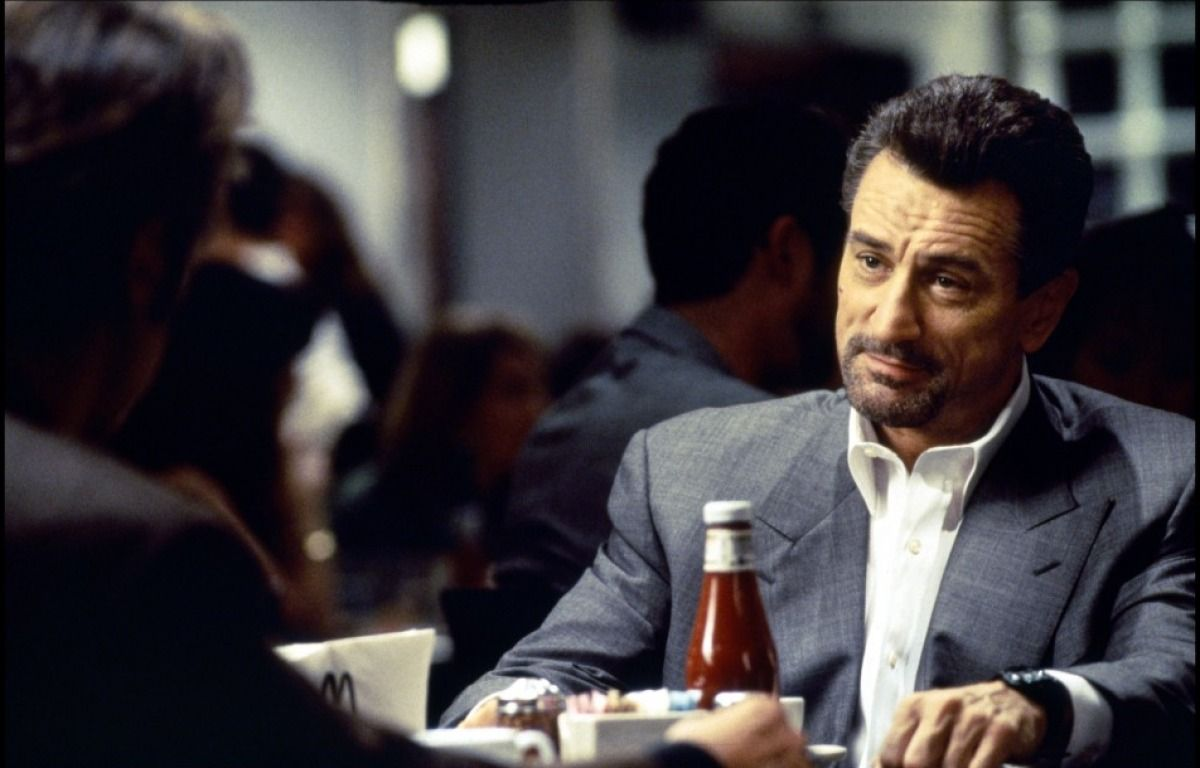
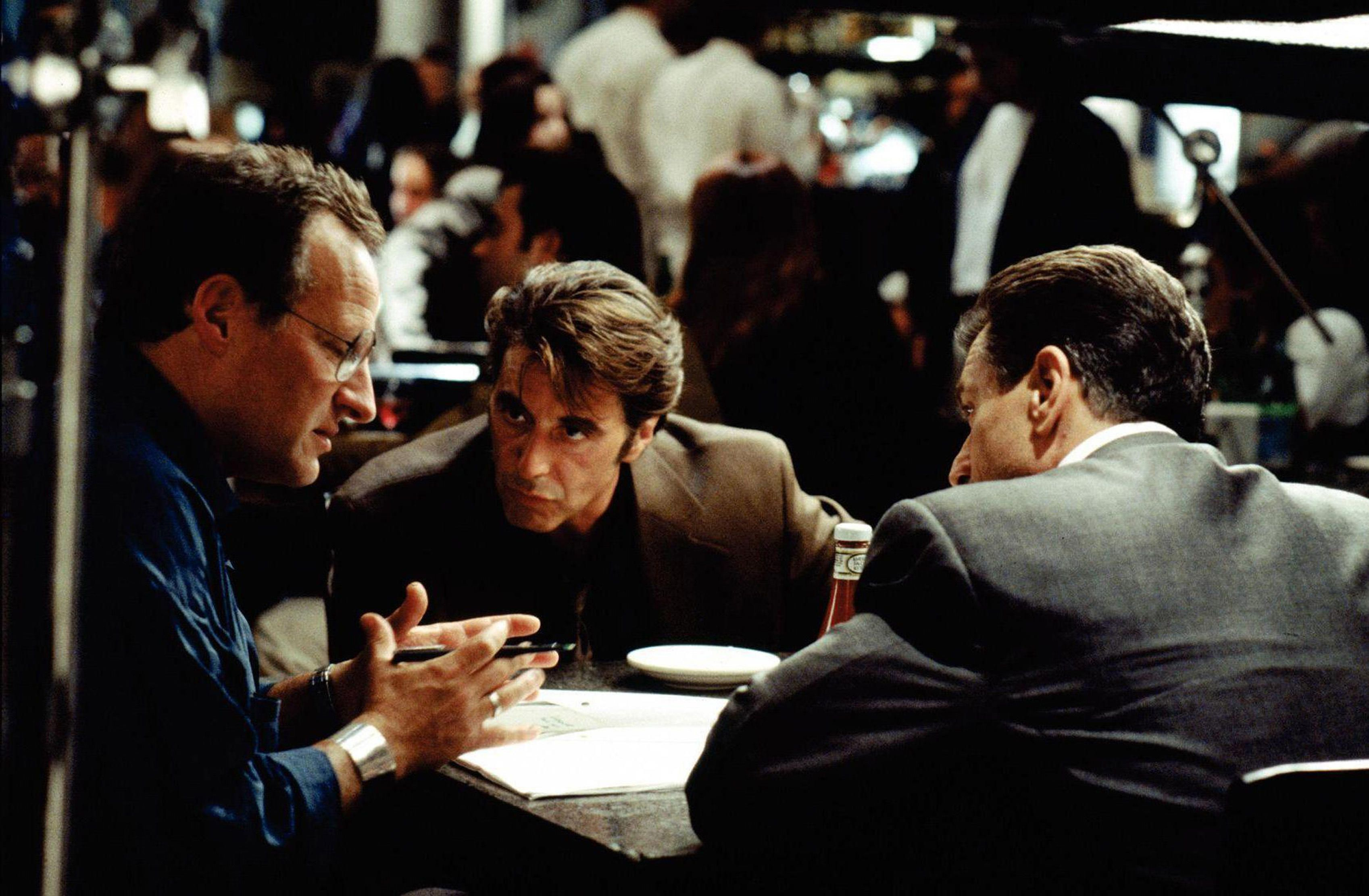
That depth comes to a head when Vincent and Neil sit down for a cup of coffee in a very crowded coffee shop. It’s the film’s way of letting out the breath that it’s been holding. It’s a way of bringing the two halves of the story together in order to understand how it must end. Action films, crime films, films of law against chaos are predicated on the idea that their stories are good vs. evil. Heat is the challenge to that assumption. Heat also challenges the assumption that civility has no place amongst men, that one or either has to perform a subterfuge for them to go back and do what they do. These two opposites, foes, antagonists, don’t use this time to spit, rage, belittle, berate, or posture at one another. What they do is they simply talk. They pontificate on their situation, families, loves, and drives. They become two humans at a coffee shop who know each other, but have no real idea about what makes the other who he is. They even come away with the conclusion that it will be difficult, if it comes down to it, to put each other down. They see each other’s humanity and it doesn’t make either one weaker in his conviction, but it helps to renew their convictions that Vincent is going to uphold the law and Neil will break it. They are an unstoppable force and an immovable object, but each of them knows in the back of their minds that they could slip and they could lose. The scene is a master stroke not only in breaking the formula, but in breaking down the ideas of cops and robbers and how men at odds with each other can interact.
Heat, while having incredible action set pieces, is so much more indelible because of its characters. Even as they are slotted into archetypes, the characters often zig rather than zag. Their threads come together to tighten the plot into a supremely well thought out machine. The film’s reputation and moniker as a movie for men is a false nomenclature. People can see how this film is different in the subtleties of the masculine energy. Its intricacy and depth brings people in even amongst the mayhem and violence, which it doesn’t revel in, but sees as a part of this life. The men in Heat are so much more than “guy’s guys,” and Heat is much more than a men’s movie in spite of it nearly exclusively starring men.
Michael Mann makes films about men. His men are masculine in a way that isn’t driven solely by testosterone. These men eschew many of the extremes of the societal constructs of what it means to be a man. They have brains and they have hearts and they use them in equal measure. They aren’t paragons or pinnacles of what men should be, but they’re close. They’re on the precipice of what we all would rather have than any experience of toxic masculinity. They represent the ideals of justice and a sort of creed when it comes to lawlessness. The duality of cops and robbers serves as a perfect breeding ground to explore masculine identity. The earlier films of Michael Mann, Thief and Manhunter, are clear lines to the foundations of Heat and the evolution of masculinity in the crime genre.
Director: Larry Fessenden Writer: Larry Fessenden Stars: Alex Hurt, Marshall Bell, Michael Buscemi
Synopsis: A Fine Arts painter is convinced that he is a werewolf wreaking havoc on a small American town under the full moon.
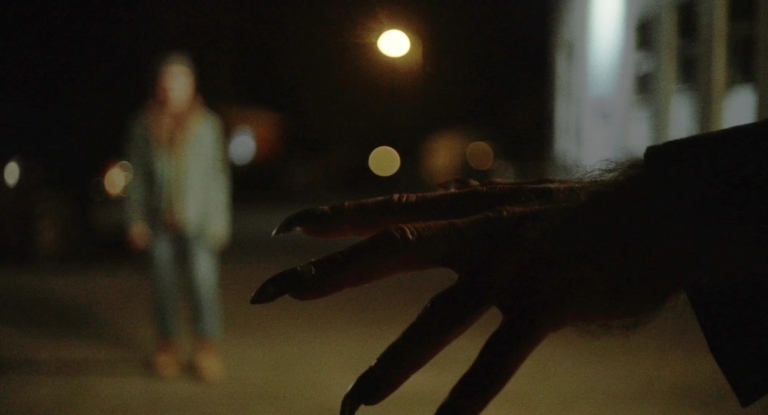
Larry Fessenden is a very clever man. He is a cinematic horror poet who, like many of his friends and collaborators, insists that the “monster” is rarely the problem – it is the people who are.
Talbot Grove in upstate New York is about to be turned into an environmental nightmare by corrupt developer Jack Hammond (Marshall Bell). Charley Barrett’s (Alex Hurt) father worked with Jack Hammond creating some more than dubious deals. After the death of his father (played in photographs by William Hurt, Alex Hurt’s real-life father) an alcoholic and control freak, Charley begins to sort through his papers. He discovers that all was not copacetic and begins to drown himself in alcohol and withdraws to spend solitary time painting.
Charley was also in love with, and engaged to, Hammond’s daughter, Sharon (Addison Timlin) while he was working as a contracting boss for Hammond. But during his desperate self-annihilating, booze-soaked nightmare something happened. Charley got bitten by a werewolf and the consequences are reverberating through the whole community.
Blackout cleverly references the original Universal Monster pictures starring Lon Chaney, Jr. but instead of the Romani people being the scapegoat for what is considered the other, it is Mexican and Latino workers who are being exploited by Hammond’s company. Hammond thinks he owns the town and the land, and to some extent he does. He employs most of the people in the region and sets workers against each other. He sows division for profit.
Charley, of course, being a werewolf, experiences the same memory blackouts that Larry Talbot did. As he is an artist, he uses his unconscious memories to draw what he believes he has done. Fessenden is working on a very limited budget, so he employs artwork (provided by John Mitchell) and animation (regular animator James Siewert) to signal the werewolf phase over the three-night period.
Larry Fessenden is working with some of his long-term collaborators both in front of and behind the camera. James Le Gros, Jenn Wexler, Jeremy Holm, Joe Swanberg, and Barbara Crampton, for example. Fessenden’s horror films including Wendigo, Deranged (a blink and you’ll miss it cameo from Alex Breaux is included) and Habit always recognize the mythology around a Monster. Fessenden reconfigures that mythology into metaphors for division, loneliness, and the consuming nature of humans. It is often noted that Frankenstein’s creature is the most tragic of the Universal Monsters; however Fessenden understands that the Wolf Man is the loneliest of all.
Creating an eco-thriller and a discussion of contemporary American politics and capitalism out of a genre film is pure Fessenden genius. Larry has always had a connection to place and space in the American rural, urban, or industrial landscape. Whether it be from his early roles in Kelly Reichardt films, to working with Ted Geoghegan, Ti West, and titans like Martin Scorsese and Jim Jarmusch:; Larry Fessenden cares about how Americans connect psychologically, and in actuality, to an environment and who it ostensibly belongs to.
Few directors working within the budget that Fessenden does can create such powerful real-world fables around existing material. Despite being a chameleon actor, he is a horror auteur who gets to a specific heart residing inside what the audience considers the monstrous.
Once again, Larry Fessenden has given audiences a brilliant insight into contemporary America through the lens of monstrosity. Blackout is a melancholy, funny, gore-soaked, and, at times, hopeless film about the tragic werewolf and the impulses he cannot control. A letter Charley leaves for Sharon provides the thesis to Blackout. “I think about the misery and terror I spread when I have no control. And I think about what people do when they have control. The combat. They miss the sweetness of life. I’m not sure what I’ll miss. I’ll miss you.” Fessenden proves that there are things American people can and should be doing to prevent tragedies that are bloodier and more scarring than the claws of a werewolf.
On this episode, JD and Brendan discuss the debut horror film from Arkasha Stevenson in The First Omen! Many of us expected another trite studio horror film, but what a great surprise this ended up being. It’s ambitious, striking and thematically rich. This was a really fun conversation.
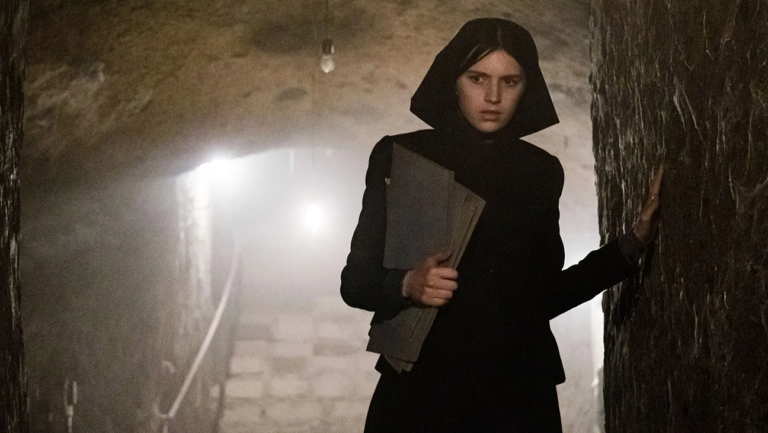
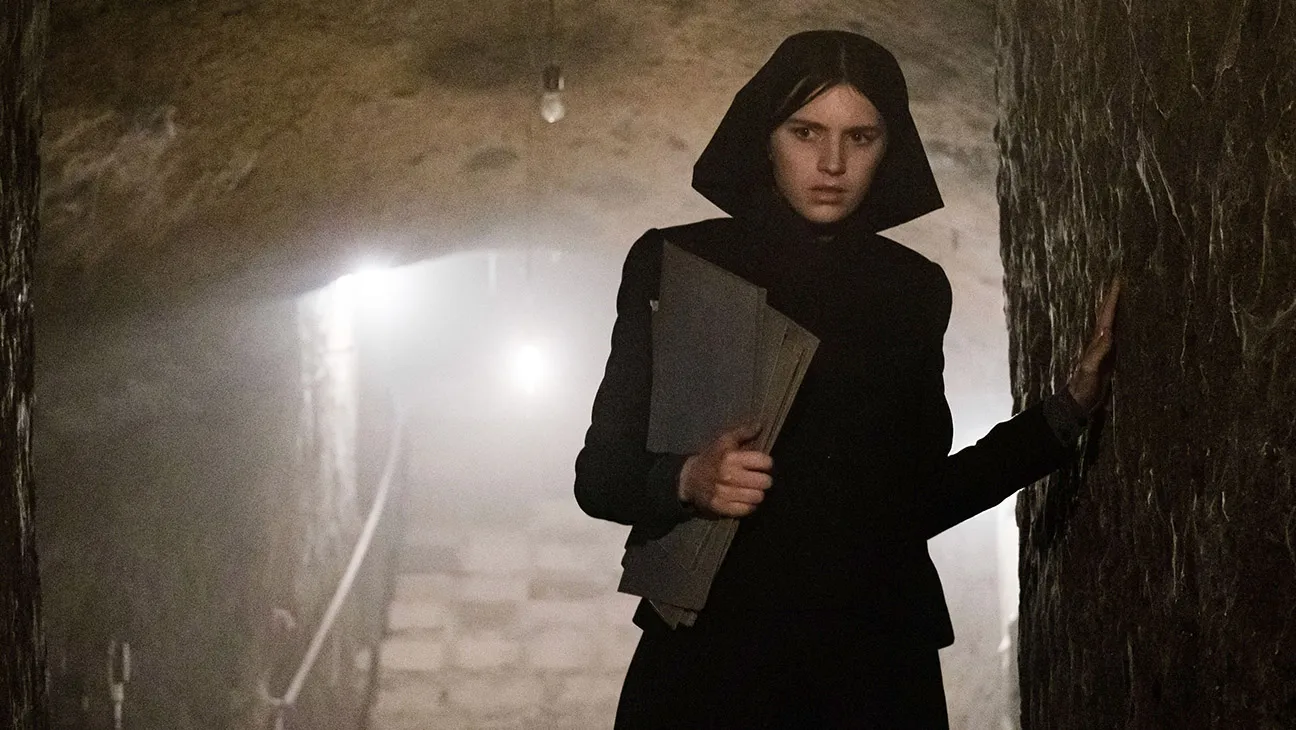
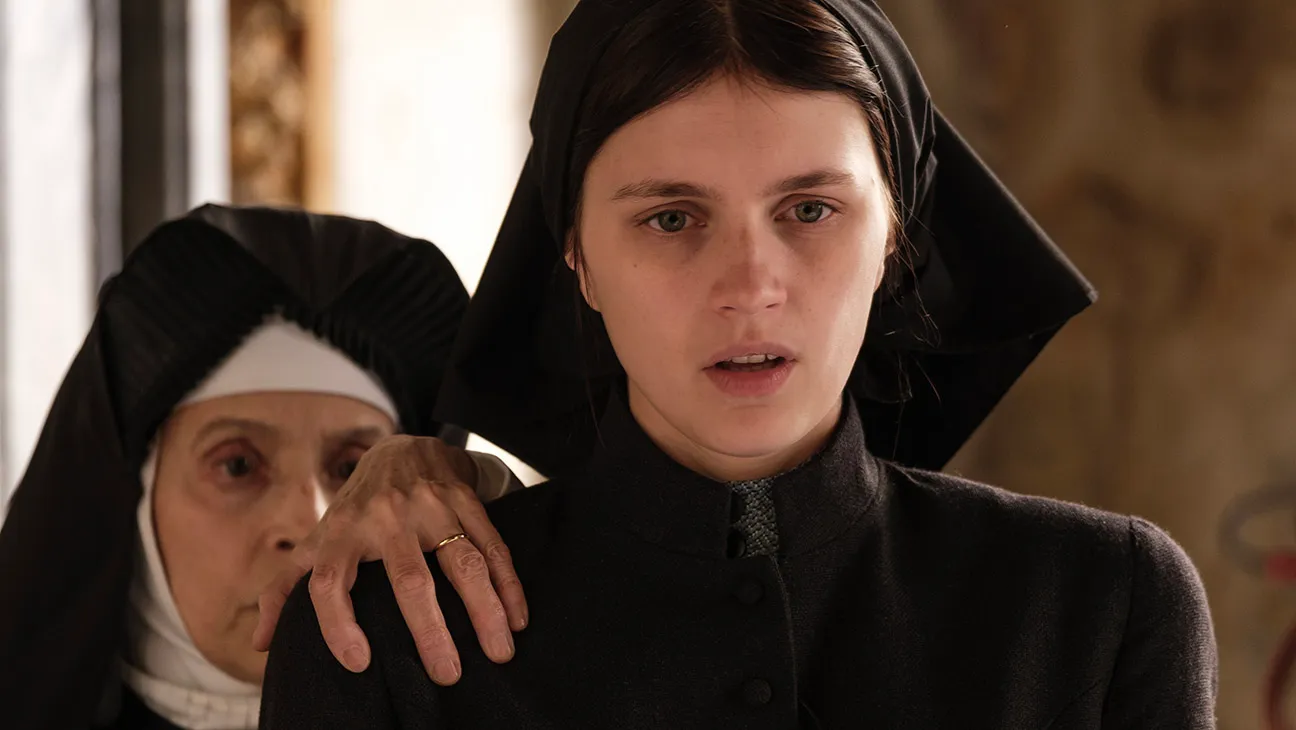
Review: The First Omen (4:00) Director: Arkasha Stevenson Writers: Tim Smith, Arkasha Stevenson, Keith Thomas Stars: Nell Tiger Free, Sônia Braga, Ralph Ineson, Nicole Sorace
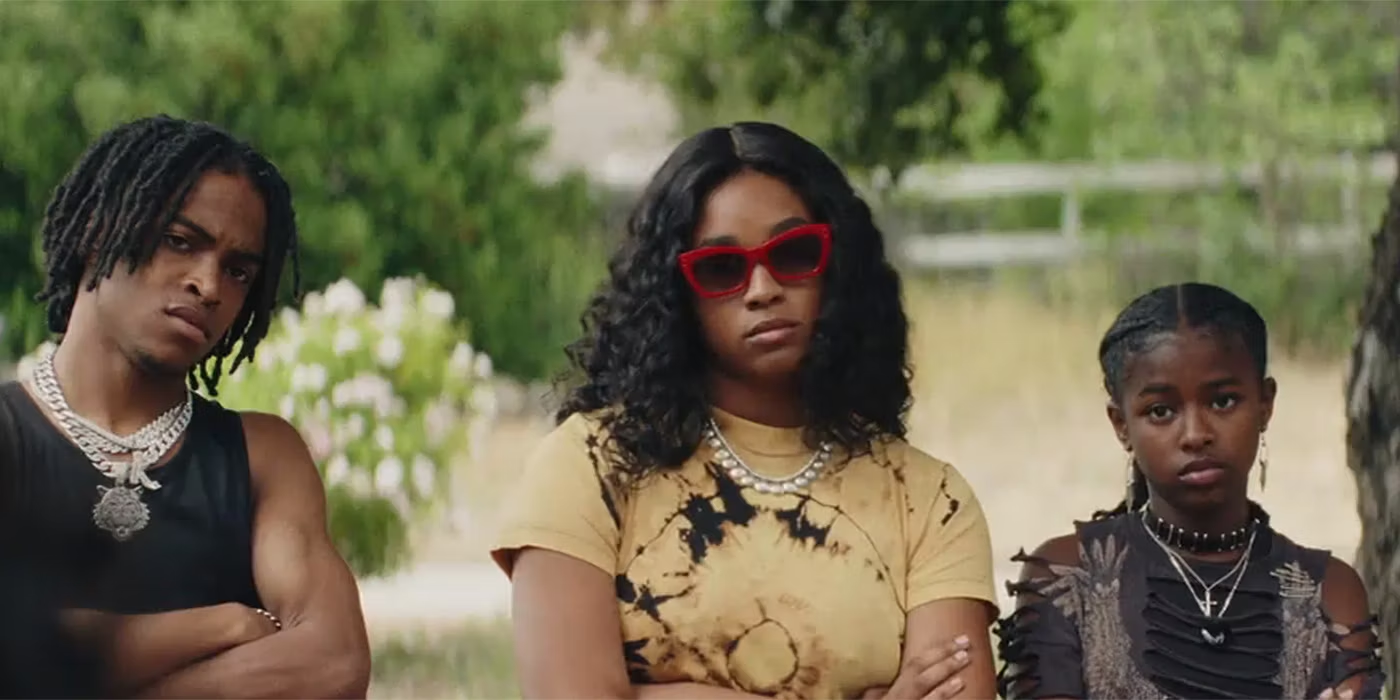
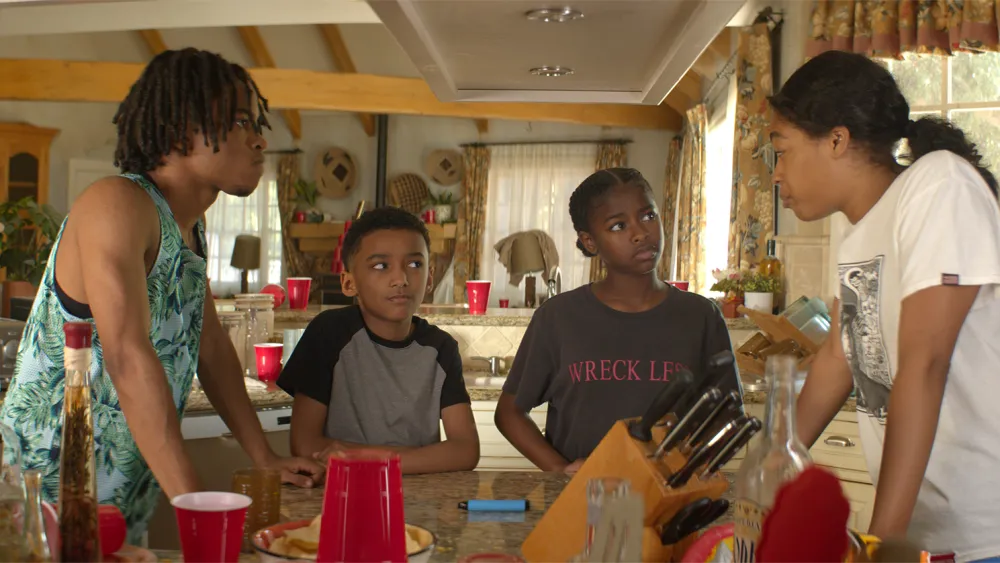
Director: Wade Allain-Marcus Writer: Chuck Hayward Stars: Simone Joy Jones, Patricia “Ms. Pat” Williams, Jermaine Fowler, June Squibb
Synopsis: Tanya finds her summer plans canceled when her mom jets off for a last-minute retreat and the elderly babysitter who arrives at her door unexpectedly passes away.
If you told me, even a few years ago, that I would be thinking about Don’t Tell Mom The Babysitter’s Dead, I am not sure that I would have believed you. Here’s the thing. The original is not a good movie. Like, at all. Yes, I watched it repeatedly. Look. It was 1991. I was a 12-year-old boy and Christina Applegate was the star. If you are not of a certain age, you might not know what a chokehold Kelly Bundy had on all of us. But even without rewatching it, I know that this is not one I need to see again. That original film, and its remake of the same name is really the story of missed opportunities.
If you have a group of children who are able to run wild without any parental supervision and said supervision has literally died, the jokes, very dark ones, should write themselves. Sadly, this is not the case. A trio of writers (Chuck Hayward, Neil Landau, Tara Ison) mainly miss the point here. If it makes you feel better, the writers of the original made similar mistakes. The original focused on star power and the remake focuses more on message material than the dark humor.
Honestly, it feels like they know it, too. The credits do not roll until after the babysitter is dead and the body is disposed of. Side note, at least one of these kids has the makings of a serial killer. But I digress. It seems like the script needed to get the babysitter dying out of the way so they could get to the nice, basically charming story that they wanted to tell. If that is the case, why remake this? I’m not saying it needs protecting, but it is hard to believe that they are selling tickets (or streaming dollars) based on a moderately known film from the early 90’s.
Luckily, it is not all bad news. The cast is actually pretty fantastic. They seem to know just how much time to spend with each child in the family. Older sister Tanya (Simone Joy-Jones) is nearly pitch perfect, when the meandering script allows for it. She has easy chemistry, especially with her younger brother, Kenny (Donielle T. Hansley Jr.), and her love interest (whom she meets while on her one and only rideshare job), Bryan (Miles Fowler).
She, and the film, struggle when the focus is changed to her employment at a fashion company. Yes, this is a direct nod to the original film, but the script knows it is dated. They attempt to dance around this, but the sad fact is, they cast Nicole Ritchie. The role of the “bosslady” Rose really needs some frostiness and some energy, and she provides neither. Her performance vacillates from the “cool mom” from Mean Girls to a teenager trying to seem adult. This, again, stomps all over the performance from Joy-Jones.
The aforementioned lessons that the script espouses are positive. Given that the main cast is Black, they cleverly detail that in no way should these children report that their White babysitter (June Squibb, who is having a great time even if no one else seems to be) is dead in their house. There are also discussions of what “real work” is between brother and sister and this all hits home very well.
The one thing that really does work here is the romance. Teen romances are tough. We could go over a bunch of examples, but really who has time? Joy-Jones and Fowler need a pure romantic film, and immediately. From the second they are on screen together, you are absolutely rooting for them to work out. All the other machinations of the plot merely get in the way of this, and it’s a real shame.
Speaking of the laborious plot, there are just one too many connections for the viewer to swallow. Just as in the original, there are mean co-workers for Tanya to deal with, but they make a pretty sad attempt to make them more human, which is wholly unnecessary. There is nothing wrong with an antagonist at work, we do not really need an extensive reason as to why they are mean. And one of the “villains” has a connection with another character. They don’t hide this, but it makes the ending of the film lose whatever punch it might have packed.
Don’t Tell Mom The Babysitter’s Dead is a mostly forgettable movie about a relatively charming family unit. It really is too bad that it is hampered by odes to the original, a convoluted plot, and at least on actor who has been woefully miscast. Please, no more. The dishes are done, man.
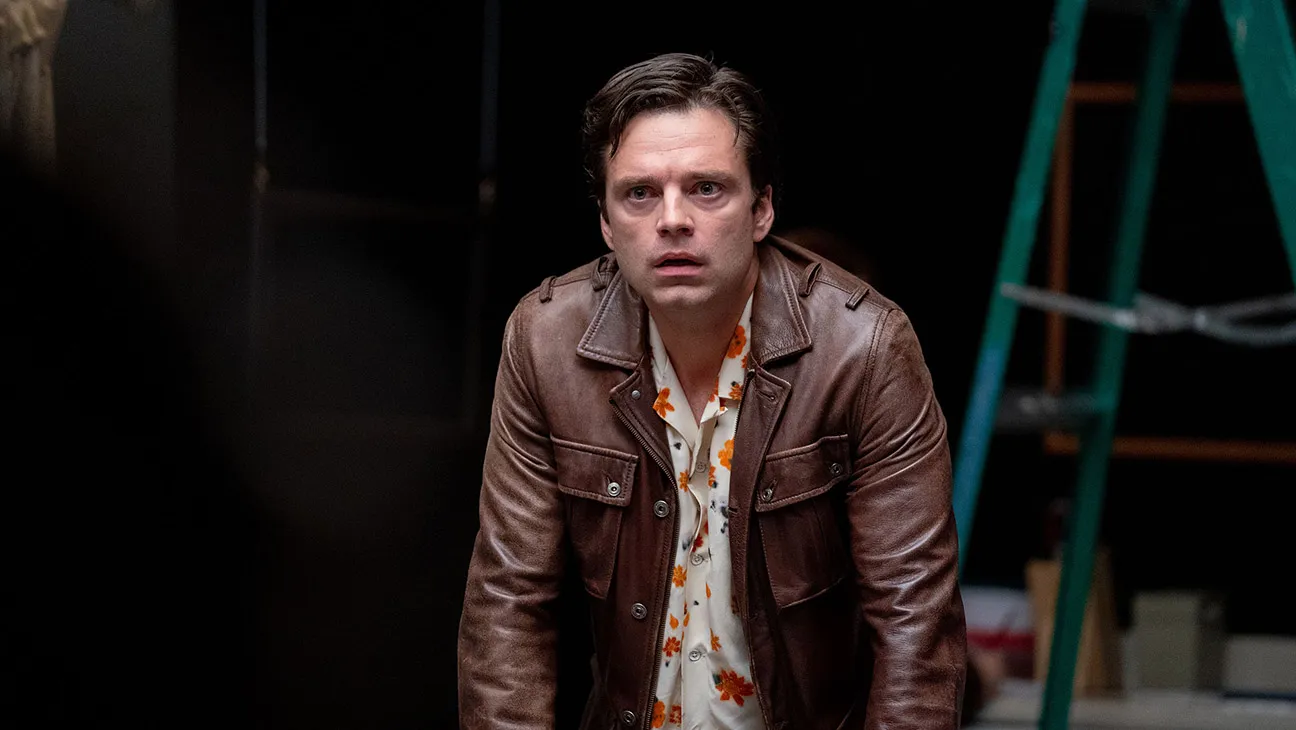
Director: Aaron Schimberg Writer: Aaron Schimberg Stars: Sebastian Stan, Adam Pearson, Renate Reinsve
Synopsis: Aspiring actor Edward undergoes a radical medical procedure to drastically transform his appearance. But his new dream face quickly turns into a nightmare, as he loses out on the role he was born to play and becomes obsessed with reclaiming what was lost.
A deliberate and shrewd depiction of a man who loses his mind as he takes steps toward what he believes is a greater sense of control, Aaron Schimberg’s third feature, A Different Man, is a dangerous cultural object. Not only should we fear it for the litany of misdirections it baits audiences with, but for how sure it is to force us to turn the unflinching gaze we aim outward onto ourselves, externally and internally, an action human beings are hardly even inclined to perform with a therapist, let alone on a random Tuesday. At times a satire, yet more so a jet-black comedy with an astute sense of reality, what this never-all-that-surprising yet simultaneously unpredictable film achieves in its takedown of our preconceived glorification of appearance — specifically its perceived “importance” in society — makes it one of the more lucid portraits of what really lies under the skin not just of this year, but any year. It’s not to be missed, should you dare.
Whether or not you’re a glutton for discomfort may dictate your willingness to try Schimberg’s film on for size once A24 releases it in theaters this September. But it’s the brilliant sort of work that doesn’t so much as place an emphasis on visual unease as it uses it to pave its way to deeper reflections; on identity, on personality, on our preternatural unwillingness to accept verity on its terms to due a desire for vanity. As it charts the life of struggling actor Edward (Sebastian Stan) through what begins as a painful existence and only becomes worse as the days go by, there are a few ways to read A Different Man, but only one resolute takeaway from the viewing experience it offers: It never wastes its breath.
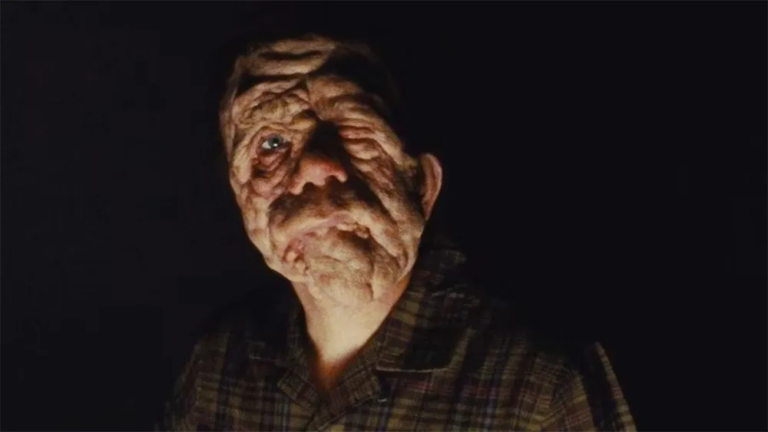
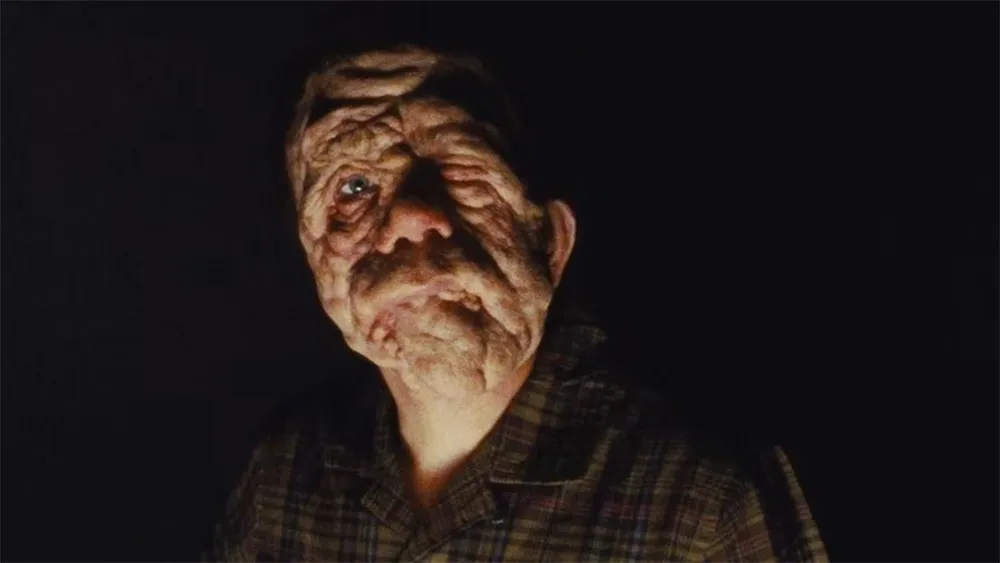
Edward feels like he is perpetually wasting his. Perhaps it’s the fact that he lives on the Upper West Side of a Beau Is Afraid-lite New York City, a place where everyone wants everyone to know their name yet a select few can bother to remember it. It might be his profession; if you haven’t met an audition-to-audition artist in Manhattan, have you really ever been? Or maybe it’s his neurofibromatosis, a medical condition that causes tumors to balloon all over his face — you can thank the work of makeup artist Mike Marino for your confusion as to why Bucky Barnes has top billing, yet doesn’t appear as his magazine-cover-worth self until close to half the movie is over.
When we meet Edward, he’s bumbling up the stairs of his apartment building as passersby gasp at his appearance, or mutter “Jesus Christ” at the mere fact that they are forced to eke past this monstrosity of a neighbor; clearly, this is a guy who feels like a nuisance wherever he goes. On the set of a schlocky, harshly-toned human resources video meant to teach employees how to communicate with their disfigured coworkers, he’s the only actor who receives notes; his apartment is seemingly the shabbiest in his walk-up, the only dwelling with a seeping black leak in his ceiling. When he accepts the opportunity to take part in an experimental drug trial that should, in theory, rid him of his tumors, not even the nurse assigned to redress his wound can make eye contact without so much as holding back a gag.
It’s not until Ingrid (a loose, unknowingly-callous Renate Reinsve) moves in next door that Edward truly feels seen for who he is as a person — that is, once we get past her asking, “What happened to you?” and Edward not knowing whether she’s referring to his appearance or the gash on his hand, one that Ingrid caused with a startling knock at his door while he was chopping vegetables. She’s beautiful and kind, and immediately makes Edward feel normal; she even makes an awkward offer to pop the blackheads on his nose and to give him a cream for his “really oily” skin feel like a kindhearted gesture, not one meant to make her experience in his presence more comfortable. It’s only when Ingrid rejects Edward’s barely-romantic pass at her that he decides it’s time to ramp up his treatment, leading to a few nauseating sequences that could make the Safdie brothers cringe as David Cronenberg yelps in glee.
And it’s only then that Stan finally becomes recognizable, and Edward — now calling himself “Guy” after feigning that poor Eddy went and offed himself, ‘cause duh — reaps the benefits of his newfound handsomeness. Meet-cute blowjobs in a grimy bar bathroom; a killer, leak-free apartment that one-night stands walk out of feeling safe and satisfied; a stable, lucrative career as a sleazy-yet-sexy real estate agent. Everything Edward has seemingly ever wanted is finally at Guy’s fingertips. Except, of course, that whole acting career he once pursued in vain, until he spots Ingrid, a playwright, entering an off-Broadway theater set to house her new production, “Edward”. Finally, a part Edward was meant to play. If only he wasn’t Guy…
If that sounds like something of a windy set-up with a disappointingly simple resolution in mind, you’re in for a treat of Kaufmanian proportions. A lesser filmmaker might have taken the opportunity A Different Man presents and elected to peddle ideas of acceptance into viewers’ minds with a startling lack of cognizance, rendering moot what was otherwise a genius conceit. Schimberg’s approach — recognizable if you’ve seen his previous film, the less-assured but similarly-shrewd Chained for Life — slyly considers the notion that judging a book by its cover gets you nowhere, whether that judgment is positive or negative. It does so, in part, in the form of Oswald (Adam Pearson, memorably of Under the Skin), a charming man who becomes an object of obsession for Edward due to how well he carries himself despite his dealing with his own neurofibromatosis — a condition Pearson actually has. Not only is Oswald charismatic and successful, but he represents something far more threatening in Edward’s orbit: A reminder of the skin he once shed, and the person he could never become.
Oswald’s arrival unveils a secondary element to Stan’s stunning performance, for Guy is a harebrained maniac with zip personality (or, better yet, a lousy one). It’s a far cry from his time as Edward, a slouched, lived-in turn from Stan that allows what was already a gifted actor to give his most layered work to date, not to mention his best. As thrilling as the film itself tends to be, it’s that much more riveting to watch Stan continue populating his non-Marvel filmography with inventive showings, many of which have sociopathic tendencies abound. Notably, in Mimi Cave’s criminally-underseen 2021 thriller, Fresh, a two-faced Stan flipped from charming to cannibalistic serial killer on a dime in what was, to that point, his most exciting appearance. What he does in A Different Man is portray darkness on a different, more unsettling level; Edward/Guy’s true self not masked by charm, per se, but by an inability to accept his shortcomings. He’d rather cosplay as literally anyone else.
It’s a complicated performance in a film rich with complicated questions, most of which aren’t easily answered, or keen to be pinned down at all. That Schimberg, despite maybe packing his third effort with one too many strong ideas, is able to keep it all from crumbling would be a triumph to itself, if not for how utterly clever, dark, and hilarious the result is as it stands. While using vanity as a means to a narrative end, not once does he abuse its privileges; the few beautiful faces with which A Different Man is populated belong to borderline detestable people. That’s what makes reading such a brilliant form of Russian Roulette. Even the sexiest book flaps can feel empty once you see what lies inside.
Director: Louise Archambault Writer: Dan Gordon Stars: Sophie Nélisse, Dougray Scott, Andrzej Seweryn
Synopsis: Follows the life of a Polish nurse Irene Gut Opdyke who was awarded the Righteous Among the Nations medal for showing remarkable courage in her attempt to save Polish Jews during World War II.
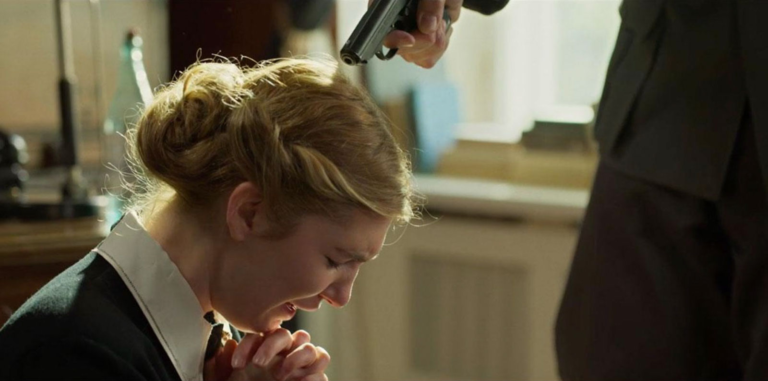
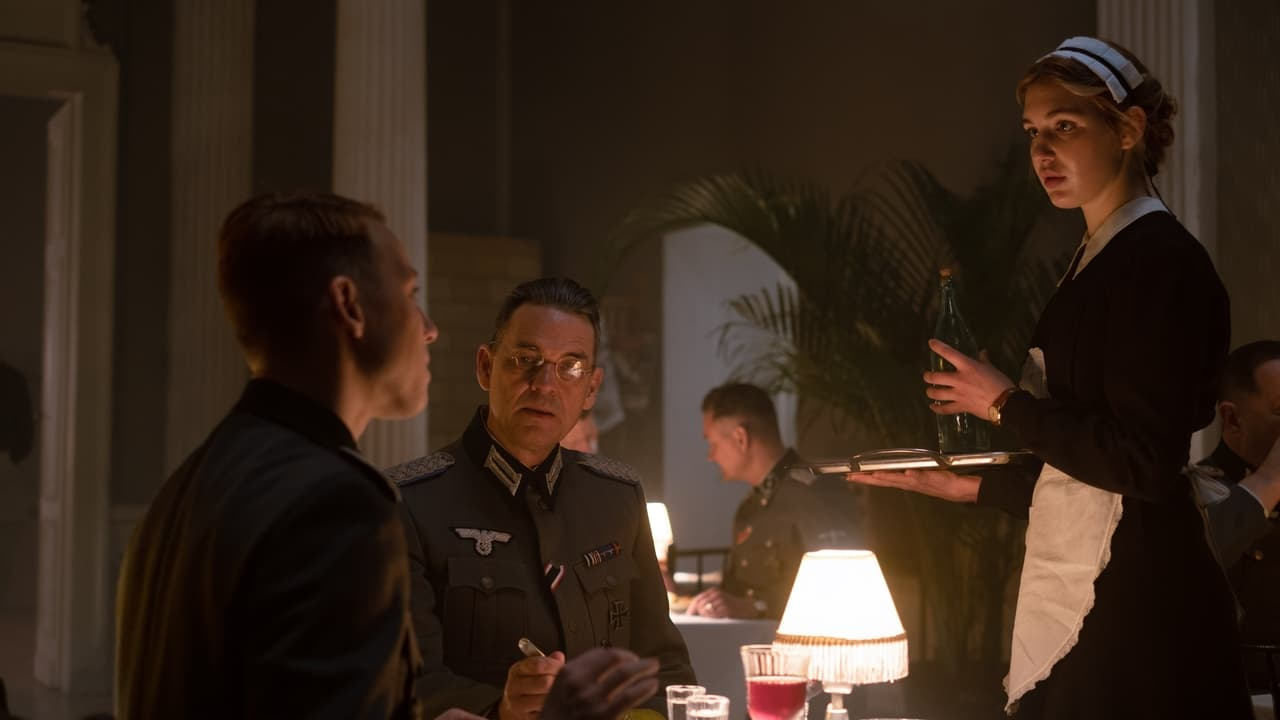
There are so many stories of heroism in the face of the despotic Nazi occupation of Europe during World War II that it’s easy to think that all the stories are simple, but Irena’s Vow proves that there can still be a few unheard stories that are as unique and important as many that have already been told. The film is already one leg up on most others because its focus is on a woman who stood up to tyranny all on her own.
The film is driven by the stellar performance of Sophie Nélisse as Irena Gut Opdyke. Her ability to play subterfuge and a constant anxiety over her charge’s welfare is fabulous. She has an expressive face and large eyes that convey many grand emotions in every scene. She carries the film through each worsening lie she has to perpetrate in order to protect those she is hiding.
The lies are intriguing and border on farce. When she has people in to clean the villa before Major Rugmer (Dougray Scott) moves in, she has to deftly maneuver the workers outside for a picnic so her charges can move quickly from the cellar to the attic for the cellar cleaning. She has to explain away extra dishes and how she can serve guests at a party and cook the entire meal herself. She drugs Rugmer in order to shift the people she’s hiding from one room to another. There is a scene in which Rugmer wakes up at night, because he hears small scratching sounds in the cellar. He doesn’t find anything, but when Irena comes in to get the breakfast started he calls for exterminators because they have rats.
It feels as if Dougray Scott’s performance veers too far toward humor in many of the scenes he’s in. He becomes a bit hammy at times as the shouting, fussy Nazi commander who is somehow blinded to what’s going on in his house. It’s almost as if he read the script as a Jojo Rabbit more than a Schindler’s List. That may be a fault of Louise Archambault’s direction as well, though, as some of her other scenes have a strange tonal dissonance between character and scene, especially where Nazis are concerned.
While Archambault should be praised for her disinterest in wallowing in her most violent scenes, the scenes themselves are undercut by the mustache twirling villain of the film, SS officer Rokita (Maciej Nawrocki). This criticism is not meant to undercut the actual atrocities perpetrated by Nazis on the civilian populations. There were horrific crimes committed by these horrific men and we can’t forget the truth of what they did in the name of white supremacy. Yet, the point could be made without going toward Hans Landa villainy when Amon Goeth’s evil was just as cruel, but far less Snidely Whiplash.
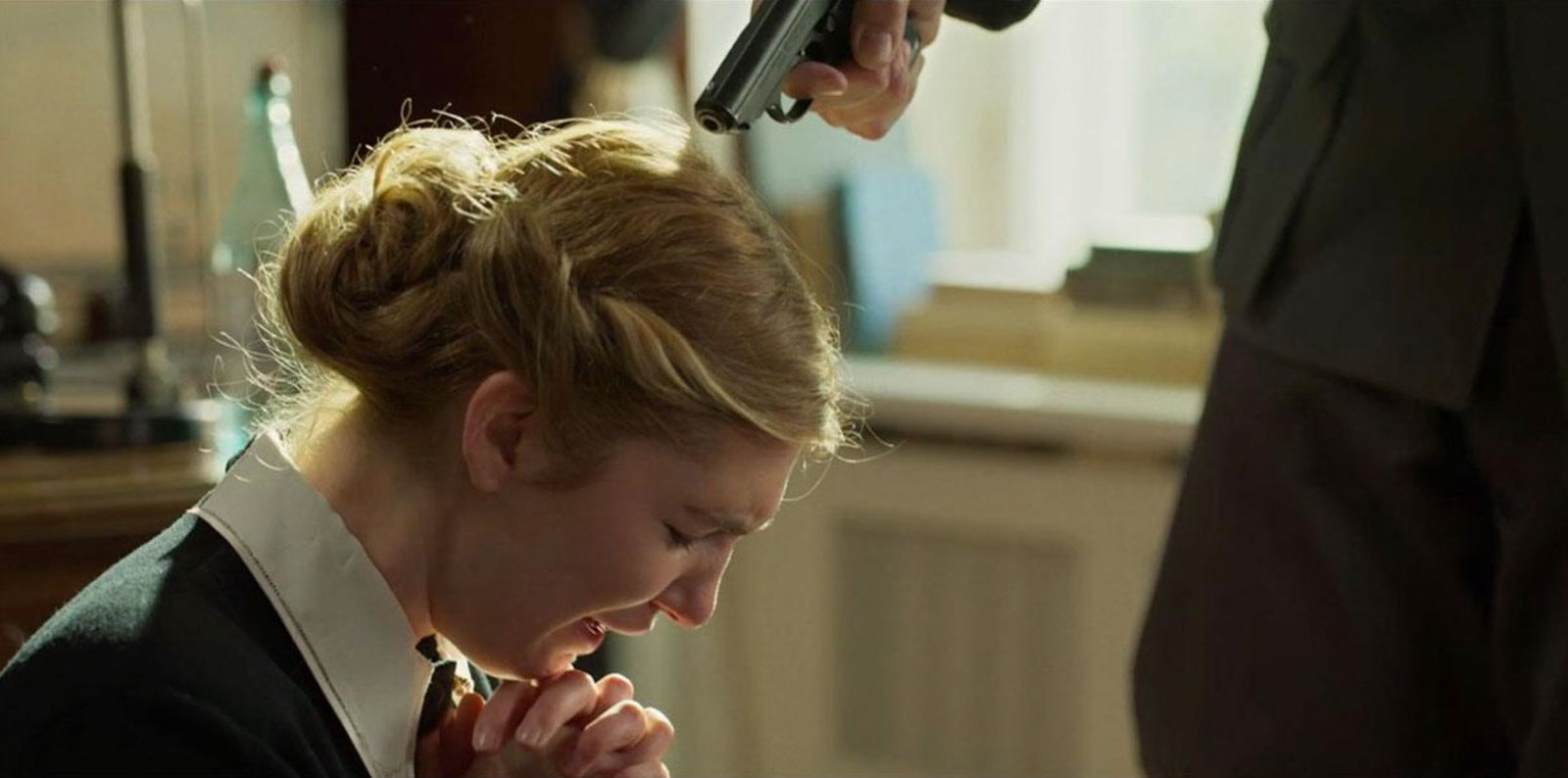
Rokita brutally executes someone in the streets, which is one of the catalysts for Irena wanting to help, but his second scene of terror is more horrific and unsettling. He forces civilians to watch as he hangs the family of Jews, children and all, with the family of Poles that harbored them, also children and all. The scene is effective as a warning for Irena, but when it lingers on Rokita’s perverse glee even focusing on his lazy conducting of the music that plays, it shifts into far stranger territory that detracts from the story at hand.
In spite of these sort of tonal shifts, the film is well made. One particular scene is a fabulous alchemy of Archambault’s direction, Paul Sarossy’s cinematography, and Arthur Tarnowski’s editing. As Rugmer throws a Christmas party upstairs, the Jews in their hiding place light candles and sing for Hanukkah. The Christmas festivities turn from an aggressive singing of “O Tannenbaum” into a bacchanalia of jazz and drink and the muted celebration below becomes emotional as the people remember more songs and think of the family they left behind. It’s a terrific companion sequence as those in hiding wait out the fall of the empire that they can see will come any day now from the papers smuggled down to them.
Irena’s Vow is an intriguing thriller that will keep you interested. While the Nazi’s antics are a bit of a distraction, Irena’s journey is enough to keep the movie well above water. The film is tense, heartbreaking and, in the end, full of hope. Irena’s Vow is a World War II civilian tale that is more than just a historical record, but a harrowing saga as well.
Synopsis: Takumi and his daughter Hana live in Mizubiki Village, close to Tokyo. One day, the village inhabitants become aware of a plan to build a camping site near Takumi’s house offering city residents a comfortable “escape” to nature.
It took Ryûsuke Hamaguchi around 40 minutes before he dropped the title card in his 2021 Oscar-winning film Drive My Car. A magnificent film regardless of that type of specific heat check, the renowned Japanese director seems particularly aware of how his next film might be perceived. In that case, he sheds any notion of playfulness by opening the film with the title card at frame one: Evil Does Not Exist. And as soon as that’s out of the way, Hamaguchi offers his hand to his audience to guide them somewhat aimlessly through a forest. Lush trees slowly creep in and out of the frame as we look skyward, unsure of where we are, how we got there, where we’re going; but it’s soothing, especially when treated to the rich score of Eiko Ishibashi, which will most certainly be a talking point for audiences after the film. But over time, as the credits interject themselves into the serene images of greenery, the leaves are replaced with empty branches and decay. Now, this could be due in part to the time of year, but if there’s anything about Hamaguchi’s films that become immediately clear, it’s that every image is clearly calculated to invoke a thought or emotion in the viewer. And within mere minutes, the standard act of letting credits roll becomes a thesis statement in its own right. There’s nature, there’s the people that inhabit nature, and there’s the people who invade it.
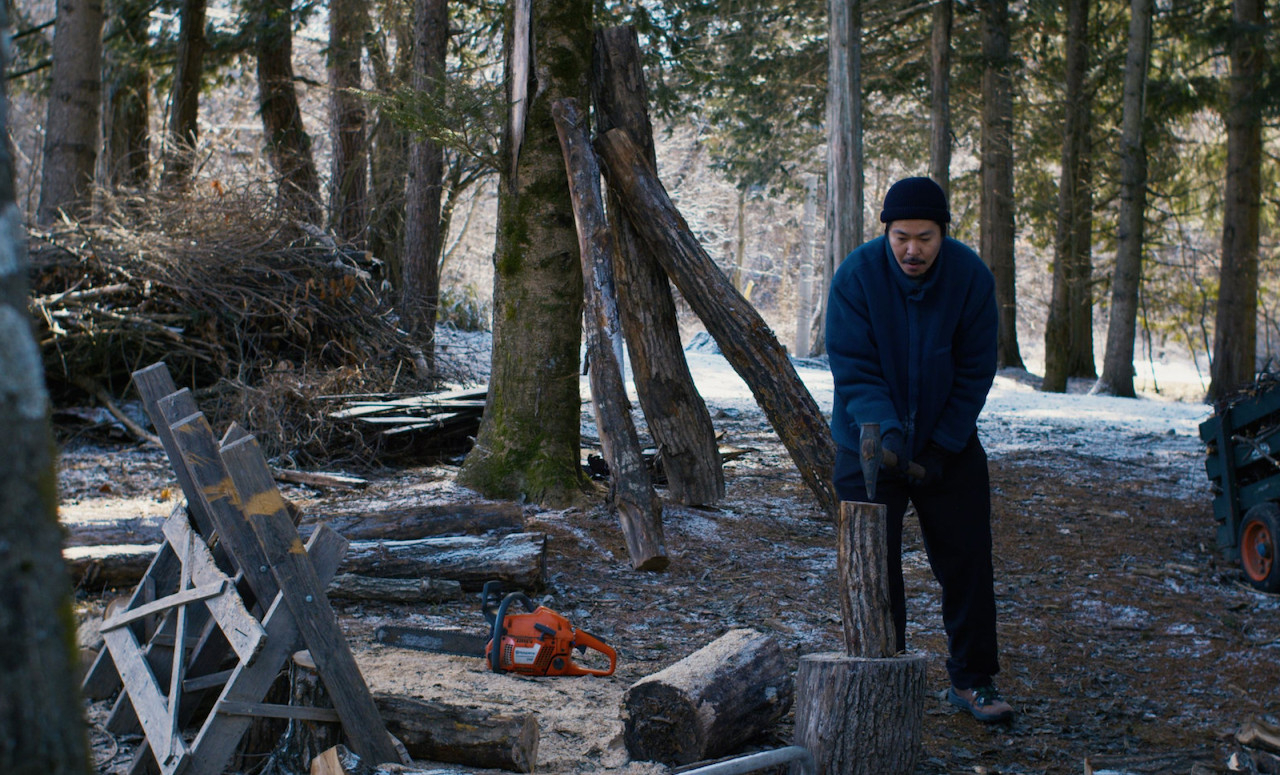
Takumi (Hitoshi Omika) lives in Mizubiki, a small village an hour or two from Tokyo. Hamaguchi introduces him rather silently. With that, over the course of a few scenes, we begin to get a sense of his routine and person. With little emotion, he chops wood efficiently and serenely gathers fresh water. It’s only upon his friend arriving to help carry the several gallons of water back to the car that he says anything. After a short interaction that captures the kind of person Takumi is, as well as his clear knowledge of the surrounding flora, he’s off to pick up his daughter, Hana. There’s a lot of driving in this film, and for a filmmaker like Hamaguchi, who often keeps the camera still and slow, he makes such an interesting choice when using vehicles. There are multiple sequences of the film wherein the camera appears to be set up in the trunk, looking out behind the car. It mimics a rear view camera, which we also see during one extended sequence, but to a much greater scale. It shakes with the opening and closing of a car door, rocks as the vehicle goes over gravel, and captures the sounds of nearby pedestrians and turning signals. As easily as Hamaguchi is able to transport us to the calm beauty of the outdoors, he can just as easily place us in the claustrophobia of a trunk. It’s this style of engrossing direction that Hamaguchi is able to excel at.
One of the most noticeable elements of Evil Does Not Exist is the ways in which the camera ever so subtly lingers. In most instances where a character exits the frame, Hamaguchi holds in serenity. It’s a reminder that the nature we find ourselves in on a consistent basis exists outside of us. We as people are not simply living on the land, but rather, we are living alongside it. Just because a character leaves Mizubiki to venture back into the city doesn’t mean that the hamlet or the surrounding woods freezes. It exists far beyond the scope of what these encroaching outsiders can imagine. It is in this infinite beauty, or rather, the desperation to protect and preserve it, wherein Hamaguchi is able to mine the emotional depths of his latest film.
The residents of Mizubiki convene at a meeting in which a company is laying out their plans for a new glamping resort. The forum is taking place in order for the residents to state their concerns or pose any questions regarding the resort. And it doesn’t take long before both the viewer and the residents of Mizubiki realize what’s occurring. This forum is basically for show. The two representatives attending are just talent agents, who, in their words, are “not qualified to reply” to certain statements being made. It’s a deeply frustrating experience exacerbated only by the fact that we know the outcome of this forum is already written in the profit margins of a spreadsheet. These representatives can take all the notes and feedback they’d like, from community criticisms to constructive, thought-out personal statements alike. But upon bringing it to upper management, the notion of cost comes up without hesitation. Damn the environment they’re encroaching upon and all who live nearby. In the eyes of the company president, a small enough pollution within the necessary legal parameters isn’t worth the loss of any possible profits. To put one of the more eloquent and thoughtful monologues of the film into more blunt, matter-of-fact terms, sh*t always rolls downhill. Whether it’s the literal overflow of a septic tank from the glamping resort, or upper management basically instructing employees to tell the village residents to piss off, the company was not there to listen; they were merely there to look better to local authorities and to proclaim what will be happening. It’s an anger-inducing sequence, reminiscent of Todd Haynes’ masterful Dark Waters, another film interested in the ways in which corporate greed and business jargon are used to destroy local communities and the very ground beneath our feet.
One can’t help but think of the title of this film in relation to a scene that occurs shortly after a request for a second forum is made. Takumi is discussing whether or not local deer will bite glamping residents. He assures them that they are docile and tend to avoid humans, unless they’ve been shot by hunters and can no longer run. Instead, they will stand and brace for an attack if they must. It’s here that Hamaguchi’s grand title feels as if it takes some shape. In this reading, evil does not exist naturally, but instead, it is created. It’s born out of desperation, brought on by the nature of human greed. To fault a gut shot deer for standing its ground in adrenaline-fueled fear and defense would be illogical. And the same logic should be given to both the earth itself, but also to the people who defend it. In this case, it’s the residents of Mizubiki. You can only remain quiet and inquisitive so long before realizing that there’s only a single path ahead.
In its first two acts, Hamaguchi’s Evil Does Not Exist leaves you with much to contemplate. It’s a patient film that rewards its audience with an enriching world and set of ideas. Even so, this feels far more direct than Hamaguchi’s approach in Drive My Car. Take, for example, a sequence in the final act of this film. It mirrors an earlier sequence, only this time, there has been a fundamental shift. It’s a disorientingly scary one, and is best experienced wholly in the moment. Hamaguchi once again leaves us with a coda to rack our brain, but not with the intention of being mysterious for the sake of shock. Instead, he and his films innately understand that life is hardly ever made up of two paths. There are many, and in many cases, it’s hard to tell which is the right one and which is the wrong one to take.
This year, I will be following the Best Picture race for Insession Film. This is an exciting prospect, as every year there are always surprises in this journey.
There was a moment at this year’s Oscars, just before Al Pacino opened the envelope when ten sets of producers, actors, directors, costume designers, cinematographers, editors, sound engineers, production designers, makeup and hair stylists, writers, musicians, and visual effects artists held their breath, just as we did watching at home. It’s a bit like Schrödinger’s cat. In that moment, every film is the winner and every film is forever the runner up. Even with a year in which we believe the winner to be a foregone conclusion, like this year, and last year, there is always a possibility of upset, of Pacino’s signature voice croaking a different title.
The category is meant to cement in history the best films of the given year. A nomination is meant to be an arbiter of taste, significant achievement, and zeitgeist. It’s a way for those of us who follow closely from the fall festivals through to Oscar night to inform, sometimes annoy, others about great films we have seen that we can point to on a list. We can say, “see! I wasn’t crazy, other people, important people also believe that the three hour courtroom drama that has no conclusive answer as to whether or not the protagonist committed the crime is worth your time!”
More than anything, Best Picture is a category in which wild speculation can suddenly become reality. A film that is deeply entrenched in the mythos of a cinematic universe released in the first quarter of the year can become a real contender. A small film about IED disposal in an ongoing conflict can contend with a film about blue people on a planet far away attempting to defend their home. A lyrical coming of age film can play alongside a lavish throwback musical. A deeply affecting drama about the power of journalism can be spoken in the same breath as a film with a man tied to an armored car barreling down a road in a post-apocalyptic wasteland. Narratives are formed, rivalries built, and villains made of films, which don’t deserve the distinction, but stand in the way of the more populist choice. It’s all wild speculation until the envelope is opened.
Speculating wildly is exactly what I intend to do with this feature. There will be a time in the future where the true candidates will emerge. A time after festivals, critics laurels, and the first whispers become full throated declarations in which the column will gain focus, but until then, strap in, grab hold of the safety bar, and get ready for the wild ride ahead.
On this episode, JD and Brendan discuss Dev Patel’s directorial debut with the excellent action film Monkey Man! While we all love Patel’s work in front of the camera, and he’s been in some great movies, we’re not sure if any of us expected this from him as a first-time filmmaker. A lot to love and discuss here.
Review: Monkey Man (4:00) Director: Dev Patel Writers: Dev Patel, Paul Angunawela, John Collee Stars: Dev Patel, Sharlto Copley, Pitobash, Vipin Sharma
Director: Rhys-Frake Waterfield Writers: Rhys-Frake Waterfield, Matt Leslie, A.A. Milne Stars: Scott Chambers, Tallulah Evans, Ryan Oliva
Synopsis: Not wanting to live in the shadows any longer, Winnie-the-Pooh, Piglet, Owl, and Tigger take their fight to the town of Ashdown, leaving a bloody trail of death and mayhem in their wake.
People who denounce the Winnie-The-Pooh: Blood And Honey franchise have not been exposed to the cruelty of the original Grimm Brothers fairy tales. It’s what makes this film creature spectacular and alluring; this vicious violence mixed with childhood fantasies. It deconstructs the nostalgia bait and turns it on its head, dismantling this sacred place given to particular films and TV series. Instead of honoring and revering a beloved childhood creature like Winnie-the-Pooh, it ravages it, destroying its saccharine fantasy-like cultural impact.
The second installment from the franchise Winnie-The-Pooh: Blood And Honey is directed by Rhys Frake-Waterfield and written by Matt Leslie. The first installment starts by killing the father in a Freudian attack on the fatherly/authoritarian social order, Piglet and Pooh dismantle their honorary father Christopher Robin, and by that, they are free from the grasp of his love. The sequel starts with Pooh, Piglet, and their new friends from the Hundred Acre Woods of Hell, Owl and Tigger, wreaking havoc on the world, killing more victims and attacking nearby towns. Christopher Robin’s character arc gets messier and more ridiculous than in the previous film with a missing kid brother turning out to be a bigger secret than anybody has anticipated. A different actor plays Christopher in the sequel which makes his character appear even more idiotic than the past film. All the more fun for audiences.
It’s hard to look at Winnie-the-Pooh: Blood and Honey 2 without a direct comparison to the first film. The first film lagged and lost its essence, stalling in pace and narrative improvement. The second film has built on the first but the talking mean nightmarish Poohverse characters have stripped the mystique of the first film. The mute monster trope that found its fame with Jason Voorhees returned to the stage with the Terrifier series, and despite the Pooh franchise extending that, the sequel has lost it with the babbling, gurgly monster talk.
There’s something cathartic about this film. The danger is so far away and detached from reality. Who will go into the woods and meet their end at the hands of half-animal, half-human monsters from a dark fairytale? Fools and horror movie characters who usually deserve what comes to them. It’s not TheCabin in the Woods, Wolf Creek kind of fear where characters from an eerily familiar setting face horrifying consequences; this seems like an unrealistic, demented situation where stupid people seem pulled into this trap through a hidden magnet in their brains. It’s the most guilty-pleasure fun anyone can ever watch, especially if they seek fun after a boring, long workday at the office.
The sequel is cheesier and more fun to watch. As is the fact that none of the human characters are sympathetic or well-fleshed out. They all seem to exist in a syrupy, unrealistic world where people exist just to be prey to those mythical, bloody, and honey-thirsty creatures. By stripping all the human characters of any sympathetic, likable traits, the filmmakers and writers tone down the gorefest that can sometimes be overpowering in the film.
So what is the root of this genre? Senseless, dull, stupid violence where villainous, mask-wearing characters rarely speak, have a background story or even bother to explain themselves. This is when people won’t even bother delving into Jigsaw’s backstory or the creepy Hostel surgeons. Winnie-the-Pooh, clan-like Art the Clown from Terrifier, are eerie, voiceless monsters that only relish the art of dismembering humans in as messy a way as possible. According to box office numbers, these films are faring well. But what can their massive success tell about today’s modern society? For starters, there is a lot. Imagination and creativity rooted in the familiarity of original tales and standard formulas seem to be a recipe for success. The world may or may not be ready for another wave of torture porn, but are the heydays of the aughts unhinged, sadistic, bloodbath of the early aughts gone, never to be revisited by another filmmaker? It seems like the degree of grim believability that the early aughts torture porn crown jewels –The Collector, Martyrs, High Tension– have showcased has now become a thing of history. What remains is a hybrid film genre between slashers and senseless violence. Winnie-The-Pooh: Blood And Honey 2 is undoubtedly one of them.
Director: Arkasha Stevenson Writers: Tim Smith, Arkasha Stevenson, Keith Thomas Stars: Nell Tiger Free, Ralph Ineson, Sonia Braga
Synopsis: A young American woman is sent to Rome to begin a life of service to the church, but encounters a darkness that causes her to question her faith and uncovers a terrifying conspiracy that hopes to bring about the birth of evil incarnate.
Horror is the genre most subjected to remakes, sequels, and origin stories; all of which are entirely unasked for by genre fans. These projects, particularly in the past decade or so, have been lifeless and without the vigor and dread that the original film to this follow-up (or predecessor) contained. But, there is the rare chance that one of these movies might surprise you. Fifty years have passed since the classic horror flick The Omen. The son of the devil, Damien, arrives at the hands of the Thorn family, and all hell breaks loose. That film has remained relevant within the horror genre, with filmmakers constantly reciting moments from it. But do we need to know about the events that occurred before that?
In essence, no, we don’t. There is little to no need for us to know the ins and outs of how this fiend was created. But Arkasha Stevenson has been tasked with doing so with The First Omen – a prequel with the same amount of terror and trepidation that the original contained. While you may not have wanted these answers, the Brand New Cherry Flavor director makes the process worthwhile by crafting one of the most solid studio horror legacy pictures in recent memory. It is backed by a stellar lead performance by Nell Tiger Free, who is firing on all cylinders, and bloody, dire imagery that may shock folks. True genre fans will feel blessed.
The film’s cold open involves Father Brennan (Ralph Ineson) running to a chapel, where he is meant to meet someone who will give him answers to an uncanny happening taking place. Father Harris (Charles Dance) is sitting in the confessional booth, speaking about a woman being possessed. There is some hesitation on his part; Father Harris seems afraid to say every horrifying detail. Running out of words (and time), he presents Father Brennan with one last clue – a picture of a group of nuns holding a baby, who will eventually become the vessel for a creature that will shift the way people see religion for good. Father Brennan is shocked by what his comrade says, left rather speechless for a few seconds.
When he finally manages to get his words out, it is already too late. Tragedy strikes as a falling painting, which slices a piece of Father Harris’ head. The last image we see of him contains a smile – a facial reaction that oozes hopelessness and damnation – and this is the first hint at bloody stakes The First Omen goes to, as well as the attempts by Stevenson at intercutting gore with camp through the nun-possession movie canvas that we are used to seeing. Throughout the film, Stevenson implements campy sensibilities in the narrative. It can be in the form of an actor’s line delivery or a narrative thread quickly developing somewhat ridiculously. Although it doesn’t work entirely, the majority help broaden the mysterious tone of the story.
After that introduction, we meet our protagonist, Margaret Daino (Tiger Free), who is about to take the veil in a few days. She has relocated to Rome – the classic location for most nun-horror movies – to do the lord’s deed at a local orphanage. Before she does become a nun, her roommate, for the time being, Luz (María Caballero), motivates Margaret to take a trip downtown and go to a discotheque for one last night of freedom. The two head towards the strobing lights and pulsating techno-pop tracks that echo throughout the area, which lead to Margaret becoming enamored after a few drinks. What Stevenson does brilliantly in this relatively simple transition from the brightly lit convent to the blue-hued discotheque is making it feel like it is a whole different world that Margaret is slowly discovering.
As the drinks pour and conversations start developing, the soundtrack becomes more energetic, almost as if it forces Margaret to embrace the free-form nature of this setting. Even though there is joy in the air, an uneasy feeling emerges; we see this through a hypnotic, distorting effect caused by the crowd dancing, swaying from left to right. What Margaret doesn’t know is that this trip will be the catalyst for something sinister lurking. After the night out, everything becomes darker; the place initially coated with a bright, luminescent light is now swallowed by dread and unease. However, there’s a wave of light amidst the darkness in the way of a young girl named Carlita (Nicole Sorace). And Margaret vows to protect her against this forthcoming evil.
The First Omen doesn’t complicate its story that much. Of course, there are a few twists and turns to make the audience second guess. This is your regular nun-possession horror movie modified into a project that tips its hat to the films that came before while maintaining a sense of identity. The only moment you feel it is losing its uniqueness is during the ending sequence, in which Stevenson forces the foreseeable tie-in with the 1976 picture in a way that feels quite lazy. Nevertheless, the rest flows smoothly and without restrictions. From the first scene, you feel director Arkasha Stevenson’s grasp on the genre and her film’s classical look – reminiscent of the big studio horror pictures from the 70s and 80s.
You feel the gloss of the multi-million dollar budget coating every frame, yet with some weight to it induced by the filmmaker’s talent, a quality lacking in the recently released films from the Hollywood giants. A primary reason these horror films fail to engage the audience is that the company heads tend to restrain the filmmaker at the helm. That isn’t the case with The First Omen. Every few minutes, you get a visual or image that immediately puts you on edge – oozing dread and disquietude. Stevenson doesn’t want to hold back at all; she implements body horror and elements of nunsploitation as the essential gadgets to build up the scares, ensuring a thrilling experience for genre fans.
As a treat for genre fans, these moments come with a couple of easter eggs, referencing legendary films like Andrzej Żuławski’s Possession and The Texas Chain Saw Massacre. And it is all captured by the talented cinematographer Aaron Morton, who has had his hand in several legacy projects like Evil Dead (2013) and the recent Lord of the Rings series. While The First Omen has many things going for it, I believe its best asset is the performance by its leading lady, Nell Tiger Free, the film’s beating (and terrifying) heart. She plays a caring mother figure for the entirety of the film, yet her emotions vacillate constantly—switching from exasperation and horrification to worry and angst in seconds.
Nell Tiger Free commits to every bit Arkasha Stevenson brings to the table, so her character becomes very compelling. It is quite a physical and demanding role. But she is later rewarded with her version of the classic subway scene in the aforementioned Possession, channeling her inner Isabelle Adjani. She screams her heart out while the creature inside devours her. And it is beautiful to watch cinematically. Many filmmakers have made their renditions of that scene, looking for ways to make them both different and equally haunting; the one I often recall is Gaspar Noé’s in Climax. However, Stevenson takes a more direct approach without making it seem like a scene-by-scene copy.
It is in this scene – and many others that are scattered across the film’s runtime – that you see how Stevenson uses shock factor without ever feeling exploitative, yet tipping her hat to the Grindhouse nunsploitation flicks that inspired her vision for The First Omen. For me, that is what makes this legacy project function properly. It has its unhinged moments where everything goes to hell in a handcart, and, at the same time, Stevenson provides moments for the audience to breathe.
Director: Sam Taylor-Johnson Writer: Matt Greenhalgh Stars: Marisa Abela, Eddie Marsan, Jack O’Connell
Synopsis: The life and music of Amy Winehouse, through the journey of adolescence to adulthood and the creation of one of the best-selling albums of our time.
When one watches Sam Taylor-Johnson’s acutely misguided biopic Back to Black, based on the life of Amy Winehouse, the temptation to hiss at the screen and Matt Greenhalgh’s script is almost too difficult to resist. The team behind Back to Black decided they would not look into “anyone’s particular version” of Winehouse’s story, but instead be guided by Amy’s lyrics. The claim becomes that the film is Amy’s version of Amy. If that is the case, why is it that almost everyone who actually cared about her is almost erased from the narrative and people who abused her, including her father Mitchell Winehouse (Eddie Marsan) and her ex-husband Blake Fielder-Civil (Jack O’Connell) come off as near saints?
The film begins with a voiceover of Amy (Marisa Abela) reading her application to a performing arts school. “I just want to be remembered as a singer.” Amy is running through the streets. Is she free or being chased? Neither Taylor-Johnson nor the script seem to care. It is a bookend for rubbish. The scene shifts to Amy speaking with her beloved grandmother, Cynthia (the always excellent Lesley Manville) encouraging her to do what she loves. Cynthia’s memory box, which includes photographs of her with Ronnie Scott, is the touchstone we are given for Amy’s deep and abiding love of jazz. The focus moves to Mitch singing the standard “Fly Me to The Moon.” It’s supposed to be some kind of establishing scene for who Amy is, but it comes off more as Mitch’s “I coulda been a contender” moment.
Mitch makes money as a cabbie and when he’s driving Amy home to Janis’ (Juliet Cowan) house, old resentments bubble up. Amy is lamenting that people just don’t care about great jazz artists in the contemporary world and being pissed about Mitch’s infidelity and abandonment of her mother and his children when she was only nine. Mitch doesn’t want to argue and points out that she almost lost Cynthia’s precious memory box within hours of being given it. Amy is already a “problem child,” and neither of her parents are willing to deal with her.
Janis stares absently at her daughter and notes that one of her boyfriends has called. Promiscuity and drunkenness are at the foreground. Amy takes off her shoes and immediately goes to write “What is it About Men” before engaging with what she views as unsatisfactory sex with her older lover Chris Taylor (Ryan O’Doherty).
Going quickly through the motions to show that Amy “Ain’t no Spice Girl,” a long-time friend introduces her to Nick Shamansky (Sam Buchanan) at a gig where she sings “Stronger than Me.” Amy doesn’t shy away from the fact she’s written it about Chris, and they laugh at his humiliation. Before you can blink, Amy is inking a contract with Simon Fuller’s 19 Management in 2002.
There are lots of “I can’t believe you are only eighteen and writing such worldly songs” moments. Plus a few “Amy really is only eighteen and she still wants to hang out with her friends” moments. Her childhood friend Juliette Ashby (Harley Bird) is there as a cheerleader, but later becomes almost antagonistic when they share a flat together. Amy’s drinking and bulimia is interrupting her sleep. For someone who was there at pivotal times in Amy’s life and did what she could to help her friend, she, like others, are relegated to the background.
It’s made clear that Amy is happiest when she is singing in small jazz clubs. Her raw authenticity isn’t shaped by record company demands. Mouthy and rebellious, Amy is not going to go gently into being a product defined by a label. What she is doing is because she loves Sarah Vaughan, The Specials, and Lauryn Hill. Her teachers were the music of Charlie Parker, Thelonius Monk, Tony Bennett, and Billie Holiday.
Cue the meteoric rise of her first album “Frank” and her move to Camden. Her heavy drinking to deal with nerves, and then just her heavy drinking. Despite the success of “Frank” the A&R people want her to be less Amy Winehouse. Ditch the guitar, be less “trashy” and come up with something new they can sell overseas.
The film is designed to concentrate on her relationship with basic white boy and Pete Doherty hanger on Blake Fielder-Civil and their on again, off again relationship. She’s playing pool learning about “life,” in a pub when she comes across him. The script dares to suggest that it was Blake who introduced her to The Shangri-las. There are lines which are so cringeworthy most screenwriters would blush at putting them into a character’s mouth. “My favorite writer is Bukowski,” Amy tells Blake, a man who looks like he’s never opened a book in his life.
Amy’s adoration for Blake and their clearly co-dependent relationship is juxtaposed with her adoration for Cynthia. Cynthia is her inspiration; the woman who styles her hair, the person who gave her leeway to follow her dreams. Other than Nick Shamansky, she’s the only person who seems to give an unselfish damn about what is happening to the increasingly tragic songbird.
Cynthia quietly reminds Amy about Charlie Parker and his death. She’s clued in on what everyone else wants to ignore. Amy is not just a chain smoking, weed smoking, hard drinking, working class diva, but due to Blake’s influence an addict succumbing to crack, heroin, self-harm, and annihilation.
Few managed biopics will directly attack the people who make them possible. Hence, Mitch comes off as a parent who just wants what is best for Amy. Completely ignoring his complicity in forcing his child to tour to the point of exhaustion. The film doesn’t want to investigate how her promoter Ray (Ansu Kabia) becoming her manager doesn’t provide her with any kind of safety net. The script also pretends that Amy found crack all by herself and that Blake was dealing with “Crazy Amy,” instead of feeding off her. It isn’t Blake who decides to get in touch with Amy again once “Back to Black” is a world-wide phenomenon, but his dealer.
Marisa Abela does a passable impersonation of Winehouse, but she is a cheap karaoke version of her when it comes to busting out the music which made Winehouse a phenomenon. One doesn’t even need to be a fan to understand how intuitively she understood music and her vocal genius.
What Sam Taylor-Johnson has put together is both sanitized and profoundly ugly. The compositions are amateurish which is a shame because Polly Morgan is not an untalented cinematographer. The only scene which fundamentally works is the remote acceptance of the Grammy awards. Abela’s awe at seeing Tony Bennett and Natalie Cole award “Rehab” goes beyond the impression of Amy she was doing for most of the film and has the ring of truth other aspects of the film avoided.
The question with biopics scraping into the lives of those who died too soon is what are they trying to tell the audience about the subject? For every Lady Sings the Blues there is a The United States vs. Billie Holiday. For every Spencer there is a Seberg. Anton Corbijn’s Control written by Matt Greenhalgh had the benefit of Anton’s personal experience as a photographer for Joy Division. Despite its flaws, at least Baz Luhrmann’s Elvis captured why Presley was irresistible. Whereas films like Bohemian Rhapsody and Judy are Oscar bait for their stars. Then there are the abject failures such as I Wanna Dance with Somebody, and One Love. Marisa Abela is talented, so too are Andra Day, Naomie Ackie, and Kingsley Ben-Adir but nothing they can do will make a bad film good.
Back to Black is not only a terrible film; it is muddled and exploitative. Andrew Dominik’s Blonde has competition for the worst way to depict someone who was a victim of celebrity. Amy Winehouse not only deserved better from the people who were supposed to help her navigate her psychological and physical well being, she deserves not to be trauma entertainment.