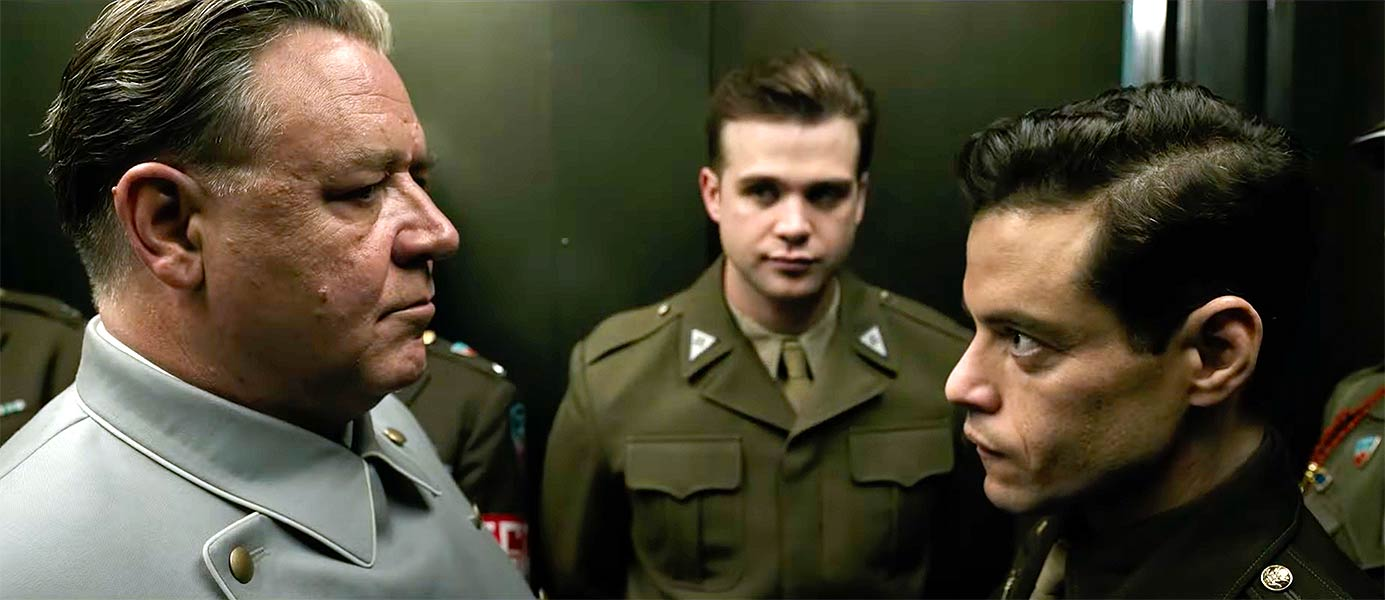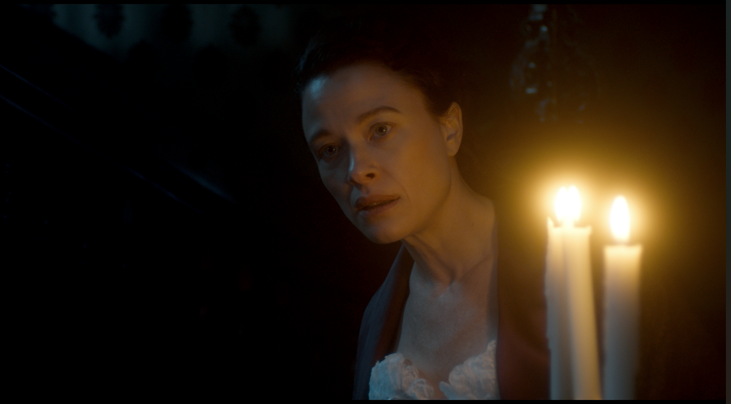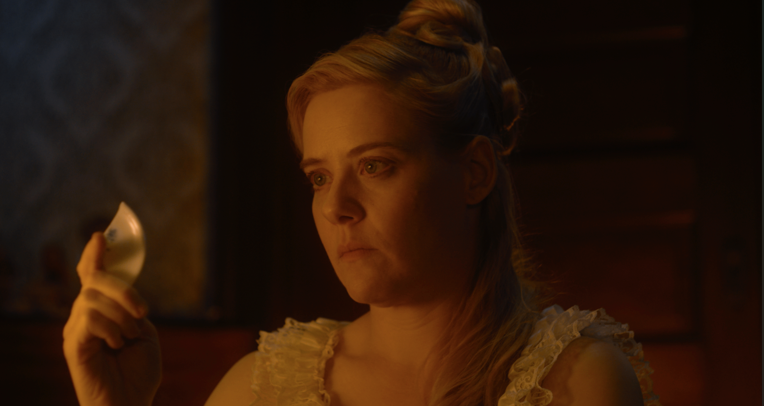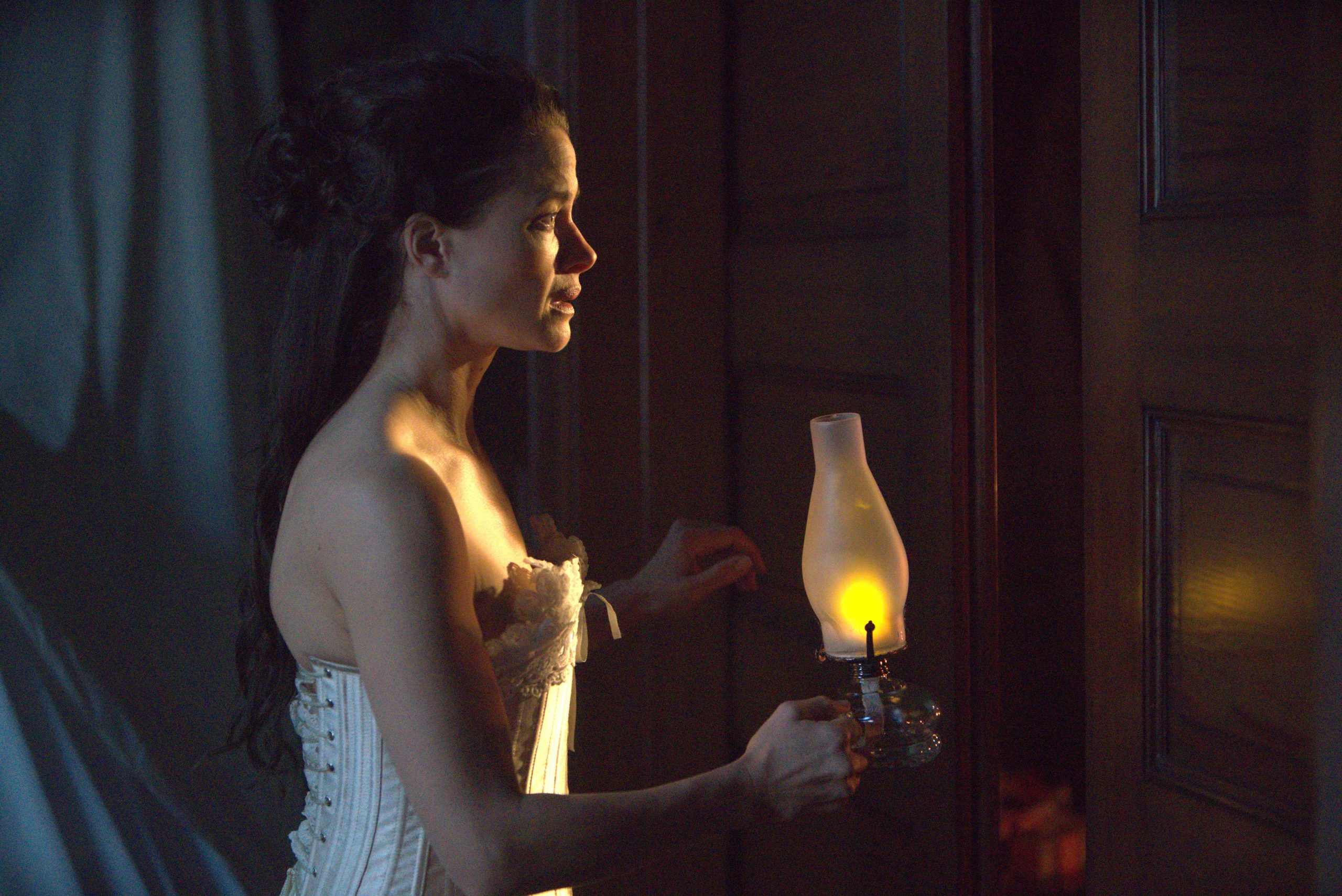
Home Blog Page 36

Movie Review: ‘A Big Bold Beautiful Journey’ Never Comes Close To Meeting Its Possibilities


Director: Kogonada
Writer:ย Seth Reiss
Stars: Margot Robbie, Colin Farrell, Jennifer Grant

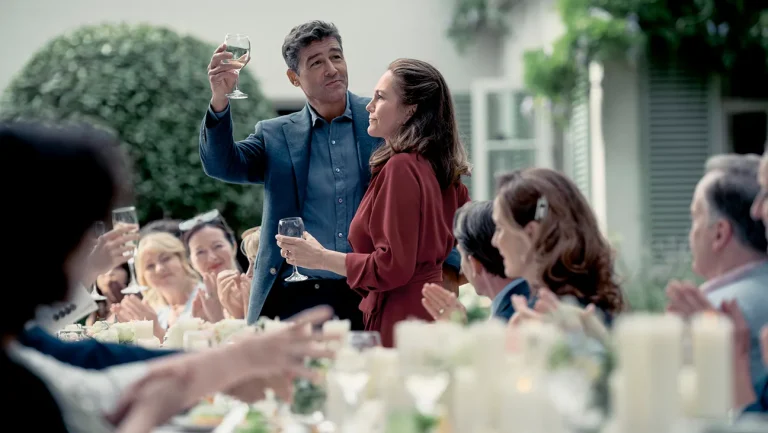
Synopsis: Two strangers who meet at a mutual friend’s wedding have the chance to relive important moments from their pasts, illuminating the path that led them to the present and gaining the opportunity to change their futures.


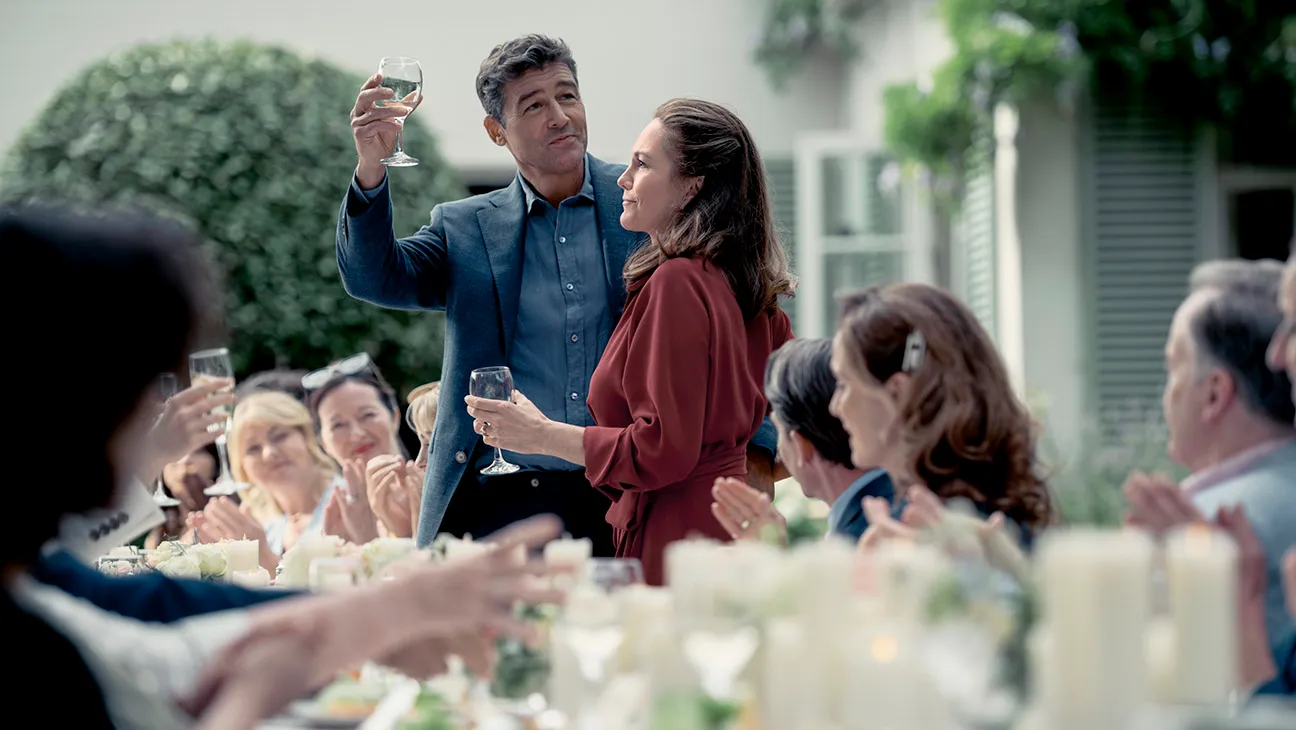
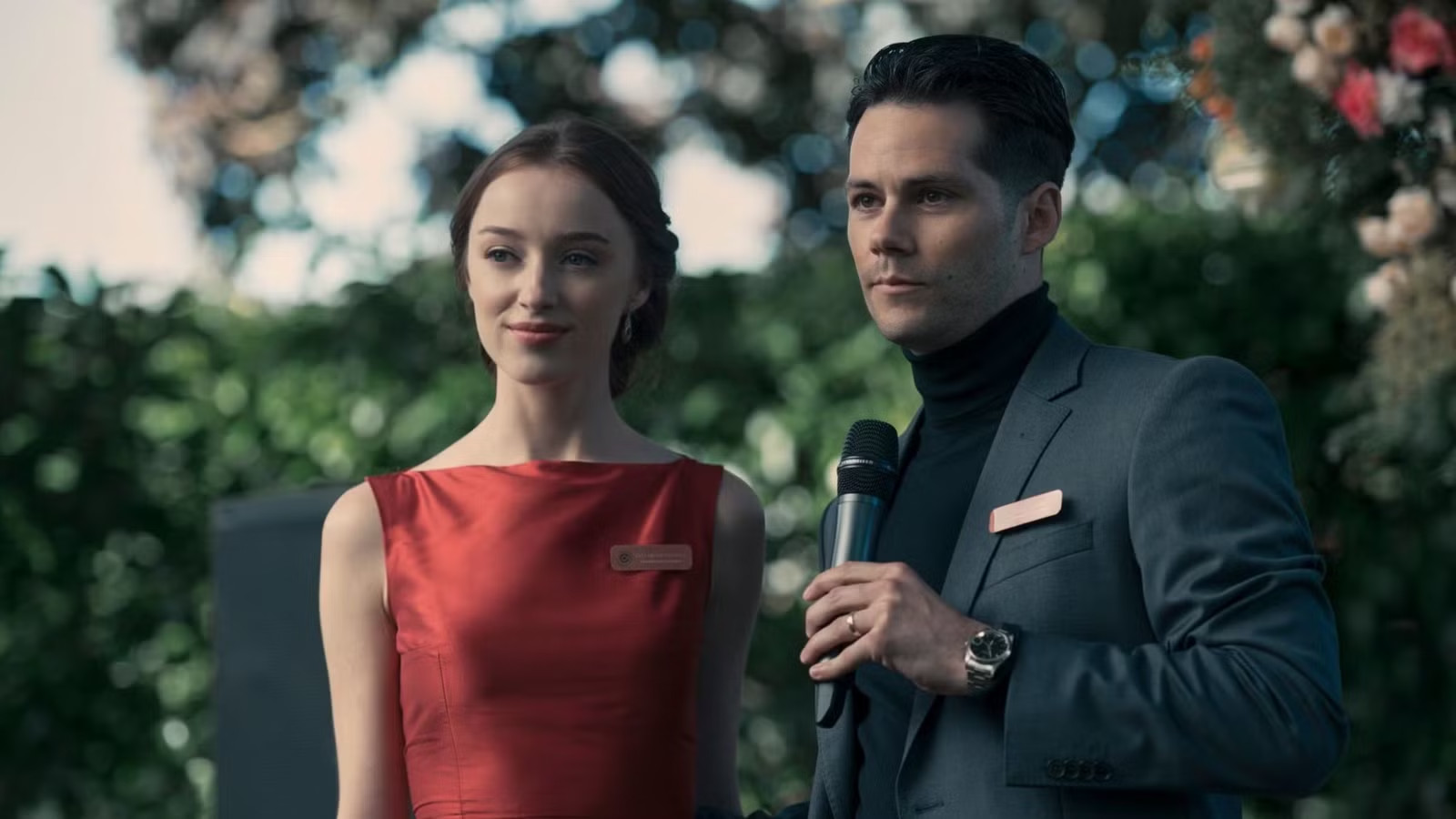
A Big Bold Beautiful Journey, one of the most anticipated movies of 2025, is a reminder of the power of a good trailer. While the Margot Robbie and Colin Farrell feature itself plays like an arrogant snooze fest, its sizzling preview teems with hopeful, wondrous possibilities. A fantastical three-minute romp, the trailer feels hopelessly romantic, an immersive trip through nostalgia, brimming with emotional introspection.

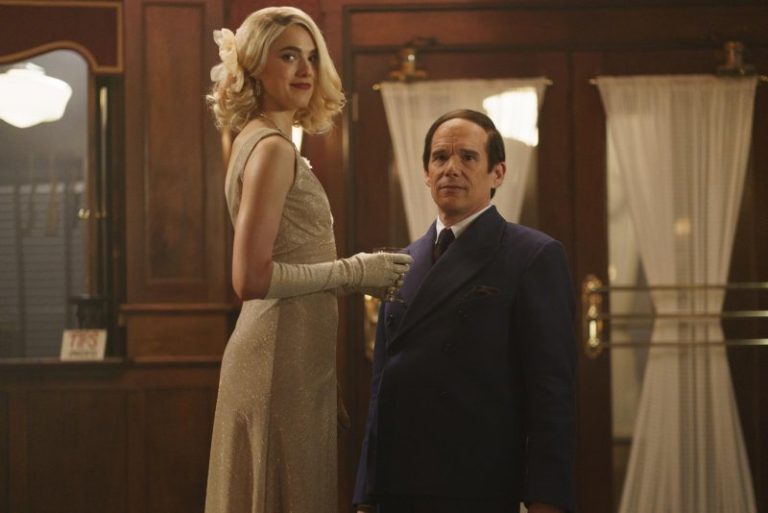
A Big Bold Beautiful Journey' Review: Kogonada's Whimsy Bomb

Instead, we are treated to a film that is almost arrogantly self-indulgent, borrowing its structure so blatantly from better works that I call it grand theft. The intended subtext of being open to new people, experiences, and love is lost beneath the pedestal on which the script places itself. Frankly, A Big Bold Beautiful Journey provokes more yawns and eye rolls with its cloyingly emotional shmaltz than it does deep, meaningful contemplation.

The story follows David (Farrell), an ordinary man on his way to a wedding. While walking to his car, he chats with his parents on the phone, who remind him to keep himself open to love. Theyโ€™ve always called him โ€œspecial,โ€ though he feels anything but. When he reaches his unremarkable sedan, he discovers a wheel clamp on one of the tires. Fortunately, he notices an advertisement for car rentals and decides to take a walk in the nice, soft rain.

Even though he has a cell phone, where he could find a rental car company to come pick him up, he wanders into what looks like an abandoned warehouse, where he meets a sales representative (Indiana Jones and the Dial of Destinyโ€™s Phoebe Waller-Bridge), who has a penchant for swearing, and a stoic mechanic (Academy Award winner Kevin Kline). When he speaks, his coworker finds him to be utterly fascinating. David, as he should, finds the whole encounter strange.

For one, they have a picture of David that looks like he is auditioning for a Broadway play. How did they get his picture? He doesnโ€™t pursue it, leaving the elephant in the room. The rental car cashier is also incredibly bossy, insisting that David use the rental car’s navigational system instead of relying on his phone’s system. Nevertheless, he carries on and makes it to the wedding, where he catches the eye of Sarah (Robbie), the quintessential manic pixie dream girlโ€”free-spirited, eccentric, and full of spontaneous energy.

A Big Beautiful Journey is from Kogonada, who has become a critical darling with such films as Columbus and After Yang, known for his meditative and meticulously crafted visual spin he puts on minimalist cinema with deeply moving results. Yet, strangely, the third movie in the Kogonada trilogy about human connection and meaning becomes charmless, even though the script is a metaphor for opening yourself up to meaningful emotional intimacy.

The issue is the mismatch between the director and the writer. Written by The Menuโ€™s Seth Reiss, the film, like the characters played by Farrell and Robbie, is a marriage without chemistry, the most straightforward explanation being a studio-arranged union. The redemptive framework is akin to A Christmas Carol, like so many recycled guided-journey movies that usually take place around the holidays.

Here, Reissโ€™s script has David and Sarah go on a journey led astray by a bossy GPS (voiced by Jodie Turner-Smith), to doorframes in the oddest of secluded places, placing them during essential times in their lives that shaped their behaviors. While the psychology of that is strongโ€”Davidโ€™s parents (Hamish Linklater, Jennifer Grant) being overindulgent and overpraising, and Sarahโ€™s motherโ€™s (Lily Rabe) illness. The scenes play out as overly manipulative and donโ€™t land with the emotional punch they are intended to, which points to a script, director, and studio not on the same page.

A Big, Bold, Beautiful Journey is well-intended, and I wouldnโ€™t dare not be open to an emotionally resonant film, despite what may come across as cinematic critic cynicism. However, Kogonadaโ€™s film is like an old clichรฉ of a modelโ€”beautiful on the surface, but with little personality and dull, almost naรฏve, in substance. This is a typical romantic fantasy that will end exactly the way you think, offering little surprises, emotional payoff, and ridiculous product placement. (Yet strangely doesnโ€™t allow any major car rental chain to make an appearance.)ย 

The filmโ€™s pretentiousness is fine as long as it elevates the material, but here, the style only diminishes it.

You can watch A Big Bold Beautiful Journey only in theaters September 19th!

Grade: D+

Movie Review (TIFF 2025): ‘No Other Choice’ is a Tale From a Master Storyteller


Director: Park Chan-wook
Writer:ย Park Chan-wook, Lee Kyoung-mi, Jahye Lee
Stars: Lee Byung-hun, Son Ye-jin, Park Hee-soon

Synopsis: After being unemployed for several years, a man devises a unique plan to secure a new job: eliminate his competition.


From Oldboy to Decision to Leave, Park Chan-wook is no stranger to telling stories that are, at once, incredibly engrossing and stylistically directed, as well as impactful in twisted, demented, or emotionally powerful ways. His works, even expanding to television in 2024 with HBOโ€™s The Sympathizer, have often left a lasting impression on audiences, addressing real world, socio-political themes and commenting on aspects that continue to affect those around him, and bringing those into his projects. His latest effort, No Other Choice, is no exception.

Image Credit: Courtesy of TIFF

Man-soo (Lee Byung-hun), as shown by the movieโ€™s opening minutes, has a literal picture perfect life: a well paying job in the paper industry, a beautiful house, his lovely wife Mi-ri (Son Ye-jin), two wonderful children, and their two dogs. Everyone is living blissfully and with a smile on their faces. Things change quickly, however, when he loses his job and the familyโ€™s main source of income dries up, effective immediately, leaving Man-soo wondering what happens next and his family having to potentially sacrifice everything to make ends meet going forward. When a position that would be perfect for Man-soo opens up, he devises a plan to knock out the people who are just as qualified from the competition and make sure he gets the job, which may mean he will have no other choice but to do something harsh if worst comes to worst.

No Other Choice has serious themes on its mind, as most Park Chan-wook features usually do, but it isnโ€™t afraid to be funny and comically over-the-top when it wants to. As Man-soo begins to look into his potential competition and learn more about their lives, like with the borderline dysfunctional couple Gu Bummo (Lee Sung-min) and his wife Ah-ra (Yeom Hye-ran), the sequences that unfold are brilliantly directed and sharply written, practically to perfection, and extremely funny, particularly in a standout moment involving a blaring soundtrack playing while an argument takes place. But what makes No Other Choice ultimately stay with the audience is how its title becomes more and more ominous, starting at first as a darkly funny line when the loss of a job is concerned, and then turning into a line built on an inevitability, that something must happen because Man-soo has no other choice. This stellar balancing of tone and characterization is what lands the movie in the end.

Lee Byung-hun is extraordinary in the movie, channeling the fragility and desperation of Man-soo in every frame, and his want to grasp onto everything that made him so happy once more. He worries about not having enough work, he worries his wife might see him as lesser, he worries his kids will lose respect for him, but most importantly, he worries he’ll lose himself. When the going gets tough, it’s easy to understand why Man-soo is doing everything that he does and the extreme actions he may wish to take, while also lamenting the places he’s being pushed into because of a world that’s pushing against him. Lee’s performance, as well as Park’s storytelling, come together wonderfully, and the movie’s sledgehammer-like commentary (almost to a fault, particularly towards the final act) on jobs being replaced by machines and the advent of capitalism lands home.

Much like many of Parkโ€™s previous efforts, No Other Choice is a visually spectacular and uniquely framed feature, with Kim Woo-hyungโ€™s cinematography yielding some of the most striking shots of the year. For a movie that is as bleak as it eventually gets, it remains incredibly vibrant and colorful until the final frame, and is backed by an energetic, even sometimes whimsical score from Jo Yeong-wook that elevates the darkly comic setting, along with Kim Sang-bum’s sharp editing that at 2 hours and 19 minutes, keeps the movie on its toes throughout, hardly missing a step. The production design, ranging from showcasing Man-sooโ€™s love for plants and gardening to the framing of his family’s home, is immaculate, packed with little details that will make for interesting observations on repeat viewings.


Not much is being said about the back half of No Other Choice in this review, and for good reason. Much like Bong Joon-ho’s Parasite in 2019, it’s best to go into this movie knowing very little past its initial premise. Rest assured, the sequence of events that unfold once Man-soo really begins to look into his competition make for some of the best filmmaking of 2025, and one of the year’s best movies overall. No Other Choice once again proves that Park Chan-wook is a master storyteller who can subvert any expectations effortlessly, and one can only wonder how his next project will surprise audiences.

Grade: A

Podcast Review: A Big Bold Beautiful Journey

On this episode, JD and Brendan discuss Kogonada’s new film A Big Bold Beautiful Journey, starring Colin Farrell and Margot Robbie! Coming into 2025, this was easily one of our most anticipated films of the year (JD’s #2 on his Top 10 list). We are big fans of Kogonada’s previous two films, and despite the early reactions we were trying to maintain some hope. Something that proved to be beneficial as we do defend the film while recognizing that it’s far from being perfect.

Review: A Big Bold Beautiful Journeyย (4:00)
Director: Kogonada
Writers: Seth Reiss
Stars: Margot Robbie, Colin Farrell, Jodie Turner-Smith

Subscribe to our Podcasts RSS
Subscribe to our Podcasts on iTunes
Listen on Spotify
Listen on Stitcher
InSession Film Podcast – A Big Bold Beautiful Journey

Women InSession: Egyptian Cinema

This week on Women InSession, we discuss the rich history of Egyptian cinema and its cultural significance as a dominant force during its Golden Age! At its peak in the 40s and 50s, Egyptian cinema was massive and often challenging the form. So we had a lot of fun talking about its influences the filmmakers that define the region.

Panel: Kristin Battestella, Zita Short, Jaylan Salah

On that note, check out this week’s show and let us know what you think in the comment section. Thanks for listening and for supporting the InSession Film Podcast!

Subscribe to our Podcasts RSS
Subscribe to our Podcasts on iTunes
Listen on Spotify
Listen on Stitcher
Women InSession – Egyptian Cinema

Interview: ‘Eyes of Wakanda’ Composer Hesham Nazih

0

In this interview, I talk with Egyptian music composer Hesham Nazih and his work on the new miniseries Eyes of Wakanda!

Eyes of Wakanda is the new animated series set in the Black Panther universe from Marvel Televisions. It is now streaming on Disney+ as it blends the vibrant imagery of Wakanda with concise storytelling and a rich, layered visual texture. For a unique miniseries, they picked Emmy-nominated Egyptian composer Hesham Nazih to add emotional resonance, depth of rhythm and character motifs to the grounded Wakandan world. Nazih discusses Emmy nominations, challenging projects, finding inspiration in African music, and a history of culturally-significant scores.

Movie Review: โ€˜New Waveโ€™ Guides Us From Escape to Understanding


Director: Elizabeth Ai
Writer: Elizabeth Ai
Stars: Lynda Trang Dai, Ian Nguyen, Elizabeth Ai

Synopsis: Exploring the defiant Vietnamese new wave music scene, a filmmaker takes a vulnerable, personal look at her community revisiting their unexamined past.


The glory and the importance of the documentary, as a filmmaking form, is wide and varied. Any subject that strikes your interest likely has at least one film covering that very topic. More important though, are the documentaries that introduce you to a culture, or subculture, that you didnโ€™t know existed. The true importance of these documentaries is not showing you a strange new world, it is in finding common ground despite those differences. If you told me that I would see parts of myself in the story of young Vietnamese immigrants in the 1980s, I am not sure that I would easily believe you. And yet, New Wave does just that, and more.

New Wave' charts Vietnamese Americans' glam '80s glory days - Los Angeles  Times

One might think that New Wave, from the title, would be purely about music, but it delves deeper and in a more roundabout way. Part of the way through, you might even be tempted to call it unfocused. But film sometimes opens itself up slowly, just as life does. New Wave follows Elizabeth Ai, who starts out exploring her (and other young Vietnamese peopleโ€™s) obsession with new wave music, Vietnamese voices covering that music, and her own childhood motivations. But, as many filmmakers will tell you, especially of the documentary variety, sometimes this artform has a mind of its own. Ai finds herself discovering where her own story is headed, as well as the story of Vietnamese people connecting with an American experience in their own way.ย 

As the film begins, the energy pulses from New Wave almost uncontrollably. The score, the clothing, the reimagined scenes from Aiโ€™s own past burst with life. It is infectious and we find ourselves pleasantly lost in that created world. The journey deeper into the Vietnamese immigrant experience is helped by this introduction that brings us in close and makes us connect with their stories. The next portion of the film focuses on Lynda Trang Dai, a niche music star who performed covers of literally every 80s artist one can imagine. Lynda, shown through her video past and her interviewed present, holds a deep sadness, frustration, and anger. Director and writer Ai expertly shows us the reasons why through her Lyndaโ€™s current silent rage and past judgment by local media.ย 

New Wave - DC/DOX

This barely contained personal and collective anger is detailed both through Lyndaโ€™s own words and, unexpectedly, Aiโ€™s own relationship with her mother. Both Lynda and Aiโ€™s mother, despite being quite different, share a difficulty balancing financial support and emotional connection with their families. As the film loops back to the world of new wave and some painful moments, the reality of the world comes crashing in. Like many children in the 1980s, they were allowed to do basically whatever they wanted and the inherent danger and bitterness of these choices rises to the surface. But where this film truly soars is in the difficult exploration of the collective trauma of the Vietnamese people. This manages, incredibly, to tie all of these disparate stories together brilliantly.ย  As one might imagine, it is difficult for both the older and younger generations to discuss this horrific past. Both groups clearly want to leave it behind and start anew.ย 

The parents suffered hideous traumas in that war-torn nation. Their children, whether they were consciously aware or not, experienced it both first and second-hand. But the difficulties of life in the United States as a non white person come to the forefront in numerous painful ways.ย 

New Wave โ€” So Yun Um

Looking back at when they began their lives in America, an unnatural level of work and hustling was needed for both survival and to send money home to relatives. It would be hard to imagine people more in need of escape than these refugees. For some, that escape was music, for others, less adaptive choices were made.ย 

The film never takes the easy way out by giving us a target to blame. Ai, as both director and subject, bravely puts her own familial trauma on display; first, over difficult memories and one-sided phone conversations, and eventually, through honest attempts at reconnection. Again, like our lives, there are no simple answers here, and no perfect relationships. We are all doing our best, and our traumas, both personal and collective, make this process difficult. New Wave manages to find a middle ground allowing us all our faults and a real chance at reconciliation.

Grade: B+

Chasing the Gold: TIFF 2025 (Part 1)

On this episode of Chasing the Gold, Shadan talks with Erica about the best movies she saw at this year’s Toronto International Film Festival! She has ranked all 30 movies she experienced at TIFF, and for Part 1, she specifically discussed the back half of the list. Some of these may be fleeting as awards season plunges on, however some of them will still be players in some way, shape or form.

Check out this week’s show and let us know what you think in the comment section. Thanks for listening and for supporting the InSession Film Podcast!

Subscribe to our Podcasts RSS
Subscribe to our Podcasts on iTunes
Listen on Spotify
Listen on Stitcher
Chasing the Gold – TIFF 2025 (Part 1)

Movie Review: ‘Infinite Summer’ is Unrepeatable and Unforgettable


Director: Miguel Llansรณ
Writer: Miguel Llansรณ
Stars: Teele Kaljuvee-O’Brock, Johanna-Aurelia Rosin, Hannah Grossย 

Synopsis: Three young women’s week at the beach turns into a transhumanist mystery romp in one Estonian summer.


Growing from high school to college is a transition that is not only jarring with the newfound independence, but it can also be a lonely journey as well. Friends who were once close now have new friends, leaving those who float through life as introverts to find new ways to get themselves out there. Writer and director Miguel Llansรณ’s third film, Infinite Summer, blends the ever-growing dependence on artificial apps that prey on their users and their sense of worth. It is a sci-fi thriller that unsettles the mind, body, and spirit, leaving its mark on the viewer’s psyche long after its runtime.Infinite Summer | Rotten TomatoesSummer is the best time to be youngโ€”no school, and in an idle world, it’s spent relaxing and enjoying the company of loved ones. For Mia (Teele Kaljuvee-O’Brock), she’s embarking on a new journey that finds her with newfound independence. Transitioning from high school to college, Mia takes a trip with her friend Grete (Johanna-Aurelia Rosin), who brings along Sarah (Hannah Gross). From the start, it’s clear that Grete and Sarah have different ideas about how they want to spend their holiday trip in Estonia. Their lake house is stocked with everything a young person away from adults could wantโ€”alochol and drugs aplenty. Mia finds herself alone, even left out during the first bits of her trip, and feels a distance between her and Grete.

That distance leads Mia to decide to partake in a game with her cabin mates that involves virtual dating, leading to Mia’s first encounter with Dr. Mindfulness, also known as Ivo. Through a hologram of Ivo that is projected into their room via their virtual reality headset, Mia and her cohorts begin a roller coaster of mindfulness. From the outside, Dr. Mindfulness appears harmless, even if he’s meant to come across as socially unaware, promising Mia an elevated reality, which, to a stressed-out young woman, is appealing. This is done through his new meditation app, which comes with a headpiece that looks like a torture device from SAW, with pretty lights added on.

Infinite Summer is an inventive sci-fi thriller that explores our willingness to find something to distract us from our current reality. Feeling stressed? There’s an app for that. Feeling depressed? There’s an app for that. And those who created these apps see dollar signs over the well-being of those who use them, with them geared to make us addicted by any means necessary and filled with ads to make us buy other useless items to escapeโ€”giving us a small shot of dopamine to keep us going. For Mia, she is as experimental as any young person is, and while using her new friend’s invention, she becomes enthralled by the ability to escape but finds something much darker beyond its smoke and mirrors. Keeping her in a somewhat psychedelic state, she shuts out reality, but her problems only worsen the more she uses the app.

Beautifully, the film stands out with its unique use of color; hues of blue, pink, and even purple litter the screen while the trio is locked into their Mindfulness headgear, creating sights and sounds that only those tapped into their apps are able to see. The side effects are often shown in dingy colors like brown and grey smoke that pours out of the mouths of the girls after they log out. It blends in well with the environment around it, which alternates from a picturesque cabin hidden away on a lake to running through alleyways of old buildings. Israel Seoane’s cinematography captures the distinct differences in their realities compared to their mindful states, with precise framing when the headpieces are off and frantic frames making their escapism unsettling, to say the least.

From Llansรณ’s script, the film offers a wholly one-of-a-kind experience and explores our need for constant stimulation through our screens in such a strangely alluring wayโ€”which is to its benefit. Even as the film delves into an investigation into Dr. Mindfulness that loses some momentum, it’s a trip that is well worth taking. Saying the world is addicted to their gadgets is an understatement. Llansรณ reflects how inwardly these addictions can seem pleasant and even beautiful at times, inviting us to waste time and turn our brains off. Outwardly, they are gaudy and distract others from seeing our real selves. Llansรณ’s work as a writer and director in Infinite Summer guides the audience through the highs and lows of being lonely in a digital world. The content of the film is wild but worth experiencing.

Led by a quirky performance from Kaljuvee-O’Brock, her character Mia is easy to relate to. She starts out as a shy and reserved teenager looking for one last hangout with her best friend before they go off to college. As the film progresses, her shyness fades, leading the way for Kaljuvee-O’Brock to bring more to the tableโ€”shown best while she’s locked into her altered reality. Her youthfulness stands out as each situation becomes more bothersome than the last. Paired with Rosin and Gross, who play their roles as party girls perfectly, their characters all bounce well off each other. Gross plays a sultry and mature woman, more seasoned in all aspects of life than the othersโ€”charming and spontaneous. Rosin is the perfect blend of the two, and her performance showcases a self-conscious teenager looking for her spot to fit in, even if she has to fake it.

Masterfully, all of these elements blend together to create an unrepeatable experience. From its experimental script that questions the ethics of countless addictive apps to its fish-out-of-water relatability with its characterizations, Infinite Summer is as introspective as they get.

Grade: A

Movie Review (TIFF 2025): ‘Hamnet’ is Nothing Short of a Masterpiece


Director: Chloรฉ Zhao
Writer: Chloรฉ Zhao, Maggie O’Farrell
Stars:ย Jessie Buckley, Paul Mescal, Zac Wishart

Synopsis: A powerful story of love and loss that inspired the creation of Shakespeare’s timeless masterpiece, Hamlet.


Since it was published in the 1600s, โ€œHamletโ€ has been universally regarded as one of the greatest works of literature ever written. The story of a young prince wanting revenge for injustices done against his family by his uncle, William Shakespeareโ€™s tragic play has been performed, adapted and reimagined hundreds of times over the centuries, and will likely remain a timeless work for generations to come. In Hamnet, director Chloรฉ Zhao adapts Maggie Oโ€™Farrellโ€™s 2020 novel of the same name in order to explore the story that led to the inspiration behind โ€œHamlet,โ€ a story that, for historians, may still be speculation at best.

Agnes (Jessie Buckley) is a woman in Warwickshire who often keeps to herself and hones her gifts in a manner that confounds some around her. It is here that she meets her husband (Paul Mescal), a man who is trying to make enough of a living to do bigger things in his life and for his family, and he is immediately infatuated by Agnes. The two fall in love and have three children: Susanna, Judith, and Hamnet. When tragedy strikes and Hamnet dies at age 11, the family is shattered and emotionally distraught. It is this tragedy that leads Hamnetโ€™s father, William, to retreat within himself and years later, write a play named Hamlet that will be performed in London.

There are several schools of thought involved when it comes to the inspiration behind โ€œHamlet.โ€ While it cannot be definitively said that the death of Hamnet inspired Shakespeare to write the play, the story told in Hamnet does offer many parallels to suggest that much of the imagery and symbolism present in โ€œHamletโ€ may be directly referencing the life the Shakespeares have known. What follows in Zhaoโ€™s movie is nothing short of extraordinary. By tapping into the emotional and gut-wrenching aspects of its story and building the romance between Agnes and William in a powerful manner. The result is a masterwork from Zhao that ranks among the finest movies of 2025 and a devastating family tragedy that will likely have many shedding a tear by the end.

Much of Hamnetโ€™s emotional punch comes from its two lead performances. As Agnes, Buckley delivers what may be her best performance to date, channeling the love and grief of a mother and a wife as the movie progresses in soul crushing ways, and conveying those feelings in a raw and unfiltered manner. The pain of Agnes is felt in every frame, and as she looks for ways to process that pain, trials, and tribulations that continue to plague her, Buckley lets those emotions come through very effectively. As Shakespeare, Mescal is very reserved with his emotions, letting them peek through the curtain every now and then, just so the audience can have a glimpse of what he feels underneath. There is love and warmth abundant within him, even if sometimes his colder exterior (unless he is with Agnes, particularly early on) sometimes signals otherwise. When the moments of emotional catharsis do arrive for them, they make them count.

Hamnet' Review: Jessie Buckley Delivers Emotionally Devastating Turn

Zhao’s direction and visual flair are complemented by ลukasz ลปalโ€™s (Ida, Cold War, The Zone of Interest) gorgeous cinematography, bringing to life the lush and even industrial settings of Warwickshire and London vividly with his use of shadows and colors, given even more life by Max Richterโ€™s wonderful score that adds its own emotional punch to the proceedings. That score is so effective that even when a very familiar piece by Richter is used at one point, it doesnโ€™t take away from the power of the scene. That is a testament to Zhaoโ€™s work and the terrific dialogue-less work from Buckley and Mescal in the moment, and makes for one of the yearโ€™s best scenes.


By the time Hamnet reaches its climax, the final movie is nothing short of a masterpiece from Zhao. Every single aspect of its production exudes a level of talent and love that makes it hard not to be emotionally swept away. A loud collective sob was heard at the end of the screening attended by this critic, and that wasnโ€™t surprising in the slightest. Hamnet is absolutely one of the yearโ€™s best and worth every bit of praise it receives.

Grade: A+

Episode 654: Fall Preview (2025)

This weekโ€™s episode is brought to you by Koffee Kult. Get 15% OFF with the code: ISF25

This week on the InSession Film Podcast, we discuss our most anticipated movies for the upcoming fall/winter season! Also, we have a laugh over our 1999 Retrospective blunder from last week and talk about Hamnet winning this year’s TIFF prize.

Check out this weekโ€™s show and let us know what you think in the comment section. Thanks for listening and for supporting the InSession Film Podcast!

– 1999 Retrospective Recap (4:35)
Our yearly retrospectives are always a lot of fun, but our 1999 Retrospective last week will be one for the books. For the most part, everything went seamlessly, however when we got to our #1 films of 1999, things kind of went off the rails in the funniest way possible. So we had to talk about how it happened and why it’s a moment we’ll never forget.ย 

Hamnet Wins TIFF (20:53)
This year’s Toronto International Film Festival just wrapped up with Chloรฉ Zhao becoming the first filmmaker to win the People’s Choice Award twice as her latest film Hamnet took home the top prize. We wanted to talk about the electrifying buzz for the film coming out of TIFF and how it impacts our excitement for the film as we head into the fall season.


RELATED: Listen to Episode 610 of the InSession Film Podcast where we discussed our Top 10 Movies of 2024!


– 2025 Fall Preview (45:13)
We structured our fall preview a little different this year. Instead of doing a conventional number ranking, or just a general conversation, we decided to do a tier ranking system. We grouped films by our most excited at the top, the movies we’re still quite excited for (even if not as much as Tier 1) in the middle, and those we’re curious about at the bottom. This allowed for us to categorize these movies while including a ton of titles that we might not have been able to otherwise. What are your most anticipated movies of the fall season?

Subscribe to our Podcasts RSS
Subscribe to our Podcasts on iTunes
Listen on Spotify
Listen on Stitcher
InSession Film Podcast – Episode 654

Next week on the show:

Big, Bold, Beautiful Movies

Courtesy of Columbia Pictures

Help Support The InSession Film Podcast

If you want to help support us, there are several ways you can help us and we’d absolutely appreciate it. Every penny goes directly back into supporting the show and we are truly honored and grateful. Thanks for your support and for listening to the InSession Film Podcast!

VISIT OUR DONATE PAGE HERE

Movie Review: โ€˜One Battle After Anotherโ€™ Meets Our Modern Moment Head-On In Massive, Exhilarating Fashion


Director: Paul Thomas Anderson
Writer: Paul Thomas Anderson
Stars: Leonardo DiCaprio, Sean Penn, Benicio del Toro, Regina Hall, Teyana Taylor, Chase Infiniti

Synopsis: Bob is a washed-up revolutionary who lives in a state of stoned paranoia, surviving off-grid with his spirited and self-reliant daughter, Willa. When his evil nemesis resurfaces and Willa goes missing, the former radical scrambles to find her as both father and daughter battle the consequences of their pasts.


Back in August, Leonardo DiCaprio gave an exceptionally long interview to Esquireโ€ฆ sort of. The cover storyโ€™s โ€œwriterโ€ and photographer, insofar as conducting a free-flowing conversation in which questions play a prominent role makes someone the author of a magazine feature, was Paul Thomas Anderson, DiCaprioโ€™s director in the then-upcoming collaboration between two of Hollywoodโ€™s foremost giants. Teasing their first-ever pairing, Andersonโ€™s One Battle After Another, cinemaโ€™s greatest living auteur and his star spoke about regrets, aging, the role of cell phones in movies, how making a โ€œpoliticalโ€ film can be a bit like eating your vegetables, and more, but itโ€™s the topic of destiny that circles the entire exchange more than any others. โ€œNo one can outrun whatโ€™s inevitable,โ€ Anderson says. Heโ€™s talking about Bob Ferguson/โ€œGhetto Pat,โ€ DiCaprioโ€™s character in the film, but one could read it as though heโ€™s talking about himself.

Anderson further describes DiCaprioโ€™s character as โ€œsomeone who starts out wanting to change the world on the far left but gets increasingly cranky and closed off as he gets older.โ€ And while the specifics of that broad outline relate strictly to One Battle After Anotherโ€™s principal figure and the attitude that fates him, swap โ€œin cinemaโ€ for โ€œon the far leftโ€ and youโ€™re getting somewhere re: PTA. Perhaps it was always inevitable for the once-plucky upstart who made Boogie Nights and Magnolia before turning 30 โ€“ and has since seen his filmography go almost entirely unrecognized by awards bodies in terms of actually winning anything โ€“ย  to become a public figure who, like his Esquire discussion partner, โ€œrarely give[s] interview[s].โ€ When he does, itโ€™s probably for good reason. When he does, itโ€™s probably going to be about the script that has been sitting on his desk (and its many narrative strands, those of which have been percolating in his mind) for the better part of two decades. โ€œIn a way, none of them ever went out of style, because whatever seems to be happening politically seems to always be the same,โ€ he told DiCaprio. โ€œSame shit, different year.โ€ย 

If that nugget of truth lands with a serious wallop in spite of its own self-evidence, then the punch packed by the film it applies to is more bruising and ferocious than any the writer-director has thrown before. With One Battle After Another, Anderson seems to have distilled decades of pent-up rage regarding societal decay; poignant ideas about the collective necessity to revolt and how oppositional forces aim to stunt a resistanceโ€™s growth by any means necessary; and the long-gestating blueprint for his ideal action blockbuster into a wise, exhilarating, and frequently hysterical epic that meets the moment head-on with one bash to the skull after another. Bracing and concussive, itโ€™s a film that would be the defining work of most filmmakersโ€™ careers, a notion that only warrants debate given how many masterpieces Anderson had made before this one โ€“ eight out of his nine features, for those keeping track at home. Wholly irrefutable is its relevance, a quality that only enhances its narrative brilliance and makes its depiction of a nightmare feel far more dreamlike as it is consumed.

Sean Penn on Paul Thomas Anderson's 'One Battle After Another'
(L-r) TEYANA TAYLOR as Perfidia and SEAN PENN as Col. Steven J. Lockjaw in โ€œOne Battle After Another.โ€ A Warner Bros. Pictures Release. | Photo Courtesy Warner Bros. Pictures

Maybe thatโ€™s the VistaVision talking, or the percussive nature of Jonny Greenwoodโ€™s piano-dominant, career-best score, which retools the composerโ€™s jittery tendencies in favor of controlled chaos. Or perhaps itโ€™s the fact that its author, whose most โ€œdivisiveโ€ projects (Inherent Vice, Licorice Pizza) still tend to be far superior to any of the other movies released in their respective calendar years thanks to Andersonโ€™s unique knack for making the most absurd subsets of humanity seem somewhat normal, has chosen to view this tale of renegades and revolutionaries through that same lens. One Battle After Another begins with the ever-exceptional DiCaprioโ€™s โ€œGhetto Pat,โ€ the first of the two names he goes by in the film, joining the intoxicating Perfidia Beverly Hills (Teyana Taylor) and a smattering of other recognizable anarchists โ€“ Regina Hall, Wood Harris, and Alana Haim among them โ€“ in their efforts to free a horde of imprisoned migrants from a detention center near the California-Mexico border.ย 

โ€œMake a show. Impress me,โ€ Perfidia tells โ€œPat,โ€ seemingly the squadโ€™s explosives nut, not so much an expert but a fanatic with a set of reliable skills. Swarming the compound involves disarming and entrapping those guarding it, including Col. Steven J. Lockjaw (a twitchy, brilliant turn from Sean Penn), a task Perfidia claims with seductive glee, zip tying his wrists and sending him head over heels in love with her verve, white supremacist ideologies be damned. Itโ€™s on Pat to set off the fireworks that announce the so-called French 75 vigilante groupโ€™s โ€œmothafuckinโ€™ revolution,โ€ and once his pyrotechnic handiwork reaches the midnight sky, One Battle After Another takes off with it.ย 

LEONARDO DI CAPRIO as Bob Ferguson in โ€œOne Battle After Another.โ€ A Warner Bros. Pictures Release. | Photo Courtesy Warner Bros. Pictures

In short order, we watch as Pat and Perfidia fall for one another, welcome a baby girl, and drift apart as the new mother grows jealous of her partnerโ€™s unflappable affection for their daughter, something that was once reserved for Perfidia and Perfidia alone. Sixteen years down the line, with his gal not-so-suddenly in the wind and his daughter, Willa (Chase Infiniti, deserving of the โ€œrevelatoryโ€ distinctions sheโ€™s sure to be showered with in the days and weeks to come) resenting him as he drinks and smokes his way into a perpetual fog, the man now known as Bob Ferguson โ€“ after a necessary change of residence and name for anonymity, in case the law went searching for clues to Perfidiaโ€™s whereabouts โ€“ is faced with a new challenge: Rescuing/reuniting with his daughter, who is taken to safety after news of Lockjawโ€™s resurfacing reaches the still-active French 75ers, the few of whom made it out from under his thumb back when their erstwhile leader first disappeared. To make matters more complex, heโ€™s a lost and lonely soul whoโ€™s not quite searching for purpose, but a better way to pass the time. (He watches and quotes The Battle of Algiers at one point, which is a start.)

Thatโ€™s quite a bit to gnaw on for a small bite out of this 162-minute picture, and had Anderson chosen to formally adapt Thomas Pynchonโ€™s โ€œVinelandโ€ โ€“ a distinct and intricate tome that ran fewer than 400 pages but packed in enough plot to fill a book triple the size โ€“ for his 10th film, there would be even more to digest. For one, audiences would have to get used to Leonardo DiCaprio playing a dude named Zoyd Wheeler (which wouldโ€™ve been a hoot, honestly); moreover, they would have been subjected to what in all likelihood would have still been a relentlessly entertaining film, but a denser, more rambly one, too, the sort that Warner Bros. would have struggled to market even more than they did with One Battle After Another in its present, perfectly-commercial state. Instead, Anderson permissibly lifted the bits he most urgently required from Pynchonโ€™s brilliant prose and weaved his own modern tale of rebellion from the yarn it provided. If there is a world in which Thomas Pynchon frequents his local multiplex, one can only hope that he makes it out to see the stroke of genius that his fourth novel inspired, a prescient depiction of ultramodern sociopolitical duress as confronted by those who truly believe in freedom and justice for all.

CHASE INFINITI as Willa Ferguson in โ€œOne Battle After Another.โ€ A Warner Bros. Pictures Release. | Photo Courtesy Warner Bros. Pictures

Like any review and/or summary of โ€œVineland,โ€ there are certain details that this account of One Battle After Another wouldnโ€™t dare to divulge, such as the name of the elite underground (and strictly โ€œracially pureโ€) society that Pennโ€™s Lockjaw, an insecure prick who would rather see a white world burn than a rainbowed one flourish, hopes to smarm his way into; or the answer to the coded question, โ€œWhat time is it?โ€ that Bob canโ€™t seem to answer, as teased in the filmโ€™s teasers; or how Sensei Sergio (a hilarious Benicio del Toro) plays into it all apart from his urging that Bob jumps out of a moving car with reckless abandon, โ€œjust like Tom fucking Cruise.โ€ Even saying this much about the performances within feels like a betrayal that would send one far outside of the French 75โ€™s good graces, not necessarily into a world of hurt, but into one loaded with tripwires and lined with as many explosives as a trio of 70mm film canisters can carry. If one word of advice is permitted, it would be to see One Battle After Another in as large and loud an environment as possible, not only because itโ€™s the way the filmmakers intended for it to be seen, but because itโ€™s bound to loom in that capacity long after its note-perfect conclusion rolls around.ย 

That โ€œlarge and loudโ€ distinction is often limited to โ€œblockbusters,โ€ a label that cinephiles (and Anderson himself) have never once prescribed to his films, and rightfully so. Yet to call him an โ€œart-house director,โ€ as DiCaprio noted the filmmaker is often considered midway through their Esquire chat, feels like calling the Russo Brothers โ€œindie darlings.โ€ Except that, in the case of PTA, the cinematic language he speaks is one of his own creation, the sort that vibrates like the purr emanating off of a satisfying drumroll and can be acquired by no one else. Thereโ€™s no Duolingo for this parlance, just an understanding or a lack thereof, and an acceptance that its timelessness is a functioning pillar of its excellence. Speaking to DiCaprio, Anderson noted that heโ€™s desperate โ€œto hold on to any shred of the Olden Times thatโ€™s left,โ€ a deliberate act of denial and a search for nostalgia. Thankfully, he also acknowledged the irony woven into his own philosophy: โ€œThe best part of life is the constant forward momentum. It only moves in one direction, so hop on and hold tight.โ€ In other words, itโ€™s a hilly ride not unlike One Battle After Another, though its valleys function as peaks regardless of the sudden change in altitude. One might compare such an experience to that of riding a rollercoaster. In this case, the word โ€œmasterpieceโ€ works just as well.ย 


One Battle After Another opens in theaters on Sept. 26.

Grade: A+

Podcast Review: The Long Walk

On this episode, JD and Brendan discuss Francis Lawrence’s new film The Long Walk, starring Cooper Hoffman and David Jonsson! It is kind of funny that in between Lawrence’s new Hunger Games movies he does a film like this that obviously has Hunger Games-like vibes to it. Lionsgate knew what they were doing when they hired him. But funny enough, this film mostly comes down the the brotherhood of Hoffman and Jonsson, who unequivocally steal the show.

Review: The Long Walk (4:00)
Director: Francis Lawrence
Writers: JT Mollner
Stars: Cooper Hoffman, David Jonsson, Mark Hamill, Charlie Plummer

Subscribe to our Podcasts RSS
Subscribe to our Podcasts on iTunes
Listen on Spotify
Listen on Stitcher
InSession Film Podcast – The Long Walk

Movie Review: ‘London Calling’ is Just Good Enough To Pick Up


Director: Allan Ungar
Writers: Omer Levin Menekse, Quinn Wolfe, Allan Ungar
Stars: Josh Duhamel, Jeremy Ray Taylor, Rick Hoffman

Synopsis: After fleeing the UK from a job gone wrong, a down on his luck hitman is forced to babysit the son of his new crime boss and show him how to become a man.


The odd couple movie is a staple of the new action comedy. From 48 Hrs. to Ride Along, people have paired straight man, funny guy, and guns to great effect. It relies heavily on the chemistry of the leads, but it also has to make a certain amount of sense in whatever world it takes place in. London Calling upends this dynamic in a unique way even if it sometimes fails to make sense in the world it’s in.

Instead of two people being thrust together when they’d rather not be. In London Calling, two people are thrust together who would rather not be in a sort of dark twist on a big brother type mentorship program. Instead of learning to be a good human, Tommy (Josh Duhamel) is teaching Julian (Jeremy Ray Taylor) to kill people.

It’s a silly premise that has a lot of fun pay offs. Yet, the story takes too much time to ramp up to this dynamic. We are given a great deal of background on each of the characters. They each have a fleshed out plot thread, but this is one instance where it’s wholly unnecessary for each of them to have so much backstory. It makes this into a co-lead situation when it’s obvious one of the storylines is much weaker than the other and drags down much of the rest of the story.

It doesn’t help that director Allan Ungar, who was likely working on a strict budget, didn’t opt for many action set pieces. Much of the action is pretty well worn territory. There is one gun fight that takes a turn toward classic John Woo as Tommy and his adversary take human shields and then proceed to shoot through their human shields and the other henchmen in the room in slow motion. One good shootout does not an action movie make, though.

The writers should have tried harder to focus more on the relationship of Tommy and Julian. In his own way, Tommy is a guy who has a lot to offer someone like Julian. He can teach Julian to defend himself and that this life of the underworld is not for him. The mentorship that turns into friendship is pretty wonderful. There’s twists and turns in the relationship, but when they see each other’s value it makes the story much more fulfilling.

The reason this works for the film is the chemistry between Josh Duhamel and Jeremy Ray Taylor. The tall, ruggedly handsome guy and the short, out of shape guy who lacks confidence is a great combination. The absolute funniest moments are when these two are interacting. Taylor’s mix of intelligence and naรฏvetรฉ with also a general air of wallflower, blending into the background energy makes him perfect for this role. Duhamel has the comedic chops as well as the look of a guy who has done some intense work. Their combination is terrific and it’s a shame the film spends so much time elsewhere.

London Calling Trailer: Josh Duhamel Reunites With Director Of  Record-Setting 74% Crime Drama
London Calling is a film that wants to stretch itself beyond the one note plots it crams together into one story. It feels like the filmmakers wanted to elevate a so-so script, but couldn’t think of just the right thing and so added in everything. There are many genuinely funny lines and situations. It also features Rick Hoffman, an actor who has made a career of playing the most cretinous jerk in the room, at his smarmy best and his too farfetched worst. London Calling is not a film that will polarize the audience, but it hits a sweet spot in the solidly O.K. realm. It’s a good movie to put on to forget about the Sunday scaries and have a decent time.

Grade: C

Movie Review: ‘The Wrong Paris’ is Nowhere Near Right


Director: Janeen Damian
Writer: Nicole Henrich
Stars: Miranda Cosgrove, Pierson Fodรฉ, Madison Pettis

Synopsis: A woman joins a dating show thinking it’s in Paris, France for an art opportunity, but it’s actually in Paris, Texas. She tries to get eliminated until falling for the bachelor, complicating her plans.


In its heyday in the early 2000s we used to believe in reality TV competitions. The curtain has been drawn back and we’ve seen in fiction, and in actual reality, how manipulated these shows are by both contestants and producers. It’s strange to use this as a part of the premise for a traditional rom-com, but The Wrong Paris gives it a real shot.

It helps that the chemistry between Dawn (Miranda Cosgrove) and Trey (Pierson Fodรฉ) is established before the in-movie show commences. If we were led to believe that either one of these two could fall in love during this really terrible sounding dating show it would ring false to even the most die hard of die hard rom-com fans. It really doesn’t help that Dawn has no competition.

Writer Nicole Henrich’s focus is obviously on the romance of the leads, but there are so many other characters that get time on screen that really shouldn’t. To say these characters are underdeveloped would be to say that there was anything beyond a one line description for most of them. They pop up with an unfunny line or bit of physical comedy and then disappear again into the background. Each one feels like a campfire skit character or a beginners improv class exercise.

Which is disappointing because the story takes a few good turns to get to its happily ever after. The two lead characters feel the most fleshed out, as they should. There is little Miranda Cosgrove does in most scenes, but she seems relaxed into who Dawn is when she’s opposite Pierson Fodรฉ as Trey. Fodรฉ, for his part, is built like Chris Hemsworth, but charming in his Matthew McConaughey swagger. The two of them are incredibly likeable together and you can imagine these two being a solid couple, if only the filmmakers could have stuck a little more closely to the two of them.

The filmmaking is likewise solid. Director Janeen Damian is a veteran of these types of simple, but effective rom-coms. She is able to blend the elements of the TV shoot with the elements of her story to good effect, creating some unique shots including one action scene where several actors are strapped to camera rigs and we get in on the action. Though, Damian’s and cinematographer Graham Robbins’ best scene, which is equal parts cheesy, sexy, and very funny, is a bit of fluff.

Dawn is attempting to evade the cameras and get a bit of exploring done on the ranch and she stops to snoop on Trey as he gets ready to give a horse a bath. In several sexy moments, Trey removed his shirt slowly, he squeezed a sponge lustily, sprayed a hose so it gets his seriously unbelievable abs to glisten, and he whips his wet hair back from his face while his incredible blue eyes bore deeply into us like we wish he would deeply bore intoโ€ฆ other things. Dawn, as she watches, has to fan herself and then a wind that exists nowhere else on the property whips her hair to and fro with the magnitude of Trey’s sexuality. All the while there is a camera lens poking from the bushes. Dawn is caught, Trey teases her, which would be a good ending to the scene, but the cameraman pokes his head out of the bushes and praises himself on the great shots, which is the perfect note to end that staged scene on.

The Wrong Paris' Cast and Charactersโ€”Meet the People Bringing Your Favorite  New Movie to Life

Rom-coms are a staple for a reason. They make love an attainable and accessible affair. We like them because of their familiarity. That’s not a detriment like with most film genres. Yet, even with the chemistry of a couple, the twists and turns in a story, and a great happily ever after, the details can sometimes ruin the fantasy. The Wrong Paris is a charming rom-com, but most of the pieces outside the couple, and especially the idea that a guy like Trey could ever think twice about a woman like Lexie (Madison Pettis), are just a step too far. If you’re looking to just sit down with a glass of something and unwind from the day, you can do a lot worse than The Wrong Paris, but if you want something with more to it than genre trappings in a new setting, pick a ’90s rom-com instead.

Grade: D

Podcast Review: The Conjuring: Last Rites

On this episode, ISF writers Megan Kearns and Lane Mills discuss the latest (and last?) entry in the in the Conjuring universe The Conjuring: Last Rites! Crazy to think this might be the end more than a decade after the first Conjuring, but it’s been a successful franchise with some good to great films on its resume. They said this was the last one, and if that is indeed the case, this franchise is going out on a sad whimper.

Review: The Conjuring: Last Rites (4:00)
Director: Michael Chaves
Writers: Ian Goldberg, Richard Naing, David Leslie Johnson-McGoldrick
Stars: Vera Farmiga, Patrick Wilson, Mia Tomlinson, Ben Hardy

Subscribe to our Podcasts RSS
Subscribe to our Podcasts on iTunes
Listen on Spotify
Listen on Stitcher
InSession Film Podcast – The Conjuring: Last Rites

Movie Review (TIFF 2025): ‘Steve’ Hides Buried Excellence


Director: Tim Mielants
Writer: Max Porter
Stars: Cillian Murphy, Tracey Ullman, Jay Lycurgo

Synopsis: Follows headteacher Steve battling for his reform college’s survival while managing his mental health. Concurrently, troubled student Shy navigates his violent tendencies and fragility, torn between his past and future prospects.


โ€œWeโ€™re locked into this place for better or worse, and itโ€™s nearly always worse.โ€ โ€” Amanda

Tim Mielants directs Cillian Murphy once more after the heartbreaking Small Things Like These. Steve is adapted from Max Porterโ€™s novel โ€œShyโ€ about an intelligent and self-lacerating young man who is at a โ€œlast chanceโ€ reform school in England. Mielants and Porter change the novelโ€™s primary focus from the character of Shy (Jay Lycurgo) to Steve (Murphy), the headteacher of Stanton Wood Manor. Over 24 hours, the audience is immersed in the world of over-worked and underfunded teachers trying to connect with troubled seventeen-year-old boys and keep them from falling through the cracks and ending up in prison or dead.ย 

Image: Courtesy of TIFF

Steve is driving on to the school grounds in the morning and spots Shy smoking a joint and listening to drum and bass. The two have what appears to be an excellent rapport but on this day they will each be facing the forces that threaten to drive them under. Itโ€™s 1996 and on this single day Steve and his staff will be interviewed for a documentary which is a tipping point for other long-standing issues to come to a head.ย 

Steve is on an over-night shift which worries some of his co-workers including his deputy, Amanda (Tracey Ullman), as he is not only reaching physical burn-out due to an injury sustained in a car crash, but heโ€™s also dropping the ball in other areas of his duties. A mouthy and potentially very dangerous student named Tyrone (Tut Nyot) has been sexually harassing the new teacher, Shola (Simbi Ajikowa AKA Little Simz). According to Jenny (Emily Watson), the psychologist who visits the students every week, if it were any other school,ย  Tyrone would be expelled with no protection. Steve and his staff, including Shola, know it isnโ€™t any other school, but it still constitutes a failure in duty of care. Duty of care is weighty at Stanton Wood as every student is at risk and a risk to others. Steve carries around a tape recorder he uses to remind himself to โ€œact like an adultโ€ and makes voice notes during the day to deal with specific issues. Heโ€™s also been using tapes to help orient Shola.

The documentary crew arrives headed by Geoff (Marcus Garvey), the director and presenter Kamila (Priyanga Burford). They are interested in capturing the school as either a successful โ€œradical interventionโ€ or a waste of taxpayer money with each student costing around 30-thousand pounds per year. Their goal is to interview the staff and students with a set of questions: how did you get here, describe yourself in three words, describe the school, and so on. Having heard about the documentary crew, the local Tory MP Sir Hugh Montague Powell (Roger Allam) also plans a visit to the school. On top of this, there is a meeting with the trust that owns the building and the grounds. Most urgently for Shy is that on a phone call with his mother, she cuts contact off with him for his abusive mood swings. Steve has been sneaking extra pain relief in the form of liquid morphine that heโ€™s been hiding in the laundry. Stanton Wood is a tinderbox ready to flame.

The lads at the school are not easy to deal with. Jamie (Luke Ayers) is having a physical brawl with the twitchy Riley (Joshua J. Parker). Later, Jamie will brawl with Tyrone in the kitchen while the documentary crew are there. The only way these fights stop is for a teacher to place themselves in the vicinity of violenceโ€”risking their own safety. Arguments start constantly as the teens are always on tenterhooks. Itโ€™s โ€œa roundabout of doomโ€ according to Steve, but on the roundabout are places and possibilities where the students might thrive. Shy, Benny (Araloyin Oshunremi), and Nabeez (Ahmed Ismail) have their drum and bass/jungle beats music they want to move to London for to start a label. Another of the students is a talented artist. Mielants and Porter never let the audience forget that the young men are impossible but also worth investing in.

Steve generally can talk down a fight or talk through an issue with warmth and humourโ€”as Shola says in her interview, โ€œHe is proper. Heโ€™s one of the good guys. Heโ€™s authentic.โ€ But heโ€™s also drowning, which Amanda notices as he begins drinking on duty. Shy, who describes himself as โ€œdepressed, angry, and bored, and more barbed wire than slippyโ€ is also in crisis as heโ€™s losing the ability to regulate and channel his destructiveness. As the day proceeds into night, Mielants shows how close Steve and Shy are in craving some manner of oblivion which will ease them of their guilt and mental health burdens. The metaphor is overplayed in places, which causes the film to drag where it need not. However, some of the overplaying results in beautifully shot scenes.

Steve is scattered on the whole. The frenetic pace of the school is supposed to be messy and anarchicโ€”a space where every moment is charged. Mielantsโ€™ choice to mix formats and pace such as the video used by the documentary crew or launching into slow motion donโ€™t really add anything to the narrative. One incredible sweeping shot that encompasses the grounds and the interior of the school is breathtaking but stands out as an extraneous flourish. The style sometimes overwhelms the character work which is the essential ingredient in the film. The stark contrast between the artificial sections and the subdued and powerful interplay between characters shows up where the film trips itself up.

However, the subdued sections which do concentrate on the characters, whether or not it is a screaming match or two students finding something to bond over are meaningful and keep the film anchored to what it should be. Tracey Ullman, Emily Watson, and Simbi Ajikowa each give profound performances supporting Cillian Murphy and Jay Lycurgoโ€™s in extremis workโ€” which when handled without bluster are thoughtfully and precisely acted.

Tim Mielantsโ€™ deliberate lack of restraint can make the characterization too scattershot. When Mielants is exercising restraint, the emotional tone shines through, and the buried excellence is in sight. Steve had the potential to be both beautifully heartbreaking and hopeful with a more focussed execution. That Mielants misses the mark is frustrating, but it doesnโ€™t wholly condemn the work. Steve is a good film, but it could have been a great film.

Grade: C

Movie Review (TIFF 2025): โ€˜The Furiousโ€™ is an Exhilarating Work of Action Art


Director: Kenji Tanigaki
Writers: Lei Zhilong, Shum Kwan-Sin, Frank Hui, Mak Tin-Shu
Stars: Xie Miao, Joe Taslim, Yayan Ruihan

Synopsis: A father fights fiercely against ruthless kidnappers to save his abducted daughter.


If you think that, while at the Toronto International Film Festival, I would not attend a screening of Kenji Tanigakiโ€™s The Furious, you would be wrong. You didnโ€™t need to tell me anything else, but โ€œdirected by the choreographer of Soi Cheangโ€™s Twilight of the Warriors: Walled In.โ€ Who cares if most of it is dubbed in ridiculously terrible English? As long as the action reaches just a fraction of Soi Cheangโ€™s masterpiece, I would be a happy critic. And guess what? It not only reaches that fraction, but exceeds it. The Furious doesnโ€™t possess the same action style as Twilight of the Warriors, nor does it need to. It still remains an exhilarating work of action art that pushes the genre forward in ways that few innovators of the form thought possible.ย 

Image Credit: Courtesy of TIFF

Imagine some of the splashiness of a Soi Cheang picture, with the intricacies of Lau Kar-leung and Tsui Hark choreographies (with a dash of Corey Yuen in the mix), and youโ€™ve got The Furious. It doesnโ€™t have the same sense of heightened fantasy as Twilight of the Warriors, but it doesnโ€™t matter. The action is more driven by the bodyโ€™s relentless pursuit of justice than anything else, and the limits it attains as it fights against itself โ€“ and multiple subhuman individuals โ€“ to achieve its goals. In that regard, protagonist Wang Wei (Xie Miao) will not rest until he has found the people who have kidnapped his daughter, Rainy (Yang Enyou), even if his body has taken a massive toll.ย 

The film explores how far a body can go before it reaches its breaking point. Some of it isnโ€™t realistic, but who cares? Itโ€™s all about innovation, and Tanigaki is in the pantheon of the most incredible action artists working today. The movie has it all: bare-knuckled one-on-one fights of immense power versus Xie Miao and Joe Taslim, lengthy chases that can teeter from highly comedic to intensely dramatic, bloody brawls where hammers are the focal point of attention, and arrow-fu, involving The Raidโ€™s Yayan Ruihan stealing the show in the filmโ€™s relentless climax.ย 

Image Credit: Courtesy of TIFF

Many will say the action in The Furious is unlike anything theyโ€™d ever seen, and I wouldnโ€™t oppose this viewpoint at all, but there are explicit references to what the landscape โ€“ past and present โ€“ has done before. One fight recalls a particular sequence from Corey Yuenโ€™s Fong Sai Yuk, while others bear the imprints of Kensuke Sonomura all over them. And whaddaya know? Tanigaki handpicked the Baby Assassins genius to help him choreograph the bevy of set pieces you see in this frequently jaw-dropping movie. All of the comedic beats are decidedly his, while some of the more fantastical ones definitely feel more in line with Tanigakiโ€™s sensibilities, especially as someone who has worked with prominent genre filmmakers such as Soi Cheang and Johnnie To.ย 

Thereโ€™s this incredible confrontation occurring at the midpoint of the picture between the protagonist, Navin (Joe Taslim), and a henchman (played by Brian Le, better known as the buttplug guy from Everything Everywhere All at Once) that feels like a true mรฉlange of action styles that only the combined powers of Tanigaki and Sonomura can deliver. The body is a vehicle of motion, yes, but also a vessel of pure emotion. Action is, after all, the most potent form of emotional catharsis you can convey on the screen. The sequence shows just how far they will go in delivering on that promise in a frequently funny, but surprisingly poignant marriage of style and power, where motion becomes emotion. Itโ€™s tricky to do, but Sonomura can convey this so effortlessly through his choreographies that heโ€™s essentially become this generationโ€™s Lau Kar-leung.ย 

It then becomes relatively simple to be hooked on the hypnotizing action of the picture, even if the English-language dubbing is, at times, baffling. But what if I told you this is part of the charm? After all, TIFF is known for presenting some of the most unique genre offerings youโ€™ll ever see through their Midnight Madness catalogue. As far as Iโ€™m concerned, and in this exclusive case only, dubbing adds to the pleasure of seeing a genre film with a large audience. Iโ€™ll talk about the problems dubbing brings to films another time, but it seems to be the only way to enjoy the often cheesy fun of a movie like The Furious, which seems scientifically engineered to be experienced on the biggest possible screen with the rowdiest possible crowd.ย 

Image Credit: Courtesy of TIFF


One didnโ€™t even need to attend the screening at midnight to see precisely how rowdy a crowd would get, because the 2:45 pm press and industry screening was just as exhilarating as any midnight screening I attended in my life. And you know itโ€™s about to be something special when journalists who usually try to keep their cool at press screenings react so loudly at the movieโ€™s most surprising (and highly comedic) moments. Itโ€™s the sign that youโ€™re watching a film bound to stand the test of time and find an audience when it eventually reaches cinemas or viewing platforms around the world, and if youโ€™re not on the Kensuke Sonomura or Kenji Tanigaki train, get on it now before The Furious sweeps the world!

Grade: A+

Movie Review: โ€˜Downton Abbey: The Grand Finaleโ€™ Is A Charm Machineโ€™s Fitting Farewell


Director: Simon Curtis
Writers: Julian Fellowes
Stars:ย Michelle Dockery, Joanne Froggatt, Elizabeth McGovern

Synopsis: In the summer of 1930, the Crawleys grapple with the threat of social disgrace when Mary finds herself at the centre of a public scandal and the family faces financial trouble as they embrace change.


Focus Features

To say that the Downton Abbey films are like Avengers movies for anyone who has spent a Sunday night watching PBSโ€™ Masterpiece Theater with their mom is the understatement to shame them all. To go even further by saying that all three feature-length Crawley Chroniclesยฉ contain more charm in their tea-appropriate extended pinky fingers than most massive blockbusters do in their entire productions isnโ€™t really going that far at all. The conclusion of 15 years-worth of worldbuilding will lead to such justifiable if lofty claims; this melodramatic escapade that began with six magnificent seasons of television has โ€œfinallyโ€ reached its endgame with Downton Abbey: The Grand Finale, and the term โ€œfinallyโ€ is only being used because itโ€™s astonishing how long these characters and their makers have hung around.ย 

With two features to its name and another now welcoming guests with open arms, thereโ€™s no relief in Downton Abbey shutting its doors and shuddering its stained-glass windows. Anyone in their right mind would be happy with more offerings, like a hungry guest at a party stocked to the brim with biscuits and jam yet only serving a miniscule amount per attendee. (As if the hosts donโ€™t have a servantโ€™s quarters overflowing with dedicated housekeepers and cooks capable of stuffing all of England twice over.) Thereโ€™s an element of hypocrisy to the pain experienced here when the same mouthpiece has criticized the relentless nature of the Fast & Furious franchise and certainly the assembly line nature of the MCU, but hell, the Crawleys and co. have yet to travel to space. Better yet, theyโ€™ve never seen a man land on the moon. And, as a matter of fact, they donโ€™t even have a television set.

Perhaps too much of a good thing can never actually be all that good of a thing, an aspect of good filmmaking that series creator Julian Fellowes โ€“ who wrote all three of the Downton films in addition to all 52 of the showโ€™s episodes โ€“ and director Simon Curtis understand more than any of Downtonโ€™s clamoring fans, most of whom would give up an honor equivalent to knighthood in exchange for the chance to hang around in this world for just a little longer. Itโ€™s fitting, then, that The Grand Finale cares far more for its characters and the time spent with them than anything too closely resembling plot mechanics, a feat unto itself given how much this franchise tends to pack into its runtimes, whether an hour and change in length or a shade over two for theatricalityโ€™s sake.ย 

Focus Features

So jam packed with talented Brits (and a few Americans willing to don questionable accents or shed them altogether because theyโ€™re literally Paul Giamatti) that the opening credits refuse to leave a single member of its Avengers-like cast on the cutting room floor of its extended opening credits crawl, Downton Abbey: The Grand Finale is a bit more like Doomsday in name than in contents. One can assume the still-unfinished Marvel โ€œthatโ€™s supposed to be nuts!โ€ lacks a lovable butler (which is enough to reject it outright) but thereโ€™s probably some malfeasance occurring in the latter, and a dash of scandal is certainly present in the former from the onset, albeit subtly. As quickly as one character can say the words โ€œAnd now, back to Downton!โ€ at the conclusion of a theater performance enjoyed by all of the manorโ€™s occupants โ€” help included, because they are oh so loved โ€” another, arguably the seriesโ€™ main in Mary Crawley (Michele Dockery) is mired in disgrace following her surprise divorce from Henry Talbot (Matthew Goode; in this world, โ€œdivorceโ€ and โ€œdeathโ€ are just other ways to say โ€œscheduling conflicts.โ€) As is only fair for a divorcee, Mary is swiftly exiled from a ball being hosted by Lady Petersfield (Joely Richardson), one where the royal family is soon expected, and the rest of the Crawleys follow her home.ย 

Once there, Cora (Elizabeth McGovern) is met by her brother, Harold Levinson (Giamatti) and his finance guru, Gus Sambrook (Alessandro Nivola), who is hot, and so is Mary, so they get it on. All the while, Harold reveals that he burnt his and Coraโ€™s late motherโ€™s fortune on poor investments that Gus definitely had something to do with and proposes selling the Grantham House (this place has a lot of nicknames) to repay their newfound debts. Before a single dinner bell rings, Mary, her father Robert (Hugh Bonneville), the houseโ€™s staff (including longtime series stalwarts Jim Carter, Phyllis Logan, Joanna Froggatt, Brendan Coyle, and many, many more) are ensconced in complications so regal that they surely โ€” surely โ€” shan’t all be resolved by movieโ€™s end.ย 

Forgive the sarcasm, but itโ€™s this same sort of grandiosity that has fueled Downton since 2011, and it certainly isnโ€™t going to stop in what appears, by all accounts, to be the cast and crewโ€™s last hurrah. Unless, of course, they inevitably gross another few hundred million dollars at the box office and decide that a flash-forward to the familyโ€™s handling of Princess Dianaโ€™s tragic demise is worthy of their efforts. (I would personally kill to watch Lady Mary and Laura Carmichaelโ€™s Edith go to bat for Meghan Markle while donning old lady makeup and making Piers Morgan squirm at his newscasting desk as two progressive women set his political sentiments ablaze.) It wouldnโ€™t be the first time the keepers of Downton intersected with the royals; nor would it be the first time the family produced a theatrical hit. 2019โ€™s Downton Abbey grossed nearly $200 million worldwide โ€” more than the second Lego and Angry Birds films, just a hair less than Rocketman โ€” while the second film, A New Era, took home $92 million and change as COVID-19 continued to ravage theaters everywhere. Halloween Ends barely outgrossed that total, for crying out loud.

Focus Features

Whether the third time at the box office is as charming as the first two remains to be seen, but in terms of the film itself, thereโ€™s little question: The Downton Abbey machine churns primarily due to the force of its charm, with its plottiness acting as an ancillary figure that functions less as a pivotal point of understanding for an audience and more as a means for the filmโ€™s existence being justifiable. A third Downton movie is certainly not a necessity, but how else would longtime fans know how Mr. Carson (Carter) feels about his looming retirement, or how the lovely Mrs. Patmore (Lesley Nicol, receiving her flowers in the form of operatic bouquets befit for a send-off worthy of the seriesโ€™ most underrated character) plan to set her protege, Daisy (Sophie McShera), up for success as she steps into the head chef role, or how the former footmanโ€™s career as a screenwriter is panning out? (Quite well, in fact.) After all, the love that this franchiseโ€™s uber-specific (and sizable) audience has maintained for its characters over the years is precisely what has warranted its subsistence.ย 


If Downton is indeed dying, there will never be a world in which it is fully dead, merely one where it is cherished for its simple pleasures, regardless of the many deaths, divorces, and dramatics that occurred within its hallowed halls over the course of a decade and a half. Its pomp and circumstance has always been synonymous with silliness, just the way everyone who loves Downton has always liked it; that it concludes on that sort of note is only right. And so, as the Crawleys make their final exit, fading from view into the not-so-uncertain future, fans will likely cry because itโ€™s over, yet their because-it-happened smiles will stretch wider than ever, a lingering reminder that theyโ€™ll never really be all that far from home. Not really.

Grade: B

Movie Review: โ€˜The History of Soundโ€™ Should Have Trusted Its Own Tenderness


Director: Oliver Hermanus
Writers: Ben Shattuck
Stars: Paul Mescal, Josh Oโ€™Connor, Chris Cooper

Synopsis: Two young men during World War I set out to record the lives, voices and music of their American countrymen.


We are at the point in 2025โ€™s cinematic calendar where the count has been lost on how many films have focused on the god-given musical genius a character possesses, and why it has the power to change the world. Thereโ€™s K-Pop Demon Hunters, the animated Netflix smash that takes the meaning of that ability to strike a chord to the next level by positioning its titular pop stars as chart-toppers who moonlight as three sworn protectors of the living realm, those who not only make hits, but deal them out to supernatural entities. The forthcoming Springsteen: Deliver Me From Nowhere promises to handle its musicality in a more straightforward manner, chronicling a specific chapter of The Bossโ€™ life as he changed the rock genre for good with his record โ€œNebraskaโ€ and his unique sound. In fairness, we canโ€™t leave out any number of the many documentaries โ€“ Becoming Led Zeppelin; Miley Cyrusโ€™ Something Beautiful; Itโ€™s Never Over, Jeff Buckley; etc. โ€“ that used the lives and fame(s) of its stars to propel a narrative about their trials and triumphs forward. Even The Weekndโ€™s Hurry Up Tomorrow made something of an effort to do that, though it also framed Abel Tesfaye as a sad-sack who Jenna Ortega hunts out of love and sport, so do with that what you will. (And, better yet, donโ€™t watch it.)

The film that surpasses them all, not merely in quality but in originality, is Ryan Cooglerโ€™s Sinners, a theme-laden vampire flick that positions a primary characterโ€™s musicality as a gift โ€œso true it can pierce the veil between life and death.โ€ The Blues-loving Sammie Moore (Miles Caton) has something transcendent, a voice so angelic that it calls the devil, too. So itโ€™s no shade to Paul Mescal, who plays Lionel Worthing in Oliver Hermanusโ€™ The History of Sound, that this critic was fairly dubious to hear his voice described in a similar fashion: โ€œA gift from God,โ€ an older Lionel (played by Chris Cooper) narrates at the beginning of the South African dramatistโ€™s latest, noting what Lionelโ€™s late father once called his lyrical abilities. Itโ€™s not just that he doesnโ€™t sound like the kind of singer who can conjure spirits, but that his demeanor lacks the verve that the dead might seek to rekindle their long-lost spark for life.ย 

Photo Credit: MUBI

That doesnโ€™t matter too much at the onset of Hermanusโ€™ drama โ€“ written by Ben Shattuck from his own book of short stories โ€“ when Mescalโ€™s soulbearing singer draws the attention of a similarly tuneful fellow, David White (Josh Oโ€™Connor), and the two hit it off over song and sex. Itโ€™s wartime in America when these come into contact, so theyโ€™re soon sent in opposite directions, David to the battlefield and Lionel to his familyโ€™s farm. But as fate would have it, they come back together sooner rather than later, with the former offering an opportunity to help find a musical connection between life and potential death. He pitches a recording project focusing on the music that their countrymen create, specifically those categorized as American heritage songs sung by local Maine-ites and their families. Though theyโ€™ll part, reunite, part again, and so on before The History of Sound concludes, this expedition plays enough of a role in the filmโ€™s first act to warrant space not just in the filmโ€™s logline, but in its core, as it is called upon repeatedly as though the filmmakers were searching for an excuse both to have the men spend time forging an intense, complex bond, and to have an inciting connection to fondly gesture towards each time they reenter each otherโ€™s lives.

The History of Sound has already been too-frequently compared to Brokeback Mountain in what Mescal called a lazy and reductive reference that minimizes the impact of both, but itโ€™s not too far off to cite this opening hour as Lionel and Davidโ€™s own specific version of a summer atop a sheepherding field. Itโ€™s far from the only period of the film in which the two have sex โ€“ a plot detail that is remarkably restrained and far from the kind of coitus that regrettably attracts most modern audiences to material of this nature โ€“ but itโ€™s certainly the foremost of those occasions, the one where each says the least about the true nature of their relationship, as if they ever say much of anything about it. Thatโ€™s where Hermanus and Shattuck seek to reframe the expectations of this โ€œgenre,โ€ as it were, having their filmโ€™s central attachment be one that lacks definition, even if it can be clearly read by anyone with sight sharp enough to see that its sexually-confused characters are played by two of the internetโ€™s foremost onscreen boyfriends.ย 

Photo Credit: Gwen Capistran

Mescal has more to do here than Oโ€™Connor โ€“ a shame, considering the cinematic strides heโ€™s made of late, those that have him coming for his co-starโ€™s leading heartthrob crown โ€“ but only by virtue of his character being present in the story for a longer chunk of the runtime. Mescal excels most when heโ€™s paired with an equally compelling (and perhaps competitive) dramatic sparring partner โ€“ as he had in Normal People with Daisy Edgar-Jones, All Of Us Strangers with Andrew Scott, and Aftersun, despite Frankie Corio being 15 years his junior โ€“ and Oโ€™Connor provides that target, a luxury if not an absolute necessity. Hermanus and Shattuck attempt to provide him with a few capable replacements, namely Emma Canningโ€™s Clarissa, Lionelโ€™s girlfriend for a spell, but none compare to Oโ€™Connorโ€™s David, a sentimental lad whose melodic charisma is a natural match for Mescalโ€™s whispery tenderness; itโ€™s a crying shame when theyโ€™re anywhere but together.


Not unlike its directorsโ€™ previous two films, 2019โ€™s Moffie and 2022โ€™s Living โ€“ the former a gay romance set against a wartime backdrop, the latter an adaptation of Ikiru that tracks a lonely Bill Nighy attempting to discover the meaning of life before his ends โ€“ The History of Sound is a work willing to live and die by its emotional heft, and few filmmakers today are as capable as Hermanus when it comes to striking as many varied chords as he strums here. That the whole affair is imbalanced has more to do with its refusal to fully embrace its softer nature as a quality that moves its own needle, not one that hampers its ambitions. It would be wise to follow the leads of its main characters, two ambitious men whose dreams differ from their desires in response to societal expectations, as opposed to misreading its own emotionality as flat, sharp, or muted altogether. The History of Sound is often plain and pitch-perfect; the notes it plays just tend to be staid when they could be stimulating.

Grade: B-

Movie Review (TIFF 2025): ‘Dead Man’s Wire’ is Timely and Entertaining


Director: Gus Van Sant
Writers: Austin Kolodney
Stars: Al Pacino, Bill Skarsgรฅrd, Colman Domingo

Synopsis: On February 8, 1977, Tony Kiritsis entered the office of Richard Hall, president of the Meridian Mortgage Company, and took him hostage with a sawed-off shotgun wired with a “dead man’s wire” from the trigger to Tony’s own neck.


With his first film in seven years, Gus van Sant has revisited the topic of infamy he so thoroughly picked apart with 1995โ€™s To Die For. In his late โ€˜70s-set thriller/character study, Dead Manโ€™s Wire, Bill Skarsgรฅrd portrays a figure that history may have very likely forgotten. But this story couldnโ€™t be more timely, as society at large has only continued to sour and grow bitter towards mortgage companies, loan providers, and the most parasitic examples of late-stage capitalism. Despite the events portrayed in the film feeling as if theyโ€™d been lost to time, such a volatile reaction towards corporate entities has proven to be far more than a one-off blip. Beyond that anger, van Sant and screenwriter Austin Kolodney mine this story in search of a human angle to thrive within. And itโ€™s in Tony Kiritsis (Skarsgรฅrd) that this filmmaking team strikes gold.

Image Credit: Courtesy of TIFF

Upon first seeing Tony, Skarsgรฅrd plays him with the intensity he has become commonly associated with. The menacing scowl across his face is only broken by the yelp and subsequent sucking of his finger from injuring himself on his broken key. The image Skarsgรฅrd instantly built has been broken, and we instead see Tonyโ€™s demeanor for what it is: a bit bumbling. With his arm in a sling and an oversized package in tow, he struggles to get out of the car and through the revolving doors of a commercial building in downtown Indianapolis. His first impression with the new receptionist reeks of nervous chatter and confusion. Itโ€™s not until heโ€™s escorted into the office of Richard Hall (Dacre Montgomery), president of Meridian Mortgage Company, that Skarsgรฅrdโ€™s intense demeanor returns. Itโ€™s only in private that Tony reveals himself as a man on a mission. Once his plan is set in motion, Tony handles himself with a certain determined gravity; itโ€™s quite intense. But even so, Dead Manโ€™s Wire never falls into being too heavy a drama. Itโ€™s actually quite a light film which packs in equal thrills and human drama alongside its comedic edge.

All of these tones are balanced wonderfully by Skarsgรฅrd. Tony is a complete enigma based on what his behavior reveals to us. When setting up the dead manโ€™s wire to hold Richard hostage, heโ€™s laser-focused. He makes Richard acutely aware of the ins and outs of this mechanism. But as the two spend more time together, Tony reveals himself to be quite the quirky guy. And from what people who seem to know him from local bars and such can attest, heโ€™s just a bit of an impassioned oddball and an occasional loudmouth. Despite all these eccentricities and humorous asides delivered by Skarsgรฅrd, Tony remains convicted in his mission. And we, as an audience, totally buy into the justification. Itโ€™s an essential element the film requires of us in order to empathize with the human dilemma at its core. Itโ€™s just another way Dead Manโ€™s Wire succeeds in its mission at being an entertainment vehicle with something important on its mind.

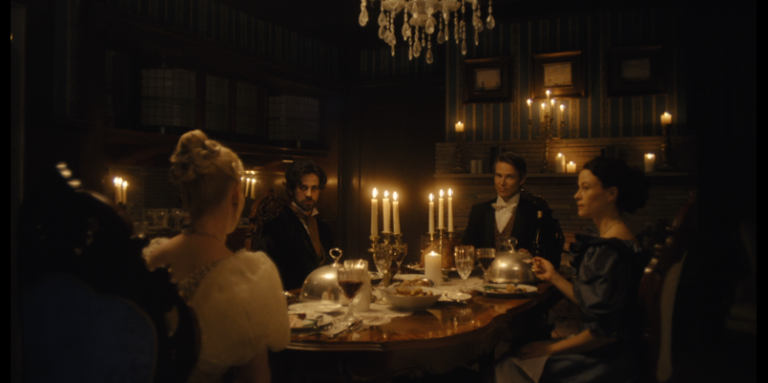
Despite this film depicting a random blip of oddity in human history, itโ€™s events like these that are ripe with emotional depth. It captures a fragment of the human experience in such startling fashion. In a brilliant stylistic stroke, van Sant utilizes archival footage from coverage of the actual event. Paired with the occasional recreation of imagery using still frames of the filmโ€™s actors, Dead Manโ€™s Wire creates a modern iconography for an almost 50-year event. And modern audiences will easily align with this film in large part due to its timeless nature. The machine of capitalism is still preying on those desperately searching for a fair share of peace and something to call their own. Just as modern a touch is the way van Sant highlights a bevy of side characters all looking for a particular angle into the story. In doing so, they have their โ€œfive minutes of fameโ€ solidified. We see a priest rush Tony and Richard as they walk down the street to try and have Tony atone for his sins. Thereโ€™s hungry newscasters looking for their big break. The executives at local television stations are willing to show a man executed on live television for the sake of a ratings boost. Tony included, all of them are acting amidst a moment of opportunity. They are taking fate into their own hands and doing all they can to ensure their voices are heard. Some cases are just a bit more extreme than others.

Itโ€™s this extremity that Dead Manโ€™s Wire uses to toy with the idea of infamy. Itโ€™s quite telling how easily this film can have its audience get behind Tony despite his erratic decision making. Equally telling is just how easily infuriating Hall, Sr. (Al Pacino) is upon hearing from him. Dead Manโ€™s Wire makes it abundantly clear who it considers to be the true antagonistic force of this story. Richard sees it in Tony (and because of this, weโ€™re delivered a nightmare sequence that provides Skarsgรฅrd the opportunity to actually showcase the maximum intensity heโ€™s become beloved for). Richard and Tonyโ€™s relationship would benefit from a bit more exploration, as itโ€™s likely an avenue for some of the more complex internal conflicts of the film to be grappled with. This unfortunately isnโ€™t the only aspect of Dead Manโ€™s Wire that feels frustratingly under explored. Local legend radio host, played by a smooth-talking Colman Domingo, is a focus of the film, though his character feels underutilized. One might hope the film delved further into the public perception of Tony beyond mere flashes of onlookers and audiences tuning into radio or TV. But this radio host is integral to the overall target Dead Manโ€™s Wire aims to hit. The very opening of the film has him state that he โ€œsmiles at the cards heโ€™s dealt.โ€ Tonyโ€™s emotional distress at the unfair nature of predatory business models led him towards a different response. Captured in a way that makes us feel as if we, too, are onlookers on the street, Dead Manโ€™s Wire asks us to empathize with Tonyโ€™s dilemma. This is ultimately Tonyโ€™s story, so itโ€™s understandable why Kolodney and van Sant shift focus solely on him. All in all, it makes for a film thatโ€™s both very entertaining and unfortunately timely in its capturing of times never changing, despite these events mattering more than anything to a majority of people.

Dead Manโ€™s Wire is celebrating its North American premiere in the Special Presentations category of the 2025 Toronto International Film Festival.

Grade: B-