Synopsis: A fading midwestern town in which Frendo the clown, a symbol of bygone success, reemerges as a terrifying scourge.
The slasher subgenre is appealing because it rarely delves too deeply into the supernatural. The slasher is mayhem and carnage that, while sometimes impossible, is most terrifying because behind the mask is a fellow human choosing to kill others for their own reasons. There is someone mortal behind the mask. That is of course until the sequels when all bets are off as the killer can and will come back again and again with increasingly supernatural abilities. In these first films the killer can be hurt and killed, but they seem invincible because of the terror they’re able to invoke. This subgenre endures because of its tropes and formulas. Every new iteration is a new way to show off horrifying new ways to kill people, but also to show how even if we have different technologies or knowledge, we’re still vulnerable to a person in a mask with a grudge. The slasher is evergreen because it can change while staying the same. Clown in a Cornfield is a lot like its slasher predecessors. It’s got nothing very new about it.
Familiarity is fine. Formula is fine. These axioms are true especially for a slasher because the slasher doesn’t need to be elevated in any way. Clown in a Cornfeld sticks to that well worn territory. Though, just as you start to become Randy Meeks (Jamie Kennedy) from Scream, shouting at the screen, pointing out the “rules” of the slasher, a twist comes in and changes the film into something else. The issue with Clown in a Cornfield is that its filmmakers wait far too long into the action to pull this twist and to put their specific spin on the slasher formula.
Much of the finger pointing at possible suspects is absent. Much of the terror of thinking the killer clown, Frendo, is one of the core group of teens is too subtle. Everything but the gore and the motive for the killings is subtle. Too much of the film is focused in the wrong direction and for the wrong reasons that the unique aspects of Clown in a Cornfield quickly become too predictable once they’re known.
Even with this predictability it’s difficult to write about particular scenes or plot points that are good because with slashers any details of the journey can ruin the catharsis of the ending. Though, it is easy to praise pieces of the whole in a way that doesn’t give too much of the plot. There are a lot of good points about director Eli Craig’s style for instance. He’s an old hand at horror-comedy and while not everything that is intended to be a joke in Clown in a Cornfield lands, Craig at least has the pacing down. There isn’t a wasted moment or a reveal that’s not timed perfectly. Even his jumpscares, though very predictable, are not drawn out or attempts to trick the viewers. He gives us what we want.
Katie Douglas, who plays our heroine, Quinn, is also quite intriguing. She plays Quinn with a brassy sense of street smarts that comes from growing up in a city and being forced out to the country. Douglas gets us to believe in his character’s vulnerability and sadness. Unlike many slasher heroine’s of the past, Quinn isn’t hung up in the innocent camp. She’s a modern teen with a mix of experience and naivete that breaks the rules of the horror film, while also honoring them in a way. Douglas plays this mix well while also having excellent timing and an expressive face.
Clown in a Cornfield is a pretty O.K. film. A clown is used to scare instead of delight, teens are killed in gruesome ways, and we all walk away from the film a little more unsettled than we were before it started. While the story and film attempts new twists on the old formula, it doesn’t commit hard enough to the old formula to make the new twists all that fresh or exciting. If you’re a fan of the subgenre, you may want to check it out, but if you’re looking for a unique take on the subgenre, this isn’t it.
Director: Andrew DeYoung Writer: Andrew DeYoung Stars: Tim Robinson, Paul Rudd, Kate Mara
Synopsis: A suburban dad falls hard for his charismatic new neighbor.
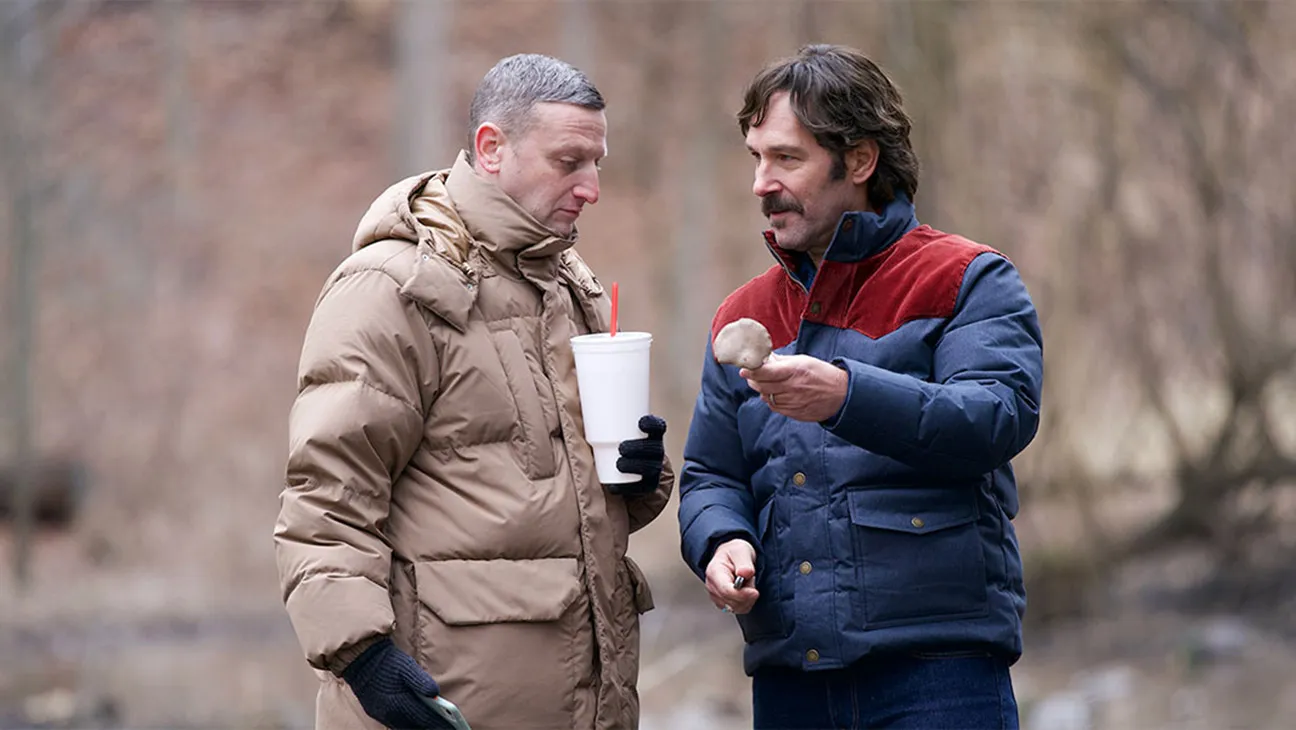
I don’t think it would be unfair to say that the expectation of Friendship is that this would be a feature length I Think You Should Leave sketch. Tim Robinson has a unique style of humor that is strictly his own and while it may not work for everyone, it definitely works for me. Starting off, the theater was laughing at every little thing Robinson was doing on screen. However, as the film went on, a collective anxiety and unnerved feeling washed across the theater. Friendship definitely lives up to the expectation that I described before, but what I didn’t expect was something so nightmarish and, to put it bluntly, depressing. Don’t get me wrong, it’s hilarious, but by the time the credits roll I was wiped out.
Craig Waterman (Robinson) is a simple man that does very little outside of his day-to-day work. He is a married man with a son in high school, he gets a new neighbor that he quickly befriends, and frequently talks about “the new Marvel.” What sets him apart from the other characters in Friendship is he speaks almost exclusively in awkward jokes – common fare for his characters in I Think You Should Leave. But as the film progresses and he opens himself up more, it’s clear he is afflicted with arrested social development as he makes off putting comments and does bizarre things like shoving a bar of soap in his mouth as a joke (which does not land).
What makes I Think You Should Leave likely to be rewatchable is that everyone in each bit is in on the joke to some degree. In I Think You Should Leave you’re being transported to some bizarre other world where the inhabitants are mild mannered individuals and one or two characters that perpetuate and drive a bit. In Friendship, if you remove Tim Robinson, it is a deathly serious movie. No one is feeding into a bit outside of him. The coverage of topics in Friendship include cancer, marital collapse, and a situation involving a missing person. I know the goal, even in the I Think You Should Leave bits, is to make the viewer cringe, but at times Friendship becomes a little suffocating.
Furthermore, Tim Robinson’s character he does – which he does for all of his comedy – works in small doses. On Saturday Night Live and I Think You Should Leave you’re given about 5 minutes, max, of this type of character. However, this type of character in a feature film is a little too much by the end. Each bad decision or off putting comment Craig would make compounds in the viewer. While I’m not entirely averse to the ‘cringe’ comedy, by the time the 100 minute runtime is up I was thoroughly exhausted.
With these things in mind, I weirdly found Friendship to be affecting. While I don’t directly identify with the Craig Waterman character or the things that he does, that feeling of longing was extremely palpable. Connecting with people is incredibly difficult, I wanted to see Craig win even if I wouldn’t want to be friends with him personally. And anytime he didn’t win (which is frequent in Friendship), I couldn’t help but feel a little sad. Life is weird how we’re just thrown into things and there’s a certain socially acceptable, binary way of living while we’re all extremely different from one another and offer completely different things to each other.
To that extent, even if there were elements of Friendship I found exhausting, the other elements elevated it to the same, yet opposite, levels. There was a cohesion to this film that is rare to find in films from sketch comedy regulars. For example, while I love films like Stepbrothers, Wayne’s World, or Popstar: Never Stop Never Stopping, the bits in those movies act as a way to get laughs rather than something that coexists with the world in their respective films. In Friendship you find a collection of bits that feels like it belongs to the world being built. The one bit I’ll mention, as to not spoil anything, is the “Marvel” bit that they’ve already pushed in their marketing. Once the “Marvel” is introduced it is integrated effectively and not seen as just a one-off. There’s a particular moment involving a client meeting where the bit isn’t directly referenced but is alluded to and the pay off is incredible.
Rarely does a film come around where I feel so starkly conflicted about it. And even with that, I really want to see it again. If you’re not a fan of the Tim Robinson style of comedy, this is probably the last thing you should consider if you’re looking to change that. But if you’re already a fan, this is a four course meal and then some. This film is nuclear levels of hilarious and simultaneously the worst trip imaginable. Friendship absolutely rules and should be seen in the largest and most uncomfortably crowded room imaginable. Excited to tell my therapist about this film!
Synopsis:A genre-bending comedy about a frustrated and misanthropic newlywed who discovers certain feral impulses that land her in unlikely situations.
When a film begins without dialogue, it can let its aesthetics sink in. You get a feel for the characters, the setting, and the way the filmmakers will tell their story. Sister Midnight begins this way and introduces writer/director Karan Kandhari’s strange vision of domestic frustration that morphs into a sort of Vampire’s Kiss in the style of Wes Anderson.
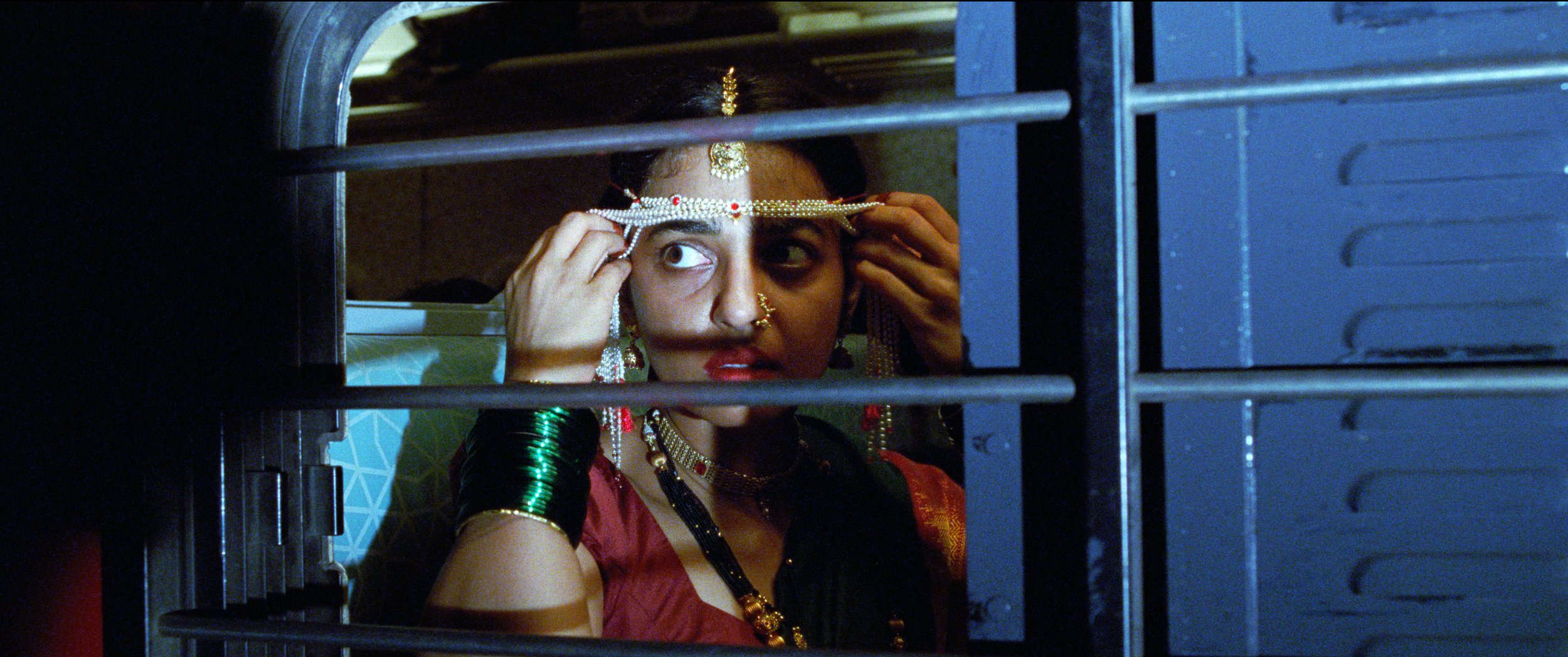
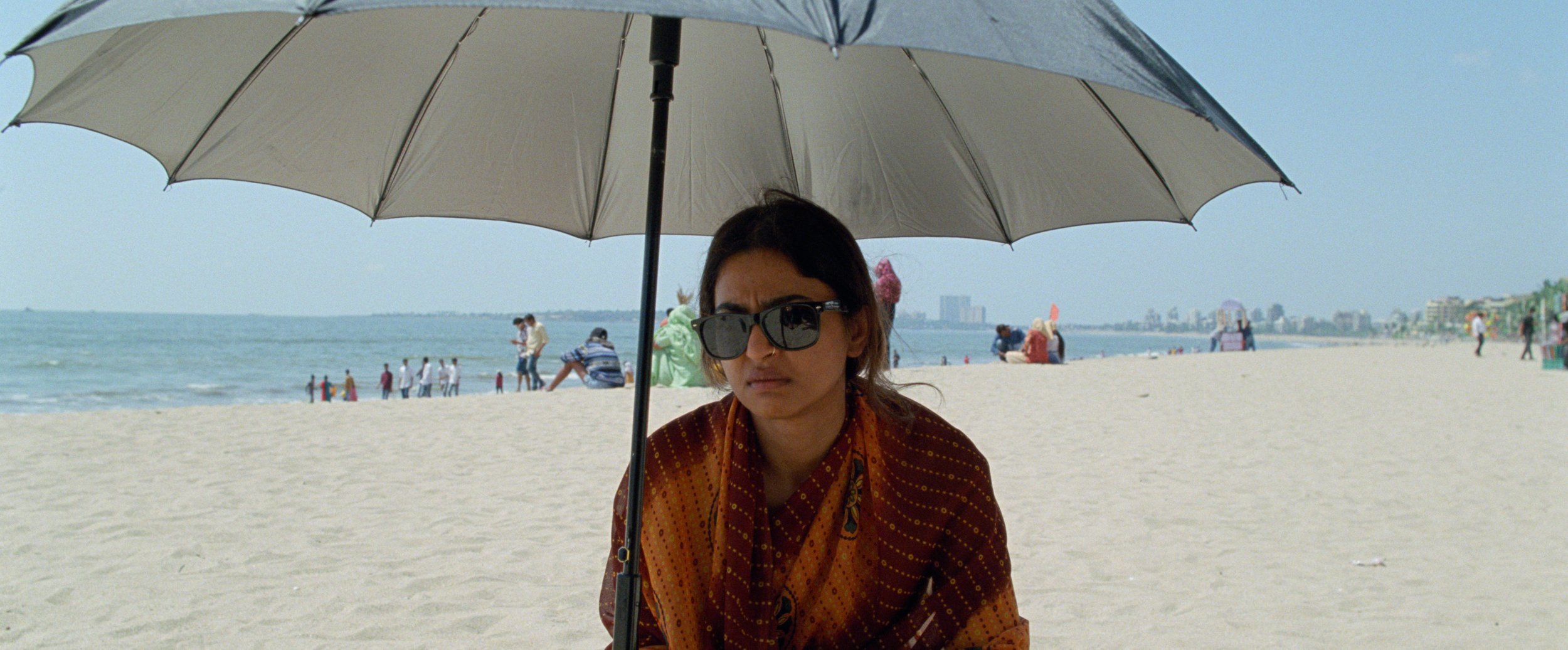
That Andersonian-like feel is all over Sister Midnight; from the quirky absurdity to the way the camera moves. In their own style, Kandhari and cinematographer Sverre Sørdal, make a film that lets the camera itself be a driver of jokes. There is a shot that begins with Uma (Radhika Apte) sitting on a seawall contemplating the disease she hasn’t yet figured out. She just wants a moment to be with her thoughts, but to her right there is a crying woman, the camera slowly pans to the woman, then back to Uma, who also hears a crying man on her left, to whom the camera pans, and then back to where Uma was only to find her running from the seawall and back into the city behind it disgusted that she can’t find peace. In another perfect scene, Uma takes Reshma’s (Smita Tambe) dog for a walk. She stops in place and shouts to a boy off screen if he wants a dog, the camera pans to the now very excited boy and his guardian. There’s a cut with Uma back to where Reshma, her husband, and Gopal (Ashok Pathak) sit. Uma remains standing and tells the other couple that she and Gopal have to go and, by the way, the dog ran away.
These touches come from Kandhari as a director, but also his whip smart script. This tale of a misanthropic, frustrated newlywed is brimming with dry humor and the bizarre. The wordless bits are fantastic, but it’s Uma’s sharp tongue that will have you bursting out laughing. She has a comeback or a barb for every perceived wrong and the fact that it comes from this unassuming woman makes the verbal jabs even sweeter. There are also some terrific scenes between Uma and Sheetal (Chhaya Kadam), Uma’s neighbor. The two of them create the imaginary dialogue of a sordid affair while they go through the drudgery of their day. These scenes show a different side of Uma and that she hasn’t entirely sworn off all human interaction.
That balance is pulled off so well because of Radhika Apte’s stellar performance. She has a ferociousness that makes the scenes of Uma’s anger and frustrations entirely justified. Apte has incredible timing and a great aptitude for physical humor. As Uma, Apte makes us hope we can find a way into her heart as some of the other characters in the film do because the warmth Apte portrays when Uma likes someone creates a yearning from us to hope to be one of those people and feel that warmth.
If Sister Midnight has faults it is in the drag of its final act. It doesn’t help that otherwise superior editor Napoleon Stratogiannakis and Kandhari keep stalling the action with many fades to black. They use the technique throughout the film to denote the passage of time, but after the turn in the story it just feels like many minutes are needlessly added to the film when we want more story. When Uma is stagnant, so is the script. While it feels like the filmmakers were trying to create a circle back to the isolation of the beginning of the film, the momentum is lost.
Though, how can you really dislike any film when that film includes a roaming band of vampiric goats? Sister Midnight is one of those rare horror comedies that never lets the horror elements overpower the humor. If anything, the horror just heightens the earned bit of tragedy at the turn. Sister Midnight will have you laughing in ways you won’t expect and loving the visual feast of an artist who knows how to create a story with a camera.
This week on Women InSession, we take a look at the career of Timothy Dalton and discuss our favorite movies that he starred in! Dalton is most famous for his role as James Bond in The Living Daylights and License to Kill (really awesome movie, btw), but he’s also quite memorable in Wuthering Heights, Hot Fuzz and even Toy Story 4, among many others.
Panel: Kristin Battestella, Jaylan Salah
On that note, check out this week’s show and let us know what you think in the comment section. Thanks for listening and for supporting the InSession Film Podcast!
The 78th annual Cannes Film Festival is upon us, which means the first signs of Oscar players are coming out. Last year’s Palme d’Or winner, Anora, won Best Picture, while The Substance, Emilia Perez, The Apprentice, and The Seed Of The Sacred Fig would also play onwards towards the Oscars this past March. We even have David Cronenberg’s The Shrouds finally out for release now, a year after playing at Cannes. Jury head Juliette Binoche and her fellow artists will watch nineteen films listed in competition, with films by Scarlett Johansson (in her directorial debut), the Dardenne Brothers, Sebastian Leilo, and Robin Campillo appearing, the latter with his film Enzo as the opener for the festival. Here are some other notable films coming at Cannes.
Alpha – Dir. Julia Ducournau
Four years after winning the Palme d’Or for Titane, Julia Ducournau is back and entering a deep, dark era in a city affected by the AIDS crisis in the 1980s. The film follows a young girl whose classmates spread rumors that she’s been infected with the new disease, and returns home one day with a new tattoo. Tahir Rahim, Emma Mackey, and Golshifteh Farahani star in Ducournau’s dark tale of innocence tested in a dystopian setting.
Eddington – Dir. Ari Aster
Moving into a modern Western during the COVID-19 pandemic, Ari Aster follows his horror-surrealist films with this battle between a Sheriff (Joaquin Phoenix), who seeks higher aspirations, and the Mayor (Pedro Pascal), who seems immovable. Emma Stone, Austin Butler, Luke Grimes, and Clifton Collins Jr. co-star in this dark satire of masking politics and the civil war among neighbors. Ah, those days were “fun.”
Highest 2 Lowest – Dir. Spike Lee
Lee’s long-awaited remake of Akira Kurosawa’s High and Low features Denzel Washington, Jeffrey Wright, Ice Spice, and ASAP Rocky in the story of a kidnapping and ransom that a businessman must make for the sake of his employee. It may be shown out of competition, but we all know Spike Lee has a special vision for crime dramas like Inside Man and 25th Hour. Let’s just hope it’s a lot better than his awful retelling of Oldboy.
Nouvelle Vague – Dir. Richard Linklater
It only makes sense that a biopic about the making of Breathless makes its debut at Cannes as Jean-Luc Godard joined the cinema revolution of the French New Wave. Entirely in French, Zoey Deutsch takes the role of actress Jean Seberg with the all-French cast including Guillaume Marbeck (as Godard) and Aubry Dullin (as Jean-Paul Belmondo). Linklater has shot the film in black-and-white in keeping with the New Wave style, and I expect it to be very much a tribute with all the jump cuts and jazzy music in the movie.
The Phoenician Scheme – Dir. Wes Anderson
In his follow-up to his Oscar-winning short The Wonderful World of Henry Sugar, Wes Anderson once again brings his zany ensemble piece style to Cannes with a story of money, scheming, and planned killing. Benicio del Toro, Michael Cera, Tom Hanks, Bryan Cranston, Riz Ahmed, Mia Threapleton, and many others take part when a wealthy businessman is sought out by many to steal his riches after assigning his daughter, a nun, to take over his estate in the event of his death.
Sentimental Value – Dir. Joachim Trier
Four years after his brilliant The Worst Person In The World, Trier is back along with Renate Reinsve, Stellan Skarsgård, Elle Fanning, and Cory Michael Smith. The story follows an acting family in Oslo and the house they have lived in for many decades, which results in two sisters having to deal with their father following their mother’s death. While doing so, the father, a filmmaker looking to make his comeback, shoots his next movie with a Hollywood actress, a role meant for his estranged daughter.
Synopsis: Follows comedian Tom Dustin in Key West, featuring stand-up performances and his friendship with Joe List, while exploring depression and alcohol through comedy and storytelling.
It’s always interesting when someone makes a documentary about their friends. The perspective is unique, fresh, but also biased. There’s that sense of understanding and empathy that is unmistakably bittersweet. This was the first thought that came to my mind while watching the famous comedian Joe List’s documentary debut, Tom Dustin: Portrait of a Comedian, about his best friend and fellow comedian, Tom Dustin.
List perfectly changes the chronological order between decades, showing us Dustin at his youngest, most energized self, followed immediately by a recent clip where time and missed opportunities have humbled him. List loves his friend. That’s one thing the viewer can tell just by following how he frames Dustin, even at his lowest, through a nurturing, kind lens. One can’t help but fall for Dustin, even as it seems like he’s not the wild hotshot he was in the past (and how his knack for comedy, even at his youngest and most creative, never led him to a success similar to List’s).
There’s not a hint of pity or deprecation in the way he portrays his friend’s mishaps and regrets. It’s all done through an understanding of a man who shares his best friend’s passion, but doesn’t let it consume him. List provides us with a glimpse into the behind-the-scenes of Comedy Central. In one scene, a regular bystander talks to Dustin and calls comedians “Some of the bravest people on the planet.” But List unveils the façade of the fantasy of living life as a stand-up comedian. A life without rules, where drugs and alcohol course through the veins of those brave men, turning them into after-night special heroes, stripping bare what lies behind the glamour of this hedonistic, rebellious existence that goes beyond what society requires. List portrays himself and Dustin as two dudes on the fringe of society with the hopes of making it big, he doesn’t glamorize or sugarcoat the life of comedians, so that dream of living off jokes doesn’t seem as fantasy-like as most people envision it to be.
This documentary wouldn’t have worked if it was only a portrait of Dustin, despite how enriching and endearing his journey as a stand-up comedian is. The back and forth between List and Dustin brings a lot to the table, but their story in its extreme personal status has an underlying universality that feels familiar with a lot of people. List and Dustin can be any of us, friends at different stages of life, with varying degrees of success and self-actualization, and yet, the bond between them is what keeps them together stronger than ever.
I couldn’t help but wonder while watching this documentary: what makes or breaks a talent? It poses the important question of showing, through a carefully crafted storyline, the change of tone and character of an artist who does not rise and fall from grace, but remains stable in a middle ground where no major change truly occurs, yet no significant tragedy befalls him. It’s refreshing to see Dustin engaging in his shenanigans, supported by his friend, while also realizing that a stress-free approach to a bumpy artistic journey is the best way to be.
Tom Dustin: Portrait of a Comedian is a great picture to watch if someone wants a peek inside the lives of two men burdened and broken by life but still kicking and cracking a joke or two about the pain. It may seem like a vanity project of two cool guys who were once even cooler kids, but it’s more of a love letter not just from a friend to his less lucky pal, but to the comedy scene at Comedy Key West.
Director:Timothy Scott Bogart Writer:Timothy Scott Bogart Stars: Clara Rugaard, Jamie Ward, Jason Isaacs
Synopsis:Based on the real story that inspired Shakespeare’s Romeo and Juliet, follows the greatest love story of all time, set as an original pop musical.
When a writer and/or director sets out to make a film based on a well-known story, there is an inherent risk involved. When everyone knows the story, what exactly do you have to offer? What is the hook, the new angle? There are many stories that have been told over (and over) again. But perhaps none of them have been told as often as “Romeo and Juliet.” It is so famous, I don’t even need to tell you who wrote it. And certainly, it has been done well on film. Whether you prefer George Cukor (1936), Franco Zeffirelli (1968), or Baz Luhrmann (1996), there are numerous options to choose from and many of high quality. The great thing about a classic play is that you can take it from many different angles.
Juliet & Romeo certainly has a new look for the classic story. Writer/director Timothy Scott Bogart set out to tell the “true story” that inspired the play. Essentially, this means adding in a nonsensical plot point featuring a Pope. To add to this, he also makes it a pop musical. You might think these two ideas would work in opposition with one another and, sadly, you would be absolutely correct. It is a strange thing to want to tell a story of hidden truth and then couch it in the highly produced musical stylings of pop. And frankly, all of that could be forgiven with either great performances or great music.
To be clear, with any musical, great music is imperative. And this is not something to bide your time with, you cannot simply ramp up to the “good songs.” If you don’t grab your audience immediately, it is over. And folks, it is so over. There is some solid pop music hidden within, but it simply takes too long to get there. Most of the music is uninspired. Put simply, if you are not a fan of pop music, this is probably what you think pop sounds like. The attached choreography is similarly conventional. And this is what most of the film feels like, never completely awful, but certainly not something you might remember, fondly or otherwise.
Especially compared to recent versions of this story, the visuals also simply don’t measure up. Either a more muted palette or an maximalist explosion of color can work (as proved previously). Unfortunately, Juliet & Romeo falls somewhere in the black hole of the in between. The costumes are certainly colorful, but to the level of garishness. The film is also lit quite strangely, making it difficult (if not impossible) to view anything in the background which would give needed context to world being inhabited.
In many adaptations and, indeed, even in the source material, the titular characters are not the best of the bunch. There are a myriad of moments from supporting characters (the Queen Mab speech from Mercutio, Nurse being playful with Juliet, Tybalt fighting the Montagues) that are arguably more impactful than the lovestruck pair. Sadly, many of these are not present or even presented in a way that equals the palpable energy of just about every other version. This is a real shame because there is a solid cast gathered. Of note, Rupert Everett (Lord Capulet), Jason Isaacs (Lord Montague), and Derek Jacobi (The Friar) all might excite a prospective viewer, but they are given little to do. And Everett, especially, is given little to play off of, as his consistent scene partner, Rebel Wilson, is wildly miscast as Lady Capulet. Just because one can manage a passing English accent does not mean there is any substance to the performance. Romeo (Jamie Ward), an accomplished musical theater actor seems hamstrung by the material but Juliet (Clara Rugaard) should be commended on somehow creating a watchable performance that deserves a better movie.
Honestly, the lone, true bright spot comes from a part that is usually relegated to a necessary evil, The Apothecary (Dan Fogler). He has a musical number (featuring interjections by Derek Jacobi) that is the sole ear worm on a soundtrack stacked full of lyrical attempts. His jolly presence and genuine excitement feels almost out of place compared to the near sleepwalking attempts at other memorable songs.
So yes, there is yet another adaptation of the western world’s most famous love story. Unfortunately, this one removes many of the most iconic moments and adds in a soundscape that mostly fades into the background. But hey, we will always have our chosen Romeo and Juliet, whether that be full of sound and fury or a true Elizabethan version. This bubblegum pop, “true story” will simply make you want to skip the track.
Juliet & Romeo will be in UK Cinemas for One Night Only on 11th June
On this episode, JD and Brendan discuss Paul Feig’s new film Another Simple Favor, starring Anna Kendrick and Blake Lively! We are fans of the first Simple Favor and we’re mildly curious for this sequel, especially given its buzz out of SXSW, but sadly this is one that did not work us at all.
Review: Another Simple Favor (4:00) Director: Paul Feig Writer: Jessica Sharzer, Laeta Kalogridis Stars: Anna Kendrick, Blake Lively, Henry Golding, Allison Janney
This week on the InSession Film Podcast, with Phase 5 of the MCU coming to an end with Thunderbolts*, we thought it would be fun to rank all of the Marvel films released post-Endgame in Phases 4 and 5! We also discuss the May box office and the recent news of Trump targeting Hollywood.
– May Box Office (3:39) We began the show this week with more box office talk, primarily because this time last year was panic mode as it appeared to be the death of cinema. However, with Sinners continuing to do well and Thunderbolts* off to a good start (even if it’s down by MCU standards), it appears that Summer this year will manage much better results.
– Trump’s Nonsense (29:15) It may turn out to be nothing, as some have predicted, but it’s worth bringing up the recent news that Trump is potentially going to lay tariffs on foreign films coming into the Unites States. It would be a really dumb decision that would kill the industry. Hopefully with Tom Cruise on the case, everyone can come to their senses and we can make decisions that elevate cinema instead of destroying it.
– Ranking the MCU post-Endgame (1:29:13) The Marvel Cinematic Universe made massive waves with the ending of Phase 3 and the Avengers coming together to defeat Thanos as part of Infinity War and Endgame. However, since then it’s been quite a mixed bag for the MCU. It’s had a few highs, and Phase 4 was more consistent than it gets credit for (we would argue), but generally it’s been a rudderless campaign the last few years. With Thunderbolts* turning the page, we are hoping that things start to look up for the MCU. So, we thought it would be fun to rank all of these movies and see where the MCU sits right now as it pivots. What do you think of our ranking?
If you want to help support us, there are several ways you can help us and we’d absolutely appreciate it. Every penny goes directly back into supporting the show and we are truly honored and grateful. Thanks for your support and for listening to the InSession Film Podcast!
Synopsis:A mercenary takes on the job of tracking down a target on a plane but must protect her when they’re surrounded by people trying to kill both of them.
One location action films always seem like a good idea at the time. Yes, they sometimes work. The Raid: Redemption and Dredd are perfect examples. But these are the exception, and not the rule. Most times, it seems to have been planned more for financial reasons, as opposed to artistic ones. The bad side of this is really that it is limiting. Some creators work well within these structures, but most find themselves hamstrung and throwing everything against the wall to see what will stick. First time feature film director, James Madigan, truly struggles with this, despite some minor bloody fun experienced on the trip.
Fight or Flight follows ex-Secret Service agent, Lucas Reyes (Josh Hartnett), who is tasked with tracking down a wanted person on a particular flight. If he is able to bring them back alive, he will get his life back. There is, of course, a catch. Everyone else on the flight has been tasked with killing this asset. Plus, the asset might actually be doing good for the world. He is given this “opportunity” by Katherine Brunt (Katee Sackhoff), an agent with whom he has history. So, after a screaming fit at Brunt, our intrepid hero (doused with a great deal of alcohol pre-flight) must not only find this mystery person, but also deal with contract killers in every row. You can almost hear the elevator pitch. “It’s like John Wick: Chapter 3 – Parabellum mixed with Bullet Train. Everyone is after him, and they are all trapped in a metal tube hurtling through the air!” And honestly, that sounds a lot better than the results we are given.
However, the film does have one thing going for it, and that is its lead performances. Hartnett uses every bit of his considerable charm to drag the film to watchability. Even if this does feel like a movie he would do before his mini-renaissance, he is still a walking example of what charisma can do for a film. When he meets Isha (Charithra Chandran), a flight attendant, Fight or Flight certainly is the better for it. Their connection, and back-and-forth rapport is the saving grace of the movie, and the otherwise weak screenplay from Brooks McLaren and D.J. Cotrona.
And thank goodness for that, because they are the only actual characters that exist in the world of Fight or Flight. The other attendants are pretty obvious stereotypes, but the real issue is the myriad of other killers. For a movie that is mildly concerned with the morality of its lead character, it does absolutely zero work to engage with those choices or the other characters. It almost feels like a cheap video game knockoff, in which Lucas must defeat them solely for plot reasons. It even falls short of the aforementioned Bullet Train (a thoroughly mediocre film, in its own right) because at least that film paid credence to its other characters, for better or worse. To say that this should have been “Bullet Plane” is shockingly an insult to the previous film.
That all being said, most of the action is actually quite fun. Sure, it makes no sense that no one would come knocking on the first class bathroom as Lucas is drugged, beaten, and eventually makes a comeback to brutally murder a singing contract killer (don’t ask), but the scene is visceral and well-filmed. There are numerous memorable moments of bloodshed, but most of it is played with a shrug as there is no time to rest before the next villain must be vanquished. To continue the video game analogy, Fight or Flight is a movie in need of a boss who never appears at the end of the level.
If you love Josh Hartnett, blood, and silly action, you will absolutely have a good enough time onboard Fight or Flight. But if your expectations are lifted to the level of even Bullet Train, you may end up disappointed. Honestly, avoiding spoilers, the film seems to be following the wrong lead character. There are interesting moments hidden in this simple script that could make for a better story than what we receive. We deserve more, and so do Hartnett and Chandran.
On this episode, JD and Brendan are joined by ISF writer Shaurya Chawla to discuss Marvel’s latest entry into the MCU with Thunderbolts*! The MCU is at a crossroads, both in terms of its larger narrative trajectory, but also with general audiences. Captain America: Brave New World didn’t move the needle in that regard, however it appears that Thunderbolts* might be shifting the tides a little bit. It’s a great film and a big win for Marvel.
Review: Thunderbolts* (4:00) Director: Jake Schreier Writer: Eric Pearson, Joanna Calo Stars: Florence Pugh, Sebastian Stan, Wyatt Russell, David Harbour, Hannah John-Kamen
On this episode of Chasing the Gold, Shadan and Erica discuss the new Oscar rules indicating that members must watch all of the final nominees and how they should treat AI in regards to qualification!
Check out this week’s show and let us know what you think in the comment section. Thanks for listening and for supporting the InSession Film Podcast!
Director:Jake Schreier Writers: Eric Pearson, Joanna Calo, Kurt Busiek Stars: Florence Pugh, Sebastian Stan, Julia Louis-Dreyfun
Synopsis: After finding themselves ensnared in a death trap, an unconventional team of antiheroes must embark on a dangerous mission that will force them to confront the darkest corners of their pasts.
Here’s the deal regarding Marvel closing out its latest phase: they’ve finally remembered the fun of their earlier entries. Along with the devilishly entertaining Deadpool & Wolverine, Thunderbolts* is the most downright entertaining MCU experience since the first Guardians of the Galaxy. A dirty (almost) half dozen that revitalizes the “bad guys doing good” trope, it doesn’t take itself too seriously, but still packs a big, beating heart that’s surprisingly poignant.
Thunderbolts*, likeGuardians of the Galaxyover ten years prior, revitalizes the Marvel Cinematic Universe—but with a more grounded, darker, grittier approach that explores these beloved characters’ moral gray areas with unapologetically exhilarating results, real stakes, and something to say on the matter.
The story mainly centers around Yelena Belova (Florence Pugh), who is grappling with an existential crisis of her own. The former assassin is still doing cleanup work—painting houses, if you will—for CIA director Valentina Allegra de Fontaine (Emmy winner Julia Louis-Dreyfus), who is on trial for her life, facing impeachment for her callous attempts to create super soldiers with little regard for human life. The only thing keeping Yelena going is the job, as she ruminates on thoughts of her family, including her deceased sister (Scarlett Johansson) and nonexistent relationship with her father, Alexei Shostakov (Stranger Things’s David Harbour), aka The Red Guardian, a former supersoldier himself.
Yelena needs a change, wanting to shed the “anti” in antihero by doing genuine superhero good. However, like a cop going out on one last call before retirement, Fontaine asks Belova to do one more job for her, promising it will set her free. The director tasks her with locating and erasing any evidence of her past deeds that could be used against her at the impeachment trial. What Yelena underestimates is just how cunning Valentina is: she sends Yelena into a trap, luring all her assassins to a hidden compound—a birds’ nest—where they’re ordered to kill each other, because they are the evidence.
Yelena runs into a few familiar faces (and a couple of others I couldn’t pick out of a lineup). These include John Walker (Wyatt Russell), the disgraced stand-in for Captain America, who we last saw in The Falcon and the Winter Soldier killing Nico. You also have Ghost (Hannah John-Kamen), Taskmaster (Olga Kurylenko), and the Winter Soldier himself, Bucky (Sebastian Stan), who shows up looking for evidence to take down Fontaine and bring her reign of terror to an end. However, they soon realize it’s a trap, with the director sending a team after them, only for a mysterious figure named Bob (Lewis Pullman, not reprising his Top Gun: Maverick role) to help the team escape.
At the core of Thunderbolts* is a deeply felt story of redemption. Sure, the film delves into your classic comic book movie clichés in the third act, but it is, after all, entertainment. The premise tackles the seriousness of mental health, resilience, and reinvention with thoughtful care. Director Jake Schreier (Paper Towns), working with a script from Eric Pearson (Thor: Ragnarok) and Joanna Calo (The Bear, Beef), doesn’t reinvent the wheel here, but he gives Marvel a darker take than any recent MCU film—a version that may make Christopher Nolan proud of its aesthetic. It finally lets go of colorful cosmic antics in favor of some rebellious and ominous irreverence that Kevin Feige has obsessed with for decades.
While many have commented that the humor is hit or miss, for this critic, most hits—especially with Harbour, who has a direct line to my funny bone. Like he did in Black Widow, Harbour fills this action-packed entry with comic relief. And we can’t stress enough how good Pugh is here: she takes what could have been a one-note, fairly paper-thin character and rounds out the performance with tremendous heart that’s genuinely moving. Meanwhile, Dreyfus revels in the role, perfectly embodying why a bureaucrat with unlimited power is the most dangerous villain. She’s so evil, it’s practically… polarizingly great.
It’s not hard to love Thunderbolts* since it had some bad press coming into the season, and not to mention, the terrible result of Captain America: Brave New World. However, the best superhero movies push boundaries, have murky moral complexities, and feature teamwork, which this new entry does nicely. The final result feels fresh because it is seen through a mental health lens that gives the films some added cinematic weight, and a touch of CGI that doesn’t feel overwrought to the point of cinematic subterfuge. It’s an excellent standalone entry that opens intriguing possibilities for a new phase.
You can watch Marvel’s Thunderbolts* only in theaters May 2nd!
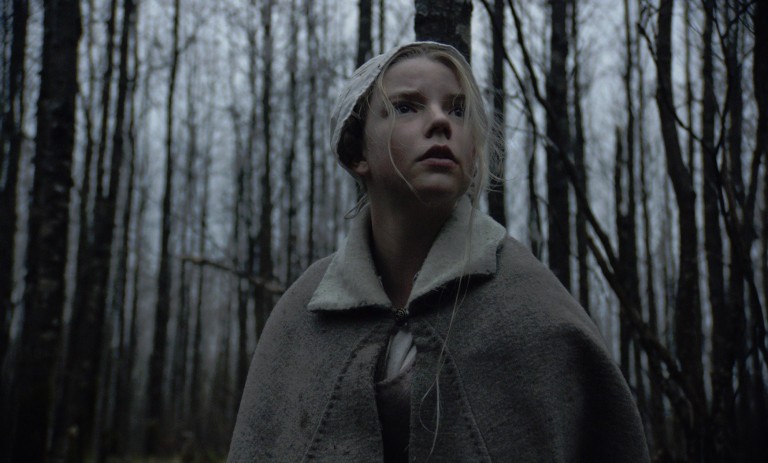
This week on Women InSession, after discussing vampires last week, we thought it would be fun to talk about our favorite witches in film! These movies are also a lot of fun and feature some of the more compelling characters we see onscreen. At least when they’re not Disney-fied. When done correctly there’s plenty of toil and trouble to be found.
Panel: Kristin Battestella, Jaylan Salah
On that note, check out this week’s show and let us know what you think in the comment section. Thanks for listening and for supporting the InSession Film Podcast!
Synopsis: Cécile’s relaxing summer with her father in the south of France is upended by the arrival of the enigmatic Anne.
Bonjour Tristesse is a weird little movie that seems out of place in today’s idiosyncratic film scene, where gender and sexual lines are blurred in a cacophony of bodies and even asexual characters dominating storylines, carving their own lane in a turbulent, more liberating time for the chance to be every multitude of sexual. It’s a very male-centric love story, a man surrounded by the three women in his life and how the lust surrounds him like a peacock in the heart of a lush, beautiful environment. Adapted from Françoise Sagan’s novel of the same name, it’s a celebration of liveliness in all its arrogance, elegance, and fragility.
It starts from a vantage point of pure aesthetics. Three rich people enjoy themselves by the French seaside, until the father, Raymond (Claes Bang), receives a letter from a mysterious stranger, Anne (Chloë Sevigny), who was a friend of his late wife. With Anne’s insertion back into their lives, Raymond, his daughter Cécile (Lily McInerny), and his lover Elsa (Nailia Harzoune), have their coexistence stirred into uncertainty by this mysterious presence.
Bonjour Tristesse is pure eye candy; there’s not a lot that bothers the Upper Class. Materialistic hardships seem outside their focal interest, yet they experience agony over heartbreaks and jealousy. The perspective is mostly from the point of view of Cécile, as the camera voyeuristically follows Anne, who engages in all womanly things in a poignant, refined manner. She resembles an ethereal figure passing through the walls of the spacious, serene house. She unifies the polar opposites of Raymond and Cécile while commanding attention with every step, moving from room to room and space to space with chilly confidence and an ice queen attitude that never fails to get her what she wants.
Director Durga Chew-Bose mentioned during a Q&A that her main focus in driving the characters is jealousy. The film references this intense emotion multiple times, making it one of the central concepts that drive the narrative forward. Raymond was jealous of the relationship his late life had with Anne. Elsa is jealous of Anne. Cécile is jealous of the developing romance between her father and Anne. Everyone is envious of everyone. It’s fantastic and delicious to watch, like a Zoomer Dangerous Liaisons, without the sex.
Chew-Bose smoothly ventures into this velvety world of slicing fruit, buttering toast, lying lazily in the sun for hours, and having breakfast in pearls. This imagery brings to mind Éric Rohmer’s gorgeous naturalistic settings with daylight and intimate production design. It also embodies the spirit of Luca Guadagnino’s Desire trilogy as Maximillian Pittner’s curious camera follows the protagonists as they go about their daily lives—neither too close nor at a great distance. The viewer will feel like a fly on the wall, watching as these people attract and repel one another, failing to get a grasp on their latent desires as they each grow into the confined spaces they create for one another.
None of this would have worked without the chameleonic Sevigny. How many times has she played a character so different from the one she portrayed before? She’s convincing as the tight-lipped, snobbish Anne, who has a tender heart but a crushing command over both her feelings and those of the people around her. Sevigny is compelling as an abusive mother, a rebel teenager, a mutant, as much as she is as Anne; the only acting standout in the entire movie. Without her, everything would have taken a turn for the worse. Unfortunately, the entire cast doesn’t match her level of acting prowess, especially Bang, who is completely out of his element here.
Bonjour Tristesse is a razzle dazzle of a film. Flawed, a bit too long, but not for the sensuality seekers. It’s a great escapist piece for the old souls.
Director:Isaiah Saxon Writer:Isaiah Saxon Stars: Helena Zengel, Willem Dafoe, Emily Watson
Synopsis: In a remote village on the island of Carpathia, a shy girl is raised to fear an elusive animal species known as ochi. But when she discovers a wounded baby ochi has been left behind, she escapes on a quest to bring him home.
As a distributor, A24 has released almost exclusively adult fare over the last 12 years since its inception, all while establishing themselves as a prominent voice in the independent film community and creating a massive following among moviegoers. That changes with The Legend of Ochi, as it marks the first movie in their catalogue to be rated PG and made for all audiences.
Based on an original story written and directed by Isaiah Saxon, the movie follows Yuri (Helena Zengel), a shy, introverted girl living in a village on the island of Carpathia. Her father, Maxim (Willem Dafoe) and adopted brother, Petro (Finn Wolfhard), are part of a hunting team that goes into the forest at night to find Ochi; mythical creatures who the villagers are afraid of and believe cause nothing but harm to humans and kidnap them. During one of these hunts, however, Yuri finds an injured baby Ochi, who is separated from the rest of its family. Wanting to help it return to its home, Yuri sets off on a journey across the island to find the other Ochi, as her father and brother attempt to find her.
The Legend of Ochi wears its influences on its sleeve, being a love letter to family fare such as E.T.: The Extra-Terrestrial and The Neverending Story with several shots and visuals a direct reference to each movie, and even the recent The Mandalorian with the young Ochi having parallels to the universally beloved Grogu. A blend of actual environments and matte paintings to showcase its backgrounds and environments, the old-school approach to filmmaking on display is commendable, with the Ochi portrayed with puppets and animatronics, with some CGI added throughout. The result is a mostly dazzling experience with impressive production design and Evan Prosofsky’s often colorful, vibrant cinematography, and filled with solid performances from Helena Zengel and Willem Dafoe, as well as Emily Watson as Dasha, a mysterious character with close ties to Yuri and Maxim, and all layered with a beautiful score from David Longstreth.
Saxon’s world building in Ochi is fascinating, often showcasing a land lost in time with the forest, as well as one incredibly contemporary with modern technology and buildings outside of it. His message about the world is clear: protecting the environment and animals is key to having a more beautiful planet. It is a message echoed across countless movies, but still an effective one. Where the movie does suffer, however, is in its callbacks to those inspirations Saxon derives The Legend of Ochi from, as it makes the progression of the narrative quite predictable. Certain moments where Yuri and the Ochi find themselves wondering how to escape a situation are met with the exact adversity audiences would expect to see, as well as similar solutions to get to the next scene. This further extends to the supporting characters like Maxim and Petro, who initially believe everything about the Ochi is wrong, only to have their beliefs challenged by Yuri’s actions.
Ochi’s world-building is also given a lack of expansion in parts, where its more unique aspects, such as their language, habitat, and mythos are sidelined in order to focus more on the humans and their pursuit, despite those elements being highlighted as more important to Yuri’s journey. As such, the movie can feel a bit incomplete in areas and lack a clearer focus. However, the child-like wonder of The Legend of Ochi and its creativity cannot be understated. Despite its flaws, the movie remains an overall very sweet and enjoyable watch, and a decent start to A24’s more family oriented fare.
On this episode, JD and Brendan discuss Gavin O’Connor’s latest film The Accountant 2, starring Ben Affleck and Jon Bernthal! We were pretty big fans of The Accountant when it came out in 2015, and while it took nearly a decade to get a sequel, we were looking forward to seeing how this new film would compare. It’s a different approach tonally, and there is fun to be had with the film, but we’re not sure if it works entirely on the whole.
Review: The Accountant 2 (4:00) Director: Gavin O’Connor Writer: Bill Dubuque Stars: Ben Affleck, Jon Bernthal, Cynthia Addai-Robinson
Synopsis: Cady Heron is a hit with The Plastics, the A-list girl clique at her new school, until she makes the mistake of falling for Aaron Samuels, the ex-boyfriend of alpha Plastic Regina George.
Wednesday, April 30th isn’t just any other Wednesday, it’s a day to celebrate the early 2000s coming-of-age comedy Mean Girls. This is a film that has held onto my life since the moment it was released with its quotable catchphrases, of the times fashion, and its relatable growing pains for young women. A quintessential movie that is not only filled with legendary performances from the geeks to the plastics but also captures how hard it truly is to be a teenage girl finding your place in the world. Now let’s put on our favorite pink shirt, hit play on the soundtrack, and take a stroll down memory lane.
As I was writing down notes before diving into this piece, there was a memory from my childhood that stuck out. It was Halloween of 2004, and I had just been invited to a sleepover at my best friend’s house, but there was an urgency to this invitation. It wasn’t the usual sleepover; my best friend had managed to get two of the most popular girls in school to join. They wore all the best clothes from the mall, their parents let them wear makeup, and they were both positively perfect… at least in my mind. Being 10 years old at the time and rather awkward in both my attitude and my appearance, it’s needless to say that these girls were the plastics of my world, and I was the odd one out. While packing my bag for the weekend, I panicked about whether I should bring my emotional support stuffed animal or not, but one thing I made sure to stuff into my bag was my rented copy of Mean Girls; if the snacks I brought didn’t impress them, I knew this was my Holy Grail.
Looking back at this memory makes this film even more special to me, and its importance all the more clear to me. It’s the first film I remember showing to others, outside of my family, that made me pay attention to how others reacted to art. Seeing the reactions from my best friend and the popular girls in school showed me that although we come from different walks of life and privilege, we can bond over a film that encapsulates our girlhood. Through Cady Heron (Lindsay Lohan) and eventually her gang of Plastics, we learned that there are girls who come in all shapes and sizes, and although our interests in life vary, and the way we dress might seem odd to one another, there’s no right or wrong way to express our femininity as long as it’s inclusive.
It’s easy to root for a character like Cady, especially when she is played by Lindsay Lohan, an icon of the times. She’s a fish out of water coming from an entirely different country and culture that she inevitably finds out is far from that at North Shore High School. Cady is representative of all girls who are wandering through new surroundings trying to find their place. High school is hard enough with its cliques and the constant pressure girls have that come from all fronts, but Cady coming in as a new student from another country makes her stick out even more. As she enters school, she’s true to herself and her style, wearing her bright red hair in a ponytail and clothes that she’s comfortable in that lack the “in” style that the other girls at her new school are sporting. Lohan gives Cady a naive spirit that shines, especially in the first few acts of the film, showing how girls’ youth is often short-lived as we grow into our bodies and minds, and society doesn’t allow us to be young for long. As the film progresses and she enters the world of The Plastics, the Cady we connected with in the beginning starts to fade as she dons new clothes and sheds her intelligence to fit in with those who want to change her.
Mean Girls works as well as it does thanks to Tina Fey’s script that is equal parts hilarious comedy and social commentary on how absolutely dreadful high school is. Her inspiration for the film comes from her own lived experience as a teenager growing up and going to numerous different high schools in her formative years. She also credits Rosalind Wiseman’s book titled Queen Bees and Wannabes as a large inspiration for her Mean Girls script. What makes her script so refreshing is that it feels so organically real. Her ability to inject the film with moments we’ve all experienced while capturing all those uncomfortable feelings makes each scene that much better. Wading through a lunchroom of your peers desperate to find a spot to sit that won’t ruin your social standing or sitting through sex education class and hearing all about how sex will kill you while hormones rip through your body.
Fey fully fleshes out each character of the film, whether they are main characters like Cady or secondary characters that pop up here and there in the film, such as Kevin G (Rajiv Surendra). Even with small bits of screen time, his character goes on his own journey. Or the fiercely loud and artistic Janis Ian (Lizzy Caplan) and her gay sarcastic best friend Damian Leigh (Daniel Franzese), who are some of Cady’s most true friends. Both are flawed characters who are jealous of Cady even through their friendship with her and have a desire to take down the Plastics. The best character work in the film, hands down, is the Plastics, who serve as, at times, the villains of the film. Led by the flawless Regina George (Rachel McAdams) and her sidekicks consisting of the nosy Gretchen Wieners (Lacey Chabert) and the bubbly Karen Smith (Amanda Seyfried), thistrio acts as the arbiters of what and who is worthy of being deemed cool.
Each one is distinctly different from the other. The trio all look for validation from one another, giving no leeway to shortfalls because that’s so not fetch. The Plastics have their own issues they are working through; Regina strives for the perfect life, perfect body, and the perfect relationship. Karen is the most innocent of them, easygoing almost to a fault, showing the naivety young women have as they grow into maturity. Gretchen brings the drama, being the gossiper of the group; often, her cruelty comes at the request of Regina. Throughout the film, all three show themselves to be deeply self-conscious characters, and even with their seemingly perfect lives, being popular takes a toll on the mental health of young women. Regina is the film’s constant reminder of this, someone who hyper-focuses on her appearance. From our perspective, she’s got all the physical traits of someone who is conventionally attractive, but her reflection shows her someone who needs to look better. McAdams shines the most in the trio; her portrayal of Regina gave young girls the ability to register behaviors in their own lives. She plays this character so incredibly well by showing the manipulative ways girls torture one another.
Mean Girls has stood the test of time not only for its legendary character work, but also because it remains a film that has some of the most quotable and memorable scenes. Each Wednesday that goes by I still find myself looking for something with a pop of pink to wear. Gretchen with her need to make “Fetch” happen, and Regina’s need to put her down. What sticks out the most is The Burn Book, which caused replicas to pop up throughout the nation. A book that holds the nastiest and most hurtful comments made by The Plastics towards their classmates all wrapped up in a pretty pink book with ransom letters littering the front. Mean Girls worked its way into society allowing young girls to take the lessons of the film and work them into their real life, but also giving them an outlet to express their love of the film through its many catchphrases.
Director Mark Waters pulls together each piece of the film to make it stick out still two decades later. He doesn’t make the film reliant on comedy but rather blends the film’s comedy and drama to make it truly memorable. When there is comedy in the film it’s not played as a joke with a punchline; he allows each of the film’s actors to develop their own timing so nothing feels forced for laughter. Waters focuses on developing the characters throughout the film, leaving hints of change through conversations and actions. Mean Girls is the perfect mixture of Fey’s incredible screenplay and Waters’ direction, where he allows actors to lead their characters the best way they know how throughout the film with their performances.
Mean Girls now feels like a celebration for surviving high school as much as it was a strategy guide for me when I was younger. Viewing it with adult eyes reminds me of the young girl I was when I saw it, and the lessons it taught me to break the cycle of being harmful to other girls around me. The film’s relevancy has stood the test of time with not only its iconic quotes just at the tips of our tongues, but because the team behind it crafted something truly special with its snappy script and prolific performances.
Director:Adrian Maben Stars: Roger Waters, David Gilmour, Richard Wright
Synopsis: British progressive rock band Pink Floyd perform at the ancient Roman Amphitheater in the ruins of Pompeii, Italy in 1971. Although the band perform a typical live set from the era, there is no audience beyond the basic film crew
There will never be a band like Pink Floyd again; I find it difficult to see how any other band could match the sound and style of this legendary, ambitious British psychedelic rock group. Their sonic experiments were so ahead of their time–to the point where the compositions still inspire musicians vastly, like Kevin Parker of Tame Impala, Omar Rodríguez-López and John Frusciante of The Mars Volta, Maynard James Keenan of TOOL, amongst others–and their philosophical lyrics often struck a chord with listeners worldwide, making it easy to be immersed in all senses. Their instrumentation is vivid and unique, transporting you to a transient state where the grooves guide you as the band narrates stories about love, melancholy, despondency, and a range of other topics.
The teleporting nature of Floyd’s music is showcased during one of their live experiments, where they recorded a concert documentary in the ruins of Pompeii: Pink Floyd: Live at Pompeii – MCMLXXII. The concert documentary has been beautifully restored in 4K and is now being screened in IMAX theaters worldwide as part of a special event celebrating these rock gods and their enduring, influential discography and legacy. Live at Pompeii begins with a still black screen, accompanied by a thumping sound whose volume increases as it lingers. It can be drummer Nick Mason smashing his kit, but the sound seems more ominous, as if it came from beneath the earth. Could it be the invocation of the rampaging volcano that once inflamed Pompeii? Is the band summoning the gods to cause another eruption through their music?
The thumping noise then becomes increasingly louder, spreading across the cinema, shaking the floor on occasion, followed by an ambient drone sound from David Gilmour’s guitar. You are exiting the void and entering the scorching earth. And the track that accompanies this introductory venture is ‘Echoes Pt. I’, one of Pink Floyd’s best tracks from 1971’s ‘Meddle’. The perfect way to open the show. The concert-doc is divided into separate song performances, interspersed with segments where the band discusses a variety of topics, ranging from their music experimentation and the industry to British breakfast items. Most of the songs that lead singer Roger Waters and company play are their more psychedelic and experimental joints (‘A Saucerful of Secrets’, ‘Set the Controls for the Heart of the Sun’).
The focus shifts away from their more lyric-driven records, emphasizing instead the band’s experimental innovation. The one I, and many in the audience I watched it with, enjoyed the most was ‘Careful with That Axe, Eugene’, where the band builds up to the cathartic scream by Waters–the best screech in ‘70s rock history, as one fan loudly exclaimed during the title card. Once the scream arrives, visuals of volcanoes erupting – flames burning up the celluloid in which they are framed – appear on screen. It is an eruption of musical artistry, upon which the audience awes in nostalgia for a music landscape now long gone and at how creative and adept these musicians are.
In that very moment, tranquility and destruction, art and nature, intertwine to create a natural spectacle. Another wonder or landmark that could only be lived in at that instant, and with the grace and power of cinema, it can be re-lived. But nothing beats the feeling of watching it at the cinema on a big IMAX screen, as your spine tingles while your heart beats rapidly. In the other tracks, there are some notable moments in imagery and instrumentation, with one sequence referencing Prometheus, who stole fire from the gods, and another honoring the fallen during the cataclysm of Pompeii. It creates a melancholic tone for a project that oozes with life and vibrancy, thanks to Floyd’s grooves and ambiance.
The original version of Live at Pompeii, released in 1974, only had the performances of the song. Still, this restored version added more detail to them and provided some glimpses into the band’s future, which, by the time this concert documentary was released, had reached rock ‘n’ roll glory with their revolutionary 1973 record, ‘The Dark Side of the Moon’. Scenes of the band members creating, composing, and writing the tracks that comprise the aforementioned albums are examples of this. You hear iconic bass lines, piano instrumentals, guitar riffs, and more from songs like ‘Brain Damage’, ‘The Great Gig in the Sky’, and ‘Us and Them’ (which holds a special place in my heart).
These scenes may be minute in the grand scheme of Live at Pompeii. However, they encapsulate, in the slightest details, even by the standards of an instrumentally bombastic band, the creative process and essence of Pink Floyd and their upcoming turn, decades later. Restoring Live at Pompeii at this time and age serves not only as a gift to the band, giving us this lovely music, but also as a commentary on the music industry of today. The artistic practices seen in the film are as antiquated as the relics seen in Pompeii. Yet they are more significant than everything made currently. Oh, what a time in music that must have been… Now it is time for a new revolutionary cataclysm to reshape the music world once again and birth a new generation of inspired talents, not tedious acts.
Director:David Bushell Stars: Tommy Chong, Cheech Marin
Synopsis:Cheech Marin and Tommy Chong discuss their lifelong friendship and popularity as a comedic duo. Features interviews, sketches and never-before-seen footage spanning their five-decade career.
Cheech and Chong are my unofficial uncles. At least, it has felt that way with their presence in some of my earliest childhood memories. Outside of hearing their voices in family-friendly fare such as Ferngully and The Lion King, my late father made the dubious parental decision to share with me some of his favorite Cheech and Chong bits and scenes during my first decade of life. As something of a long-haired hippie type himself before becoming a respectable family man, he was in exactly the right time and place to be hit hard by the wave of these comedy legends. With Cheech and Chong’s Last Movie, the pair come together for the first time in a while for a substantial feature outing, and this time they are looking back on their journey to this moment. As with any time you catch up with family, you are going to hear some stories you have heard before, but there is always a revelation casually dropped that will make you glad you checked in.
The journey begins with a present-day Cheech Marin and Tommy Chong driving in a car as a montage of some of their career highlights acclimate newcomers to their general vibe. This is no road trip documentary in the vein of Will & Harper—it is made quite apparent that the drive is pure artifice for the two to interact in the present as a gateway to telling the story of their past (longtime fans will appreciate that they are searching for “Dave”). The line between documentary and fiction film often feels a bit hazy; at one point, Cheech asks, “Is this a doc or a movie?” Neither party seems particularly sure about this point, but it is clear that some exchanges have been telegraphed ahead of time, while a few genuine moments struggle through. The latter is when the movie springs to life, and, tragically, this is a very small part of the trip.
For the most part, this feature follows the general template for celebrity retrospective documentaries. Each performer gets the chance to tell tales of their childhood woes. Tommy was othered as Chinese-Canadian in Vancouver, while Richard Anthony “Cheech” Marin was going through similar tribulations as a Mexican-American living in South Central. The linear progression is familiar, but director David Bushell attempts to make things a bit more lively with original animated recreations accompanying archival footage and the modern reflections from the car. There is a surprising amount of ground to cover before the duo even meet one another including tuberculosis, infidelity, draft-dodging, the consideration of a religious calling, writing an R&B hit, and more. The two comedians feel the most forthcoming during this half of the film, possibly because they don’t have to consider the other’s feelings.
Of course, the two eventually meet by chance, and we get to see the gentle build to becoming some of the first “rock and roll comedians.” Audiences are treated to the lore behind some of their most famous bits, the dirt behind business decisions with key collaborators, and project-by-project excavation of the impact it had on their friendship and creative partnership. All of this information is baseline entertaining and enlightening if you care at all about the subjects. This may not make it an exceptional documentary, but it generally accomplishes what it sets out to do.
The film only begins to touch on something truly surprising during the last twenty minutes or so, as the documentary begins to explore the deterioration of their partnership. Tommy admits that he wanted to be in charge as the director of their projects to ensure his vision of their legacy was protected, leaving his voice as the final say in any matter. Cheech reveals he built up a resentment from feeling like he did not have a voice in his own comedy team. The two still have clashing points of view as to why things unfolded as they did, and the experience of watching them drop the artifice and dive into the discomfort is gripping for the small stretch it occurs. These are the moments when you actually feel as if you are reaching a form of truth.
The trouble with this is that the discomfort is swatted away so quickly in service of a pleasant ending and a fade to black that you suffer major tonal whiplash. The movie already feels a bit on the long side thanks to a bloated midsection, but you would forgive it if more time were spent with the honest dialogue and bonding. Going into the picture, you know the subjects are participating with their full cooperation, so there is going to be a limit to what they are willing to share. Even within such confines, it is up to a director to be a good tonal shepherd for the audience, and Bushell does not always hit that mark. Nevertheless, the subjects are so much fun with such a rich history that you are bound to have a good time; you will just know that there is a more rewarding version of this film in a different universe.





 Katie Douglas, who plays our heroine, Quinn, is also quite intriguing. She plays Quinn with a brassy sense of street smarts that comes from growing up in a city and being forced out to the country. Douglas gets us to believe in his character’s vulnerability and sadness. Unlike many slasher heroine’s of the past, Quinn isn’t hung up in the innocent camp. She’s a modern teen with a mix of experience and naivete that breaks the rules of the horror film, while also honoring them in a way. Douglas plays this mix well while also having excellent timing and an expressive face.