Director:Renny Harlin Writers: Alan Freedland, Alan R. Cohen, Amber Loutfi Stars: Madelaine Petsch, Richard Brake, Rachel Shenton
Synopsis:After learning that one of their victims, Maya, is still alive, the three masked maniacs return to finish the job. With nowhere to run and no one to trust, Maya soon finds herself in a brutal fight for survival against psychopaths who are more than willing to kill anyone who stands in their way.
When describing a film as totally worthless, it really just needs to be devoid of any meaning, a movie that simultaneously manages to be completely baffling with how haphazard it is, while simultaneously ending up completely monotonous to sit through, no matter the runtime. Think of what worthlessness means in film; aside from a few other instances, I can’t think of any better example than the recent 2 of 3 planned chapters in the new Strangers trilogy. The Strangers: Chapter 1 was already a shoddy copy-and-paste job of the original 2008 film, but somehow, despite finally veering into a different direction, The Strangers: Chapter 2 is an even more pathetic attempt at a fresh take on the franchise. The entirety of the film is straight up the most “nothing” experience I’ve had with any movie this year, plagued with creatively bankrupt chase sequences, meaningless flashbacks that couldn’t feel more disconnected, and an ending tease so laughable you’ll roll your eyes into the back of your skull. Anything meaningful in the film has been executed infinitely better within this franchise, let alone the horror genre, as the film just plods around padding out runtime until it reaches 90 minutes; The Strangers: Chapter 2 truly is the definition of a prodigiously empty experience.
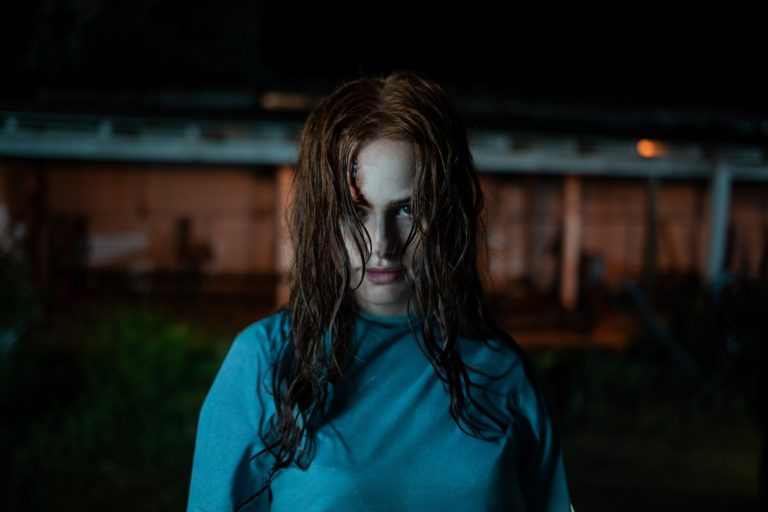
Madelaine Petsch as Maya in The Strangers — Chapter 2. Photo Credit: Courtesy of Lionsgate
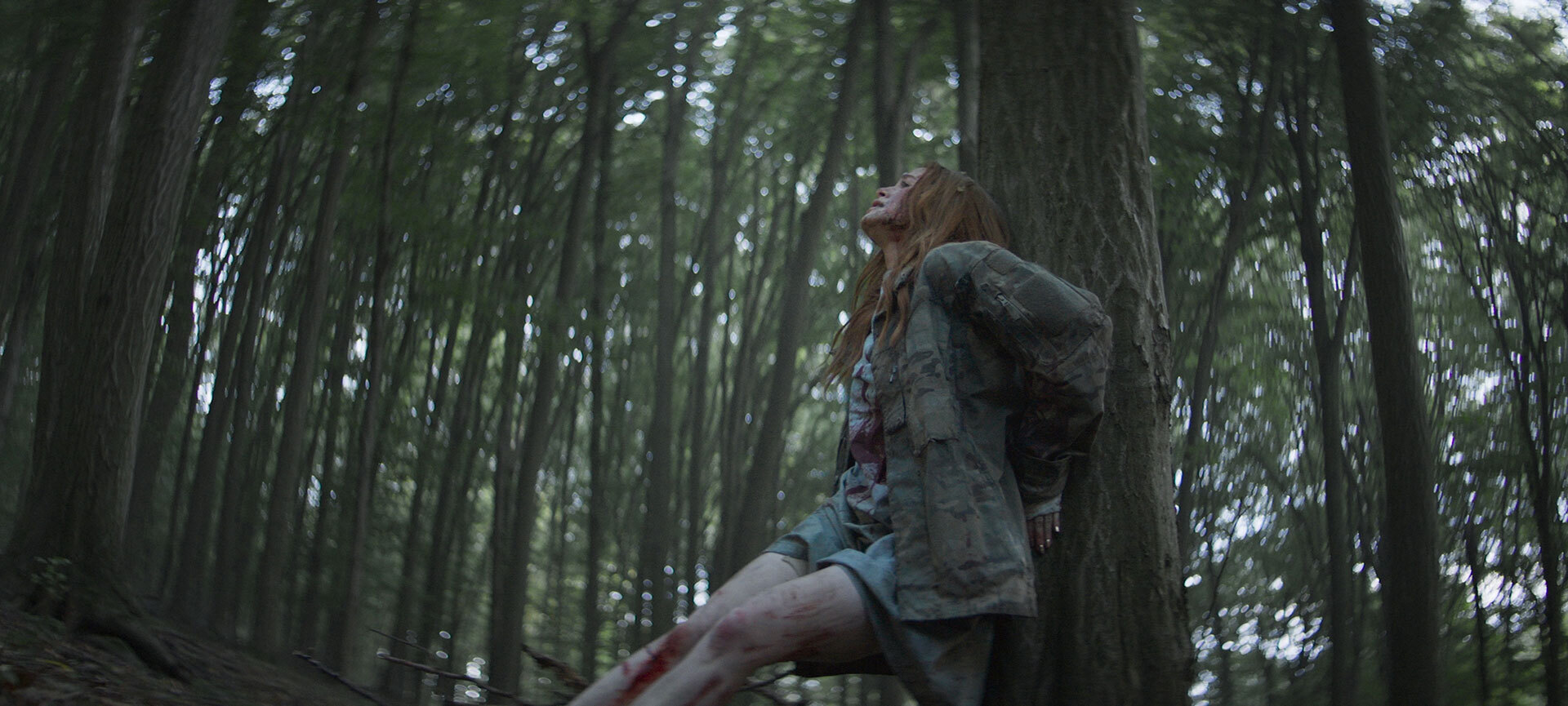
After a series of recap flashbacks, Chapter 2 starts with Maya (Madelaine Petsch), the sole survivor of the attack from the first chapter. She’s hospitalized and still reeling over the loss of her fiancé at the hands of the three masked individuals known as The Strangers. As Maya comes to her bearings and Sheriff Rotter (Richard Brake) begins the hunt for these masked killers, The Strangers, of course, come back to finish what they started and kill Maya. What follows is essentially a 90-minute-long chase sequence through hospitals, roads, and even the forest, as Maya begins a battle of survival against these masked figures. Conceptually, a movie fully acting as an entire chase scene full of suspenseful setups isn’t a bad concept, especially when you have a performer as committed as Petsch is within the film as really the movie’s singular positive element; the problem, however, lies in the lack of anything innovative or remotely scary on every front. Every jumpscare, move with the camera, or kill couldn’t be more lacking. For something that’s R-rated, there is absolutely no teeth to be found in any kills the film more than anything cuts away from the violence we’d like to see rather than opting for any stylistic flare.
While the film is in this mode, more often than not, absolutely nothing of substance is happening on the screen. The movie just repeats these tired beats of absolutely contrived nothingness until we reach an apex of it within a scene so incredibly baffling that it will leave most watching in unintended laughter. Director Renny Harlin isn’t completely void of talent, so the absolute lifelessness happening every minute on screen is completely bewildering.
Madelaine Petsch as Maya in The Strangers — Chapter 2. Photo Credit: Courtesy of Lionsgate
Even with all these issues, the defining death knell for this second chapter is their attempt at a backstory for The Strangers. Almost anyone who enjoyed those first two films, back in 2008 and 2018, respectively, could tell you that the reason why The Strangers felt so eerie was because we knew very little about them. These three masked individuals murder just because they want to make so much more of a terrifying presence, even if the films they reside in are not groundbreaking, so trying to give them a motive or origin story isn’t just unnecessary, but it quite literally misses the entire point of the existence of this franchise. On top of it all, the backstory itself is the most stupid explanation for things like “Is Tamara Here?” or The Stranger’s little creepy smiley-faced art imaginable; it’s all completely useless.
I haven’t walked out of a movie theater as fast as I did with The Strangers: Chapter 2 in a long while. It’s an absolutely airless film that serves no useful function as an addition to the franchise or the horror genre in general. This second chapter doesn’t even feel like a movie, just 90 minutes of predictable chases and random occurrences that go nowhere, leading to an unsatisfying experience that ultimately results in the most ‘nothing’ you will have with a film this year.
Director:Kelly Reichardt Writer: Kelly Reichardt Stars: Josh O’Connor, Sterling Thompson, Alana Haim
Synopsis: In 1970, Mooney and two cohorts wander into a museum in broad daylight and steal four paintings. When holding onto the art proves more difficult than stealing them, Mooney is relegated to a life on the run.
Kelly Reichardt often tells stories about outsiders—people at different points in time and across various states in America—who live on the fringes of society. The characters she writes are lonely, facing emotional and psychological hardships that hinder their lives from further displacement. As the world moves around them, they remain adrift, disconnected from reality. In most cases, it isn’t their fault. The injustices of the world around them construct their circumstances. Reichardt finds a way for the viewer to understand and dissect the characters and their respective situations through her usual quiet observation and breathing spaces–allowing room for empathy and compassion during their struggles. Her last two features, First Cow and Showing Up, feature outsiders in an artistic and commercial context, with Reichardt also exploring the value of the creative process and those who shape the person you are.
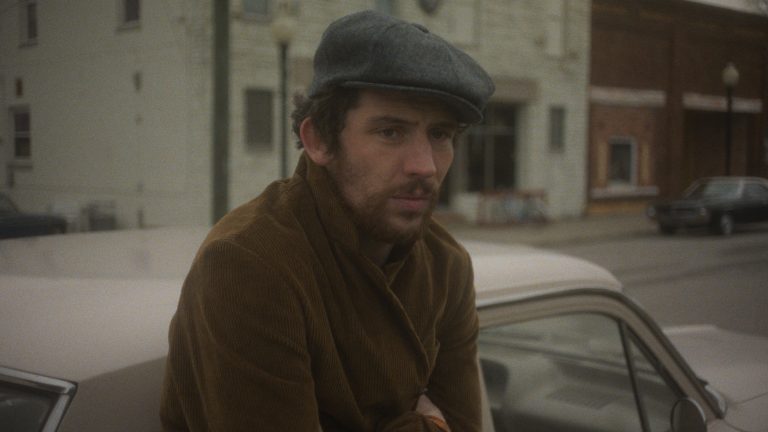
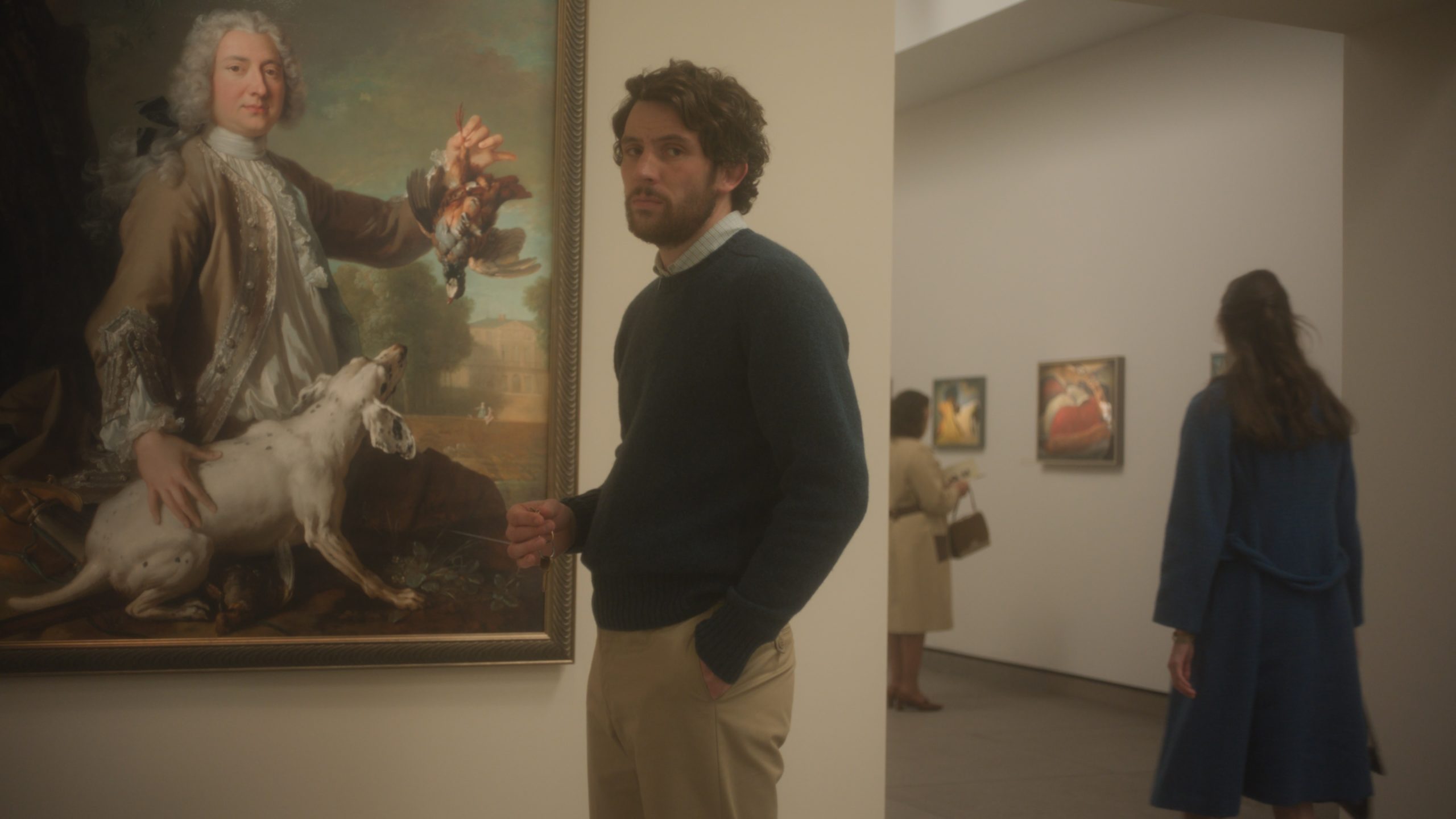
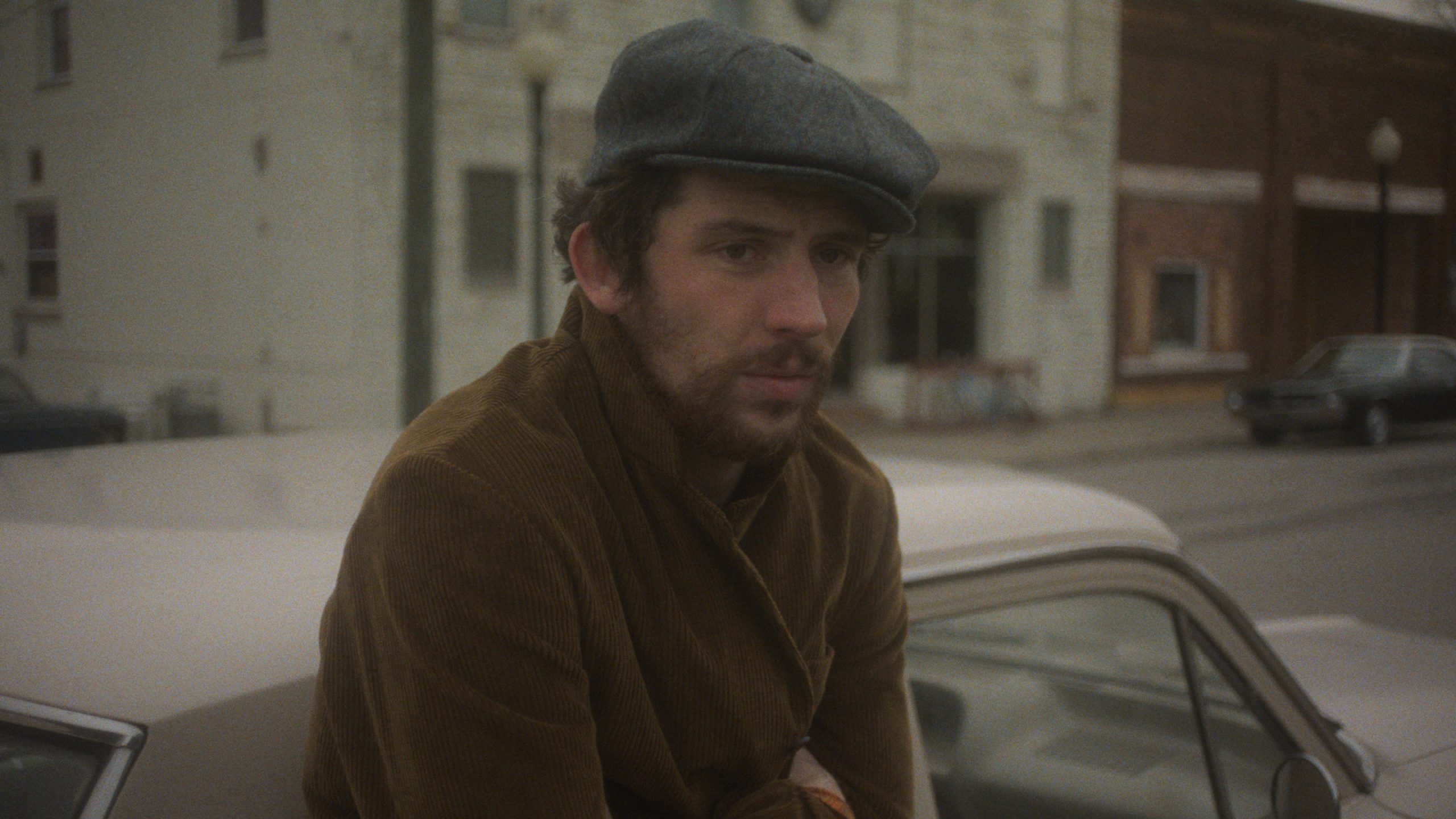
The Mastermind (screening at the 2025 New York Film Festival in the Main Slate) is another entry into that dissection of art and life intertwined, yet without the sympathetic note that accompanied the aforementioned. It is colder and with a character that is hard to root for, as Josh O’Connor’s James Blaine, or J.B., is a schemy and selfish fellow. But his worries and anguish, alongside the root cause of his egocentrism, strike a chord with the viewer. This is her version of a heist picture, rid of flash–but with a jazzy score by Rob Mazurek–and less talky, although tricky and with moments of tension. Amidst this “slight” change of genre, Reichardt remains her contemplative and acute self with many notions about the feeling of unfulfillment in life and the hunger for change in a crumbling society post-Vietnam war.
James Blaine is a father of two sons (Sterling and Jasper Thompson) and husband to Terri (Alana Haim, finally in a film after her excellent turn in Paul Thomas Anderson’s Licorice Pizza). In their family gatherings and outings, Blaine wanders about without aim, while the rest of them enjoy their time together. He’s quite a mysterious person, who thinks plenty but does not express his mind as often as he could. O’Connor is no stranger to playing characters who are adrift, seen primarily in Alice Rohrwacher’s excellent La Chimera. The difference between his character there and in Reichardt’s film is that in the former, he has a goal in mind, a person he seeks out to reach any means possible. Meanwhile, in the latter, there is little vision.
Blaine does not know where he’s headed and is not bothered by it at all. This aligns with Reichardt’s array of lonely souls traversing America’s outskirts, yet Blaine has a look in his eyes that expels an internal wounding that doesn’t seem to heal. In one outing to the Framingham Museum of Art, Blaine steps away from his family for a while, and something drives him to steal an ancient totem from an installation and place it in his glasses case. The petty thief does not stop there. When he notices that it was too easy, and security wasn’t tight, he hatches a plan to steal a couple of paintings by Arthur Dove, with a team forged by loaned money from his mother (Hope Davis).
Reichardt gives you some of the heist movie sensibilities during the first section of The Mastermind, not to get it out of the way, but because it isn’t her focus or goal to delve into these conventions in any regard. She wants to explore more about what happens after these events, the mental states and consequences that occur once the deed is done. Blaine sacrifices everything–his livelihood, loving family, and freedom–for his selfish, vague reasons that he can’t seem to come up with an answer for. The few people in his life often ask him about why he did what he did, some more sympathetic than others. However, Blaine does not offer insight; it remains internal.
O’Connor bolsters that internal struggle to give the goalless character he portrays some life, even in the moments where it seems that he is a completely lost soul. That is Reichardt’s trademark in her characters: lonely souls scavenging the world for meaning and connection. However, Blaine differs from the rest because he isn’t given a resolution, or at least the one the audience expects. Blaine believes he is meant for greater things, but he feels stuck in an endless cycle of something impeding his progress, which is one reason for his behavior. It does not justify him, but desolation has stripped away the love and joy he once knew–the years that precede the events of The Mastermind. The early 1970s saw a social upheaval, marked by disillusionment and trauma for many Americans.
Distrust in the government created even greater helplessness, making it difficult to adjust to this new world and succumbing to collective sorrow. That is where Blaine’s mental state lies, right in the middle of it all, feeling the weight of that piercing feebleness economically and psychologically. In a single glance, you see Blaine’s shallow vessel of a soul; there is no drive, no desires in the man’s heart. Even when you see him interacting with people, you can’t seem to sense Blaine, almost as if he were turning into a shadow of his own self. And in today’s society, with everything seemingly going downhill one year after the next, you recognize that person–man, woman, parent, teacher, student, etc.–all wondering what is next and if it will get worse for all of us.
This drives them to self-interested propositions and inquiries, where ideals must serve one’s own interests; if not, they can be compromised. It is tragic; Blaine is one of the most sorrowful characters that Reichardt has ever created. You don’t want to be near Blaine and his selfishness, yet you feel that you have seen that person before. Reichardt does not offer him clarity, but instead leaves us with the haunting reminder that his emptiness is not unique. It is a reflection of a broader despair that continues to echo in our own time. The Mastermind begins as a distinct take on the heist picture, and evolves into an exploration of a collective mentality from the past that makes its way into the present.
Director:Hong Sang-soo Writer: Hong Sang-soo Stars: Kwon Hae-hyo, Park Mi-so, Ha Seong-guk
Synopsis: A young poet drops his girlfriend off at her parents’ house and is amazed by its size. He bumps into her father, meets her mother and sister, and they all end up spending a long day together; fueled by conversation, food and libations.
Hong Sang-soo, one of the hardest-working directors today, has spent the past decade delivering one film after another–sometimes even presenting two pictures at festivals in the same year–without the quality diminishing in the slightest. How does he do it? I’m not sure, but I am glad that he continues to bring us these gems year after year. Look at his work from afar. You might think that his storytelling method is minimalist and straightforward, relying on many scenes where characters converse in cafes, apartments, restaurants, or bars. However, upon closer examination, you see all the details and intricacies that Sang-soo incorporates into his stories and characters, resulting in rich experiments that depict domestic life in South Korea from various angles. Each time around, there’s something different lingering in his stylistic approach.
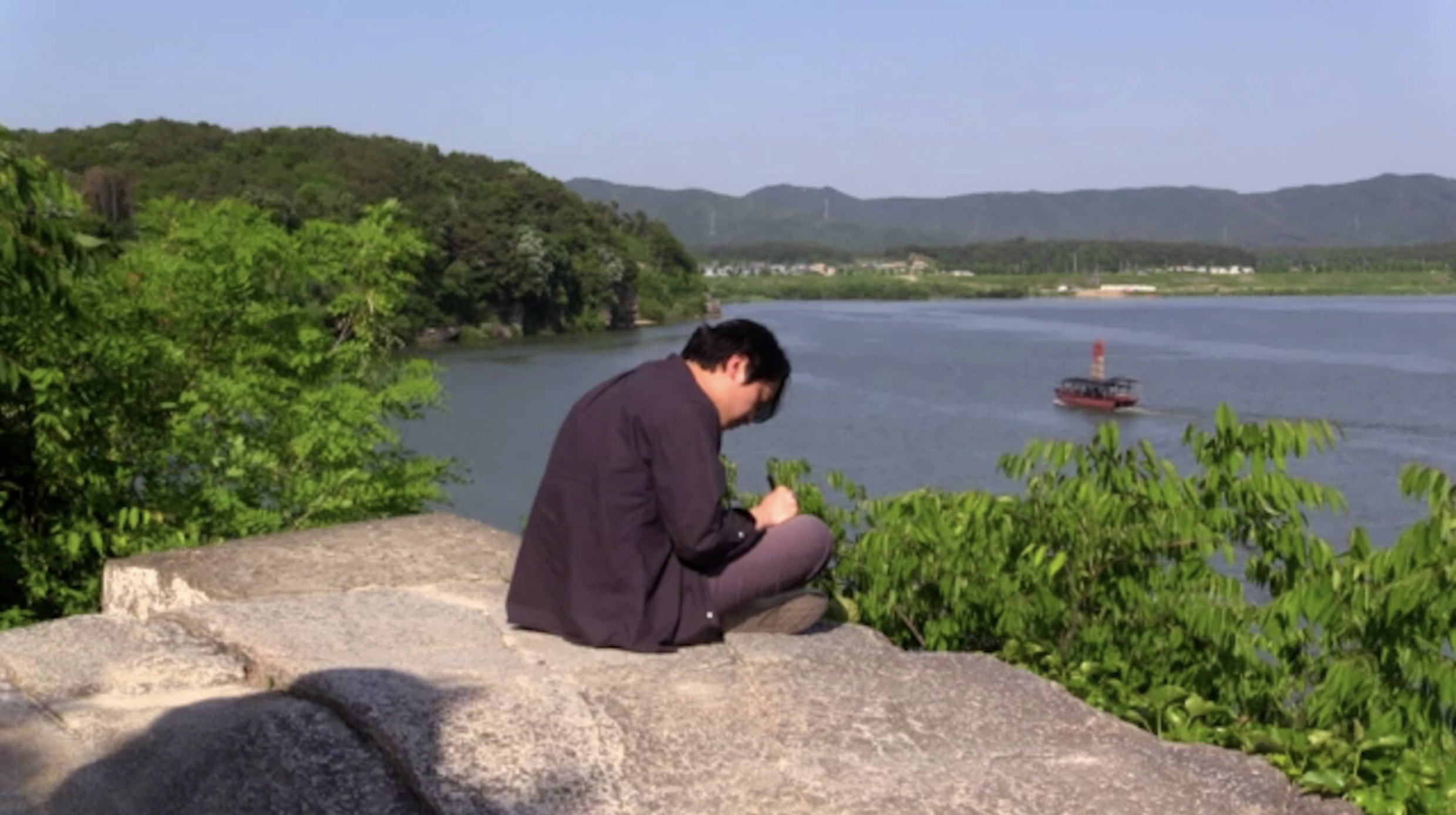
In a way, he is this generation’s Eric Rohmer, a director who ventures into realism through the mundanity of life and a series of conveniences, yet with beautiful and truthful touches in the dialogue, which makes the stories have their magical spark. Much like Rohmer, Sang-soo is thematically consistent and has a set storytelling structure, yet remains non-repetitive. As the years have gone by, Sang-soo’s work has become more personal, implementing real-life happenings into his stories: an actress and a film director meeting by chance in The Novelist’s Film, the reflection of what it means to create art in By the Stream, or the blurry lens of In Water, meant to reflect the South Korean director’s slowly declining vision. His most recent work, What Does That Nature Say to You (screening at the 2025 New York Film Festival in the Main Slate), is no departure from his late-career self-reflection and autobiographical storytelling.
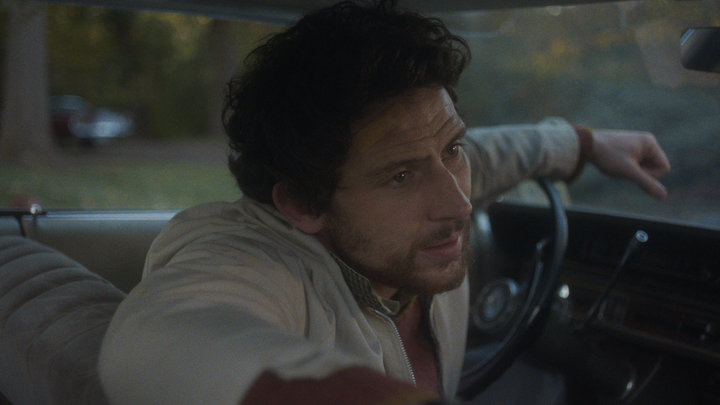
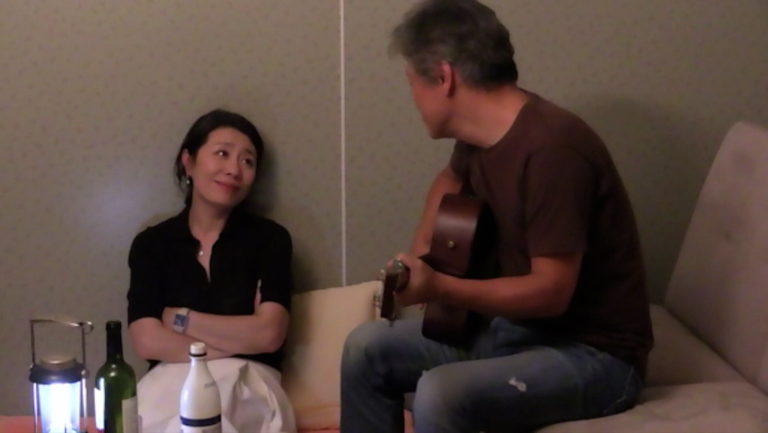
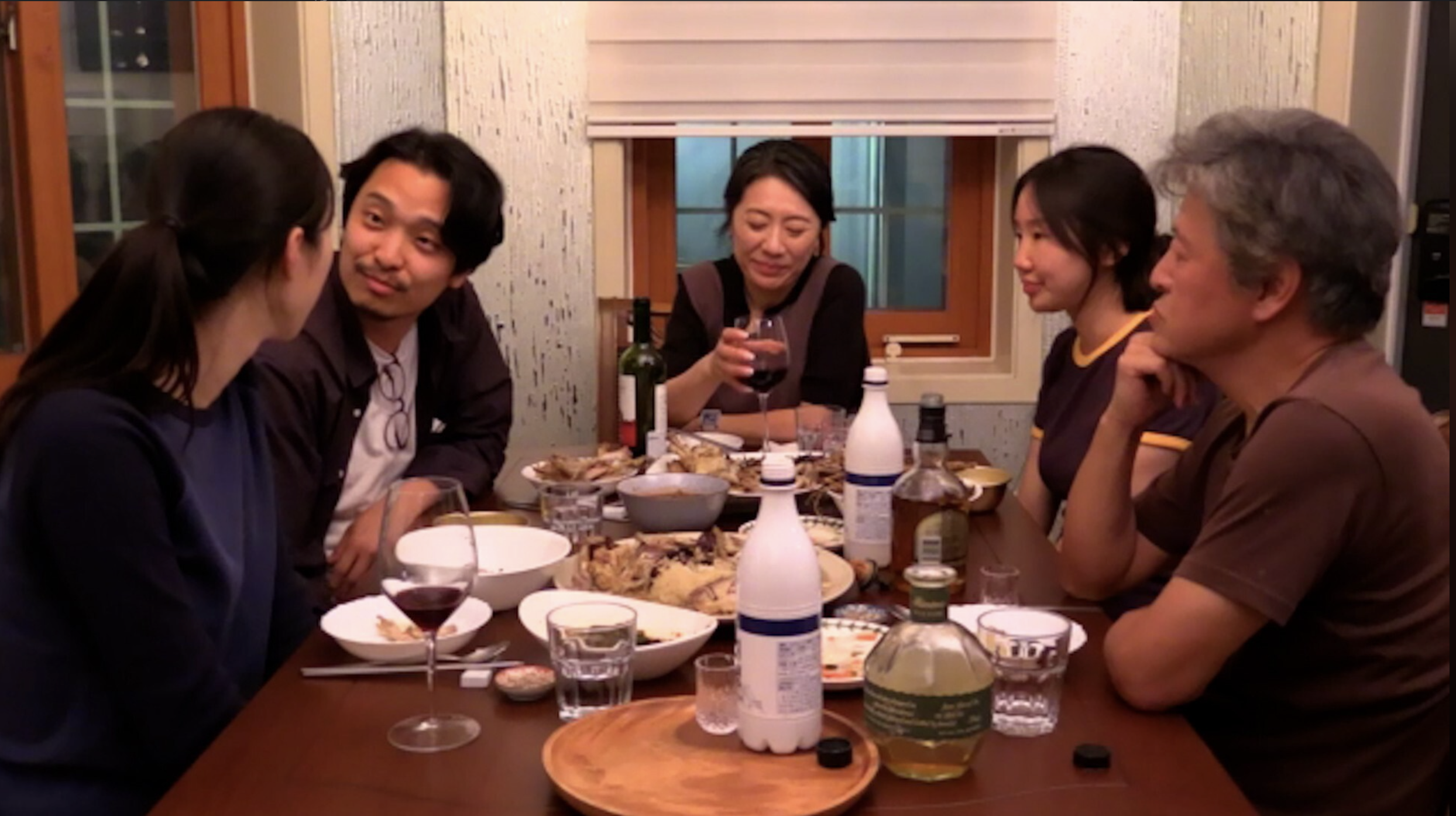
What Does That Nature Say to You is about acceptance, with a comedic tone in some moments and tense in others, from the discomfort of Sang-soo’s blunt honesty. The tonal balance might take you off guard at first, but Sang-soo smooths it out nicely to create a touching examination of the family dynamic. We follow a young couple, Ha Dong-hwa (Ha Seong-guk) and Kim Jun-hee (Kang So-yi), who have been dating for a couple of months and live a simple life. Even though they have been together for quite a while, Dong-hwa has never met Jun-hee’s parents. The story begins on the day of his first encounter, where Dong-hwa converses with and later confronts her family. The first family member he meets is her father, Kim O-ryeong (Kwon Hae-hyo), whom he unexpectedly encounters while driving Jun-hee back home.
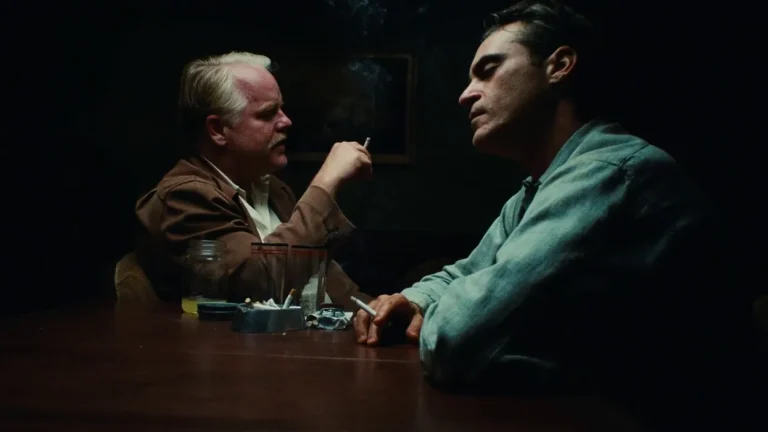
Kim invites Dong-hwa to dinner, which he accepts, albeit with a hint of reluctance in his tone. This begins a series of scenarios that will force Dong-hwa to face up to the secrets behind his wealthy family, ideals, and life decisions. As Dong-hwa meets the rest of Jun-hee’s family, her mother Choi Sun-hee (Cho Sun-hee) and sister Kim Neung-hee (Park Mi-so), between cigarettes and drinks, Hong Sang-soo’s usual conversation starters, things shift from smooth sailing to contentious, awry waters, with a bottle of bourbon being the catalyst for the mood changes at dinner. The conversations that arise are intended for Jun-hee’s family to learn more about Dong-hwa. Mostly, it comes across as scrutiny and judgment. This gives way to tension with each word spoken, with light touches of comedy interspersed here and there. Sang–soo’s expertise in balancing seriousness with occasional breeziness shines through.
As the drinks flow, it becomes clear that Dong-hwa’s comfortable life is less idyllic than he first claimed. Some of his expressions contain a hint of fallacy, amounting to small white lies that subtly alter how others perceive him. The slightness of Sang-soo’s previous pictures dwindles upon the confrontations by Jun-hee’s family, which are, as it goes, for the means of finding an identity for Dong-hwa. Is it the one he wants or the one that Jun-hee’s family envisions for him? Not only is his mental state explored in these talks about famous fathers, art, and poetry (with a recital of one of Dong-hwa’s many unpublished works), ways of life, and acceptance of a person’s decisions, but the rest of the family has themselves tied up in this tricky web rooted in dialogue and understanding, or the lack thereof.
They put their own perspective on his situation and lifestyle, responding first with skepticism and later sympathy, with a closing segment that is superbly crafted and carefully observed. It becomes clear that these characters are all, in some way, inspired by Sang-soo’s own experiences–the talk circles around a singular topic for a long time, like a recurring memory the director can’t shake. On a personal level, What Does That Nature Say to You also employs the low-res, blurry lens that In Water contained. While the 2023 film utilized it to depict the world as Sang-soo sees it, this latest one has the South Korean director showing you how he sees the character of Dong-hwa, an adrift soul whose ignorance and creativity take him through the woes of adulthood. The hazy aesthetic only mirrors its thematic weight. Sang-soo refuses to provide clarity where life itself does not. Identity is never fixed, but constantly shifts. Our desires might shape it, but those around us do forge a significant part of it. It is in this understanding at the finale that Sang-soo offers his touching way into the complexities of understanding those around us.
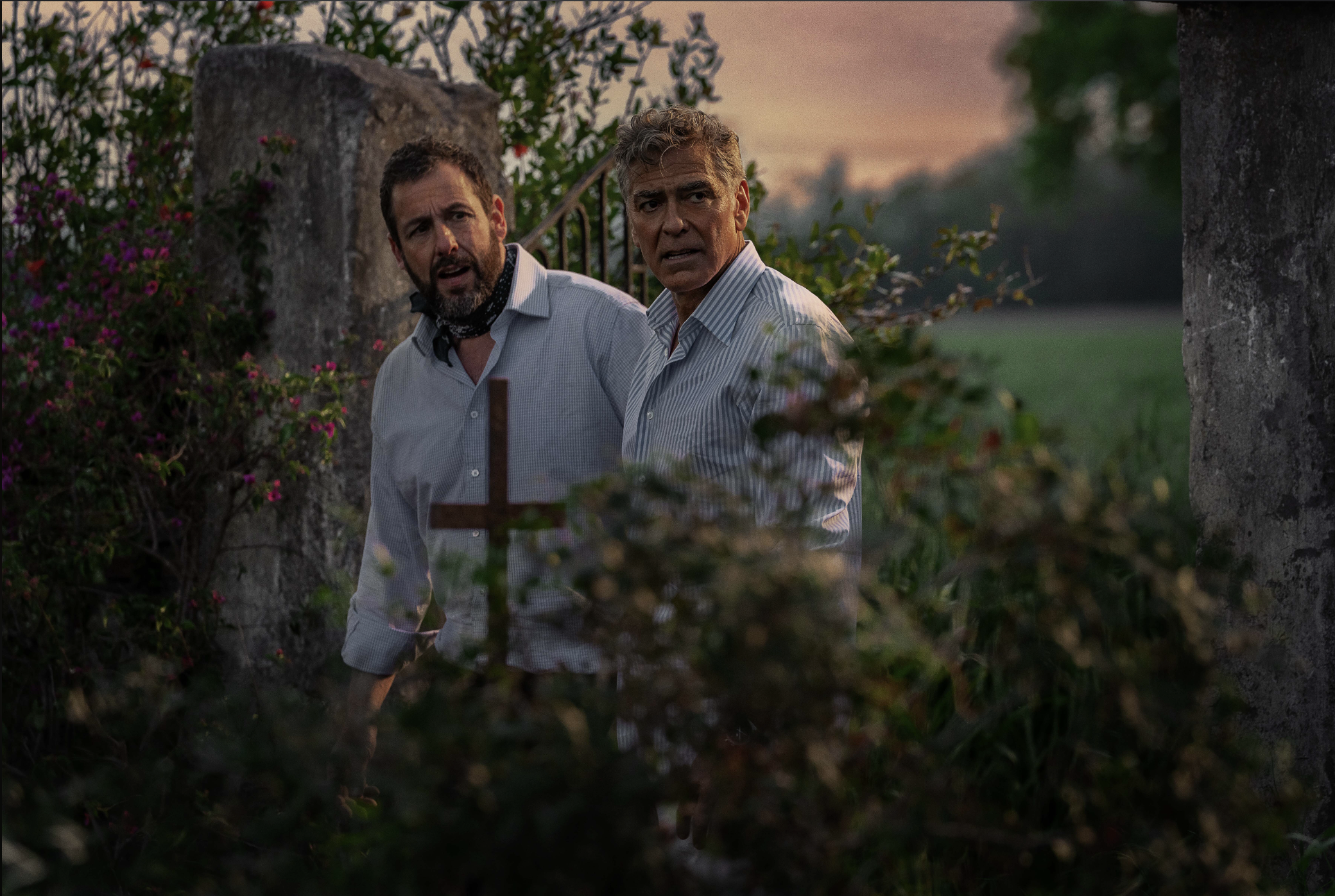
Director: Noah Baumbach Writer: Noah Baumbach, Emily Mortimer Stars: George Clooney, Adam Sandler, Laura Dern
Synopsis: Famous movie actor Jay Kelly embarks on a journey of self-discovery, confronting his past and present with his devoted manager Ron. Poignant and humor-filled, pitched at the intersection of regrets and glories.
There have been many cinematic portraits of artists who have sacrificed a great deal to achieve the successful life they’ve attained through their work. These lives come with a significant amount of burdens that can drown the soul of the artist as they age. Yes, riches and fame are all there, but at what cost? A legacy for a heart. In Billy Wilder’s Sunset Boulevard, we witness the tragic fate of silent film star Norma Desmond (Gloria Swanson), whose career has faded due to the introduction of sound into motion pictures. She tries to exploit a young writer for a role that can revive her career–have the opportunity to shine in the medium’s evolution–but the Hollywood ruthless machine, obsessed with young faces, which serves as commodities until they are worthless, drives her to self-destruction and severe obsession.
Another example is All That Jazz, the semi-autobiographical musical by Bob Fosse, which utilizes the director’s own experiences to tell a story about the addictive nature of show business, mortality, and the struggle to cling to what’s slipping away – love, family, health, fame, and career. Through surrealist musical numbers and personal elements, Fosse uncovers his fears, motivations, and worries, culminating with a damning tune that’s memorable (and catchy) as it is haunting. What these films, and other noteworthy examples like Stardust Memories and Pain and Glory, have in common is the sincerity and honesty that lies beneath the fiction, taken from real emotions and experiences. You can’t have a story that chronicles a person’s late-stage grievances without that candor which arises from the sacrifices done for, or by, art in any sense. That key facet is missing from the latest legacy portrait, Noah Baumbach’s Jay Kelly (screening at the 2025 New York Film Festival in the Main Slate).
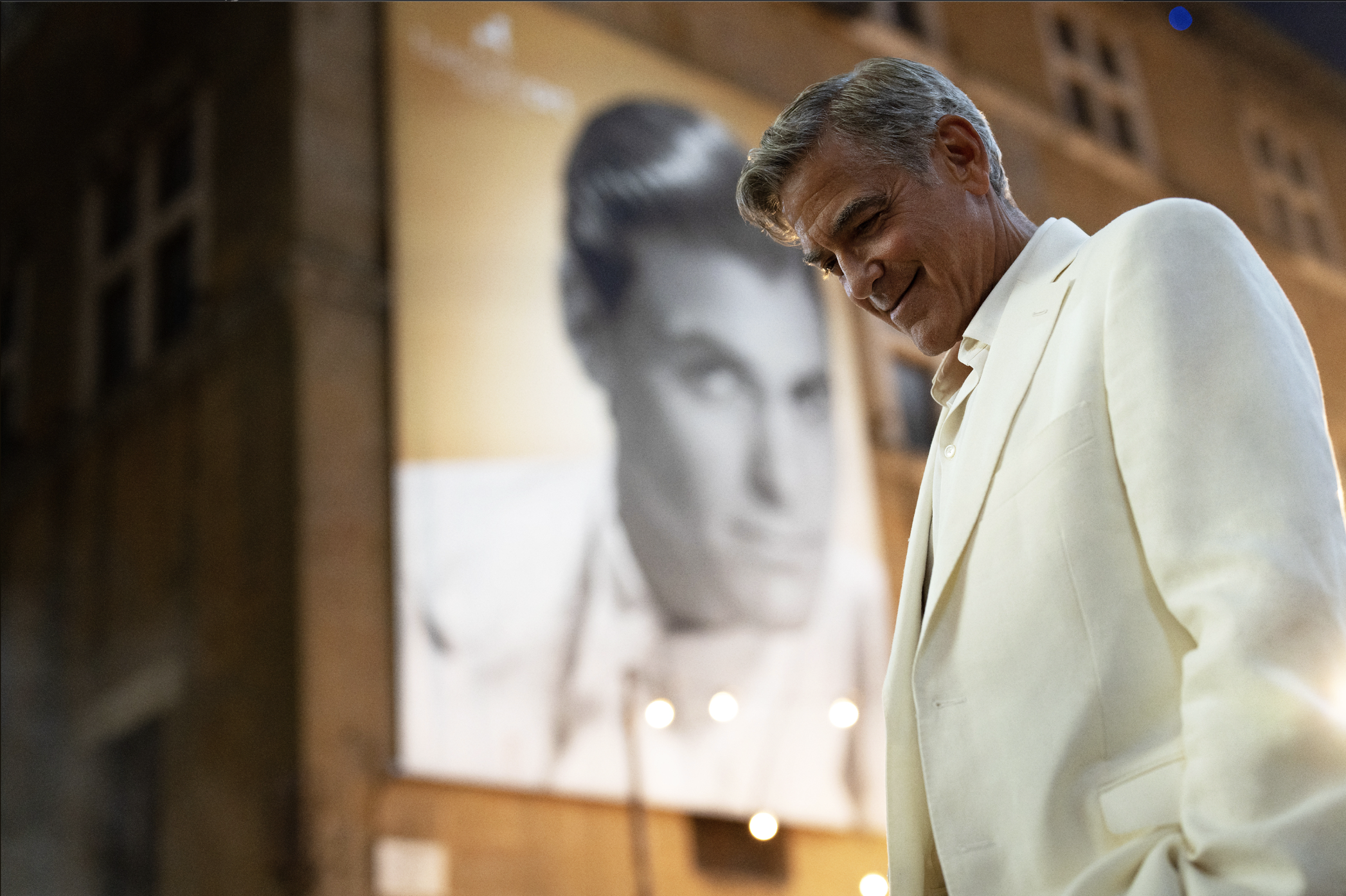
In the aforementioned film, Noah Baumbach attempts a similar approach. He uses George Clooney’s public image as an A-list movie star and storied career as a gateway for a reflection on the costs of stardom and the shadows cast by a life lived in front of the camera. At the same time, it wants to honor Clooney and all of his on-screen achievements, most evident in a tribute scene that features clips from Clooney’s films and cuts to the audience wiping away tears. This dishonest and manipulative move greatly irritates in its attempt to elicit an emotional response. However, unlike Fosse’s raw confrontation of his own demons or Wilder’s dissection of the delusions of grandeur and sharp critique of the Hollywood system, Baumbach’s film struggles to locate that same emotional truth beneath the surface of fiction. The established legacy of a class act and concept is there, but the heartbeat that makes such portraits resonate remains elusive, leaving an experience that often feels egotistical.
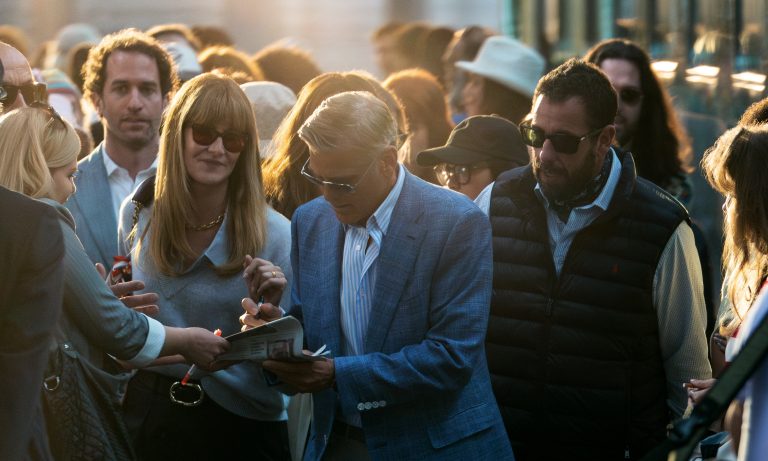
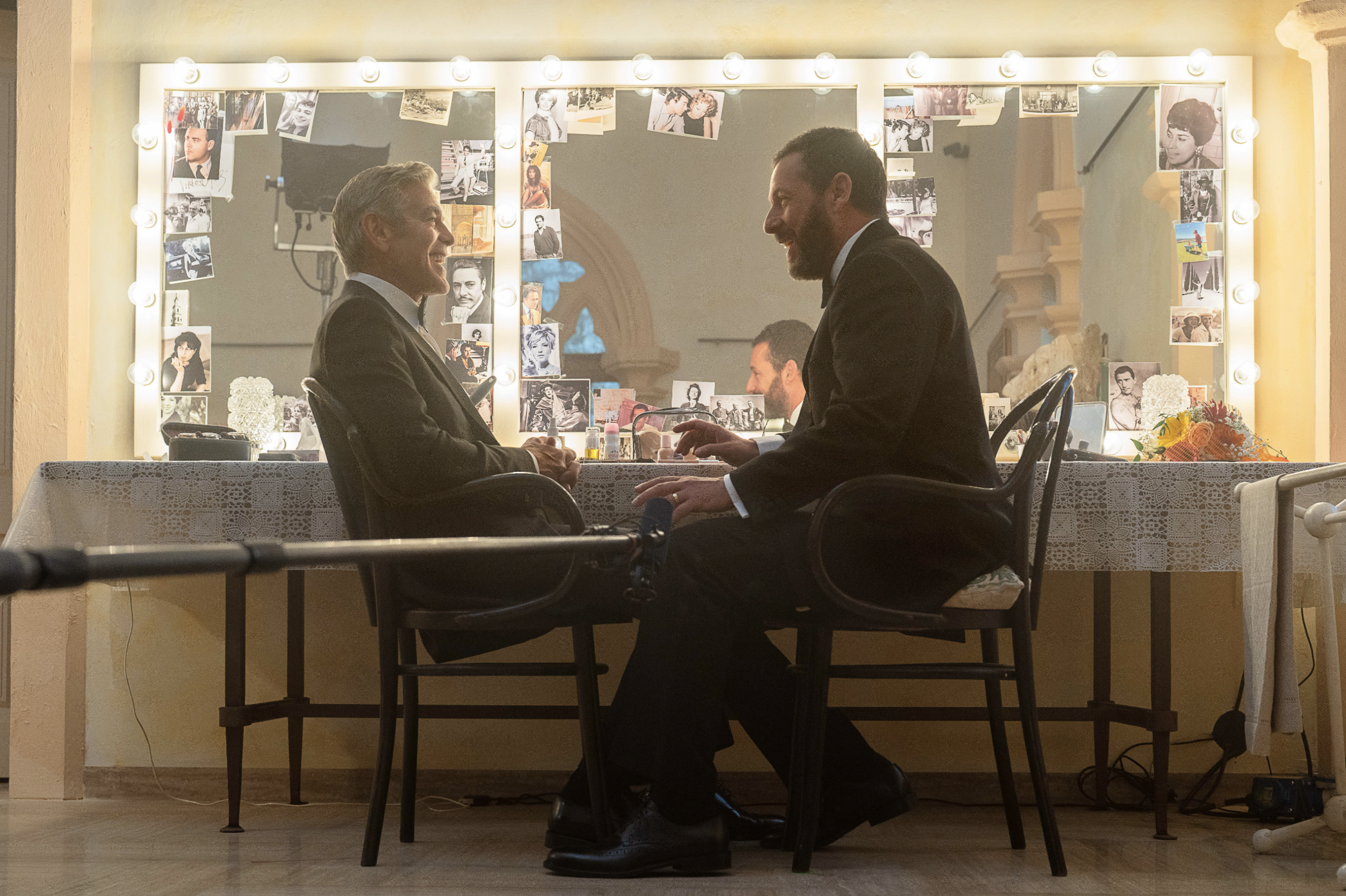
George Clooney is Jay Kelly, a renowned movie star who has graced the screen with numerous classics that audiences worldwide love and adore. He is, in the film’s universe, in the heights of James Stewart, Steve McQueen, and Marlon Brando–the stature of the greats, an actor who defines a generation. Kelly is about to film his next motion picture when he gets the notice that the director who gave him his first break has passed. Melancholy and nostalgia begin to consume the man as he looks back to a life long gone, or what could have been. At the funeral, Kelly comes across the thought that he must give more of his time to the people he loves before it’s too late. So, he packs his bags and rounds up his rag-tag team of associates–manager Ron (Adam Sandler), publicist Liz (Laura Dern), hairstylists, make-up artists, and other crew members–to find his estranged daughter, Daisy (Grace Edwards), who has been backpacking through Europe. He uses his career award ceremony at a film festival in Tuscany as an excuse for the encounter.
There are more than a handful of moments in Jay Kelly where we see the titular character trying to confront his reality, feeling burdened by the grievances of missed time and opportunities. Of course, he has everything he’s ever wished for; the thousand-dollar suits and watches provide a glimpse into the many riches he’s attained that none of us could ever afford. Yet, what has been taken from him comes from within. His soul is tainted and his heart broken. This multi-million-dollar life is just a facade, every gift matched by an equal loss. As Kelly tries to reach out for his daughter’s connection, Baumbach and co-writer Emily Mortimer avoid any real self-realization and reflection. When you think the film will finally give us a way into the broken man, it shies away from the darker and more confrontational, personal territories in exchange for overly dramatic and comedic dialogue, and no actual repercussions.
During the film’s runtime, I had one question in mind: Why should I care about Jay Kelly, the famed actor? I spent the entire duration of the film trying to come up with an answer, yet never could. After a few days, I finally have an answer: I shouldn’t–because it is a disingenuous and romanticized portrait of false grievances from the privileged one percent. The film insists on sympathy for a man cushioned by wealth and adoration. Baumbach and Mortimer never present Kelly with any deeply existential or reflective scenario that prompts him to reflect on his life decisions; it is all contemplative window shopping. Kelly isn’t painted as troubled or a bad guy. He is just confronted with a few tame foibles, which have already been explored in other (and better) pictures. The reunion with his estranged daughter. The hope that his father will finally see the worth of his acting career, which he was against him pursuing. A discussion with the man in which Kelly stole his breakout role keeps perturbing him.
These are troubling issues that, if properly dissected, could yield some interesting insights into the actor-father double role and Clooney’s own thoughts on the Hollywood non-stop treadmill. However, in Jay Kelly, they are seen through a glossy, advantaged lens that distances me from the story being told. On a few occasions, Baumbach makes a point of this detachment, as most of Kelly’s crew are somewhat annoyed by him and his uberrich demeanor. He creates debacles within the close circle through the characters of Adam Sandler and Laura Dern, the only two grounded characters in the bunch. The former is saddened that Kelly views him as a commodity, rather than a friend, even though they’ve spent decades together working to elevate the actor’s career to the top. This angle is the key to clawing into the griminess and arrogance of a person who has it all, except proper connection. Nevertheless, like the rest of the interesting ideas in the film, they are dismissed to honor Clooney’s career or ease up the tension by having moments of levity.
A few years ago, Alejandro González Iñárritu released Bardo, False Chronicle of a Handful of Truths, to a very hostile reception, to the point where the Mexican filmmaker had to re-edit the picture before its theatrical release. Personally, I’m not fond of Iñárritu. In fact, I despise most of his pictures, except his excellent feature debut, Amores Perros. But I adored Bardo, which caught me by surprise. The film is a self-portrait of the artist and documentary director Silverio Gama (Daniel Giménez Cacho), exploring his struggles with the balance between life and art. It explores his Mexican identity, with which he struggles the most to find his place in the world after many years away from his native country and living in America, where he has never dealt with the issues that have arisen during his absence, all of which are the subject of his work.
I felt that, for the first time, in a lengthy career filled with pretentious and disingenuous works, Iñárritu was being truthful. Iñárritu was speaking his mind, body, and soul out rather than preaching to the choir. It still had some pretentiousness as garnish, and it was narcissistic in some parts. Yet it was bracingly honest, even brutal. The issues tackled in Bardo are rooted in real-life grievances and things that truly hinder Iñárritu’s daily living. Many Spanish-speaking viewers connected with that film deeply. The opposite has happened to Baumbach. After many years of delivering sincere and emotional works, not all of which have been successful yet forthright, such as Marriage Story and Frances Ha, he responds to a career overview and dissection with a faux response.
Baumbach wants to celebrate Clooney while exploring the wounds of Jay Kelly. In attempting to do both simultaneously and sporadically, when it is convenient, Baumbach creates a contradiction–half-tribute, half-confession–that collapses into shallow self-adoration. The goal with Jay Kelly was to be empathetic with character and understand how isolated, even through wealth, the life of a movie star can be. Jay Kelly fails miserably because Baumbach wants to graft the struggles of genuinely tormented artists onto someone like Kelly, who’s insulated by privilege. This undermines the authenticity of the portrait in every way possible, and no empathy is shown towards the subject at the center.
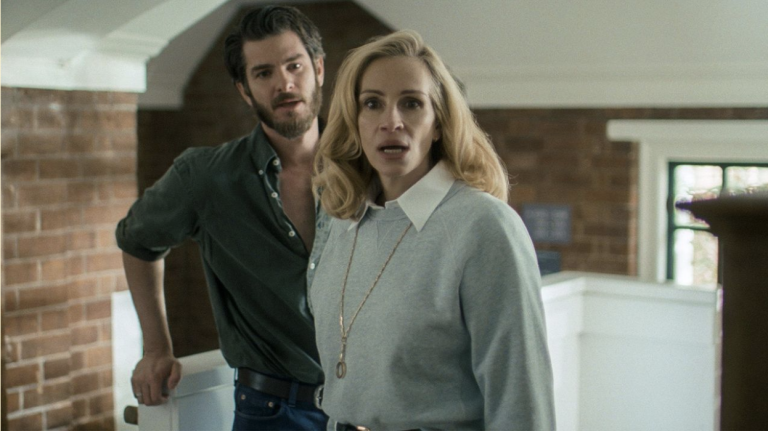
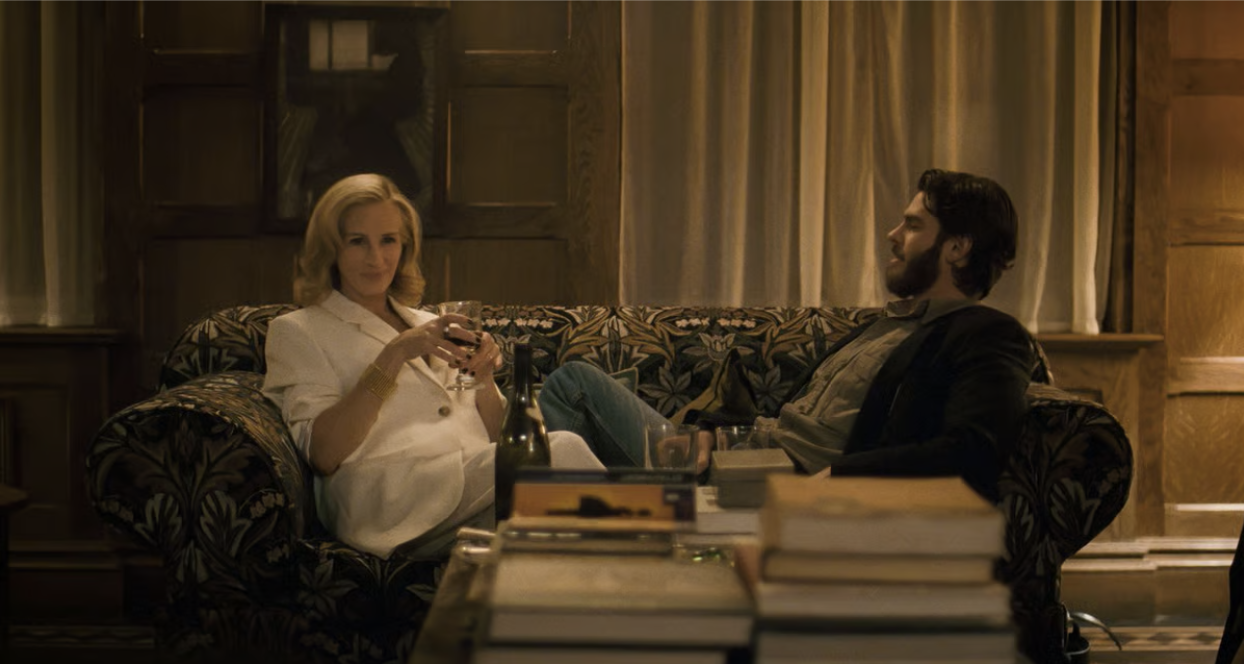
Director:Luca Guadagnino Writer: Nora Garrett Stars: Julia Roberts, Ayo Edibiri, Andrew Garfield, Michael Stuhlbarg, Chloë Sevigny
Synopsis:A college professor finds herself at a personal and professional crossroad when a star student levels an accusation against one of her colleagues, threatening to expose a dark secret from her own past.
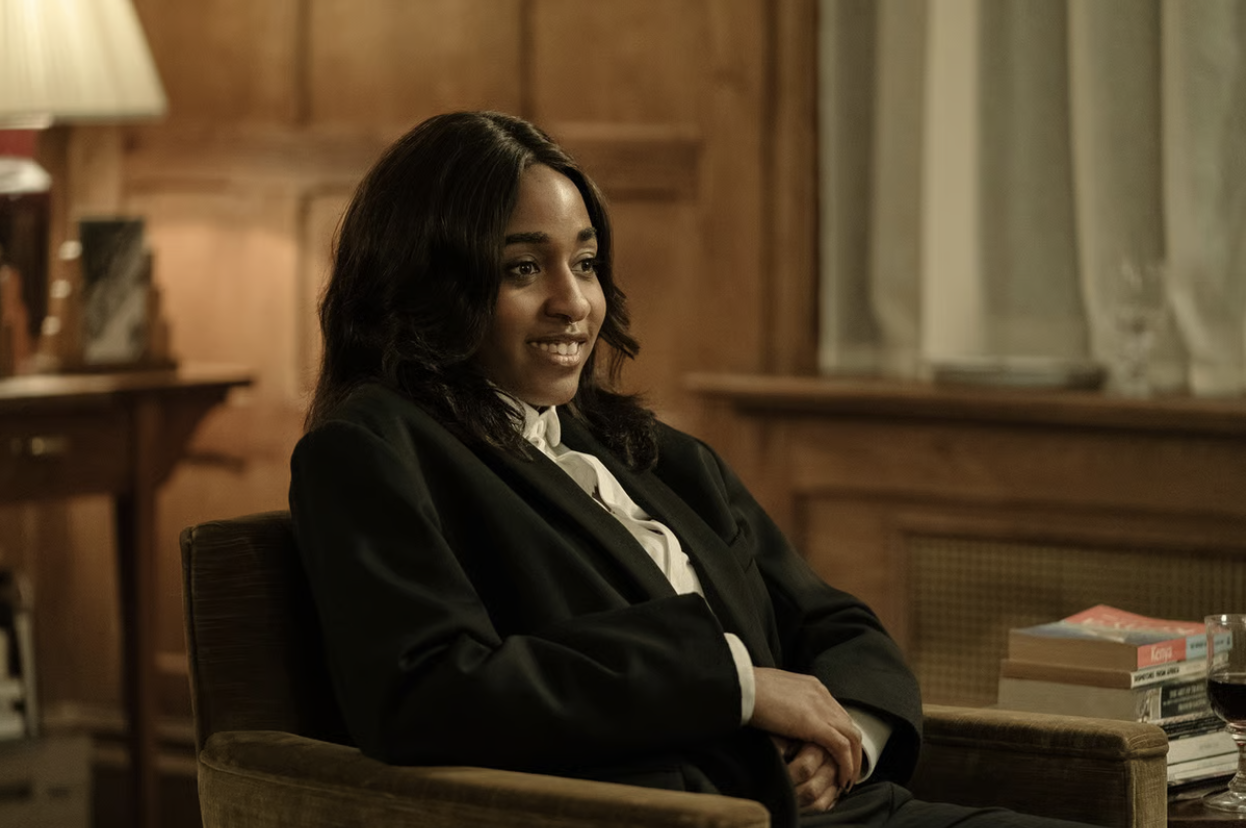
Post-screening press conferences tend to be a mixed bag – a mishigas, if you will, to steal a term that Andrew Garfield used to describe the many conversational aspects about the films of Luca Guadagnino, particularly the one he co-stars in and is speaking about on this particular afternoon on Manhattan’s Upper West Side. Gathered in Film at Lincoln Center’s Walter Reade Theater, the home for Friday’s press and industry screening of the 63rd New York Film Festival’s Opening Night selection, After the Hunt, are Guadagnino, his screenwriter, Nora Garrett, and the principal players in his new film’s cast. Garfield is just one of the few; to Guadagnino’s left is Julia Roberts, and to Garfield’s sits Ayo Edibiri, and to hers, Michael Stuhlbarg. Somehow or some way, this press conference keeps coming back to the idea of provocation. Theoretically, it’s a fitting topic when it comes to After the Hunt, a glossy drama that centers on the fallout over a campus scandal involving a high-profile PhD candidate (Edibiri’s Maggie Resnick) and one of the philosophy department’s most beloved professors, Garfield’s Hank Gibson. “it happened at Yale,” lowercase “it” and all, reads the film’s opening text, though the “happened” isn’t solely referring to the sexual assault that Maggie has accused Hank of committing. As the audience came to learn as the film unfolded, what “happened” also points at the effects these allegations have had on Maggie’s relationship with her mentor, Alma Imhoff (Roberts), a revered member of the philosophy faculty who is up for tenure; the impact the incident has had on Alma’s marriage to Frederik (Stuhlbarg) and her friendship with Dr. Kim Sayers (Chloë Sevigny), the university’s psychiatrist; and Alma’s status at the school overall.
After the Hunt. Courtesy of Amazon MGM Studios.
Everything here, it stands to reason, is cause for provocation, and the cast and crew are willing to talk. “He’s a provocateur in a lot of ways, and I think he’s very conscious of what he’s doing a lot of the time, and deeply unconscious of what he’s doing a lot of the time as well,” Garfield shared. “[Guadagnino] wants all of your nuance, all of your humanity, no matter how dignified or undignified it is.” A bit later in the discussion, after this idea has been raised again, the filmmaker felt the need, albeit jokingly, to defend himself: “I think I’m a kind guy,” he mumbled, receiving a healthy supply of laughs that only a beloved filmmaker could receive, and are a part of the typical standard operating procedure at festival Q&As. “I don’t like to scandalize for the sake of it,” he noted. “I think that’s a little bit childish and I hope I’m not… Before I’m anything else, I am a spectator. Film, for me, is obviously an experience that transformed me, that changed me. That made me want to become something else, that maybe changed my mind on things that could have also provoked me in a way that made me uncomfortable, and then I’d ask myself, ‘Why was I uncomfortable?’”
After the Hunt’s inherent discomfort isn’t much of a “needle in a haystack” situation; this heap is all needles, and there’s no way to avoid being pricked, no matter how careful you are as you reach for the quill of your choosing. It’s a film about sexual assault that is wearing #MeToo-colored glasses, those with a prescription to fit viewers of all qualities of vision – no matter how hard the picture’s preeminent voices try to tell us it’s not. (It would be cheap to shove the film under a “Cancel Culture Cinema” umbrella, but to insist that that isn’t one of its few hats would be a wardrobe violation.) It’s a film about campus politics, the sociopolitical gamut of race and gender and sexuality and privilege, the kind of movie in which the starring faculty hold lavish parties at their ridiculous and garish private residence, a movie in which “TART!” is yelled at to the entire soiree in an attempt to distract from the debate at hand, as if the presence of a strudel the size of a Scrabble board is a regularity at these post-work convocations. Maggie is a queer Black girl who comes from money; her partner (Lío Mehiel) is a nonbinary transgender person studying to become a lawyer, and offers “professional” counsel whenever possible. Hank is a celebrated educator who came from nothing; Alma and Frederik are intellectuals who have everything. This isn’t a melting pot as much as it is a meticulous and obvious gumbo of personified tropes who have been created explicitly with the aim of making a point.
After the Hunt. Courtesy of Amazon MGM Studios.
But is the point in the room with us now? And, better yet, is it worth searching for a point when the characters lobbing it back and forth like a hot potato are, for the most part, unlikable ingredients in a modern serving of duck soup? The answer to the latter question is simple: Yes, and when Stuhlbarg was asked about these rather detestable additives, he put it plainly: “They are all so focused, and so busy, so preoccupied, and so brilliant individually that I don’t think they have time for likability and, frankly, I don’t think they think about it either,” he said. “And I think how they’re judged says as much about the people judging as it does about the individuals being judged.” The crux here, though, is a thinner, mishandled, uninvasive probe that postures as though it is provoking but barely manages to poke. If the needle does, in fact, make contact with the skin, it sure as hell doesn’t produce any blood.
Perhaps that’s the cause of a script that is attractive on its surface but not promotable, and though the two tend to be mutually exclusive, Guadagnino seems intensely interested in doing both at once. The director brings his singular panache here, much of which is a credit to his trust in his collaborators, specifically those below the line, including He Got Game cinematographer Malik Hassan Sayeed and his now-regular composers, Trent Reznor and Atticus Ross. Sayeed’s photography, when paired with a fine-toothed edit from Marco Costa, who has now cut five Guadagnino projects, including Challengers,Queer, and Bones and All), doesn’t so much resemble Sayombhu Mukdeeprom’s work on Challengers and Queer in 2024 – what could? – as it finds the director adhering to an individual visual sensibility, one that has been remarkably refined from 2017’s Call Me By Your Name on. Thus it seems to be the pages he’s been handed by first-time screenwriter Nora Garrett that lack in real verve, instead opting to revel in the idea of mimicking it. This material is punching the air, believing it’s knocked out a heavyweight, and strutting about the ring in triumph, knowing not that its opponent has yet to exit the tunnel.
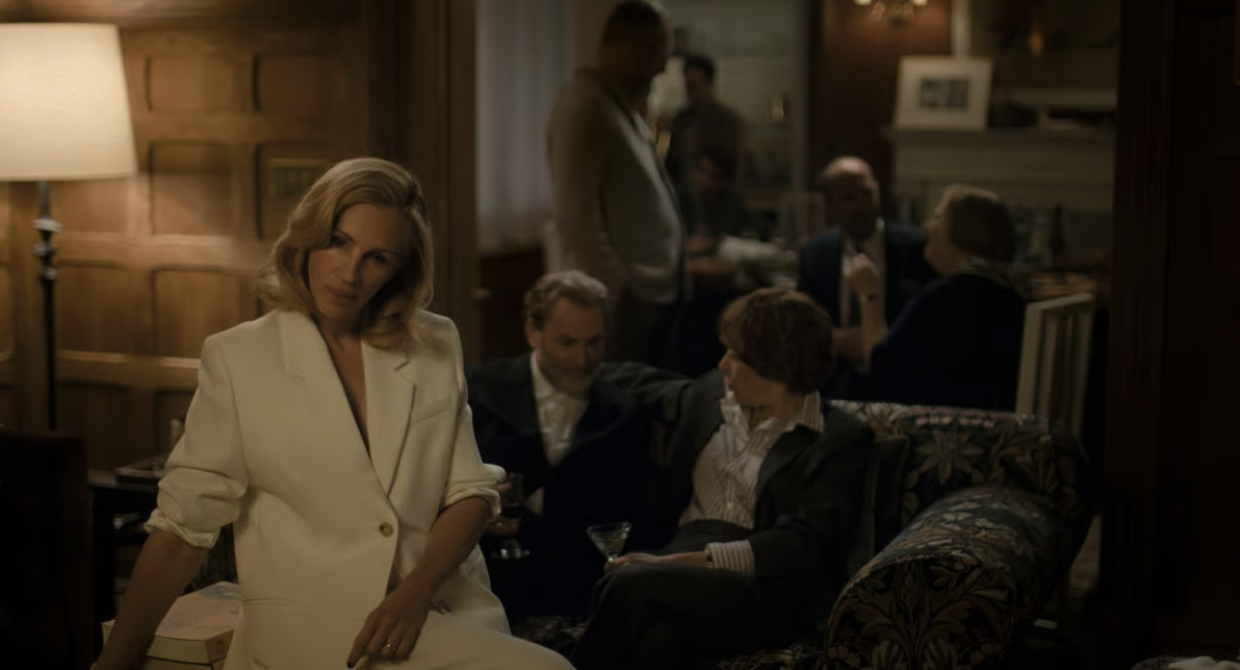
Everything about After the Hunt feels like cosplay, to the point where it’s even difficult to believe that Roberts, Edibiri, and co. would ever dress the way they do throughout the proceedings. One recurring nugget that works is Maggie’s evident reverence for Alma, to the point where she dons similar blazers, pants, and even lengthy necklaces with a single ornament on the end to those her object of professional (?) adoration sports like a second layer of skin. The rest of the theatrics feel as dull as the lamp-lit yet still greyed-out surroundings of the film’s Ivy League setting, a location that feels utilized for the sake of emphasizing its populace’s privilege, or at least the sense of the quality that they posit like a badge of honor. In reality, it’s barely armor. Roberts (predictably terrific) and her castmates have been saddled with nothing but a baseline prompt that watching them squirm to create something real and radical is akin to watching a baby deer take its first steps. Only this calf has no footing to find. It’s been doled out under the assumption that it should be easy to locate and master, but the necessary guidance is nowhere to be found.
After the Hunt. Courtesy of Amazon MGM Studios.
Is that Garrett’s doing? A blasé direction of performances by Guadagnino, who routinely pulls revelatory turns out of his stars, no matter their preexisting reputations? Perhaps it’s both, as aside from Roberts, only Stuhlbarg and Sevigny have anything particularly captivating to conjure, and they’re sixth men here. Stuhlbarg’s clever schtick as an unofficially-cuckolded husband (thanks to Roberts and Garfield’s chemistry, and the unsubtle hinting at an unspoken amorous connection between their characters) between persists throughout the film and provides a necessary humor that is otherwise dry – not in style, but to the touch and taste – but this critic’s opinion will not be a universal one. His spell, like that of the film’s dramatics, cannot possibly have the same impact on every single audience member. In fact, there’s bound to be an interpretation of his performance as an obvious curveball in a movie that aspires to a fastball-like fervor, but carries the ferocity of a meatball. Just watch Hank deny the claims levied against him only to swiftly rip off his knit sweater (you’ll never guess what color… it’s grey) in agitation and attempt to wrangle with another viewer over its subtext. You’ll end up muddy, exhausted, and wondering why you ever bothered.
Therein lies the true tragedy of After the Hunt, such a rare misfire from the otherwise-steady Guadagnino that its lone cause for optimism is, in fact, its failure: That it warrants little to no discussion regarding its substance, its goals, even its slightly recommendable qualities, of which there are precious few. “Every time I’ve left the cinema [after one of Guadagnino’s films], I need somebody to talk to,” Edibiri told a packed theater on Friday, likely full of patrons aplenty whose opinions coincide with hers. “I can’t see one of your movies alone. If I do, I feel crazy. I need somebody to talk to about this thing that I’ve seen, or this image that I’ve somehow never seen but feels so familiar. Or if I am upset or frustrated, I need somebody to talk to about it.” After the Hunt inspires no such feelings, to the point where it’s not two-plus hours wasted, but time spent thinking about what went wrong. For all of its on-paper promise and its talk of a pursuit, there’s a giant, red X marking not just one spot, but hundreds of them, each hiding not red herrings, but no buried treasure either. It makes you wonder what the hunt was ever for. To a blunter point: Is the “hunt” in the room with us now?
After the Hunt opened the 63rd edition of the New York Film Festival. Amazon MGM Studios will release it in theaters on October 10.
This week on Women InSession, we continue our critic spotlight series as we get to know Zach Youngs and his journey to becoming a film critic and writer! Zach is an incredible writer who covers everything from mainstream cinema to local film festivals in the Pacific Northwest. We are lucky to have him on the team and we had a great time talking about his experiences.
Panel: Kristin Battestella, Jaylan Salah
On that note, check out this week’s show and let us know what you think in the comment section. Thanks for listening and for supporting the InSession Film Podcast!
On this episode of Chasing the Gold, Shadan talks more with Erica about the movies she saw at this year’s Toronto International Film Festival, this time talking about the very best of the fest! As always, Toronto came ready to play and featured some of the year’s biggest titles and they did not disappoint. The films at the top of the list will no doubt be huge players this awards season.
Check out this week’s show and let us know what you think in the comment section. Thanks for listening and for supporting the InSession Film Podcast!
Synopsis:A band has three days to come together as a unit and learn to play a song before the school festival, so they can leave high school with a bang.
The high school film is often a nostalgia trip for those long out of high school. We remember the angst, the torment, and the rejection, but we also remember the triumph. Even the worst high school experience has a high point. Even Carrie was having the night of her life in the few hours before, you know, pig’s blood and carnage. It’s exhilarating to live through another’s triumphant moment. Linda Linda Linda has the kind of moment we all dreamed about in high school, one great rock show.
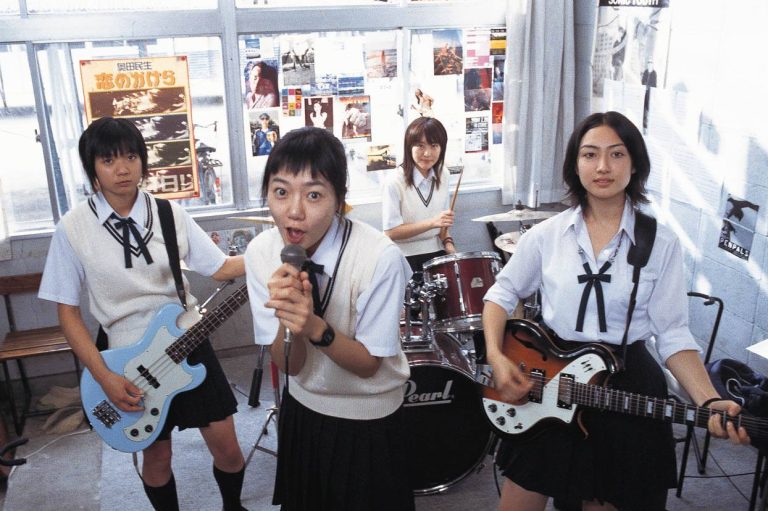
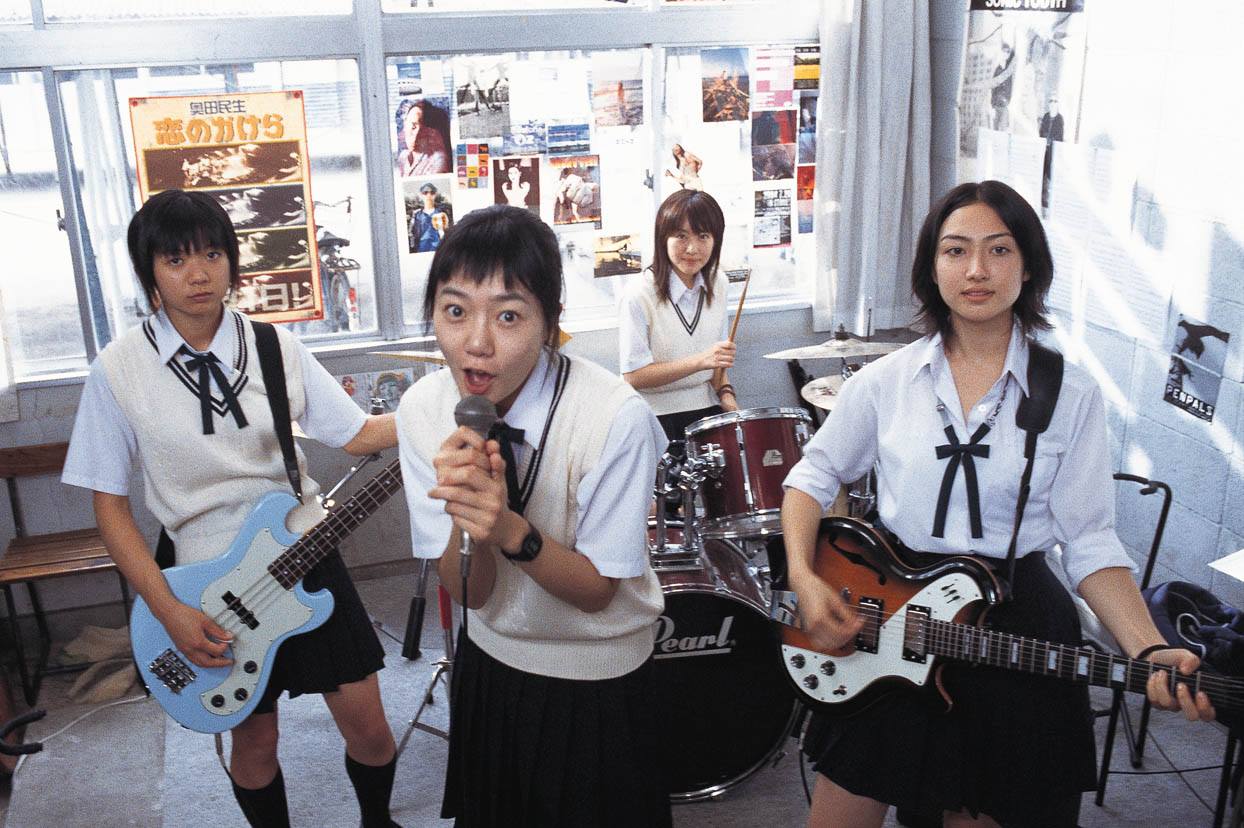
At the beginning of the film, there’s a bit of chaos and drama that perfectly captures the strange love/hate relationships that can only occur as you grow up with someone. We don’t know what happened between Kei (Yû Kashii) and Rinko (Takayo Mimura) or why the band broke up because of the rift, but that intense feeling is there. It almost shifts the genre from a coming-of-age into a sort of music biopic as we get the complications of starting from scratch learning new instruments, songs, and, for one member of the band, a new language in a short amount of time.
The script from Kôsuke Mukai, Wakako Miyashita, and Nobuhiro Yamashita is executed with multiple points of view without ever getting lost in any of the stories. The way the script weaves the story of the final days of the school term is methodical, sometimes slow, but always with a point to giving us a sense of place and time through characters. None of the characters make a bigger impact than Son (Bae Doona).
The way Son, a Korean exchange student, is written is that she’s kind of an audience surrogate. Being a person who is trying to grasp a new language, she asks the questions we want to know and acts as our conduit into this high school world. She knows enough Japanese to get by, she’s accommodating and polite, but in some ways that gets her into trouble. Being in the band is what finally gets her to be herself in all its weird and funny glory. Son wanted so much to belong and find people her own age to hang out with that this miscommunication in accidentally joining the band became the best thing she could ever hope for. Even as she struggles to follow all of a conversation, she’s able to get a lot from context and eventually gives a really good piece of advice. Son becomes the beating heart of the story.
It’s the beauty of Bae Doona’s performance that really cements Son into our hearts. Bae tackles Son with a wide eyed and enthusiastic glee. She has this languid way of being present in every scene she’s in. She’s always making a movement or motion that reminds us she’s there. The way that she’s able to grow Son from a quiet girl into a rockstar is profound. She builds the character before our eyes with precisely imprecise movements and moments of unique passion.
One of the best scenes, in a film of great scenes, is one adolescent awkwardness. This is where Nobuhiro Yamashita’s directing, Ryûji Miyajama’s editing, and Yoshihiro Ikeuchi’s cinematography really mesh. Son is asked if she will meet Maki (Ken’ichi Matsuyama) in an empty classroom. Son and her bandmates are intrigued because the note is written in Korean. What follows is so wonderfully, universally painful. Son and Maki are standing far too far apart as Maki does his best to say how he feels about Son in his stilted Korean. After Maki’s final confession of love, Son tells him she likes him as a friend, but really just wants to play music. The cuts between their faces, the faces of Son’s band mates and Maki’s friend, and the way too far distance between them adds so much to the scene. It’s perfectly staged and perfectly acted.
On top of everything, the music is spectacular. The songs, originally performed by Japanese punk band The Blue Hearts, are vibrant and catchy. The show the band puts on after all their hard work is utterly electric. All this rock music blends so well with the film score by James Iha, of The Smashing Pumpkins. The score builds a delicate indie folk sound that compliments the daily activities of the students and the punk sensibilities of the band.
Linda Linda Linda is full of joy and triumph. It’s a film that’s got a great universal appeal in its portrayal of high school and the fear, anxiety, and excitement of what comes next. Nothing about it fails to delight and if there is one flaw, the pregnant pauses can get a bit much and make you embarrassed for the characters by proxy, which in turn is how you’re supposed to feel about something that is left unsaid for that long. The 4K restoration is lush and Linda Linda Linda is a film that deserves more attention now that it’s been given this chance at finding a new audience.
Landing an iconic role seems like an obvious path to movie stardom. Instant fame. Box office success. A place in film history.
For many actors, however, stepping into such roles proves to be a double-edged sword. While big franchises can propel actors into the spotlight, they don’t always secure long-term success or critical acclaim. Some performers can find themselves typecast. Others are unable to replicate the same momentum beyond their most famous role or are even overshadowed by supporting co-stars.
They might boast a broad body of work. Yet stars can find themselves remembered for only one part. That’s why true career success, ultimately, isn’t always defined by the most iconic role on an actor’s resume.
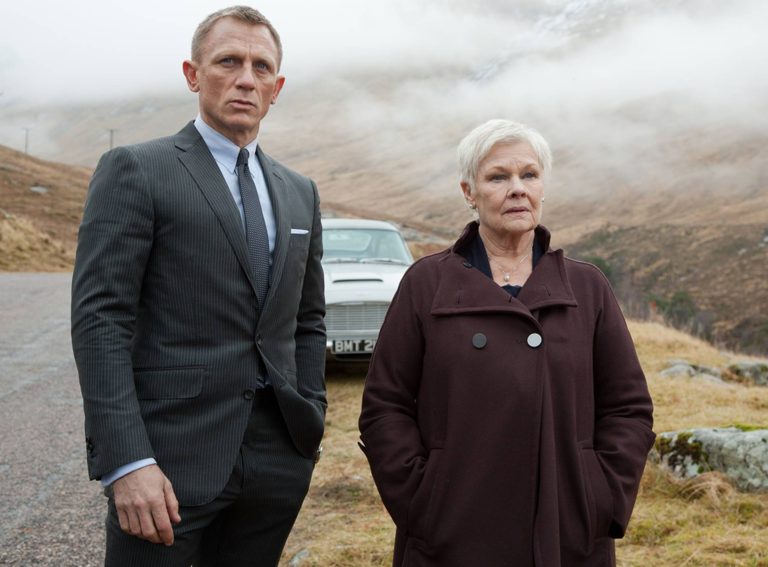
Example: When Bond Isn’t Enough James Bond. Few characters are as iconic in the cinema world. However, when analyzing the careers of Bond stars, recent research from Betway reveals that leading the franchise doesn’t always guarantee long-term success.
In fact, several supporting players outranked the men who stepped into the role of 007.
The analysis saw Judi Dench, who portrayed M across seven films, emerge as the most successful Bond actor overall. This was based on her possessing more awards, credits, and acclaim than her leading co-stars. Another surprising name at the top of the list is Madonna. With only a cameo in Die Another Day, she ranked higher than most Bond actors thanks to her extensive achievements outside the franchise.
The lesson from this research: even the world’s most famous spy can’t necessarily guarantee career dominance.
The Double-Edged Sword of Iconic Roles It’s clear that taking on a legendary part can transform an actor’s profile overnight. Sylvester Stallone toiled in acting obscurity for years before being launched into superstardom as Rocky. However, it’s possible to be ‘boxed in’ after playing a major role.
Take Christopher Reeve as Superman, for instance, or Mark Hamill as Luke Skywalker. These are two actors who became pop culture icons but found mainstream film roles hard to come by afterward. Fame from a single role can, in a cruel twist of fate, become a shadow, one that looms over everything that follows.
Supporting Stars Who Steal the Spotlight Sometimes, the lasting success belongs not just to the lead but also to the supporting cast. Take Alan Rickman. His performance as antagonist Hans Gruber in Die Hard launched a career filled with awards and critical acclaim. Okay, Bruce Willis didn’t do too badly from being the starring role in the same film, but the point still stands.
Ultimately, prestige and longevity often come from versatility rather than marquee billing.
Awards Over Box Office Blockbuster roles tend to bring major financial rewards. Look at Dwayne Johnson’s purported net worth as an example. Critical recognition, however, is another matter entirely. See Dwayne Johnson’s acting credentials in comparison.
Many actors achieve their greatest acclaim outside the franchises that made them famous. Robert Pattinson, once defined by Twilight, reinvented himself in independent cinema before landing future high-profile roles in flicks like The Batman and Tenet. Leonardo DiCaprio might have been a global star after Titanic, but it took years of collaboration with Martin Scorsese to reach Oscar-winning status.
Iconic roles bring visibility. Awards and credibility usually require stepping away from the brightest spotlights.
Reinvention Is Key After playing iconic characters, the actors who thrive are usually those willing to reinvent themselves. Going back to James Bond, look at Daniel Craig as a prime example. Though his tenure as a secret agent made him a household name, his broader success has come from diversifying into projects like Knives Out and even stage work in New York.
Hugh Jackman followed a similar path. He effectively used his role as Wolverine as a platform for acclaimed performances in musicals and dramas. It’s another example that highlights how iconic roles can be a springboard, but they should never be the final destination. Reinvention and evolution can push acting careers to new heights.
This week on the InSession Film Podcast, in anticipation of One Battle After Another, we discuss our Top 5 Paul Thomas Anderson scenes! We also discuss John Boyega’s recent Star Wars comments and pay tribute to the late-great Robert Redford.
Check out this week’s show and let us know what you think in the comment section. Thanks for listening and for supporting the InSession Film Podcast!
– Opening Banter / Robert Redford (0:31) We open the show by talking a little Paul Thomas Anderson and why his films are impossible to rank, despite our attempts to do so on Letterboxd. After setting the table, so to speak, for this week’s show, we talk about the late-great Robert Redford and the massive impact he had on the film community. His passing last week was devastating to hear, but there is lots to celebrate and we did our best to honor him.
– John Boyega Comments / Mandalorian & Grogu Trailer (16:36) We love John Boyega, but we felt compared to push back against his recent Star Wars comments about the Sequel Trilogy. The Force Awakens and The Last Jedi are both good films that wonderfully subvert the Star Wars formula. If he was to have his out, maybe the larger audience would have been happy, however it would have left us disappointed. Regardless of how we feel about the films, though, his bitterness is very understandable. And since it just came out, it made sense to also talk about the new trailer for The Mandalorian & Grogu, which doesn’t look good at all.
– Top 5 Paul Thomas Anderson Scenes (51:18) Paul Thomas Anderson is one of the great filmmakers working today, and as noted above, we have found ranking his films damn near impossible. So we thought it would perhaps be more attainable to talk about the best scenes in his films. An exercise that, as you could imagine, proved to be extremely challenging in its own right. There are so many great moments to choose from, but once we narrowed our lists down, we had the best time talking about why PTA’s films and scenes resonate so deeply. What are your favorite PTA scenes?
If you want to help support us, there are several ways you can help us and we’d absolutely appreciate it. Every penny goes directly back into supporting the show and we are truly honored and grateful. Thanks for your support and for listening to the InSession Film Podcast!
Director: Jay Duplass Writer: Jay Duplass, Michael Strassner Stars: Michael Strassner, Liz Larsen, Olivia Luccardi
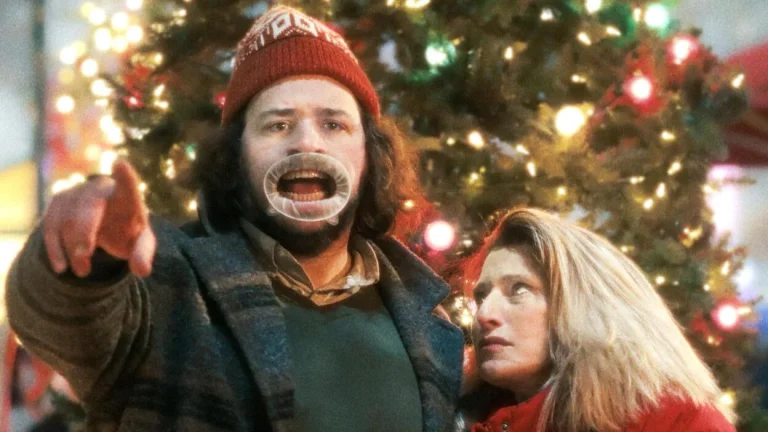
Synopsis: A newly sober man’s Christmas Eve dental emergency leads to an unexpected romance with his older dentist as they explore Baltimore together.
It’s easy to set a film in a city that many people know. It’s easy to build a story about a place people know even if they’ve never been there before. It’s difficult to capture the spirit of a place and translate it so that outsiders don’t completely feel left out. The filmmakers behind The Baltimorons obviously love and know Baltimore and its people. They take us not to the touristy parts. They take us to where the people are and where those people come to like each other everyday.
The great thing about Jay Duplass and Michael Strassner’s script is that it feels lived in. These two people, Cliff (Michael Strassner) and Didi (Liz Larsen), feel like they were plucked from the air. Cliff is a guy who always feels he has to be on, but instead of the broad comedy lens where it’s a joke a minute, this funniness is supposed to fall flat. That straight woman act isn’t faked or because Didi’s in on Cliff’s joke. Her confusion and disinterest is because she just doesn’t understand that Cliff is trying to be funny. There are these barriers between the two characters that Strassner and Duplass break down layer by layer and truth by truth until the jokes become funny because we know Didi’s seen the real Cliff.
It’s easy to want a comedy that has laughs every few seconds, but it’s so much more fulfilling to laugh as you cry or as you cringe. Many of Cliff’s one off jokes and bits bring to the surface the deep conflict within him. The way he expresses truth is often through a joke or a bit. One of the most enthralling scenes is as Cliff takes Didi to his old improv stomping grounds and is cajoled into doing his most famous character. When no one volunteers to be his partner, Didi joins him on stage. It’s awkward, painful, and funny as Cliff is a tough scene partner because he’s nervous as he’s never done this sober. Ultimately, though, this is where Cliff is able to say what he’s wanted to say for a while. It’s where Cliff and Didi realize that this, whatever it is that this is, is something more than just two lonely people on Christmas Eve. This is a connection. Though, the connection wouldn’t work if not for the two leads.
Michael Strassner is a force of nature on screen. He is an incredible physical comedian. He knows how to work with a situation and really sell it. As much as he is great at the bits he performs, he’s still able to be devastating when need be. Cliff is a guy who has a lot of walls up and a lot of issues he needs to take care of. Strassner is able to bring out that vulnerability and that human side of the Cliff who would prefer we just see a joke machine. He taps into something magical and winning in his performance.
Liz Larsen is a truly wonderful surprise. She plays straight, she plays playful, she plays vulnerable, and she plays sharp and tenacious. Through Larsen’s fantastic performance we see a woman taking some time to be the person she wants to be. Larsen finds the depth of Didi and shows us who this woman is and how she lived pre-Cliff and how she might live going forward. Larsen feels as if she’s known Didi all her life.
Strassner and Larsen are able to take a disparate pair and turn them into a romantic possibility. Together they have a chemistry that is like an improv exercise. You see them say “yes, and” to everything because it’s plain that for both of them they don’t entirely know what’s going on, but they don’t want it to end. It’s a connection that is the spark they each need in their lives.
The Baltimorons is strangely easy to love. If you look at the film on paper, you might say it couldn’t work, but it does, it really, really does. It’s a sort of throwback to the types of films director and co-writer Jay Duplass and his brother Mark made their names with. It’s not quite mumblecore and it’s not all the way to Harold and Maude, but The Baltimorons runs with its take on the odd couple type of romance and creates something utterly unique. It’s funny, complicated, and not to be missed, especially if you like a Christmas romance.
Director:John Lasseter Writer: John Lasseter, Pete Docter, Andrew Stanton Stars: Tom Hanks, Tim Allen, Don Rickles
Synopsis: A cowboy doll is profoundly jealous when a new spaceman action figure supplants him as the top toy in a boy’s bedroom. When circumstances separate them from their owner, the duo have to put aside their differences to return to him.
In recent years, it has become pointlessly popular to pick on Pixar’s Toy Story. Modern analysts have made a habit of circling back on the film’s obviously aged animation; they’ll poke fun at the dog, ask why Buzz acts like a toy around humans if he doesn’t believe that he is one, and then ultimately tap out upon any further discussion. Those folks’ next target is usually the fourth movie in the series, or some other innocent animated property that almost every member of the audience universally enjoyed.
Those qualms aside, now 30 years aged, the original Toy Story is still one of the animation studio’s finest entries to this day. There exists an early innocence about the property that differentiated it then from other such similar efforts; even Pixar’s own follow-ups don’t quite hit the same mark of purity. Characters are simple, from their movements to their motivations. To that point, this earliest form of what would become a major franchise represents a dedication to a concept that is now almost wholly unfamiliar in the animated medium.
The basic, now run-down idea that these are just toys come to life drives the film at every corner. It’s just the most unassuming, easygoing, feel-good effort from the studio, perhaps ever. That could be a reason why some modern audiences are so ready to leave it behind, at least from a critical standpoint. In comparison to other uber-popular animated movies of the time – such as The Lion King or The Iron Giant – Toy Story lacks a demanding sense of self-preservation or immediate importance, and that’s a compliment.
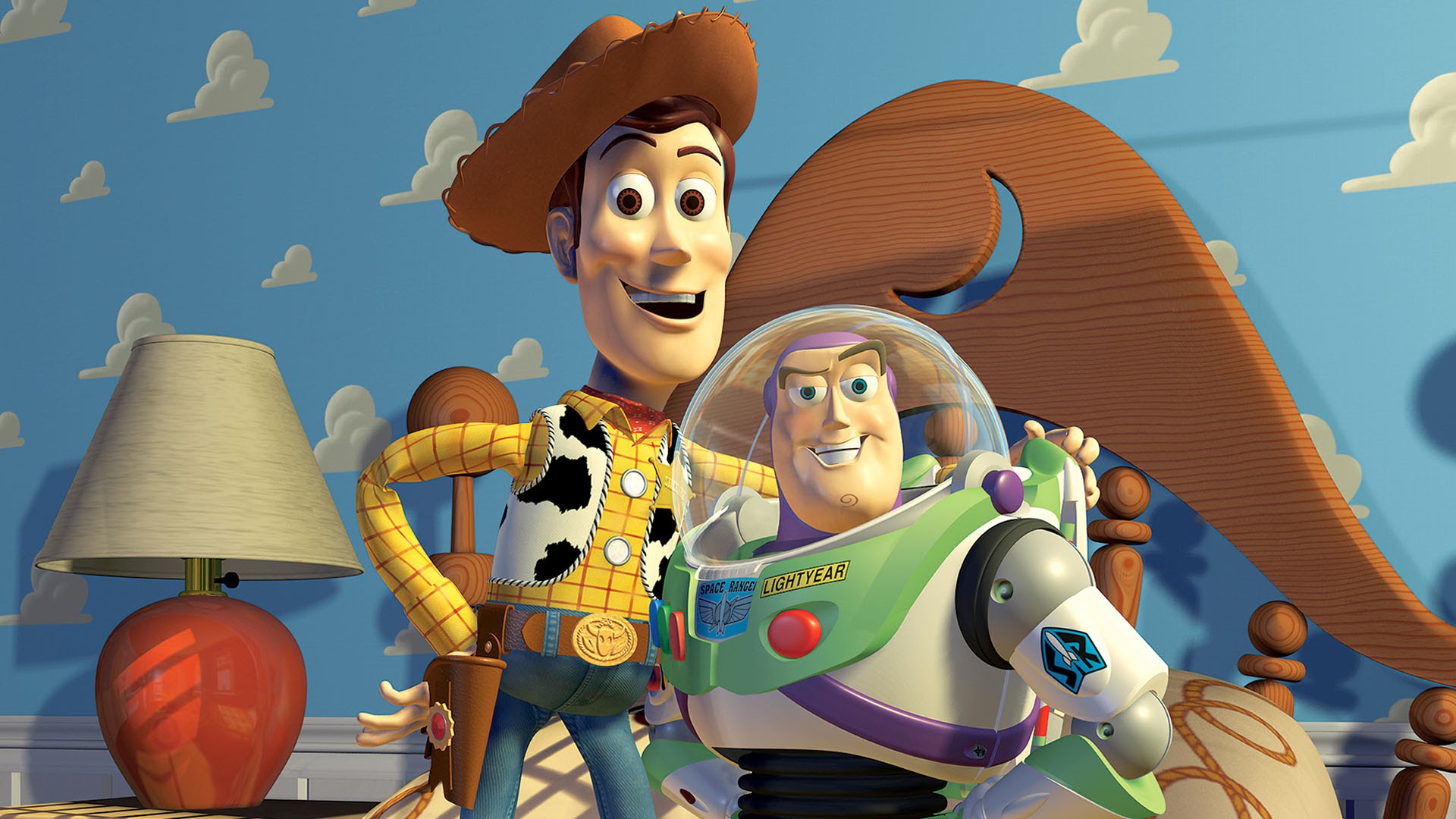
All the same, the cast, and narrative that structures them, remains incredibly memorable while still preserving that sense of comfortable drowsiness that the movie emits in retrospect. For children then and now, each character carries a seemingly inherent sense of welcome that, for one kid or another, allows them to be their obvious favorite. Between the dozen or so toys that rotate in and out of the limelight here, including Woody and Buzz at the forefront, Toy Story works to the same tune that children picking and favoriting their own toys does; except, in this case, they talk. It’s the perfect concept-to-execution for this genre of movie.
The film’s eventual sequels, while as good and, at times, arguably better than their genesis, don’t quite capture the same plain magic of the 1995 release. Each of the three sequels has a clear villain – singular, pointed – while the first film, even given Sid’s manic scientisms, is more or less just a point-and-click, day in the life adventure for the toys. You go to the Pizza Planet, spend some time outside, journey through Sid’s lab and then, ultimately, end up behind the moving truck for the finale. It’s almost structured like an old Nintendo 64 story game, one that kids of the time would’ve been obsessed with had that been a reality. Unorthodox is the word, and yet, it still works so well and operates almost completely alone in the space.
It’s not hard to imagine that Toy Story may still be revered and rewatched another three decades down the line, if not much longer. Aged animation aside, it’s a perfectly contained, infinitely giving story that can be thrown on essentially anywhere to great, repeated effect. As old as it is, much like the franchise’s toys (aside from Wheezy, poor guy), it just doesn’t seem to age. It is, and always will be, a quintessential children’s movie.
On this episode, JD and Brendan discuss Scarlett Johansson’s directorial debut Eleanor the Great, starring the great June Squibb! Better late than never, it’s amazing to finally live in the era of “June Squibb the movie star” and leading actress. Regardless of what you think about the film itself, she is excellent here and it likely would have fallen apart without her charming and very funny performance.
Review: Eleanor the Great(4:00) Director: Scarlett Johansson Writers: Tory Kamen Stars: June Squibb, Erin Kellyman, Chiwetel Ejiofor
Director:Scarlett Johansson Writer: Tory Kamen Stars: June Squibb, Erin Kellyman, Chiwetel Ejiofor
Synopsis: After a devastating loss, witty and proudly troublesome Eleanor Morgenstein, 94, tells a tale that takes on a dangerous life of its own.
Fear not, those born before 1990. Scarlett Johansson’s directorial debut, Eleanor the Great, is here to save you some hassle. The next time your parents or grandparents ask for a recommendation for something to watch, this is exactly the film to recommend.
We all know those movies you show your elders. They might not have the most complex themes, captivating storylines, or the most stellar of performances, but your loved one will definitely turn to you once the credits roll to exclaim, “That was really good!” While I’m pretty sure that wasn’t the intention with this film, it certainly fills a very specific cultural need. Keep this one in your back pocket when your grandma puts you on the spot.
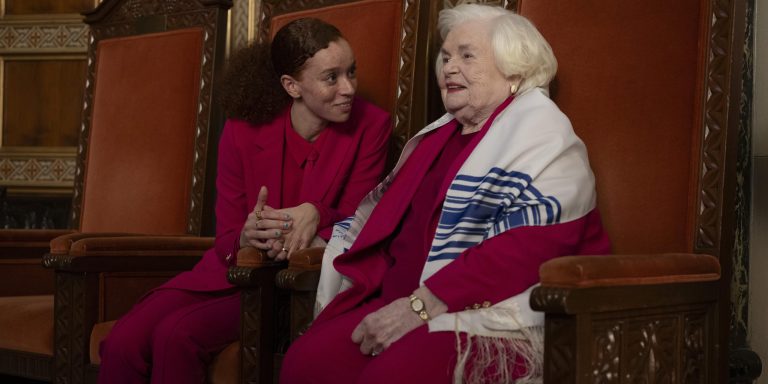
June Squibb stars as the eponymous character, a 94-year-old Floridian living a quiet life with her best friend and roommate, Bessie (Rita Zohar). When Bessie unexpectedly dies, Eleanor moves to New York with her daughter Lisa (Jessica Hecht), who encourages her to branch out and make friends. At the local Jewish community center, Eleanor stumbles into a Holocaust survivor’s support group. While not intending to deceive, she relays Bessie’s stories of survival on to the group as her own.
Inspired by her passion, college student Nina (Erin Kellyman) decides to profile Eleanor for a journalism course. Nina is dealing with the death of her mother and the silence she is receiving from her newscaster father, Roger (Chiwetel Ejiofor). Eleanor and Nina help each other with companionship and navigate their losses, as Eleanor seeks to have her bat mitzvah that she couldn’t complete in her youth.
Despite Johansson’s filmmaking ability, the whole film is a sitcom scenario. As soon as Eleanor innocently lies, you know exactly how the story beats will transpire. In fact, if you pause the film, there is a fair chance you can assume the remainder of the plot. Luckily, the narrative simplicity isn’t a deal breaker. There is a reason sitcom plots are successful. The viewer wants to see how the story ends with characters they have invested into. Eleanor is a sweet old lady who told a lie without benefit. There is no world where she deserves to be alone or overtly punished. It can only be too real.
That all being said, the film’s numerous discussions about Holocaust survival are all delivered by actual Holocaust survivors. Each of those accounts are performed with sadness and delicate precision. The levels of authenticity in these survival stories permeate the screen and provide a lasting impression. Those realities are a bit juxtaposed by Eleanor’s own recounting, in that it feels particularly wrong framing it with her own experience. A mid-film conversation between Eleanor and her rabbi gives the impression that maybe, just maybe, she could get away with it. Luckily, the filmmakers know better than to let that happen, though that would at least be a bit unconventional.
That expected conventionality only works if you have dynamic, likeable performers delivering the goods. Both Squibb and Kellyman have a gentle and believable chemistry. There is no mystery in the dynamic, but each performer is more than willing to accept the realities. Despite her age, Squibb’s delivery and ability is still young and quick. There is no suspension of disbelief, Squibb still has her full faculties and quick-witted charm. It’s not the most complex of performances, but it is one that she is uniquely adept at playing. Kellyman shares the screen nicely with Squibb, complimenting her quick wit with pensive understanding. Again, this is not the most complex of roles, but it is Kellyman branching out from her usual performances.
The rest of the cast fill out the edges as best they can, though they are almost all underwritten. Ejiofor, in particular, barely gets to do much of anything and even then isn’t much more than a talking head. Hecht does little more than complain about Eleanor at every corner, though the film does give her a bit more backstory than it could have. Zohar gets the signature supporting role, especially in a late-film story where she recounts her own survival story to Eleanor.
Despite staggering conventionality, Eleanor the Great will be a staple of the elder generations. Johansson has to start somewhere as a filmmaker, and there are much worse places to start than this.
Director: Kogonada Writer: Seth Reiss Stars: Margot Robbie, Colin Farrell, Jennifer Grant
Synopsis: Two strangers who meet at a mutual friend’s wedding have the chance to relive important moments from their pasts, illuminating the path that led them to the present and gaining the opportunity to change their futures.
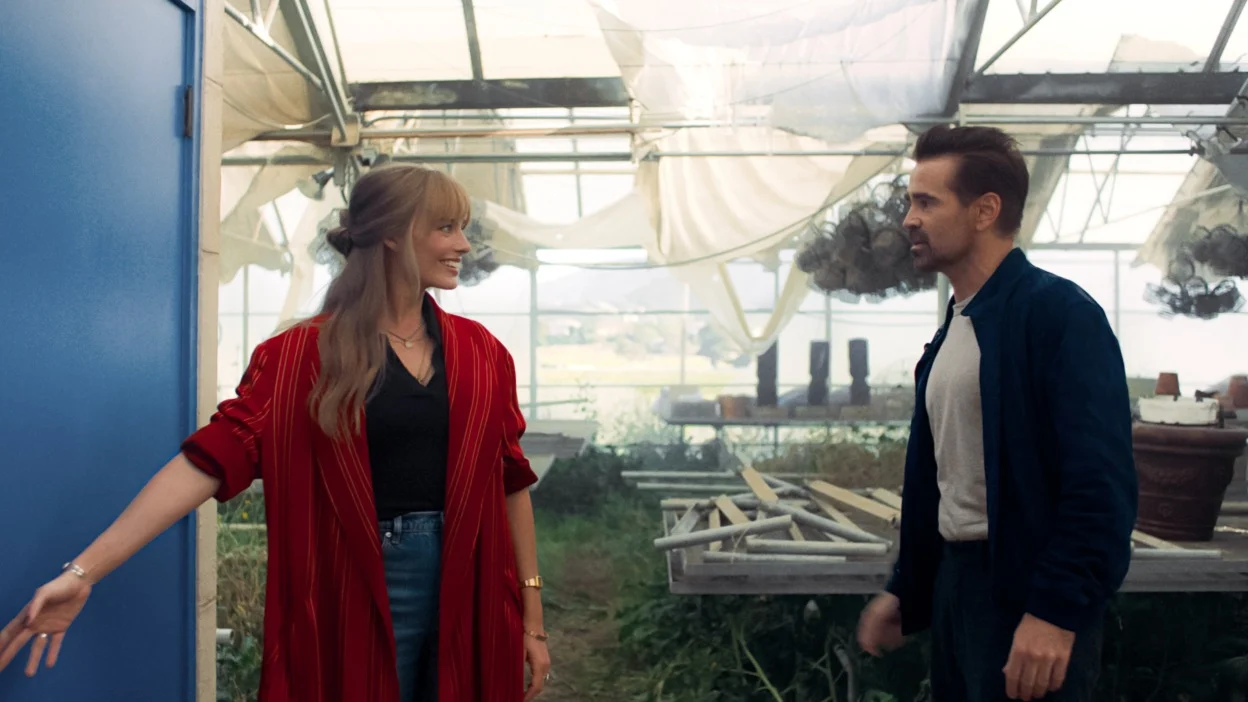
A Big Bold Beautiful Journey, one of the most anticipated movies of 2025, is a reminder of the power of a good trailer. While the Margot Robbie and Colin Farrell feature itself plays like an arrogant snooze fest, its sizzling preview teems with hopeful, wondrous possibilities. A fantastical three-minute romp, the trailer feels hopelessly romantic, an immersive trip through nostalgia, brimming with emotional introspection.
Instead, we are treated to a film that is almost arrogantly self-indulgent, borrowing its structure so blatantly from better works that I call it grand theft. The intended subtext of being open to new people, experiences, and love is lost beneath the pedestal on which the script places itself. Frankly, A Big Bold Beautiful Journey provokes more yawns and eye rolls with its cloyingly emotional shmaltz than it does deep, meaningful contemplation.
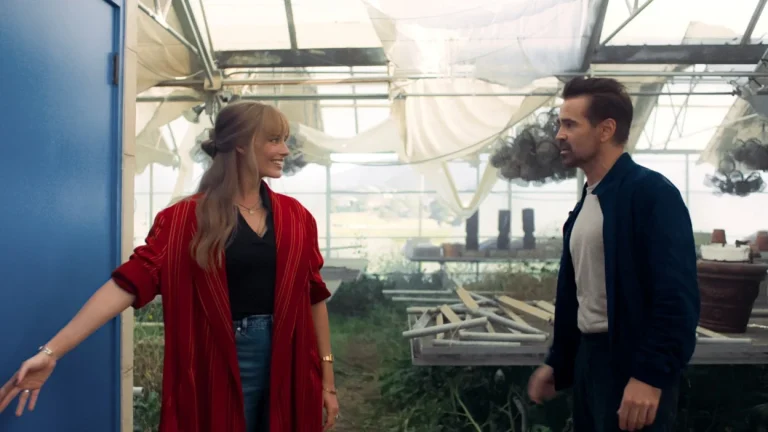
The story follows David (Farrell), an ordinary man on his way to a wedding. While walking to his car, he chats with his parents on the phone, who remind him to keep himself open to love. They’ve always called him “special,” though he feels anything but. When he reaches his unremarkable sedan, he discovers a wheel clamp on one of the tires. Fortunately, he notices an advertisement for car rentals and decides to take a walk in the nice, soft rain.
Even though he has a cell phone, where he could find a rental car company to come pick him up, he wanders into what looks like an abandoned warehouse, where he meets a sales representative (Indiana Jones and the Dial of Destiny’s Phoebe Waller-Bridge), who has a penchant for swearing, and a stoic mechanic (Academy Award winner Kevin Kline). When he speaks, his coworker finds him to be utterly fascinating. David, as he should, finds the whole encounter strange.
For one, they have a picture of David that looks like he is auditioning for a Broadway play. How did they get his picture? He doesn’t pursue it, leaving the elephant in the room. The rental car cashier is also incredibly bossy, insisting that David use the rental car’s navigational system instead of relying on his phone’s system. Nevertheless, he carries on and makes it to the wedding, where he catches the eye of Sarah (Robbie), the quintessential manic pixie dream girl—free-spirited, eccentric, and full of spontaneous energy.
A Big Beautiful Journey is from Kogonada, who has become a critical darling with such films as Columbus andAfter Yang, known for his meditative and meticulously crafted visual spin he puts on minimalist cinema with deeply moving results. Yet, strangely, the third movie in the Kogonada trilogy about human connection and meaning becomes charmless, even though the script is a metaphor for opening yourself up to meaningful emotional intimacy.
The issue is the mismatch between the director and the writer. Written by The Menu’s Seth Reiss, the film, like the characters played by Farrell and Robbie, is a marriage without chemistry, the most straightforward explanation being a studio-arranged union. The redemptive framework is akin to A Christmas Carol, like so many recycled guided-journey movies that usually take place around the holidays.
Here, Reiss’s script has David and Sarah go on a journey led astray by a bossy GPS (voiced by Jodie Turner-Smith), to doorframes in the oddest of secluded places, placing them during essential times in their lives that shaped their behaviors. While the psychology of that is strong—David’s parents (Hamish Linklater, Jennifer Grant) being overindulgent and overpraising, and Sarah’s mother’s (Lily Rabe) illness. The scenes play out as overly manipulative and don’t land with the emotional punch they are intended to, which points to a script, director, and studio not on the same page.
A Big, Bold, Beautiful Journey is well-intended, and I wouldn’t dare not be open to an emotionally resonant film, despite what may come across as cinematic critic cynicism. However, Kogonada’s film is like an old cliché of a model—beautiful on the surface, but with little personality and dull, almost naïve, in substance. This is a typical romantic fantasy that will end exactly the way you think, offering little surprises, emotional payoff, and ridiculous product placement. (Yet strangely doesn’t allow any major car rental chain to make an appearance.)
The film’s pretentiousness is fine as long as it elevates the material, but here, the style only diminishes it.
You can watch A Big Bold Beautiful Journey only in theaters September 19th!
Director:Park Chan-wook Writer: Park Chan-wook, Lee Kyoung-mi, Jahye Lee Stars: Lee Byung-hun, Son Ye-jin, Park Hee-soon
Synopsis: After being unemployed for several years, a man devises a unique plan to secure a new job: eliminate his competition.
From Oldboy to Decision to Leave, Park Chan-wook is no stranger to telling stories that are, at once, incredibly engrossing and stylistically directed, as well as impactful in twisted, demented, or emotionally powerful ways. His works, even expanding to television in 2024 with HBO’s The Sympathizer, have often left a lasting impression on audiences, addressing real world, socio-political themes and commenting on aspects that continue to affect those around him, and bringing those into his projects. His latest effort, No Other Choice, is no exception.
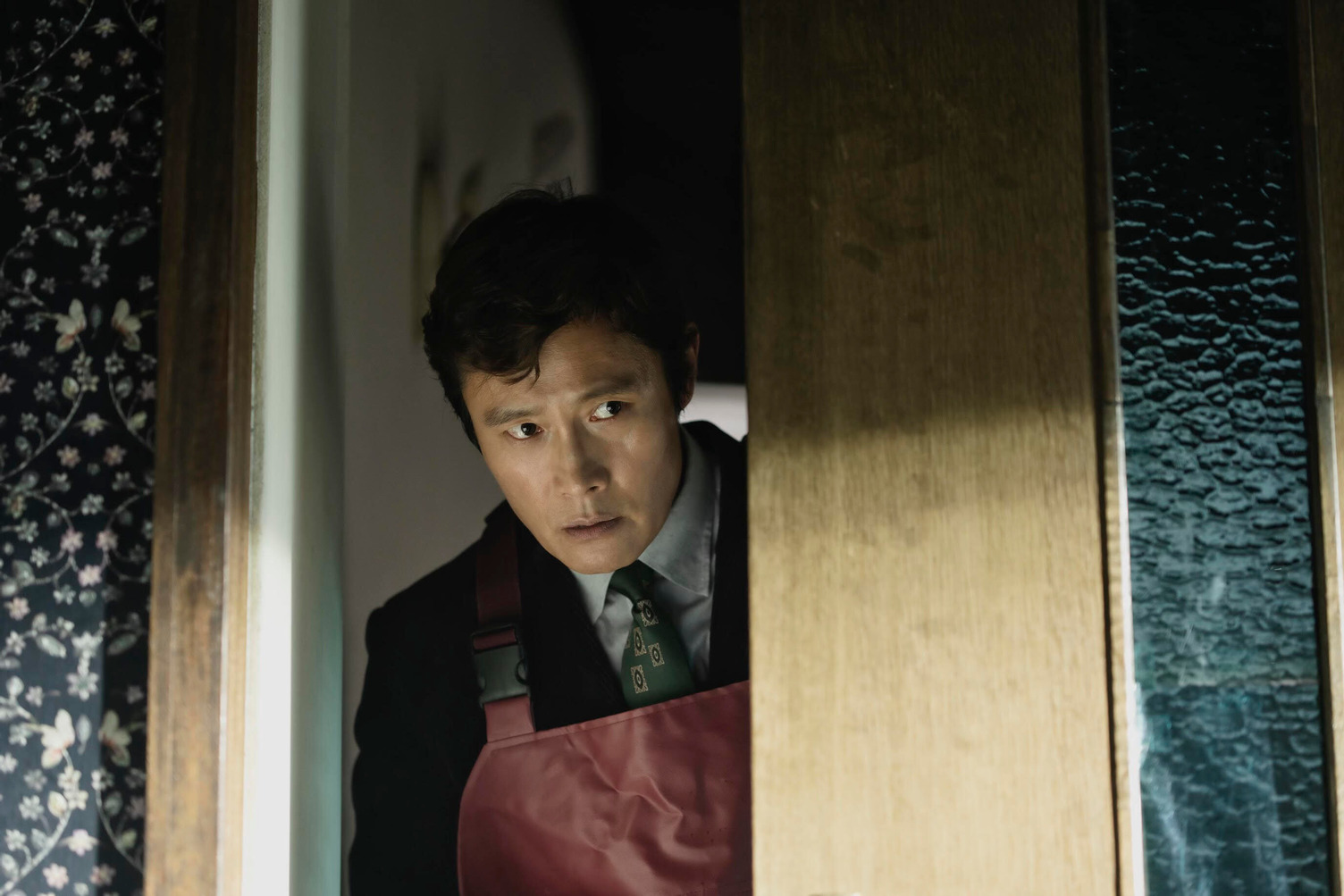
Image Credit: Courtesy of TIFF
Man-soo (Lee Byung-hun), as shown by the movie’s opening minutes, has a literal picture perfect life: a well paying job in the paper industry, a beautiful house, his lovely wife Mi-ri (Son Ye-jin), two wonderful children, and their two dogs. Everyone is living blissfully and with a smile on their faces. Things change quickly, however, when he loses his job and the family’s main source of income dries up, effective immediately, leaving Man-soo wondering what happens next and his family having to potentially sacrifice everything to make ends meet going forward. When a position that would be perfect for Man-soo opens up, he devises a plan to knock out the people who are just as qualified from the competition and make sure he gets the job, which may mean he will have no other choice but to do something harsh if worst comes to worst.
No Other Choice has serious themes on its mind, as most Park Chan-wook features usually do, but it isn’t afraid to be funny and comically over-the-top when it wants to. As Man-soo begins to look into his potential competition and learn more about their lives, like with the borderline dysfunctional couple Gu Bummo (Lee Sung-min) and his wife Ah-ra (Yeom Hye-ran), the sequences that unfold are brilliantly directed and sharply written, practically to perfection, and extremely funny, particularly in a standout moment involving a blaring soundtrack playing while an argument takes place. But what makes No Other Choice ultimately stay with the audience is how its title becomes more and more ominous, starting at first as a darkly funny line when the loss of a job is concerned, and then turning into a line built on an inevitability, that something must happen because Man-soo has no other choice. This stellar balancing of tone and characterization is what lands the movie in the end.
Lee Byung-hun is extraordinary in the movie, channeling the fragility and desperation of Man-soo in every frame, and his want to grasp onto everything that made him so happy once more. He worries about not having enough work, he worries his wife might see him as lesser, he worries his kids will lose respect for him, but most importantly, he worries he’ll lose himself. When the going gets tough, it’s easy to understand why Man-soo is doing everything that he does and the extreme actions he may wish to take, while also lamenting the places he’s being pushed into because of a world that’s pushing against him. Lee’s performance, as well as Park’s storytelling, come together wonderfully, and the movie’s sledgehammer-like commentary (almost to a fault, particularly towards the final act) on jobs being replaced by machines and the advent of capitalism lands home.
Much like many of Park’s previous efforts, No Other Choice is a visually spectacular and uniquely framed feature, with Kim Woo-hyung’s cinematography yielding some of the most striking shots of the year. For a movie that is as bleak as it eventually gets, it remains incredibly vibrant and colorful until the final frame, and is backed by an energetic, even sometimes whimsical score from Jo Yeong-wook that elevates the darkly comic setting, along with Kim Sang-bum’s sharp editing that at 2 hours and 19 minutes, keeps the movie on its toes throughout, hardly missing a step. The production design, ranging from showcasing Man-soo’s love for plants and gardening to the framing of his family’s home, is immaculate, packed with little details that will make for interesting observations on repeat viewings.
Not much is being said about the back half of No Other Choice in this review, and for good reason. Much like Bong Joon-ho’s Parasite in 2019, it’s best to go into this movie knowing very little past its initial premise. Rest assured, the sequence of events that unfold once Man-soo really begins to look into his competition make for some of the best filmmaking of 2025, and one of the year’s best movies overall. No Other Choice once again proves that Park Chan-wook is a master storyteller who can subvert any expectations effortlessly, and one can only wonder how his next project will surprise audiences.
On this episode, JD and Brendan discuss Kogonada’s new film A Big Bold Beautiful Journey, starring Colin Farrell and Margot Robbie! Coming into 2025, this was easily one of our most anticipated films of the year (JD’s #2 on his Top 10 list). We are big fans of Kogonada’s previous two films, and despite the early reactions we were trying to maintain some hope. Something that proved to be beneficial as we do defend the film while recognizing that it’s far from being perfect.
Review: A Big Bold Beautiful Journey(4:00) Director: Kogonada Writers: Seth Reiss Stars: Margot Robbie, Colin Farrell, Jodie Turner-Smith
This week on Women InSession, we discuss the rich history of Egyptian cinema and its cultural significance as a dominant force during its Golden Age! At its peak in the 40s and 50s, Egyptian cinema was massive and often challenging the form. So we had a lot of fun talking about its influences the filmmakers that define the region.
Panel: Kristin Battestella, Zita Short, Jaylan Salah
On that note, check out this week’s show and let us know what you think in the comment section. Thanks for listening and for supporting the InSession Film Podcast!
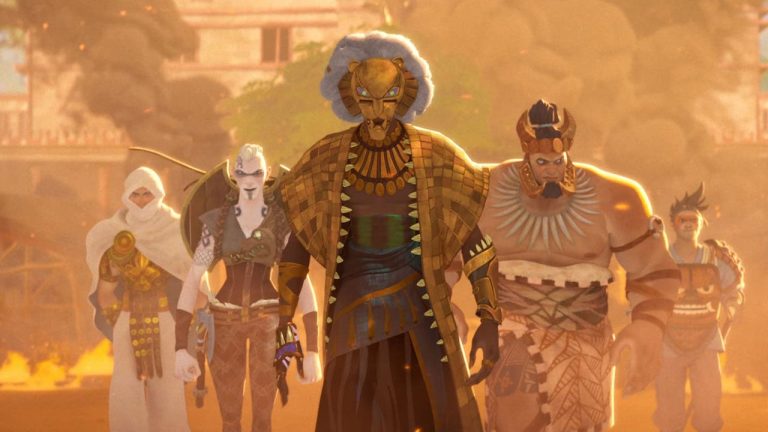
In this interview, I talk with Egyptian music composer Hesham Nazih and his work on the new miniseries Eyes of Wakanda!
Eyes of Wakanda is the new animated series set in the Black Panther universe from Marvel Televisions. It is now streaming on Disney+ as it blends the vibrant imagery of Wakanda with concise storytelling and a rich, layered visual texture. For a unique miniseries, they picked Emmy-nominated Egyptian composer Hesham Nazih to add emotional resonance, depth of rhythm and character motifs to the grounded Wakandan world. Nazih discusses Emmy nominations, challenging projects, finding inspiration in African music, and a history of culturally-significant scores.
Director:Elizabeth Ai Writer: Elizabeth Ai Stars: Lynda Trang Dai, Ian Nguyen, Elizabeth Ai
Synopsis: Exploring the defiant Vietnamese new wave music scene, a filmmaker takes a vulnerable, personal look at her community revisiting their unexamined past.
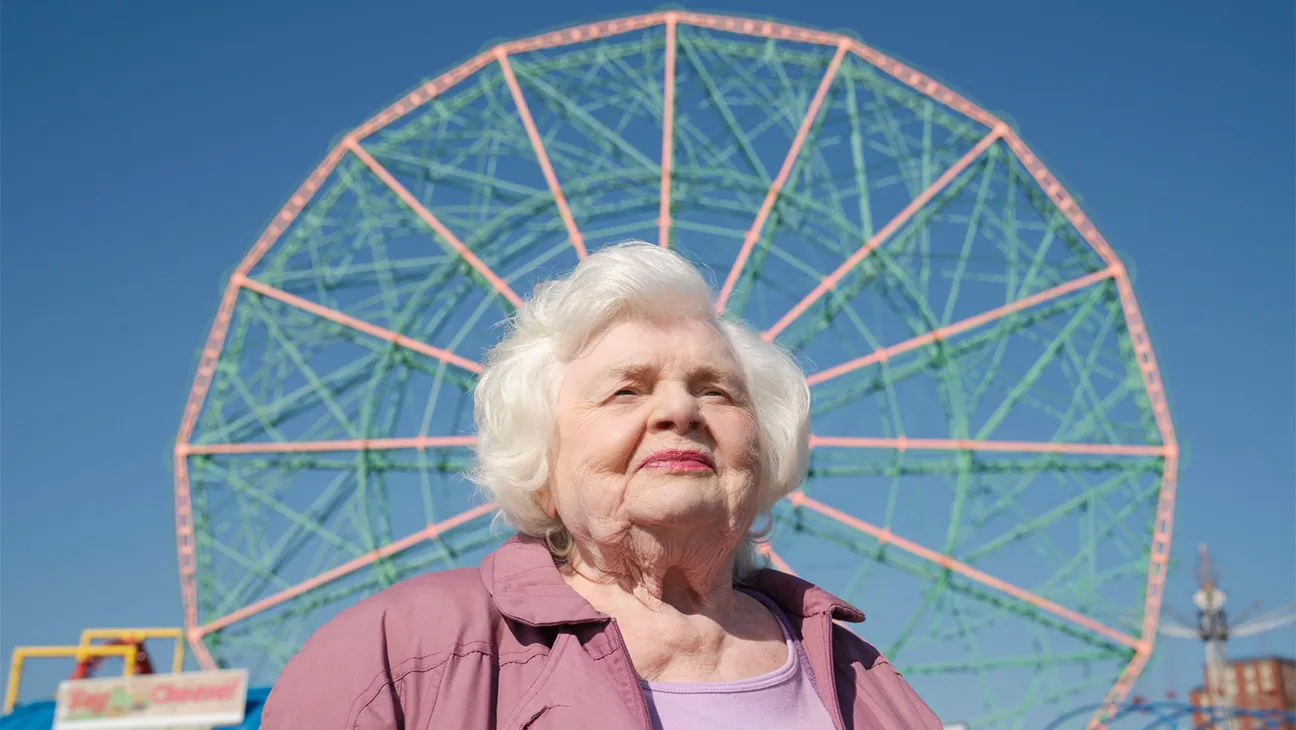
The glory and the importance of the documentary, as a filmmaking form, is wide and varied. Any subject that strikes your interest likely has at least one film covering that very topic. More important though, are the documentaries that introduce you to a culture, or subculture, that you didn’t know existed. The true importance of these documentaries is not showing you a strange new world, it is in finding common ground despite those differences. If you told me that I would see parts of myself in the story of young Vietnamese immigrants in the 1980s, I am not sure that I would easily believe you. And yet, New Wave does just that, and more.
One might think that New Wave, from the title, would be purely about music, but it delves deeper and in a more roundabout way. Part of the way through, you might even be tempted to call it unfocused. But film sometimes opens itself up slowly, just as life does. New Wave follows Elizabeth Ai, who starts out exploring her (and other young Vietnamese people’s) obsession with new wave music, Vietnamese voices covering that music, and her own childhood motivations. But, as many filmmakers will tell you, especially of the documentary variety, sometimes this artform has a mind of its own. Ai finds herself discovering where her own story is headed, as well as the story of Vietnamese people connecting with an American experience in their own way.
As the film begins, the energy pulses from New Wave almost uncontrollably. The score, the clothing, the reimagined scenes from Ai’s own past burst with life. It is infectious and we find ourselves pleasantly lost in that created world. The journey deeper into the Vietnamese immigrant experience is helped by this introduction that brings us in close and makes us connect with their stories. The next portion of the film focuses on Lynda Trang Dai, a niche music star who performed covers of literally every 80s artist one can imagine. Lynda, shown through her video past and her interviewed present, holds a deep sadness, frustration, and anger. Director and writer Ai expertly shows us the reasons why through her Lynda’s current silent rage and past judgment by local media.
This barely contained personal and collective anger is detailed both through Lynda’s own words and, unexpectedly, Ai’s own relationship with her mother. Both Lynda and Ai’s mother, despite being quite different, share a difficulty balancing financial support and emotional connection with their families. As the film loops back to the world of new wave and some painful moments, the reality of the world comes crashing in. Like many children in the 1980s, they were allowed to do basically whatever they wanted and the inherent danger and bitterness of these choices rises to the surface. But where this film truly soars is in the difficult exploration of the collective trauma of the Vietnamese people. This manages, incredibly, to tie all of these disparate stories together brilliantly. As one might imagine, it is difficult for both the older and younger generations to discuss this horrific past. Both groups clearly want to leave it behind and start anew.
The parents suffered hideous traumas in that war-torn nation. Their children, whether they were consciously aware or not, experienced it both first and second-hand. But the difficulties of life in the United States as a non white person come to the forefront in numerous painful ways.
Looking back at when they began their lives in America, an unnatural level of work and hustling was needed for both survival and to send money home to relatives. It would be hard to imagine people more in need of escape than these refugees. For some, that escape was music, for others, less adaptive choices were made.
The film never takes the easy way out by giving us a target to blame. Ai, as both director and subject, bravely puts her own familial trauma on display; first, over difficult memories and one-sided phone conversations, and eventually, through honest attempts at reconnection. Again, like our lives, there are no simple answers here, and no perfect relationships. We are all doing our best, and our traumas, both personal and collective, make this process difficult. New Wave manages to find a middle ground allowing us all our faults and a real chance at reconciliation.