

Home Blog Page 101

Movie Review: ‘The Listener’ Shows Division and Disconnection


Director: Steve Buscemi
Writer: Alessandro Camon
Stars: Tessa Thompson, Logan Marshall-Green, Margaret Cho

Synopsis: Follows a helpline volunteer who is part of the small army that gets on the phone every night, fielding calls from all kinds of people feeling lonely, broken, etc.


โ€œCall back anytime, ask for Bethโ€

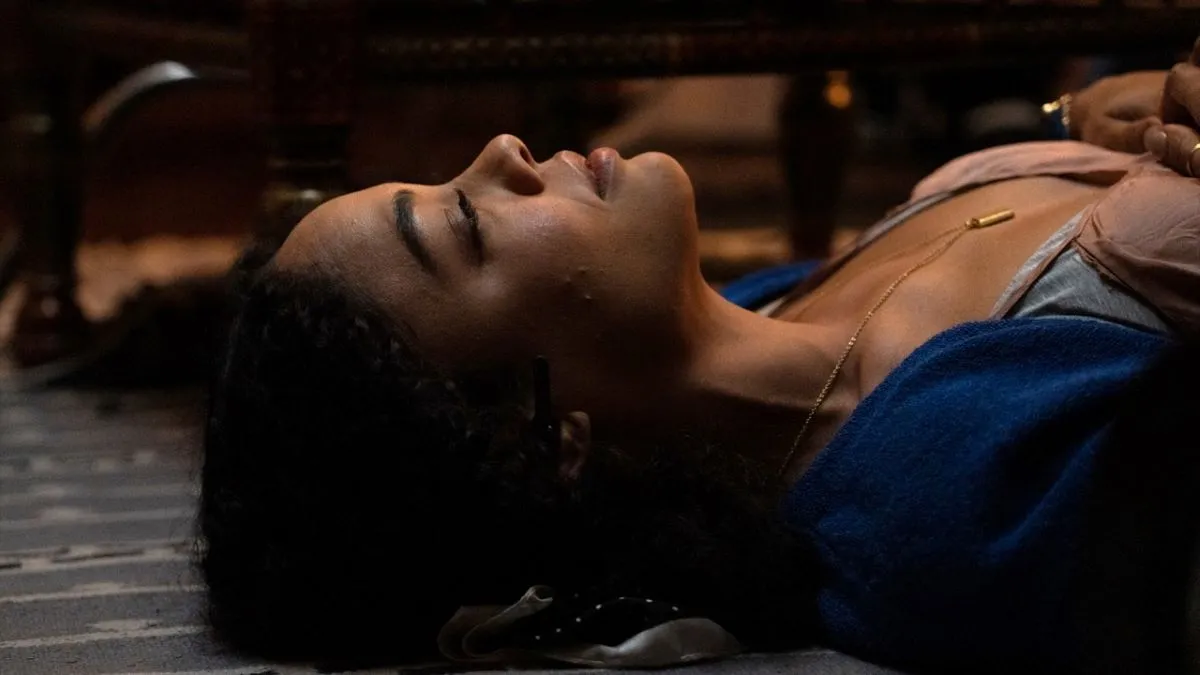
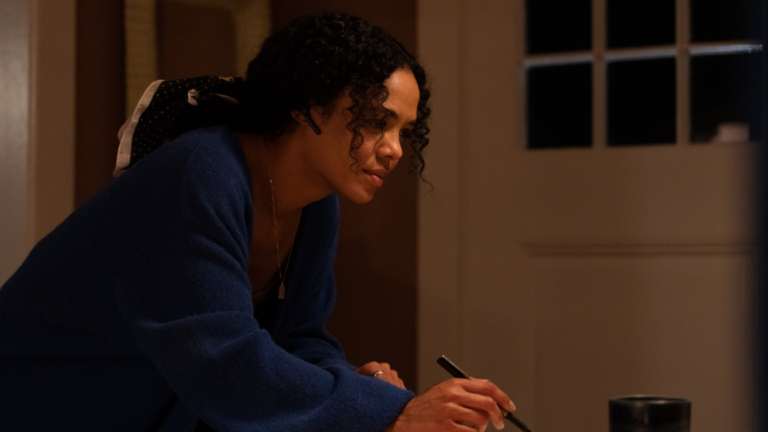
Legendary actor Steve Buscemi steps behind the camera to direct The Listener written by Alessandro Camon. The โ€œlistenerโ€ is Beth (Tessa Thompson โ€” the only person to appear on camera in the film). She is doing late night shifts on a peer supported crisis hotline. Calls arenโ€™t traced, both the caller and the listener are anonymous. The film documents a single night in โ€œBethโ€™sโ€ life and gradually reveals who she is; while immediately grappling with division, loneliness, anxiety, fear, and disconnection in American society.

Beth is awake staring at the ceiling before her alarm goes off. She greets her dog, brushes her teeth, puts on a strong pot of coffee. Her fingers click against her coffee cup. She is readying herself for her โ€œday.โ€ Buscemi gives the audience a sense that for a long time, especially since the pandemic, this has been her life. Perhaps it has been her life longer than that.ย 

She sits down and prepares for her first call. It is from Michael (Logan Marshall-Green) who has not been long out of prison. He canโ€™t sleep. So used to institutional time, he is lost in his freedom. For Michael the pandemic was โ€œPrison Time,โ€ โ€” the days drag on forever but as night comes you canโ€™t recall anything you did. He speaks of how he didnโ€™t understand that he would need a mask when coronavirus hit. He used a bandana. He wondered if he would be shot by the police or assumed to be holding up a store because he has โ€œcriminalโ€ written all over him. Beth is gentle with him. She allows him to tell her his story. How he ended up in prison. How generations of poverty and crime led him as a six-year-old to start running with gangs. โ€œIโ€™m not a bad person,โ€ he tells Beth. โ€œI know,โ€ she replies. They laugh a little and Beth tells him to get some sleep and thanks him for giving her the โ€œfull picture.โ€ He doesnโ€™t want material assistance from Beth โ€” no organizations. Just someone to hear him.

Over the course of the evening Beth will take many calls. One from Ellis (Ricky Velez), a hateful incel who is mouthing all the online rhetoric. Heโ€™s aggressive with Beth. He speaks of the terrible things he has done, including deepfake porn to get revenge on a girl who didnโ€™t acknowledge his existence. As much as Beth tries to connect with Ellis, that isnโ€™t what he wants. He wants to brag, talk about his status as a victim of โ€œthe systemโ€ which excludes him from being able to fulfil his โ€œbiological needs.โ€ He is quite legitimately dangerous. He works in IT and has already hacked school servers to show extreme pornography and violence. He then begins to masturbate when Beth tries to convince him he can turn his knowledge and skills into something positive and productive.

There are a number of calls which are supposed to be the big impact moment. The long discussion Beth has with a PTSD riddled soldier Ray (Jamie Hector) and his dream about a boot which connects his physical and psychological injuries. A discussion with Chris (Bobby Soto), a cop who talks about deliberate police violence and cover-ups on the force. How he has to balance his own safety and his gnawing conscience after he witnessed an unprovoked attack by a fellow officer which left a man permanently disabled. Unfortunately, Camonโ€™s reiteration of systemic law enforcement corruption and American wartime interventions and the cost involved bloats rather than adds to the film. Rayโ€™s section is too long. Beth’s responses are more interesting than the well-trod narratives Camon is proffering as commentary on America.ย 

Where Camon could have spent more time is with Corinne (Margaret Cho). A mother describing how she is at the end of her tether is one of the quiet gut-punches which is also one of the loudest indictments of how America has let vulnerable people down. She tells Beth sheโ€™s always a โ€œday late and a dollar short.โ€ When Beth responds that sometimes everyone feels like that, Corinne scoffs that she doubts that Oprah or Mrs. Zuckerberg do. When Beth tries to explain they probably have bad days because theyโ€™re human, Corinne lays out her lived reality. Sheโ€™s the full-time carer for a special needs child. Her husband has lost more hours at work. He does nothing but aimlessly drink and sit around. Corinne is terrified what will happen to her child if something were to happen to her. Who will be there?ย 

A call from Jinx (Blu del Barrio), an unhoused teen who is โ€œcelebratingโ€ her eighteenth birthday is a street level horror story. Jinx ran away from home at sixteen for the grand adventure with some friends. They flaked, disappeared, and now sheโ€™s a step away from being pimped out by her drug addicted and violent โ€œboyfriendโ€. She doesnโ€™t know where to place her rage and fear. Sheโ€™s convinced she will be dead soon, but sheโ€™s clawing to survive. When she hangs up Beth just stares hopelessly into the distance.

Two calls, both from women, are the key to who the listener is. The first comes from Sharon (Alia Shawkat) who starts the conversation with โ€œI am mentally ill, I am mental, I like that word, itโ€™s like metal.โ€ No health insurance means Sharon is unmedicated, without a doctor or psychiatrist. Sheโ€™s avoiding official crisis lines because she doesnโ€™t want to be committed. Sheโ€™s aggressive, funny, expressive, and scared. โ€œIโ€™m having one of my episodes, my bones are snakesโ€ฆ my bones are snakes.โ€ She claims she is synesthetic. She can see Bethโ€™s voice. She can smell her over the phone. Her โ€œlunatic ramblingsโ€ are infused with a rhythmic genius. Beth deals with Sharonโ€™s rapid cycling mood swings which go from the grandiose, to paranoid, catastrophizing, aggressive, whimsical, and defeated. Sharon is the poster child for โ€œdanger to self and othersโ€ but Beth handles her with velvet gloves. What if she can give Sharon another avenue to help calm the noise? What if Sharonโ€™s fast meter brain (she calls it Brian because itโ€™s out of order) can be put to a beat which gives the intrusive thoughts a specific measure of time?ย 

The final call is the โ€œtruth telling.โ€ An educated voice (Rebecca Hall) on the other end of the line launches in by asking Beth how she is. Beth is somewhat shocked because no one has asked her that question for a long time and demanded an answer. Beth demurs and tries to keep the conversation focused on her caller. Laura, as we find out later, has planned her suicide. Sheโ€™s not particularly interested in being talked out of it. As a now fired professor of sociology, and broke from a divorce, she has rationally crunched the numbers and has tallied the pros and cons of the emotional and financial cost of living.ย 

For Laura it just no longer adds up. She has no friends, she has no job, soon she will have nowhere to live. No one will miss her. She has worked all her life and only added to what she sees as the โ€œdelusionโ€ of hope. There are so many crises everyone has lost count. How can she tell young people that learning about the world only leads to knowing how little difference they make?
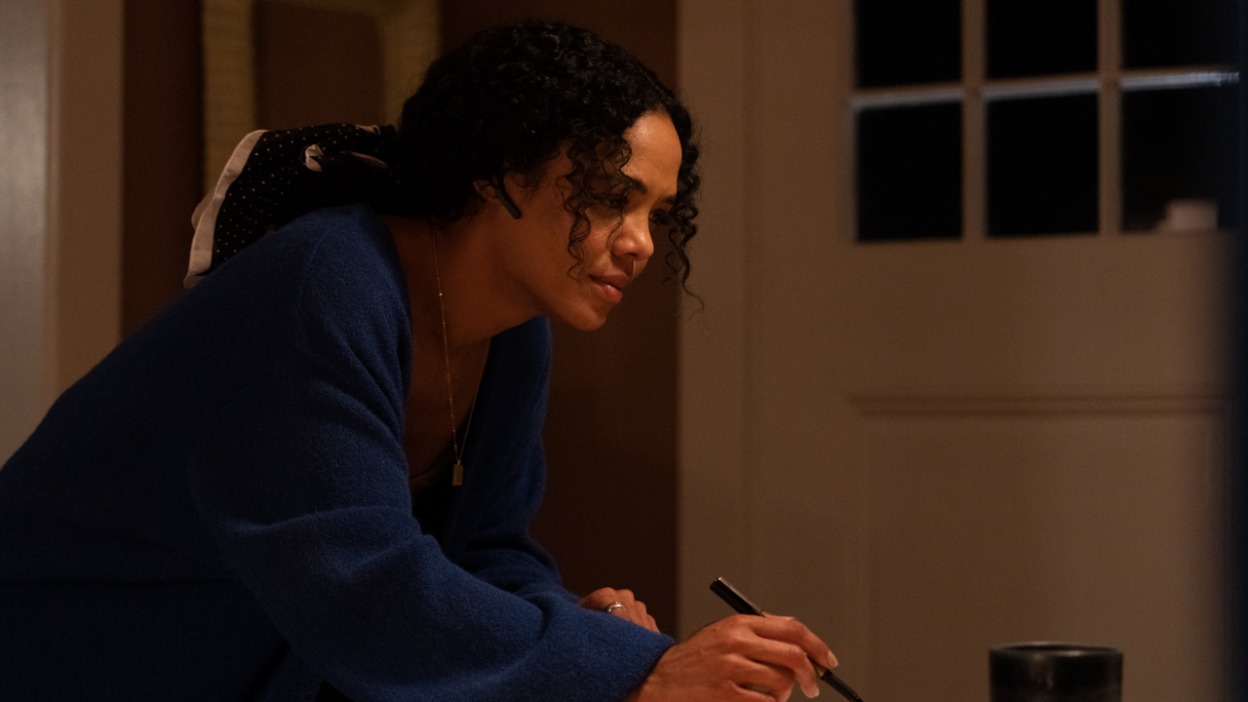
Lauraโ€™s curiosity homes in on Beth and why she keeps listening. Taking on the trauma of others. Laura knows that the program is peer related so in some manner Beth has undergone some form of social rehabilitation herself. What is she punishing herself over? 

Laura and Bethโ€™s conversation is a philosophical tug of war with Lauraโ€™s stunning intellectual prowess and Bethโ€™s own measured and empathetic reasoning behind why people should not give up. Laura talks about the attrition of living. The mask people put on to hide their dissatisfaction. โ€œYour unhappiness is ashamed of itselfโ€. Living on a planet which has already committed suicide.

Beth simply responds, โ€œEverything means something.โ€ The reason to be alive is to find that one small thing which means you have to get out of bed each day. Self annihilation happens in a multitude of ways. Beth experienced it. She didnโ€™t actively have a plan to kill herself, but she also didnโ€™t care if she died. She did things that meant she could at any moment and didnโ€™t care. 

What Beth gets out of the program is an escape from herself. A chance to put her focus on someone else one hundred percent for however long she has with the caller. What hurts her the most is when they hang up before the conversation is over. Before she knows if she did help. Laura wants a reason to live. Beth says she has no real wisdom but tells her story. She tells the truth to the woman who is a truth teller.

Beth tells Laura she could be of benefit to the crisis line. Laura laughs. How can her cynicism help anyone? Why would she join the โ€œLonely Hearts Clubโ€? Humans are more connected than ever though the internet and news, but they have never felt more alone. Beth has reminded Laura she has a heart even if it is broken. โ€œLoneliness is a slut,โ€ Laura laughs. Beth says she is going to steal that line.

A final call comes through. Itโ€™s Sharon with her rap. It is brilliant just as Beth suspected it would be, and Sharonโ€™s final lines โ€œno one has very long, so keep on writing this song,โ€ is a summation of what Camon was trying to get across. If he had cut some of the flabbier parts of the narrative the film would be much better for it.

Steve Buscemi proves himself very adept with the camera. He knows what to show and when. Everything rests on Tessa Thompsonโ€™s prodigious talent. Her face and eyes. Her soft voice. Her compassion and obvious pain. The sound design is excellent. We know there is a world โ€œon fireโ€ outside Bethโ€™s window. Not just from the calls she receives but from the sounds of sirens, choppers, and people screaming in anger. Bethโ€™s response to everything has been to cocoon. To be โ€œBethโ€ and stay inside. To keep living her prison time. To eat cheap noodles with one hand while playing with stress balls in the other.

To paraphrase Nan Goldinโ€™s sister Barbara who committed suicide, for โ€œAll the beauty and the bloodshedโ€ of twenty-first century living โ€” there is a sliver of hope coming out of Pandoraโ€™s box. Curiosity, and empathy can keep one going when everything else is too much. Or simply a dog whose bark caught someoneโ€™s attention one day and led to their life being radically changed. Buscemiโ€™s final shot is one of Beth doing the โ€œsomethingโ€ that reclaimed her sense of self. 

Despite the uneven scripting, Tessa Thompson, the excellent voice cast (Hall and Shawkat are standouts), and the formal aspects of Buscemiโ€™s film and make The Listener a meaningful work, if not a masterpiece.
Grade: B-

Women InSession: Brad Pitt in the 90s

This week on Women InSession, in the spirit of the Oscars, we discuss Brad Pitt in the 1990s and why it might be the best decade of his career! From Fight Club to Se7en to 12 Monkeys to True Romance, Pitt’s most iconic roles come from the 90s and he’s never been more charismatic.

Panel: Kristin Battestella, Amy Thomasson, Jaylan Shalah

On that note, check out this week’s show and let us know what you think in the comment section. Thanks for listening and for supporting the InSession Film Podcast!

Subscribe to our Podcasts RSS
Subscribe to our Podcasts on iTunes
Listen on Spotify
Listen on Stitcher
Women InSession – Episode 77

To hear this Extra Film episode and everything else we do, download our apps on the Amazon Market for Android and the Podcast Source app on IOS devices. The mobile app covers all of our main shows, bonus podcasts and everything else relating to the InSession Film Podcast. Thanks for your wonderful support and for listening to our show. It means the world to us.

Movie Review: ‘Ghostbusters: Frozen Empire’ is Artificial Nostalgia Bait


Director: Gil Kenan
Writers: Gil Kenan, Jason Reitman, Ivan Reitman
Stars: Paul Rudd, Carrie Coon, Finn Wolfhard

Synopsis: When the discovery of an ancient artifact unleashes an evil force, Ghostbusters new and old must join forces to protect their home and save the world from a second ice age.


Thereโ€™s something so artificial about the new Ghostbusters: Frozen Empire, no matter how much heart they try to pump into it. What made the original Ghostbusters so much fun was that the special effects, from the very beginning, worked in tandem with and enhanced the handful of comic icons on the silver screenโ€™s comedy canvas. Of course, studios do what studios do: remaking, retooling, and regurgitating classics because now they think all audiences want big special effects.

I canโ€™t tell you how wrong they are. Audiences are craving, no, demanding more from studios than ever, especially considering how much more entertainment is now at our fingertips than it was 30 years ago. Audiences want a compelling story, strong characters, emotional resonance at the forefront, and special effects to be seen from the background. Ghostbusters: Frozen Empire, even answering the call by bringing members of the original cast back, proves that the gesture is window dressing, plain and simple.

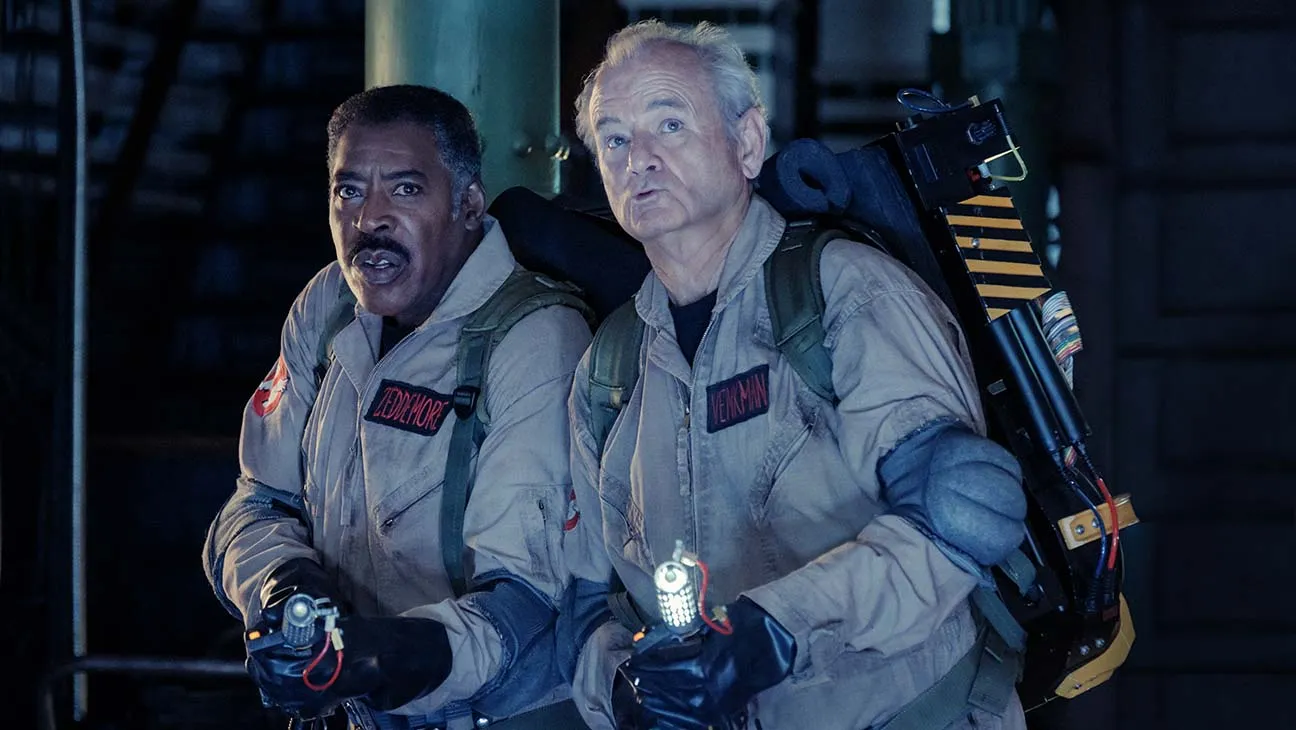
Or, Iโ€™m just very salty over how little time Bill Murray spends on screen.

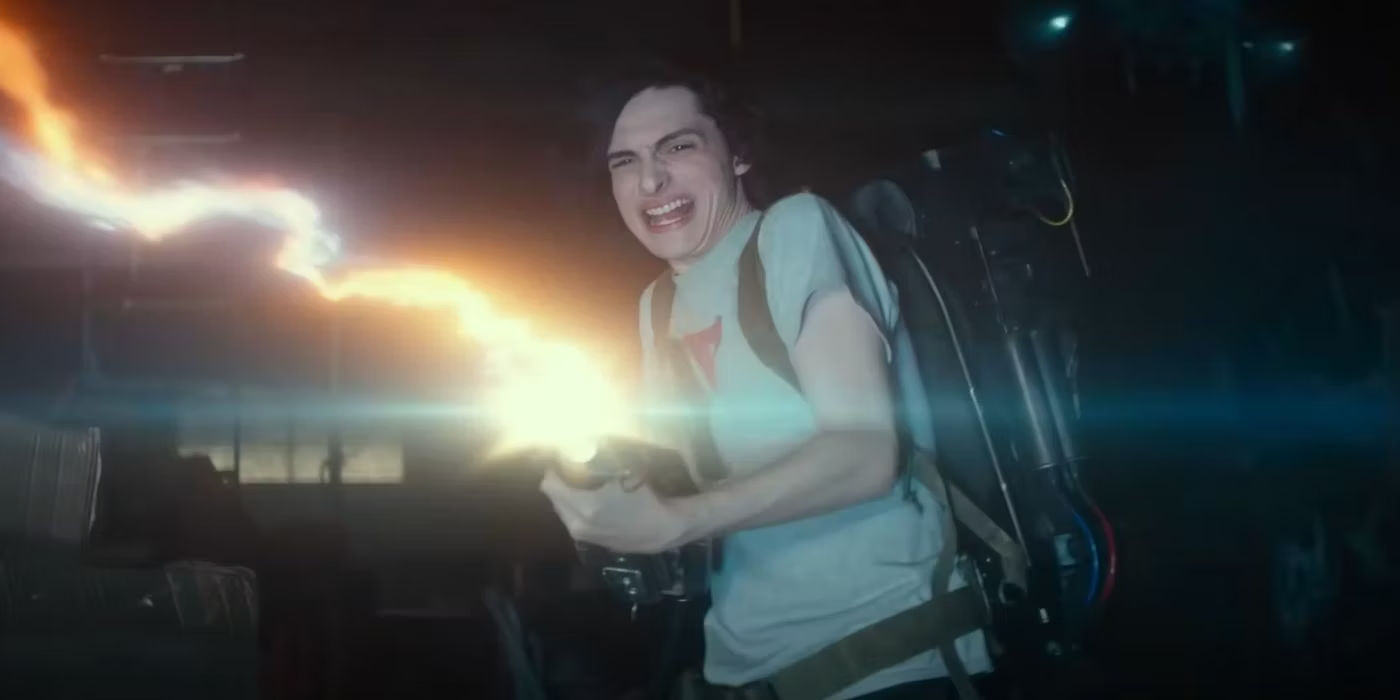
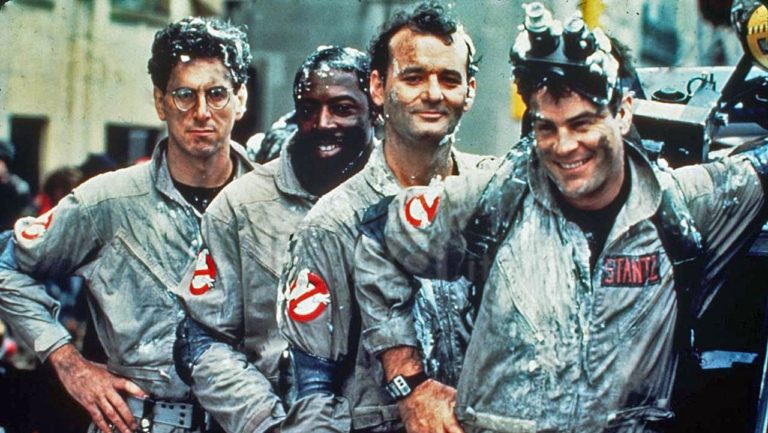
At the very least, the sequel to the reboot, Ghostbusters: Afterlife, offers some immediate fun, whereas the original took too much time to establish mythology and characters that never materialized. The Spengler familyโ€”Callie (Carrie Coon) and her children, Phoebe (McKenna Grace) and Trevor (Finn Wolfhard)โ€”along with her excessively earnest boyfriend, Gary (Paul Rudd), head over to New York City to answer the call of Hook & Ladder 8, the old New York City Firehouse where it all began.

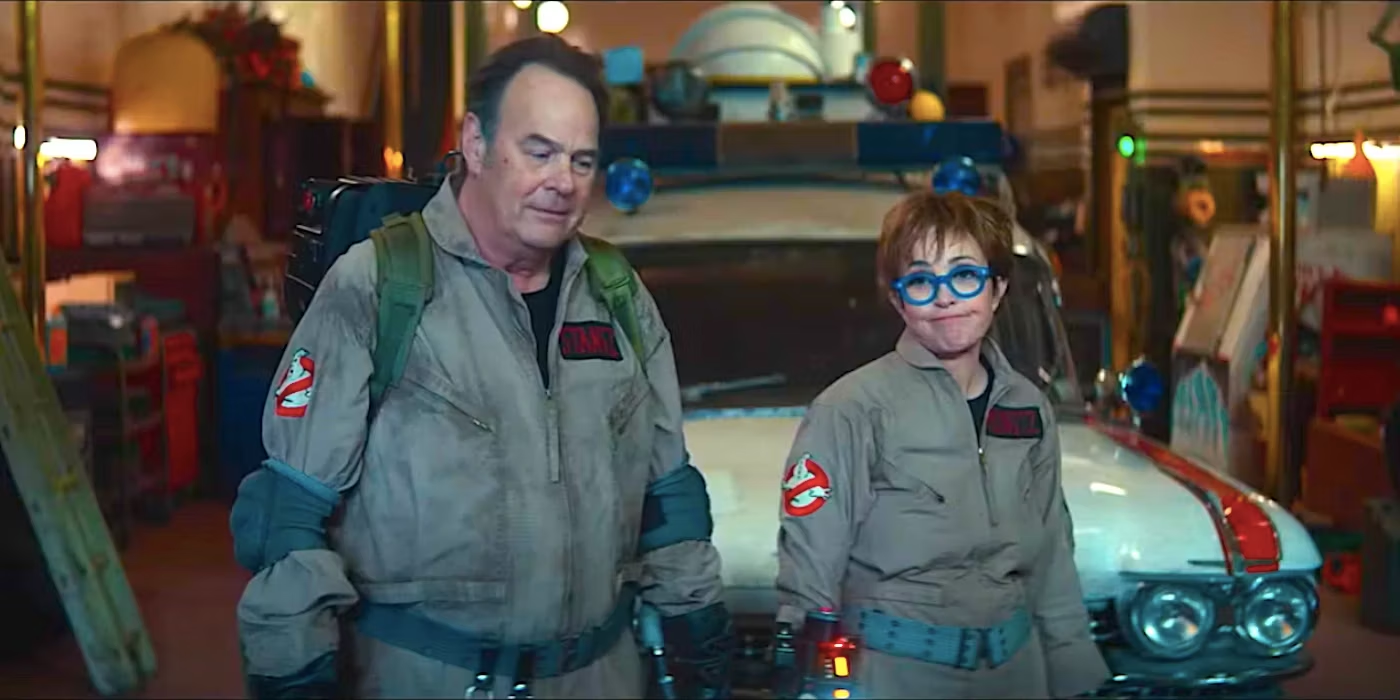
There, they arrive at a secret ghost-busting lab built by Winston (Ernie Hudson), Peter (Bill Murray), Raymond (Dan Akroyd), and Janine (Annie Potts). The Spenglers, Gary, and the original Ghostbusters begin to fight a wraithlike force from an ancient artifact, potentially heralding a new Ice Age, all to protect their homes, families, and the rest of the world from potential extinction. I mean, yes, this sounds like the plot from The Day After Tomorrow, but you get the gist.

Director Jason Reitman hands the Ghostbusters reins to writing partner Gil Kenan (City of Ember). Admittedly, you may be pleased with the efforts to make modern special effects look like the original franchise’s practical appearance. Unfortunately, the film leans way too heavily on them to move. It’s a story that overindulges heavily in tropes and repackages the original elements. It’s the same old story and these special effects are used to distract you from a lack of originality and laziness. And, as my editor would say, stealing its tone from Netflixโ€™s Stranger Things.

Frankly, there has been a remarkable increase in ADHD cases in children in the past thirty years. Now, I am starting to wonder if the special effects in movies are the cause.

Yes, there are some simple pleasures in Kenan and Reitmanโ€™s Ghostbusters: Frozen Empire. Dan Aykroyd wins the prize for best comedic performance, while Paul Rudd can stand in the corner and every so often amaze us with his pubescent good looks and effortlessly charming dry delivery. In small but effective roles, the casting of Patton Oswalt and Kumail Nanjiani, two comic talents known for the nerd fandom, is worth some acknowledgement. Nor can I blame the wonderful Carrie Coon, who does what she can with the material. Who can blame her for wanting a paycheck after excelling in indie films for a decade? I mean, how else will she pay for the Blu-rays Tracy Letts is logging in to on DVDBeaver?


Is Ghostbusters: Frozen Empire a serviceable entry in the franchise? Sure, but is that worthy of a positive recommendation or even forgiveness? No, because they water down the characters and story for the sake of special effects, which means Ghostbusters has become a clichรฉ of itself.

Grade: C-

Podcast Review: Love Lies Bleeding

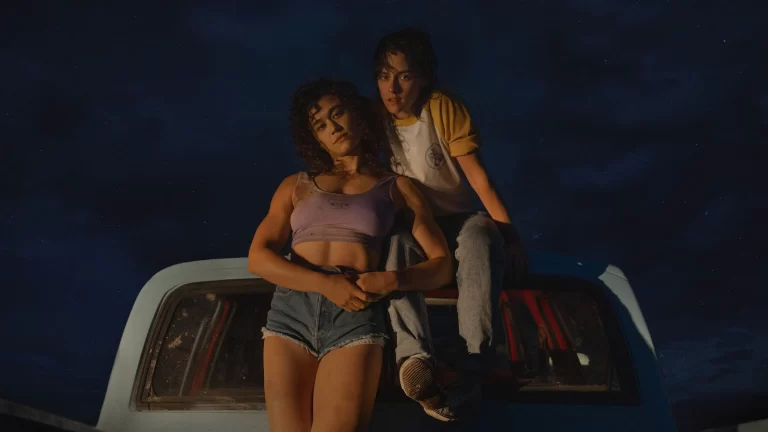
On this episode, JD is joined by Meg from WonderWatchlist to discuss Rose Glass’ new film Love Lies Bleeding, starring Kristen Stewart! We’ve been looking forward to this film for some time now and it did not disappoint. There’s so much to talk about and we had a great time digging into it.

Review: Love Lies Bleedingย (4:00)
Director: Rose Glass
Writers: Rose Glass, Weronika Tofilska
Stars: Kristen Stewart, Katy O’Brian, Jena Malone

Subscribe to our Podcasts RSS
Subscribe to our Podcasts on iTunes
Listen on Spotify
Listen on Stitcher
InSession Film Podcast – Love Lies Bleeding

Movie Review: ‘Late Night With The Devil’ Wants Your Attention, No Matter the Cost


Directors: Cameron Cairnes, Colin Cairnes
Writers: Colin Cairnes, Cameron Cairnes
Stars: David Dastmalchian, Laura Gordan, Ian Bliss

Synopsis: A live television broadcast in 1977 goes horribly wrong, unleashing evil into the nation’s living rooms.


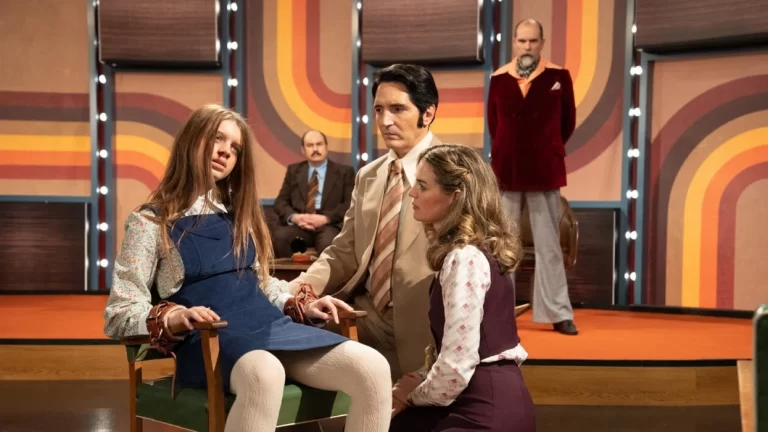
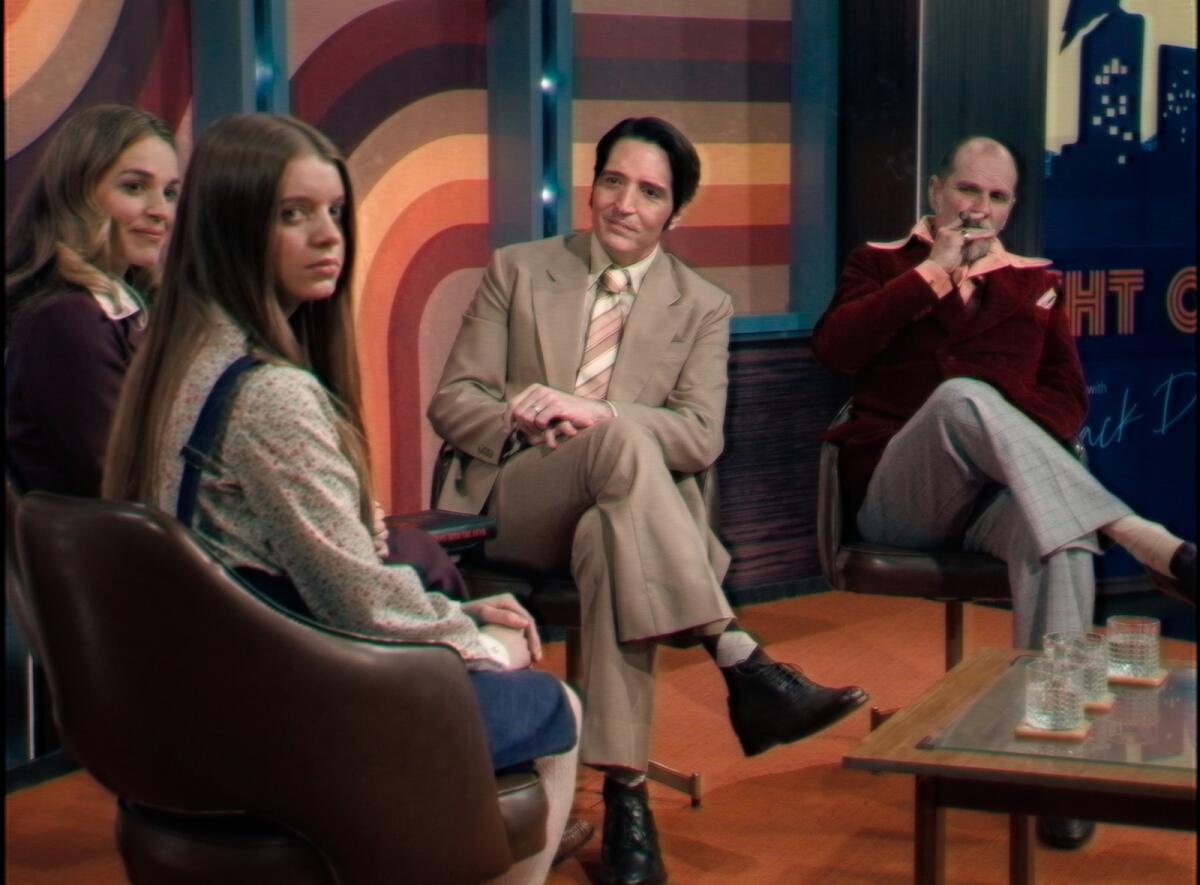
Playing out like a weeknight exposรฉ television special, Late Night with the Devil is an homage to many things. Horror is right up there at the top of course, but this film from Colin and Cameron Cairnes is as in love with late night television as it is with genre films. More specifically, itโ€™s clear the Cairnes have a passion for the late 70s styles of both of these mediums. If the sizzle reel that opens the film giving a brief rundown of the 70s wasnโ€™t evidence enough, the majority of the film is also shot in this very style. By practically transporting the viewer to a specific time and place, it allows for the experience to feel less like watching a film, and more like reliving or experiencing a moment in time. This particular moment? A late night television slot that goes horribly wrong, but not in the way some might think.

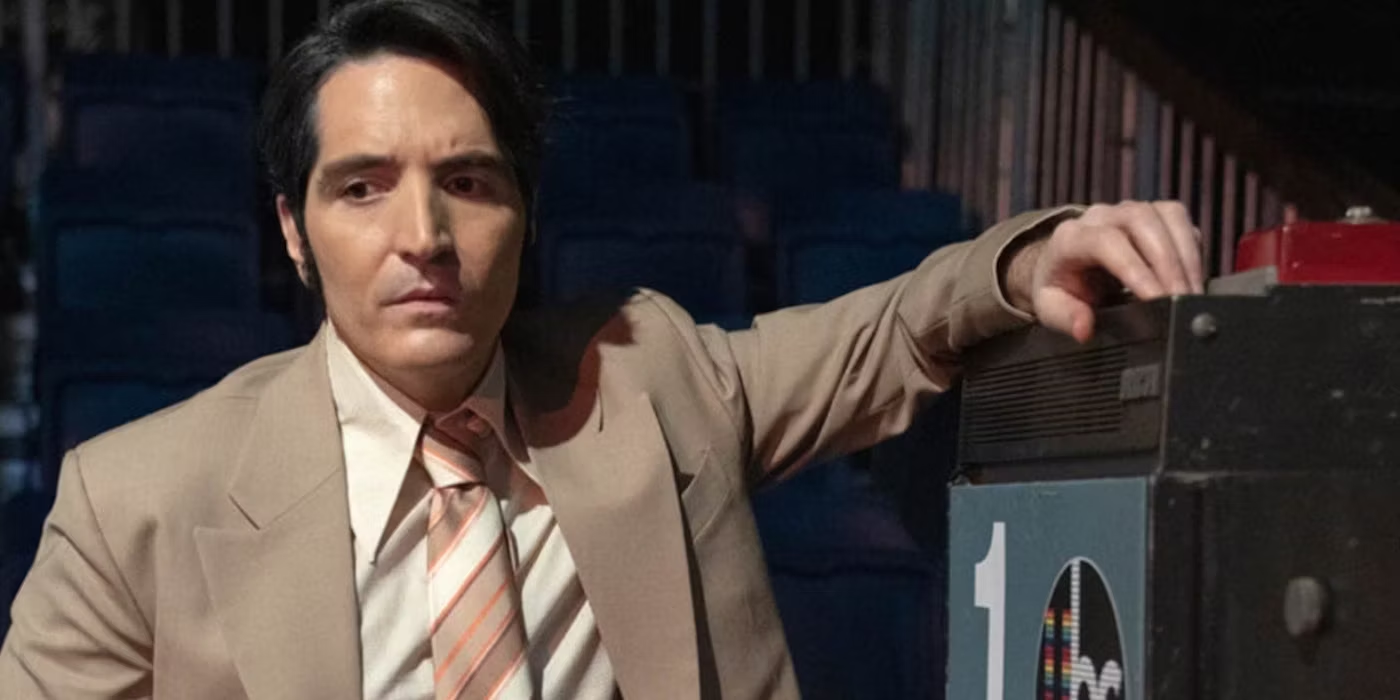
Yes, this is a straight up horror film. But even though weโ€™re well aware of this going in, how the Cairnes take us there might throw some for a loop. Late Night with the Devil requires the same patience as many 70s horror films that came before it. Not only that, much of this film does play out in the style of found footage. The viewer is forced to operate on the idea that the tapes of this episode of โ€œNight Owls with Jack Delroyโ€ are real. And, as written earlier, the Cairnes were committed to convincing their audience that it is genuine. Through the same cameras, lighting, and flashy television sets of the time, โ€œNight Owlsโ€ is fully believable to have been a late night show that time forgot. One of the more frustrating elements of the film, now becoming a point of contention online, is in the sparse instances where this commitment seems to have fallen to the wayside. A handful of interstitials that last mere seconds in the film were generated by artificial intelligence. For a film thatโ€™s so steeped in the look and feel of a specific period in time, itโ€™s confounding that such a throwaway piece of art wouldnโ€™t be designed by an actual artist. While it may not be painfully obvious to some when watching, it should nevertheless be called out as a simple question as to why that decision was made for something so trivial, but full of exciting potential. But beyond mere production value, this film simply doesnโ€™t work without the host. It takes a lot to keep viewers coming back daily to watch your show at midnight, but Jack Delroy is able to make it happen. And when you see David Dastmalchian on that stage, reading jokes straight out of a writers room in a well put-together suit, it all makes sense.

At this point, Dastmalchian is an actor that most will recognize. Having worked with both Christopher Nolan and Denis Villeneuve several times will do that. But heโ€™s often been on the fringes of those films. Perhaps the most heโ€™s been given to do was from James Gunn in The Suicide Squad, playing Polka Dot Man. What many thought was a ridiculous inclusion prior to the release of that film proved to be an excellent choice. Performed with layers of unsettling demeanor, bone-dry comedy, and a genuine pathos, Dastmalchianโ€™s character is one of the most memorable elements of the film. And now, he has ascended from character actor (which I adore him as, and hope he continues to devour wonderful roles) into a leading man, with a film that feels perfectly designed for him. Jack Delroy might appear happy-go-lucky on viewersโ€™ television sets, but thereโ€™s clearly something haunted about him. Perhaps itโ€™s what kept his viewers tuning in, checking to see if that episode would be the one that caused him to snap. And the episode the film follows, a spooky Halloween episode, turns out to be just that very thing.

Itโ€™s only right that such an homage to the 70s era of horror leans into the patience of those films. By no means do I want to imply this is a film that could be considered boring, nor do I mean to imply that the era of filmmaking it pulls from is too slow-paced. Itโ€™s my belief that greater patience rewards a wonderful pay off, and the Cairnes certainly deliver in that regard. Over the course of 90 minutes, this โ€œepisode of televisionโ€ plays out in a way that you could imagine its actual audience both mystified and engaged. Or it could just be something they change the channel from immediately. Yes, the events occurring on screen are compelling to us through the context of the film. But in the eyes of a 1970s television viewer, this might be just another typical occult hoax being capitalized on. That the Cairnes are able to balance both past and present values and interests with such ease speaks to the simple, yet effective writing. And then it all culminates, in classic fashion, with a thrilling sequence full of squirm-inducing practical effects and mean-spiritedness.ย 

One of the more exciting elements of the subtext, or even the apparent text, of Late Night with the Devil, is its examination of the medium of television as a whole. The film opens (with Michael Ironside narration!) by diving into the outlook on televisions in the late 70s. Obviously children everywhere wanted a television set, but there was a hesitancy to have the youth be โ€œbrainwashedโ€ by all that would be shown. Yes, television was an escape. But it also served as a near constant reminder of the political and social turmoil going on just outside your doors on a nightly basis. The 24-hour-news cycle was just on the cusp of being introduced to the world, but it would have likely felt similar to turning on the television now and only ever hearing the worst news imaginable. The Cairnes allow the similarities between the past and present to continue on, as well, in the ways in which the pressures of fame distort even the best of us. It becomes increasingly clear that the lust for fame and popularity has always been ingrained in us as people. You may begin to realize that thereโ€™s nothing particularly exciting about Jack Delroy as a person. In fact, heโ€™s played by Dastmalchian as just some guy on television. Weโ€™re only truly invested because heโ€™s the lead of the film. Whether itโ€™s a likely forgettable late-night television show from 1978, or a streamer on Twitch in 2024, the fact remains the same: people want to be seen. So the question remains: to what lengths will you go to get those eyes on you? Late Night with the Devil lures its viewers in with just that enticing question, before showing the innate, and even occult, dangers in such a situation.

Grade: B

Chasing the Gold: SXSW 2024 Recap

This week on Chasing the Gold, Shadan and Erica are joined by Alejandra Martinez to discuss this year’s SXSW Film Festival and the best films they saw while in Austin! The 2024 fest had plenty of fascinating films and we had a great time talking about the one’s audiences should be on the lookout for as the year unfolds.

On that note, check out this week’s show and let us know what you think in the comment section. Thanks for listening and for supporting the InSession Film Podcast!

Subscribe to our Podcasts RSS
Subscribe to our Podcasts on iTunes
Listen on Spotify
Listen on Stitcher
Chasing the Gold – 2024 SXSW Recap

Mobile App

To hear this Extra Film episode and everything else we do, download our apps on the Amazon Market for Android and the Podcast Box app on IOS devices. The mobile app covers all of our main shows, bonus podcast’s and everything else relating to the InSession Film Podcast. Thanks for your wonderful support and listening to our show. It means the world to us!

Help Support The InSession Film Podcast

If you want to help support us, we would greatly appreciate it! For more info, CLICK HERE.

Movie Review: ‘Immaculate’ is Another Dull Jumpscare Fest


Director: Michael Mohan
Writer: Andrew Lobel
Stars: Sydney Sweeney, Alvaro Morte, Benedetta Porcaroli

Synopsis: Cecilia, a woman of devout faith, is warmly welcomed to the picture-perfect Italian countryside, where she is offered a new role at an illustrious convent. But it becomes clear to Cecilia that her new home harbors dark and horrifying secrets.


The Immaculate Conception gets twisted in Michael Mohanโ€™s Immaculate, his second collaboration with Sydney Sweeney after 2021โ€™s The Voyeurs. And while itโ€™s slightly better than that movie, thereโ€™s very little inspiration to be found in this tight but highly clichรฉd psychological horror film that immediately tries to find the easy way out as soon as its protagonist, Sister Cecilia (Sydney Sweeney), gets pregnant. 

Cecilia has moved from the United States to Italy at the request of Father Tedeschi (Alvaro Morte), where she will take care of dying nuns while also fulfilling her vows through the tutelage of the Cardinal (Giorgio Colangeli). However, Cecilia has been experiencing strange dreams of covered nuns kidnapping her in the middle of the night in a dark room and operating on her body. But it wasnโ€™t a dream. Something happened, and now she is expecting a child without having engaged in any form of sexual contact. The Cardinal believes she is telling the truth and brands this pregnancy a miracle โ€“ a baby conceived without sin. 

If you didnโ€™t realize that this film horrifically reinterprets the Immaculate Conception, one of the sisters tells Cecilia, โ€œWhen will they start calling you Mary?โ€ if the โ€œwithout sinโ€ line from the Cardinal didnโ€™t make it obvious. Reinterpreting such an important part of the Bible could make for an interesting film, but Mohan is never interested in Ceciliaโ€™s connection to Catholicism, nor is he interested in the Immaculate Conception itself. He only uses it as a basis for the filmโ€™s story and fills most of the filmโ€™s 89-minute runtime with a barrage of cheap, uneventful jumpscares that are more annoying than they are scary.

The fact is, thereโ€™s nothing scary about jumpscares other than the potential jump effect you may make in your seat from hearing a higher decibel from someone screaming in your ears than the rest of the film. But thereโ€™s nothing psychologically terrifying about a random person going AAAAAAAAAAAAAAAAAAA so suddenly, especially when the conventโ€™s atmosphere is dread-inducing front the moment Cecilia walks through the doors. More mainstream horror movies must embrace its atmosphere and create scares around that feeling instead of cheaply โ€˜scaringโ€™ audiences with artificial jumpscares that are often never earned. 

A terrific example of this is in Mike Flanaganโ€™s Doctor Sleep, one of the scariest films of the past decade, and never once uses jumpscares to โ€˜terrifyโ€™ its audience. Instead, Flanagan smartly creates a sense of total dread from the minute his picture begins and slowly amplifies it as the film progresses to its riveting climax, which, in turn, raises our heartbeats without us knowing. 

In Immaculate, Cecilia canโ€™t sleep at night because she may or may not see someone in her room (of course, when she turns on the lights, that someone magically disappears) and hears strange noises. That alone should be enough to sustain its atmosphere and create a sense of pure terror without any jumpscares until she learns more about the nature of her pregnancy, which, in all honesty, is incredibly ridiculous but could work if handled properly. However, since Mohan isnโ€™t at all interested in exploring (or deconstructing) religion, the โ€˜revealโ€™ is not only haphazardly predictable but falls precipitously flat on its face as soon as itโ€™s introduced. 

Itโ€™s only in its last act that Immaculate truly comes alive in a bravura climax set in the conventโ€™s catacombs. The location is inherently scary, and Mohan finally understands that the scares should be primarily atmospheric. He also plays with flashlights as Cecilia is pursued by the conventโ€™s higher-ups, who believe the baby is a miracle, while Cecilia doesnโ€™t feel physically fine. It then culminates in a thrilling one-shot where Sweeney flexes some of her most psychologically complex work yet with a final moment you may never forget. 

However, this comes after consistently bludgeoning the audienceโ€™s ears with endless, thoughtless jumpscares that are designed to hide the filmโ€™s pitifully underdeveloped narrative and thematic shortcomings. Despite the festival groupthink you may have heard about the film, Immaculate is far from a nunsploitation film, and those who are saying this have clearly never seen one (Paul Verhoevenโ€™s Benedetta is the closest weโ€™ll get to a nunsploitation film in our times). But it shouldnโ€™t be this toothless, especially when Sweeney clearly cares about this project as its lead star and executive producer. Sheโ€™s one of the most talented up-and-coming actors working today, but the films she has chosen (minus Tina Satterโ€™s Reality and Will Gluckโ€™s Anyone but You) have sadly not been up to par. 

As a result, Immaculate is far from what its title suggests and wonโ€™t be remembered as a staple of religious horror but rather another dull jumpscare fest that apparently passes as โ€˜horrorโ€™ these days. Our standards seem incredibly low, which may be why horror has consistently remained Hollywoodโ€™s least interesting genre. 

Grade: D+

Was It Really Bad? My Brief Reviews On Razzie “Winners”

With the Oscars comes the Razzies, an outdated version of celebrating the worst films that year which has overridden its stay as a thing. What was a funny joke now just feels like vitriol towards anything, especially if thereโ€™s a child involved, or if it goes after certain actors consistently. (To be fair, they rescinded any past nominations of Bruce Willis after his dementia diagnosis was made public.) But forty years later, it is around and Criterion Channel put out a number of films which won some Razzies. Some I had seen – Showgirls, Heavenโ€™s Gate, Year Of The Dragon – others I havenโ€™t seen because I didnโ€™t feel the need to see such trash. But, I wouldnโ€™t be a real cinephile if I didnโ€™t give some of these movies a chance. So, I saw five films that stood out to me and gave them a shot at watching. Here is what I thought about them.  

Xanadu (1980)

Olivia Newton-John, hot from Grease, starred with Hollywood legend Gene Kelly in a musical co-composed with the Electric Light Orchestra (ELO) meshing Greek mythology and 1940s Los Angeles. Interesting combo. ELO has bangers, this film and musical is a cult classic, and it turned out to be Kellyโ€™s final film performance. But the film was so bad that, along with the massive failure of eventual Worst Picture winner Canโ€™t Stop The Music, writer John J.B. Wilson established the Golden Raspberry Awards. Quite a harsh reaction, since some of the music I heard before was really good.

Sure enough, the whole story was a mess and shot so poorly that I really could not judge the rolling skate choreography fairly. Special effects were really cheesy, but this was the early invention of computer graphics, so I wonโ€™t be too harsh. Olivia-Newton John made it watchable thanks to her infectious energy in song and dance with solid pieces like the titular track, a number-one hit in โ€œMagic,โ€ Newton-Johnโ€™s duet with Cliff Richard on โ€œSuddenly,โ€ and โ€œIโ€™m Alive,โ€ which could not be as ELO as a song could be. Forget the movie, just listen to the soundtrack. 

Under The Cherry Moon (1986)

Prince was one of the most talented artists of all time and was on fire after the massive success of Purple Rain. He got to do anything he wanted and put the idea forward of doing another musical film where he had more creative input. Prince was actually not supposed to direct it, but the original director left the project two weeks after filming started, so he stepped in without repercussions from the Directorsโ€™ Guild because it was filmed in Europe.. Steven Berkoff and Kristen Scott Thomas, in her feature debut, co-starred and known Scorsese cinematographer, Michael Ballhaus, shot the film. 

The music is great, like everything Prince has done, but he shouldโ€™ve given the directing job to someone else. The script by first-time writer Becky Johnson (who would later co-script The Prince Of Tides and receive an Oscar nomination) has its obvious flaws for a rookie, but it can be forgiven. Prince saw this as a black-and-white film, acting as a throwback to โ€˜30s cinema, but this really should have been made in traditional color to capture the exotic nature of the French Riviera. Obviously, getting to the same level as Purple Rain was a high bar, but Cherry Moon just fails completely, although not as bad as other terrible rom-coms. 

Ishtar (1987)

Elaine May, Warren Beatty, and Dustin Hoffman to this day defend this adventure-comedy as a good film and it does have its supporters. Quentin Tarantino, Lena Dunham, Edgar Wright, and Martin Scorsese all liked the film. Two voters for Sight & Soundโ€™s decennial poll for greatest film of all time actually voted for Ishtar. I had never seen it until now, but when I read about the plot – a struggling musical duo that goes to Africa and gets caught up in a coup to overthrow the government – I didnโ€™t have good feelings.

Surely enough, I hated it. What in the flying f**k is happening here? The Beatty-Hoffman combo do not sell at all as musicians who try to become the next Simon & Garfunkel. Isabelle Adjani wasted her time and talent. How did Vittorio Storaro get involved with this??? It is wonderfully shot, but no thanks to Elaine May. It didnโ€™t make me laugh and the whole thing would have been better if they just filmed the chaos in making this disaster which is the stuff of Hollywood lore. Read the camel story and youโ€™ll know what I mean. 

Freddy Got Fingered (2001)

Tom Green wrote and directed this infamous comedy and took his Razzies in stride by attending the โ€œceremonyโ€ and bringing his own red carpet to the show. Like others who took the joke and accepted the dishonor in stride, Green saw it as them taking the joke with canned laughter and he wore the multiple Razzies awarded as a badge of honor. In fact, the movie has become a cult hit and some critical reevaluations see it as an underrated and misunderstood comedy. Even Roger Ebert, who hated the film, said, to Greenโ€™s credit, that he made, โ€œan ambitious movie, a go-for-broke attempt to accomplish something. It failed, but it has not left me convinced that Tom Green doesn’t have good work in him.โ€

So, I decided to use the free 90 minutes I had to watch to figure out what the hell is Freddy Got Fingered about. My head could not have hit the table as many times with its shockingly crude, yet balls-out attempt at Greenโ€™s shock comedy on maximum overdrive. For my taste, it was too much; you truly cannot unsee certain moments such as the one involving sausages as well as the fact the title refers to an allegation of sexual abuse. Having been familiar with Greenโ€™s work, which was at its peak in the 1990s and early 2000s, it wasnโ€™t all bad, but youโ€™ve been warned if you go down this birth canal of gross out humor.ย 

Gigli (2003)

Poor Martin Brest. He retired after this debacle and does not like reflecting on it. It broke up Ben Affleck and Jennifer Lopez (who later reunited and got married) as the massive bomb of this romantic comedy was really telling with a budget of $75 million and a box office return of $7 million. The cast included Justin Bartha, Al โ€œmy eyes see Oppenheimerโ€ Pacino, and Christopher Walken with Robert Elswit as DP and John Powell doing the score. How bad was this really? Considering that Brest himself said the film deserved to get killed and put blame on his creative conflicts with the studio, I sat down ready for the s**tstorm coming.

Wooooooooooooooooooooooooooo, boooooooooooooooyyyyyyyyyyy!!!!!!!!!!

I cannot believe what I saw for two hours that some talented people read the script and thought this was a good idea. Or, maybe I shouldnโ€™t have been surprised considering the garbage all the actors did after this film. Lopezโ€™s character is a lesbian, yet she falls for Affleckโ€™s character. The Baywatch obsession with the mentally challenged brother, played by Bartha, who is kidnapped and, spoiler alert, ends up staying kidnapped, but unharmed. This is not the ending of Midnight Run when Robert DeNiro decides to let Charles Grodin go free after all that hassle of catching him. It was all bizarre with no real plot, but the real-life happy ending of Affleck and Lopez is the most redeeming thing of it all. 

Chasing the Gold: 2024 Awards Coverage Update

Hi all, itโ€™s your friendly neighborhood Editor-In-Chief, Dave Giannini. You may have noticed that last year, we were a little light on awards coverage.ย  We know you canโ€™t stop talking about the awards season, so this year, neither will we. As you well know, this is a year round event. So you can expect coverage, startingโ€ฆnow!

This year, you can expect a lot of material.  Our podcast will have many Chasing the Gold episodes, but we will have lots of written articles, too. For Your Consideration, predictions, prognostication, under the radar picks, and more!

Now letโ€™s meet the team! Be sure to click their links to see their other work!

Shadan Larki and Erica Richards will be covering everything awards related on our podcast, Chasing the Gold

Zach Youngs – Best Picture and Best Original Screenplay

Jacob Throneberry – Best Supporting Actor and Best Animated Feature

Cameron Ritter – Best Director and Best Sound

Khayla McGowan – Best Supporting Actress and Best Costume Design

Alex Papaioannou – Best Cinematography

Will Bjarnar – Best Adapted Screenplay and Best International Film

Andy Punter – Best Actress and Best Editing

Jaylan Salah – Best Actor and Best Hair and Makeup

Nadine Whitney – Golden Globes Correspondent

We look forward to seeing you all here as we traverse the awards season together!!

Movie Review: ‘Shirley’ is Uplifted by King


Director: John Ridley
Writer: John Ridley
Stars: Regina King, Terrence Howard, Lance Reddick

Synopsis: A reformed criminal tries to live an honest life, when his past catches up with him and he his forced to do whatever it takes to protect his family.


โ€œWhat do you want me to tell them? Fight hard but not too hard?โ€ โ€” Shirley Chisholm

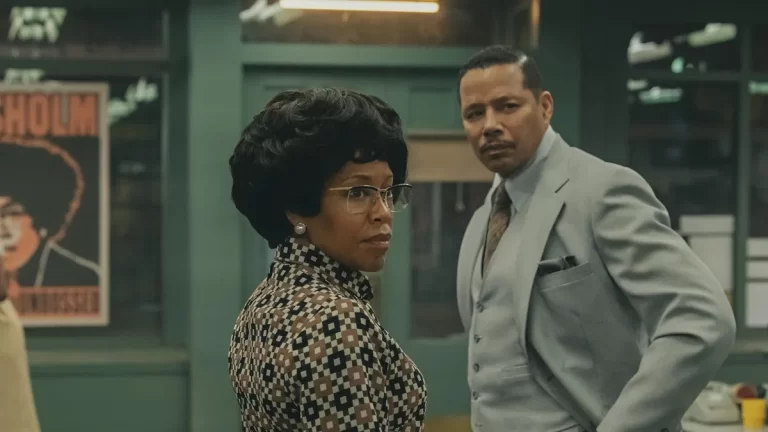
John Ridleyโ€™s Shirley belongs very much to the Colman Domingo starring Rustin biopic, in the sense that it concentrates mostly on one era of the subjectโ€™s life. Fill in the blanks with other characters giving exposition or the protagonist making statements which come directly from their speeches and writing. Find an unassailable and powerful lead and enough decent supporting players and you have a film about a mostly forgotten pioneer in the American political arena. In this case it is Congresswomen Shirley Chisholm (Regina King) who wanted to give politics back to the people. To be a catalyst for change. To give voice to the disenfranchised across America while Vietnam was still raging, there was extensive violence across America, Dr. Martin Luther King Jr., had just been shot, and the rise of second wave feminism and campus activism was in full swing.ย 

The film gives you the statistics. The number of women and Black people working in congress when schoolteacher Shirley St. Hill Chisholm was elected in 1968. The number of representatives before Shirley who were both black and a woman? Zero. Chisholm represented New York’s 12th congressional district centered mostly in Brooklynโ€™s Bedfordโ€“Stuyvesant area. A vibrant but often troubled melting pot of Black Americans, โ€œChicanos,โ€ and working-class people and immigrants. Shirley, herself a Brooklyn resident and Barbadian American, was a longtime activist in her community before seeking any official office.ย 

The familiar beats play out. Shirley is photographed on the steps as part of the 91st congress. She is the only woman in the picture. Once she steps inside the hallowed halls belonging almost entirely to men or the occasional White woman, she is reminded of her โ€œplaceโ€ by a man who canโ€™t believe she makes the same salary as she does. After shutting him down, she meets with her longtime friend and congressman, Ron Dellums (Dorian Missick) who tells her what her portfolio is. Sheโ€™s not having it and goes straight up to the Speaker of the House and tells him exactly what she wants.

At home she speaks with her husband Conrad (Michael Cherrie), formerly a private investigator and industrial compliance officer. He listens to her frustration and does his best to assuage her. โ€œItโ€™s your first term. Wait and Iโ€™m sure youโ€™ll do great things. Just give it time.โ€ Shirleyโ€™s retort is, โ€œYou want to give Richard Nixon time?โ€ Conrad ensures her, โ€œYouโ€™ll find a way to fit in.โ€

Fitting in is not on Shirleyโ€™s agenda. However, sheโ€™s aware that to fight the system she must be a part of it. She believes in democracy and the Democratic Party for their ability to enact meaningful change. Sheโ€™s just aware that without people like her all the promises in the world mean little. She is there to hold people in power to account.

A small jump in time and Shirley has been working in congress for three years. Sheโ€™s been motivating change and staying true to her word. One such word is that she would put her name on the Presidential ticket if a certain amount of money was raised in Florida. Not only was it raised, but it was also double the amount expected. Shirley Chisholm, along with her advisor Wesley McDonald “Mac” Holder (Lance Reddick), her long-time friend Arthur Hardwick (Terrence Howard), and a former intern now Cornell law student Robert Gottlieb (Lucas Hedges) are going to self-fund a bid which could ruin her financially and anyone who invests in her. It is a massive risk, especially when the campaign will be challenging more popular Democrats and fighting on multiple fronts including sexism and racism. Proudly Caribbean-American Shirley, who still speaks with a Bajan patois is one of the most unlikely candidates in United States political history.

Stanley Townsend (Brian Stokes Mitchell) the man brought on to manage her campaign says Shirley is very โ€œof the moment.โ€ With the Black power movement and civil rights being integrated with youth culture, anti-war sentiment, and feminism, Shirley just might win some hearts and minds with her โ€œUnbossed and Unbotheredโ€ campaign.

One of the hearts she does reach is Barbara Lee (Christina Jackson). A single mother and University student who believes voting is a bourgeoise construct unhelpful to true revolution. Barbara is already tired of having to constantly fight just to put food on the table for herself and her child. Shirley laughs and tells her, โ€œLittle girl, if you donโ€™t vote you donโ€™t have a say. If you are yelling from the sidelines that is where youโ€™ll stay. Outside.โ€

Shirley charts Shirley as she makes her own heartfelt decisions. Her quiet nemesis is Civil Rights activist and โ€œfavorite sonโ€ campaigner Walter Fauntroy (Andrรฉ Holland). Her loud one is Alabama segregationist politician George Wallace (W. Earl Brown). Perhaps her true nemesis is her inability to properly play the game. Yet that inability is also a strength. Chisholm refuses to admit that going against well considered advice is sometimes unhelpful. She refuses to say anything she doesnโ€™t mean, even if it sets her back.

When the issue of school district busing comes up, Chisholm says she doesnโ€™t agree with it because it doesnโ€™t fix educational inequalities for Black and poor children. Building better schools and creating infrastructure does. When she is asked about the Black Panthers, she says she regrets their existence but understands why they are needed. When she is asked about abortion, she endorses Family Planning but attempts to give nuance to the conversation. Nuance is not what the media wants, and it makes her an easy target for her opponents.

Eventually, the cracks in her marriage start to widen. Conrad, who in nineteen years of being with Shirley, finds himself so in her shadow heโ€™s forgotten what itโ€™s like to be visible. She is chastised by her sister Muriel (played by Regina Kingโ€™s actual sister Reina King) for making her life and the life of her mother difficult as they have to put up with the gossip and dislike of Shirley within the more conservative Baptist sections of the Brooklyn community.

People walk out on Shirley. They steal from her. They give up on her campaign and the strategies she employs. Sheโ€™s fighting the good fight but often in a manner which causes friction and frustration amongst her supporters, and outright murderous hatred from her detractors. There was more than one attempt on her life.

Shirley meets Diahann Carroll (played with uncanniness by Amirah Vann) who is quietly active as a supporter of the Black Panthers. Carroll arranges a secret face to face with Huey P. Newton (Brad James). โ€œIโ€™m putting thunder and lightning together,โ€ says Diahann. Shirley is both but she is not a convicted murderer like Newton. When questioned by Newton why a woman who is โ€œjust a schoolteacherโ€ thinks she has the right to speak for Black people she reminds him that โ€œHarriet was just a slave, and Rosa was just a domestic,โ€ and asks him what his job is. She gets the endorsement.

Even with the ability for people of the age of eighteen to vote for the first time in a Presidential election, and even with Shirleyโ€™s rallying and inspirational cries, almost everyone but Shirley accepts she is running a campaign she canโ€™t win. However, just in the fighting she is changing laws with the FCC, (thanks to a lawsuit she has Robert Gottlieb file because television stations would not let her debate). Sheโ€™s making progress with the ERA. A hospital visit to George Wallace after he is shot means that in the future the racist politician turned judge gives her support on a major bill. The hospital scene itself is a little too fanciful to be particularly convincing.

One might not understand how voting colleges work, or how getting the support of delegates is essential. American politics can often be opaque even for Americans. What is easy to understand is how formidable Shirley Chisholm is. At one stage she says to Arthur, โ€œIโ€™m not naรฏve.โ€ He points out, โ€œYou arenโ€™t realistic either.โ€ She is the dreamer she is accused of being by people she trusted, but she is not the fool. She is practical, tactical, but driven by her oftentimes conflicting instincts. When she is asked why she keeps going she responds that she doesnโ€™t know how to stop.

โ€œMen are so used to being in control, that equality to them feels like chaos.โ€ Shirley says to Diahann. She also says in different ways to Conrad, Muriel, Arthur, and Mac โ€œI donโ€™t think Iโ€™m special. Iโ€™m just how I am, and I donโ€™t know any other way to be. Iโ€™m sorry.โ€

Shirley feels she is beyond making Conrad feel inadequate, but she also doesnโ€™t treat him as well as she should. Her husband she says is โ€œ200 pounds of patience,โ€ he exists only to watch her. If Shirley were a man in the period, the question wouldnโ€™t arise as to her domestic life and gender politics. Yet, she also wonโ€™t bend for Barbara and almost has her leaving politics out of disillusionment. She was treated differently to the other St. Hill sisters. Her Papa recognized her genius and encouraged her while letting the other three languish. It wasnโ€™t her fault that he showed her favoritism, but it also didnโ€™t hurt her the way it did Muriel and her mother.

Putting a groundbreaking figure like Shirley Chisholm back on the map is a worthy endeavor. The direction is sometimes flavorless, although rich in period detail. The script is written specifically to highlight all of Chisholmโ€™s best inspirational speeches: she gives them in diners, she gives them while eating McDonalds, she gives them in almost every interaction she has. Because it is Regina King telling people โ€œDonโ€™t be humble โ€“ false humility is a kind of arrogance,โ€ one can almost forgive some of the contrivances.

Regina King is the reason Shirley manages to get across the line and hold power. King expertly portrays a woman who doesnโ€™t know what the word โ€œNoโ€ means, who is complex, and not always right. A woman who demands loyalty and respect but is surprised by being truly loved.

Shirley is also sustained by stand out performances from the late Lance Reddick with his stately intelligence and humor. Andrรฉ Holland as Fauntroy โ€“ bringing with him both the charisma and necessary manipulation of a seasoned political animal. Christina Jackson is perfect as the young Barbara Lee who later becomes a major political force (the real Barbara Lee appears at the end of the film).ย 

In Shirley, there is one thing of which the audience can be sure; Regina King is going to elevate a moderately rote and intermittently contrived biopic by delivering emotional and empowering screen magic.ย 

Grade: B-

Movie Review: ‘Red Right Hand’ Never Reaches For New Heights


Directors: Eshom Nelms, Ian Nelms
Writer: Jonathan Easly
Stars: Orlando Bloom, Andie MacDowell, Garret Dillahunt

Synopsis: A reformed criminal tries to live an honest life, when his past catches up with him and he his forced to do whatever it takes to protect his family.


A tattooed and shirtless Orlando Bloom emerges from his cabin in the woods, he lights up a smoke and grimaces. Immediately, he commences what we presume is his daily routine of push-ups and pull ups before going about his work on the family farm. This opening scene does a solid job of indicating what sort of world we are going to inhabit in Red Right Hand. Zero frills, stripped back, and, above all, gritty. 

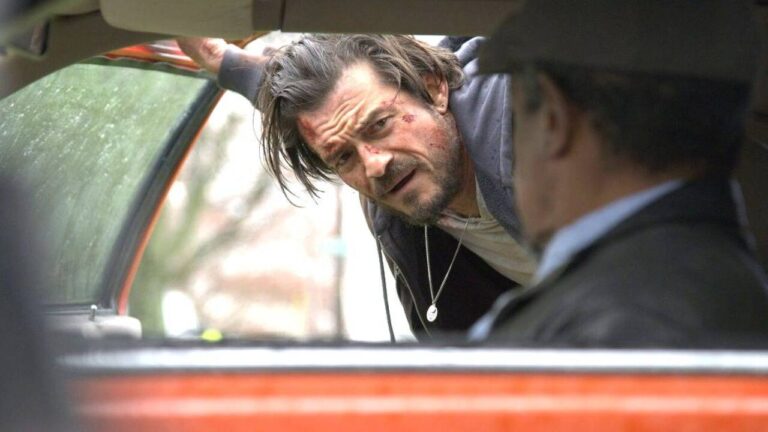
Cash (Bloom) is a reformed alcoholic and drug addict with a past as an enforcer for the local crime boss, Big Cat (Andie MacDowell in fine scenery chewing form). Now going straight, Cash lives a clean life helping out on his Brother-in-lawโ€™s farm and being the doting uncle to his teenage niece, a capable bookworm with a bright future. 

As is often the case in films like this, the farm runs into financial trouble and Cashโ€™s Brother-in-law struggles to pay back a loan to Big Cat. If Cash wants to help his family out, all he has to do is come back in to the fold for three more jobs. Three jobs and he is out, once and for all. Of course, things donโ€™t quite go to plan and Cash comes to blows with Big Cat and her litter of hillbilly enforcers. 

The plot of Red Right Hand is pretty familiar territory then. In fact, I would go so far as to say there is nothing on screen here that you havenโ€™t seen done elsewhere. For the most part, however, thatโ€™s not a problem. Audiences sitting down to watch this are unlikely to be looking for innovation or thought provoking filmmaking. What we are looking for is a likeable protagonist, a compelling villain, and good enough action sequences to keep us entertained through the runtime. For the most part, Red Right Hand delivers on these minimal requirements. 

Bloom does a serviceable job as Cash. He certainly looks the part and to my untrained ear, he seems to do pretty well with the Southern accent required. Itโ€™s nice to see him playing against type, especially compared to the roles that marked his early career. He plays it very straight, however. Itโ€™s unclear what is down to the script and what is performance, but Cash is quite one dimensional. You get the impression that Bloom was reaching for a more naturalistic, down to earth performance, but compared with the more exaggerated Big Cat of his co-star MacDowell, Cash ends up coming off a little bland. 

So how about those action scenes? For the most part they land, and there are one or two genuinely gripping moments where itโ€™s not clear exactly how the scene will play out. By the end of the film there is a pretty extensive body count but it never crosses the line into feeling frivolous. Each death feels sufficiently weighty, and the stakes throughout are high. Of course, the end is never really in doubt, with good triumphing over evil, as it always does in this kind of film, but that triumph does not come cheaply.

The biggest complaint I have for Red Right Hand is that it feels like it was only a scene or two away from being more than a down the line genre movie. For example, much of the plot centers on the reformed Cash having found God as an important part of his sobriety. However, he never seems to really wrestle with the fact that he is committing a mortal sin by taking out Big Catโ€™s gang. Itโ€™s not the sort of detail the plot demands, but it could be something that would elevate this beyond its genre conventions. For the most part, all of the characters end the film the same people as they started it, assuming that is that they made it as far as the end credits.ย 
Red Right Hand is a solid genre movie. Itโ€™s well put together and successfully takes the audience through some gripping sequences. At times it comes close to being more than just solid but just doesnโ€™t quite seem to have enough confidence in itself to stretch beyond its genre trappings, which is a bit of a shame.

Grade: C-

Podcast Review: The American Society of Magical Negroes

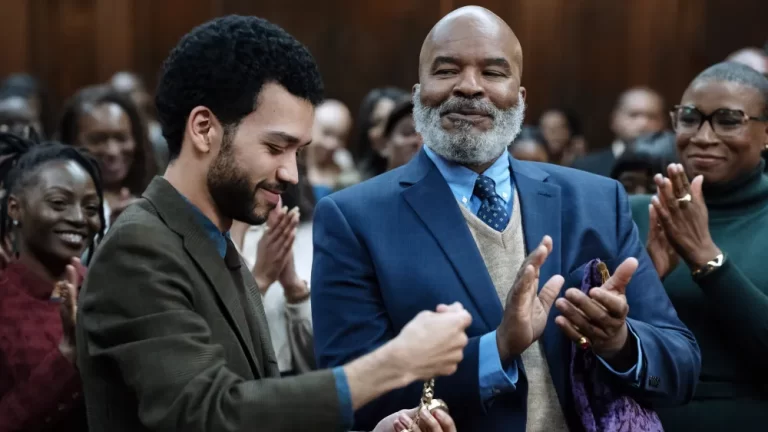
On this episode, Christian Eulinberg joins JD to discuss the Kobi Libii’s directorial debut film The American Society of Magical Negroes! It severely underperformed at the box office this weekend, and got disappointing reviews out of Sundance, but there was still plenty to talk about with the film despite its lackluster execution.

Review: The American Society of Magical Negroes (4:00)
Director: Kobi Libii
Writers: Kobi Libii
Stars: Justice Smith, David Alan Grier, An-Li Bogan

Subscribe to our Podcasts RSS
Subscribe to our Podcasts on iTunes
Listen on Spotify
Listen on Stitcher
InSession Film Podcast – The American Society of Magical Negroes

Interview: Nayla Al Khaja – Director of ‘Three’

Zach Youngs interviews the director of Three, after watching and reviewing here.

Zach Youngs: Who is a filmmaker who has had the most impact on your creative work?

Nayla Al Khaja: Ismรซl Ferroukhi’s The Grand Voyage and Karim Traรฏdia’s Polish Bride both resonate with me due to their raw, realistic approach that feels intimately connected to life and sensitive to emotions. The latter I’ve been inspired by their capability of getting the best performances, whereas it when it comes to film pulse, timing and the sense of unease, Roman Polanski had a big impact on me. 

ZY: What were the films you watched in order to get a sense of how you wanted Three to look?

NAK: I watched The Others and Repulsion.

ZY: How much was Three influenced by western films about exorcism?

NAK: The film does have hints of western exorcism films but I was drawn to telling this specific story because it harkens back to a vivid childhood memory of mine, where I witnessed an exorcism akin to the one portrayed in the film, albeit with some creative embellishments. Beyond the supernatural elements, the narrative delves into cross-cultural beliefs, themes of mental illness, loneliness, and explores the profound bond between a mother and her son. It comes across a little differently than the western exorcism film due to having influences of Islamic exorcism and cultural ritual. Uses cottoning technique to block out airways so that evil entities can be released from the left toe is quite unique. 

ZY: In the beginning of the film it’s thought that Ahmed is under the influence of an evil eye, is this a typical cause of possession?

NAK: Actually evil eye does not lead to possession but rather it is about envy of others where others due to jealousy (and envy) look at you and those around you in a bad light which may have negative influences. It’s akin to โ€œThe Secretโ€ where positive thoughts could lead to positive outcomes, Evil eye is the opposite but it doesn’t come from within but from others who wish to see you suffer. That’s why in many Arab cultures we have been taught to not flaunt your wealth and be charitable to others. In Islamic culture you also observe this during the month of Ramadan as well. The progenitor of the possession is when Ahmed naps under a tree at night and also the dark ritual perpetrated by the family. It is a belief that when a person disturbs jinns at their resting place at night, it is a bad act that could lead to jinn(s) in either possession or causing bodily harm. It is well known that the particular tree is known as the resting place of jinns. If you observe in the film, the tree is in the middle of nowhere and away from other vegetation. The tree is neither alive nor is it dead. 

ZY: What was the reasoning behind the first mullah’s betrayal of Maryam’s trust? Was it only for profit or does this group work toward releasing more djinn on the world for the purposes of chaos?

NAK: I left that to the viewers interpretation but of course in my culture some people in positions of power use their influence to profit off of peopleโ€™s misfortunes in this case con-artists. The evil eye is not so much as an act of releasing bad influence, but to give enough hope that the victimโ€™s can be healed and therefore this requires more visits resulting in more profit. Maryam is a successful woman with a child, she is trapped between her rational mind and her sister’s strong influence. 

ZY: What drew you toward incorporating scientific skepticism in the form of a dedicated doctor character?

NAK: Medicine and mental health prognosis has come a long way. I wanted the Doctor to be the vessel of the viewer’s skepticism, to have it observe from a neutral and scientific perspective. Maryam is a cultured and educated woman, she thinks her sonโ€™s problem is not linked to religion but health related, well until she becomes extremely desperate. I wanted the doctor to be on the other side of the coin from religious beliefs but keep him in the rituals. In most exorcism films when the medical team stops the religious team picks up the battle. In Three, the doctor witnesses acts even against his will and stays until the end. 

ZY: Was Dr. Mark Holly always going to be a character in the film or was he added later to deepen the tension between Maryam and Noora?

NAK: Since inception, Dr. Mark Holly was always intended to be in the film. I wanted to depict the impact of expatriates living in the UAE and how the city is extremely influenced by the West. 

ZY: Did Dubai’s transformation into a hub of wealth, leisure, and luxury over the last few decades influence how you approached Maryam’s skepticism of traditional Muslim exorcism rites?

NAK: Yes of course, Maryam is a successful, independent and educated woman. I wanted to showcase the growth of Dubai through her success but also the origins of her customs using Ahmedโ€™s predicament. She lives in a big house, sending Ahmed to expensive school, is a successful business woman, divorced, drives and owns a luxury vehicle. All this is to state the transformation of Dubai from an unknown city in GCC to a top ranked business and tourist destination. All this adjustment, wealth and knowledge lead her astray from her culture, religion and her origin. Success leads to neglect of her own blood and religion and hence her skepticism. 

ZY: Do you have something in mind for your next project?

NAK: BAAB, a fantasy drama set in modern-day Ras Al-Khaimah, delves into the themes of grief and loss. A mother, grappling with the recent and sudden death of her sister, stumbles upon hidden tapes that unveil the dark truth about her sister’s passing and reveal long-buried family secrets. Two time Oscar winner AR Rahman will play a significant role in the project, lending his talents to compose the film’s music.

ZY: Where can people find more of your films?

NAK: I do have my films The Shadow  and Animal streaming on Netflix worldwide. Three has been in theaters in GCC since February 1, 2024. We are exploring distributing the film to other regions. More on that very soon. Three is also the first Arabic film to use ai dubbing, by using the actual voices of the actors. The film will be released in Mandarin in UAE theaters on March 21 for the Chinese population. 

In Praise of Feyd-Rautha Harkonnen: The Sadomasochistic Rogue of House Harkonnen

Austin Butler is at his best when heโ€™s playing freaks.

Some actors approach their characters with neat, tactful planning, like a surgeon measuring the incision on the patientโ€™s body after preparation for the procedure. Others believe in the chaos theory. Itโ€™s like the body is there and they jab it with a knife in calculated but asymmetrical cuts and grazes.

Butler belongs to the latter group. He brings out an incomprehensibleโ€“ albeit playful- energy to characters he plays and leaves audiences questioning what they just saw. Wasnโ€™t Elvis in Baz Luhrmannโ€™s titular movie a freak with all those erotic, possessed moves on stage, and these seizure-like dances, and this wild unnerving energy? This thirty-something actor has turned Elvis into a benign creature, that bizarrely hit closer to home than more โ€œfaithfulโ€ Elvis adaptations in earlier โ€“or later- works. It was more like Pablo Larraรญnโ€™s interpretation of Diana in Spencer and how he directed Kristen Stewart โ€“the last person to come to mind when the image of Princess Diana is evoked- to play the spirit of the dashing but haunted Princess of Wales.

Wasnโ€™t Tex Watson in Once Upon a Time in Hollywood a freak? With that shaky tone, those glistening eyes, these spit-heavy rants and mad gestures?

And isnโ€™t Feyd-Rautha Harkonnen a freak?

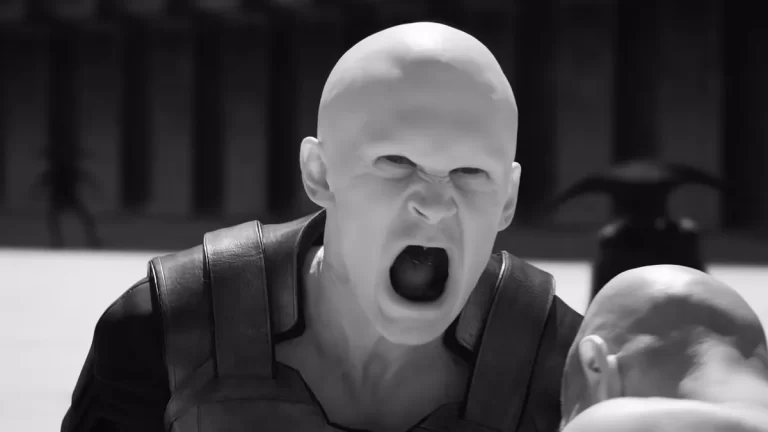
It wasnโ€™t until he started drooling during the Harkonnen arena fight scene, that I realized, well, that Feyd-Rautha Harkonnen differed a bit from the one in the book. That was because Butler, as usual, grabbed him from whatever shelf he was placed on and brought him to his battlefield. In this fight scene, Feyd enjoyed being two inches away from death. He reveled in the hatred the Atreides slave showed him and laughed in the face of a knife so close to his throat. He hugged the dead man kindly like a mother and waited until he saw the light fade from his eyes. If thatโ€™s not a masterful angle to playing out a character, then what is?

And who is Denis Villeneuveโ€™s Feyd-Rautha Harkonnen?

Described as an insane, seductive, rockstar-like psychopath who relishes in torturing and killing people, the Harkonnen couldโ€™ve gone down the sadistic, brutal, and unstoppable villain road. Austin couldโ€™ve made it one-dimensional and boring, and probably (or maybe not) people would have cheered him on for his performance. The narrative would focus on how the sweet, docile Austin who was always kind, warm, and attentive, had such stored sinister energy inside him as an actor.

But Butler, under the masterful direction of modern-day sci-fi genius Villeneuve, created a modern monster, one that flips sexuality as much as he flips power. One that drools like a madman while relishing the pleasure of killing his Atreides opponent in the arena. One who forces his brother to kiss his foot, and kneels in front of Lady Margot, the Bene Gesserit, surrendering fully to her power and craving for her to hurt him. But when his creepy uncle, Baron Harkonnen, kisses him out of โ€“supposedly- a habitual endearment gesture to his pet, Feyd snaps and grabs his Uncleโ€™s face, landing a deadlier, spiteful kiss on the older manโ€™s lips.

In approximately 30 minutes of screentime, Butler takes audiences on a rollercoaster ride of Feyd-Rautha Harkonnen’s emotions, from sudden dismissal of his sexual existence as he first emerges like a slimy alien reminiscent of a zygote still forming in the womb, to his sexually dominant behavior with his slaves, then his complete submission to Lady Margot Fenringโ€™s sexual maturity and omnipresent personality. Bloodthirsty, like his vampiric BDSM-clad slaves, this creature aches to be conquered sexually. The Baron forcefully subdued him in his dark past and thus relished forcing others to bow to him and submit to his command. He secretly wished he was hurt, not through force but kind coercion, and Lady Margot tapped into those latent desires like the well-trained Bene Gesserit she was.

The moment he appeared on screen I remembered the animal-human hybrid in Splice. For this role, Butler studied sharks, and in that arena scene, his eyes turned pitch black with a dumbfounded evil look. He resembled one of those killing soldiers, born and bred to kill. In other scenes, Butler, however, subtly brought out other layers of the character.

Feyd is a character born into savagery, the only form of love he knew in House Harkonnen was the love of fear and the fight. To live, he had to be afraid and live with fear, so he grew into a more slimy, sexual, sleazier version of his Uncle. The Baron, however, wanted perfection, so despite molding him into a version that slightly resembled him in looks and gusto, he also paid attention to shaping his body as he wanted it to be; the epitome of perfection. It was clear that The Baronโ€™s intentions in doing so were far from sincere.

As morbid as this part of the storytelling was, there was no shock value or unnecessary scenes. Still, it was evident with every move, the crooked voice and the sadistic relishing of seeing his Uncle in pain or humiliated, the way his brain was fried with lust and arousal after the sight of people murdered or suffering.

Feyd was no different than the slaves he fought, bound to repeat a cycle of violence over and over under the lustful eyes of his uncle and thousands of bloodthirsty onlookers. To feel the burden of the character through the actorโ€™s body language and his liberation from that weight as he watches the Baron die, to feel his lust, his sudden weakness and obedience like a marionette in front of a woman, and his arousal at Paul Atreides using the Voice. Some actors transmit to the audience how a character must have felt and Butler is one of those versatile elite.

Even though Dune: Part Two was epic and magnanimous, outstanding performances were scarce. There were also many points to comment on in terms of anti-colonialism, orientalism, and their sneaky anti-White savior masked as pro-White savior narrative. As Chani, Zendaya shines as an Indigenous woman, the only non-believer among the Fremen worshippers in the religious myth of Lisan al Gaib and Mahdi that Paul embodies. Rebecca Ferguson was simply a beautiful face, and the costumes were Arab and Islamic inspired as well as multiple references to the modesty of nuns when it came to the Bene Gesserit. 

But it was the reptilian Feyd-Rautha who caught my attention and piqued my interest the most. Until he met his demise at the hands of an opponent who unrightfully gave himself a heroic narrative, only to steal someone elseโ€™s land and culture.

Movie Review: ‘Wicked Little Letters’ Isn’t As Wicked As It Thinks


Director: Thea Sharrock
Writer: Jonny Sweet
Stars: Olivia Colman, Jessie Buckley, Timothy Spall

Synopsis: When people in Littlehampton–including conservative local Edith–begin to receive letters full of hilarious profanities, rowdy Irish migrant Rose is charged with the crime. Suspecting that something is amiss, the town’s women investigate.


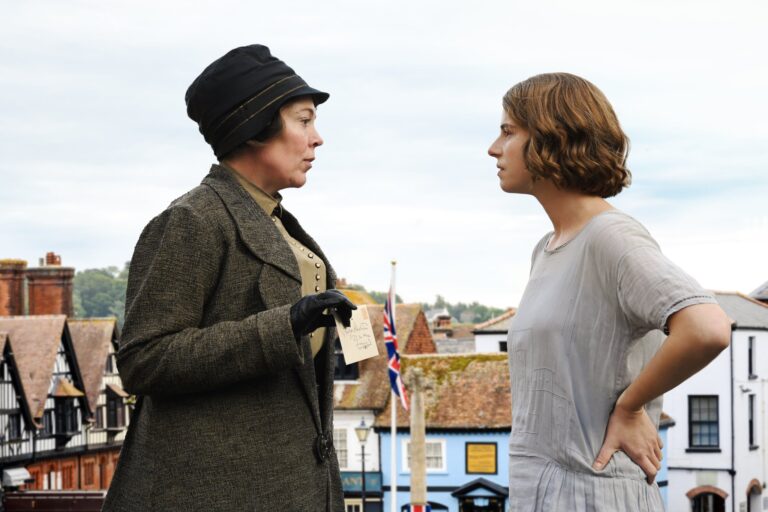
Shakespeare would be rolling in his grave. The bard who coined the phrase โ€˜brevity is the soul of witโ€™ would likely find himself reeling at the many tangential, bric-a-brac ways in which the subjects of Wicked Little Letters manage to insult each other. Yet for all it may seem to be striving for subversiveness, or to evoke a shock factor that can only come from hearing British icon Olivia Colman call someone a  โ€œf**king old steaming bag of wet, leaking sh*tโ€, Wicked Little Letters – beyond the foul-mouthed tirades which are undoubtedly the USP for the marketing department – is actually a safe, paint-by-numbers affair. None of that is to say itโ€™s not a good movie. Anchored by game performances from both Colman and Jessie Buckley, and featuring a number of supporting acts from the likes of Timothy Spall, Anjana Vasan, and Hugh Skinner, Wicked Little Letters is a fun, light-hearted experience that probably wonโ€™t last long in the memory.

Based, incredibly, on true events, Wicked Little Letters tells the story of Edith Swan (Colman) a simple, devout woman living with her parents in the sleepy town of Littlehampton in the 1920s. Edith tries to be a good daughter, a good neighbor, and a good citizen. She helps out in her community, attends church on Sundays, and has a smile for everyone she sees. This is in direct contrast to her new neighbor Rose, a belligerent Irish woman who uses curse words like punctuation, and whose sexual liberation is at odds with Edithโ€™s own pious nature. Itโ€™s unsurprising, then, that the two women eventually find themselves at odds with each other.

Whatโ€™s perhaps more surprising are the poison pen letters which appear through Edithโ€™s door. Each letter, and the movie begins at letter 19, features crude remarks and rants aimed at Edithโ€™s character, and soon a distraught Edith contacts the local constabulary, who immediately suspects Rose. What seems like an open and shut case, however, is challenged by Woman Police Officer (yes, thatโ€™s her title) Gladys Moss (Vasan) who suspects that not all is quite as it seems.

Wicked Little Letters makes a solid attempt to satirize the sort of British eccentricity you donโ€™t see in traditional period pieces such as Downton Abbey, but screenwriter Jonny Sweet is perhaps too reliant on this aspect. Although the letters are mildly amusing and creatively written, the novelty wears off quickly. Weโ€™re left with an overly quirky set-up that canโ€™t sustain itself throughout its runtime, however much its cast attempts to lift the material. Strangely enough, Wicked Little Letters performs better in its backdrop of social upheaval in the wake of World War I. The small attempts at social commentary – a woman police officer who wants parity of esteem; the suffrage movement – bring a sharper color to the world than anything front and center to the narrative.

Colman is the MVP here: with her rise to stardom itโ€™s easy to forget her background in British comedy staples such as Peep Show, where she made her breakthrough. Her natural comedic talent shines through here and helps lift the material. Buckley, by contrast, has the lesser role as Rose, a liberated woman unafraid to be confrontational, but still brings an easy naturalism to the part. Elsewhere, Timothy Spall is excellent as a hard-hearted father outraged at the โ€˜modern worldโ€™ he sees as having given women too much control; Lolly Adefope and Joanna Scanlon are decent comic folsl, though given limited screen time; and Anjana Vasan gives a good performance as an exhausted female officer trying to be taken seriously in a field dominated by men.

Everything is fairly perfunctory and well acted, and there are amusing moments – mostly from Colman – but due to its repetitive nature and over-reliance on its central conceit mean Wicked Little Letters will likely fade in the memory.

Grade: C

Episode 577: The Ghostbusters Legacy

This weekโ€™s episode is brought to you by Koffee Kult. Get 15% OFF with the code: ISF

This week on the InSession Film Podcast, Tim Costa (formally of First Time Watchers) fills in for Brendan this week as we discuss the legacy of Ghostbusters and why there may not be an appetite for the franchise anymore! Plus, a few thoughts on The Crow trailer.

Check out this weekโ€™s show and let us know what you think in the comment section. Thanks for listening and for supporting the InSession Film Podcast!

The Crow Trailer (5:45)
The original Crow film is obviously marred by the Brandon Lee tragedy, but the film was a decent financial success and has gained a cult following since its release. There have been several sequels made since then and none of them very good. So here we are now, 20 years after the release of Lee’s film, and we are getting a remake starring Bill Skarsgรฅrd. We got our first peek this last week and spend a few minutes talking about the trailer for The Crow.


RELATED: Listen to Episode 516 of the InSession Film Podcast where we discussed our Top 10 Movies of 2023!


– Ghostbusters Legacy (44:25)
This weekend we’ll be getting Ghostbusters: Frozen Empire hitting theaters, so we thought now was an appropriate time to talk about the Ghostbusters franchise and its legacy. The first film is hailed as a comedy classic, but what about the rest of them? The 1989 sequel is perhaps underrated, while the 2016 remake and 2021 legacy-sequel have many questioning the direction of the franchise. As great as Ghostbusters 1984 is with many fans; is there really an appetite for these films in 2024? We talk about all these things and more in our conversation.

– Music
Ghostbusters – Ray Parker, Jr.
Ghostbusters (Epic) – Epic Trailer Music

Subscribe to our Podcasts RSS
Subscribe to our Podcasts on iTunes
Listen on Spotify
Listen on Stitcher
InSession Film Podcast – Episode 577

Next week on the show:

Will announce soon…

Help Support The InSession Film Podcast

If you want to help support us, there are several ways you can help us and we’d absolutely appreciate it. Every penny goes directly back into supporting the show and we are truly honored and grateful. Thanks for your support and for listening to the InSession Film Podcast!

VISIT OUR DONATE PAGE HERE

Movie Review: ‘Femme’ is a Visually Sumptuous Yet Tense Anti-Love Story


Directors: Sam H. Freeman, Ng Choon Ping
Writers: Sam H. Freeman, Ng Choon Ping
Stars: George MacKay, Nathan Stewart-Jarrett, Aaron Heffernan

Synopsis: Follows Jules, who is targeted in a horrific homophobic attack, destroying his life and career. Some time after that event he encounters Preston, one of his attackers, in a gay sauna. He wants revenge.


When I saw the short film Femme at the 2021 SXSW Film Festival, I remember being shaken both by its striking filmmaking and its story involving a drag queen experiencing discrimination that plays into the struggles drag queens face in real life, whether itโ€™s in the form of attempted anti-drag club legislation or physical altercations. The newest feature-length film of the same name, by directors Sam H. Freeman and Ng Choon Ping, adapting their own short, is a more heightened experience in terms of tension. 

The synopsis involving a drag queen forming a connection with a closeted drug dealer remains the same, while the shortโ€™s neon-drenched visual panache shines through. However, in place of Emmy nominee Paapa Essiedu and Harris Dickinson, who played the leads in the short film, are Nathan Stewart-Jarrett and George MacKay, respectively, who both won last yearโ€™s British Independent Film Award for Best Joint Lead Performance. 

In Femme, Stewart-Jarrett stars as Jules, a drag queen whose stage name is Aphrodite Banks. While on a nighttime stroll after doing a show, Jules becomes the victim of a vicious beating by a group of crooks led by their closeted leader, Preston (MacKay). Months later, after being left traumatized by the assault with his performing passion taken out of him, Jules has a chance encounter with Preston at a gay sauna that leads to a connection built mainly on sex and physicality. For Jules, it also becomes an opportunity for revenge and reclamation. 

To call Femme a doomed romance is an arguable stretch because thereโ€™s no exchanging of rapturous gazes or tender body language between both men during the many scenes of them getting physical. While Jules willingly submits himself to Prestonโ€™s raw aggression during their sexual encounters, Jules ponders as to whether he should film said encounters and post them online as his form of retaliation. 

The struggle becomes more apparent when witnessing the anxiety that Preston persistently experiences. Along with his intimidating tall stature and heavily tattooed body, Preston uses his short temper to put up a hyper-masculine facade when in the company of his similarly chauvinistic comrades. Yet, underneath the surface is Prestonโ€™s deep-seated fear of being found out, shown through his looking over his shoulder everywhere he goes. Prestonโ€™s nearly wordless fragile masculinity is expertly brought to life by lead actor George MacKay, who โ€“ between this, 1917, and Pride โ€“ is making a case as one of his generationโ€™s best talents.

Meanwhile, Nathan Stewart-Jarrett similarly astounds as the protagonist, Jules. Appearing unassuming through his hunched posture and how he always keeps his head down, the way he grins as he scrolls through a gay porn site, contemplating the idea of outing Preston there by filming and uploading a filmed encounter, stresses his deceptive nature. Similarly, during a scene where he ends up mingling with Prestonโ€™s friends at his place, his sly smile while fighting each of them on a game of Street Fighter gives him feelings of fulfilled retribution, even if thereโ€™s no physical fighting involved, and they donโ€™t know heโ€™s the one they victimized.

Whether itโ€™s Jules being in the same company as his perpetrators or Preston glancing around him as he goes out in public, apprehension is present in nearly every scene. Thanks to the expressive leading performances and the meticulous screenplay by directors Sam H. Freeman and Ng Choon Ping, it is in the charactersโ€™ faces and actions that we see their anxieties shine through more than the use of exposition. Furthermore, the costume design by Buki Ebiesuwa reflects how the two leads must put on a mask for the world, like how Jules wears casual attire around Prestonโ€™s friends to ensure they donโ€™t recognize him out of drag.ย 


Similarly lush in visual aesthetic as the short of the same name, Femme enriches the source material by offering a deeper exploration of gender identity and putting a queer spin on the heteronormative noir genre as its central lead engages in sensual double-crossing. Sexy, discomforting, and visually sumptuous, Femme makes its case as one of the yearโ€™s best movies.

Grade: A

Oscars Reactions: Inspiring Women, Underdogs, and International Blood

So the award season went and came by, like waves on a shore. And I found myself thinking;

What a ride it has been!

Why was this particular award season so special that the 2024 Academy Awards ceremony became the most-watched Oscars since 2020?

And why was I cheering on winners and mourning losers like it was some local soccer game? (Yes, we love soccer where Iโ€™m from, but we call it football)

Was it Ryan Goslingโ€™s โ€œIโ€™m Just Kenโ€ โ€“one of the Academy Award Best Original Song nominees- where he retrieved a childhood dream of being a pop star, probably one that he slowly gave up over the years, shedding his early days of the Mickey Mouse Club behind where he smoothed his way as a kid mimicking adults in an iconic dance wearing silver hammer pants?

Or was it Da’Vine Joy Randolph winning Best Supporting Actress for her spectacular performance in The Holdovers? Da’Vine โ€“two years older than me- bawled her eyes out, stating things relevant to women like me all over the world. How she felt seen for winning this award, and what moments throughout her career made her feel that way. It resonated with me, as an international female film critic struggling to be recognized; not othered, leaving a mark on the world, and realizing how much I needed more Da’Vines winning and appearing on screens to send me uplifting messages. If there was hope for them, so was it for me, too. Not to mention how heightened the momentโ€™s beauty felt on screen with a supportive coworker like Paul Giamatti, tearing up during her speech, even though he didnโ€™t win, but how a sense of family could be born in the workplace, and people could cheer each other on for wins, rather than resort to envy and jealousy.

When Martin Scorsese rubbed Lily Gladstoneโ€™s back after her loss of the Best Actress award, it felt like a comfort during hard times, how sometimes even when I lose, I would need that comforting hand, that โ€œwe believe in youโ€ sense of solidarity, and watching those grand celebrities in such delicate, intimate moment that made them feel relevant and more approachable to us, wasnโ€™t as corny as I thought it would be.

It felt terrific to see the animators and staff from The Boy and The Heron โ€“which won this yearโ€™s Academy Award for Best Animated Feature- tear up at their win. I retweeted my Asian friends gushing over the moment, and my fellow Hayao Miyazaki fans enthralled and celebrated over his newest win. It all made me realize how connected the current award season made us feel rather than separated and isolated in desolate islands, how world leaders and governments probably intended us to be, then came the power of the arts and wiped that all away. The Boy and the Heron brought such a legendary win to the table โ€“after his last win in 2005 for Spirited Away– Miyazaki has been creating magic in Studio Ghibli for years but has always been overshadowed by Disney and Pixar and the more Westernized animation studios. With his second win yesterday with a potent rival contender such as Spider-Man: Across the Spider-Verse, The Academy showed a hint of the change that dominated it, yes there still were many years before the scary Whiteness of the Academy would drift away with the current, but there were many familiar faces and familiar wins.

Speaking of representation, it was a delight to spot Ramy Youssef, an Egyptian American comedian get so far into Hollywood, bonding with Mark Ruffalo and speaking his heart on the Academy red carpet without getting booed or gaslit, made me proud of him. As an Egyptian, I felt like cheering on a buddy who co-starred next to the legendary Emma Stone, Willem Dafoe, and Ruffalo in Poor Things, one of the most successful and critically acclaimed films of 2023. Ramyโ€™s talent being recognized and appreciated gave me a boost of positivity, and I hoped for bigger comedic leading roles for him. I also wished I would always see a familiar face on the red carpet; the more diverse, the better, and the more connected an individual like me feels to a grander, far-off world like the Academy Awards. 

As someone whose life was dominated by art and literature when she was a child, watching Ludwig Gรถransson who won the Academy Award for best score for his spectacular work in Oppenheimer thank his parents for giving him musical instruments instead of video games hit home closely. And when I read social media discourse of people hating on him because what he said undermined the beauty of video games or belittled those who enjoyed playing them, I fell in love with him a little more. I needed that sense of familiarity. Iโ€™ve always felt like an alien in my kid’s skin. Listening to Gรถransson, whose childhood was probably as art-engulfed and introverted as mine, allowed me to look back at my parents doing this for me with pride rather than regret all the moments of belonging I missed with other kids.

As a chronic online presence โ€“valid for a writer/introvert who traded a tumultuous life for a milder, calmer one with a peaceful presence- it was a surprise to see year after year, people flooding to discuss the award season, cheering or booing like itโ€™s a football game. Sometimes it gets out of hand, and admittedly people nitpick on every breath a winner or a loser takes, but itโ€™s fun to watch; a way to reinterpret reality, movie by movie, performance by performance.

Does this mean filmmaking will turn into a spectacle? Hasnโ€™t it been for a long time? Itโ€™s just that now the chronically online population is growing day in and out, and the Gen Zers fight with the growing older population for a place on the platforms, each adding their two cents to every current topic, or even making up one out of the ashes. We live in a connected world in which award seasons have become much like sports seasons with all the ins and outs of films, filmmakers, and in-betweens. Show business is no exception. It is a well-oiled machine that adapts to changing times and grows from there, whether we like it or not, and that is what ensures its long-term viability. So for award seasons to become these heated debates of who deserves it and who doesnโ€™t; each season with a villain, a laughing stock of the crowd, a hero, a princess, a diva, and a bad girl, is the new normal.

Movie Review: ‘Road House’ Punches Itself Out


Director: Doug Liman
Writers: Anthony Bogarozzi, Chuck Mondry, R. Lance Hill
Stars: Jake Gyllenhaal, Jessica Williams, Conor McGregor

Synopsis: Ex-UFC fighter Dalton takes a job as a bouncer at a Florida Keys roadhouse, only to discover that this paradise is not all it seems.


The film follows Dalton (Jake Gyllenhaal), a former UFC middleweight fighter, as he runs away from his personal demons. The movie starts with Dalton walking into an underground fight club, ready to rumble with Carter (Post Malone), who quits before the match begins because of Daltonโ€™s reputation alone. Frankie (Shrinkingโ€™s Jessica Williams), a businesswoman who owns a bar in the Florida Keys, immediately offers him a job of $5,000 a week for one monthโ€™s work, plus room and board, to be her bouncer.

Frankieโ€™s establishment is called The Road House, a dive bar on the beach where live music has to play behind chicken wire because of the numerous fights that continuously break out. (You know, Blues Brothers style.) She has a loyal staff, including an adorable bartender, Laura (Why Women Killโ€™s B.K. Cannon), and some young muscle in Billy (How to Blow Up a Pipelineโ€™s Lukas Gage), who lacks experience. After initially rejecting the offer, Dalton accepts the position after demolishing his car.

The script by Anthony Bagarozzi (The Nice Guys) and Chuck Mondry (Play Dirty) works well enough initially, mainly because Gyllenhaal revels in the role of Dalton, beating his enemies to a pulp with a switchblade grin and a clipped sense of humor, which is infectious. In particular, when he takes on a group of bikers led by JD Pardo and provides comic relief alongside Arturo Castro, driving them all to the hospital after some bone-crunching antics. This is all mindless fun, where a tough but flawed individual stands up for those who cannot help themselves. Everyone is good-looking, the music is distinct, and the mood is infectious.

Doug Liman directs Road House, an adaptation of the Patrick Swayze 1980s cult classic. Essentially, his version follows the path of a throwback Western, where the virtuous walk into a town defending those who cannot protect themselves, like Shane or The Pale Rider. In this case, you have a handful of over-the-top, cartoonish villains. One is Ben Brandt, played by the go-to yuppy antagonist Billy Magnussen, who tries to match Gyllenhaal’s comic relief but becomes tedious. 

Then you have Conor McGregor’s Knox, whose insanity is so extreme that you forgive any of his antics. Additionally, Joaquim de Almeida, the town sheriff, goes by the nickname “Big Dick” and has a connection to Dalton’s love interest, which is a classic, lazy trope. That is Daniela Melchior’s Ellie, who plays a local physician. She goes from detesting Dalton within seconds to wanting to get him in the middle of the ocean to what I imagine is an area called โ€œCoral reefs of Passion.โ€ I mention all of this because, for a two-hour film, Liman struggles to fit in so many supporting characters, and none of them interact or function in a believable way.

There are complaints that this Road House is ultraviolent, but by action or horror film standards, it’s tame. In fact, the fight scenes are highly digitized, particularly the first fight with Post Malone. However, the film doesn’t suffer from its bare-knuckle action. Still, after an thirty extra minutes, it deals with its mindless plot about the real reason Dalton was hired, which involves trying to take over the roadhouse because of its premium placement.

I hate to be cynical, but have these bad guys never heard of “Eminent Domain”? Or just building around the restaurant and having the property taxes rise so much that they must sell? Or, with all the fights, would the insurance premiums be through the roof? Finally, how can Frankie make enough to afford to pay Dalton all that money? These are all eye-rolling moments like Dalton telling Billy that one guy has a knife, and when he pulls it, just take a step back and punch him. He offers this type of on-the-job training while sitting behind a bar where he can’t jump in to help save the kid if something goes wrong.

You can let that thoughtless storytelling slide, but it’s when the movie goes into secret agent mode, with Dalton taking a boat (and setting off explosives, blowing it up, with no explanation) to become a superhero, that it becomes tedious and overblown. This leads to a final showdown between Dalton and Knox, where you have to ask yourself how one guy knew where the other would be to begin with.

Doug Liman’s Road House worked better as a minimalist barfly film between the small cast of characters that would have significantly benefited from focusing on Dalton’s backstory and developing intimate relationships. Instead, we have an overstuffed action film that struggles with tone and overstays its welcome. Then, it loses a charming Jake Gyllenhaal performance, which is the sole reason to watch, to begin with.

Grade: C-

Movie Review: ‘Little Wing’ Crashes into Tropes


Director: Dean Israelite
Writers: John Gatins, Susan Orlean
Stars: Brooklynn Prince, Simon Khan, Kelly Reilly

Synopsis: Follows a 13-year-old girl who is dragged into the world of pigeon racing as she deals with her parents’ divorce and the impending loss of her home.


Little Wing is a classic case of a coming-of-age film that doesnโ€™t quite know what it truly wants to be. Sure, youโ€™ll enjoy the punk rock Generation Alpha main character, who is energetic, lively, and spirited. You may appreciate how the story involves an unusual hobby to help an adolescent navigate a turbulent timeโ€”even the bond of the mother-daughter relationship. However, the premise surrounding the bond between an unlikely friendship between a child and an older adult male fails the film almost entirely. 

And thatโ€™s a shame because the streaming Paramount+ film Little Wing had real feel-good potential. 

The story follows Kaitlyn McKay (Brooklynn Prince), a young woman whose moodiness we have come to find charming. Kaitlyn is going through a tough time. Her parents have just divorced, and her father has moved out. Her older brother, Matt (newcomer Simon Khan), hasnโ€™t spoken since it happened. Their mother, Maddie (Kelly Reilly), is a police detective in the Portland, Oregon area and has trouble making ends meet, specifically with the mortgage payment. 

Maddieโ€™s boss, rather strangely, gives Kaitlyn some racing pigeons as a gift. Yeah, this is a girl who has posters of Major Motoko Kusanagi and Hit-Girl Mindy Macready. Besides offering her a cell phone or sacrificing Regina to the Mean Girls, nothing will win her over. However, her best friend, Adam (Me Timeโ€™s Che Tafari), tells her how cool they are, and a famous one called โ€œThe Guardianโ€ is in the area and is worth $100,000. What a coincidence! It would cover the entire loan left on her childhood home.

Little Wing was directed by Dean Israelite (Are You Afraid of the Dark?), who works with a script from a surprising pedigree. It was penned by Academy Award-nominated scribe John Gatins (Flight), who adapted the film from a news article by Susan Orlean, the writer of The Orchid Thief, whose book served as the source material for Charlie Kaufmanโ€™s Adaptation. Initially, the film functions as a coming-of-age black teen comedy, highlighting Princeโ€™s Kaitlyn and her bold, rebellious attitude. This includes a humorous scene where she volunteers as a human dodgeball sacrifice in gym class.

Another noteworthy scene involves her stealing The Guardian from its owner, Jaan Vari (Brian Cox). While this action may seem outlandish, it’s forgivable given the context of the fact that this is a narrative film. However, Jaan discovers evidence implicating Kaitlyn and Adam in the theft of the prized bird, as these situations tend to go. While I can suspend disbelief for the sake of comedy, it becomes pretty absurd when Kaitlyn sells the bird to the Russian mafia, who have a penchant for pigeon racing. For $25,000, it’s peculiar how Little Wing’s story decides to convey the idea that it takes a village to raise a child.

Then, Jaan approaches the little thief’s home. Instead of explaining to the mother, he finds a bag with the daughter’s name and address. Does he tell Maggie he saw them, including Adam, and now the bird is missing? No, he keeps the ruse, telling the mother that she reached out to the old man and he was returning the garment bag. Does Maggie question this as a woman in blue and as a mother? No, she will never qualify for officer or mother of the year.

Then, Jaan’s wife knows the girl stole the bird but is grateful they can move to Arizona. These people live in an apartment with pigeon coops on the roof. Do they not need $125,000 for retirement or bills? Jaan, who is understandably upset, frequently snaps at Kaitlyn and towers over her, demanding the bird back, but when Maggie walks in the room, Jaan plays it off that he is just arranging a time for him and Kaitlyn to meet up. My God, is there no social worker in the Portland area? There are subplots, such as when attempting to steal The Guardian back, where no one is worried about CCTV or the fact that the Mafia just allows the bandits to leave.

Little Wing is a family film for those who donโ€™t put too much stock into detail, which is fine. However, while hardly offensive, the film really teaches poor values, like itโ€™s fine to steal and befriend strangers you donโ€™t know and then lie to your parents. Yes, there are some heart-tugging moments, but overall, the experience lacks thoughtfulness and replaces it with patronizing manipulation. 

Grade: C-