



Directors: Marie Kreutzer
Writer: Marie Kreutzer
Stars: Léa Seydoux, Catherine Deneuve, Jella Haase
Synopsis: Renowned pianist relocates with her family to the countryside, where she uncovers a life-shattering truth that forces her to confront the complexities of love, trust, and deception.
There are some topics that, when it comes to major releases, writers and directors shy away from, and for good reason. Despite it being the focus of many a political news broadcast over the last year, the idea of child sexual abuse, and the materials used for it on the internet, is certainly one of those subjects. It can be easy to think that there is no way to broach this without being criticized. If the judgment of a character such as this is extremely harsh, the criticism could be that your film has no subtlety or levels. On the other side, if you humanize these perpetrators, you would be immediately accused of normalizing, or even promoting this truly abhorrent behavior. Writer/director Marie Kreutzer, who has had experience trusting men who, without her knowledge, were predators, might be the best person to handle a topic this delicate. After her experience working with Florian Teichtmeister on her film Corsage, who was found to be in possession of child pornography, it is understandable that an artist would wish to process rage, guilt, and betrayal through her art.
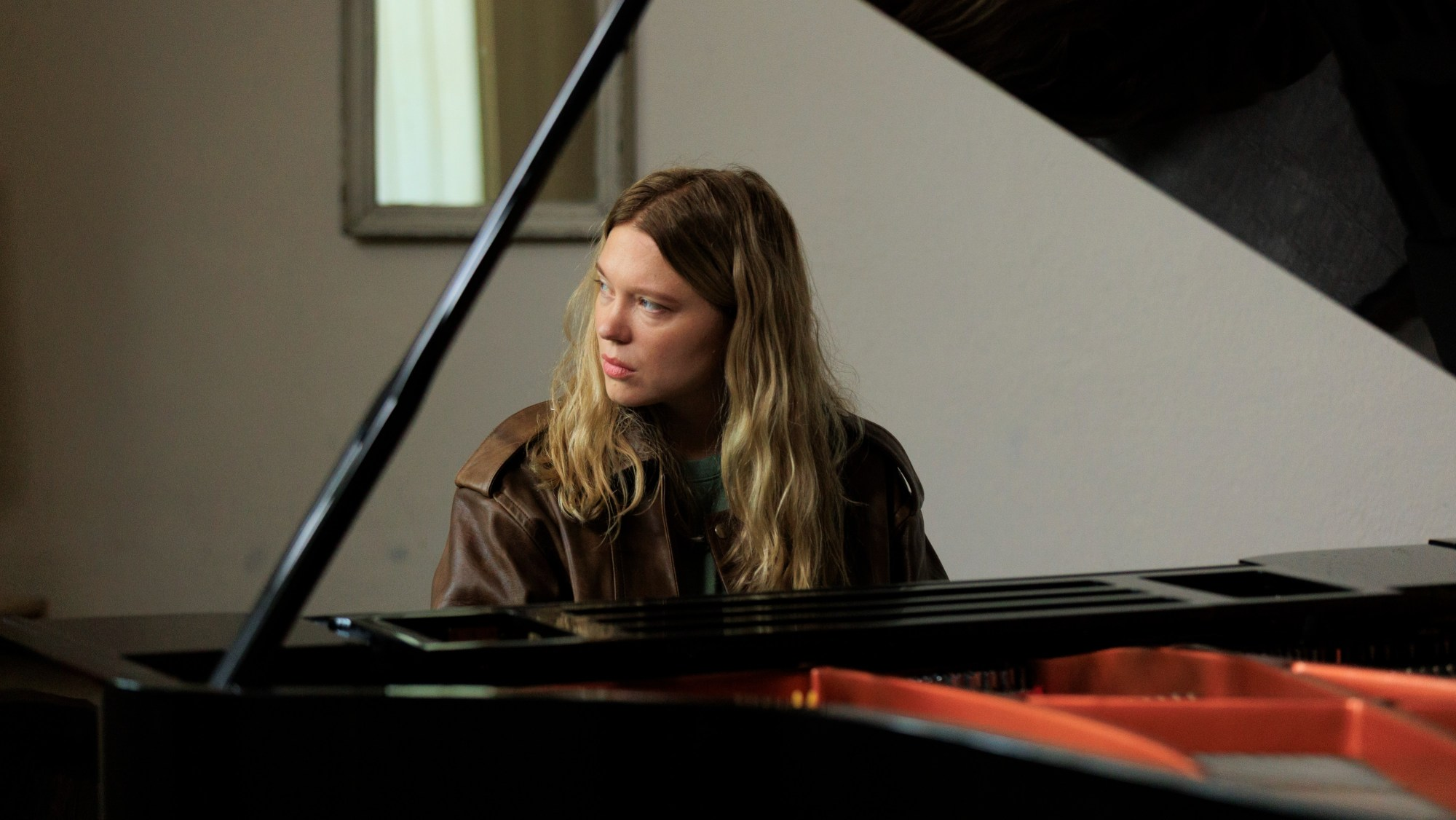
The film opens with Lucy Weiss (Léa Seydoux) on the piano, playing and singing “Would I Lie To You,” popularized by Charles and Eddie. Given what is revealed quickly in the film, it may be an unsubtle choice, but an effective one, mainly due to Seydoux’s performance. And that will become a repeated refrain, as she gives one of the best performances of the year, especially given that the degree of difficulty is extremely high. Interrupting her musical performance is her husband, Philip (Laurence Rupp), who is having a panic attack. What follows this introduction is the representation of an idyllic family life, after they move to the countryside with their son, Johnny (Malo Blanchet). The way that these scenes are shot by Kreutzer, along with cinematographer Judith Kaufmann, reinforce the pleasantness. It is sun-kissed, nearly a forced representation of peace and bliss.
This is rudely and horrifically interrupted by a visit from the police, led by Elsa Kühn (Jella Haase), in which they confiscate all of Philip’s computers and hard drives. They believe that he is in possession of child pornography and they must investigate to find if he has produced any himself. Obviously, this sets Lucy spinning, wondering not only if this is true, but if her young son has been victimized. This man that she has lived with, loved, and trusted, has irrevocably changed in her eyes. All of this plays out with minimal dialogue from Seydoux and Rupp, but the clarity never falters. As you might imagine, the film mostly stays with Seydoux, and that is to its great advantage, even when the script fails the film in several ways.
The first half of the film is quite nearly perfect, as we are just as shocked and confused as Lucy. The idea of someone you trust being guilty of something this heinous is unfathomable. It colors every experience that you have ever had with them, and the film takes advantage of this with a smart, structural choice. It begins to intersperse the present – full of police interrogations, visits from psychologists, difficult conversations with family – with flashbacks to happier times. It forces you to reconsider this supposed happiness, and even the unexplained panic attack in the opening salvo. The film is also filled with music, mostly from Lucy, whose work focuses on creating experimental covers of emotional music from male artists. The film mentions this briefly and it, among other themes, could have been explored with more depth.
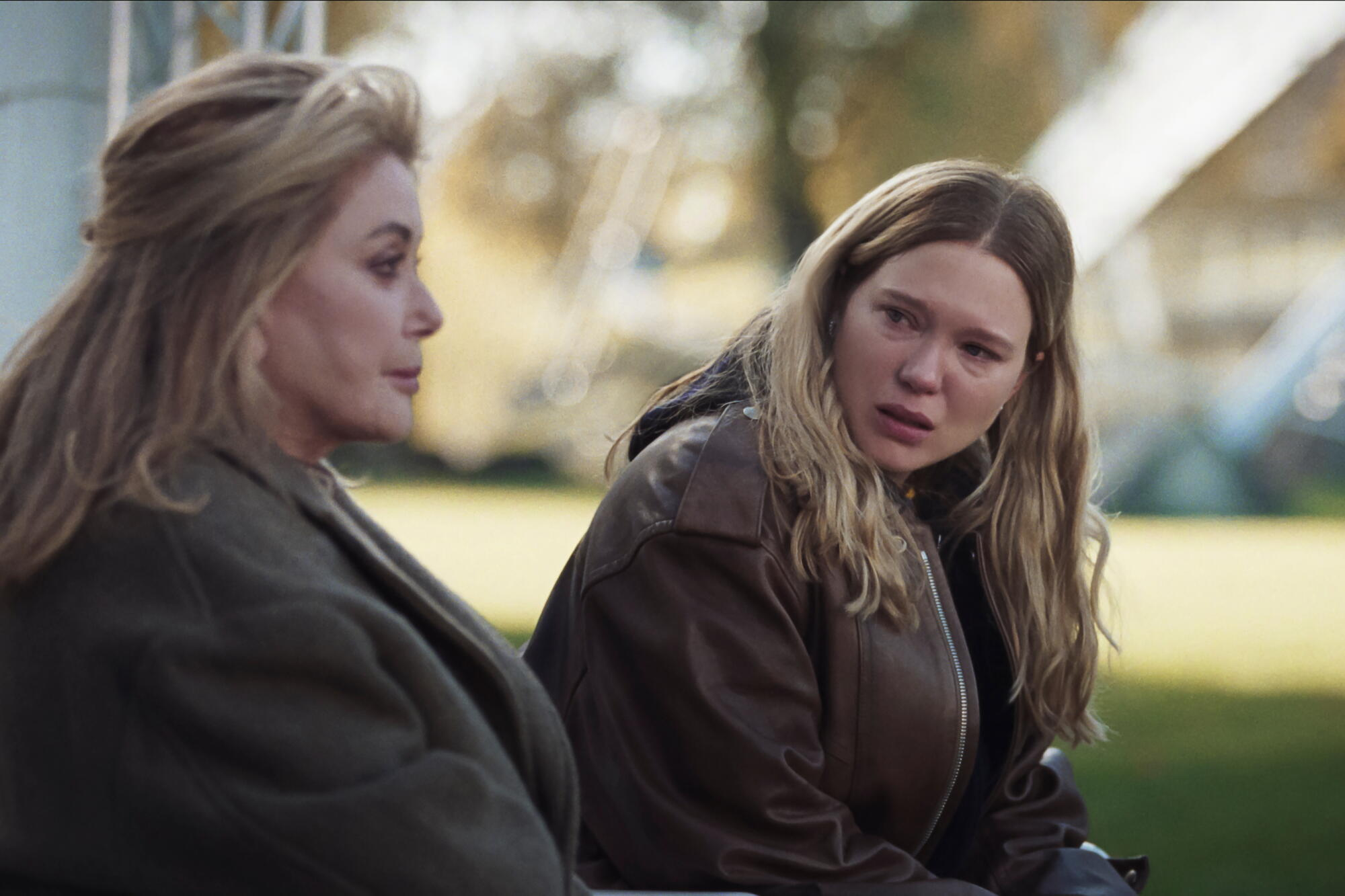
And there would have been plenty of time for that depth, had the script not included a fairly tedious subplot involving Elsa and her father, who is suffering from dementia and is beginning to act sexually inappropriate toward his caretaker. It is not that this isn’t handled well, it simply feels tacked on for the idea of a parallel plot. However, there are moments between Elsa and Lucy that are alternately upsetting and healing. These two women, both entangled in the disgusting case, find some slight comfort in their interactions. Seydoux is a revelation here, one moment wanting to fly into a rage and the next, seeking some kind of understanding.
In one particular scene with Rupp, she earnestly wishes that she didn’t love her partner, and it is impossible, as a viewer, to not feel this pain right alongside her. It is unfortunate that the film is moving towards a sense of righteous indignation and rage, only to shy away from stronger sentiments that could very easily have their place. Instead, possibly due to the director’s own experience, it eschews closure for mystery. Gentle Monster chooses not to reckon with the actual terrible things that have possibly happened only to focus on whether we ever truly know anyone. This is a completely viable attitude to take but it leaves the audience with a shrug as opposed to something to actually chew on.
Marie Kreutzer’s Gentle Monster is a risky film that shies away just at the end. However, Léa Seydoux gives one of the most stunning performances of the year and, frankly, of most years. Watching her actively process a betrayal that is literally impossible to imagine makes any missteps lessen. This film is sure to start a lot of conversations, if only it had ended its own.