Director: Tina Mabry Writers: Gina Prince-bythewood, Tina Mabry, Edward Kelsey Moore Stars: Aunjanue Ellis-Taylor, Sanaa Lathan, Uzo Aduba
Synopsis: Follows a trio of best friends known as “The Supremes” who, together for decades, have weathered everything through marriage and children, happiness and blues.
Unfortunately, films that are divided between two timelines rarely make a fair link between both. How can they? When times like the ‘60s are a myriad of flipped bobs, satin dresses, local teen gathering spots, hand-written menus, vintage jukeboxes, and soda fountains while the ‘90s have…the characters growing older and more period-accurate chic. In The Supremes at Earl’s All-You-Can-Eat, costumes and set design thrive where narrative and tonal shifts fail. It’s like two entirely different films glued together, that even great performances from both the teen and mature cast can’t save its face.
The film is about three women, as they transition into adulthood during the ‘60s. Eventually, they reap the bitter outcomes of a prejudiced adulthood, dictated by racism, misogyny, and generational trauma in the ‘90s. Odette (Aunjanue Ellis-Taylor) is the salty, sassy outspoken gun-blazing girl of the group, Barbara Jean (Sanaa Lathan) is the traumatic survivor of physical abuse -an underdeveloped storyline that could’ve had a major impact on the film had it been further explored- and Clarice (Uzo Aduba) is the passionate, driven artist, with big hopes and dreams for a future crushed by unfair, discriminative treatment of talent.
The film succeeds in creating a bond between the three leads. All the actresses playing the characters in both stages have done a seriously great job. But acting alone can’t save the film’s melodramatic inconsistency, not to mention how some side stories have taken trite storytelling routes that are less compelling than they intended.
One of the highlights of the film is a criminally underdeveloped storyline, and that’s Barbara Jean’s trauma bonding with Ray (Julian McMahon), both two abused kids who find each other at a moment in time when they are slowly starting the healing process from the trauma. They are an interracial couple, Ray is white, and Barbara Jean is black, but their similarities overshadow their differences. This has been the most interesting storyline in the film other than the bond between the three women and their unexpected friendship, and it deserved a spotlight, a bigger opportunity to be explored and stretched further, given more complex dimensions and deeper analysis.
Another underdeveloped element in this period-piece drama is Earl’s restaurant itself. This magical place where all the troubled and the weary seek refuge, Uncle Earl (Tony Winters) being this surrogate father figure to all the young ones, and yet the place gets the least attention in the movie. The set design is wonderful, but the place is not touched on to become another iconic film cafe or restaurant, which film buffs hunt and immortalize in writings and social media. It could’ve used a lot of personalization work to make this fictional place even more iconic.
Now for one of the most fun parts of the film, costumes. Costume designer Whitney Anne Adams excels in crafting a varied difference between the ‘60s ambitious girl trying to craft her sense of style and identity to the ‘90s woman reveling in luxury but also in grounded wisdom of a woman who has known for long who she is and the sacrifices she had to make to reach the stage she is in. Bright colors mature into jewel tones, but a color palette for a particular character stays with them, and slight changes reflect their shifting journeys, good or bad.
The Supremes at Earl’s All-You-Can-Eat is a cozy movie that relies too hard on nostalgia bait, but where it thrives in performances it lacks in world-building and narrative consistency. It is a fun watch, but for it to be an endearing homage to ‘90s black melodramas like Soul Food and Waiting to Exhale, it would have benefited from a more compressed runtime, and fewer events taking place throughout its course.
This week on Episode 600 of the InSession Film Podcast, we discussed our Top 10 Movies of the 2000s! It was a fantastic decade for film, so narrowing down this list to just 10 films, or 20 if we’re including honorable mentions, was an impossible task. We spent countless hours dissecting our year-end lists attempting to piece together the perfect Top 10 for the 2000s. Hopefully we didn’t disappoint!
Here are the movies that made our lists. Be sure to listen to the show to hear more about our love for these films and why they ultimately made the cut.
JD
1) A.I. Artificial Intelligence
2) In the Mood for Love
3) Children of Men
4) The Lord of the Rings
5) The Royal Tenenbaums
6) Before Sunset
7) The New World
8) No Country for Old Men
9) There Will Be Blood
10) Y Tu Mamá También
11) Eternal Sunshine of the Spotless Mind
12) Lost in Translation
13) Synecdoche, New York
14) Where the Wild Things Are
15) Zodiac
16) Almost Famous
17) Nobody Knows
18) Adaptation.
19) Hero
20) Beau Travail
Brendan
1) A.I. Artificial Intelligence
2) Ratatouille
3) Y Tu Mamá También
4) The Assassination of Jesse James by the Coward Robert Ford
5) There Will Be Blood
6) Where the Wild Things Are
7) 25th Hour
8) In the Mood for Love
9) Before Sunset
10) Spider-Man 2
11) Almost Famous
12) WALL-E
13) Yi Yi
14) Punch-Drunk Love
15) Big Fish
16) Hero
17) The Diving Bell and the Butterfly
18) Dancer in the Dark
19) The Royal Tenenbaums
20) The New World
Hopefully you guys enjoyed our lists. If you agree or disagree with us, let us know in the comment section below. Clearly there are tons and tons of other contenders that battled for our lists, but sadly just missed the cut. That being said, what would be your Top 10? Leave a comment in the comment section or email us at [email protected].
Director: Nathan Silver Writers: Nathan Silver, C. Mason Wells Stars: Jason Schwartzman, Carol Kane, Dolly De Leon
Synopsis: A cantor in a crisis of faith finds his world turned upside down when his grade school music teacher re-enters his life as his new adult Bat Mitzvah student.
Ben Gottlieb (Jason Schwartzman) couldn’t have bumped into Carla Kessler (Carol Kane) at a better time. Lying on his back on what was undoubtedly a slush-covered barroom floor, having just received a sucker punch to the eye from a rude fellow bar-dweller who didn’t appreciate Ben’s penchant for Mudslides and/or uninvited confrontation, she might as well have been sent from above. Sure, it could have just appeared that way due to his vantage point, but Carla’s coming to the rescue opened an unforeseen door for Ben. A cantor at the nearby Temple Sinai, he’d recently lost his ability to sing thanks to an undefined incident that sounds an awful lot like a nervous breakdown in the wake of his late wife’s untimely death. (She was drunk and slipped on the sidewalk, cracking her head open and bled to death; gruesome, yes, but the way Ben describes it later in the film makes it sound as though it carried all the emotional heft of one dropping a watermelon at the supermarket.) In one fell swoop, Carla extends her hand and pulls Ben ever so slightly out of his rut. What a difference a day – or an unexpected encounter – makes.
Carla just so happens to be Ben’s old music teacher; she’s now retired and seems to spend a fair amount of time frequenting said bar’s karaoke nights, where she belts to an empty back room. In addition to his cantor duties, Ben teaches the temple’s bar and bat mitzvah class – “That is very modern,” Carla says when she comes to the synagogue one afternoon in hopes that she might be able to join the class. You see, she never had a bat mitzvah when she was a girl, and she wants to fulfill that dream now, despite being 70. After refusing initially, Ben warms up to the idea and agrees to teach Carla en route to her very belated yet much-deserved Jewish rite of passage. In turn, she helps de-ice Ben’s cold, closed-off heart with her natural warmth, as the two form an unlikely, mutually-beneficial friendship that carries Nathan Silver’s whip-smart, quip-heavy Between the Temples on its back with ease.
That’s not to say that Silver’s starriest film to date – the filmmaker, who is one of independent cinema’s most prolific workers, has made a number of small features over the course of his 15-year career – doesn’t have plenty of other elements that help make it one of the year’s most delightful releases. There’s John Magary, Silver’s regular editor, whose work here feels like the Energizer Bunny got control of Final Cut Pro and turned in a choppy, sprightly masterclass. Behind the camera sits Sean Price Williams, who shot the film on 16mm and was so clearly the cinematographer here that I clocked his involvement even before the credits rolled. And, of course, there’s the rest of its cast, an ensemble chock-full of pitch-perfect character actors like Caroline Aaron and Robert Smigel, not to mention Dolly De Leon, who plays one of Ben’s moms (Aaron plays the other).
Still, it’s the partnership of Schwartzman and Kane that really allows the film to flourish. Both actors have enjoyed accomplished careers, though it’s almost a stroke of genius to pair one actor who is currently enjoying a sustained heater with another whose best roles looked to have been behind them. Schwartzman – who appeared prominently in Asteroid City, Spider-Man: Across the Spider-Verse, and The Hunger Games: The Ballad of Songbirds & Snakesin 2023, and has parts in Francis Ford Coppola’s Megalopolis, Alex Ross Perry’s Pavements, and Luca Guadagnino’s Queer, all of which release later this year – is having something of a renaissance as a performer, as if it took 20 years for directors not named Wes Anderson to recognize his chameleonic range and startlingly-powerful screen presence, both of which manifest here into what is undoubtedly one of Schwartzman’s best performances to date. Kane, meanwhile, is better known for her parts in films like Dog Day Afternoon, Annie Hall, When a Stranger Calls, and The Princess Bride, but her turn as Carla seems as though it could inspire a self-revival of its own, a la Ke Huy Quan, perhaps. Of course, Between the Temples is hardly of a similar scale as Everything Everywhere All At Once, but casting directors would be smart to cash in on Kane’s vibrant work here.
And that duo’s chemistry is a must, given that Between the Temples might otherwise feel a bit grating in its comedy and style, both of which never let up. There’s something to be said for a film that commits so hard to its visual uniqueness that it becomes definitive for the crew behind its making; the same could be said for Price Williams’ 2023 directorial effort The Sweet East, which he also shot. But whereas that film’s story felt like a narrative representation of its camerawork – choppy and chaotic without a semblance of the necessary order that films need to feel intentional – Between the Temples manages to use technique to amplify its charm.
Shot entirely in Kingston, New York, a town of roughly 24,000 people, the film feels as intimate as the bonds it portrays. Following the death of his wife, Ben lives with his mothers, who are important donors to the church. Rabbi Bruce (Smigel) is a regular at the Gottlieb’s for dinner, and when his daughter Gabby (Madeline Weinstein) comes to town, it’s a foregone conclusion to everyone but Ben that they’ll get together. In the words of the philosopher Immanuel Kant, “The nice thing about living in a small town is that when you don’t know what you’re doing, someone else does.”
This is Silver’s calling card. It has been since his 2009 debut The Blind – a little-seen New England-set drama about a frustrated married couple – all the way up to Between the Temples, the kind of effort that will undoubtedly afford him a bigger scale should audiences continue to turn up to see it. (The film crossed $1 million domestically after having spent just over a week in theaters; it can’t have cost more than a few hundred-thousand dollars to make.) But it would serve as a reasonable shock if Silver suddenly set his sights on something massive, other than continuing to cast bigger names in his films, with Schwartzman, Kane, and De Leon now serving as benchmarks.
The beauty of Between the Temples is twofold: In how it positions recognizable faces in a small dramedy about coming together to find happiness when such an emotion was thought to have been left behind long ago, and in its gloriously-witty way of telling a story that all of us – devoutly-Jewish or not – can understand, and perhaps have even lived out in our own way. Who among us hasn’t laid down in the middle of the road and begged for a garbage truck to run us over in a fit of self-deprecation? Silver successfully argues that such a desire is fine, as long as you eventually get up and ask the driver for a ride so that you can keep living your life. Lord knows what might await you just around the corner.
Director: Luis Ortega Writer: Fabian Casas, Luis Ortega, Rodolfo Palacios Stars: Adriana Aguirre, Roberto Carnaghi, Úrsula Corberó
Synopsis: Remo’s self-destructive behavior overshadows his talent. Abril, an upcoming jockey is pregnant by Remo and has to decide between child or continuing to race. They both race for Sirena, an businessman who saved Remo’s life in the past .
It has been a long while since Argentine filmmaker Luis Ortega directed a film–six long years where the state of cinema itself has changed vastly. The last time was in 2018 with El Angel, a feature about a criminal with an angelic face whose acts match his ruthless and remorseless demeanor. Through the misdeed-riddled journey of his titular “angel”, Ortega explored the identity crisis he goes through upon each treacherous corner and encounters with death–all of which was accompanied by a smashing, well-selected soundtrack. The only thing that left El Angel with a sour taste in your mouth is its cliched treatment of masculinity and internal angst by self-expressionistic confusion. It kept the film from being up to par with its attempts at provocation.
Ortega fixes some of these issues in his return to filmmaking, Kill the Jockey (El Jockey, screening in competition at this year’s Venice Film Festival). This crime dramedy contorts itself into a complex position that baffles and fascinates simultaneously because of its ambitiousness. This has some similarities with El Angel, as they both contain a lawless nature within their themes of individuality and trans allegory filled with a freeform use of magical realism and surrealism–distancing themselves from the grounded nature they present initially. Steeped in distinctiveness, Kill the Jockey places Ortega in a unique spot of his own direction-wise, while crafty pretentiousness gets in the way of his stylistic choices. Yet, since it is handled with plenty of confidence and zero grandiosity, the whole ordeal comes out as captivating rather than vexatious.
The jockey is Remo (Nahuel Pérez Biscayart), a celebrated horse rider who has been saved from an “ill-fated” situation by some mobsters. Their leader, Sirena (Daniel Giménez Cacho), has put Remo onto his dirty loss of criminal doings. Remon works for them not because of necessity—although the lavish life is appealing to him as it drowns the man–but because of an undisclosed, endless debt that has been put onto the jockey. As one of the criminals states: “Misfortune is the best school.” And Remo is going to learn that the hard way. Ortega provides no explicit clues for why Remo is in deep trouble. Still, he slowly demonstrates the jockey’s past as an underground racer who bet against himself and ran away with most of the cash.
Remo has tried to sabotage this “relationship” while in an alcohol and ketamine daze. What he does is taint it even more to an irreparable degree. In his latest race, the jockey interferes and gets into even more trouble as Sirena condemns him for his actions. Remo’s tampering leaves him hospitalized after a brutal accident, though he escapes when the kingpin sends people to get him–donning a woman’s garb that paves the way for a journey of self-discovery. On the other hand, another contribution to his identity voyage is his girlfriend, Abril (Úrsula Corberó). She is, like him, a jockey and competed against Remo more than a handful of times. But her pregnancy will potentially limit her horse racing days for good.
Abril sees Remo’s self-destructive behavior and emotionally distances herself from him. The only way Remo can be in her life again is to “die and be born again”. The quote is taken literally and figuratively by both Ortega and Remo, where they connect the garb and the accident that sparked the jockey’s journey of personal truth with themes of rebirth and gender roles via narratively perplexing means and tone-shifting mechanisms. Kill the Jockey then twists and shapeshifts itself to fit the weirdness of its premise. Remo and Abril’s journeys begin with a dance of stupor and self-expression–each taking a different mantle than before–and later follows with a dual gender role reversal.
As Abril sparks an affair with another jockey, Ana (Mariana Di Girolamo), Remo wanders through the streets, transforming into the person they were. This is why the garment and fur coat appears to be absorbed into him, paving the way for the rebirth Abril mentioned to win her back. He begins to have more feminine aspects the longer he stays in the guise. It comes from his candor. At one point, he even gets mistaken for a woman, which lifts his heart and provides some assurance about his new life. The cat-and-mouse game between Remo and Sirena gets tiresome and frivolous; however, since Ortega provides the film with some internal beauty amidst its strange demeanor, you begin to lure yourself into the whole ordeal with curiosity and intrigue.
In the way it develops, I felt that Luis Ortega was channeling his inner Pedro Almodóvar, particularly taking inspiration from the legendary Spanish filmmaker’s work from the 1980s (Pepi; Luci; Bom, Tie Me Up, Tie Me Down; What Have I Done to Deserve This?). The essence of young Almodóvar is felt throughout the entirety of Kill the Jockey, with many scenes feeling like they could have been directed by him back then. However, the connection with the themes of self-discovery and identity makes the similitude more potent. Ortega does not delve into provocation or intense eroticism, unlike the Spaniard would, like in the opening credits of Matador, where we see Diego Montez pleasuring himself to violent scenes in Mario Bava’s filmography. Yet he encapsulates what those works entailed regarding radicalness, sexual freedom, and self-expression.
Ortega might not be up to par with Almodóvar, although the comparison is unfair. However, the Argentine is showing some growth in terms of expression in his cinema, creating motifs and ambiguous metaphors worthy of another rewatch to sink your teeth in. Kill the Jockey is a peculiar crime flick with both comedic and dramatic tendencies that are not hidden but instead embraced thoroughly. This strangeness that emerges is not a mere foible, and it helps us keep it under scrutiny instead of annoyance.
This week on the InSession Film Podcast, it’s our best of the decade for the 2000s! We feature an abridged version of our annual Awards show discussing the very best that film had to offer from 2000-2009, and we top it off by revealing our Top 10 Movies of the 2000s!
It was a remarkable decade for film and we had a great time celebrating 600 episodes by reflecting on the greatness of these ten years of movies. We grew up with a lot of these movies, so there is some nostalgic feeling that influences how we feel about them. However; we’ve also grown tremendously as cinephiles since we first watched them as well, and that made for a really fun perspective as we reminisced on what made the 2000s a rich era for cinema.
Check out this week’s show and let us know what you think in the comment section. Thanks for listening and for supporting the InSession Film Podcast!
– Best of the Decade Awards (1:31) Just like our awards show for the 2010s, we condensed things slightly by saving our “unique” categories for bonus content and focused more on the traditional categories.
– Top 10 Movies of the 2000s (1:58:30) As noted above, it was a fantastic decade for film, so narrowing down this list to just 10 films, or 20 if we’re including honorable mentions, was an impossible task. We spent countless hours dissecting our year-end lists attempting to piece together the perfect Top 10 for the 2000s. Hopefully we didn’t let you all down.
If you want to help support us, there are several ways you can help us and we’d absolutely appreciate it. Every penny goes directly back into supporting the show and we are truly honored and grateful. Thanks for your support and for listening to the InSession Film Podcast!
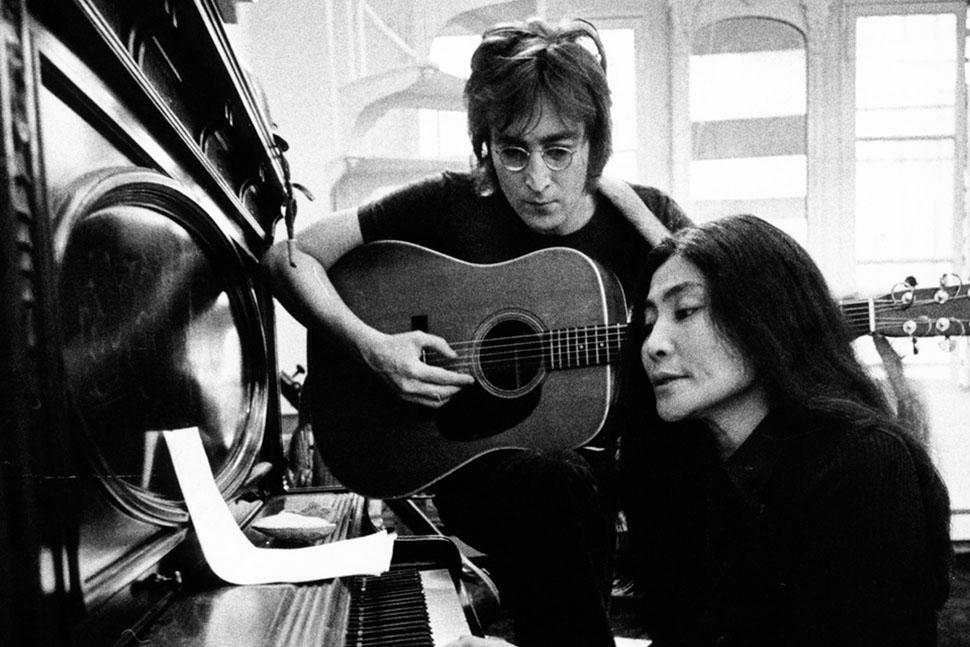
Director: Kevin Macdonald, Sam Rice-Edwards Stars: John Lennon, Yoko Ono
Synopsis: Set in 1972 New York, this documentary explores John and Yoko’s world amid a turbulent era. Centered on the One to One charity concert for special needs children, it features unseen archives, home movies, and restored footage.
John Lennon and Yoko Ono; Yoko Ono and John Lennon. Two intertwined souls with a messy life who separated from each other and later found themselves crawling back into each other’s arms. This union faced huge public scrutiny, some even for selfish reasons because it was one of the many reasons The Beatles broke up–although it was the less severe reason. There were also comments about Lennon being in an interracial relationship rooted in racism and villainizing Yoko for years. Nevertheless, the two distanced themselves from it all and started doing creative activist collaborations and peace scriptures, which left a legacy under their heads apart from the Beatles’ legendary catalog.
This is the time that Kevin Macdonald’s (The Last King of Scotland, The Mauritanian) latest documentary, One to One: John & Yoko (screening Out of Competition in this year’s Venice Film Festival), covers–the period after “Let it Be” and the final public performance of the band, which Peter Jackson remastered and brought back to life in The Get Back, where the two lovers have escaped to a Greenwich Village apartment in New York City. Titled after the 1972 benefit concert of the same name, this documentary, made alongside the John Lennon estate (an immediate warning that many things will be kept hidden), is framed around a quote the ex-Beatle said about television. He refers to it as a “window onto the world”.
Both critical of people’s abuse of television and appreciative of its potential to cover the issues of the times, Lennon spent many years under the microscope of fame dissection. He grew tired of it all and moved to another place, conducting his artistic experiments in music and activism. Macdonald shows us archive footage of Lennon and Yoko relaxing in their apartment and contemplating the future of America. But he also recreates the interior of the housing to create a dual image of their respective works’ impact by presenting the duo watching TV–in wonder and worried about multi-channel news outlets that cover Nixon’s run for his second term, peace protests, Allen Ginsburg, as well as the tumultuous ads that screened in-between reports.
Everything–reality and fiction, art and culture, past and present–melds stylistically in a clunky yet fascinating manner. It is a channel-surfing experience where a resurrected Lennon looks through the televised world. Editing-wise, One to One is slick. Macdonald cuts from Lennon’s archive footage, from the benefit concert or his writing process, to time-appropriate adverts and news reports with flair. Lennon on the piano transitions to a pink Chevrolet commercial or the Sonny and Cher Show. Yoko Ono discusses Lennon’s preparation and recent scripture transitions to Richard Nixon clips. The Scottish filmmaker does not do anything new or otherworldly with the form, yet you are somewhat hooked on his vision for the project.
Where One to One falters is its structure, where the archive footage to advert to the news report to another advert backbone paves the way for a jarring narrative thread about consumerism in a capitalist America and the injustices its military has caused. This is meant to explore the relationship between John Lennon and Yoko Ono’s activism with the state of the world in the early 70s, both in art and politics–more so the latter. Macdonald focuses too much on needless nostalgia and pop culture rather than the subjects’ fingerprints on the times. It comes off as superfluous. However, one other critical detail makes the project lose some respect. Near the beginning of One to One, we hear a quote from John Lennon that hints at his distant nature, both literally and figuratively.
“I don’t want to relive the past,” the ex-Beatle says, referring to his life in the band and the problems that have cast a dark cloud over his head. He does not want to return to a life that has cursed him until the time is right. However, the quote does not match the making of this documentary. One to One has footage of Lennon and Yoko at an intimate and separate time in their lives. Yet, it feels like we are trespassing on their apartment forcefully. He didn’t want this part of his life to be shown to the public because it was meant for healing and severance–maintaining privacy. I guess the clash between the estate and Lennon’s desires was left in Macdonalds’ hands, and he decided to go the most vacuous route.
Director: Victor Erice Writer: Victor Erice, Michel Gaztambide Stars: Manolo Solo, Jose Coronado, Ana Torrent, Petra Martínez, María León, Mario Pardo
Synopsis: A Spanish actor disappears during the filming of a movie. Although his body is never found, the police conclude that he has suffered an accident at the edge of a cliff. Many years later, the mystery returns to the present day.
The most fascinating thing about Víctor Erice isn’t that he has directed just four feature films during his 50-year career. It’s that, without question, each one of them warrants the much-coveted, overused “masterpiece” distinction, and that it doesn’t feel even remotely overdone to award any of them such a status. For that to be the case, Erice’s films would have to be inflated in some way themselves, works that encroach upon themselves with their pompous dramatics and their unearned flair. Those words shouldn’t — and can’t — be used in relation to Erice, for his filmmaking is never anything but… well, gentle feels — and is — too trite a word, so let’s call it unobtrusive. His cinema is of a style that one might go so far as to call “fly on the wall”-ish, but even that doesn’t do his unassuming-yet-intimate skill justice. Erice is as gifted an observer as he is a storyteller, so much so that you almost forget he wrote and plotted out the same observations he films himself; only the finest auteurs can achieve such a thing.
So it’s no wonder that Erice’s first film in 31 years, the magnificent, gentle Close Your Eyes, is littered both with astonishing images and spellbinding lines, the likes of which led to multiple murmurs and audible “whoas” from audience members at this critic’s screening. It’s also no surprise to see the epic film’s director continuing to build off of the motifs that made his earliest works so lauded. In Close Your Eyes, Erice takes a meticulous and gradual approach to dissecting the meaning of memory, the beauty and pain that often come linked to our strongest relationships, and how art – specifically cinema – can often serve as a bridge between the two. InThe Spirit of the Beehive, his 1973 debut, Erice depicted a young woman’s fearful obsession with the original Frankenstein film from 1910; the titular monster’s actions terrify and haunt the girl, but they also strengthen her bond with both her sister and her community. Erice’s sophomore feature, 1983’s El Sur, centers on a teenage girl whose relationship with her father has become strained due to his own drifting, something she only recognizes as a necessary means to an end when she sees him going to the movies alone, an act he feels might reconnect him to a long-lost love.
His third film, a documentary from 1992 called The Quince Tree Sun ( also known as Dream of Light), follows the Spanish painter Antonio Lopez and his painstaking efforts to paint a tree. Lopez wants his portrait to be perfect; for whatever reason, he can’t seem to properly capture the tree in all of its beauty. His connection to his art never wavers, but the frustrations remain all the same. Lopez battles an array of weather conditions, which change the tree’s appearance, all while contemplating his own mortality. In all but explicit terms, he wonders, “How much time might I have left to tell this story?”
Another question that comes to mind while watching The Quince Tree Sun: What might time itself be doing to this story? One can’t help but think that Erice might have felt a similar way while writing Close Your Eyes, a story that has evidently been gestating for years – decades is probably more likely – yet feels appropriate coming just months after the filmmaker turned 84. He may not be the most well-known octogenarian auteur working today by mainstream standards, but he’s reached a similar point to the likes of Martin Scorsese in his cinematic journey as he finds himself reckoning with an accomplished career by examining what he’s left on the cutting room floor over the years. Not only are there scripts and frames littered about, but there are partnerships and memories abound, two things that can both define a life and complicate it.
In Close Your Eyes, which Erice co-wrote with Michel Gaztambide, said reminiscence takes form in the film’s first 20 minutes, as it begins with a scene from a film-within-the-film called The Farewell Gaze. Julio Arenas (Jose Coronado), Gaze’s star, plays a not-quite-detective who is brought to a French chateau to fulfill the last request of a dying man named Mr. Levy (Josep Maria Pou): He wishes to see his daughter, who was taken from him long ago, one last time before he passes. He notes that she is the only person in the world who looks at him uniquely, and her gaze is a sensation he covets as his clock ticks. Arenas’ character, Mr. Franch, must go to Shanghai to retrieve her. It’s a simple set-up, an adventure-adjacent drama about retrieving something that was lost so that total peace can be obtained. It feels a lot like a film Erice might once have made himself.
As Franch leaves Levy’s home, which he named “Triste el Roy” (or, “The Sad King,” a nod to his favorite chess piece), to set out on his journey to find his client’s child, the frame freezes. Erice then transports us from 1990, when The Farewell Gaze was being filmed, to Madrid in 2012, where the film’s director, Miguel Garay (Manolo Solo), is visiting a television station to meet with the producers of a show that investigates unsolved mysteries. The enigma in question? Arenas walked off set after shooting the aforementioned scenes and never returned, causing Garay’s film to go unfinished. Arenas’ body was never found, leaving Garay and others with a bevy of questions, from “What led Julio to disappear?” to “Where has he gone?” From this point on, Close Your Eyes becomes a two-pronged procedural of sorts – Miguel’s quest to figure out whatever happened to his star and friend; and a psychological journey that may help Miguel understand his past, present, and future as he ages, encounters people from his filmmaking days, and reckons with what became of his life after The Farewell Gaze fell apart.
“I lost my best friend, and I lost my movie,” Miguel says at one point, a line that might send a lesser work into a territory that is far more fitting of the “procedural” label. The same goes for a more pointed reference to Julio that comes up during a conversation between Miguel and Arenas’ daughter, Ana (Ana Torrent, who starred in Erice’s first film just over three decades ago): “His movies will always be there… But what about him, as the person he was?” And while Close Your Eyes does see Miguel embark on a search for clues that may lead him to his long-lost friend, or at least reveal the truth about his disappearance, Erice is less interested in the mystery of Julio’s whereabouts than he is in what it means for Miguel. Solo’s performance is a remarkable balance of stoicism and pain, as he plays Miguel as a man who seems to live a simple life yet whose primary dreams were all-but ripped from his clutches when his final production fell to bits. Now, he passes the time by fishing, petting his black lab, and enjoying some late-night drinks and jokes with his eclectic neighbors. It’s not the life he imagined he’d lead, but it’s one that, until Julio reentered his mind, was all he needed.
When Close Your Eyes’ central mystery is solved roughly two-thirds into the film, Erice doesn’t take a sharp turn down Sentimentality Highway, instead opting to go even deeper into why Julio’s disappearance has long-tormented the rest of the film’s characters, even if most of them were unwilling to acknowledge how close to the surface it had risen despite remaining beneath. Much of this is thanks to Coronado’s layered turn as Julio, a man we see take multiple forms over the course of the film’s near-three-hour runtime. Without revealing too much about what has, indeed, happened to Julio, it’s safe to say that Coronado’s work is some of the most stunning, emotionally-complex acting of the year, the kind that would rebut an idea that Miguel’s projector pal Max (a fantastic Mario Pardo) raises late in the film: “Miracles haven’t existed in the movies since Dreyer died.”
The same could be said for Close Your Eyes itself, a work of miraculous technicality at times – Valentín Álvarez’s cinematography switches from 16mm film (when we’re watching The Farewell Gaze) to a gray, digital tint that doesn’t dull the picture so much as it represents Erice’s own recognition that times, they are a-changin’ – that always remains a stunning stroke of narrativization. Somehow, it manages to rival Erice’s earlier efforts, but perhaps that was always inevitable given that the film is so clearly an examination of self. It’s a more sentimental reckoning than something like The Irishmanor Killers of the Flower Moon, but no less stirring in its recognition of an artist’s past triumphs and missed opportunities. If Erice feels he has squandered chances aplenty over the course of his career, the fact that audiences have been able to witness the four masterworks he’s offered in 50 years is enough of a gift to last a lifetime. After all, people come and go, but cinema lives forever. Thank goodness that Close Your Eyes falls in the latter camp.
Charlie Sheen was well known for his 80s dramas before his Anger Management comeback and subsequent tiger blood infamy. However, he also has an eclectic body of fun, undeservedly forgotten pictures.
Men at Work
Writer, director, and brother Emilio Estevez (The Mighty Ducks) joins Charlie as garbage men stumbling onto a dead councilman’s body on their morning route in this 1990 comedy full of familiar faces, terrible mullets, and golf claps. Goofy morning disc jockeys and laid back tunes anchor the trash can Frisbee montages amid coworker pranks, obnoxious bicycle cops, incriminating cassette switcharoos, and dreams of opening a surf shop instead of sniffing bras found in the bins. Our brothers finishing each other’s punchlines chemistry meets its match when the thriving on misery Keith David (The Thing) is assigned to observe their garbage route, and thus the unintended chases, tasers, blown up cars, and Rear Window zaniness escalates. Shooting a jerk in the butt with their pellet gun inadvertently helps hit men whose car license plate says HIT MEN, and an $8 pepperoni extra cheese delivery wrangles the pizza guy into the stakeout. The dead body sits at the table in a Nixon mask, and bumbling, ridiculous summaries of what the hell has happened on this wacky night don’t woo the sophisticated campaign babe Leslie Hope (24). Unfortunately, there are crazed Vietnam veteran stereotypes, homophobia, and racist Asian jokes. The toxic waste framework is unnecessary, an overlong attempt at a serious environmental message that isn’t as good as the fourth wall self-awareness. Unrealistic action set pieces deviate from the lighthearted strengths for a dumb turnabout on the sleazy 80s villain. There’s no resolution to the crimes either – no on the news fame or surf shop achievement – but at least the morning call-in radio show bemusingly advises the girlfriend of the pizza delivery man to dump him for not coming home last night.
No Man’s Land
Before there was The Fast and The Furious, All-AmericanD.B. Sweeney (The Cutting Edge) went undercover to stop car thief Charlie Sheen in this 1987 yarn written and produced by Dick Wolf (Law & Order). Thanksgiving and station wagons contrast the cold criminal abode, industrial chop shops, and hot Porsches while edgy scoring sets the seedy, underbelly mood. Our rookie is immediately in over his head befriending the alluring, slick Sheen in his bad boy element. He doesn’t have to steal cars but chooses to only lift Porsches amid dangerous curves, precarious passing, and speeding dares. Cameras alongside peeling tires and under flipping accidents are impressive; jagged metal crashes, squealing rubber, and shattered windows sound perilous. These ill-gotten highway pursuits feel dirty with real car keys, vintage cash rolls, and giant car phones. Between the luxury Christmas shopping and deepening seduction, our golden boy loses sight of the case and glows up for the worse – tarnished and taking too many risks in trying to nab seven cars in one day. Slip ups, surprises, corruption, and covers blown lead to police interrogations and accomplices found dead on the toilet. Neon night clubs and synth tunes belie the careful elimination of our syndicate rival, for no one notices a shooting on the strobe dance floor. The set ups go far beyond the original crime that necessitated the undercover scheme, and the well-done drama becomes increasingly warped and dark despite the holiday decorations. Even daytime scenes disappear as the who knows but isn’t saying lies and who’s on what side confessions mean the downfall happens quickly and the murders mount. Our villain vows to do what he has to do until the end, and the Christmas Eve shootouts result in a gritty, compelling potboiler.
The Rookie
Two years before Clint Eastwood would helm Unforgiven, he directed thispreposterous police thriller in 1990. Laughably cliché opening dreams and a childhood accident past clutter a slow, overlong two hours that needed a much more snappy pace. The swanky music and perilous highway action should get to the casino standoffs, surprise shootings, hostages, home invasion twists, explosions, and airport chases much sooner. Initially, it’s tough to accept Charlie Sheen as a decaf drinking good cop, but he’s soon burning down the bar and taking the rogue cop action extremely seriously. Likewise, cigar chewing Eastwood seems too old for the would-be Dirty Harry set pieces as the veteran sergeant who already lost one partner and doesn’t want to babysit another. Although Tom Skeritt (Alien), Lara Flynn Boyle (The Practice), and more familiar faces make for a memorable ensemble, unfortunately there are questionable ethnic stereotypes doing a disservice to juicy villain Raul Julia (The Addams Family) and largely silent dominatrix Sonia Braga (Kiss of the Spider Woman). The video-taped bound sex scene with Braga having her way over Eastwood is also erroneously treated as hot despite his lack of consent. This takes an hour to get good and fully embrace the humor with the now grizzled Sheen ultimately receiving his own wet behind the ears rookie. Fans of the cast can have fun with this buddy cop lark as if it’s a comedy lampooning the genre thanks to vintage motorcycles driven through the house, sweet cars flying out the windows, cheesy performances, and kitschy one-liners a minute.
Director: Carol Reed Writer: Graham Green, Orson Welles, Alexander Korda Stars: Orson Welles, Joseph Cotten, Alida Valli
Synopsis: Pulp novelist Holly Martins travels to shadowy, postwar Vienna, only to find himself investigating the mysterious death of an old friend, Harry Lime.
Just a few years after the end of World War II, Austria was occupied by the Allies and the capital of Vienna was split into sectors like Berlin was. American author Holly Martins (Joseph Cotten) arrives to take a job from his friend Harry Lime (Orson Welles), but is told that Lime was struck by a car and killed. Learning more about Harry’s death, Martins first meets Lime’s girlfriend (Alida Valli), then talks to British Major Calloway (Trevor Howard), who reveals that Lime was under investigation for stealing medicine from hospitals and reselling it on the black market in diluted forms. Preparing to go back to America, Martins is shocked one night to find Harry Lime is alive and well…and in hiding.
Writer Graham Greene, one of the best writers of crime in the 20th century, penned his original screenplay of this post-war noir for titan producers Alexander Korda and David O. Selznick and director Carol Reed (Oliver!). Out of it came an instant classic which remains among the greatest pictures produced in British film history and one of the most memorable ones of the 1940s. Early strains of the Cold War create the atmosphere of unsettled politics and exploiting the desperation of the citizens in need. Vienna’s ruins, surviving attractions, and labyrinth of their sewers served as a perfect set to film the action which Greene went through and incorporated into his script.
For Reed, it marked the pinnacle of his career as Britain’s top director following the massive success of Odd Man Out and The Fallen Idol, winning the first BAFTAs presented for Best Film as well as the Palme d’Or at Cannes for this film. He was still twenty years away from an Oscar win, but Reed’s command of mystery stories was undeniable. He utilized unusual camera angles, the Dutch angle most famously, to keep a sense of unbalance with every moment that was taking place. Holly Martins was never walking a straight line in his search for Harry and the truth behind his “death.” It is a topsy-turvy run through every street and every passage in the sewers for Martins to find the real truth.
The star of the film was Orson Welles, who embodied the perfect enigma of a man with many secrets. Welles, despite the acclaim of Citizen Kane and The Lady From Shanghai, did not direct the film and was famously troublesome during production. He came to Vienna late in production and refused to film the sewer scenes on location, forcing the rebuilding of the sets in England. While in Vienna, he drank openly and caused problems with officials in all four sectors, nearly being arrested. (He allegedly called a Russian soldier a “c***sucker,” but thankfully that soldier knew zero English.) The International Police Headquarters was run by the Americans, who saved Welles from any serious repercussions.
There was one big positive thing Welles added to his character. While he refuted claims that he co-directed the film with Reed, Welles wasn’t a big fan of Greene’s dialogue and would sometimes ad-lib or rewrite his own lines. The most famous scene in the film was Lime and Martins on the ferris wheel, the Riesenrad, and Lime being confronted with the accusations of stealing penicillin. He responds with a monologue and completes it with these famous analogy, which, according to Greene, Welles actually wrote:
“You know what the fellow said—in Italy, for 30 years under the Borgias, they had warfare, terror, murder and bloodshed; but they produced Michelangelo, Leonardo da Vinci and the Renaissance. In Switzerland, they had brotherly love; they had 500 years of democracy and peace—and what did that produce? The cuckoo clock! So long, Harry.”
Accompanying the film was a delicate string score which added to the film’s status. Instead of an orchestrated piece, Reed hired zither player Anton Karas after hearing his melancholic music played from a cafe one day. After convincing Karas to come to London to record, Karas composed rather quickly what would be the theme song to the movie, which became an international hit and made the unknown Karas into a major star. There could not have been a better instrument to illustrate the constant unevenness Holly Martins is feeling, especially when encountering Lime. It isn’t overused and the sound comes in at the right moments, from Lime’s introduction (an all-time scene) to the melancholy end when Lime’s girlfriend walks by Martins and ignores him.
From its release, everybody knew this was an absolute masterpiece that would stand the test of time. The Third Man serves as this documented map of Austria after the war in its rebuilding state as well as the perfect mystery. The combination of a stellar script, perfect directing, and high-class acting carries through the film and shaped British cinema. In a film born out of rebuilding the future, Green, Reed, and the entire cast produce the fatalism of idealism of what a just world should have been, but that this life is, as always, a zero-sum game.
This week on Chasing the Gold, Shadan and Erica discuss the actors and actresses who are most due to win their first Oscar in the near future! Some of them have been working for a long time. Some of them are kind of new to the scene. Either way, there are some notable actors that are on the verge of winning their first Oscar, and we wanted to talk about why they’re so deserving.
On that note, check out this week’s show and let us know what you think in the comment section. Thanks for listening and for supporting the InSession Film Podcast!
Director: Alfred Hitchcock Writer: John Michael Hayes Stars: James Stewart, Grace Kelly, Thelma Ritter
Synopsis: A house and wheelchair-bound photographer, his fashion model girlfriend and his visiting Nurse spy on neighbors from his courtyard window. Despite skepticism by his PD Detective friend, they’re convinced one of his neighbors is a murderer.
Many sayings about neighbors basically tell us same thing: don’t be nosy. Those who live in cramped cities know how truly difficult that can be. You can hear your neighbor through the wall as if they were sitting next to you. The couple down the street fighting have an audience as big as an amateur boxing match. Any time anyone opens a window they invite the sounds, smells, and opinions of everyone around them. We all know the inkling to create a story based on observed behavior or an off hand comment. We all know what it’s like to suspect our neighbors of malfeasance on just a hunch. This is why Rear Window has endured for 70 years.
The greatness of John Michael Hayes’ adapted script is the depth of the detail of all of the people who are only known to L.B. “Jeff” Jeffries (James Stewart) by what he can see peeping into their windows from his lofty perch. There’s an entire ecosystem across the courtyard that never notices Jeff’s existence. The script not only balances the murder plot and Jeff’s woes about his love life, but entire stories on their own that play out in small vignettes. There is a beginning, middle, and end to the entire saga of Miss Lonelyhearts (Judith Evelyn). There are a half dozen additional stories going at any one time and they are all balanced and serve the main plot exquisitely.
The brilliance of Alfred Hitchcock’s direction and his long-time collaborator, cinematographer Robert Burks’ camera work is that most of their shots come from the angle of Jeff’s apartment. Even though the plot progresses outside of it, we’re contained in the apartment with Jeff. We see everything he can see as well as what’s inside his apartment. There’s a world of movement and life that is constantly happening even as we get shots of Jeff and his compatriots in Jeff’s apartment. There’s never more zoom than what Jeff can achieve with his binoculars or the long lens of his camera. The best shot they create is a static one of a completely dark apartment with all the action happening in the courtyard. Then out of the gloom, the red glow of a cigar as the potential murderer sits in contemplation. It gives you more chills than the screams that bring Jeff to the window in the first place.
The sound design of Rear Window is simply impeccable. Sound editor Howard Beals and sound recording mixer Loren L. Ryder, both uncredited on the film, build a constant soundscape that is both banal and dynamic. There are constant cars honking, children playing, and other daytime sounds as Jeff stares out his window or chats with Stella (Thelma Ritter), his insurance company nurse. It’s at night that sound becomes important and the discomfort we have when the silence of the night is broken by a slamming door, a discordant strike of the piano keys, or even a scream. It’s a phenomenally effective way to transition the story.
What’s also phenomenally effective is Grace Kelly’s performance as, reading from top to bottom, Lisa… Carol… Fremont. Hitchcock films are famous for his blondes. Like many of Hitchcock’s blondes, Lisa is woefully underwritten, but Grace Kelly manages to pull from the depths of Lisa, a tragic figure who, like Miss Lonelyhearts, just wants someone to notice her for her. Jeff is insulting to Lisa’s want of a committed relationship. He mansplains the world to her, but Lisa gives as good as she gets. She one-ups Jeff and his nonsense and even risks it all to try and impress upon him that she can and will be what he thinks he wants her to be. In the end, we think she has decided like so many others before her to tamp down her entire personality for her significant other in the wordless final scene. As Jeff naps in his wheelchair, Lisa lounges on the bed. Instead of a designer dress, Lisa has herself outfitted in sensible shoes, trousers, and a neat button up. With a wry smile at her sleeping lover she drops the rugged travelog for a fresh copy of Harper’s Bazaar. That is the true wonder in Kelly’s performance that she can make manifest what we have to often read into Lisa’s motives. She wants Jeff, for some reason, and she’ll make sacrifices to do it, but she’ll maintain her sense of self until she can gradually come into her own again.
Rear Window may be the best of Hitchcock’s films. It has so many devious moves and machinations, but doesn’t ever leave the single location it’s in. It’s like a locked room mystery except all the action is outside of the room and the detective is stuck inside piecing scant thoughts together. The depth of the world outside the window is unmatched and the world itself is so rich with excitement and banality in equal measure. It’s a film to watch over and over again because you’ll see something different every time you watch, a new detail, a new clue, and a new love for a truly great film.
Joaquin Phoenix’s stunning departure days before he was set to shoot his gay romance drama with Todd Haynes brings up a nasty history of sudden cancellations. While the details have not come out yet over this production, other issues which have shut down projects are either understandable or just selfish. Lawsuits get put up, friendships ended, reputations are soiled, and the stories of what caused these breakdowns get told as part of Hollywood lore. Some overcome these false starts while others never get up. Here are some of these down-and-out productions.
Henri-Georges Clouzot’s Inferno (1964)
With the universal acclaim of The Wages of Fear and Les Diaboliques, Clouzot was given a big budget by Columbia Pictures to shoot a psychological thriller with Romy Schneider and Serge Reggani. Filmed in his native France, problems from the start doomed the shoot. Record heat on location caused various health issues with cast and crew with Reggani departing from the film. The lake underneath a bridge which was to play a major part of the film was quickly losing water, causing continuity issues, and the actors began fighting with Clouzot over the numerous takes he was asking. Before Reggani’s replacement could be cast, Clouzot suffered a serious heart attack and the plug was pulled three weeks after shooting started.
The Two Jakes (1990)
The sequel to Chinatown was something that was struggling to get everything lined up until it seemed all was put together in 1985. The late Robert Towne would direct and write the film, Jack Nicholson was back as Jake Gettes, and Robert Evans would be producing again. Evans would also play a major character in the film as a client of Gettes with the same first name. He had acted before but it had been decades since he put his face on the screen. The screen tests were awful, but only days before shooting did Towne tell Evans he was going to be replaced. As Evans was the main financier, he left the entire project and the filming was canceled.
The Two Jakes would get made with Evans back as producer while Harvey Keitel playing the second Jake and Nicholson as director, but the three partners were estranged as Evans slowly faxed his script from Bora Bora. Clearly, the bitterness of years earlier was still being held and they would not speak to each other for many years. Not surprisingly, the film failed critically and commerically, and we’re left with the stories of the behind-the-scenes drama.
The Double (1996)
Based on the novel by Fyodor Dostoyevsky, director Roman Polanski would’ve had John Travolta and Isabelle Adjani playing dopplegangers of each other. The set was made and everyone was signed up and ready to go. But the changes of the script during the rehearsals caused major arguments between Travolta and Polanski and Travolta stormed out, went to his private jet, and flew back home. They tried to cover the departure by saying Travolta had a family emergency, but the details leaked out and nothing else was explained except creative differences.
Broadway Brawler (1997)
Bruce Willis had a streak in Disney films with Armageddon, The Sixth Sense, and The Kid which were successful from 1998 to 2000. This is because of what happened in 1997 after his behavior shut down the whole production about a retired hockey player and his new relationship with a character played by Maura Tierney. Willis was also the producer, and after three weeks, he fired several members of the crew, including director Lee Grant. With half the budget spent, Disney shut it all down and put the blame on Willis. After settling out of court with all who were supposed to be paid in full, Willis settled with Disney to take a much-reduced salary for the name films to make up the loss of about $20 million.
Wake (2015)
Bruce Willis, Ben Kingsley, Piper Perabo, and Ellen Burstyn signed up to star in this thriller about a man returning to his estranged home which began shooting in February 2015. Ten days into principal photography, the financing suddenly fell apart, forcing a delay and a scramble for the funding. However, due to Willis’ busy schedule (this is not his fault) and the conflict about one of the producers who wouldn’t leave the project due to the failure on their part to bring in the financing as promised, Willis and director John Pogue left the project and it was never restarted.
As summer ends, we move into a new period of new releases by Criterion that go into anarchism, darkness, and transgressive behavior that not many films plunge into. Only one film is a re-release while another is a return to the Criterion after many years; two contemporary releases also join and both touch upon death is different ways. A controversial American indie dramedy comes aboard, and a radical trilogy of works about gay youth and their revolt against mainstream, heterosexual America fill out the lineup for this September’s inductions.
The Long Good Friday (1980)
I had a wide grin when I saw this film was coming out. It was an original Criterion release that fell out-of-print many years ago, but has finally come back. The first release from George Harrison’s HandMade Films, Bob Hoskins plays a gangster looking to close a major business deal with his American counterparts when a series of attacks threatens to undo everything he’s worked for. Dame Helen Mirren is the girlfriend who is very cool in her delivery and support for her boyfriend’s actions as they fight to keep it all under control while hounding those who want to tear it all down from them. With the special features is the documentary, An Accidental Studio (2019), which interviews those who worked during the heyday of HandMade Films.
Repo Man (1984)
On re-release is Alex Cox’s cyberpunk cult classic of Los Angeles in a broken state and a tow trucker (Harry Dean Stanton) who shows a young nihilistic rocker (Emilio Estevez) the job of repossessing cars. But with one car they come to get, they find it has certain powers which has connection to possible aliens. This critique of Reaganism and consumerism by the British Cox is an eclectic trip of punk music mashed with contemporary complaints of a wasting generation not part of the times and became a bigger hit once released on VHS in the thick of the home technological boom.
Gregg Araki’s Teen Apocalypse Trilogy (1993-1997)
New Queer Cinema birthed an anti-establishment Generation X director in Araki who came out with a radical set of movies about disillusionment, surrealism, rebellion, and free sexual expression against the mainstream. Among those who starred in the trilogy included Rose McGowan, Margaret Cho, Parker Posey, and James Duval. In Totally Fucked Up, Araki follows a group of young gays who live together and survive day by day. The Doom Generation is a wild road trip movie about a teen couple who pick up a hitchhiker and make stops full of mayhem along the way. Nowhere follows a group of LA college students and their strange lives which Araki described as Beverly Hills 90210 on acid. Each film with a different plot, but all three with the same themes and thriving on violence, sex, and mindfucking the viewers.
Happiness (1998)
Writer-director Todd Solondz dark comedy-drama follows mulitple storylines from suburbia of people who are looking for love but get some in some unusual ways. The film was rated NC-17 because of its disturbing sexual content ranging from adultery to pedophilia. With an ensemble including Philip Seymour Hoffman, Lara Flynn Boyle, Jon Lovitz, Ben Gazzara, and Dylan Baker, Happiness is Solondz’s very bold and daring combination of humanity from those who struggle to find their happiness and the taboo ways they try to find it. Happiness later resulted in a sequel, Life During Wartime (2008), which is already available on Criterion.
All Of Us Strangers (2023)
Andrew Haigh has a third film after Weekend and 45 Years to enter the Criterion Closet with this story of love, loss, and memory. A screenwriter (Andrew Scott) is working alone in a hotel until he meets a mysterious neighbor (Paul Mescal) and begins an affair with him. He reconnects with his parents (Claire Foy & Jamie Bell), but it is a reach that bends time and space. It is a solemn film with Scott arguably giving his best performance to date and notches another classic LGBTQ film from the last twenty years.
Totem (2023)
From Mexico, director Lila Avilés’s story is set in a household preparing for a dying man’s birthday party through the eyes of a child, Sol. Soon, Sol learns the pains of letting go and saying goodbye as the party nears and the atmosphere starts to weigh heavily on everyone. Aviles explores the dynamics of family in a difficult period and gives life to how they may celebrate life as a child learns the next stage which comes after.
Director: Claude Schmitz Writers: Claude Schmitz, Kostia Testut Stars: Olivier Rabourdin, Louise Leroy, Kate Moran
Synopsis: A private detective forced to face the ghosts of his past when his niece asks him to investigate her father’s death.
“If he wasn’t dead, I’d be filing for divorce.” So says Shelby (Kate Moran) with a scoff as she tells Gabriel Laurens (Olivier Rabourdin) about the shady behavior her late husband – and Gabriel’s identical twin – François (also Rabourdin) exhibited in the lead-up to his death. As we learned earlier in Claude Schmitz’s The Other Laurens, François was killed in a car wreck, although his daughter Jade (Louise Leroy, making her big-screen debut in style) isn’t so sure that’s the full story. It helps that her uncle Gabriel, despite having become estranged from his brother years ago, is a private investigator. Fueled by conviction and confusion, Jade seeks Gabriel’s help; thankfully for The Other Laurens, her hunch has some weight to it, and it might just start with her mother. “If he wasn’t dead, I’d be filing for divorce.” Say, isn’t it a bit easier to tidy up a rich man’s assets when he’s in the ground as opposed to seated in a defendant’s seat?
As serious as this all sounds, Schmitz’s longest feature to date – his other films, including 2018’s excellent Carwash, barely scratch the 80-minute mark – is delivered in a vein more akin to the work of the Coens, and not just due to its crime backdrop, a plot device their films tend to prioritize. The Other Laurens certainly contains a good mystery, but it’s special due toits dry, deadpan humor, its grainy, 70s-style vibe (thanks in large part to Florian Berutti’s cinematography and Thomas Turine’s pulsating score), and its ensemble, a troupe of actors that enjoy varying amounts of screen time yet all make meals out of their performances. Such is especially the case for Rabourdin and Leroy, the unlikely duo that Schmitz tracks throughout the film as they search for the truth behind Jade’s father’s death.
That truth is far from easily-uncovered, as it involves deceit after deceit, drug deals gone awry, and one particularly menacing motorcycle gang that, given what they get up to behind closed doors, makes The Bikeriders’ Vandals look like the Teletubbies. No matter the opposition, Gabriel seems a capable opponent, a chameleonic figure who spends much of the film unwillingly morphing into the brother he left behind so long ago. It’s not that the life François led was unenticing; he was a real estate tycoon whose French chateau would make for a killer one-episode locale in a prestige HBO drama. But his brother’s old orbit is something Gabriel intentionally fled after his own life unraveled, and returning to it caused him to endure a black hole-esque pull into a dark world that he never meant to take part in.
Of course, this is precisely what Schmitz hopes for the audience to latch onto, a blending between the two brothers that lends itself to an increasingly-captivating narrative thread surrounding identity crises and complex familial dynamics, a series of psychological battles that cause Gabriel to agonize over his past more than he already has. That Jade sees directly through him makes for something all the more compelling: An intermittent battle of wits between youth and experience. The author Robert Fulgham once wrote, “Don’t worry that children never listen to you; worry that they are always watching you.” Jade certainly listens, but her gaze is her real superpower.
The Other Laurens is far more successful as a two-hander, a relationship-centric mystery involving Gabriel and Jade than it is a massive caper with an endlessly plotty scheme and an even bigger cast. That’s helped along by the fact that Rabourdin and Leroy play well together, a duo that screams juxtaposition in their respective appearances and mental makeups. Rabourdin is captivatingly stoic and massive, qualities he evidently has as a performer but wasn’t necessarily able to access as a supporting player in Catherine Breillat’s Last Summer, also from this year. That Rabourdin, playing a private eye, is opposite Leroy, who inhabits a spry teen that seems to court danger wherever she goes, certainly aids matters.
Yet it stands to reason that Schmitz might be just as capable of spinning this film’s web no matter who he was working with. The Other Laurens is a film that prioritizes its whirlwind of a premise to a fault at times, but commits to selling it nonetheless. By the time it touches down at its perhaps-inevitable conclusion, the fact that we’ve arrived at our predetermined destination matters far more than the turbulence that was prominent along the way. Bumps in the road are called bumps for a reason, after all; if we saw them as roadblocks, we’d spend all of our time going in circles. The Other Laurens occasionally flirts with that dangerous fate, but that it lands the plane in the end is enough of a gift to walk away appreciating the ride.
On this episode, JD is joined by the great Dave Giannini to discuss Ethan Hawke’s overlooked, yet beautiful, new film Wildcat! It isn’t a film that will register with everyone given its unique structure, but if you’re willing to engage with it, there is plenty of captivating nuance to be found.
Review: Wildcat(4:00) Director: Ethan Hawke Writers: Ethan Hawke, Shelby Gaines Stars: Maya Hawke, Rafael Casal, Philip Ettinger
This week on Women InSession, inspired by release of Alien: Romulus, we take a look back at Ridley Scott’s Prometheus and Alien: Covenant! These two films have been highly divisive, and with all the talk going on right now, we wanted to have some fun and give our thoughts on them as well.
Panel: Kristin Battestella, Jaylan Salah
On that note, check out this week’s show and let us know what you think in the comment section. Thanks for listening and for supporting the InSession Film Podcast!
Coming soon is the new film Hello Beautiful, based on the book, “Walk Beside Me.” Here, courtesy of Jaylan Salah is an interview with the author, Christine Handy, and the film’s director, Ziad Hamzeh.
First, the author, Christine Handy.
Jaylan Salah: How difficult and rewarding is it to write from your personal pain?
Christine Handy: Writing from my personal pain presented both challenges and profound rewards. The daunting navigation of emotions was initially challenging, however, this same vulnerability also served as a catalyst to insure others felt less alone in their similar affliction. When we decide to be a vine instead of a victim to our circumstances, it becomes an easier endeavor to write about personal pain.
JS: When did you first see Willow fully manifest on paper?
CH: The first time I vividly saw Willow on paper was during the early drafting stages of my book. Ironically, I immediately saw her flaws and insecurities. Those traits quickly emerged as the core of her character throughout the book. As I continued to shape the novel, I realized Willow’s evolution from a figure constrained by self-doubt into one of resilience and empowerment. This character arc on paper, became a profound source of reflection for me in my own life. It wasn’t until the book was near completion that Willow’s true manifestation came to life.
JS: How did your former modeling career help in enriching your writing?
CH: The discipline and persistence required in modeling- maintaining physicality, and managing schedules—translates well to the writing process. As a model, I had to navigate diverse environments and perspectives, which enhanced my interpersonal skills. Collaborating with photographers, designers, and directors demands clarity of expression and adaptability, qualities that are equally valuable in writing. Lastly, the long term commitment to my modeling career enhanced my resilience in the face of rejection, which is prevalent in both industries.
JS: What is the important message that you want audiences to take from this film?
CH: The essential message I wish for audiences to glean from this film is that a cancer diagnosis does not mean an end to life. I also aim to illustrate the intricate nature of the disease as it impacts the entire family unit and how each member is affected. Lastly, it is my goal to emphasize the critical role of friendships during times of trauma and illness. The act of being present for one’s loved ones can genuinely be life-saving. For every writer, seeing characters that they wrote become flesh and blood on screen is a magical moment.
JS: How did you feel seeing Willow played by Tricia Helfer for the first time?
CH: To be honest, I was mesmerized by Tricia’s portrayal of Willow from the very beginning. Tricia and I had a few zoom and phone calls prior to meeting on set. During those initial talks, she asked me insightful questions about Willow’s personality and relationships. Tricia and I both come from a modeling background. I believe that helped her understand some of Willow’s nuances and insecurities. Tricia also read my book in addition to the screenplay. Tricia’s professionalism as an actor really shows up on screen. I continue to be in awe of her powerful and precise portrayal of Willow.
JS: How does Hello Beautiful tie in with your responsibility as a breast cancer advocate?
CH: The movie depiction of my book is a vehicle to further provide hope to the cancer community. I wake up every day with the intention and motivation to be a source of strength and wisdom to anyone battling cancer. This project is meant to be a greater outlet of positive influence because it has the ability to impact a larger audience. One of the most important ways to help others is through honest and vulnerable storytelling. When I was diagnosed with breast cancer, I sought out films and literature to assist me in understanding the cancer journey. I found many films that did not end in hope. Because of this, it became my goal to find a way to produce a film that negates the hopelessness that some films have shown.
JS: What were the most difficult characters to write? Which ones were the most fun?
CH: I struggled to write all of the characters. I would not consider myself a professional or seasoned writer. After I published my book, “Walk Beside Me,” in 2017, I attended Harvard University to earn a Masters Degree in Literature and Creative Writing. Prior to that, my sole career was modeling. My writing skills improved significantly during my studies at Harvard. The ‘fun’ characters I wrote were Willow’s meaningful friendships. Accurately depicting those friendships served as a means to highlight the importance of friendships in life and through times of tremendous struggle.
JS: How do you as a writer ensure authenticity in writing truth while protecting yourself from reliving trauma?
CH: When I decided to write “Walk Beside Me,” it was meant to serve as a tool to help others. But, the actual act of writing this story did evoke some deep emotional pain. In order to provide an authentic recounting of my journey, I had to really detach myself from my trauma. Early in the writing process, I realized that if I held back from showing the darkness and unfaltering parts of my journey, then the impact would be far less.
JS: Do you have particular writing rituals or habits to get the creative juices flowing?
CH: I learned great discipline working as a model from a very young age. That work ethic has consistently helped me focus during my writing projects. When I struggle with specific character development, I turn to free association writing. This is a helpful tool to hone in on character development. The art of taking a piece of paper and pen and writing freely about a character is incredibly powerful. I also schedule writing time slots and stick to them. Lastly, if I experience a writing block on a particular day, I close my computer and embark on an activity outdoors. Walking away in those moments tends to foster my creative outlets instead of suffocating them.
JS: What are your future projects after Walk Beside Me?
CH: It has been close to a decade since I set out to be a voice of hope in the breast cancer community. Each day since then, I have juggled several jobs and have dealt with considerable health set backs. I am still a working model, a social media influencer, a novice writer, on the Board of Directors for three non profits, a Nationally recognized Humanitarian, a mentor, a mother, a motivational speaker and now, a movie producer. The next phase of my life will be to slowly step back from some of these roles. But, being an advocate and a voice of hope will always be a top priority.
And now, the director, Ziad Hamzeh.
JS: You described the structure of the film as a “terrifying roller coaster ride”, how did you decide on how you wanted to build your film?
Ziad Hamzeh: I often think of story structure as a dynamic geometric pattern, something that evolves naturally from within as characters face the challenges that confront them. Understanding this pattern allows me to chart the journey we’re about to embark on, creating a mental map that guides the narrative’s pacing and direction. It gives me the flexibility to be spontaneous while ensuring I stay focused on the story’s core trajectory. In “Hello Beautiful,” for example, Willow begins at the pinnacle of her career, with the world at her feet. Then when her diagnosis is revealed, we witness a rapid and alarming descent, which underscores the story’s impact on all the characters in a way that is both dizzying and profound.
JS: How was it like working with the author of the novel, Christine Handy?
ZH: I hold authors in the highest regard, respecting the fact that they are the creators who first bring an idea to life. My role is to honor that creation by doing justice to their work. After reading Walk Beside Me by Christine Handy, I felt compelled to fully commit myself to her story, because it resonated with remarkable pain and honesty. In bringing Christine’s story to life, I internalized her words and approached each event from a place of empathy, seeing the world through her experiences. Christine’s trust in me allowed for a deep connection which enabled me to shape a character who truly embodies the endurance and resilience she portrays. Our six years of collaboration have been incredibly fulfilling, and I am very grateful for the partnership we’ve built.
JS: What were the biggest challenges that you faced in adapting a bestselling novel to screen?
ZH: Telling a story visually that has already been told in another medium is always a challenge. You must keep the original creator’s intentions front and center while deciding which events are essential and which can be set aside in order to craft a clear, compelling narrative that ensures the film’s impact. Christine’s book is rich with struggles and challenges that worked beautifully on the page but didn’t all translate well in the script. We had to sharpen our focus, carefully selecting which elements to highlight. By streamlining the story, we were able to preserve its depth and complexity, ensuring each layer added meaningful dimension to the film.
JS: How do you think the film succeeded in showcasing the facade of suburban and domestic bliss?
ZH: The environment in the film serves as a crucial character in the story. Willow lives in a sheltered world, insulated from many of the daily struggles that other, less privileged neighborhoods endure. These invisible walls of protection are significant, but they are ultimately a façade, destined to crumble under the stresses of her illness. This setting amplifies the impact of the disease, stripping away the illusion of safety in the face of such a profound challenge.
JS: How do you think the main protagonist’s job as a model has helped in adding layers and depth to her struggles?
ZH: Breast cancer, more than any other form of cancer, strikes at the core of a woman’s identity. For Willow, who had spent twenty-five years as a model, her sense of self was deeply intertwined with her physical appearance. Her beauty was not just a part of her—it was her entire world, the foundation upon which she had built her identity. When breast cancer took her breasts, then her hair, and ultimately her looks, it felt as though her entire life had been dismantled. Willow was forced to confront the loss of everything she had relied on, pushing her to reimagine herself and discover what truly matters. This journey led her to redefine her identity, finding strength and purpose in building a life rooted in substance rather than superficiality.
JS: How was the casting process for Willow, the main protagonist, and was Tricia Helfer your first choice?
ZH: Finding the right actor to portray Willow was, without question, the most challenging aspect of the casting process. The role required someone with extraordinary range and depth, capable of embodying a character who undergoes such a profound transformation. We considered many talented actors, but it wasn’t until we met Tricia Helfer that we knew we had found the perfect fit. Tricia wasn’t just a remarkable actor—she also understood the complexities of Willow’s world on a personal level, having experienced the highs and pressures of being a top model herself. This unique insight added an authentic layer to her performance that was invaluable. As we began rehearsals, my admiration for Tricia’s talent only deepened. Her ability to channel Willow’s vulnerability and strength made the character come alive in ways that far exceeded my expectations.
JS: I am impressed by the wonderful Lebanese cast, how did the casting process go and how did you assemble your dream cast?
ZH: We took great care in assembling a cast that would truly elevate the story, treating every character as essential and approaching the casting process with that in mind. We searched extensively for the right actors to bring these roles to life. We reviewed countless auditions and interviewed many always aware that finding the perfect Willow was only the first step. Once Tricia Helfer was cast, the challenge intensified—we needed actors who could match her depth and presence on screen. This led us to look far and wide, both within the country and abroad, to find the right talent. Ultimately, we were fortunate to bring together a remarkable ensemble: Tarek Bishara, Sara Boustany, Awni Abdi-Bahri, Susan Shalhoub Larkin, and Sayed Badreya. Each of these extraordinary actors brought something special to the set, contributing not just their individual performances but also a collective energy that resonated deeply with the story. Their chemistry and commitment ensured that every scene served the narrative, adding layers of meaning and emotion that enhanced the entire film.
JS: Which were the most difficult scenes to shoot?
ZH: Every scene presented a unique set of challenges. The exterior scenes were particularly grueling, as we faced freezing temperatures that forced us to modify our shooting plans to safeguard the health of our actors. We had to make tough decisions, sacrificing certain shots to ensure their well-being, which added pressure to get everything we needed in the limited time we were allowed.
The interior scenes, on the other hand, brought a different kind of intensity. These were deeply emotional moments that demanded everything from our actors and crew. One scene, in particular, stands out—the table scene. It was an incredibly difficult sequence that required us all to calibrate the emotional tone with pinpoint precision. The stakes were high, as we knew this scene was pivotal to the story’s impact.
The entire process was intense, with everyone pushing their limits to capture the raw emotion that the scene required. We spent hours refining each take, ensuring that every detail contributed to the overall effect. In the end, the result was nothing short of spectacular. The scene became one of the most powerful in the film, resonating with an authenticity that could only be achieved through the collective effort and dedication of everyone involved.
In such an intense shoot, how do you as a director ensure the safety of your film set so that your actors would be able to become fully vulnerable while feeling completely safe?
Creating a nurturing environment on set is something I prioritize because it’s essential for everyone involved to feel safe and empowered to deliver their best work. Even before we meet in person, I send a letter to every member of the cast and crew, outlining what they can expect and the kind of atmosphere I strive to create. By the time everyone arrives on set, the tone has already been set.
We kick off with a company meeting, where I reaffirm our collective purpose and the standards of behavior that we all need to uphold. On my set, there’s a strong emphasis on maintaining an atmosphere of quiet focus, kindness, trust, and compassion. Every member of the crew is also responsible for contributing positively to this environment, creating a space where everyone can thrive.
This supportive dynamic is especially crucial for the actors. They can sense the dedication and care the crew puts into their work, and this, in turn, inspires them to be completely open and vulnerable in their performances. The synergy between the crew and the actors fosters a collaborative spirit that elevates the entire production.
On Hello Beautiful, this approach truly paid off. The entire ensemble—from the actors to the crew—worked together seamlessly, creating a film that reflects the care and commitment each person brought to the project. The result was a set where creativity flourished, and the performances were deeply authentic, making the final product something we’re all incredibly proud of.
JS: Was there any consultation with cancer survivors before building Willow’s character to ensure truth and authenticity?
Since Hello Beautiful is based on Christine Handy’s true story as told in Walk Beside Me, I knew from the start that authenticity and honesty were paramount. I immersed myself in Christine’s journey, conducting extensive research and speaking with other cancer survivors to gain a deeper understanding of their experiences. This story demanded truthfulness, and I was committed to ensuring that every aspect of the film reflected that imperative.
One of the key advantages I had on this project was the fact that I wrote the screenplay. I knew all the characters and their dialogue. This gave me an intimate connection with their emotions, allowing me to fully inhabit their lives as I wrote. I made it a point to experience their feelings, to understand where they were coming from on a visceral level. The writing was born out of genuine emotions, directly responding to real experiences, which made the characters feel all the more authentic.
When it came time to work with the actors, I had a comprehensive understanding of what each character was capable of, their limitations, and the depth of their struggles. My primary goal during rehearsals was to ensure that the actors not only understood their characters as deeply as I did but even surpassed that understanding. I worked closely with each actor, guiding them through a meticulous exploration of their roles.
Every moment in the script was dissected and questioned. We asked ourselves: What is the significance of this moment? What drives the character to their next action? These details were not just analyzed but internalized by the actors, allowing them to bring a raw honesty to their performances. Their caliber as actors shone through in the way they embraced their characters’ struggles, adding layers of depth and realism to the roles they played. This collaborative process resulted in performances that were not only authentic but also deeply moving, resonating with the true spirit of the story.
JS: How do you think the difference in cultures (Lebanese and American) has helped enrich the storytelling?
ZH: Several compelling reasons motivated me to incorporate cultural elements into this story. Cultural expectations provide a powerful lens through which we can understand behavior, complexities, and social dynamics. In American films, portrayals of Arab men are unfortunately rare and often limited to stereotypes, such as terrorists. I wanted to challenge this narrow view by presenting an Arab man as a romantic lead—someone who embodies the kindness, decency, and love of family that characterize many Arab men.
Specifically, I chose to highlight Lebanese culture due to the escalating rate of breast cancer in the country, a statistic that remains poorly understood. In Lebanon, breast cancer is often stigmatized, with many patients concealing their diagnosis to preserve their image. In some communities, it is even regarded as a form of “evil.” This cultural context adds layers of complexity to the story, reflecting how deeply ingrained traditions and pride in one’s culture—through language, food, and behavior — can impact individuals facing illness.
The narrative also explores the sense of isolation that cancer patients often feel. For example, an American character who did not learn Arabic, while her children were raised speaking it with their father and grandmother, highlights the emotional distance and insecurities that can arise from cultural and linguistic barriers. This separation echoes the loneliness experienced by those battling breast cancer.
By integrating these cultural elements and tensions, I aimed to enrich the dramatic tapestry of the story, offering a nuanced portrayal that challenges stereotypes and sheds light on the broader human experience.
On this episode, JD is joined by the great Kenzie Vanunu from Offscreen Central to discuss Bill Skarsgård in the new remake of The Crow! It might now be a great movie, but we had an absolute blast talking about its fun gore and engaging performances. And did we mention Bill Skarsgård?
Review: The Crow(4:00) Director: Rupert Sanders Writers: Zach Baylin, William Schneider Stars: Bill Skarsgård, FKA Twigs, Danny Huston
Director: Rupert Sanders Writers: Zach Baylin, William Josef Schneider, James O’Barr Stars: Bill Skarsgård, FKA Twigs, Danny Huston
Synopsis: Soulmates Eric and Shelly are brutally murdered. Given a chance to save the love of his life, Eric must sacrifice himself and traverse the worlds of the living and the dead, seeking revenge.
So, here’s what happened: Someone thought it was a good idea, and a good time, to remake The Crow, the 1994 gothic superhero flick based on a comic book series of the same name. Actually, I should clarify: Someone thought it was a good idea, and a good time, to remake The Crow, the 1994 gothic superhero flick based on a comic book series of the same name, all the way back in 2008. Hopefully, it’s not much of a spoiler to confirm that the subject of this review – a remake of The Crow, the 1994 gothic superhero flick based on a comic book series of the same name – came out just days ago, in the year of our Lord 2024; evidently, it took a minute to get things off the ground. And while it’s not necessarily uncommon for productions to take their time to come together, we’re not exactly talking about Francis Ford Coppola’s long-gestating Megalopolis here, as the issues with The Crow (‘24) aren’t about finances nor lack of interest in a big swing from a then-unknown filmmaker. No, The Crow’s inability to get remade can, on paper, be chalked up to one thing only: Hiccups.
Between 2008 and 2024, the project has been entered and exited for any number of reasons by dozens of filmmakers and stars. Stephen Norrington (1998’s Blade) was the first director to announce his intention to helm the remake; Juan Carlos Fresnadillo (28 Weeks Later), F. Javier Gutiérrez (Before the Fall), and Corin Hardy (The Nun) followed in his stead, both signing on and off at varying times. The first actor to appear in talks to star as the film’s main character, Eric Draven, was Mark Wahlberg; Bradley Cooper, Channing Tatum, Ryan Gosling, James McAvoy, Tom Hiddleston, Alexander Skarsgård, Luke Evans, Sam Witwer, Jack Huston, Nicholas Hoult, Jack O’Connell, and Jason Momoa were all considered in the years to follow, but eventually left the film. In short, when you Google the definition of “development hell,” the browser crashes and immediately begins playing the new Crow’s trailer on a loop. It lasts 24 hours, a significantly shorter process than the film’s production, but still rather torturous.
The same could be said for the original film, at least the complicated legacy it left behind after releasing 20 years ago. Although Alex Proyas’ sophomore feature-length effort evolved into a cult favorite, the film’s production is marred with its own darkness: its star, Brandon Lee, was killed on set when a prop gun wasn’t properly checked and fired a dummy bullet along with a blank. The shot hit Lee in the abdomen, fatally wounding him in the midst of filming one of his final scenes on the film. Following Lee’s death, Paramount opted out of releasing it; Miramax swept in and poured more money into the film, allowing for rewrites to be completed in order to work around Lee’s absence. His stunt double, future John Wick czar Chad Stahelski, ended up acting in Lee’s place, with the latter’s face being superimposed onto his double’s in post.
Why anyone would ever spend a decade-plus attempting to revamp a film with a reputation as safe as a black cat walking over a broken mirror as it passes underneath a ladder is beyond rationale, but to the credit of those behind The Crow’s reboot, at least they never intended to make a shot-for-shot revival. From Norrington to Hardy, and Wahlberg to Momoa, that has been the lone standing principle: That the new Crow should be a “reinvention” of James O’Barr’s comic book series, a “realistic, hard-edged and mysterious” drama as opposed to the “gloriously gothic and stylized” quality of Proyas’ original, as Norrington told Variety of his intentions for the film in 2008. If your definition of “realistic” involves Bill Skarsgård wearing a pink-ish, feathery overcoat that makes him look like Big Bird’s drug-dealing second cousin, then you’re in luck.
Oh, right, the new film’s stars. The powers that be finally landed on Alexander Skarsgård’s younger brother to play Eric Draven, a walking tattoo whose troubled childhood landed him in a rehabilitation institution. The part of Eric’s girlfriend, Shelly – played by Sofia Shinas in the original – went to FKA Twigs. The two characters bond in said institution and begin an intense love affair that leads to an escape plan, one that allows for some bizarre canoodling, albeit brief, given that a crime lord named Vincent Roeg (Danny Huston, shockingly playing a bad guy) wants them both dead. He gets his wish, and Eric descends to the afterlife, where he meets Kronos (Sami Bouajila), a spirit guide that gives Eric an opportunity to take Shelly’s place in Hell, should he return to the land of the living and avenge her death. If you’re trying to picture what a spirit guide could possibly look like in a film that appears as though it was designed by the twisted minds behind Hot Topic’s aesthetic, think Denzel Washington’s character in Gladiator II performed with all the flair of a midseason Riverdale episode. (“You will be my instrument,” only that instrument is an electric guitar that spurts fake blood with every strum.)
If that sounds like your bag, you’ll have quite the experience here. If not, congratulations on being an upstanding member of the human race. There’s something to be said for the ideas The Crow pretends to be interested in – crimes of passion, how a “hero” deals with the realities of perpetual purgatory, the notion that pink jumpsuits can live on after Paddington 2 – but when the film plays it all as though it was initially meant to be a one-night-only CW special, taking it seriously (as Norrington originally intended) is off the table. It doesn’t help matters that Rupert Sanders’ (Snow White and the Huntsman; 2017’s Ghost in the Shell remake) direction is littered with slow-motion set pieces that feel as though they were written directly into the slog of a screenplay that Zach Baylin seems to have been saddled with. One can’t begin to comprehend how the writer behind King Richard and Creed III – not gangbusting scripts, by any means, but serviceable ones – could have turned in The Crow as we see it today unless it was a paycheck job he was desperate to get off his desk as soon as it arrived. If his upcoming work on Justin Kurzel’s The Order is written in this vein, the entire film should be shuttered altogether.
But Baylin is the least of all evils here, for it stands to reason that no one from Robert Towne to William Goldman could’ve saved this hellscape from the stilted performances it contains, nor the vacuous filmmaking that brought it to life. (An ironic statement, given how dead it feels, not to mention how much it focuses on death itself.) We’ve seen the youngest Skarsgård play the personification of moodiness before, and perhaps no role of his has been as anticipated as that of Count Orlok in Robert Eggers’ forthcoming Nosferatu. Here, though, his performance is devoid of feeling, whether Eric is screaming at the death of his beloved Shelly or marching through bullet after bullet en route to The Crow’s final set piece in a massive opera house. Skarsgård hardly receives any help from those around him, not even Huston, an actor who can embody evil with a smirk, yet cracks nary a smile here as his character lords over his empire with overwhelming apathy; perhaps his performance was of the method variety.
Let’s face it: The Crow is one of the year’s worst films, a work that would be far better – but still never anywhere close to good – if those involved had refused to abide by the idea that it should maintain solemnity throughout. Watching its bloated runtime approach two wasteful hours, I couldn’t help but think about Morbius, a recent disaster that, while frustrating in its campiness, at least never bothered to make an attempt at being overly serious, let alone dignified. The Crow, meanwhile, is pretentious in its insistence on pretending that it has something to say, an act of desperation in hopes that its audience will be foolish enough to hang on every word. If you bother to try, you’re wasting a not-inconsequential amount of time chasing a futile dream that, in every other sense, is a nightmare. I’d suggest you don’t bother at all.
Director: Zach Clark Writers: Zach Clark Stars: Russell Mael, Molly Plunk, Anne Ruttencutter
Synopsis: A body-snatching alien comes to Earth, reconnects with their partner, and tries to find their way in modern America.
From the moment Zach Clark’s uber-wonky, deadpan alien comedy The Becomers begins, it’s abundantly clear that the writer-director is something of a cinephile. Echoes of film history are draped all over his fifth feature, from its opening shot – a seemingly-animated planet Earth that looks like it was snatched off of Fantastic Planet’s cutting room floor – to its overall thesis statement – the movie could be described as Body Snatchers told in the vein of Coneheads and Mars Attacks! – Clark’s answer to the aliens-in-human-bodies formula doesn’t pull from the great sci-fi works of cinema’s past as much as it clearly admires those that have come before it. Best of all, The Becomers takes on a mold of its own, much like the body-snatching extraterrestrials within, and roams a landscape that is perhaps overpopulated yet will never turn down a breath of fresh air. Clark’s happy to oblige, as long as his offering can be populated with multi-colored acidic vomit and an Eyes Wide Shut reference for the ages. (And boy, does it ever.)
Likely destined to become a future midnight stalwart at the IFC Center, The Becomers tells a tale you may have heard before, just in a lo-fi register that wisely positions it as a fresh parody-adjacent work rather than a straight faced alien film. (The good news is that Clark doesn’t seem too interested in turning in his own Alien interquel, something this summer already has to offer.) Somehow, it’s also as romantic a film as the year of our lord 2024 has seen yet, with sincere apologies to the best efforts of *insert streamer’s name here’s* copy-paste algorithm. The story goes something like this: A bunch of aliens separately arrive on Earth and are thrown into cognitive disarray as they attempt to find their footing on a new planet, all while searching for their respective “lovers.” Indeed, that’s what they all call their paramours, much to the confusion of the humans many of them must save face around once they inhabit their suburb-dwelling hosts. This makes for a persistent quirky undertone that might otherwise grow tired if Clark wasn’t so committed to its absurdity.
Of course, what tends to happen when those that are not-of-this-world seize the hull of a living soul is… well, let’s just say that results typically vary from maintaining a passing resemblance to being so off that no one would ever believe that this thing they recognize is really their friendly neighbor whose casseroles are infamous around the cul-de-sac. In The Becomers, the alien’s mission is simple: Get by just long enough for total occupation to unfold, and for “no questions asked” to become the new normal. In order to get there, they must move from body to body until the perfect host is obtained, even if that means taking part in a Q-Anon-esque cult that is desperate to bring a Middle-America governor who’s facing too many allegations to list (Keith Kelly) to justice.
That Clark is so willing to swing for the fences with his dry humor makes up for the overtness of some of his references, the character of Governor Olatka being the most pointed and obvious of the bunch. His marriage is failing; he’s disgraced; he’s basically the stand-in for whatever controversial politician you can think of, and the depth stops there. Thankfully, there’s plenty of plot to work with, not to mention that the governor is locked in the basement of The Becomers’ main martians, Carol (Molly Plunk) and Gordon (Mike Lopez), originally unbeknownst to the lovers. Their vessel’s neighbors have also noticed their collective retreat from public life and grown wary of their actions. Who’s one to turn down a subplot marked with mystery?
In the case of those around the aliens becoming inquisitive, it helps that the film’s setting is mid-pandemic, a time when wearing masks and speaking through screen doors until feeling safe enough to invite a few familiar faces indoors was the norm. Related to that detail is the idea of nosiness, a much more difficult practice when you can’t (or shouldn’t) be speaking to someone face to face. This invites a clever smattering of references to events that any viewer can likely relate to, albeit unfondly, like the dreadful sensation of seeing sensationalist messages appear as posts and likes on one’s Facebook page just before they delete their profiles so as to avoid Big Brother’s wrath. But what do the aliens know about that? Were they less aware of their task, a likely response to “Hey, why did you get off Facebook?” might have been, “What’s Facebook?”
But it’s that sort of lack of predictability that is a calling card for The Becomers, stretching from its pink and foggy opening credits to its abrupt-yet-earned conclusion. It’s a scheme that allows the viewer to ruminate on some of the wilder moments peppered throughout the film without ever focusing on them too much so as to lose sight of the greater thematic intent. For instance: Francesca (Isabel Alamin) tosses her newborn baby into a fire; ever seen that before? Additionally, Cronenberg-ian body horror is employed often, and despite it sometimes feeling like it’s being used to fill space, or to forcibly bridge from one scene to another, it’s a stunning visual touch – kudos to the makeup team, led by V/H/S/99 and 85’s Maegan Rebecca, and visual effects head Joshua James Johnson (A Ghost Story) – that is captured beautifully, as is much of the film, through the lens of Clark’s go-to cinematographer, Daryl Pittman.
Perhaps the film is a more successful work of experienced sci-fi technicians than it is a scathing satire from the guy behind Little Sister. But if nothing else, it shows that Clark is as adept at putting together a team as he is giving them something out-of-this-world to help create. The Becomers doesn’t transcend time and space, instead opting to show us a portrait of the things dwelling deep in the cosmos that we have yet to see, at least not illustrated in such an abstract style. Sometimes, that’s enough.