Director:Michael J. Weithorn Writer:Michael J. Weithorn Stars: Kyra Sedgwick, Kevin Bacon, Judd Hirsch
Synopsis:Cynthia Rand is a buttoned-up New Yorker married to a brilliant professor 25 years her senior. She begins feeling the effects of her husband’s advancing age on their relationship, just as her world is turned upside down by the arrival of sharp but chronically underachieving security guard Stan Olszewski.
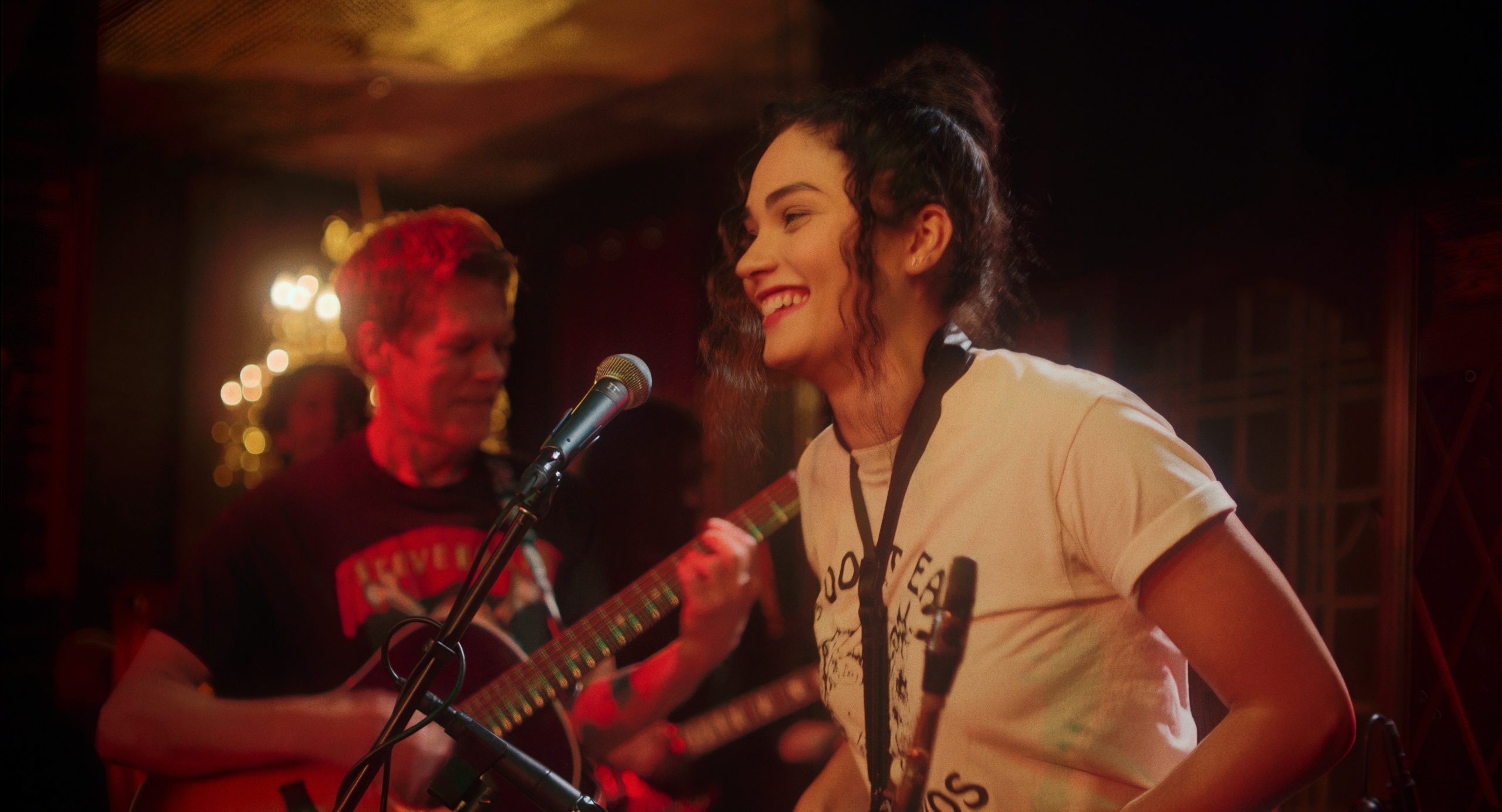
Kyra Sedgwick and Kevin Bacon have been married for 36 years and have starred beside one another in four different films over that span, but it’s safe to assume that Michael J. Weithorn’s The Best You Can is the first time, on-screen or not, that Sedgwick has given her husband a prostate exam. The procedure comes early on in the duo’s new film, just far enough in – heh – for Sedgwick’s Cynthia Rand to have struck up a casual rapport with Bacon’s Stan Olszewski, the security guard who patrols her Brooklyn neighborhood on a nightly basis, but that doesn’t make the patient on the receiving end of his urologist’s gloved finger any more comfortable. He’s a sarcastic single dad whose daughter (Brittany O’Grady) regularly wants nothing to do with him, leaving plenty of time for midnight text sessions with the woman whose house was recently burglarized; his doorbell camera recommendation leads to an iMessage trove that rivals “Ulysses” in length. Cynthia, on the other hand, is a doctor in Manhattan whose husband, Walter (Judd Hirsch playing an excellent Judd Hirsch), is aging (and declining) rapidly, the memories of his accomplished days as a Nixon-era government official fading with time. Both Cynthia and Stan are in need of a friend, and the loneliest bloke on the block will do the trick. The questions surrounding their reasonably flirty-yet-platonic rendezvous aren’t all that complicated. What keeps things afloat for so long is the assumption that, at some point, these new pals are going to make out.
Image courtesy of Tribeca Film Festival
As is the nature of any modern R-rated comedy that appears to have been engineered in a lab with specifications that make it appropriate for movie nights hosted by progressive families, there’s plenty more to The Best You Can than questionable infidelity-infused intrigue, especially given the on-screen talent involved. A common theme in Tribeca’s slate of dramedies this year has been, to frame it broadly, found connection between people who need it most and expect it least, especially from where they discover it, and that’s what lies at the crux of Weithorn’s film. The larger-than-life man Cynthia married was 25 years her senior when they met, and she didn’t foresee this change in his mental fortitude. Inversely, Stan has always been fine on his own, free to have occasional sexual romps with the 20-something grocery store clerk who asks if he wants to “sext later” when he stops by her counter, buying a six-pack of Sierra Nevadas for the morning after his shift.
Image courtesy of Tribeca Film Festival
It’s the sort of picture that is light on plot and heavy on loose threads that perhaps should have been left on the cutting room floor, only making it into the final cut in order to provide each character’s individual arc with a bit of extra emotional heft. And if the goal here was to give every actor in its midst an excuse to have a moment, as it were, then by all accounts, The Best You Can is a triumph. Despite Warren’s condition, he strives to finish a book about how he spurred the Watergate investigation and exposed corrupt politicians before anyone else; the prose ends up evolving into a work of nonfiction that is more about his life as a whole than a textbook on Tricky Dick. Sammi (O’Grady) is an aspiring singer/songwriter, a dream her dad places pressure on as much as he supports it, adding nuance to the father-daughter relationship that is otherwise a loose end. Ultimately, though, the film is at its best when Bacon and Sedgwick are working off of one another, and though their dialogue is never not rote, the chemistry between the two is undeniable (duh) and they manage to elevate Weithorn’s basic humor to a kind of authenticity that dramedies tend to forego in favor of the easiest path forward. If anything, one can think of worse real-life Hollywood couples to give starring turns in a smartphone-era riff on You’ve Got Mail.
That The Best You Can is far too easy a film to invest in affectionately will diverge audiences, to be sure. There’s as much to be said for its brand of poignant manipulation as there is for its nauseatingly-sweet characters, and plenty will balk at being dropped into a movie full of all of the nicest people ever conjured on screen, only to watch them make one iffy decision after another, particularly when it pertains to Sedgwick and Bacon coming together as a will-they-won’t-they romantic pair. But the film’s heart is in the right place, and as far as being a statement work on complex humans doing “the best they can” to be exactly that – human – it’s sure to make good on its promise and then some. If you end up wishing that the film made more hay of its deepest themes (one’s health as they age; crises of creativity; hopes left in the dust to buttress someone else’s dreams), you’re almost sure to let it slide when it goes for the heartfelt jugular in its closing moments. We’re all just doing the best we can, after all. Remember that when your parents stumble upon this title once it inevitably lands on Hulu or Amazon Prime, and encourage them that there are far worse ways to spend 102 minutes of their time on this earth.
On this episode, guest hosts Megan Kearns and Max Vincent discuss the new action film From the World of John Wick: Ballerina! Not sure anyone expected John Wick to kickstart a massive franchise back in 2014, but a decade later and here we are with Ana de Armas kicking ass as the new lead in this spinoff movie. Ballerina is a fun time and we had a lot to say about this one.
Big thanks to Megan and Max for filling in the host chairs!
Review: From the World of John Wick: Ballerina (4:00) Director: Len Wiseman, Chad Stahelski (uncredited) Writer: Shay Hatten Stars: Ana de Armas, Anjelica Huston, Keanu Reeves
Director:Dan Trachtenberg Writer:Micho Rutare Stars: Lindsay Lavanchy, Louis Ozawa, Rick Gonzalez
Synopsis:An anthology following three of the fiercest warriors in human history becoming prey to the ultimate killer of killers.
Predator: Killer of Killers (2025) is a first for the now almost 40-year-old franchise as it delves into the world of animation and anthology storytelling. Director Dan Trachtenberg now helms his second film of the franchise following 2022’s Prey and yet again proves that he’s taking the franchise to astronomical heights. Killer of Killers provides the audience with all the bloody and violent carnage we’ve come to know and love from past entries, while also pushing beyond the boundaries of what the franchise is known for. It ties three different periods of stories and people together for one epic journey of persevering through sacrifice and loss. Whether you look at it from a perspective of doing something new or wanting what’s worked before, it delivers on both fronts with some insanely creative Predator kills and gadgets and splendid animation that adds to its flavor, Killer of Killers not only rules as a new clever Predator story but as a film that can be enjoyed on its own.
The anthology follows three stories, a Viking named Ursa (Lindsay Lavanchy) on a brutal quest to avenge her father with her young son; Kenji (Louis Ozawa), a ninja in 1620s Japan looking to challenge his brother for succession; and a WWII vet named Torres (Rick Gonzalez) who is trying to prove himself as a pilot. Like any good anthology, these three separate stories are not only intertwined thematically but the main characters of them converge in the film’s final 30 minutes, showing how they’re all the ultimate prey to the world’s ultimate killer. Through the themes, each story deals with proving one’s self through accomplishing a certain task and they’re all handled with grace and proper emotional weight during the 90–minute runtime, but that’s not the only aspect that separates Killer of Killers from previous films in the franchise.
In a similar vein to another film of animated bits in a long-spanning franchise (2003’s The Animatrix), Killer of Killers’ decision to go fully animated widens the scope of what the entire franchise can be. Fight sequences, even ones not including Predators, feel even more brutal and look incredible on the screen, Predator gadgets and the way they’re utilized here are unbelievable to watch, and the animation style complements action setpieces and new locations within the franchise quite nicely. One might be quick to call it a “pale imitation,” of what we’ve seen from how the Spider-Verse movies continue to break boundaries with the mix of 2D and 3D animation as a similar style is used here, but the flick manages to bring its own take to the style with more brush-stroke type backgrounds and character outlines rather than a flashy comic-book aesthetic.
This film also has the most creative designs for Predators that we have yet to see in the entire franchise. Each new character design we see in the segments of the film is unique to the different elements and periods of each story. The creatures have never felt more foreboding or threatening to our protagonist in the entire franchise. In Prey,Trachtenberg was wise to make the alien more quiet and sneaky in key sequences before it unleashes bloody chaotic carnage and he’s still able to bring those skills to animation with the use of camouflage and gadgets again. Simply put, key set pieces in Killer of Killers could only really be done through the scope and unlimited potential of an animated film, and Trachtenberg can use that to his advantage with The Predator quite impressively in one fight scene in the 3rd act where we see the planet of the Predators. It is a marvel when you realize this is Trachtenberg’s first venture into animation, but he nails it. Even the film’s more silly moments near the end where our three heroes have to work together despite the literal generational barriers they have with one another would feel more believable in animation than any other medium.
After Killer of Killers, it’s officially confirmed that we are in an incredibly exciting and fresh era for this long-spanning franchise. Trachtenberg and his team have crafted yet another grisly violent entry, yes, but one that has brought the franchise to an entirely new horizon of creativity. With incredible animation and a brisk runtime, Predator: Killer of Killers will sit high among the absolute best of the Predator series.
The Semaine de la Critique (or Critics’ Week) at the 2025 Cannes Film Festival had plenty of unrecognized gems. Every year, it tends to happen: this sidebar of the acclaimed festival often loses its spotlight to the main competition films and their buzzy titles featuring big stars. But some great filmmakers have emerged from this section. Of course, there are some misfires; yet, the surprises tend to be more significant since fewer people are discussing them. In this capsule review piece, I have selected one hidden gem and two films that, unfortunately, didn’t meet their potential: Kika (by Alexe Poukine), Love Letters (by Alice Douard), Sleepless City (by Guillermo Gallo).
Kika (Directed by Alexe Poukine)
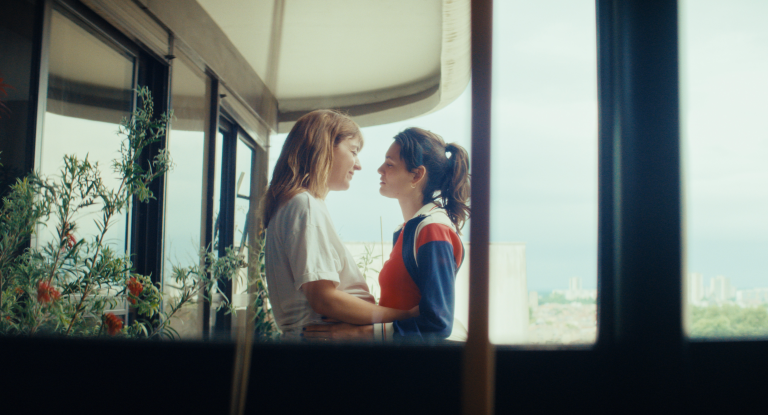
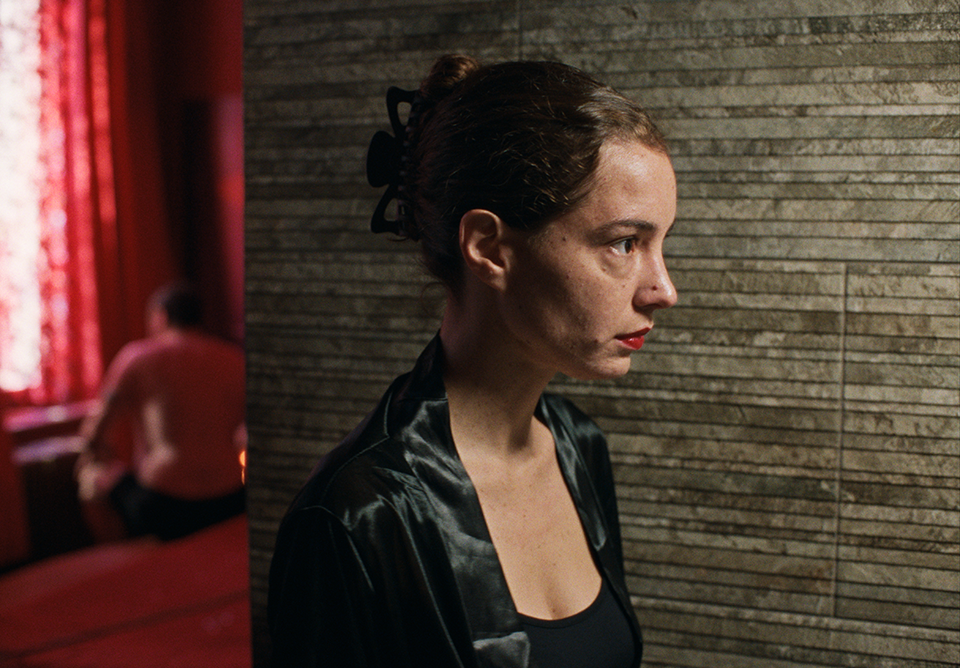
For her first narrative feature film, actress and director Alexe Poukine sought to create a project that resonated deeply with her, more so than any of her previous work. Hence, the creation of Kika, a film about female empowerment, grief, and the harsh realities that sex workers face in their daily lives, is presented through a dramedy tone that is way too breezy to function properly against the themes being tackled. The film begins at a rapid pace, where love, disillusionment, rekindling, and death occur all within ten minutes. Kika (played a charming and charismatic Manon Clavel) helps people with their housing and tenant problems, alleviating their stress and liberating them from chaos. Yet, in her time of need, nobody is there for her.
After one of her shifts, Kika stumbles upon a man (Makita Samba) in a bike shop, where a meet-cute scenario develops. Clavel and Samba’s chemistry is palpable; the two of them click on all cylinders, to the point where you can build a rom-com just with their scenarios alone. But, as previously mentioned, there’s more to Kika than this romance. They fall in love quickly and begin an affair. In the next scene, she leaves her partner for him. And in the very next scene, he passes away in an unshown accident, leaving Kika, who’s pregnant with her second child, and her daughter burdened with grief and melancholy. All of that information was presented to the viewer in a disorganized and careless manner. I was utterly baffled by how these key incidents in Kika’s life were presented, as if they didn’t matter. And they do.
These moments in her life pave the way for the film’s crux, where Kika must find ways to make ends meet while mourning the loss of a person with whom she had thrown her life away. Poukine does not explore this theme to its potential, as the focus is now on Kika becoming a sex worker, in secret from her parents and ex-husband, to make ends meet. Poukine switches gears, where the tragic tone of the first act is dismissed throughout the rest of the film to give way to comedy, which mostly fell flat. Even if Clavel tries to elevate the weak script with her charm and charisma, these comedic elements do not help Poukine tap into the contemplative side of Kika’s arc of upheaval and grief. Any attempt is undercut by gags that do provide brevity–and in a festival that has many dark, brooding, and sad pictures, it stands out–but they do not work for the film.
Grade: D
Love Letters (Des preuves d’amour, Directed by Alice Douard)
Love Letters (Des preuves d’amour) by Alice Douard tells a story that, by this day and age, has been told countless times, but it is truly important and impactful. The film follows Celine (Ella Rumpf, a talented French actress whom I’m fond of because of her stellar work in Julia Ducournau’s Raw) and her wife Nadia (Monia Chokri), who will give birth to their long-awaited daughter, a gift they have been asking the gods for plenty of times. And now it is at arm’s length, filling them with plenty of joy but also worry, as the role of being a caretaker gives them more responsibilities and the emotionally draining laws that have her reaching out to estranged parents.
Because IVF was illegal in France during the film’s setting, Celine must ask the people in her life for letters explaining why she would be a great mother and caretaker to adopt her own child, hence the reunion with her mother. Douard gives us many scenes where Celine and Naida go through the ups and downs of this process, and their devotion, with moments of joy, sadness, and frustration being spread across them. Although the story’s framing is uninspired, resembling one of the many French dramas offered out of competition, with little adventurousness behind the camera, LoveLetters thrives due to Rumpf and Chokri’s respective performances and palpable chemistry.
The two bounce off each other quite nicely. The respect and devotion their characters have are felt in each scene they share. Rumpf and Chokri focus on paving a way into their characters’ hearts, which gives Love Letters an honesty and rawness necessary to tap into the crucial nature of why this specific perspective of this already told tale must be shared with us. While the filmmaking is minimal, Rumpf and Chokri are the ones who help you connect through the quietness of the canvas. Douard may not showcase the best of her directorial abilities, nor does cinematographer Jacques Girault. Still, the French director manages to let her actresses take the spotlight for the film’s entirety.
Grade: C+
Sleepless City (Ciudad sin Sueño, Directed by Guillermo Galoe)
Following the same ideas he planted in his short film Even Though It’s Night (Aunque es de Noche), Spanish filmmaker Guillermo Galoe brings us Sleepless City (Ciudad sin Sueño), a tale set in La Cañada Real, one of the most significant illegal shanty towns in Europe, located in the outskirts of Madrid. We follow Tonino (Fernández Silva), a fifteen-year-old boy who wanders the world with great curiosity, filming everything around him, alongside his best friend Bilal (Bilal Sedraoui), with his phone to capture the highs and lows of living in La Cañada. His family of scrap dealers tries their best to make ends meet, considering the circumstances, as Tonino follows his grandfather around while he conducts his business.
There’s an innocence to Tonino, seeing everything with a new light–from the low points of his living condition, he sees the joys in it, the small things that don’t fix his problems, but bring him happiness. Galoe provides many shots of Tonino’s surroundings, taking the time to have the audience look at this world, so distant from us, without ever delving into poverty porn or something of a similar vein. But things come crashing down with a demolition company closing in on them, and Bilal leaves La Cañada to live in another place because things have become too complex for his family. The effects of modernization and economic struggle are ripping his reality apart.
This creates a shift; Tonino dreams of a new life, and a change of location might do it, but there’s also a resentment towards leaving behind the place where he grew up–his roots are there, and a difficulty in distancing himself from it causes an internal struggle. Does he fight for this land with an uncertain future, or head to the more aspiring unknown? Galoe treats this story with sheer authenticity and understanding. He has covered La Cañada before, so Galoe has a more personal connection to the location and its people, which lends Sleepless City the honesty and sincerity needed to move the viewer without the need for over-dramatization. This story, and Galoe’s approach, reminded me of Carla Simón’s Alcarràs, where a family in the Catalan countryside struggles against a demolition company that wants to build solar panels on their farm’s land.
Both offer very humanist looks into the daily lives of people on the verge of losing the place they call home, and with that, ripping away the identity and culture of the place. While these are two different perspectives, from two very different societal classes, Simón and Galoe’s films depart from the same point, both directors being frustrated with Spain’s agrarian and modernization crisis, which causes difficulties for hundreds of families. The lens is filled with empathy and lament for those who have gone through these drastic changes. It might be a minor work in the grand scheme of the Cannes festival circuit. However, Sleepless City and its emotional grievances are still felt to a considerable degree, with Galoe presenting himself as a director to watch in Spanish cinema.
This week on the InSession Film Podcast, we discuss the best film scores of the decade so far! We also talk about the great Michael Fassbender coming off the heels of the latest Women InSession podcast as we had more to say (and defend) about his career.
– Opening Banter (0:42) We begin the show this week with some fun banter about our lives the past week and some things happening this week on the InSession Film Podcast, including a review for Ballerina from two of our writers to held down the fort for that film. We also note that one review coming from Brendan and JD will be Eephus, which led us down a little sports rabbit hole.
– Michael Fassbender (16:52) As noted above, the Women InSession crew had a lively conversation about Michael Fassbender this last week talking about his varied career and some of the crazy choices he made in the 2010s. He did star in some really bad movies, but was it really all that bad? We actually come to Fassbender’s defense to argue in favor of some of those movies and champion his overall quality of work.
– Film Scores of the Decade So Far (46:02) After discussing performances of the decade so far last week, we continue this mini-series by talking about the best film scores of the decade thus far, a topic we could have spent hours on if we didn’t limit ourselves. We are film score junkies and there have been some exceptional movie scores over the last five years. Some of them you could argue are all-time stuff. Either way, our passion in this conversation is palpable, and we hope you enjoy it as much as we did. With that said, what would be your Top 5 film scores of the decade so far?
If you want to help support us, there are several ways you can help us and we’d absolutely appreciate it. Every penny goes directly back into supporting the show and we are truly honored and grateful. Thanks for your support and for listening to the InSession Film Podcast!
Some of the most inspired and creative voices in modern cinema have debuted or premiered their films at the Cannes Film Festival sidebar Quinzaine des cinéastes (or Directors’ Fortnight). Although this isn’t the section of the famed festival that gets the most attention, it is where many of the Cannes’ standouts are. And this year was no different. In this capsule review piece, I will discuss three films that screened in the 2025 edition of the Quinzaine, two of which are among the best offerings from the section, and all of which feature directors with fresh voices and contain interesting ideas: The Girls We Want (Prïncia Car), Kokuho (Lee Sang-il), and Lucky Lu (Lloyd Lee Choi).
The Girls We Want (Les filles désir, Directed by Prïncia Car)
Prïncia Car’s The Girls We Want (Les filles désir) paints a portrait of free-spiritedness and insecurity that remains incomplete by the time the credits roll, but somehow that missing part serves both to the benefit and detriment of the film. During the first half, we follow Omar (Houssam Mohamed), a twenty-year-old overseeing a neighborhood societal center in Marseilles for the summer. He is madly in love with Yasmine (Leïa Haichour, the best performer in the young cast, but with the most underwritten role). His friends, who are also helping him in the center, behave in an immature way whenever she arrives–the hormones and ego of adolescent boys take over them to draw attention from a girl to notice them.
Omar and Yasmine’s dynamic becomes trickier upon the arrival of Carmen (Lou Anna Hamon), who has been away for quite a few years. During her separation from her hometown, she was a sex worker; that detail caused the boys in the group, except Omar, to put her to the side and see her as a hock-up and nothing else. Car makes men’s view of women during adolescence the thematic crux. She has the women and Omar question their behaviors and rationalities, with immaturity and unwillingness to understand being at the forefront. However, I believe the screenplay lacks the complexity to delve deeply into this topic, particularly with the character of Omar.
We see his perspective for the majority of the film, as Omar interacts with both Yasmine and Carmen, whilst questioning how the rest of his friends behave in such a manner. Once we arrive at the second half of The Girls We Want, Car switches perspectives, with Yasmine and Carmen becoming the leads. They are the most interesting characters of the film, by a significant margin. Although this is a move for the better–and you could argue that this should have been how the film proceeded from the beginning–the switch comes way too late and causes a disbalance in the structure and pacing.
Grade: C+
Kokuho (国宝, Directed by Lee Sang-il)
The big surprise, and one of the best films in the Quinzaine, was Lee Sang-il’s Kokuho (国宝), a three-hour tale of revenge, reconciliation, and the art of Kabuki theater. Although long and sometimes strenuous, with a demanding structure and pacing to its narrative, Lee Sang-il keeps the boat steady and afloat through finely constructed set pieces that emulate the theater experience and a keen handling of heightened dramatic sensibilities. The story centers around Kikuo (Ryo Yoshizawa), the son of a yakuza gang leader, who fails to avenge his father’s death and turns to the theater to expel his grief, pain, and angst, leading him to a troubling life of ups and downs.
Beginning in 1964, and ending in the present day, time passes by–the story of a life long lived, both in success and turmoil–as he learns the process of Kabuki theater, which he is a natural at, and is honored by the culmination of his career. The majority of the film does contain excessive flair, shot and framed with mostly static cameras; the vibrancy and vivacity come from the details in the sets and costumes, as well as the performances, which are very precise and tactical, almost as if their real personas are shown when on-stage and using their masks off-stage. Kikuo’s journey is divided by performances and reenactment of plays (The Snowbound Barrier, Two Lions, Hanjuro in the Spider).
Each of these plays foreshadows and thematically matches the next chapter in his life, creating a path where theater and reality intertwine for the performers in a magical, and sometimes tragic, way. Lee Sang-il uses his adventurous side of filmmaking in these scenes, adding a vibrant and lavish feel to Kokuho. Each camera movement is carefully thought out and tactfully placed so that, in these instances, you feel you are watching Kabuki theater rather than a film itself. The narrative itself is not original; numerous stories have explored the fine line between revenge and reconciliation, as seen through various art forms. But what gives this film personality is that very aspect of Kabuki theater, something so interesting that not so many people outside of Japan know about. And I, who is not a fan of the theater itself, found myself vastly intrigued by the mechanics of it.
Grade: B
Lucky Lu (Directed by Lloyd Lee Choi)
Another gem in the Quinzaine was Lucky Lu. This film reminded me of a movie that screened at the Semaine de la Critique by Shih Ching-Tsou, Left-Handed Girl, as well as her previous work Take Out, which was co-directed by Sean Barker (also involved in the aforementioned film as co-writer and editor). The three films have many tie-ins and layers that connect them in various aspects. This is something that happens, both intentionally and unintentionally, at Cannes, where an array of films thematically and narratively match each other. But with Lloyd Lee Choi’s film, the resemblances venture forth into Baker and Ching-Tsou’s filmography, rather than just sticking to their latest collaboration. Hence, there are more direct connections with Take Out.
Lucky Lu and Take Out follow an immigrant in New York City who works as a food deliveryman, trying to make ends meet while being paid unfairly and dealing with his grievances. In the case of Lloyd Lee Choi’s film, his name is Lu (Chang Chen, known for his work with Wong Kar-wai–and he’s excellent here). He is expecting his family, whom he has not seen in a long time, in New York in the upcoming days. We follow him throughout his daily life. He delivers food, rides his e-bike from location to location, deals with rude customers, and smokes his occasional cigarette to soothe the stress that comes from the hectic and restless city life.
One day, his e-bike is stolen, robbing him of his employment and leaving him with no means to pay for his new apartment. With his family on the way in just a few hours, Lu tries to find easy ways to make money, whether by stealing the bikes of others or selling the little he has left, before his family arrives and realize that he is living a life full of struggle–breaking the facade of the so-called “American dream.” Lucky Lu has many elements in the narrative to become an overly emotional film that delves into poverty or struggle porn. But Lloyd Lee Choi does not delve into such sensibilities because he does not want to disrespect not only his characters but the people who have gone (and still go through) similar situations.
Cinematographer Norm Li shoots the film with a minimal style and flash, keeping everything grounded and honest. These events were taking place right before our eyes. The camera follows Lu at all times, like a spectre watching his every move, both during his minor moments of joy with his daughter and those of sadness and worry. It is minimal in technique and camerawork, yet it remains vastly effective. You feel for Lu, even during the times when he makes terrible decisions, because you understand his reasoning. The only scene that deviates from that nature is one of the very last, where you feel that Lloyd Lee Choi ups the ante, becoming louder and more flashy rather than silent and minimal. But even then, there is a sincerity to it, which makes Lucky Lu come across safely from that misstep.
Director:Anna Emma Haudel Writers:Anna Emma Haudel, Maria Limkelde Stars: Johanna Milland, Josephine Park, Clint Ruben
Synopsis: The Venus Effect is a romantic comedy about daring to love ourselves and each other.
Everyone remembers their first sexual awakening. Whether you were like me and fell in love with an alluring Uma Thurman in 1997’s Batman & Robin, or found it later in life, it’s a formative moment that guides us through our sexuality. In Anna Emma Haudal’s The Venus Effect, a young woman finds herself questioning her own sexuality in a charming rom-com that doesn’t hold back on the complicated emotions that come with being your true self. A refreshing LGBT story that depicts love in its multiple layers of lust and care, that is welcoming of all walks of life.
If you are anything like me, I watched the trailer for The Venus Effect and within the first 3 seconds I was hooked, similar to how the film’s main character Liv (Johanne Milland), a freckle-faced plant caretaker, is when she first lays her eyes on Andrea (Josephine Park), a spunky bright-haired woman who stumbles her way into Liv’s life. From the outside, Liv has a perfect small-town life, living in a small but cozy apartment with her boyfriend Sebastian (Clint Ruben) and working on her family farm. She comes from a loving nuclear family who often sit down for dinners together. Liv is quiet, taking life in through the lulls of everyday life, tending to the flowers or wishing for a more active sex life with Sebastian. Her life is quickly turned on its head when Andrea makes an unforgettable impression on Liv, awakening new feelings inside of her.
After their first encounter, Andrea requests to borrow Liv’s car, to which Liv, who doesn’t appear to have a spontaneous bone in her body, agrees. It might’ve been the costume Andrea was wearing to the “pussy” themed party she was headed to, but their connection is instantly felt. Small smirks litter Andrea’s face, who is a few years older than Liv, as she can tell Liv is totally checking her out. The next time the two women meet is the following day; Andrea returns the car and makes her way back to her makeshift home sat in the middle of a field. Liv finds her way there, and sparks fly as Andrea requests to take Polaroids of Liv.
The beginning of Andrea and Liv’s romance in The Venus Effect doesn’t start out in a conventional way; after going to a wedding for a friend of Andrea together, they find themselves waking up still drunk in the back of Liv’s station wagon. Although Liv still very much has a loving boyfriend waiting for her at home, she can’t help but let her mind wander about her feelings for Andrea. In the morning, the two have their first passionate moment with one another, leaving Sebastian in the rearview mirror. Liv and Sebastian’s final moments as a couple come to an end in a surprising way that adds some much-needed conflict to the film, giving Liv some hard consequences to deal with.
What is so profound in the film’s 1 hour and 45 minute runtime is it’s a queer story that is accepting from the get go. When Liv reveals to her family that she is no longer dating a man, but instead a woman, there’s shock at first but never does the family degrade Liv or denounce her as their own. It’s worth noting that Liv’s only brother is gay, and came out years before she did. They are a family that is riddled with drama, later in the film their lives are shaken when Liv’s parents tell their children that they are getting divorced. By no means are they perfect, but their willingness to accept one another for who they are is refreshing, especially for their sexuality.
The Venus Effect shows Liv’s and Andrea’s relationship as deeply flawed, and that’s what makes it feel incredibly real. Head over heels for one another at one moment and breaking up with the other a second later, they show that sexual chemistry isn’t the only thing that holds a relationship together. Andrea is more experienced in being out than Liv is, and has more friends who are in the community. Often leaving Liv to feel like an outsider in her own relationship with her inexperience. Wanting a more quiet and reserved life butts heads with Andrea’s want for a city apartment away from rural life.
Where the film hits the brakes is with the drawn out conflict of Liv’s parents getting a divorce. A budding relationship gets lost in the mess of a hetero couple’s disinterest in one another. Liv feels that her life has slowly begun to fall apart after meeting Andrea, loss of friends, and now the family life that she had once held dear is falling away. For a large part of the film’s final act Andrea and Liv rarely have any interactions, or are even shown on screen together, almost making the audience forget who this rom com is even about. The film lacks moments that develop Andrea and Liv’s love, and even when the film ends on a tear jerking moment, it makes you yearn for a few more minutes with them.
Writer and director Anna Emma Haudal, along with writer Marie Limkilde, create a story that plays like a later-in-life coming-of-age story through a woman questioning her sexuality. Focusing on Liv draws the audience in with an everyday looking woman with tired eyes and a curious spirit. They do quite a bit of work in the first few acts of the film finding out who Liv is, which makes it all the more frustrating when her moments of self-discovery are cut too short. Andrea, who injects much of the film’s humor, lights up the script, and played by someone with a sliver less charisma than Park, would be much less entertaining. Paired with stunning cinematography from Valdemar Winge Leisner, their love is captured in a dreamy atmosphere that often feels like a fairy tale.
Overall, The Venus Effect finds a young woman in need of finding herself and coming to terms with life’s many obstacles. Enchanting lead performances make for an easy watch even when the film loses its momentum near its final moments. A welcoming LGBTQ story that finds its stride in the warm glow of new love and moments that make us human.
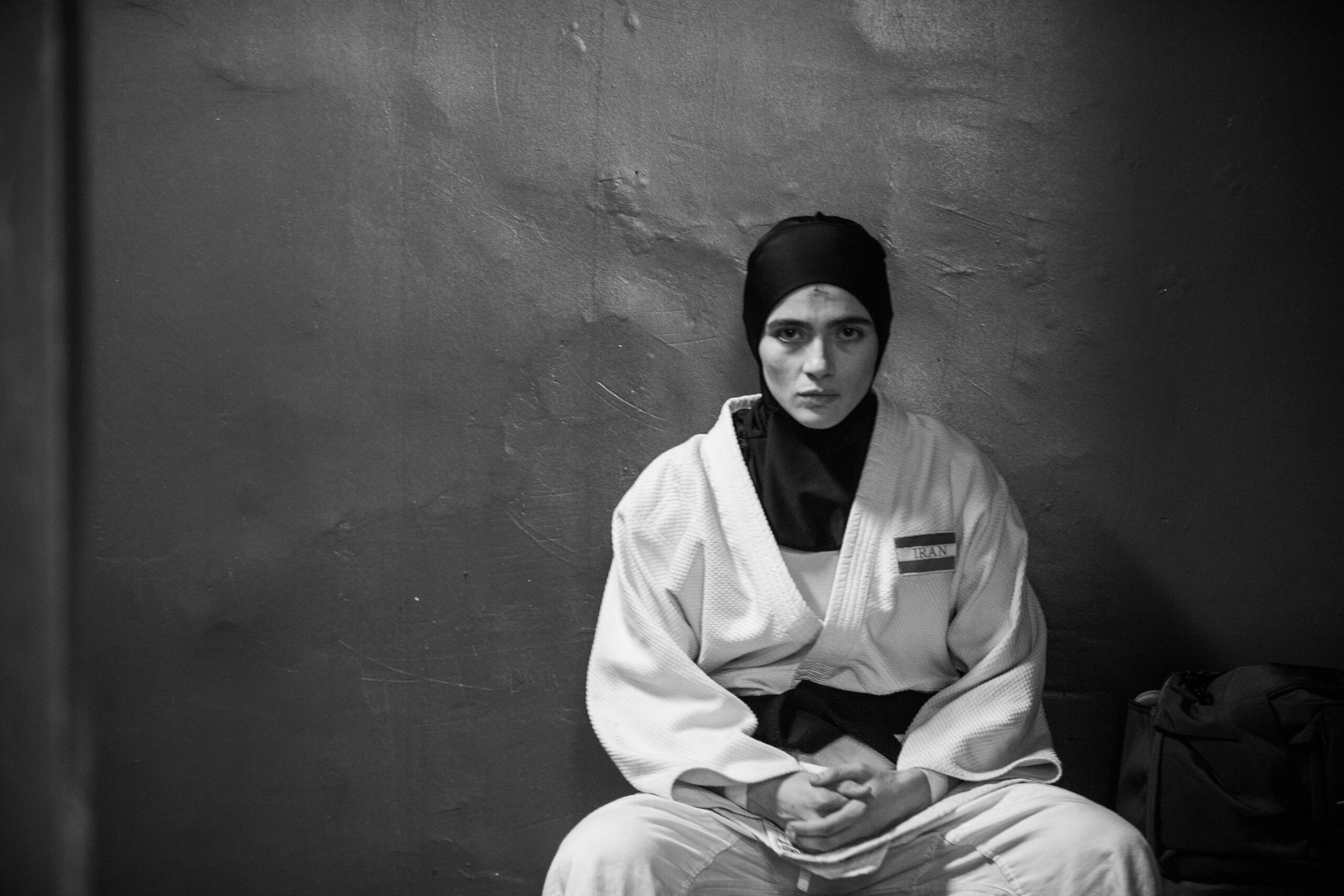
Directors:Zar Amir Ebrahimi, Guy Nattiv Writers:Elham Erfani, Guy Nattiv Stars: Arienne Mandi, Zar Amir Ebrahimi, Jaime Ray Newman
Synopsis:The Iranian female judoka Leila is at the World Judo Championships, intent on bringing home Iran’s first gold medal.
International sports competitions have been meant, not only for showcasing the talents of individuals or teams, but as a friendly competition between nations. Unfortunately, many of these competitions have brought out the worst in nationalistic agendas from cheating to penalizing athletes should they not perform as the state expects. It’s especially true of Iran, which places its citizens under strict and unyielding codes of conduct within and without the country.
That is what makes Tatami unique. While other sports film conflicts are about individual pride, status, or greed; this film is about national interest. Leila’s (Arienne Mandi) leaders aren’t worried she will lose in the grander scheme of the competition, but that she could potentially lose to an Israeli. The escalation of tensions at home brings tension to the fights on the tatami, which is a Japanese straw mat covering the fighting surface. It makes for a daring story by screenwriters Elham Erfani and Guy Nattiv. They take us from the adrenaline of sports to the adrenaline of political intrigue without missing any emotional beats from either. We want Leila to win and we want her to escape oppression.
Tension like this is hard to sustain, but cinematographer Todd Martin, as directed by Zar Amir Ebrahimi and Guy Nattiv, excels at it. Every bout that we see is filmed from a different angle at first. We see the combatants from above or from behind one woman or another. We’re made aware of how large the square of tatami and the arena it’s housed in are by the movement of the camera. Even as we are in close with the combatants as they grapple, it never feels off balance or confusing. It’s controlled until the last moment when the fight or flight response kicks in. The Steadicam jostles as the characters run. Each and every movement is precise and well executed. The fact that the film is shot in lush black and white is an added effect evoking the boxing noirs where a fighter is put in a precarious situation.
There are two matched scenes that create a perfect bookend for the film and highlight the best of Tatami‘s technical prowess. Directors Ebrahimi and Nattiv give us a visual language early on, showing us trust, concern, and duplicity in equal measure through the staging of their characters. The first of the scenes is on the team bus with women in the various seats, the camera pushes in, up the aisle and it turns to see Leila, boxed in by another woman. The camera then turns to see Maryam (Zar Amir Ebrahimi), looking over at Leila, but with no one next to her. The next time these two are on the same bus, they are next to each other and they look at one another. The journey to that moment is filled with anger, betrayal, fear, and doubt. Neither scene has dialogue, but the actresses are speaking volumes with their looks.
Zar Amir Ebrahimi has the tougher role in Tatami as a conflicted coach who has been in the same situation as her athlete. Ebrahimi pulls off this conflict with such grace. Her expressions and body language say far more than a script full of monologues could. The brilliance of her performance comes out of her character’s reaction. She plays Maryam as an intricately layered woman who is revealed in pieces and through conflict. Her ability to evoke something meaningful with a twitch of her lip or an opening of her eyes, is remarkable. Ebrahimi steals every scene she’s in and when she does get her big monologue at the end, it is devastating.
Tatami is a high wire act of political tension and sports drama. It’s a film that lets neither end of its story down. If you’re a fan of films that call out political oppression, this film is for you. If you’re a fan of great sports dramas, this film is for you. It’s a film that excites and inspires while never letting us forget the realities the fiction is based on and the price some pay to do what they love.
Director:Celine Song Writer:Celine Song Stars: Dakota Johnson, Chris Evans, Pedro Pascal
Synopsis:A young, ambitious New York City matchmaker finds herself torn between the perfect match and her imperfect ex.
Celine Song’s masterful, heartbreaking debut feature, Past Lives, didn’t have a tagline because it didn’t need one to sell itself. The romantic drama about two once-intertwined souls who reconnect after losing touch for decades was as straightforward as they come, yet what made it one of 2023’s strongest films was the meticulous manner in which it handled its reasonably basic narrative. Intelligent, wistful, and endlessly painful in the ways that make you long for the feelings it stirs within you regardless of the accompanying ache, it’s a film that is wholly in touch with the sort of emotions only art can inspire. At least, that’s what you believe until you meet someone who causes similar, deep sensations so deep that they feel right, wrong, and entirely foreign, all at the same time. Past Lives is a terrifying movie because of how recognizable it is: It imagines a reality that you’ve probably lived, even if you didn’t realize it at the time.
Song’s sophomore effort, Materialists (in theaters on June 13 from A24), has a tagline – “Some people just want more” – but it similarly doesn’t require one, though the reasons are different this time. For one, it’s a modern romantic dramedy being released during a time when filmgoing audiences seem starved for thoughtful fare of the sort; Anyone But You and Babygirl were mere starters, just hearty enough to whet one’s appetite without spoiling dinner. But it also could have been released on its own promise, given the fact(s) that its director is hot off the heels of a hit that garnered two Oscar nominations (Best Picture and Best Original Screenplay, Song’s own), and that its stars, with no shade to the likes of Greta Lee, John Magaro, and Teo Yoo, are among Hollywood’s brightest in terms of marketability and feasibly-photoshopped physical features.
The lead here, Dakota Johnson, plays Lucy, a Manhattan-based matchmaker who is responsible for nine marriages but is referred to by her pals as “the eternal bachelorette;” a notable nepo baby, Johnson has paved a path independent of her parents’ dating back to the Fifty Shades franchise in the early 2010s and including everything from A Bigger Splash and Suspiria to Madame freaking Web. Opposite our favorite neighborhood (clairvoyant) spider-woman is Chris Evans as John, a struggling actor who works catering jobs to make rent and lives with a tandem of shitty roommates; you might remember Evans from his time as Captain America. Rounding out Materialists’ dynamic trio is Pedro Pascal, playing this romance’s resident macho millionaire, Harry; Pascal has starred or appeared in everything short of a NEON movie (though I’m sure it’s coming) and makes his Marvel foray next month as Reed “Mister Fantastic” Richards in The Fantastic Four: First Steps. This film, the one starring all three and in which not one dons a latex-based costume, has next to no reporting on its budget, but one has to assume that 75-percent of that imaginary number went straight into their pockets.
Dakota Johnson and Celine Song in Celine Song’s “Materialists” | Credit: Atsushi Nishijima
Jokes aside, it’s safe to say that Materialists, cute catchphrase and all, needed no introduction. Yet what I hope people are willing to do is consider its excellence beyond its inherent external sheen, with glimmers bouncing off of its top-billed stars’ trophy cases and Song’s unofficial first-look deal with the studio behind its domestic release. For while Materialists is certainly a showier (and shinier) production than Past Lives ever was – even after the critical acclaim and awards nominations – it remains just as incisive an examination of the human heart as its filmographic predecessor. The apartments here, for the most part, are much larger and nicer than anyone’s homes in Past Lives, as are the clothes, the car services, the date nights, and the accessories, scrupulously selected to tie every perfect outfit together. But its core tenant is the same blend of smart, earnest, humanistic, and, above all, authentic that made Past Lives such a phenomenon for an unknown director whose claim to fame was that her first film’s love triangle was loosely autobiographical.
We still lack (and clamor for) the details regarding what went down during Song and Challengers/Queer scribe Justin Kuritzkes’ courtship, but as long as they keep writing such devourable screenplays that chart the maps for such luscious, delectable films, who’s to say they owe us anything? What Materialists argues at first, on the other hand, is that we owe ourselves everything when it comes to love; that we should play the field until we find the perfect partner, the one who dots every “i” and crosses every “t.” Lucy’s job is to help the singles of New York find the ideal match – it is called matchmaking, after all – but her approach is comprehensive and considers every variable. A number of cleverly-edited montages (kudos to Keith Fraase, Song’s editor on Past Lives and a frequent collaborator of Terrence Malick’s) are peppered throughout the film and show us precisely what Lucy has to keep in mind when setting up dates for prospective paramours. “Nothing over 20 BMI,” one client notes sternly. “I get along a lot better with girls in their 20s,” another offers, pushing 50 himself. “I deserve someone who fulfills all of my criteria,” says the customer with a list of musts longer than the restaurant menu she and Lucy are sitting in. It’s a dirty job, but someone’s gotta do it.
And Lucy is incredibly good at it. She finds a way to twist an anxious bride’s words from “I’m marrying him to make my sister jealous” to “I’m marrying him because he makes me feel valued.” She also pitches marriage as a business deal, a has-to-end-sometime search for a “grave buddy.” As for Lucy’s love life, she’s happy on her own, for now. Her apartment is well-kept, as is her routine. Until she is approached by a handsome private equity tycoon (Pascal’s Harry) at the aforementioned success story’s wedding. Harry is the groom’s brother, and with his equally-rich sibling matched off, he happens to be next on the ring-shopping block. Naturally, as this is a movie starring movie stars, he takes a liking to Lucy, and though she initially balks at the proposition, she entertains a drink and a dance in hopes that she can win his business by night’s end. Only the evening doesn’t conclude on Harry’s arm, but in John’s car. Yes, Evans’ ruggedly-sexy Broadway dreamster snagged a busboy gig at Harry’s brother’s nuptials, and goes so far as to deliver Lucy’s drink of choice before she can have Harry fetch it for her – “Coke and beer,” she says, marking the first time anyone has ever ordered such a combination. She and John have a history, you see, a complicated one that fizzled due to conflicting dreams and financial insecurity, not due to a lack of love for one another.
“I don’t want to hate you for being poor,” Lucy tells John in a flashback, “But it’s very hard.” It’s a cutting barb to hear from a partner, but Song isn’t afraid to shy away from writing and depicting exchanges that couples have perhaps always wanted to share and never felt comfortable enough to commit to. “I’m trying so hard to make you happy,” John replies, with Lucy delivering a final blow in response. “I know. And it’s almost enough to make me happy.” These are the sorts of concerns that Harry doesn’t arouse, and if there were any real concerns, his $12 million penthouse would dispel them in perpetuity. Much of Materialists is made up of conversations between a woman and a man in which one seems to be pitching themselves to the other, as though a relationship is a business proposition. And for Lucy, that makes sense: She views everything through the lens of mathematics and sensible decision making, which leads her down the Harry road even if the John road is more familiar and enticing, despite its plethora of potholes and construction-related delays. This serves Song’s “will they/won’t they” framework quite well on a basic level, with the practical dialogue she has her characters engage in only aiding the concoction, like decorative frosting atop an already decadent wedding cake.
Dakota Johnson in Celine Song’s “Materialists” | Credit: Atsushi Nishijima
There are layers to the cake, too, like Harry’s own insecurities – including one particular reveal that is too good to spoil and too hilarious to bother explaining – John’s emotional baggage, and Lucy’s self-deprecative streak. That the film is never too keen to hitch its wagon to one thread alone allows for plenty of back-and-forth between Lucy’s connection with both men, as well as a side plot featuring Zoë Winters’ Sophie (Lucy’s most demanding and hopeless case) that initially feels out of place but finds a footing of its own and ends up factoring intimately in with the ongoings of our main characters’ journeys, both together and individually. It’s Johnson’s movie for the most part, with her wealth of lines and significance to the film’s principal dramatic arc(s) making certain that she is never off-screen for very long, if at all. The whole picture basically boils down to being a chapter in Lucy’s exploration of personal growth, and Pascal’s Harry plays a significant part, putting on the charm offensive and looking devilishly grand while doing so. But Evans is the true standout, providing yet another slab of evidence that the Marvel portion of his career was a loss for us all. His John has all the makings of a classic romantic dramedy character – the flailing ex who still loves our lead because of her flaws, not in spite of them – and Evans’ knack for embodying deep emotion in every line and shift in body language will only make you wish he’d squirmed out of Disney’s clutches sooner.
Of course, it’s a credit to Song’s raw filmmaking abilities that got each of these three stars attached, and a more extravagant hat-tip should be directed her way due to how successful the writer-director is in ensuring that none of them are ever backed into one of the film’s many potential corners, no matter who’s commanding the frame at any given point. Lucy runs the show; Harry has his moments, but also has his millions, and the two are often inextricable; John is somehow the most complex and most relatable character, but only because Song allows him to be both at the same time. A lesser filmmaker would have made Evans play the bumbling boy bestie whose employment is constantly on the fritz and whose rent is perpetually six months behind; in the early 2000s, he probably would have been gay or rejected. Both the occupational and financial concerns are true of John here, but he’s also an emotional figure worth investing in for the long haul, and not just because he gets the movie’s most indelible line down the home stretch.
It’s clear that Song has a love for the genre in which she’s now crafted to undeniable triumphs, and while Past Lives is this critic’s preferred entry, there’s something thrilling about watching the burgeoning auteur level up in a mainstream way that doesn’t involve superheroes or Mattel. And when you think about it, the only thing differentiating the “accessibility,” for lack of a better word, of Song’s debut effort from her sophomore is the inclusion of subtitles. That’s a conversation for another day – though it’s not one we should still have to have – because it’s worth reiterating that Materialists exists on its own merits, not those set by the success of the movie its director made two years prior. Far too often do we compare one’s past work (or lives) to their new offerings in hopes that a hole might be worth poking through when we should instead be appreciating the fact that a filmmaker has done more than one thing in their careers, no matter how long they’ve been working. In Song’s case, the career is but two features in, and Materialists serves as an indication that her well of stories worth telling shan’t run dry anytime soon. And thank goodness for that: In terms of films by Celine Song, love stories or not, some people just want more.
This week on Women InSession, we discuss the compelling career of Michael Fassbender to this point, which includes some all-time performances of his era and some wondrous headscratchers as well! His work in Shame and Hunger is undeniable, as well as his role as Magneto in the X-Men films. However, some choices in the late 2010s started to make us wonder if should change agents. We discuss all of that and more about the great Fassbender.
On that note, check out this week’s show and let us know what you think in the comment section. Thanks for listening and for supporting the InSession Film Podcast!
Synopsis:Three French journalists travel to Cambodia in 1978 after receiving an invitation from the Khmer Rouge regime, embarking on a perilous adventure
“Where is the line?”
This is a line uttered by one of the main characters in Meeting With Pol Pot, and is a deeply important question for all leaders to be forced to answer, especially when making grand proclamations about bettering society. There are many of us, including this reviewer, whose knowledge of Pol Pot and the Khmer Rouge is limited to footnotes and lines in punk rock songs from the early 1980s. So, putting “Holiday in Cambodia” aside, you will likely assume correctly that a film that elucidates some of the deeply troubling history in that country is the definition of a tough watch.
And yet, despite the director (and co-writer), Rithy Panh, literally living through these events and being the only surviving member of his immediate family, the film uses differing styles that create distance and never dives into the true brutality, at least in visual form. The decision to use both puppetry and an overlay of actual film footage is a smart, if unexpected decision. It would be easy to go for shock value that only narrative film could accomplish, but there needs to be respect for the actual, real human beings that suffered. So, Panh uses screens and animated carved miniatures. This accomplishes a few things. First, it symbolizes the levels of “truth” that characters must wade through. But more importantly, it also shows the lengths that governments will go to in order to design their own truth. Words matter. There is a line. But leaders will stop at nothing to dodge around it.
The film follows outsiders, three French journalists, who were invited to speak with Pol Pot in 1978, near the end of the Khmer Rouge, which ruled Cambodia during that time. Lisa Delbo (Irène Jacob) heads this group, joined by Alain Cariou (Grégoire Colin), and photographer Paul Thomas (Cyril Gueï). The film does a tremendous job of distinguishing these three, instead of making them all cookie-cutter reporters. Alain has a relationship with Pol Pot through letter writing while Paul is definitely the most radical of the group. Lisa occupies a middle ground, until she begins to see the truth of the crumbling of Democratic Kampuchea.
The pace is deliberate and, like life, the truth slowly opens up to both the audience and the journalists. Jacob, a deeply talented actress who is mostly known for her early career work, is given an opportunity to dominate the screen, sometimes in a wordless manner, and the film is better for it. Watching her process the unimaginable horrors that are occurring to the Cambodian people, as well as her own personal losses is truly a sight to behold. Panh astutely allows these scenes to breathe and holds the camera tight on her expressive face. And still, the film is balanced. There are also moments for Alain and Paul, as well as the Cambodian people actually affected by these horrors.
Despite said horrors, Meeting With Pol Pot also takes the time to show the beauty of the landscape. Cinematographer Aymerick Pilarski, aided by the script, takes us on a visual tour of 1978 Cambodia. It is easy for Westerners to make assumptions about this part of the world, without appreciating its people and its grandeur. Although some terrible things happen amidst these vistas, the story hinges on not just the unraveling of a mystery, but also on the importance of human lives in the face of lines being crossed by the minute.
And yes, the meeting (or meetings) with Pol Pot do happen, but the film certainly takes its time getting to it. This may be a feature, as opposed to a bug, as we feel the exact same kind of frustration that the journalists feel. They are controlled by the whim of a leader, just as we are by the script and direction keeping us at bay. But, to the film’s credit, when those meetings do occur, they are well worth the wait. I will not ruin the powerful impact of those conversations, but even if the audience finds the pace difficult, it is rewarded by the climax of the film.
There are no easy answers. Not to why terrible things happen. Not for what is the correct form of government. But once again, there are lines. If living in 2025 has taught us anything, it is that those lines can be crossed if we allow it to happen. In the modern world, we are no more immune to this disgusting behavior of leaders than the people of Cambodia were from the Khmer Rouge in the late 1970s.
On this episode, JD and Brendan discuss the debut film from Andrew DeYoung in Friendship, starring Tim Robinson and Paul Rudd! It’s incredibly funny and ironic, given this film’s title, how this episode unfolded denoting the shared brains between the two hosts. It was not planned at all, but sometimes that’s what makes friendships remarkable. The latest from A24 might not be for everyone given its extreme awkwardness and uncomfortable comedy. However, is there more to Friendship beyond its gimmick? That’s what we discuss in depth here.
Review: Friendship (4:00) Director: Danny Philippou, Michael Philippou Writer: Danny Philippou, Bill Hinzman Stars: Billy Barratt, Sora Wong, Sally Hawkins
Director:Len Wiseman Writers: Shay Hatten, Derek Kolstad Stars: Ana de Armas, Keanu Reeves, Ian McShane
Synopsis: An assassin trained in the traditions of the Ruska Roma organization sets out to seek revenge after her father’s death.
While watching From the World of John Wick: Ballerina, a spinoff from the world ofJohn Wick, it’s hard not to think the filmmakers missed a huge opportunity to blast the energetic guitar riffs and commanding vocals of Pat Benatar’s hard rock anthem, “Heartbreaker.” Not only is Ana de Armas a heartbreaker in the film, but she’s also—quite literally—a finger-breaker, toe-breaker, leg-breaker, skull-breaker, rib-breaker, eye-socket-breaker, and, most likely, a breaker of several other internal organs.
However, that’s beside the point. While Ballerina never quite lives up to the exploits of the original John Wick films, it features up-tempo, aggressive, and high-energy action sequences from star Ana de Armas—most notably a jaw-dropping, flamethrower fight scene that’s sure to go down in action movie history. The film moves at a breakneck pace, embracing familiar action tropes while cleverly subverting a few along the way.
Ana de Armas as Eve in Ballerina. Photo Credit: Murray Close
The story follows a classic revenge thriller format. We’re introduced to de Armas’s character, Eve Macarro, as a child (Victoria Comte), playing with her father, Javier (The Guilty’s David Castañeda), in the yard of a waterfront mansion. Javier remarks that young Eve looks just like her older sister—someone she cannot remember. (Strangely, there’s no mention of a mother.)
As the story unfolds, the mansion is raided by a nefarious crew. Javier valiantly fights them off while hiding his daughter in a secret passageway within the crumbling walls of the estate. The attack is led by the film’s main antagonist, “The Chancellor” (Picnic at Hanging Rock’sGabriel Byrne), who gives Javier a cruel ultimatum: kill himself to save his daughter’s life, or keep fighting and seal her fate.
Gabriel Byrne as The Chancellor and Ana de Armas as Eve in Ballerina. Photo Credit: Courtesy of Lionsgate
Somehow, Eve survives and is taken in by a friend of Javier’s—Winston Scott (Ian McShane), the enigmatic owner of John Wick’s favorite refuge, the Continental Hotel. He arranges an interview for her with the head of a Russian organization known as the Ruska Roma, a secretive group that trains assassins under the guise of ballet instruction. The Director (Anjelica Huston) offers Eve a place in the program, teaching her to become the assassin who will avenge her father someday.
Ballerina was directed by Len Wiseman, who was a head-scratching choice to put at the helm. For one, Wiseman is obsessed with style over substance as proved by the Underworld series—something the John Wick franchise seems to be on the surface, but is actually a commentary or stylized satire on our obsession with violence, with its highly stylized and exaggerated reflection of our need for bloodthirsty catharsis, like a cinematic rage room that can be therapeutic.
Ballerina lacks that quality in the beginning, but finally, slowly but surely, finds its way there. The script by Shay Hatten, who you loved for his work on John Wick: Chapter 3 – Parabellum and John Wick: Chapter 4, but who committed cinematic crimes against humanity with Rebel Moon – Part One: A Child of Fire and Rebel Moon – Part Two: The Scargiver, is obsessed with a vain attempt to force a puzzle piece into Chad Stahelski’s world-building that feels like a cheap imitation.
Ana de Armas as Eve in Ballerina. Photo Credit: Larry D. Horricks
However, as the story progresses, you become immersed in a character’s obsession with control that is enthralling, especially in the glorious carnage of the third act. Sure, there are some beats where Byrne’s villain is so over-the-top and stereotypical that he becomes one-note (including a howlingly bad scene where he orders an attack). Plus, the introduction of Norman Reedus’s mystery character feels like a cheap attempt to humanize the titular character.
Still, the action and comic relief are so entertaining in Ballerina, paired with de Armas’s commanding turn, that you can forgive most missteps or flaws. I’ve come to understand this as the “Wick Effect,” or the halo effect of violence, leaving us both thrilled and satisfied. The story follows a standard setup, but the brutal carnage is bloody poetry in motion, an action-packed pirouette that will surely leave fans of the franchise satisfied, along with the promise that future installments can build and improve upon this foundation.
You can watch Ballerina only in theaters June 6th!
Six months have passed since this year’s iteration of Sundance kicked off the 2025 festival calendar, and though Cannes is only a few weeks behind cinephiles (and souls aplenty have still yet to enjoy a proper night’s sleep), it’s Tribeca time. For New Yorkers and those making the trip to the East Coast, the arrival of the Tribeca Festival means roughly two weeks of trekking across, over, and between a few blocks in and around Lower Manhattan to catch a few of the too-many-documentaries about, starring, and produced by varyingly-famous musicians… as well as a nice selection of independent gems that the Big Apple’s premiere of the live-action How To Train Your Dragon might have distracted prospective audiences from. It reads as though I’m being harsh – and I am – but this is simply the reality of the festival circuit. There will be great films, good ones, movies that work for some yet not others, and a solid heap of stuff that makes us wonder whether or not this whole staring at a screen in the dark for one-to-three hours is really worth it after all.
Yet however cognizant I am of my severity in this context, I’m far more aware of the fact than any film festival program is an embarrassment of riches for the folks who love sitting in jet-black screening rooms for hours at a time, myself and thousands of others included. And, in a way, the Tribeca Film Festival’s programming team has the dauntingest duty of all: Catering to audiences who are interested in a vast array of topics that spread far beyond the works of Hong Sang-soo, the late/great Jean-Luc Godard, and other members of the New York Film Festival Faithful™. Tribeca, which was co-founded by Robert De Niro in 2002, is known for its bevy of musical documentaries, yes, but also its bold inclusion of visual albums, its partiality to broad international and non-fiction offerings, the prioritization of smaller independent pictures that get the short-shrift at larger fests, and a retrospective section that includes traditional crowd-pleasing fare. In 2024, de Niro and Martin Scorsese took part in a 50th anniversary screening of the duo’s first collaboration, Mean Streets; this year’s choices include American Psycho, Best in Show, Casino, and Requiem for a Dream.
Those are certainly worth your time and money – time spent watching Christian Bale take an axe to Jared Leto’s torso on a big-screen is unequivocally time well spent – but we’d be remiss not to direct you toward a small selection of new films, new names, and new viewpoints on display from June 4 to 15. For your sake, we’ve avoided listing any duds here, though that’s also because there are precious few. The don’t-misses are what really count. And yes, some of them are music documentaries.
An Eye For An Eye (dir. Tanaz Eshaghian and Farzad Jafari) | World Premiere, Documentary Competition
“A Man came to the Messenger of Allah, and said: ‘This man killed my brother…’ The Prophet said: ‘Pardon him.’ But the man refused. The Prophet said: ‘Take the blood money.’ But the man refused. The Prophet said: ‘Then go and kill him, for you are just like him.’ So the man pardoned the criminal.”
What happens when the one on trial is your mother and the dead man in question is your father? Tanaz Eshaghian and Farzad Jafari’s profound, unsettlingly thrilling documentary An Eye for an Eye examines exactly that by blending two genre staples, the courtroom chronicles and the domestic family drama, that theoretically coexist in more harmony on paper than they do here. Yet the impossible choice facing two sons – whose mother, Tahereh killed their father in an act of self-defense and, having served her sentence for the crime, faces execution unless she can pay the aforementioned blood money her abuser’s family expects as retribution – fits tragically with the events unfolding in front of a judge tasked with upholding Sharia law. At times impossible to empathize yet never not resonant, Eshaghian and Jafari’s film doesn’t deserve the modern “true crime” label because it hardly fetishizes the idea of its central case for the value of entertainment and mass intrigue. Instead, it asks if the cost of a life, of multiple lives, can ever (or should ever) be properly calculated, especially when the person under scrutiny, as Tahereh’s son Mohsen says, “ruined her own life to set us free.”
An Eye for an Eye premieres on June 6 and additionally screens on June 7, 8, and 9.
Bird in Hand (dir. Melody C. Roscher) | World Premiere, U.S. Narrative Competition
In 2024, James Le Gros gave one of the year’s more understated, underrated supporting performances as an obtuse and creepy dad in India Donaldson’s excellent debut, Good One. His daughter in the film, Lily Collias, stole the show with a breakout turn that immediately garnered awards consideration and a should-be vault to the top of every casting director’s “next big thing” lists. One hopes that the same will be true for the new neighbor of a vaguely creepy, obtuse, and fairly racist Le Gros in Melody C. Roscher’s debut, Bird in Hand, Alisha Wainwright. Though the latter (playing the titular Bird) has a more seasoned CV than Collias – Wainwright starred in 2023’s There’s Something Wrong With The Children and 2021’s Palmer, regrettably opposite Justin Timberlake – it’s only just, and the evidence she offers in Roscher’s film should make a strong case for similar treatment to Collias. Wainwright is grounded yet flighty all at once as a bride-to-be on the hunt for a perfect venue and some other, unspoilable stuff, and her faulty relationship with mom (Christine Lahti) is one that breathes life into the film, which would otherwise be too standard for its status as a potentially-hidden gem.
Bird in Hand premieres on June 6 and additionally screens on June 7, 8, and 11.
Esta Isla (dir. Lorraine Jones Molina and Cristian Carretero) | World Premiere, U.S. Narrative Competition
Economic insecurity comes for us all in one way or another. (At least, that’s what they’ve tried to tell me over at Capital One… I won’t answer their calls.) In Lorraine Jones Molina and Cristian Carretero’s Puerto Rican offering, Esta Isla (“This Island”), a broad-ish idea looms: What if you could flee those monetary worries with the help of a stupefyingly-rich local gal who also happens to be itching to escape her troubled home life? It’s a good plan, but one that comes with complications for Bebo (Zion Ortiz) and Lola (Fabiola Brown), two lovers who fret the realities of modern life on their commercialized island and ditch said tribulations for the mountains lingering off in the distance, only for Bebo’s brother Charlie Xavier Morales) to saddle the paramours with his illegal doings, threatening to eff it all up. I love tales of young couples on the run (see: Badlands, Pierrot le fou, Wild at Heart, etc.), and I really dug this iteration on a genre that threatens to get old, yet rarely does. My bet is that you will, too.
Esta Isla premieres on June 7 and additionally screens on June 8 and 14.
I Was Born This Way (dir. Daniel Junge and Sam Pollard) | World Premiere, Spotlight Documentary
Early on in Aaron Schimberg’s A Different Man, a downstairs neighbor named Ollie tells Sebastian Stan’s Guy that “all unhappiness in life comes from not accepting what is.” You know who told him that? “LADY GAGA,” he triumphantly announces before anyone can answer the question. It’s a bit tougher for Guy, whose face is disfigured by tumors due to an aggressive form of neurofibromatosis, to take that advice at… well, face value. But in I Was Born This Way, co-directors Daniel Junge and Sam Pollard’s portrait of the gay gospel trailblazer Archbishop Carl Bean, filmmakers and subject unite in an at-times too sentimental but wholly inventive portrait of what it means to be true to who you are. Including interviews with Gaga, whose own hit “Born This Way” was inspired by Bean’s breakout disco anthem that shares its title with the documentary, as well as executive producers Questlove and Billy Porter, I Was Born This Way takes multiple forms – docudrama in some flashbacks, animated musical in others – en route to detailing Bean’s path from up-and-coming singer to founding the Minority AIDS Project, as well as the first LGBTQ+ church for people of color, the Unity Fellowship Church. It’s more basic than it is truly groundbreaking, making for a far cry from Pollard’s excellent 2020 doc, MLK/FBI, but its subject and constant stylistic swings more than make up for what it lacks in terms of revelatory storytelling.
I Was Born This Way premieres on June 5 and additionally screens on June 6 and 14.
Inside (dir. Charles Williams) | North American Premiere, Spotlight Narrative
Imagine if Greg Kwedar and Clint Bentley’s approach to Sing Sing was turning the theater-prison drama into a psychological thriller, one that still keeps the concept of mentorship at its heart, and you’d be almost too close for comfort to Charles Williams’ Inside, a debut that feels like the perfect next step for a director who won the Palme D’or for his short film, All These Creatures, in 2018. Brutal, moving, and contemplative, Inside unfolds primarily in an Australian prison, where Warren Murfett (Guy Pearce) is tasked with keeping the young Mel Blight (17-year-old Vincent Miller, performing far beyond his years) out of trouble. It proves especially difficult, not just because Mel is a ticking time bomb personified, but because of Mark Shephard (Cosmo Jarvis, outstanding), a prisoner whose life sentence gives him more than enough time to take up a vested, peculiar interest in the newcomer. If there was ever the need post-Brutalist to be reminded that Guy Pearce is one of the best actors working today, Inside is it, and somehow Williams still manages to showcase each of his actors, many of them nonprofessional and incarcerated. The writer-director spent four years interviewing inmates in Australia, where the film takes place, and depicts his setting and its dwellers with an authentic, confident touch, one that is constantly threatening to boil over yet persists at a perilous simmer.
Inside premieres on June 7 and additionally screens on June 8, 12, and 13.
Paradise Records (dir. Logic) | World Premiere, Spotlight Narrative
I’m a big Logic guy. Sue me. He’s a fast-talker (er, rapper), one who litters his tracks with pop culture callbacks and bold ideas that only feel bold when read, not after you’ve listened to him wax poetically on why “Spider-Man should be Black.” (One has to assume he’s a big fan of Into and Across the Spider-Verse, both masterpieces.) And while his filmmaking debut Paradise Records, the tale of a record store owner whose jig is about to be up as foreclosure looms, is hardly an animated Marvel about webslinging and skipping school in favor of educational means in an alternate dimension, Logic’s movie maintains its crowdpleasing vibe for just long enough that by the time its wildest twists enter the foreground, you’ve completely invested your own heart and energy into whether or not this music mart can stay afloat. You know, especially once the guns (and lyrical barbs) come out.
Paradise Records premieres on June 6 and additionally screens on June 7, 13, and 15.
Widow Champion (dir. Zippy Kimundu) | World Premiere, Viewpoints
These days, a good deal of documentaries tend to take the easy way out by offering up a slew of facts and figures in their prologues in order to immediately inform the audience of the film’s stakes. They don’t trust that viewers will pick up on details as they go; they don’t have faith that ticketholders and streaming savants will pay a lick of attention. It’s not a bad strategy, but it’s refreshing to see Zippy Kimundu do the bare minimum of handholding in her sophomore feature, Widow Champion, while maintaining the comprehensive edge that follow-docs must have in order to maintain accountability. Kimundu’s 2023 co-directorial effort, Our Land, Our Freedom, took eight years to make and catalogued over 300 hours of interviews in its effort to pin down the history of Kenya’s fight against colonialist control. And though it would have been impossible for Kimundu to speak with each of the eight million widows currently living amongst Kenya’s population of 53 million people, the picture’s aim to chart the titular Widow Champion Rodah Nafula’s goal to help repair the broken hearts of her fellow matriarchs – not to mention the struggle that is helping these women maintain the deeds to their husbands’ land that are being taken from them in the male’s absences – results in a triumphant and uniquely human character study that is as much a machine of empathy as it is one of justice.
Widow Champion premieres on June 9 and additionally screens on June 10, 12, and 15.
A cross between Julia Ducornau’s Raw and the misbegotten George MacKay-Lily-Rose Depp vehicle Wolf (2021), David Verbeek’s most audacious (and, likely, expensive) film to date centers on an unlikely makeshift family that seem as though, by the conclusion of The Wolf, the Fox and the Leopard, will regret ever considering adoption. This wolf, played by a startling Jessica Reynolds (Outlander, Kneecap), takes on the canine’s mannerisms and behaviors more than she ever aesthetically resembles the furry creature, but her actions are enough for two climate-focused doomsday preppers (Marie Jung’s Fox and Nicholas Pinnock’s Leopard, as it were) to take her in and raise her as a human. Bad idea! But not necessarily for a movie, one where the writer-director Verbeek seeks to probe the idea made colloquially famous by Steven Spielberg’s Jurassic Park: Being too focused on whether one could do something dangerous and deceitful rather than considering if they should. Pinnock is excellent and existential, continuing his run of memorable film performances (get my guy off of the small screen, dammit!), but it’s Reynolds’ feral energy that runs wild and serves the film’s core tenant well. That being, whether or not it’s better to integrate one’s self into an unfamiliar society, or to escape the evils of an alternative route by returning to menacing roots. My principal nitpick is wishing the title had used an Oxford comma.
The Wolf, the Fox and the Leopard premieres on June 7 and additionally screens on June 8, 10, and 14.
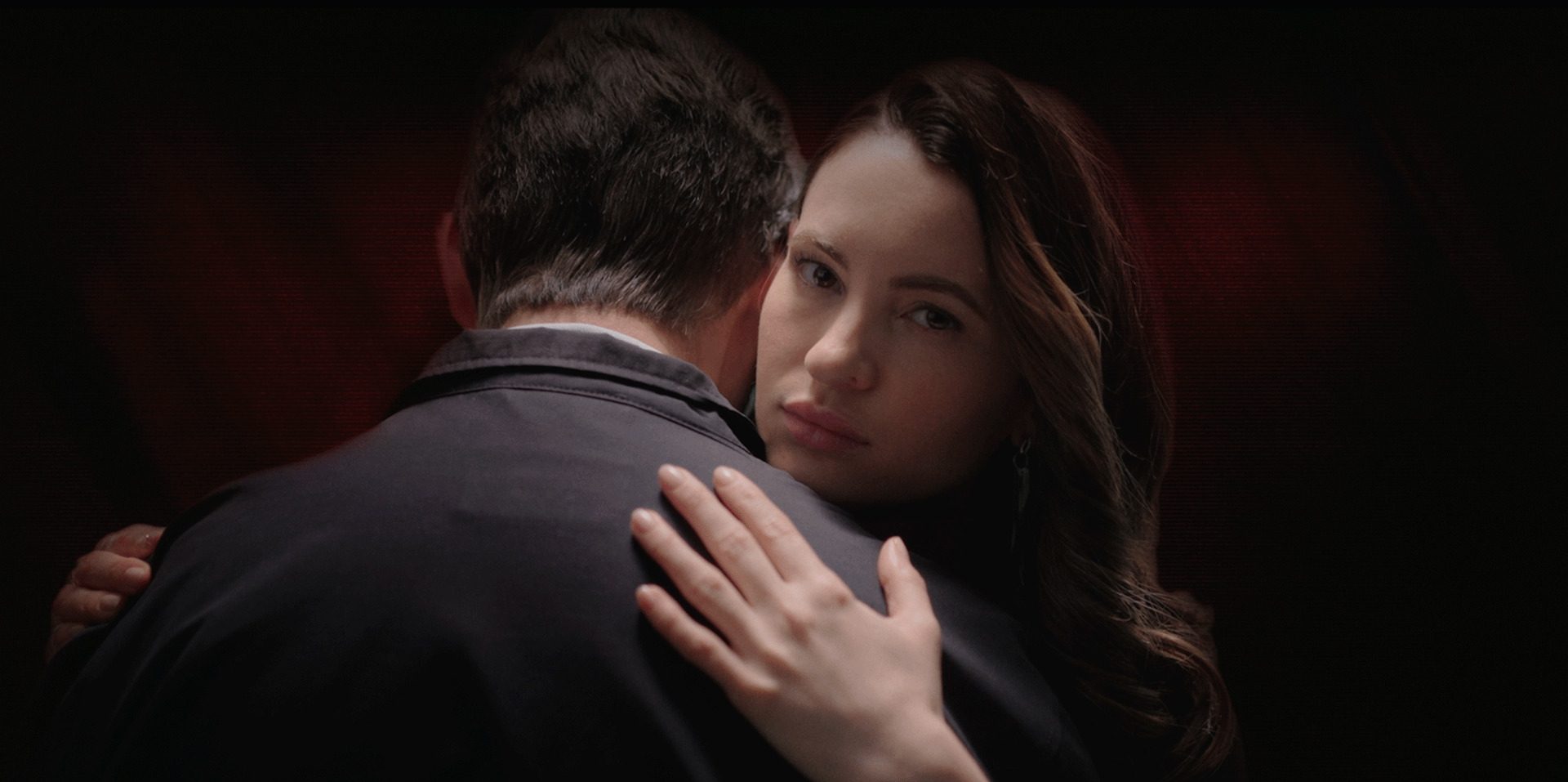
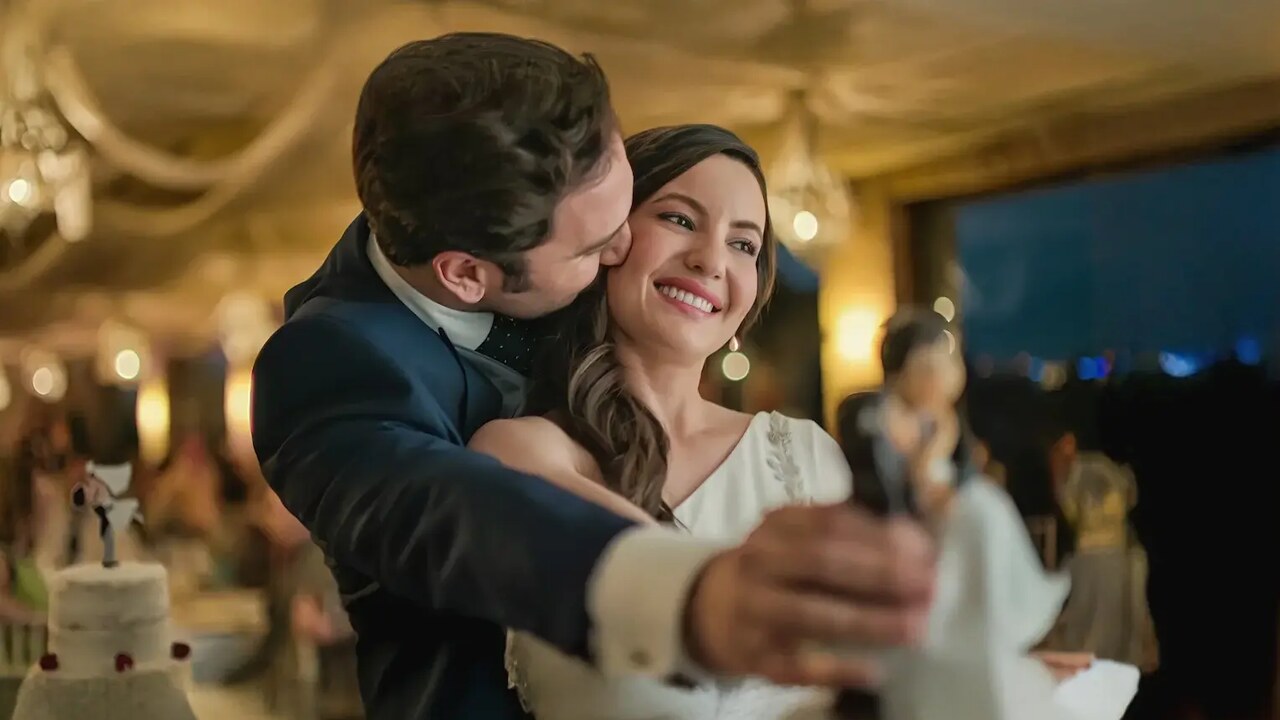
Director:Carlos Sedes Writers:Ramón Campos, Gema R. Neira, Jon de la Cuesta, Ricardo Jornet, David Orea, Javier Chacártegui Stars: Carmen Machi, Ivana Baquero, Tristán Ulloa
Synopsis: A murder mystery about a young widow who is the prime suspect in her husband’s stabbing death.
One has to wonder how A Widow’s Game (La viuda negra), based on the true story of a gruesome murder that shocked a nation, ends up so tepid in its approach to the classic crime film genre. There are very few surprises in the experience, and it barely explores the motivations or psychology behind why someone would murder a loved one. The entire narrative remains shallow, never diving deep enough to understand—or even depict—how manipulative predators truly operate.
Netflix’sA Widow’s Game feels like little more than a Saturday night Lifetime movie, barely elevated by its otherwise respectable cast.
The story takes place in Valencia, Spain, where a driven and well-known female police detective, Eva (Aida’s Carmen Machi), begins investigating the murder of Antonio Navarro Cerdán (Álex Gadea)—an engineer who was brutally stabbed in the garage of his apartment complex in Patraix—on a hot August day. The crime scene is handled with little flair, going through several standard tropes: pointing out the blood, referencing a struggle, and emphasizing the sheer violence of it all.
Of course, you get one guess what happens next: the victim’s wife, Maje (Pan’s Labyrinth’s Ivana Baquero), arrives in tears, demanding to see her husband, whom she claims she hasn’t been able to reach. The woman flooding those doe-eyes with crocodile tears has good reason to put on a show. We soon learn she was unhappy in her marriage, resentful of the “boring” monogamous married lifestyle, the long hours she worked as a nurse, and going to bed at a regular hour beside her husband, rather than with whatever random man she preferred to shack up with on any given night.
Directed by Carlos Sedes (Velvet), A Widow’s Game’s true story is less suspenseful and intriguing than a Dateline murder mystery. This is curious since the script is attributed to six—I said it—six scribes (Ramón Campos, Gema R. Neira, Jon de la Cuesta, Ricardo Jornet, David Orea, Javier Chacártegui), which makes you wonder if all the rewrites watered down the product, taking away any personality of the story and verve of the crime.
The structure should have been creative, examining the crime through several different lenses, but the transitions are muddled and offer little intrigue or suspense. Without going too deep to understand the characters, predictability remains king, leaving out a fascinating part of a genre staple, or even capturing the tragedy and humanity of the actual crime.
Even an actor like Tristán Ulloa (Netflix’sWarrior Nun) can’t breathe life into a character who should evoke disgust, horror, and pity, but instead comes across as flat and forgettable. The fine cast, including Machi and Baquero, seems stuck in their shells, with Machi’s turn understandable, but the latter is a cliche instead of a three-dimensional human, pure evil or not.
A Widow’s Game’s final product is formulaic and utterly predictable. The first act establishes Maje’s character, who is hardly three-dimensional. In the second act, she begins to plot heinous acts. The third act focuses on how the police catch the killers. The story isn’t just lazy and uninspired—it fails to let the audience truly know the victim, the affected family, or even the killer(s) beyond their one-note motivations.
If the filmmakers do not care about such a story, especially a real-life tragedy, then why should we?
You can stream A Widow’s Game (La viuda negra) exclusively on Netflix!
On this episode, JD and Brendan discuss the new film from the Philippou brothers in Bring Her Back! While we liked the Philippou’s first feature Talk to Me enough, this one left a lot more to be desired. It’s competently made, but for the many reasons we discuss, it doesn’t have the depth to justify the film’s grisly imagery.
Review: Bring Her Back (4:00) Director: Danny Philippou, Michael Philippou Writer: Danny Philippou, Bill Hinzman Stars: Billy Barratt, Sora Wong, Sally Hawkins
Synopsis:In 1997, when the Asian financial crisis hit Korea, Gukbo, the number one Soju company, is on the brink of bankruptcy. In the high-stakes market of M&A, In-beom, a young, ambitious associate at global investment firm Solquin, heads back home to take Gukbo as his first target. Hiding his greediness, In-beom approaches Jong-rok, an executive loyal to Gukbo, as an innocent consultant aiming to rehabilitate Gukbo.
Some interesting ideas are at play in Choi Yun-Jin’s Big Deal, which tracks the fall of the number one Soju company in South Korea, but few actively lead anywhere. The movie, which sets itself up as a corporate drama about an up-and-coming associate gaming the system to his advantage, seems like it will be a cautionary tale on the dangers of unfettered power, as the ones who are on top will always be invincible, while the people who are trying to climb to reach those heights will be the first ones out of the equation.
That alone makes for a riveting first half, as the audience is introduced to In-beom (Lee Je-hoon), as he explains to his boss, Gordon (Byron Mann), why Gukbo, the Soju brand, is ripe for the taking. We know something that Jong-rok (Yoo Hae-jin, who also recently starred in Yadang: The Snitch) doesn’t know when he eventually meets In-beom and posits himself as a consultant looking to help the company avoid bankruptcy, when he actively wants to cause it. When Gukbo eventually goes bankrupt, this is where the movie should theoretically spice itself up as it reaches toward a heavy courtroom drama that’s full of twists and turns.
Yet, writer/director Choi Yun-Jin never gives us a compelling reason to care about anyone on screen, or the plot that keeps overcomplexifying itself as alliances are made, broken, and made again. Who should we trust, or latch onto, when one joins a specific side, and joins another, to then rejoin their initial side as the movie progresses? It’s clear everyone is in this for themselves, but Yun-Jin never clearly defines the narrative paths that either In-beom or Jong-rok take, no matter how hilariously over-the-top or stultifyingly dramatic it gets.
Near the film’s midsection, a pivotal dramatic turn occurs that sours In-beom’s actions to the point where he feels deep remorse for what he’s doing. It’s a fairly dark scene that, in all respects, is treated with as much care as possible, yet is quickly brushed over when, a few sequences later, a hilarious development arises at a trial where Gukbo attempts to keep hold of their assets. That massive turn never gets mentioned again, and the characters don’t necessarily evolve in response to that narrative development.
I’d love to go into details, but it’s one scene closely linked to a character’s arc that’s best left for you to discover. Some will sit with it and think it further develops In-beom’s change of heart, but Yun-Jin muddles the waters further by confoundingly making him switch alliances every couple of scenes. As impassioned as Je-hoon and Hae-jin may be in their respective roles, their sense of alchemy isn’t well-defined, and, as a result, makes the audience uninterested in the matter-of-fact proceedings that occur, even if Yun-Jin has an arresting sense of style.
The movie also features plenty of scenes in the English language, which would add some texture if the characters didn’t say the F-word every 0.5 seconds. It’s a nitpick, sure, but The Wolf of Wall Street (a movie Yun-Jin desperately wants to cite), this is not. It doesn’t contain the free-flowing dialogue that allow characters to frequently swear, as in Martin Scorsese’s film. In fact, they seem to hamper the walking-and-talking nature of Yun-Jin’s movie, and don’t at all sound as integral to the conversations as they were in The Wolf of Wall Street, ultimately creating a frequently jumbled experience that’s far more interesting when it focuses on the character relationships than attempting to recreate an aesthetic that does not, in any way, serve this production.
When Big Deal ultimately ends with the most abrupt and unearned coda, essentially relegating its final scene to a mid-credits tag, one gets the sense that this story, which sounded tantalizing on paper, is not that significant of a…big deal. If it were, I’d absolutely tell you this is a deal none of you can refuse. However, this isn’t the case, and, as visually impressive as the film may be, this deal has little to no value for anyone who decides to acquire part of their time in front of a screen…
Synopsis: The lives of two strangers are changed forever when they cross paths on the surfing adventure of a lifetime, discovering love, downshifting and four charismatic horses.
Like a László Kovács-shot from the New American Wave, The Road to Patagonia is a documentary that feels like a Wim Wenders fever dream, but also retains its unique identity as one man’s quest toward identity, exploration, and self-reflection.
The documentary is directed by Matty Hannon, who is also its central subject as he travels from Alaska to Patagonia. However, instead of focusing on the final destination, the film truly embodies the saying, “the journey is the treasure,” by allowing us to enjoy Hannon’s travels—like Gulliver’s before him—rather than eagerly anticipating his ultimate conquest at his last stop.
Like a modern-day Bodhi (Patrick Swayze in the stunning Point Break), Hannon follows his own philosophy. He harmonizes with the wind and the ocean. He captures moments as he finds himself stuck in his tent surrounded by a pack of wolves, or during his encounters with bears and moose. The documentary has no dull moments; it’s one adventure after another, showcasing 16 years of Hannon’s vibrant, adventurous life and captivating viewers with the honesty and sincerity of his narration and the up-close and personal videos he has been recording of himself throughout the years.
The documentary takes a profound turn when Hannon is joined by his girlfriend Heather Hillier, and, as viewers, we witness their blossoming love story. Hillier’s presence as Hannon’s companion shifts the mood of the film from a lone traveler’s conquest to a loving couple on the road, traversing mountains, oceans, and deserts, discovering lost civilizations and rare animal breeds. As they cut the roads together on their motorcycles, taken by the beauty of the landscape, they decide to slow down.
The film paints a somewhat naive, nostalgic view of the world. Admittedly, no one asked Hannon to write a thesis in anthropology, but the weakest point of a rather well-structured and constructed narrative is when Hannon veers into identifying the dichotomies of the world as black and white, east and west, etc. But when it’s all about the surf, the mountains, the dusty bumpy road, and a nomad lifestyle of two people who fell in love together in the most unlikely of circumstances, that’s where the documentary finds its strength.
One of the highlights of the documentary is the stunning cinematography by Hannon and Hillier. All the footage is shot by both of them, highlighting their artistry as well as their deep personal connection to the subject. It’s impressive, though, how poetic and ethereal their imagery is, shooting through a dreamlike, angelic filter that gives a fairytale aspect to Hannon’s journey. It takes many elements from Robby Müller’s style, as well as the visual simplicity of footage documentary filmmaking.
Some people are not born to settle in one place. They have restless souls that take them like tumbleweeds in the wind across continents, vales, and mountains. Hannon is one of those wanderers across the rugged earth. But instead of glorifying his White man conquest where his freedom to roam around countries and continents hassle-free and smoothly is of course, unproblematic and fun, he lays out his life as it is. He doesn’t sugarcoat or sand the rough surface. He doesn’t make a hero of himself, but stretches it as far as possible, with all the little idiosyncrasies involved. Even as the documentary staggers a little too long, in this case, the runtime is fully forgivable, for this stunning exploration of man, love, and nature is worth the wait.
The Road to Patagonia is on the Icon film channel, and will be in UK cinemas from 27 June.
Directors:David Joseph Craig, Brian Crano Writers:David Joseph Craig, Brian Crano Stars: Nick Kroll, Andrew Rannells, Amanda Seyfried
Synopsis:Stranded in rural Italy without transportation or language skills, an American couple on the verge of adopting tries to reconnect during a disastrous vacation, as their fears and relationship problems threaten to boil over.
It’s very hard to communicate with a person who doesn’t share a common language. As much as Americans believe English is ubiquitous, there are many people out there that don’t understand a single syllable of it. Most English speakers also have more trouble with language than they admit even if it’s a language they recognize. A spoken language is never an academic exercise and a person who has spoken that language their entire life wouldn’t be likely to speak as basically as what you would learn in a classroom. A lot can be misinterpreted. That is one of the central conceits of I Don’t Understand You.
When Dom (Nick Kroll) and Cole (Andrew Rannells) get to Italy to celebrate their anniversary and try to avoid the anxiety that comes with their hopes about adopting a child, they run afoul of many of these sticky situations including within the horror piece of the film. The script, written by David Joseph Craig and Brian Crano, is very funny in this situation of increasing misunderstanding when it comes to a simple accident. The escalation is anxiety inducing and the body count becomes funnier as Dom and Cole assume it has to be the last death every time.
Though, when coupled with the other plot, the one where Dom and Cole are about to become parents, there is a dissonance. It’s tough to say what’s exactly wrong, but there is a pervasive feeling that there is something off. The script is funny throughout, but the sincere story of adoption and the couple’s anxieties around parenthood is a little too much of a swing in the other direction for the zaniness of accidental murder to land.
It also takes far too long to get to the gory bits. The lead up being this utterly charming gay couple and their struggles with adoption makes you want to just watch their relationship and maybe have more heart to hearts about parenting. The completely funny and valid section where the two of them accidentally kill some people feels too separate. It almost feels as if that section of the film is some kind of anxiety dream. Like the two of them somehow share a subconscious for several hours and then snap out of it during the drive back to their hotel. It’s a tough transition to unpack and it feels very obtuse.
What never feels false, though, is the chemistry between Nick Kroll and Andrew Rannells. These two feel so very comfortable with each other and their banter is hysterical. Kroll brings his “guy who thinks he knows everything” persona and Rannells brings his lightning delivery and wit. They have an effervescent style and you almost want just a road trip movie with the two of them as a couple because their car scenes are so enjoyable.
It’s hard not to like I Don’t Understand You. It’s just also hard to be clutching your heart at something sweet and touching, then covering your mouth with the shock of arterial spray. There’s no clear demarcation or strong tonal shift. It just sort of happens in the moment. It may be that the time anticipating the murder and the blood is more anxiety producing than the actual murder and blood, but it’s hard to say. You really just have to give the film a shot and know that you might choke up due to a sweet couple adopting a baby and choke down bile at some gruesome makeup a few minutes later.
This week on the InSession Film Podcast, we discuss the best performances of the decade so far! We also talk some box office and the trailers for Frankenstein, Superman and Happy Gilmore 2.
– Box Office (4:24) We begin the show this week by diving back into the box office as Thunderbolts* is set to lose about $100 million, which is unfortunate given that it’s Marvel’s best is quite some time. But it’s also concerning given Bob Iger’s comments a few weeks about about quality over quantity. One has to wonder if this changes things for Disney.
– Trailer Talk (19:07) As noted above, we wanted to give our thoughts on the new trailers for Frankenstein, Superman, Happy Gilmore 2 and Wake Up Dead Man. We especially had a lot to say about Frankenstein and how Guillermo del Toro seems to be making a classic del Toro movie. Superman and Happy Gilmore 2 also look promising, but we have some reservations that keep us from fully embracing those movies at this point.
– Performances of the Decade So Far (53:24) In a few weeks we will be discussing the best movies of the decade so far, but first up we talk about the great performances we’ve seen in the 2020s to this point. There has been no shortage of phenomenal performances in the last few years. Narrowing this down to just five (or even ten, as you’ll hear in honorable mentions) was extremely challenging, but that’s also part of the fun. Deciphering the five performances for our lists makes them resonate even more loudly. With that said, what would be your Top 5 performances of the decade so far?
If you want to help support us, there are several ways you can help us and we’d absolutely appreciate it. Every penny goes directly back into supporting the show and we are truly honored and grateful. Thanks for your support and for listening to the InSession Film Podcast!