Home Blog Page 139

Women InSession: Palme d’Or Winners – Episode 39

This week on Women InSession, we take a look at our favorite Palme d’Or winners from the Cannes Film Festival! It’s one of the most prestigious festivals in the world, and it often times gives us some of the best films we’ll see in any given year, including some all-time winners. So we thought with the Cannes Film Festival going on right now, it would be a great time to talk about our favorite Palme d’Or winners.

Panel: Zita Short, Amy Thomasson

On that note, check out this week’s show and let us know what you think in the comment section. Thanks for listening and for supporting the InSession Film Podcast!

– Music
The Return of the Eagle – Atli รƒโ€“rvarsson

Subscribe to our Podcasts RSS
Subscribe to our Podcasts on iTunes
Listen on Spotify
Listen on Stitcher
Women InSession – Episode 39

To hear this Extra Film episode and everything else we do, download our apps on the Amazon Market for Android and the Podcast Source app on IOS devices. The mobile app covers all of our main shows, bonus podcasts and everything else relating to the InSession Film Podcast. Thanks for your wonderful support and for listening to our show. It means the world to us.

What To Watch At Cannes This Year

The 76th annual Cannes Film Festival is back and that means a close eye on what big films are coming out and what winners will emerge for Oscar contention. Now, I am not going to play that game of predicting the Oscar so early and donโ€™t think about it until October at the earliest. But, it was in October that last yearโ€™s Palme dโ€™Or winner Triangle Of Sadness was hitting the festival circuit en route to three Oscar nominations including Best Picture. Elvis and Top Gun: Maverick were both major out-of-competition screenings there where they received a rousing standing ovation. The head of the jury this year is Sadness director Ruben Ostlund with actors Paul Dano and Brie Larson also part of the jury.

While not all of the films will be known or expected, the directors attached will catch the attention of everyone who attends. Wes Anderson is back with 1950s-era sci-fi comedy Astroid City, Johnny Depp stars in the opening film of the festival, Jeanne du Barry, Finnish director Aki Kaurismaki comes out of retirement with Fallen Leaves, and previous Palme dโ€™Or winner Hirokazu Kore-eda, one year after returning with Broker, is back again with Monster. Being that it is Cannes, you are either loved or booed to death by the audience. Here are some of the more anticipated films to play at this yearโ€™s festival.

Killers Of The Flower Moon (USA)

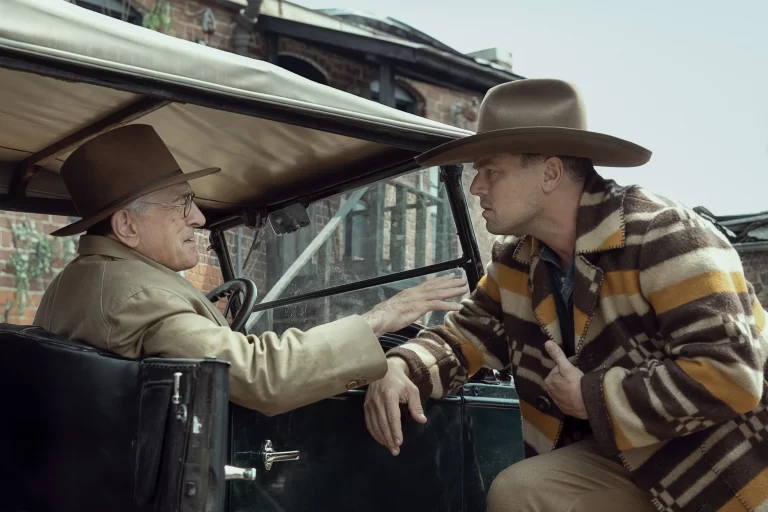
Martin Scorsese is heading back to Cannes to play one of his films for the first time in four decades. It will be out-of-competition, but his long-awaited 3+ hour true crime drama starring Leonardo DiCaprio, Robert DeNiro, Jesse Plemmons, and Brendan Fraser is a must-see with the weight of Apple behind it. Set in the 1920s, one of the first major FBI cases looked over a series of murders in Oklahoma of the Osage Nation led by a ruthless cattleman who wants to buy up all the land and claim the oil underneath. Power, greed, racism, and the pursuit of justice all rolled up in one explosive setting. 

May December (USA)

In competition again is Todd Haynes with his romantic drama starring Natalie Portman and Julianne Moore about an actress who comes to learn about a real-life woman who she will portray in a film. The woman married a teenager twenty years younger than her, which became a scandal, and now in a crucial moment in their lives, the family finds themselves challenged to deal with their past. Notably, Haynesโ€™ main cinematographer, Ed Lachmann, is not on this film as he was recovering from an injury, so Kelly Recihardtโ€™s main cameraman, Christopher Blauvelt, fills in as DP here. 

Occupied City (UK)

While he is busy on his next narrative feature, Blitz, Steve McQueen arrives with a special presentation of this documentary about Amsterdam under Nazi occupation. The film is based on the book written by his wife, Bianca Stigter, and the couple lives in Amsterdam. Most films of the period have consistently looked into France, Germany, Italy, the UK, Poland, and the Soviet Union. Very few films have actually gone to other nations victimized by Nazis; not much about Norway, Denmark, Luxembourg, or other nations affected by the occupation.

Strange Way Of Life (Spain) 

After his opening English short The Human Voice with Tilda Swinton, Pedro Almodรณvarfollows it up with his own gay Western featuring Ethan Hawke and Pedro Pascal. For a moment, he was connected to direct Brokeback Mountain in 2005; I can only imagine how that wouldโ€™ve gone, even though Ang Leeโ€™s film is a masterpiece. In this story, Almodรณvarshows two friends who reunite after many years away and reminisce about their past. Already, heโ€™s planning his first English full-length feature and this is just another step forward to seeing it happen. 

The Zone Of Interest (UK/Polish)

Writer/director Jonathan Glazer has only made four films in a span of twenty-three years, first with his acclaimed debut Sexy Beast (2000), then his reincarnation drama Birth (2004), and then his mysterious sci-fi drama Under The Skin (2013). Ten years later, he is finally back with this WWII drama starring Sandra Huller and Christian Friedel about a Nazi officer in Auschwitzโ€™s concentration camp who becomes infatuated with the wife of his superior, the camp commandant. A24, who also has the rights to Occupation City, is behind the film, and while his last film didnโ€™t do well at the box office, if Zone is good, Glazer could be rewarded and A24 can cash on Glazerโ€™s consistent strength of work. 

Follow me on Twitter: @brian_cine (Cine-A-Man)

Movie Review: ‘Sanctuary’ Never Settles For Less


Director: Zachary Wigon

Writer: Micah Bloomberg

Stars: Christopher Abbott, Margaret Qualley

Synopsis: Follows a dominatrix and Hal, her wealthy client, and the disaster that ensues when Hal tries to end their relationship.


Thereโ€™s an interesting dynamic at play in Zachary Wigonโ€™s Sanctuary. The film serves as a chamber piece for the relationship between Hal Porterfield (Christopher Abbott)  and Rebecca Marin (Margaret Qualley). What begins as a seemingly standard legal procedure between the two morphs into something much more playful, the very root of the film itself. Rebecca is a dominatrix, and Hal and her developed quite a rapport as he began stepping into the massive shoes of his recently deceased father, a hotel magnate. As Halโ€™s innermost feelings become revealed via his submissive relationship to Rebecca, the power dynamics at play become the very crux of the film. As Rebecca tells Hal early on in the film, what her clients need โ€œisnโ€™t physicalโ€ฆ itโ€™s mental.โ€ In a film limited both by its runtime and singular location, Wigon and screenwriter Micah Bloomberg are able to dive into a bevy of ideas ranging from tongue-in-cheek playfulness to interesting social commentary.

None of Sanctuary could work without its two lead and (essentially sole) performers, Qualley and Abbott. The push-and-pull between them is electrifying on screen, and as their relationship twists and develops over time, it becomes clear just how great it must feel for an actor to take on a film such as this. Due to its isolated nature, a chamber piece will live or die by how invested the audience is in its characters. So, as we see Qualley committedly dive into a performance within a performance, it’s no shock why sheโ€™s becoming such a well-known figure on the big screen. In an early conversation with Wigon prior to accepting the role, she said the characters โ€œreminded her a little bit of jazz.โ€ Sanctuary hasย  a plethora of moments that will leave the audience pondering over what exactly is happening, not out of confusion, but out of fascination. Motivations appear to change in the blink of an eye, and these moments serve as a reminder that some people are just fragile shells waiting to be cracked open and examined psychologically.

Take Hal for example. When explaining the character, Bloomberg said, โ€œhis entire life is a performance,โ€ but only came upon this thought after Abbott took on the role. Upon first meeting Hal, he cockily maneuvers through legal hoops with drink in hand. He appears to be more than well-off, but very quickly, the facade falls apart. Rebecca succinctly points out that he has no idea what he wants. Hal is revealed to be nothing but another sad, rich man. Through repeatedly booking sessions with Rebecca, he sees his spending as a way to give into his insecurities in a way that feels rewarding rather than just letting them win. But seeing the push and pull between Hal and Rebecca is wickedly twisted and deviously fun. Also, on a purely cinematic level, Sanctuary is incredibly well-structured and visually creative. At key moments in the film, colorful interstitials break up the action in a way that feels reminiscent of Punch-Drunk Love. After all, both films feature broken men hoping to pick up the pieces of their lives and the relationships around them.


If the adoration of Succession can tell us anything about what audiences enjoy, when it comes to flawed yet compelling characters, with a dash of business jargon peppered throughout, it will be a hit. Thereโ€™s something fascinating about taking seemingly complex businesses and funneling them into the key figures at the top of the heap. As the cast and crew of Sanctuary examine every inch of its own characters, warts and all, it leans into the notion of being able to accept everything about oneself. Thereโ€™s the age-old adage present of never settling for something less than your potential calls for. Yet thereโ€™s also a very refreshing angle within Sanctuary regarding the idea of knowing what is best for oneself, even if that may seem lesser in the eyes of some around us. For a film that could easily fall into some rocky territory fairly quickly, Sanctuary is able to bring its viewer on a wild ride that will leave you with a devilish smile until the very end.

ย 

Grade: B-

Movie Review: ‘Book Club: The Next Chapter is No Page Turner


Director: Bill Holderman

Writers: Bill Holderman and Erin Sims

Stars: Diane Keaton, Jane Fonda, Mary Steenburgen

Synopsis: Follows the new journey of four best friends as they take their book club to Italy for the fun girls trip they never had.


2018โ€™s Book Club was a pleasant surprise, but it worked because of the chemistry between its four leads. It was also very funny and delivered on the insane premise of four old ladies whose lives drastically change after they read Fifty Shades of Grey. Regardless, no one asked for a sequel, but itโ€™s here anyways, andโ€ฆitโ€™s not very good. The truth of the matter is Book Club: The Next Chapter has virtually nothing of interest to say and is nomore than a series of unfunny situations that drag on for far too long as our lead characters, Diane (Diane Keaton), Vivian (Jane Fonda), Sharon (Candice Bergen) and Carol (Mary Steenburgen) go to Italy to celebrate Vivianโ€™s engagement to Arthur (Don Johnson), after they rekindled their old love in the first film. 

This will lead them to a series of unfunny platitudes, ร  la 80 for Brady. However, unlike that movie, which put its stars in plenty of funny situations, Book Club: The Next Chapter has little to offer. Director Bill Holderman and cinematographer Andrew Dunn forego the cinematic style of the last film and decide to shoot it in 1.85:1, giving it a glossy Hallmark look. Dunnโ€™s last credit was for Jim Strouseโ€™s Love Again, which was as Hallmark as it got. The shrill, string-heavy score from Tom Howe also doesnโ€™t help. However, it accompanies most of the flat performances from its leads, which was the main reason why the first one worked in the first place. 

I feel people underappreciate how funny Diane Keaton can be, and she certainly is the highlight of this film, once again. Keaton and Steenburgen share the funniest situations in the movie, and their comedic timing is spot-on. The cucina scene was the funniest part of the trailer and is even funnier in context. They seem like the two are actively having fun with the material, even if it is as uninspired as it may come and much less funnythan the first. As for Bergen and Fonda, theyโ€™re unfortunately not up to the same level as Keaton and Steenburgen. It is a shame, especially for Bergen, who was a significant highlight of the first movie, juggling between her stoic presence as a Federal Judge while also trying to appear more โ€œhipโ€ (as they say) around someone like George (Richard Dreyfuss) or Derek (Wallace Shawn). 

Holderman seems to only give Bergen lines about her being old, which she consistently repeats for the entire runtime. If you liked the โ€œI like cities that are falling apart more than I amโ€ line because โ€œhaha, sheโ€™s old! Get it???,โ€ youโ€™ll probably like the movie because thatโ€™s the entire basis of its humor. I did enjoy her on-screen chemistry with Hugh Quarshie, who plays a philosopher whom the girls meet in Venice, and Giancarlo Gianniniโ€™s police officer, who recurrently appears and has a love-hate relationship with Sharon. Those elements were fun to watch, but theyโ€™re overshadowed by long, drawn-out scenes where our leads consistently โ€œtempt fateโ€ by living a successive series of one unfortunate event after the next. At some point, the schtick becomes tiresome because thereโ€™s no flow in how everything goes wrongโ€ฆand then goes rightโ€ฆand goes wrong again. 

The real kicker is the final scene, which I wonโ€™t spoil, which never seems to end. None of the supporting counterparts, played by Andy Garcia, Craig T. Nelson, and Johnson, have anything to do throughout the runtime (apart from an extremely painful scene in which Nelsonโ€™s Bruce cooks Bacon in secret while Carol is in Italy after he suffers a heart attack during COVID-19. This is apparently a key plot point that goes absolutely nowhere), so they cram them all into one very long and extremely dull scene, painful for everyone involved, even Keaton and Steenburgen who canโ€™t seem to hold their own. 

The result is a rather dull and monotonous affair that shouldnโ€™t have been made. The first movie was such a fun time, with a great framing device, that all four leads couldโ€™ve reunited for something completely different. Instead, they decide to reunite for a COVID-era movie that is neither funny, nor watchable. Some will find light enjoyment in it, but itโ€™s nowhere near as good as the first movie. At the end of the day, you will be in no hurry to finish Book Club: The Next Chapter and will probably want to put it down many times. 

Grade: D

Poll: What is your favorite ‘Fast & Furious’ franchise action sequence?

The Fast & Furious franchise has evolved from street racing to chasing submarines and space races over the last two decades, and it’s come with some incredible action sequences along the way. Say what you will about these movies, but at the very least its spectacle has been entertaining. So our poll this week is simple. We’re simply talking about our favorite action sequence in the franchise. If your isn’t listed in the poll below, feel free to use the write-in option and let us know.

With that said, what is your favorite action sequence in the Fast & Furious franchise?


The French Comic Calamity: Peter Sellers, Blake Edwards, And A Pink Panther

When I was a child, I watched reruns of The Pink Panther cartoons that ran from 1969 to 1980. No dialogue, just the titular character doing various hijinks like a silent movie, but with sound effects. That was preferable to the short-lived 90s version in which the Panther had a voice. The cartoon came from the opening and closing credits of the live-action movies where, when I was about 12, I learned the name wasnโ€™t about an actual animated animal. In fact, the Pink Panther refers to a pink diamond that, according to legend, if held up to the light from a certain angle, the figure of a panther can be seen. It is an unintentional flaw, yet it makes the diamond more pristine and worth stealing.

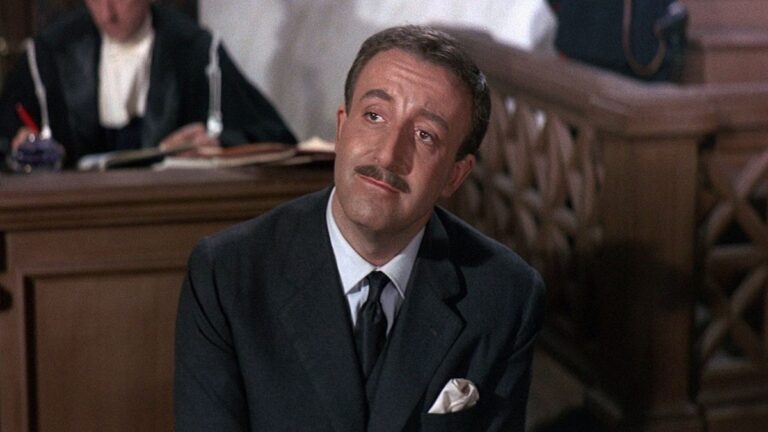
The leader of this search is the bumbling French detective Inspector Clouseau, played famously by the comic legend, Peter Sellers. It came at the height of his fame, in between his performances in Lolita and Dr. Strangelove, both directed by Stanley Kubrick. Originally, the role was written for David Niven, who then elected to play the thief, Sir Charles Lytton, in the first film. Peter Ustinov then committed to the part, but after dropping out, Sellers was cast. Fascinating though was the fact that Blake Edwards, fresh from his acclaim directing Breakfast At Tiffanyโ€™s and Days Of Wine And Roses, did not initially write it to be a slapstick comedy or a major franchise. 

Edwards was an actor-turned-writer/director who later married Julie Andrews. He was influenced by silent films and the comedies of Buster Keaton, Charlie Chaplin, and Harold Lloyd and his style of directing would use these characteristics. Under Ustinov, Clouseau wouldโ€™ve been a straightforward detective who gets caught up in misunderstandings, but Sellersโ€™ love for the same films as Edwards allowed for improvisation that made Clouseau a buffoon of a detective. David Niven received top billing as the lead character, but it was Sellers who were a consistent scene-stealer and made The Pink Panther a hit and United Artists commissioned a sequel immediately. 

The films in the Edwards/Sellers combo were all scored by longtime collaborator Henry Mancini, whose theme to the movie and series made it synonymous with the cartoon character. The slow jazz brooding to the first tunes of the saxophone gives off this trance which lures you in before a bang involving the rest of the horn section rises. Jazz is a common genre of music in detective mystery films from the 1950s and 1960s, being used for the serious and light-hearted tones of the film. Manciniโ€™s use of tempo allowed the animators to draw their pink pantherโ€™s movements to it with the opening and closing credits. 

David DePatie and Friz Freleng created the character as this sneaky, smart creature who toys with the cartoon version of Clouseau who goes on the trail yet canโ€™t see the panther, even if it stands in front of him. DePatie and Freleng would make an animated short, The Pink Think, and win an Oscar for it in 1964. They got a second nomination two years later for The Pink Blueprint. For later feature films, the actions of the pink panther and Clouseau would be exaggerated in satirizing other films and imposing the cartoon panther in the live-action final scene. It is this cartoon that burns in my mind foremost and which is what is universally recognized than the name Inspector Clouseau. 

A Shot In The Dark, the sequel, also wasnโ€™t meant to be part of the whole Panther sphere. It was based on a French farce that Edwards was to direct already but decided to rewrite the leading investigator in that story as Clouseau. It allows Sellers to expand his comedic muscle and mold Clouseau in his way. In attire, Clouseau wears a distinctive trilby hat and trench coat while sporting a distinct mustache. When he talks, the pronunciations in Sellersโ€™ faux French accent convert certain words to have an โ€œeuโ€ in the middle, such as bomb is โ€œbeumbโ€ and room as โ€œreum.โ€ Wherever he goes, he destroys things and fails miserably getting into places because of his lack of awareness. Some of his hidden identities are too ridiculous, yet it gets him into places. In the end, the greatest luck in the world leads to him solving the case. 

However, the relationship between Sellers and Edwards soured to the point they vowed never to work with each other again. Within a few years, they reconciled and got back together in 1975 for the third installment, The Return Of The Pink Panther. Using the named diamond as the catalyst again, Clouseau is back in action but with an extra threat: his boss, Chief Inspector Dreyfuss (Herbert Lom). Dreyfuss cannot stand Clouseau for his stupidity, yet is jealously enraged to see him succeed in solving these crimes that it drives him to homicidal madness. Sir Charles Lytton returns, this time played by Christopher Plummer, and he goes from retired jewel thief to wanted man after learning the diamondโ€™s theft is blamed on him. The Return received much critical and commercial acclaim, reviving Sellarsโ€™ fortunes as a major comedy movie star. The fourth installment, The Pink Panther Strikes Again, was commissioned immediately, this time completely focusing on the Dreyfussโ€™ lunacy for wanting Clouseau dead and blackmailing every nation to send their best assassin to kill him.

Financially successful again, the fifth film was then green-lit, but by now, a decline for the whole series started to be felt, and the relationship between Sellers and Edwards once again soured. This time, Sellers, who wasnโ€™t happy with the final product in Strikes Again, was able to contractually get story approval and producer credit for Revenge Of The Pink Panther, released in 1978. Financially less successful than the previous films, Edwards stepped away originally from directing a sixth feature, this one completely scripted by Sellers, before the comedianโ€™s sudden death on July 24th, 1980. Returning to the series, Edwards decided to make the sixth feature, Trail Of The Pink Panther, assembled around outtakes of Sellers from the previous films around new footage of a journalist who tries to find out if Clouseau is indeed deceased. 

Released in 1982, this time, the legacy of Sellers and the wrap-up of his performance as Inspector Clouseau did not have critical support and barely broke even at the box office. Worse, Sellersโ€™ widow successfully sued Edwards, United Artists, and MGM for damages as they were contractually obliged not to use outtakes without permission from the estate. Edwards would make two more Panther features, Curse Of The Pink Panther in 1983, and Son Of The Pink Panther in 1993 starring Roberto Bengini as Clouseauโ€™s illegitimate son. Both were complete flops, and the series came to an official end. 

Of course, there were the two reboot films starring Steve Martin in 2006 and 2009, but both were nowhere close to what the Edwards/Sellers collaboration accomplished. Currently, another reboot is in the works, this time a CGI animated/live-action hybrid version that is to be produced by Julie Andrews. Blake Edwards, who retired after making Son Of, died in 2011. Frankly, they should leave it be. It is impossible to capture the same classic humor and silliness that Sellers was able to open naturally and how Edwards was able to capture all of it in consecutive films. As much as it is Sellerโ€™s unchallenged talent, it is never easy for one director to continue making high-quality features without getting lazy. This is the legacy of these two titans for a highly acclaimed series. 

Follow me on Twitter: @brian_cine (Cine-A-Man)

Podcast: Fast & Furious Franchise – Episode 534


This weekโ€™s episode is brought to you by Koffee Kult. Get 15% off with the code: ISF

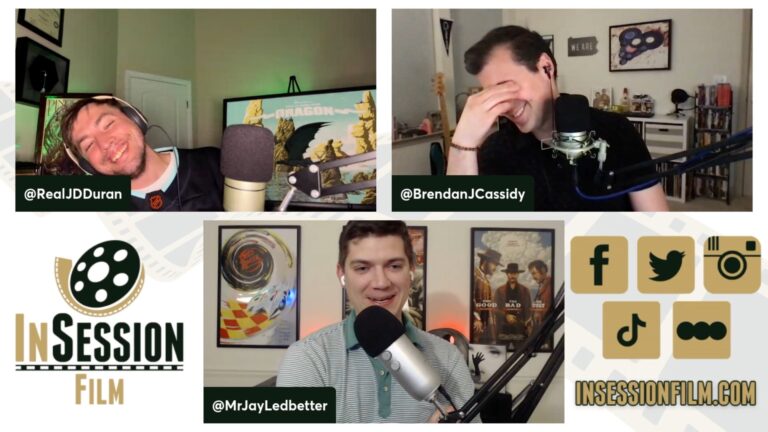
This week on the InSession Film Podcast, inspired by Fast X coming out this weekend, we have some fun talking about the Fast & Furious franchise and what makes it such a fascinating crop of films! We also talk about other franchises that have flipped the script and end the show with some trivia.

On that note, check out this week’s show and let us know what you think in the comment section. Thanks for listening and for supporting the InSession Film Podcast!

– Fast & Furious Discussion (3:06)
The Fast & Furious franchise has had a fascinating evolution over the last two decades. They went from stealing DVD’s, to fighting off tanks, to escaping submarines, to space cars during their nine film run. It’s been a wild ride, for better and worse, and we had a great time talking about what it an alluring film franchise.


RELATED: Listen to Episode 516 of the InSession Film Podcast where we discussed our Top 10 Movies of 2022!


– Franchise Flippers (58:31)
In this segment, we talk about other franchises and the films that flipped the script and changed the game (so to speak). Most film franchises have those specific entries where you can see things changing and at the very least they are interesting topic of conversation. Some films do it well. Others are jumping the shark. Some of these films are just flat out bad. Either way, there’s plenty to discuss.

– Trivia (1:40:36)
We end the show this week with some fun trivia! Specifically, JD offers up some Fast & Furious trivia to Jay and Brendan to test their memory (and perhaps patience) regarding those movies.

Show Sponsor: First Time Watchers Podcast

– Music
We Own It – 2 Chainz, Wiz Khalifa
See You Again – Wiz Khalifa, Charlie Puth

Subscribe to our Podcasts RSS
Subscribe to our Podcasts on iTunes
Listen on Spotify
Listen on Stitcher
InSession Film Podcast – Episode 533

Next week on the show:

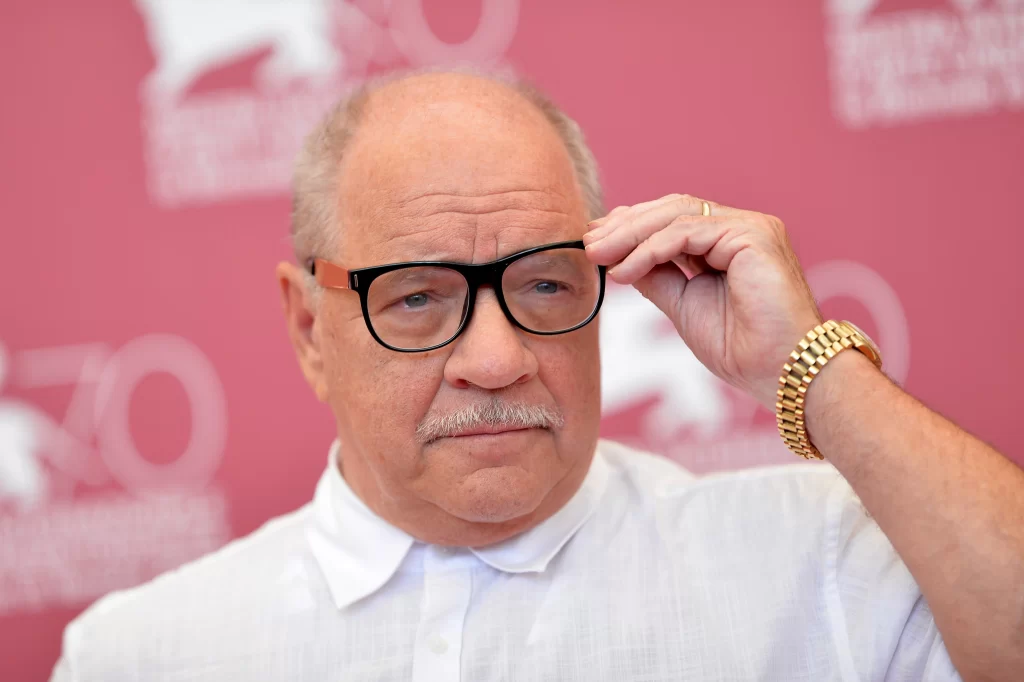
Paul Schrader Retrospective

Help Support The InSession Film Podcast

If you want to help support us, there are several ways you can help us and we’d absolutely appreciate it. Every penny goes directly back into supporting the show and we are truly honored and grateful. Thanks for your support and for listening to the InSession Film Podcast!

VISIT OUR DONATE PAGE HERE

Movie Review: ‘Hypnotic’ Fails At Mesmerizing Audiences


Director: Robert Rodriguez

Writers: Robert Rodriguez and Max Borenstein

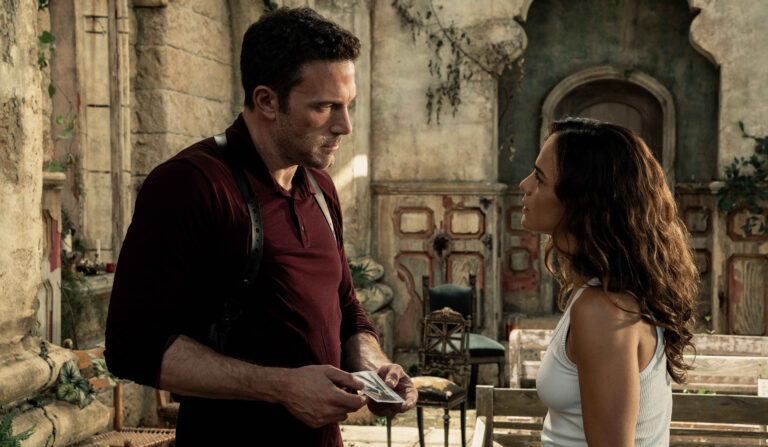
Stars: Ben Affleck, Alice Braga, William Fichtner

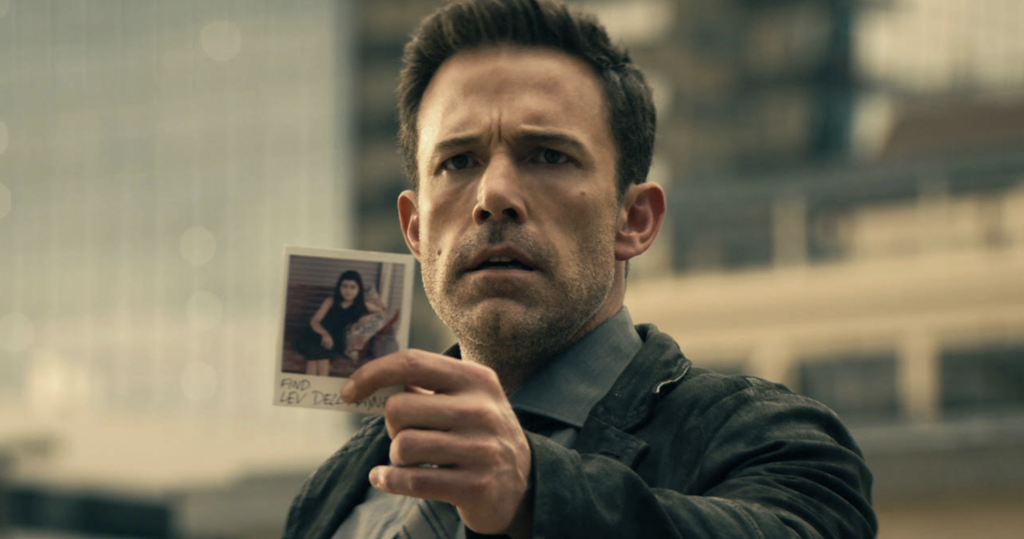
Synopsis: A detective investigates a mystery involving his missing daughter and a secret government program.


When you read the synopsis of Hypnotic, it seems like a throwback to the sci-fi conspiracy thrillers of 25 years ago. It’s got all the elements of studio catnip before studios became IP factories. It’s got a big star in Ben Affleck and a cool director in Robert Rodriguez. Hypnotic could have heralded a return to wide releases for original films.

Instead, Hypnotic is a needlessly convoluted Inception clone, with no style at all. It’s like Rodriguez and co-writer Max Borenstein saw a few Christopher Nolan films and said, “we could do that.” Some of the extremely cliched dialogue can be explained away by one of the too many twists in the film, but it’s more like they just went with the first draft because they had the greenlight from Rodriguez’s name alone.

A lot of the film, indeed, feels like a first draft. The music sounds like it was either cribbed from the library of a failed police procedural or just the sample tracks from a 2003 copy of Apple’s Garageband. The dreaded Division’s uniform is simply red blazers. The special effects of hypnosis are mostly wavy lines around people’s heads.

Honestly, if you added a laugh track and inserted a few shots of Saturday Night Live cast members reacting to the logorrhea of exposition that spills out of Diana’s (Alice Braga) mouth it would be a pretty good parody. Hypnotic isn’t fun bad, it’s boring bad. Bad doesn’t mean entirely poorly made, either. It just means that the best effort wasn’t put forward.

 There are filmmakers that can pull off doing many jobs on the same film. Robert Rodriguez would have benefitted from many more department heads. He’s a competent editor and cinematographer. Some of the sequences do have suspense by the mere virtueof being well cut. Many shots are dynamic and unique to Rodriguez’s style, especially as Rourke ( Affleck) is realizing he’s been manipulated. But his want to and clout that lets him do everything means that there was no one to question or at least comment on certain decisions.

Hypnotic is a failure as a film for a myriad of reasons. Ben Affleck doesn’t help it at all. He’s pretty much on autopilot, waiting for his next five minute cameo in a DCEU movie. He’s an actor that used to get by on his charm and here he’s something far less than charming. His lack of energy brings the whole film down. Alice Braga and William Fichtner can’t save it either. She’s an exposition machine and he’s the antagonist’s stand in.

This film may make a little money. Some from the curious, but mostly when its streaming rights get sold and it haunts the back catalogs of Crackle, Tubi, or Pluto TV. It’s the rare summer wide release outlier. Unlike most of those, Hypnotic just isn’t worth your time. Instead, seek out Kiyoshi Kurosawa’s enigmatic, darkly funny, and disturbing Cure from 1997. A film which Hypnoticโ€™s filmmakers wish it could be.ย 

Grade: D

Movie Series Review: Fallen Angels

On this episode, Ryan and Jay continue our Wong Kar-wai Movie Series with his 1995 film Fallen Angels! This is another one of those Kar-wai films that may not have the widespread reputation as others in his canon, but is it his best? You could make that argument.

Review: Fallen Angels (3:00)
Director: Wong Kar-wai
Writers: Wong Kar-wai
Stars: Leon Lai, Michelle Reis, Takeshi Kaneshiro, Charlie Yeung

Subscribe to our Podcasts RSS
Subscribe to our Podcasts on iTunes
Listen on Spotify
Listen on Stitcher
InSession Film Podcast – Fallen Angels

Women InSession: Favorite Films of the 1940s – Episode 38

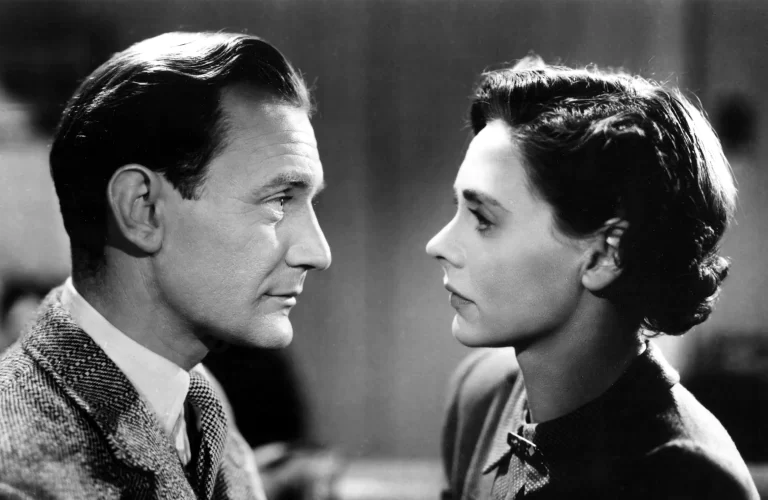
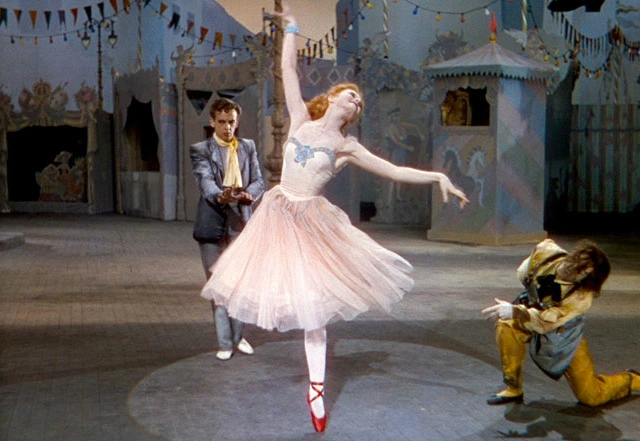
This week on Women InSession, we discuss our very favorite movies of the 1940’s! There are countless of great films to come out in the 1940s, so this was a challenging exercise, but it certainly made for a very engaging conversation.

Panel: Kristin Battestella, Zita Short, Eve O’Dea

On that note, check out this week’s show and let us know what you think in the comment section. Thanks for listening and for supporting the InSession Film Podcast!

– Music
The Return of the Eagle – Atli รƒโ€“rvarsson

Subscribe to our Podcasts RSS
Subscribe to our Podcasts on iTunes
Listen on Spotify
Listen on Stitcher
Women InSession – Episode 38

To hear this Extra Film episode and everything else we do, download our apps on the Amazon Market for Android and the Podcast Source app on IOS devices. The mobile app covers all of our main shows, bonus podcasts and everything else relating to the InSession Film Podcast. Thanks for your wonderful support and for listening to our show. It means the world to us.

Op-Ed: Britainโ€™s Working Class: A Journey Through the Films of the 1960s

The working-class communities of Britain are etched into the very foundations of the countries that structure it. These people – these salt-of-the-earth individuals – have been on a journey through wreck and ruin since time immemorial, right up until the present day. Whether it was during the smog-drenched industrial times of the 1800s, most of which spilled out into the new century, or a post-war Britain still feeling the poverty-like conditions resulting from those dark events, whatever the cause, Britain was left reeling from pain for years. The 1960s was a decade that had the hopes of the people reliant upon it; to change people’s lives for the better, and even though the โ€œSwinging Sixtiesโ€ were monumentally freeing for some, there was still a divide of classes that was hard to forget.

Film has always been a great method of escapism; saving up all those shillings (old British currency for those wondering) from working down the mines or in the factory, to spend on an exciting trip to the pictures โ€“ the saving grace for many people during that time. If they were lucky enough to afford it, that is. The question is though: how did this decade of film represent its working-class people? Well, ultimately, it produced some of the most iconic British films to date. The frustrations of angry young men โ€“ a term that was linked to the youth of the era โ€“ became the structure for the much loved โ€˜kitchen sinkโ€™ genre that produced undeniable realism in its portrayals.

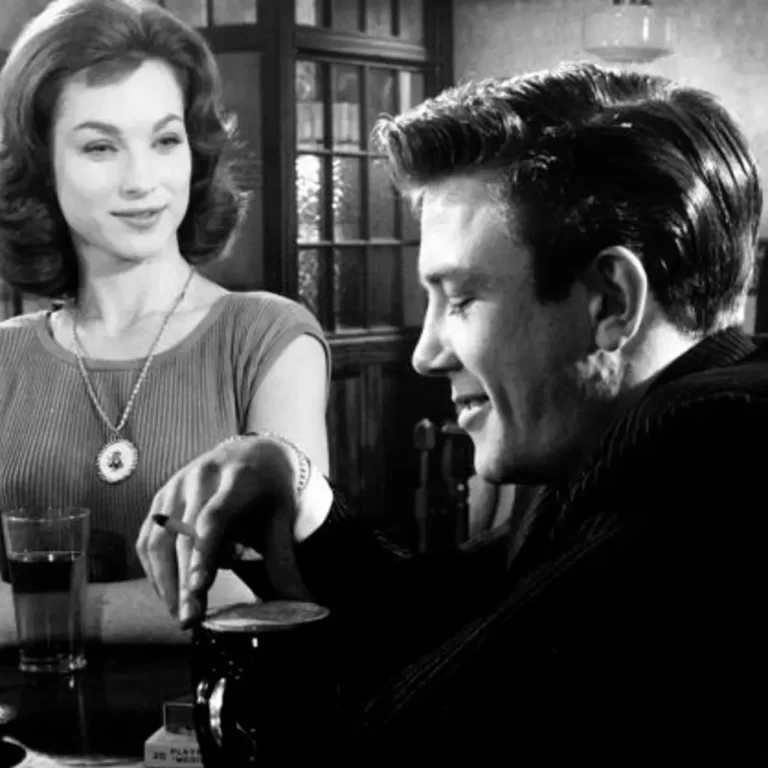
A film that kickstarted the decade, a film that has since become one of the most iconic British films of the century, was the Karel Reisz film Saturday Night and Sunday Morning. It is such a wonderful example of the mentality of working-class youth in a small Northern town; indestructible to the world, even if this world that they exist in consists of a small prison-like settlement. Thereโ€™s a saying used a lot in England: โ€œa small-town mentalityโ€, which perfectly depicts the mindset of many a young person who hails from such a place. In Saturday Night and Sunday Morning, the great Albert Finneyโ€™s portrayal of Arthur Seaton is the perfect representation of the angry young man who has become a prisoner of this small-town mentality.

Arthur Seaton is in his early twenties and was born into a working-class family in Nottingham, England. He works in a factory (it was either that or down the mines in those days), so he can count himself lucky, but to dull the pain of this seemingly unfulfilling life, he spends his time boozing over the weekend and courting multiple women. Itโ€™s a sad, almost ominous feeling in reality; working your fingers raw for five days a week only to spend two days in blissful solitude, while Monday slowly creeps back up before you know it โ€“ no wonder all these men were angry and bitter. Arthur is really just an amalgamation of thousands of youths from that period, but it’s how the town itself is projected that offers the greatest amount of realism. It is filled with so many hard-working individuals, most of whom are at home with this simple little life – but this film could have been set in one of several northern communities up and down the country because of how relatable it really feels. This place, and the people in it, often assume the world outside their own is not worth exploring or even noticing at least, and thereโ€™s something quite dreary and depressing about that notion of thought, one that plagues the minds of countless others to this day.

Saturday Night and Sunday Morning was just a conception piece for the decade though; the mere blueprint for any film that follows it that represented Britainโ€™s working class. There was an enormous number of young people during the 60s that became disillusioned with a dream that would allow them to escape the monotony of this prison-like system. What was that dream we hear you ask? Well, it was to be a famous sports star of course. It was the best route of escape, a chance at stardom unless stardom went to your head, that is.

In 1963, the Lindsay Anderson-directed film This Sporting Life cranked up the stakes with its representation of the angry young man ideology. Starring Richard Harris as Frank Machin, a mine-working Yorkshireman with a knack for finding trouble where trouble is hard to find, and yet, itโ€™s this very temper that gives him his big break with a professional rugby team. Frank is living the dream of so many young men of the time, and although an unpolished player, itโ€™s the aggression and desire he possesses that impresses everyone around him โ€“ but when success comes, you need to walk in humility, something Frank needed to realize. His playing career isnโ€™t equaled in his personal life; he loves a widow (Rachel Roberts) with no returned feelings, and his inner turmoil begins to affect his sporting escape route.

This Sporting Lifeโ€™s gift was its efficiency in becoming hugely relatable. Like the previous film, Frank Machin is another amalgamation of so many different young men – countless times they became the victim of failure, but Frank is a representation of the ones that made it. However, thereโ€™s a darkness to the filmโ€™s realism and particularly that of Frankโ€™s personality and the relationship he has with the other characters. The use of dialogue is key to the filmโ€™s overall representation of the class system too. Margaret (the widowed landlord and the object of Frank’s affection) often calls him a โ€œgreat apeโ€, which could very well be deemed as a comment about his upbringing and his apparent lack of education. Itโ€™s just one example of the oppression that working-class people have been afflicted with over the years, and although it might only be words, it represents the contempt that supposed higher classes have towards their “lesser” peers.

The aforementioned films are prime examples of the kitchen sink drama that the decade became associated with, but it wasnโ€™t limited to just that, far from it even. The 60s was a period experiencing a lot of changes, both good and bad. For all the excitement around the music and the culture, there was a damning social predicament accentuated by unemployment and housing dilemmas that led to an unprecedented increase in crime and extreme levels of uncertainty.

Ken Loach is seen by many as the king of British social realist films, and it all began in 1967 with a little film called Poor Cow starring Carol White as the unlucky titular animal, with Terrence Stamp and John Bindon in supporting roles. Poor Cow has those ‘kitchen sink’ like ideologies while also attempting to become a lot more diverse in what it was representing. White portrays Joy, a single mum living in London who must now fend for herself after her mentally and physically abusive husband Tom (John Bindon) is sent to jail. However, she soon becomes involved with Dave (Terrence Stamp), a charming criminal associate of Tomโ€™s who swoons Joy and her young son Johnny and tempts them with an idyllic life of love and potential security. As a side note, if youโ€™ve ever seen the Steven Soderbergh film The Limey (1999), footage from Poor Cow was used for the flashbacks of Terrence Stampโ€™s character – it’s an interesting approach to creating a 30-year character arc at least.

There are aspects in this film that echo through the rest of Loachโ€™s eclectic filmography; the working-class environment and the aggressive men that are birthed from a violent and unforgiving climate. Domestic violence has established itself as a scourge on society for as long as time allows, but itโ€™s inside the seemingly simple lives of the working class where it caused irreparable damage. Poor Cow explores the repercussions of such problems and how one person can have a frightening hold on a personโ€™s psyche: a never-ending plague on those seemingly simple-looking households that are staples in community life.

Although Poor Cow was criticized for feeling false, or in the words of The Monthly Film Bulletin, a โ€œsuperficial, slightly patronizing incursion into the nether realms of social realism,โ€ a slightly harsh evaluation of a now iconic film it feels, its use (or overuse) of documentary-like footage offers an authentic take on the working-class community in which it is set. Thereโ€™s a simplicity to it that shines out amongst the rest, whether itโ€™s the neighbors or the characters that give the local public house the charm it deserves, they are all techniques and concepts that have stuck with Loach and his films every step of the way.

To us British, all three films evoke a sense of simplistic symbolism to those that watch them. They were the template for the genre of British social realism to evolve over the decades and take on even more meaning, but still, these examples remain as significant as ever. The working class way of life has undertaken many changes in this country over the years; affected by politics, changed through culture, and cultivated through oppression, but the core values remain the same, and cinema was always there to represent it in so many diverse ways.

Chasing the Gold: What Oscar Contenders Have Been Released So Far This Year?

As the month of May begins, letโ€™s take stock of what films released so far this year have the best chance of receiving at least one Oscar nomination at the 2024 ceremony. This time last year the eventual Best Picture winner Everything Everywhere All at Once had been released, and the Oscar nominees The Batman and Turning Red had come out, too. Whatโ€™s been in theaters or on streaming in the last few months that have a chance at the Academy Awards? Here are five titles that have potentialโ€ฆ

1. Airย 

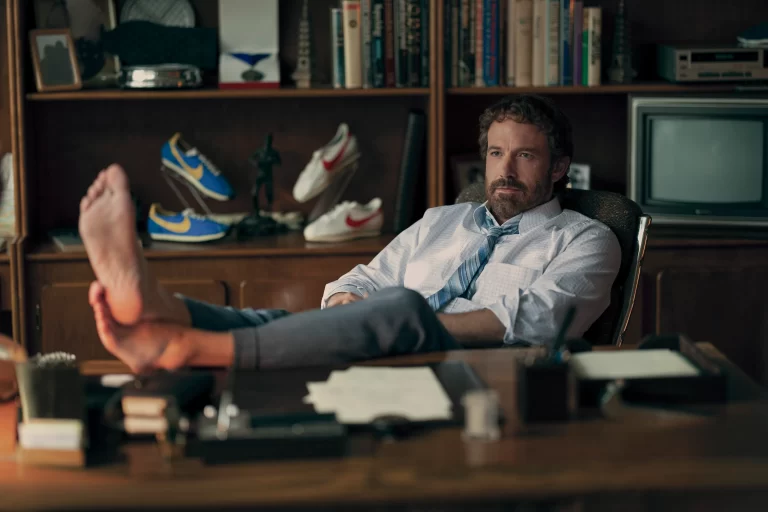
Air is the most likely Oscar contender thatโ€™s been released in the first four months of 2023. Ben Affleckโ€™s newest drama tells the true story of how a shoe salesman led Nike in its pursuit of Michael Jordan. Affleck, Matt Damon, Jason Bateman, Chris Tucker, and Viola Davis lead a stellar cast, and the reviews with critics and audiences have been strong since the filmโ€™s debut at the South by Southwest Film Festival. Alissa Wilkinson in Vox, for example, called the film โ€œpitch-perfectโ€ and โ€œdeeply entertaining.โ€ One major detriment to the movie is that itโ€™s had a quiet release since opening wide in theaters in early April, and Iโ€™m not sure if enough voters will remember the movie by the time we get to the awards season. But if the film stays in the awards consideration long enough, we could be looking at nods in Original Screenplay, Best Supporting Actress for Viola Davis, and/or Best Costume Design. 

2. John Wick: Chapter 4

John Wick: Chapter 4 received the strongest box office and best reviews of the Keanu Reeves franchise upon its opening at the end of March, and if thereโ€™s enough room for a surprise fifth nomination in Best Sound, John Wick: Chapter 4 could make it into that category. A Best Editing nod a la The Bourne Ultimatum (which won, by the way, in 2008) would be a great show of strength for the movie, too. What hurts the filmโ€™s chances is that none of the first three films has been nominated at the Oscars, and the extreme violence might turn voters. However, if there was ever a chance for a John Wick movie to get in, this would be the one.ย ย 

3. The Super Mario Bros. Movie

It might not have gotten the greatest reviews, but its behemoth box office and acclaim from audiences might signify a Best Animated Feature Oscar nomination next year, especially if thereโ€™s not a lot of competition in the category. The biggest knock against the filmโ€™s chances arenโ€™t the reviews necessarily but the lack of respect from the Academy for video game adaptations, both animated and live-action. But when looking back on the last decade of Animated Feature nominees, a few films that got in werenโ€™t loved by critics, particularly The Boss Baby from 2017. The Super Mario Bros. Movie might be able to ride its popularity with audiences all the way to an Academy Award nomination for Best Animated Feature, especially if some of the late-breaking animated films of 2023 underperform.ย 

4. Beau is Afraid

Beau is Afraid has been a divisive film with both critics and audiences, but Ari Asterโ€™s new three-hour epic might have enough praise to keep the film in the awards conversation. For example, Megan Navarro in Bloody Disgusting says, โ€œThose willing to ride the wave of genre and mind-bending insanity will find themselves rewarded by a profoundly imaginative Kafkaesque odyssey as dementedly funny as it is often horrifying.โ€ Phoenixโ€™s best chance at a Best Actor Oscar nomination next year will be for Ridley Scottโ€™s upcoming historical drama Napoleon, not Beau is Afraid, but Patti LuPone has been getting some of the best film reviews of her career for her supporting performance as Beauโ€™s mother, Mona. The filmโ€™s awards chances have been hurt by some poor reviews, low box office, and Ari Asterโ€™s previous two films Hereditary and Midsommar both coming up short on Oscar nominations morning. However, Beau is Afraid could receive a surprise acting or screenplay nod if enough people continue talking about it throughout the year.ย 

5. Little Richard: I Am Everything

It premiered at the Sundance Film Festival in January, just dropped in theaters and on VOD, and itโ€™s easily one of the best reviewed documentaries so far this year. Itโ€™s an engaging celebration of the rock pioneer Little Richard that currently has 93 percent on Rotten Tomatoes and countless rave reviews from critics, like David Rooney in the Hollywood Reporter, who said, โ€œEven if youโ€™re not a fan of Little Richard going into this film, chances are you will be by the time itโ€™s over.โ€ Outside of there being a glut of impressive documentaries near the end of 2023, look for Little Richard: I Am Everything to make it into the Oscar final five for Best Documentary Feature in early 2024.ย 

Schindler’s List: A Retrospective 30 Years Later

The social importance of a Hollywood film comes to the forefront every few years. It must be marked with a sense of gratitude for the movie to be made. It is not just about content, but also the artistry that comes with it to convey those strong messages speaking to us on injustice from a dark chapter in history. World War II is a continuing fountain for such stories because of the depths of heroism and evil that touched everyone in the conflict, especially regarding the Holocaust. There are many films set on that subject and for Steven Spielberg, it was personal to him as a Jewish man. It was a film that took him a decade to get prepared emotionally for and he almost lost the film to his friend, Martin Scorsese. But, in 1993, after finishing Jurassic Park, Spielberg went to Poland to tackle this personal project.

The result was a masterpiece and one of the greatest films ever made in Hollywood. It made Liam Neeson and Ralph Fiennes major stars and introduced cinematographer Janusz Kaminski as one of our best cinematographers. Spielberg took a chapter from this dark moment in human history and converted it into a candle that still remains flickering. In a single jump cut, the candle that gets snuffed out sends us back to 1939 Poland. He brought back into the consciousness of America, and the world, the need to remember such crimes against humanity so they will never be duplicated again. Rather than preach about it, he adapted Thomas Kenneallyโ€™s book about Oskar Schindler (Neeson), the German manufacturer who went from war profiteer to savior of 1200 Jews who was bound for death until he paid for their survival.

The black-and-white visuals reflect the only thing being seen in newsreels. Noticeably, there are no crane or dolly shots. In keeping with the newsreel-like shooting, it was predominately handheld or on a tripod. Outside of the beginning and the end, the only thing in color is a little girl wearing a red coat which catches Oskarโ€™s attention twice. Unlike previous films, Spielberg portrays in its horrible gore what victims were forced to do and how they were killed. He looked away when they filmed the scene of elderly Jews who had to run naked and show they were still fit. They built replicas of actual locations near where they originally stood and came up with the filmโ€™s epilogue while they were in the middle of principal photography.

In Steve Zailianโ€™s script, he gives Schindlerโ€™s story in two parts. In the first half, he is all about keeping himself a successful businessman and finding beautiful women to be with, even though he is a married man. The first time we see him is in the club where he buys a Nazi officer and his date a drink. It is the first step of the process *in which he becomes the center of attention because of charisma, leading a waiter to tell an inquiring official with excitement, โ€œThatโ€™s Oskar Schindler!โ€ The second half is about a man who gradually realizes the extent of the Naziโ€™s cruelty and plan for the Jews. He is on horseback watching the liquidation of the ghettos and is deeply affected by the roundup and the mass killings, which is where the first sight of the girl in a red coat catches his eye. It is not instant, but his conscience shifts as it becomes more evident that the Germans will lose the war and all Nazi members, like him, will be found out.

Then, there is the personification of evil in Amon Goth (Fiennes), a psychopath who will kill anyone at random. He is bluntly misogynist and randomly kills for sheer sport. The blood runs cold through him, yet he develops a relationship with Schindler, even protecting him after he kisses a Jewish girl, which is illegal. But Goth is also a realist and not a zealot who fights to the end when he tells Schindler, โ€œthe party is over,โ€ as the army is retreating from the east and people have to be evacuated towards Auschwitz. He is the one who asks Schindler how much each of his workers and their families are worth to him before Schindler gives the names to his accountant, Itzhak Stern, who types them.

In these scenes, the citizens affected by the occupation of Poland are forced into the ghetto, and their liquidation drops in the middle of what these harrowing moments were like. Families being forced to share a bedroom apartment, Nazis verbally abusing their captives, and the efforts they go to hide when the liquidation happens. Even the children get involved in the emotional turmoil as they even turn on themselves and reject rumors of the real truth, their extermination, in the camps. The story is about them as much as it is about Schindler and his change of heart. Their survival, how lucky they were, and the uncertainty afterward when a Russian soldier tells them theyโ€™ve been liberated, but says to neither go East nor West because Jews are still hated.

The reason Spielberg decided to push on with this project was because of the amount of Holocaust denial he was seeing. Tragically, this can be said about now with more anti-Semitic incidents in recent years. Spielberg refused a salary because he thought of it as, โ€œblood money,โ€ making a profit off the tragedy, and believed it would be a flop anyway. (It grossed $322 million from a $22 million budget.) The success of the film would not just give Spielberg his first Oscar for Best Director, but it would intensify the awareness of the Holocaust and why it has to be remembered. Thirty years after its release, the same emotions it invokes in those who see it are the same and is Spielbergโ€™s finest artistic achievement.ย 


Follow me on Twitter: @brian_cine (Cine-A-Man)ย 

Movie Review: ‘Are You There God, It’s Me Margaret’ is a Heartfelt Gem


Director: Kelly Fremon Craig

Writers: Kelly Fremon Craig and Judy Blume

Stars: Abby Ryder Fortson, Rachel McAdams, Kathy Bates

Synopsis: When her family moves from the city to the suburbs, 11-year-old Margaret navigates new friends, feelings, and the beginning of adolescence.


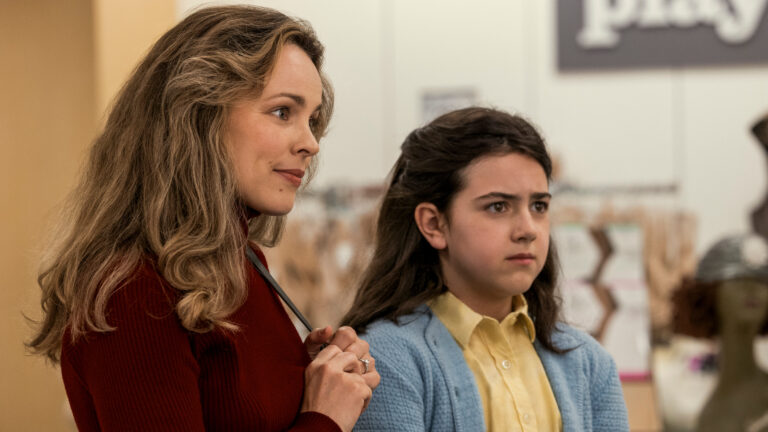
Are You There God? It’s Me, Margaret is one of only a handful of films that tell the story from the female perspective of coming of age with a perfect amount of tender love and care. Based on the classic middle-grade novel by Judy Blume of the same name, her book was as influential as a glimpse of the future of what it was like to be growing up in America during a period of significant social change. The story was as much about larger issues, such as losing faith and questioning it, and how that contributed to anxieties, especially for early female adolescents.

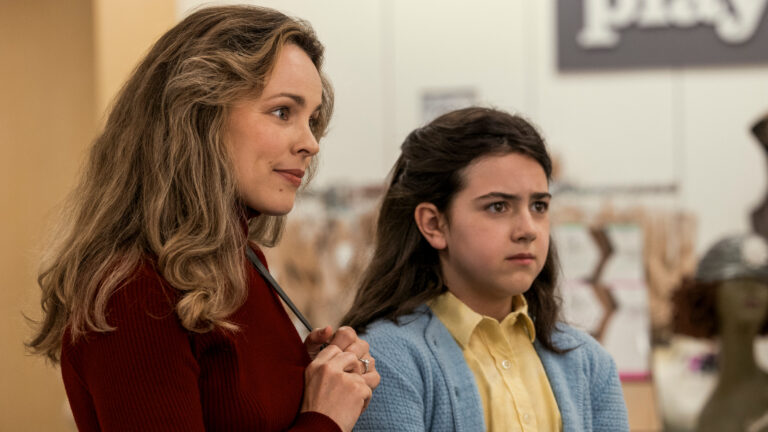
Writer/director Kelly Fremon Craig’s (The Edge of Seventeen) excellent adaptation of Ms. Blume’s book follows eleven-year-old Margaret (Abby Ryder Fortson) as she moves from the land of big skyscrapers, apples, and attitudes to a picturesque New Jersey suburb. Her teacher, Mr. Benedict (Echo Kellum), encourages her to explore her lack of faith due to her interfaith, yet agnostic upbringing for a class assignment.

Margaret’s mother, Barbara (Rachel McAdams), is Catholic, and her father, Herb ( Benny Safdie), is Jewish. Barbara’s parents cut her off because she married Herb, leaving Herb’s mother, Sylvia (Kathy Bates), to spoil Margaret and hope she embraces her Jewish heritage. When not spending time with her grandmother, Margaret has made a best friend in Nancy (Nancy Wheeler), who joins their secret club where they make up cardinal rules and discuss everything from boys to their anticipated “red panda” moment (thank you Turning Red for the metaphor).

What sets Ms. Craig’s film apart from other Judy Blume adaptations is that the kids in Are You There God? It’s Me, Margaret actually acttheir age. There are cute scenes of the girls trying to force their way into puberty, like the Kool-Aid man through a brick wall, with the chant “I must, I must, I must increase my bust,” and the overwhelming consternation of early adolescence. Craig captures the spirit of Blume’s book in an intimate and refreshingly honest manner that is wholly entertaining and, at times, moving.

For example, watch the way the director captures two moments with the young female characters. Fortson’s Margaret, cute and uplifting, and for Wheeler’s Nancy, encompassing all the anxiety, fear, shame, and embarrassment a pre-adolescent girl can feel, is done perfectly and beautifully. Most importantly, the mother’s reaction tells how meaningful the mother/daughter relationship can be during those crucial times in a young girl’s development into womanhood.

Some may argue Are You There God? It’s Me, Margaret is out of touch with society regarding religion. The book was written during a different time and place. (It should be noted that 84% of the global population identifies with a religious affiliation, and only 29% of people in the United States identify as agnostic.) Frankly, the book is timeless as it has become increasingly relevant regarding the passage of time with those all-consuming sobering, and mortifying moments of growing up.

And that’s where Ms. Fortson’s wonderful and even, say, brave performance comes into play. This is a movie about relationships – the ones with her parents, which are touching; the one with her grandmother, which is heartwarming; the ones with her friends, which are endearing; and finally, the one she has with God, which is nonexistent and equivalent to an existential crisis when it comes to Margaret’s pride conflicting with a tremendous amount of self-doubt that she must overcome.

Her performance is a heartfelt gem, just like this movie.

Grade: A-

Movie Review: ‘Blackberry’ is Fun For Those Nostalgic Users


Director: Matt Johnson

Writers: Matt Johnson, Jacquie McNish, and Matthew Miller

Stars: Jay Baruchel, Glenn Howerton, Matt Johnson

Synopsis: The story of the meteoric rise and catastrophic demise of the world’s first smartphone.


Matt Johnson’s new abrasive comedy, Blackberry, is just as much about true genius as it is about the drive never to settle or rest on your laurels. The rise and spectacular fall of the world’s first smartphone, created and sold from Waterloo, Ontario, once held 45% of the global market share. A few years later, the company formerly known as Research In Motion (RIM) had zero in a jaw-dropping fall from grace. How? By developing a dangerous level of hubris in themselves, their product, and their place in society by thinking they reached their own capacity in a constantly evolving field.

Blackberry tells the story of Mike Lazaridis (Jay Baruchel), a Turkish immigrant who immigrated with his Pontic Greek parents when he was five years old. He started RIM out of a small strip mall with his best friend Douglas Fregin (Johnson), with dreams of bringing everything your computer can do to a phone. The goal was to use a free, untapped wireless signal across North America with their invention, PocketLink. As Doug describes it, a device is a computer, page, and “email machine” all in one.

At least, that’s the pitch they make to Jim Balsillie (Glenn Howerton), who is intrigued enough about the idea to look up from the notes for a meeting he’s about to hijack. A melon-headed pompous blowhard, Balsillie knows one thing about business and bluntly interrupts their pitch by telling them they need a better name. Later, after being let go from his job, he shows up at RIM’s offices and eventually strikes a deal to become the co-CEO with Lazaridis, infusing the type of institutional arrogance that was ultimately the company’s downfall.

Blackberry’s script was written by Matt Miller and adapted from the nonfiction business book, Losing the Signal: The Untold Story Behind the Extraordinary Rise and Spectacular Fall of BlackBerry by Jacquie McNish and Sean Silcoff. The film’s shooting style has the look and feel of a mockumentary, as the camera zooms in to capture reaction shots of critical characters. This brings a sense of what these three were doing, breaking the rules and making new ones as they went along. Miller evolves the true story into an absurdist comedy that embraces the theme that it’s easier to ask for forgiveness later than to ask for permission from the start.

The film is perfectly cast, with Johnson saving some of the funniest lines from Miller’s script for himself. Baruchel still brings some of his trademark neurotic style, but he plays the role with more of a stoic quality than one would expect. He has the film’s best scene, exasperatingly trying to explain to the board of Bell Atlantic that new competitors just don’t have that trademark and satisfying Blackberry trademark typewriter click when typing out messages. However, the film develops its infused caustic sting from Howerton, who captures Balsillie’s well-known hostile style in a way that moves the film’s story quickly.

I’ll admit, I had more fun with Blackberry than most, purely for nostalgiaโ€™s sake. Growing up across the border from Waterloo, I once owned and loved my Blackberry Bold. I even held the Blackberry Storm in my hands and sent it back because it never worked, then never receiving a replacement. Even the well-known failure of Balsillie trying to bring the NHL to Hamilton, Ontario, is still fresh in my memory. It’s a trend now in films, from Ben Affleck’s Air to the upcoming Flamin’ Hot, of films capturing moments in time that changed the world in some small or large way. Johnson’s Blackberry works as a work of sentimentality for the past but also teaches us to always keep an eye out for what will happen in the future.

Grade: B+

Podcast: Updated MCU Rankings – Episode 533


This weekโ€™s episode is brought to you by Koffee Kult. Get 15% off with the code: ISF

This week on the InSession Film Podcast, inspired by Marvel’s latest in Guardians of the Galaxy Vol 3, Ryan and Brendan offer up their updated MCU rankings! At this point in the MCU, there’s been over 40 films and Disney+ series that make up the Marvel Cinematic Universe, so there’s plenty to decipher and it was fun looking back at the best Marvel has given us so far.

On that note, check out this week’s show and let us know what you think in the comment section. Thanks for listening and for supporting the InSession Film Podcast!

– Thoughts on the MCU (2:00)
Before we get into our updated rankings, we had a fun discussion talking about the MCU, where it stands as of now and what its future might hold. Vol 3‘s box office has been lower than what’s predicted, but is that a sign of the times? Or what’s to come?


RELATED: Listen to Episode 516 of the InSession Film Podcast where we discussed our Top 10 Movies of 2022!


– Top 10 MCU Movies (1:02:40)
As noted above, this is where we offer up our updated MCU rankings by primarily talking about our Top 10 films/shows that the MCU has offered up to this point. What would be your Top 10?

Show Sponsor: First Time Watchers Podcast

– Music
Avengers Theme – Alan Silvestri
Captain America – Henry Jackman

Subscribe to our Podcasts RSS
Subscribe to our Podcasts on iTunes
Listen on Spotify
Listen on Stitcher
InSession Film Podcast – Episode 533

Next week on the show:

TBD

Help Support The InSession Film Podcast

If you want to help support us, there are several ways you can help us and we’d absolutely appreciate it. Every penny goes directly back into supporting the show and we are truly honored and grateful. Thanks for your support and for listening to the InSession Film Podcast!

VISIT OUR DONATE PAGE HERE

Podcast Review: Guardians of the Galaxy Vol 3

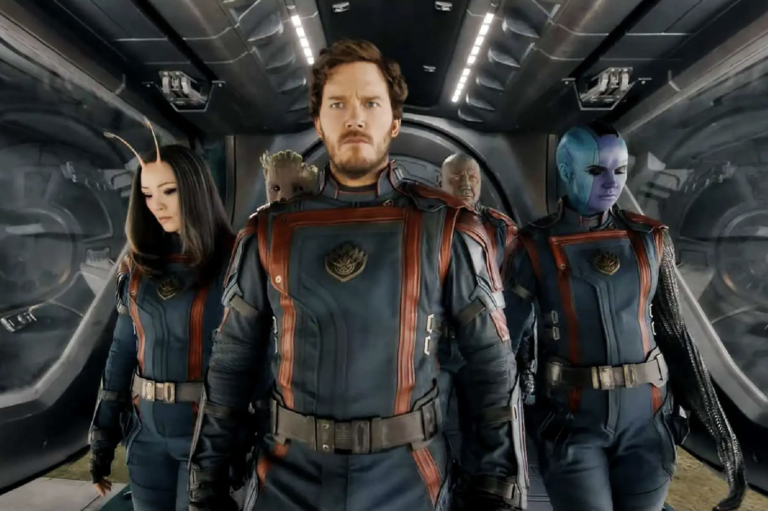
On this episode, Brendan and Ryan discuss Marvel’s latest in Guardians of the Galaxy Vol 3! The MCU has been in a little bit of flux lately, but James Gunn’s latest (and last) entry has been exactly what it needed.

Review: Guardians of the Galaxy Vol 3 (3:00)
Director: James Gunn
Writers: James Gunn
Stars: Chris Pratt, Zoe Saldana, Dave Bautista, Karen Gillan

Subscribe to our Podcasts RSS
Subscribe to our Podcasts on iTunes
Listen on Spotify
Listen on Stitcher
InSession Film Podcast – Guardians of the Galaxy Vol 3

Women InSession: Howard Hawks – Episode 37

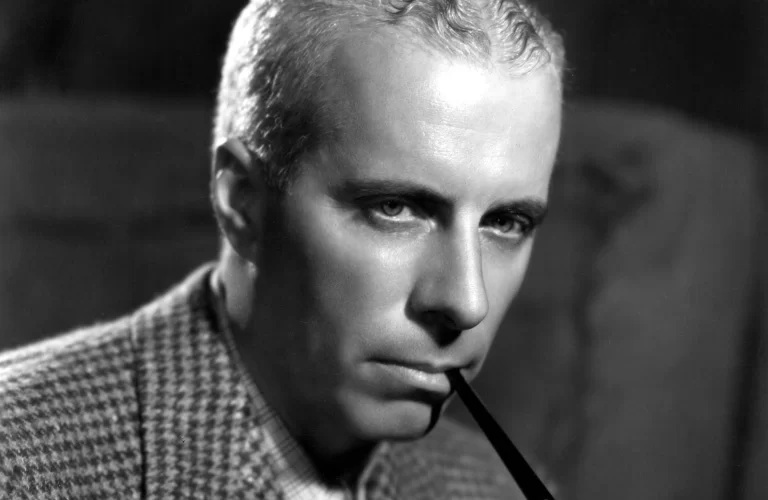
This week on Women InSession, we take a deep dive into the films of the legendary Howard Hawks! With films such as Scarface, Bringing Up Baby, Only Angels Have Wings and Gentlemen Prefer Blondes, among many others, there’s much to love about Hawks’ filmography.

Panel: Zita Short, Amy Thomasson

On that note, check out this week’s show and let us know what you think in the comment section. Thanks for listening and for supporting the InSession Film Podcast!

– Music
The Return of the Eagle – Atli รƒโ€“rvarsson

Subscribe to our Podcasts RSS
Subscribe to our Podcasts on iTunes
Listen on Spotify
Listen on Stitcher
Women InSession – Episode 37

To hear this Extra Film episode and everything else we do, download our apps on the Amazon Market for Android and the Podcast Source app on IOS devices. The mobile app covers all of our main shows, bonus podcasts and everything else relating to the InSession Film Podcast. Thanks for your wonderful support and for listening to our show. It means the world to us.

Podcast Review: Are You There God? It’s Me, Margaret.

On this episode, JD and Brendan discuss Kelly Fremon Craig’s latest film Are You There God? It’s Me, Margaret., based on the famous Judy Blume novel! This is a film that we’ve been anticipating as fans of Craig’s The Edge of Seventeen, and spoiler alert, it didn’t disappoint.

Review: Are You There God? It’s Me, Margaret. (3:30)
Director: Kelly Fremon Craig
Writers: Kelly Fremon Craig
Stars: Rachel McAdams, Abby Ryder Fortson, Benny Safdie, Kathy Bates

Subscribe to our Podcasts RSS
Subscribe to our Podcasts on iTunes
Listen on Spotify
Listen on Stitcher
InSession Film Podcast – Are You There God? It’s Me, Margaret.

Westfront 1918: The Other “All Quiet On The Western Front”

World War I films are having a moment thanks to the acclaimed works 1917, Benediction, Amsterdam (okay, not all are acclaimed), and the newly minted Oscar-winner All Quiet On The Western Front. World War II could not exist without the first one, even though the sequel is a more fascinating battle. With Edward Bergerโ€™s successful version of the famous anti-war novel, it has pushed to mind other movies about the same period. Specifically, a film about the war made during those interwar years. In the Weimar Republic, when Germany was still struggling to get itself together after its defeat, director Georg Wilhelm Pabst dared to make a movie about the countryโ€™s final months before their capitulation.

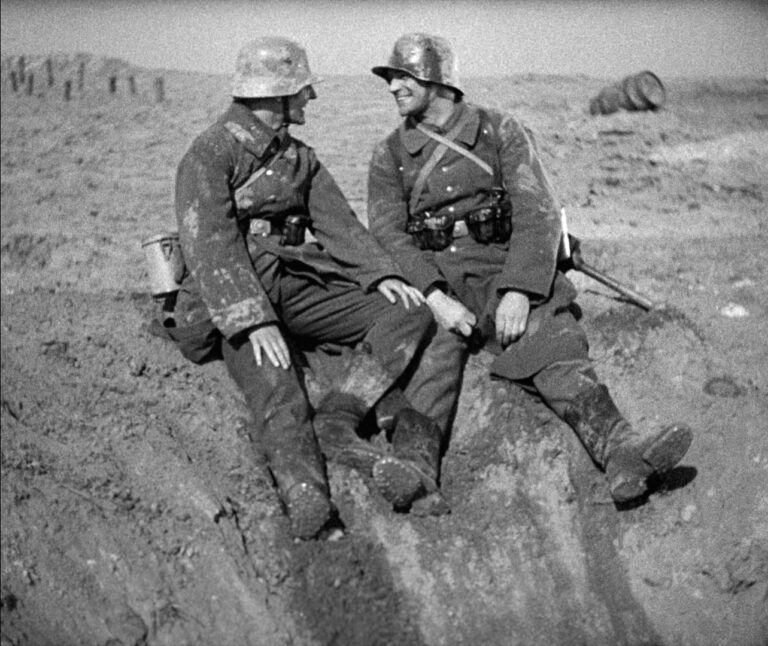
Even with the Nazi Party gaining strength and touting against any sign of defeatism, Pabst adapted another anti-war novel, Four Infantrymen on the Western Front, into his first talking picture. The film is set in France during the last months of the war and said four infantrymen are on leave to start the story. One name, Karl, is revealed, and the others are referred to by their occupation: the student, the lieutenant, and the Bavarian. The student falls for a young French woman, but the four have to return to the front. The hardships fall on them, quite literally, as it appears all of the fighting was for naught.

The film was released in 1930, the same year Hollywood released their original version of All Quiet. The infrastructure director Lewis Milestone had was a lot better than Pabstโ€™s, who had to find a creative way of using sound while maintaining his artistic credentials with his camera. He could do his visuals without the worry of the sound equipment, but now he had to find proper places to maximize it, as well as capture the crashes and bombings that took place. In the studio, interiors were one thing, but taking the battles outside and moving his camera proved to be a challenge. It was a depth of realism never shown before to the German public.

It wasnโ€™t all bombs and blood. Pabst also put in the human fragility around his four leads. One is the aforementioned romance between the student and the young French girl. Karl has a wife back home but discovers her affair with the butcher to curb loneliness and to get extra food since the rations wonโ€™t do. Yet, he shows no emotion to this betrayal. The Bavarian is a loner who seems mentally strong, but even he has his breaking point. Then, there is the lieutenant who keeps to himself until the last shelling when he loses all composure. In the end, after Karl says the blame goes to everyone involved before dying, a wounded French soldier extends his hand, referring to him as a comrade rather than an enemy.

You see the fear, the cynicism, the despair, and the acceptance that it will not end well in these characters. Carnage is all around them and if they come out of it alive, it will be a miracle. A few dozen guests at the premiere fainted at such a sight, and the objective critics could only praise Pabst for being truthful of the outcome to their countryman in battle. Unfortunately for Pabst, he faced condemnation on two sides of Germany on the brink. The Left liked the film but said Pabst failed to be political and explain why the war started. The Right, including the Nazis, condemned the film for its defeatism, and was subsequently banned in 1933.The movie did not need to be full of blood & guts to show what war is. Thatโ€™s the beauty of any war film before the advent of computer special effects. It shows the poison of nationalism, just like the beginning of the recent All Quiet when the new recruits cheer on the belief that the country will defend the Fatherland and crush its enemies. Thereโ€™s a tune the Bavarian sings, โ€œNever leave your house and home or a cold grave will be yours.โ€ An estimated 10 million soldiers on both sides ended up in one. Even with powerful messages like Westfront 1918, there would be millions more in another world war.


Follow me on Twitter: @brian_cine (Cine-A-Man)ย