Home Blog Page 136

Podcast Review: Asteroid City

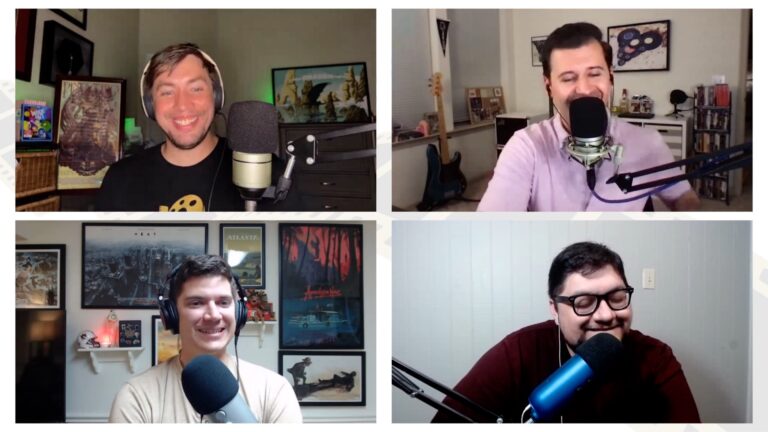
On this episode, JD and Brendan discuss Wes Anderson’s latest film Asteroid City! This once again sees an extensive cast and has all of the great Anderson quirks, but it’s equally the most somber and melancholic since The Royal Tenenbaums in 2001. We’re in a new era of Wes, and have a had a great time breaking down what’s so compelling about that.

Review: Asteroid City (3:00)
Director: Wes Anderson
Writers: Wes Anderson
Stars: Jason Schwartzman, Scarlett Johansson, Tom Hanks, Jeffrey Wright

Subscribe to our Podcasts RSS
Subscribe to our Podcasts on iTunes
Listen on Spotify
Listen on Stitcher
InSession Film Podcast – Asteroid City

The Curse Of The Sibling: A Comparison In Separate Careers

I am a huge fan of Succession like many people are and am sad to see it end. The struggle for power among three siblings for their fatherโ€™s media empire, influenced by the Murdoch family at Fox, is one of the most dynamic shows in the last decade that gets in your veins from the start even if you hate all of the characters. I like Cousin Greg; he is a little out there, not totally aware and nervous for his small piece of the pie, but far from being the asshole the others are. Another thing that amazes me is Kieran Culkin, not just because of his role as Roman, but also his career trajectory compared to his older brother, Macaulay. He was the ultimate child star thanks to Home Alone, and while he still has a good career as an adult, Kieran has shot past him. 

There are many siblings as such, some being serious rivalries. Some have successfully worked together like Joel & Ethan Coen, the Dardenne Brothers, the Weinsteins (actually, forget them), and the Marx brothers. Others work separately – and those who just flat-out hate each other like Liam and Noel Gallagher. Then, there are those where one sibling is way more successful than the other, but there is zero envy with any of it. Frank Stallone is not complaining about what his brother Sylvester has been doing. And then, there are these other siblings.

Olivia de Haviland & Joan Fontaine

One of the most bitter sibling rivalries in Hollywood, the always strained relationship stemmed back to childhood when Joan resented her mother for always preferring her older sister Olivia as the favorite. When Joan got into the acting business after Olivia, she was told she couldnโ€™t use her legal surname, so she used her motherโ€™s. When both were nominated for Best Actress at the Oscars in 1942, it was Joan who won for Suspicion, and going to the stage, Joan snubbed Oliviaโ€™s hand in congratulations. When Joan approached Olivia after her own Oscar win in 1947 for To Each His Own, Olivia returned the favor and ignored her. 

The final straw was in 1975 following their motherโ€™s death; Joan was on stage touring and claimed Olivia never informed her, while Olivia claimed she sent a telegram but was told Joan wouldnโ€™t be able to make it. Years later, when the sisters were invited to the same Oscars ceremony, someone had booked their hotel rooms next to each other and Joan was able to switch to another floor. Joan lived and died in California in 2013, while Olivia lived for decades in Paris until her passing in 2020, aged 104. 

Boris & David & Mikhail Kaufman

All three brothers from the former Soviet Union studied movies in the 1920s and would go on to play separate parts in the path of cinema. David was the oldest; he is widely known in film history as Dziga Vertov after he Russianized his name following the October Revolution of 1917. He would make movies for the pro-Communist side in that countryโ€™s civil war and experiment with various techniques in his mini-series known as Kino-Pravda, or โ€œfilm truth.โ€ But it was his 1929 avant-garde documentary Man With A Movie Camera that made him a permanent influence for generations after, the film was listed as the greatest documentary ever in Sight & Soundโ€™s Greatest Documentaries poll in 2014.

Vertov would spend his whole life in Russia, making movies through the 1930s before making way for younger directors and editing film magazines. Meanwhile, his younger brotherโ€™s career continued. Mikhail would be Vertovโ€™s main cameraman for all of his film shorts, plus Movie Camera until a falling out between the two ended the professional relationship. The separation allowed Mikhail to make his movies and work in the Soviet film system, running different studios throughout the whole nation until his retirement in the 1970s. While he and his older brother were confined to Russia, the youngest brother would leave for France.

Boris sought to be even more independent and get away from the troublesome Eastern side of the continent. In his twenties, Boris met Jean Vigo, a major figure in French cinema even after just making four features in his lifetime, all of them shot by Boris. It allowed him to work with other French directors in the 1930s before World War II forced him to flee to North America. He was still making shorts and documentaries when Elia Kazan, preparing to shoot On The Waterfront, hired Boris because of his knowledge of on-location work which Kazan sought to replicate. 

It resulted in an Oscar for Best Cinematography and a second nomination for Baby Doll. Boris then collaborated with director Sidney Lumet on seven features, including 12 Angry Men, The Fugitive Kind, and The Pawnbroker. He would shoot another film for Kazan, Splendor In The Grass, and work with Jules Dassin, George Roy Hill, and Otto Preminger before retiring in 1970. Boris died a few months after Mikhail died in 1980, but his work remains the more notable of the three thanks to his move to New York and the exposure to working with some of Hollywoodโ€™s best directors. 

Herman J. & Joseph L. Mankiewicz 

There wasnโ€™t a rivalry here and both had successful careers, but the younger brother had a little more success than the older one. Herman was the oldest and is widely known for co-writing Citizen Kane with Orson Welles, winning an Oscar. The story of how that project came to be was later portrayed in David Fincherโ€™s Mank, written by his father, Jack Fincher. Herman wrote many screenplays, credited or not, including The Last Command, The Wizard Of Oz, and The Pride Of The Yankees. He sadly died in 1953 from complications of alcoholism while Joseph was one of the biggest writers/directors in Hollywood.  

After success as a producer with MGM, Joseph went to 20th Century Fox to move into the directorโ€™s chair. With head Darryl F. Zanuck as producer, Joseph would write and direct A Letter To Three Wives and All About Eve, giving him consecutive Oscars for both Adapted Screenplay and Director, 4 Oscars in two years, while Eve went on to win Best Picture. He continued to have success as an independent with Julius Caesar, The Barefoot Contessa, and his final directorial effort, Sleuth. In the middle of it, Joseph took over the wallet-burning Fox production Cleopatra. He took the job because of the massive offer from Zanuck but came to regret it because of the financial loss it suffered, nearly ending his career. 

Emilio Estevez & Charlie Sheen

The sons of actor Martin Sheen, both at times came together on projects while their personal lives were different. Charlie made his breakthrough in Oliver Stoneโ€™s Platoon and Wall Street (the latter co-starring his dad) and later transitioned to TV success with Spin City and Two And A Half Men. Post-firing from Men has been very much covered in the press, from his turbulent relationships to his use of drugs, and then his stunning announcement that he tested positive for HIV after being extorted multiple times to keep it private. 

Emilio, his older brother, was part of the Brat Pack in the 1980s thanks to his performances in The Outsiders, The Breakfast Club, and St. Elmoโ€™s Fire. He also went behind the camera starting with the 1986 crime drama Wisdom when he was only 24 years old. He would direct several TV shows and movies, including teaming up with Charlie in Rated X, where they played a pair of real-life porn-producing brothers. He would also direct his father in 2010s The Way, and recently reprised his role as Gordon Bombay in the TV sequel to the famous Mighty Ducks franchise he starred in.

Warner Brothers

I wrote an article about these four brothers and how they went from a united front to a civil war where one brother, whose own Succession story is fascinating, came out with full control. Albert, Jack, Harry, and Sam all formed their first distribution company in the 1900s in Pittsburgh where they hailed from before moving to Los Angeles. On April 4, 1923, Warner Bros. Inc. began and remains 100 years later a major studio in Hollywood. To make a major challenge to their competitors, they pioneered making movies with sound, resulting in The Jazz Singer in 1927, changing movies forever. It was a bittersweet moment, however; Sam died unexpectedly the day before the filmโ€™s release.

Jack, the youngest of the four, took full control as head of production left void by Sam, causing friction with his two surviving brothers. His leadership style brought admiration and disgust to many, especially Albert and Harry who saw their brotherโ€™s actions costing them money. In 1956, the three men put the studio on the market, but Jack established a syndicate where he bought back all the stock once they sold them on having virtual sole control of the studio. Albert and Harry never spoke to their brother again and Jack never attended their funerals, outliving them both and retiring in the mid-1970s. 

Follow me on Twitter: @brian_cine (Cine-A-Man)

Video Review: Indiana Jones and the Dial of Destiny

Watch as JD reviews James Mangold’s latest film Indiana Jones and the Dial of Destiny, starring the great Harrison Ford, Phoebe Waller-Bridge and Mads Mikkelsen!

Movie Review: ‘No Hard Feelings’ Is An Escape From Reality


Director: Gene Stupnitsky
Writers: Gene Stupnitsky and John Phillips
Stars: Jennifer Lawrence, Andrew Barth Feldman, Laura Benanti

Synopsis: On the brink of losing her home, Maddie finds an intriguing job listing: helicopter parents looking for someone to bring their introverted 19-year-old son out of his shell before college. She has one summer to make him a man or die trying.


At first glance, rom-coms appear to have a lack of depth, and can either be a huge hit or miss. Often, they succumb to clichรฉs and contrived drama, easily avoidable conflicts. However, occasionally, they manage to transcend these shortcomings and offer something truly unique and profound. Typically, their plots are straightforward, their tone light-hearted, and they make for enjoyable and effortless viewing. The new raunchy rom-com, No Hard Feelings, starring Jennifer Lawrence, falls into the category of an easy and mindless first watch. While the initial jokes are amusing, the film gradually loses its charm when subjected to deeper contemplation. The overall tone lacks consistency, the characters and conflicts feel forced and artificial, and the general plot veers uncomfortably close to being predatory.

Maddie (Lawrence) works as an Uber driver and a bartender, struggling to make ends meet as the cost of living skyrockets due to her hometown’s newfound status as a summer vacation spot for the ultra-wealthy. Desperate for a car after hers is repossessed, she decides to respond to a Craigslist ad from two helicopter parents who are seeking someone to help their son come out of his shell. The premise seems unnecessarily convoluted, and itโ€™s never made clear why exactly she canโ€™t make ends meet. The film attempts to address themes like gentrification and wealth, but it fails to provide substantial commentary on these topics. Instead, it relies on contrived and overly complicated plot developments solely for the sake of advancing the storyline, a pattern that persists throughout the film.

Following their initial encounter, Maddie and Percy (Andrew Barth Feldman) couldn’t be more different from each other. Maddie embraces her true self without apologies but is surprisingly afraid of commitment, even refusing to leave her hometown due to fear. Percy, on the other hand, is painfully awkward, barely venturing outside his room after a traumatic bullying incident in high school. He becomes deeply attached to anyone he connects with, including Maddie. These character types may seem familiar, and if you’ve read the plot synopsis, you can probably anticipate where the film is heading as you become acquainted with the characters and their situation. While the comedy provides solid support, the predictability of numerous plot points diminishes its uniqueness over time.

The film heavily relies on the initial contrast between its two main characters to generate upfront comedy. With Maddie, an experienced and assertive individual, attempting to seduce the shy and socially awkward Percy, there are plenty of humorous moments as they interact and get to know each other. However, this dynamic often goes a step too far, with Maddie becoming overly aggressive in her pursuit of Percy. While he may find her attractive, it’s clear that he is uncomfortable with her advances. This undermines the film’s purpose of helping Percy integrate into society, as Maddie seems oblivious to the social cues he is giving. It gives the impression that only through sex can one feel comfortable and confident enough to make friends and expand their social circle.

Additionally, the decision to create a 13-year age difference between the characters further compounds the issue. Jennifer Lawrence, known for portraying characters older than her actual age (such as playing a 35-year-old single mom in Joy at the age of 25), does not appear “old” at her current age of 32. The ad that Maddie responds to specifically requests someone in their early to mid-20s, and she answers it at the age of 32. It’s puzzling why the film couldn’t have asked for someone in their early 20s and made Lawrence’s character closer to her mid-20s. This adjustment would significantly reduce the predatory undertones of the age gap and enhance the humor of the “old” jokes throughout the film, knowing that her character is actually quite young.

The true saving grace of this film, despite its numerous flaws, lies in the undeniable chemistry between Lawrence and Feldman. Their dedication to comedy shines through, keeping the movie afloat. As they develop a deeper connection throughout the story, it becomes genuinely heartwarming to witness. Despite the predictable nature of their individual character arcs, it remains captivating to explore the reasons behind their current personas and see how they mutually facilitate personal growth. It is truly rewarding to witness the positive impact they have on each other’s lives.

No Hard Feelings is a perfect option for a mindless and enjoyable date night or a feel-good movie experience. Whether you choose to see it in the theater or wait for its release on streaming platforms, it can be just as effective as a cozy home viewing with snacks and a blanket, offering an easy escape from reality. However, beyond the strong performances by Lawrence and Feldman, the film falls short and might leave audiences slightly disappointed when it comes to any further depth or thought-provoking elements.

Grade: C+

Podcast Review: Elemental

On this episode, JD and Brendan discuss Pixar’s latest film Elemental! Pixar’s run from 1995 – 2010 is unprecedented, and it’s understandable that they wouldn’t be able to maintain that same pace. Since Toy Story 3, it’s fair to say that things have been more uneven, but Elemental is one of those movies that brings them closer to being what we expect from Pixar.

Review: Elemental (3:00)
Director: Peter Sohn
Writers: John Hoberg, Kat Likkel, Brenda Hsueh
Stars: Leah Lewis, Mamoudou Athie, Ronnie del Carmen

Subscribe to our Podcasts RSS
Subscribe to our Podcasts on iTunes
Listen on Spotify
Listen on Stitcher
InSession Film Podcast – Elemental

Movie Review: ‘Extraction 2’ is a Massive Improvement


Director: Sam Hargrave
Writers: Joe Russo
Stars: Chris Hemsworth, Golshifteh Farahani, Olga Kurylenko

Synopsis: After barely surviving his grievous wounds from his mission in Dhaka, Bangladesh, Tyler Rake is back, and his team is ready to take on their next mission.


I didnโ€™t care for the first Extraction. Apart from a sleekly constructed oner that occurred near the filmโ€™s beginning, the movie re-treads a dull (and problematic) white savior story shot with the racist piss-yellow filter that I thought Hollywood didnโ€™t use anymore. However, the movie was a COVID-19 hit for Netflix, and a sequel was almost immediately greenlit. I was convinced it would be the same old stuff when Extraction 2 opened with yet another scene with Tyler Rake (Chris Hemsworth) in Bangladesh, with that yellow filter plastered all over the frame. 

But that doesnโ€™t last long, with Rake being rushed to a hospital in Austria and forced to retire after the first film’s events. Rakeโ€™s retirement also doesnโ€™t last long, as he is visited by an unnamed man (Idris Elba) who tells him that his ex-wifeโ€™s (Olga Kurylenko) sister (Tinatin Dalakishvili) is imprisoned in a Georgian prison cell. Rake arrives with Nik (Golshifteh Farahani) and Yaz (Adam Bessa) to help out, andโ€ฆitโ€™s not that simple of an extraction. Ketevanโ€™s (Dalakishvili) husband (Tornike Bziava) is waiting for Rake to arrive, whilst her son, Sandro (Andro Japardize), communicates with his uncle (Tornike Gogrichiani), who leads a ruthless criminal organization. 

This leads into the filmโ€™s first action sequence, which is an unbroken one-take that goes from the prison walls to the prison courtyard, then leads into an insane car chase in the woods with bikers trying to blow up Rake and Nikโ€™s cars, which then finishes on a moving train, with Rake trying to fight off a helicopter with a minigun, while Nik tries to keep the train going but has to face off with enemies of her own. At some point, Rakeโ€™s fist catches fire, and he starts punching dudes left and right with it until it extinguishes itself as he punches more people. Yes, some will criticize that itโ€™s not a truly โ€œunbrokenโ€ cut and that the digital cuts are quite obvious. However, when the craft is so strong, from its masterful camerawork, which logically follows each respective character and switches to multiple perspectives throughout the scenes naturally, and its staggering stuntwork, thereโ€™s no shortage of moments where youโ€™re likely to slap your seat in utter excitement, having witnessed an action sequence for the ages. 

In that twenty-one-minute scene, thereโ€™s so much your brain canโ€™t process that you will immediately suspend your disbelief and enjoy the ride. Hargrave and cinematographer Greg Baldi pull no punches in crafting a mind-melting, maximalist action setpiece that will surely be in your top five of the year. Itโ€™s not an issue that the digital cuts are obvious since itโ€™s likely impossible to craft a setpiece like this in one continuous take. Hargrave understands this and knows the audience understands it too. But he doesnโ€™t care โ€” he makes you believe the impossible is possible and crafts four terrific action scenes in one. 

The thrills continue with a sequence inside a cramped apartment room. And while it isnโ€™t as sleek as the filmโ€™s main attraction, it has its fair share of moments in which Rake creatively uses the environment around him to defeat a slew of infinite (yet amazingly disposable) villains. Hemsworth is in top form as Rake and will perhaps be remembered as a bigger action star in films of the Extraction franchise than in his tenure as Thor in the MCU. He is a fully-fledged action star, giving his own spin to the โ€œSad Action Hero canon.โ€ He gives a far deeper performance here than in the original, particularly in scenes where he recalls the last time he saw his late son and with his ex-wife, wonderfully portrayed by Olga Kurylenko. 

However, the show-stealer of Extraction 2 is Golshifteh Farahani, whose arc greatly expands from the first and is a major part of the action. Granted, she was heavily involved in the first filmโ€™s climax. However, in Extraction 2, she outshines Hemsworth on several occasions, particularly during specific moments in the filmโ€™s core action sequences, from the engine car fight to the rooftop shootout and culminating in a John Woo-esque gun duel between Nik and Zurab in a chapel. Farahani is a bonafide action star and is one of the very best parts of the movie. 
If Extraction 2 had a compelling plot, it likely would be as good as John Wick: Chapter 4. But the film ultimately fails at crafting a compelling antagonist that isnโ€™t riddled with stereotypes and clichรฉs,  just like Sandroโ€™s arc has been done one too many times before not to feel predictable. However, one will seemingly forget its flaws and think theyโ€™re minor nitpicks since the audience has clicked on Extraction 2 to see Hemsworth kicking ass in more ways than one. In that regard, the movie delivers and is one of the year’s best and most inventive action pictures. Itโ€™s a damn shame that Netflix didnโ€™t release it in every cinema possible, but hereโ€™s hoping the third one gets the IMAX treatment. Iโ€™ll be there on day one.

Grade: A

Movie Review: ‘Love To Love You, Donna Summer’ Covers New Ground


Director: Brooklyn Sudano and Roger Ross Williams
Stars: Michael McKean, Barbra Streisand, Brooklyn Sudano

Synopsis: Follows the life of iconic singer Donna Summer.


These days, itโ€™s easy to forget that there was a time when it wasnโ€™t socially acceptable to take disco music seriously. It was seen as a vulgar, trashy genre that lacked depth and sophistication. Even pioneers of the genre, such as Giorgio Moroder and Wally Holmes, were dismissed as coke-snorting party animals who indulged in mindless pleasure. The divas who served as the public face of the genre had an even more difficult time gaining respect from audiophiles and critics. Over the years, efforts have been made to rehabilitate the reputation of the genre but there is still a lingering sense, in some circles, that it was a frivolous fad that should be left in the past. 

No one seems more primed for a critical re-evaluation than Donna Summer, who was one of the most commercially successful recording artists of the 1970s. In addition to delighting audiences with her brassy stage persona, Summer recorded some of the most innovative songs of the 1970s. โ€œI Feel Loveโ€ and โ€œLove to Love You Babyโ€ signaled the fact that the Moog synthesizer could be employed to create a futuristic, otherworldly soundscape that made club-goers want to get up and dance. She also became a prominent gay icon, who projected an air of breezy sexuality that stood in stark contrast to the brand of prim conservatism that had been typically associated with pop singers. She managed to personify a very specific time in American history and her large body of work has served as a major influence on modern dance music. 

For the most part, Love to Love You, Donna Summer (2023) serves to elevate Summerโ€™s position in the canon of American popular music. This approach serves the documentaryโ€™s subject well, as it manages to set itself apart from the likes of Miss Americana (2020) and Angรจle (2021). Those were intimate exposรฉs that devoted a considerable amount of their running times to exploring the personal lives of their subjects. This documentary has an unusually strong sociopolitical dimension that regularly comes to the fore. There are times when it even begins to feel like an editorial on the mistreatment of women of color in an industry that is largely dominated by white men. I say this as a compliment, as it has become increasingly difficult to find family-approved bio-docs that are willing to expand their scope beyond the personal. Roger Ross Williams and Brooklyn Sudano endeavor to move beyond the conventions associated with this genre in order to produce something that feels more politically charged. Itโ€™s this unique perspective that provides this documentary with its backbone and prevents it from drifting into bathos. 

Longtime fans will also be given the opportunity to pore over recently unearthed archival footage and in-depth analysis of some of the deeper cuts from Summerโ€™s discography. Itโ€™s nice to hear them play the biggest hits, but it really does count for something when they begin to consider the later stages of her career. Like so many stars who created an iconic stage persona, Summer was forced to reinvent herself in the years following the disco boom. The backlash to the genreโ€™s success was swift and she struggled to avoid being seen as a passรฉ cultural commodity in the early 1980s. This documentary provides us with a window into how the music industry handles these ups and downs and details Summerโ€™s conflicted response to the changes that swept through the disco scene during this period. We get to view her as a canny businesswoman who knows how to play all the right angles for maximum effect. This is a quality that we associate with many pop stars but this documentary is unusually candid in its treatment of this issue. 
If youโ€™re already a dedicated fan of Summer, youโ€™ll walk away from this documentary feeling satisfied. It covers ground that hasnโ€™t been trodden over in the countless biographies that have been written about her and avoids making too many generalizations about her career. More surprisingly, this is a documentary that still presents a certain appeal for those who are not all that familiar with her work. Everybody is interested in the inner workings of an industry that works very hard to project a shadowy, mysterious aura and Love to Love You, Donna Summer gives you a peek behind the curtain. This is more than just a promotional puff piece and for that we can all be glad.

Grade: B

Podcast: Wes Anderson / Big Announcement – Episode 539

This weekโ€™s episode is brought to you by Koffee Kult. Get 15% off with the code: ISF

This week on the InSession Film Podcast, inspired by Asteroid City coming out soon, we discuss the greatness of Wes Anderson and what makes him such a captivating filmmaker. We also end the show with a big announcement and reminiscing on the last five years.

On that note, check out this week’s show and let us know what you think in the comment section. Thanks for listening and for supporting the InSession Film Podcast!

– Wes Anderson Discussion (3:00)
Wes Anderson is such a distinct filmmaker that we have come love over the years. AI can try and mimic him, but there’s only one Wes Anderson and he’s the best at what he does. His visual prowess. His framing. His humor and characters. There’s so much to love about his films and get into the depths of that in this discussion.


RELATED: Listen to Episode 516 of the InSession Film Podcast where we discussed our Top 10 Movies of 2022!


– Big Announcement (1:07:35)
In the back half of the show, we have an announcement to make. It’s bittersweet, but we have a fun time reminiscing and looking back at all the fun we’ve had the last five years.

Show Sponsor: First Time Watchers Podcast

– Music
Moonrise Kingdom – Alexandre Desplat
Canto at Gabelmeister’s Peak – Alexandre Desplat

Subscribe to our Podcasts RSS
Subscribe to our Podcasts on iTunes
Listen on Spotify
Listen on Stitcher
InSession Film Podcast – Episode 538

Next week on the show:

Best Movies of 2023 So Far

Help Support The InSession Film Podcast

If you want to help support us, there are several ways you can help us and we’d absolutely appreciate it. Every penny goes directly back into supporting the show and we are truly honored and grateful. Thanks for your support and for listening to the InSession Film Podcast!

VISIT OUR DONATE PAGE HERE

Movie Review (Tribeca Film Festival 2023): โ€˜Afireโ€™ Holds the Audience in a Trance


Director: Christian Petzold
Writers: Christian Petzold
Stars: Thomas Schubert, Paula Beer, Enno Trebs

Synopsis: A group of friends in a holiday home by the Baltic Sea where emotions run high as the parched forest around them catches fire.


Christian Petzold is a chameleonic director, though not in the sense that people might expect when a person is described with such an adjective. The German filmmaker has been able to dwell within several genres โ€“ neo-noir (Jerichow), thriller (Something to Remind Me), heist (Cuba Libre), horror (Yella) โ€“ without losing touch on his central theme, addressing current social predicaments in Germany. Although some of his DFFB (German Film and Television Academy Berlin GmbH) contemporaries, Angela Schanelec and Thomas Arslan, also tackle that topic in fascinating ways, none do so to the same effect as Petzold. The way he translates and expresses his ideas through images holds his contemporary dispositions within a classicist glance, learning from old forms and stories to bring life to newer ones. It is admirable what he has been able to achieve throughout the years. With each decade that passes, Petzold demonstrates new mechanisms and techniques inspired by legendary auteurs โ€“ his form keeps aging like fine wine. 

Most recently, Christian Petzold has been doing a series of films centered around elemental and fantasy-like atmospheres. Undine was the introductory piece to the triptych whose underpinning principle is mythology. And it was one of those films that grew on me as I rewatched and thought about it afterward. The aforementioned film told the tale of the mythical water nymph but with a present-day twist. It used the rich history of German architecture as a metaphor for its leading doomed romance, delivering a haunting and sentimental picture that hypnotized the viewer. Via its mythical elements, Petzold explored the intertwinings between desire and memory, how the former can amend our lives. And now, he has crafted another film in which he blends mythos with realism. He turns this mixture into a devastating and occasionally hilarious tragicomedy โ€“ Afire (Roter Himmel), which won the Silver Bear Grand Jury Prize at this yearโ€™s Berlin Film Festival. 

When you thought he had shown us the best of his skills in previous projects like Phoenix and Transit, Petzold switches gears in Afire. He crosses different boundaries and genres to provide an allegory of the climate crisis through the eyes of a man who canโ€™t come out of his shell. As its German title suggests, which translates to red sky, Petzold is working with another element this time around, fire โ€“ both literal (forest fires) and metaphorical (our incandescent hearts) flames that awaken our souls. However, by setting the film on the German Riviera, near the Baltic Coast, he also relies on aquatic imagery to fuel the clash between the charactersโ€™ respective emotions. The beautiful landscapes and characters we meet will continue to retain their allure, even after they are devoured by impending tragedy. So, when this journey ends, Afire presents us with a beautiful truth many will relate to. 

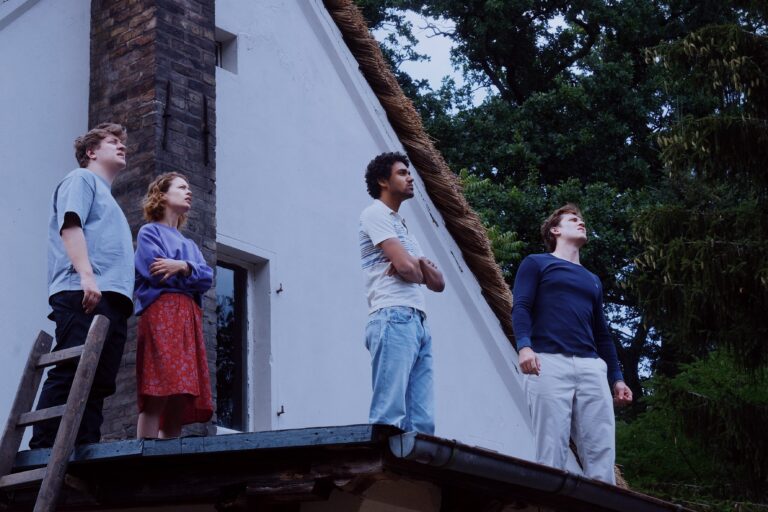
The story begins by introducing two of its leading players: Leon (Thomas Schubert), a wunderkind-like novelist working on his second book titled โ€œClub Sandwichโ€, and his closest friend Felix (Langston Uibel), an art student. Haunted by the feeling of wanting to find artistic integrity in his sophomore novel, Leon has a quite resentful attitude toward the world; heโ€™s quite obsessed with himself and the work he has been able to curate during his young career. He finds himself struggling with his writing because he lacks life experience; his social and interpersonal isolation drags him back, both as a person and a writer. You can say that he personifies main character syndrome without feeling it exhausting for the audience. The two of them are making their way to Felixโ€™s family summer house on the northern Baltic Sea coastline. But things begin to go wrong as the car engine wears down, and they have to continue their travels on foot. 

Upon their arrival, Felix and Leon notice that someone else is living in the cottage โ€“ you hear the washing machine buzzing, a pair of high heels scattered across the floor, and leftover food on the fridge. Their skepticism and suspicion turn into curiosity and jaundice. Felixโ€™s mom lets them know that they are not alone as Nadja (played by Petzoldโ€™s current muse, Paula Beer), a Russian woman who claims to be a seasonal worker, inhabits one of the rooms. Immediately, you sense the aura of mystery around the recondite woman and Leonโ€™s antipathy toward her. Leon awaits his publisher, Helmut (Matthias Brandt), who doesnโ€™t seem to have the best news imaginable for the manuscript heโ€™s concocting. As time passes without his appearance, Leonโ€™s attitude affects everyone around him. His dynamics with the people living in the house get even more fractured when Nadjaโ€™s lover, a David Hasselhoff-like lifeguard named Devid (Enno Trebs), enters the scene. 

The machismo and constant seduction that Devid expresses through his body language and the stories he shares make Leonโ€™s life a living hell. His first response is tuning out and distancing himself from this jovial crew. You would think that Petzold might depict the usual narrative strands of a love triangle with his latest work Afire. And although moments represent the intertwinings between three people and their respective seductions, thereโ€™s more than meets the eye. Interpersonal dynamics unpredictably shift amongst these characters in quite funny โ€“ relying on comedy more than youโ€™d expect โ€“ and devastating ways, especially for the ever-wounding and brooding Leon. But Nadjaโ€™s wistful presence awakens an inner fire inside his heart. The problem is that he canโ€™t share those emotions. Leon doesnโ€™t contain the inner calm to connect or feel joy with these people. I believe that aspect is what draws intrigue to Schubertโ€™s character. 

Although really unpleasant, rude, and self-obsessed, you end up feeling for him because thereโ€™s a relatability factor with his isolation, even if you are confronted by his frustratingly narcissistic persona. Thatโ€™s why Nadja and Devidโ€™s appearance at the house by the coast is a blessing and a curse for him. Throughout the entire runtime, you question whether Leon can express himself personally without hiding via that arrogance-riddled mask. In some cases, Afire can be viewed as a modern-day version of Pier Paolo Pasoliniโ€™s masterpiece, Theorem. In the aforementioned film, a stranger turns an Italian household upside down, seducing every family member and disappearing afterward. That helps them actualize and realize themselves in ways that are very specific to each person. Petzold does not include the existentialist crisis and the emptiness of the bourgeois that Pasolini depicted in his characters. Yet, he wants to see how the presence of one specific person can change your life for better or worse. 

In addition, both Theorem and Afire contain symbolic and literal ash in them, which serves a purpose to each respective filmโ€™s antithesis, one coming from Mount Etna and the other from forest fires. However, the ash in both films can be interpreted as a rebirth of some sort โ€“ the characters rise from the ashes onto a journey that has equal dashes of misfortune and hopefulness. Thatโ€™s why, in the end, you feel an equal balance of detachment and sorrow from the main character. You sense his preoccupation with supercilious banalities in the face of damnation because, in some way, shape, or form, it has happened to us, alongside his inability to connect with all of these things that we consider emotionally moving. We havenโ€™t seen Petzold depict characters in this manner. And it is quite surprising how he made us relate to such an antagonistic person. 

Even if Hans Fromm โ€“ Petzoldโ€™s cinematographer of choice โ€“ deserves significant props for lensing these beautiful and striking images, the tactility in the small castโ€™s performances deserves equal praise. As Thomas Schubert portrays a man with such repressed intensity, Paula Beer channels the opposite. She brings life to the world Leon is darkening via his persona. These two are generational talents in the making; both deserve everyoneโ€™s attention. You wonโ€™t see many actors portraying complex emotions as easily as them. While thereโ€™s some restraint regarding style and innovation, Petzold trusts his cast to carry Afireโ€™s emotional weight on its back. And they genuinely deliver the necessary breadth to hold the audience in a trance. 

Grade: A

Podcast Review: The Flash

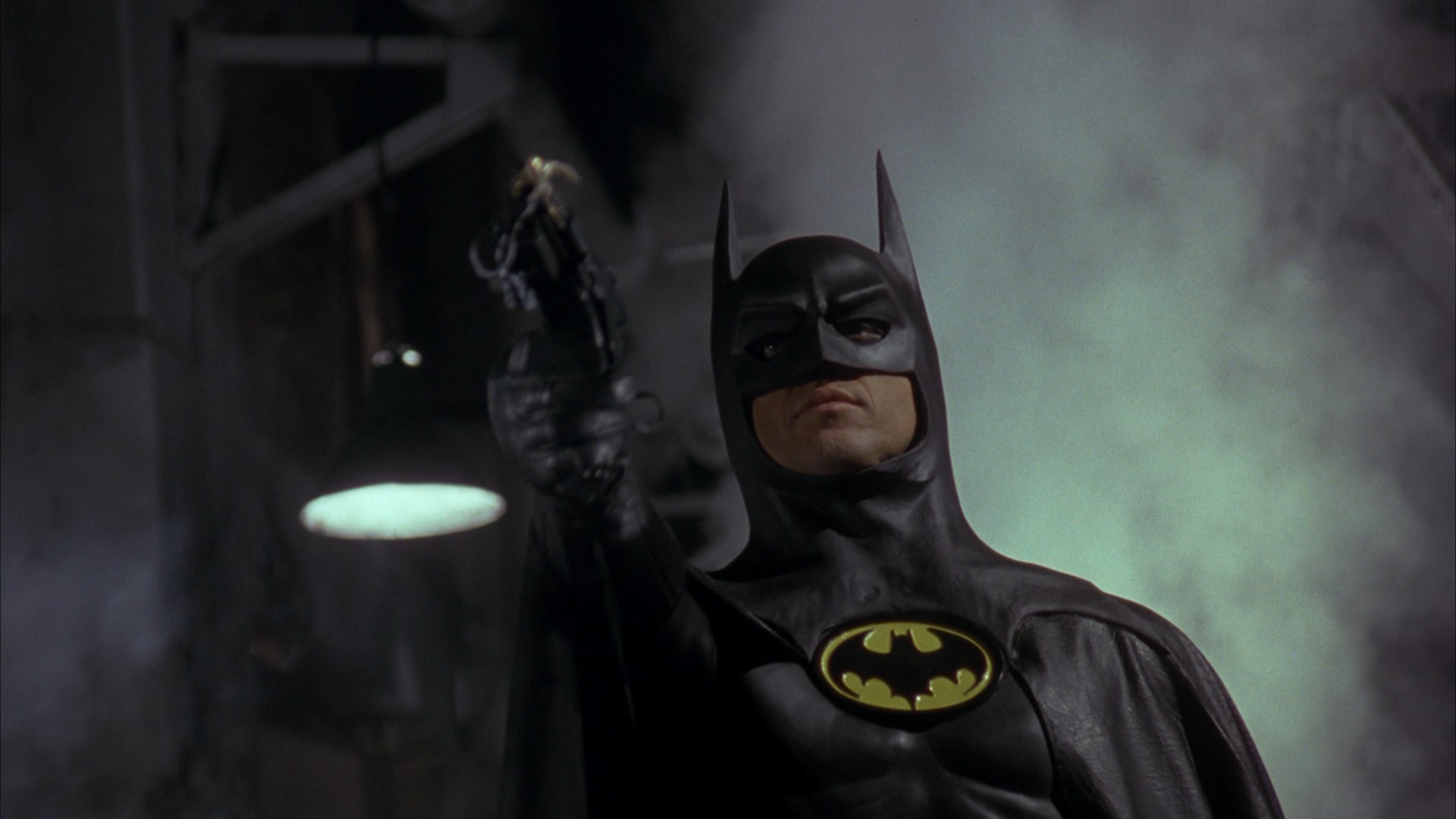
On this episode, JD and Brendan discuss DC’s latest film The Flash and what it means for the future of the DCEU! The last regime over at Warner Bros. didn’t work out, and while this is the last film to come over in the old canon (so to speak), there was some optimism that this film could stick the landing and pass the torch to James Gun and company. Sadly though, that wasn’t really the case.

Review: The Flash (5:00)
Director: Andy Muschietti
Writers: Christina Hodson, John Francis Daley, Jonathan Goldstein, Joby Harold
Stars: Ezra Miller, Michael Keaton, Sasha Calle

Subscribe to our Podcasts RSS
Subscribe to our Podcasts on iTunes
Listen on Spotify
Listen on Stitcher
InSession Film Podcast – The Flash

Women InSession: Tootsie / The Birdcage

This week on Women InSession, in celebration of Pride Month, we discuss Sydney Pollack’s Tootsie and Mike Nichols’ The Birdcage! We love both of these movies and had a great time getting into the performances, direction and what makes it all so compelling.

Panel: Kristin Battestella, Amy Thomasson

On that note, check out this week’s show and let us know what you think in the comment section. Thanks for listening and for supporting the InSession Film Podcast!

– Music
The Return of the Eagle – Atli รƒโ€“rvarsson

Subscribe to our Podcasts RSS
Subscribe to our Podcasts on iTunes
Listen on Spotify
Listen on Stitcher
Women InSession – Episode 43

To hear this Extra Film episode and everything else we do, download our apps on the Amazon Market for Android and the Podcast Source app on IOS devices. The mobile app covers all of our main shows, bonus podcasts and everything else relating to the InSession Film Podcast. Thanks for your wonderful support and for listening to our show. It means the world to us.

Poll: What is your favorite DC Comics film?

The Flash was first announced almost ten years ago at this point, but it’s finally coming out in theaters this weekend. Warner Bros. execs are very confident in the film claiming that it’s one of the best superhero movies ever made. We’ll certainly discuss that and more on the podcast this week, but it’s also the inspiration for our poll this week. DC Comics have churned out tons of great stories over the years, many of which have been turned into feature length films. Some have been great. Some have been…not so great. Regardless of where you stand, we simply want to know what your favorite movie is based of DC Comics.

With that said, what is your favorite DC Comics film?


Video Review: Elemental

Watch as JD reviews Pixar’s latest film Elemental, directed by Peter Sohn and starring Leah Lewis and Mamoudou Athie.

In The Name Of Pride: Underrated LGBTQ Films In Honor Of Pride Month

Itโ€™s the summertime and it shines always bright for LGBT Pride month. All the cities get loud and proud regardless of all the hatred from their archrivals, Christian fundamentalists, and today, they are being threatened at all levels. Pride parades are very important to have in the face of discrimination. A lot of movies and TV shows also feature a lot of gay-positive stories and characters today, far from the lack of storylines in the past. A number of them from the past are also very underrated and donโ€™t get recognized as much as other classics. Here are a few that also deserve its recognition as a great LGBT film.

Bound (1996)

In the first film by The Wachowskis, they went with an erotic noir following a female ex-con (Gina Gershon) who seduces a mobsterโ€™s girlfriend (Jennifer Tilly) and they plan together to heist millions from them. Also starring Joe Pantoliano, John Ryan, and Christopher Meloni pre-Law & Order: SVU days; the Wachowskis were able to make this on a tight budget with its strong lesbian themes and not be the drive force to the story. It was only their second credited work after Assassins, and from there, they would make The Matrix – an allegory to their identity as transgender women many years later. 

In & Out (1997)

Tom Hanksโ€™ acceptance speech at the Oscars for his performance in Philadelphia inspired Frank Ozโ€™s comedy about a teacher (Kevin Kline) who is engaged, only to see a former student (Matt Dillon) win an Oscar and inadvertently outs him. Joan Cusack received an Oscar nomination as the suddenly-jilted fiancee; Tom Selleck plays a reporter who seeks the backstory and gives his support while the teacher tries to prove that he is straight, but it proves to be difficult to do. It was one of the first mainstream Hollywood gay comedies and handles the subject without the sex and low blow jokes.    

Kinky Boots (2005)

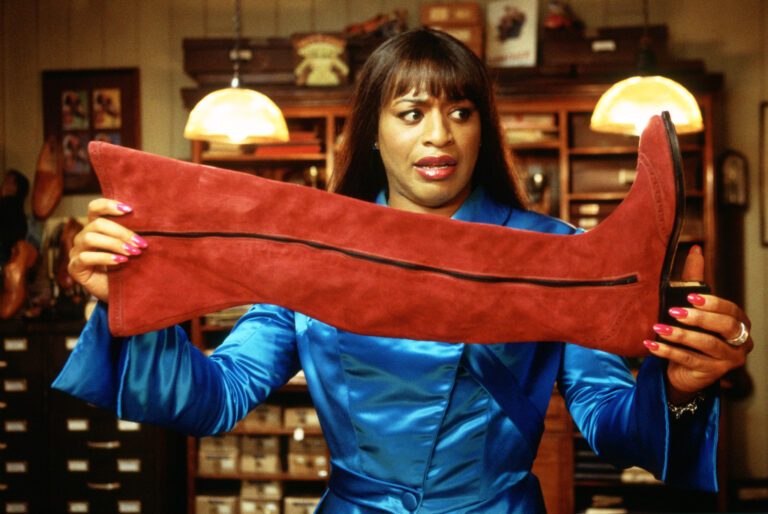
Most will know about the Tony Award-winning musical of this title, but that comes from the original film, which itself is based on a true story. Facing bankruptcy, a shoe factory owner finds a new product to make for an unexpected clientele: boots for drag queens. Joel Edgerton plays the young factory manager who comes up with the dramatic idea to save his business. Chiwetel Ejiofor is the leading drag queen who has to deal with racism and homophobia from the workers who are uncomfortable with his presence. Itโ€™s a really charming film and not the only British, true story-based movie on the list.

Pride (2014)

Of course, a film called Pride was going to be there. It is this historical dramedy about a group of activists who form an unlikely partnership to support a major strike by coal miners. The path to their acceptance is tense though, as the miners want nothing to do with them during the opening years of the AIDS pandemic in Britain where homophobia is rife. Bill Nighy, Imelda Staunton, Andrew Scott, Dominic West, and Ben Schenetzer are part of an ensemble that connects the generations through a noble cause and a community of outcasts that proves themselves to be relatable. 

BPM (Beats Per Minute) (2017)

Director Robin Campillo used his experience as part of the militant AIDS advocacy group ACT UP as the basis of this electrifying movie which won the Grand Prix at Cannes. As the number of dead rises and the struggle for proper treatment from the government staggers on, the group continues to protest in various ways, even creating chaos on the ground that causes friction and questioning if it is working. Within the drama, a romance blossoms between an outspoken HIV-positive young man and a shy newcomer, even as it becomes obvious they will be short on time together. Itโ€™s passionate, itโ€™s fierce, and it is exhilarating to see a heart-pounding story. 

Follow me on Twitter: @brian_cine (Cine-A-Man)

Statement Making Seventies Science Fiction

Despite what may be perceived now as hokey special effects or over the top, low budget fare, these science fiction parables from the seventies era provide intriguing commentary then and now.

Crimes of the Future

Not to be confused with David Cronenberg’s recent, unrelated Crimes of the Future, this 1970 short and its nil budget dystopian bizarre with poor pacing and structural flaws is not for everyone. Fortunately, the silence, slow movement, and stillness match the 1997 concrete, fallen industrialized affluence, and empty isolation. An androgynous cleric clad in black provides an unreliable, detached report on how a cosmetics plague has killed all the women and led to increasing gender and social changes. Red nail polish worn on the left hand or painted toe nails decide who is mugged, beaten, or allowed to consume the โ€œchocolateโ€ secreted by โ€œspecialโ€ men since there are no women. Repetitive sorting socks or underwear scenes reflect a perverted ritual collection while barefoot and white gloved pedophiles have disturbing secret meetings. Distorted sounds and an in limbo atmosphere create unease as the repression escalates to wicked violence, child trafficking, and terrible sexual deviance all seemingly justified as an attempt to find a cure. It would be fascinating to see Cronenberg redo this as a full bodied film today. Venereal disease references, biological differences, and veiled statements on institutionalizing homosexuals for โ€œtherapyโ€ are ahead of their time, and the ironic title belies an upsetting real world horror finale.

Quintet

A solitary, bearded, and bundled Paul Newman (The Hustler) leads this icy, desolate 1979 tale of a snowbound civilization where birds are rare, seal hunting is scarce, and trees are memories. Information is lost and no one is really sure how many years it has been as echoes, broken glass, icicles, and dangerous crackling sounds accent the ruined photos and damaged crystal chandeliers. Despite his chilled exterior, Newman’s Essex isn’t unfeeling. However, he has a list of names due revenge and the killings must play out within the high stakes Quintet rules. The mysterious sixth man in a five player game adds an interesting confusion to the high brow competition, and viewers must pay attention to the one man chess amid coercion, explosions, Latin oaths, slit throats, and assumed identities. Prowling dogs, frozen carcasses, and on location filming at the abandoned Montreal Expo create realism, and the titular pentagon shaped symbolism dominates the futuristic furniture and decor. Although frosted glass and mirrors help hide the small scale production’s cut corners, director Robert Altman’s (The Long Goodbye) Vaseline framed camera lens is too noticeable today as is the stilted start and plodding runtime. At times, the game concepts fall flat and the try hard cult-like tournament mentality doesn’t quite come across. Thankfully, the desperate, nothing left to do but kill pointlessness hits home. Tense shocks and insensitive deceptions accent the cerebral tone as the intriguing melancholy escalates in the final act. This somber, life imitating art statement is eerily prophetic in the notion of games and movies becoming social reality obsessions.


Saturn 3

Underground Titan bases, a twenty-two day eclipse, cut off communication, and evil robots spell doom for Kirk Douglas (Spartacus), Farrah Fawcett (Charlie’s Angels), and Harvey Keitel (Mean Streets) in this 1980 British tale. Certain unnecessary set pieces obviously influenced by Star Wars could have been excised to leave the isolated supply run’s ulterior intentions unknown. Weird scene transitions and erroneously epic music also try hard as uneven, commonplace machine chases are placed above the intriguing personal elements. Choppy editing reveals the behind the scenes troubles before an apparent twist and meandering action underestimate the audience and pad the final twenty minutes. Thankfully, the hydroponics lab is cool with artificially blue tinted water and green lit plants for our couple who has never been to earth, gone outside, or breathed real air. Unfortunately, chess with their machine leads to ominous device sounds and sinister spying while conversations in the shower, sheer robes, nudity, sex, and drug experimentation stir the pot between our older gent, his younger woman, and the newcomer blunt about his desire. Eerie, self re-assembling, advanced, demigod robots intend to replace the once idyllic and now obsolete couple amid symbolic jacking in interfaces, blasting hoses, and heads sliding into the robot cavity. Scary injuries and creepy surgeries create tension alongside arguments, violent tendencies, and foolish attempts to think one can control the intelligent machinery. Though flawed in not focusing on the taut science fiction triangle; references to Hector, Troy, and the original fight over a woman accent the man versus man, man versus nature, and man versus himself conflicts.

Westworld

Androids run amok in this 1973 sci-fi western written and directed by Michael Crichton (Coma). Crichton’s debut direction is simplistic with of the time slow motion and aimless running to and fro amid preposterous logistics and safety ignorance. Then-futuristic empty white sets and technobabble gibberish are filler alongside big computer wows and now unnecessary pixelated robot viewpoints. The colorful saloon facades, medieval games, and Roman hedonism don’t look that bad considering the paltry million dollar budget, however modern viewers will probably expect more from the catastrophic resort meltdown than a one on one pursuit and abrupt finale. Fortunately, there are mechanical malfunctions, shootouts, feastings, brothels, and bar fights a plenty. Guns, swords, and sex robots add to the cool for James Brolin (Skyjacked) as we fear the gloriously unyielding, Terminator-esque, gunslinger in black Yul Brynner (The King and I). This is the ultimate vacation where man has his decadent and violent desires fulfilled, but it’s all controlled by technicians behind the scenes who eat while they watch the depravity unfold. Guests sleep unaware as suspicious, misbehaving man made machines reset the excess. Are these possibly sentient androids fed up with human seductions and taking matters into their own hands for one destructive hurrah before their batteries fail? Though at times the potential is undercooked, the western meets SF peril provides enough food for thought.

Zardoz

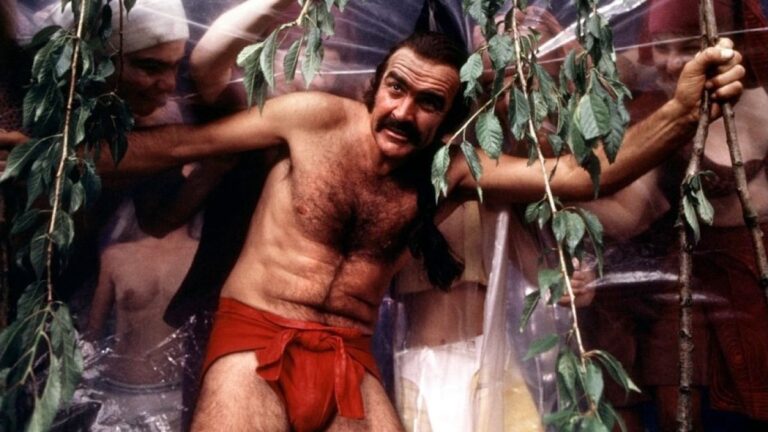
Ruffian Sean Connery (Goldfinger) upsets the hedonist future in this 1974 international production directed by John Boorman (Excalibur) brimming with 2293 post-apocalyptic horseback warriors and a surreal floating head spewing ammunition from its giant mouth. Immortals playing god tell Exterminators to kill the lesser Brutals with guns is good and penis is evil mantras, and understandably the population control allegories can get lost in the often laughable flying head, psychedelic crystals, and giant green pretzels. The overlong, trippy seventies production shows its limitations with goofy happenings, saucy vignettes, and intercut montages strung together via psychic induced strokes and an immortal vortex with a cool decoder ring. Our flying head cruises to the quaint English countryside with relics of the past where jealous women and fey men disturbed by Connery’s masculinity rely on an advanced computer intelligence before being so idle they become catatonic. Trials where the penalty is aging and realizations that what you’ve been led to believe is now the corruption you were trying to prevent provide intriguing nuggets, truth will outs, and revenge. Despite a rushed action finale, man shooting at himself in the mirror to destroy his fallible god and high concepts such as artificial intelligence, cloning, reverse eugenics, and euthanasia overcome the silly design. Modern viewers have to laugh at the ridiculous deus ex machina wizards and nonsensical screaming yet this deserves to be watched more than once for the Tree of Knowledge osmosis, jacking into their matrix insights, and snake in the garden sex making man both savior and destruction.

Movie Review: ‘Asteroid City’ is Exactly What You Expect From Anderson


Director: Wes Anderson
Writers: Wes Anderson and Roman Coppola
Stars: Jason Schwartzman, Scarlett Johansson, Tom Hanks

Synopsis: The itinerary of a Junior Stargazer convention is spectacularly disrupted by world-changing events.


The “filmmaker vs. author” debate has always been one of the most snobbish, elitist discussions in the world of cinema. Personally, I avoid at all costs using the second term, simply because it’s more often used as an attempt to belittle other directors than to boost those who supposedly deserve that label. That said, Wes Anderson possesses what all filmmakers desire – or should desire – to achieve: an unquestionably unique style that any cinephile can recognize through a single frame. Whether people appreciate the writer-director or not, no year goes by where one of his movies isn’t one of the most anticipated. Well then, here comes Asteroid Cityโ€ฆ

Wes Anderson makes it difficult for viewers to be surprised. The qualities and flaws of his films, especially on the technical side, are practically the same, movie after movie. The filmmaker usually works with the same people in the various technical departments, and Asteroid City is no exception to this rule, with Adam Stockhausen (production designer), Robert Yeoman (cinematographer), and Alexander Desplat (composer) being the most common colleagues throughout his career. His way of telling stories through deadpan dialogue and humor – a deliberate display of neutral or null emotion – remains an essential feature of his narratives.

Starting precisely with this last aspect, Wes Anderson is, by far, the filmmaker who best manages to transform the ridiculous, absurd, and surreal into something more accessible to the general audience. Even if a film is purposely devoid of emotion, it’s not always easy to feel captivated by the narrative or the characters, much less create an emotional connection with them. In the case of Asteroid City and many of the filmmaker’s other movies, the loaded cast with dozens of A-listers and its appealing visual aesthetic help grab viewers’ attention.

On the other side of the coin, the narrative randomness and the lack of a more cohesive, coherent main plot, in addition to the rarely emotive scenes, contribute to the estrangement of the audience. However, perhaps due to a simpler and more direct premise, as well as more impressive performances, Asteroid City offers a lighter, more enjoyable viewing than The French Dispatch, also due to deadpan being better executed and performed, especially in the area of comedy. The rapid-fire, extremely complex dialogues and monologues – tons of words in a few seconds – are truly mesmerizing and demonstrate the pure talent of some actors – Jeffrey Wright is exceptional in this regard.

Utilizing Bryan Cranston as an excellent narrator, the screenplay of Asteroid City contains a story within a story. Edward Norton plays a screenwriter preparing his next play, and viewers follow his process throughout the film with occasional interruptions and transitions, but the main plot is the actual representation of that same play on the big screen. Wes Anderson even divides his movie into acts and respective scenes, explicitly displaying this information with title cards, helping viewers to navigate the several storylines.

Deep down, the “primary narrative” is nothing more than a mere connecting device between the diverse mini-stories that take place in certain parts of the city with a particular group of characters. Some have more screen time than others, but there’s not exactly a typical pair of protagonists. The closest to this “status” would be Jason Schwartzman and Scarlett Johansson. The actors mostly share the spotlight, with the former having another role on the “real” side, along with Norton.

Regarding the performances, my personal standout has to be Maya Hawke. The young actress plays a teacher responsible for her class’s field trip to Asteroid City, having greater expressive and emotional freedom, as well as some of the funniest sequences in the entire film – Rupert Friend also has merit here. Steve Carell exudes all his charisma as a motel manager. All the others are expectedly phenomenal, understanding the director’s intentions perfectly by delivering stoic performances, even if some are just cameos with a single line or a scene.

As expected, not all groups of characters have an interesting narrative. Viewers will feel more intrigued by some mini-stories than others, but everyone partially suffers from the lack of something more thematic. Asteroid City is indeed quite random, and despite much of this being the filmmaker’s purpose, there are times when it seems that it’s the audience that has to make an effort to enjoy the movie rather than the latter winning over the viewers. The only exception would be the tragic past of a grieving family, but it’s extremely difficult to address a topic as sensitive and inherently emotional as the death of a loved one when it’s not “allowed” to display any kind of sentimental expression or conversation.

Technically, there are no doubts surrounding the inevitable nominations for production design and cinematography, with editing, costume design, and make-up also being worthy of awards. It’s genuinely fascinating to observe the stunningly built sets, the lovely color palette, and the exquisite camera panning right-to-left and up-and-down. Still, it’s Desplat’s score that took me by surprise. Asteroid City benefits immensely from the composer’s background music, which fits like a glove into the city’s astronomic, desert environment, adding a nice layer of fun on top of the deadpan humor.

For fans of Wes Anderson, Asteroid City doesn’t disappoint, offering exactly what was expected from it. For viewers who don’t exactly appreciate the filmmaker’s style, I don’t think this film will convert you. Personally, it’s nowhere near the level of The Grand Budapest Hotel, but it’s a considerable improvement over The French Dispatch.

Grade: B-

Movie Review: ‘Maggie Moore(s)’ is a Darkly Comic Noirish Tale


Director: John Slattery
Writers: Paul Bernbaum
Stars: Jon Hamm, Louisa Krause, Tina Fey

Synopsis: Police Chief Sanders investigates the bizarre murders of two women with the same name and unravels a web of small-town lies. He meets and quickly falls for Rita, a nosy neighbor who is eager to help solve the mystery.


Films like Maggie Moore(s) rely on style over substance and, hopefully, a story and dialogue reminiscent of a great Elmore Leonard noir. Directed by Mad Men’s alum John Slattery, his second feature film behind the camera since God’s Pocket is a throwback to those ’90s crime films which the website CrimeReads called “The Leonardssance.” A movie that has an ear for snappy dialogue, how people really talk (mostly), quirky characters, satisfying crimes, and a killer villain. If only Slattery and the script by Paul Bernbaum left the listless romance at the deli counter.

The story follows a local police chief Jordan Sanders (Jon Hamm), who oversees the service and protection of the residents of a small, desert New Mexico town. Itโ€™s a quiet town where most adult characters seem to be searching for happiness in their mundane lives. That includes the police chief, who lost his wife recently to cancer and takes a night class to explore the power of creative writing, being fodder for divorced single women in the area. However, his job is about to get a lot more interesting, as not one but two women turn up dead, both with the same name.

Those are Maggie Moore, the only two women with that moniker. Bernbaum’s script is clever, playing with the timeline in the first act. One of the women (Louisa Krause) is the bitterly unhappy wife of Jay (Micah Stock), who is floundering in debt, trying to keep his sandwich shop open and pay for his wife’s psychiatry bills. To help make ends meet, he violates his franchise agreement by buying expired deli meats and cheeses at a discount from Tommy T (Derek Brasco) in exchange for being his mule for illegal packages. Jay soon discovers that the packages include filthy pictures of underage girls and Tommy is a known sex offender. Jay’s wife finds the envelope and plans on using it to take everything he owns.

Jay and Maggie’s neighbor is Rita (Tina Fey), the nosy type who watches them from her window, doesn’t have any friends, and is still dealing with the breakup of an abusive boyfriend. She is the last to see Maggie alive and soon develops a friendship with Sanders during the investigation. This pleases Sanders’s partner, Deputy Reddy, who thinks his boss needs to stop looking for an emotional connection and find a physical one. Together, they investigate links to the two cases in a desert full of lies, contract killers, and lonely souls to solve the mystery tailor-made for Keith Morrison.

You may find Maggie Moore(s) a tough initial watch, as the thought of a queasy mix of talking about a pedophile and pictures of rotting lunch meat makes for a revolting introduction. However, as the story progresses, the fascinating plot begins to top itself as the timeline takes shape, and the killers keep doubling down at the risk of exposure in covering up their actions. Part of the fun is watching Jay, played by Stock, continue to unravel. Stock has a natural talent for juggling subtle comedic levity and anxiety-filled tension, a mix of painfully funny and awkward moments unique to actor, writer, and director Jim Cummings.

What Slattery does so well is to maintain a seamless tone, even when the story shifts to Hamm and Fey’s characters developing a rapport. While the other character relationships have quick, quippy dialogue, andyou may feel the script could use a little more restraint, I couldn’t help but think that Rita and Jacob needed a little more quirk and heat in their interactions or even a dark secret or two. Their relationship feels like it was expanded beyond its limits to give the stars more screen time. That being said, there are some entertaining performances, particularly one of my favorites, the scene-stealing Mary Holland (The Package, Happiest Seasons), who plays the other Maggie, and Happy Anderson (Bird Box), a deaf contract killer who brings deft comic timing to a stoic role.

Maggie Moore(s) is based on actual events, though the scheme plays like Jerry Lundegaard’s harebrained plan, made famous in Fargo (and portrayed by William H. Macy). While Slattery’s film could never be confused with the Coen brothers’ black comedy masterpiece, Maggie Moore(s) is a darkly comic, Elmore Leonard-inspired tale. While the subplot of Hamm’s pursuit for happiness becomes too heavy-handed for my tastes by the end of the third act, the overall story is a quick shot of true crime adrenaline that becomes addictive by the film’s end.

Grade: B

Movie Review: ‘Elemental’ is a Surprisingly Nuanced Metaphor For The Immigrant Experience


Director: Peter Sohn
Writers: John Hoberg, Kat Likkel, and Brenda Hsueh
Stars: Leah Lewis, Mamoudou Athie, Ronnie Del Carmen

Synopsis: Follows Ember and Wade, in a city where fire-, water-, land- and air-residents live together.


Pixar is one of the few studios with sky-high expectations with every animated film release. Every single effort has the potential to become a classic, which happens when your first film is Toy Story. A studio with the guts to avoid sequels during its first ten releases has some magic from Pixar’s initial run. Their latest, Elemental, the studio’s label of stunning animation, a visual marvel, along with a heart-swelling story, a beautifully captivating Thomas Newman score, and a script that has a surprisingly hard time developing a sense of humor.

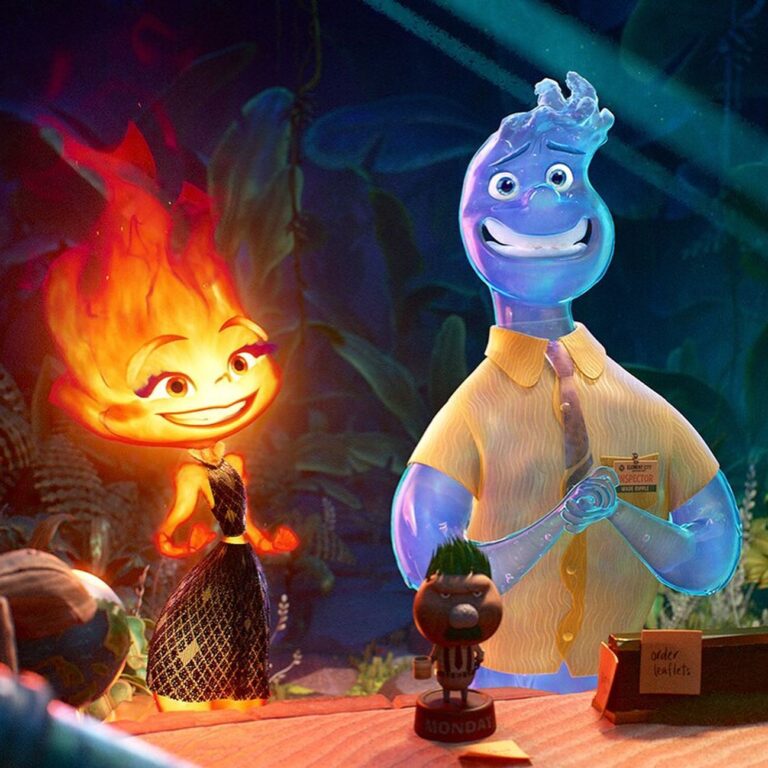
Elemental follows the story of the vast and vibrant cultures of Element City, where members of the fire, water, land, and air communities live together, but not exactly in harmony, but tend to interact with their own kind. That’s because some elements don’t mix. For instance, water can douse fire, and fire can boil water. The film’s main character, Ember (Leah Lewis), resides in Firetown. Ember is being trained by her father, Bernie (Ronnie Del Carmen), and her mother, Cinder (Shila Ommi), to take over the family business, a convenience store called The Fireplace, a local market known for its Richard Montaรฑez-like flamin’ hot firewood nuggets, eternal blue flame from the old country, and her mother’s tarot card readings.

Ember has all the makings to be successful in taking over the family business if it wasn’t for her blazing hot temper that burns purple. After dealing with a resident who felt “buy one get one free” sparklers met the “just want the free one” condition, she screamed in the basement, causing the water pipes to burst (which is strange since the water was shut off from Firetown years ago). That brings in rushing water and a city inspector, an emotional water being named Wade Ripple (Mamoudou Athie), who was sucked into the pipes and must report the numerous violations he comes across. To avoid all the fines that could put the Fireplace out of business, Wade’s boss, a stormy cloud named Gale (Wendi McLendon-Covey), enlists them to find the water source and fix the issue to save her family business.

Elemental is directed by Peter Sohn, his follow-up to Pixar’s The Good Dinosaur. Sohn is working with a screenplay from John Hoberg, Kat Likkel, and Brenda Hsueh, a team whose resumes are writing for Melissa & Joey and Truth Be Told. Elemental’s most significant issue is that the movie is void of humor, with the jokes being only amusing at best. However, what Elemental does have going for it is a deeply thematic and rich story about first-generation immigrants, vulnerable populations, and the overall level of acceptance. The story of the Lumens is told through a lens of the first-generation immigrant family experience, touching on issues of assimilation, economics, prejudice, and freedom of choice, the latter being particularly relevant for the second generation, who are the main reason for migrating in the first place to bring them a better life. There’s a wonderful sense of community in Elemental, with the Fireplace as a community center where residents can gather.

The entire film is a gigantic metaphor for the division we live in. Sohn and his writing identify themes of socioeconomic issues that come with division and members of disadvantaged communities. You’ll see how the Lumens and the residents of Firetown are examples of concentrated poverty. When the Lumens arrive in Element City, their names are changed during their admission, similar to stories you would hear at Ellis Island. Bernie and Cinder are guided to the poorest part of town because that’s all they can afford, and “their kind” are considered a danger to an area different from theirs. (The issues of prejudice are shown with people’s concerns about “fire” burning down their homes, but you can see this being an inspiration for “blockbusting” and keeping property values high). Elemental’s subtle candy-coated storytelling of these themes makes the animated film brave and profound. You’ll even watch The Ripples, clearly the wealthy and influential residents of the area, as one of Wade’s older relatives has a “well-meaning” racial microaggression comment about how Ember “speaks so well.”

While some won’t pick up on those subtle nuances, what many mainstream fans will love is the superb marriage of the film’s jaw-dropping animation and the soul-stirring romance between Ember and Wally. The characters’ vibrancy is constantly fluid and in motion, which is meticulous, with the remnants of smoke, smut, and droplets left behind. At the same time, you’ll also notice the speed of Ember’s frames or the morphing of Wally’s body changing depending on their emotions and moods. The colors and textures can be breathtaking, mainly when Ember and Wade express romantic feelings. (For example, the film’s best moment is when they can touch without putting either character in danger). Still, the film’s storytelling, along with Elemental’s vibrant and marvelous visuals as a whole, is a very good, animated romance but fails when it panders to the audience’s expectations of including broad comedy. Some of the best bits, like Wally as a child getting stuck in a sponge, are cute but rarely induce any out loud laughter. Elemental hits the right notes with the love story and familial moments โ€“ I will say the script comes dangerously close with Wally “whitesplaining” to Ember why she should go against cultural expectations โ€“ Sohn’s overall experience is positive, as he tells a familiar story with subtle social commentary.

Grade: B+

Podcast: The Ultimate Film Score – Episode 538

This weekโ€™s episode is brought to you by Koffee Kult. Get 15% off with the code: ISF

This week on the InSession Film Podcast, inspired by our love for films scores and JD’s piece on Steve Jablonskly’s Transformers music, we devised a bracket challenge that allowed us to determine the ultimate film score! This is an episode that’s been 10 years in the making. We love talking about film scores, and while it’s certainly been a topic in the past, we’ve never done it like this before.

On that note, check out this week’s show and let us know what you think in the comment section. Thanks for listening and for supporting the InSession Film Podcast!

– The Ultimate Film Score Part 1 (3:00)
For this segment, each of us reveals our Top 4 film scores that compose the bracket that we use for this discussion. We also reveal why we chose the scores that we did and what makes the music so special to the history of cinema.


RELATED: Listen to Episode 516 of the InSession Film Podcast where we discussed our Top 10 Movies of 2022!


– The Ultimate Film Score Part 1 Part 2 (1:04:50)
In the back half of our discussion, we vote on the matchups created and eventually come to a conclusion on what is the ultimate film score in the history of film.

Show Sponsor: First Time Watchers Podcast

– Music
No Time For Caution – Hans Zimmer
The Raiders March – John Williams

Subscribe to our Podcasts RSS
Subscribe to our Podcasts on iTunes
Listen on Spotify
Listen on Stitcher
InSession Film Podcast – Episode 538

Next week on the show:

Wes Anderson

Wes Anderson director

Help Support The InSession Film Podcast

If you want to help support us, there are several ways you can help us and we’d absolutely appreciate it. Every penny goes directly back into supporting the show and we are truly honored and grateful. Thanks for your support and for listening to the InSession Film Podcast!

VISIT OUR DONATE PAGE HERE

Movie Review (Tribeca Film Festival 2023): ‘Final Cut’ is Not Enough of A Separation From the Original


Director: Michel Hazanavicious
Writers: Michel Hazanavicious, Shin’ichirรด Ueda, and Ryoichi Wada
Stars: Romain Duris, Bรฉrรฉnice Bejo, Grรฉgory Gadebois

Synopsis: Things go badly for a small film crew shooting a low budget zombie movie when they are attacked by real zombies.


Last yearโ€™s Cannes Film Festival opened with a surprising film that many didnโ€™t expect to play there โ€“ Michel Hazanaviciousโ€™ Final Cut (Coupez!), a French-language remake of the future horror cult hit, One Cut of the Dead. Festival-goers were baffled and confused at the decision that this would be the curtain raiser for one of the most prestigious cinematic events. It wasnโ€™t beloved as some people thought it would be, yet it is slowly finding its audience. Now, the film is finally making its way onto the U.S. festival market by screening at the Tribeca Film Festival โ€“ releasing in select theaters in July. Was it worth the wait? Both yes and no, depending on how you look at it. While the film is too identical to separate itself from the original, Hazanavicius delivers enough funny self-referential quips and purposeful schlocky B-horror aesthetics to make the journey into an entertaining, yet rocky, ride. 

The film begins with a terribly made (and schlock-full) scene where a woman, Ava (Matilda Lutz), is being bitten by her now zombie boyfriend, Raphael (Finnegan Oldfield). No emotion or terror is running through the actorsโ€™ faces on-screen, which upsetsthe director, Remi (Romain Duris), a lot. This is supposed to be the last scene in the film, and heโ€™s asking for another take โ€“ a thirty-second one, to be more specific โ€“ because the whole project will fall apart if it doesnโ€™t work. Ava is trying to plead her case that she was portraying the scene correctly, but Remi begs to differ. As his frustrations grow, he has a rampage-heavy outburst where he slaps and insults some of the cast and crew right until Nadia (Bรฉrรฉnice Bejo) calms him down a bit. They banter about the directorโ€™s usual violent antics, as all of them are tired of his attitude. 

After a couple of minutes, a series of rather unfortunate events transpire. The crew appears to be turning into zombies, looking similar to those of George A. Romeroโ€™s Night of the Living Dead and Dawn of the Dead, with painted blue faces. Ava, Raphael, and Nadia try to run away and fight the zombies in their path. But, as seen in those types of movies, things descend into bloody hell quickly. Ava gets the title of โ€˜final girlโ€™ as she is the only survivor of this massacre. Something interesting happens next; credits sequences appear on-screen, mocking the audience by presenting an array of metatextual layers โ€“ matryoshka doll, a film within a film within yet another film, all of which collide with one another to form an easy-flowing (albeit rocky) and funny ode to what it means to be a director. 

Final Cut shows a dual-sided story. The first, and central, storycenters around the ups and downs of the filmmaking process via the perspective of a frustrated French auteur that desperately wants to make his project work, even though it is falling apart completely. In this segment, the audience sees how a director and the producers pitch the project to the studio and its backers, how the crew tries to get a hold of the shootโ€™s troubling situations, and managing actors. We even see the first thirty minutes from another angle, via Remiโ€™s perspective, as he pursues the double role of being in front of and behind the camera. Itโ€™s Michel Hazanavicius presenting a love letter to filmmaking and the pursuit of oneโ€™s vision. You feel his passion for the craft; how he directs these sequences of directorial struggles feels like it comes from first-hand experience. 

The second one is the movie Remi and his crew are making โ€“ a terribly made zombie flick. Here, we see plenty of homages to both genre and B-horror pictures from the 70s and 80s. The practicality of the effects and makeup, as we know how all of them were made by this point in the movie, is the crucial aspect of this segment. You see moments where Hazanavicius wants to channel his inner Romero, Fulci, or Bava. He doesnโ€™t come close to having the mastery and refinery these aforementioned directors had. But, it is a different side of him that we havenโ€™t seen before, partaking in a new genre to explore his love for the ins and outs of the cinematic experience. And although it has some technical downsides in terms of structure, it works more than one would expect. 

This isnโ€™t the first time that he has done a remake, as Hazanavicius has directed a James Bond parody with OSS 117 and a haphazard Jean-Luc Godard biopic, Godard Mon Amour, in which he recreates scenes of La Chinoise. So, it makes sort of sense that heโ€™d continue to make his versions of other established stories. There arenโ€™t many highly notable changes between Uedaโ€™s One Cut of the Dead and Hazanaviciusโ€™ Final Cut. But the latter suffers a bit from the โ€œwhy is this being madeโ€ remake issues, as it doesnโ€™t add much to what was established in the original, even though you are enjoying what you are seeing. During the middle section, we get a handful of scenes where characters talk about what Hazanavicius is doing, remaking a foreign language picture. These conversations are a fifty-fifty balance of funny and annoying because of its self-referential nature. Yet, it lets us know why the French filmmaker did this project. 

Their discussions are somewhat witty and make you think about what the pitch meetings for the vast vacuous remakes that have appeared throughout the years would be like. However, the more it explains itself to the audience, the more the movie loses steam. This issue arrives because Hazanavicius packs his remake with twenty more minutes than the original. He extends the runtime to expand on the self-referential idea of doing an unnecessary remake. Extremely heavy-handed remarks are present and hurt Final Cutโ€™s latter half. For those who havenโ€™t experienced One Cut of the Dead, Final Cut will feel like a fresh and bold horror-comedy venture. If you have seen both, you immediately recognize that Hazanavicius’ vision is more poe-face and charmless than the 2017 movie. Of course, this one would be inferior to the original, as the magic it conjured back when it was released felt special and unique. 

Replicating that feeling is a challenging task to do. Michel Hazanavicious tries his best and slightly succeeds in specific points. But Final Cut (Coupez!) is too identical to separate itself from it. At least you laugh and get showered in crimson red along the way. 

Grade: B-