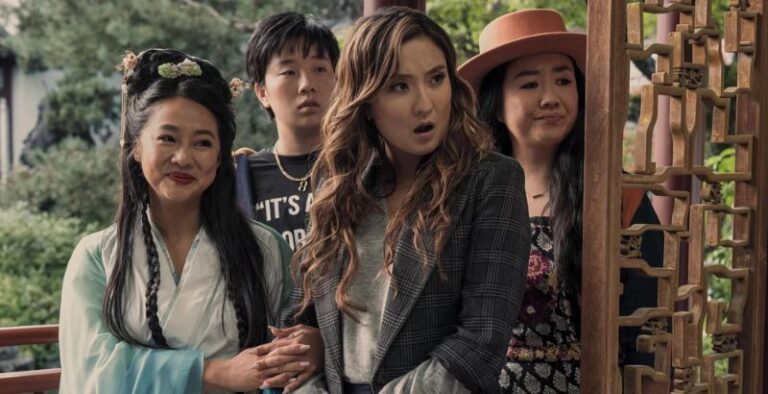
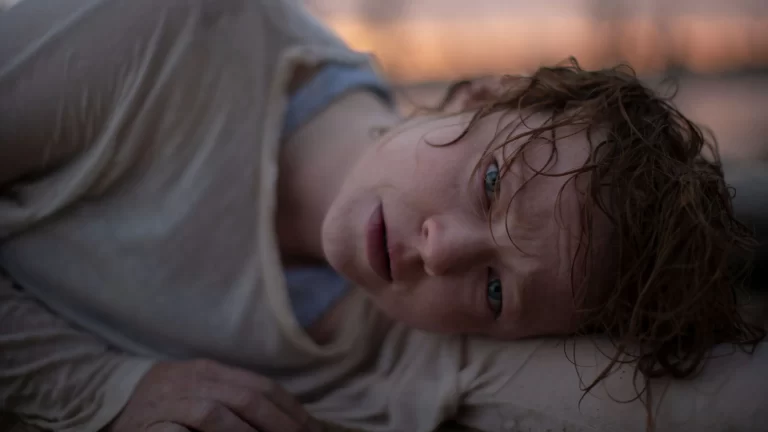
Watch as JD reviews Adele Lim’s hysterical debut film Joy Ride, starring Ashley Park, Sherry Cola, Stephanie Hsu and Sabrina Wu!
Please note: Did not realize the lighting was a little weird until after I finished recording. Also forgive the name flub. It turns out doing notes while feeding your 3-month son wasn’t a great idea. My apologies in advance.
This week on the InSession Film Podcast, we revisit the Mission: Impossible franchise and discuss why it’s one of the best film franchises of the modern era! We’ve already done one Mission: Impossible retrospective previously, however; due to unforeseen circumstances we had to pivot last second and who doesn’t love a fun conversation around Tom Cruise and the IMF?
On that note, check out this week’s show and let us know what you think in the comment section. Thanks for listening and for supporting the InSession Film Podcast!
– Mission: Impossible Retrospective – Part 1 (4:00) While this isn’t our first rodeo delving into this franchise, our thoughts have shifted and evolved since 2018 when Fallout came out. So we had a fun time talking about, and sometimes debating, what films in the franchise stand out to us now and what defines it most.
– Mission: Impossible Retrospective – Part 2 (28:28) In the back half of the episode, we round out our conversation around Ethan Hunt, the spectacle of the franchise and wehre we think it might be headed with these last few outings. On the whole, regardless of your rankings, it’s fair to say that Mission: Impossible is one of the very best franchises of, not just this era, but perhaps of all-time. Its consistency in quality and practical stunt work is just mesmerizing. It’s exactly why we’ll never tire of having these conversations.
If you want to help support us, there are several ways you can help us and we’d absolutely appreciate it. Every penny goes directly back into supporting the show and we are truly honored and grateful. Thanks for your support and for listening to the InSession Film Podcast!
Directors: Tyler Spindel Writers: Ben Zazove and Evan Turner Stars: Adam Devine, Pierce Brosnan, Ellen Barkin
Synopsis: A straight-laced bank manager about to marry the love of his life. When his bank is held up by infamous Ghost Bandits during his wedding week, he believes his future in-laws who just arrived in town, are the infamous Out-Laws.
There is virtually nothing original or even clever about the Happy Madison production, The Out-Laws. This comedy about meeting in-laws follows the genre playbook step by step to the letter, so you will know exactly what will happen before it occurs. The main character will suspect someone is a criminal, and their fiancé doesn’t believe them. You can then cue the main character to try to prove their theory, so much so that they become the person of interest. Throw in the affable male character, a carbon copy villain you’ve seen thousands of times and a plot line of a loved one in danger. You have the same generic film that’s released at least quarterly over multiple streaming platforms. Then throw the cherry on top because of the time-honored tradition of showing everyone busting a humorous boogie or two on the wedding dance floor before the end credits, and you have the same recycled material as a dull, mind-numbing case of cinematic déjà vu.
The Out-Laws follows the good-natured, super-sweet bank manager Owen Browning (Adam Devine). The loveable nice guy, your basic Brad Whitaker type, who somehow stumbled into his upcoming wedding day with the drop-dead gorgeous yoga instructor, Parker (Nina Dobrev). Suffice it to say, Owen is excited about his forthcoming nuptials, even if his parents (played by Richard Kind and Julie Hagerty) are less than thrilled and equate their future daughter-in-law’s career as the equivalent to stripping.
However, the wedding doesn’t seem complete because Parker’s parents are not in the picture, doing missionary work in Africa. Owen then tries to locate photographs of them to create a heartfelt photomontage for their special day. That’s when the owner of the storage locker where Parker keeps her belongings notifies a powerful crime boss (Poorna Jagannathan), who has been looking for the elder McDermotts (Ellen Barkin and Pierce Brosnan) for years after double-crossing her nearly a decade prior.
Yes, how can the creative genius behind The Wrong Missy, the inspired scribe who gave birth to Sherlock Gnomes and Tooth Fairy 2, not to mention a story outline of The Goldbergs, go so wrong? Sarcasm aside, I don’t know if we can blame director Tyler Spindel and writers Evan Turner and Ben Zazove for The Out-Law’s dull homage to The In-Laws. For one, they need to make a living. Two, Hollywood is demanding this from their creatives, limiting the ceiling of their potential and selling what the buyer is comfortable handing over money for. The formula is to buy low (Devine), mimic high (The In-Laws), find a beautiful woman to play the oblivious fiancé/wife (Dobrev), a popular comic actor with nothing to do (Lil Rel Howery), and a handful of beloved veteran performers that will be (mostly) familiar across multiple generations (Barkin, Brosnan, Kind, and Hagerty).
The point is, The Out-Laws is your typical Hollywood version of a marketing ploy for streaming services and selling product placement by taking better film ideas and repackaging them to maintain subscribers and keep advertising revenue high. Another factor in soulless cinematic exercises like The Out-Laws is that they are banking on the coveted young demographic to gobble these films up because they don’t know any better. The audience will recognize if the McDermotts just immediately eliminate the main crux of their problem there would be no justification for a feature-length film, let alone a sixty-minute network pilot with commercials.
That being said, films can succeed if they are similar to other movies. Here, Devine needs to be more lightweight, an actor and comedian to carry any film without significant help. Unfortunately, the script leaves him holding the bag with ramblings that aim for adorable but go on too long and land at grating. Dobrev has little to do but looks confused and distressed, not to mention her role is so underwritten; she somehow has no idea her parents were notorious bank robbers for decades of her life when all the signs are there. And while Poorna Jagannathan, so funny and poignant in Netflix’s Never Have I Ever, makes the most of her comedic villains, the character is so unnecessarily evil. It’s nothing but cartoonish fluff that doesn’t do this comedy favors. If you enjoy The Out-Laws, I admire your tolerance and ability to let trivial things roll off your back. However, you should ask more from your streaming service that keeps increasing prices and advertisements in your viewing experience.
Directors: Patrick Wilson Writers: Scott Teems (Story by: Leigh Whannell & Scott Teems) Stars: Ty Simpkins, Patrick Wilson, Hiam Abbass
Synopsis: The Lamberts must go deeper into The Further than ever before to put their demons to rest once and for all.
James Wan’s Insidious and Insidious: Chapter 2 are two of the scariest films I’ve ever seen. Full stop. I don’t get scared easily because I find most horror movie tropes to be rather predictable (the creaking door, the loud boos, the fake-outs, the characters going into places they’re not supposed to go). Still, Wan and screenwriter Leigh Whannell created an atmosphere that twisted each trope on its head. You couldn’t guess where the jumpscares were coming from, you couldn’t figure out if what they were seeing was indeed real or a part of their imagination. The most potent image of the franchise is a daylight shot of Josh Lambert (Patrick Wilson) being haunted by the Lipstick-Face Demon (Joseph Bishara) standing behind him. Of course, he doesn’t see it, but Renai (Rose Byrne) and Lorraine (Barbara Hershey) do. That shot, and the incredible Lipstick demon have been ingrained in my memory.
With Insidious: The Red Door, Patrick Wilson returns to his iconic role of Josh Lambert and directs for the first time. The film acts as a direct sequel to Insidious: Chapter 2, where Josh and his son Dalton (Ty Simpkins) have had their memories of the events of the first two films erased by Carl (Steve Coulter) after Josh was possessed by the spirit of serial killer Parker Crane (Tom Fitzpatrick) and attempted to kill his family. Ten years have passed since, and Josh is now divorced from Renai and has difficulty connecting with his family, especially Dalton, who is now attending college to study art.
During his art class, Dalton’s professor (Hiam Abbass) does an exercise in which she wants her students to go deep into their memories and draw what they see. Dalton becomes haunted by the vision of a Red Door and of a man with a hammer. He doesn’t understand what’s happening, but it slowly haunts him and Josh, who also begins to experience visions of creatures from “The Further.” The rest of the movie is fairly conventional, but Wilson and screenwriter Scott Teems keep it engaging through its character dynamics.
Insidious: The Red Door works well because audiences are already deeply invested in the characters Wan and Whannell created thirteen years ago with the release of the original Insidious. Wilson develops Josh’s relationship with Dalton thoughtfully, with the first act concentrated on what went wrong between him and his son. Dalton deeply resents his father because he hasn’t been there for him in the events that transpired in Chapter 2. But he can’t blame his dad for not being here – he simply doesn’t remember what happened beyond his son’s coma in the first film.
Wilson remains in top form as Josh, with a perfect understanding of what made the character memorable in the first two movies. He may not be in the movie as much as Simpkins, but he has his fair share of memorable sequences, including the biggest highlight of the movie, set in an MRI machine. Of course, it’s the perfect setting for a claustrophobic moment, where he’s trapped inside a contraption that, predictably, loses power. What happens next will not only shock but terrify you to your core. Simpkins is also great as Dalton, who has been relatively underused in the franchise thus far. In the first one, he was in a coma, after all. In the sequel, they slightly expand on the character by making him go “to the dark place,” but he finally feels like a fully-formed protagonist.
Unfortunately, the MRI scene was about the only legitimate scare I had watching Insidious: The Red Door. Wilson doesn’t possess the same skill as Wan (and Whannell, who directed Insidious: Chapter 3) when he made the first two movies. Wan consistently subverts audience expectations and puts jumpscares in positions where you least anticipate them. That’s why the Lipstick-Face Demon appearance was effective and always turned out to be the scariest part of the non-Wan-directed prequels. That shot of the demon at the end of Insidious: The Last Key may be slightly ridiculous, but Joseph Bishara always knows how to play it in the most effectively scary way. Bishara has also composed the score for each Insidious film, bringing his arsenal again for The Red Door. It’s always effective, particularly when he has to punctuate some of the scares by toning the music down and then bringing it back up.
And while the movie devotes lots of focus to Dalton’s journey and his relationship with his father and roommate Chris (Sinclair Daniel), The Red Door, unfortunately, forgets Renai for most of the runtime and instead relegates her to being an exposition-delivery machine. All she does is spoon-feed crucial exposition to Josh that audiences already know instead of giving her the agency she had in the first two Insidious pictures. The divorce sounded like an interesting storyline in Josh and Renai’s arc to explore, but Wilson and Teems barely scratch what made the couple want to separate when they still clearly have feelings for each other. Of course, we understand why they separated, but the explanation still feels unfulfilling and instead brings more questions than answers. And with how this movie wraps up, there are a lot of questions that Wilson seemingly leaves in suspense.
Then the third act arrives and feels pitifully rushed compared to the slow-burn approach Wilson opted to adopt in the first two acts. It isn’t as strong as the rest of the movie, but we’ve got the Lipstick Demon to hold on to, and that creature is terrifying in and of itself. The movie could just have him go BOO! at random moments for 100 minutes, and it would be one of the scariest movies of all time. Insidious has the creatures and the atmosphere that made the franchise a memorable staple in contemporary horror cinema. And while Insidious: The Red Door isn’t the strongest film of the franchise (nor the weakest, that award still goes out to Chapter 3), it still feels like a satisfying conclusion to a series of films that have continuously terrified us for over a decade. That alone is worth remembering.
On this episode, JD and Brendan discuss Adele Lim’s hysterical debut film Joy Ride, starring Ashley Park, Sherry Cola, Stephanie Hsu and Sabrina Wu! Raunchy R-rated comedies don’t go to theaters as much anymore, but this is a film that makes a great case for why we need more of them. It’s very funny, but surprisingly moving, and all around just a great time.
Next weekend sees the new installment in the Mission: Impossible franchise in Mission: Impossible – Dead Reckoning, and with that in mind, let’s talk about the action sequences that define these movies. You know them. You know the crazy things Tom Cruise has done to pull them off. There’s just no other action franchise these days like Mission: Impossible. Whether it’s the helicopter chase in Fallout, the Burj Khalifa climb in Ghost Protocol, hanging from the outside of a plane or the opera house in Rogue Nation, or everything else in between. There’s plenty of great sequences to choose from here.
So with that said, what is the best Mission: Impossible action sequence?
History of explorers has found themselves traveling every inch of land that is unknown and encountering various dangers that would be part of legend whether they lived or not. They have put their own lives at risk for the forwarding of mankind and its push to explore beyond the boundaries. Their stories have become the basis for many books and have inspired many films that go into these problematic regions. Some of the movies go deep inside and dare to go far with their production by filming on location which caused some problems. Here are some of those movies that took a trip into the wilderness.
Aguirre, Wrath of God (1972)
Werner Herzog created a fictional account of a Spanish expedition gone wrong with a maniacal soldier (Klaus Kinski) who leads a revolt in the search for El Dorado. In the middle of Peru, the longer they go, the more peril they face from nature and its inhabitants, yet the self-proclaimed “wrath of God” does not fear the arrows and raging rivers. The first of five collaborations between Herzog and Kinski made an explosive set with Herzog’s dangerous methods and Kinski’s explosive temper that terrorized everyone on set. The story showed the madness in the story and on-set with guerilla-style filmmaking which captured the feeling of the German New Wave.
Apocalypse Now (1979)
Francis Ford Coppola is in post-production of his long-awaited Megalopolis, but his modern adaptation of Joseph Conrad’s novel “Heart Of Darkness” was even darker around his Vietnam War-set film. Following a disillusioned Captain (Martin Sheen) who is ordered to find and “terminate with extreme prejudice” a rogue Colonel (Marlon Brando), it goes beyond fighting the Vietcong. It drives deep into human carnage on a river patrol boat full of young soldiers unaware of this unusual mission. Even the making of this film, as well as its long post-production, drove Coppola mad with problem after problem extending the shooting schedule and ballooning the budget. Yet, it comes out of the jungle with raw power not seen in any other film.
Fitzacarraldo (1982)
Ten years after Aguirre, Werner Herzog went back into the jungle for his adventure drama following the titular rubber baron looking to move his ship across an isthmus. Jason Robards and Mick Jagger were initially cast and shot forty percent of the film when Robards was medically evacuated after becoming ill. Unable to return and with Jagger having also to leave due to the lack of time, Herzog went to Klaus Kinski for their fourth collaboration. It was one where they were at each others’ throats due to Kinski’s rageaholic behavior toward others and Herzog was asked by a native chief if they should murder Kinski. Somehow, the film was completed and remains another achievement in the mad genius of Herzog and Kinski.
Predator (1987)
In one of the better action films of the decade, Arnold Schwarzenegger, Carl Weathers (with that iconic handshake), Bill Duke, and Jesse Ventura play a group of Green Berets that go into Central America for a daring rescue mission. When arriving, things are not what they seem as an alien hiding amongst them begins to take the group out one by one. It spawned the franchise that continues today with the prequel Prey being released in 2022, but none of it can top the original set deep in the jungle and that unmasking scene where Schwarzenegger remarks, “You’re an ugly motherf—er!”
Avatar/Avatar: The Way of Water (2009/2022)
There is the jungle and then there is a whole new world which James Cameron made from paper many years before shooting. It is Pandora and the native Na’vi when CGI broke new ground and Cameron, always the adventurer, established this jaw-dropping ride of a movie of a soldier (Sam Worthington) who is hired to help find new resources for Earth. But his love for the land and its inhabitants, plus the real motives of the military, leads to a change of heart in order to protect the planet from invasion and catastrophic extraction.
It certainly feels like a mirror to the exploitation of many third-world nations over oil, rubber, diamonds, gold, and other valuable resources that major first-world powers are guilty of. The following films currently being filmed will continue to play on those themes as the sequel expanded to other tribes and the oceans with it. How far Cameron will go in this adventure is still yet to be seen, but it has borne so much fruit (in the form of billions of dollars) that it is limitless as to where the saga of Pandora will end up.
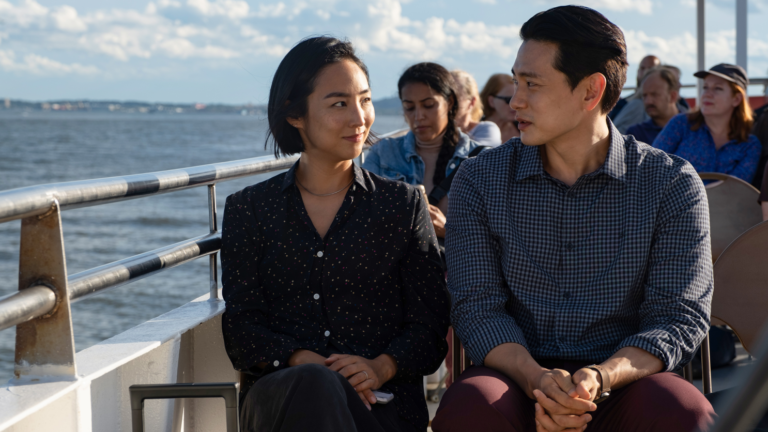
On this episode, JD and Brendan discuss Celine Song’s striking debut film Past Lives, starring Greta Lee, Teo Yoo and John Magaro. There’s been a lot of hype around this film and it turns out that a lot of it has been deeply warranted. Spoiler alert, nothing but praise ahead on this one.
Review: Past Lives (3:00) Director: Celine Song Writers: Celine Song Stars: Greta Lee, Teo Yoo, John Magaro
Directors: Kirk DeMicco and Faryn Pearl Writers: Pam Brady, Brian C. Brown, and Elliott DiGuiseppi Stars: Lana Condor, Toni Collette, Jane Fonda
Synopsis: A shy adolescent learns that she comes from a fabled royal family of legendary sea krakens and that her destiny lies in the depths of the waters, which is bigger than she could have ever imagined.
In the vein of Shrek, Despicable Me, and Wreck-It Ralph; Ruby Gillman, Teenage Kraken attempts to turn a traditional antagonist into a sympathetic protagonist. In this case, it’s the mighty krakens who protect the seas from the evil mermaids. This tale also adds in the twist of a coming of age story.
Just like every teen in a coming of age story, Ruby (Lana Condor), just wants to be normal. As she embraces her abnormality thanks to the new, super popular girl and secret mermaid, Chelsea (Annie Murphy), Ruby hits all the benchmarks of a coming of age story. She rebels, she blows off her ride or die friends, and learns about her changing body. It’s all very derivative of what’s come before like a coming of age Mad Lib to insert the unique mythological details. The reason the formula works, though, is because we’ve all been there, or are there, or will be there. This is a human monster story.
Within the tepid four quadrant appealing story, there are some highlights, like Annie Murphy’s vocal performance. She has that beautiful blend of snarkiness and shallowness to her that comes out so well in a popular girl character. She’s the mean girl you love and hate. A perfect pairing of actor and character.
Another terrific addition to the story is the music, both score and soundtrack. With a score written by Stephanie Economou, the film is given an atmospheric and heroic mood in equal measure. Her dreamy pop that sounds like it’s coming from underwater is the perfect coming of age sound. The soundtrack also features songs from bands with fantastic front women, including Yeah Yeah Yeahs, BLACKPINK, and fabulous teen punk group The Linda Lindas. The music enriches Ruby’s world rather than forcing a feeling onto it.
What is most appealing about Ruby Gillman,Teenage Kraken, if you want something that will distract from the bland story, is the design of the locations and characters. From the spineless, rubbery krakens to the diverse townsfolk, the character designs are wonderful. There is something really inspiring about the creation of a unique human environment even when the humans in it feel very familiar. The town looks like something out of a Miyazaki film with its turrets, shipping container archways, tiny, zipping cars, and pirate ship duck boats. The undersea world is also rendered in gorgeous, glowing neons. If you’re going to make an animated film like this, it’s good to really pour some pizzazz into the design.
It’s also refreshing that filmmakers are not into fully blaming parents any more. There has been a spate of recent coming of age films that have had parents that treat their teens with more respect than a lot of parents in previous examples of these types of films. There’s a lovely scene of Agatha (Toni Collette) coming upon the scared, gigantic Ruby. Rather than pushing Ruby away with blame, Agatha calms her down and talks with Ruby. There’s still conflict between the two of them, but the rift never seems insurmountable after that because of how much Agatha is trying.
It’s funny to write that a story about a teenage kraken doesn’t break a whole lot of new ground, but it’s true. Ruby Gillman, Teenage Kraken is a very by the numbers coming of age story. The unique plot elements of the story, the stunning visuals, and a few wonderful vocal performances aren’t enough to elevate it beyond just O.K. It’s a nice palate cleanser from the tidal wave of franchise fare drowning the megaplexes right now, but that’s the only thing it offers.
This week on the InSession Film Podcast, it’s our mid-year report as we talk about the year in film and give our Top 5 movies of 2023 so far! We also have a brief sequel discussion to last week’s show about the current state of cinema.
On that note, check out this week’s show and let us know what you think in the comment section. Thanks for listening and for supporting the InSession Film Podcast!
– Current State of Cinema Redux (4:00) In the last week, there’s been much discussion about high production costs and box office challenges. Disney is once again removing films from Disney+ for “cost cutting” reasons. And Dreamworks just had their worst opening ever. Given our conversation last week and the timing of these recent events, we wanted to revisit the current state of cinema.
– Top 5 Movies of 2023 So Far (28:28) We’re at the mid-way point of the year and we’ve seen some great films in 2023 to this point. On the whole, it’s perhaps bit a thinner year so far compared to others (especially last year), however; there’s been some heavy hitters at the top. So despite depth, we got to talk about some excellent films that will no doubt be contenders at the end of 2023.
If you want to help support us, there are several ways you can help us and we’d absolutely appreciate it. Every penny goes directly back into supporting the show and we are truly honored and grateful. Thanks for your support and for listening to the InSession Film Podcast!
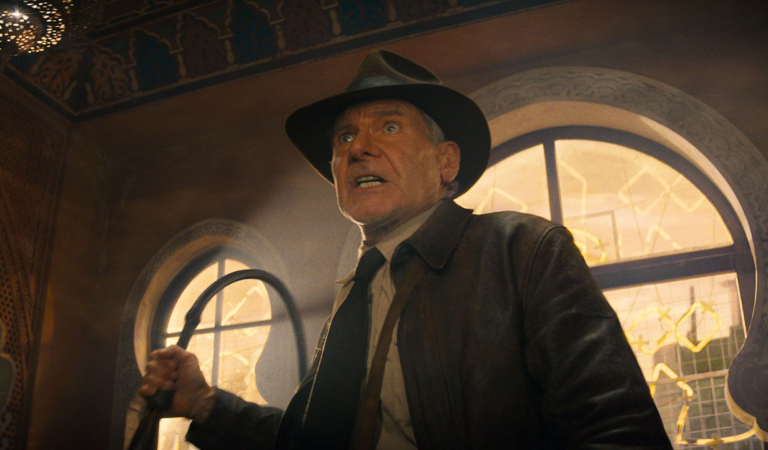
On this episode, JD and Brendan discuss Indiana Jones and the Dial of Destiny, starring Harrison Ford and Phoebe Waller-Bridge! The film has been slightly polarizing, with many finding it one of the lesser in the franchise without Steven Spielberg at the helm, while others are finding it to be a beautiful sendoff to the beloved character. Our conversation very much represents both sides of that coin.
Review: Indiana Jones and the Dial of Destiny (3:00) Director: James Mangold Writers: James Mangold, Jez Butterworth, John-Henry Butterworth, David Koepp Stars: Harrison Ford, Phoebe Waller-Bridge, Toby Jones
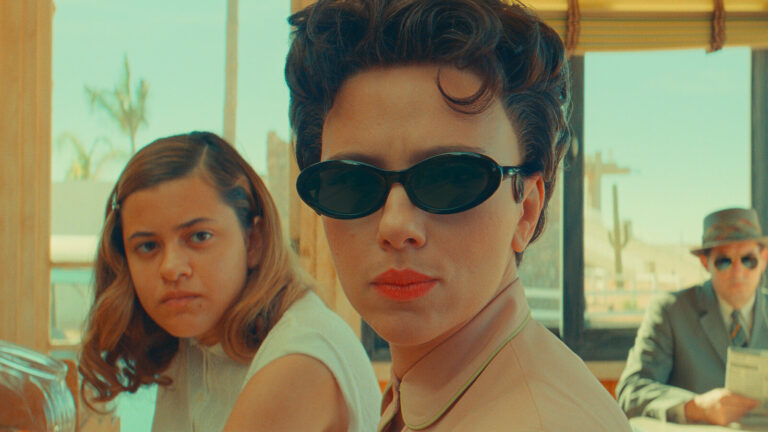
Watch as JD reviews Wes Anderson’s latest film Asteroid City, starring Jason Schwartzman, Scarlett Johansson, Tom Hanks, Edward Norton, Adrien Brody and many others.
This week on Women InSession, we thought it would be fun to create a series where we spotlight various critics, get to know them and their history with cinema, and ultimately what they love about film. And to start, we begin with our very own Amy Thomasson!
On that note, check out this week’s show and let us know what you think in the comment section. Thanks for listening and for supporting the InSession Film Podcast!
To hear this Extra Film episode and everything else we do, download our apps on the Amazon Market for Android and the Podcast Source app on IOS devices. The mobile app covers all of our main shows, bonus podcasts and everything else relating to the InSession Film Podcast. Thanks for your wonderful support and for listening to our show. It means the world to us.
Synopsis: Follows four Asian-American friends as they bond and discover the truth of what it means to know and love who you are, while they travel through Asia in search of one of their birth mothers.
With Jennifer Lawrence bringing the capital “R” back to “raunchy” inNo Hard Feelings, coming out this Friday, this summer promises to be the return of the female R-rated driven comedy. That’s because the year’s funniest comedy comes only a few weeks later: Adele Lim’s Joy Ride! An uproarious, gut-busting, laugh-out-loud comedy that knows how to push the envelope of a conventional road trip comedy to its limits. Then, somewhat unexpectedly, locating a poignant theme of identity in the middle of such wild debauchery to tie everything together.
The story follows Audrey (Ashley Park), a kick-ass lawyer crushing the competition in a middle-aged white man’s world. Audrey has racked up over 3,000 billable hours, a statistic important in her uber politically correct sensitive boss (Timothy Simmons), who thinks a promotion is in order, which means a move to Los Angeles. A goal and career-oriented professional, a career move of this magnitude has always been her dream. The problem is Audrey doesn’t know how to tell Lolo (Sherry Cola), a free spirit and emerging “positive body image artist” (which amounts to creating miniature playground equipment in the shape of male and female sexual organs), who happens to be her best friend since they were in grade school, bonded by their Chinese heritage.
However, Audrey was adopted by Caucasian parents and has never learned to speak fluent Chinese or Mandarin. So, to close a deal on the business trip that will seal her promotion, Audrey brings Lolo along to be her translator. Everything seems to be going to plan until Lolo drops the news that she’s bringing her anomalous cousin, “Deadeye” (Sabrina Wu), a chronically online socially awkward BTS-head who joins them on their adventure. Along with the help of Audrey’s college roommate, Kate (Stephanie Hsu), a streaming soap star who doubles as a hot mess of a born-again Christian, tags along to charm Audrey’s potential new clients. Unfortunately, the potential clients refuse to sign on the dotted line because Audrey is unaware of where she comes from. The group then embarks on a road trip to locate Audrey’s birth mother and search for the identity that was left behind for her.
Joy Ride is Lim’s first feature film behind the camera, after writing the screenplays of such wonderful films as Crazy Rich Asians and the animated movie Raya and the Last Dragon. Here, scribes Cherry Chevapravatdumrong (Awkwafina Is Nora from Queens) and Teresa Hsiao (Fresh Off the Boat) work with her story treatment to create one of the year’s funniest films. I’m not sure we’ve seen a film push the envelope this far without tearing it apart since the Farrelly brothers’ comedies of the ’90s. The script is an eccentric mix of hard R-rated (Lolo), nonsensical (Wu), and even some cringe (Hsu) comedy concepts that blend famously. Including an eye-opening, jaw-dropping, raunchy comedic sex scene(s) involving all the characters that will go down as one of the raciest yet most hilarious in movie history.
While the writing is very funny and instigates some genuine belly laughs, those lines and gags are brought to life by a fantastic cast. For me, the film’s best jokes come from the amusing Wu, whose naïve, oddball, yet empathetic performance has a direct line to my funny bone and even my heart. Hsu, last year’s Academy Award nominee, has the film’s funniest scene—which brings new meaning to the phrase, “You don’t stare the devil in the eyes and come out without some of his sins”—which will probably elicit more audible gasps than laughs initially. Still, you’ve never seen anything like it. Cola, who you will see later this year in the awkwardly charming Sundance favorite Shortcomings, is Joy Ride’s wildcard yet strangely grounded best friend because she has a self-awareness that’s out of place in the group, never pretending to be anything she’s not.
Then you have Tony Award nominee Ashley Park, who starts as a straight woman, then gets to let loose as the film goes along and does a little bit of everything in the comedy. I’m not sure just anyone can show the range she has here, delivering the film’s most poignant moments while making the consumption of pounds of blow, pills, and other drug paraphernalia in the strangest of places to when being unexpected drug mules was thrust upon her, like a legend, but Park does—as I said, utterly delightful, laugh-out-loud, dirty debauchery.
Finally, at the core of the film is Audrey’s identity. To understand the themes the film touches upon, albeit incredibly briefly at times, you should check out the Amanda Lipitz Netflix documentary Found. That film follows four Chinese girls who were adopted and brought to the United States, embarking on a journey back to China in search of their cultural identity. This encompasses Audrey and is used to drive the story. Not only does it allow very funny situations to continuously top each other, which can obviously be illogical and unbelievable at times, but it also helps give the outrageous comedy an emotional connection that makes at least one of the characters three-dimensional and provides the viewer with something to hang their hat on. Yes, the film has heart, but let’s make no mistake, Joy Ride is the best R-rated comedy since, well, No Hard Feelings. However, as comedies go, Adele Lim’s road trip movie will have a hard time giving up the “funniest film of the year” accolade stamp that most critics and fans will indeed embrace. Even when some of the jokes do not work, Joy Ride unapologetically goes beyond the limits of your typical comedy, uninhibited and without regrets.
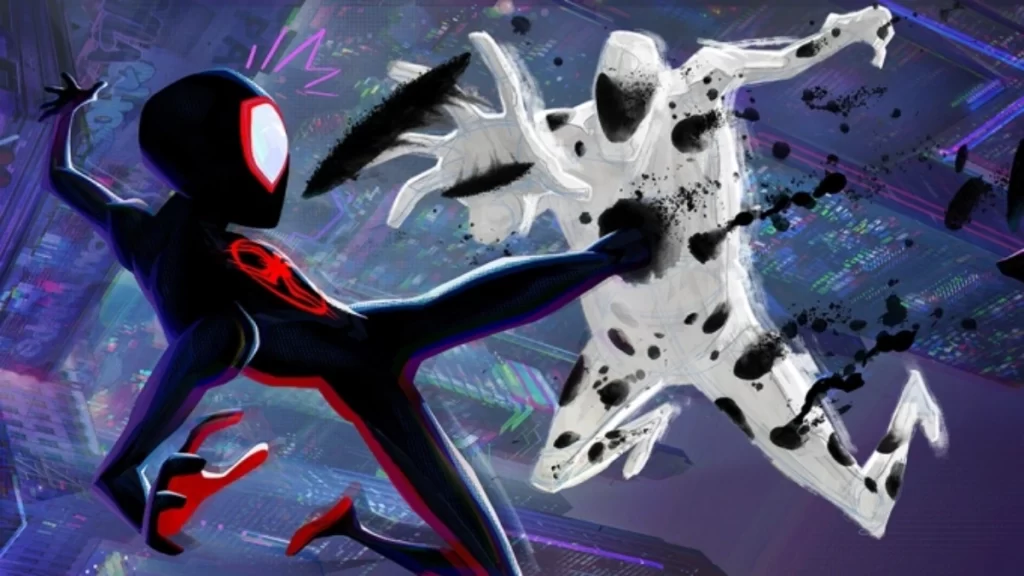
It’s that time of the year. We’re at the mid-way point and it’s been an interesting year for cinema so far. There have been some unexpected duds, some big time surprises and of course a few gems that will no doubt make it to the end of the year. We’ll talk about them all on the podcast this weekend, but for our poll, we wanted to ask you for your favorite of the year at this point. Are you a Past Lives stan? Perhaps a champion for Across the Spider-Verse? Hell, maybe you’re in the basket for John Wick: Chapter 4. Either way, be sure to vote and let us know!
With that said, what is your favorite film of 2023 so far?
Welcome to the dog days of summer, passing through another independence day, and a new batch of hot releases via the Criterion Collection. The only film is a re-release, a French New Wave staple, while Martin Scorsese gets another film of his on the C shelf and two independent 90s flicks get their due. On top of that, a collection of B-Westerns in the 1950s come out that were as cinematic as any John Ford-John Wayne film made in the same era and remain a hidden part of the genre. Here are the films coming out this July.
The Ranown Westerns: Five Films Directed by Budd Boetticher (1957-1960)
A series of low-budget westerns from Boetticher would finally be his breakthrough in a long career going back to the 1930s. Collaborating on films with actor Randolph Scott and writer Burt Kennedy, the Ranown Cycle is actually a total of seven films, but only these five are part of the collection. The Tall T, Decision At Sundown, Buchanan Rides Alone, Ride Lonesome, and Comanche Station are all connected through storylines of greed, allegiance, quiet motives, and the thin line of morality. Other notables that took part include Maureen O’Sullivan, Lee Van Cleef, and James Coburn, who made his film debut in Ride Lonesome.
Breathless (1960)
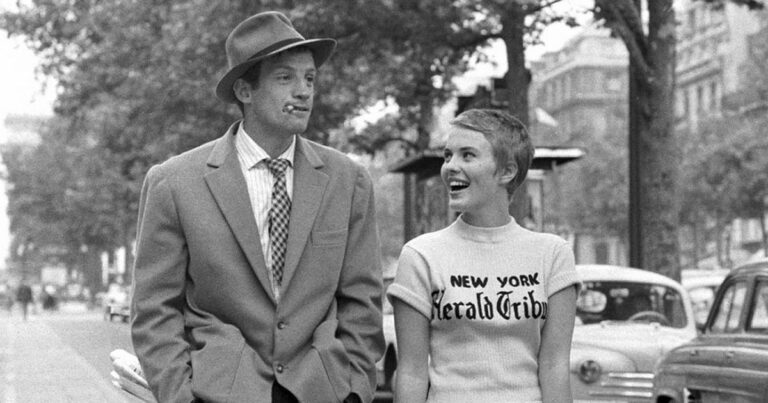
Jean-Luc Godard joined his friend, Francois Truffaut, in establishing the phenomenon that was the New Wave on screen with this frolicking crime story of a wanna be gangster (Jean-Paul Belmondo) who kills a police officer and goes into hiding with his lover (Jean Seberg). The jump cuts, the jazz score, the radical film techniques to make this film; it wasn’t a wave, but a tsunami of change that permanently put Godard’s name in film history and built up a new sea of French directorial talent that would follow after.
After Hours (1985)
A film in the middle of Scorsese’s resume is this dark comedy starring Griffin Dunne who goes on a whim to hook up with a woman (Rosanna Arquette) and travels New York City’s bizarre underworld. Wanting to get home, he finds himself trapped from escaping due to mistaken identity and finds SoHo as rooms of unique characters. Comic duo Tommy Chong & Cheech Marin, plus Linda Fiorentino, Teri Garr, and Catherine O’Hara also star in a modern Scorsese story of New York’s business life and a move from conformism to surrealism.
One False Move (1992)
Carl Franklin’s noir follows two drug runners who scramble away from a killing scene in LA and drive eastward to Arkansas where a police chief is aware of their activities because of a woman that is connected between the two. Bill Paxton, Billy Bob Thornton (who co-wrote it), Cynda Williams, and Michael Beach star in this cross-country drive that has no boundaries and delivers a shocking secret that wraps all of them together. It came close to going straight-to-video, but enough acclaim from film festivals got it a theatrical release, and now, it is here.
The Watermelon Woman (1996)
An important point in the unwrapping of queer cinema, Cheryl Dunne wrote, directed, and starred in this comedy of identity and discovery. An aspiring filmmaker works on a documentary about an unknown Black actress whose life parallels hers as a lesbian who begins dating a white girl (Guinevere Turner). Learning more about the titular character also means delving into Hollywood’s history with Black women in the racist stereotypical mammy roles and representing gay characters. With only $300,000 to make this film, Dunne’s exploration into a subject that had never been told before is an incredible discovery and one that needs to be portrayed more.
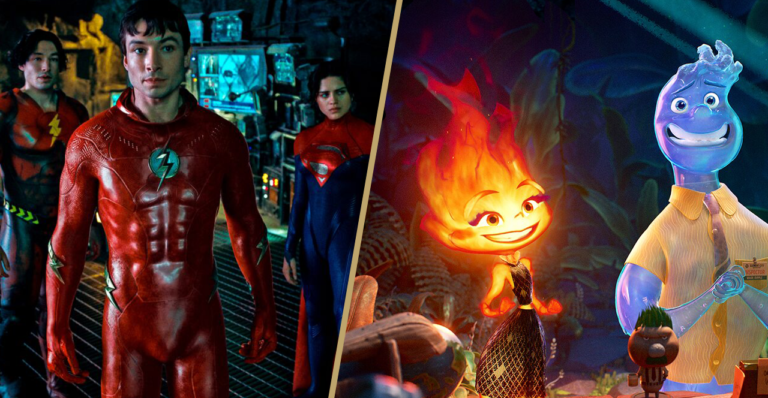
This week on the InSession Film Podcast, we discuss the current state of cinema in the wake of Pixar and The Flash underperforming severely at the box office. There’s also the news surrounding TCM and Warner Bros. doing everything in their power to destroy themselves. But we end the show on a happy note by discussing our rankings of the Andersons – Paul Thomas and Wes!
On that note, check out this week’s show and let us know what you think in the comment section. Thanks for listening and for supporting the InSession Film Podcast!
– Current State of Cinema: Part 1 (7:20) In this segment, we focus our attention to TCM and the importance of preserving film history. We also talk about Pixar’s recent failures and what may be the cause of this rut they find themselves in at the moment regarding box office success.
– Current State of Cinema: Part 2 (53:45) In this segment, we turn our attention to the world of superhero movies and the big action blockbusters we get these days, and why movies like The Flash, Black Adam and Transformers: Rise of the Beasts, among others, are severly underperforming compared to expectations.
– Andersons Rankings (1:36:00) We end the show by talking about two great filmmakers and our rankings of both Paul Thomas Anderson and Wes Anderson.
If you want to help support us, there are several ways you can help us and we’d absolutely appreciate it. Every penny goes directly back into supporting the show and we are truly honored and grateful. Thanks for your support and for listening to the InSession Film Podcast!
Director: Daina Reid Writer: Hannah Kent Stars: Sarah Snook, Greta Scacchi, Damon Herriman
Synopsis: Sarah Snook plays a fertility doctor who believes firmly in life and death, but after noticing the strange behavior of her young daughter, must challenge her own values and confront a ghost from her past.
The new Netflix psychological horror thriller, Run Rabbit Run, conquers the genre if you want to judge the film solely as a visual medium. Cinematographer Bonnie Elliott successfully builds enough tension and horror goodness by incorporating a wide range of subjective camera shots, from extreme close-ups to an effective wide-angle tracking shot over the desolate Australian landscape, causing the viewer to feel uneasy about where the story is heading as it progresses. However, novelist Hannah Kent’s script relies too heavily on standard horror tropes that are repetitive, which are practically the same scenes. The result is the cinematic equivalent of knocking your head against a wall, expecting a different result.
Run Rabbit Run follows a single mother named Sarah (Sarah Snook), an obstetrician who is co-parenting her daughter Mia (Lily LaTorre) with her ex-husband, Peter (Damon Herriman). Mia is a precocious child who has started to take an interest in her family and its traumatic history. Much of that has to do with Sarah’s mother, Joan (Greta Scacchi), who has been suffering from dementia for years now. From the viewer’s standpoint, we know very little about Sarah’s past, which is where Kent’s script excels, by releasing tiny reveals, like a good mystery thriller, of the happenings that lead to their family’s dark backstory. As the film makes headway, Mia begins to refer to herself as Alice, Sarah’s younger sister who went missing when she was a small child.
Sarah has never discussed her family trauma with her “Bunny,” a pet name her parents gave Mia. How is this possible? Sarah begins to wonder if her ex-husband is telling Mia about her past as some power play or if Sarah is talking in her sleep. Either way, her adorable little girl develops a case of oppositional defiant disorder seemingly out of nowhere, frequently becoming uncooperative, rebellious, and hostile toward her mother as she continues to stake her claim as her mother’s lost sister. Mia’s teachers even become concerned, saying the child’s extreme anxiety leads to her gothic and morbid drawings on the back of her school assignments.
Daina Reid knows something about psychological horror, having received a 2019 Emmy nomination for Outstanding Directing for a Drama Series for her work on The Handmaid’s Tale. (Reportedly, Elisabeth Moss was set to star in Reid’s film but backed out because of scheduling conflicts.) Darkly atmospheric, with a chilling score by Mark Bradshaw and Marcus Whale, Run Rabbit Run has all the visual and auditory splendors when it comes to a compelling psychological horror thriller. Also, the obsession with putting a child in danger will naturally lend itself to the viewers easily feeling a sense of dread and uneasiness.
However, while you may think you are in for a psychological horror steeped in imagery, Kent’s script repeatedly begins to use the same scenes of Sarah confronting Mia about knowing family secrets and wanting to be called Alice. This happens at least a half dozen times and is not even used as an effective storytelling tool to reveal new information and advance the story. Every time it happens, Mia puts on her bunny mask, and Snook’s Sarah becomes agitated and accidentally injures her child. The same scenario repeats itself, which becomes monotonous and unpleasant. And by the film’s third act, the reveal is rather apparent, turning it into a generic thriller. Even a secondary reveal that can be seen as abstract is completely illogical since this would be the first place anyone would look at when someone goes missing.
Reid and Kent’s mistake is immersing the viewer in Australian horror themes and symbolism without fine-tuning the story’s plot for errors and varying the scenes involving psychological horror. For instance, the constant appearance of a giant white rabbit holds significance in the land of Down Under, as its introduction has resulted in overgrazing and devastating impacts on the country’s indigenous flora and fauna. The statement about overpopulation seems evident, as humans also contribute to overpopulation. Additionally, Australian gothic themes such as repression, being bound by secrets and lies, the conflict between nature and culture, and even elements of mysticism make appearances. While one can appreciate the filmmakers’ attempt to incorporate unique Australian cultural themes, the overall experience feels like camouflage for a derivative thriller. What Run Rabbit Run is really about is a metaphor for a child’s vicarious trauma, but that point is muddled and not at all brought to the forefront as it should have been.
The film has a small cast, and these are all fairly standard horror performances. I will say Snook’s mental well-being crumbling in front of our eyes is startlingly effective. Yet, by the film’s end, the monotonous, unpleasant repetitiveness goes from a killer creepy yarn to a mundane psychological horror thriller imitation we have seen done better in Australian horror fares like Relic and The Babadook. Run Rabbit Run would have been better off with an increased focus on the family’s dark past and highlighting the vicarious trauma angle to enhance the viewer’s experience and the depth of its themes.
This week on Women InSession, in celebration of Pride Month, we discuss the Stephan Elliott film The Adventures of Priscilla, Queen of the Desert! This is a film that doesn’t wholly hold up by today’s standards, but in context, it was progressive for its time. We talk about that, its silly antics and what makes it such a special film.
Panel: Kristin Battestella, Amy Thomasson, Dave Giannini
On that note, check out this week’s show and let us know what you think in the comment section. Thanks for listening and for supporting the InSession Film Podcast!
To hear this Extra Film episode and everything else we do, download our apps on the Amazon Market for Android and the Podcast Source app on IOS devices. The mobile app covers all of our main shows, bonus podcasts and everything else relating to the InSession Film Podcast. Thanks for your wonderful support and for listening to our show. It means the world to us.