

Home Blog Page 134

Movie Review: ‘Cobweb’ Cannot End Soon Enough


Director: Samuel Bodin
Writer: Chris Thomas Devlin
Stars: Lizzy Caplan, Woody Norman, Antony Starr

Synopsis: Horror strikes when an eight-year-old boy named Peter tries to investigate the mysterious knocking noises that are coming from inside the walls of his house and a dark secret that his sinister parents kept hidden from him.


*This piece was written during the 2023 WGA and SAG-AFTRA strikes. Without the labor of the writers and actors currently on strike, the movie being covered here wouldnโ€™t exist.*

Youโ€™d be fine not to know that, amidst the Barbenheimer craze, Lionsgate quietly dumped Cobweb in select theaters before a wide expansion on July 28. The release is so limited that the โ€œselectโ€ theaters may only play the film once or twice per day, almost as if the studio doesnโ€™t want you to see the movie. I wouldnโ€™t think thereโ€™s a conspiracy, but it is strange how a movie starring top talent canโ€™t muster up a wide release, especially with how great horror has performed in a post-COVID moviegoing era. 

No, really. Just recently, the low-budget Insidious: The Red Door obliterated its box office prospects and became one of the most profitable studio releases of the year so far. While Cobwebโ€™s budget is currently unknown, it couldโ€™ve attracted an audience that mightโ€™ve not wanted to partake in the Barbenheimer and wanted actual thrills in front of a screen. But even then, itโ€™s understandable why Lionsgate released it with little to no fanfare (this decision was made before the SAG-AFTRA strike) because the film is barely watchable. 

Iโ€™ll try not to spoil the movie for the two people who want to see it, but the reception has been rather divisive. The screenplay by 2022 Texas Chainsaw Massacreโ€™s Chris Thomas Devlin was on the 2018 Black List and picked up by Lionsgate and Point Grey in 2020. It focuses on Peter (Woody Norman), a young boy who suddenly hears noises in his room. He, of course, gets scared, but his parents (Antony Starr and Lizzy Caplan) reassure him that everythingโ€™s fine.ย 

Thatโ€™s all I will say about the main plot because the rest unravels itself as if you should be going into the movie as cold as possible. Maybe itโ€™s best that you donโ€™t watch a piece of footage from the film and let it play out on its own, but Cobweb makes the cardinal mistake of having way too many red herrings to misdirect the audience consistently. Youโ€™re allowed one or two fake-outs. However, when the entire movie is based on one red herring after the other, youโ€™ve completely lost the audience by the twenty-minute mark.

Cobweb starts as a supernatural thriller, then delves into a psychological drama, becomes a full-fledged horror movie, and turns into a supernatural thriller by the filmโ€™s end. It has no idea what it wants to be or what it wants to say: it keeps introducing seemingly important plot points (such as a young girl being brutally murdered in Peterโ€™s neighborhood on Halloween night), only for them to be dropped precipitously as a new plot point gets introduced. At 88 minutes, the film can craft something compelling if it focuses on one specific plot point. Unfortunately, the director seems too desperate to impress and thinks constant misdirection is what makes a great horror film. It doesnโ€™t, and by the time the movie ended in one of the most baffling ways, my patience was wearing thin. 

So many characters make eye-rolling decisions that no human in this situation would ever do. Yes, watching any movie requires suspension of disbelief, and some will say Iโ€™m hypocritical for saying this because I gave Fast X an A- on this site. But Cobweb isnโ€™t Fast X โ€“ Bodin presents the movie as a grounded supernatural thriller anchored by the performances of its three main characters. And yet, several decisions that Peter make are so ridiculous that none of the audience members I was with reacted with shock but instead,ย  massive laughter.ย 

And if it werenโ€™t for the great performances of Lizzy Caplan and Antony Starr, who have tons of fun playing the creepiest parents youโ€™ve seen in a minute, I wouldโ€™ve checked out on Cobweb long ago. Starr, in particular, is terrifically effective as Peterโ€™s father. One scene involving Peterโ€™s substitute teacher, Miss Devine (Cleopatra Coleman), is particularly bone-chilling, as it couldโ€™ve shifted the entire movie differently. Though for fans of The Boys, itโ€™s of no surprise that  Starr can exude the most uncomfortable vibes, and he seems to push Homelander’s approach to the extreme here. It works wonders, but Caplan goes the extra mile during its final act. Again, not to spoil anything, but the squeamish wonโ€™t particularly enjoy a certain dinner sceneโ€ฆ

Apart from that, Cobweb does little to impress. If youโ€™ve done the Barbenheimer and are looking for something new, stay home and watch They Cloned Tyrone instead, another movie that smartly uses its red herrings to draw you into the movie instead of wanting it desperately to end.ย 

Grade: D-

Video Review: Oppenheimer

Watch as Jay reviews Christopher Nolan’s epic new film Oppenheimer, starring Cillian Murphy, Robert Downey Jr., and many more!

Movie Review: ‘Stephen Curry: Underrated’ is Family Friendly, but Uninspired


Director: Peter Nicks
Stars: Stephen Curry, Bob McKillop, Jason Richards

Synopsis: The coming-of-age story of Stephen Curry, from an undersized basketball player at a small college, to becoming a larger-than-life NBA superstar.


The new Apple TV+ documentary follows the underdog story of Stephen Curry. After reading this first line, you would expect Curry to come from something other than a professional basketball pedigree, but you would be wrong. The son of Dell Curry, who was a first-round pick who played for sixteen years in the NBA and was the all-time leader in points and three-point shots made in the history of the Charlotte Hornets. Yet, Stephen was shorter than his father and slimmer than a thin mint, and virtually all major Division I programs ignored him because of his fragile frame. Even Dellโ€™s alma mater, Virginia Tech, passed on his son, thinking he could never survive playing big-time college basketball. Yet, Curry has gone on to be a four-time NBA champion and two-time most valuable player for the Golden State Warriors, and the all-time leader in three-point shots made in league history. So, how did Stephen go from a recruiting afterthought to the most prolific three-point shooter in league history? Meet Stephenโ€™s left hand, “grit,” and his right hand, “determination,” and the result is the smoothest stroke on a jump shot the world has ever seen.

Stephen Curry: Underrated follows the modern NBA legend through two different timelines. Starting from the beginning of his 2022 season, he was injury-plagued, but leads to his setting an NBA record and winning his fourth championship. The other timeline takes us back to his days as a high school player who fought and clawed his way to a Division I scholarship offer from a small private liberal arts school in North Carolina called Davidson College. And when we say tiny, we mean it because the school has fewer than two thousand students enrolled. Playing in one of the lowest-rated Division I college basketball conferences, Southern (the school has moved on and upgraded since, playing in the Atlantic 10), it appeared Curry would have a challenging time carving a niche for himself at the college level, let alone a professional one, but he did. Leading Davidson to an improbable run to the “Elite Eight” in the 2008 NCAA tournament before bowing out to the eventual champions, the Kansas Jayhawks.

Of course, this is a remarkable and classic David versus Goliath tale, akin to any classic sports story like The Rookie, Miracle, and The Blind Side. Except this is told in documentary form, and director Peter Nicks (Homeroom, The Force) and producer Ryan Coogler interweave both timelines into an exciting and suspenseful narrative. The result rewards the viewer, who witness two unbelievable runs that cement Curry’s place in basketball lore. 

Nicks builds suspense by mirroring each timeline. For instance, Curry’s ankle injuries during his rookie year in the NBA and his disastrous opening game shooting slump versus a small basketball program in a preseason-opening game in Eastern Michigan which nearly derailed his college career before it started. Both show his career trajectory on the amateur and professional levels; that’s distinct and not exactly cinematic when most studios are looking for a cyclical narrative that usually determines what stories are worth telling.

That being said, this is a straightforward experience, and even the most apathetic sports fan would not read the story of “The Baby-Faced Assassin,” “Chef Curry,” or my favorite, “The Human Torch.” The documentary is hardly cinema veritรฉ and has moments, especially in direct interviews, with a puff-piece feel that is standard in mass audience-aimed documentary films on streaming platforms. Think Jennifer Lopez’s Halftime or Shaun White: Last Run, and nothing close to the Oscar-winning documentary When We Were Kings because this film glorifies appreciation and doesn’t show warts. That could be because there is simply nothing to tell, or because Curry’s career is still thriving. Nicks could have made some headway in showing what it takes to become an NBA champion, but we are only briefly told about how Curry changed his shot and a small moment of the MVP’s workout routine. In short, you must truly understand the sacrifice and commitment it takes to collect Curry’s hardware, and that’s never fulfilled here.

Some of that is replaced by a good message, such as Curry finishing his degree fourteen years after leaving Davidson College a year early to enter the NBA draft. You have to admire that determination, on top of his professional athletic accomplishments and the point the filmmakers (assuming the subject’s desire) wanted to make by including that journey. That makes Stephen Curry: Underrated a perfect family documentary for sports fans and anyone inspired by someone accomplishing their dreams.

Just not as insightful as one could hope.

Grade: B-

Movie Review: ‘Haunted Mansion’ Ghosts on Scares and Laughs


Director: Justin Simien
Writer: Katie Dippold
Stars: Rosario Dawson, LaKeith Stanfield, Tiffany Haddish

Synopsis: A single mom named Gabbie hires a tour guide, a psychic, a priest and a historian to help exorcise her newly bought mansion after discovering it is inhabited by ghosts.


Coming off the heels of his 2008 hit sequel Hellboy II: The Golden Army, Guillermo del Toro announced at the 2010 San Diego Comic-Con that he would be directing Haunted Mansion. Of course, this wouldnโ€™t be the first time the Disney ride has made its way to the big screen, as only a few years before this announcement, the original The Haunted Mansion film starring Eddie Murphy would defy poor ratings to become a Disney classic. Sadly, it never seemed like Disney and del Toro could get on the same page regarding what the film should be, and even though he left the project, the idea of a remake never left Disneyโ€™s mind. Now, 13 years after the initial reboot/remake announcement, Haunted Mansion (no โ€œtheโ€ to emphasize a difference between the two films) is finally making its way to the big screen.

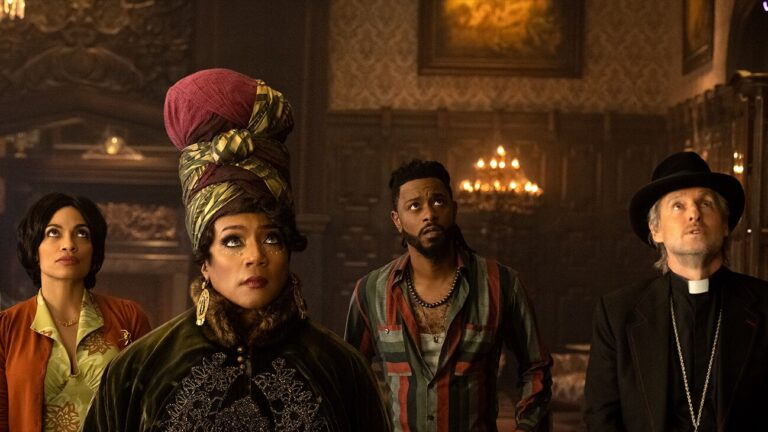
Haunted Mansion kicks off with Ben Matthias (Lakeith Stanfield), a former astrophysicist turned New Orleans ghost tour guide, giving a tour to a rather obnoxious group. Matthias isnโ€™t a friendly person and chooses to live his life alone drinking away whatever money he has left. Meanwhile, Gabbie (Rosario Dawson) and her son Travis (Chase Dillon) are moving into a Louisiana mansion to get a fresh start on life. They quickly realize that their new home isnโ€™t entirely theirs and is haunted by several ghosts.

Father Kent (Owen Wilson) finds Matthias at his home informing the tour guide of the problems going on at the mansion and trying to get him to use a special camera lens he invented that can take pictures of astral projections, or ghosts. Matthias is a strong non-believer in ghosts and chooses to do so after hearing that he will be paid for his time at the house. However, when he leaves the house he quickly finds out that once you step foot on the property the ghost will latch on to you not allowing you to leave. Father Kent and Matthias devise a plan to figure out what the ghosts need and to either send them on to the next life or banish them from this one. To do so, they recruit a medium named Harriet and Bruce Davis, a professor that wrote a book about hauntings throughout Louisiana, to try to put an end to the hauntings.

Making a movie based on an attraction with little story is tough, donโ€™t get me wrong, but it is something that has been proven to work. In 2003, Pirates of the Caribbean: The Curse of the Black Pearl picked up 5 Oscar nominations, including one for Best Actor, and more recently 2021โ€™s Jungle Cruise was able to receive relatively positive reviews and even spawned a sequel. So, it just makes it more frustrating, and confusing, when a film with this star power manages to crash and burn as hard as Haunted Mansion does.

Loaded with talent from Oscar nominee Lakeith Stanfield, Oscar winners Jamie Lee Curtis and Jared Leto, and other great and well-known actors Owen Wilson, Rosario Dawson, Tiffany Haddish, and Danny Devito, one would think they would be able to find some sort of balance between their performances. However, Haunted Mansion proves that no matter how much star power you might have in front of the camera, it doesnโ€™t mean the chemistry will be there among the actors, none of whom knew what movie they were making as there would be bad jokes mixed with full-on dramatic โ€œOscar-baitโ€ performances all within the same scene.

But the tonal discrepancies didnโ€™t stop with the actors, the entire film itself felt as though it never knew what it wanted to be. Even for an obvious child-friendly/family movie, the horror felt too tame to really bring out any sort of fear; even the original The Haunted Mansion provided some genuine scares. The humor in Katie Dippoldโ€™s script – who has worked on some genuinely funny projects including Parks and Recreation and The Heat – was based more on awkward and cringey moments instead of actually being funny. Not even the emotional beats could save this story as they were so egregiously forced in, it felt manipulative to the scene and, in a way, funnier than most of the jokes.

Haunted Mansion is a full-on mess of a movie. While there might be a few laughs here and there – the intent of them is still up for debate – and a small amount of safe horror, nothing could redeem the lackluster script and all-over-the-place performances. Maybe this film will appeal to fans of the amusement park a little more, but for me, it was a massive miss that feels better suited for Disney+ than a theatrical run.

Grade: D-

Podcast Review: Oppenheimer

On this episode, JD and Brendan discuss Christopher Nolan’s latest film Oppenheimer, starring Cillian Murphy, Emily Blunt, Robert Downey Jr. and many more! Nolan is one of our best filmmakers working today and the last few years he’s been operating on a new level that has culminated with Oppenheimer and its almost operatic nature. There’s so much to discuss here and we had a great time breaking it all down.

Review: Oppenheimer (3:00)
Director: Christopher Nolan
Writers: Christopher Nolan
Stars: Cillian Murphy, Emily Blunt, Matt Damon, Robert Downey Jr.

Subscribe to our Podcasts RSS
Subscribe to our Podcasts on iTunes
Listen on Spotify
Listen on Stitcher
InSession Film Podcast – Oppenheimer

Podcast Review: Barbie

On this episode, Lauren Cohen from Next Best Picture joins us as we discuss Greta Gerwig’s massive hit film Barbie, starring Margot Robbie and Ryan Gosling! We’ve been anticipating this one for quite awhile now, especially with the grassroots Barbenheimer campaign driving so much of the discourse over the last several months. Regardless, there’s so much to talk about with Barbie and we had a great time getting into this film.

Review: Barbie (3:00)
Director: Greta Gerwig
Writers: Greta Gerwig, Noah Baumbach
Stars: Margot Robbie, Ryan Gosling, America Ferrera

Subscribe to our Podcasts RSS
Subscribe to our Podcasts on iTunes
Listen on Spotify
Listen on Stitcher
InSession Film Podcast – Barbie

Op-Ed: “It’s Been A Rough Year”: Andersonian Grief, An Introduction

There’s a cliched opinion amongst cinephiles that the films of Wes Anderson are the epitome of style over substance. Those who have that opinion want us to believe that as a filmmaker, Anderson lacks human depth or empathy. What they fail to see are the cracks in Anderson’s perfect worlds. They don’t see the tragedy amongst the hijinks of these heightened scenarios. Because within these beautifully built tapestries is a strong sense of grief. In fact, all of Anderson’s films deal with grief in one way or another.

It’s not always a grief of humans mourning the mortality of other humans. Though, there are several examples of those. It’s more than that with examples ranging from a loss of self to a loss of purpose to a loss of friendship and finally, overarchingly, the nagging grief that persists with nostalgia. Grief permeates the essence of every one of Wes Anderson’s films. It’s the catalyst of the action and the resolution of the climax.

When I first discovered this theme of grief in Wes Anderson’s films I was in a period of grief myself. I wasn’t looking for it, I was looking for an escape. I popped my disc of Fantastic Mr. Fox in and as the film progressed, a bespoke filament light bulb went on above my head. I suddenly filtered what each character was going through with the feeling of my own pain. I went through the other Anderson films in my collection and I found the same sense within each of them.

After seeing the trailer for Asteroid City, I knew it would not only follow the same theme, but its message would be overt. I wasn’t disappointed. Since Asteroid City is still in many movie theaters I won’t go into too much detail, but there is a scene within it that perfectly encapsulates how Anderson filters grief through his lens. It’s a scene within the framing story of the play in which two characters discuss a scene that we will never see acted out. In their discussion, the emotion of the ideas inherent in the unfilmed scene hit as if we had actually seen it. It works so perfectly and is so beautifully idiosyncratic of an Anderson film.

That particular scene inspired me to share my research into Andersonian grief in all its forms. At first I intended to dissect each second within each individual film. Quickly, I became aware of how daunting that task would become, likely losing the patience of any readers in the weeds of Anderson’s less beloved films. So instead I will be dissecting grief as it appears within Anderson’s films using a model developed by psychiatrist Elisabeth Kรผbler-Ross. 

Each piece in the series will be built around one of the stages of grief. I’ll start with denial, then go to anger, bargaining, depression, and acceptance. Anderson’s filmography is rife with examples for each of these stages. Though, I will avoid any discussion of Asteroid City as there are people who wait for things to be streaming directly to their television for some reason. 

I will also be strict in my views as a practical critic. Which is to say I subscribe to the literary theory that leaves out any outside context or authorial intent and focuses only on the text of what happens within the runtime. These essays will be examinations of the films as they are, not a profile of why Wes Anderson may have presented them this way or what in his past or his development of his works could have influenced how the film is presented. I wonโ€™t even turn this series into an appreciation of how Anderson, time and again is recognizing the versatility and presence of Adrien Brody like no one else behind the camera today. That’s a different series entirely.

I hope through this series I can break through the notions of those opinionated few who ruin the joy of Wes Anderson for the rest of us. I also hope it helps you to see some of the wonderful hidden depths inside the beautifully crafted films Wes Anderson creates. 

Women InSession: Underrated 1980s Movies

This week on Women InSession, we dive into the world of 1980s movies and discuss our hidden gems that arguably deserve more love! The 1980s have a very specific reputation that may or may not be wholly earned, but regardless of where you stand, there’s no denying that it had some unforgettable movies. And we wanted to get into a few that we felt should get more attention.

Panel: Kristin Battestella, Zita Short

On that note, check out this week’s show and let us know what you think in the comment section. Thanks for listening and for supporting the InSession Film Podcast!

Subscribe to our Podcasts RSS
Subscribe to our Podcasts on iTunes
Listen on Spotify
Listen on Stitcher
Women InSession – Episode 47

To hear this Extra Film episode and everything else we do, download our apps on the Amazon Market for Android and the Podcast Source app on IOS devices. The mobile app covers all of our main shows, bonus podcasts and everything else relating to the InSession Film Podcast. Thanks for your wonderful support and for listening to our show. It means the world to us.

Video Review: Mission Impossible – Dead Reckoning Part One

Watch as JD reviews Christopher McQuarrie’s new film Mission: Impossible – Dead Reckoning Part One, starring Tom Cruise, Hayley Atwell, Ving Rhames, Simon Pegg and Rebecca Ferguson, among others!

Movie Review: ‘Barbie’ Makes Imperfection Perfect


Director: Greta Gerwig
Writers: Greta Gerwig and Noah Baumbach
Stars: Margot Robbie, Ryan Gosling, Issa Rae

Synopsis: Barbie suffers a crisis that leads her to question her world and her existence.


It was July of 2019 when Greta Gerwig was first announced as the director and co-writer – alongside her partner Noah Baumbach – of an upcoming film about the renowned children’s doll, Barbie. At that time, the world was in a much different place. No one could have expected that a global lockdown would happen within a year of this announcement, forcing everyone on Earth to put their careers, relationships, and lives on hold. It was the darkest of times and through some media made during it (Bo Burnhamโ€™s Inside for example), it showed how many people had to question whether to give up or keep fighting. It was during these dire times that both Gerwig and Baumbach sat down to work on the script – the first one they had co-written since 2013โ€™s Frances Ha – and from it came what many actors who signed on to the project called, โ€œthe best script they had ever read.โ€

Barbie begins with Helen Mirren narrating over a magnificent homage to Stanley Kubrickโ€™s 2001: A Space Odyssey informing the audience of what Barbie represented: a change in womenโ€™s history. No longer did young girls have to play with baby dolls trapped in the sole role of serving as a mother, and now these girls had the ability to dream and be whoever and whatever they wanted to be. Barbie was never just about a doll, but an idea poised to reshape the mindset of children worldwide. She could be a mother, if you wanted, or she could be a doctor, lawyer, teacher, or even the president. The idea of women having a sole purpose in the world was torn apart and in its place was a new world where anything could be possible.

This world of Barbieland was a perfect society run by women and for women, and it is in Barbieland where we first meet Stereotypical Barbie (Margot Robbie in one of the most fitting roles of her career). This Barbie is the most generic in that she is the basis of what Barbie was meant to be. She wakes up in the morning – already beautiful of course – waves to her friends and gets ready for the day before floating down to her car and heading off to spend a day in Barbieland. She doesnโ€™t have a specific job like some of the other Barbies in the city, but she loves everyone and spends as much time with the people around her. This sometimes includes the Kens of the city including the prominent Ken (played perfectly by Ryan Gosling, and also who will be the central Ken of reference unless stated otherwise) and his foil Ken (Simu Liu), but for Barbie, Ken is more of an afterthought than anything. Everything is perfect, as it always is, until during a blowout party at Stereotypical Barbieโ€™s house, she brings up the question of if anyone ever thinks about dying – something that is far out of the realm of possibility for everyone in Barbieland.

This first thought has a ripple effect through Barbieโ€™s everyday life – her shower is cold, her waffles come out burnt, and worst of allโ€ฆ her feet are flat to the surface of the ground. This prompts her to visit a Barbie that spends her days getting destroyed and put back together again giving her a strange look and prompting her name, Weird Barbie (Kate McKinnon). Weird Barbie informs her that every Barbie has a person on the other side playing with them and that for Stereotypical Barbie, her person is feeling a sense of pain and sadness that is now rubbing off onto her. Weird Barbie informs her that the only way for her life to return to normal is to venture into the Real World and find out what is causing her person pain, and help them resolve it. 

She, and Ken who initially hides away in order to come with her, journey into the Real World, but even upon arrival it is clearly not what they had intended. Basically the opposite of Barbieland in every way, the pair find out that in the Real World, men are the ones in charge and women are seen as objects. This is something that piques his interest, as for the first time in his existence he feels seen on a broad scale; itโ€™s also something that fills her with fear and anger as, for the first time in her existence, she is seen for what she is not who she is. As Barbie is searching through her memories to find the person who needs her the most, Ken heads off to discover what this world truly is, and what he winds up learning is just how male-dominated it is. Feeling a new sense of power, he heads back to Barbieland taking his newfound discovery of the patriarchy with him, while she continues her search that takes her to Mattel, the company that distributes the Barbie doll.

The Mattel executives have dealt with this situation before and plan to put Barbie back into her box, but she escapes, leading her to Gloria (an excellent America Ferrera) and her daughter Sasha (Ariana Greenblatt) who travel with Barbie back to Barbieland to find that it has been overrun by the Kens, brainwashing all of the Barbies in the process. Barbie, Gloria, Sasha, and Weird Barbie all must devise a plan to overthrow the Kens, save the Barbies, and reclaim their world.

Between remakes, spin-offs, adaptations, and IP, film nowadays is losing its originality more than ever. However, if there is anything Greta Gerwig has proven over her four features as a director itโ€™s that she can take a project or an idea people might think they know, and alter it in such a way that feels more personal than 99% of media being released every day. From a directing standpoint, she has always been an actorโ€™s director (which makes sense given her background as an actor herself) but with Barbie, she expands her gaze even further as she is able to swiftly move between a variety of upbeat scenes, whether it be a dance sequence, car chase, full-on action/war/Ken off, while also maintaining the intimacy that made her previous two films (Lady Bird and Little Women) so appealing to audiences. Her framing and attention to detail not only in making sure the impeccable production design by Sarah Greenwood is fully utilized but that Jacqueline Durranโ€™s impressive costume design gets time in the spotlight, proves her ability behind the camera, and continues to show her growth as a filmmaker.

However, itโ€™s the script – which feels like more of a collaborative effort between Gerwig and Baumbach than I had initially assumed – that truly excels in finding the balance between absurdity and humanity. At times, Barbie is the funniest film and most insane film of the year. With direct references to both toxic masculinity and fandom, pop-up music and dance numbers, Mattel itself, as well as other corporations, and some of the most clever lines of dialogue of the year, this film could have been a full-on comedy and worked perfectly fine. Nevertheless, as both Gerwig and Baumbach know how to do so well, there is genuine pathos, and whether it be Barbieโ€™s journey of self-discovery or Kenโ€™s of self-deprecation, the theme throughout of not only being who you are and that being enough but about not letting your pain define who you are, instead allowing it to be one of the many things that makes a person human, brings genuine emotion that is both unexpected and fully earned.

Leading the film, Margot Robbie continues to prove why she is one of the most interesting actors working. The journey that she goes through during the film is elevated by her commitment to the role, and to bringing something different and unique to this character. America Ferrera delivers the best performance of her career, including a perfect and showstopping monologue that will likely be one of the best single-scene performances of the year. However, itโ€™s Ryan Gosling, who is one of the funniest actors in Hollywood, as Ken that truly steals the show. In one of the most perfectly cast roles in the history of cinema, Gosling sings, dances, and commits himself to the role in a way that is at times hilarious and other times sincere in a way that only he can. Ken longs for the day that Barbie will want him and through childish outbursts and two pairs of sunglasses to hide his pain. He longs to be appreciated, loved, and seen as someone who is good enough. Displaying all of this, Gosling delivers a career-best performance that works on every level and one that deserves awards consideration as one of the best performances of the year.


As Barbie is coming to a close she is given a choice, and through Billie Eilishโ€™s masterful song โ€œWhat Was I Made For?,โ€ the themes and ideas that encompassed the wonderfully paced hour and fifty-four minutes are discovered, and all of the questions that she had are finally answered. Ever since she first hit shelves in March of 1959, Barbie has always been perfect. She had a perfect look, many perfect jobs, perfect friends, a perfect boyfriend, and overall a perfect life. But the idea of Barbie was never about perfection, but about the hope that a small piece of plastic could bring to an imperfect world, and the possibility for every little girl to be able to tell their own story. Greta Gerwigโ€™s masterpiece will forever be remembered for using one of the most recognizable brands in the world to show that imperfection and uncertainty are what really make life worth living, and your story worth telling.

Grade: A+

Movie Review: ‘They Cloned Tyrone’ Doubles as Social Satire


Director: Juel Taylor
Writers: Tony Rettenmaier and Juel Taylor
Stars: John Boyega, Jamie Foxx, Kiefer Sutherland

Synopsis: A series of eerie events thrusts an unlikely trio onto the trail of a nefarious government conspiracy in this pulpy mystery caper.


From true cinephiles to your lukewarm movie ticket buyer, fans will wax poetic about Barbie and Oppenheimer this week (and they absolutely should), the most talked-about movie battle since Jurassic Park and Last Action Hero. However, scanning social media platforms for a group of dedicated movie buffs who claim to be socially conscious and advocate for those at-risk groups that face various challenges and injustices seem to have failed to talk about the most audacious, thought-provoking, hilarious, and downright brilliant Netflix film, They Cloned Tyrone. A cerebral entertainment with a bold screenplay that turns the dark comic social satire on its head, and features John Boyega giving the best performance of his career.

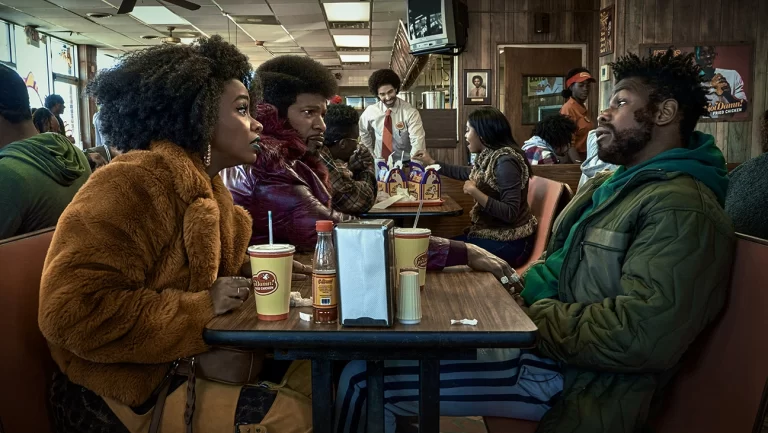
The film starts with Boyega trying to track down a local pimp named Slick (Jamie Foxx), who is light on his receivables this week. After confronting one of his “contracted” employees, he leaves, only to be gunned down violently and repeatedly in the motel parking lot. However, he wakes up the next day free of bullet holes, and when Slick explains what happened, Fontaine has no idea what he’s talking about.  With the help of one of Slick’s worker bees, Yo-Yo (a hilarious Teyonah Parris), a Carolyn Keene enthusiast, asks herself, “What would Nancy Drew do?”

Hilariously, this code to live by generally works for them, as they find themselves in Stranger Things-like territory without the Demogorgon and more comedic. Something spooky is happening as the trio runs across some creepy things, like a black SUV that nabs random neighborhood residents while they run for their lives. Even secret laboratories are located under such community gathering places as a church, the local restaurant specializing in fried chicken, and a check-cashing outlet. Each is filled with, as Slick describes, “White guys with afros.” All are part of a nefarious organization studying and cloning people like Tyrone to reaffirm stereotypes at the hands of those in power.

Are we living in the golden age of modern social satire? Movies like Get Out, Us, Nope, and Bad Hair, have been eye-opening and relevant and tell a socially conscious story within the horror genre. Directed by Juel Taylor, who co-wrote the script with Tony Rettenmaier, they spin their script into a hysterical, biting, blaxploitation satire on urbanization and how dealing with the concept of race plays an essential role in the reproduction of patterns of power and inequality. It’s as if Taylor and Rettenmaier took the concept through the lens of Mustafa Emirbayer and Matthew Desmond’s The Racial Order (2015). Their script offers a biting comedy about cultural symbolism, a sense of community, and social interactions regarding the allure of power.

Here, the film’s villains, led by a seething and wicked Kiefer Sutherland, do not use their observations of this community as a way of better understanding a culture or community they know nothing about to bridge the gap, but to keep circumstances in their favor. To steal a term from the above scholars, “white/non-white polarity” tells the story of “two poles of racial dominance.” To keep white privilege in their favorโ€”you see the agency’s motto in 1950s propaganda of winning the race, and they don’t mean the one to the moonโ€”by manipulating social organization, deconstructing cultural symbolism, and fostering unity.

And yet, it’s wrapped in a whip-smart, gut-busting comedy that owes most of its humor not only to Taylor and Rettenmaier’s script but also to the incredible amount of chemistry between the three leads. In particular, when Fox and Parris, Slick, and Yo-Yo steal every scene together, Parris’s character is the fearless combination of Boyega’s fearless attitude and Slick’s craven instincts. Fox is hilarious here; no one puts a comedic stamp on a loquacious character (see Ali). All three let the barbs fly, as do the film’s funky score and peppered, well-chosen needle drops, which make the experience all the more enjoyable. However, They Cloned Tyrone is driven by the magnetic Boyega, who plays multiple versions of the titular character as stoic, purposeful, and vigilant, like in an unhinged version of Multiplicity that examines what it’s like to be viewed through a critical white lens. A wicked version of The Truman Show. It’s a blend of dark humor and a profound exploration of human behavior when labels are thrust upon us unfairly, and we cannot escape. Juel Taylor’s movie is not just one of the year’s best satires but one of the best films of 2023.

Grade: A

Op-Ed: Biopics That Blinded Us With Science

Christopher Nolanโ€™s highly anticipated Oppenheimer based on the man who is called โ€œthe father of the atom bombโ€ is more than just about his scientific efforts. It is about a person who knew what he was doing was world-altering and became, as he would put it, โ€œDeath, the destroyer of worlds.โ€ On top of that, the politics that shaped his life and how it would be later used against him was just another layer into this genius who, to some aspect, was cursed with his pursuit of a horrifying weapon that only made the creation of more dangerous weapons that exist today. This film will just be another interesting figure in a line of several noted biopics about such complex humans and their contributions to the sciences. 

The Story Of Louis Pasteur (1936)

Paul Muni won the Oscar for Best Actor for his portrayal of the world-famous microbiologist whose research in 19th-century France helped shape the medical world for more than a century. While the film is a more fictitious version of his life, certain realities, such as his conflicts with the medical establishment over his experiments with vaccines (like today) and the lack of medical license, were very much true. The film, which was nominated for Best Picture, has that outdated quality you would expect from a mid-30s drama, but Muni gave arguably his best performance in a decade where he was arguably the best dramatic actor of his time. 

The Day After Trinity (1980)

If you can watch this before seeing Oppenheimer, you can know the true story and get even better insight into who J. Robert Oppenheimer was. This documentary was nominated for an Oscar and won a Peabody Award, using archive footage and interviewed many of those who knew Oppenheimer and his wife and their importance to the development of nuclear physics. The filmโ€™s title refers to when Oppenheimer was asked what couldโ€™ve been done to stop the nuclear race, to which he replied that it was too late and that it shouldโ€™ve been done that day after the first nuclear explosion test. 

A Brief History Of Time (1991)

Another documentary, but another wonderful film that gave insight into one of the smartest men in recent years and one who was an important part of popular culture.. Stephen Hawking, the theoretical cosmologist who was widely seen in a wheelchair with a computerized voice, publicized his bestselling book of the same name, which he then expanded on his theory to director Errol Morris. The film intercuts his beliefs with his personal life, defying the odds to even be alive at this point, and what it means to understand everything about the world that many of us can only dream of knowing.

The Imitation Game (2014)

There were two biopics about scientists in the same year. One, The Theory of Everything, was about Hawking, his marriage, and his battle with motor neuron disease. Itโ€™s fine, but it is this story about Alan Turing that I really loved. I am a defender of this film and I still enjoyed it on my last rewatch. With Graham Mooreโ€™s Oscar-winning script and Grade A performances by Benedict Cumberbatch and Keira Knightley, the story of Turing, a brilliant mathematician who helped break the Enigma code in World War II, is enthralling and a sad tale about a figure in history who was unfairly persecuted despite his heroic efforts.

Hidden Figures (2016)

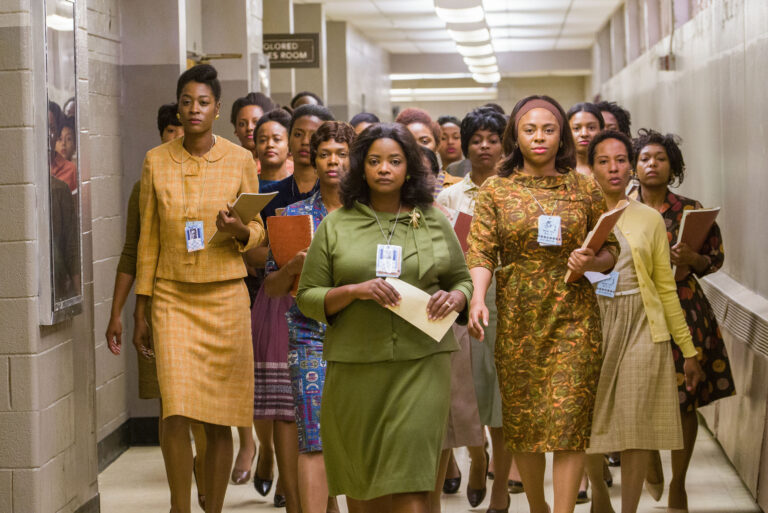
This feel-good story about three African-American women who worked with NASA is a case of, โ€œOh, I didnโ€™t know that!โ€ As much as we knew about astronaut John Glenn and the first crewed spaceflight, the story of NASA not always having computers, but intellectuals in the Space Task Group who were also dealing with general discrimination was not part of general history books. Yes, there were inaccuracies and that fictional scene created a โ€œwhite saviorโ€ moment, but the importance of these three women in this entertaining movie starring Taraji P. Henson, Octavia Spencer, and Janelle Montae are hidden figures no more.

Follow me on Twitter: @brian_cine (Cine-A-Man)

Movie Review: ‘Oppenheimer’ Offers an Explosive, Complex Tale


Director: Christopher Nolan
Writers: Christopher Nolan, Kai Bird, and Martin Sherwin
Stars: Cillian Murphy, Emily Blunt, Matt Damon

Synopsis: The story of American scientist J. Robert Oppenheimer and his role in the development of the atomic bomb.


Christopher Nolan, one of the most prominent directors in today’s film industry, returns with a compelling historical drama following a challenging attempt to keep theaters alive during the pandemic with his film, Tenet. Known for his diverse repertoire, which includes grand sci-fi stories like Inception and Interstellar, as well as historical epics such as Dunkirk; Nolan now delves into the iconic Manhattan Project and the central figure behind it, J. Robert Oppenheimer.

The film’s three-act structure expertly explores different aspects encompassing the events leading up to, the development of, and the aftermath of the atomic bomb, offering a well-rounded and nuanced perspective of the entire project. Oppenheimer impresses with its masterful craftsmanship, thought-provoking themes, and interconnected plotlines. However, some viewers may find the dense dialogue and complex ideas challenging to grasp and relate to.

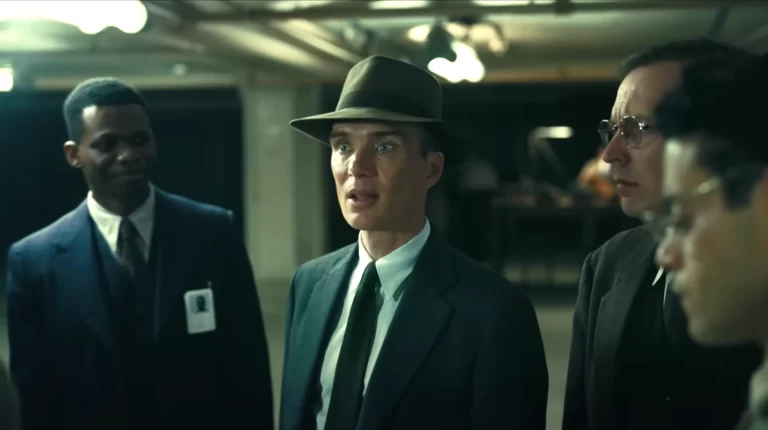
The film opens with a gripping and captivating sequence that immediately draws audiences into the vast narrative surrounding the central character and the eventual Manhattan Project. Nolan’s brilliant use of stunning cinematography by Hoyte van Hoytema, and fast-paced editing by Jennifer Lame, skillfully introduces the audience to the upcoming storyline, creating an irresistible allure around J. Robert Oppenheimer (Cillian Murphy) and his involvement in the project. The pacing is almost breakneck, and the intense dialogue adds to the immersive experience, though it may prove elusive for viewers who aren’t fully attentive to the on-screen events.

The intercutting between the film’s eventual end and the beginning of the narrative builds anticipation and curiosity about how the story reaches its conclusion, adding a layer of complexity that demands viewers’ engagement. However, this dynamic storytelling approach requires viewers to stay actively involved to keep up with the intricacies of the plot.

The film truly finds its footing in the second act, which delves into the development of the atomic bomb, a focal point that will undoubtedly captivate most viewers. This segment not only offers glimpses into Oppenheimer’s personal life but also sheds light on the political intricacies surrounding the project and how his personal beliefs intertwine with the people with whom he chooses to surround himself. Through its extensive narrative, the film seamlessly transitions from the World War II era to the Cold War, planting subtle seeds that explain how the United States evolved from one historical period to the next.

The climax of the film is nothing short of bombastic, leaving viewers awestruck by the sheer audacity and power the atomic bomb wields. It delivers on its promise, providing an awe-inspiring scene that leaves a lasting impact on the audience.

However, this structure starts to lose its momentum as the film approaches its conclusion. Following the explosive and climactic scenes, the narrative shifts to explore the aftermath of the atomic bomb’s usage in World War II. It focuses on the political endeavors of Lewis Strauss (Robert Downey Jr.) and his attempts to undermine Oppenheimer’s reputation, casting him as a threat to national security. While gaining insights into these political developments and the lead-up to the Cold War is intriguing, the film spends a bit too much time on this aspect, delaying the audience’s satisfaction with the conclusion they deserve.

Unfortunately, this lingering focus on the aftermath weakens the film’s overall impact, as the weaker third act diminishes the otherwise strong and compelling story. While the film is undoubtedly captivating, the lasting impression it leaves may be diminished due to the drawn-out conclusion. It’s a shame that a minor flaw in the final act somewhat detracts from the otherwise powerful experience the movie provides.

With such an intense and complex narrative, crucial for conveying the intricacies of the Manhattan Project, it’s no surprise that the dialogue is equally dense to encompass the entirety of what’s at stake. Reminiscent of Aaron Sorkin’s style, the rapid pacing of the conversations undoubtedly keeps viewers captivated, but it can also become challenging to keep up with as the film unfolds. However, the film compensates for this by skillfully providing helpful context clues to its audience, avoiding the need for a more overtly spelled-out plot. These cues fill in essential information gaps that might otherwise be missed.

This complexity of this could lead to the need for second or third viewings to fully understand the depth of the story, though it may not be a desired approach for a general audience. Despite this potential challenge, the film’s gripping nature and artful delivery make it a compelling and thought-provoking experience.

With such a large spectacle at the heart of the film’s narrative, anticipation builds for the eventual detonation of the atomic bomb created during the Manhattan Project. True to his style, Nolan favors practical effects over computer-generated ones, leading to headlines suggesting that he was permitted to detonate a smaller version of the atomic bomb in the desert during filming. This commitment to practical effects pays off immensely in the film’s climax, as the stunning cinematography beautifully captures both the excitement of a successful project and the horror of the disastrous implications it carries.

Shot on 70mm film, Oppenheimer‘s breathtaking camerawork and visual effects will undoubtedly leave both invested and casual viewers in awe of its sheer grandiosity. The film’s impressive practical effects and masterful use of cinematography create a mesmerizing experience, adding to the sense of realism and intensity surrounding the story. The combination of practical effects and skilled visual storytelling elevates Oppenheimer to a level of cinematic brilliance that is sure to resonate with audiences long after the credits roll.

With a grand and expansive narrative to convey, Nolan seamlessly weaves together a multitude of themes and storylines, effortlessly delivering a cinematic experience that leaves no stone unturned. This meticulous approach ensures that the grandeur of the story is fully realized, though it may come at the expense of some ease of understanding and pacing challenges. Nevertheless, Oppenheimer is bound to captivate audiences with its explosive entrance into the summer box office, leaving a lasting impression that carries it through the upcoming Oscar season.

Grade: A-

Movie Review: ‘The Miracle Club’ is a Charming Story of Redemption


Director: Thaddeus O’Sullivan
Writers: Joshua D. Maurer, Timothy Prager, and Jimmy Smallhorne
Stars: Laura Linney, Kathy Bates, and Maggie Smith

Synopsis: There’s just one dream for the women of Ballygar to taste freedom: to win a pilgrimage to the sacred French town of Lourdes.


The Miracle Club brings to mind the Aaron Sorkin line, “The things we do to women.” Women are continually exposed to dangerous predicaments from society’s expectations, familial/generational concerns, cultural norms, and even big business. So much so that the State Department considers women and girls highly at-risk populations because of the unconscious bias and perpetration of violence, sexual exploitation, and abuse against them. Thaddeus O’Sullivan’s film subtly touches upon those themes in a heartwarming story about haunting memories and regret.

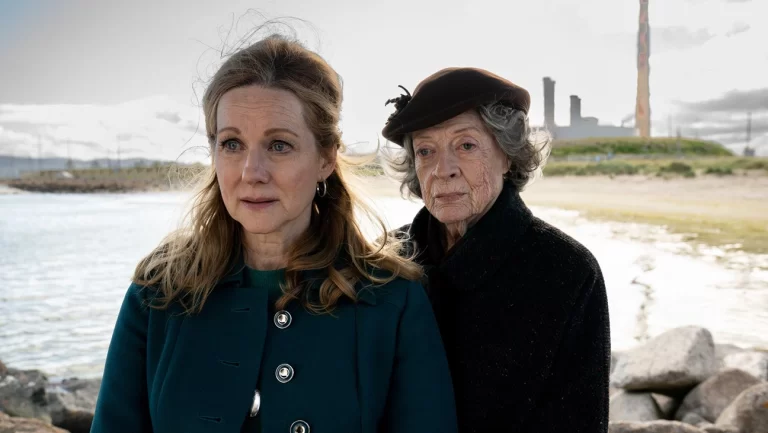
The Miracle Club is set in 1967 in a working-class community of Dublin, Ireland, and examines the relationship between three generations of women. You have Lily (Maggie Smith), an older adult woman in a singing group trying to win a trip to the sacred town called Lourdes. The French community is known for having a penchant for granting miracles and drawing millions annually. The women have reasons to want to visit. Eileen (Kathy Bates) is worried the pain in her upper chest may be cancer. The youngest of the group, Dolly (Agnes O’Casey), has an adolescent little boy experiencing anxiety about her child, who is nonverbal and lacks the support services to be attuned to her child’s needs. 

However, that’s when Chrissie (Laura Linney) comes to town in time for her mother’s funeral. In what she describes as a forty-year banishment, she has made a life for herself in the United States, settling in Boston. Now, back in her hometown, she’s the subject of local gossip, and old wounds are opened about why she left all those years ago. Hardened from the experience, Chrissie still cares for her family as they try to heal together under challenging circumstances.

Working with a script from Joshua Maurer, Timothy Prager, and Jimmy Smallhorne (based on his own short story), O’Sullivan tells a charming story of redemption with some dramatic heft. The script is built for classic, well-timed reveals of the hurt feelings that triangulate between Chrissie, Lily, and Eileen, which are rewarding and simultaneously manage to avoid being manipulative when it comes to dramatic moments. For instance, when O’Casey’s Dolly reveals a memory she has ruminated over, Linney’s Chrissie immediately tells her not to tell Lily or Eileen.

Why is this scene necessary? The point of The Miracle Club is that time heals. In this case, the women who wronged Chrissie have learned from their mistakes as she sits back and watches them use empathy instead of guilt and shame in their treatment of Eileen. Instead of having a Jane Fonda On Golden Pond moment of blaming her family for mistreating her decades ago, Chrissie is mature enough to sit back and not allow the situation to be about her but the next generation.

The Miracle Club overcomes a slow start, but there are patches of the film that have a challenging time working when these phenomenal women are absent from the screen. Most of the humor is derived from men acting like children, and the script resorts to stale humor about man babies being adolescents who cannot whip up a home-cooked meal. (My theory remains that the microwave was the male misguided response to feminism.) I’m certainly not objecting to the intent as a sign of the times that remains today; it’s just the execution of jokes that are tired and even cliched in their own right.

While Kathy Bates has the flashier roleโ€”big, bold, and incredibly bitterโ€”and Maggie Smith’s addition brings her usual brand of gravitas (and Oscar-bait clichรฉ to the trailer), it’s Laura Linney’s performance that elevates The Miracle Club into a charming and poignant experience. An award-winning actress, her greatest trait has always been her versatility. She’s the main reason to see this movie, having no trouble adapting to being a stoic listener, providing much-needed comic relief, and delivering the film’s best lines.

Yes, it’s strange for Chrissie to come back to Dublin and completely lack an Irish accent, but there’s an old-fashioned patience to The Miracle Club that leads to a handful of emotional payoffs, which are rewarding. Along with Linney’s performance and the subtle themes of what we do to women, O’Sullivan and Smallhorne’s film isn’t about individual miracles but the one that brings these women back together.

Grade: B-

Podcast: Hollywood Strikes / Barbenheimer – Episode 543

This weekโ€™s episode is brought to you by Koffee Kult. Get specialty-grade coffee at 15% OFF with the code: ISF

This week on the InSession Film Podcast, we open the show by discussing the WGA and SAG-AFTRA strikes and the massive impact this will have on Hollywood. We also celebrate Barbenheimer by ranking the films of Christopher Nolan and Greta Gerwig combined!

On that note, check out this week’s show and let us know what you think in the comment section. Thanks for listening and for supporting the InSession Film Podcast!

– WGA, SAG-AFTRA Strikes (1:32)
It was a historic day in Hollywood this last week with SAG-AFTRA joining the WGA in a strike against the studio system, the first of its kind in 60 years. With the innovation of AI and streaming, negotiations have become extremely contentious, and the impacts of this could be felt for a long time to come. We talked about all of this to begin the show this week.


RELATED: Listen to Episode 516 of the InSession Film Podcast where we discussed our Top 10 Movies of 2022!


– Barbenheimer (1:07:17)
On a much cheerier note, Barbenheimer has taken the world by storm as we all anticipate new films from Christopher Nolan and Greta Gerwig respectively in Barbie and Oppenheimer. So in the spirit of that enthusiasm, we did a ranking of Nolan and Gerwig’s films combined. And it was a lot of fun!

Show Sponsor: First Time Watchers Podcast

– Music
Little Women – Alexandre Desplat
No Time for Caution – Hans Zimmer

Subscribe to our Podcasts RSS
Subscribe to our Podcasts on iTunes
Listen on Spotify
Listen on Stitcher
InSession Film Podcast – Episode 543

Next week on the show:

TBD

Help Support The InSession Film Podcast

If you want to help support us, there are several ways you can help us and we’d absolutely appreciate it. Every penny goes directly back into supporting the show and we are truly honored and grateful. Thanks for your support and for listening to the InSession Film Podcast!

VISIT OUR DONATE PAGE HERE

Women InSession: St. Elmo’s Fire

This week on Women InSession, we talk about Joel Schumacher’s quintessential 80’s movie St. Elmo’s Fire, starring Emilio Estevez, Rob Lowe, Andrew McCarthy, Demi Moore, Judd Nelson, Ally Sheedy, Andie MacDowell and Mare Winningham! This is a film we’ve talked about behind-the-scenes for some time now, so we thought it would be fun to just dedicate an actual episode to it, and we had a great time delving into what makes this film so alluring.

Panel: Zita Short, Amy Thomasson

On that note, check out this week’s show and let us know what you think in the comment section. Thanks for listening and for supporting the InSession Film Podcast!

Subscribe to our Podcasts RSS
Subscribe to our Podcasts on iTunes
Listen on Spotify
Listen on Stitcher
Women InSession – Episode 46

To hear this Extra Film episode and everything else we do, download our apps on the Amazon Market for Android and the Podcast Source app on IOS devices. The mobile app covers all of our main shows, bonus podcasts and everything else relating to the InSession Film Podcast. Thanks for your wonderful support and for listening to our show. It means the world to us.

Podcast Review: Mission Impossible – Dead Reckoning Part One

On this episode, JD and Brendan discuss Tom Cruise’s latest in Mission: Impossible – Dead Reckoning Part One, starring Tome Cruise, Haley Atwell, Rebecca Ferguson and more! After the success of Fallout, and the anticipation of this being a two-parter, there was so much to look forward too with Dead Reckoning Part One. However, it’s safe to say that we had a few questions.

Review: Mission: Impossible – Dead Reckoning Part One (3:00)
Director: Christopher McQuarrie
Writers: Christopher McQuarrie, Erik Jendresen
Stars: Tom Cruise, Hayley Atwell, Ving Rhames, Simon Pegg, Rebecca Ferguson

Subscribe to our Podcasts RSS
Subscribe to our Podcasts on iTunes
Listen on Spotify
Listen on Stitcher
InSession Film Podcast – Mission: Impossible – Dead Reckoning Part One

Op-Ed: My Futile Attempt To Deconstruct And Understand ‘Inland Empire’

The last feature by David Lynch was an unusual avant-garde piece that foreshadowed what Hollywood would be doing in their films. To cap a film career (for now) full of tales about dreams and nightmares, he decided to go on his own completely as no major studio would finance this very ambitious project except French company StudioCanal. It then got remastered before Criterion re-released it on physical media and then put it on the Criterion Channel. I was curious about the movie because I had not seen it and had no expectations. So, I took a dive into it with the three free hours I had (the filmโ€™s running time) and this is what I got from it. 

The Plotโ€ฆAnd Other Stuff

A Polish woman tells her neighbor, actress Nikki Grace (Laura Dern), that she will get the role she auditioned for, but the story is much darker than she realizes. During a rehearsal with her co-star (Justin Theroux), the director (Jeremy Irons) acknowledges that it is a remake of a German film based on a Polish tale. The film was not completed when the two leads were found murdered. An affair between the two actors begins despite the directorโ€™s warning that inevitable consequences will occur and not of the direct personal kind. 

What follows is the surrealism from Lynch that is common, but the rabbit hole is deeper and the lines blur. It becomes evident that Nikki now takes on her character as if she is now living the story, shifting the setting to Poland in the 1930s for a time. Moments of that pure surrealism – rabbits in a sitcom, dancing to the loco-motion – get inserted as you try to piece together what is the real Nikki and what is fiction. By the end, when she is done with her work, Nikkiโ€™s parallel lives and her alter ego, Sue Blue, seem to have been permanently fissured. Or, are we just thinking the two have become one?

Itโ€™s Mesmerizingโ€ฆYet, I Donโ€™t Get It

I am not as hardcore Lynchian as others are when it comes to dissecting his work. However, I can only find his resume attractive and intoxicating and I have to look closer. Many things stand out here in comparison with his previous film, Mulholland Drive. More clues are dropped in there than in Inland Empire, which adds to the difficulty of trying to piece together Nikkiโ€™s path. The mood shifts from scene to scene as Lynch builds in the entire web that links it all, yet only the Lynch fans who have studied the living hell out of this film can probably make sense of it. 

From my point of view, this requires a deep dive into Lynchโ€™s past work and the psychoanalysis so many people have studied to explain what is its meaning. Lynch is notoriously quiet in explaining what his movies are about and conspicuous in what they mean. Is there a sinister message about Hollywood he is telling us? Cursed stories and actors who get in too deep with their characters are well known. There is a quote Lynch gave as a hint, from Hindu scripture, when presenting the movie: โ€œWe are like the spider. We weave our life and then move along in it. We are like the dreamer who dreams and then lives in the dream. This is true for the entire universe.โ€ 

Stripped Down To The Core

Also interesting was how Lynch and his then-wife, Mary Sweeney, made the film. In announcing the movie, Lynch said he was finished with celluloid and was going to digital for this movie. He was his own cinematographer, using a low-resolution DSR-PD150 Sony camcorder throughout, then edited the final product on Final Cut Pro at home. Even more radical was the screenplay when Lynch said in an interview that there wasnโ€™t any and that he wrote the dayโ€™s scenes in the morning before shooting in the afternoon and evening. Outside of their actual characters, no one in the cast knew what the movie was about except for the single premise, โ€œA woman in trouble.โ€ 

Most famously, Lynch created an eye-catching โ€œFor Your Considerationโ€ for Laura Dernโ€™s performance. He sat outside with a live cow on Sunset Blvd. by Empire Records and a sign reading, โ€œWithout cheese, there wouldnโ€™t be an INLAND EMPIRE,โ€ for several hours. Passersby recorded the odd sighting and uploaded it on YouTube, making it viral. Obviously, Dern missed out on major nominations, but for a grassroots campaign, something close to Andrea Riseboroughโ€™s shocking nod for To Leslie, itโ€™s not a bad start.

What Is Inland Empire?

To me, Nikki is like Alice going into Wonderland, but it is not a fun side where the Mad Hatter is there to greet her. Falling down the rabbit hole, Nikki finds herself in an underworld filled with figures that are part of an expansive world connected to this story she is taking part of. With all of this, it turns outward and is portrayed on screen when Jeremy Irons finally calls, โ€œCut!โ€ It is a matrix of links that only David Lynch can explain, but he forces viewers to disseminate it all. There is no single interpretation of what Lynch does with his movies; I think thatโ€™s the fun of watching his multilayered work. You have to see it all, tune out like dropping on acid, and break free from conventional wisdom. Itโ€™s probably why Dern didnโ€™t get nominated for a phenomenal performance and Lynch only got an honorary Oscar rather than a competitive one. 

Follow me on Twitter: @brian_cine (Cine-A-Man)

Movie Review: ‘Mission Impossible – Dead Reckoning Part One’ Makes You Feel The Pain


Director: Christopher McQuarrie
Writers: Bruce Geller, Erik Jendresen, and Christopher McQuarrie
Stars: Tom Cruise, Hayley Atwell, Ving Rhames

Synopsis: Ethan Hunt and his IMF team must track down a dangerous weapon before it falls into the wrong hands.


Whether you like him or not (I know a handful of people that donโ€™t like him in the least), we must admit that Tom Cruise is one of the last action stars in the modern cinematic landscape โ€“ an assertive daredevil. In a time when there arenโ€™t many Hollywood leading faces, even less in action movies, he stands out and sacrifices his life for our entertainment. It is kind of a masochistic experience if you โ€™d ask me, as we are enjoying his potential pain and injuries. But he loves doing it, and nobody can stop him from doing so. Amongst other life-dangering โ€œactivitiesโ€ he has done, Cruise throws himself out of planes, climbs the tallest building in the world, flies jets. From Top Gun to Edge of Tomorrow, he has remained at the top of the action genreโ€™s food chain for many decades. And he isnโ€™t done yet.

Heck, there are even rumors about Cruise making a film in space. I donโ€™t know if that will work out in the end. Yet, it will surely be something to look out for if heโ€™s involved. His latest project is another installment in one of the most famous action franchises in the world โ€“ one that made his name as a stuntman and daredevil โ€“ Mission: Impossible โ€” Dead Reckoning Part One. When Christopher McQuarrie arrived at the helm, he delivered what is easily the best of the franchise in 2018 with Mission: Impossible โ€“ Fallout. After the franchiseโ€™s 2010โ€™s revival, these films have become action-genre staples, to the point where each one seemed to impress us even more on both its technical aspects, as well as the cinematic spectacle the genre provides. 

It feels like they always have a challenge on their backs. They want to ensure the creation of not only great set pieces but also ones that we havenโ€™t seen before. In addition, they want to use the least amount of CGI imaginable โ€“ focusing on the raw beauty of composition and choreography โ€“ so that its impact and โ€œwow factorโ€ leaves a significant impression on the viewer. It makes us worried and fascinated by Cruiseโ€™s addiction to making films for the biggest screen imaginable and McQuarrieโ€™s innovation. Having said all of that, one question remains. Does the first piece of the two-part story live up to the hype and anticipation? Or does it derail? 

Mission: Impossible โ€“ Dead Reckoning Part One centers around Ethan Hunt (Cruise) as he is faced against an inescapable adversary, one that seems to be attacking our own reality at this current moment to some extent: a powerful artificial intelligence gone rogue named The Entity. Whatโ€™s so dangerous about this A.I.? As elaborated by Huntโ€™s boss, Eugene Kittridge (Henry Czerny), it can erase truth as we know it โ€“ manipulate all aspects of our reality in a fully digital world. Hunt doesnโ€™t know how to face this situation, and certainly not by himself . So, he decides to get the IMF band back together to stop the people behind this devouring algorithm from fracturing existence, hence the beginning of a worldwide chase for two parts of a key that might disable The Entity. As we all know, things wonโ€™t be easy for Hunt and company. There are plenty of foes that are targeting him and his team in order to make sure the person behind the A.I. gets what he wants.

They have to fight against Gabriel (Esai Morales) โ€“ the messenger of the A.I. potential collateral damage and one of the best โ€œbaddiesโ€ the series has offered โ€“ alongside his comrade assassin Paris (a silent yet fascinatingly deadly Pom Klementieff). But, in return, Hunt gets help from people from his past, Ilsa Faust (an always fascinating Rebecca Ferguson), and newcomers to the decade-spanning franchise like Hayley Atwellโ€™s scene-stealing Grace. We all must agree that one of the best things about the new Mission: Impossible films is their selection of badass women with powerful on-screen magnetism. Unlike many blockbuster franchises, M:I has always dedicated plenty of time to developing its characters so that they can have their moment in the spotlight no matter the stature of their role. However, when it comes to the women, they deliver their all in every scene they are put in. Some of the best parts of the respective action set-pieces are their input to them. There is no film without them. And McQuarrie and co-screenwriter Erik Jendresen know that โ€“ making sure their arcs, while leaving blank spaces for the next installment, are polished and carry an emotional weight. 

Since its main antagonist is faceless, this leads to a more spy-games-centered feature compared to the other McQuarrie installments. Yet, these games that The Entity and its followers are choosing wound Hunt mentally since heโ€™s being recognized as their primary target. Not only does he ponder about a future without humans if this mission fails, but also the fate of his loved ones. His gut says to follow the mission above all else. Meanwhile, his heart worries about what might happen to his team and allies. What does he deem more important? He has to make a choice; whether Hunt chooses one or the other, there will be a great sacrifice. While a regular audience might want to catch Dead Reckoning โ€“ Part One for its action and thrills, thereโ€™s a newly found tension rising because of his humanity and persona as an almost โ€œsuperheroโ€-like figure. So when the popcorn entertainment arrives, the viewer feels this nail-biting tension caused by our connection with Hunt and the other characters. 

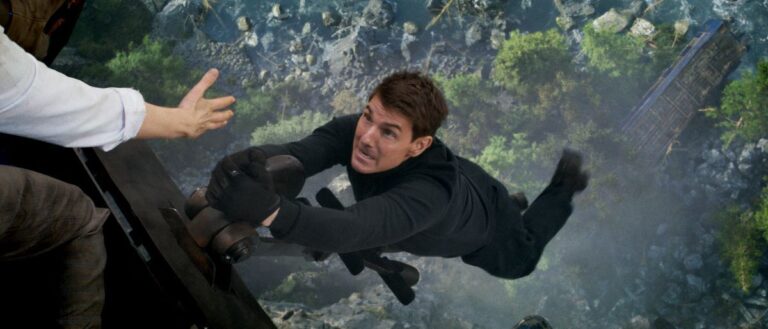
McQuarrie switches the constant adrenaline rush of Fallout with a more dread and fear-focused narrative about the possibility of loss over oneโ€™s own personal vows. Although there were glimpses of these emotions during the other Mission: Impossible films, it is more present here. It feels like a change of pace.. And for a seventh installment of a franchise based on a television series, you have to give props to Tom Cruise and the company for maintaining the quality and surprising us at every end. Of course, another of this filmโ€™s most significant revelations is its death-defying action set pieces, particularly the train sequence in the last act. Full of the genreโ€™s spectacle, everybody gives it their all โ€“ you see their commitment to making every second of it feel realistic. You can feel the force and impact in every crash, bruise, punch, or kick. 
Like John Wick: Chapter 4, this film basks in the viewer feeling the leadโ€™s pain. This is something that many films of the action genre fail to do. This is why the ones that make sure you feel the suffering are those you think about the most. And Iโ€™m glad to say that Mission: Impossible โ€“ Dead Reckoning Part One is one of those. Thereโ€™s beauty in the multi-million-dollar creations. You just need people like Cruise and McQuarrie who want to give the audience an experience like no other.

Grade: B+

Movie Review: ‘Bird Box: Barcelona’ Tries to Flip the Script


Directors: David Pastor and Alex Pastor
Writers: Josh Malerman, David Pastor, and Alex Pastor
Stars: Georgina Campbell, Mario Casas, Diego Calva

Synopsis: After an entity of mysterious origin annihilates the world’s population causing those who observe it to take their lives, Sebastiรกn and his daughter begin their own great adventure of survival in Barcelona.


At first, Bird Box: Barcelona had an arresting setup for a horror thriller. That’s because it has a clever protagonist and a first act that is genuinely engaging and even suspenseful. The story follows Sebastian (Mario Casas) and his adolescent daughter, Anna (Alejandra Howard), as they navigate the dystopian city of Barcelona, now with nothing but desolate streets and more abandoned cars than people. The world is experiencing an apocalyptic event in which mass groups have committed suicide all across Europe and Asia. The survivors must be blindfolded when outside, or an entity will take over their bodies if they open their eyes around the mysterious force, and you know the rest.

I won’t mention much of the plot here because this is one of the few cases where the trailer does an admirable job of bearding the story, which is crucial to the Bird Box: Barcelona. I will say the writing and directing team of Alex and David Pastor do a wonderful job of surprising the viewer and ratcheting up an enormous amount of tension within the first twenty minutes. This is refreshing because once you’ve seen a couple of apocalyptic openers, you’ve seen them all, but the Pastor brothers manage to clear that hurdle here.

That being said, it’s pretty obvious what is going on with Sebastian and Anna, and they rip that band-aid off quickly, which I found refreshing. Yet, after this point, the film goes downhill and becomes stagnant. For one, they needed more time to flesh out the backstory between the father and daughter. Even though there are some breathtakingly ominous visuals, the subway scene, if more time were dedicated to this narrative, would have established a more significant emotional resonance between the two characters and given the third act’s scenes greater heft. Even the backstory concerns a mysterious group of what they call “seers” and their beliefs about the entity’s purpose. In this case, the seers believe this mysterious force is an angel, and when they enter and then leave the body, the entity is taking their souls to heaven.

The Pastor’s script smartly flips the scenarios from the original Bird Box. Now, instead of seeing the event through the eyes of someone trying to survive, it’s through a villain’s lens. However, after that point, not enough time is invested in the characters to care about their outcomes, and the suspense level drops off significantly. The Bird Box: Barcelona’s script would have worked better if we had a group of people trying to escape to a haven but not knowing if one was the villain, slowly picking off each group member individually. Here, we know who the villain is in the first act. If we shifted the first act villain to the main antagonist throughout the film, Padre Esteban, then at the very least, allowed the second act to play out to figure out who the secret seer is, and the suspense would have remained constant throughout the picture.

Bird Box: Barcelona has plenty of potential, and most may enjoy the film for the tense horror thrills it will provide novice film fans. The main issues remain in the muddled themes that start to bleed over one another without offering enough clarity. For instance, the big scene the Pastor’s work towards really is about anti-clericalism, but is traded in for cheap gore that offers little to elevate the film or even add to the excitement. What happened here is the Pastors are probably held to a by-the-numbers script because Netflix has seen fit to create their own Bird Box Cinematic Universe, the BBCU if you will. If only the filmmakers had taken greater chances at the movie’s beginning instead of recycling the same genre tropes until the end. While Bird Box: Barcelona offers some mild insight into why some can function without masking their eyes, this film is a classic horror genre in the final fifty minutes. This is a mild non-recommendation, but the film promises an intriguing apocalyptic franchise for the future if they finally begin to analyze the purpose of the entity and its actions.

Grade: C-