


Many people recognize Amanda Seyfried from roles such as the sweetly clueless Karen Smith whose special talent is to predict the weather through her breasts in Mean Girls, or Sophie the bride-to-be in Mamma Mia! Or perhaps as Needy in Jennifer’s Body. Seyfried’s career is more eclectic than teen comedies/satires, juke box musicals, or romantic leads.
Nadine Whitney spoke with Amanda about what leads her to pick a role.
Nadine Whitney: Hello Amanda. Your filmography is far more varied and deeper than I think a lot of people would think at first glance. For example, your work with Atom Egoyan (Chloe, Seven Veils), David Lynch (Twin Peaks), Noah Baumbach (While We Were Young), and David Fincher (Mank). What draws you to these less commercial and more challenging roles?
Amanda Seyfried: There are so many reasons. I think, first and foremost, it’s curiosity. I have the privilege of getting to play dress up and make believe as a job, and without consequences. I mean, of course it costs the more emotional and the darker the tone and the context is, for sure. And it gets darker as you get older, because you get older and more life happens to you, and more life happens to your characters. And that’s great. It’s therapy. I’m very curious.
I know that I learn a lot about myself through the characters. I just love the process of understanding someone else and then being able to take what I know about myself and marry that experience and bring it to life. I feel the more deliberate you are with balancing out what people know you to do allows for people to lose themselves quicker when they watch you.
I couldn’t have played Elizabeth Holmes (The Dropout) if people just saw me. But because I feel like the choices and the opportunities – I won’t say it’s always been a choice. Like Mamma Mia! wasn’t a choice. We all went out for it, and I got it. People know me for that. When I play people who are so separate from me or real people, I think I still have that privilege of being able to hide. I hope it continues to happen because I don’t want people to see me.
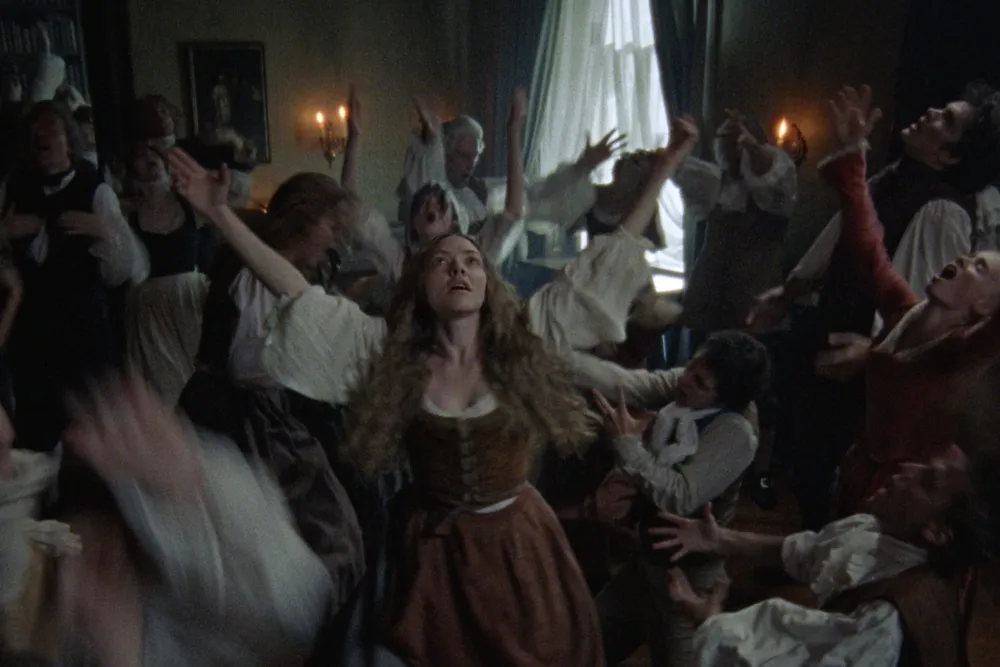
I feel like that all comes down to the things that I’ve been able to lose myself in. So, that’s always the plan. You know, like after playing Ann Lee, I’m developing a comedy because I desperately need it, and because there’s some levity that I didn’t necessarily get the whole time from Ann Lee. Although I will say The Testament of Ann Lee is very funny at times and absurd, and we lived in that levity.
You’ve got to just break it up. You don’t want it to be the same. I just don’t want to constantly play myself, although I am in every character. It’s just sometimes 30 percent, or sometimes 80 percent.