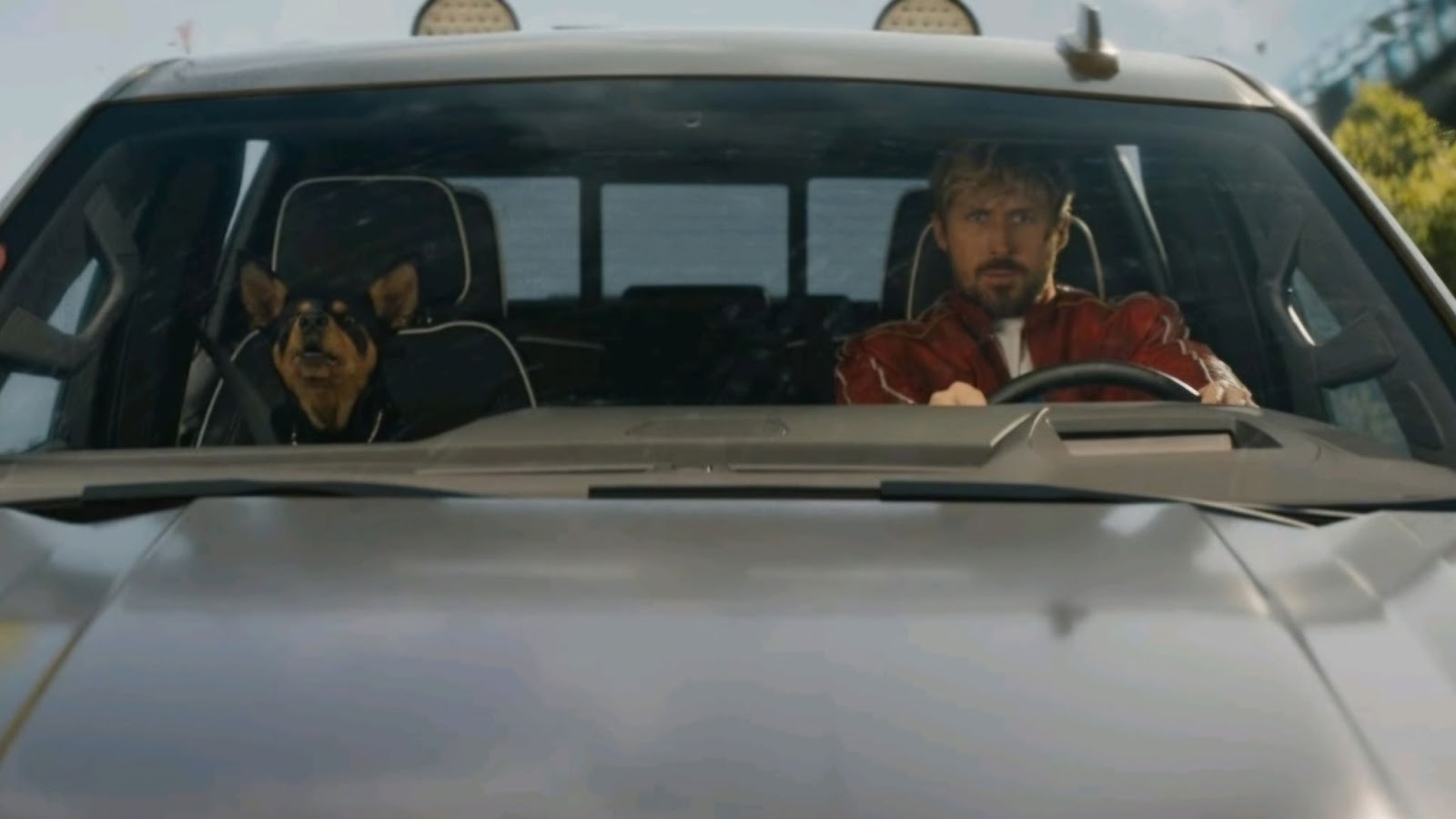
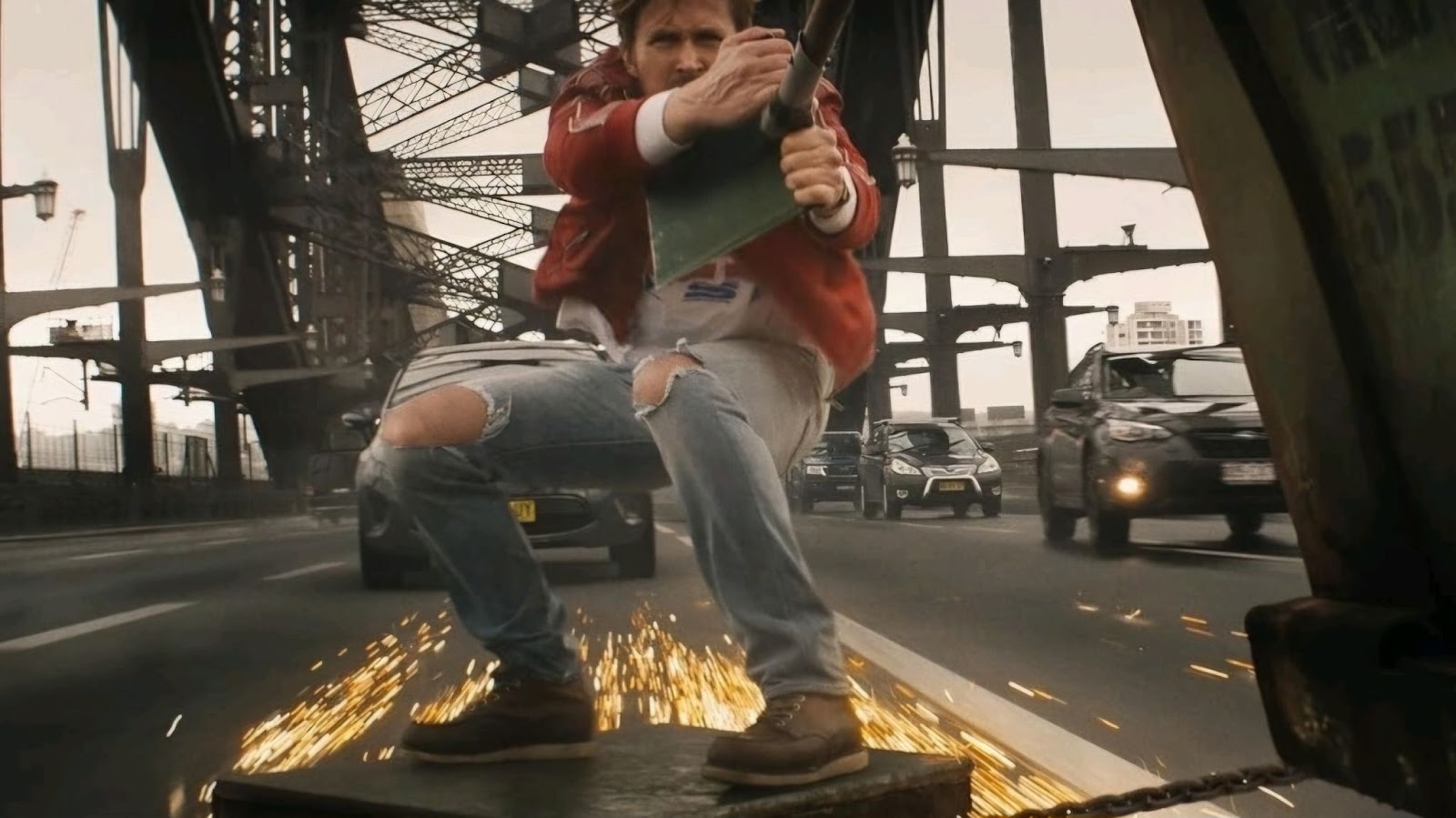
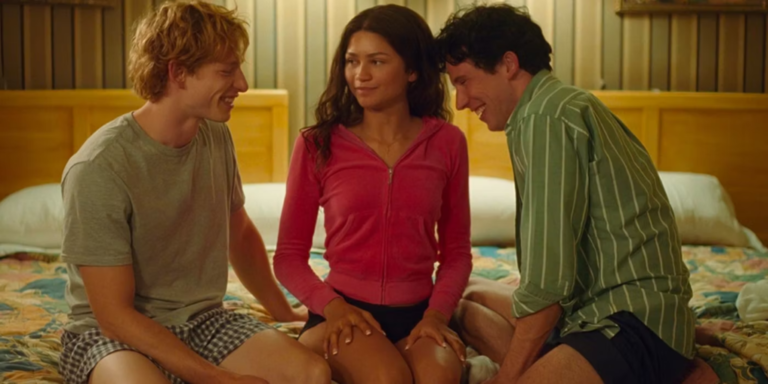
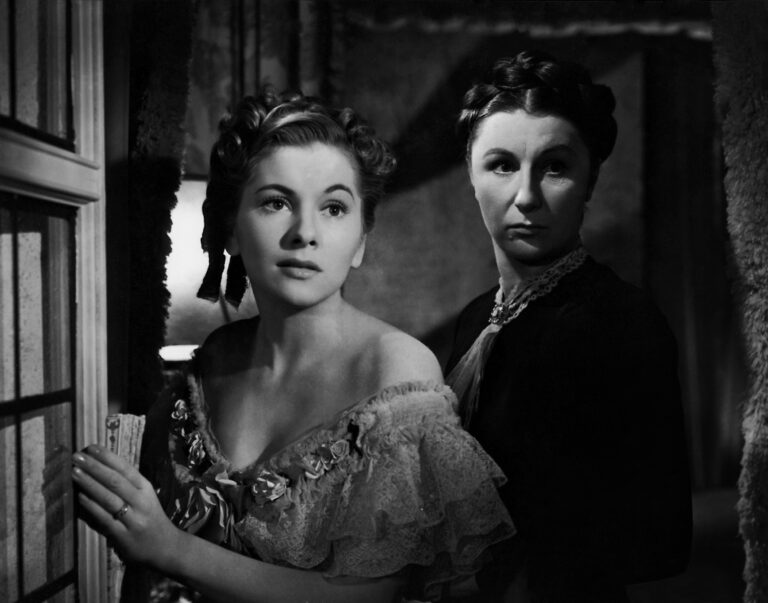
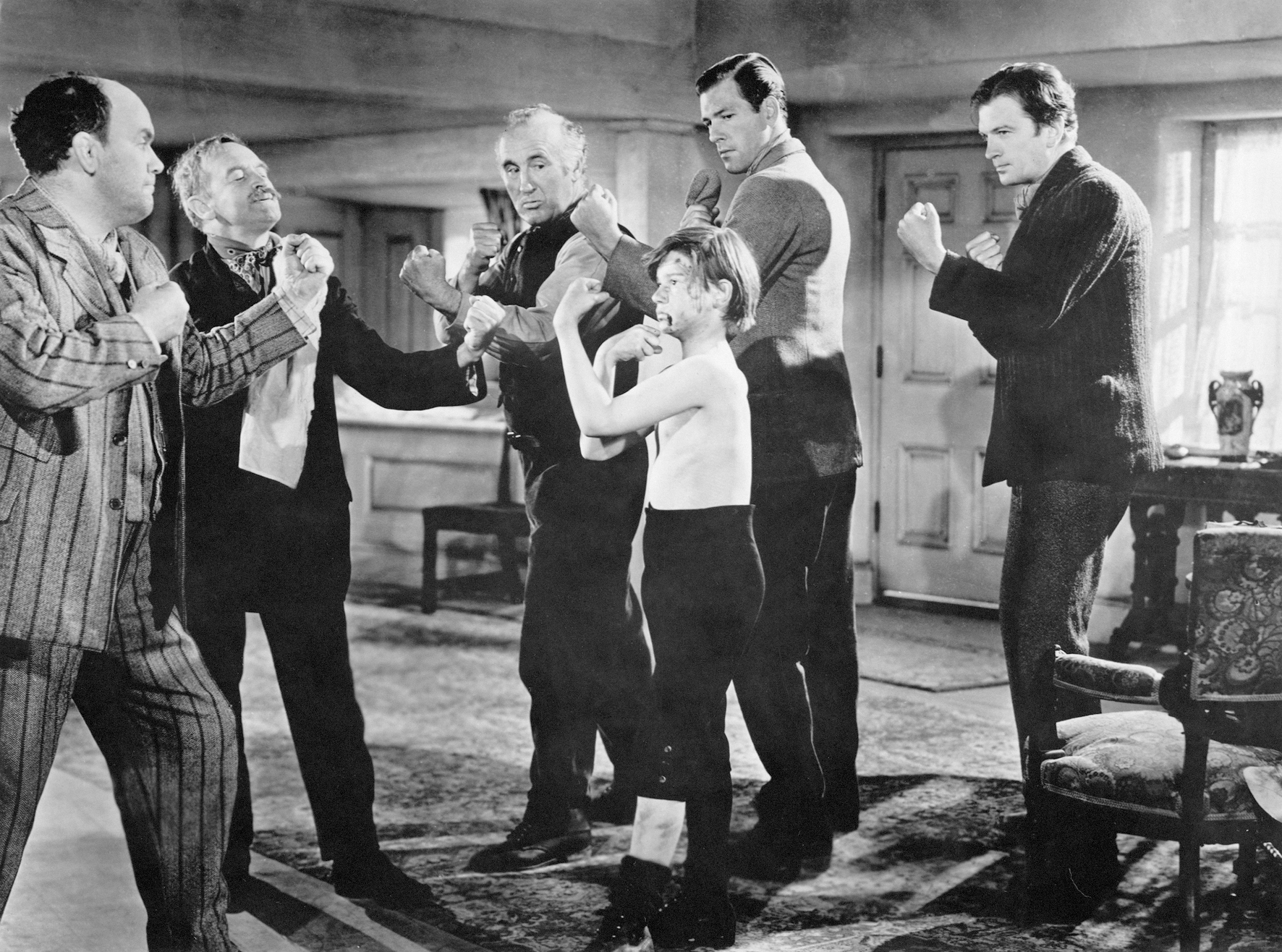
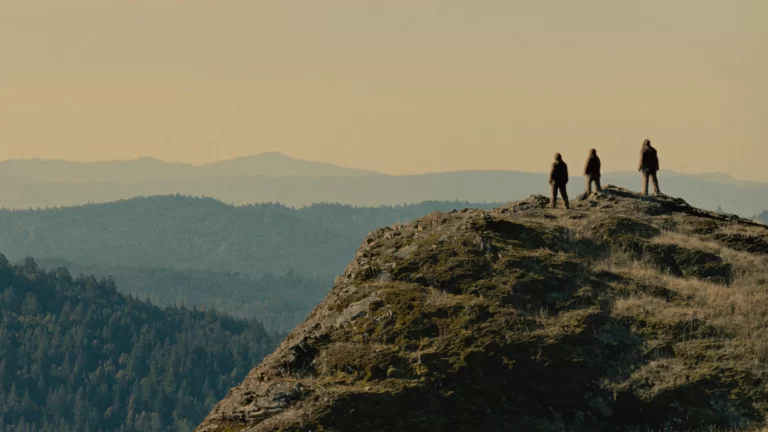
This week on the InSession Film Podcast, we continue our Best Picture Movie Series with the John Ford 1941 film How Green Was My Valley! We also talk about the box office to The Fall Guy and the dumb CODA discourse from last week.
Check out this week’s show and let us know what you think in the comment section. Thanks for listening and for supporting the InSession Film Podcast!
– Spider-Man 2 / Kingdom of the Planet of the Apes (0:40) It wasn’t the original plan, but we open the show with a segment where we (once again) discuss Sam Raimi’s Spider-Man 2. There are some things about the film that JD didn’t get a chance to talk about last week in regards to his “religious experience” from last week. With Kingdom of the Planet of the Apes coming out this weekend, we also talk about the first reactions to the film from critics and how surprising they were compared to our expectations.
– The Fall Guy / CODA / Bernard Hill (26:42) To begin the actual show, we talk about the box office disappointment to The Fall Guy and the polarized discourse that followed. Some see it as the end of Hollywood while others simply see as a victim of rolling the dice. Speaking of disappointment, we also talk about the (really dumb) CODA discourse that sparked over the weekend and how once again “turning art into sports” is rearing its ugly head. We end the segment by briefly talking about Bernard Hill, who sadly passed away over the weekend.
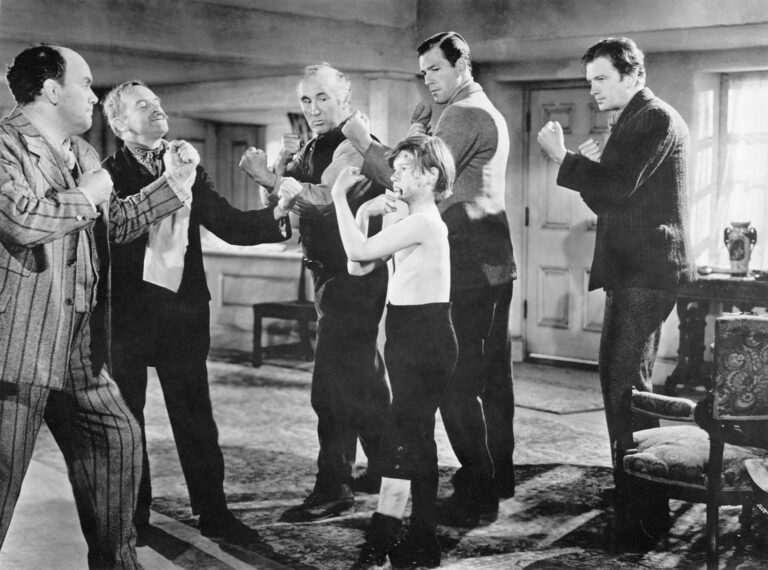
– Best Picture Movie Series: How Green Was My Valley (1:16:00) We continue our Best Picture Movie Series in the 1940s with John Ford’s Oscar-winning film How Green Was My Valley. There’s some fun irony here given the film’s reputation as a winner who beat the likes of Citizen Kane and The Maltese Falcon, two films that have a more revered reputation. How Green Was My Valley could easily be looked upon as another CODA, however we do our best to distinguish how they’re not exactly the same. The trap is there, but we actively avoid disparaging How Green Was My Valley because of awards.
If you want to help support us, there are several ways you can help us and we’d absolutely appreciate it. Every penny goes directly back into supporting the show and we are truly honored and grateful. Thanks for your support and for listening to the InSession Film Podcast!
Directors: Grant Garry Writers: Grant Garry Stars: Anthony Rapp, John Farley, Cynthia O’Neal
Synopsis: Meet Me Where I Am explores the topic of grief through individual stories of loss, love, and hope. The film aims to normalize grief in our culture and explores how we can actively participate in helping others through grief.
Grief is, perhaps, the most important topic that almost nobody talks about. It is a fact of life that we will all go through it and, eventually, be the source of it for people we love. And yet, it feels impossible to grasp. It is an important topic to not only broach, but to delve into deeply. Grief is difficult to talk about for many reasons, and maybe the most important is that it is more cyclical than it is linear. Many intelligent people have spoken about this in a clinical, scholarly way but precious few have made it truly personal. The new documentary, Meet Me Where I Am, attempts to make things a little easier on all of us in our most difficult moments.
This is a documentary for those who are terrified to talk about their grief and pain. And let’s be honest, that is a big audience. In western culture especially, we are taught that there is a right way to process loss. The film points this out in the discussion of The Stages of Grief from Elizabeth Kübler-Ross. Many of us, either through education or internet research, are aware of this, but not of the actual path. The movie makes it clear that these stages are not distinct, or even necessarily in order. Rather, they are experiences that many people who grieve tend to go through.
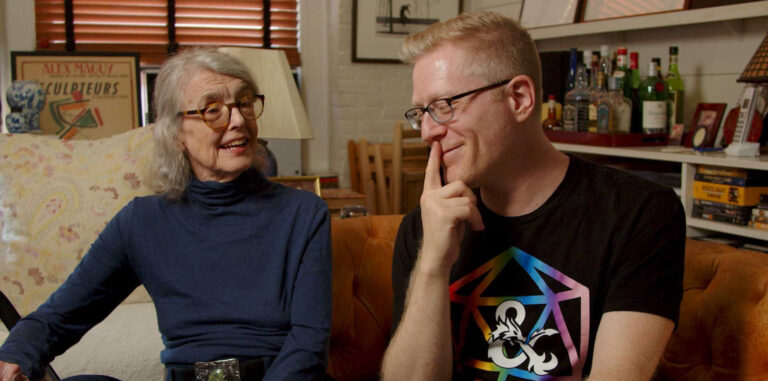
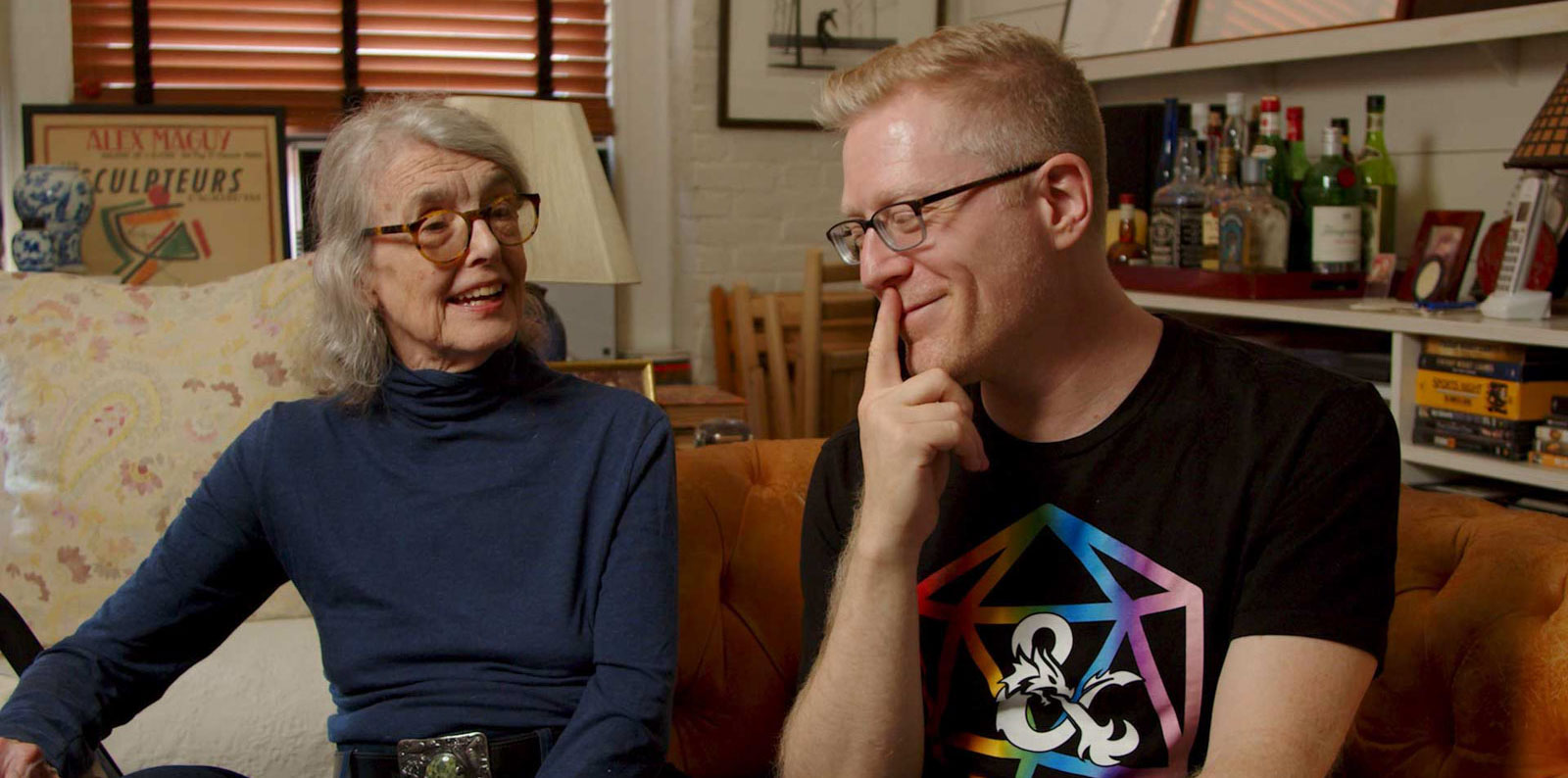
Luckily, the film is not entirely scholastic. It also focuses on real details of intense loss that range across the life course and type of death. It also features at least a few people who are very used to talking in front of a camera. Anthony Rapp, star of the Broadway musical and feature film, Rent, details the loss of both Jonathan Larson (creator of Rent) and his mother. The most moving moments of the entire documentary are between Rapp and Cynthia O’Neal, who met through their grief. While Rapp was dealing with his mother’s illness, Larson recommended he attend a support group called “Friend in Deed.” This group was founded by O’Neal, as she dealt with her husband’s death from cancer. The two have formed a lifelong friendship, and their care and consideration for one another is gentle, aware, and apparent.
But there are many other stories to be told throughout the documentary. The hardest to watch is a pair of older parents, whose daughter was murdered. Watching the two look at old photographs and talk about their loss is difficult to process. It feels almost too intimate, but there is a sense of honor in watching their brutal honesty about this unfathomable loss. It also feels important to meet them now, where they are, and not immediately following the incident. There is a grace inherent in their experience, along with honesty about their appropriate level of anger.
The documentary, written and directed by Grant Garry, is remarkably well balanced. A discussion about grief from both the scholarly and persona angles is tremendously difficult. He manages this by not only involving experts, but asking them to tell their stories of personal grief. This allows us not only a view into what grief is, but also the myriad of ways that it can be experienced and expressed. What happens when a grief researcher loses a child? How does it impact a future expert in the field when they endure the loss of a sibling? If grief is different for everyone, how do we help others? Importantly, the film also focuses on what not to do. As people supporting loved ones, what we say is more important than we imagine. So, it can be helpful to not simply offer platitudes, which involves undoing decades of cultural training.
Meet Me Where I Am is an important starting point for dealing with an issue that is truly unavoidable. It starts the conversation in an empathetic, giving, kind way. If you are searching for depth about the science or emotion of grief, you will likely be disappointed. But if you have a lack of scholarly or real world knowledge about grief, it is a lovely, open way to begin the process.
Directors: Spenser Cohen and Anna Halberg Writers: Spenser Cohen and Anna Halberg Stars: Harriet Slater, Avantika, Jacob Batalon
Synopsis: When a group of friends recklessly violates the sacred rule of Tarot readings, they unknowingly unleash an unspeakable evil trapped within the cursed cards. One by one, they come face to face with fate and end up in a race against death.
Is the horror movie genre washed? Beyond the fun but exhausting Abigail, mainstream horror movies have made nothing other than drawn-out jumpscare festivals this year. Even I couldn’t vibe with The First Omen, which played as a ripoff of far better movies (Zulawski’s Possession, in particular) while filling the screen with endless jumpscares in the process. And as I’ve said repeatedly, nothing is interesting or cinematically exciting about loud noises and a slightly creepy face popping on the screen for two seconds. Sure, it raises the heartbeat, but once you see it coming, it’s hard to elicit any emotional connection with what’s on screen.
And whaddaya know? There’s another jumpscare festival in theaters right now to begin the summer movie season, alongside David Leitch’s The Fall Guy, in Spenser Cohen and Anna Halberg’s Tarot. The fact that the film didn’t screen for the press may be very telling of its quality, but some high-profile movies that ultimately received good reviews also did not screen for the press (in my area), so you never know if it just skipped the market or if it’s truly the disaster the studio think it is. While it may not be the worst movie in the world, it’s also one of the most pointless studio pictures you’ll waste your time on all year.
Who is this movie for? Who will actually find enjoyment in this? Funnily enough, a deadly tarot deck sounds like a potential for something great, especially considering that each main character gets stalked by the astrologer, one by one, Final Destination-style. That’s a recipe for something at least enjoyable, especially in the horror landscape. But the film makes two cardinal mistakes right from the get-go, which ensures it’ll never recover as it progresses toward its finish line.
Mistake #1: The film is rated PG-13. While there are movies where this rating is acceptable, a Tarot card of doom, killing off protagonists through one gratuitous setpiece after another warrants a full-fledged, hard-R rating. Filmmakers Cohen and Halberg continuously cut away from the violence every time something interesting happens, such as a scene set inside a ‘Magician’s Box.’ Paige (Avantika) is kidnapped by a demonic magician and stuck inside a box as the magician prepares his “trick” of sawing her in half. Of course, this is extremely violent, but just as his saw enters the box, the movie cuts away from the scene completely, moving on to another scene and alluding to the audience that something bad has happened.
This completely hinders the film’s pacing and visual style, which is surprisingly more evocative than I would’ve thought. There are some legitimately good compositions here, particularly during a bravura setpiece inside a commuter train – the closest we’ll get to an R-rated kill – where the use of shadows is particularly effective, as Lucas (Wolfgang Novogratz) sees a vision of the astrologer closing in. But it’s not enough to make every major moment pop off the screen because none of the scenes go deep enough in their images, whether from the undercooked creatures the filmmakers introduce or in the gore.
Mistake #2: The protagonists the audience spends time with are pitifully underdeveloped and make inane decisions that no sane human being ever would, even if stuck in their situation. Literally. Everyone who has seen a horror movie knows how shortsighted most protagonists are, but Tarot takes it to another level. For example, Haley (Harriet Slater), the one who has the ability to read Tarot cards, tells Madeline (Humberly González) that she will want to run away from her troubles but should resist when the opportunity arises. When she’s stalked by the astrologer, a stick figure image of her being hanged is drawn on a foggy car window, with the words RUN at the bottom.
Of course, smart audience members know that’s the moment where she resists and does not run. Oh, wait, no, this is a horror movie. She gets out of the car and (predictably) runs to somewhere she probably didn’t want to go. The film is rife with character decisions that completely disregard rationality and logic so they can lead in setpieces filled with cheap jumpscares and gotcha! moments, instead of developing its characters and going beyond the faux-thrills that plague seemingly every mainstream horror movie made these days, devoid of any creativity and soul.
Yes, low-budget horror movies usually make a quick buck in cinemas, and that’s why we get plenty of stuff like Tarot. But we, as a society, deserve far better than this. There wasn’t a single person who reacted strongly to any of the film’s scenes in my audience (other than a joke involving Jacob Batalon’s character that was the only time its audience was vibing with the film), and the muted reactions after the credits roll spoke volumes. Audiences want original horror. They want to be scared and enthralled with images that stick with you so long after the credits have rolled that you can’t sleep at night.
While Tarot is an adaptation of Nicholas Adams’ Horrorscope, its onscreen treatment may definitely feel unique. However, the direction both Cohen and Halberg take from the get-go is so unimaginatively inept that no actor, no matter how talented and skillful they may be (Olwen Fouéré is particularly wasted here), can save it. As an audience member, you can play with the deck and perpetuate more listless, unfulfilling films like these, or choose not to touch it and ensure horror movies have something of value to bring to society again. I’d choose the latter, but since most characters in this film make shortsighted decisions, a sequel will probably be announced in a few days from now. *sigh*
Director: Jerry Seinfeld Writers: Jerry Seinfeld, Spike Feresten, Andy Robin Stars: Isaac Bae, Jerry Seinfeld, Chris Rickett
Synopsis: In 1963 Michigan, business rivals Kellogg’s and Post compete to create a cake that could change breakfast forever.
I remember hearing about Unfrosted for the first time last year when Jerry Seinfeld finished his set at Caesar’s Palace. Seinfeld’s material ran short, so he talked about how Netflix bought his new Pop Tart movie script, Unfrosted, about the birth of the toaster pastry. Then, he stopped in the middle of the question about the film from someone in the audience and walked out. I guess the uber-rich and famous comedian thought less was more.
If only he felt the same way about Unfrosted’s cluttered script.
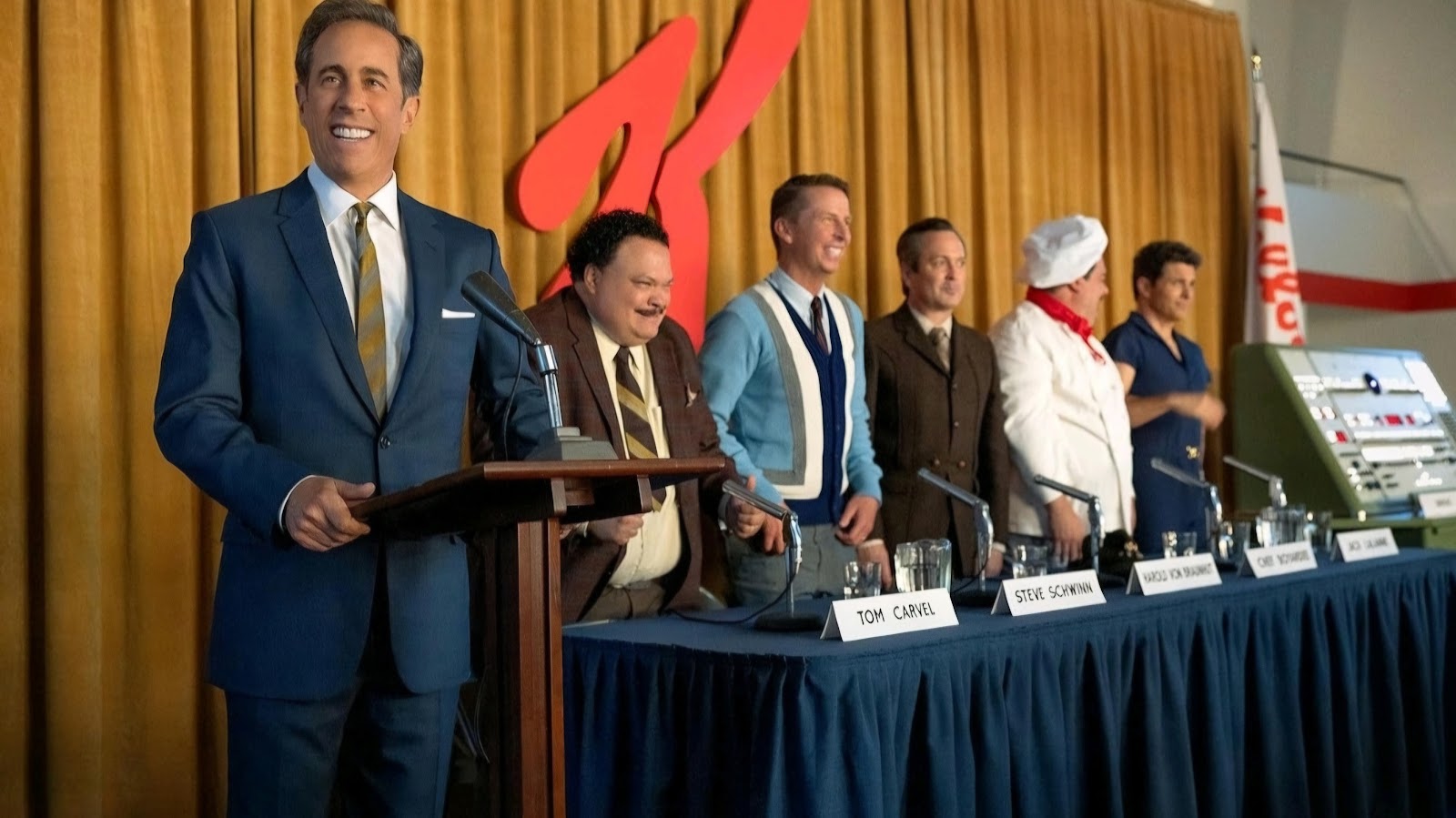
Unfrosted’s story follows a rivalry as old as time—the breakfast cereal wars between Kellogg and Post. Both companies are located in the aptly named Battle Creek, Michigan, trying to, uh, pop the secret formula for a new compact cereal product that will set the breakfast market ablaze. Helming that product for Kellogg’s is executive Bob Cabana (Seinfeld), who discovers Post has stolen their research when he finds two children eating the pastry goods from the Post dumpsters.
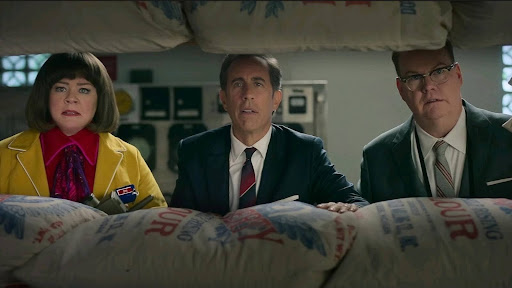
Cabana alerts his boss, Edsel Kellogg III (Jim Gaffigan), who is furious that his rival, Marjorie Post (Amy Schumer), will not fight fair, not to mention their sexual attraction to each other, which keeps things at a simmering boil. In order to beat Post to the finish line, think of it as the great toaster pastry race, replacing the period’s mission to reach space. Cabana brings back Stan (two-time Academy Award nominee Melissa McCarthy), an innovative genius when it comes to the breakfast space.
The only question left is: Should they put their flag on “Breakfast Cereal Hill” first, and which one will the public embrace?
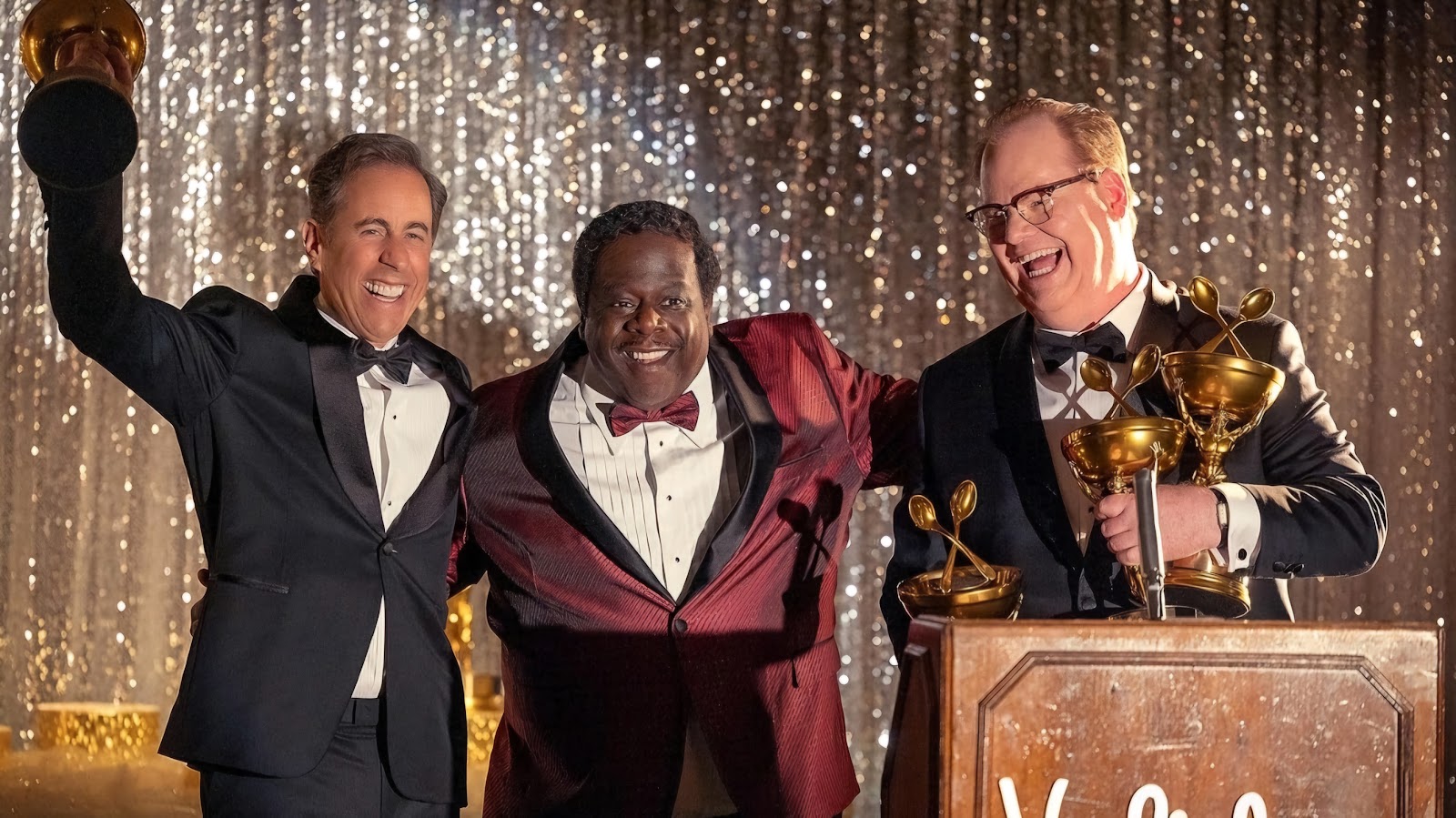
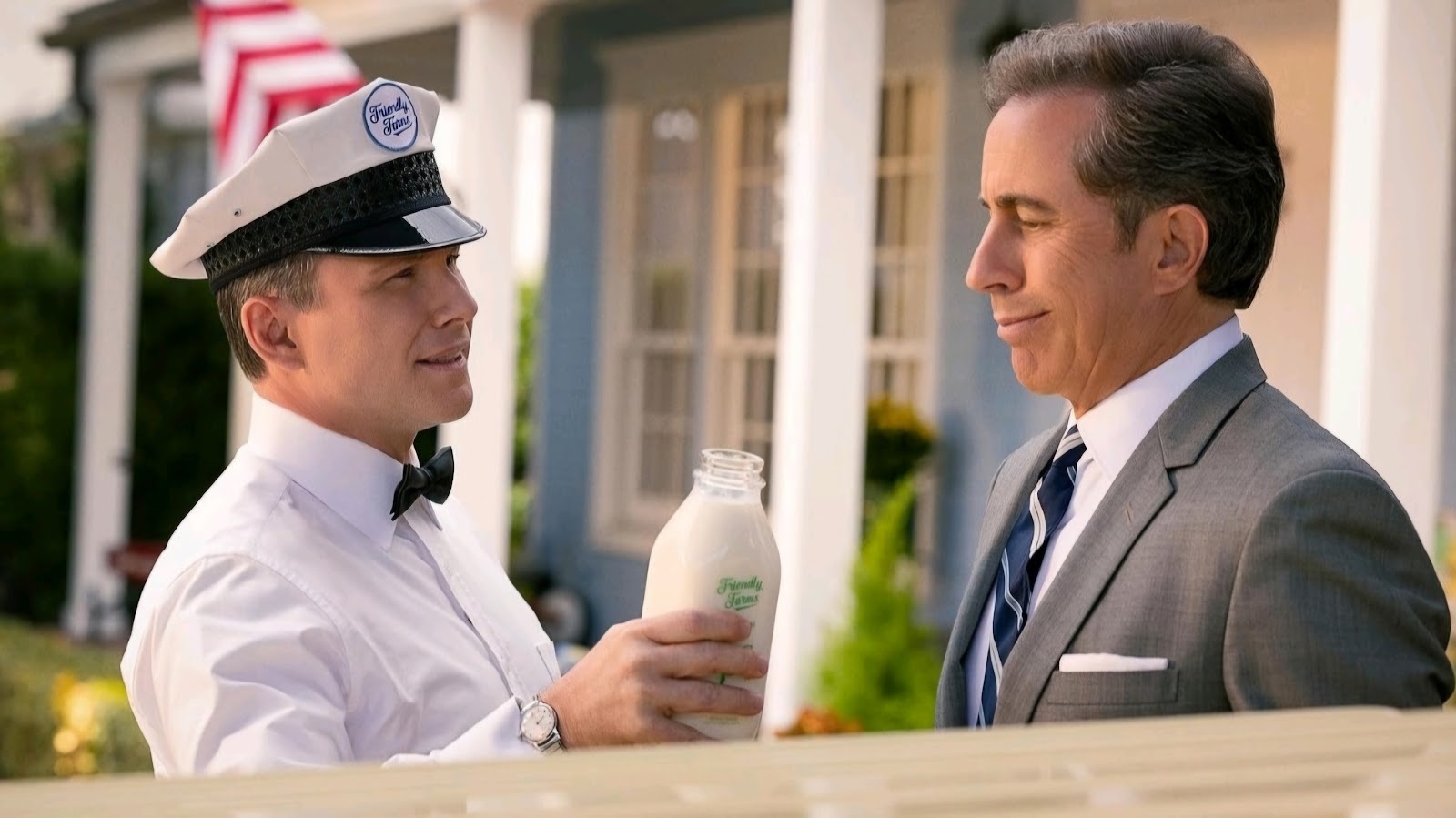
Unfrosted was directed by Jerry Seinfeld, who, at 70, is making his directorial feature film debut. Seinfeld wrote the script with long-time Seinfeld writer Spike Feresten, along with the help of Bee Movie and Saturday Night Live scribes Andy Robin and Barry Marder. After watching Unfrosted, you will immediately think there are too many cooks in the kitchen, as the script is cluttered, albeit with clever gags about breakfast cereal and the mascots they represent. Nevertheless, the movie is overwrought with these references to the point that it becomes a gimmick and quickly loses some of the smart “jerk store” humor.
Two bits in the film are funny and enjoyable. The one that will make you laugh the most is an inspired gag by Kyle Dunnigan, who plays a boozy and passive-aggressive Walter Cronkite who is going through some things at home. Then, an inspired cameo from two classic characters that pair well with the era and the story, which I will not ruin here. Otherwise, the film is filled with guest stars, including the likes of Hugh Grant, Christian Slater, Bill Burr, and James Marsden, over bloating the nonsensical script to the point of bursting.
Another issue is that Seinfeld and Jim Gaffigan are the leads, and they cannot act, with the creator of Unfrosted even more awkward in the role than usual. I admire the attempt to oversaturate the story with a barrage of cartoonery, kind of like Kramer overshadowing everyone in Jerry’s ‘90s sitcom, but it’s evident here. The one real actor, McCarthy, does what she can with the paper-thin character, but the film desperately needed to add her for more screen time to help move the film along to its conclusion.
The point is that this is all a distraction from the fact that Unfrosted isn’t funny enough and cannot build on its creative and original premise. This is disappointing because there is so much unoriginal material in Hollywood today. The comedy is too cluttered with gags and ideas that try too hard as if they need a standing ovation at how smart the script is but forget the funny instead.
My colleague, InSession Film critic Andy Punter, may have said it best. The film starts wanting to be Seinfeld + Madmen, + 30 Rock before evolving into adding additional comedy ideas from Veep and Unbreakable Kimmy Schmidt, trying to capitalize on the trend of movies obsessed with tangible mass market inventions instead of acts of genius.
Seinfeld should have known that Unfrosted would have been more with less.
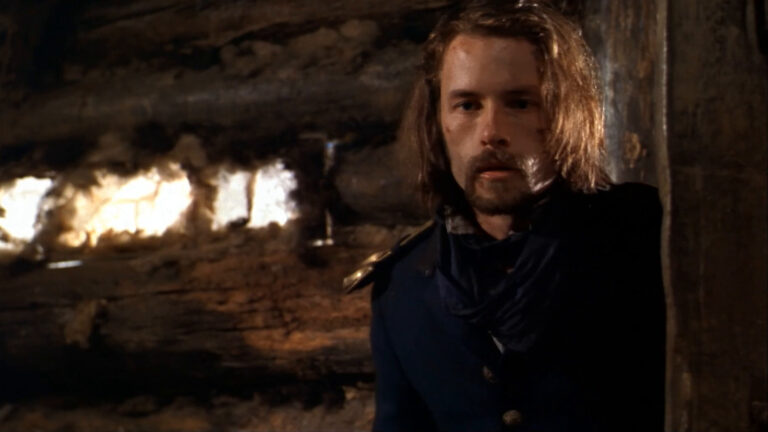
This week on Women InSession, we discuss some of our favorite underrated Guy Pearce movies! While we’ve talked about Guy Pearce before, it’s been awhile and this time around we specifically wanted to talk about the films that fly under the radar. Say what you will about their overall quality, but we find them fascinating.
Panel: Kristin Battestella, Jaylan Salah
On that note, check out this week’s show and let us know what you think in the comment section. Thanks for listening and for supporting the InSession Film Podcast!
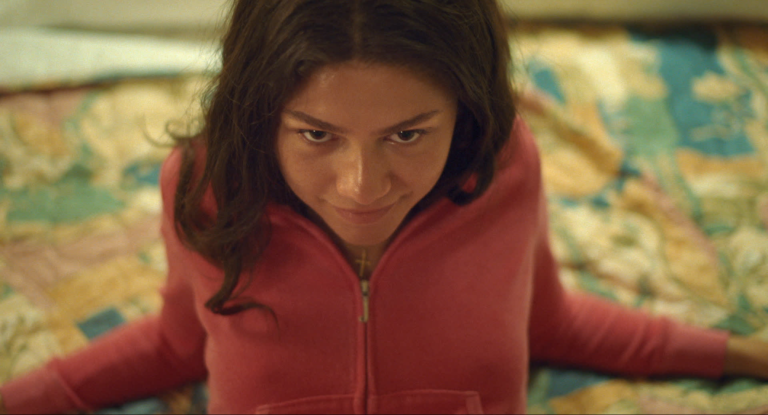
This week on Chasing the Gold, Shadan and Erica discuss Zendaya’s big year so far with Dune: Part Two and Challengers, and how they see those films shaping up later on in the year during awards season!
On that note, check out this week’s show and let us know what you think in the comment section. Thanks for listening and for supporting the InSession Film Podcast!
Director: Moritz Mohr Writers: Tyler Burton Smith, Arend Remmers, Moritz Mohr Stars: Bill Skarsgård, Jessica Rothe, Michelle Dockery
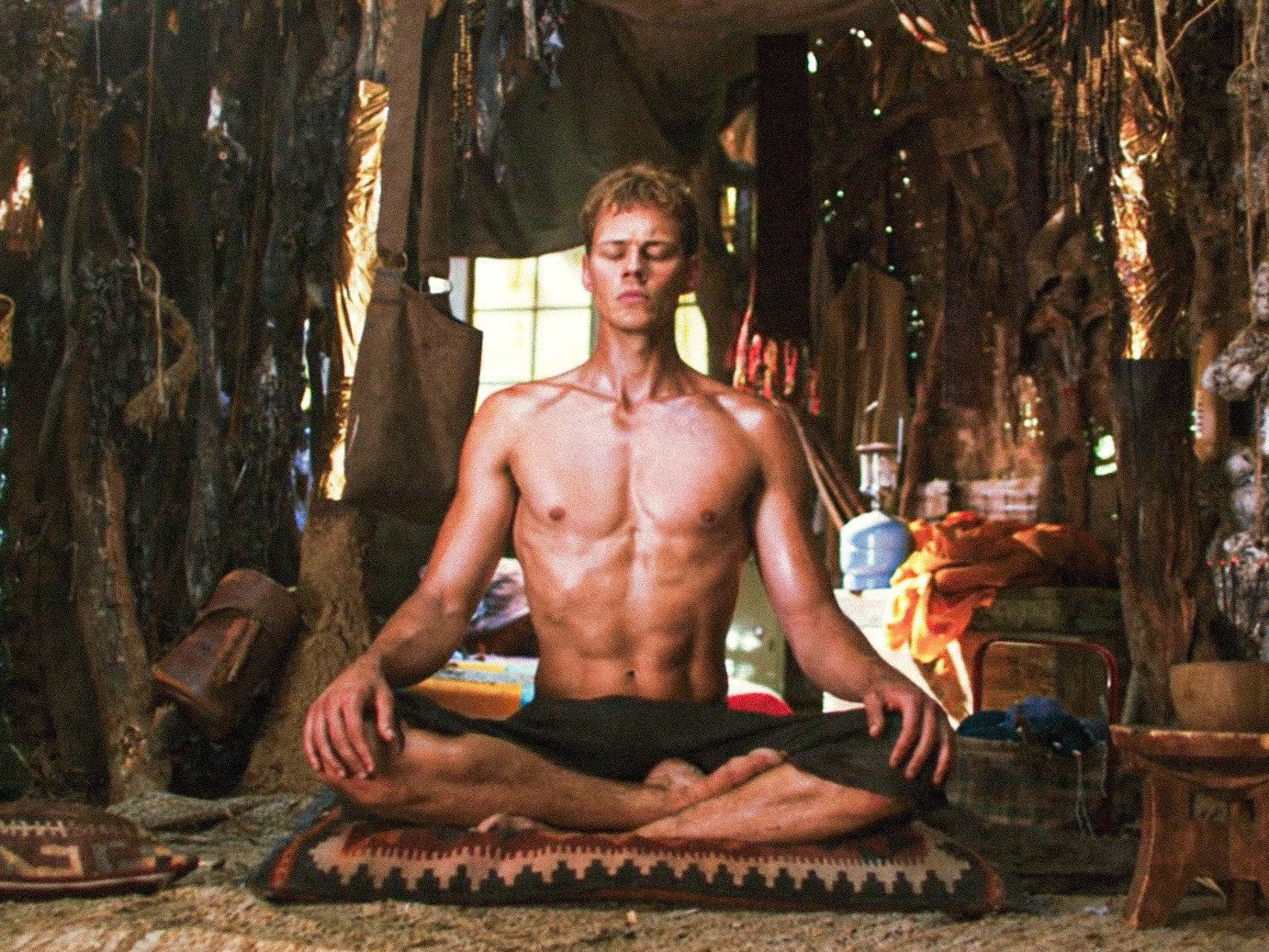
Synopsis: A fever dream action film that follows Boy, a deaf person with a vibrant imagination. When his family is murdered, he is trained by a mysterious shaman to repress his childish imagination and become an instrument of death.
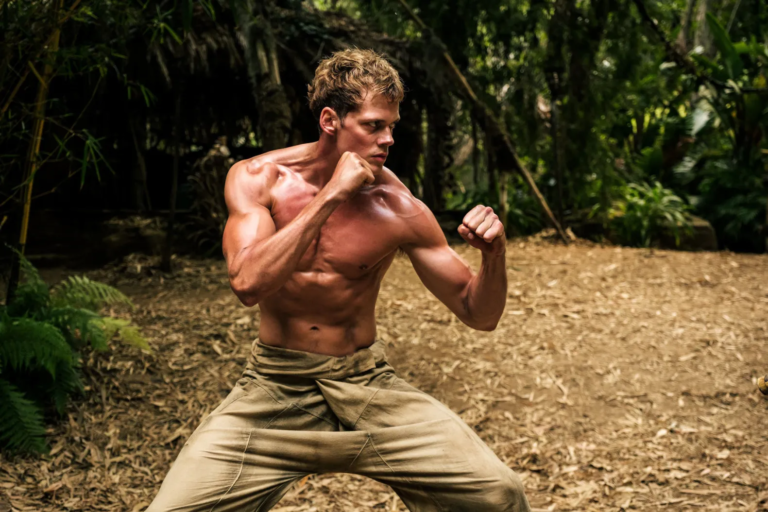
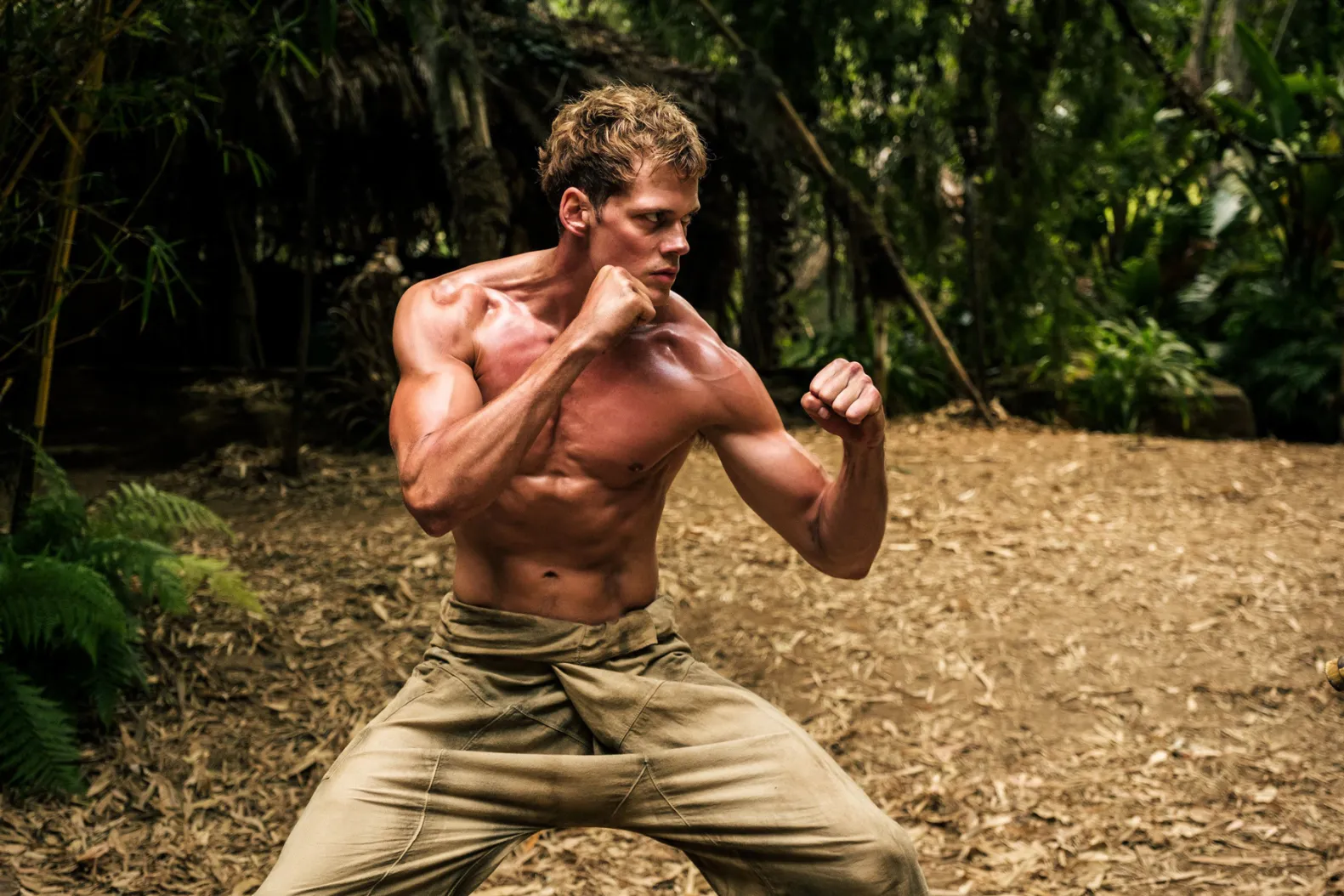
Boy Kills World is a film that might have benefited immensely from multiple factors, including its impressive actors and a rising movie star like Bill Skarsgård at the center of its action. Instead, it falls into the fact that it’s too brutal to be lighthearted action, and too silly to be a bloody, action-packed feature. This film was supposed to be Skarsgård’s introduction to movie stardom, but it falls short of its ambition. It tries to incorporate multiple elements from the gaming world but also from hyperviolent, silly ‘90s action flicks. The difficulty of becoming a bridge between two worlds works against it rather than in its favor.
Proper introductions first. This film is the story of an unnamed boy (Skarsgård’), rendered deaf and mute -ouch, too much honestly- by the totalitarian regime head that also killed his mother and little sister, cut his tongue, and rendered him deaf. A shaman saves him and turns him into a killing machine with only one target in sight: Kill Hilda Van Der Koy.
My first issue with Boy Kills World started with the rendering mute and deaf part. It was tough to watch because they never fully explained why they did that to Boy. Why not just kill him like his mother and sister? As the events progress, things get even more complicated to swallow. And as the conclusion is revealed, it makes it even more of an “oh boy” moment than an “Aha” moment.
If not for Skarsgård’s performance, the film would have fallen way behind and lagged in the forgotten recesses of the brain. With his stunning features and sensitive facial expressions, he takes Boy’s inner turmoil to the tautest rope, without losing sight of his action prowess. However, even Jessica Rothe –a delight since her impressive turn as horror movie queen in the Happy Death Day franchise- cannot save shabby storytelling and poor worldbuilding. The world building is one of the key missing elements in this feature. While a film like Monkey Man has benefited extensively from the blend of the myth and the present and the idea of a dystopian, semi-modern society and a tale of revenge, Boy Kills World loses its integrity and structural cohesiveness.
The story seems rushed at times, then painfully slowed down at others. It may be attributed to the fact that Boy’s view of the world is distorted and chopped due to his inability to read lips at all times, but Tyler Burton Smith’s and Arend Remmers’ script fails to convey that through a clean narrative. Instead of outlining that for the viewer, the viewer becomes as confused as Boy; not in an interesting, immersive storytelling experience way, but as in the film itself becomes a quilt made of mismatched fabric.
One of the elements that is underdeveloped in this film is the narration. Bringing in comedian H. Jon Benjamin –most famous for Archer– as Boy’s inner voice and his clever, twisted monologue could have taken the film to another realm. Instead, they use a comedic voice, which is an entirely different beast than the average writer’s voice. It’s what makes low-key films and series go through the roof because their writers are totally in command of their inner cynicism. Unfortunately with this film, the writers needed a funnier, comedic virtuoso.
It will take more than a fascination with kung-fu movies and video games to make Boy Kills World the ambitious action film it aimed to be; a clear, decisive roadmap, solid world-building, and distinctive character design. It serves as Skarsgård’s introduction into becoming one of the next action heroes but still lacks the proper movie star polishing for his full capabilities to shine.
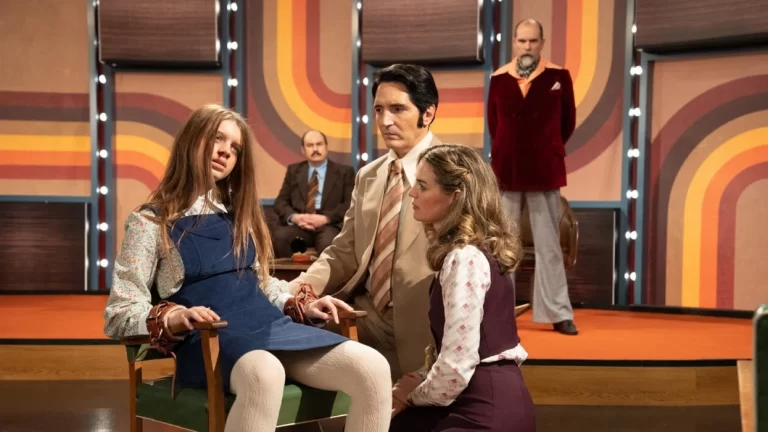
On this episode, Brendan and JD discuss the Colin and Cameron Cairnes horror film Late Night with the Devil! Premiering at SXSW earlier this year, it was initially received with great praise for its performances and interesting premise, however it’s since been maligned for its use of AI in a few places. We, of course, spend some good time talking about the film on its own terms, but also why the use of AI is problematic.
Review: Late Night with the Devil(4:00) Director: Colin Cairnes, Cameron Cairnes Writers: Colin Cairnes, Cameron Cairnes Stars: David Dastmalchian, Laura Gordon, Ian Bliss, Fayssal Bazzi
Director: Hannah Marks Writers: Elizabeth Berger, Isaac Aptaker, John Green Stars: Isabela Merced, Hannah Marks, Felix Mallard
Synopsis: A teenager with OCD tries to solve a mystery surrounding a fugitive billionaire.
John Green tends to write books about himself even when they aren’t about himself. An awkward but intelligent teen seeks something more than the suburban life they are living – and suburbia is given an elegiac farewell. That is, if the teen in question lives long enough – but even if they do die, they say goodbye somehow. Beginnings, endings, new beginnings. Thus far, his books have been adapted by men. Josh Boone directed the positively received 2014 film The Fault in Our Stars and Jake Schreier the less successful Paper Towns in 2015.
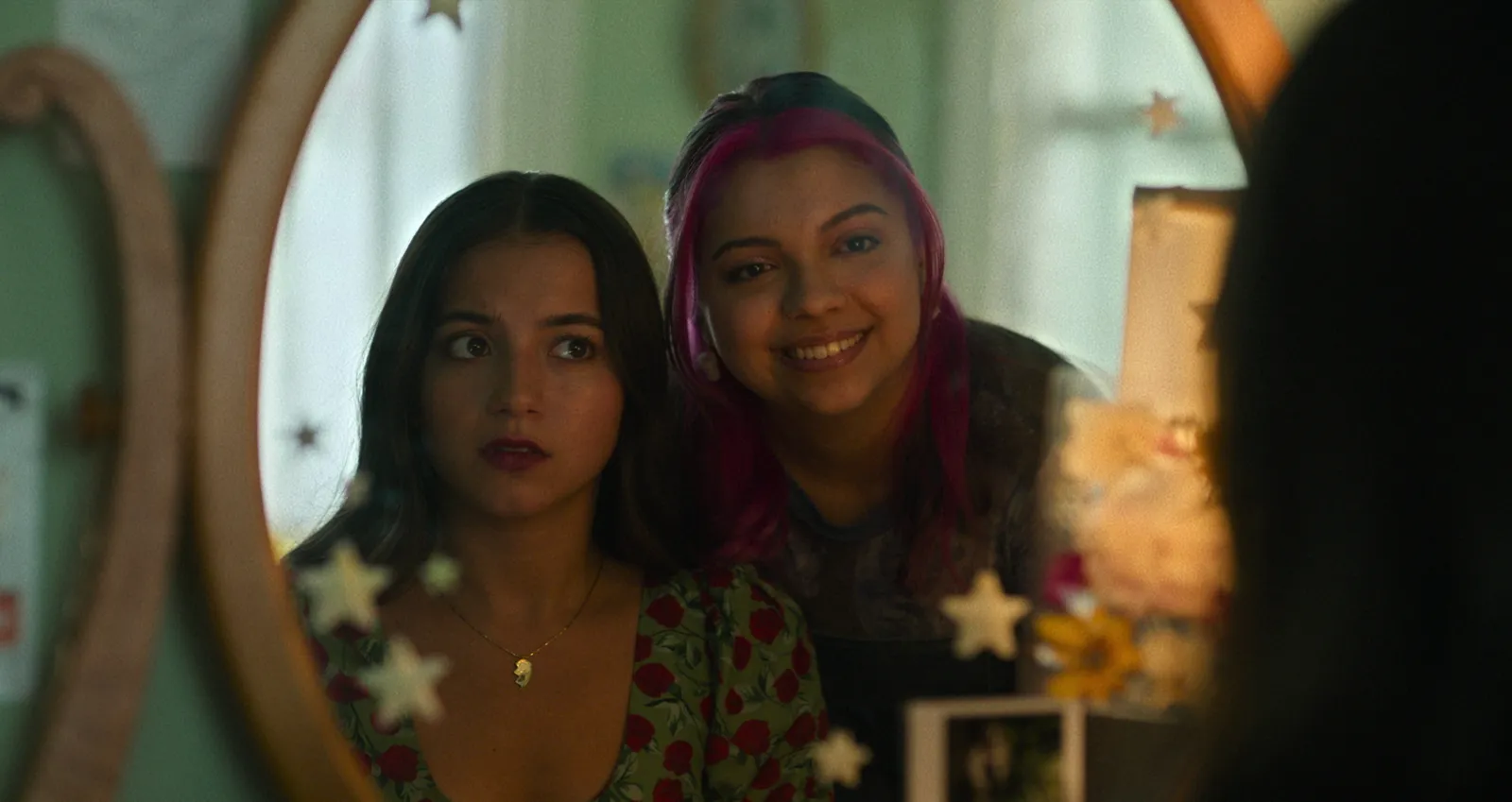
His most personal work is Turtles All the Way Down which draws on his experiences with anxiety and obsessive compulsive disorder (OCD). It also features a young woman, Aza Holmes (Isabela Merced) as the protagonist. In Hannah Marks’ directorial hands, Aza’s struggles dealing with illness, her lasting grief, and her inability to define what is driving her is elevated by Marks’ perspective as much as it is by Green’s.
Aza is a high school student who has a combative relationship with her therapist, her mother, and herself. Her OCD manifests as fear of infection. Her internal narrative is dominated by statistics and facts about bacteria replication and cell structure. The noise (stylized as noise and static) in her brain only needs a tiny trigger and she goes into meltdown mode. Aza can’t stop picking at her scabs, she also can’t manage her compulsions. She doesn’t want them to be her defining characteristic. The push and pull between accepting she is different, rejecting her difference, and externalizing that conflict has bled into most of her relationships. Aza resents her mother (Judy Reyes) because it is easier to target someone who unconditionally loves her than it is to admit her own anxiety about the future. Plus, her mom is the parent who is still around after her dad died suddenly when she was a child.
Aza is bolstered by her best friend since childhood, Daisy Ramirez (Cree) who is freewheeling but also aware of Aza’s illness. Aza feels the most “normal” when hanging out with the slurpy sipping firebrand whose devil may care attitude complements her own incertitude. Aza feels less like a “microbial fiction and bacteria factory” when she’s driving Daisy around in Harold the car singing to OutKast, or taunting the local Applebee’s waitress, Holly (Hannah Marks) with their coupon ordered meals.
It’s Daisy’s bluster and confidence which gets Aza involved in solving the disappearance of corrupt Indianapolis industrialist Russell Davis Pickett because there is reward money on the line. Aza met the billionaire’s son Davis (Felix Mallard) at “sad camp” when they were younger, and he was grieving the loss of his mother. Their clumsy attempt to Nancy Drew the mystery leads to Aza genuinely reconnecting with the increasingly smitten and gentle dreamboat who is stuck in an expensive purgatory. There is no inheritance for Davis or his much younger brother Noah because their father left all his money to Tuatara research.
Davis fits into the conventional non-conventional “Prince Charming” of a lot of recent young adult-oriented romances. His shared trauma and disaffection with the state of his life that makes Aza feel more comfortable sharing her hopes and dreams and honesty about her condition with him. They connect because their “hearts are broken in the same place.”
Davis is wealthy enough to just hand Aza the equivalent of the reward money to her in a box of Pop Tarts for her to share with Daisy. Aza isn’t rich – she and her mom get by despite things not being fancy. For Daisy, whose family is poor, it’s a life changing amount.
Turtles All the Way Down is smart enough to treat its “conduit” characters with respect. It’s Aza’s story, but Daisy and Davis aren’t reductive plot devices who exist solely for Aza to communicate how overwhelmed she is by her fixations. Yes, it’s handy that Aza’s boyfriend has a private jet and can fly her across the country so she can meet a professor (J. Smith-Cameron) she wants to study with one day who helpfully explains infinite regress via the titular analogy. And, yes, Davis’ respect for her boundaries, intellectual, and emotional generosity towards her does border on him being in the “too good to be true” category. However, the film doesn’t forget he is suffering. He and his brother have been made pariahs because of their father’s deeds and, whether they like it or not, they have inherited the Pickett name. Davis must fight for his own survival and that of Noah.
Daisy’s patience is not infinite for Aza. Her romance with Mychal (Maliq Johnson) means the original friendship trio gets unbalanced but she reminds Aza that for years she has done things Aza’s way without Aza even realizing she has been doing it. Aza’s OCD has made her often incurious about other people’s feelings because her feeling are too big. Aza had never read Daisy’s immensely popular Star Wars fanfic, and she didn’t want to support Mychal’s art show because of its location and her disgust with having to interact with “other teens” in a potentially unsanitary environment.
Mental health, especially for teens, can be a difficult topic for filmmakers and writers to discuss with nuance. OCD itself is a complex condition. Turtles All the Way Down manages to explain and destigmatize one of the ways it manifests while admitting that it also makes life hard for the people close to someone with it. Aza’s reality and subjective experience is not dismissed by extending empathy to the people who love her. Aza is greatly loved, but she’s also at times a straight up pain in the ass. The two things co-exist in life. Aza says, “I’d kill to be like normal people,” but some normal people have prisons that are also not of their making.
Hannah Marks’ direction and excellent performances by Merced, Marks, and especially Cree, who is quite the revelation, provide extra substance for Green’s bildungsroman. Turtles All the Way Down is a good yardstick measure for young adult dramas. Get a good cast, try to minimize the cliched dialogue, provide balance – let it be as funny, scathing, messy, sad, and imperfect as the characters are. Daisy tells Aza, “Love, Holmsey, is how you become real.” Real talk? Being real means life is never going to be a breeze, but it will probably be mostly okay if you work on it and you.
Late winter and early spring are often a time when studios will toss films that aren’t summer blockbusters, four quadrant pleasers, or fall prestige dramas into theaters and hope they stick. Many original sci-fi, action, and horror films rule the box office, especially if the February superhero movie is a bit of a dud like last year’s Ant-Man and the Wasp: Quantumania or Sony’s desperate move to keep their hold on some Marvel cash, Madame Web.
Luckily, it’s also a time for some possible awards darlings. After all, both the Sundance and South by Southwest films can finally start trickling into the theaters to see how they play in limited release with actual audiences. Some of the most inventive films of the festival have an opportunity to pop into theaters and capture a little magic.
This year, a quartet of festival films found distribution and varied wildly in tone, technique, and story. It is always exciting for theaters to show general audiences something slightly different than the usual fare. All four are potential dark horses when it comes to the Best Original Screenplay category.
Problemista, a holdover from 2023, is by beloved comedy writer Julio Torres. It’s inventive and playful; fans of Torres’ strange sense of humor will be immediately satisfied. More importantly, it also touches on the tremendous anxiety immigrants face in the morass that is the U.S. immigration system. Awards bodies tend to support a comedy with a message. Even with that important message, Problemista could be too outlandish even for dark horse status.
Similarly, The American Society of Magical Negroes, written by Kobi Libii, is a film that has a very intriguing concept. A group of Black people are endowed with magical powers in order to try and calm the fears of White people. Unfortunately,there’s also a romantic subplot thrown in. The film tries to balance its message and the chemistry of the two romantic leads and never quite finds its footing. The opposite of Problemista, it is too simple and crowd-pleasing to be an actual dark horse for awards consideration.
A film that is likely the strangest of the year, Sasquatch Sunset, written by David Zellner, has a chance to sneak into the conversation at year’s end. The odd story focuses on a family of sasquatches attempting to survive in a world run by humans. It accomplishes storytelling without dialogue, which, while impressive, will likely hinder it in this category. However, because of the lack of exposition, it may draw attention to the performance of the actors under the makeup. As an outside chance for nominations, it’s a doozy and could be comparable in surprise to “The Fire Inside” as Best Original Song from last year’s nominations.
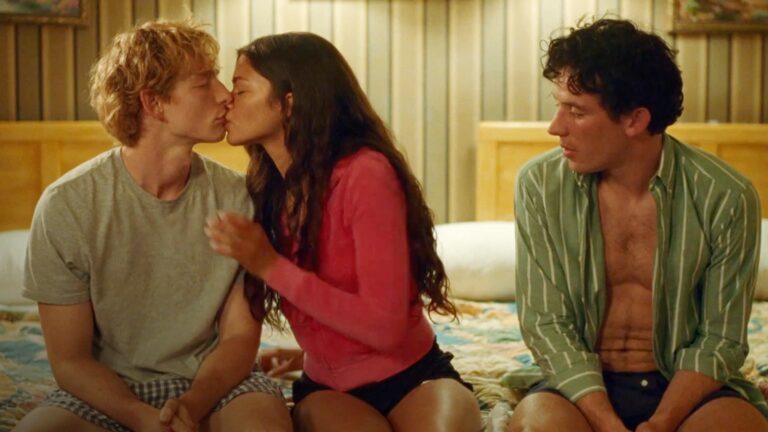
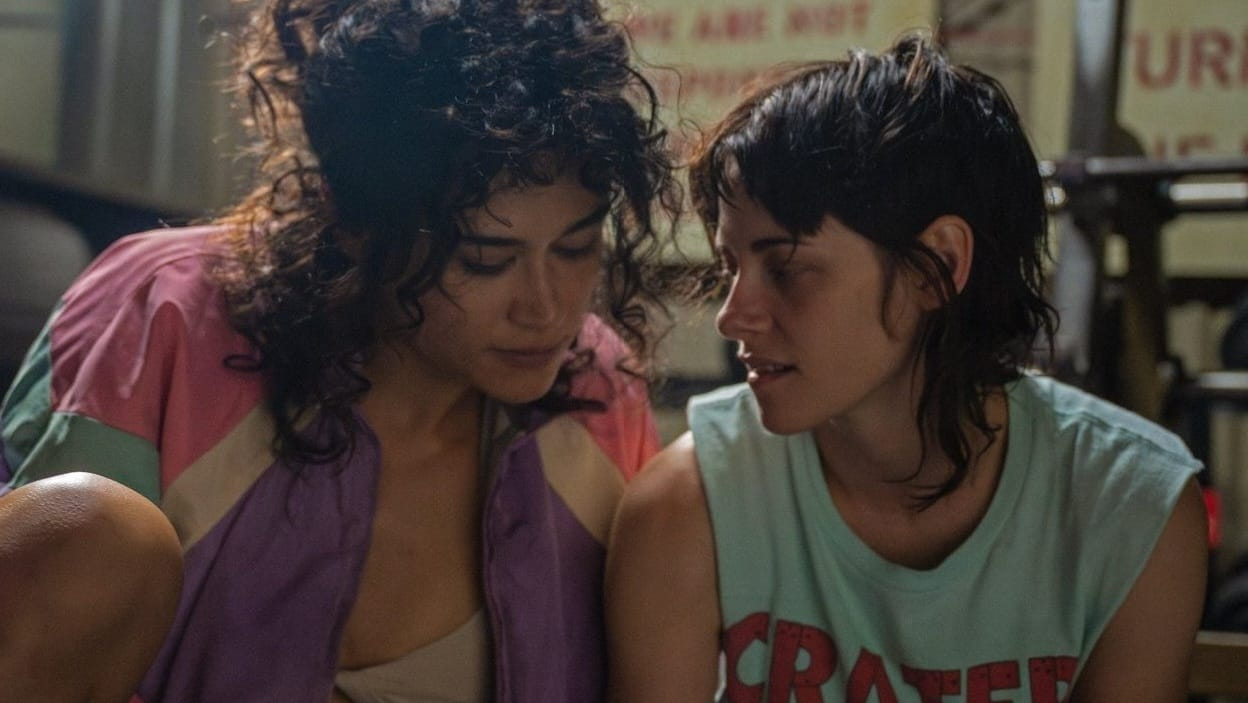
The most intriguing of all the potential dark horses has to be Love Lies Bleeding, written by Rose Glass and Weronika Tofilska. The screenplay has a little bit of everything. It’s part twisted crime story, combined with both a lesbian romance and a complex father-daughter relationship. It’s rightly getting comparisons to the fantastic work of the Coen brothers for its dark humor and tangled metaphysics. Never count out a head trip of a movie in this category. I just hope it keeps its stamina as it is still very early in the awards year. The likeliest of the early 2024 releases to make it all the way is Challengers. Written by Justin Kuritzkes, partner of 2023 nominee Celine Song (Past Lives), Challengers is smart, layered, and crackling with sexual chemistry. Maybe the most impressive thing about the screenplay is the creation of Kuritzkes’ characters. There’s the constantly maneuvering Tashi Duncan, the love-sick Art Donaldson, and the roguish Patrick Zweig. They’re characters that defy stereotyping in a game that’s complicated but easily followed back and forth. It’s tense, teasing, and oh-so sexy. It would be surprising if five other films could usurp the prime position Challengers is in. But it is a very long year, so we shall see what summer and beyond has in store.
Director: David Leitch Writer: Drew Pearce Stars: Ryan Gosling, Emily Blunt, Aaron Taylor-Johnson
Synopsis: A down-and-out stuntman must find the missing star of his ex-girlfriend’s blockbuster film.
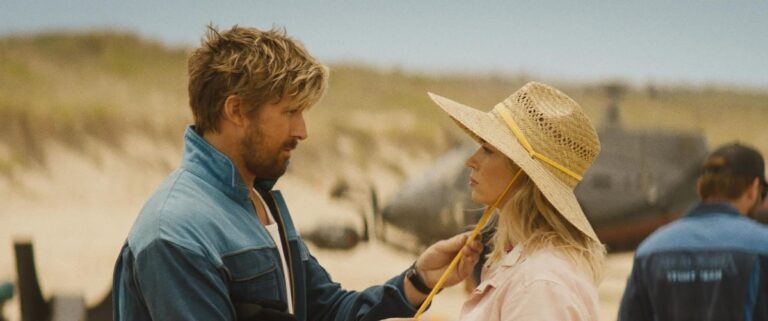
The Fall Guy seems to have caused an epidemic of random masses of people grabbing their stomachs and laughing from their guts to their hearts’ content. Now, some of the jokes in The Fall Guy by Ryan Gosling do work; he always had an underappreciated comic delivery. It’s like when good-looking people make a joke, and you laugh because they are beautiful and want their eyes to keep piercing your soul. For example, if Jennifer Connelly told me a joke, I’d proclaim her the next Miriam Maisel.
However, Drew Pearce’s script is not as amusing or clever as he thinks it is or can be. The final product has its moments, but for all intents and purposes, it is a bombastic misfire that’s a recycled effort of ’90s action film plots, thinly bearded with a constant barrage of stunts that lack the visceral quality you would expect from a director who cut his teeth as a stunt work coordinator, David Leitch. The special effects look more like Leitch’s Hobbs & Shaw than his (uncredited) work on John Wick.
If The Fall Guy is a love letter to stunt men and women, then it is a spurious one.
The story follows Colt Seavers (Gosling), a stuntman who has the world on a string. The man loves his job. Colt is primarily a stunt double for the world’s biggest action star, Tom Ryder (Aaron Taylor-Johnson). He is also dating a beautiful camera operator and aspiring director, Jody Moreno (Emily Blunt). All three are working on Rider’s latest action spectacular when Seavers suffers a terrible accident and quits the business for good.
Colt is now parking cars at a restaurant for all the free burritos he can eat. That is until he gets a call from a big Hollywood producer, Gail Meyer (Ted Lasso’s Hannah Waddingham), who needs his help. Jody is now helming her first feature film, and Ryder has gone missing. Gail tells Colt he must locate Ryder within 48 hours, or the studio will shut down the movie for good. This means that Jody, the love of his life, may never get another chance to realize her dream.
Now, please repeat the plot of The Fall Guy to yourself again. Then ask yourself, why does a prominent Hollywood studio executive want to call a former stuntman from halfway across the world to investigate, in a foreign land, with zero investigative skills, to find a Tom Cruise-level actor before the studio does? This is, I do not know, uh, yeah, the word I think would be stupid. Why did Gail not hire a private investigator on her own? Has it ever crossed her mind?
This is a contrived plot, but if you have seen almost any ’90s mystery action thriller, the plot is so well thought out that you know precisely who the yet-to-be-unveiled villain will be almost immediately. And yes, the film never connects the television plot where Colt moonlights as a bounty hunter in the film’s script. This makes that mistake even more galling, even if the director is banking on audiences not to question it because of the action and star wattage on screen. I’m sure this part was left out in case they want to make a sequel for franchise purposes.
The Fall Guy is about a good 30 minutes too long. There are a few mirror-scene transition issues; you don’t necessarily need to learn about stunt work. The audience is smart enough to realize that several scenes begin to become apparent fillers and distractions due to the lack of story and plot. For instance, the scene with Teresa Palmer fighting Gosling’s Seavers for no reason is a waste of time. Academy Award nominee Stephanie Hsu pushes a minor plot point but introduces the scene-stealing Aussie Kelpie. Surprisingly, the recurring joke with the canine comic doesn’t get old fast and is more of a satirical commentary on the stunt work of dogs in movies.
The Fall Guy is not without its charms, especially the chemistry between Gosling and Blunt, even comedically. Frankly, Gosling has chemistry with everyone, including the banter between the star and Nine Day’s Winston Duke and begging Taylor-Johnson’s Ryder to eat some fat and glucose to help with his cognitive skill set. The film has a wonderful comic energy and attitude that can be infectious, but in this case, less would have been more. The soundtrack is stellar, with a meticulously inspired needle drop placed in almost every big action scene.
The big scene the film leads up to captures the film’s essence, and the wink to the industry joke before the credits with a special guest star will draw laughs and cheers. I even enjoyed the teamwork of stunt team workers behind the scenes to help Colt and Jody accomplish their goals. Yet, it comes back to the plot that makes the film unbalanced.
For instance, there is a clever scene with a piece of evidence where Hollywood technology is used to frame someone. Yet, everyone is so focused on silencing the “patsy” that no one bothers to ask themselves how they would silence the ten witnesses to the issue, making the effort pointless. There’s also a plot point where bad guys are looking for a witness hiding but then working in plain sight, yet the bad guys never think about looking for them in the exact spot where they would be.
If you like your films with some thoughtless errors but still some mindless and charming fun, The Fall Guy will most likely scratch that itch. If you need something smarter from Hollywood popcorn films, The Fall Guy will be an amusing diversion that ultimately will leave you disappointed.
On this episode, JD and Brendan discuss the new Mufasa trailer, its wonky visuals and how it seems to be retconning The Lion King! Whether you’re a visual person or a story person, there are reasons to be dubious, even if we’re still big fans of Barry Jenkins.
On this episode, film critic Cameron Ritter joins JD and Brendan to discuss Luca Guadagnino’s new sexy film Challengers! There’s plenty of fun to be had with the film and the conversation that follows is an equally compelling experience. It doesn’t happen for us, but boy do the fellas get into on this review.
This week on the InSession Film Podcast, Ryan McQuade of AwardsWatch joins us as we begin our Best Picture Movie Series by discussing Alfred Hitchcock’s 1940 film Rebecca! We also discuss what would have been with Quentin Tarantino’s The Movie Critic and JD tells a touching story of taking his son to see Spider-Man 2.
Check out this week’s show and let us know what you think in the comment section. Thanks for listening and for supporting the InSession Film Podcast!
– JD’s Story (4:48) To open the show this week, JD tells a story of taking his son to see Sam Raimi’s Spider-Man 2 as it re-released in theaters last week. We all have those movies that are near and dear to us that we cherish, and there’s something special about getting to share those moments with your children. For JD, it ended up being a near-religious experience getting to have that moment last week.
– The Movie Critic (26:33) There was a report last week that leaked a potential premise for Quentin Tarantino’s upcoming final film dubbed The Movie Critic that would have seen his previous movies existing in the same universe. It would have seen all of his classic characters (and the actors that portrayed them) come back into the fold for Tarantino. We wanted to talk about how fascinating that could have been given Tarantino’s style and approach to cinema.
– Best Picture Movie Series: Rebecca (1:01:24) We begin our Best Picture Movie Series in the 1940s and with Alfred Hitchcock’s 1940 classic Rebecca. It’s hailed as one of Hitchcock’s best films and one of the better Oscar winners for Best Picture. For the most part we do reiterate that praise, however; there are a few questions raised as to the final act and its somewhat strange narrative detour.
Best Picture Movie Series: How Green Was My Valley
Help Support The InSession Film Podcast
If you want to help support us, there are several ways you can help us and we’d absolutely appreciate it. Every penny goes directly back into supporting the show and we are truly honored and grateful. Thanks for your support and for listening to the InSession Film Podcast!
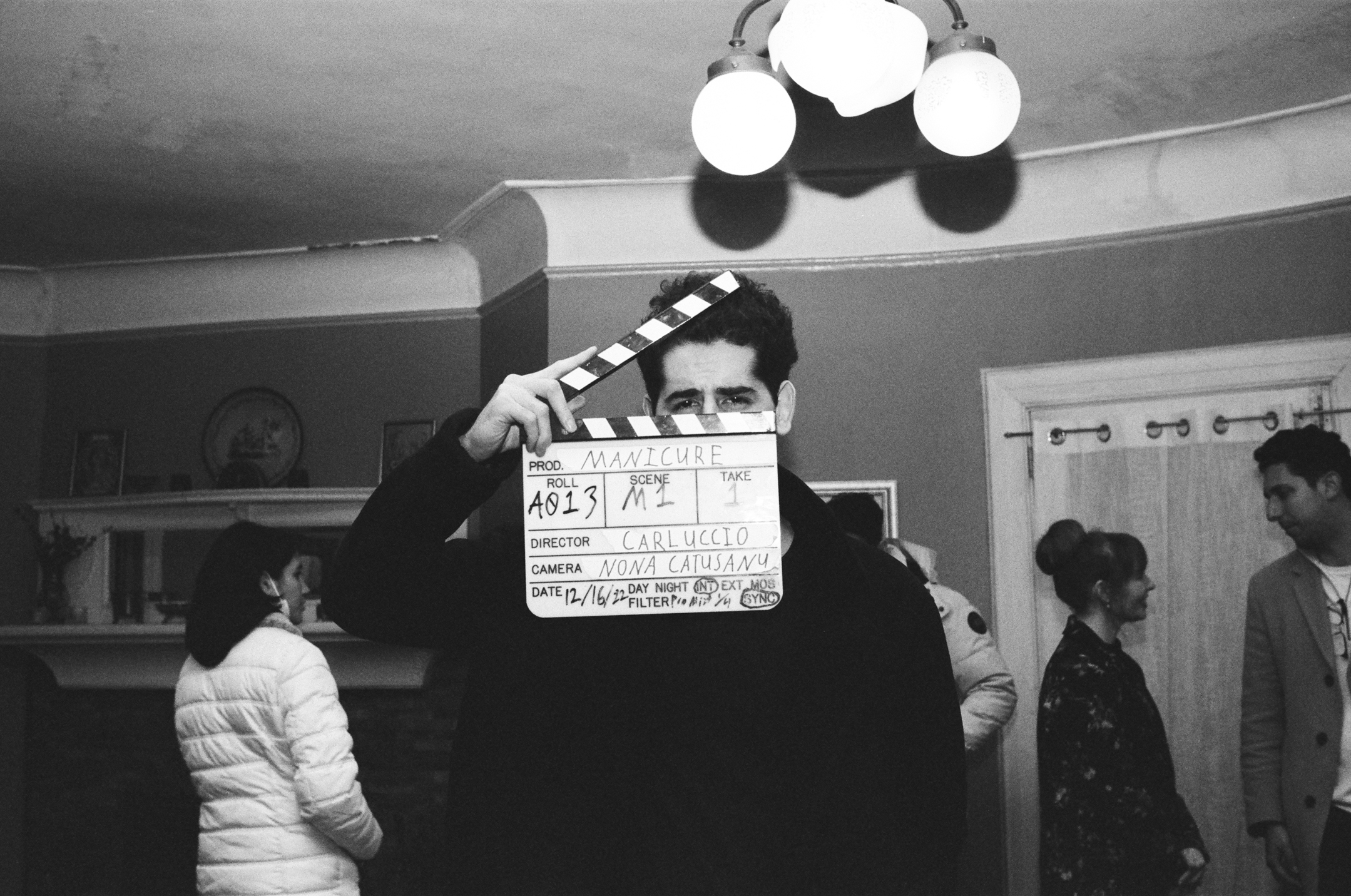
Manicure is a dark female body horror short film that explores body dysmorphia, mental illness, and the pressure the modern person (in this case a 30-year-old protagonist) puts on themselves through the lens of a manicure gone wrong when Eleanor’s anxiety and demand for perfection turns her perfect manicure session into a bloody mess.
Writer Jaylan Salah interviews Carlos Tejera (Carluccio), co-writer and director, as well as Jordan Sarf, writer and producer of Manicure.
Jaylan Salah: The first shot was spectacular, almost like a ritual. I didn’t know if it was a sushi bar or a manicure salon. How was the shot established?
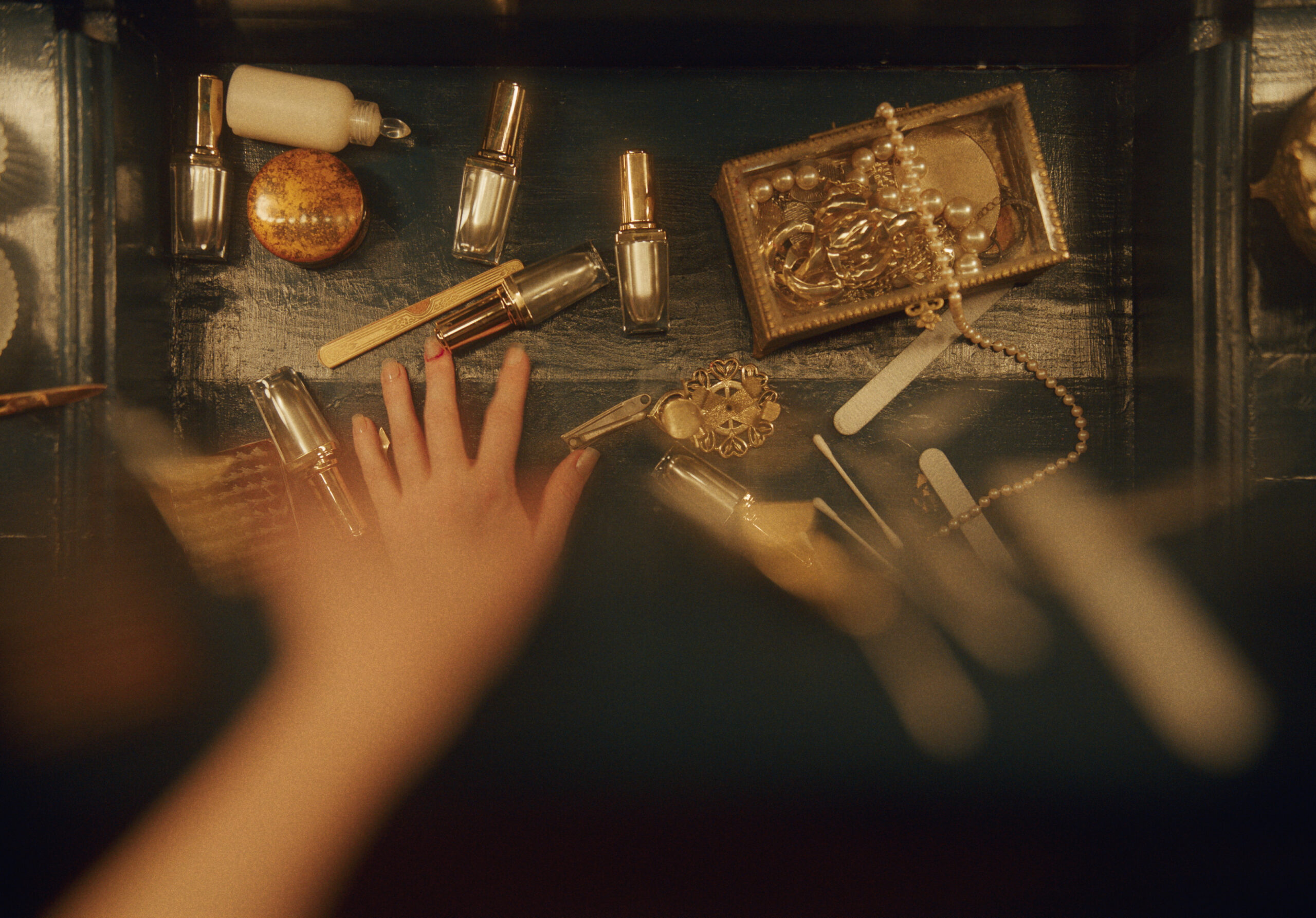
Jordan Sarf: When you have that pressure on yourself, everything needs to be a certain way. Like you said, as if it’s a ritual. Having Eleanor –the character of the film- lying about all the tools in a specific way was a powerful thing to say. She’s just doing her nails, why is she going the extra length? There’s something different going on. So with the opening shot, it was as if we were saying: this is something people do every day but we’re gonna see it through a completely different light.
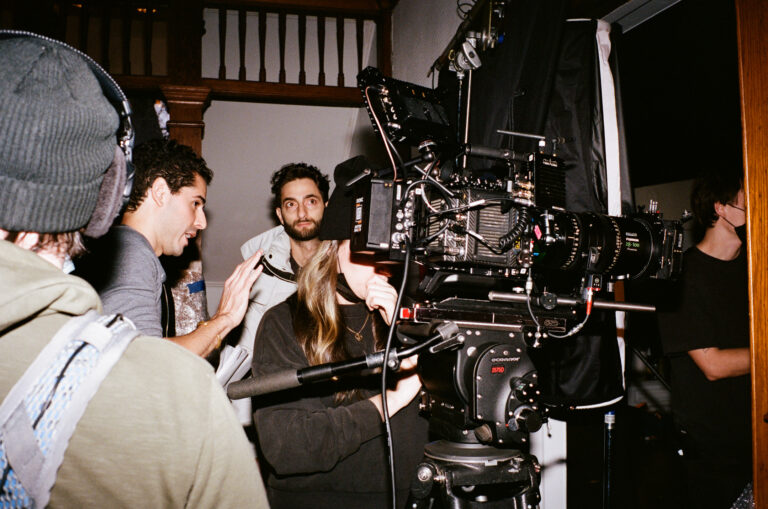
Carlos Tejera: The first shot mimics the evolution of the narrative – slowly pushing in, getting more intense until her flow is interrupted and we get the first edit. The angle sets the voyeuristic tone of the film; she’s being judged by her alter ego. I always loved the idea of introducing the character’s shaky, manicured hands before revealing her face. On a technical level, the camera was on a dolly, facing down 90 degrees while the two ACs pulled focus and zoomed in remotely.
JS: Jordan, how did you and Carlos get together and decide to start working on this film?
Jordan Sarf: I met Carlos 10 years ago by accident during a film program in LA. The following summer –I hadn’t talked to him, and we each went to another class- I coincidentally ran into him. I knew this was someone I wanted to work with. We each went to college, then started working on [separate] projects. This is a project [Manicure] I wrote probably 8 or 9 years ago. It was important for me to talk about how people have these internal pressures and how sometimes it could be so excessive that we’re taking them out on ourselves in a physical way. I knew it was something I wanted to tell and Carlos was the guy to bring it to life. I worked on the script, he polished it, and we worked together to make it happen.
JS: Carlos, How did you achieve the look of the film with your cinematographer? The coloring, the framing within framing? Blocking actors?
CT: Before pre-production began, I worked with visual artist Manny Rodriguez to storyboard every shot from beginning to end: this included the angles, the blocking, and the editing.
Then, the insanely talented Nona Catusanu came on board to shoot the film and she created several fascinating mood boards for each moment. We both wanted the camera to be as meticulous as the character and we referenced films like Phantom Thread, Spencer, Rear Window, The Shining, and most thematically obvious, Black Swan throughout the process.
Similar discussions took place with Violet Morrison, our fearless production designer, about the set design and colors – there was a friendly battle among the three of us (Violet, Nona, and I) on whether the room would be red, green, or the final blue. These conversations are always fun to have with passionate artists like them. Ultimately, the character’s room is inspired by Vincent Van Gogh’s “The Bedroom,” painting a parallel between the character’s mental health and the tragic life of Van Gogh. Violet did a phenomenal job!
JS: Jordan, I love that you picked a female body horror story to tell. This is one of my favorite genres. So why did you choose this feminine detail [manicure gone wrong] to flesh out your story?
Jordan Sarf: Now and then I get a manicure because I think it’s a soothing thing. My sister and my mom would get their nails done regularly and I would look at them and think, “Wow, their nails are nice,” but they would reply, “No, this is chipped.” Or “This nail got messed up.” So I wouldn’t know that part but women like my sister and my mother would know. When I noticed their behavior, I thought: wow this is something really small but what if it’s really important to someone that the slightest infraction could set them off and completely ruin the whole experience? At the end of the day, it’s a relaxing thing, not a massage but it’s nice. So I thought why don’t you take something so-called peaceful and show it in a completely different light?
JS: Carlos, How did you manage to capture awkwardness so perfectly on screen?
CT: On a technical level, most of the feeling is conveyed through sound design and music –I owe immense credit to Alex Wakim, our incredible composer for creating such an iconic atmosphere.
However, the real answer is Stef Dawson’s exhilarating performance; her behavior as the character sells it. If she had been relaxed in the space, the audience would’ve likely felt relaxed too. The film set was very cold the weekend of the shoot, so Stef took that and used it for the character. She is visibly shaking throughout the film and it added another layer to her character.
JS: Jordan, how did you use Eleanor’s tale [the manicure gone wrong] to comment on mental health or mental problems that people go through or how they could escalate beyond control?
Jordan Sarf: Like I said, I don’t get manicures too often. But seeing someone go through a routine every day, and showing how somebody not only puts too much pressure on themselves to be perfect in that situation, but takes it out on themselves when they aren’t could be relatable to anybody. And we used the manicure as the medium for that so that people would relate to it their feelings. We went to film festivals, most recently the Woodstock Film Festival, and an old woman came to me after the screening and said, “I connected with that film. I don’t get mad about my nails but I felt exactly the way she feels.” A lot of guys also came to me and said they feel those pressures. So it’s not about the act of a manicure itself but the feelings she feels towards herself and what is happening around her are universal to people now.
I also have to give Carlos a lot of credit. I have been writing this script for so long. Originally, I started writing it when I was in high school because using my high school self [for inspiration] was easier as I was going through more of the fitting-in pressures than when I went to college. It was originally going to be more of a student-style film where the main character would be a student working on homework. Then as I got older, it transitioned to a different story because the older version felt more specific and I wanted to be more universal. The manicure thing clicked with me immediately.
Carlos did a great job. I worked with him for about 6 months to a year. We talked about the idea and how we needed it to look. We got funding together and eventually landed Stef Dawson who stars as our lead actress. She fell in love with the project. Her background is The Hunger Games so it was cool working with someone of that caliber. She brought her personal collection to the film as well when we told her about the idea and why we were making it.
JS: Carlos, How do you guide your actors through these tense situations and how do you ensure a safe environment for your actors?
CT: I have extensive conversations with my actors before shooting. We explore what’s at stake, the weight of each moment, the relationship among characters and things (even details that are not explicitly referenced in the final product), and ultimately, we get to connect as people on a more philosophical level so that they feel safe with our team and so that there is no barrier or fear to communicate on set. These early conversations allow a flow while shooting, in which actors arrive with a solid idea of what they want to do. So my sets tend to be quiet and calm; everyone knows the game plan and focuses – I’m extremely grateful for this cast and crew!
JS: Jordan, do you ever consider directing or are you just interested in the writing process?
Jordan Sarf: I’d love to direct. I do it on the side for fun. I know my strengths are in the writing/producing sides of things. So after I wrote the script and handed it to Carlos, I said, “Alright, I’m gonna set up the Ferrari but I’m gonna give you the keys to drive the race.” He hit the ground running and did a great job. I love to direct, though. I just knew that with a film this serious, Carlos –a really strong filmmaker with very good visual ideas- was the guy to bring this to life. I didn’t mind handing it to him because he did a great job. There are other projects I’ll direct myself and we balance back and forth.
JS: Jordan, is it true that you don’t like horror movies? Do you envision Manicure as a horror short?
Jordan Sarf: Yes, I don’t like horror movies. When I watch a film like Paranormal Activity I love to research everything beforehand regarding how they made the film [etc.] That way when I watch the film, I’m not as scared. I still haven’t seen Hereditary and Midsommar, and I don’t plan to. But I’ve seen some old-school horror movies like Rosemary’s Baby, and one of my favorite movies of all time is John Carpenter’s The Thing.
We didn’t envision our film to be a horror, but more of a psychological drama. But it was so horrifying after watching it, that we fell in that genre. I embraced it. We went to a lot of horror film festivals and I was scared most of the time. I got over it and what helped me was talking to horror filmmakers afterwards about how they made their films which opened my eyes to the genre and how great it is.
JS: Finally, Jordan, are you planning on turning this film into a feature or are you working on an entirely different project?
Jordan Sarf: So we’re working with two streaming platforms right now to house the great film. Some people approached us about making it a feature. And I have written a couple of ideas. But it [Manicure] is meant to be a short.
We’re working on two new projects, one we’re shooting now in April and the other in June, the one that’s shooting in April is a sports-comedy while the June shoot is a drama that Carlos will direct.
For the month of May, we have six releases in total with two re-editions and a third coming a trio of works from an African legend. The other three releases are new and from this century, including a newly-anointed Academy Award-winner, one that may stand the test of time. This is a big month with a total of nine films from these directors spanning ninety years apart. Here are those special releases, courtesy of Criterion.
A Story of Floating Weeds/Floating Weeds (1934/1959)
Japanese auteur Yasujiro Ozu made his original film in black-and-white and as his last silent film, then remade it twenty-five years later in color. It is a melodrama of an actor coming back home with his traveling company and reuniting with his lover and their son, only to see his new lover turn very jealous and seek to destroy them. Continuing his humanist tradition, Ozu does not stray very far from his original story, but is recreated at Ozu’s highest form. It is a remaking that is refreshing and with more depth.
Peeping Tom (1960)
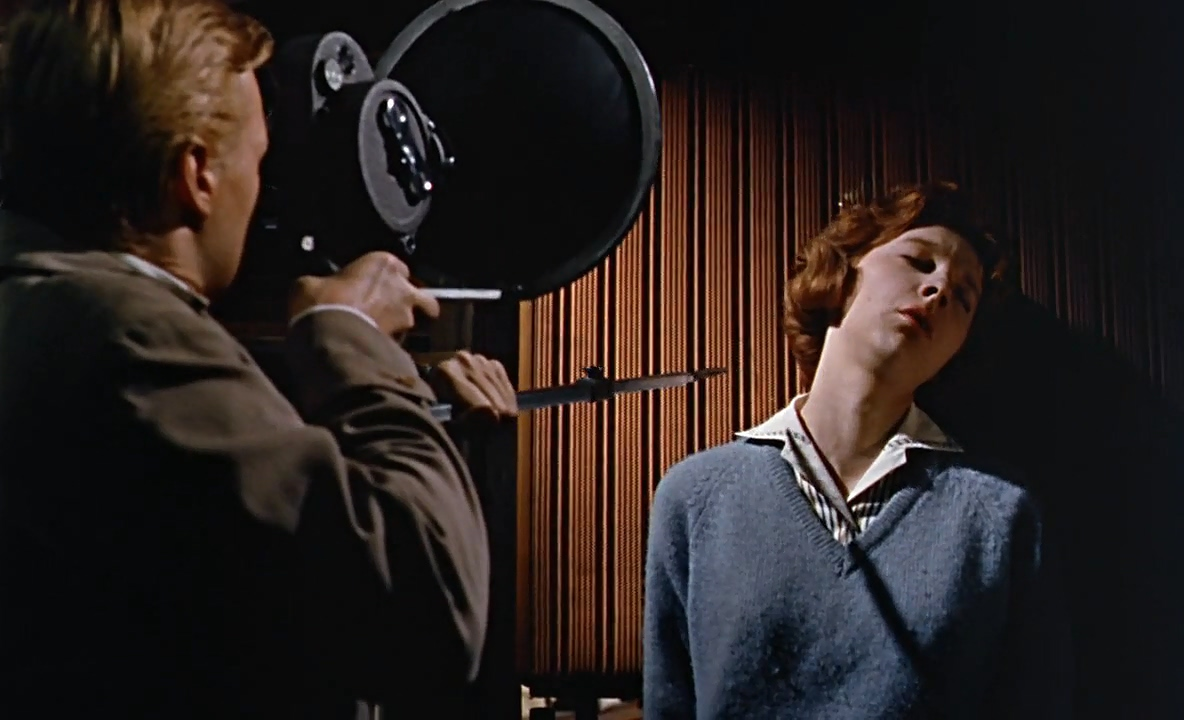
Michael Powell’s first film since the splitting up of The Archers was a film that damaged his career permanently, but would later be re-evaluated as a masterpiece. A photographer who works on a soundstage is a serial killer who loves filming his crimes with a camera. He falls for a beautiful woman, but the dark secrets of his psychopathy are nearly impossible to contain. It is considered one of the first slasher films with its shocking violence for the time, depicting sadomasochism and indecency of women half-naked when the moral police were still around early 60s Britain. Very tame by today’s standards, but so censorable during the period that it was almost banned outright.
Three Revolutionary Films by Ousmane Sembène (1971-77)
Thanks to films like Black Girl and Mandabi, Senegal’s Ousmane Sembène made post-independence African cinema a reality and one the whole world could appreciate. In the 1970s, Sembene continued his sensational efforts on the damage from colonialism, corruption, and religious conflict with a trio of stories: Emitaï, Xala, and Ceddo. In Emitaï, he takes viewers to Senegal in World War II with French forces trying to bring in Black soldiers to fight for them, even though they are still going to be colonized. Xala is a daring satire on massive corruption and authoritarianism through a man with an unfortunate problem upon getting married. Ceddo is a story about the conflicts between Christian and Muslim factions as French colonialists settle in and mirrors conflicts that remain even today in numerous African countries. All three films are Sembene’s way of standing up to the continuing problems in the face of being censored himself.
Girlfight (2000)
Writer/director Karyn Kusama (Jennifer’s Body) made her debut at Sundance with this hard-hitting sports drama of a troubled girl (Michelle Rodriguez) who trains to become a boxer despite objections from her family and others who are skeptical of a woman in a male-led sport. The film was made for $1 million thanks to assistance from director John Sayles, who Kusama had worked for previously, and his longtime partner, producer Maggie Renzi. It is a more gritty look than Million Dollar Baby, which came out four years later, and made Rodriguez a major star as someone who had never acted before.
All That Breathes (2022)
Nominated for an Academy Award for Best Documentary, two brothers in India work to help birds known as black kites, who are injured from pollution. Director Shaunak Sen follows them in their painstaking work to help these birds, while lamenting the downslide of their environment becoming dirtier by the year. It is a poetic story of human-animal interaction with the daily fears of anti-Muslim violence that threaten the brothers as much as much as the rapid urban development is endangering their black kites.
Anatomy Of A Fall (2023)
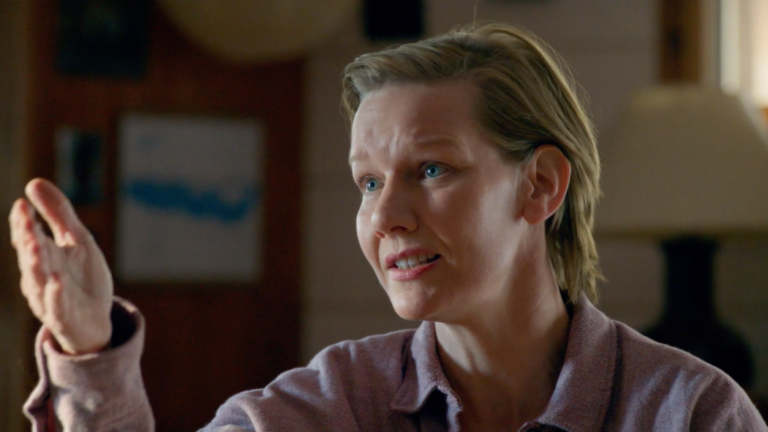
From the moment it won the Palme d’Or at Cannes, Justine Triet’s Oscar-winning courtroom drama was destined to join Criterion. It is a mystery from beginning to end that always keeps its cards close to the chest and forces us to think more deeply about who this woman really is, even if she is innocent. Sandra Huller is an actress who doesn’t need anymore written about her performance. Nor does Messi (Good boy!), nor the performances of Swann Arlaud or the young Milo Machado-Grier, but for Triet and her real-life partner, Arthur Harari, they now have our attention for future films.
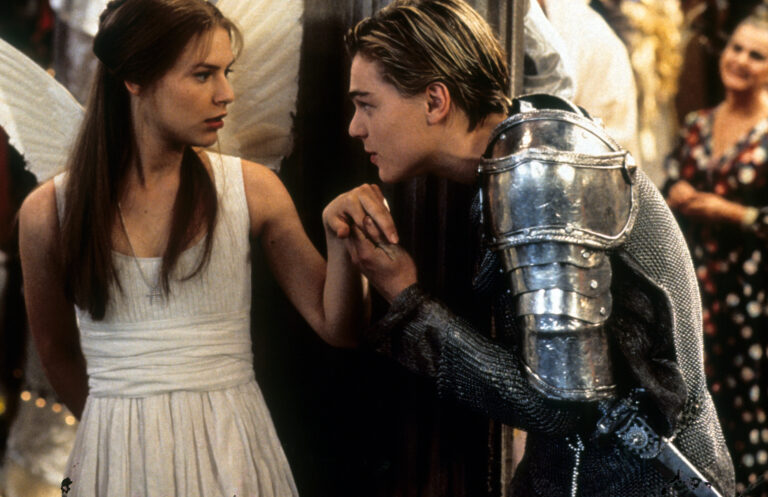
This week on Women InSession, we debate the polarizing Romeo and Juliet adaptations of 1968 and 1996! Whether you’re a fan of Franco Zeffirelli’s Romeo and Juliet or Baz Luhrman’s Romeo + Juliet, there’s plenty to discuss from each of these adaptations. We had a lot of fun with this one.
On that note, check out this week’s show and let us know what you think in the comment section. Thanks for listening and for supporting the InSession Film Podcast!
Breaking News with Francis Galluppi! The Last Stop in Yuma County is on its way!
Francis Galluppi is the kind of cinema freak wunderkind audiences adore. He’s funny, humble, and just wants to share all his abundant passion for movies.
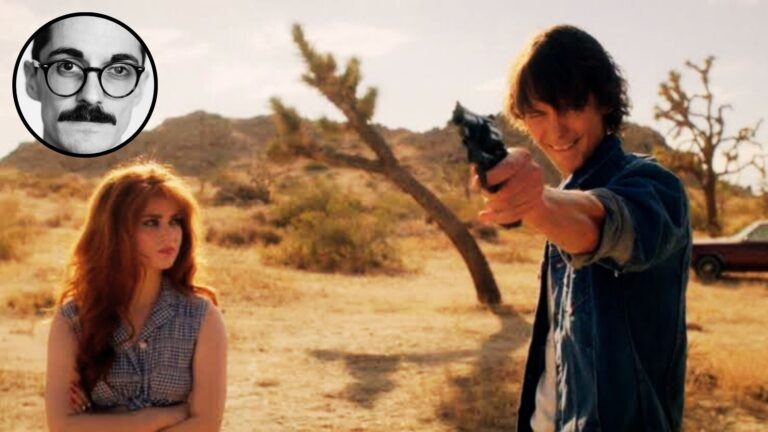
Galluppi’s debut feature, The Last Stop in Yuma County, gives Quentin Tarantino a run for his money with homages to genre cinema wrapped up in a delectable package. A tight and darkly comic script leans into visual cues that are familiar but reconfigured to provide maximum bang for your buck. Even better, it isn’t at all pretentious.
Nadine Whitney chatted to Francis before the debut of his film last year at Fantastic Fest in Austin, Texas.
To give the reader an idea of who Francis Galluppi is there were several places where the asides began to overrun the interview such as the mutual appreciation of Francis’ Hausu t-shirt. “That shit is wild! I fucking love that movie!” he says. Nadine laughs about how it was originally pitched as a Jaws rip-off, but Obayashi let his young daughter shape the narrative… and voila! School girls, a house that eats them, a wicked witch, a weirdo cat. Sometimes, it is good to let your kids do your homework for you.
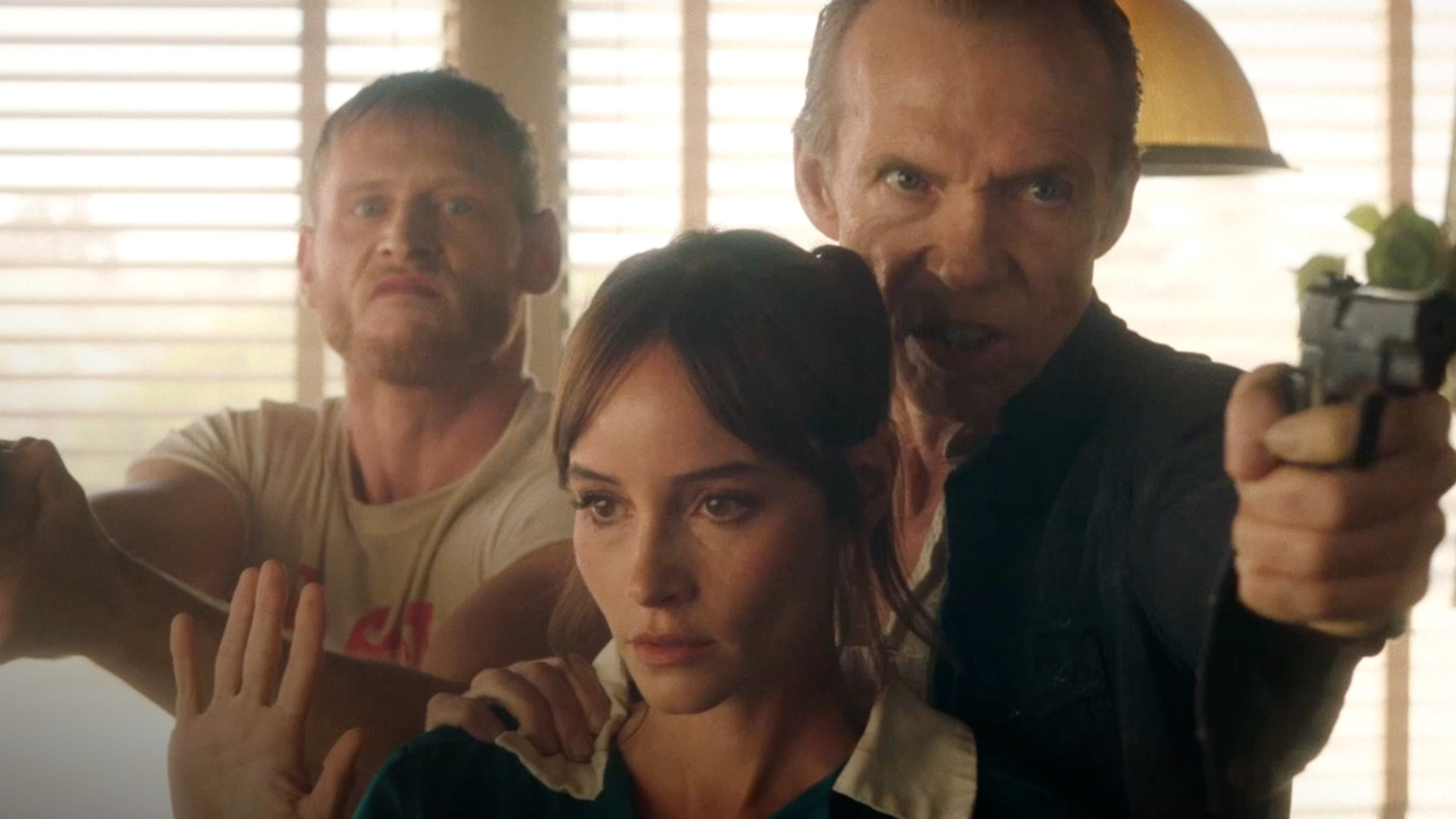
The synopsis for Last Stop in Yuma County is: While stranded at a rural Arizona rest stop, a traveling salesman is thrust into a dire hostage situation by the arrival of two bank robbers with no qualms about using cruelty-or cold, hard steel-to protect their bloodstained fortune.
Nadine Whitney: The Last Stop in Yuma County is your first feature, but you’ve done shorts. How did you get the production off the ground?
Francis Galluppi: Oh, wow… that’s a long story. The short version is that one of my shorts played in Cincinnati in 2018 or 19 and I met James Claeys, the executive producer, there. Basically, he offered me $50,000 to make a feature. So, I was trying to write something really contained in a single room. But obviously it needed more than $50,000. I thought oh shit, we can’t do this for that little. The script went through different variations and, in the end, James ended up selling his house to finance the movie.
We did it completely independently. It was just James and me there so nobody was looking over our shoulders to tell us what to do. We were on our own and it gave us a lot of freedom, but we were also really, really, lucky to end up with what we made.
NW: It’s a great movie and I have to say I laughed so much. Please tell me I am allowed to find it funny considering the scorched earth nature of the film.
FG: Yes! You finding it funny makes me so happy. I’m terrified that people aren’t gonna find the humor in this movie as I’m constantly pitching it as a dark comedy and I’m hoping people get that.
NW: It is ultra-violent, but I was cackling through it. The little off hand references such as “My grandson just moved to Waco to start a ministry.” Miles and Sybil thinking they are a version of Bonnie and Clyde or Charles Starkweather and Caril Ann Fugit with Miles styled as Martin Sheen in Badlands. Plus, genius casting to have Jim Cummings as the star because he is a comedian and he’s done his own horror/genre work.
Which brings me to the cast, which is a smorgasbord of genre icons. You’ve got Barbara Crampton, Alex Essoe, Gene Jones, Richard Brake, and Jocelin Donahue. How did you get those people on board?
FG: I got incredibly lucky. I’ve been a huge fan of every single one of these actors for the longest time. They really were my dream cast. A lot of the actors I already had in mind when I was writing the characters. I had an amazing casting director, David Guglielmo.
I wrote them all personal letters and, thankfully, they read them, and we jumped on Zoom and somehow, we convinced them to do the movie. First, we got five and I was like holy shit like this is crazy. Maybe we can keep it going further. I thought there was no way Barbara Crampton is going to just play a receptionist, but we talked, she looked at the script, and committed to it. Every time we kept stacking another name on there it was like surreal, because, like I said, I just am a huge fan so there wasn’t a single person in the movie that I didn’t already love. With Jocelin, I think the first time we jumped on a zoom I pulled out my House of the Devil merch and showed her that I had it. I embarrassed myself a little bit.
NW: They are all pitch perfect – one of my favorite pieces of casting is Connor Paolo as the mostly clueless cop, Gavin. I swear Connor hasn’t aged a day since Gossip Girl. I also did a double take when I saw Sierra McCormick as Sybil.
FG: I saw that switchboard scene in The Vast of Night I was like this girl is incredible! I wrote a letter to her asking her to play Sybil. Sierra asked me, “Why did you think I could play this character it’s like night and day from Fay in The Vast of Night.” I said if you can do what you did in that film it means you can do fucking anything! Just amazing.
NW: The film is shooting across so many genres it’s dizzying. It’s intense, funny, and self-aware as a moral quandary crime-doesn’t-pay narratives that hits the mark.
FG: I wanted to do my version of the neo-noir slash western. For me, it is a neo-noir but in the daylight. A lot of people didn’t see how it could be noir – but noir is about more than an aesthetic, it is a storytelling tool with loads of ideas which fit into it. Purists might disagree.
NW: Purists would be wrong! Noir isn’t just a gumshoe and femme fatale template. Kathryn Bigelow made a vampire-western-neo-noir with Near Dark. There are science fiction noirs. The wonderful thing about storytelling is the process of creating a mashup to give people recognisable motifs that draw them in to a bigger narrative.
The Last Stop at Yuma County finds the sweet spot where it is a bit meta, but it’s also its own thing. It’s not a copy paste job at all, more an exuberant “We all dig this stuff, yeah?!”
FG: I adore ’70s cinema too, and the movie was sort of my love letter to Don Seigel and Sam Peckinpah. There are heaps of little references like where Miles talks to Sybil about his idea for a heist which he stole from Rififi, which is one of my favorite movies. They also discuss Badlands and Bonnie and Clyde. I just threw together some of my most cherished movies into the mix.
NW: I wanted to talk to you was about the shooting process. You have single location work (mostly in and around the diner and gas station) but there are some other set pieces that are quite expansive.
FG: We had a twenty-day shooting schedule, so it was really tight. Plus, we were in the desert, so the weather was just completely unpredictable. There were days where it was just squalls and rainstorms and our equipment was blowing over and we had to pivot.
I work really closely with Max Fisken, my cinematographer, and we prepped extensively. We had the shot design and a shot list we had photo boarded previously. Every day we got something because it was planned. We’d be ready to do an A shot or a B shot at short notice and move between locations. Nothing could be left on the cutting room floor ’cause every shot was necessary. You need at least an hour to plan a lot of scenes but with the time and budget restraints, we couldn’t fuck around. We had to find and take advantage of every moment. But the cast and crew were amazing and synced with the timing we committed to. We always had to work precisely because everyone was ready to go and use the daylight to our advantage thankfully it was mainly a little easier to get everything.
NW: The film looks slick and more expensive than it was. There are some incredibly smooth shots like what I was calling “low car cam” where the camera was moving in tandem with all the classic cars – bumper cam where it closes in on a car reversing and moves with it. You made reversing or parking a car suspenseful.
The way you build the film is brilliant. You front load so many clues and cues which lead to great pay offs. You also do some classic misdirection. Because of the diner setting being somewhat static, where you point the camera is what immerses the audience. Often you follow eyeline POV for the characters as they try to silently communicate and other times you have the “Hitchcock pact” where the audience knows more than the characters because they have seen more.
The movie is set in 1981 but it has that time stopped still feeling where it could be much earlier because the diner itself is already antiquated.
FG: It is supposed to have that vibe. You only get a specific date a couple of times. If you look at the newspaper closely or notice things like Earline and Robert’s comment about Waco. That was an easter egg because 1981 was when Vernon (aka David Koresh) moved in with the Branch Davidians. I wondered if I could get away with some of the things I put in the script.
NW: Francis, you get away with it because it’s all done so brilliantly. The whole package is top notch. You have created a certified masterstroke as your first feature. It’s pulpy but intelligent. It’s hilarious but also has emotional gravitas. You know the rules of the game so you can break them. I was sold within the first five minutes with the establishing shots and the first joke. I haven’t even mentioned the best part… but that’s something other people can experience.
I’ve done enough selling now it’s your turn.
Why should people see The Last Stop in Yuma County?
FG: I’m a bad salesman, but I’ll try.
The Last Stop in Yuma County is a fucking blast. It’s so much fun. If you want to see violence and comedy and just go on a fun ride with a bunch of fantastic actors that you’re gonna fucking love.
Director: Christopher Smith Writers: Christopher Smith, Laurie Cook Stars: Jena Malone, Danny Huston, Will Keen
Synopsis: After the alleged suicide of her priest brother, Grace travels to the remote Scottish convent where he fell to his death. Distrusting the Church’s account, she uncovers murder, sacrilege and a disturbing truth about herself.
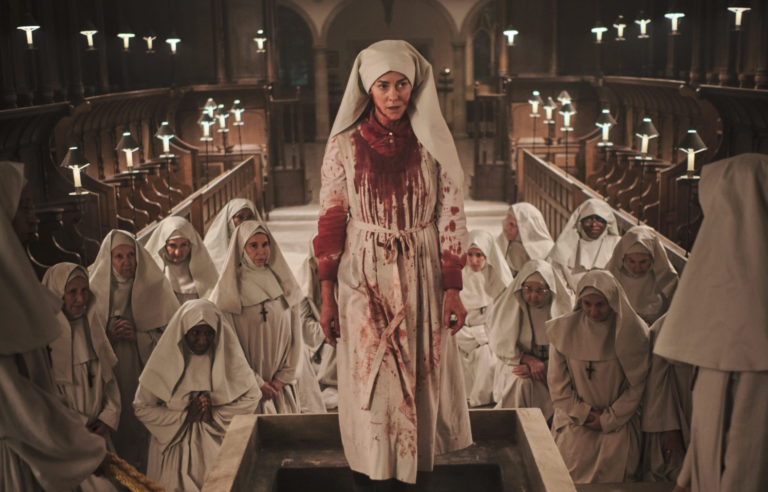
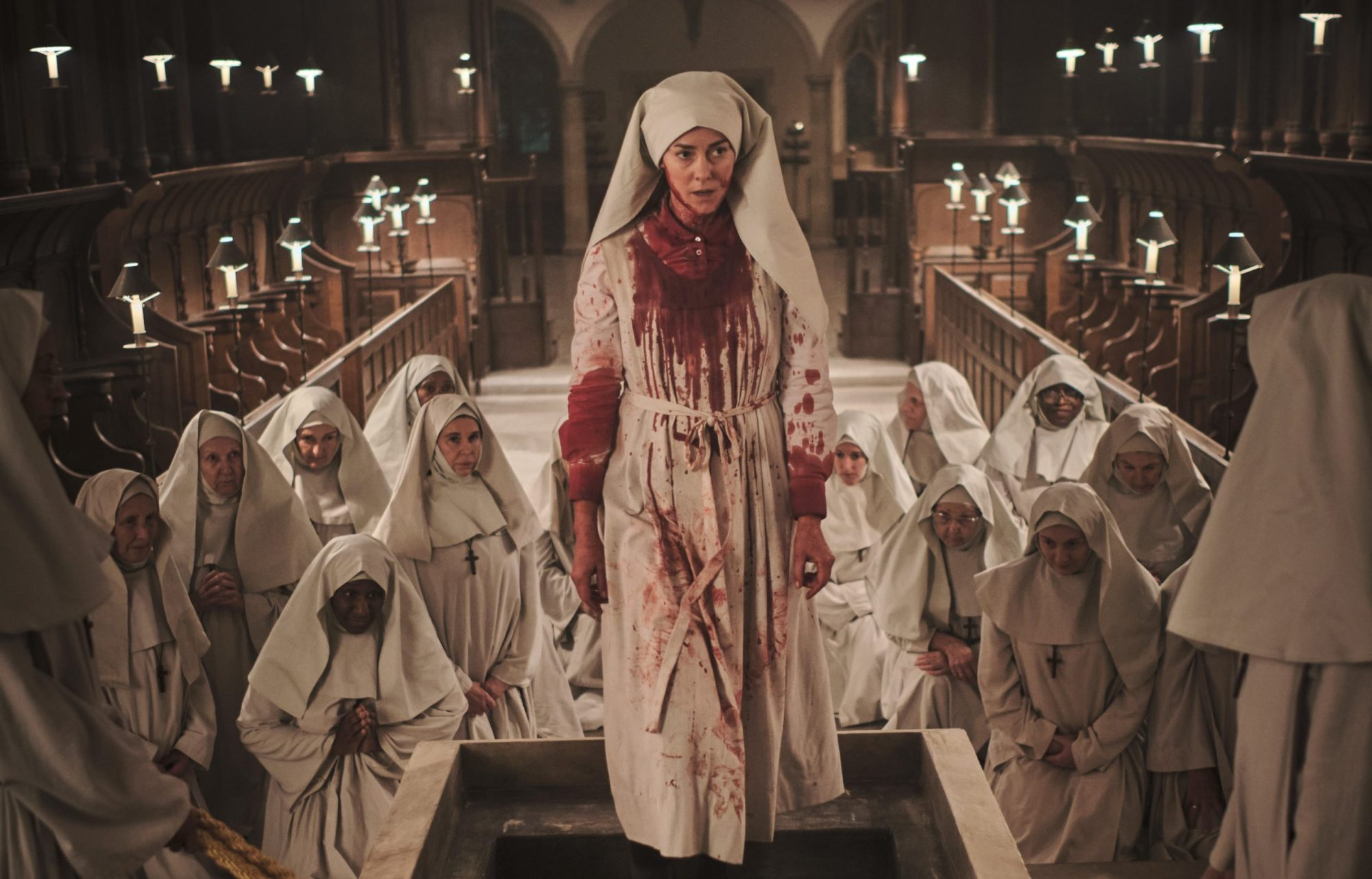
Non-believer Grace (Jenna Malone) travels to an isolated Scottish convent for answers upon the suspicious death of her priestly brother – leading to warped discoveries about Grace’s own past, more disturbing deaths, and rituals to contain the evil responsible in director Christopher Smith’s (Black Death) 2023 nunsploitation thriller, Consecration.
Unfortunately, Consecration gets off on the wrong foot thanks to opening narrations about guardian angels, ophthalmology bad news, and home alone ominous with flickering lights, rattling walls, and a figure in the hallway that makes viewers wonder where this is all going. The police phone with news about the murder-suicide, but Grace insists her faithful brother would not kill himself or anyone else. His extreme fire and brimstone order, however, has nuns seeing the devil and cutting out their eyes while the Mother Superior claims a demon is responsible. Local inspectors are worried about treading lightly in Vatican jurisdiction, but Grace defies the police tape across the abbey ruins and goes to the rocky shoals where the bodies were found for herself before coroner examinations and visions of the deceased. Again the audience’s attention is drawn to why incoherent fainting spells and other’s arguments outside Grace’s point of view are supposed to be significant amid meandering flashes of past warnings, childhood memories of masks and stone circles, and medieval dreams of knights on horseback.
Explanations about her mother being dead and her father being in prison for having killed her mother are better to the point than unnecessary phone calls to her doctor mentor, and Grace sees the cliffside ruins restored with plummeting initiates in white. The nuns say the battle between God and Satan is more important than what’s considered a crime, but brief existential interrogations cut away to reflections that aren’t there, Grace’s nonsensical playing detective, and her brother’s phantom voiceovers about how special she is. She explains his journal is written in their childhood code, saying that he discovered the convent previously tried to adopt them – yet the viewer never saw this research amid numerous walking around the chapel exposition scenes and a nun popping up to say peekaboo. Convenient flashes within flashes and dream transitions happen as rumors of knightly treasures and earthquakes revealing secret crypts are tossed on top of the brotherly MacGuffins. Trips to the dark basement for more contrived visions, violence inducing car accidents, and reading montages of mystical tomes; of course written in their childhood code. Talk of bumping bellies with a dirty man once and seeing visions of black snakes with him lead to slit wrist suicides so the sin will leave you, yet Consecration has no real religious horror or church commentary. A humorous one eyed nun trying to stab people compounds the inexplicable, largely absent inspectors and insufferable characterizations as realizations the audience already knew happen instantly for those now humble and willing to be cleansed. The ineffectual police finally bother to do something but the nuns so active in the crowd surfing ritual minutes before, cower as the evil whooshes and cool flashes show how it was all done complete with blind patients healed by evil and a gun toting nun hit by a car. Unlike Christopher Smith’s most impressive Triangle, the cockeyed Interstellar twists here are reduced to embarrassing silliness.
Father Danny Huston (The Proposition) is called in from The Vatican to investigate but he has two sins: cake and coffee. Though obviously a seemingly ominous figure with young nuns scurrying away in his wake, Father Romero appears reasonable, willingly sharing church history and admitting that the lack of transparency is a constant stain on the institution. He offers Grace their full support and cooperation yet shouts at the nuns in Latin that it is God, then him, in that order, and he will decide Grace’s fate. Romero admonishes creepy Mother Superior Janet Suzman (Nicholas and Alexandra) for trying to fool police and attacking Grace when they need to gain her trust. While there he’s to reconsecrate the grounds, but Father Romero says they’re better off getting rid of all the relics and rumors that give the church a bad reputation – and he’ll do what must be done. It’s more humorous than sinister, however, that he has to shoo away the one eyed nun who’s always underfoot, and our Mother Superior gets more pissy with Grace’s every objection. She runs a harsh regime because we must face the devil and the darkness lest we come under his grip, but what could have been an interesting theological debate grows laughable as our Mother meddles with the police and chants in her jail cell while the peekaboo nun sings.
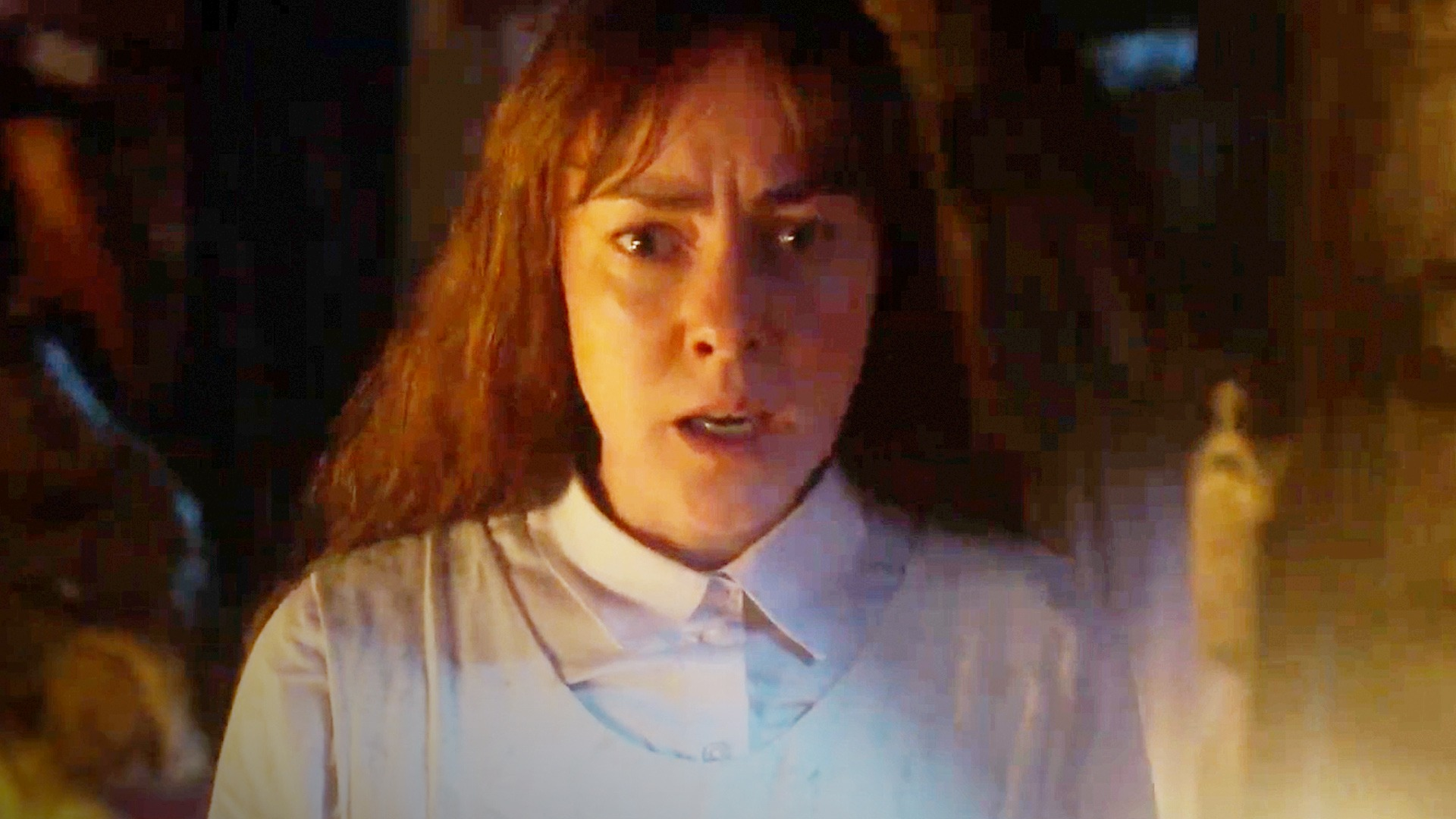
Forced to dress in their novice white, Grace stomps about the crosses and statuary shouting, for as a woman of science, she doesn’t believe in miracles or backward steps to forgive sins. Jena Malone (Love Lies Bleeding) has an uphill battle as our kind of/sort of doctor cum amateur investigator. She refuses to accept the circumstances of her brother’s death, doesn’t believe in demons, and won’t apologize for her know it all behavior. Grace demands no one pray for her and intrudes upon the convent for an explanation even when told the twelfth century church history. It’s apparent to the audience almost immediately why Grace is so unlikable, and we have no sympathy as the deaths around her escalate. She still wears the white habit when she goes to see her dad in prison, and this scene should have come much sooner upon learning of her brother’s death, perhaps opening the film. Unlike all the flashbacks, the backstory is compelling here. Her dad says she is the devil, asking her what it’s like to bring death everywhere she goes. He caged Grace so she could do no harm, but Grace still doesn’t consider she may be the problem, and therein is what’s wrong with Consecration.
This scene is the core of the story, and the rest of the movie is padding while Grace gets a clue. The nuns lay her on the chapel floor in their absolution ritual as the film unravels further by intercutting everything at once, tying Grace’s entire story from medieval times to being found on the beach wet and looping back to the beginning – hitting the viewer over the head too many times with what we already easily deduced. Because of the unintended humor, Consecration also lacks a certain gothic, ecclesiastic atmosphere with no sense of the ancient good versus evil despite the arches, robes, and chapels. Brief daytime scenes of nuns in white hoods going in circles while singing in Latin lend an inkling of the weird and medieval, however the poorly lit dark filming and contemporary blue gradient negates the Isle of Skye ruins and rustic Scottish locales. When pausing at one point, the screen looked entirely black; tight camera shots and frustrating, tough to see scenes make Consecration feel rushed and low budget. The distorted, fuzzy point of view haze and darkness manifested coloring may be a deliberate metaphor, but we aren’t always in the same viewpoint, calling the audience’s attention to how we would structure the picture differently. Despite lengthy end credits meaning this is less than its listed ninety minutes, Consecration is over long, going round and round in a surprisingly insipid mess with inexplicable editing and poor narrative flow exacerbating the windblown story.
Grade: F
Please see my much more positive review of Christopher Smith’s The Banishing
On this episode, JD and Brendan discuss Nathan and David Zellner’s latest, and very weird, film Sasquatch Sunset! The Zellner’s always ride this line of silly and poignant, and this film is their most extreme yet. It’s quite strange but also one of their most moving films yet.