



Long before humanity learned to record history, before civilizations raised monuments meant to outlast generations, and before philosophers sought to organize existence through systems of logic and reason, people gathered beneath the night sky and told stories. They shared them beside fires that held back only a fraction of the darkness, under stars that seemed close enough to touch yet impossibly distant, in a world of beauty, terror, and forces beyond their control.
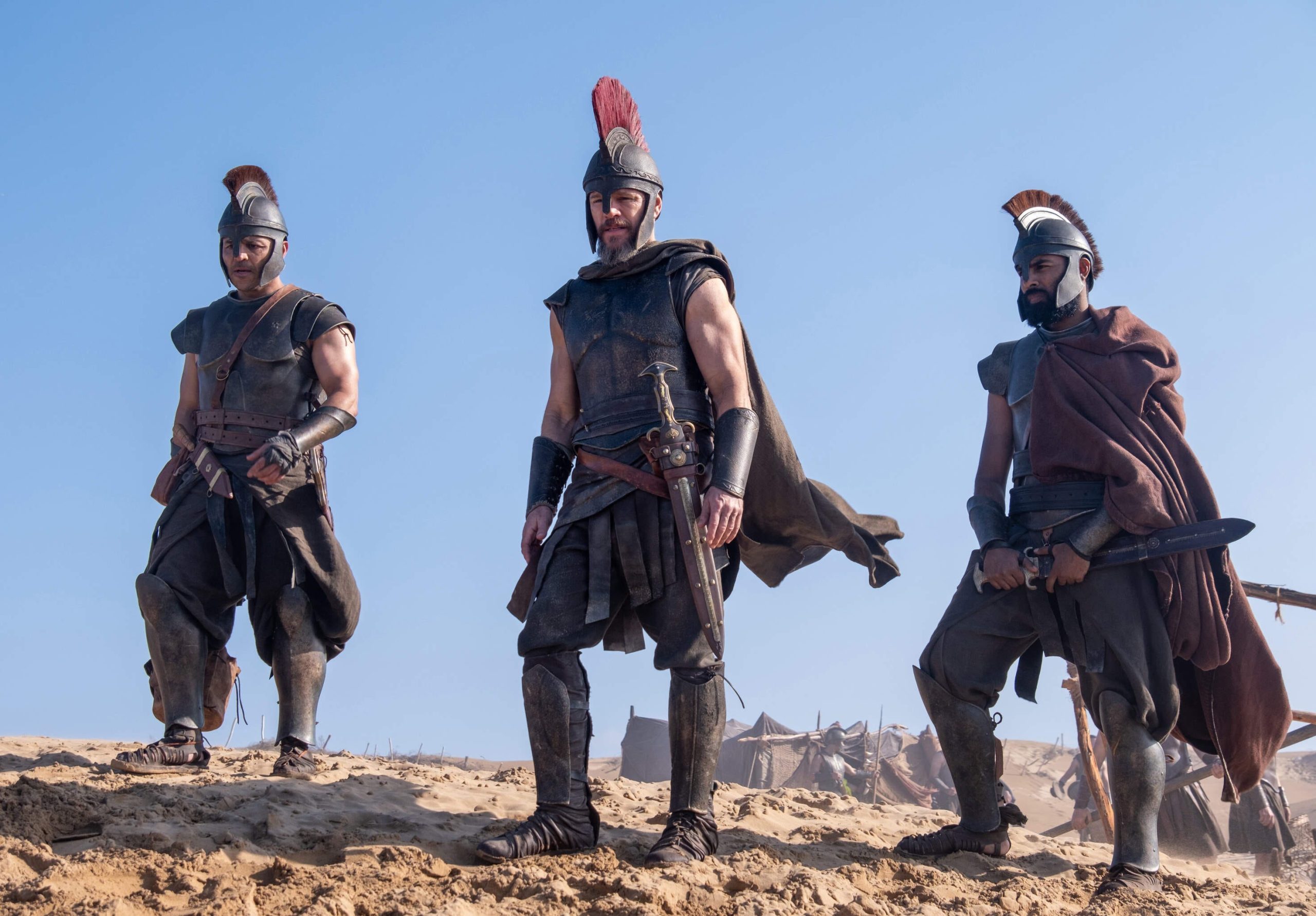
These stories were never merely entertainment. They were humanity’s earliest attempts to confront existence itself—to understand love and loss, tragedy and triumph, mortality and meaning. They asked questions that remain unanswered thousands of years later: Why do the people we love disappear? Why does suffering arrive without warning? Are we truly shaping our own destinies, or are we moving through forces far greater than ourselves?
Ancient myths were not born from humanity’s ignorance, but from its awareness of limitation. Their creators understood something modern culture often struggles to accept: not everything meaningful can be reduced to an explanation. The universe is more than a collection of facts waiting to be catalogued. Human existence is more than biology, chemistry, and measurable events. Some experiences remain powerful precisely because they cannot be completely explained.
Myth lived within that space between knowledge and mystery. It gave form to what language could not fully capture—through symbols that evoked rather than defined, through stories that invited reflection rather than simple understanding. It did not seek to eliminate uncertainty. It taught humanity how to live alongside it.
This is why myths endure. Civilizations disappear, languages fade, and kingdoms once thought eternal become fragments of history. Yet certain stories survive because they were never truly about the cultures that created them. They were about the universal questions every generation inherits. They remind us that humanity does not only seek information; we seek meaning. We do not simply want to know how the world works. We want to understand what our existence within it means.
Few stories embody this better than Homer’s “The Odyssey,” an epic that has traveled across nearly three thousand years of human history and continues to resonate. It is not merely an adventure about a warrior attempting to return home. Beneath the monsters, gods, battles, and legendary encounters lies something far more personal: the story of a man who leaves one version of himself behind and must discover whether the person who returns can still belong to the life he once knew.
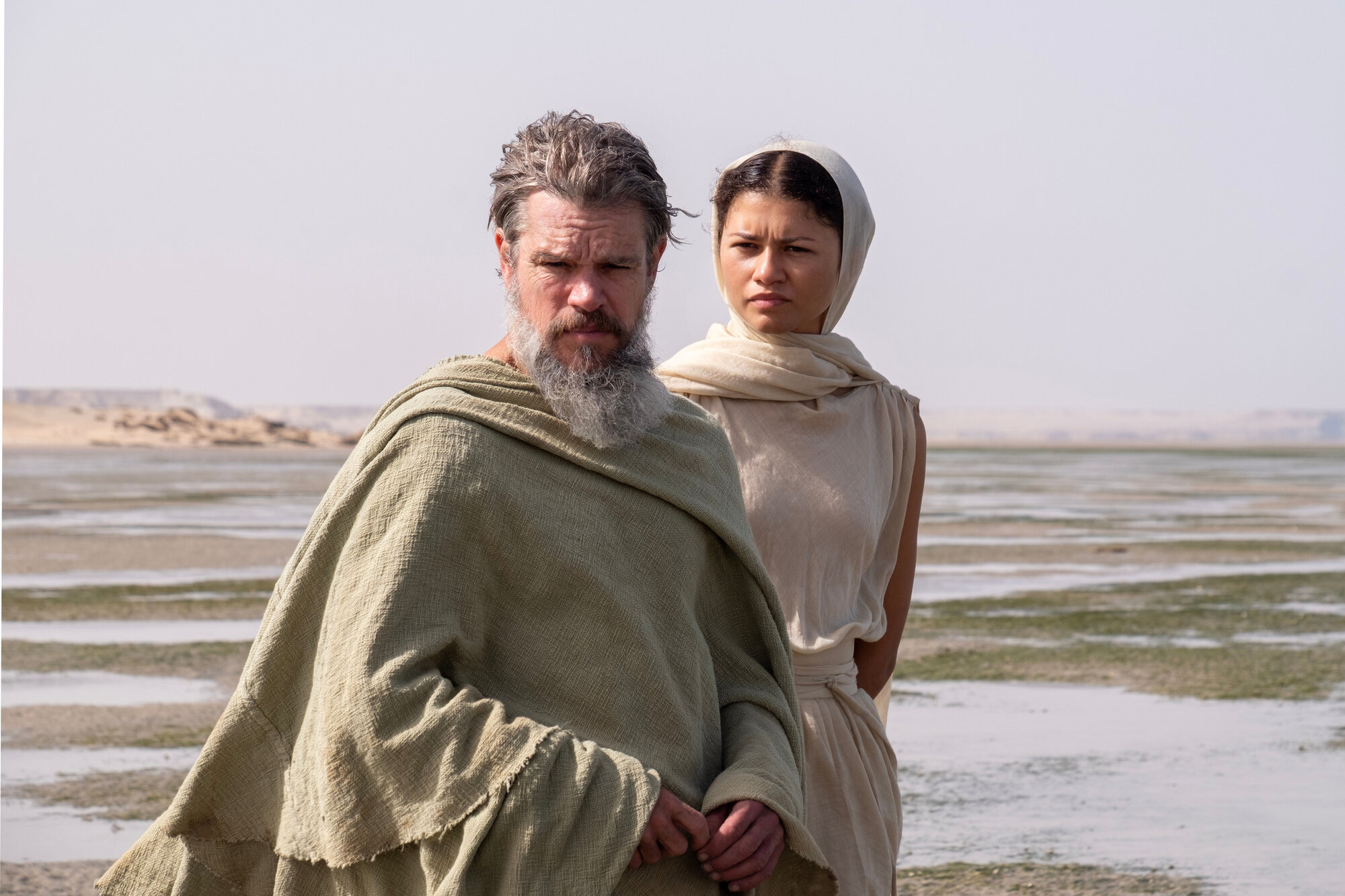
On the surface, “The Odyssey” follows Odysseus across the sea as he struggles to reclaim his kingdom of Ithaca. But its deeper truth is that home is never merely a location. Home is a memory. Home is identity. Home is the people who remember who you were before the world changed you.
This is the tragedy at the center of Odysseus’s journey. He does not simply fight to reach Ithaca—he wrestles with whether Ithaca still exists for him. The man who left for war was a king, husband, father, and hero. The man who returns has been shaped by violence, loss, temptation, isolation, and years spent confronting forces beyond human control.
His journey is not only a test of courage or intelligence. It is a transformation. By the time he reaches home, the question is no longer whether he survived, but whether survival has cost him the very identity he fought to reclaim.
Penelope’s patient loyalty, Telemachus’s uncertain growth into adulthood, and the suitors’ destruction of hospitality create a story about fractured time and eroded belonging. Odysseus’s greatest weapon is his cunning (mētis), allowing him to overcome enemies stronger than himself. Yet that same cunning also isolates him. Every disguise, every false name, and every carefully constructed deception pushes him further away from any simple understanding of who he truly is.
This is precisely what makes Christopher Nolan’s decision to adapt The Odyssey such a fascinating artistic choice. Few contemporary filmmakers have shown a greater interest in humanity’s relationship with the unknown. Nolan has built his career around characters confronting realities larger than themselves—the nature of time, the limits of perception, the consequences of discovery, and the fragile connection between memory and identity.
He is not simply a filmmaker of spectacle. His greatest strength has always been his ability to connect enormous ideas with deeply human emotions. In Interstellar, the mysteries of space become a story about love, distance, and the unbearable passage of time between a father and daughter. In Oppenheimer, the creation of the atomic bomb becomes less a story about scientific achievement than about the moral consequences of knowledge humanity cannot control. In Dunkirk, historical scale becomes an intimate portrait of survival, fear, and human endurance.
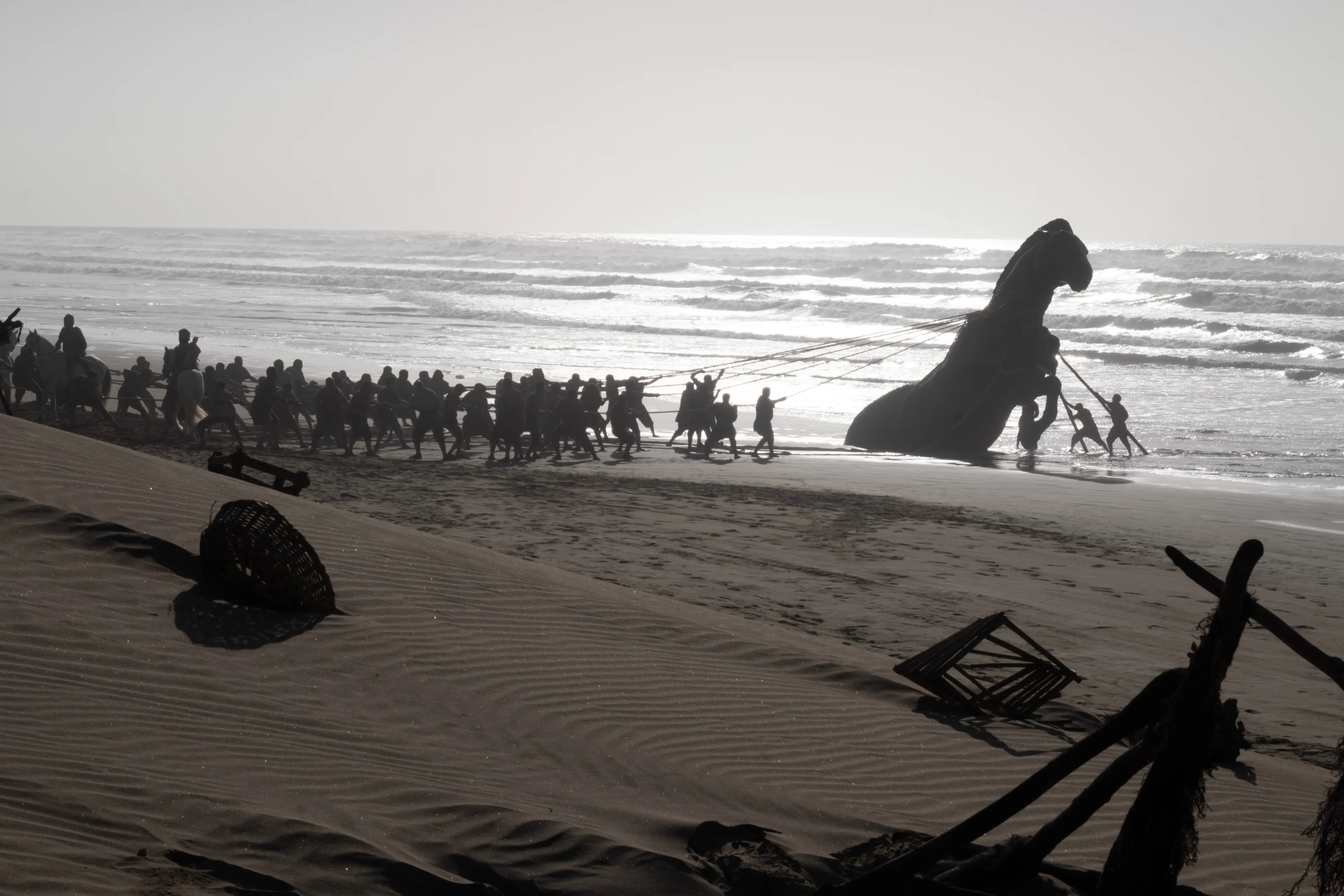
Yet this same strength creates the central challenge of adapting Homer’s epic.
Nolan’s cinema is built around the pursuit of understanding. His characters encounter impossible realities and attempt to uncover their hidden structures. They investigate, calculate, decode, and analyze. Their greatest power is their ability to comprehend what others cannot.
There is something deeply admirable about this instinct. Nolan celebrates curiosity, intelligence, and humanity’s refusal to accept limitations. His films suggest that even when confronted with the impossible, the human mind continues reaching outward.
But Homer’s The Odyssey emerges from a fundamentally different worldview. Homer’s The Odyssey does not suggest that humanity’s greatest achievement is understanding the unknown. Instead, it suggests that our greatest challenge is learning how to exist alongside it.
The gods of Homer’s world are not puzzles waiting to be solved. They are forces that represent the unpredictable nature of existence itself. Poseidon’s wrath is not merely an obstacle for Odysseus to overcome; it is a reminder of human vulnerability before forces beyond mortal control. The sea is not simply a physical barrier between Odysseus and home. It represents the chaos of life—the storms that arrive without warning, the losses that cannot be prevented, and the moments when human ambition meets its limits.
The Sirens do not offer knowledge to be mastered. They offer temptation. Circe’s transformations and Calypso’s island do not exist merely as challenges for Odysseus’s intelligence. They test his endurance, his identity, and his ability to remain connected to the life he is trying to reclaim.
This distinction changes the meaning of the story itself. Nolan’s greatest works often explore humanity reaching beyond itself and discovering the consequences of that pursuit. His characters seek answers because understanding represents survival. But Homer presents a world where some mysteries are not meant to be conquered. They are meant to be respected.
Homer’s universe does not demand that humanity solve mystery; it asks us to respect it. The ancient Greeks understood something modern storytelling often struggles with: sometimes the universe offers no explanation. Sometimes suffering arrives without a lesson. Sometimes intelligence and determination are not enough. Sometimes human beings must simply endure.
Penelope’s years of waiting, Telemachus’s quiet growth without his father, and the destruction of Odysseus’s crew are not moments waiting for simple resolution. They exist within the uncertainty of human experience. The suitors are not punished because the universe operates like a simple equation of crime and consequence. Their actions violate a deeper moral order—the sacred responsibility of hospitality, loyalty, and respect between people.
The power of “The Odyssey” has never come from providing easy answers. It comes from recognizing that some truths are found not through explanation, but through endurance.
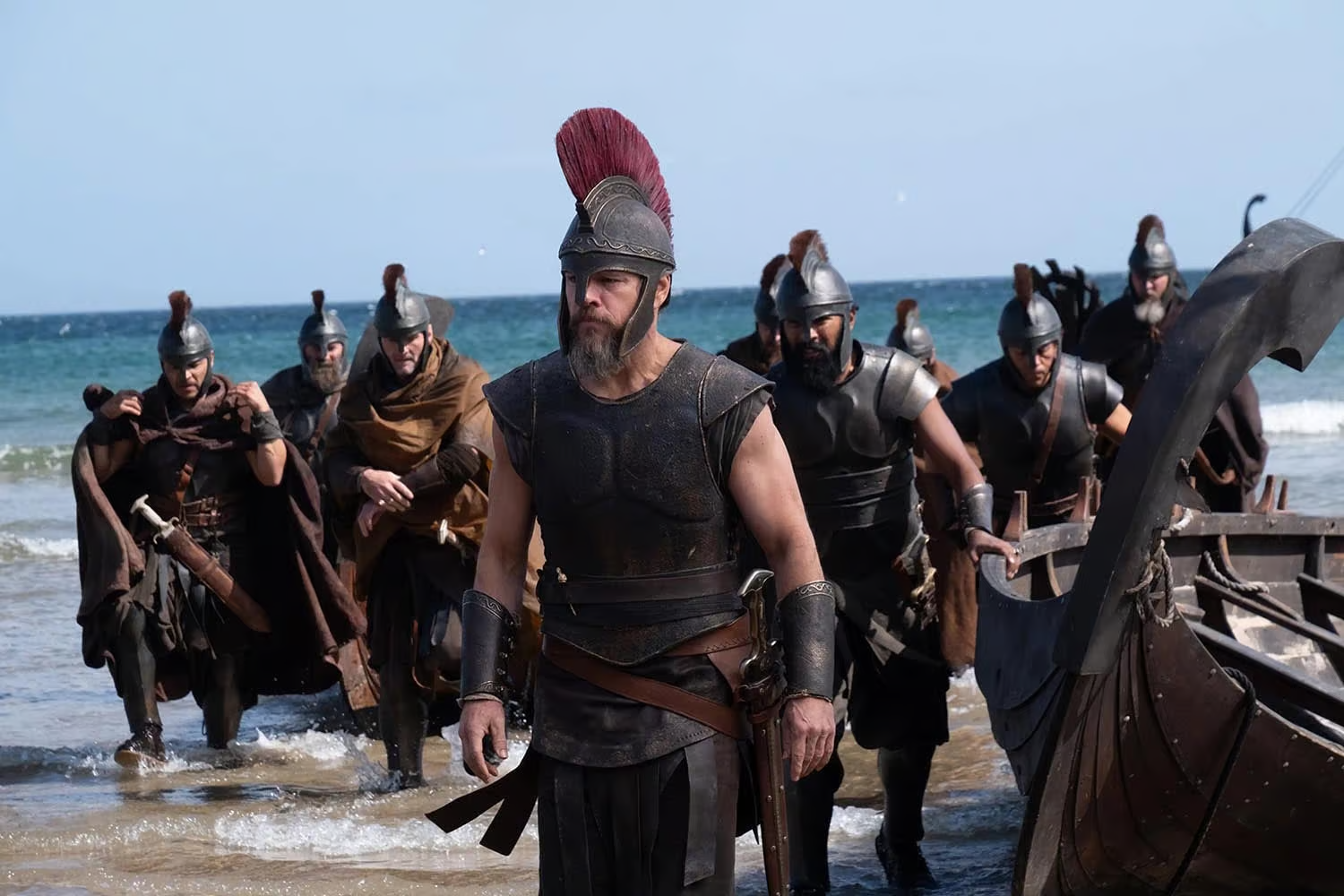
This is also where the women of Homer’s epic reveal another important tension. Penelope, Circe, and Calypso have endured for centuries because they are not merely obstacles or supporting figures within Odysseus’s journey. They represent different forms of power, desire, intelligence, and emotional complexity.
Penelope’s strength is not passive waiting. Her loyalty is an act of resistance, using patience and intelligence to preserve a home that has been threatened by chaos. Circe is not simply a temptation for Odysseus to overcome; she is a figure of transformation, knowledge, and power in her own right. Calypso is not merely a distraction from the journey home, but a representation of comfort, immortality, and the painful temptation to abandon the difficult responsibilities of human life.
One challenge of Nolan’s adaptation is that his instinct toward psychological explanation can sometimes reduce mythic figures into clearer emotional functions. Characters who once contained contradictions and symbolic depth risk becoming easier to categorize. The performances may bring humanity and complexity to these figures, but the screenplay occasionally struggles to preserve the larger mystery that made them endure.
This is the central tension of Nolan’s The Odyssey. The issue is not that he misunderstands Homer. In many ways, he understands the epic better than most filmmakers could. His respect for the material is clear. His fascination with grand ideas, philosophical questions, and human ambition makes him an inspired choice to bring this story to the screen.
But Nolan approaches the material with too much understanding and not enough surrender. He transforms the mysterious into the mechanical, the spiritual into the intellectual, and what was meant to be experienced into something meant to be analyzed. His vision creates a world of extraordinary scale, with breathtaking large-format cinematography, practical craftsmanship, and images that remind audiences why cinema remains such a powerful art form.
Yet myth has never survived through accuracy alone. A filmmaker can recreate ancient worlds with incredible detail, construct breathtaking environments, and create unforgettable cinematic moments while still struggling to capture the feeling that allowed those stories to survive for thousands of years.
There is a difference between recreating myth and preserving the feeling of myth. Nolan’s The Odyssey understands the physical world of Homer’s epic. The kingdoms feel alive. The ships carry weight. The monsters possess a terrifying presence. The craftsmanship is undeniable.
But mythology has never existed because humanity wanted to see larger versions of reality. It endured because it revealed something deeper about ourselves.
The Cyclops was never frightening simply because he was enormous. The Sirens were never memorable because they were visually impressive. These figures survived because they represented something within the human soul: arrogance, temptation, isolation, longing, and the desire to abandon purpose. They were not merely obstacles standing in Odysseus’s way. They were reflections of humanity itself.
By bringing these creatures into complete cinematic reality, Nolan creates images of astonishing power. Yet that clarity can sometimes diminish the uncertainty that made them meaningful. The more fully explained they become, the less space remains for imagination.
And that is where the difference between spectacle and wonder becomes essential. Spectacle impresses us; wonder humbles us. Spectacle celebrates what human beings can create. Wonder reminds us that there are things beyond our ability to contain. Spectacle makes us look outward at the scale of an image. Wonder makes us look inward and question our place within something larger.
Nolan remains one of cinema’s greatest visual filmmakers, and there will undoubtedly be moments in The Odyssey that achieve a grandeur only the theatrical experience can provide. But grandeur alone is not the same as awe.
The deepest power of Homer’s epic was never simply that Odysseus overcame impossible challenges. It was that he discovered the limits of his own power. His journey is not a simple story of victory. It is a story about transformation, loss, and the painful realization that returning home does not mean returning unchanged.
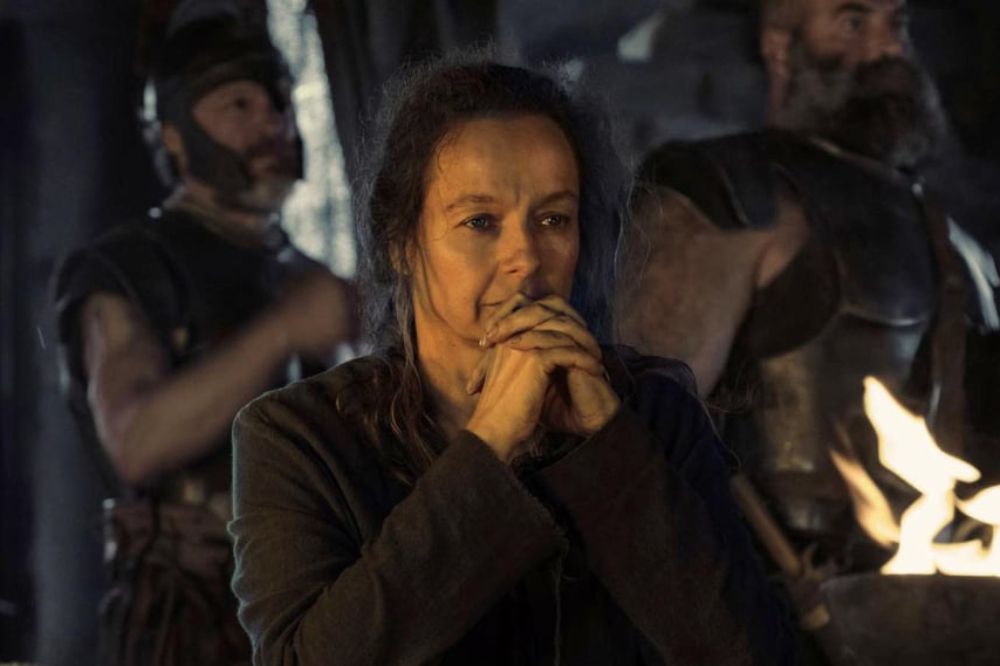
Odysseus does not defeat the mysteries of existence. He survives them.
Myth was never humanity’s escape from reality. It was humanity confronting reality in its most difficult form: uncertain, contradictory, and larger than any single perspective.
This is why The Odyssey has endured. It does not promise that every mystery can be solved. It offers companionship in the face of uncertainty. It reminds us that some truths become more meaningful because they remain beyond explanation.
Nolan’s adaptation represents a fascinating contradiction. He is a filmmaker whose greatest gift is creating systems, patterns, and structures that reveal hidden truths beneath chaos. His cinema often finds order within confusion.
But The Odyssey resists that impulse. Its deepest power exists in the spaces between answers. It asks us to sit with uncertainty rather than overcome it. It suggests that wisdom does not always come from discovering the truth behind a mystery, but from accepting that some mysteries are part of being human.
Nolan’s The Odyssey is an ambitious and technically remarkable achievement—visually stunning, intellectually engaged, and deeply committed to exploring one of humanity’s greatest stories. Yet in its pursuit of clarity, it occasionally loses the uncertainty and spiritual weight that allowed Homer’s epic to survive for thousands of years.
Homer leaves us humbled before forces beyond our comprehension. Nolan leaves us contemplating the extraordinary reach of human intelligence. Both experiences are powerful. Both have value. But they are not the same.
And in the space between them lies the quiet vanishing of myth’s deepest magic.