



Director: Bùi Thạc Chuyên
Writers: Bùi Thạc Chuyên, Mỹ Uyên, Nguyễn Thị Minh Ngọc
Stars: Thái Hòa, Quang Tuấn, Hồ Thu Anh
Synopsis: In the Vietnam War, the 21-man guerrilla team becomes the US military’s number one SEARCH, SEEK, AND DESTROY target when assigned to protect a group of strategic intelligence whose radio communications take away the only advantage – the invisibility in the mysterious tunnel system.
It’s hard to discuss a movie like Tunnels: Sun in the Dark, which had its North American Premiere at the Fantasia International Film Festival. It’s difficult because, while the story holds great importance, the film itself leaves a lot to be desired, even if it has time to build characters we want to latch onto and to reframe the horrors of the Vietnam War outside the Americanized lens that has dominated its filmic representations.
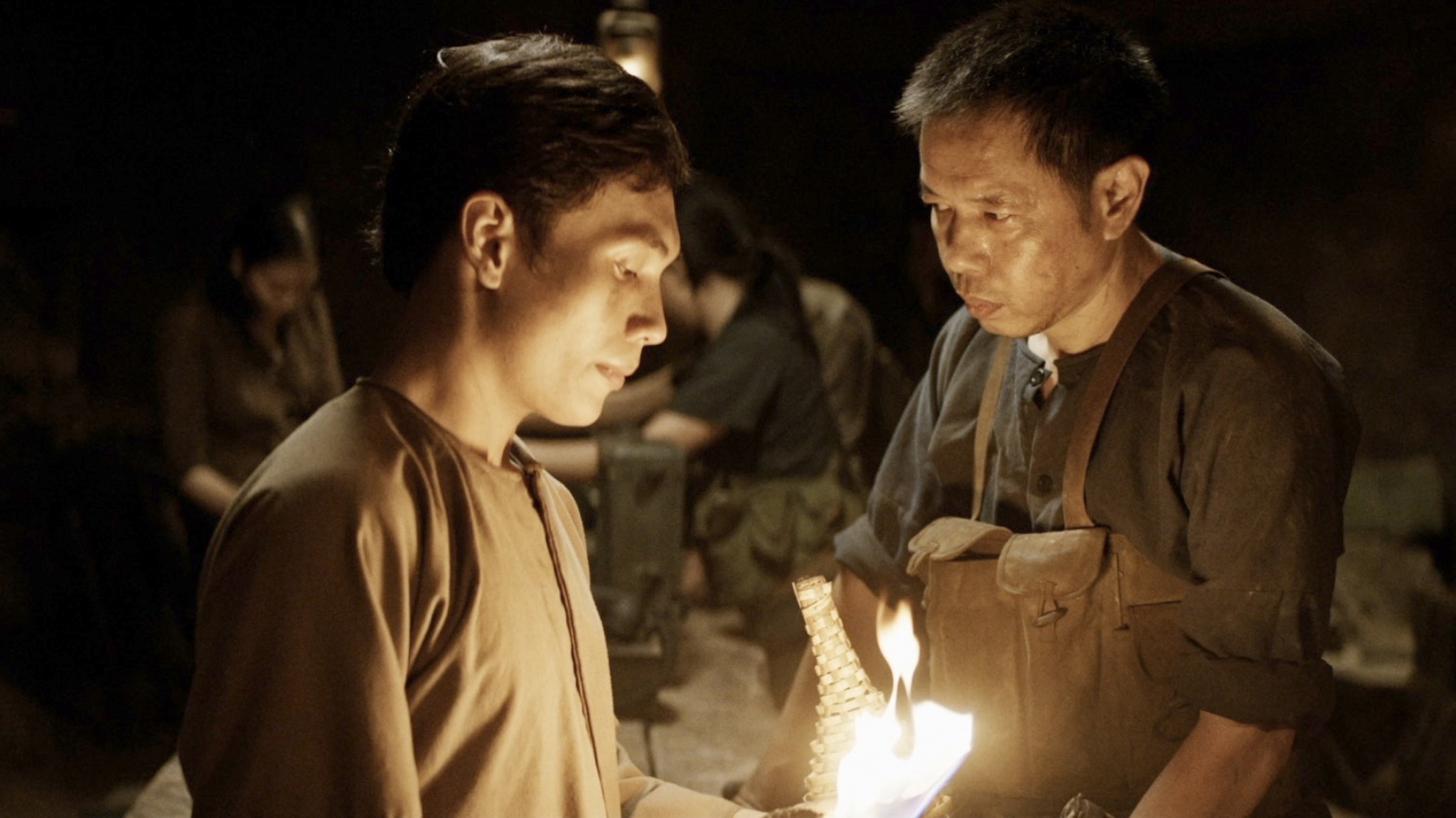
Showcasing exactly what the U.S. Army did to innocent Vietnamese civilians deserves our commendation, especially when depicting a story with little to no heroes on either side. The war was one of the most horrific moments in world history, which is something that America refuses to reckon with, even to this day. It’s even more horrifying in the film when the U.S. side isn’t directly shown, yet always looms over the underground tunnels where our main characters operate.
In fact, as soon as director Bùi Thạc Chuyên cuts to the Americans and gives them a face, the palpable sense of tension that defines the movie’s first hour disappears. More bad decisions begin, and it’s where the film begins to fall apart, even as it remains sturdily crafted. The action sequences leave a sense of dread, as Chuyên does not hold back in his depiction of the Viet Cong in relation to the U.S. Army’s actions. The fact that the movie is told entirely from the perspective of Viet Cong soldiers adds authenticity to the story, especially when the end credits feature a mini-documentary on the characters we saw in the film, who explain in detail how the tunnel system was conceived and structured.
That part is the film’s most emotive and raw, but the journey to get there is slightly rough around the edges. For instance, none of the characters are well-developed, even though we spend a lot of time in the tunnels and see their plans to resist the oppressive forces of the U.S. I couldn’t tell you who does what or how the tunnels work, based on the movie, because Chuyên never gives that crucial piece of information to the audience. He only does so during the documentary part, but that’s at the end of the movie, not when clarity is needed.
The action is also hit-or-miss. Some of the CGI feels artificial, and several explosions are unintentionally funny, even if it wasn’t the director’s intent, because the film is always grounded in the harsh reality of the Viet Cong’s lives. However, the way some of the action is staged immediately dilutes that impact and renders most of the emotional tension moot, which is a shame, because when Tunnels: Sun in the Dark eventually reaches a horrifying conclusion, the feeling one has in seeing the claustrophobic confrontation between the U.S. and Viet Cong doesn’t hit the required emotional notes to make the documentary part feel valuable.
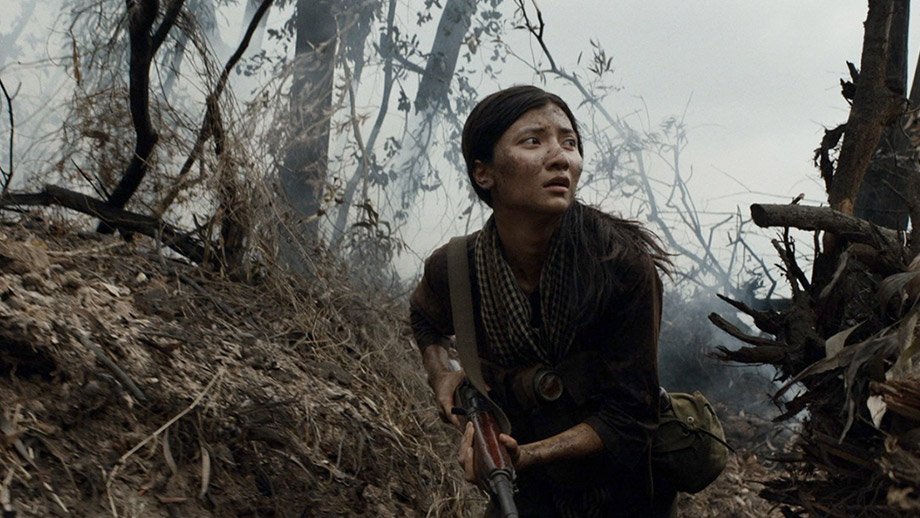
Still, one can’t overstate the film’s importance. It is one of the rare Vietnam War movies to tell a story from the perspective of its victims rather than its oppressors, and such a title deserves to be lauded and shown to as many audiences around the world. The performances from its actors aren’t bad, but one would’ve hoped they’d have more texture from a screenplay that never fully gives them ample room to breathe. But we do ultimately feel as if our time was not wasted in watching a movie that seems to be the first of its kind, as an attempt to reframe what truly happened during the Vietnam War and showcase how the United States’ war crimes permanently scarred an entire population.
The U.S. may not be prepared to reckon with its barbaric actions in Vietnam, but Bùi Thạc Chuyên is ready to lay it all out and give the victims their opportunity to tell their side of the story, and hope that the public is willing to listen to them and understand why they had to do what they did to survive. Their physical and psychological scars will never fade, but there is hope their stories will bring them closure to the most horrifying years of their lives, ones they still have vivid memories of as soon as they close their eyes…