Director: Pierre Salvadori
Writers: Pierre Salvadori, Benjamin Charbit, Benoît Graffin
Stars: Pio Marmaï, Anaïs Demoustier, Gilles Lellouche
Synopsis: A painter in 1928 Paris, unable to work since his wife’s death, unknowingly participates in fake spiritualist shows staged by a carnival worker. As he regains his inspiration, she falls in love with the man she is deceiving.
Critics hailed Pierre Salvadori’s The Electric Kiss as “the best Cannes opener of this decade” which doesn’t really sound like a ringing endorsement, because the iconic festival is known for opening with some of the most tepid and unremarkable French productions released in a given year. Clearly, none of them saw Leos Carax’s Annette, which had the decency to be memorable, or Quentin Dupieux’s The Second Act, which at least had something to say about the devastating future of cinema.
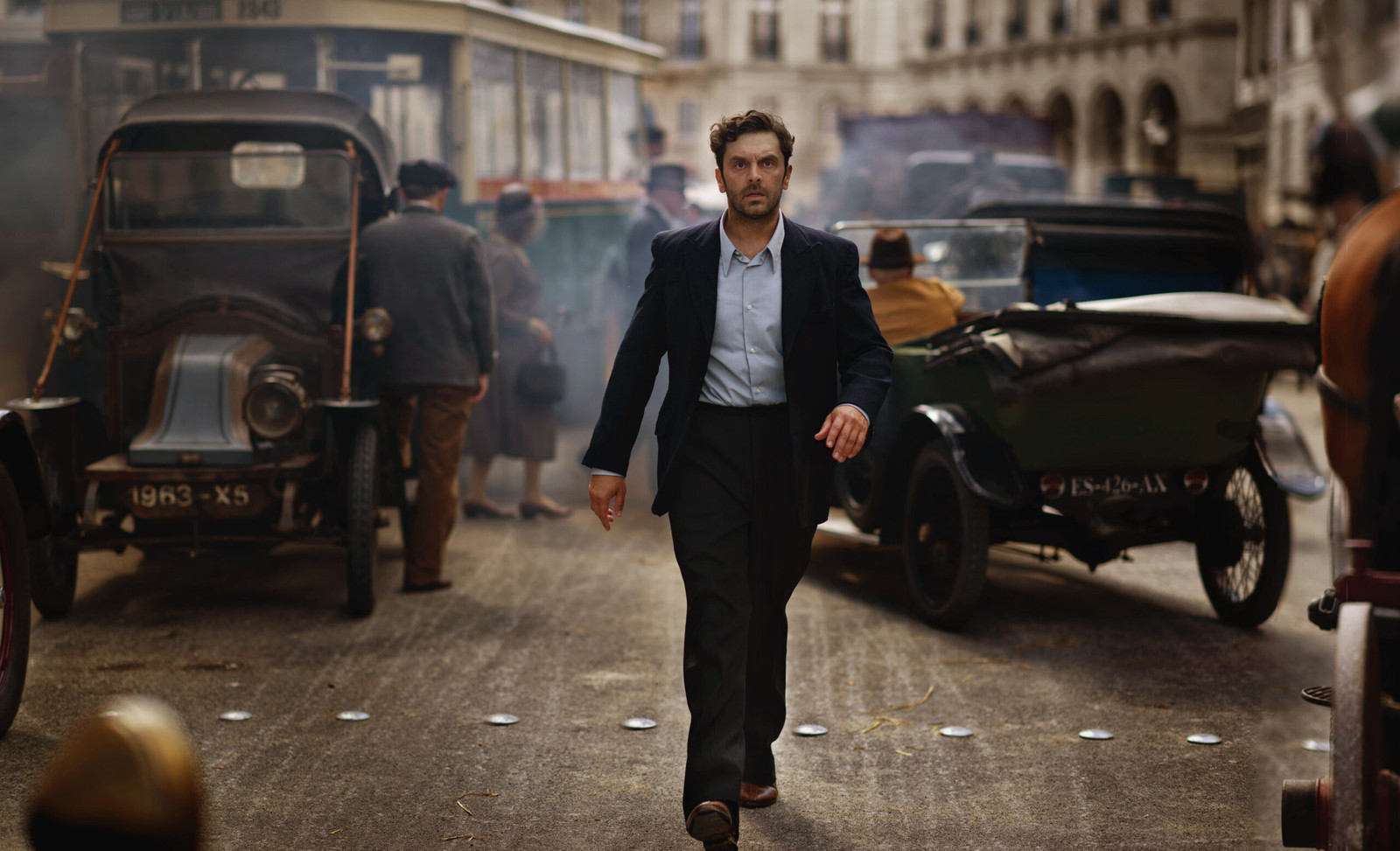
Compared to these two, The Electric Kiss might be the most disappointing Cannes opener of this decade, because there isn’t a single thing about it that makes it worthy of being presented at the world’s most prestigious film festival. It is competently made, more so than Amélie Bonnin’s nearly unwatchable Leave One Day, but is it any good? That is a question this review will attempt to answer, but you can already guess that, by reading these lines, this critic was not a fan of it.
What starts off as a relatively standard drama morphs into something else entirely by the time Salvadori reaches his midway point, as he tracks the story of Suzanne (Anaïs Demoustier), a circus performer known around France as “Venus Electrificata,” whose seductive kiss produces an electric shock. One night, she meets a grief-stricken Antoine (Pio Marmaï) in the room of a clairvoyant. A painter by day, who hasn’t drawn anything since the death of his wife, Irène (Vimala Pons), Antoine seeks spiritual guidance to communicate with her.
Pretending she is the clairvoyant Antoine has been looking for, Suzanne makes Antoine “see” Irène, and his condition begins to improve. So much so that he resumes painting, which pleases his dealer friend Armand (Gilles Lellouche), who reaches out to Suzanne to make sure these “séances” continue, even though they are fake, and she isn’t communicating with anyone in particular. Suzanne then begins to immerse herself in Irène’s private diaries, and discovers a complex relationship that brings her much closer to Antoine than she had thought, with the painter also feeling the same way towards Suzanne.
It’s also at that point where Salvadori creates labyrinthine parallels between Suzanne/Antoine, Irène/Antoine, and, eventually, Armand, but revealing more would mean unpeeling some details that are better left on your own. The filmmaker makes some interesting visual and editorial choices throughout his drawn-out 122-minute runtime that keep us semi-engaged, despite the familiarity of a screenplay that never strays from well-established conventions. Suzanne is fooling Antoine. Of course, he’s going to find out. It’s only a matter of time. Imagine if he didn’t for a change. The film would’ve been all the better for it, because as soon as he does, it begins to derail.
The way that Salvadori links Irène’s story to Suzanne’s is genuinely thoughtful. The editing smartly mirrors the two characters, to the point where the protagonist eventually embodies who Antoine’s wife was, creating a strange juxtaposition that doesn’t fully convince us until we fully believe in her trickery. As she experiences feelings towards Antoine, what occurs between them is no longer fake, but genuinely tangible, and the way in which the cinematographer Julien Poupard’s camera holds on Demoustier and Marmaï’s faces during those scenes is particularly important.
Both actors have been at the top of their game for some time (they’ve also given the best performances of their respective careers in Quentin Dupieux’s Daaaaaali! and Yannick), and continue to excel in a movie that requires a great deal of emotional complexity for their characters to feel believable. Unlike Lellouche’s telegraphed and frankly dull portrayal of a friend who is more concerned with losing money than supporting his depressed and isolated Antoine, both Demoustier and Marmaï give The Electric Kiss the spark (pun intended) needed to keep us invested in their respective plights.
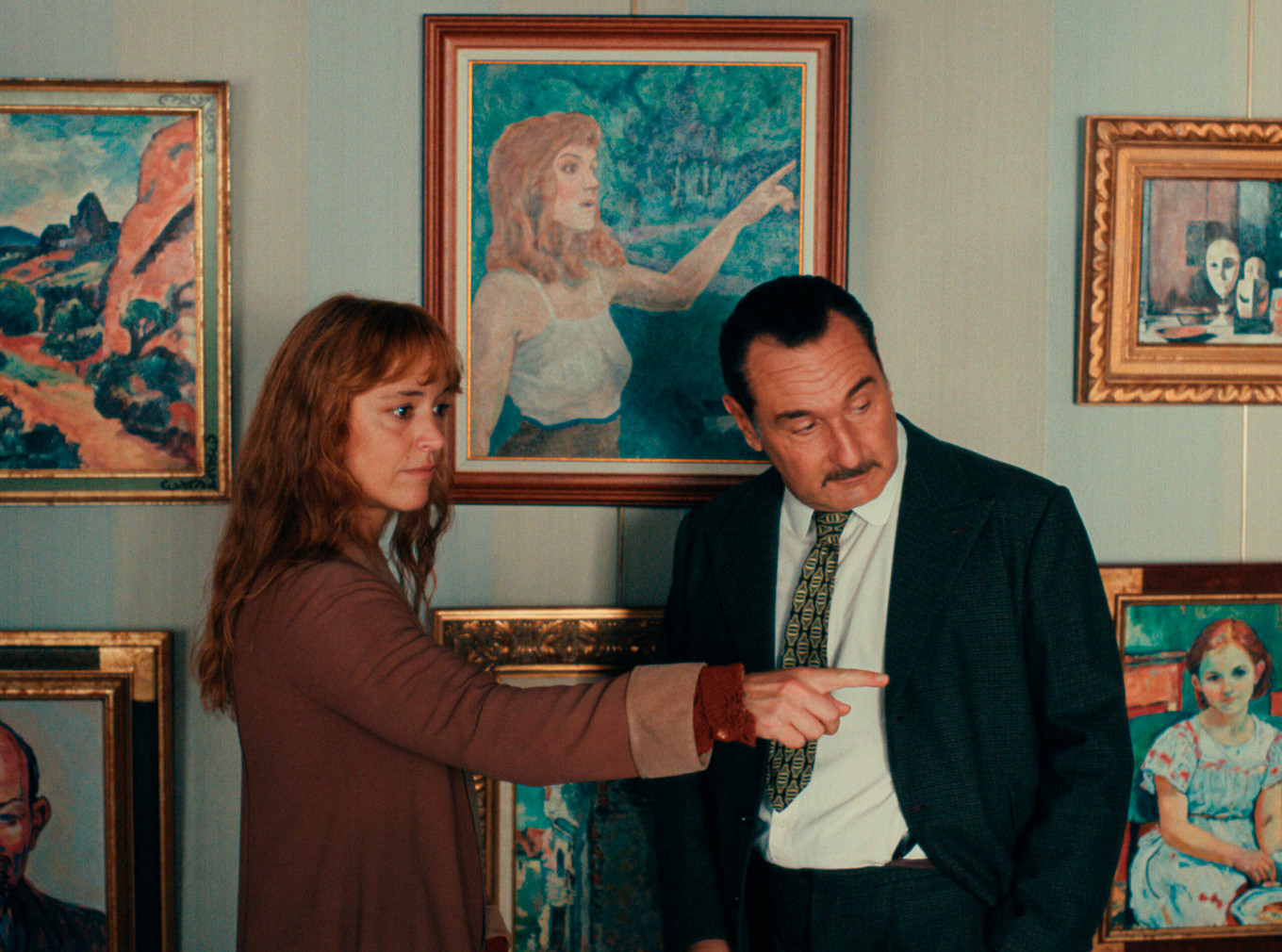
However, the screenplay never fully develops both stories compellingly, despite a visual precision rarely seen in Salvadori’s corpus to date. The blocking is genuinely astonishing, and lures us into a story that, on the outset, sounds simple, until it isn’t. It’s thus unfortunate that Salvadori forgoes all of that with one of the most ridiculous magical realist endings we’ve seen since André Forcier’s Ababouiné. Unlike that movie, though, which used it sparingly (and in places where it works best), The Electric Kiss’ conclusion is nothing more than a manipulative cop-out that sinks the semi-textured character work at the heart of the picture.
After Salvadori’s film opened the 78th edition of Cannes, Thierry Frémaux’s overall lineup was met with rather tepid results. One will eventually be able to see most of these films on our screens or at fall festivals, but if The Electric Kiss is any indication, formal and thematic innovation in our moviegoing economy seems to be at an all-time low…