Director: Georgia Oakley
Writer: Diana Reid
Stars: Daisy Edgar-Jones, Esmé Creed-Mills, Caitríona Balfe
Synopsis: Sisters Elinor and Marianne Dashwood must leave their Sussex estate to live with a distant relative, while facing both romantic and financial struggle
Jane Austen has never looked so grey as in Georgia Oakley’s depressing readaptation of Sense and Sensibility. Perhaps it was a mistake to view Ang Lee and Emma Thompson’s wonderful 1995 transposition of the text the day before viewing this latest iteration, because one can easily pinpoint why that version works and this modernized “gritty realist” take on Austen doesn’t. For some reason, Oakley adopts a grimmer, brooding visual tone that is terribly incompatible with the original source material’s tone, and tarnishes the deeply human stories at the center of Austen’s debut novel.
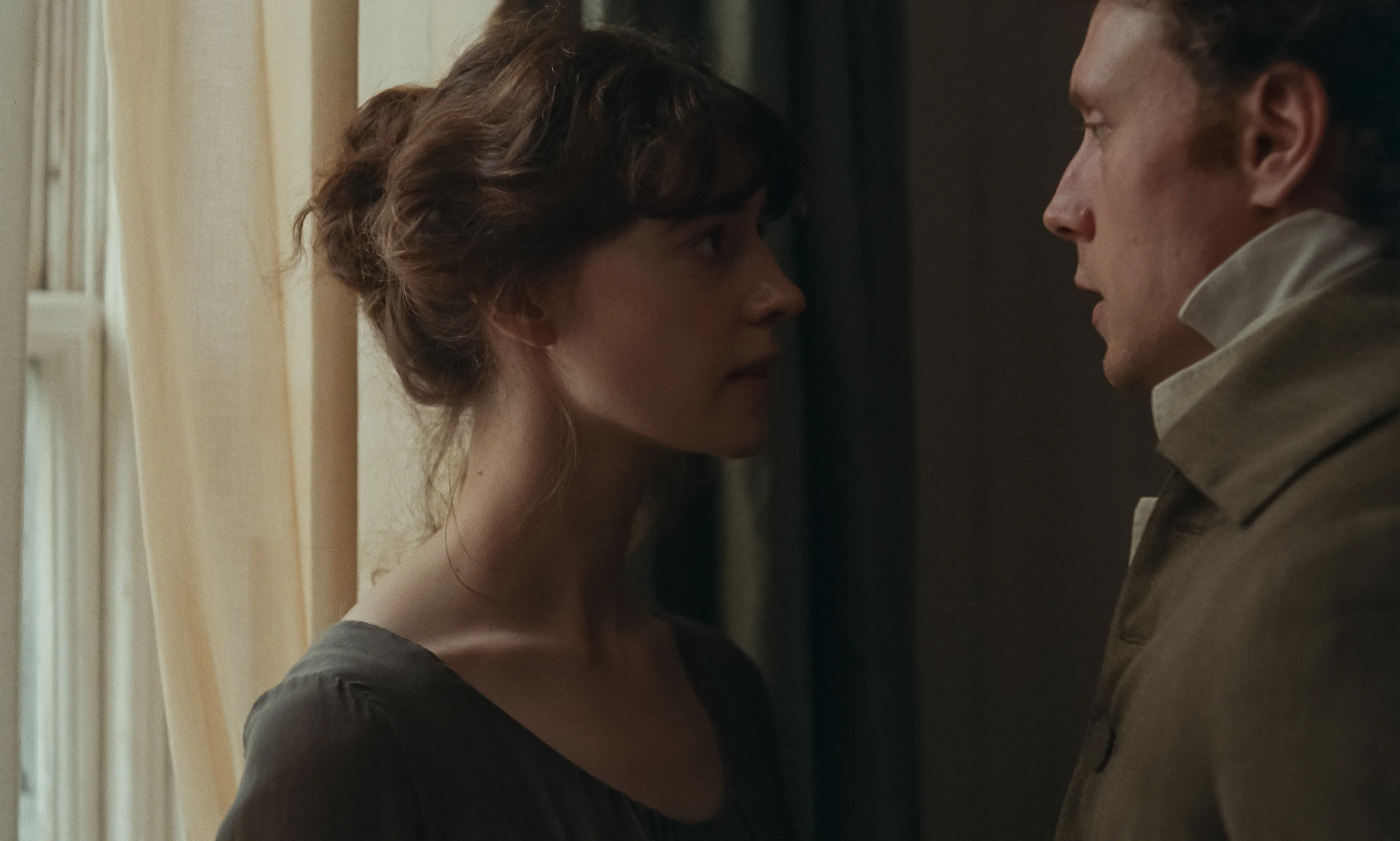
It is very hard not to compare the two, but the thing is, when one film has adapted the book so elegantly, and in such a breathtaking manner, what more does this new version have to offer? Unfortunately, not much, even if Daisy Edgar-Jones is excellent as Elinor Dashwood, who, alongside her mother (Caitríona Balfe) and sisters Marianne (Esmé Creed-Mills) and Margaret (Bodhi Rae Breathnach), face poverty after the passing of Mr. Dashwood. They move away from their home into a small cottage in Devonshire and attempt to rebuild their lives as romantic connections begin to arise with Elinor, deeply in love with Edward Ferrars (George MacKay), but afraid to speak out her true feelings.
Meanwhile, Marianne has her sights set on John Willoughby (Frank Dillane), after the latter saves her from an accident. However, Colonel Brandon (Herbert Nordrum) also has affections towards Marianne, but she wants no part of the stable life he promises her and believes her future is with Willoughby. Of course, things are far more complicated than this, and the movie attempts to build on the tension that occurs between the Dashwood sisters and their potential suitors. Unfortunately, the way in which Oakley directs such a movie leaves much to be desired.
The thing about Lee’s Sense and Sensibility is how each image holds so much intense meaning. You not only get absorbed by the enormity of Michael Coulter’s painterly frames (this was back when Lee was an actual visual artist instead of the unfortunate trajectory of 120fps 3D he tried and failed to perfect) but understand every single inflection that its storied cast would give. The late Alan Rickman didn’t need to say to the audience that his Colonel Brandon shared feelings for Marianne. You felt it in his eyes, and the way in which he represented the character’s repressed emotions as Willoughby would arrive in the scene said everything you needed to know.
If you find Austen’s prose dense (Thompson is one of the author’s biggest admirers), you can look at the film and grasp the subtleties of her writing through Lee’s mastery of cinema’s visual language. In comparison, Oakley dumbs down Austen’s writing and constantly handholds the audience as the dialogue consistently repeats the ongoing dramatic tension at the heart of the story. Marianne is in love with Willoughby, but Brandon has feelings for her. Elinor wants to marry Edward, but he has taken her timidity in admitting she’s in love with him as a sign to perhaps move on and find love elsewhere. If you didn’t understand this, Diana Reid’s screenplay repeats it through various sequences that essentially reach the same conclusion, with little to no emotional complexity in how the characters are portrayed on screen.
Maybe it’s disingenuous to compare apples to oranges, but Lee’s film set the benchmark for future Austen adaptations. It’s still unmatched today. When you’re going to readapt a book that has already been (perfectly) transposed to the screen (most recently, Mike Flanagan’s Carrie), you need to quickly dissuade the doubt that plagues audiences. Austen’s writing is timeless, so of course there’s always a need for Austen adaptations, both on the big and small screen. But you need to find a different way in than your predecessors. For Oakley, that’s the gritty, raw language of an Andrea Arnold film. However, unlike Arnold’s adaptation of Emily Brontë’s “Wuthering Heights,” itself a singular and primal take on a complex text, such an approach doesn’t suit Austen’s comedy of manners.
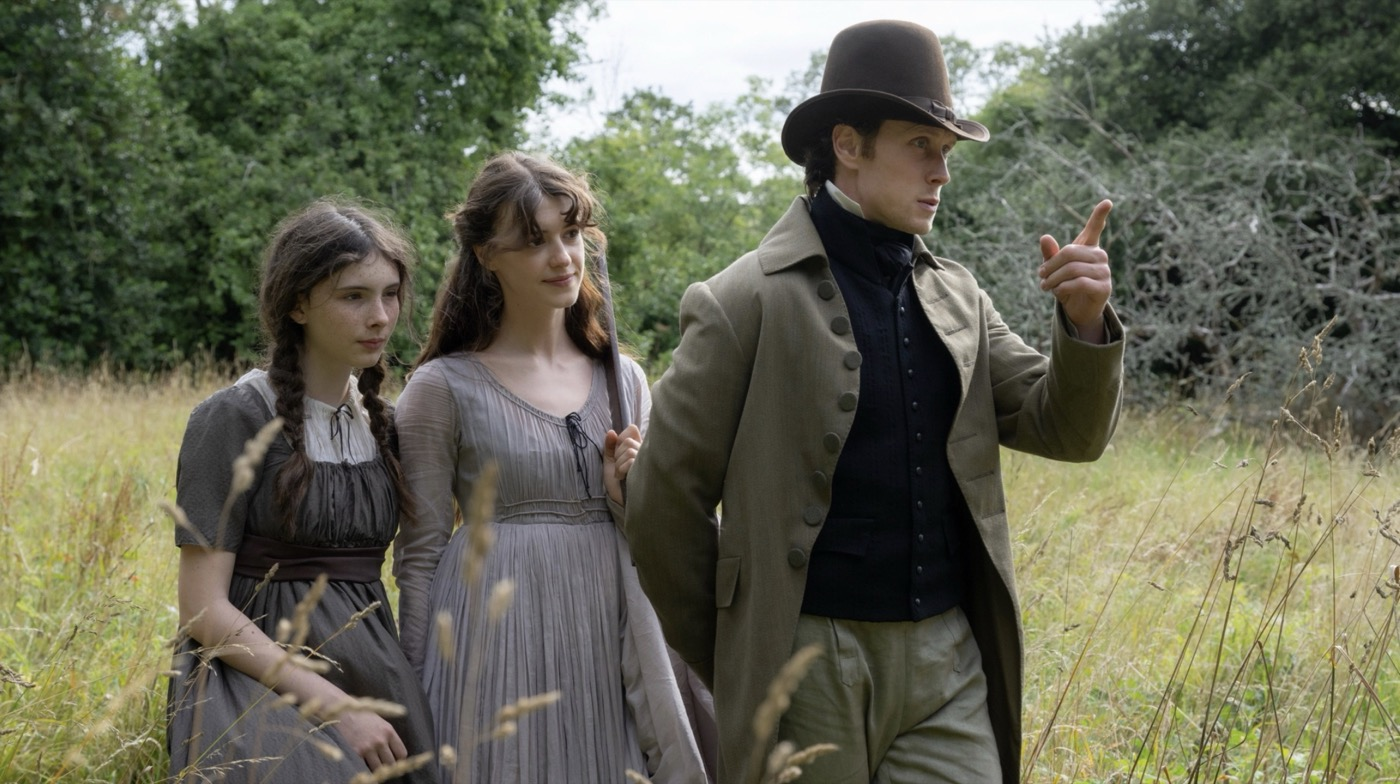
One might not realize how funny Austen is before reading Sense and Sensibility. Her satire is razor-sharp and incredibly perceptive. Why does Oakley’s transposition of this relatively light-hearted (but still emotive) story look so depressingly gloomy? Why is the (shot-on-film) photography so murky and unimaginative? Is it to portray the class differences between the Dashwood trio and its richer side? Even if so, it makes no sense to capture romantic yearning in such an unimpressively cold way that it renders the text’s core thematic ideas moot. The movie occasionally yields moments of pure cinema, such as a thrilling Barry Lyndon-esque confrontation between Willoughby and Brandon or when Elinor fully professes her love to Edward, but they arrive in sections where it’s far too late to make an impact.
Only Edgar-Jones, Creed-Mills, and MacKay make a tangible effort to make their turns as Elinor, Marianne, and Edward feel unique. Both Dillane and Nordrum are horribly miscast as Willoughby and Brandon, and don’t respond to the film’s harsh (and unnecessarily grey) visual language, while the other actors do their best in an adaptation that sadly leaves some of Austen’s most page-turning characters at a distance. Oakley never realizes the book’s full potential, and her attempt to recapture the Dashwood sisters’ stories is painfully misguided. At least Roger Goula’s music is memorable, but that’s not enough to save a 132-minute adaptation, is it?