



Directors: Nitesh Tiwari
Writers: Shreyas Jain, Shridhar Raghavan, Nitesh Tiwari
Stars: Sai Pallavi, Faisal Malik, Yash
Synopsis: An ancient epic follows a young prince and princess whose marriage and subsequent exile mark the beginning of a legendary journey. Their story of love, duty and destiny sets the stage for greater challenges ahead.
Growing up in India, there was almost never a moment in time when Ramayana was not a part of storytelling, or my life in general. If you were someone who grew up there, was born into an Indian family, or connected to the Indian diaspora in any way, there’s a zero percent chance that the story of Prince Rama has not been present in some shape or form of your upbringing. Two massive festivals in the country, Dussehra and Diwali, are built around events that take place in Valmiki’s epic poem from some millennia ago, and, to this day, they are colorful celebrations that bring together the whole community in a vivid and bright blend of colors and lights (and even fireworks to a fault). Suffice it to say, Ramayana is not a story that is unfamiliar to this critic and, over the decades, many an adaptation and recreation has graced these eyes, from television shows to movies to plays performed on stage to audiobook recitals.
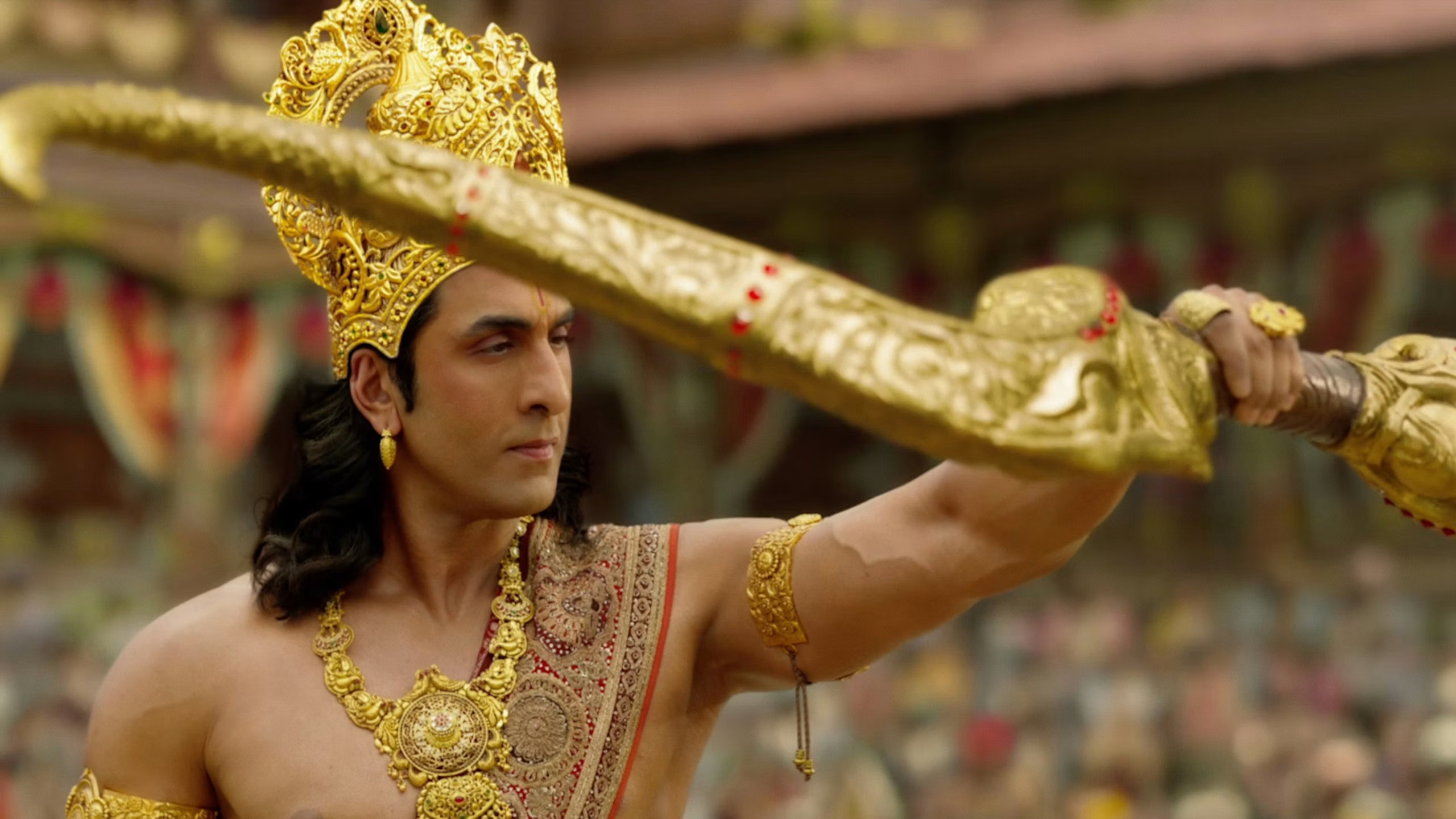
Ramayana: Rise of a Legend–or Ramayana: Part 1– depending on where you are in the world, it seems–is by far the biggest such undertaking of telling the story, bringing it to life on a far larger scale than previously conceived. To those unfamiliar, the story begins with the end of the war between the Devas and the Asuras, two classes of beings who have been in conflict for years. After the Devas, led by Indra (Kunal Kapoor), who is blessed by Lord Vishnu, are victorious against the Asuras, the latter are reduced to nothing, living underground in the kingdom of Lanka. Seeking revenge, Kaikashi (Shobana) tells her son, Dashanan (Raghav Malhotra as the younger version), to find a way and bring that desire to life. After years of penance and prayer, with the blessing of Brahma to make him invincible, an adult Dashanan (Yash) returns to Lanka and single-handedly defeats the Devas, taking control and proclaiming himself as Ravana. Seeking to control all three worlds, these plans are in flux when Vishnu’s seventh avatar appears in the form of Rama (Ranbir Kapoor), the prince of Ayodhya and the son of King Dashratha (Arun Govil) and Kaushalya (Indira Krishnan) in the kingdom of Ayodhya, and when the time comes, may serve as a rebuke to everything Ravana stands for.
Made with a combined budget across both parts–the second is out in 2028–of an estimated $420M, Ramayana: Rise of a Legend is a massive spectacle to behold from its very first frame to the last. Certainly no expense was spared in the $200M allocated to this section of the story, as the gigantic setpieces and action sequences, particularly impressive in IMAX 3D, are brought to life by stunning visual effects courtesy of DNEG, who previously have won Oscars for the Dune movies and Interstellar. From the opening battle to Ravana’s takeover of Lanka to a terrific aerial battle later with Jatayu (Anupam Kher, also the movie’s narrator for some time), to the spectacular realizations of Ayodhya and Lanka, Rise of a Legend looks the part and then some, backed further by some gonzo production design and beautiful costume work to accentuate it all. While some moments can definitely look a bit too uncanny, as giant characters in any movie can be hit or miss sometimes, even then the motion capture work there from Terry Notary is impressive. It is also hard to go wrong with a score composed by Hans Zimmer and A.R. Rahman, both of whom provide an electric, beautiful, booming soundscape to the proceedings, with the songs written by Rahman further adding to that aspect.
Thematically, the movie is also effective in showcasing the contrasts between Rama and Ravana. While Ravana is more brash and run by his darker emotions thanks to his ten demons/“heads”–represented visually via a rather impressive, broken down mind palace–Rama is more virtuous and rational, representing a more righteous personality who serves as a reminder to be the best person in the face of any adversity, particularly when Ram’s exile begins and the trials and tribulations escalate. I’m paraphrasing another critic here, but at a time when the story of Ramayana seems to be more misaligned and misconstrued than ever before, largely thanks to socio-political and religious divisions created around it by the powers that be, Rise of a Legend does serve as a good throwback to the story’s roots, and the importance of being the best version of yourself. It is the backbone for why the story has prevailed for so long in the cultural zeitgeist, and for those being acquainted with the story for the very first time, may serve as a path to understanding its teachings well.
Being the first part, Rise of a Legend spends a lot of time building up its characters and thematic resonance throughout the runtime, setting up what is to come while also providing a chance to get to know its main leads well. This is particularly at its best when the movie focuses on Ravana. Yash, making his Bollywood debut here, is tremendous in the role, bringing to life the arrogant, revenge-fueled nature of the ruler of Lanka with stellar precision and an imposing presence. It is clear that every day on set was a delight for the actor, as he imbues every moment with a sense of passion and commitment. This is particularly noticeable in the “Ravana Tandava” sequence, a highlight of the original poem and one of the most iconic moments of the entire story, which is choreographed beautifully by Shiamak Davar and a pulse-pounding track laid with Vishal Dadlani’s vocals, and as a result, ends up being a highlight of this movie as well. Nitesh Tiwari’s direction during these sections is electric and stylish as well, vividly capturing the golden glitz and vastness of Lanka and its different avenues.
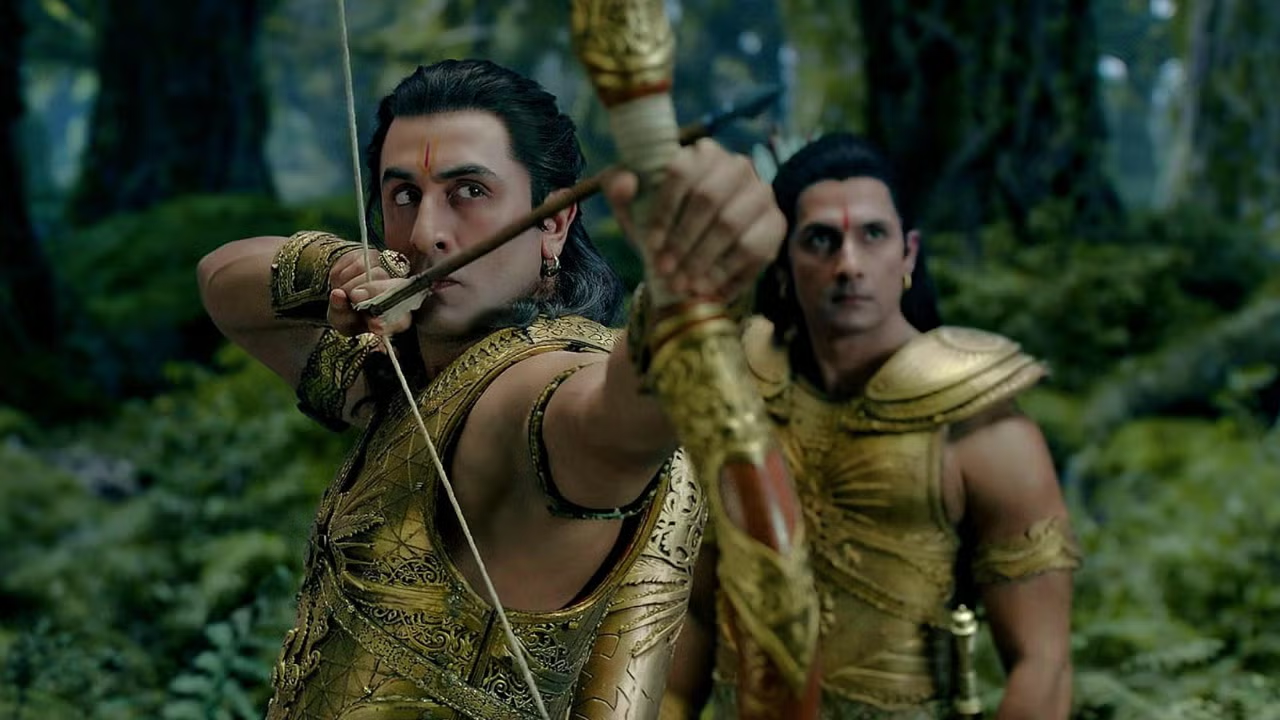
It is disappointing then, that while the sequences with Ravana and Lanka are so terrifically realized, the sequences with Rama in Ayodhya and later during his exile are not quite as effective. The argument can be made that this is a directorial choice made to accentuate the differences between Rama and Ravana, but Rise of a Legend spends so much time going into the goodness of Rama that it leaves very little room for the characters in this section to expand on anything else. This especially affects Kapoor, who is an incredible actor usually, but feels incredibly restrained here, barely providing a single emotion or even passionate response to anything that happens in his story, and because so many characters talk about Rama’s goodness, he does not get the opportunity to really showcase that aspect in his performance beyond having the look of a good man, albeit if only for a couple of moments. It isn’t helped when characters surrounding him, like Lakshmana (Ravie Dubey) and Sita (Sai Pallavi), have more to offer in their work and are more charismatic presences on screen. On a positive note, Sita is actually given more agency here than any adaptation I have seen thus far, honoring the original story’s description of her being a warrior as well, as she stands up for herself in the movie when the moment calls for it.
One of the other biggest drawbacks to the sequences with Rama and the moments in Ayodhya is the pacing, often bringing the movie to a dead stop in momentum and lacking the same amount of energetic and exciting direction as the scenes with Ravana. Many of the interactions are drawn out and directed without a single speck of the creativity displayed with Ravana, despite having much of the visual appeal. Once Ram, Lakshmana and Sita leave Ayodhya for 14 years to live in exile in particular, the movie meanders for quite a while, often biding time until the intense final act commences and sets up the stakes for the showdowns in Part 2. Not much of interest happens here, and much of it is further hampered by how limited Rama feels as a presence on screen. As alluded to earlier, it seems to be a narrative choice to keep Rama as good and naive as possible in the face of all adversity, but it comes with the cost of really feeling his struggles with him in the story, often relying solely on exposition from other characters to tell us about him. You know there is something off when moments like when Rama first sees Sita, a scene crafted to showcase love at first sight, or when he is told he has to leave for 14 years, has him not change his expressions at all in response.
Furthermore, despite some compelling turns from Rakul Preet Singh as Supranakha, Ravana’s sister, as well as Lara Dutta’s Kaikeyi and Sheeba Chaddha’s Manthara, the latter in fact giving one of the movie’s best performances next to Yash, many of the movie’s most compelling characters are also sidelined after a while, and some other characters are given next to nothing to work with, like Vivek Oberoi’s Vidyutjihva, reduced pretty much to just a thankless cameo. As such, many more emotional moments also fall to the wayside, even if occasionally, one manages to have an impact, such as Bharat’s (Adinath Kothare) visit to Rama after being anointed as king. Additionally, while for the most part, the visual effects are excellent, some of the monsters faced along the way, such as the fight between Rama and Tadaka and Subahu, look less great, with some of the CGI being quite noticeable there, and in moments when a face appears in the sky, an effect that in any movie made in the world is always a coin flip. Having only heard the reports surrounding the English version however, which happens to be 30 minutes shorter and its effects warped a bit by AI lip-syncing mouth movements, one would much prefer seeing this version’s effects instead, despite some minor errors.
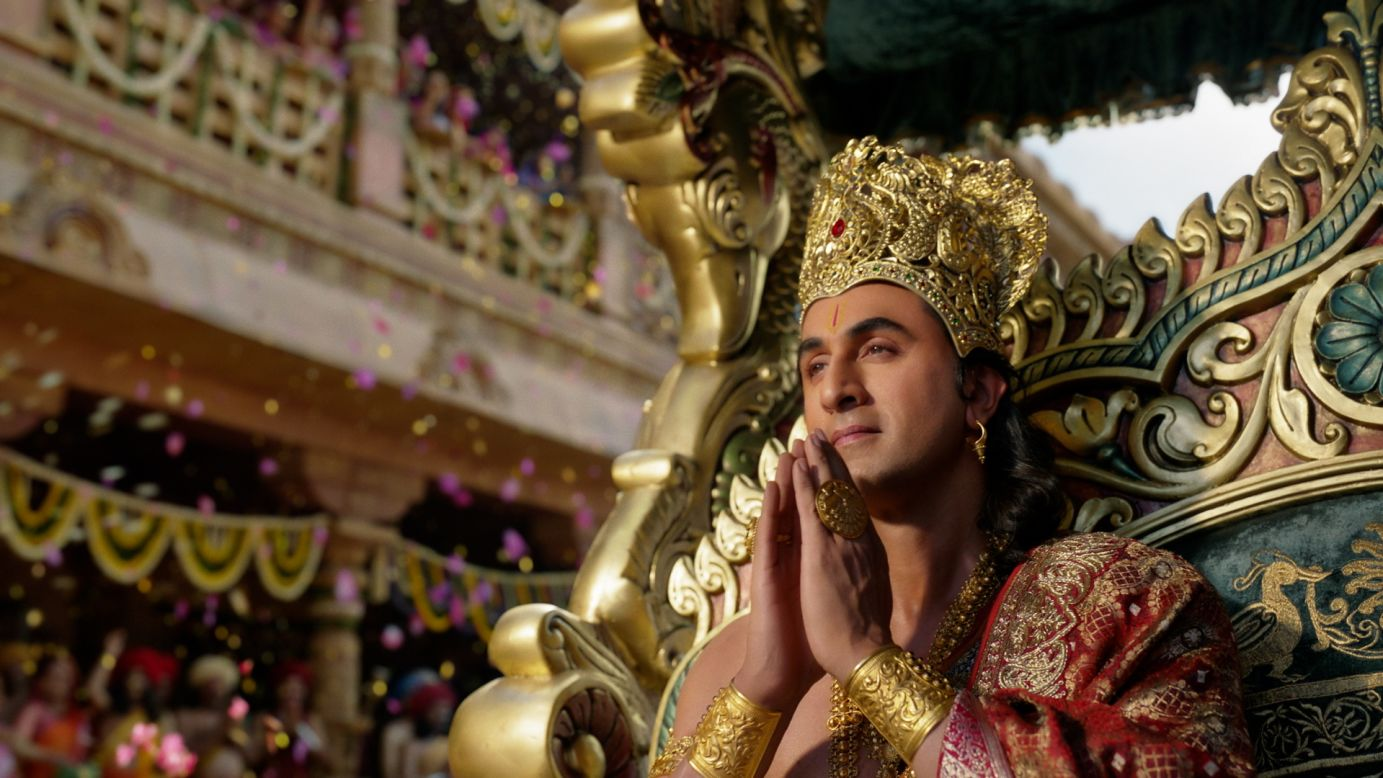
As previously mentioned, Ramayana: Rise of a Legend is primarily a setup to the next part, releasing two years from now. Ending with a massive and visually stunning cliffhanger finale where Ravana finally makes his moves to become the ultimate ruler of the three worlds and his path and Rama’s finally begin to converge with the abduction of Sita (this is not a spoiler, it’s in the trailer), it is likely that what comes next will be potentially far more exciting and interesting than this first section of the story. Famously, almost every iconic moment in Ramayana happens in that back half as well, particularly with one character–who is teased at the very, very end of the movie–involving fire. As far as this section of Ramayana is concerned, however, Rise of a Legend is a visually stunning, grand, and occasionally well directed movie with a solid thematic resonance underlying its every moment, but one that suffers when exploring its central character and lacking a significant amount of momentum and energy in the midst of doing so. Far from a failure, and certainly not bad by any means, but it had the potential to be so much more.