



Director: Hong Sang-soo
Writer: Hong Sang-soo
Stars: Kwon Hae-hyo, Park Mi-so, Ha Seong-guk
Synopsis: A young poet drops his girlfriend off at her parents’ house and is amazed by its size. He bumps into her father, meets her mother and sister, and they all end up spending a long day together; fueled by conversation, food and libations.
Hong Sang-soo, one of the hardest-working directors today, has spent the past decade delivering one film after another–sometimes even presenting two pictures at festivals in the same year–without the quality diminishing in the slightest. How does he do it? I’m not sure, but I am glad that he continues to bring us these gems year after year. Look at his work from afar. You might think that his storytelling method is minimalist and straightforward, relying on many scenes where characters converse in cafes, apartments, restaurants, or bars. However, upon closer examination, you see all the details and intricacies that Sang-soo incorporates into his stories and characters, resulting in rich experiments that depict domestic life in South Korea from various angles. Each time around, there’s something different lingering in his stylistic approach.
In a way, he is this generation’s Eric Rohmer, a director who ventures into realism through the mundanity of life and a series of conveniences, yet with beautiful and truthful touches in the dialogue, which makes the stories have their magical spark. Much like Rohmer, Sang-soo is thematically consistent and has a set storytelling structure, yet remains non-repetitive. As the years have gone by, Sang-soo’s work has become more personal, implementing real-life happenings into his stories: an actress and a film director meeting by chance in The Novelist’s Film, the reflection of what it means to create art in By the Stream, or the blurry lens of In Water, meant to reflect the South Korean director’s slowly declining vision. His most recent work, What Does That Nature Say to You (screening at the 2025 New York Film Festival in the Main Slate), is no departure from his late-career self-reflection and autobiographical storytelling.
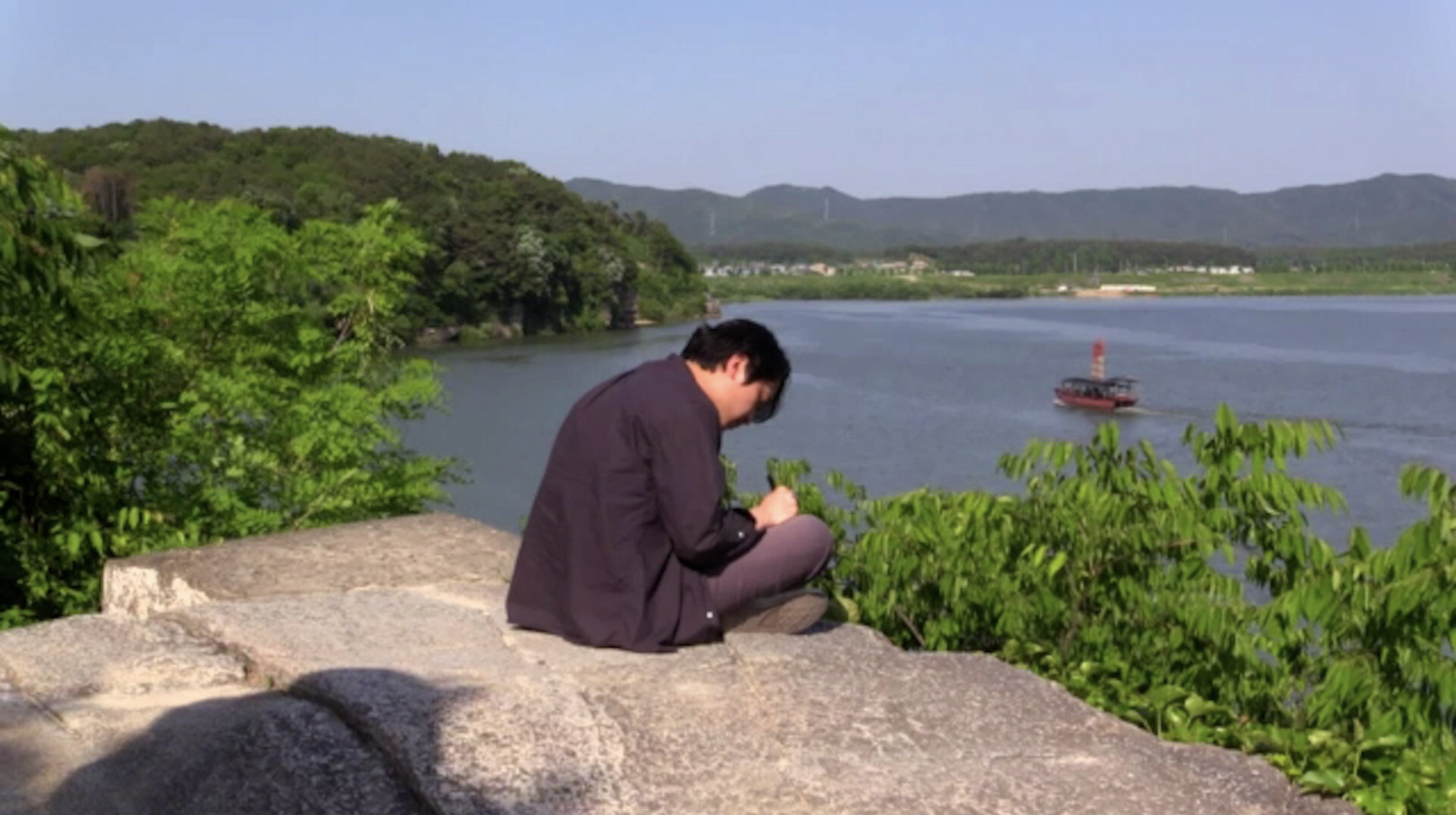
What Does That Nature Say to You is about acceptance, with a comedic tone in some moments and tense in others, from the discomfort of Sang-soo’s blunt honesty. The tonal balance might take you off guard at first, but Sang-soo smooths it out nicely to create a touching examination of the family dynamic. We follow a young couple, Ha Dong-hwa (Ha Seong-guk) and Kim Jun-hee (Kang So-yi), who have been dating for a couple of months and live a simple life. Even though they have been together for quite a while, Dong-hwa has never met Jun-hee’s parents. The story begins on the day of his first encounter, where Dong-hwa converses with and later confronts her family. The first family member he meets is her father, Kim O-ryeong (Kwon Hae-hyo), whom he unexpectedly encounters while driving Jun-hee back home.
Kim invites Dong-hwa to dinner, which he accepts, albeit with a hint of reluctance in his tone. This begins a series of scenarios that will force Dong-hwa to face up to the secrets behind his wealthy family, ideals, and life decisions. As Dong-hwa meets the rest of Jun-hee’s family, her mother Choi Sun-hee (Cho Sun-hee) and sister Kim Neung-hee (Park Mi-so), between cigarettes and drinks, Hong Sang-soo’s usual conversation starters, things shift from smooth sailing to contentious, awry waters, with a bottle of bourbon being the catalyst for the mood changes at dinner. The conversations that arise are intended for Jun-hee’s family to learn more about Dong-hwa. Mostly, it comes across as scrutiny and judgment. This gives way to tension with each word spoken, with light touches of comedy interspersed here and there. Sang–soo’s expertise in balancing seriousness with occasional breeziness shines through.
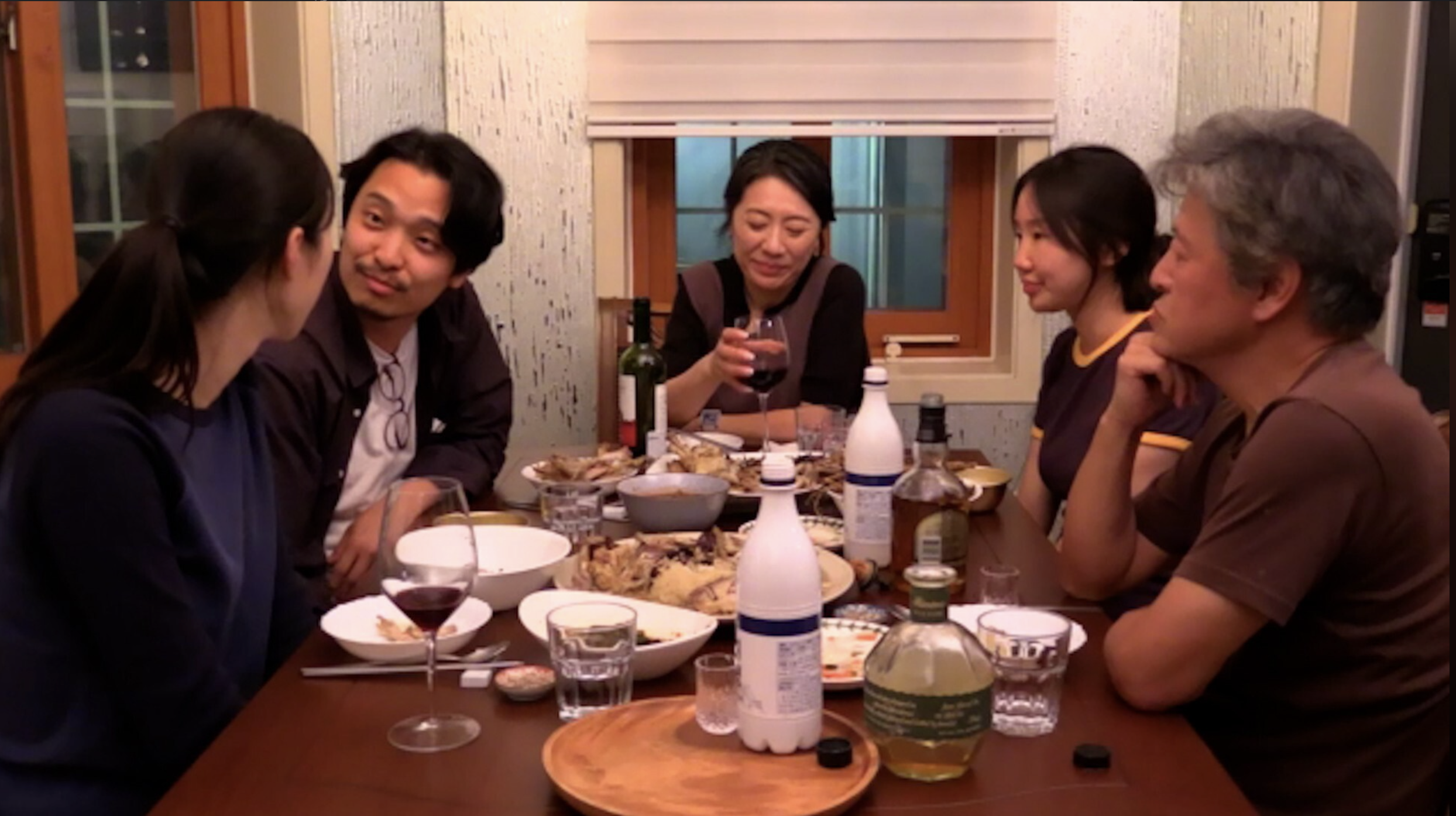
As the drinks flow, it becomes clear that Dong-hwa’s comfortable life is less idyllic than he first claimed. Some of his expressions contain a hint of fallacy, amounting to small white lies that subtly alter how others perceive him. The slightness of Sang-soo’s previous pictures dwindles upon the confrontations by Jun-hee’s family, which are, as it goes, for the means of finding an identity for Dong-hwa. Is it the one he wants or the one that Jun-hee’s family envisions for him? Not only is his mental state explored in these talks about famous fathers, art, and poetry (with a recital of one of Dong-hwa’s many unpublished works), ways of life, and acceptance of a person’s decisions, but the rest of the family has themselves tied up in this tricky web rooted in dialogue and understanding, or the lack thereof.
They put their own perspective on his situation and lifestyle, responding first with skepticism and later sympathy, with a closing segment that is superbly crafted and carefully observed. It becomes clear that these characters are all, in some way, inspired by Sang-soo’s own experiences–the talk circles around a singular topic for a long time, like a recurring memory the director can’t shake. On a personal level, What Does That Nature Say to You also employs the low-res, blurry lens that In Water contained. While the 2023 film utilized it to depict the world as Sang-soo sees it, this latest one has the South Korean director showing you how he sees the character of Dong-hwa, an adrift soul whose ignorance and creativity take him through the woes of adulthood. The hazy aesthetic only mirrors its thematic weight. Sang-soo refuses to provide clarity where life itself does not. Identity is never fixed, but constantly shifts. Our desires might shape it, but those around us do forge a significant part of it. It is in this understanding at the finale that Sang-soo offers his touching way into the complexities of understanding those around us.