



Director: Kelly Reichardt
Writer: Kelly Reichardt
Stars: Josh O’Connor, Sterling Thompson, Alana Haim
Synopsis: In 1970, Mooney and two cohorts wander into a museum in broad daylight and steal four paintings. When holding onto the art proves more difficult than stealing them, Mooney is relegated to a life on the run.
Kelly Reichardt often tells stories about outsiders—people at different points in time and across various states in America—who live on the fringes of society. The characters she writes are lonely, facing emotional and psychological hardships that hinder their lives from further displacement. As the world moves around them, they remain adrift, disconnected from reality. In most cases, it isn’t their fault. The injustices of the world around them construct their circumstances. Reichardt finds a way for the viewer to understand and dissect the characters and their respective situations through her usual quiet observation and breathing spaces–allowing room for empathy and compassion during their struggles. Her last two features, First Cow and Showing Up, feature outsiders in an artistic and commercial context, with Reichardt also exploring the value of the creative process and those who shape the person you are.

The Mastermind (screening at the 2025 New York Film Festival in the Main Slate) is another entry into that dissection of art and life intertwined, yet without the sympathetic note that accompanied the aforementioned. It is colder and with a character that is hard to root for, as Josh O’Connor’s James Blaine, or J.B., is a schemy and selfish fellow. But his worries and anguish, alongside the root cause of his egocentrism, strike a chord with the viewer. This is her version of a heist picture, rid of flash–but with a jazzy score by Rob Mazurek–and less talky, although tricky and with moments of tension. Amidst this “slight” change of genre, Reichardt remains her contemplative and acute self with many notions about the feeling of unfulfillment in life and the hunger for change in a crumbling society post-Vietnam war.
James Blaine is a father of two sons (Sterling and Jasper Thompson) and husband to Terri (Alana Haim, finally in a film after her excellent turn in Paul Thomas Anderson’s Licorice Pizza). In their family gatherings and outings, Blaine wanders about without aim, while the rest of them enjoy their time together. He’s quite a mysterious person, who thinks plenty but does not express his mind as often as he could. O’Connor is no stranger to playing characters who are adrift, seen primarily in Alice Rohrwacher’s excellent La Chimera. The difference between his character there and in Reichardt’s film is that in the former, he has a goal in mind, a person he seeks out to reach any means possible. Meanwhile, in the latter, there is little vision.
Blaine does not know where he’s headed and is not bothered by it at all. This aligns with Reichardt’s array of lonely souls traversing America’s outskirts, yet Blaine has a look in his eyes that expels an internal wounding that doesn’t seem to heal. In one outing to the Framingham Museum of Art, Blaine steps away from his family for a while, and something drives him to steal an ancient totem from an installation and place it in his glasses case. The petty thief does not stop there. When he notices that it was too easy, and security wasn’t tight, he hatches a plan to steal a couple of paintings by Arthur Dove, with a team forged by loaned money from his mother (Hope Davis).
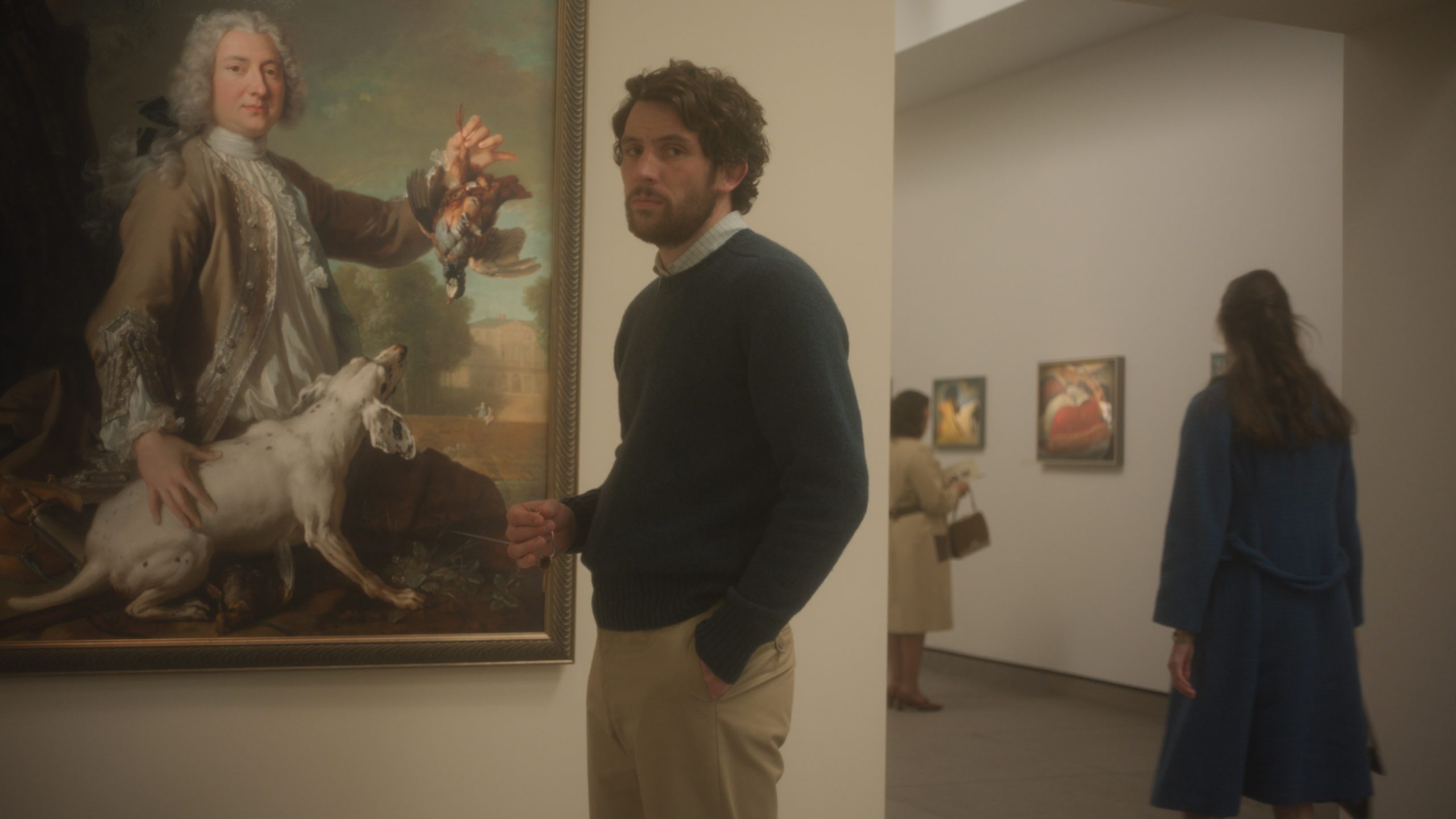
Reichardt gives you some of the heist movie sensibilities during the first section of The Mastermind, not to get it out of the way, but because it isn’t her focus or goal to delve into these conventions in any regard. She wants to explore more about what happens after these events, the mental states and consequences that occur once the deed is done. Blaine sacrifices everything–his livelihood, loving family, and freedom–for his selfish, vague reasons that he can’t seem to come up with an answer for. The few people in his life often ask him about why he did what he did, some more sympathetic than others. However, Blaine does not offer insight; it remains internal.
O’Connor bolsters that internal struggle to give the goalless character he portrays some life, even in the moments where it seems that he is a completely lost soul. That is Reichardt’s trademark in her characters: lonely souls scavenging the world for meaning and connection. However, Blaine differs from the rest because he isn’t given a resolution, or at least the one the audience expects. Blaine believes he is meant for greater things, but he feels stuck in an endless cycle of something impeding his progress, which is one reason for his behavior. It does not justify him, but desolation has stripped away the love and joy he once knew–the years that precede the events of The Mastermind. The early 1970s saw a social upheaval, marked by disillusionment and trauma for many Americans.
Distrust in the government created even greater helplessness, making it difficult to adjust to this new world and succumbing to collective sorrow. That is where Blaine’s mental state lies, right in the middle of it all, feeling the weight of that piercing feebleness economically and psychologically. In a single glance, you see Blaine’s shallow vessel of a soul; there is no drive, no desires in the man’s heart. Even when you see him interacting with people, you can’t seem to sense Blaine, almost as if he were turning into a shadow of his own self. And in today’s society, with everything seemingly going downhill one year after the next, you recognize that person–man, woman, parent, teacher, student, etc.–all wondering what is next and if it will get worse for all of us.
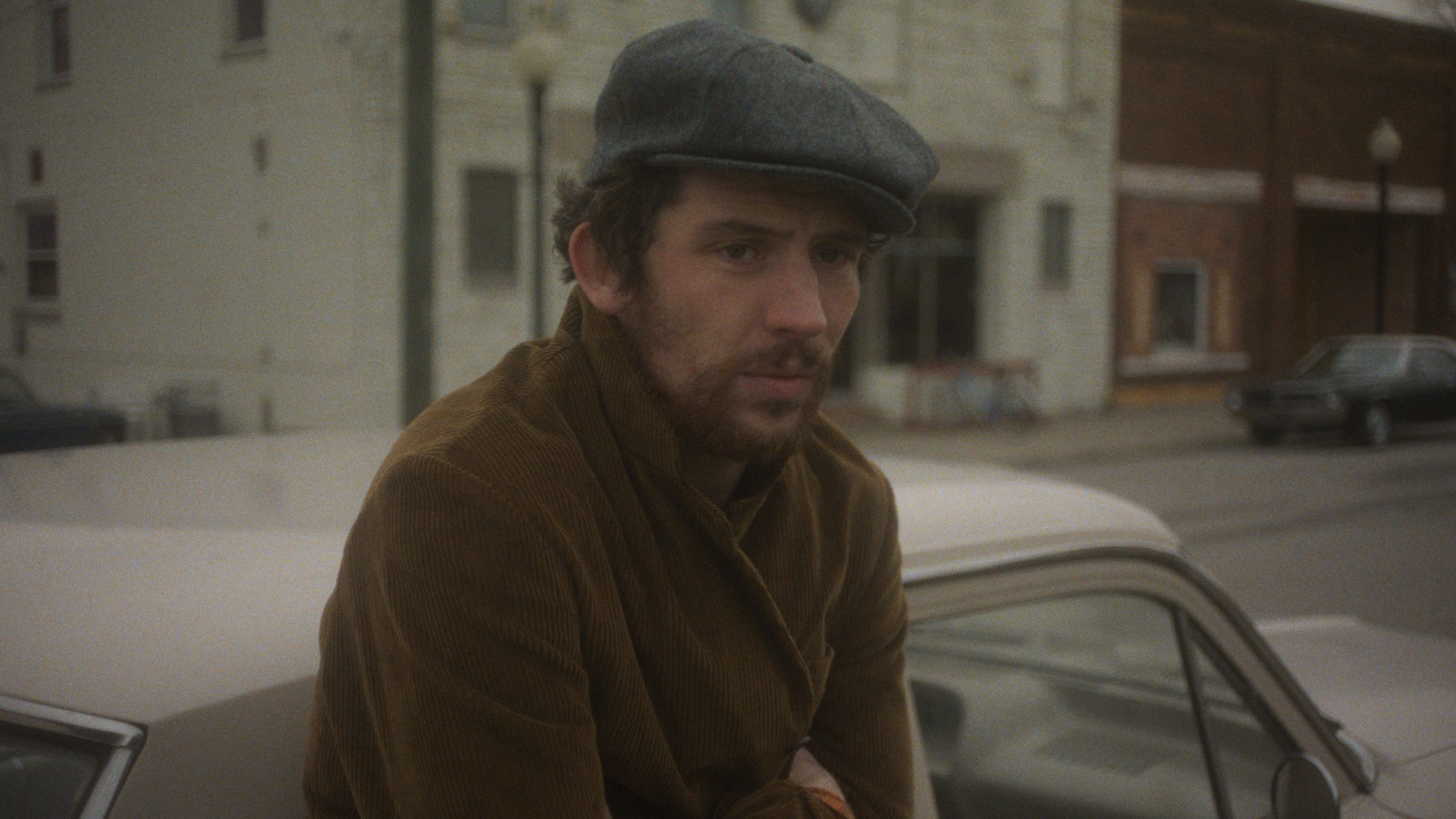
This drives them to self-interested propositions and inquiries, where ideals must serve one’s own interests; if not, they can be compromised. It is tragic; Blaine is one of the most sorrowful characters that Reichardt has ever created. You don’t want to be near Blaine and his selfishness, yet you feel that you have seen that person before. Reichardt does not offer him clarity, but instead leaves us with the haunting reminder that his emptiness is not unique. It is a reflection of a broader despair that continues to echo in our own time. The Mastermind begins as a distinct take on the heist picture, and evolves into an exploration of a collective mentality from the past that makes its way into the present.