


Director: Scott Ellis, Annette Jolles
Writer: Noël Coward, Claudia Sheer
Stars: Rose Byrne, Kelli O’Hara, Tracee Chimo
Synopsis: Recorded live on Broadway, Fallen Angels is a champagne-soaked 1925 comedy by Noël Coward. The story follows two wealthy, upper-class best friends who, with their husbands away for a golf weekend, discover that the irresistible Frenchman they both had affairs with before they were married is coming back to town.
Staged productions are a completely different beast than a film. This may seem like an obvious statement, but it is also an important one. Critics often complain of a movie being “too stagey” especially when it is a film based on a play. We ask ourselves, “why did this need to be a movie if it all appears like it takes place on one set?” And this is a valid question, but it is sometimes one that is leaned on too hard. After all, some of the greatest stories ever told, the most dramatic, the funniest, originally were performed on a stage, in front of a live audience. This is the originator of the art form that would eventually lead to us sitting in a dark room, facing projected images in sound, in that communal space. In many ways, film is a recreation of that same feeling you can get in a crowded theater on Broadway, experiencing art together. As we laugh or cry with one another, there is a shared experience that can never be recreated. There are arguments to be made about the utility of filming staged productions to air in movie theaters. On one hand, there is a beauty in the singular experience of the live play. On the other hand, so few of us are given the opportunity to see some of the best performers in the world hold the audience in the palm of their hands.
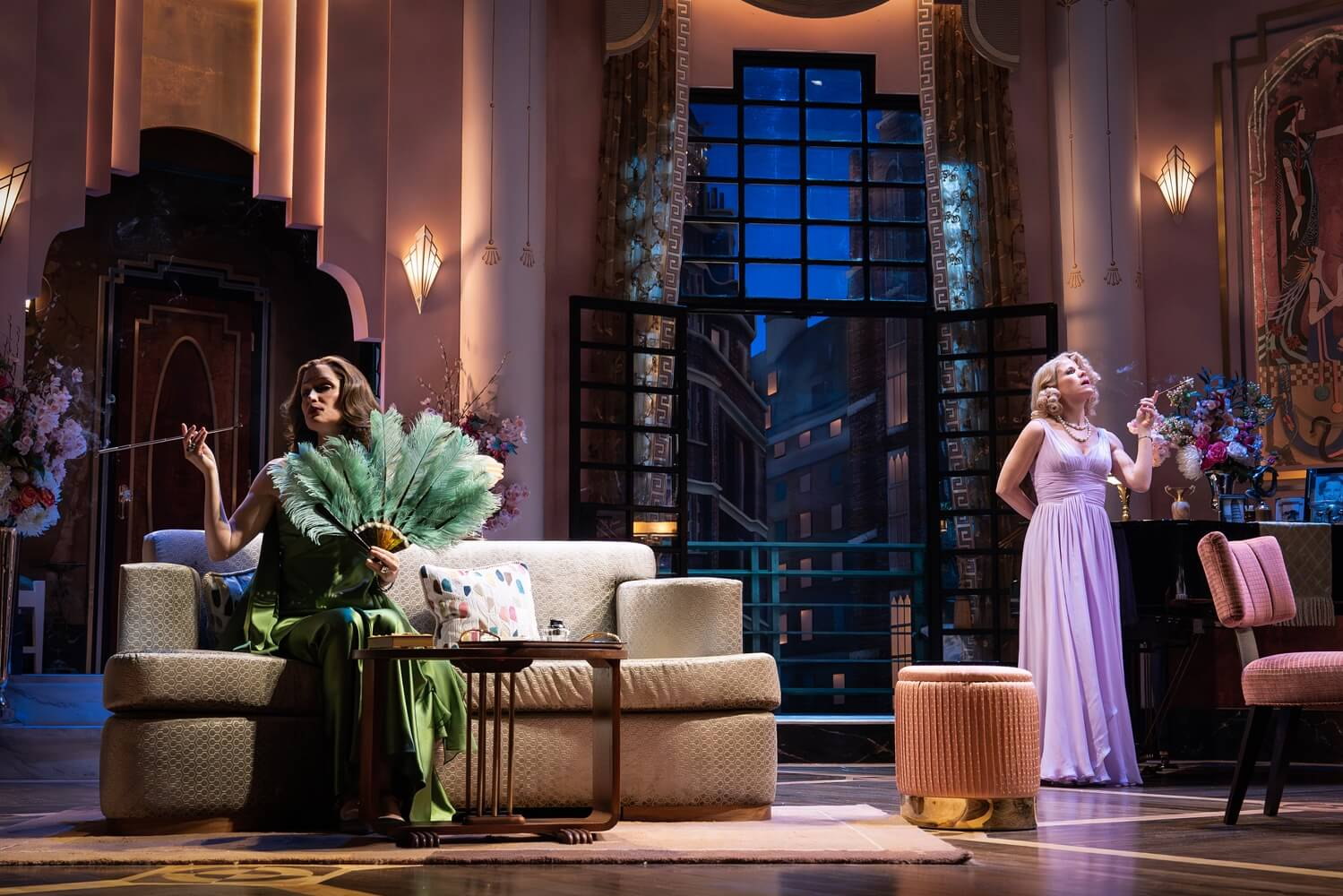
Fallen Angels, the Tony-nominated revival from this last year, is now playing in theaters across the country, and what a gift that is to those of us who could not travel to New York to see it live. Fallen Angels, originally written in 1925 by Noël Coward, stars Rose Byrne and Kelli O’Hara, both nominated for theater’s highest awards, as best friends Jane Banbury and Julie Sterroll, respectively. The two plan to spend the weekend together while their husbands Willy Banbury (Christopher Fitzgerald) and Fred Sterroll (Aasif Mandvi) head off on a golf trip. But we soon find out that they have another purpose for this weekend, a possible visit from a mutual old flame, Maurice Duclos (Mark Consuelos).
Now, anyone who has seen a typical comedy of errors, whether on stage or screen, and especially those of us who are familiar with Coward’s work, will know that zaniness is just around the corner. Directed for the stage by Scott Ellis, and for the screen by Annette Jolles, Fallen Angels is a masterclass in comedic timing, wit, physicality, and balance. Given the structure of the play, something as simple as poor blocking or as complex as poor casting would doom this production from the outset. That original direction from Ellis seems to make every right choice. No joke goes on too long, no movement is wasted, and whoever made the casting decisions should be awarded handsomely.
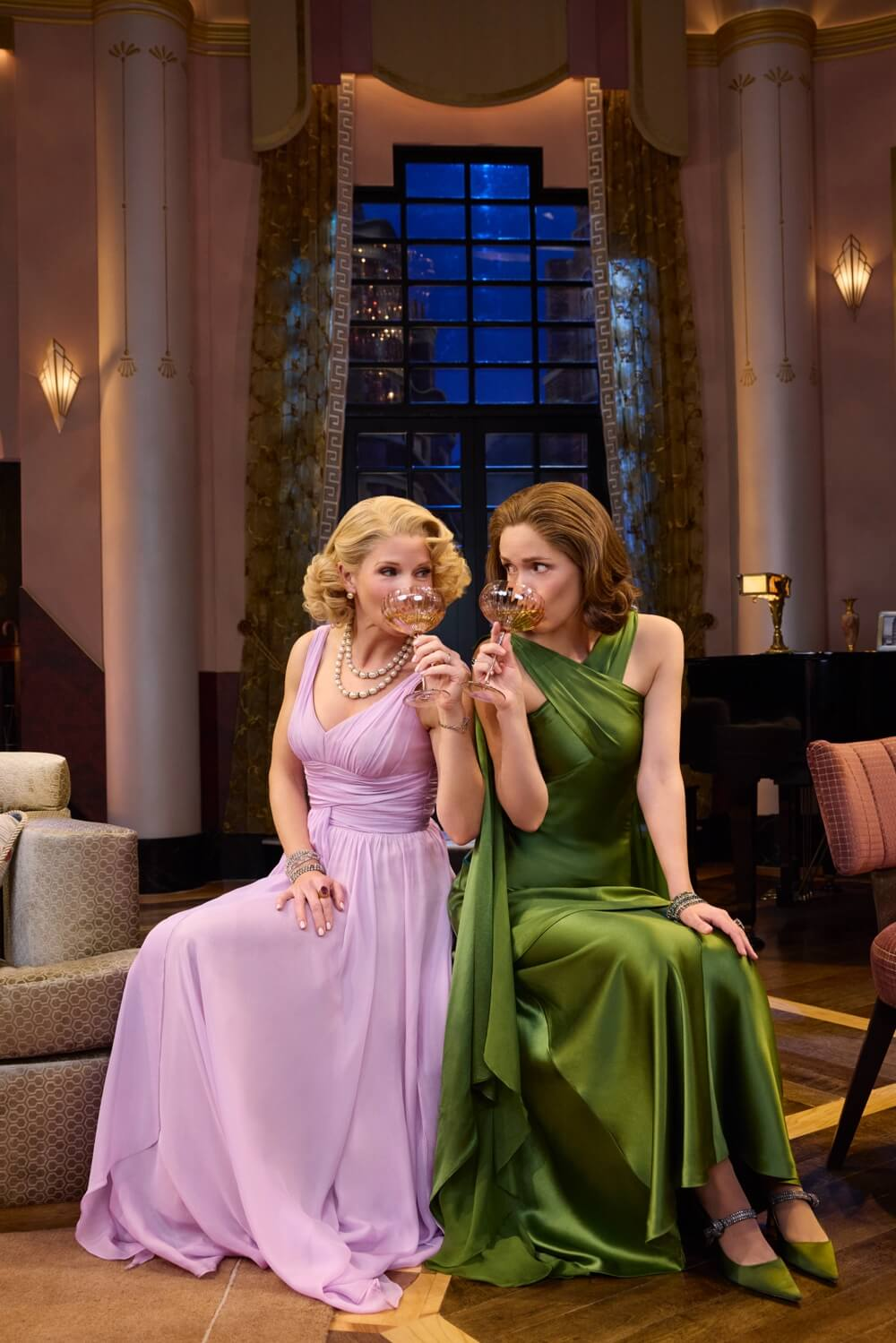
Much has been made of the friendship on stage between Jane (Byrne) and Julie (O’Hara), and yet, not enough has been said. The tried and true script takes the pair through not only their present friendship, but their long, shared history. And importantly, both of their performances, though individual, mesh perfectly with one another. They are both tremendous comedic actors, but in such different styles. Byrne, one of our great actors playing inebriated, manages to appear that way, always be understandable, and continues to be watchable even when making poor decisions, maybe especially then. O’Hara, on the other hand, among other things is able to master the physical comedy necessary without ever being a distraction from the actual script and plot mechanics. Although much of this play is simply two women talking (and drinking a dangerous amount of alcohol), there is just enough interruption from supporting players, and no one ever misses a beat.
The distinct lack of awareness from their husbands and their mild arguments to set the scene in the first act allows us to find a way to root for all four of them, without ever taking a specific side. Saunders (Tracee Chimo), Julie’s new housekeeper is just outlandish enough to wrangle even more laughs, even when you think you can’t summon anymore. And this is the biggest selling point of Fallen Angels and should not ever be forgotten. It is really, truly funny. One might make the mistake of thinking that a piece written almost a century ago could not hold an audience’s attention in 2026. You would not be more wrong, as you almost ache for an intermission to give your body a rest from the laugh-a-minute experience unfolding in front of you. If there is a negative in the cast, it is the eventual appearance of Maurice. The scene, as written, is wonderful, but Consuelos feels like a bit of stunt casting, and he doesn’t quite fit the mold. However, O’Hara and Byrne, in various states of hilarious distress, carry those scenes with aplomb, avoiding a crash landing in the final moments.
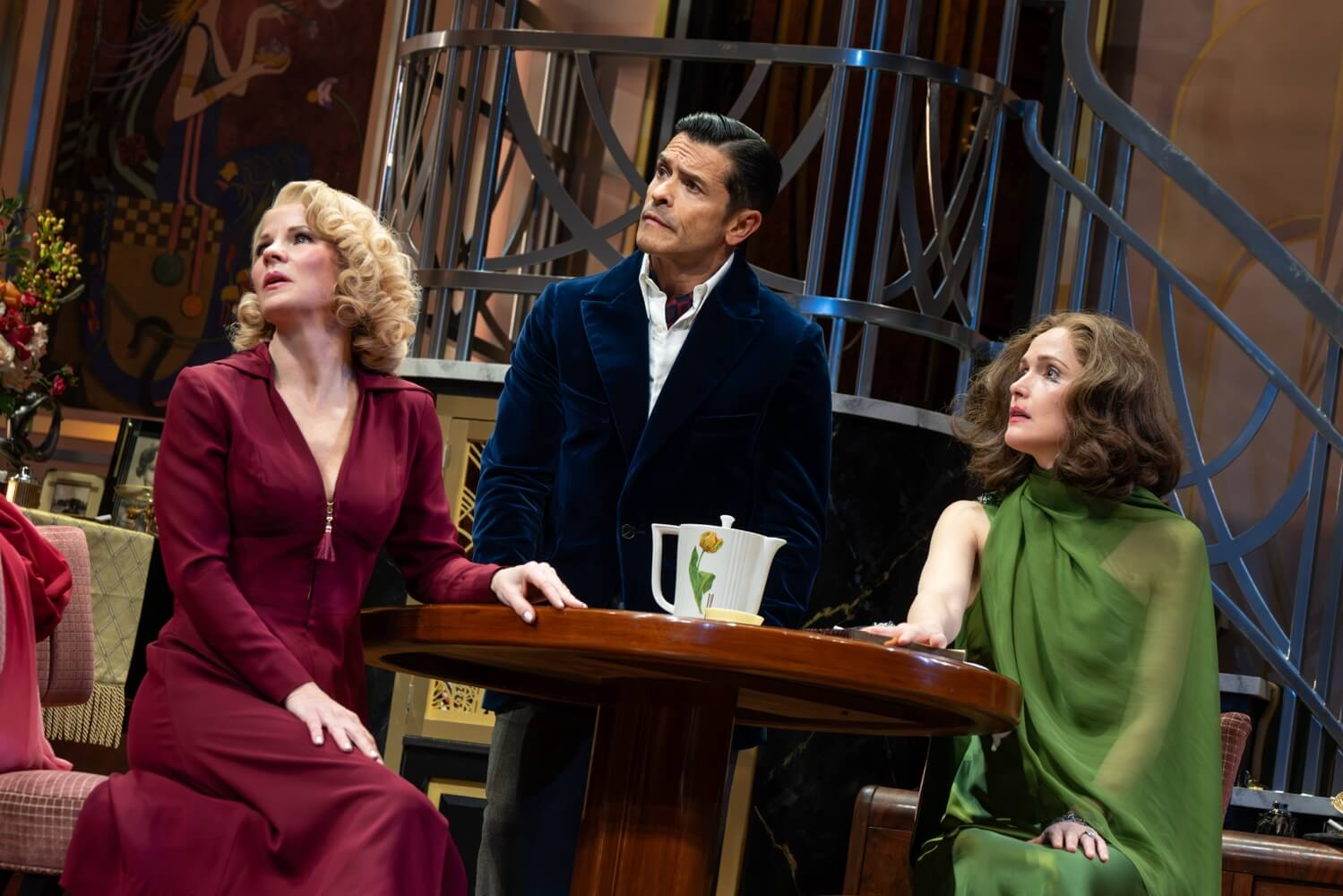
Seeing Fallen Angels on a large screen, with a cackling cohort is an experience that you should not miss. Rose Byrne being both hilarious and fantastic is no surprise, as she has been creating amazing comedic and dramatic work on the silver screen for decades now. But for those who are not Broadway-inclined, this introduction to O’Hara will be a true eye-opener. Fallen Angels is an absolute blast, truly side-splitting, and a laugh riot. But more than that, it is an opportunity to broaden our horizons to see a stunning (filmed) live production that most of us would never have the opportunity to witness. Do not miss this!