


Home Blog Page 92

Movie Review (TIFF 2024): ‘Sweet Angel Baby’ Delves Past the Intimate


Director: Melanie Oates
Writer: Melanie Oates
Stars: Michaela Kurimsky, Elle-Mรกijรก Tailfeathers, Peter Mooney

Synopsis: Follows an unassuming Newfoundland woman whose online persona strains her community relationships after its exposure.


Those who know me know that Iโ€™m a city dweller for life. Born and raised in New York, I feel deeply out of place if Iโ€™m not near bustling streets, an immense amount of noise pollution, and man-made monoliths that stretch into the sky. But Iโ€™m an absolute sucker for coastal towns. Thereโ€™s a beauty and charm to them that is undeniable. And as a fan of cinema, it certainly helps that coastal imagery is about as photogenic as nature can get. But there are also much deeper reasons to love such locales. Practically all homegrown, thereโ€™s a sense of real reliance on those around you. The whole town prospers when the individuals within help one another thrive. But along comes the Canadian film Sweet Angel Baby, celebrating its world premiere at the 2024 Toronto International Film Festival to disprove that very notion myself, and likely others, share. In fact, Melanie Oatesโ€™ film questions if that sense of community is even possible in such a judgmental, hyper-connected society like the present we currently find ourselves in.ย 

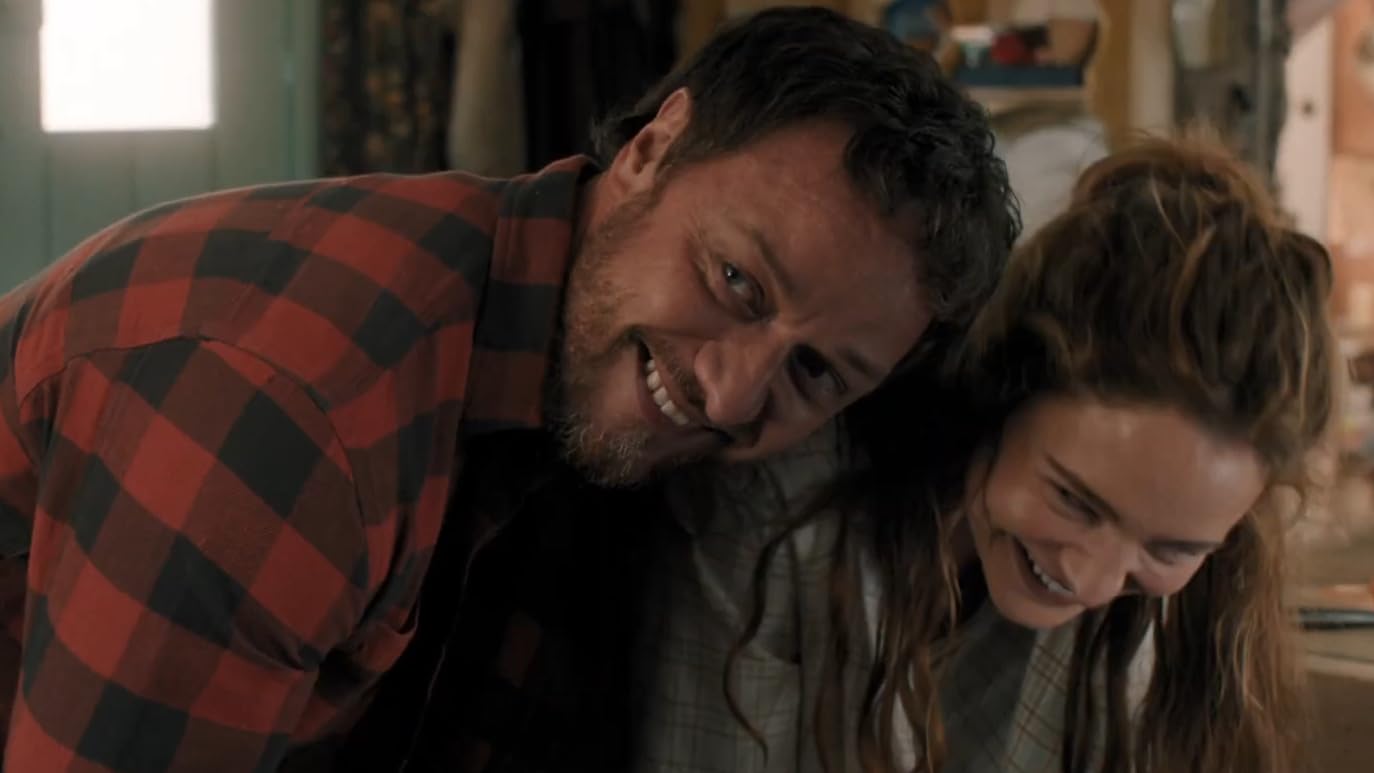
The film opens on that exact delight that draws people into coastal towns. Crashing waves on natural rock structures, beautiful greenery, some of the freshest food one could hope for. And of course, itโ€™s a town where everybody knows everybody. In one establishing shot, Oates basically captures the entire town in a single frame. While that may seem great to somebody just passing through, it would obviously be a nightmare for anybody hiding parts of themself from the world. And thatโ€™s the exact predicament Eliza (Michaela Kurimsky) finds herself in. Between her closeted sexuality and secret Instagram account where she posts nude photos, Eliza does all she can to keep out of the limelight for the wrong reasons. And the way Sweet Angel Baby handles this element of Elizaโ€™s character is one of its many strengths.

In a lesser film, it feels like the easy-way-out for inciting drama would be to make Eliza a social outcast within the town. Somebody who keeps to herself; somebody recognizable yet never fully known. Oates fully leans into the complete opposite. Eliza is a beloved member of the community. She leads the charge in setting up a fundraiser for the local church. She seems to show up to work quite early for general upkeep, taking pride in the moments that others may never notice are getting done. She even brings freshly chopped wood to her neighbor daily. It seems that despite being so forward-facing, Eliza enjoys her private moments just as much. And donโ€™t we all? More importantly, don’t we all deserve to have something we keep solely for ourselves? Kurimsky gives an undeniably vulnerable, internal performance, but the way she balances that with her more outgoing one is where the magic of the film lies. Itโ€™s the type of performance that draws an audience in plenty, but leaves just enough distance to remind us that we only know as much as the character and the filmmaker allow us to. And here enters Sean (Peter Mooney), an enigma to throw a wrench into the mix of all Eliza has done to protect herself.

Just because everybody knows everybody in town doesnโ€™t necessarily mean they all speak to one another. Sean seems to be all that on the surface. But Eliza and her secret-partner Toni (Elle-Mรกijรก Tailfeathers) do all they can to steer clear of him. A quick greeting or momentary small talk is all we really see. We are firmly team Eliza in this film, and Oates makes it abundantly clear why Sean should be avoided. Mooney plays him as a guy who doesnโ€™t really feel too much shame in his thoughts and actions. Heโ€™s revealed to be the worst type of sleazeball: one that doesnโ€™t really register they are one. His actions speak volumes, and there are moments both subtle and blatant that make you want to groan in annoyance and disgust in that particular way cinematic bozos make you feel. The blatant moments are the ones that may make an audience revolt at the sheer thought of Sean, and though itโ€™s obviously predictable, Oates makes the development feel potent. It displays a strong grip over the script and a confidence that your actors can effectively translate a range of emotions the audience knew would be coming.

By its final act, Sweet Angel Baby expands far beyond a personal, intimate story. It begins to morph into an indictment on the hypocrisies of society and towns that look like this one. There are double standards aplenty to be found in the reactions of varied townsfolk. Sean escapes any criticism by way of simply being a man, while Eliza is picking up the pieces of the life she sees slowly slipping away. Itโ€™s as if the people she has grown up around her entire life can no longer recognize her. And itโ€™s a concept thatโ€™s both saddening and frightening. How can people be so set in their beliefs they can turn on a person they proclaimed to love? How could anybody ever justify such behavior, especially when they arenโ€™t harmed in any way whatsoever? With Sweet Angel Baby, Oates reminds her viewer of the unfortunate truth that some people are, ultimately, set in their ways for life. And with that revelation comes a choice that needs to be made. What is better? To be shunned and knowingly spoken about behind your back? Or to embrace any and all vitriol, regardless of how hypocritical on their part it might be? Thereโ€™s much to be angered by in this film, understandably when reactions start flying across town regarding Elizaโ€™s life. But Oates also provides such sweet moments of those who will still defend her. And those silently touching ways families stick by one another are powerful. Thereโ€™s certainly a juxtaposition even amongst those who are mostly unbothered by her life, but those moments are essential for the finale of Sweet Angel Baby. For all the sadness and anger this film has to throw on societies and the people within them that have deemed certain ways of living โ€œimproperโ€, Oates chooses to focus on a moment of triumph. And itโ€™s wholly welcomed and appreciated.

Sweet Angel Baby celebrated its world premiere at the 2024 Toronto International Film Festival. For more information on the film, head right here.

Grade: B+

Podcast Review: Beetlejuice Beetlejuice

On this episode, JD and Brendan discuss Tim Burton’s latest film Beetlejuice Beetlejuice, starring the great Michael Keaton! It’s been a struggle in the last decade, so it was exciting to see Burton reinvigorated with those creative (beetle)juices flowing once again.

Review: Beetlejuice Beetlejuice (4:00)
Director: Tim Burton
Writers: Alfred Gough, Miles Millar
Stars: Michael Keaton, Winona Ryder, Catherine O’Hara, Jenna Ortega

Subscribe to our Podcasts RSS
Subscribe to our Podcasts on iTunes
Listen on Spotify
Listen on Stitcher
InSession Film Podcast – Beetlejuice Beetlejuice

Intervew: Asmae El Moudir, Director of ‘The Mother of All Lies’

Moroccan filmmaker Asmae El Moudir digs deep into memory through the tactile act of re-enactment to uncover the truth about the Casablanca Bread Riots in 1981 โ€“ protests that saw over 600 people killed or imprisoned. Amongst those killed was Fatimah a young girl who lived on the same street as the El Moudir family. Among those imprisoned and arrested were her close neighbours Saรฏd and Abdallah. Among those who watched and remained silent was her grandmother โ€“ a matriarch who exerts iron control over Asmae, her father Mohamed, and her mother.

Asmae employs dolls that have been painstakingly created by her father and dressed by her mother. The three of them have recreated the street where they lived, the interior of their home and adjoining apartments (where Saรฏd and Abdallah lived) and a soccer field where her father played which turned out to be the site of a mass grave where the victims of the riot were buried. 

An entire microcosm is created in Asmaeโ€™s studio where she uses tactile โ€œplayโ€ to invoke memory. There are many ways to make a documentary, but Asmae El Moudirโ€™s approach is unique. She is inside and outside the story. She is acting and directing and remaking and remembering. 

Nadine Whitney speaks with Asmae El Moudir about her stunning documentary.

Nadine Whitney: The Mother of All Lies is unique in its form of tactile memory evocation. Can you tell me a little about why you chose to use a constructed world to reconstruct and uncover memories?

Asmae El Moudir: I chose to use a constructed world to delve into memories because it allows a unique exploration of the past. By creating a tangible environment, I can invite the audience to engage more fully with the fragmented and sometimes elusive nature of memory. This approach helps uncover truths that are often hidden or forgotten.

NW: While making the film you encountered active resistance from your grandmother. How important was it for you to show her continuing denial is the behavior of a trauma survivor?

AEM: Showing my grandmother’s denial was crucial as it reflects the complex layers of trauma survivors’ behavior. Her resistance wasn’t just a narrative obstacle; it was a profound insight into how deeply trauma can shape one’s reality and perceptions. It was important for me to convey this honesty and complexity to create a more authentic narrative.

NW: The Hunger Riots were just one example of the brutality of the Hassan II regime. Although there has been an attempt to look into the past, do you think Morocco is learning anything from it?

AEM: The Hunger Riots and other historical events are no longer taboo subjects, as evidenced by numerous films addressing them. There is a sense of reconciliation with the past, although we’ve never seen a film quite like The Mother of All Lies in its form.ย 

While there have been attempts to address our history, the process is ongoing, and I believe there’s still much to learn as a nation. Acknowledging and understanding these events are essential for societal growth and healing.

Moroccan director Asmae El Moudir poses during a photocall for the film “Kadib Abyad” (The Mother of All Lies) at the 76th edition of the Cannes Film Festival in Cannes, southern France, on May 25, 2023. (Photo by LOIC VENANCE / AFP)

NW: There is quite a lot of brave cinema coming out of Morocco, for example Maryam Touzaniโ€™s The Blue Caftan. Do you believe cinema has the opportunity to create conversations leading to a society that can both honor heritage, confront pain, and more forward into equity for all Moroccans?

AEM: Moroccan cinema is indeed paving the way for crucial dialogues. Films like The Blue Caftan highlight the power of storytelling to confront societal issues, honor heritage, and inspire change. I believe cinema can spark conversations that lead to societal transformation, bridging the gap between past injustices and a more equitable future.

NW: What do you hope audiences get out of the experience of seeing The Mother of All Lies?

AEM:ย I hope audiences leave The Mother of All Lies feeling restored memories. My aim is to offer them a journey that provokes thought and empathy, encouraging them to question and understand the complexities of personal and collective memories.

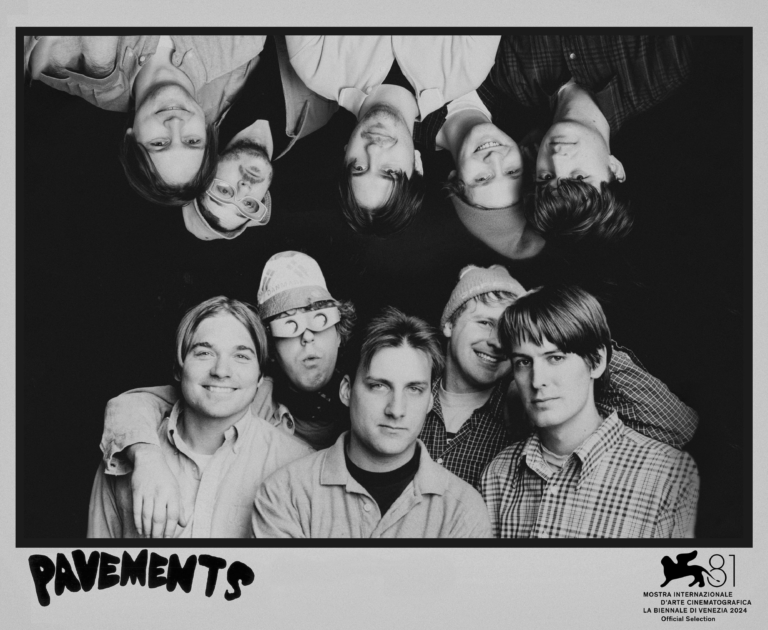
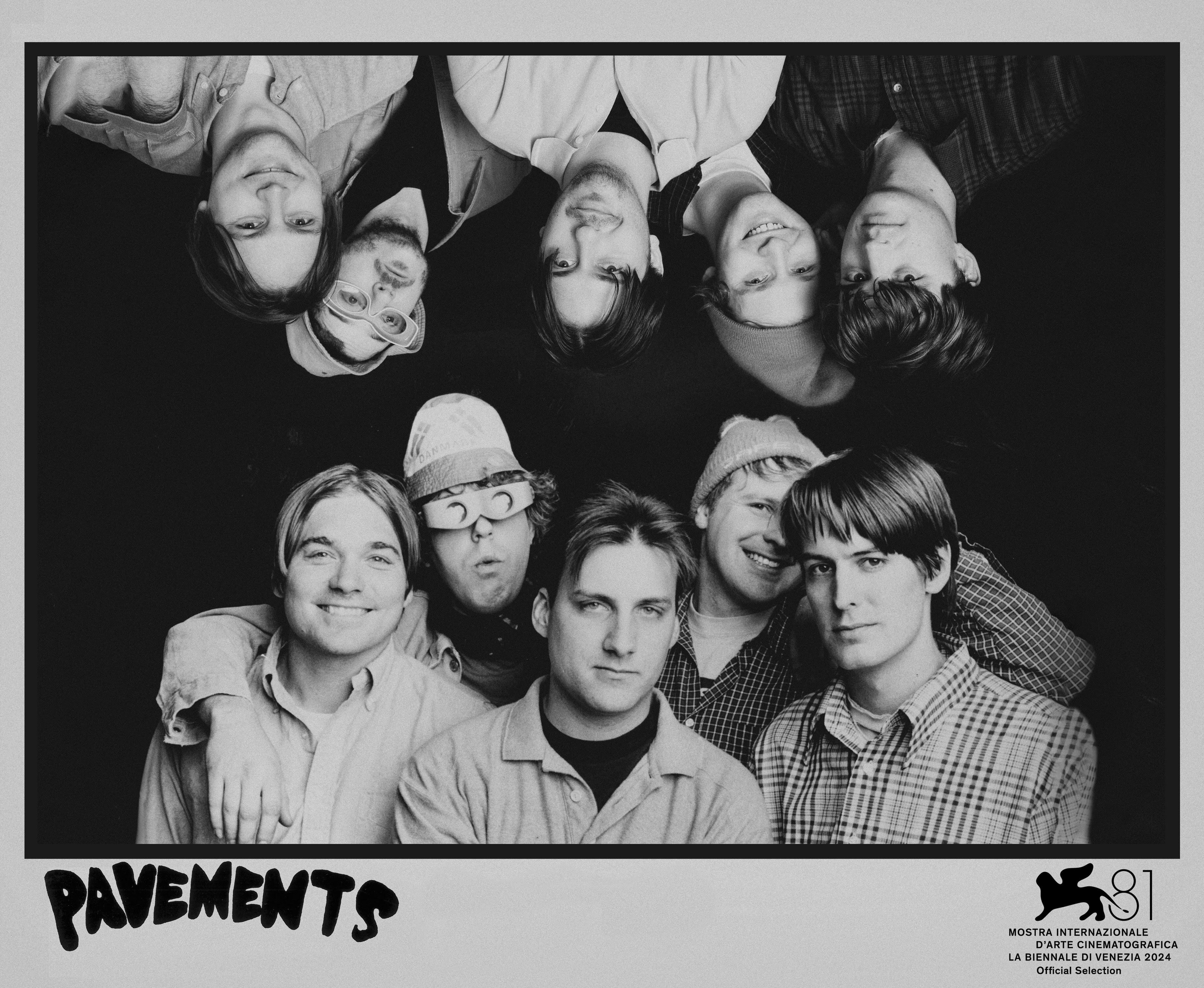
Movie Review (Venice 2024): ‘Pavements’ Hands Out Deserved Flowers


Director: Alex Ross Perry
Writers: Stephen Malkmus, Alex Ross Perry
Stars: Stephen Malkmus, Scott Kanberg, Joe Keery

Synopsis: Documentary about the American indie band Pavement, which combines scripts with documentary images of the band and a musical mise-en-scene composed of songs from their discography.


Pavement is a band that a specific niche of ’90s kids and 2000s rockers adore while the rest of the world ignores. Their songs were the score to the lives of the youth that Richard Linklater described as โ€œslackersโ€ in his 1990 feature film titled after the description. And that is no dig at the band itself. Their records appealed to that group of teens and were their probable introduction to the vast indie scene. But Pavement is not recognized for that. It was a group that was forgotten, and years later, the world reassured and welcomed them back to the scene, which is why their reunion tour received plenty of attention.ย 

Most of these bands from the ’90s have gone through the same journey of rediscovery by a new generation that appeals to them for the same reasons as the original fans did back then. Pavementโ€™s feels different; it has a more sincere revelation, even if the 2020s surge began with the rise in popularity of one of their B-sides in TikTok, โ€˜Harness Your Hopesโ€™. Yet, I still feel that they are not given their deserved merit. Now, they are the subjects of a double-sided, metatextual project, Pavements, that is one part documentary about their discography, impact, and recent reunion in 2022 and one part fake fiction observation on what could have beenโ€“selling out to the massesโ€“and their wayward demeanor through mockery and admiration.ย 

The director helming this project is Alex Ross Perry (Her Smell, Queen of Earth), a talented and stripped-down filmmaker who has made his name by crafting peculiar pieces that tend to work when they arenโ€™t supposed to due to their tone and genre shifts. Pavements is another addition to the list. The film contains his style and spirit. But actually, it is the fan side that predominates the direction, immediately noticeable upon the tagline โ€œThe Worldโ€™s Most Important and Influential Bandโ€ and his words on the press notes, where Perry talks about how the group deserves their flowers because there hasnโ€™t been a band like Pavement. And he is right.ย 

Their use of irony and introspection in their lyrics mixed with the nonchalant of their lo-fi slacker aesthetic silently influenced a new generation of artists (Cate Le Bon, Car Seat Headrest, Snail Mail, Destroyer, just to name a few) that the response to it does not measure up with their current sidelined placement. I may not be their biggest fan in the world, but they deserve to be considered one of the top bands of the ’90s. Due to such disregard by the masses (and other reasons later to be explained), Alex Ross Perry made Pavementsโ€“a tip of the hat for the underground heroes and a beautiful, outright creative portrait of their essence, the slacker repertoire, and the music world they shaped one shrouded pop record at a time. 

This doc hybrid is pitched to the viewer as โ€œthe documentary that may or may not be entirely true, may or may not be totally sincere, and may or may not be more about the idea of the bandโ€“or any bandโ€“than a history of Pavementโ€. That convoluted sentence leaves you questioning where things might be headed. But nothing can prepare you for the dissection Perry does of the band, rock docs, and biopics. The Her Smell director picks apart the worst tendencies of the Oscar-showered projects and mocks them to oblivion by providing artistry and vision to this film, leaving behind the Wikipedia rundowns and alignments for a more freeform approach.ย 

If it isnโ€™t apparent, Pavements is about the band Pavement. If you know about them, you are up to speed in some regards. If you donโ€™t, Perry has more than covered you. He presents you with their history through archival footage of their beginnings and decades-later reunion, as well as covers of their songs from up-and-coming bands (which serve as an honor for the new generation that has embraced them). The members (singer Stephen Malkmus, guitarist Scott Kannberg, bassist Mark Ibold, and drummer Steve West), past and present, records, and slacker rock style are all given an introduction so that later Perry can delve deeper into their significance. 

Their music does not appeal to every soul so you may be detached from the documentary. Perry recognizes that and thoroughly admits it. But one of the many tricks he pulls to turn the rock biographical portraits upside down is sharing his perspective on why the subjects are important not only to him but the music industry overallโ€“with frontman Malkmus learning the meaning of Pavement in his life by reflecting on the multiple breakups and reunions as they reach more fame through new generations. Documentaries about rock music mainly consist of a by-the-numbers structure or โ€œyou had to be thereโ€ nostalgia trip that teaches you about the subject at hand. Yet, it is all information widely known by the great majority. 

You are given one fact after another and no insight into what made them these thunderous forces in the industry, whether they are celebrated by the public or recognized by a more niche crowd. Pavements does the opposite. The film is rooted in the acclaim that made their style and musical posture recognizable and admirable. Perry manages to do such a thing by adding self-referential and unfeigned remarks on them via three different scenariosโ€“two being real while a third one isnโ€™t close to being such and with a purpose. The first is a museum exhibition called PAVEMENTS: 1933 – 2022, featuring memorabilia and โ€œrumoredโ€ relics of their actual and imagined history. 

This is where reality and fiction begin to intersect. Tokens of forged past cross paths with the knowledge of the fans attending the museum. It is all done with that ironic wink that Pavementโ€™s lyrics contain. Beneath the surface of that experimentality, secrets are waiting for the right person to explore. Nonsensical wordings on a wall dedicated to old notebook pages may seem unimportant. However, these pages in the union tell a story about their creative process and personalities. The same happens with the old tour posters and cover art variants you see in the background. Yet, the writings have more potency and definition, like each wall is a gateway into their minds at the time. 

The second is a workshop stage musical named after one of their most popular records, โ€œSlanted, Enchantedโ€. There is no dialogue, only covers of Pavement songs played to capture the inner feelings of the characters singing themโ€“the vibe rather than exposition. The story is simple and cliched: a boy falls in love, becomes famous, and ponders about that lost love. The interesting element in this on-paper trite concoction is how Perry and the band capture the aesthetic of their records through the restrictions of an off-Broadway play. And it is enjoyable watching it, charming in its low-budget contractionsโ€“like a giant pair of mache scissors appearing during โ€˜Cut Your Hairโ€™, and jokes in its depictions of melodrama in the musical venue. 

The third project is the most random yet self-referential of them all: a faux biopic about Pavement called โ€œRange Lifeโ€. That โ€œfilmโ€ within a film starts with the likes of Natt Wolf, Logan Miller, and Fred Hechinger as band members and Jason Schwartzman as Matador Records head, Chris Lombardi. But the standout, and most commanding of them all, is Joe Keery as a brooding Stephen Malkmus. Seeing scenes from it as a โ€œFor Your Considerationโ€ tag pops up, Keery immensely commits himself to the role. Keery even believes he is becoming the Pavement frontman; at one point, he mentions that an exorcism is needed to remove his essence from his future roles. These are hackneyed clips, yet with a purpose. The โ€œRange Lifeโ€ sections of the film mock modern biopics. 

Keery is once asked what a special biopic is and answers Bohemian Rhapsody, one of the worst examples of the rudimentary list, or, in other words, the ne plus ultra of horrid biographical portraits. Many multi-layered jokes critique the Hollywood machine’s laziness. These projects need directors interested in the subjects to cover them thoroughly with a distinctive touch. All of this, and more, is done by Alex Ross Perry and Stephen Malkmus. They team up to show the world why Pavement means something not only back then but in todayโ€™s world, driven by consuming content quickly without digesting any of it.ย 


Pavements might not be the epitome of rock documentaries or biopics. However, the project can probably pave the way for other filmmakers to craft more inventive portraits of fascinating musical figures with flair and ingenuity instead of million-dollar checks. (I am dying for a project like this about Chelsea Wolfe, Laura Nyro, or Portishead.) Alex Ross Perry culminates Pavements by giving the band their deserved flowersโ€“and a new light shines on them because of this strange, informative concoction.

Grade: B

Movie Review: ‘Look Into My Eyes’ Seeks Larger Meaning


Director: Lana Wilson
Writer: Lana Wilson

Synopsis: A documentary through a series of intimate sessions with psychics and their clients.


Lana Wilson (Miss Americana) enters the world of New York City psychics and clairvoyants in her documentary, Look Into My Eyes. Per Erik Borja, Eugene Grygo, Nikenya Hall, Phoebe Hoffman, Michael Kim, Sherrie Lynne, and Ilka Pinheiro are mediums who hold sessions with various clients. They are, overall, an eccentric bunch. Some are put together more convincingly than others, but none are quite convincing enough to make the audience believe theyโ€™re witnessing much more than cold readings, therapy techniques, vague and interpretable language, and some (in)elegant theatrics.

The documentary makes no effort to win over skeptics and often shows the psychics getting things wrong or reaching without success. Lana Wilson doesnโ€™t expect the audience to buy what theyโ€™re seeing is real spiritual or psychic communication. What the documentary does achieve is to make you wonder if any of the โ€˜realityโ€™ matters.ย 

Why do people go to psychics? Many of the clients in Wilsonโ€™s documentary have the pedestrian questions and concerns one would expect when consulting a clairvoyant. Someone is asking about when Mr. Right will come along, another wants some financial guidance, another needs to know if theyโ€™re making the right choice for their future. Some want to know if the environment is going to collapse. A family lives in an apartment they think is haunted. Children wonder if their deceased parents are proud of them. 

Other clients have more specific concerns. A young woman needs to know if her birth mother in China who gave her up still thinks of her. A doctor wonders about the child gunshot victim who died in her arms years ago when she was first working emergency. A young man wants to know if his ancestors were slaves and how he can learn to let that legacy go. Then there are the clients of Phoebe, the animal psychic, who want someone to interpret the mysteries of an annoyed cat or a leash resistant dog.

Essentially, the answer the documentary gives is that clients seek out psychics because they are people who wonโ€™t judge their questions. Psychics are a safe space for inquiries that therapists or religion donโ€™t want to deal with or deny the existence of. Seeking permission to grieve and to be allowed to grieve in a non-traditional manner has people coming to the psychics. Asking off the wall questions and being treated without judgement has people coming to psychics.

Each of the seven psychics is damaged in some way. Outsiders who found themselves feeling less on the outside when they hung up a sign and opened for business. Many of them were entranced by films, art, acting, musical theatre. One has a degree in theatre studies, another has an acting degree, another is a screenwriter (attempted) and a musical performer. Theyโ€™re each holding onto a specific pain and their skill is to recognize pain in other people and give them the outlet to express it and provide them with some form of solace.ย 

Phoebe, the animal psychic, is particularly good at projecting her own feelings of being a special oddball and survivor onto her clients. If she was to go to a therapist, they might use some of her own techniques on her. When one hurt young woman asks her about a faithful dog who helped her through a tough time, Phoebeโ€™s answer about the dog in question might well be made up, but her understanding of what the woman went through is not.

NYC is the kind of place which attracts fringe people, and it sometimes rewards them for their peculiarities. Apart from Eugene, who is a borderline hoarder, carrying around his pain of being rejected because of his sexuality, most seem to be making fairly good money. Lana Wilson follows each of them home and showing them in their apartments with the small and large items they treasure gives the audience a deeper understanding of what makes them believe in their โ€˜giftsโ€™ and why they feel they must share them.

The documentary doesnโ€™t always maintain momentum, but Wilsonโ€™s window into the world of people who provide some consolation to others and who also feel more authentic when giving it, has enough impactful sections to keep the audience invested in certain clients and particular psychics.

Even though there is the element of improv sham – something one psychic embraces somewhat through a particular brand of solipsism – most people get what they came for. A moment where they are seen and made to that something or someone out there is guiding them or forgiving them. 

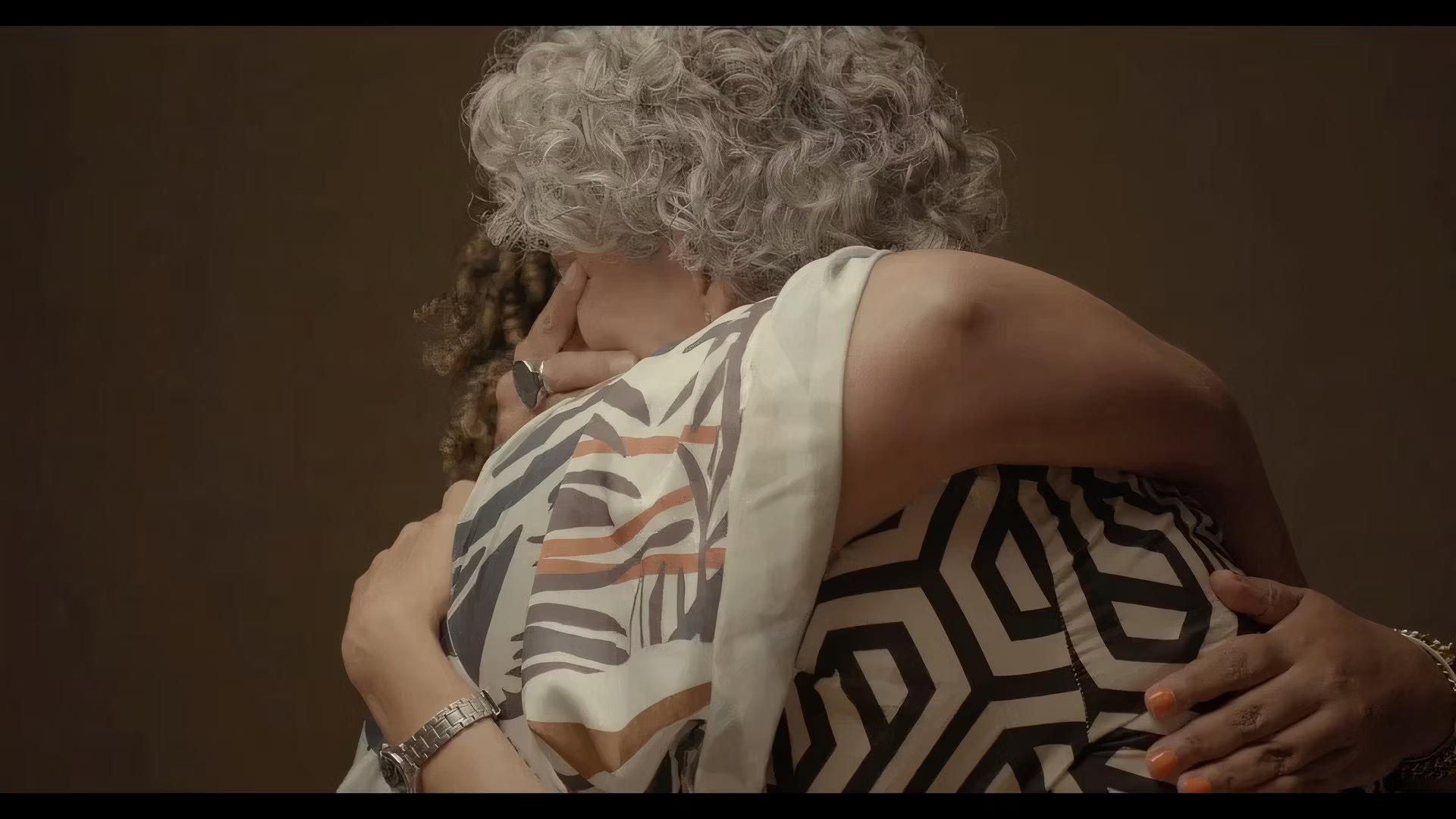
One scene which wonโ€™t be soon forgotten is when the doctor hugs her psychic and openly grieves the young gunshot victim and the young woman she was. What she was really asking was โ€œHow do I move on from what I experienced?โ€ No one supported her at the time of the incident decades ago and sheโ€™s probably seen too many deaths where everyone remained silent and moved on with their day. The heartbeats of the doctor and the psychic are picked up on the microphone and it is raw and intimate. In that moment, it doesnโ€™t really matter how she got to that place of release, just that she did.ย 

Another revealing section is when they are all brought together and one of the group is supported with the same vague language they use on their clients and that seems enough for him. Michael earlier admitted he doesnโ€™t know if any of what he does or perceives is legitimate โ€“ and he is quite egregiously bad at his interim career while he waits for his big acting break. Yet he and the others believe in something, even if it just turns out to be having people to talk openly about vulnerability. They each have deep seated issues of loss or displacement, and their โ€˜life pathโ€™ has given them purpose. 

The psychics might well be fleecing their clients with their claims – in fact there are times some of them most certainly are, but even if their gifts arenโ€™t real, some people are happy to buy them. Lana Wilson leaves it up to the audience to decide if there is any significant difference between paying someone who has spirits โ€˜speakโ€™ through them, or can turn a card on a tarot deck, than there is in seeing a religious figure or therapist. If the end effect is comfort or closure, does it matter?ย 

Look Into My Eyes doesnโ€™t represent the entire community of psychics, mediums, or clairvoyants and it also doesnโ€™t show any of the subjects doing anything malicious or harmful (which can and does happen). Itโ€™s a small cross-section of people who are seeking something larger than themselves just as much as their clients are. Look Into My Eyes is a study of seven people who perform and their particularly willing audience. It is a minor entry in Wilsonโ€™s documentary oeuvre but a surprising one in its focus on people who need to believe they are special.

Grade: B-

Movie Review: ‘The Front Room’ Wastes Spectacular Visuals


Directors: Max Eggers, Sam Eggers
Writers: Susan Hill, Max Eggers, Sam Eggers
Stars: Brandy Norwood, Andrew Burnap, Kathryn Hunter

Synopsis: It tells the story of a newly pregnant couple who are forced to take in an ailing, estranged stepmother.


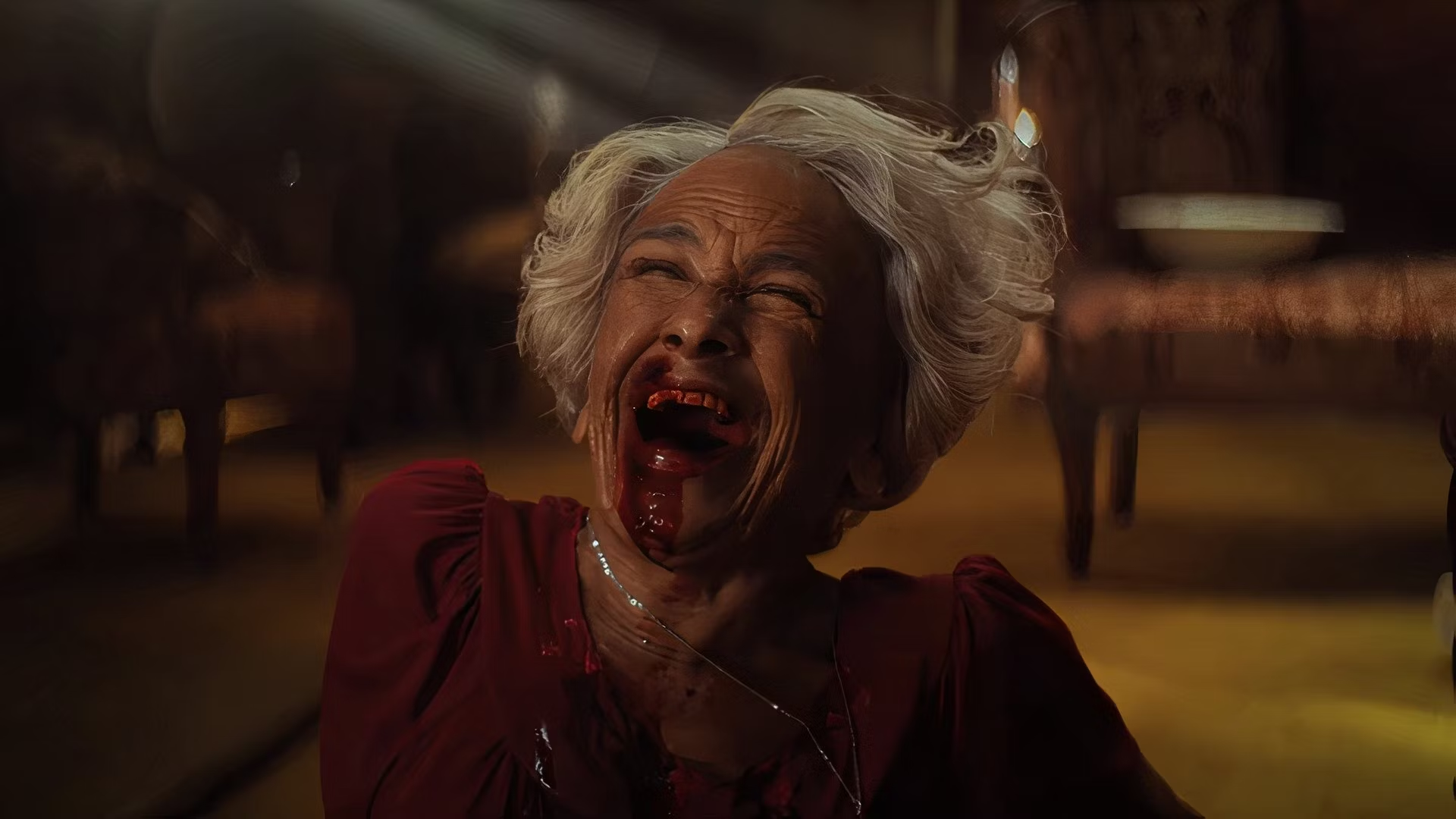
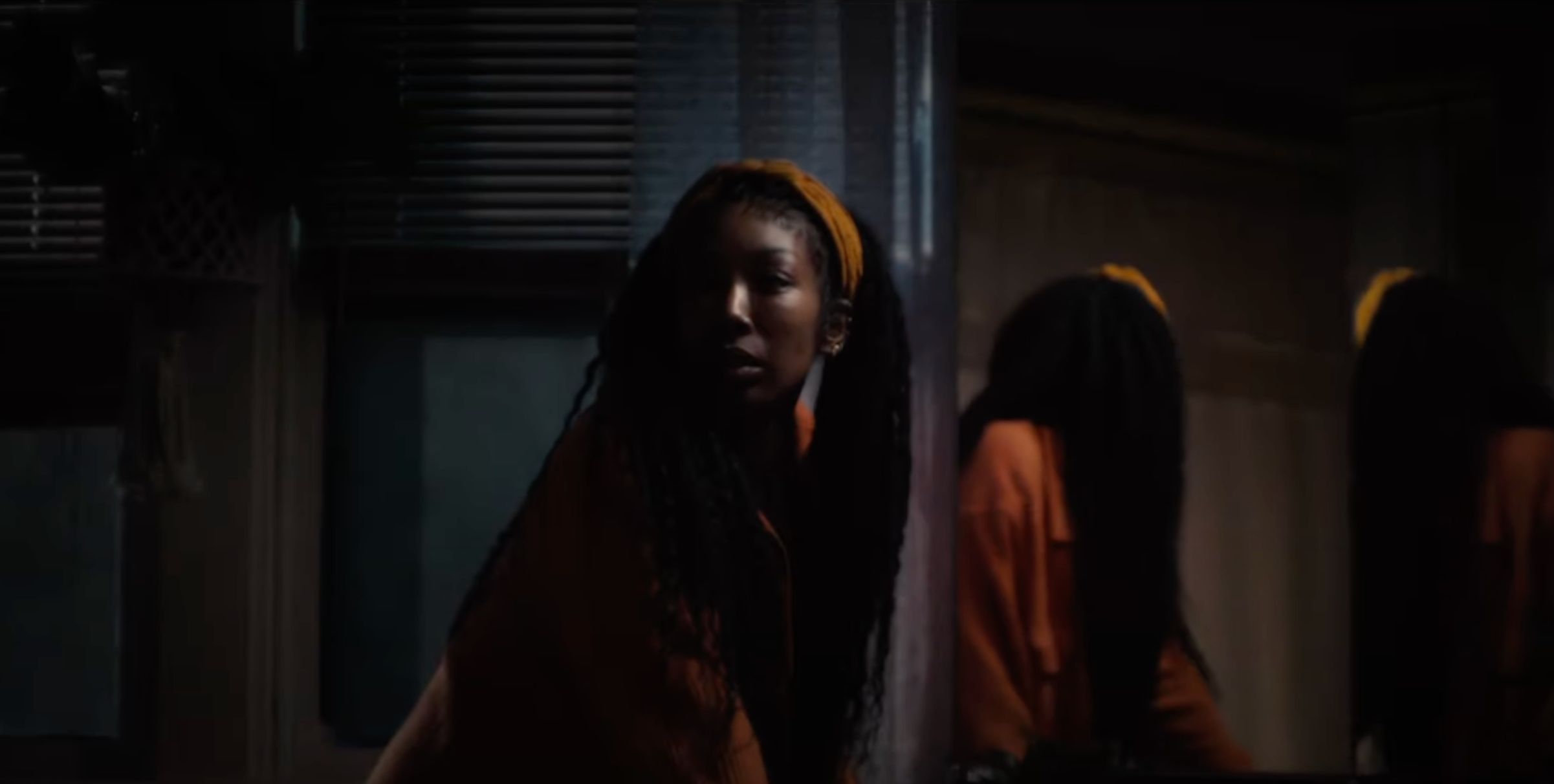
Religious horror continues to take the reins throughout 2024, with Immaculate and The First Omen kicking off the year in the spring and Russell Croweโ€™s The Exorcism (remarkably unrelated to his 2023 film The Popeโ€™s Exorcist) getting us through the summer. Max and Sam Eggers, brothers and collaborators with Robert Eggers (The Lighthouse, The Northman), bring us their debut feature, The Front Room, that carries the banner of religious horror right into the fall. The film follows Belinda (Brandy Norwood) and Norman (Andrew Burnap) as a young married couple expecting their second child after their first didnโ€™t make it through the delivery. Weeks before their daughter is to be born, Normanโ€™s estranged father passes away leading to his very devout stepmother, Solange (Kathryn Hunter), offering them her entire fortune for the opportunity to move in with them and become more involved in their lives.ย 

A different branch of the Christian faith takes focus in this film, moving away from the quiet, pious nature of Catholicism and more traditional denominations. Solange comes from a Pentecostal background, a grouping of Christianity that emphasizes the movement of the Spirit and prayer leading to miracles. She speaks in tongues and somehow knows things about Belinda and Norman that she should have no way of finding out. Her intuition and assuredness are typical of charismatic Christians and itโ€™s interesting to get this religious angle instead of the buttoned-up, reserved faith we often see in horror. This alone sets the film apart from other similar premises that have come out in recent years. 

The filmโ€™s tension and action are all facilitated by Kathryn Hunter as Solange and her faith. Itโ€™s difficult to overstate just how peculiar and singular Solange is throughout the movie, and she is by far the highlight youโ€™ll be thinking about afterward. Hunter brings incredible energy to the character that is totally unexpected even if youโ€™ve seen the trailer. Her facial tics and nonstop chatter blow the rest of the cast off the screen. Her performance is truly special, but each of the three actors seems to be in wildly different films. Norwood and Burnap are definitely in a different register from Hunter, yet still arenโ€™t in sync themselves. The stark contrast in performances is extremely distracting and indicative of the entire filmโ€™s tonal inconsistency.ย 

Itโ€™s clear what the Eggers duo were trying to achieve on the page, with a few scenes successfully nailing the horror vibe and bringing legitimate scares. Some images are even so disgusting that they are unsettling despite the context around them. For the most part, however, each scene shifts drastically in tone leaving you wondering how you got there. Itโ€™s hard to know whether to laugh or be disturbed by some of the things that happen. Maybe thatโ€™s the point in some stretches of the film, but the translation from page to screen leaves a lot to be desired and squanders the solid premise due to these inconsistencies. 

The most impressive piece of The Front Room is the cinematography from Ava Berkofsky. There are so many overt religious references through the dialogue itself, but more subtle allusions to Christianity come through the imagery captured by the camera. Beautiful shots of shadows forming ominous crosses combine with slow-moving cameras tracking characters throughout the house. Berkofskyโ€™s use of mirrors is wonderful as well, with a specific slow zoom-in during a conversation between two characters making you wonder how they pulled that shot off. The lighting team also gets time to shine, creating a few terrifying moments during the dark evenings within the house. 

Thereโ€™s a promising artistic vision on display that leaves me hopeful for the future of these filmmakers despite the downfalls in the execution. The Front Room offers a unique bent on the religious horror front and a legitimately amazing performance from Kathryn Hunter. Things might have become more cohesive if the rest of the film could live up to her antics and commit to even more craziness. 

Grade: D+

Movie Review (TIFF 2024): ‘Rumours’ is Black Comedy Done Right


Directors: Guy Maddin, Galen Johnson, Evan Johnson
Writers Evan Johnson
Stars: Cate Blanchett, Charles Dance, Rolando Ravello

Synopsis: The leaders of seven wealthy democracies get lost in the woods while drafting a statement on a global crisis, facing danger as they attempt to find their way out.


Guy Maddin, the Manitoban maestro of things strange, psychosexual, and dreamlike might not be the first director one would consider directing a satire about a G7 Summit gone wrong in Germany; but after experiencing Rumours it is hard to imagine anyone else could have made it. Maddin teams up with brothers Evan and Galen Johnson (who he worked with on the astonishing homage to genre cinema The Forbidden Room) to make a satirical comedy of manners reminiscent of The Discreet Charm of the Bourgeoisie doing for global politics what Buรฑuel did for group dining.

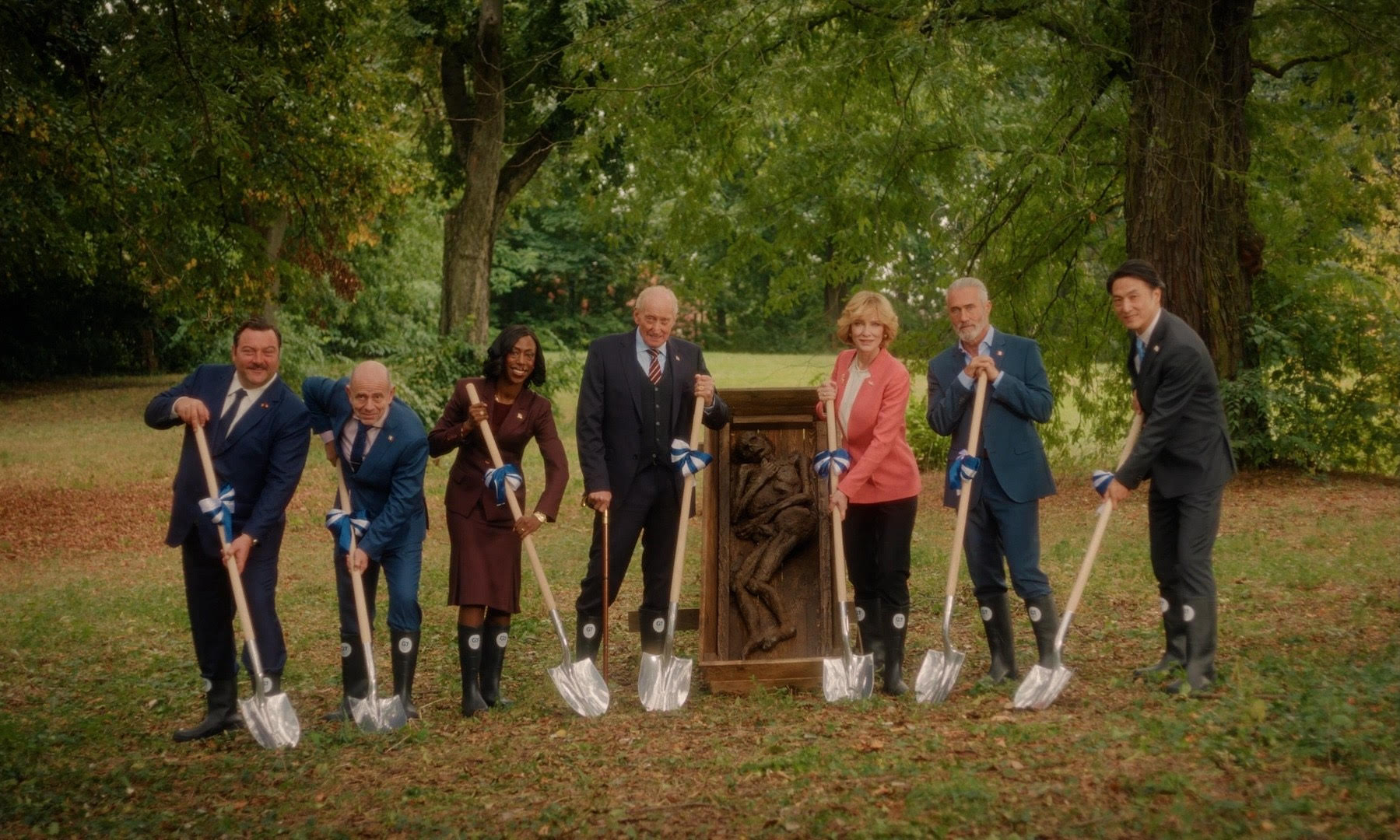
In a glorious Saxony forest retreat, representatives of the seven most prosperous democratic countries on the planet get together to draft preparatory points for a joint statement about the current โ€˜Global crisis.โ€™ Cate Blanchett plays German Chancellor Hilda Ortmann dressed in a less severe Angela Merkel power suit. Charles Dance is U.S. President Edison Walcott โ€“ a man who is clearly past his prime but unwilling to let go of power. Denis Mรฉnochet is French president Sylvain Broulez, who is the epitome of post-structural Gallic pretension and anxiety. Nikki Amuka-Bird is Cardosa Dewindt, the Prime Minister of the United Kingdom who is surely as fantastical a creation as the giant brain later found in the forest as one cannot imagine the people of Britain voting for someone half as competent as Ms Dewindt. The Italian Prime Minister Antonio Lamorle (Rolando Ravello) an unassuming good-natured fellow. The Japanese Prime Minister Tatsuro Iwasaki (Takehiro Hira) even more unassuming. And rounding out the quotient, as the film points out, is the Canadian Prime Minister Maxime Laplace (Roy Dupuis) a man-bun sporting, sexy silver fox, tragi-romantic drama king โ€“ irresistibly attracted to strong women (most of whom hold high political positions).

Before they reach their well-catered, built for purpose gazebo, the politicians stop at the archaeological excavation site for a bog man whose severed penis is wrapped around his neck. A punishment from the tribe for failure of leadership is posited. A quick photo op with Mr. Iron Age and itโ€™s off to work, which mostly consists of them gossiping, throwing barbs at each other, and congratulating themselves for being generally civil. The United States enjoys telling France no one is going to read another one of his tiresome monographs on psychogeography. Italy admits that his greatest regret was wearing a Mussolini costume to a party for which France forgives him. Japan talks of how he wishes heโ€™d learned to ride a horse. France mocks Canada for being insufferable, but Germany explains how Canada is about to lose his position for the dreariest scandal regarding something to do with carried interest and property holdings. Canada is getting increasingly drunk and not adding much to the preparatory notes but adding a lot to the drama and getting Germany a flushed and horny. 

Theyโ€™re all so involved in their useless note making, arguments, or insular obsessions that they fail to notice no one has come to top up their wine when the bottle empties โ€“ in fact no one is around at all. Theyโ€™ve been abandoned, which baffles them. More baffling are encroaching zombie bog people (thankfully not protestors) hanging from trees or masturbating in a full circle jerk around fires. They canโ€™t reach anyone via their phones (Italy forgot to bring his) and France ventures back to the villa to find the unthinkable โ€“ theyโ€™ve been locked out. An apocalyptic event has occurred the audience infers, and the sheltered nitwits might be all that is left of humanity.

France tries to put it into some kind of semiotic order and develops a sudden injury, meaning he has to be carried by manly Canada. Italy keeps offering pocketed cold cuts from the table. England is still trying to focus on getting the notes for the statement prepared. America would like to continue his nap if possible. No one can work out why America has a silver spoon British accent. Japan drifts along. Germany feels responsible. 

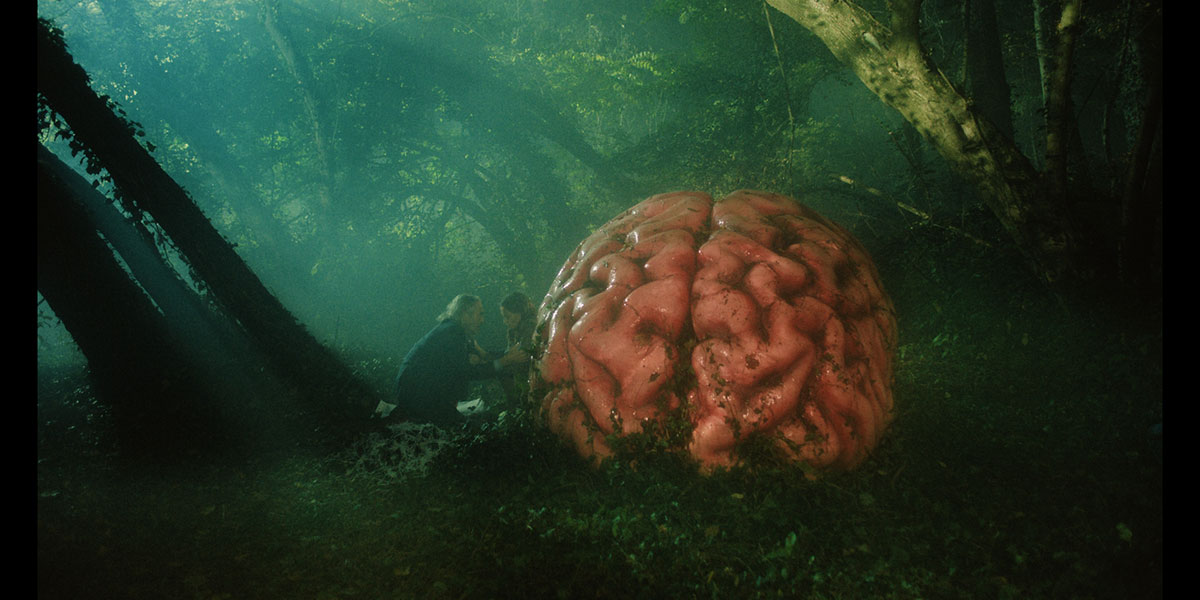
A brain the size of a hatchback appears in the forest (definitely a male brain France proclaims because no female brain could reach that size) and Alicia Vikanderโ€™s President of the European Commission, Celestine Sproul, sits atop it speaking what seems to be gibberish but is Swedish (and prophetic gibberish). Her presence sends Canada into a tailspin as they were once lovers and heโ€™s having trouble getting over her, although not so much trouble that he couldnโ€™t engage in a quickie with Germany in the woods earlier.

Guy Maddin is swinging at low hanging fruit as the ineffectual leaders undertake a long and, in their minds at least, treacherous journey back to civilization. The only guide is a now sentient AI chatbot designed to catfish pedophiles, disproportionately represented among the political class. To get directions they need to type suggestive codewords so it will respond.

Swirls of Enyaโ€™s “Exile” drift on the soundtrack as Canada and Japan undertake a distinctly anti-climactic heroic act, getting a small barge from one bank of a shallow river to the other. The otherworldly colors beloved by Maddin and the Johnsons (pinks, purples, neon greens) light up the tortuous path where the economic leaders of the free world alternate between histrionics and history lessons about previous world economic summits. Itโ€™s all deliciously berserk, ludicrous, but in some regards possibly the most co-operative and unified any G7 summit has been in our reality.

Rumours brings it all home with an excellent and caustically pompous finale. All the madness had meticulous method. Other than The Saddest Music in the World (2003), Rumours is Guy Maddinโ€™s most accessible film in terms of having a standard narrative structure. It also features big name stars like Cate Blanchett, Charles Dance, and Alicia Vikander along with well regarded international character actors (including a late appearance by Zlatko Buric). The jokes can get stretched thin in places, but they come back with a round punch especially when delivered by Blanchett or Dance.

Rumours is black comedy cloaked in gloriously lurid colours. Combining elements of slapstick with absurdism and pointed commentary on the precariousness of the contemporary world. It doesnโ€™t matter which โ€˜Global Crisisโ€™ the summit was making a joint statement on โ€“ it could be environmental or economic collapse, or diplomatic relationships failing. How exactly did the world end? Rumours posits it’s probably already over, so at least we should laugh while swallowing the cyanide pill of truth. 

Grade: B+

Movie Review (TIFF 2024): ‘The Mountain’ is Delightful, Magical, and Mystical


Director: Rachel House
Writers: Tom Furniss, Rachel House
Stars: Elizabeth Atkinson, Terrence Daniel, Reuben Francis

Synopsis: Explores the journey of three young people as they seek solace under the watchful gaze of the Taranaki mountain and companionship in the spirit of adventure.


Rachel House is a treasure. A legend of Aotearoa cinema and theatre. With her directorial debut, The Mountain, she adds blinking fine filmmaker to her legendary status. Having worked with kids since early in her career, for example Niki Caroโ€™s Whale Rider through to her lovely turn in Taika Waititiโ€™s Hunt for the Wilderpeople, it seems a natural fit for her to build her first film around the adventures of lonely and adventurous children.

Sam Walsh (Elizabeth Atkinson) has cancer. Sheโ€™s in the hospital more often than sheโ€™s home. But sheโ€™s been training to be a warrior woman and sheโ€™s making a jail (hospital) break so she can climb her mountain โ€“ Mount Taranaki. Along with teen cancer survivor Peachy (Sukena Shah) she hatches a plan to get out and keep her mother, Wendy (Fern Sutherland) unaware of her absconding. On the roof of the hospital, she releases her collected hospital gift store balloons, hoping they will reach the mountain. They contain a message. โ€œLet me live.โ€

Mallory Potts (Reuben Francis) live with his dad Hugh (Byron Coll). His mother recently passed away and theyโ€™ve relocated to a new town. Neither Hugh nor Mallory know how to adjust to their new lives. Mallory imagines he might make some friends but heโ€™s a bit timid and right now all he has is his depressed dad and talking to his mum to keep him company.

In one day, he meets his neighbor, the charming protector of Mother Nature, Bronco (Terrence Daniel) who keeps finding Samโ€™s balloons over Inglewood (โ€œBlinking disrespectfulโ€) and Sam herself. Sam is going to her mountain Taranaki Mounga. In Mฤori culture, โ€œA mountain is living family. When youโ€™re Mฤori theyโ€™re your ancestors. They hold knowledge,โ€ Peachy points out to Wendy who freaks out when she works out Sam was left the hospital. Wendy hasnโ€™t helped Sam understand her Mฤori identity, so Sam has imagined it on her own.ย 

Sam somewhat press gangs Mallory into helping her get supplies for her journey. Sheโ€™s planned a bitโ€ฆ she has a map, a list of supply needs (mostly chocolate, marshmallows, and a gun), and a fierce attitude. Mallory decides to help her chatting with his mum about the pros and cons (pros: sheโ€™s adventurous, cons: she wants a gun). Hugh arrives home and talks to his wife about how heโ€™s a lonely, soggy, loser. Overhearing his dad, Mallory is galvanised not only to help Mallory, but to ensure heโ€™s on the journey with her.

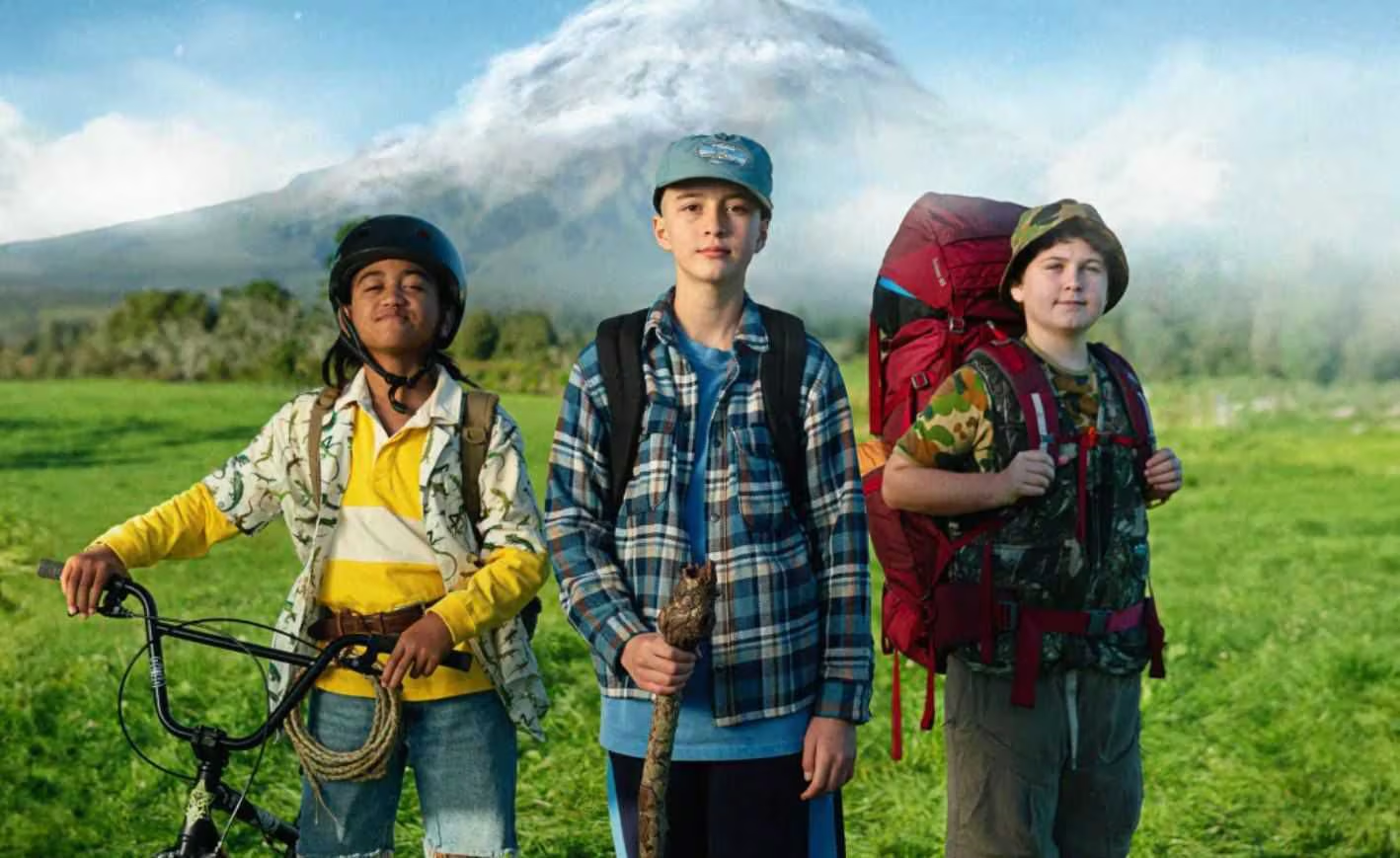
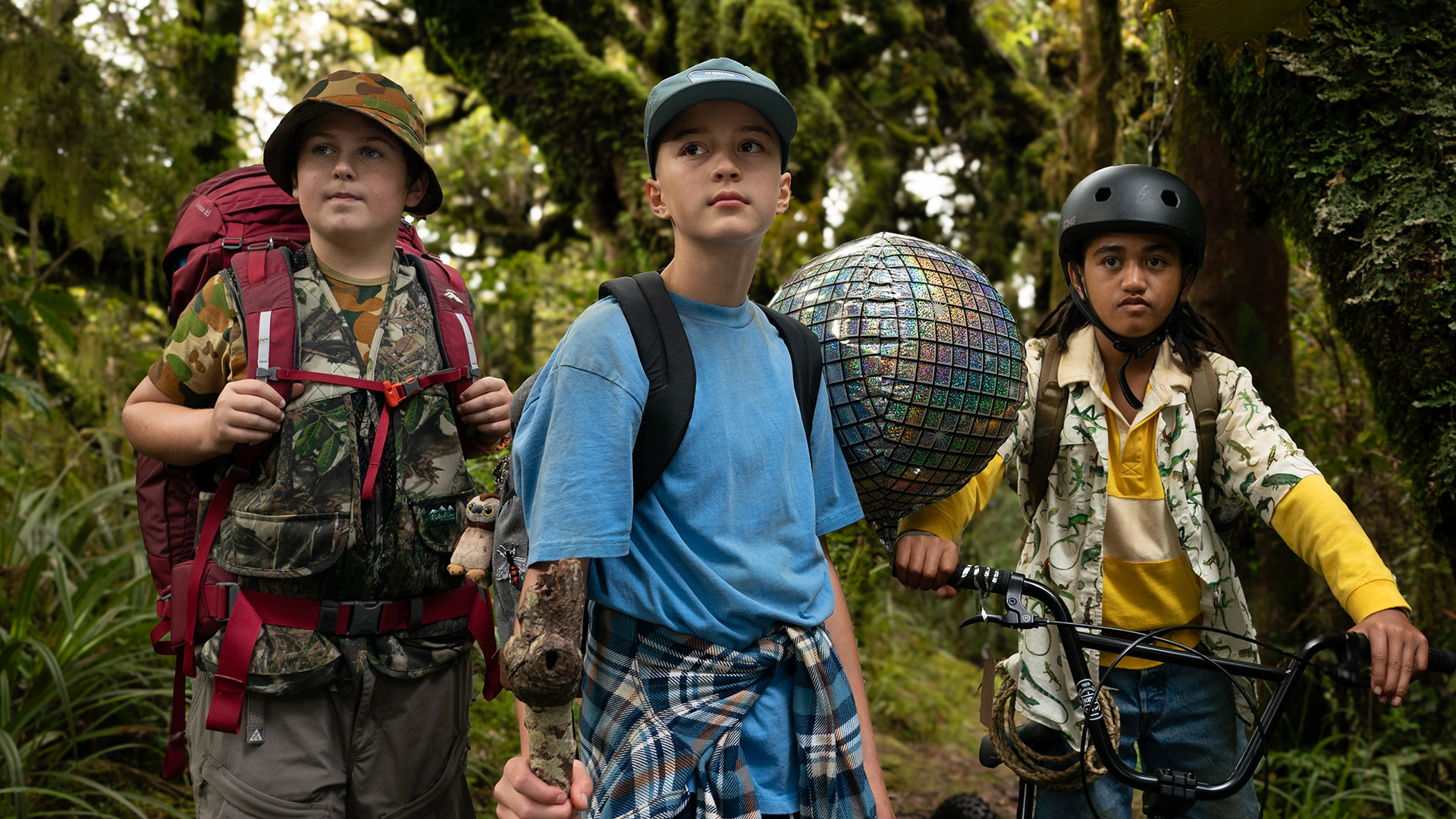
Sam is bossy as hell, but she realizes she needs Mallory at least as her sherpa, so she conditionally agrees. Bronco, who has been tracking down Samโ€™s balloons polluting the environment and skipping school to see if his constantly absent dad Tux (Troy Kingi) notices, meets Mallory and Sam along the way. Invited to join them, the three undertake a magical, perilous, joyous, and emotional journey to the ancestor.

Samโ€™s journey is informed by faith; faith that her Mounga is testing her to find her worthy, and when she proves herself so the ancestor will want her to stay alive. With her stick, Woodface, and a lot of attitude she corrals Mallory and Bronco into facing the โ€˜obstaclesโ€™ Taranaki has put in place. Mallory is possibly the least brave of the two, but he believes his mum is watching over him and he needs to feel some frisson of life. Bronco is โ€œmillions of miles away from homeโ€ (not literally, heโ€™s just in another part of Aotearoa) but all of Aotearoa is sacred to him. Spiritually connected to his Mฤori heritage on a profound level, heโ€™s wise, positive, and gentle as well as a bit of a rabble rouser. Sam is quietly jealous of Broncoโ€™s understanding of who he is, but sheโ€™s also open to learning from him.ย 

Meanwhile, the parents realize their kids are gone. First, Hugh and Tux chat outside Bronco and Malloryโ€™s school. Peachy covering for Sam is easily discovered by Wendy. Peachy explains in her deadpan way that the reason Sam has gone is Wendy has been so stressed about, and so focused on, Samโ€™s illness sheโ€™s forgotten that Sam the kid is inside of it. The parents set out on their own journey to find the kids (with Peachy in tow running interference) and along the way learn a little about their own failings and strengths as people.

Rachel House and co-screenwriter Tom Furniss craft a narrative filled with reverence for Mฤori traditions and beliefs. Utilizing Samโ€™s quest for spiritual belonging and her fight for a future; House crafts a mystical adventure that speaks to the individuality of her three young protagonists and the unique connection Mฤori iwi have to their land decolonized from Pฤkehฤ influence. The way House achieves this is through shared connection rather than confrontation. Three kids, Pฤkehฤ, mixed heritage, and Mฤori experience the wonder of Taranaki, mythology, the interconnectedness of the natural world, and empower each other.

A lovely example is a night spent in front of a campfire where Mallory pulls out his wall compass gifted to him by his mother before her death. Bronco uses his rope to tie it around Malloryโ€™s neck saying his mum will help guide them. Sounds in the dark lead to the trio performing a dance to KRS-Oneโ€™s “Sound of Da Police.” Their journey isnโ€™t without some friction โ€“ Sam initially lied to Mallory telling him that her mother died of cancer and Mallory is deeply hurt. What he doesnโ€™t see is the other things Sam is lying about, such as the state of her health. Sheโ€™s giving everything to make it to her ancestor.

Stunning scenes captured by cinematographer Matt Henley of the Taranaki region merge with Sam and Broncoโ€™s storytelling which is at times rendered via animation, or at others by attention to smaller details within the wider vista. House credits the mountain themselves as an actor: Te Kฤhui Tupua Taranaki Mounga.

First time film performers Elizabeth Atkinson, Reuben Francis, and Terrence Daniel are utterly charming and carry the work without mawkishness. Rachel House doesnโ€™t shy from the realities of cancer and how sick Sam is, but she highlights her bravery and tenacity and gives Sam with something she had not previously had โ€“ an iwi formed because Taranaki Mounga willed it.ย 
The Mountain is a delightful, magical, mystical, and melancholy film brimming with humor and tenderness. Aotearoa and the world are blessed to have Rachel House as a creative force and one hopes she will continue behind the camera.

Grade: A

Episode 601: 2024 Fall Preview

This weekโ€™s episode is brought to you by Koffee Kult. Get 15% OFF with the code: ISF24

This week on the InSession Film Podcast, we discuss the slate of upcoming fall/winter movies that we’re most excited about and we delve a little into the career of Tim Burton! Plus, a few thoughts on the news of a possible Ocean’s Fourteen.

Check out this weekโ€™s show and let us know what you think in the comment section. Thanks for listening and for supporting the InSession Film Podcast!

– Ocean’s Fourteen News (5:10)
As big fans of Steven Soderbergh’s Ocean’s trilogy, we had a lot to say about this news and the possibility of the crew coming back for another one. While it could work, the idea of the studios courting Edward Berger to direct gives us pause at the moment. 

– 2024 Fall Preview (28:17)
There are a lot of (potentially) great films coming out this fall/winter season that we are looking forward to in the next few months. With all of the news coming out of Telluride, Venice and Toronto, it seems we are in the for a treat this awards season. 


RELATED: Listen to Episode 516 of the InSession Film Podcast where we discussed our Top 10 Movies of 2023!


– Tim Burton (1:28:10)
Tim Burton has had a fascinating career over the last forty years. His early work is legendary. Some of the very best films of its era. Whereas his resume the last decade or so has been quite unfortunate. Regardless of where you stand on Burton, his films are fascinating to talk about and we wanted to take a minute to discuss him with the release of Beetlejuice Beetlejuice.

– Music
The Wild Robot Trailer – The Techniverse
Edward Scissorhands – Danny Elfman

Subscribe to our Podcasts RSS
Subscribe to our Podcasts on iTunes
Listen on Spotify
Listen on Stitcher
InSession Film Podcast – Episode 601

Next week on the show:

Remakes of Foreign Films

Help Support The InSession Film Podcast

If you want to help support us, there are several ways you can help us and we’d absolutely appreciate it. Every penny goes directly back into supporting the show and we are truly honored and grateful. Thanks for your support and for listening to the InSession Film Podcast!

VISIT OUR DONATE PAGE HERE

Movie Review: ‘Peak Season’ is Sincere and Thought-Provoking


Directors: Steven Kanter, Henry Loevner
Writers: Steven Kanter, Henry Loevner
Stars: Claudia Restrepo, Ben Coleman, Derrick Joseph DeBlasis

Synopsis: An emotionally adrift young woman forges an unexpected friendship with a wilderness guide when she and her fiancรฉ take a summer holiday in Jackson Hole, WY


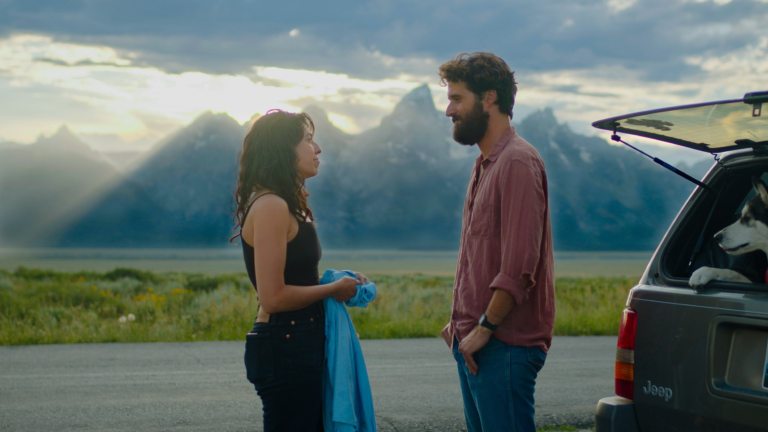
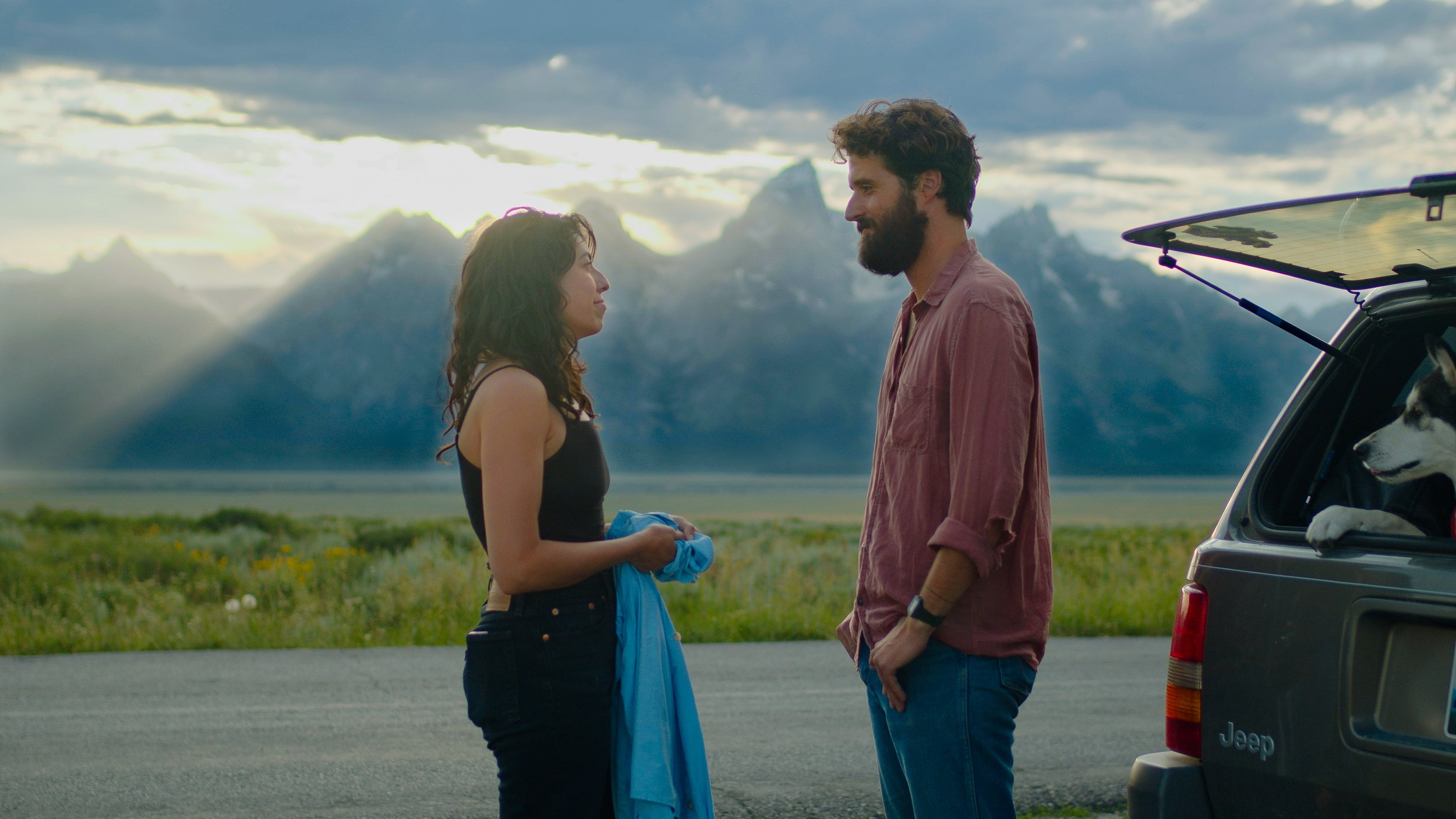
Peak Season is an idyllic trip to Wyoming, where love falters, friendship blossoms, and life’s trajectory is questioned under the microscope. A calm and restrained indie drama in which softness and tranquillity are a healing balm for the ennui of corporate, urban life. While conventional beats of the love triangle often creep in, the film finds inventive ways to inject freshness and introspection into two people following very different life paths. 

Directed by Steven Kanter and Henry Loevner, Peak Season is the follow-up to the COVID drama The End of Us (2021). The film follows Amy (Claudia Restrepo) and Max (Ben Coleman), who are on holiday in Jackson Hole, Wyoming. Getting away from their work-dominant lives in New York City, they are recently engaged and need to plan their wedding. Things become complicated, though, as Max has brought work with him, both mentally and physically. 

Amy is on a very different trajectory from her fiancรฉ. Having worked at Deloitte, she had a soul-sucking job as a management consultant where “being results-oriented [was] literally the basis of my entire life”. After resigning due to burnout, Amy is taking time to rethink what she wants to do. Her family doesn’t come from rich, white, wealth; but Max does, which is highly evident. Their paths begin to splinter as Amy realizes the quiet life may be just what she needs. 

Calling Max high strung would be an understatement. His logistics and supply chain management job makes him comically shallow. He schedules business meetings while driving the car, gets up every morning for an intense workout routine, and consistently sidelines Amy when they are meant to be on holiday. Emails and video calls are more important than the morning kiss. Coleman does what he can with the character but he mostly amounts to a one-dimensional grunt in a suit. 

Max’s self-centered actions reach an apex when he ditches Amy for a work meeting, so Amy is left with no other option than to attend her fish-flying lesson – that the couple had booked together, alone. Teaching her is friendly wilderness guide Loren (Derrick DeBlasis). Having come from California, Loren left his desk job to become a free spirit of many vocations. A fishing guide, a ski patroller, and a bartender – his multifaceted behavior brings him great pride; he hates the thought of being “put into boxes, and then we die”. 

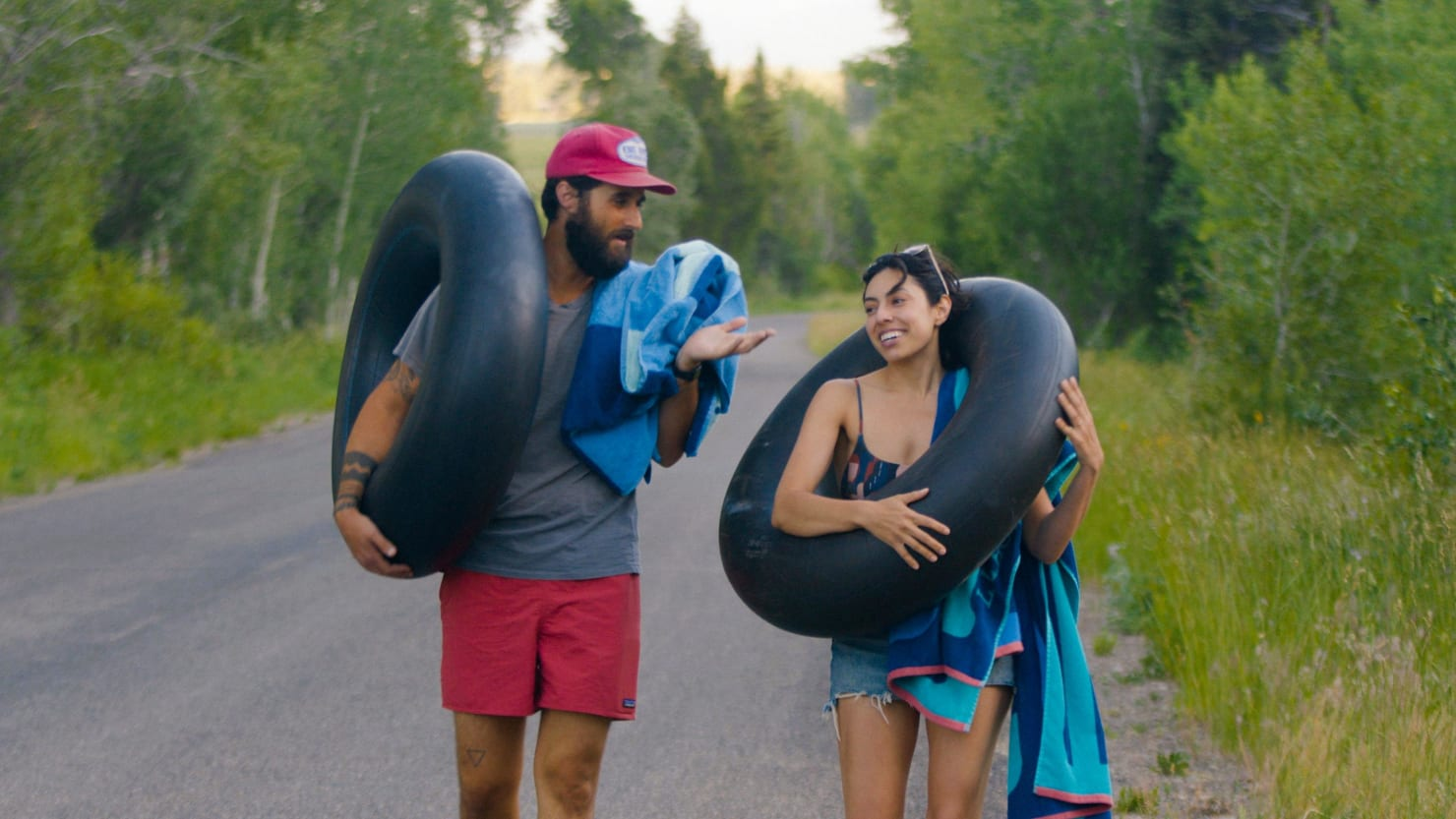
Loren lives in his car with his dog Dorothy, who yawns with him when they wake up. A friendship quickly sparks between Amy and Loren as they go on many outdoor adventures together, including a hike Max had refused to go on. Loren has been teaching fish-flying for 15 years, a statistic shocking to Amy’s urban lifestyle, where your work life is constantly in flux. They bond over life and their differences but occasionally clash over how society functions. A touching but playful situationship begins to play out as Loren fills the holes Max keeps punching in Amy and his relationship. 

Peak Season is a quiet but clear signal that switching off from the rigidity of routine grants clarity in finding out who you are and what you want. Happiness is not defined by following a life path that has either been paved for you or one to which youโ€™ve grown accustomed. Amy studied and worked in business most of her life, but the second she reaches Jackson Hole, there is freedom, and a weight lifted from her shoulders. The corporate world can be so crushing that life is forgotten for currency, and Amy knows that’s precisely how Max is behaving now. Can she stay with her fiancรฉ, knowing that her world has just been opened as far and wide as the Wyoming landscape?

While this may read like a shallow story of a tourist entering a place unknown to them and going on a journey to ‘find yourself’, Amy is purposefully juxtaposed with Max’s old ‘friend’ Fiona (Caroline Kwan). Early in the film, Max bumps into Fiona, taking his attention away from his fiancรฉe and not even introducing Amy to a woman who was probably his ex-lover. Amy doesn’t sit there and take it, inserting herself into the conversation so Fiona knows who she is. Fiona is visiting for a conference and has no love for the land she is spending time on other than to gain some clout. She’s clad entirely in cheap cowgirl clothes and speaks ‘at’ Amy rather than ‘to’ her. Even cows, to her, are just an attempt to get social media traction.

Mixing Fiona with Silicon Valley tycoons, fears of Jackson Hole becoming a ‘2nd Aspen’, and tourists who claim they want to buy ‘hundreds of acres of land’, Peak Season has something to say about disrespectful, wealthy tourists. It may sound oxymoronic, considering the film focuses on a tourist couple from New York, but there is an effective sub-narrative that critiques the encroachment of tourism on rural areas. 

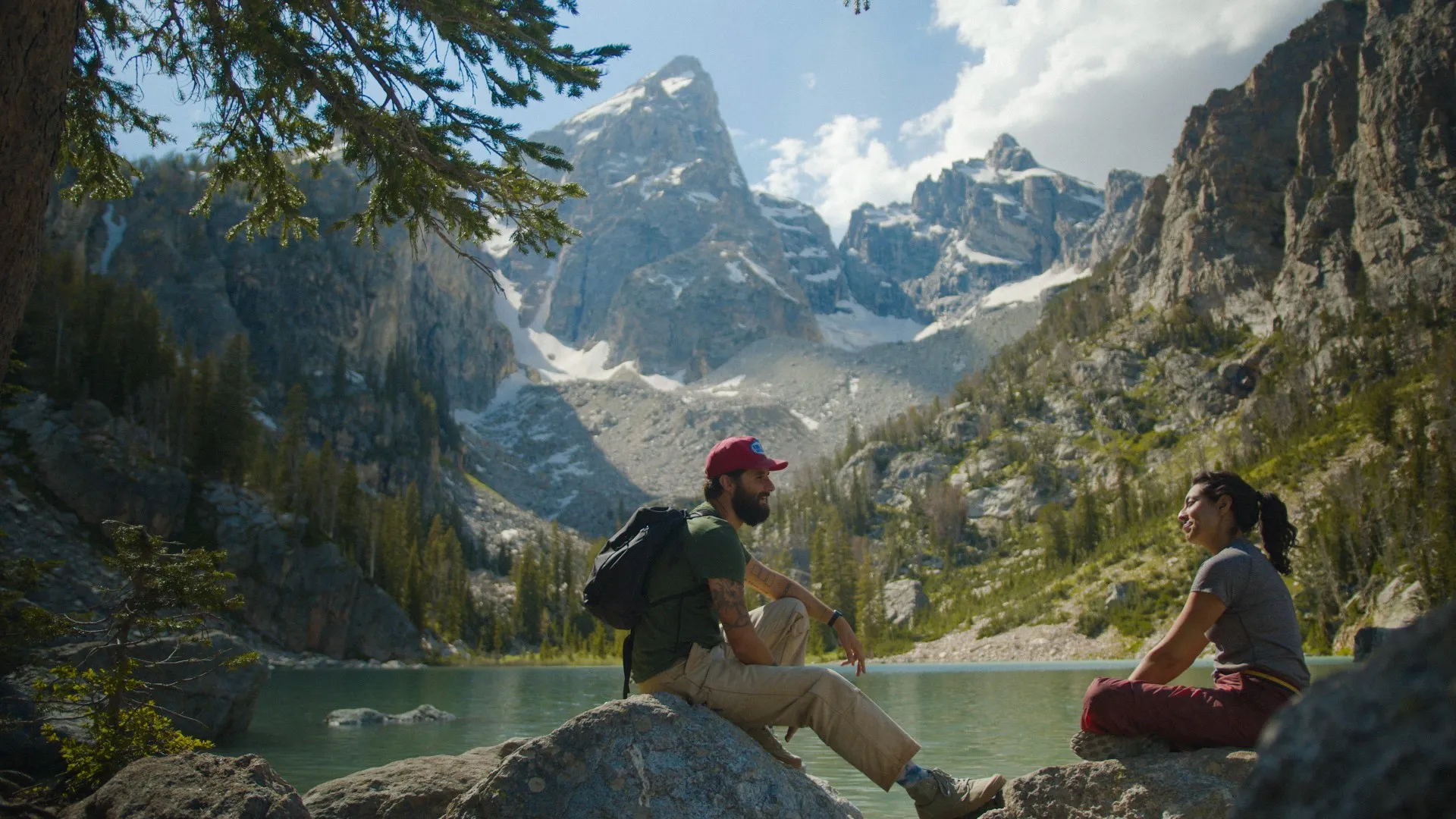
Wyoming is captured with such reposeful beauty that it becomes almost a fourth character. Tourists who come to these places often have no appreciation of the land and its history – something that Loren is aware of and respects in Amy for not sharing the same attitude. These are two people who bond and connect in places of natural beauty away from civilization and technology. Profitability is the last thing on their minds. 

Derrick DeBlasis remains the highlight of the film, performance-wise. His nomadic lifestyle as a free spirit exudes such freedom whenever he is on screen. Restrepo, as Amy, occasionally comes across as stunted, but her infectious chemistry with DeBlasis makes up for some moments that ultimately feel significantly held back. 

Life can get too busy and too complacent. The natural look and feel of Wyoming matches the journey of Amy and Loren – an untouched beauty that flourishes without any outside tampering. Peak Season is about slowing down, taking stock, and analyzing your place in the world. While its laid-back indie budget sometimes feels overtly apparent; something sincere, engaging, and thought-provoking is going on at its center. 

Grade: B

Movie Review (TIFF 2024): ‘Mr. K’ is Somehow Relatable and Isolating


Director: Tallulah Hazekamp Schwab
Writer: Tallulah Hazekamp Schwab
Stars: Crispin Glover, Fionnula Flanagan, Jan Gunnar Rรธise

Synopsis: After spending the night in a remote hotel, Mr. K is stuck in a claustrophobic nightmare when he discovers that he can’t leave the building.


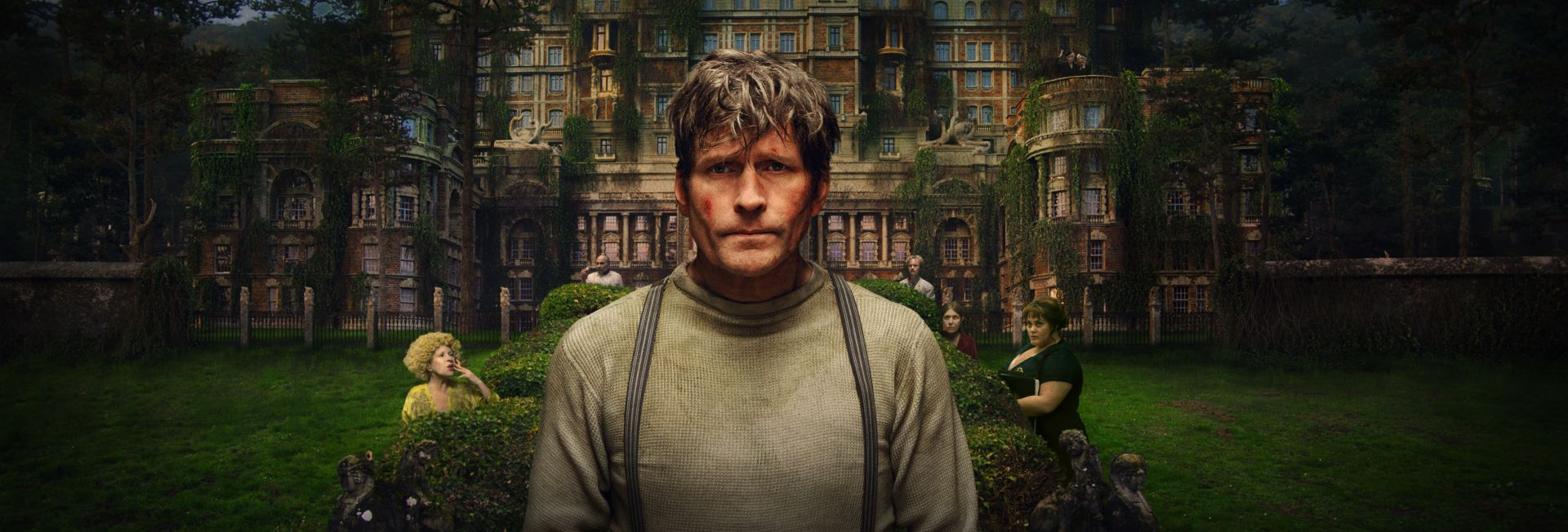
Have you ever wondered what The Grand Budapest Hotel might be like if it wasnโ€™t coated in the bubblegum beauty of the film of the same name? If it was something just a bit more haunted and ethereal, closer to the Overlook hotel? If so, youโ€™re in luck with Tallulah H. Schwabโ€™s Mr. K, which is celebrating its world premiere at the 2024 Toronto International Film Festival. Taking place all within the halls of an unnamed hotel that is simultaneously run-down yet seemingly extravagant, Mr. K is quite the surreal oddity. Ditching conventionality at every turn, the film feels far more interested in captivating its audience and forcing them to think outside the box rather than present a straight-forward narrative with definitive lessons to be imparted. And in a way, the sense of confusion and curiosity that draws audiences into a film like this seems to be the very crux of the story Schwab is telling with this film. When tackling a topic as nebulous as loneliness and its impact on people, one would hope that a film examining it would be rich with interpretation and insights.

The film opens up by way of narration from the titular Mr. K (Crispin Glover, in a performance that keeps you rapt with attention at his litany of mannerisms and reactions). He is a stage magician who, by his own admission, wonders if itโ€™s just him that feels incredibly lonely. Even though he performs for a living, thereโ€™s a clear sense of detachment in the one scene where heโ€™s actually shown on stage. Itโ€™s likely because his middling audience doesnโ€™t seem all that captivated in his act. Very little is actually learned about the titular character of Schwabโ€™s film, but it more so feels due to him being irrelevant to the story at hand. In fact, his being a cypher makes the film one that encourages the audience to lean in and glean what they can from performance alone. One just needs to look at how Schwab captures Mr. K performing impromptu tricks; they practically feel like a defense mechanism. Rather than be the direct center of an onlookerโ€™s attention, he turns their curiosity to something he can control: a set of eggs heโ€™s juggling, or a small creature emerging from his previously empty hand. But what happens when heโ€™s forced into a situation where parlor tricks are no longer enough? When heโ€™s seemingly branded with a cult of personality that pulls him into a situation thatโ€™s becoming more and more inescapable by the minute. How will he react then?

Mr. Kโ€™s reaction to his predicament can be read in two ways. One half falls back on a desperation to escape. The other amounts to letting all these events wash over himself like a massive wave. In my opinion, itโ€™s in the examination of the latter that Mr. K  is able to shake off the rocky foothold it has around the second act. Thereโ€™s a question that presents itself the longer Mr. K simply rolls with the punches of this trap he finds himself stuck in. Why is he letting this all happen? Is it because he feels he canโ€™t escape? Or because he wonโ€™t even attempt to do so? We see his refusal to even try at some point crystallize, and it throws a rather bleak veil over the entire film. If this ever-growing maze of a hotel does represent the titular characterโ€™s loneliness, what happens when somebody inevitably gives up? As some of the other frustrated hotel guests mention, they were perfectly content with their lives until Mr. K came along with a kernel of hope for escape. Only then did they begin to really take issue with what was occurring around them, and even then, theyโ€™d rather go back to quiet acceptance rather than fighting back defiantly. When the devastatingly raw organism that is loneliness forces its current victim into isolation, what happens to the personโ€™s surroundings? They begin to feel inescapable. Going from room to room becomes more of a chore. Even interacting with others becomes nearly impossible. As Mr. K is shown to become more and more constricted and consumed by this specter of an organism, the film reveals part of the literal mystery thatโ€™s occurring. 

This reveal also acts as a bit of a double-edged sword. On one hand, it makes for a relatable metaphor about feeling emotionally and mentally lost within oneself. On the other hand, it feels as if Mr. K ever so slightly loses its footing thematically. From time to time, some isolated interactions with other hotel guests may feel a bit meandering. But on the whole, the film itself makes for an interesting metaphor both visually and conceptually. And in the final moments of Mr. K, whether it works for audiences at large or not, the swing feels more than worthy of a watch for numerous reasons. As written earlier, loneliness is something that many experience, yet something that few can specifically quantify. Itโ€™s handled differently by everybody, and in turn, the solution varies from case to case. The question of this film then becomes whether or not it handles the subject matter appropriately. Whether seen as grim or with a sense of relief or some middle ground in-between, the interpretation of how those of us who feel lost are able to escape such a feeling is certainly felt. After all, thereโ€™s no one-size-fits-all solution for such heady dilemmas. More than anything, itโ€™s clear that Schwab has a vision for such an odd film; and it shows! The hotel the film takes place in makes for a really strong setting that makes you start to question just how a building like it could exist. Itโ€™s a testament to the production and set designers that each new change makes this maze of a location feel all the more suffocating and evocative.

Mr. K is celebrating its world premiere at the 2024 Toronto International Film Festival. For more information on the film, head right here.

Grade: B-

Movie Review: ‘Beetlejuice Beetlejuice’ Is A Scattershot Tribute to the Original


Directors: Tim Burton
Writers: Alfred Gough, Miles Millar
Stars: Michael Keaton, Winona Ryder, Catherine O’Hara, Jenna Ortega

Synopsis: After a family tragedy, three generations of the Deetz family return home to Winter River. Still haunted by Beetlejuice, Lydia’s life is turned upside down when her teenage daughter, Astrid, accidentally opens the portal to the Afterlife.


You might expect the follow-up to the beloved (or, as I would put it, overly romanticized) Beetlejuice, aptly titled Beetlejuice Beetlejuice, to find an interesting angle, exploring familiar characters through a new lens. After all, we are living in a time shaped by Black Lives Matter (BLM), the #MeToo Movement, climate activism, and LGBTQ+ rights. Lenses such as trauma-informed care, socially conscious intersectionality, and cultural competency frameworks enriched the original’s themes and highlighted the classic subject matter.

However, Beetlejuice Beetlejuice is a scattershot tribute to the original, lacking the originality that could have set it apart. Instead of forging its own path, it relies heavily on the advancements of modern special effects. Yes, movies are a visual medium, and we can all appreciate that, but Tim Burton’s follow-up feels more like a remake, rehashing an updated new chapter in an attempt to recapture the magicโ€”like telling the great Michael Keaton to perform for the masses without a well-thought-out plan.

It’s an utter disappointment.

Yes, most will give a pass because Tim Burtonโ€™s Beetlejuice Beetlejuice is a legacy sequel many have been craving for decades. That makes the filmโ€™s apparent mistakes and lack of attention to detail easy to ignore. Many of us have done the same with films that arenโ€™t even legacy attempts, like M. Night Shyamalanโ€™s Trap. However, films like that donโ€™t promise you something and then fail to deliver on the fulfillment they strive for. The issue seems to be that a once-starved artist with a unique vision is now spoiled by the riches studios offer.

Take, for example, the master of juxtaposition with unlimited resources in a remake of the classic Disney film Dumbo. That film was mundane, tepid, and monotonously dull. In the Beetlejuice follow-up, the visuals are certainly not mundane or tepid. However, the story is a monotonous rehashing of Burtonโ€™s ’80s filmography. The screenplay, written by Alfred Gough and Miles Millarโ€”the writing partners responsible for a couple of disappointing Jackie Chan and Owen Wilson franchises, a Mummy movie, a Lindsay Lohan disaster, and a Hannah Montana entryโ€”feels like taking a bunch of mismatched cats, throwing them in a bag, shaking them up, and letting a pack of furious felines run free. What happens next will look crazy, dark, and frighteningly comical.

Thatโ€™s the chaotic Burton experience right nowโ€”it looks dangerously beautiful and ominously evocative. However, in reality, the filmโ€™s characters and subplots are thrown at the screen, seemingly scattering away from each other intentionally. Nothing connects or develops into anything cinematically coherent. All of this feels bloated, which I can only guess is due to studio directives aiming to meet the demands of a big-budget hit and the pursuit of the almighty dollar. This is strange, considering Gough and Millar were responsible for the innovative rebranding of The Addams Family update, Wednesday, which is a Netflix streaming hit with critics and audiences alike.

Now, Beetlejuice Beetlejuice is not a total dud. The movie is a feast for the eyes, with stellar art direction from Mark Scruton and Colleen Atwoodโ€™s costume designs. Then, of course, you have a โ€œlegacyโ€ cast reveling in their roles, bringing a particular joy to the experience for those familiar with the sequel. While Burtonโ€™s return to exploring the demon lacks impact, Michael Keatonโ€™s return as the titular character nearly saves the film, making death a delightful possibility. There is simply nothing like the character Keaton easily slips back into. He recaptures the morbidly charming appeal that made him a superstar and the character a Hollywood classic.

I do not doubt that Burtonโ€™s follow-up will attract new fans and appease old ones. However, at some point, legacy films blur the lines between professionalism and fandom. Beetlejuice Beetlejuice is an example of lowering the standards for the allure of the latter. 

Grade: C+

Movie Review: โ€˜Rebel Ridgeโ€™ Finds a Stoic Star in Aaron Pierre


Director: Jeremy Saulnier
Writer: Jeremy Saulnier
Stars: Aaron Pierre, Don Johnson, AnnaSophia Robb, David Denman

Synopsis: An ex-Marine grapples his way through a web of small-town corruption when an attempt to post bail for his cousin escalates into a violent standoff with the local police chief.


Control is a funny thing. We all think we have it, until suddenly we donโ€™t. And then we realize that control which feels solid, is shaky, at best. Outside of our awareness, due to circumstances out of our power, the mask begins to slip. For some of us, the reactions to lack of control leak out; a twitch of the eye muscles, a clench of the fist, a catch of the breath. But in dire circumstances, like those faced in Rebel Ridge, they rocket out until the control can be regained by force of will.

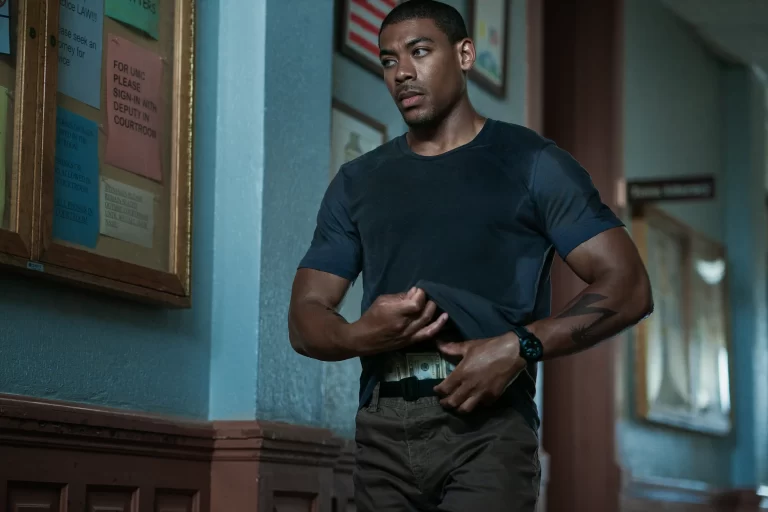
Terry Richmond (a pitch perfect Aaron Pierre) opens the film, eyes forward, biceps flexed, riding a bicycle with heavy metal blasting in her earbuds, on an empty road. He is a man possessed, focused on a task that only he knows. The sequence that follows is the first of many brilliant feints by writer/director Jeremy Saulnier. As a police cruiser appears behind him with its lights flashing, we are already for our hero to evade and conquer. But Rebel Ridge has more on its mind than simply being a revenge thriller.  Instead, Terry is tapped by the cruiser and goes tumbling before being grabbed by the police. Officers Marston (David Denman) and Lann (Emory Cohen) search him, find cash, and accuse him of criminal acts. Although Terry explains that the money is to be used to bail out his cousin Michael, the police show their true colors and immorally, if not illegally, seize the money putting him in a horrible position.

This is the fork in the road. A simpler film would have its equally simple villains and a hero to root for. And it would have worked just fine. Terry is easy to root for. He cares about his family. He served in the Marine Corps. He is trying, always, to do the right thing. But, thankfully, this is not the story that Saulnier chooses to tell. Instead, Rebel Ridge becomes about more than the singular. How do we fight for whatโ€™s right when all the symbols of what should be right are against us? Terry goes through the proper channels. He tells the police the truth, he asks for help at the courthouse, he even, in a both tense and comedic standoff with Chief Sandy Burnne (Don Johnson), attempts to file a police report naming the police thieves. But, predictably, he meets repeated brick walls.  His only actual assistance comes from a lawyer in training,Summer McBride (AnnaSophia Robb), and a Black police officer relegated to administrative work, Jessica Sims (Zsanรฉ Jhรฉ). Despite Saulnier not hitting excessively hard on the identities of our sometimes heroes, racial and otherwise, it is certainly no coincidence that both of these people operate in the world from a disempowered position.

But truly, this film hinges completely on the presence and performance of Aaron Pierre. Although Rebel Ridge had a troubled and delayed production (John Boyega was originally cast and left reportedly due to disagreements about the script), it feels like everything lined up just right. Pierre never strikes a false note, and he is on screen for pretty much the entire runtime. Odd for what could have been an action film, Pierre is infinitely watchable, but also measured and controlled. There are moments where it feels as if the script gets a bit lost in the weeds, focusing for a bit too long on the plot mechanics of police corruption, but none of that ends up detracting from the experience, because we are in the bag for Terry from the first seconds of the film. 

It would be simpler if Pierreโ€™s character was on one end or the other of an emotional vs stoic spectrum. Thankfully, the choices made on both a script level and from the actor himself allow Terry to be a real character, who is desperately trying to remain locked in during situations that could easily allow him to break. Pierre embodies his characterโ€™s military background effortlessly. The way he moves, the way he holds (and disassembles) a weapon, his tendency to let people speak until they make errors. In one particular moment, he takes the medical bracelet of a character who has died, in direct communication with the military pattern of taking a fallen soldierโ€™s dog tags. It is one of many subtle visual moments that allow us inside the mind of our protagonist, without needless dialogue or monologue. 

If you are looking for a simple revenge film, Rebel Ridge is not the right tree to bark up. Smartly, it never allows us the stock happy endings we crave. If you are going to make a movie about fighting against structural inequality, an ending like that will always be disingenuous and eye rolling in its misunderstanding of reality. People die. Systems are not dismantled. But the small victories can allow us hope. Our heroes are not perfect. But they can do the right thing. No matter the consequences, what is right does not change. 

Grade: A-

Women InSession: Celebrating 100 Episodes

This week on Women InSession, we celebrate 100 episodes by looking back on the show and the fun we’ve had so far. We talk about past episodes, random films and other fun shenanigans! This was a fun, loose conversation where we just wanted to sit back and reflect on how the show has evolved since its beginning. We were kind of all over the place, but that is (hopefully) the charm of the episode.

Panel: Kristin Battestella, Zita Short, Amy Thomasson, Jaylan Salah

On that note, check out this week’s show and let us know what you think in the comment section. Thanks for listening and for supporting the InSession Film Podcast!

Subscribe to our Podcasts RSS
Subscribe to our Podcasts on iTunes
Listen on Spotify
Listen on Stitcher
Women InSession – Episode 100

List: Revised Top 10 Year End Lists (2000-2009)

On Episode 600, after ten years of doing our yearly retrospectives, we finally discussed our Top 10 movies of the decade (2010-2019). It was a lot of fun celebrating the very best that film had to offer in the 2000s, and we hope you enjoyed it as much as we did. As part of the exercise, Brendan and JD decided to offer up their newly revised Top 10 lists for each year in the decade. If you listened to any of the retrospective episodes, you may notice the discrepancies between these lists and what we published previously. There are many reasons for this, but mostly it comes down to cinephile maturity and careful reflection on the films that move us the most emotionally and artfully.

With that said, here are our newly updated Top 10 lists for each year in the 2000s!

JD’s Lists:

2000:
1) Almost Famous
2) Beau Travail
3) O Brother, Where Art Thou?
4) Dancer in the Dark
5) Crouching Tiger, Hidden Dragon
6) Bamboozled
7) Yi Yi
8) Traffic
9) Ratcatcher
10) Unbreakable
11) Requiem for a Dream
12) The Virgin Suicides
13) Gladiato
14) Cast Away
15) Ghost Dog: The Way of the Samurai
16) State and Main
17) American Psycho
18) You Can Count On Me
19) George Washington
20) Shadow of the Vampire


2001:
1) A.I. Artificial Intelligence
2) In the Mood for Love
3) The Royal Tenenbaums
4) The Lord of the Rings: The Fellowship of the Ring
5) Ocean’s Eleven
6) Muholland Drive
7) Memento
8) The Devil’s Backbone
9) Amelie
10) Black Hawk Down
11) Moulin Rouge!
12) The Man Who Wasn’t There
13) Waking Life
14) Ghost World
15) Training Day
16) Monsters Inc.
17) Hedwig and the Angry Inch
18) Fat Girl
19) The Others
20) Wet Hot American Summer


2002:
1) Y tu mamรก tambiรฉn
2) Adaptation.
3) Punch-Drunk Love
4) Solaris
5) Signs
6) The Lord of the Rings: The Two Towers
7) Far From Heaven
8) 25th Hour
9) The Pianist
10) Catch Me If You Can
11) Road to Perdition
12) Spirited Away
13) Talk to Her
14) The Hours
15) Morvern Collar
16) Infernal Affairs
17) Sympathy for Mr. Vengeance
18) Spider-Man
19) 24-Hour Party People
20) The Bourne Identity


2003:
1) Lost in Translation
2) City of God
3) Big Fish
4) The Lord of the Rings: The Return of the King
5) The Pirates of the Caribbean: The Curse of the Black Pearl
6) Master and Commander: The Far Side of the World
7) The Station Agent
8) Mystic River
9) In America
10) American Splendor
11) The Matrix Reloaded
12) 28 Days Later
13) Millennium Actress
14) Finding Nemo
15) 21 Grams
16) Tokyo Godfathers
17) Bad Boys II
18) School of Rock
19) Whale Rider
20) The Barbarian Invasions


2004:
1) Before Sunset
2) Eternal Sunshine of the Spotless Mind
3) Hero
4) Spider-Man 2
5) The Village
6) Harry Potter and the Prisoner of Azkaban
7) The Incredibles
8) Kill Bill: Vol. 2
9) Baadasssss!
10) Million Dollar Baby
11) Anchorman: The Legend of Ron Burgundy
12) The Bourne Supremacy
13) Shaun of the Dead
14) Dogville
15) Birth
16) Man on Fire
17) Friday Night Lights
18) Sideways
19) Vera Drake
20) The Life Aquatic with Steve Zissou


2005
1) The New World
2) Nobody Knows
3) Oldboy
4) Hustle & Flow
5) Me and You and Everyone We Know
6) Cachรฉ
7) 2046
8) Capote
9) Grizzly Man
10) Junebug
11) The Squid and the Whale
12) Brokeback Mountain
13) Memories of Murder
14) Good Night, and Good Luck
15) A History of Violence
16) Batman Begins
17) Kiss Kiss Bang Bang
18) Mysterious Skin
19) Munich
20) Pride & Prejudice


2006
1) Children of Men
2) Pan’s Labyrinth
3) Man Push Cart
4) Letters from Iwo Jima
5) Miami Vice
6) Brick
7) United 93
8) L’Enfant
9) The Proposition
10) Stranger Than Fiction
11) Half Nelson
12) The Prestige
13) Old Joy
14) Mission: Impossible III
15) Casino Royale
16) Babel
17) The Devil and Daniel Johnston
18) Dรฉjร  Vu
19) The Science of Sleep
20) A Scanner Darkly


2007
1) No Country for Old Men
2) There Will Be Blood
3) Zodiac
4) The Assassination of Jesse James by the Coward Robert Ford
5) Once
6) Ratatouille
7) Atonement
8) Juno
9) The Orphanage
10) This is England
11) The Diving Bell and the Butterfly
12) Harry Potter and the Order of the Phoenix
13) Away From Her
14) Before the Devil Knows You’re Dead
15) Persepolis
16) The Bourne Ultimatum
17) Gone Baby Gone
18) Hot Fuzz
19) The Savages
20) Into the Wild


2008
1) Synecdoche, New York
2) Wendy & Lucy
3) WALL-E
4) Hunger
5) Rachel Getting Married
6) The Dark Knight
7) Frozen River
8) Let the Right One In
9) In Bruges
10) Man on Wire
11) I’ve Loved You So Long
12) The Wrestler
13) Chop Shop
14) Tropic Thunder
15) Waltz with Bashir
16) Shotgun Stories
17) Forgetting Sarah Marshall
18) Frost/Nixon
19) Happy-Go-Lucky
20) Flight of the Red Balloon


2009
1) Where the Wild Things Are
2) Fantastic Mr. Fox
3) A Serious Man
4) 35 Shots of Rum
5) Up
6) Inglourious Basterds
7) The Hurt Locker
8) Sin Nombre
9) Moon
10) An Education
11) The Beaches of Agnes
12) District 9
13) The Road
14) Harry Potter and the Half-Blood Prince
15) The White Ribbon
16) Up in the Air
17) Coraline
18) Summer Hours
19) Brothers
20) Crazy Heart


Brendan’s Lists:


2000:
1) Almost Famous
2) Yi Yi
3) Dancer in the Dark
4) Love & Basketball
5) O Brother, Where Art Thou?
6) Crouching Tiger, Hidden Dragon
7) Erin Brockovich
8) Beau Travail
9) The Virgin Suicides
10) Cast Away
11) Unbreakable
12) State and Main
13) Girl Fight
14) American Psycho
15) Gladiator
16) Bamboozled
17) Ghost Dog: The Way of the Samurai
18) Bring It On
19) Remember the Titans
20) Ratcatcher


2001:
1) A.I. Artificial Intelligence
2) In the Mood for Love
3) The Royal Tenenbaums
4) The Devil’s Backbone
5) Cure
6) Ocean’s Eleven
7) The Lord of the Rings: The Fellowship of the Ring
8) Memento
9) Wet Hot American Summer
10) Black Hawk Down
11) Ghost World
12) Muholland Drive
13) Monsters Inc.
14) Gosford Park
15) Waking Life
16) Training Day
17) American Pie 2
18) In the Bedroom
19) Harry Potter and the Sorcerer’s Stone
20) Legally Blonde


2002:
1) Y tu mamรก tambiรฉn
2) 25th Hour
3) Punch-Drunk Love
4) Catch Me If You Can
5) Minority Report
6) Adaptation.
7) Signs
8) The Pianist
9) Talk to Her
10) Infernal Affairs
11) The Lord of the Rings: The Two Towers
12) Spirited Away
13) Road to Perdition
14) Far From Heaven
15) All or Nothing
16) Spider-Man
17) About Schmidt
18) Confessions of a Dangerous Mind
19) Solaris
20) 8-Mile


2003:
1) Big Fish
2) Lost in Translation
3) Mystic River
4) The Triplets of Belleville
5) American Splendor
6) Millennium Actress
7) The Pirates of the Caribbean: The Curse of the Black Pearl
8) The Lord of the Rings: The Return of the King
9) Shattered Glass
10) Master and Commander: The Far Side of the World
11) The Station Agent
12) In America
13) Down with Love
14) 28 Days Later
15) Tokyo Godfathers
16) Something’s Gotta Give
17) Under the Tuscan Sun
18) Finding Nemo
19) School of Rock
20) Better Luck Tomorrow


2004:
1) Before Sunset
2) Spider-Man 2
3) Hero
4) Eternal Sunshine of the Spotless Mind
5) Million Dollar Baby
6) Harry Potter and the Prisoner of Azkaban
7) The Incredibles
8) Ocean’s Twelve
9) Man on Fire
10) Kill Bill: Vol. 2
11) The Village
12) The Life Aquatic with Steve Zissou
13) Baadasssss!
14) Sideways
15) The SpongeBob SquarePants Movie
16) Vera Drake
17) Shaun of the Dead
18) Harold & Kumar Go to White Castle
19) House of Flying Daggers
20) Dogville


2005
1) The New World
2) Hustle & Flow
3) Munich
4) Nobody Knows
5) Cachรฉ
6) Last Days
7) Capote
8) Memories of Murder
9) 2046
10) Brokeback Mountain
11) Pride & Prejudice
12) Mysterious Skin
13) Millions
14) Kiss Kiss Bang Bang
15) A History of Violence
16) Batman Begins
17) Me and You and Everyone We Know
18) Enron: The Smartest Guys in the Room
19) Good Night, and Good Luck
20) Grizzly Man


2006
1) Children of Men
2) Miami Vice
3) The Proposition
4) Pan’s Labyrinth
5) Volver
6) Letters from Iwo Jima
7) The Descent
8) Marie Antoinette
9) Bug
10) Half Nelson
11) Old Joy
12) Brick
13) United 93
14) The Fountain
15) The Science of Sleep
16) Stranger Than Fiction
17) Man Push Cart
18) Dรฉjร  Vu
19) L’Enfant
20) Casino Royale


2007
1) Ratatouille
2) The Assassination of Jesse James by the Coward Robert Ford
3) There Will Be Blood
4) The Diving Bell and the Butterfly
5) Zodiac
6) Once
7) Into the Wild
8) The Orphanage
9) Before the Devil Knows You’re Dead
10) No Country for Old Men
11) Atonement
12) The Bourne Ultimatum
13) Persepolis
14) Michael Clayton
15) The Pirates of the Caribbean: At World’s End
16) 3:10 to Yuma
17) Harry Potter and the Order of the Phoenix
18) The Lives of Others
19) The Host
20) [Rec]


2008
1) WALL-E
2) Synecdoche, New York
3) Forgetting Sarah Marshall
4) The Wrestler
5) Let the Right One In
6) The Curious Case of Benjamin Button
7) Hunger
8) In Bruges
9) Wendy & Lucy
10) Iron Man
11) The Dark Knight
12) 4 Months, 3 Weeks and 2 Days
13) I’ve Loved You So Long
14) Hellboy II: The Golden Army
15) Rachel Getting Married
16) Vickey Cristina Barcelona
17) Man on Wire
18) The Visitor
19) The Fall
20) Waltz and Bashir


2009
1) Where the Wild Things Are
2) Mary and Max
3) Up
4) The Beaches of Agnes
5) Fantastic Mr. Fox
6) Up in the Air
7) Moon
8) A Serious Man
9) Harry Potter and the Half-Blood Prince
10) I Love You, Man
11) (500) Days of Summer
12) Still Walking
13) Coraline
14) Adventureland
15) Sin Nombre
16) The Hurt Locker
17) Inglourious Basterds
18) Antichrist
19) Drag Me to Hell
20) The White Ribbon

Be sure to listen to Episode 600 to hear more about our picks for Best of the Decade and why we love them in the ways that we do. You can also listen via the YouTube, Libsyn or Soundcloud player below. You can also listen on Apple Podcasts, Spotify and more. Click here to subscribe.

Movie Review: ‘Fly’ Asks Us To Live a Little


Directors: Christina Clusiau and Shaul Schwarz
Stars: Christina Clusiau and Shaul Schwarz

Synopsis: Over seven years, three couples involved in the extreme sport of BASE jumping test the limits of love and life itself. Risking everything for the thrill of the jump, their dedication is put to the ultimate test.


Warning: The following article contains spoilers for Fly. 

While watching Jeff Zimbalist and Maria Bukhoninaโ€™s competently made but inert Skywalkers: A Love Story, I kept saying to myself, โ€œThese people are so goddamn selfish,โ€ concerning Angela Nikolau and Ivan Beerkus literally risking their lives for social media clout. Thereโ€™s little reward in what theyโ€™re doing other than proving to a digital tapestry that theyโ€™re the best at what they do. Their approach to the documentary never peered into the coupleโ€™s desire for adrenaline as deeply as it should and left a middling impression on me, as vertigo-inducing as the photography was. The only message I got out of it was that if you want to be internet famous (and fix your relationship), you should climb the second tallest building in the world. Not a great plan.ย 

Christina Clusiau and Shaul Schwarzโ€™ Fly, which has an exclusive IMAX engagement on September 2 and 3 before making its way to Disney+ on September 25, acts as the antidote to Skywalkers. Itโ€™s a documentary that explores head-on how purely selfish the act of BASE jumping is and the risks that come with wanting to selfishly test fate as they try new ways to kill themselves through the act of doing something no man or woman should ever attempt. For the first hour or so, Clusiau and Schwarz focus on the joyful passion of BASE jumping, and the adrenaline rush one gets when jumping out of a bridge or cliff and immediately deploying a parachute.

Some have even taken it to the extreme, using Wingsuits to speed their descent and parachute at the (almost) last minute. Strikingly captured with death-defying GoPro footage, the movie is a must witness on the largest possible IMAX screen you can find, with many figures presented in its BASE scenes on the verge of getting severely injured or, worse, dying. There isnโ€™t a first (or third) person scene in which youโ€™re not on the edge of your seat, attempting to wonder if someone will make it out of their favorite sport alive.

Thatโ€™s not something that initially worries a jumper like Scotty Bob Morgan, who tells Schwarz he wonโ€™t answer his question on what he wants audiences to grasp out of his story if he is not alive by the time the film releases, because heโ€™ll be around, dammit! This egotistical mentality is at the heart of the three relationships that make the core of the film: Scotty and his newfound lover Julia Botelho, Espen Fadnes and Amber Forte, and Jimmy Pouchert and Marta Empinotti. The latter act as the first generation of BASE jumpers, teaching the new generation the fundamentals of the sport and ensuring everyone can perform it safely.

Marta has been doing it for over thirty years with zero injuries and knows her limits, while Jimmy continuously pushes them forward and wants to prove that he can do more than he did when he started over twenty years ago. While their relationship is immensely passionate, the movie uses their union as a catalyst for the real and immediate dangers of BASE jumping.

Marta has already lost a past lover to the sport but keeps going. Sheโ€™s now afraid to lose Jimmy, too, who is taking more risks than he should. The thrilling, edge-of-your-seat GoPro footage quickly becomes terrifying as we see direct footage of people nearly injuring themselves, then severely injuring themselves until a friend takes the last successive photographs of Jimmy performing his wingsuit jump that ultimately led to his tragic demise.ย 

By far, the film’s scariest scene occurs when we directly see footage of Amberโ€™s almost life-altering injury from her first-person point of view. Her agonizing screams, barely breathing as her parachute went out of control, dislocating and breaking her spine, will stay with me for a long time. The promise of a rip-roaring adrenaline rush is quickly dissipated when Clusiau and Schwarz showcase the grim reality of participating in such a sport. Of course, physical activity comes with a certain set of risks, but some sports are far less dangerous than the ones shown here.

The filmmakers never treat these moments with an exploitative lens but rather question the subjects as they grapple with the direct dangers of an activity like the one they do every day. When Julia ultimately becomes pregnant with her first child, Scott begins to ask himself if all of this is worth it. When you donโ€™t have anything to lose, it may not seem like a big deal if something goes wrong. But when you have something (and, in this case, someone) to lose, why go on? Why take the leap that could end your life in an instant? Yet, Julia still jumps while pregnant. Whatโ€™s the benefit here? Especially if something goes wrong. 

Questions like these are at the heart of Flyโ€™s darker half after personal tragedy strikes Marta. The sharp cut to her, who is still alive to recall what occurred, is of pure devastation. The two have constantly known their lifestyle to be a dangerous one but is incredibly fulfilling. Marta and Jimmy’s philosophy is simple: itโ€™s best to live a little more than to always sit on the sidelines in fear. But that lifestyle has severe consequences, and no one is ever truly prepared for death to drastically alter their perception of what they believe is the best way to live.

Jimmy tells Schwarz, โ€œDon’t feel too sorry for me. Just be happy that I lived my life how I wanted to live it.โ€ when asked the same question Scotty is asked earlier in the movie. But when we get a first-look account of Marta and Jimmyโ€™s โ€œCelebration of Lifeโ€ event in Las Vegas every year, it takes on a different significance once Jimmy dies. The leader of the group, the most fearless whoโ€™s guided so many people in pursuing the sport, is no longer here to celebrate this incredibly crazy life heโ€™s been at the forefront of with Marta for so long. 

One of the subjects interviewed tells the filmmakers that a class photo is taken at each event with the attendees present. Itโ€™s not only a great way to end the event, but itโ€™s also the last time that many will see people here alive because they always lose many to a BASE-jumping accident each year. The person explains this tradition in the most cogent way, fully realizing that this lifestyle will end in injury or death and will still wake up the following day to do it all again.

Of course, itโ€™s selfish, Scotty Bob explains. It may be the most selfish sport ever created, even worse when itโ€™s performed by people who only think about themselves (in one earlier scene, Jimmy almost gets injured and says, โ€œI thought that was it. I thought about Martaโ€ฆhow pissed she was gonna be at me!โ€ Zero regards for anyone else but you.). But itโ€™s also the closest thing anyone can have to experiencing the frailty of human life head-on, one that challenges their beliefs when someone closest to them gets injured or dies tragically. Do you keep doing it, or do you find new ways to live a little?

Clusiau, Schwarz, and the subjects depicted in their documentary donโ€™t have the answers. Nor should they. Itโ€™s up to us to figure out how to live our lives, and perhaps this documentary will urge us to do more with the finite time we have left. We never know when it will be our time. We never know when this life will be taken away from us. Why not do something before itโ€™s too late?

Grade: A+

Movie Review (Biennale, Venice 2024): ‘TWST/Things We Said Today’ Intertwines Nostalgia and Dreams


Director: Andrei Ujicฤƒ
Writer: Andrei Ujicฤƒ
Stars: Tommy McCabe, Shea Grant, Thรฉrรจse Azzara

Synopsis: August 1965, The Beatles arrive in New York for a sold-out Shea Stadium concert. Crowds of frenzied fans fill Manhattan streets, hoping to catch sight of the band from their hotel.


Andrei Ujicฤƒ constructs his latest documentary, TWST / Things We Said Today (screening Out of Competition in this yearโ€™s Venice Film Festival), using conventional and unconventional means to build a cinematic poem. Monochrome archive footage is experimented with as apparitions and drawings of people are placed in it. The old is blended with the new; the gift and curse of technology have made it possible for Ujicฤƒ to create a project he has wished to create for a while. What is the poem about, you might ask. A time long gone, whose ripples continue to have their effects today in a variety of means. The time the Romanian documentary filmmaker, or more so the people who have borne these memories, is the 1960s America, a period of significant change both in the arts and politically.ย 

There were many countercultural and civil rights movements, anti-war protests, generational gaps, the construction and deconstruction of folk music, and the birth of The New Hollywood, better known as the Hollywood Renaissance. At that time, the country constantly changed; nobody knew where things were headed. You can say that with each passing decade. But the 1960s were a salient time known for the uniform shaping of society, art, and everything in between. Ujicฤƒ depicts this through footage of rural life in New York City from August 13th to 15th, 1965โ€“from the arrival of The Beatles in the Big Apple to their concert in Shea Stadium, their first stadium show in America. 

TWST is a wistful poem titled after the bandโ€™s track of the same name from their popular record โ€˜A Hard Dayโ€™s Nightโ€™. It borrows some of the thematic elements that the song has, although Ujicฤƒ follows a more spiritual path to reflect the intertwining between nostalgia and dreams. At first, you donโ€™t notice any correlation between The Beatlesโ€™ record and the directorโ€™s film. The Fab Four have a couple of appearances in the first couple of minutes, and their presence is felt through the footage that the unsung documentary filmmaker is showing us. In each second, whether relating to the New York Worldโ€™s Fair or the Watt Riots reports seen on television, you get the feeling that they are guests in that sleepless city. 

The manic, overly joyous fans are also a great cause of this sensation, with their excitement on their arrival slowly spreading through New York like sunshine after a few days of rain. However, the moment when Ujicฤƒ starts to tie TWST with the titular track through the poem dictated, everything starts to blend together in an intriguing and occasionally flimsy fashion. None of the lines from the song are said, but its structure is used to mold this documentary. โ€œThings We Said Todayโ€ was a song about nostalgia. Paul McCartney was reminiscing about the present by projecting an idea of the future. Many fans have speculated that he wrote it with a nostalgic tone in mind because Paul knew that his relationship with then-girlfriend Jane Asher would not last, at least with their lifestyles. 

In Barry Milesโ€™s book โ€œMany Years From Now,โ€ McCartney describes this sensation as โ€œfuture nostalgia,โ€ a term pop artist Dua Lipa later coined for her sophomore record. The first taste of the connection between TWST and โ€œThings We Said Todayโ€ comes from the assimilation of the love McCartney had for Asher, as said in lines like โ€œAnd though we may be blind, love is here to stay, and thatโ€™s enoughโ€, with the recollections of a time the narrator holds onto sincerely. This bridge refers to McCartney’s enchantment when stumbling upon love and its various forms. Ujicฤƒ takes advantage of this by initially showing footage of the Beatlemania-riddled fans saying the many reasons why they love them and their favorite member, later transitioning to a stanza about the power someoneโ€™s love has over a person. 

Unlike an unnecessary Hollywood legacy sequel, TWST does not use nostalgia as its main attraction. There is a bit of โ€œhomesicknessโ€ about how life was back then and that special moment that unified thousands during that three-day strand. It only contrasts โ€œThings We Said Todayโ€ and the poem. The connection between lyric and verse may occasionally be an arbitrary choice. This makes the documentary suffer from a distancing aimlessness that undermines its narrative cohesion. I get that Ujicฤƒ wants to immerse us in this setting by showing footage of people wandering through New York doing their daily activities until the festivities arrive. Yet, it dilutes the documentaryโ€™s emotional impact a notch. Well, that is until the last few minutes.ย 

The viewer is challenged to interpret the fluid interplay between form and content more psychologically to see how we respond to our own present-day nostalgia. McCartneyโ€™s final lyrics are: โ€œSomeday when we’re dreaming, deep in love, not a lot to say; then we will remember things we said today.โ€ And like so, TWST ends on a touching note. As fans come together to sing the Beatlesโ€™ tunes, a liberation of nostalgia and fulfillment spreads across Shea Stadium. This is represented by the butterflies enclosing and popping out of their chrysalis cases. It is like a transformation of the narratorโ€™s remembrance. And the resulting image is striking; that alone makes the documentary worth watching. 

Grade: B-

Episode 600: Unique Categories / Revised Top 10 Lists (2000s Best of the Decade Awards)

This week for our InSession Film Podcast, to celebrate Episode 600 we discussed our Best of the Decade Awards for the 2000s! However, we decided to forgo our “unique” categories that we typically have on our awards shows to help shave some time. We still wanted to discuss them though, so we decided to record an epilogue where we dive into these categories. We also take a look at our revised Top 10 lists for each year in the decade and how they have evolved over the years.

We hope you give the show a listen and let us know what you think in the comment section. Thanks for listening and for supporting the InSession Film Podcast!

– “Unique” Categories (1:31)
While we love the more traditional categories, we do love having these distinctive categories that give the awards show a slightly different flavor.

Individual Special Awards

Best Movie Discovery

Best Surprise Actor/Actress

Best Surprise Movie

Best Overlooked Movie

Best Opening/Closing Credits, Sequence or Scene

– Revised Top 10 Movies of the 2000s (1:27:32)
Part of the fun of doing any Top 10 list, whether it be our yearly awards or a retrospective, is that it’s a time capsule. It’s how we feel about that particular year in film at the time we record those shows. Over time those lists often change and evolve as our perspectives shift, films are reevaluated or we catch up with movies we missed originally and they end up having a big impact. We like to come back and discuss those changes and how different our lists are now from when we originally recorded them. And this conversation was a really fun time!

Subscribe to our Podcasts RSS
Subscribe to our Podcasts on iTunes
Listen on Spotify
Listen on Stitcher
InSession Film Podcast – Episode 600 (cont’d)

List: 2000s Best of the Decade Awards (all nominees and winners)

This week on the InSession Film Podcast, we featured our Best of the Decade Awards for the 2000s! We had a great time celebrating the very best that the decade had to offer in terms of film. We discussed everything from best animated film, to best documentary, to the best acting performances and so much more. We started this journey nine years ago, so to end it here was a little bit surreal, but we wouldn’t have wanted to celebrate 600 episodes any other way.

For every category, we each listed our own nominations and winners. Winners are highlighted in bold.

Best Actor

Brendan:

  • Daniel Day-Lewis, There Will Be Blood
  • Haley Joel Osment, A.I. Artificial Intelligence
  • Gene Hackman, The Royal Tenenbaums
  • Adam Sandler, Punch-Drunk Love
  • Denzel Washington, Man on Fire

JD:

  • Gene Hackman, The Royal Tenenbaums
  • Daniel Day-Lewis, There Will Be Blood
  • Haley Joel Osment, A.I. Artificial Intelligence
  • Tony Leung, In the Mood for Love
  • Philip Seymour Hoffman, Synecdoche, New York
Best Actress

Brendan:

  • Maribel Verdรบ, Y tu mamรก tambiรฉn
  • Bjรถrk, Dancer in the Dark
  • Q’orianka Kilcher, The New World
  • Julie Delpy, Before Sunset
  • Maggie Cheung, In the Mood for Love

JD:

  • Maggie Cheung, In the Mood for Love
  • Q’orianka Kilcher, The New World
  • Bjรถrk, Dancer in the Dark
  • Maribel Verdรบ, Y tu mamรก tambiรฉn
  • Michelle Williams, Wendy & Lucy
Best Actor Supporting Role

Brendan:

  • Casey Affleck, The Assassination of Jesse James by the Coward Robert Ford
  • Phillip Seymour Hoffman, Along Came Polly
  • David Carradine, Kill Bill: Vol 2
  • Luke Wilson, The Royal Tenenbaums
  • Brian Cox, 25th Hour

JD:

  • Sean Astin, The Lord of the Rings
  • Javier Bardem, No Country for Old Men
  • Heath Ledger, The Dark Knight
  • Christoph Waltz, Inglorious Basterds
  • Luke Wilson, The Royal Tenenbaums
Best Actress Supporting Role

Brendan:

  • Gong Li, Miami Vice
  • Frances McDormand, Almost Famous
  • Kate Hudson, Almost Famous
  • Rosemary Harris, Spider-Man 2
  • Taraji P. Henson, Hustle & Flow

JD:

  • Saoirse Ronan, Atonement
  • Cate Blanchett, I’m Not There
  • Taraji P. Henson, Hustle & Flow
  • Rosemary Harris, Spider-Man 2
  • Gwyneth Paltrow, The Royal Tenenbaums
Best Director

Brendan:

  • Alfonso Cuarรณn, Y tu mamรก tambiรฉn
  • Wong Kar-wai, In the Mood for Love
  • Zhang Yimou, Hero
  • Paul Thomas Anderson, There Will Be Blood
  • Steven Spielberg, A.I. Artificial Intelligence

JD:

  • Wong Kar-wai, In the Mood for Love
  • Alfonso Cuarรณn, Children of Men
  • Peter Jackson, The Lord of the Rings
  • Steven Spielberg, A.I. Artificial Intelligence
  • Paul Thomas Anderson, There Will Be Blood
Best Original Screenplay

Brendan:

  • Wes Anderson and Luke Wilson, The Royal Tenenbaums
  • Charlie Kaufman, Synecdoche, New York
  • Cameron Crowe, Almost Famous
  • Brad Bird, Ratatouille
  • Edward Yang, Yi Yi

JD:

  • Sofia Coppola, Lost in Translation
  • Cameron Crowe, Almost Famous
  • Charlie Kaufman, Eternal Sunshine of the Spotless Mind
  • Alfonso Cuarรณn and Carlos Cuarรณn, Get Out
  • Wes Anderson and Luke Wilson, The Royal Tenenbaums
Best Adapted Screenplay

Brendan:

  • Spike Jonze and Dave Eggers, Where the Wild Things Are
  • Richard Linklater, Ethan Hawke and Julie Delpy, Before Sunset
  • Andrew Dominik, The Assassination of Jesse James by the Coward Robert Ford
  • Alvin Sargent, Spide-Man 2
  • David Benioff, 25th Hour

JD:

  • Charlie Kaufman, Adaptation.
  • Peter Jackson, Fran Walsh, Philippa Boyens and Stephen Sinclair, The Lord of the Rings
  • Joel Coen and Ethan Coen, No Country for Old Men
  • Richard Linklater, Ethan Hawke and Julie Delpy, Before Sunset
  • Steven Spielberg, A.I. Artificial Intelligence
Best Cinematography

Brendan:

  • Roger Deakins, The Assassination of Jesse James by the Coward Robert Ford
  • Christopher Doyle, Pun-Leung Kwan and Ping Bin Lee, In the Mood for Love
  • Robert Elswit, There Will Be Blood
  • Janusz Kaminski, The Diving Bell and the Butterfly
  • Emmanuel Lubeski, Children of Men

JD:

  • Christopher Doyle, Hero
  • Emmanuel Lubeski, The New World
  • Christopher Doyle, Pun-Leung Kwan and Ping Bin Lee, In the Mood for Love
  • Roger Deakins, The Assassination of Jesse James by the Coward Robert Ford
  • Emmanuel Lubeski, Children of Men
Best Documentary

Brendan:

  • Enron: The Smartest Guys in the Room
  • Grizzly Man
  • Man on Wire
  • The Beaches of Agnes
  • Tarnation

JD:

  • Man on Wire
  • Grizzly Man
  • The Beaches of Agnes
  • Murder on a Sunday Morning
  • Dear Zachary: A Letter to a Son About His Father
Best Foreign Language Film

Brendan:

  • The Diving Bell and the Butterfly
  • Y tu mamรก tambiรฉn
  • Yi Yi
  • In the Mood for Love
  • Hero

JD:

  • Hero
  • Nobody Knows
  • In the Mood for Love
  • Y tu mamรก tambiรฉn
  • Beau Travail
Best Animated Movie

Brendan:

  • Fantastic Mr. Fox
  • WALL-E
  • Mary and Max
  • The Triplets of Belleville
  • Ratatouille

JD:

  • WALL-E
  • Fantastic Mr. Fox
  • The Incredibles
  • Ratatouille
  • Up
Best Original Score

Brendan:

  • Tan Dun, Hero
  • John Williams, Harry Potter and the Prisoner of Azkaban
  • Joe Hisaishi, Spirited Away
  • Nick Cave and Warren Ellis, The Assassination of Jesse James by the Coward Robert Ford
  • Jonny Greenwood, There Will Be Blood

JD:

  • Hans Zimmer and Klaus Badelt, Pirates of the Caribbean
  • Howard Shore, The Lord of the Rings
  • John Williams, Harry Potter and the Prisoner of Azkaban
  • Tan Dun, Hero
  • James Newton Howard, The Village
Best Use of Soundtrack Music

Brendan:

  • โ€œLe Festinโ€ by Camille and Michael Giacchino , Ratatouille
  • โ€œWhen Your Mind’s Made Upโ€ by Glen Hansard and Marketa Irglova, Once
  • โ€œHard Out Here for a Pimpโ€ by Three 6 Mafia, Hustle & Flow
  • โ€œDeath to Birthโ€ by Michael Pitt, Last Days
  • โ€œA Waltz for a Nightโ€ by Julie Delpy, Before Sunset

JD:

  • โ€œMy Favorite Thingsโ€ by Bjork, Dancer in the Dark
  • โ€œFalling Slowlyโ€ by Glen Hansard and Marketa Irglova, Once
  • โ€œIโ€™m a Man of Constant Sorrowโ€ by The Soggy Bottom Boys, O Brother, Where Art Thou?
  • โ€œHard Out Here for a Pimpโ€ by Three 6 Mafia, Hustle & Flow
  • โ€œA Waltz for a Nightโ€ by Julie Delpy, Before Sunset
Best Opening/Closing Credits Sequence or Scene

Brendan:

  • Catch Me If You Can (Opening Credits)
  • The Lord of the Rings (Closing Credits)
  • WALL-E (Opening Credits)
  • Children of Men (Opening Credits)
  • Wet Hot American Summer (Opening Credits)

JD:

  • No Country for Old Men (Closing Scene)
  • There Will Be Blood (Closing Scene)
  • The Pirates of the Caribbean: Dead Man’s Chest (Closing Scene)
  • Before Sunset (Closing Scene)
  • A.I. Artificial Intelligence (Closing Scene)
Best Overlooked Movie

Brendan:

  • The Triplets of Belleville
  • American Splendor
  • Baadasssss!
  • The Proposition
  • Last Days

JD:

  • Man Push Cart
  • Nobody Knows
  • Hero
  • Solaris
  • Wendy & Lucy
Best Surprise Movie

Brendan:

  • The Dark Knight
  • Iron Man
  • The Lord of the Rings
  • The Village
  • Spider-Man 2

JD:

  • Murder on a Sunday Morning
  • Baadasssss!
  • The Curse of the Black Pearl
  • Where the Wild Things Are
  • The Station Agent
Best Surprise Actor/Actress

Brendan:

  • Jim Carrey, Eternal Sunshine of the Spotless Mind
  • Hayden Christiansen, Shattered Glass
  • Johnny Depp, The Pirates of the Caribbean
  • Adam Sandler, Punch-Drunk Love
  • Mickey Rourke, The Wrestler

JD:

  • Glen Hansard and Market Irglove, Once
  • Will Ferrell, Stranger Than Fiction
  • Ben Stiller, The Royal Tenenbaums
  • Mickey Rourke, The Wrestler
  • Adam Sandler, Punch-Drunk Love
Best Movie Discovery

Brendan:

  • Ziyi Zhang, Actress
  • Sofia Coppola, Director
  • Gael Garcia Bernal, Actor
  • Daniel Craig, Actor
  • Daniel Radcliffe, Rupert Grint, and Emma Watson, Actors

JD:

  • Ramin Bahrani, Director
  • Saoirse Ronan, Actress
  • Wes Anderson, Director
  • Clint Mansell, Composer
  • M. Night Shyamalan, Director
JD’s Individual Special Awards

Best Individual Score Track

  • “He’s a Pirate” – Hans Zimmer, Klaus Badelt (The Pirates of the Caribbean)
  • “Hope Overture” – Clint Mansell (Requiem for a Dream)
  • “The Old Boy” – Cho Young-Wuk (Oldboy)
  • “Yearning for Peace” – Tan Dun (Hero)
  • “The Gravel Road” – James Newton Howard (The Village)
  • “Arrival to Earth” – Steve Jablonsky (Transformers)
  • “A Window to the Past” – John Williams (Harry Potter and the Prisoner of the Azkaban)
  • “The Breaking of the Fellowship” – Howard Shore (The Lord of the Rings)
  • “Death is the Road to Awe” – Clint Mansell (The Fountain)
  • “Spider-Man Main Titles” – Danny Elfman (Spider-Man )

Best Directorial Debut

  • Ramin Bahrani, Man Push Cart
  • Miranda July, Me You and Everyone We Know
  • Lynn Ramsay, Ratcatcher
  • Charlie Kaufman, Synecdoche, New York
  • Rian Johnson, Brick

Best Undervalued Performance

  • Peter Dinklage, The Station AGent
  • Max Records, Where the Wild Things Are
  • Ahmad Razvi, Man Push Cart
  • Naomi Watts, 21 Grams
  • Gael Garcia Bernal, The Science of Sleep

The Decade of Blockbuster Filmmaking

  • The Lord of the Rings
  • The Pirates of the Caribbean Trilogy
  • Harry Potter
  • Spider-Man Trilogy
  • The Dark Knight
  • Ocean’s Trilogy
  • Bourne Trilogy
  • The Matrix Sequels
  • Casino Royale
  • Iron Man
  • Mission: Impossible III
  • Master and Commander: The Far Side of the World
  • Pixar
  • Transformers
  • Star Wars Prequels
Brendan’s Individual Special Awards

Best or Most Interesting Failures

  • Charlie’s Angels
  • Jurassic Park III
  • 2 Fast 2 Furious
  • Lara Croft: Tomb Raider
  • Mission: Impossible II
  • Mission to Mars
  • Silent Hill
  • Vanilla Sky

Best or Biggest Reevaluation

  • A.I. Artificial Intelligence
  • Bad Boys II
  • Hulk
  • Man on Fire
  • Miami Vice
  • Ocean’s Twelve
  • Star Wars Prequels
  • The Village
  • Speed Racer

Best Blockbuster That Represents a Better Time

  • The Lord of the Rings
  • Harry Potter
  • The Pirates of teh Caribbean
  • Spider-Man
  • Unbreakable

Well that’s it for our Best of the Decade Awards for the 2000s! Hopefully you all enjoyed our nominations and winners. If you agree or disagree with us, let us know in the comment section below. We would love to hear how your nominations and winners would vary from our picks above. You can also email your selections to us at [email protected] or follow us on social media.

To hear our Top 10 Movies of the decade, be sure to listen to Episode 600!

Hear us talk about our “unique” categories and revised Top 10 lists here!

Movie Review: ‘First Shift’ Marks Uwe Boll’s Return to Filmmaking


Director: Uwe Boll
Writer: Uwe Boll
Stars: Gino Anthony Pesi, Kristen Renton, James McMenamin

Synopsis: Follows a NYC police officer along with his rookie partner Angela, as they have a rough day while living the dangerous, and routine job of being a cop in the city.


Whether you want it to happen or not, infamous filmmaker Uwe Boll has made his grand return to the world of movies. First, via an extended cameo in Radu Judeโ€™s Do Not Expect Too Much from the End of the World, in which he recounts the time he boxed critics who constantly trashed his films (this really happened, by the way) and then tells all of his haters to โ€œfuck off!โ€ in a social media video for Angelaโ€™s (Ilinca Manolache) Bobita avatar.

It remains the yearโ€™s best scene โ€“ and cameo โ€“ as it playfully mocks Bollโ€™s legacy in cinema through the filmmakerโ€™s self-deprecating appearance. Jude isnโ€™t a hater and actively respects Bollโ€™s โ€œresilience and his capacity to face and go on even if some people say โ€˜well, we donโ€™t like what youโ€™re doing.โ€™ But he keeps doing it,โ€ as he said in a recent interview with Eric Marchen.

Now, Boll is back in the directorโ€™s chair with First Shift, his first fiction film since 2016โ€™s Rampage: President Down. I could sit here and tell you that the film is bad and take pleasure in vilifying it (as most critics do, apparently) for being nothing more than a poorly made, exploitative cop drama. For sure, its janky editing from Ethan Maniquis (one of Robert Rodriguezโ€™s closest collaborators) does make the viewing experience discombobulating.

Itโ€™s also a bit hard to discern exactly where the story is going when it constantly parallel cuts between the filmโ€™s main plot thread involving NYPD Detective Deo Russo (Gino Anthony Pesi) and his new partner Angela Dutton (Kristen Renton) on their first shift, and three (!!!) other storylines on an old man collapsing in a grocery store, mobsters involved in a double homicide, and a woman convincing her lover not to commit suicide as he has locked himself in the bathroom.

But thereโ€™s something inherently entertaining about watching a Uwe Boll movie so I canโ€™t possibly bring myself to bash his filmography, which contains a wide array of genre works such as Postal, BloodRayne, House of the Dead, In the Name of the King, and, my personal favorite, Assault on Wall Street (unironically! Dominic Purcell is an underappreciated talent). 

Honestly, churning out that many movies in as little as ten years is quite impressive, and I guarantee that no one who spent decades completely lambasting Bollโ€™s body of work has made as many movies as him. Like Jude said, โ€œWhat sets him apart is that he has many, many films. He has a big oeuvre and a quantity of films. That makes him different.โ€

First Shift is no Postal, but itโ€™s decidedly Uwe Boll, filled to the brim with grisly violence, flashy photography (though nothing beats the kinetics of House of the Deadโ€™s cemetery shootout), and as much politically incorrect humor as possible, such as in a scene where Russo has had enough of Angelaโ€™s โ€˜wokey dokeyโ€™ progressive politics. Of course, if you already hate Boll, this probably wonโ€™t change your mind. But if you find something in Bollโ€™s resilience to overcome the many tomatoes thrown at him, perhaps youโ€™ll find some respect in a โ€˜comebackโ€™ like First Shift.

Most of the movie focuses on Deo and Angela getting to know one another, and itโ€™s not half-bad. Sure, some of the dialogue donโ€™t feel particularly human (such as in a scene where Angela pressures Deo to reveal his past life, with non-stop uses of โ€˜why?โ€™ being thrown at him), but the chemistry between Pesi and Renton is palpable enough, with the latter stealing the show as First Shiftโ€™s best performance. Her personality is quite attachable, and itโ€™s not hard to care more for her than it is for her male counterpart (whom we see meticulously putting on his shoes, his watch, his belt with his badge on, and then slowly making his protein shake in the filmโ€™s very long, very tedious opening credits scene).

Still, Pesi manages to sell the character with his eyes, which makes us peer into his tormented psyche. He can reconnect with himself and perhaps soften up a little with Angela when he has to care for a dog, arguably the movieโ€™s most human moment. None of these scenes are played cheaply, and his final conversation with the dog owner (played by Willie C. Carpenter) feels genuinely heartfelt. With scenes like these and rock-solid chemistry at the heart of First Shift, itโ€™s not a disaster and certainly not unwatchable garbage. There are plenty of worse, more expensive films out there that take the audience members as complete fools (*coughsAlienRomuluscoughs*) and suckers them into buying a ticket for nothing more than blatant consumerist fodder that garishly resurrects dead people so the audience can artificially point and clap at a screen.

As deeply flawed as it is, Boll’s filmmaking always feels sincere, even if heโ€™s offended many people (including flipping off audience members after the Kickstarter campaign for Rampage: President Down failed) throughout his career. He always tries to do something creative with his camera, especially in the supermarket collapse, even if it doesnโ€™t work. So many filmmakers nowadays are seemingly afraid of trying. However, Boll has always found unconventional ways to create movement, even if the cinematography here is frequently overexposed and lacks any perception of space.

The rest of the movie isnโ€™t particularly good, and many of its moving plot threads donโ€™t go anywhere. In fact, this entire 89-minute picture can be summed up as patient worldbuilding in which we see two cops on their shift while a mob war is on the brink of starting, from the looks of its rather well-composed scene featuring Garry Pastore as what will likely be the franchiseโ€™s big bad. Oh yeah, Boll wants to make First Shift his next big franchise, ending the movie ร  la Kevin Costnerโ€™s Horizon: An American Saga โ€“ Chapter 1 with a short glimpse of First Shift: Part Two. Honestly, Iโ€™d much rather see Boll go all out with Postal 2 than another First Shift movie, especially when his style feels remarkably restrained here and not much in service of the filmโ€™s uneventful story.

But Boll already has another movie in the can, the migrant thriller Run (also starring Renton), and more in the works. Of course, many donโ€™t want him to return to filmmaking, and his movies are always regarded as some of the worst ever made, which will make this particular comeback interesting in the eye of this critic who always had an appreciation for Bollโ€™s no-nonsense demeanor and fearlessness of telling everyone he doesnโ€™t like to โ€œfuck offโ€ (โ€œand fuck you also,โ€ as he remarkably jabs in Do Not Expect Too Much from the End of the World).ย 

Is First Shift any good? Not really. Does it matter? Not really โ€“ Bollโ€™s name will forever be etched in the โ€œhistory of cinema.โ€ His desire to continue making movies even if audience members donโ€™t want him to (in 2008, a petition urging Boll to retire from moviemaking garnered over 1 million signatures) should honestly inspire as many as possible to continue doing what they love. Sure, First Shift isnโ€™t a good movie and will likely be crucified by critics. But itโ€™s also one of Bollโ€™s most respectable works that wants to patiently reward the audience for sticking with its characters for an all-out event in Parts Two and Three. I doubt it will happen but itโ€™s funny to see this much confidence realized nonetheless. Iโ€™d be lying if I said it isnโ€™t fun to see Boll back in front (in Do Not Expect Too Much from the End of the World) and behind the camera again after he tipped his hat and walked away from that world during Rampage: President Downโ€™s post-credits scene.

With First Shift, Uwe Boll seems to be having fun. So should you. 

Grade: C-