

Home Blog Page 69

Movie Review: ‘The Actor’ Shows Us How To Remember


Director: Duke Johnson
Writer: Duke Johnson and Stephen Cooney
Stars: Andrรฉ Holland, Gemma Chan, Toby Jones

Synopsis: Paul Cole finds himself stranded in a mysterious small town with no memory of who he is or how he got here. As bits and pieces of his past slowly emerge, he attempts to find his way home, but time is slippery, appearances canโ€™t be trusted, and itโ€™s unclear which of his identities is real.


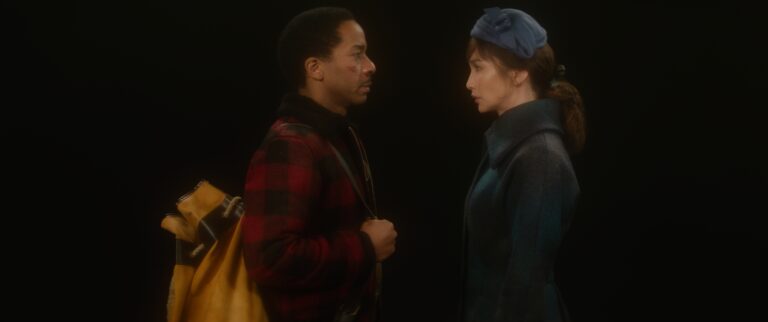
First, imagine that Charlie Kaufman (or a trusted Kaufman disciple, in this case) directed a feature-length adaptation of Itโ€™s a Wonderful Lifeโ€™s emotional climax, where George Bailey wishes he was never born and an angel turns that impulsive, despondent desire into a reality. Yet, as with any adaptation, imagine the filmmaker utilized their dramatic license to turn their George Bailey into the only man in town who canโ€™t remember a thing about his own existence. You can open your eyes now to the tune of Duke Johnsonโ€™s The Actor, a fantastic and beguiling number from Kaufmanโ€™s directing partner on 2015โ€™s Anomalisa that brings the crisis of forgetting oneโ€™s lines to the forefront. Only in the case of this actor โ€“ Paul Cole (the ever-reliable Andrรฉ Holland), one of New Yorkโ€™s many rising stage presences to believe that they are Broadwayโ€™s Chosen Oneโ„ข โ€“ heโ€™s not merely misplaced his script. Itโ€™s his memories, his name, and his sense of self that require recollection, should he dare.

Adapted (perhaps ironically) from Donald E. Westlakeโ€™s posthumously-published 2010 novel โ€œMemoryโ€ by Johnson and Stephen Cooney, the formerโ€™s solo feature debut is a film not so much about memory as it is about what it means to remember, specifically the significance of what we do remember versus what the things we forget represent. Paul canโ€™t even remember that what landed him in the hospital was a chagrined husband taking a wooden chair to his head after discovering that Paul had brought the latterโ€™s wife to his hotel room for a post-performance rendezvous, which seems to be his roadshow routine. This instance happened to occur in Jeffords, Ohio, โ€œsomewhere everyone knows their lines,โ€ the filmโ€™s narrator tells the audience, โ€œbut the only thing real is โ€˜home.โ€™โ€ Thus begins Paulโ€™s spiraling effort to get home to New York, a nugget of pivotal information he discovers by way of the ID nestled in his otherwise near-empty wallet, which forces him to stay in Jeffords just long enough to make an impression on the locals.ย 

In order to make his way back to the Big Apple, Paul realizes that he will have to work and to assimilate, which would prove far less difficult if he could only remember anything other than his occupation, something his hiring manager at the local tannery notes as a sort of โ€œunskilled labor.โ€ Even more complicating is the fact that Paulโ€™s participation in adultery is illegal in Jeffords, landing the clueless sap in hot water with local law enforcement, led by a vaguely racist police lieutenant (Toby Jones, in one of his many roles in the film). In fact, every supporting actor in The Actor is part of โ€œThe Troupe,โ€ which Johnson cleverly introduces in the filmโ€™s classically-styled opening credits,ย  narrative tactic that lends itself nicely to The Actorโ€™s theatrical nature. Paulina Rzeszowskaโ€™s production design, enhanced by meticulous work from The Brutalist set decorator Mercรฉdesz Nagyvรกradi, make Johnsonโ€™s film look and feel like a stage production, its background actors and objects carefully placed as though they are all parts of a living, breathing tableau. Joe Passarelliโ€™s cinematography, similar to his work on Anomalisa, is never too insistent on suffocating Paul, which allows us to take in Janka Erdelyโ€™s stunning art direction. The filmโ€™s cityscapes, miniatures that look like oil paintings, would certainly feel out of place in a dentistโ€™s office.ย 

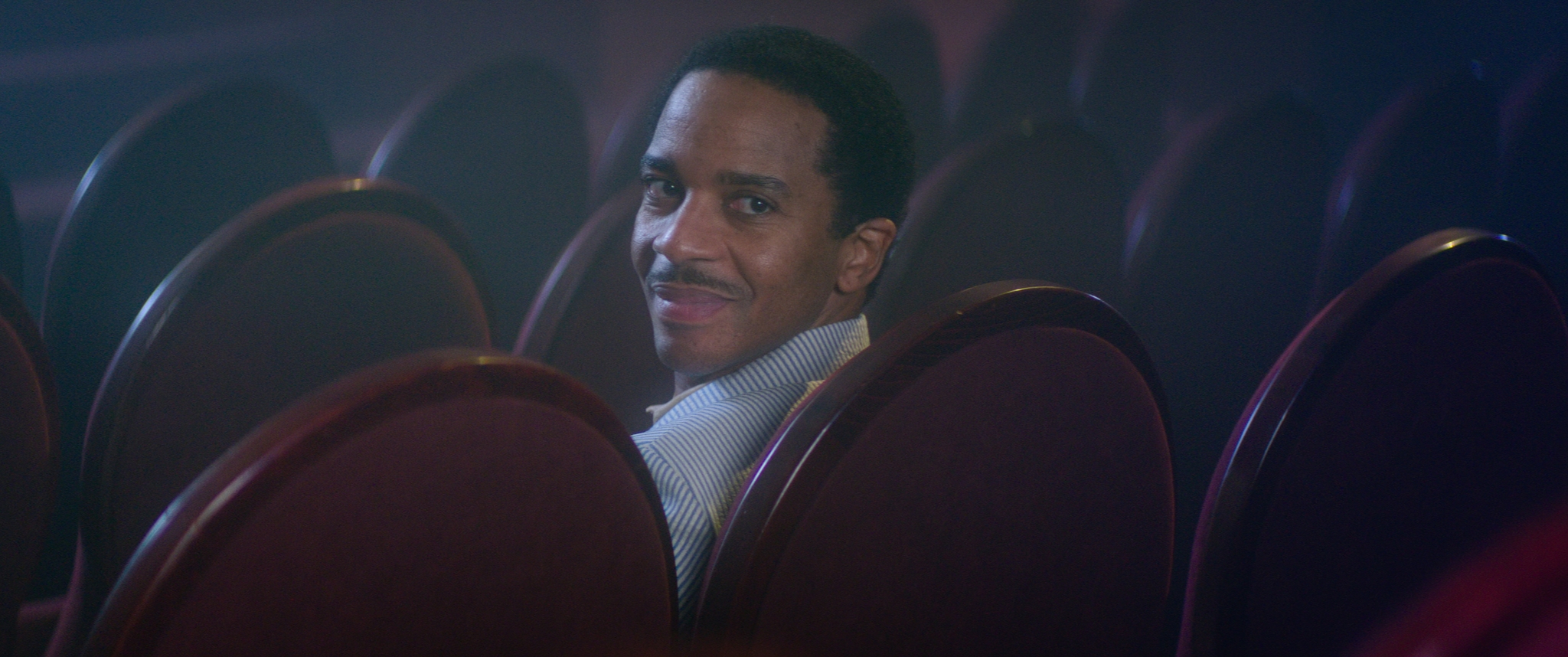
That the aforementioned troupe โ€“ all members of Paulโ€™s traveling company โ€“ is made up of great performers like Jones, Tracey Ullman, May Calamawy, Simon McBurney, Joe Cole, and Tanya Reynolds is gravy atop the meal, which has a taste that isnโ€™t easily sussed out. Gemma Chan is the only name to be singled out alongside Hollandโ€™s; she plays Edna, the most alluring woman in Jeffords, who Paul first notices sitting a few rows behind him in a movie theater. As the two fall in love, we are never unaware of Paulโ€™s desire to return to New York, thus rendering their moments together a fleeting distraction until he has enough coin to purchase a ticket back to the promised land.ย 

But can a standout moment in a manโ€™s life be considered fleeting if every single momentโ€™s lifespan is not guaranteed? Better yet, can any moment be considered a standout if there are only so many to begin with? As everything in The Actor, the idea that Paul and Ednaโ€™s budding romance is destined to fall apart might be a misdirection, but their fate certainly isnโ€™t helped by the emergence of memories of from Paulโ€™s past life, which begin to return in flashes as if someone is operating a film reel in his head at 100x speed. As Paul descends further into disassociation โ€“ the glimpses of these frames growing more and more prevalent, with Richard Reed Parryโ€™s noir-ish score responding accordingly โ€“ Hollandโ€™s performance turns from that of a floundering amnesiac attempting to remain afloat in rocky, unfamiliar waters to that of a man desperate to tighten his grip on the things heโ€™s already struggled so much to accept.ย 

It being Hollandโ€™s most surreal performance to date isnโ€™t saying much given the emotional onslaught of roles he had been cast in prior, with 2024โ€™s underseen Exhibiting Forgiveness serving as a self-set benchmark for heartbreaking brilliance. Yet, thereโ€™s something similar happening here โ€“ the strenuous process of a man piecing his life back together after it comes undone in a startling manner. Perhaps that will continue to be Hollandโ€™s bread and butter moving forward; to see it done in Johnsonโ€™s preferred fashion is nothing short of exhilarating, though, and would be welcome if it were to return in a future performance. Ednaโ€™s arc, meanwhile, sees the character shift from bubbly and lovestruck to devastated on a similar dime to Paulโ€™s internal change. Itโ€™s a major credit to the excellent Chan, who evolves as a screen presence seemingly every time she appears in a film, playing the oft-undesirable part of the potential partner who gets burned by the lost artist. ever mind the fact that Paulโ€™s disorientation is more evolved than what might be considered typical for a fictional artist. You know the (selfish, egotistical) type.ย 


While no one in The Actor is exactly playing against type, thatโ€™s specifically because its titular character struggles to know what his โ€œtypeโ€ is meant to be. When he eventually returns to Manhattan, it becomes apparent that Paul is a complicated, somewhat unlikable fellow, one whose inner circle is tight but venomous. Is this the man he wasโ€ฆ or still is? Early on in The Actor, someone notes, โ€œWhy does [Paul] have to get home? If he doesnโ€™t remember who he was, why not just start over?โ€ Considering Johnsonโ€™s interest in mortality and existential dread, it would be too close to the easy route, simply letting Paul start anew with new memories or handcrafted old ones. Letting his main man sit in the confusion, while teetering on torturous, is half the fun. Maybe itโ€™s as close to preparing for a new part as Paul will ever get. Given everything heโ€™s learned by The Actorโ€™s conclusion, though, that might not be such a bad thing.
Grade: B

Classic Film Review: ‘Final Destination’ is Still Needed 25 Years Later


Director: James Wong
Writer: Glen Morgan, James Wong, Jeffrey Reddick
Stars: Devon Sawa, Ali Larter, Kerr Smith

Synopsis: After getting a premonition about a plane crash on his school trip, Alex, a student, saves a few of his classmates. However, their situation gets complicated when death starts chasing them.


Seen through the lens of modern day movie consumption, were it to hit theaters this weekend, Final Destination would likely be a failure. It holds a 37% rating on Rotten Tomatoes, a 6.7/10 composite score on IMDb and, to the tastes of the current cinematic audience, would certainly come off cornier than a cob in comparison to much of the the hyper-serious sludge that the genre has now become mechanized to spit out.

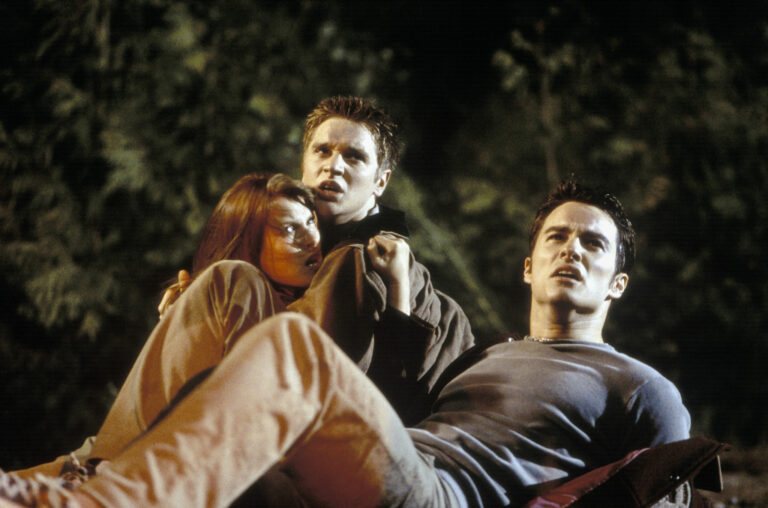
Final Destination (2000)

Director James Wong, who is perhaps more recognized for the infamous Dragonball Evolution than anything else these days, hasnโ€™t directed anything since then – that was 2009. By all conceivable metrics, Final Destination stands out in the wrong ways when compared to other, similar horror efforts from the 90s; take Scream, which came out not even three years prior, as a prime example. Successful, singular and revered.

Yet, fast forward two and a half decades into the future and weโ€™ve got five Final Destination movies, with the sixth, entitled Bloodlines, on the way this year, and to a flood of raucous excitement from what has developed into one of the most impassioned, active fanbases in the horror community. So how did we get here? Letโ€™s go back to one word: singularity. On impact, Final Destination was able to set itself apart for the one metric that matters most for a movieโ€™s success โ€“ the audience. The film grossed $112 million at the box office on a budget of only $23 million. Despite being in the middle of, again, the Scream renaissance, the Destination movies found a place in the fold upon release.

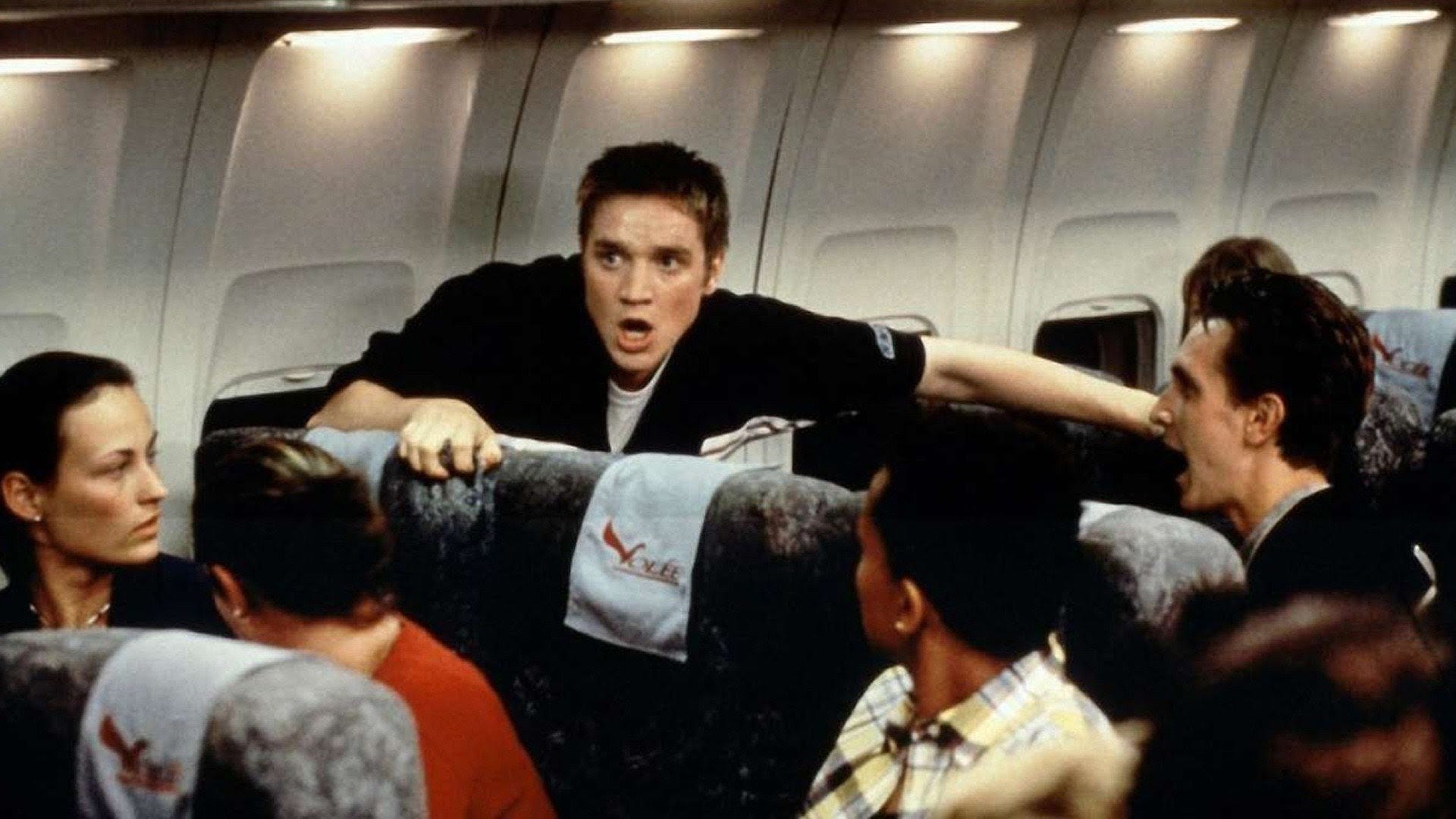
Take the first filmโ€™s well-known plane crash scene as a kind of case-in-point for the filmโ€™s ability to stand out. Not only is every main character involved and roped into the stakes, but the way in which Wong shoots the thing, chipped with some signature shakycam and the ultimate set-piece of a character hanging outside of a crashing, fiery plane to a chorus of screams from her fellow passengers; some from uncaring background characters attempting to deal with their own deaths, and others from her friends, struggling to cope with the fact that hers, or even theirs, might be next.

When plane comes to crash, these movies are all about death; more specifically, the unavoidable, fateful nature of it. The poster alone proves as much, shadowing the faces of each character upon it with the skull beneath their skin. What happens when you take someoneโ€™s only visible trademark of humanity away? They become a husk, and perhaps a reminder. The person that just passed is no different than you, and in the same way that they went, you will go to.

And on top of focusing solely on the inevitability of death, Final Destination offers no solace for it. Common questions about the afterlife and second hopes are abandoned here in favor of an extra stretch or stab in the exaggerated death of yet another main character. Nobody is safe (again, think Scream) and if and when somebody goes, youโ€™ll never forget it.

To match this heightened reality the film presents the aforementioned elements, often regarded as corny or cheesy, like eclectic camera work and dramatic performances. Zooms are as common as cuts; shadows are laid on thick and sets are built only to be destroyed. The movie takes all the chaos in losing a loved one and manifests it physically and visibly in every way possible. All the anger, some of the sorrow, and none of the regret. Is it really a wonder why people latched on so quickly?

Breaking Down the 'Final Destination' Movies

Now, the first Final Destination and its subsequent sequels donโ€™t work for many on a stylistic level to this day, and thatโ€™s a completely fair assessment. Itโ€™s an old-ish horror movie that is certainly further over the line of aggression and commitment to concept than most of its contemporaries. But the franchise still kicking all this time later is not only a clear testament to the particular power of the original film whose anniversary we celebrate, itโ€™s also a nod to the IPโ€™s importance in a genre that is now commonly recognized as maybe the most milquetoast and uninventive in modern cinema.

Whether or not the sixth installment is a worthwhile watch is yet to be seen; but either way, the mere existence of Bloodlines is owed to James Wongโ€™s timely examination of death and negative emotion that was released in the year 2000. If the fate (donโ€™t laugh) of horror movies has hope in anything, itโ€™s in classics like Final Destination that still guide the hearts and minds of fans and creatives to this day.

Grade: B+

Movie Review: ‘Black Bag’ Finds Answers Within Answers


Director: Steven Soderbergh
Writer: David Koepp
Stars:ย Michael Fassbender, Cate Blanchett, Marisa Abela

Synopsis: When intelligence agent Kathryn Woodhouse is suspected of betraying the nation, her husband – also a legendary agent – faces the ultimate test of whether to be loyal to his marriage, or his country.


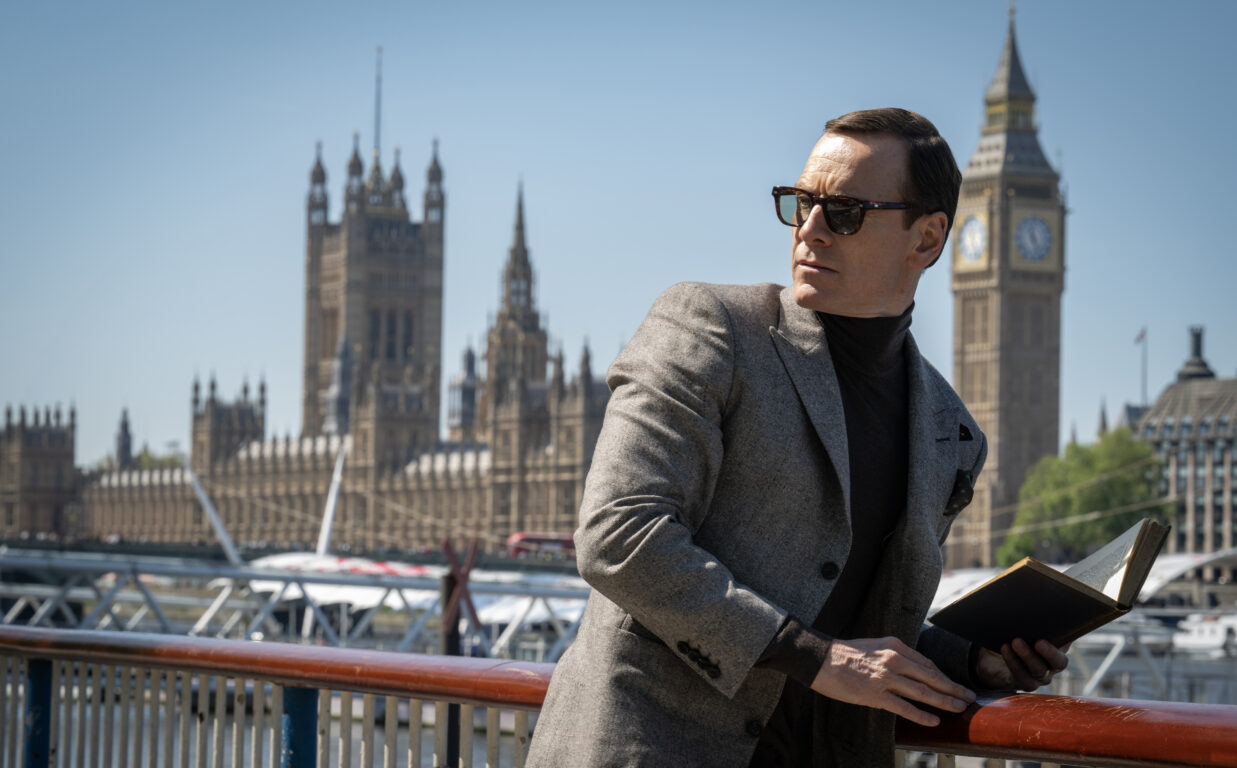
It’s safe to say that the year’s first undeniable hit has graced our screens thanks to sleekly versatile Steven Soderbergh. With Presence released earlier this year, a haunted house story told from the POV of a ghost, Soderbergh’s latest film Black Bag shows just how distinct his cinematic style is, and its ability to transcend genres with remarkable fluidity. Black Bag is oozing with its glamorously chic design, old school espionage feel, and cheeky humor. Soderbergh is at his best here delivering a romantic crowd-pleaser with his third team-up with writer David Koepp (Presence, Kimi).Movie review: 'Black Bag' a delightful romantic spy drama | The Seattle  Times

Black Bag places audiences into the world of George Woodhouse (Michael Fassbender), a highly efficient spy with thick-rimmed glasses who has a special disliking for liars. His mission is to find the source of a security leak and stop the death of thousands. Given only a week to finish the task and a short list of suspects that just so happens to include his alluring wife Kathryn St. Jean (Cate Blanchett), George must get creative to find the spy who said too much. Joining Kathryn on the list are familiar faces to George, Freddie Smalls (Tom Burke), who was just passed up for a sought-after promotion, and his young tech intelligence agent girlfriend Clarissa Dubose (Marisa Abela). Yet another couple rounding out the list of potential leakers is Colonel James Stokes (Regรฉ-Jean Page), who nabbed the promotion from Smalls, and his psychiatrist date Dr. Zoe Vaughn (Naomie Harris), who knows a little too much about each member involved.

George decides to throw an impromptu dinner at his and Kathryn’s impressive home, giving less than 24 hours’ notice. As guests arrive, George implements his first of many trials to get to answers. A game of resolutions shows the weak points of each couple’s relationships, giving George a way in to get the answers he needs. The initial dinner sequence in Black Bag gives audiences a peek into the tumultuous personalities of those surrounding the table, how fragile the egos of these spies are, and how, at the end of the day, they are looking to cover for their own. As Black Bag goes on, and the days dwindle for George to figure out the leak of sensitive information of operation Severus, audiences are in the dark on who is topping his list of suspicions.

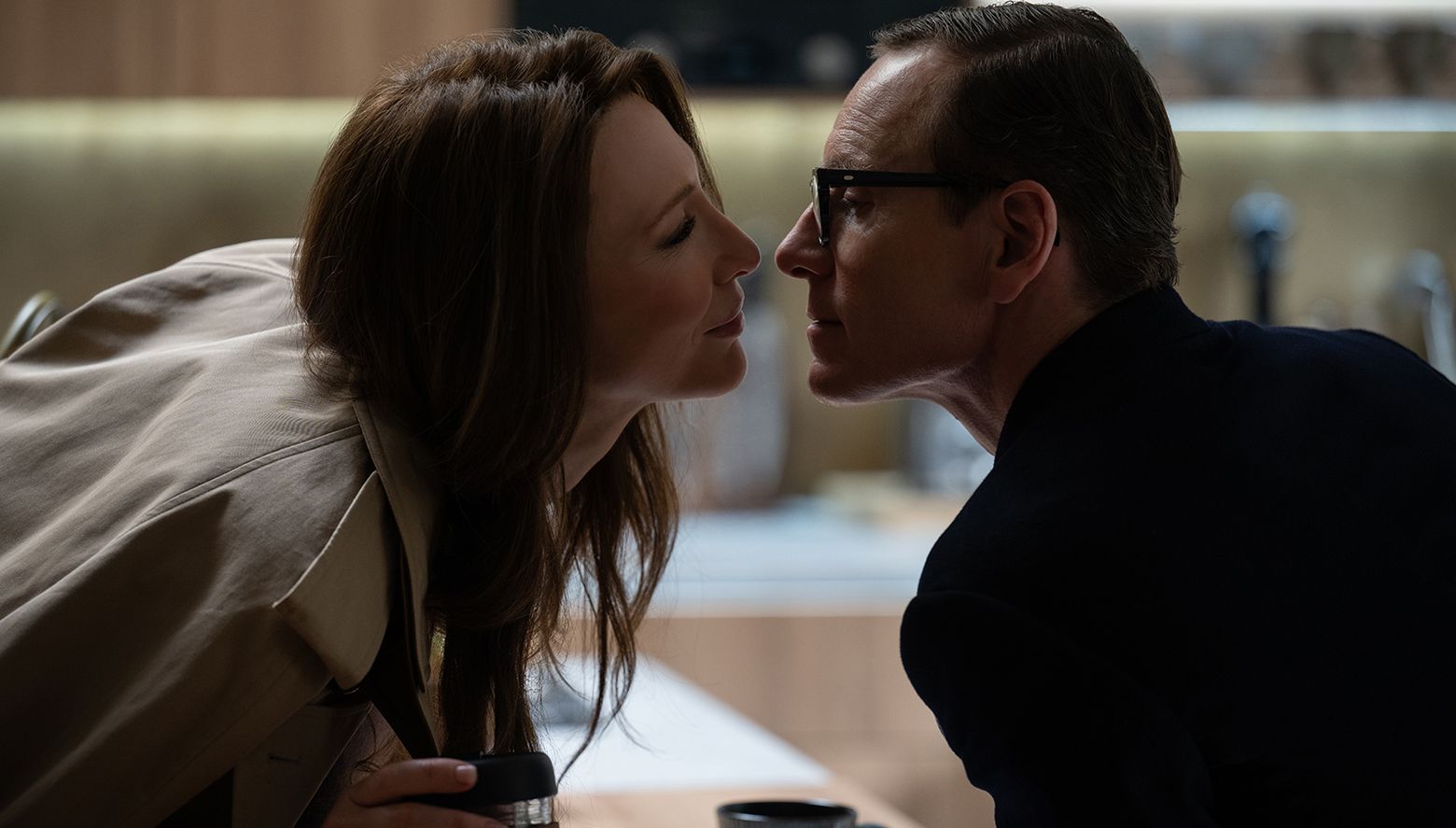
Black Bag brings together an all-star cast, thanks to the casting by Carmen Cuba; Fassbender and Blanchett are one of the main selling points of the film with their chemistry. Their ability to play married spies and make it look easy is highly impressive, keeping secrets from one another while maintaining a healthy relationship is a point of envy to their peers. Blanchett’s sophisticated and sly Kathryn pairs brilliantly with Fassbender’s often silent yet cool demeanor. They know each other like the backs of their hands; she can sense when he’s watching her, and he knows when she’s not being totally truthful. She’s more upfront with conflict, looking it in the face with a raised brow and sly smirk, while he’s reserved, watching those under the heat squirm. The film’s supporting cast, such as Abela and Burke, pair nicely with the apparently perfect married couple; their troubled romance sticks out sharply, giving the film many of its best comedic moments.

BLACK BAG - A Movie Review

There’s not a candle, leather briefcase, or trash can that is out of place in Black Bag, as each item on screen is important to the film’s plot. If there’s an item out of place, George will find it, putting his attention to detail front and center, similar to production designer Phillip Messina. Mainly shown in George and Kathryn’s home, their sense of style is luxurious, from their plentiful lighting fixtures illuminating each room to their spacious kitchen used often by George; this couple has an established life together. Paired with Soderbergh’s cinematography, the stylistic choices of the film pop most with his careful framing, showing just how large their home is. Kathryn descending a staircase, getting ready for a secret trip, while George is tidying up in the kitchen is kept all in the same frame, showing separate lives lived under the same roof. The film’s use of natural lighting, especially candles during shared dinner scenes, gives a warmth where characters are being cold to one another.

In their third outing together, Soderbergh and Koepp have really nailed a witty, tense, and tight script. Black Bag has a runtime of 94 minutes, not leaving a lot of wiggle room for a genre film to have its slow-paced moments, and their script makes the film’s runtime fly by. Many of the best moments of the film are two characters in a room talking with one another; their snappy dialogue has you dissecting each word, looking for double meanings or importance later on in the film. Explored best through one-on-one sessions with Dr. Zoe Vaughn and Kathryn, their conversations teeter on an almost flirtatious hostility, both reading each other delicately, searching for answers within answers. Black Bag is Soderbergh and Koepp’s best work together to date, with the solid foundation of its script filled with twists and suspense.

Black Bag Ending Explained: Who Was Behind The Severus Leak?

Overall, Soderbergh has crafted a mature spy thriller that is equally funny and sexy. Packed with impressive lead performances from Fassbender and Blanchett, along with a supporting cast that amplifies their perfect marriage, Black Bag keeps audiences on their toes with each clue and twist revealed.

Grade: A

Movie Review: ‘The Assessment’ is An Impressive Dystopian Debut


Director: Fleur Fortune
Writer: Mrs. Thomas, Mr. Thomas, John Donnelly
Stars:ย Alicia Vikander, Elizabeth Olsen, Himesh Patel

Synopsis: In the near future where parenthood is strictly controlled, a couple’s seven-day assessment for the right to have a child unravels into a psychological nightmare.


Deciding to become a parent is a life-changing revelation in a couple’s life. The financial, personal, and even social alterations that come with bringing a child into the world aren’t to be taken lightly. Now imagine a future where resources are scarce, and couples looking to start a family must go through a grueling 7-day government assessment. Fleur Fortune’s debut strips away the human aspects of conceiving a child in a world reeling from environmental damage. The Assessment is a dystopian exploration of anxieties new parents have, while examining their lives in torturous methods.

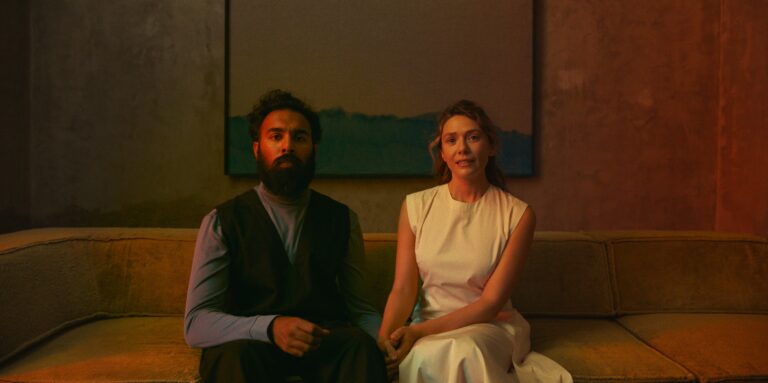
Under a protective dome live Mia (Elizabeth Olsen) and Aaryan (Himesh Patel), both researchers in their own respective fields. Mia mostly works with cultivation in her greenhouse, caring for plants in a world where natural resources are scarce. Aaryan works more in the realm of the inorganic, creating comforts lost from the old world, like pets through technology. They both have crafted advancements in their lines of work and are regarded with respect in the bureaucracy of their government. In the agreement that they’d both make great parents, Mia and Aaryan jointly decide to embark on the assessment, a 7-day test that, at the end, results in a child if passed and no child if failed, with the assessor’s verdict being final. In The Assessment, this is the only way a couple can have a child; all other forms of child-rearing are banned.

Once their assessor Virginia (Alicia Vikander) enters their home, their lives will never be the same. Mia and Aaryan have prepared as well as they could for their visit, as the details of the assessment are veiled in secrecy. As Virginia questions both hopeful parents separately, their motivations for becoming a parent become clear. Mia wants a child to heal her younger self who felt abandoned; Aaryan wants to prove that he can be a good father. Their well-polished demeanor quickly starts to unravel as the assessment begins, and Virginia goes from a stone-faced assessor to the couple’s pseudo-child, challenging their patience as the one person deciding their parental fate. As the lines between her adult self, and her child self fade into one another, the film takes a dark turn. The Assessment is at its best when Vikander is on screen, plotting ways to break down her subject’s confidence.

The Assessment captures those near-future sci-fi aesthetics so well, mainly in the costume design by Sarah Blenkinsop and the production design by Jan Houllevigue. The film mostly takes place inside the home of the hopeful parents, and from the get-go, it’s known these two are successful. Their home is well-manicured and filled with perfectly placed furniture that looks like it’s out of a trendy home decor magazine. Their clothing is chic, consisting of basics that fit them just right; no flashy logos or brandingโ€”it’s basic, but it exudes a level of effortless style. There’s love to be shared with Magnus Jรธnck’s cinematography that captures their home in unique framing, mostly in wide shots from the outside displaying the minimalist design in a dust covered landscape with the dome looming over them.

What makes The Assessment tick is the performance from Vikander, who commands the screen with an equally infuriating and comedic presence. Her ability to shift from an emotionless assessor peeping into intimate moments between her subjects, and into a food-flinging stubborn child is genius. Her best moments come during a dinner scene in the later days of the assessment, a crucial task pass. Surrounded by their most hostile guests of past lovers, collaborators, and even relatives, Vikander’s performance nails just how much pressure Mia and Aaryan have on them to pass. Olsen and Patel are often overshadowed by a powerhouse performance by Vikander as she taps into her inner Dennis the Menace.

Director Fleur Fortune shows a world removed from common pleasures, where the food often looks unappetizing, and starting a family is out of the question unless you fit the perfect mold. The Assessment flirts with different genres as there are many aspects of the film that are darkly comedic, with Virginia testing her would-be parents, and even psychologically thrilling as she places wedges in the marriage of Mia and Aaryan. Fortune balances these mostly well as she leans on Vikander to push the film through the script’s weaker moments.

There’s a larger story within The Assessment that gets lost within the main plot of the 7-day assessment, and while watching the film, moments where characters bring up the old world, and its border problem, along with a drug they take to prolong their lives feels more compelling. Mia and Aaryan’s story is rather repetitive, never letting audiences truly get to know them enough to care about what happens to them after the assessment is over. Writers Mrs Thomas, Mr Thomas, and John Donnelly craft such an interesting backstory for the society that they live in, but no character, other than Virginia has a fleshed out enough character arc to be impactful. Its commentary on parenthood gets lost in a more interesting side story about a world losing its resources, and how it got there.

Overall, The Assessment is an impressive debut from Fortune who brings a career best performance out of Vikander, and although the film’s script loses momentum, it’s sure to spark conversations surrounding a future with limited resources.

Grade: B

Women InSession: Critic Spotlight – Kristin Battestella

This week on Women InSession, we continue our critic spotlight series as we get to know our illustrious host Kristin Battestella and her experience becoming a critic! Kristin is one of the biggest reasons why the podcast exists and continues to thrive today. She’s organizes the show each and every week, and has done a great job of spearheading the project. So, we had a really great time digging further into her love of film and why it continues to define her.

Panel: Zita Short, Jaylan Salah, Amy Thomasson, Kristin Battestella

On that note, check out this week’s show and let us know what you think in the comment section. Thanks for listening and for supporting the InSession Film Podcast!

Subscribe to our Podcasts RSS
Subscribe to our Podcasts on iTunes
Listen on Spotify
Listen on Stitcher
Women InSession – Episode 127

Podcast Review: Love Me

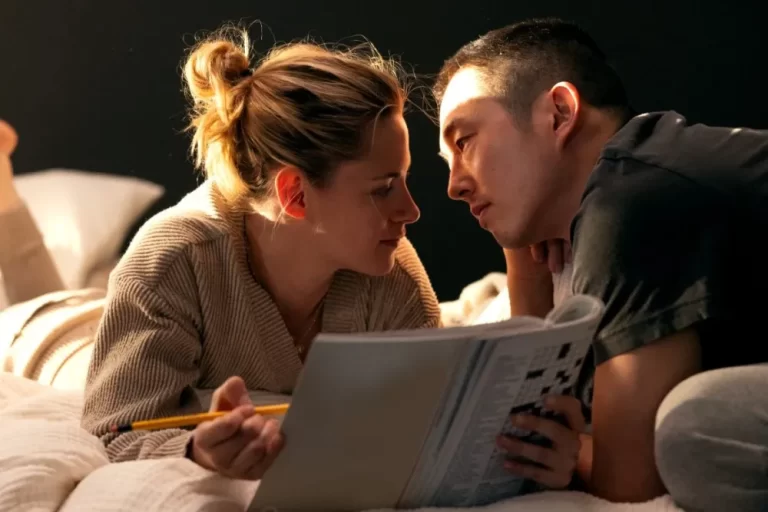
On this episode, JD and Brendan discuss the Sam and Andy Zuchero romantic sci-fi film Love Me! It’s been a weird, fun week discussing two movies that co-star Steven Yeun along side Robert Pattinson and Kristin Stewart. The Yeun/Pattinson vehicle was obviously Mickey 17 and his venture with Stewart in Love Me is equally as interesting. The film doesn’t always work, but you have to love its ambition.

Review: Love Me (4:00)
Director: Sam Zuchero, Andy Zuchero
Writer: Sam Zuchero, Andy Zuchero
Stars: Kristin Stewart, Steven Yeun

Subscribe to our Podcasts RSS
Subscribe to our Podcasts on iTunes
Listen on Spotify
Listen on Stitcher
InSession Film Podcast – Love Me

Podcast Review: Mickey 17

On this episode, JD and Brendan discuss Bong Joon Ho’s first film since winning three Oscars in Mickey 17! Crazy that it’s been six years since Parasite graced the silver screen and became a pivotal moment in cinema history. Mickey 17 may have been delayed several times, but we are super thrilled to finally see the latest from the great Bong Joon Ho.

Review: Mickey 17 (4:00)
Director: Bong Joon Ho
Writer: Bong Joon Ho
Stars: Robert Pattinson, Naomi Ackie, Steven Yeun, Mark Ruffalo

Subscribe to our Podcasts RSS
Subscribe to our Podcasts on iTunes
Listen on Spotify
Listen on Stitcher
InSession Film Podcast – Mickey 17

Movie Review: ‘The Day The Earth Blew Up: A Looney Tunes Movie’ is For Fans Old and New


Director: Peter Browngardt
Writer: Kevin Costello, Alex Kirwan, Peter Browngardt
Stars: Eric Bausa, Candi Milo, Peter MacNicol

Synopsis: Porky Pig and Daffy Duck are Earth’s only hope when facing the threat of alien invasion.


Itโ€™s safe to say that the Looney Tunes brand has seen better days. Itโ€™s not as though there is anything wrong with the Looney Tunes, but it seemed that after Coyote vs. Acme was shelved, even though the film was completed, they were at an all-time low. The newer generations hardly know about the Looney Tunes – I mean, the Space Jam sequel barely came within $100 million of the original, and it starred one of the most well-known athletes in the world – and the older generations that grew up with them arenโ€™t exactly clamoring for a return either. Then comes along The Day the Earth Blew Up: A Looney Tunes Movie, the first-ever feature-length Looney Tunes movie created for a theater audience.ย 

Wonderland Cinema - The Day the Earth Blew Up: A Looney Tunes Movie

The Day the Earth Blew Up follows Daffy Duck and Porky Pig (Eric Bauza masterfully voices both Daffy and Porky) as orphaned farm animals taken under the care of Farmer Jim (Fred Tatasciore). After Farmer Jim seemingly passes away, it is up to Daffy and Porky to look over the home they grew up in. Unfortunately, a massive hole in the roof causes them to fail their inspection. Then comes one of the more fun and traditional Looney Tunes sequences: the pair look for jobs, constantly failing as nothing fits their skillset. This scene, which looks like a classic Looney Tunes episode (down to the aspect ratio and intro), highlights one of the film’s most endearing qualities: love for the Looney Tunes brand.ย 

Other films involving beloved TV characters from an older generation (Tom and Jerry, for example) feel a need to do something too different from what the characters are known for. They stretch too far outside the realm of comfort and instead make something that isnโ€™t just uncomfortable; it’s lazy. Daffy is reckless, constantly wanting to smash things with his massively oversized mallet that he can pull from just about anything and anywhere. At the same time, Porky is clumsy but much more reserved and thorough about the tasks at hand. This is who these characters are, and director Peter Browngardt doesnโ€™t force them to be anything other than their usual selves. Much of the heart in this film came from Daffy and Porky coming to terms with who they are in a meaningful way to both the characters and the fans. In a reasonably strong feature debut, Browngardt appeals to the characters and the audience, providing sequences that bring forth nostalgia in humorous back-and-forth banter.

Their failure to search for a job brings them to a diner where Porky lays eyes on Petunia (Candy Milo), an equally clumsy pig whose awkwardness Porky overlooks, only seeing her beauty. He is instantly in love, which makes the stuttering pig even more nervous. However, when she tells the two about her job at a gum factory, they realize this might be the perfect opportunity for them. For a while, this job works out, and it seems as though Porky and Daffy will be able to save their home, but when something weird begins happening to the gum, turning all the people who chew it into mindless zombies, it is up to Porky, Daffy, and Petunia to save the Earth.

The Day the Earth Blew Up's First Trailer Teases Looney Tunes' Return to the  Big Screen

The Day the Earth Blew Up: A Looney Tunes Movie is about as perfect as a Looney Tunes movie could be today. Itโ€™s a straightforward film that feels like a well-thought-out expansion of the show that became popular in the 1940s. The massive slew of writers (11 writing credits and 4 story credits) never get in the way of each other and bring out the best qualities of these characters. All the while, they are still managing to create something relevant for today. Some of the writing didnโ€™t always work (a boba tea joke fell flat), but others, such as Petuniaโ€™s search for a โ€œnew flavor,โ€ brought some self-reflection and potential advancement for this series. One of the best aspects of this film is that while it does remain a traditional Looney Tunes narrative, there is an understanding that change is needed, but change is required from the people who care; it canโ€™t come from the corporations that run these brands – which the film being released at all after being dropped from Warner Bros. MAX streaming schedule and shipped off for other distribution gives this plot even more heft – and needs to happen from the people who want to make a good product the best they can.


Making the best product they can might be the best thing this film does. From the fun direction to the amusing writing and committed voice performances, everyone displayed a level of respect for these characters that had all but been forgotten. The Day the Earth Blew Up isnโ€™t going to change animation, and it wonโ€™t be a paradigm shift for the Looney Tunes brand; instead, this well-made and fun film will serve as a reminder to fans old and new that these characters are still here, and theyโ€™re still as looney as ever.

Grade: B

Movie Review: ‘Opus’ is an Uneven Journey


Director: Mark Anthony Green
Writer: Mark Anthony Green
Stars: Ayo Edibiri, John Malkovich, Juliette Lewis

Synopsis: An iconic pop star returns after decades missing.


Throughout time, as music composers, singers, and bands have achieved prominent statuses in the world, they have also cultivated avid followers and listeners of their work, with some garnering fanbases of millions around the world. In some cases, fans are obsessed to an almost religious level of following, counting down the days to the next album release, social media post, or public appearance. Celebrity devotion expands across the entertainment industry, from music to movies to television, and now even to content creators.

Opus' Review: Ayo Edebiri and John Malkovich in Celebrity Cult Horror

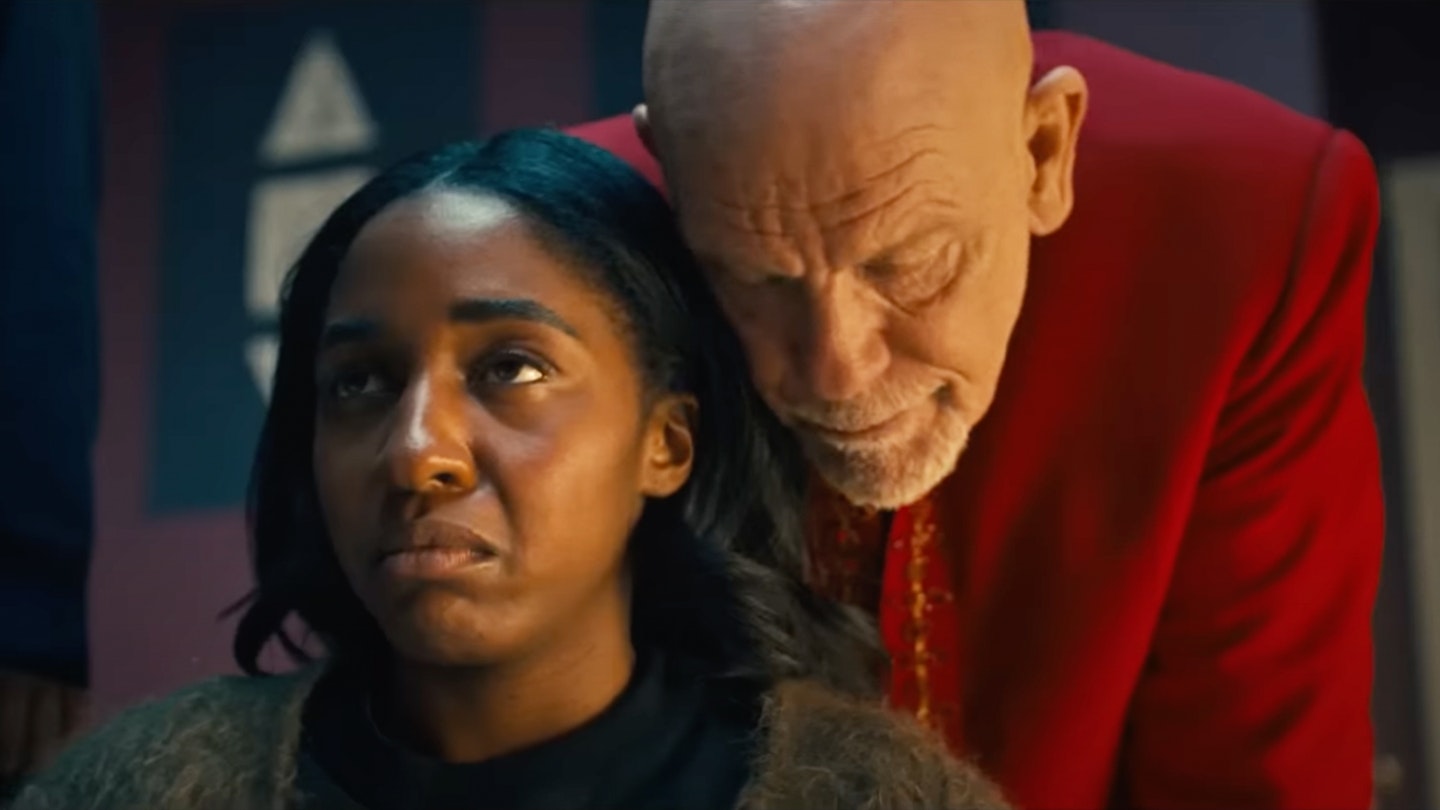
It is this concept of celebrity worship that is built into the premise of Mark Anthony Greenโ€™s Opus. Alfred Moretti (John Malkovich) is a singer whose sound captivated everyone in his heyday, topping the charts across the board. After a 30-year long disappearance, Moretti announces his grand return with a new album, an announcement that shocks the world. As a way for Moretti to promote the album, which is claimed to be the greatest composition in recording history by his manager Soledad Yusuf (Tony Hale), a select few members of the media and press are invited to come to his hidden sanctuary and take part in listening to it. However, as they arrive, the guests begin experiencing many odd happenings, particularly some odd behavior from the staff present, and later Moretti himself.

Many of the bizarre occurrences that follow in Opus are seen through the eyes of Ariel Ecton (Ayo Edebiri), a budding journalist who is trying to get her hands on a big story to impress her boss Stan Sullivan (Murray Bartlett) as well as make a name for herself. Edebiri is great in the role, fully committing to the movieโ€™s premise. As in most horror movies, Ariel represents the audienceโ€™s feelings towards the strange events at this sanctuary, often pointing out something is wrong as other characters doubt her, all while trying to learn more about Moretti and his followers to write an exposรฉ on them, while also bringing a dry sense of humor to some of the proceedings at first.

However, it is Malkovich as Moretti who steals the movie in every frame he is in, playing the pop star persona in as charismatic and outrageous a manner as possible, while slowly revealing the darker, twisted nature of his character and his motivations as the story progresses. His rapport with the characters, especially Ariel, is well executed, and as a singer, he performs the songs written in the script rather well, even with an actual performance at one point on a stage that is among the movieโ€™s most entertaining scenes, and all backed with an eerie score from Danny Bensi and Saunder Jurriaans.

Where Opus struggles most, however, is with its script, especially as it tries to address a lot more as the reveals begin, while also not reaching any definitive conclusions. With Moretti, the movie shows how his celebrity status and his music has an effect on listeners that creates a cult-like following, as others at his sanctuary hang on his every word as if it were gospel, though it never explores what they really want to achieve beyond what is shown in the movie, save for a moment towards the climax which tries to answer that. In some moments, Opus even echoes some scares from another A24 distributed horror movie, Midsommar, as well as some of its insights into large followings of people doing questionable things.

Opus Trailer: Ayo Edebiri Investigates A Legendary Pop Star's Cult In A24  Thriller

The same applies to its commentary on social media and the press, sporadically showcasing how discussing something being wrong on a grand scale can sometimes spread a stronger message and gain more popularity, and how paparazzi and journalists can go after celebrities in a manner that can personally affect them, as represented by Bartlett, Juliette Lewisโ€™ Clara Armstrong, a massive TV personality with her own talk show, and Stephanie Suganami as Emily Katz, a social media influencer. However, much like its discussion on the cult-like celebrity status artists can achieve, these aspects are mostly reserved to footnotes heading into Opusโ€™ final act.

As a result, by the time credits roll on the movie, many of the events and the spectacle they showcase can feel empty in hindsight. While it has good performances, a great soundtrack, some entertaining sequences, and a few inventive scares, there is a frustrating lack of basis given to many of the decisions made by the characters, and by the end, its attempts to tie everything together thematically, and in turn, narratively, can feel rushed and incomplete. Opus may not be a failure on every level, but it is certainly a disappointing, scattershot watch.

Grade: C

Episode 627: Best Shots of 2020s / Lawrence of Arabia (Revisited)

This weekโ€™s episode is brought to you by Koffee Kult. Get 15% OFF with the code: ISF25

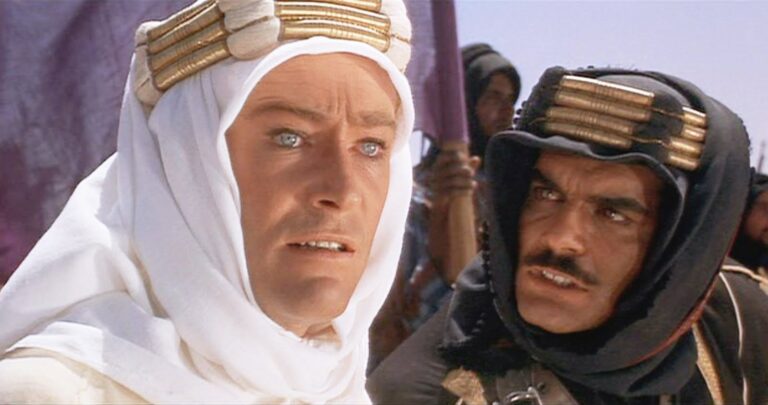
This week on the InSession Film Podcast, using JD’s virial tweet as inspiration we talk about the best shots of the 2020s so far, and we continue our Best Picture Movie Series with the 1962 masterpiece Lawrence of Arabia!

– Best Film Shots of 2020s (5:00)
We are halfway through the decade (where does the time go!?) and we’ve seen a lot of great films over the last five years. Which means we’ve seen some astounding cinematography and film shots that have stunned us in one way or another. JD’s essay on Aftersun is a testament to that very fact. However; there are dozens and dozens of other great film shots that we wanted to talk about as well.


RELATED: Listen to Episode 610 of the InSession Film Podcast where we discussed our Top 10 Movies of 2024!


– Best Picture Movie Series: Lawrence of Arabia (55:15)
We continue this series with simply one of the best films ever made in Lawrence of Arabia. It’s serendipitous that our scheduling lined up the way it did because Lawrence of Arabia is one of the most visually breathtaking films you’ll ever see. You want to talk about the best shots, every frame in that film is a painting. The craft is nothing short of extraordinary. But it’s also a sophisticated character study that’s just as compelling in its drama and psychology.ย 

– Music
One Without – Oliver Coates
Lawrence of Arabia – Maurice Jarre

Subscribe to our Podcasts RSS
Subscribe to our Podcasts on iTunes
Listen on Spotify
Listen on Stitcher
InSession Film Podcast – Episode 627

Next week on the show:

Best Picture Movie Series – 1960s: Tom Jones

Help Support The InSession Film Podcast

If you want to help support us, there are several ways you can help us and we’d absolutely appreciate it. Every penny goes directly back into supporting the show and we are truly honored and grateful. Thanks for your support and for listening to the InSession Film Podcast!

VISIT OUR DONATE PAGE HERE

Movie Review: โ€˜Novocaineโ€™ Has a Fun Concept Inside a Generic Action Comedy


Director: Dan Berk & Robert Olsen
Writer: Lars Jacobson
Stars: Jack Quaid, Amber Midthunder, Jacob Batalon

Synopsis: When the girl of his dreams is kidnapped, a man incapable of feeling physical pain turns his rare condition into an unexpected advantage in the fight to rescue her.


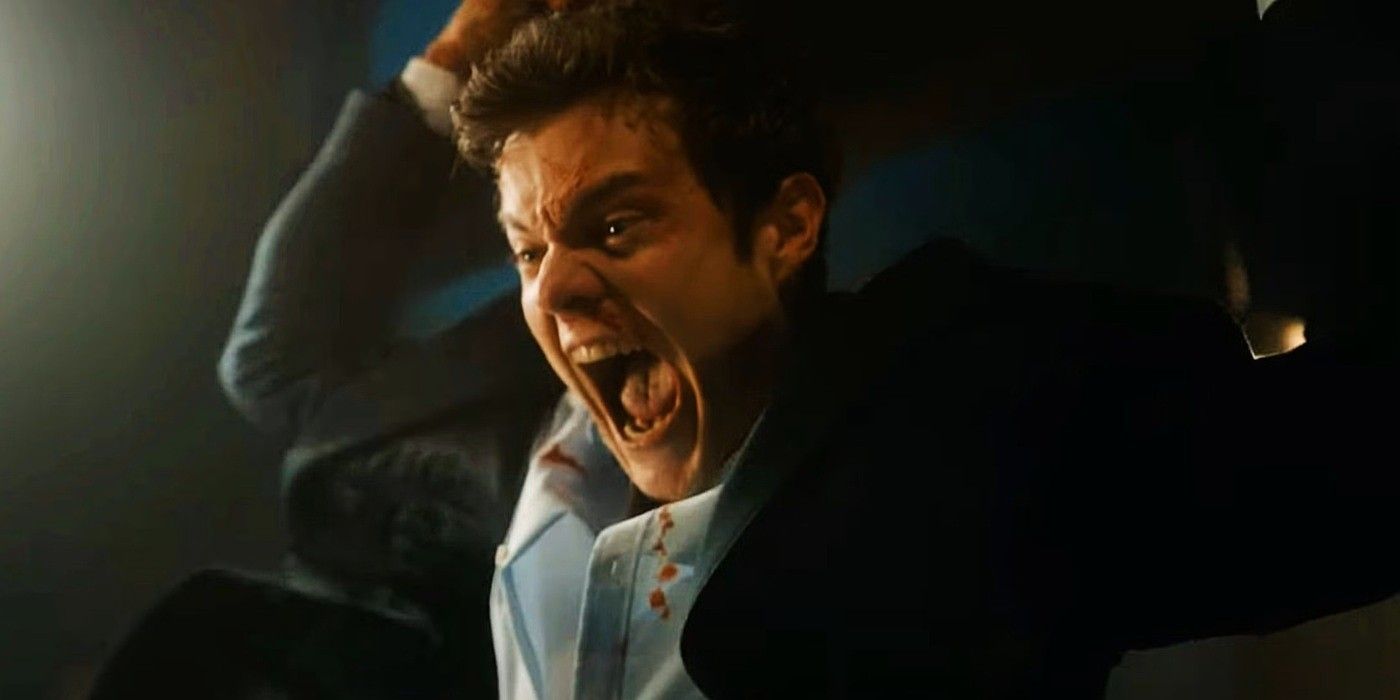
Have you ever gone into a movie with an admittedly fun and inventive concept and were immediately disappointed as soon as the lights in the cinema went down and the projector turned on? This was my reaction to Dan Berk and Robert Olsenโ€™s Novocaine, a movie that tries desperately hard to be the next Crank but possesses none of the verve, kineticism, and energy required for this action-comedy hybrid to work well, or at least be on the same level as what Mark Neveldine and Brian Taylor brought to the table in 2006. Shot with the lethargic energy of a television pilot, writer Lars Jacobson fills Novocaineโ€™s screenplay with enough Ryan Reynolds-esque cynicism that one wonders if its lead star, Jack Quaid, can do so much more than the quip-heavy characters he has sadly been typecast in ever since starring in The Boys.ย 

The Boys' Star Jack Quaid's 'Novocaine' Rotten Tomatoes Score Revealed

Our lead star plays Nathan Caine, an introverted banker who suffers from Congenital Insensitivity to Pain (CIP). This rare condition makes him entirely numb to any form of physical pain. As a result, he lives a somewhat secluded life, with his only friend being someone he speaks to through a video game interface (voiced by Jacob Batalon). However, Nathanโ€™s life will change when he meets Sherry (Amber Midthunder), the bankโ€™s new employee, with whom he falls madly in love. The two quickly connect, and a romance blossoms, but their idyll is short-lived as, the next day, armed bank robbers clear its vault and kidnap Sherry as a hostage, leading Nathan to figure out a way to rescue her, even if it means using his unique condition to his advantage against a horde of antagonists.ย 

What are the robbersโ€™ demands? Who knows! This is never explored, and neither does the B-storylines with the detectives (played by Matt Walsh and Betty Gabriel) attempting to uncover the people behind the robbery feel in any way meaningful. Still, this is a minor issue in the grand scheme of the picture since weโ€™re not here to see the police investigate, but Jack Quaid kick major ass while portraying someone who feels zero amount of pain. Yet, for some inexplicable reason, Berk and Olsen never take advantage of this semi-high concept to the fullest, always preferring to stick Quaid in situations where quips are more important than fists instead of staging elaborately kinetic and playful action sequences where the comedy is found in how Nathan accidentally inflicts massive pain upon his enemies, while he feels nothing.ย 

Many will compare Novocaineโ€™s self-aware, grating humor to the likes of Deadpool, but even the first two films (not so much Deadpool & Wolverine, because it looks so ugly) understood that the thrill of seeing such a character to life isnโ€™t necessarily in the meta-humor (though it is part of the enjoyment) but through its no-holds-barred, hard-R action. While imperfect, David Leitchโ€™s Deadpool 2 remains the best example, as the funniest scenes involve heads being severed or an invisible Brad Pitt being electrocuted, with a great sense of play and comedic timing. The action was playful and always in service of the comedy that made the character such a staple in comic book entertainment. The reason why Deadpool & Wolverine didnโ€™t work was simply because of its overreliance on cynical jokes and a complete ineptitude in crafting cathartic and playful hard-R action, in faithful service of the characterโ€™s comedic traits, which Novocaine also falls victim to.ย 

Cinematographer Jacques Jouffret never gives Novocaineโ€™s action its own language or propulsive energy โ€“ all of them are flatly shot and haphazardly edited, with even the โ€œgnarliestโ€ moments of its respective sequences (such as Nathan putting an arrow in an assailantโ€™s ear, as one example out of many) cutting away from the violence. Why have such a concept that allows its directors to play with form and give a unique visual touch to the action if theyโ€™re not going to do anything with a camera that barely moves or acts as our eye to Nathanโ€™s inadvertent superhero origin story? He doesnโ€™t want to use his condition as an unfair advantage to (accidentally) dispose of one-note antagonists, but itโ€™s the only way that will lead him to Sherry. That alone creates moments of comedic tension worth visualizing, and as undercooked as Jacobsonโ€™s script may be, thereโ€™s still enough material to make this movie an exciting one, especially if itโ€™s visually exciting.ย 

Novocaine' directors Robert Olsen and Dan Berk on working with Jack Quaid  and making a 'grounded version of a superhero movie' | The Mary Sue

But why does it look so murky and unengaging, as if itโ€™s afraid to find its own identity in an era where cinema is more and more corrupted by television? (Not my words, Denis Villeneuveโ€™s, whoโ€™s 100% right). There isnโ€™t a single image you can extract from Novocaine that feels like a movie or at least gives a form of emotional catharsis so we can latch onto the action (and, by extension, the protagonist). If it wants to be an action/comedy in the grand tradition of Neveldine/Taylorโ€™s Crank, it has to convey its energy primarily through its visuals, which Mark Neveldine and Brian Taylor brilliantly did in that film and their subsequent collaborations. Their staggering pop art throughout their work (not so much their solo careers) is what made them household names in โ€œvulgar auteurism,โ€ whether this is a valuable movement or not.ย 

Yet, Berk and Olsen seem afraid of giving Novocaine flavor and personality through its photography and action and would prefer to have this movie feel indistinguishable from the barrage of โ€œcontentโ€ that gets released to expand an infinite algorithm for a streaming service. And since the movie will come out on VOD two weeks after its theatrical release, as studios no longer support what makes a movie stand the test of time, whatโ€™s the point? Itโ€™s flimsily shot, unfunny, has no energy to support its action or comedy, and Jack Quaid has sadly tarnished the promising talent he had by playing the same character over and over again with zero nuance or emotional texture that will make us care for him and the burgeoning romance he has with Sherry. On the other hand, Midthunder is underused, and her arc is sadly telegraphed from the start. She fares much better in Mark Anthony Greenโ€™s Opus, which also comes out on the same weekend.ย 

Quaid desperately needs to find compelling work that will allow him to expand his range instead of being cast as a variant of Ryan Reynolds, who has grown in wanting to develop movies as commodities to sell Aviation Gin instead of art that will have real perennity ten or even twenty years from now. Iโ€™d hate to see that happen to Quaid because he was terrific in Christopher Nolanโ€™s Oppenheimer despite his limited screen time. Nolan knew how to utilize his talents effectively and show the world that he was much more than what the Hollywood machine had sadly typecast him as. Iโ€™d like to see more of that from him and less of the unfortunate trajectory he is currently undertaking with Companion and Novocaine, vacuous products with no personal style and memorable value.ย 

Grade: D

Why This Shot in ‘Aftersun’ is a Masterpiece

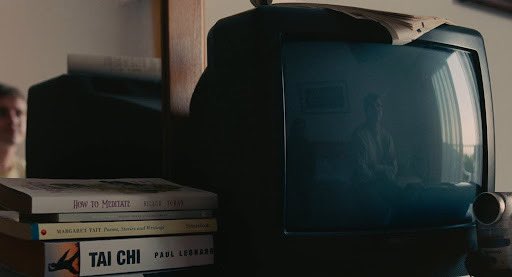
When I made a comment about Charlotte Wellsโ€™ Aftersun on Twitter (Iโ€™m sorry, I will always call it that), I never dreamt that I would be here writing an actual essay on it. But Iโ€™m grateful to those who replied asking for it. Aftersun is one of the very best films of the decade, and Iโ€™m eager to dive into why the scene in question is so profoundly moving. For those who are confused, I replied to a prompt asking for the โ€œbest shotโ€ of the 2020s so far, and my response was this image:

I can (perhaps ironically) barely articulate the devastating effect this had on me when I first saw Wellsโ€™ masterpiece. Aftersun is a deeply poignant exploration of memory, nostalgia, and the imperceptible distance between past and present. The film intricately weaves together fragments of recollection to present an emotionally resonant father-daughter relationship. In a film full of evocative scenes, there is one in particular (captured in the still above) that stands out. It takes place in a dimly lit hotel room where an old CRT television, a few books, and a reflection on the TV screen render some of the most stunning visual storytelling of the last decade. This scene encapsulates Aftersunโ€™s broader themes of memory, loss, and the extensive influence of melancholy.

Before we get into the hotel scene we need to set up some vital context. A crucial layer of Aftersunโ€™s structure is its framing deviceโ€”Older Sophie (Celia Rowlson-Hall), a clear stand-in for Wells herself, is a conduit for this story as it unfolds. The majority of the film operates as a flashback, a deeply personal act of reflection as older Sophie revisits her childhood memories and attempts to reconcile them.

She has no narrative arc. She serves no other purpose. She is exclusively a vessel through which the past is explored. This will become very important as we explore the symbolism and emotion of the hotel scene.

With that foundation set, letโ€™s go back to young Sophie (Frankie Corio) and the vacation she is on with her father, Calum (Paul Mescal). Before we return to the hotel, itโ€™s worth emphasizing that Wells features a few great moments previously that also tap into the filmโ€™s thematic underbelly to help pave the way. Specifically, Iโ€™m thinking of the scene where Sophie is first toying with her camera.

Or this intensely heartfelt shot with Sophie sitting on a chair up against the wall on one side of the frame, in contrast to her father emotionally unraveling in the bathroom on the other side of the frame. Coupled with the hotel scene weโ€™re about to discuss, and the filmโ€™s most iconic moment at the end, this is an image that will instantly come to mind for many viewers with Aftersun.

Or, in what might be my second favorite scene of the film, thereโ€™s a powerful moment in which Sophie is laying down on the bed in the hotel (these hotel scenes just murder me) that are intercut with her father once again in the bathroom, this time brushing his teeth. Sophie mentions that she feels down, and after Calum asks what she means, Sophie begins this incredible monologue talking about that feeling of coming home after a great day and feeling drained. So tired, in fact, that you feel like your bones donโ€™t work. The dialogue itself here is astute, but itโ€™s what Wells does with the camera that I find even more captivating. At the beginning of the scene, Sophie is on the bed with the camera right side up. When the moment intercuts to Calum, his reflection is in the mirror but upside down. However, as Sophie begins her stirring speech, the roles become reversed as the camera is pointed at a mirror reflecting Sophie on the bed, but soon pans to a despondent Calum who is both in frame and reflected at the audience in the bathroom mirror. The moment ends with Calum spitting at his reflection in the mirror in disgust with himself.

All of these moments immaculately pave the way for the hotel scene about halfway through the film. Letโ€™s first talk about composition. Itโ€™s a slightly low-angle, stationary shot with the camera pointed at the TV in the hotel room, alongside a few books on the left side of the frame. Sophie has once again hooked up her camera to the TV, so we can see what sheโ€™s filming in real time. At first, itโ€™s quite playful as sheโ€™s pointing out the size differences between their beds. She then aims the camera at Calum and he starts a little dance that embarrasses her. The dynamic in those early moments is wonderfully charming and deeply relatable to both parents and sons and daughters.

But then she goes to interview her father, and she states that sheโ€™s celebrating her 11th birthday, before asking him about what he thought his life would be like when he was 11. To which he becomes despondent once again and asks Sophie to turn off the camera. She hesitates, but obliges him. Wells, however, doesnโ€™t cut and continues to linger on the TV, which is now blank, although we can still see Sophie and Calum in the reflection of the glass on the TV.

As an aside, I love the line where Sophie says, โ€œfine, Iโ€™ll record it in my mind camera.โ€ It’s an endearing moment and the delivery by Corio is perfect. It simultaneously speaks to the nucleus of Aftersun as it relates to memory. We’re always recording in our mind camera. There’s a never-ending roll of film in our brains that captures the beauty of life for us to look back on as we get older. It’s kind of funny how an innocuous line of dialogue in the middle of a deeply layered sequence like the hotel scene can carry so much thematic weight. Especially when the main intent of the line is to offer a brief moment of levity.

Anyway, getting back to the interview, Sophie asks Calum, โ€œwhat did you do for your 11th birthday?โ€ Calum goes on to tell the heartbreaking story that no one remembered that it was his birthday. Eventually he told his mom, she got angry and made his father go out and buy him a toy. Calum does his best to shrug off the moment, stoically looking out the window, as he tells Sophie that his toy of choice was a red phone. Itโ€™s quietly devastating. Even in the moment, Sophie denotes that his answer is โ€œdeep.โ€

This is why older Sophie, as a conduit, matters to this moment. This is a memory that would have likely carried weight with her regardless, given the interaction between the two and Calum being vulnerable with her by telling that story. But, of course, this memory would be even more impactful as she grows up and recognizes the connection between Calumโ€™s sadness and what we see at the end of the film (his fate). There is something profound, almost transcendent, about Wells using art in this way. Creating a character who is looking back at the footage that she captured when she was a child and reflecting back on it enables her (and us) to explore it in a different way. All of this occurs while symbolically using reflection as narrative and thematic tool to redolently articulate the crossroads of your love of film and the deep memories you had of your father.

The passion and sophistication by Wells here is hard to fathom from a first-time filmmaker. Aftersun is about, in a word, reflection. And in this scene where reflection is the nucleus. Yes, itโ€™s Sophie reflecting back on this memory. However, because of Sophieโ€™s question about his birthday, Calum is forced to reflect back on, and wrestle with, a memory that clearly compounded his melancholy. Watching Calum and Sophieโ€™s literal reflection, on a blank, stark TV screen, in an isolated hotel room, isnโ€™t just potent symbolism. The emotional pathos underneath is a volcano erupting.

The framing of the shot is obviously deliberate, with the old television screen, dark and reflective, functioning as a metaphorical and literal portal into memory. The reflection of Calum on the TV screen is ghostly and fragmented, emphasizing his absence both in the present moment and, as the film suggests, in the future. By positioning the father as an apparition within a technological relic, Wells underscores the impermanence of both memory and physical presence. Itโ€™s the perfect cypher for how memory often works in our lives.

As I noted earlier, it isnโ€™t just this scene, itโ€™s pretty much how Wells shoots Aftersun at large. Outside of the examples above, you could consider certain close-ups on body parts, parasailers as they drift by, reflections off the water, or singular objects that have some sort of meaning (a polaroid that is beginning to develop, for example). All of these visuals poignantly tap into Sophieโ€™s relationship with her father because in every one of these instances, Wells cuts before we see them fully formed. Thatโ€™s the brilliance of the cinematography (from Gregory Oke) and editing (from Blair McClendon) in Aftersun. Together they reinforce the love between Sophie and Calum, but also how fractured they are as well.

Memory is complicated and can often be unreliable. You donโ€™t always have the pieces. By capturing Calum through a reflection rather than directly, the film visually manifests how memories are often distorted, incomplete, or muddled by emotion. The TV screen, which typically serves as a mechanism for storytelling and recorded images, becomes a stand-in for the fragmented recollections of a young girl trying to piece together an image of her father years later. The imagery that Wellsโ€™ uses to emphasize how time alters perception, preserving and distorting a vital moment in Sophieโ€™s life, is nothing short of sublime.

Additionally, while the TV is a haunting element, the books in the frameโ€”titles such as How to Meditate and Tai Chiโ€”further deepen the interpretative layers of the moment. Perhaps suggesting an attempt at some sort of psychological peace, self-discovery, or even escapism for Calum. But what if theyโ€™re just a splinter of Sophieโ€™s memory? Maybe she wanted to remember her father as someone who was doing something to battle his demons.

The scene perfectly exemplifies Aftersunโ€™s deeply personal excavation of love and loss. Calum, though present in the scene, feels distant, as if he is already a memory rather than a tangible figure. The use of reflections, darkness, and obscured perspectives serves to evoke a profound emotional response from the viewer, mirroring Sophie’s struggle to reconcile past happiness with her underlying grief. It’s a microcosm of the whole film, with Wells crafting a stirring moment that evokes deep pathos, materializing everything that preceded it and foreshadowing further what is to come later.

Through masterful cinematography and symbolic imagery, Charlotte Wells crafts a film that lingers long after it ends, much like the memories it seeks to depict. Something that clearly affected more than just me given the response to my tweet.

For those interested, here is our review of Aftersun on the podcast when it came out:

Movie Review: ‘Mickey 17’ is a Lesson We Need To Learn


Director: Bong Joon Ho
Writer: Bong Joon Ho, Edward Ashton
Stars: Robert Pattinson, Naomi Ackie, Steven Yeun

Synopsis: Mickey 17, known as an “expendable,” goes on a dangerous journey to colonize an ice planet.


After gaining true critical acclaim and acceptance (like winning four Academy Awards), a director may face a double-edged sword. On one side is the supposed blank check. When you win an Oscar, a studio may support you in making whatever you wish. On the other side are the ridiculous expectations. Post-Oscar, those expectations get raised to near impossible levels. And this is where Bong Joon Ho sits with the release of Mickey 17. And for better or worse, Director Bong made exactly the movie that he wants, expectations be damned.ย 

Mickey 17 review: Robert Pattinson stars in an absurdist, anti-capitalist,  Trump-mocking masterpiece | The Independent

In the not-so-distant future, Mickey Barnes (Robert Pattinson) and his friend Timo ( a delightfully grimy Steven Yeun) sign up to board a spaceship after fleeing from a loan shark. Unfortunately for Mickey, the only way he can join is to become an โ€œexpendable,โ€ meaning he is a disposable worker who is cloned so he can be reproduced after being worked to literal death. This technology has been banned on Earth, due to a horrific crime, but is being used in outer space by a twice-failed politician Kenneth Marshall (Mark Ruffalo) and his wife Ylfa (Toni Collette). The film picks up four years after the beginning of the voyage as they arrive at the planet Niflheim. Mickey 17 (the 17th version of our protagonist) is thought dead at the hands of the native creatures of the planet, eventually known as Creepers. Of course, at this point, Mickey 18 (also Pattinson) is created and when 17 returns, the problems begin as two expendables are not allowed to live at the same time.

Although much of this plot setup is science fiction in nature, Mickey 17 is, at its heart, a romance. Mickeyโ€™s partner, Nasha (Naomi Ackie), who is a security agent on board, has been with him since the beginning of the journey in all of his numerical iterations. The movie depends on their connection and thankfully, the chemistry between Ackie and Pattinson is palpable. Through a montage of their relationship, we find moments to enjoy between the two of them, so when both Mickey 17 and 18 are in scenes with her, we run through a gamut of emotions: excitement, wonder, fear, concern. Despite the outlandish nature of much of the film, some of the quiet moments, like Mickey adjusting Nashaโ€™s uniform, are among its best. Nasha is the only one who seeks to understand Mickey, instead of simply seeing him as a tool to be used for the mission. Bong Joon Ho, as a director and writer, must find a way to balance the comedy and drama and luckily, this is what he has done for his entire career. He, along with his wonderful cast, manage to create a world in which we can laugh while also rooting for these characters to ascend to a better situation.

Mickey 17 review โ€“ gross and heartwarming in equal measure

This is also, of course, a movie that focuses on the evils of capitalism and the horrors of what we, as humans, do to our environments. The violence enacted on the Creepers is both disturbing and unsurprising and lets us know exactly who to root for. This has been covered in his previous films, and some viewers may see his messages as โ€œtoo on the noseโ€ or repetitive, but that is purposeful. Director Bong is not trying to be subtle, as shown especially through Ruffalo and Colletteโ€™s over-the-top performances. It would be easy to see these characters as direct corollaries to our current leaders in America, but I think that would be missing the point. Instead, they are symbolic of humanityโ€™s worst instincts and how easily we (regardless of nationality) can be corralled by bad actors, in general.ย 

Mickey is all of us, and not in the sense of his journey being our own. But Mickey is seen as corporations see us. We are to be used, discarded, and replaced. All the better if our old memories and skills can be implanted so they donโ€™t have to waste money and time retraining a new employee. The companies know that we have no choice but to work if we want to survive, so they push us to the brink. Youโ€™ll work an 8 hour shift? How about 12 instead? And for less money. What are you going to do, quit? They know that we cannot survive if we do. Mickeyโ€™s story is a heightened one, but not an unfamiliar one.ย 

Pattinsonโ€™s portrayal of both 17 and 18 prove that he is one of the very best actors working today. Everything from the accent choice to his willingness to be both foolish and aggressive make these characters full. None of the scenes featuring both Mickeys feels out of place or false. Even if the film did not delineate who is who in a physical way, we are aware of their differences; how they walk, how they talk, their attitudes. This is because of a combination of Pattinsonโ€™s abilities and Bong Joon Hoโ€™s direction (along with Director of Photography Darius Khondji). Visually, the film is on par with Bong Joon Hoโ€™s best work. It combines the creature effects of Okja and the setting of Snowpiercer, all while creating something that feels new and fresh.

Mickey 17' gets trailer and release date | CNN

As the story moves forward, it moves away from comedy without truly leaving it behind. The balance is everything. There is a clear message being taught here and Bong Joon Ho does not shy away from being didactic. Humanity has proved repeatedly that we need lessons, that we miss the obvious. In some types of film, subtle symbolic work has an impact. Mickey 17 is not that kind of movie. We need to be told what is wrong with our world before we destroy it and others like it. More importantly, we need to remember the importance of the self. We cannot let personal guilt, corporate greed, and insecurity rule us. We are better than that. Director Bong gives us a gift; forgiveness of the self, the ability to push back against a horrific system, and most of all, the importance of love.

With Mickey 17, Bong Joon Ho shows us that he is disinterested in giving a film that is thought of as โ€œthe next stepโ€ in what we want after Parasite. Instead, he takes the opportunity to return to ideas that he deeply cares about like the treatment of humans and the world around us. He mocks those in power while still remembering that many of them are to be feared. But he never forgets that, to move past our fear, we must have something worth fighting for. As long as we have each other, we cannot be defeated by the elite. There is a way out and forward.

Grade: A-

Women InSession: Costume Movies

This week on Women InSession, we discuss our favorite big costume movies and what makes it a really fun genre of film! Extravagant costumes in film have been a staple since the beginning of the art form. They’re glamourous and make for great eye candy on camera. It’s a style of film that we really enjoy, making this a really fun conversation.

Panel: Kristin Battestella, Zita Short

On that note, check out this week’s show and let us know what you think in the comment section. Thanks for listening and for supporting the InSession Film Podcast!

Subscribe to our Podcasts RSS
Subscribe to our Podcasts on iTunes
Listen on Spotify
Listen on Stitcher
Women InSession – Episode 126

Podcast Review: The Gorge

On this episode, JD and Brendan discuss the new Scott Derrickson romantic sci-fi thriller The Gorge! While this wasn’t on our radar much, we were hoping to be surprised given all the talent involved, on-screen and off, but unfortunately it’s a big misfire.

Review: The Gorge (4:00)
Director: Scott Derrickson
Writer: Zach Dean
Stars: Miles Teller, Anya Taylor-Joy, Sigourney Weaver

Subscribe to our Podcasts RSS
Subscribe to our Podcasts on iTunes
Listen on Spotify
Listen on Stitcher
InSession Film Podcast – The Gorge

Movie Review: ‘Seven Veils’ Leaves Too Much Mystery


Director: Atom Egoyan
Writers: Atom Egoyan
Stars: Amanda Seyfried, Douglas Smith, Rebecca Liddiard

Synopsis: An earnest theater director has the task of remounting her former mentor’s most famous work, the opera Salome. Some disturbing memories from her past will allow her repressed trauma to color the present.


At first, Seven Veils is impenetrable. Seven Veils is a complicated film. There is a wall between audience and narrative. That wall is intentional as the narrative needs it to be there to chip away slowly and methodically at the answers to many of the questions posed. The wall falls as Jeanine’s (Amanda Seyfried) memories about her previous experience with this production of the opera “Salome” and the trauma of her childhood is revealed.

As it plays on the screen, the script is near inaccessible. The script, written by director Atom Egoyan, would work better if more concrete details had been made clear. The characters, the dialogue, and the images always skirt around the truth. It’s like a whirlpool that never actually sucks us in. We circle closer and closer, but we never go completely down. It makes the revelations that do come more satisfying that we weren’t spoonfed any answers, but with that satisfaction comes more confusion as other questions are raised.

The layers of Egoyan’s script are sometimes played all at once and out of linear order. There are shifts to the voice over narration that are sometimes meant to be apt quotes from the original play, “Salome” by Oscar Wilde, sometimes meant to be Jeanine’s essay that was meant to accompany the program, sometimes meant to be a part of the video journal she’s making for the show’s website, and sometimes are meant to be direct addresses to Charles, her former mentor who died and stipulated to his loved ones that Jeanine remount his most famous production. The ebb and flow of these is strange, and cacophonous at times, bits of narration add to the confusion about what the film is trying to say. It’s similar toย  the dissonance of when the diegetic music from the “Salome” opera is mixed with Mychael Danna’s non-diegetic score.

The muddiness of the script never interferes with the heavy feelings of dread we can sense in each scene. Egoyan’s long time collaborator, cinematographer Paul Sarossy, uses digital photography to achieve a sharpness to the picture that evokes danger and heightens our sense of fight or flight. There is one scene in particular very early on that means nothing to us then, but everything to us at the end.ย 

Jeanine is making her way through various aspects of the production until she comes to a team working on the projection of a visual element that shows a young girl, highlighted in a golden yellow, walking through a black and white forest. Jeanine steps forward to watch the clip as it’s put together and as she turns, her body casts a shadow on the screen and the overlay image of the forest plays on her face while her shadow contains the little girl. It’s a spectacular use of visual imagery to convey the inner mind of a character.

As the film progresses, we see the trauma Jeanine has endured, first at the hands of her abusive father (Ryan McDonald) and then as her deepest horrors are used by the man she loved, Charles, to imbue his vision with more of an edge. The beauty of Amanda Seyfried’s performance is that she understands Jeanine’s pain so well that with a flick of her incredibly expressive eyes, she can call the deepest emotions needed for a scene. Seyfried has built a performance that exceeds the parameters in the script and speaks more volumes than the words ever could. It’s Seyfried’s performance that keeps the film watchable.

The complicated nature of the main plot, not to mention the subplot, eventually lead to a pretty good idea of what the film means. Or, really, what we hope it means. Atom Egoyan has little interest in giving us more than the barest of details to figure out everything Seven Veils is trying to say. It’s a film you’ll continue to think about and puzzle over. It’s a film that has a visual style that sticks in your mind and rattles about as you attempt to solve it. In many ways, Seven Veils is stunning, but the inaccessibility of the script leaves much to be desired and too much to be irritatingly pondered to be truly enjoyable.

Grade: C

Chasing The Gold Interview: Costume Designer Whitney Anne Adams on Paul Tazewell’s Historic Oscar Win

This Oscar season has had its moments. 

Some were shocked to see Best Actress go to Mikey Madison when Demi Moore’s comeback story was right there for people to feast on.ย Anoraย swept and catapulted Sean Baker to a new level of greatness as he waved goodbye to his days as an underappreciated indie director. Adrien Brody crushed Timothรฉe Chalamet’s dreams of becoming the first ’90s-born actor to snag a Lead Actor Oscar win.ย No Other Landย won Best Documentary even with no U.S. distributor and hostile film industry moguls in attendance.ย I’m Still Hereย rightfully became the Best International Feature, the first for a Brazilian movie at the Oscars.

Some surprises are disappointing, but others are a delight. Like Paul Tazewell winning Best Costume Design for his magical work onย Wicked, becoming the first Black manย to ever win this awardย and opening an ocean of opportunities for BIPOC artists to gain deserved recognition for their hard work behind the cameras ofย majorย films.

A tweet from my dear friend Whitney Anne Adams, a costumeย designerย and protรฉgรฉ of the renowned Catherine Martin, caught my interest as she sang Tazewell’s praises. What follows is an insightful post-Oscars conversation with Whitney, delving into highlights of the past award-season achievements in costume design, the brilliance of Paul Tazewell, and what his win means for other BIPOC costume designers. Enjoy!

Jaylan Salah:ย How did you feel about this year’s Best Costume Design Oscar nominees?

Whitney Anne Adams:ย This year’s Best Costume Design nominees were fantastic โ€”all brilliant and worthy of their nominations. I also had the great pleasure of being an additional assistant costume designer for a few months onย A Complete Unknownย last year, and it was an honor and a pleasure to work under the guidance of theย greatย Arianne Phillips.ย 

Jaylan Salah:ย Which film stood out to you in its costume design? Why do you, as a costume designer, think thatย Wickedย costumes shine more than any other nominee this year?

Whitney Anne Adams: All these nominees had stunning designs, but I was blown away by the artistry and imagination of Paul Tazewell’s work for Wicked. He’s created shapes and textures we’ve never seen before. And just the sheer magnitude of builds and costume pieces is astounding. It’s quite difficult to create a fantasy world unlike our own and have it all make sense and feel grounded. He also had the task of making something new and different from the stage production but still keeping the essence of those characters and nodding to the original designs. He walked the thinnest, most difficult tightrope quite successfully and beautifully. 

Jaylan Salah:ย How did you feel when you heard Paul Tazewell’s name announced as the winning Costume Designer for his work inย Wicked? What was your history working with Paul, and how do you describe his work ethic?

Whitney Anne Adams:ย I was soย veryย excited for Paulโ€”it’s so well earned andย so wellย deserved.ย Early in my career, I was a stitcher and a sometimes costume dresser substitute at the La Jolla Playhouse and got to work on costumes Paul designed for the Broadway-bound musicalย Memphis. His designs were gorgeous then, and he was so kind and wonderful toย every single personย working on the production. He has an incredible work ethic and always strives for the best possible design onstage, but never at the expense of his team.ย I’ve loved his work for years and amย just over the moon for him.ย It’s been so wonderful to see him lifting his entire team on social media throughout the awards season, too.ย 

Jaylan Salah:ย What does this historic win mean for future BIPOC designers? Has costume Design, as a category, celebrated diversity in its nominations throughout the years?

Whitney Anne Adams:ย I hope this win further shows the diverse makeup of the costume department and costume designers. We are one of the mostย diverseย sections of the industry, and it’s beyond time that awards started reflecting that. Since the Academy Award for Best Costume Design was first presented in 1949, only 26 nominations out of 540 have been awarded to BIPOC honorees, with now seven wins as of last night. Only three Black designers have everย been nominated, and now twoย of themย have won.ย Celebrating Ruth E. Carter’s recent two Oscar wins and Paul’s last night was so exciting.ย Iย grew up idolizingย Eiko Ishioka and her stunning Oscar-winning work for Bram Stoker’sย Dracula. The list of BIPOC nominees is too short, and I hope it will grow longer next year. As we embark on the start of another season of discussions about costume design, I hope we all take personal action to seek out and watch diverse stories and designs and recognize the brilliant work of talented artists from the many communities that make up the industry both in America and across the world.ย 

Costume Designer Ruth E. Carter is the first Black woman to win two Oscars, both for her work on Marvel’s Black Panther films.

Jaylan Salah:ย Was there a film you enjoyed last year and wished had been on the Oscars’ Best Costume Design list?

Whitney Anne Adams:ย Like every year, there was so muchย wonderfulย work this year, but some of my other favorite costume designs were Emmanuelle Youchnovski’sย The Substance, Sarah Evelyn’sย The Fall Guy, Megan Bijou Coates’sย Shirley, Brittany Loar’sย Nickel Boys, Antoinette Messam’sย The Book of Clarence, Alexis Forte’sย Smile 2, and Mitchell Travers’sย Mother’s Instinct.ย 

Podcast Review: Last Breath

On this episode, JD is joined by InSession Film writer Zach Youngs to discuss Alex Parkinson’s new film Last Breath! It is the ultimate “dad movie” and will be on cable network some time soon. Something we say complimentary, it’s a good thriller and a captivating story.

Review: Last Breath (4:00)
Director: Alex Parkinson
Writers: Mitchell LaFortune, Alex Parkinson, David Brooks
Stars: Woody Harrelson, Simu Liu, Finn Cole, Cliff Curtis

Subscribe to our Podcasts RSS
Subscribe to our Podcasts on iTunes
Listen on Spotify
Listen on Stitcher
InSession Film Podcast – Last Breath

Episode 626: 2025 Oscars / West Side Story (1961)

This weekโ€™s episode is brought to you by Koffee Kult. Get 15% OFF with the code: ISF25

This week on the InSession Film Podcast, Gerald from The Awards Garage joins us to discuss the 2025 Oscars and we continue our Best Picture Movie Series with Robert Wise’s iconic 1961 musical West Side Story!

– 2025 Oscars (0:42)
We begin the show this week by delving into the chaos that was the 97th Academy Awards. Conan ending up doing a great job, but due to circumstances outside of his control, the structure of the ceremony was a bit odd. Some categories had clips. Others had the “fab five” set up. The Bond tribute was weird. But the show also featured some great winners and amazing moments as we celebrated what was a great year in film.


RELATED: Listen to Episode 610 of the InSession Film Podcast where we discussed our Top 10 Movies of 2024!


– Best Picture Movie Series: West Side Story (1:25:40)
We continue this series with one of the most iconic musicals of all-time. West Side Story was nominated for 11 Oscars and it won 10 of them, including Best Picture of course. Its dance and choreography was revolutionary. The songs are captivating. Its use of color is evocative. There’s so much about West Side Story that is excellent on its own terms, but it’s also been one of the most inspirational films in the decades afterward. This was a really fun conversation to have, and we were thrilled to catch up with it again.

– Music
Overture (Bus) – Daniel Blumberg
America – West Side Story Cast

Subscribe to our Podcasts RSS
Subscribe to our Podcasts on iTunes
Listen on Spotify
Listen on Stitcher
InSession Film Podcast – Episode 626

Next week on the show:

Best Picture Movie Series – 1960s: Lawrence of Arabia

Help Support The InSession Film Podcast

If you want to help support us, there are several ways you can help us and we’d absolutely appreciate it. Every penny goes directly back into supporting the show and we are truly honored and grateful. Thanks for your support and for listening to the InSession Film Podcast!

VISIT OUR DONATE PAGE HERE

Movie Review: ‘My Dead Friend Zoe’ is Alive and Important


Director: Kyle Hausmann-Stokes
Writers: Kyle Hausmann-Stokes, Cherish Chen, A.J. Bermudez
Stars: Sonequa Martin-Green, Natalie Morales, Ed Harris

Synopsis: Engaged in a mysterious relationship with her dead best friend from the Army, a female Afghanistan veteran comes head to head with her Vietnam vet grandfather at the family’s ancestral lake house.


Seeking help for your mental health is still stigmatized. It’s seen by the world outside that you’re not normal or that you have something wrong with you. It’s especially hard when people you love aren’t supportive of the journey. People deny themselves guidance and help because they can’t admit that there’s something wrong. It may not even be a big thing, but it can turn into one if not dealt with.

That’s the situation in which we meet Merit (Sonequa Martin-Green). She’s a former soldier, returned from Afghanistan, in group therapy because of a court order after a negligent incident at work. Her friend, Zoe (Natalie Morales), is with her as well, but we learn quickly she is only present for Merit because she’s dead.

My Dead Friend Zoe' Review: Good Intentions Are Enough

The reason why Zoe’s dead is built up throughout the film, and when pieces begin to fall into place, we think we know what happened. We make an assumption based on limited facts and it’s not until Merit finally comes to terms with what caused her to be haunted by Zoe, that we understand. Writers Kyle Hausmann-Stokes, Cherish Chen, and A.J. Bermudez zig when we think they’ll zag and catch us dropping our smug look when the devastating truth about Zoe’s death is revealed. It’s a script that challenges our notions about soldiers and challenges our perceptions of what life was like for soldiers deployed to Iraq and Afghanistan.

There is a beauty to the structure of My Dead Friend Zoe. Credit for that has to go to director Hausmann-Stokes and editor Ali Greer crafting the visual look of the film like a person’s memory. As Merit self medicates by running punishing distances, snippets of her life with Zoe flit in. These inserts aren’t plot, but a glimpse of how Merit saw the friend she loved. The flashbacks feel like Merit has been holding herself back from remembering everything. They’re placed in an order that builds the tension, but refuses to reveal more than we need in any given piece. Later, as Merit has her panic attacks, the sound and speed of the images are chaotic and disjointed as Merit tries to suppress them from the forefront of her mind.

However, the technical wizardry wouldn’t work if the core friendship didn’t have great chemistry.ย  Martin-Green and Morales feel so comfortable with each other. Merit and Zoe’s friendship is the kind of friendship that’s more like family. The two of them are great at the goofy rapport with Martin-Green as the straight man and Morales as the loose cannon. They are even better in the hard scenes, the memories Merit is attempting to suppress. There’s a deep sadness to these moments, but it’s more for the memories of our own friends who have left us in one way or another. This relationship feels so real and lived in. Sonequa Martin-Green and Natalie Morales are absolutely perfect in these roles.

My Dead Friend Zoe Review: Darkly Amusing & Deeply Affecting

If there is fault with My Dead Friend Zoe it’s that its plot drags a little once the Alzheimer’s subplot is in full swing. Ed Harris is as good as he always is as Dale, but it feels a little like something tacked on. Merit could have been escaping to escape, but instead she’s escaping to a larger problem that helps the resolution, but only just. It might have been better if Dale was more of a voice for mental health. He, as the one family member that Merit looks up to the most, could have been a guiding light rather than another echo chamber like Zoe trying to tell Merit to get over it.
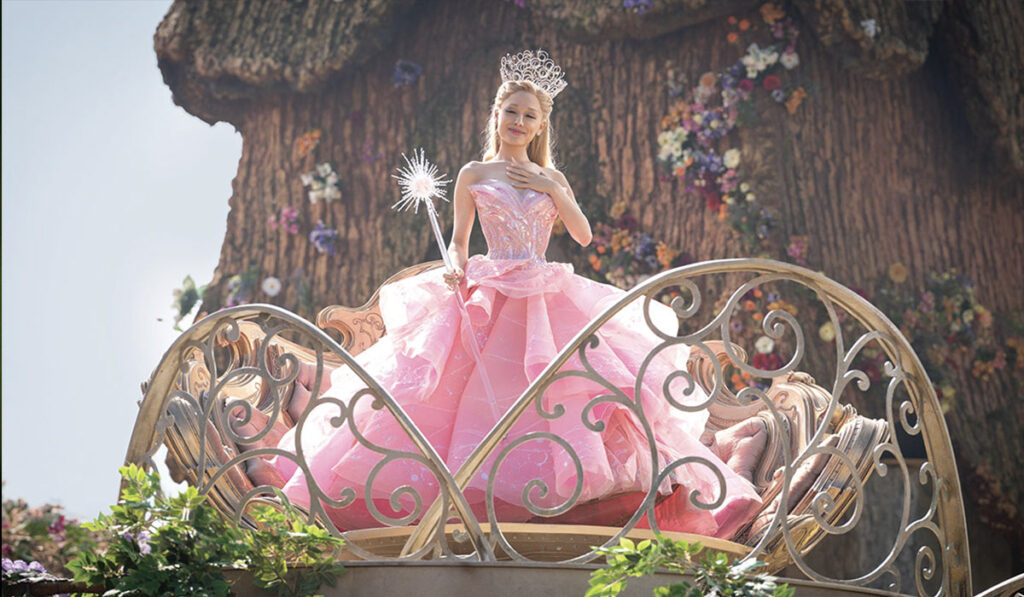
My Dead Friend Zoe is a terrifically funny and very thought provoking film. It isn’t one that will leave you easily and you won’t want it to. The leads are terrific and the script is very well written. It will make you want to call a friend you haven’t heard from in a while just to reminisce about what made you friends in the first place.

Grade: A