Home Blog Page 129

Series Review: ‘Loki: Season 2’ Provides the Unexpected


Director: Justin Benson, Aaron Moorhead, Michael Waldron
Writers: Eric Martin, Michael Waldron
Stars: Tom Hiddleston, Owen Wilson, Gugu Mbatha-Raw

Synopsis: The mercurial villain Loki resumes his role as the God of Mischief in a new series that takes place after the events of โ€œAvengers: Endgame.โ€


Loki had a magnificent freshman season. Their sophomore effort confirms the show is the best Marvel series, by far. While the first season was soaked in its well-regarded, irreverent mischievousness, the second season abandons some of that dark playfulness for deeper, richer themes. The filmmakers behind the shape-shifting trickster, easy to love but hard to embrace, have found that sweet spot where Loki has begun to see his soul and redemption arc brought out by his new partner while his nefarious nature is always near the surface.

The sophomore season of Loki (Tom Hiddleston) starts with the titular character jumping through different variant timelines after Sylvie (Sophia Di Martino) kills Victor Timely, AKA the notorious He Who Remains (Jonathan Majors) in last year’s finale. His death caused a splintering of variant timelines, creating major internal problems for the bureaucratic organization known as the Time Variance Authority (TVA). Not only are lines drawn and sides chosen, but Sylvie’s actions have caused a branching off of thousands of timelines, something the organization is meant to stop and protect the one true sacred timeline.

This was all part of He Who Remains’ plan, as the Multiversal War caused him to create the Sacred Timeline and the TVA to protect it. However, we discovered that everyone is a variant, even the leading players like Loki’s new BFF, Mobius (Owen Wilson), Hunter B-15 (Wunmi Mosaku), and even Ravonna Renslayer (Gugu Mbatha-Raw). Heck, it seems like Miss Minutes (voiced by Tara Strong), the He Who Remains AI creation, is the only original, even though she’s been through various updates over the years.

That sets up the story. While two different factions debate the merits of keeping or eliminating timelines, Loki and Mobius are set to chase down Sylvie, Ravonna, and Miss Minutes to protect everyone, not just themselves. This sets the impressively darker tone and more decadent themes in Loki’s second season as they debate faith, control, and, above all else, the value of human life, no matter the variant.

What I admire about the second season of Loki is that creator Michael Waldron doesn’t get bogged down in the trappings of the season finale; he cuts the cord immediately. Waldron could have spent the entire season trying to bring Loki back to the Sacred Timeline but wisely cuts to the chase in the first episode, having Loki jump back into the original future quickly. Otherwise, you’d have abandoned what made the first season enjoyableโ€”the buddy chemistry between Hiddleston and Wilson.

What makes this season so interesting is that Marvel embraces Loki’s antihero character, which sets up the plot and slowly transforms his character into something gradual, heartfelt, and empathetic. For instance, Sylvie saw timelines as a source of control for uncaring and cold government officials last season, while Loki understood there was a greater good. That’s where Waldron and company begin to fold into those themes we talked about above, something that the film The Creator played with last month (and even The Matrix), like freedom of choice versus conformity, individualism versus collectivism, existentialism, and most importantly, morality.

The cast is near pitch-perfect, with the addition of Ke Huy Quan, who plays the author of the TVA manual, O.B., who consistently delights by bringing a positive energy to the series’ darkest scenes. Then you have Blindspottingโ€™s Rafael Casal, who plays agent X-5, who questions the TVAโ€™s actions and finds solace in the life that was taken from him (think Joe Pantolianoโ€™s Cypher in The Matrix), like being the star of a 70s star of a shlock horror film. 

And, of course, we need to address the elephant in the room: Jonathan Majors’s role not being cut in Loki reportedly because filming had already wrapped well after the abuse allegations surfaced. (Producer Kevin Wright was also quoted saying Majors wonโ€™t be recast because he was hesitant to do so without knowing how the case would play out.) I know the late Roger Ebert made a famous point to his partner Gene Siskel about being able to separate them two decades ago. Still, you canโ€™t watch Loki with Majors in the scene without the alleged issues of domestic violence popping into your head. Still, Majors is a gifted talent, and his turn as Victor Timely is very good here, showing some of the innocence of Timely before the change of personas. 

However, if you can get past the real-life issues of Majors, the show is great fun with its combination of mind-blowing storytelling and disarming charm from the cast. The series is a creative burst of fresh air, embracing the famous comic’s limitless storytelling and using the plot of branching timelines to keep viewers on the edge of their seats.

Frankly, Loki uses the multiverse storyline better than most of Marvel’s famed filmography. With multiple jaw-dropping moments that keep you guessing and knowing the unexpected can be coming at every turn, that’s a rarity in television, where networks and streaming services want to do nothing else but follow the episodic rule book step by step. Loki is more morally complex, engaging, even divisive, and suspenseful than anything Marvel has done in recent years.

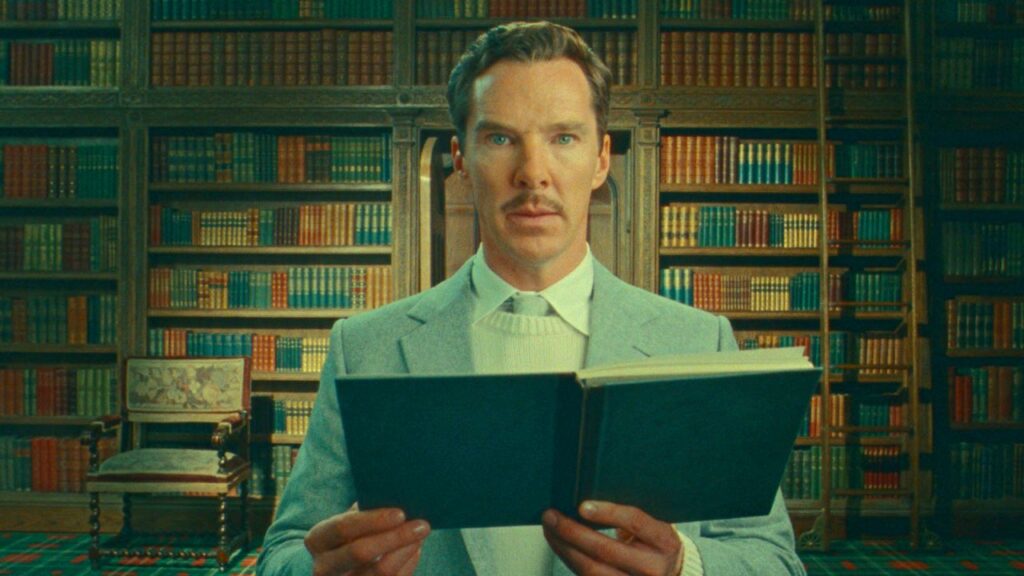
Grade: A-

Podcast: Remembering Michael Gambon / Movies About AI – Episode 554

This weekโ€™s episode is brought to you by Koffee Kult. Get 15% OFF with our code: ISF

This week on the InSession Film Podcast, using The Creator as inspiration, we talk about our favorite movies featuring artificial intelligence! We also remember the late-great Michael Gambon and discuss Martin Scorsese’s comments about indie films.

Review: The Creator

On that note, check out this week’s show and let us know what you think in the comment section. Thanks for listening and for supporting the InSession Film Podcast!

– Martin Scorsese Comments (4:13)
Last week, our beloved Martin Scorsese talked about how he doesn’t like the term “indie film” because it offers up a stigma that may keep some from seeing them, and that he hopes theaters embrace them as they do blockbusters. While he makes some great points, there’s some missing context that he didn’t have time to articulate in a 60-second red carpet interview. So, we felt compelled to talk about how he’s right, but also how it’s more complicated than hoping theaters play “indies” as much as the bigger movies.

– Remembering Michael Gambon (26:39)
Last week’s news on the passing of Michael Gambon was sad to hear. He’s arguably best known for his theatrical work (an absolute legend in that arena), but for us film nerds he’s going to be remembered for playing Albus Dumbledore in the Harry Potter franchise. His take on the character was slightly different than the late-great Richard Harris, but one that was appropriate and remarkably endearing. What’s interesting, however; is how his performance as Dumbledore juxtaposed many of his other film roles where his characters were a bit sleazy. Regardless, though, he was always magnetic on screen and he will be deeply missed.


RELATED: Listen to Episode 516 of the InSession Film Podcast where we discussed our Top 10 Movies of 2022!


– AI in Movies (1:01:38)
The Creator may have been presumptuous with its use of artificial intelligence, however; we thought it would be a great excuse to talk about how films have used it over the years. Starting with Metropolis back in 1927, a fantastic film that was decades ahead of its time, AI has been a staple of sci-fi movies. Some have been about AI directly, while others have simply used it as a tool for larger exploration, but either way it’s been a fun trope in cinema. And in this conversation, we talk about some of our very favorite examples of artificial intelligence in film.

– Music
Dumbledore’s Farewell – Nicholas Hooper
Tears in the Rain – Vangelis

Subscribe to our Podcasts RSS
Subscribe to our Podcasts on iTunes
Listen on Spotify
Listen on Stitcher
InSession Film Podcast – Episode 554

Next week on the show:

Wes Anderson Roald Dahl Shorts

Help Support The InSession Film Podcast

If you want to help support us, there are several ways you can help us and we’d absolutely appreciate it. Every penny goes directly back into supporting the show and we are truly honored and grateful. Thanks for your support and for listening to the InSession Film Podcast!

VISIT OUR DONATE PAGE HERE

Movie Review: ‘Saw X’ Revives a Stale Series


Director: Kevin Gruetert
Writers: Pete Goldfinger and Josh Stolberg
Stars: Tobin Bell, Shawnee Smith

Synopsis: A sick and desperate John travels to Mexico for a risky and experimental medical procedure in hopes of a miracle cure for his cancer only to discover the entire operation is a scam to defraud the most vulnerable


When Saw opened up at the 2004 Sundance Film Festival it took the world by storm, the buzz coming from this mysteriously original horror film echoed all the way to even my 7th grade class room and this was before the internet that we know today. When it hit theaters that Halloween season it was a mega hit with the ultimate mouth to the floor reaction that hadnโ€™t been seen since 1996โ€™s Scream, and as we know in Hollywood, what works once must work again and again and again and just when you think it cannot work again; it barely does and then takes a breath. 

From 2004-2010 we got a new installment into the Saw series with seven straight films, each film opening in first place until the fifth one came out. Its competition the year Saw 5 came out and to boot it to 2nd place, High School Musical 3. By then the steam was up on the series and the โ€œtorture pornโ€ category of this type of horror film was on its way out. Eventually the movies did end for a while after the abysmal seventh chapter, ironically named โ€œThe Final Chapter.โ€ This lasted for about seven years until the weird eighth and forgettable chapter that was Jigsaw. Again, the series would stay dormant for four years until it got a ninth chapter with a odd boost of star power from Chris Rock and Samuel L. Jackson with Spiral, another weird entry that is odd but not memorable.

With the announcement of Saw X last year, one could only imagine where it could or would go, and then tonight after watching it Iโ€™m truly glad to report back, this was a big swing and a hit for a franchise that eventually became its own punchline. The tenth installment is a huge breath of fresh air and Iโ€™m extremely happy to see critics embracing this as much as they did the original. Fans on the other hand, we shall see- because what this one does so right is what the sequels forgot to do. It creates a story with these characters. In this case, when characters are killed off you feel something for them. While this was the base formula for Saw 2, it got muddled at the halfway mark, and from there onward, the remaining sequels were simply ย  mind numbing with the amount of red shirts they would bring in to just die a whole two minutes later.ย 

The last time a Saw movie did this was the original film, and what I mean by that is that this movie builds its world. Its story line, its characters are genuine and it takes its time in doing so. ย  even get an opening trap to this film because the initial focus is on world building. What we do get is a daydream trap but it’s never brought to fruition. In the nearly two hour runtime, we donโ€™t get a trap until almost the 50 minute mark, and honestly- it works for me, for this film, and the series that once relied only on the traps themselves and not the story. This movie is so much like its original counterpart that it is the ultimate love letter to itself, and is the perfect actual โ€œFinal Chapterโ€ if it were to become it, because Iโ€™m not really sure where the series could go from here without a full on remake.ย 

Of course one couldnโ€™t talk about this movie without talking about Tobin Bell and the wonderful return of Shawnee Smith as Amanda, whose exit in Saw 3 was massively felt by a lesser Detective Hoffman character taking over. It was so nice to see the chemistry that theyโ€™ve developed between these two characters over the last 19 years. 

So, should you watch all 9 movies before you go into this? If youโ€™d like. Do you have to watch all 9 movies before you go into this? Absolutely not. Saw X is actually set in between Saw and Saw 2. So no, you donโ€™t have to watch all 9 (but go ahead, who am I to dictate that for you). What is really refreshing about a nearly two decade long franchise to come back with something that feels fresh and different is that the writers did it the right way (unlike last yearโ€™s Halloween Ends that was such a swing and giant miss that itโ€™s universally panned by critics and fans alike) meaning that what they could have done here is given us another run of the mill sequel but instead they took the liberty to craft a story based on what made the original so great and bring in characters to support the story and not take it over.

So whether a fan of the franchise or a casual movie goer, as long as youโ€™ve seen the first Saw, go see Saw X. You will have a blast if you can put on your 2004 glasses and enjoy the holiday season.

Grade: A-

Movie Review: ‘Flora and Son’ is Grounded and Genuine


Director: John Carney
Writer: John Carney
Stars: Eve Hewson, Jack Reynor, Joseph Gordon-Levitt

Synopsis: It follows Flora, a single mom who is at war with her son, Max. Trying to find a hobby for Max, she rescues a guitar from a dumpster and finds that one person’s trash can be a family’s salvation.


Overall, Flora and Son will be your least favorite John Carney film, but it may be the most relatable and honest. It also features the best performance in any of Carneyโ€™s films from Eve Hewson. Her off-key and inharmonious character gives the viewer some grounded discord that sets Carneyโ€™s film apart from the rest of his filmography. 

The story follows Flora (Hewson), a single mother stuck in arrested development. Flora and her ex-boyfriend Ian (Jack Reynor) are co-parenting her troubled teenage son, Max (Orรฉn Kinlan), who has been detained several times for fighting and petty theft. A local guard (Don Wycherley) wants Max to join a local boxing club to keep him out of trouble because the next time heโ€™s arrested, he will serve some time in a juvenile detention center.

The issue is that Flora and Ian had Max when they were very young, and both parents are still trying to find themselves, just like Max. Ian is between jobs, and Flora still loves the beats of club music, where she dances and takes strange men home to her apartment, not considering if Max is there. In fact, Flora is so self-involved that she forgets her sonโ€™s birthday.

To rectify that, Flora finds a string guitar, pays someone to fix it, and gives it to Max as a gift. After the peace offering blows up in her face, she takes guitar lessons herself. Flora finds a handsome music teacher named Jeff (Joseph Gordon-Levitt) online for $20 a session so she can start strumming the strings and find some purpose in her life.

Flora and Son was directed by John Carney, the ingenious maestro behind such musical films as Once, Begin Again, and the cult favorite Sing Street. His latest work is more like the love child of Sing Street and Once in tone, with fewer musical numbers and gritty artistry. It is more focused on depicting the aftermath of the characters’ failed musician dreams (Jeff), the youthful exuberance of musical aspirations (Max), and the redemption music can offer (Flora).

Carneyโ€™s script deals with that in-between with Hewsonโ€™s Flora, who had a child so young sheโ€™s still trying to find her way, stunting the progress of her flesh and blood. Whatโ€™s exciting about this concept is that Flora is openly transparent and honest with everyone around her, which makes for a refreshing experience for the audience.

This becomes even more apparent as Flora and Jeffโ€™s practice sessions progress. Carney has created a bond with these sessions and weekly meetings that begin to be more therapeutic than educational. This offers vulnerable characters self-reflection, providing a connection when those expressions of personal emotional connection are needed.

As they continue to talk, the boundary from education to therapy is crossed into something intimate. Imagine how personal writing your song can be, and collaborating with someone you are attracted to can be euphoric. Carney incorporates some very clever camera editing maneuvers to evoke these emotions as if Jeff were in the room with Flora.

While we can wax poetic about the utterly charming chemistry between Flora and Jeff, the wholly unapologetic performance by Hewson keeps the film from floundering in its third act, practically nose-diving headfirst into mediocrity. Hewsonโ€™s Flora is a natural, authentic, and, at times, almost despicable mother who finally finds her way when faced with an opportunity to change her life, make a choice, and ultimately show some overall maturity. Case in point: Hewson is a character thatโ€™s three-dimensional, unvarnished, and hard to like  in one moment but charming the next. 

My big issue with Flora and Son, however, is that songs swoon exempt the final number that’s meant to tie everything together. You’ll watch Jeff and Flora heat up the screen and be vibrant when Max begins to assemble his dance beats. 

However, the film shifts into something overtly sentimental, and the filmโ€™s most significant musical number it ends with is underwhelming, even if itโ€™s meant to change the movie into something heartwarming that feels cheaper than anything Carney has ever done.

Ultimately, Flora and Son offer an experience unique to Carneyโ€™s cinematic worldview, where music can bring people together. It may not be Carneyโ€™s best work, but itโ€™s his most grounded and enjoyable. 

Grade: B-

Podcast Review: The Creator

On this episode, JD and Brendan review Gareth Edwards’ new film The Creator, starring John David Washington! As is the case with all of Edwards’ films, it’s visually stunning to look at and incredibly immersive as a world building exercise. But how does the film function as a story? Are the characters compelling? These are questions we constantly keep asking with Gareth Edwards and The Creator is no different.

Review: The Creator (3:00)
Director: Gareth Edwards
Writers: Gareth Edwards, Chris Weitz
Stars: John David Washington, Gemma Chan, Allison Janney, Madeleine Yuna Voyles

Subscribe to our Podcasts RSS
Subscribe to our Podcasts on iTunes
Listen on Spotify
Listen on Stitcher
InSession Film Podcast – The Creator

Women InSession: Critic Spotlight – Shadan Larki

This week on Women InSession, we continue our critic spotlight series as we get to know Shadan Larki further and talk about her passions and journey as a film critic! Shadan is absolutely wonderful as a critic and as a person. Not only can she be heard on this show, but she’s made appearances on Chasing the Gold as well. So, it was really fun getting to hear her talk about her cinephile journey.

Panel: Kristin Battestella, Shadan Larki

On that note, check out this week’s show and let us know what you think in the comment section. Thanks for listening and for supporting the InSession Film Podcast!

Subscribe to our Podcasts RSS
Subscribe to our Podcasts on iTunes
Listen on Spotify
Listen on Stitcher
Women InSession – Episode 56

To hear this Extra Film episode and everything else we do, download our apps on the Amazon Market for Android and the Podcast Source app on IOS devices. The mobile app covers all of our main shows, bonus podcasts and everything else relating to the InSession Film Podcast. Thanks for your wonderful support and for listening to our show. It means the world to us.

Movie Review (NYFF 2023): ‘Strange Way of Life’ Focuses Only on the Looks


Director: Pedro Almodรณvar
Writer: Pedro Almodรณvar
Stars: Pedro Pascal, Ethan Hawke, George Steane

Synopsis: After twenty-five years Silva rides a horse across the desert to visit his friend Sheriff Jake. They celebrate the meeting, but the next morning Jake tells him that reason for his trip is not to go down the memory lane of their friendship.


Beautiful garments and shots are all over Pedro Almodรณvarโ€™s most recent short film, Strange Way of Life. But he holds back on answering the tough questions from the complex relationship of its characters, which are brought to life via dedicated performances by Pedro Pascal and Ethan Hawke.

In 2020, Pedro Almodรณvar blessed the world with a brilliant short film (which should have been nominated for the Oscar in its category and eventually won it) and his first English language project, the Tilda Swinton-led The Human Voice. The short seemed like a halfway point for the Spanish directorโ€™s most personal works to date, Pain and Glory and Parallel Mothers. These three projects made me think that after decades of providing influential and generational works for filmmakers across the world with his melodramas, he is heading for a more mature set of films that explore his own past (alongside his countryโ€™s history), as well as the human condition in a clearer note, one that demonstrated defined and sharper notes than what we have seen before. But his latest project, a Yves Saint-Laurent short of the Western genre, titled Strange Way of Life, doesnโ€™t seem to depart from that recent trajectory. 

Pictured through the lens of one of Spainโ€™s most artistic auteurs in Pedror Almodรณvar, Strange Way of Life is a story about lovers turned rivals who later connect after a series of unfortunate events. They were separated by their desire for something more in life. They meet once again, noticing that, even though they are currently living totally different personas, they still hold on to their memories together โ€“ lighting a candle that hasnโ€™t burned in many years. We have seen similar stories like this. Most of them arenโ€™t set in the Wild West. Most of these tales are told in modern settings, varying in their time of release. If one director tried their hand at reworking such to a time when outlaws and cowboys were running up and down the saloon, Almodรณvar would be a proper fit, as heโ€™s known for having not only a specific style to his films, which is highly present in this film (to a fault) but also handling his melodramatic affairs with dashes of complexity. 

The main characters in Pedro Almodรณvarโ€™s latest short are Silva (Pedro Pascal) and Jake (Ethan Hawke), both appearing in dapper attire courtesy of Yves Saint Laurent. It has been almost three decades since they had their last emotional experience. And a lot has happened since then. They have similar lives with partners they hold dear and children to care for. Jake is a sheriff; he has his eyes on the bandits and runaways so that they donโ€™t cause any trouble on his โ€œturfโ€. Meanwhile, Silva has a more calm life in comparison; heโ€™s a rancher in the hills. However, as expected, they will soon reconnect after a sticky situation that involves both of them occurs. Silvaโ€™s son, Joe (George Steane), has been accused of killing Jakeโ€™s sister-in-law. This creates a psychological and emotional debacle for both parties. 

Their โ€œreunionโ€ is forged by a tragedy, yet it feels as if it was fate that gathered all of these people together. As the time comes for the two to see eye to eye after almost thirty years, a couple of questions pop into your head. What will Silva do to save his son from a gruesome fate? What will be Jakeโ€™s reaction to his appearance and Silvaโ€™s connection behind the death of his sister-in-law? A dinner, some red wine, and conversations about their past almost make Jake excuse Joeโ€™s action. But he concludes that Silva uses such to keep his son safe. The pairโ€™s relationship fractures even more, causing them to stand off against one another as the anger fuels their body, while on the inside, they still have feelings for one another. 

From the luscious costumes and cinematography by frequent Almodรณvar collaborator Josรฉ Luis Alcaine, Strange Way of Life has a beautiful look. The Spanish filmmaker always has an eye for creating fabulous designs that pop because of the color palette and are lifted by the intimacy (and, in some occasions, eroticism) in the story. And with Yves Saint Laurent backing up the project, of course, you will have some fantastic cowboy looks that plenty of people would love to rock โ€“ although I donโ€™t think they will pull it off like the filmโ€™s cast here. If thereโ€™s one specific factor that I can praise, it is that Almodรณvar still has the gift to make his movies have a similar atmosphere and aura yet separate them from one another in his approach to each respective story. Not many directors have that ability; he remains one of the few who achieves it on a more consistent and gratifying basis. 

However, unfortunately, the reason why this short film doesnโ€™t work is because Almodรณvar seems to be holding himself back and relying more on the aesthetic of this fashion design company-concocted Western. He doesnโ€™t seem to be completely interested in answering those questions that linger in your head, leaving the complexity of his melodramatic directorial touches and opting for a more visual banquet. And, as I mentioned before, he nails it entirely on that aspect. But you arenโ€™t given much to care about, as the intricate story beats of Silva and Jakeโ€™s relationship are too flimsy. On an emotional level, thereโ€™s nothing to hold on to. The thirty-minute runtime doesnโ€™t do justice to this story’s potential. 
Since this is a minor project compared to his other works, you wonโ€™t be getting all the details from their relationship. Yet, that doesnโ€™t mean you have to leave out what makes these two people click โ€“ what ignited their hearts in the first place โ€“ mainly since the story relies on reuniting these two souls back, whether by chance or forced. After giving us The Human Voice and Parallel Mothers in this decade alone, two projects that are among his best to date, I thought he would continue his mature approach and keep delivering some self-analyzing and determined works. Strange Way of Life may be ambitious, but the restraint in its characters and storyโ€™s development keeps it from becoming something of greater value than its expensive garments.

Grade: C-

List: Top 10 Movies of 2001

This week on Episode 553 of the InSession Film Podcast, we continued our year-by-year retrospective series by taking a look at 2001, a very strong year on the whole. In fact, it may be one of the best years for movies that doesn’t get the recognition it deserves. Not only does 2001 feature some all-time films that resonate deeply with us, but it has some incredible depth. In particular, we had a lot to say about The Royal Tenenbaums, A.I. Artificial Intelligence and In the Mood for Love, three films that would rival any other year as far as top end films go. Which is to say, there was plenty to consider and we had an amazing time talking about it all on the show. That said, what would be your Top 10?

NOTE: We spend most of our time only discussing our Top 10 movies of 2001, however, as you’ll see below, we have listed our full Top 20 lists from that year.

JD

1) The Royal Tenenbaums
2) A.I. Artificial Intelligence
3) In the Mood for Love
4) The Lord of the Rings: Fellowship of the Ring
5) Ocean’s Eleven
6) Mulholland Drive
7) Memento
8) The Devil’s Backbone
9) Amรฉlie
10) Moulin Rouge!

11) Black Hawk Down
12) The Man Who Wasn’t There
13) Waking Life
14) Ghost World
15) Training Day
16) Monsters Inc.
17) Hedwig and the Angry Inch
18) The Others
19) Fat Girl
20) Wet Hot American Summer

Brendan

1) A.I. Artificial Intelligence
2) The Royal Tenenbaums
3) In the Mood for Love
4) The Devil’s Backbone
5) Cure
6) Ocean’s Eleven
7) The Lord of the Rings: Fellowship of the Ring
8) Memento
9) Wet Hot American Summer
10) Black Hawk Down

11) Ghost World
12) Mulholland Drive
13) Monsters Inc.
14) Gosford Park
15) Waking Life
16) Training Day
17) American Pie 2
18) In the Bedroom
19) Harry Potter and the Sorcerer’s Stone
20) Legally Blond

Hopefully you guys enjoyed our lists and if you agree or disagree with us, let us know in the comment section below. Clearly there are a lot of other contenders from 2001 that battled for our lists, that just missed the cut. That being said, what would be your Top 10? Leave a comment in the comment section or email us at [email protected].

For the entire podcast, click here or listen below.

For more lists done by the InSession Film crew and other guests, be sure see our Top Movie Lists page.

Criterion Releases: October 2023

All of the films coming out this month are part of the horror/suspense genre. From the time of silent films, these stories have been part of the cycle of movies being shown to audiences. It is classical and always attractive to make. Two of these horror classics are being re-released for 4K, two more are from the 21st century, and a three-film set honors a director who was never revered during his lifetime. The horror films of the month from Criterion are worth seeing.

Tod Browningโ€™s Sideshow Shockers (1925-1932)

Tod Browning started as a vaudeville and circus performer before being hired to act, write, and direct different melodramas where his past was part of the stories he made. In an era before the Code came in and censored certain topics, Browning told stories of the exotic, psychosexual, and inner beauty which was way ahead of his time. Three of his films are being brought out for Criterion: Freaks, The Mystic, and The Unknown. 

Made during his tenure with MGM, these films unleashed his eccentric, shocking, and downtrodden characters which stand the test of time. Freaks is considered his magnum opus and the most direct from his past life in the circus, portraying those characters with disabilities that were sideshow acts while also being compassionate about them. Nearly forgotten, Browningโ€™s legacy has built up a cult following which endures to this day.ย 

Donโ€™t Look Now (1973)

The first of two re-releases is Nicholas Roegโ€™s supernatural masterpiece starring Donald Sutherland and Julie Christie. After the drowning of their daughter, the couple relocates to Venice for work when images suddenly appear that foreshadow what is coming to them. Roegโ€™s story of grief and the memories that haunt us after is beautifully shot and edited, keeping viewers off their toes on what could be the actual thing that is creeping up behind them. It is the supernatural at its finest.ย 

Videodrome (1983)

The second re-release is a staple of David Cronenbergโ€™s filmography, a cyber tech body horror tale of cable TV and the disturbing connections it can have. James Woods is a TV producer looking for new programming for the channel and sees this disturbing show he wants. It is surreal and quite visually haunting, causing the necessary shock Cronenberg is known to produce as in Scanners and The Fly. TV is certainly today โ€œthe new fleshโ€ that has controlled the publicโ€™s mind.ย 

The Others (2001)

Director Alejandro Amenรกbarโ€™s gothic horror story was also his first English-speaking film following the acclaim of Open Your Eyes, which was remade the same year as Vanilla Sky. Nicole Kidman plays a mother who stays with her two children on an island in 1945 towards the end of WWII. When three new servants move into the home, a strange phenomenon occurs in which the dead begin to reach out to the living. The darkness that shrouds everyone creates a sprint-tingling sensation for viewers that still seeps through twenty-two years after its release.ย 

Nanny (2022)

The debut of director Nikyatu Jusu features a young Senegalese immigrant (Anna Diop) to the United States who has left her son to make money as a babysitter for wealthy white couples. Willing to take some of the exploitation by them, memories of anger come upon her which threatens to destroy her from within. It won the Grand Jury Prize at the Sundance Film Festival, a first for a horror film, and displays a unique power that makes Jusu a director to keep an eye on.

Follow me on Twitter: @brian_cine (Cine-A-Man)

Podcast: 2001 Retrospective / Top 10 Movies of 2001 – Episode 553

This weekโ€™s episode is brought to you by Koffee Kult. Get 15% OFF with our code: ISF

This week on the InSession Film Podcast, we continue our 2001 Retrospective as we discuss the year in cinema and dive into our Top 10 Movies of 2001! Plus, a few thoughts on the new WGA deal that was just announced.

Review: The Royal Tenenbaums

On that note, check out this week’s show and let us know what you think in the comment section. Thanks for listening and for supporting the InSession Film Podcast!

– WGA / Golden Globes News (3:58)
Before we dive into our 2001 Retrospective, we began by talking about the WGA’s new deal with the AMPTP and ending their strike. It’s a short-term deal, but it’s one with vital protections. We also take a moment to discuss whatever the hell the Golden Globes are up to with these new, dumb categories.


RELATED: Listen to Episode 516 of the InSession Film Podcast where we discussed our Top 10 Movies of 2022!


– 2001 Retrospective (10:36)
As always, we begin our retrospective by talking about the year as a whole and the movies that shaped its trajectory. It’s a year full of incredible comedies. Some middling action films. A few iconic animated movies. And its movies up at the top…well, they’re all-timers.

– Top 10 Movies of 2001 (44:39)
2001 is perhaps the most underrated year in cinema history. It’s often not in the conversation for “Best Movie Year” but if you ask us, it should be. There are some profoundly stirring films up at the top. It has incredible depth. The year is well rounded with an eclectic mix of genres and types. It’s as good as any year we’ve seen in the last 30 years and has some of our personal favorite films ever made.

– Music
Fellowship – Howard Shore
Elephant Love Medley – Nicole Kidman, Ewan McGregor

Subscribe to our Podcasts RSS
Subscribe to our Podcasts on iTunes
Listen on Spotify
Listen on Stitcher
InSession Film Podcast – Episode 553

Next week on the show:

The Creator

Help Support The InSession Film Podcast

If you want to help support us, there are several ways you can help us and we’d absolutely appreciate it. Every penny goes directly back into supporting the show and we are truly honored and grateful. Thanks for your support and for listening to the InSession Film Podcast!

VISIT OUR DONATE PAGE HERE

Movie Review: ‘Reptile’ Never Fails To Entertain


Director: Grant Singer
Writers: Grant Singer, Benjamin Brewer, and Benicio del Toro
Stars: Benicio del Toro, Justin Timberlake, Eric Bogosian

Synopsis: Nichols, a hardened New England detective unflinching in his pursuit of a case where nothing is as it seems, one that begins to dismantle the illusions in his own life.


Reptile is an atmospheric Southern crime thriller dripping with an ominous and obsessive style that gradually seeps under the skin, keeping the viewer on edge and making them uneasy. Grant Singer’s haunting tale excels when the script delves into fear and explores how good people create a moral gray area to unburden themselves of the guilt of doing very bad things.

The story follows Tom Nichols (Benicio del Toro), a once-celebrated Philadelphia detective who has taken a job in a small township. His wife, Judy (former del Toro Excess Baggage co-star Alicia Silverstone), arranged the position, and his uncle, who suffers from multiple sclerosis (Eric Bogosian), secured the job after a scandal back east left a bad taste in everyone’s mouth. That move pays off when Nichols is assigned to investigate the scandalous murder of a local real estate agent.

Her name was Summer (Matilda Anna Ingrid Lutz), and she was separated but dating a wealthy real estate magnate, Will Grady (Justin Timberlake), who discovered her brutally murdered body in a house they were both preparing to put on the market. Summer was stabbed so brutally that the murder weapon was left behind, lodged in the victim’s pelvis with sheer force. Assisting in the investigation is Nichols’s partner, Detective Dan Cleary (Ato Essandoh), another officer with aspirations beyond the police department (Domenick Lombardozzi, exceptional here), and a mysterious sleuth (Michael Pitt) with an agenda.

This is Singer’s directorial debut after directing music videos for some of the industry’s mega-stars, including The Weeknd, Sky Ferreira, Lorde, Sam Smith, and Skrillex. In short, the man knows style. Still, what makes his debut feature so surprising is its autonomy. From an ominous climb up a dark staircase to a shadowy figure trapping its prey, minimalist symmetry is clean and conveys a visual sense of order and balance. Yet, this is all an act to give the appearance of order when what is happening around the characters is nothing but sinister.

The film’s title refers to the cold-blooded nature of people. In the first few minutes, a character finds a snake that has shed its skin, a metaphor for how some can shed their covers, exposing their cruel nature. Singer co-wrote the script with del Toro, and Benjamin Brewer has infused this discerning story with that sentiment, loading the frames with the subtlest of symbolic imagery. By the time the third act rolls around, the smallest revelations are enhanced by the carefully meticulous plot, the unsettling cinematography of Mike Gioulakis, and the sinister musical score by Yair Elazar Glotman and Arca.

Generally, I never have an issue with a movieโ€™s running time because movies have to be as short or long as they need to be. As Roger Ebert would say, no great film is long enough, and no bad film is short enough. While this review is very positive, Reptile has a longer-than-expected run time, but upon a second watch, most of it was needed to understand the plot. With the exception of the puzzling beginning dinner scene (and the divisive ending sequence), the filmโ€™s visual and pitch-perfect pacing hardly make the 132-minute running time barely noticeable and never drags along. While some subplots within the first two acts seem like filler, everything works out in the end.

Even at Reptileโ€™s weakest moments, the film never fails to entertain, even if the ending has a giant plot hole involving witnesses looking through a window, which can be maximized based on how you interpret the conclusion, which is meant to create discussion points.

Regardless of the perspective, Reptile can gracefully navigate the viewer with a steady hand thanks to del Toro’s magnetic performance, which effortlessly seizes your attention. Disregard those critics intent on comparing Reptile to the king of underbelly crime thrillers, David Fincher, which is an unnecessarily high standard. Movies deserve to be evaluated on their own merits, and they have entirely missed the point because they were not carefully paying attention.

Grade: B

Movie Review: ‘The Creator’ Reveals a Doomed Future in Our Present


Director: Gareth Edwards
Writers: Gareth Edwards and Chris Weitz
Stars: John David Washington, Ken Watanabe, Gemma Chan

Synopsis: Against the backdrop of a war between humans and robots with artificial intelligence, a former soldier finds the secret weapon, a robot in the form of a young child.


Let’s get some housecleaning out of the way immediately. The Creator is not the original film that many outlets have claimed it to be. Let’s face it; it’s the classic cliche, most notably lifted from Dances with Wolves, where a member of the powerful military trades sides for the greater good. And that’s not to say Gareth Edwards’s visionary science fiction epic isn’t worthy of its praise. It’s bold and affecting, emotional, and even profoundly spiritual. Ultimately, it’s an action-packed movie with more on its mind than meets the eye. 

In the sometime-distant future, an uprising of artificial intelligence will form a rebellion against the world. Mainly, it’s against the United States after the AI soldiers set off a bomb, killing thousands and leaving a crater the size of SoFi Stadium teeming with a deadly amount of radiation. Of course, the government powers cannot look themselves in the mirror, taking responsibility for their hand in the civil war and choosing to blame China for its blatant disregard for AI and the overproduction of robots worldwide.

That’s where Joshua (John David Washington), an undercover special forces agent, comes into play. He’s been tasked with locating the mysterious architect known as The Creator, who, rumor has it, is developing a war to end humankind, leaving Earth to itself. After infiltrating one of the leaders of the uprising, Harun (Ken Watanabe), complicating matters is Joshua’s relationship with Maya (Gemma Chan), a human whom the AI race took in when she was a child (sound familiar?). Complicating things even further, Maya and Joshua are married and are expecting a child.

Yes, we’re pretty sure that’s against protocol. Still, this plot device gives the script its juice because Joshua’s cover is blown. The military begins peppering the rebel compound with a weapon called “Heaven,” which drops military-grade weapons from space, leaving Joshua with emotional scars that run deeper than his physical pain.

However, Joshua gets a second chance at happiness when military officers Andrews (Ralph Ineson) and Howell (a terrific Allison Janney) show a recording that holds special meaning to him and ask his help in infiltrating the facility, holding the weapon everyone is searching for.

Edwards wrote the script with his Rogue One scribe, Chris Weitz, an Academy Award nominee for About a Boy. Their focus is on a girl, an AI named Alphie, whom Joshua locates and who is the secret weapon. (The trailer reveals this within the first minute.) The plot is well-crafted, allowing the viewer to invest in the universal story of lost love, with Joshua going rogue with Alphie because he may have been the last person to see Maya alive.ย 

Janney’s Howell leads the chase and plays a ruthless badass (she has one of the film’s most poignant moments talking about her sons), making tough business decisions and continuously putting her soldiers in harm’s way. Her character is easily one of the best villains of the year. Ken Watanabe continues to bring his usual brand of gravitas to the role. His character is the moral counterpoint to Howell, but he has no qualms about doing what needs to be done. Both these performances further enrich the poignant nature of the film’s underlying subject matter.

While The Creator cannot truly be called original, the plot is essentially rebranded for issues today. However, the script’s basic structure is borrowed from past movies but now feels fresh and new because it taps into timeless themes that, unfortunately, have not changed. These themes revolve around the spawning of oppression leading to conflict and a lack of cultural understanding and tolerance. All of this is wrapped in an enthralling sci-fi saga elevated by the ideals of a mindful heart.

None of this would be possible without John David Washington’s enthralling portrayal of Joshua. It’s a performance that resonates deeply and can be felt, as Washington possesses his uber-famous father’s soulful gaze, enhancing the high-stakes relationship with Alphie. It’s a performance that may be underappreciated, but Washington has the charisma and ability to connect with the audience that few possess, which is often considered the nature of stardom.

The Creator is stunning, a beautiful piece of escapist cinema. It’s a visionary epic that relates more to our current world than any doomed future because we are already there.

Grade: A-

Movie Review: ‘The Nature of Love’ Sets Monia Chokri Apart


Director: Monia Chokri
Writer: Monia Chokri
Stars: Magalie Lรฉpine-Blondeau, Pierre-Yves Cardinal, Micheline Lanctรดt

Synopsis: Sophia’s life is turned upside down when she meets Sylvain. She comes from a wealthy family, while Sylvain comes from a family of manual workers. Sophia questions her own values after abandoning herself to her great romantic impulses.


There isnโ€™t a single more extraordinary filmmaker working in Quรฉbec today than Monia Chokri (some will say Denis Villeneuve, but heโ€™s out here making large-scale Hollywood blockbusters, so it may or may not count, depending on who you ask). Her first feature, A Brotherโ€™s Love (La femme de mon frรจre), is one of the most revelatory debuts this province has seen, perhaps since Villeneuveโ€™s August 32nd on Earth (Un 32 aoรปt sur terre). And her sophomore feature, Babysitter, takes parts of A Brotherโ€™s Loveโ€™s anxiety-fueled ultra-absurd scenes and cranks it up to a thousand. For some, it was too much. For me, it was 88 glorious minutes I will gladly watch again (and again), and one of the boldest productions Quรฉbec has seen during this new decade.

Not even a year after Babysitterโ€™s release, Chokri premiered her latest movie, The Nature of Love (Simple Comme Sylvain), at the Cannes International Film Festival โ€“ and now the film has finally hit our screens after months of anticipation. In this feature, Chokri dials down on the absurdity and instead offers a poignant, often lyrical, mediation on humanityโ€™s desire to love. It may very well be the best film released in Quรฉbec this year, but itโ€™s also one of the best dramedies of the year. Period.

If we want to analyze a directorโ€™s recurring motifs, Chokriโ€™s fascination with philosophy is a good place to start. It plays a significant role in A Brotherโ€™s Love but is even more prominent in The Nature of Love. Heh, and the English titles for both films end with LOVE, and both main characters are named Sophia, who study/teach philosophy. In The Nature of Love, Sophia (Magalie Lรฉpine Blondeau), teaches a philosophy class for seniors focused onโ€ฆlove but has difficulty communicating with her partner, Xavier (Francis-William Rhรฉaume). The biggest visual sign that they arenโ€™t in love is apparent from the beginning: the two donโ€™t sleep in the same room, even if they tell themselves they love each other before bed.

Sophia has to go to the summer cottage to supervise its renovations, where she meets Sylvain (Pierre-Yves Cardinal), an independent construction worker with an outlook on life that feels so freeing for Sophia that they immediately lock arms and have sex. Of course, you probably know where the movie will go from there, but thereโ€™s something in Chokriโ€™s picture that makes it stand out amongst the rest of most clichรฉd romantic comedies. 

For instance, she teams up with cinematographer Andrรฉ Turpin (best known for his collaborations with Xavier Dolan) and gives the movie a visual palette thatโ€™s so unlike anything weโ€™ve seen before, itโ€™s almost indescribable. Some of the visual cues feel evident, splashes of Michel Brault, Franรงois Truffaut, Jacques Demy, John Cassavetes, and even shots that feel plucked out of Denis Hรฉrouxโ€™s Valรฉrie are found. Turpin frequently uses crash-zooms to enhance the intimacy, not only in Sophia and Sylvainโ€™s relationship but in visually representing how the characters evolve as the movie continues to morph from light-hearted romantic comedy to absurd mumblecore, to then finish with an intimate drama examining not only โ€œthe nature of love,โ€ but the nature of life itself.

How Chokri frames her actors is the key The Nature of Love holds. Some shots donโ€™t feel as well-stitched together as others, particularly in a sequence where Sylvain and Sophia engage in primal screams, but thatโ€™s by design. There isnโ€™t a single visual moment in this film that doesnโ€™t feel important, whether itโ€™s setting the locations or representing Sophiaโ€™s internal monologues, which the audience tries to examine as she sits alone outside, smoking a cigarette, only for the movie to interrupt her moments of solitude with an unexpected event, or character, appearing in the frame.

Even the background noise feels essential and enhances our understanding of the world Sophia inhabits (and ร‰mile Sorninโ€™s score is impeccable). Family conversations with the different parents she encounters throughout the film, whether her mother (Micheline Lanctรดt), Sylvainโ€™s (Linda Sorgini) or Xavierโ€™s parents (Marie Ginette-Guay & Guy Thauvette), show different facets of the nature of love โ€“and life: whether itโ€™s heated family discussions at the dinner table (lord knows Quebecois love to talk loudly about anything and anyone) or brief, fleeting glimpses of a love that once existed, but is no longer there as disease progresses. Itโ€™s equal parts hilarious and devastating, striking a rare balance between comedy and drama that feels integral to how the film is shaped.

But itโ€™s also bolstered by incredible acting โ€“ Lรฉpine Blondeau gives the best performance of her career. She shares electric chemistry with Cardinal, who is equally charming and funny. The supporting cast is also excellent, with Chokri herself appearing alongside Babysitterโ€™s Steve Laplante in some of the movie’s funnier โ€“ and more awkward โ€“ scenes. Without spoiling anything, one of the filmโ€™s final scenes is The Nature of Loveโ€™s most integral and encapsulates its entire message.

Everyone will have a different definition of what โ€œThe Nature of Loveโ€ is, and Chokri smartly leaves room for interpretation. Those who are expecting the same level of absurdity found in A Brotherโ€™s Love and Babysitter may be disappointed, but thereโ€™s no denying how massively ambitious this picture is, not only for Chokriโ€™s incredible career as an artist but also for Quรฉbec cinema as a whole. Itโ€™s one of the funniest and most heartbreaking movies youโ€™ll see all year, and it cements Chokri as one to watch as a daring auteur who never made the same film twice and will seemingly continue pushing the boundaries of what modern Quรฉbec cinema can โ€“ and should โ€“ be.

Grade: A+

Podcast Review: The Royal Tenenbaums

On this episode, we begin our 2001 Retrospective by reviewing one of Wes Anderson’s greatest films in The Royal Tenenbaums! There are so many great films from 2001 and this is among the most defining of that year. It’s a film we’ve featured on the show several times before, but we’ve never given it a full discussion. We’ve now remedied that in one of our most thorough reviews to date.

Review: The Royal Tenenbaums (6:00)
Director: Wes Anderson
Writers: Wes Anderson, Owen Wilson
Stars: Gene Hackman, Gwyneth Paltrow, Ben Stiller, Luke Wilson, Owen Wilson

Subscribe to our Podcasts RSS
Subscribe to our Podcasts on iTunes
Listen on Spotify
Listen on Stitcher
InSession Film Podcast – The Royal Tenenbaums

Women InSession: Elia Kazan

This week on Women InSession, we take a look at the career for the classic filmmaker Elia Kazan, whose works include A Streetcar Named Desire, On the Waterfront, and East of Eden, among many others! He’s made some classic films that have stood the test of time, and that makes him a compelling figure in the history of Hollywood, but there are also controversies that surround him that complicate his legacy. And we do our best to get into all of that in the conversation.

Panel: Kristin Battestella, Zita Short, Amy Thomasson

On that note, check out this week’s show and let us know what you think in the comment section. Thanks for listening and for supporting the InSession Film Podcast!

Subscribe to our Podcasts RSS
Subscribe to our Podcasts on iTunes
Listen on Spotify
Listen on Stitcher
Women InSession – Episode 55

To hear this Extra Film episode and everything else we do, download our apps on the Amazon Market for Android and the Podcast Source app on IOS devices. The mobile app covers all of our main shows, bonus podcasts and everything else relating to the InSession Film Podcast. Thanks for your wonderful support and for listening to our show. It means the world to us.

Movie Review: ‘No One Will Save You’ is a Minimalist Thrill


Director: Brian Duffield
Writer: Brian Duffield
Stars: Kaitlyn Dever, Elizabeth Kaluev, Zack Duhame

Synopsis: An exiled anxiety-ridden homebody must battle an alien who’s found its way into her home.


What I enjoyed about Hulu’s No One Will Save You is that it gets right to the point. By the end of the first act, writer/director Brian Duffield stops pussyfooting around and immerses the viewer in a monster in the house picture that feels fresh and remarkably alive because of its anxiety-ridden plot and lead performance. A chiller where the horror isn’t just lurking around the corner but in the deepest parts of our brain.

That’s because of the performance from Kaitlyn Dever, who has no more than a few dozen words in the entire image and who’s not afraid to look rough, messy, and sweaty like any of us would be as we give chase to something that ranges from looking like a cute E.T. to a giraffe-sized praying mantis with ease.ย 

Very early on, Duffield’s script has the viewer on edge, as Dever’s Brynn Adams seems more isolated than most early twenty-something pretty twenty something to be. Brynn gets snide looks, and she hides at the sight of a middle-aged couple (Geraldine Singer and Dae Rhodes) pushing their way into their golden years. The poor girl seems to have no family, even friends, and, in particular, is alienated (remember that word) by the entire community. 

What did Brynn do? Well, that is half the suspense and mystery that lay the foundation. The morning before, Brynn found a small burnt-out circle in her yard, thinking she had to water it because the grass must have died. Later that night, she sees something inhuman outside her door just after her house loses power (including even the phone). The first thirty minutes are as obsessively intense and nail-biting as any thriller you will find this year.

Duffield is a master of alienation, creating dread with every single creak, shadow, light, and pin-sized nail drop from a windowsill. Along with the help of director of photography Aaron Morton, Duffield’s film showcases his keen eye for evocatively ominous visuals, such as the beautiful overhead shot tracking a bus and revealing numerous front lawns with the same circle that Brynn has in her front yard. Each image is meticulously integrated, nicely avoiding your standard cliche jump scares.

While No One Will Save You does delve into some tropesโ€”running from a monster in a house and finding yourself stuck, hiding under the bed, others being overtaken by something unexplainableโ€”they are executed well. It’s a thriller meant to entertain. While we can complain about the generic use of film techniques in mainstream films nowadays, you cannot deny the seamless tone, tension, and suspense that the team of Duffield and Dever build with each passing scene.

Credit should also go to Dever, who excels in film and television and must carry the movie’s weight on her shoulders for the entire 90-plus minutes. With limited dialogue, she skillfully portrays her character’s thoughts and emotions in a way that feels entirely authentic, compelling, and convincing. Yes, before you start rolling your eyes and screaming out loud about this being a horror picture, you should acknowledge that carrying a film by yourself with virtually no one else to play off of or support you is no easy task.

Yet, the ending is so weird that there’s no other word to describe itโ€”the Stepford Wives-inspired moment surprisingly works. The entire film is a giant metaphor for Brynn’s lot in life: being “alienated” by her community, fighting her inner demons, the inner turmoil of acceptance, moving towards self-compassion, practicing mindfulness, taking responsibility, and letting go.

No One Will Save You is such an unrelenting, arm-rest-grabbing, psychological chilling banger that you’ll forgive almost any artistic choice Duffield wants to embrace. His film is a minimalist thriller, virtually dialogue-free, brilliantly simple, and deftly poignant. It has a wickedly satisfying ending that breezes by while leaving the viewer on the edge of their seat.

Grade: B+

Podcast Review: El Conde

On this episode, JD and Brendan review Pablo Larraรญn’s new dark comedy El Conde, a film that is so distinctly different in Larraรญn’s filmography. There are things about this movie that will surprise you, and in all the best ways.

Review: El Conde (3:00)
Director: Pablo Larraรญn
Writers: Pablo Larraรญn, Guillermo Calderรณn
Stars: Jaime Vadell, Gloria Mรผnchmeyer, Alfredo Castro, Paula Luchsinger

Subscribe to our Podcasts RSS
Subscribe to our Podcasts on iTunes
Listen on Spotify
Listen on Stitcher
InSession Film Podcast – El Conde

Movie Review: ‘Chuck Chuck Baby’ is Comfortable in Its Skin


Director: Janis Pugh
Writer: Janis Pugh
Stars: Louise Brealey, Annabel Scholey, Emily Aston

Synopsis: Helen lives with her ex-husband, his 20-year-old girlfriend, their new baby – and his dying mother Gwen. Her life is a grind, and like all the other women she toils with at the local chicken factory, is spent in service of the clock. She lives only for laughing with her friends at work, caring for Gwen, and music. When Joanne, the girl she secretly loved at school, comes back to town, Helen’s world is turned upside down.


Chuck Chuck Baby explores the lives of its characters in the present moment and one in particular who is incapable of it. The film’s main protagonist, Helen, is in a challenging situation. She’s divorced but still living with the man raising another woman’s infant child, which is magnified because she cannot have any of her own. Living in North Wales, she cares for Gwen, a mother figure who lives with her. Even her ex-husband’s girlfriend resides there, and none of them work. Everywhere she turns, Helen is reminded that she’s living a life she never wanted. 

However, that’s all about to change with the return of her high school crush, Joanne (Annabel Scholey), who hardly acknowledges her existence as if sheโ€™s going out of her way to ignore Helen. Yet, her return reawakens something inside her. This is a noticeable change because, up to this point, her factory friends have had to drag her along in life practically without her consent. She’s the sad sack of her clan, a group of women working the overnight shift at a local chicken processing plant who break out into song at the sight of some chicken feathers or even a grocery cart.

Despite the joy her friends try desperately to infuse into her everyday comings and goings, life has beaten Helen down, causing her to lose some of her thirst and the joy it can bring. Through self-healing methods involving alcohol, laughter, and music, these women find solace. That doesn’t mean life will immediately turn around for Helen, a woman with fiery red hair who is anything but a spitfire; she’s stuck in an eternal melancholy state. 

Chuck Chuck Baby, which refers to the company where the women work. Headlining the cast is Louise Breasle, who portrays Helen, delivering a stoic yet brave performance that rediscovers some of the joy life can offer. The screenplay, and direction come from Janis Pugh, who previously worked on the The Befuddled Box of Betty Buttifint. That film deals with the fragile nature of living in the past with fractured memories and exploring the theme of healing in Chuck Chuck Baby. This underlying theme runs throughout the film beneath all the whimsical musical numbers.

While the women in the film frequently break out into song, it serves as a symbolic shield to cope with the challenges in their lives. They need some form of creative (or perhaps even self-medicating) outlet to stay in the present moment so they don’t dwell on what lies ahead or what they may have left behind. Pugh’s film is as far outside the box as you can get from your traditional musical, evoking something much more grounded, joyful, and sad.

If anything, this is a modernized British working-class comedy with LGBTQ+ themes, and comparable, in my opinion, to The Full Monty, obviously, minus the work up to the big reveal, pun intended, in which the musical numbers replace their practice sessions. These dames, particularly Beverly Ruddโ€™s Paula, ground the filmโ€™s whimsical nature into something grounded and relatable. 

There is something oddly refreshing about the Chuck Chuck Baby experience, besides characters being unkempt and virtually all being free of cynicism. For one, many films try to capture that person of a certain age and reignite their zest for life and love, with mixed results because it’s overflowing with melodrama that targets young adult and teen dramas. Somehow, Pugh captures that youthful exuberance in a middle-aged romance that leaves cynicism on the chicken processing plant floor.

That’s what makes Chuck Chuck Baby so effective, in how Pugh has her film remarkably comfortable in its skin. The story is not necessarily about finding love or purpose, but looking at your lot in life not too far in the future, or even wallowing about situations from past years but finding something in the present moment that makes life worth living. 

For example, when someone professes their love for you while white chicken feathers fall around you like freshly fallen snow, and that one person comes back and declares something passionate. 

There’s joy there, no matter how much chicken crap rests at your feet.

Grade: B-

Movie Review: ‘The Origin of Evil’ Ends Too Soon


Director: Sรฉbastien Marnier
Writers: Fanny Burdino and Sรฉbastien Marnier
Stars: Laure Calamy, Doria Tillier, Dominique Blanc

Synopsis: A woman on the verge of financial collapse attempts to reconnect with her wealthy, estranged father and his new family.


On the international festival circuit, American filmgoers are typically exposed to sophisticated, highly experimental arthouse fare. The likes of Philippe Garrel, Jacques Doillon, and Luc Moullet attract passionate followings within the relatively closed off world inhabited by dedicated cinephiles. However, these films generally struggle to reach a wider audience in the United States. Your average non-cinephile is quick to stereotype foreign films as artsy fartsy, pretentious nonsense. This means that itโ€™s exceedingly rare for genuine commercial blockbusters to gain a foothold in the American market. For every A Man and a Woman (1966), there are dozens of hit films that fail to strike a nerve outside of a domestic setting. This contradiction often comes into play when one surveys the landscape of modern French cinema. There are plenty of great potboilers and romantic comedies being churned out in France but you wouldnโ€™t know it if you walked into your local multiplex.

Sรฉbastien Marnierโ€™s The Origin of Evil (2022) is the sort of film that gets pushed out of the American market because arbitrary labels get attached to any and all foreign language films. It tells the twisty tale of the wealthy Dumontet family, which is headed by Serge (Jacques Weber), a commanding patriarch who regards his family members as vultures circling around his increasingly frail body. He will leave behind a valuable estate and when his secret lovechild Stรฉphane (Laure Calamy) appears on his doorstep, claiming that she wants to get close to her long lost father, it puts everyone on edge. His wife Louise (Dominique Blanc) and daughter George (Doria Tiller), regard her as an avaricious interloper who will try to steal their share of the inheritance left behind by Serge. While attempting to endear herself to Serge, Stรฉphane begins to wonder whether his relatives are actively plotting his downfall and comes to understand that she has unwittingly placed herself in the line of fire. 

As in any good thriller about morally vacuous rich people who are driven to commit increasingly perverse acts in their quest to increase their social status, the cast serves as a big selling point. Everyone from Calamy to Blanc goes big and with good reason. The filmโ€™s plot is so preposterous that the characters need to operate on a slightly heightened plane, where everyone lives their life as though theyโ€™re performing a farce on stage. Itโ€™s a real joy to see Calamy, who has already proven herself to be a masterful comedienne, return to her roots. In recent years, she has become better known for her work in gritty character studies and crime dramas, and while itโ€™s gratifying to see her display her full range, itโ€™s pleasant to see her weaponize the feisty charm that so endeared her to audiences back in the early 2010s. This slightly ditzy quality also allows her to play off against the hard-nosed, severe Weber in an effective manner. 


Beyond its ensemble cast, The Origin of Evil also boasts delightfully ostentatious production design and a rhythmic score that sets the tone for the entire film. The filmmakers work to immerse you in the nerve-racking situation that Stรฉphane finds herself trapped in, while also throwing in a couple of unexpected grace notes. However, the screenplay is guilty of under-developing many of the juicy plot points that get doled out over the course of the filmโ€™s first hour. As it hurtles into its third act, Marnierโ€™s handling of tone and pacing gets a bit shakier. All of a sudden, it feels as though thorny, difficult subplots are being wrapped up rather too neatly. Perhaps this points to the fact that this sort of plot-heavy thriller is better suited to the needs of long-form storytelling. One can easily imagine a three hour cut of this film that has more time to linger on the high points in the filmโ€™s plot. As it is, the film ends up concluding right at the point when it seemed like things were really starting to heat up. Unfortunately, it comes as a real disappointment at the end of two hours of cracking entertainment.

Grade: B-

Podcast Review: A Haunting in Venice

On this episode, JD and Brendan discuss Kenneth Branagh’s new film A Haunting in Venice, the third film in his Hercule Poirot series.

Review: A Haunting in Venice (3:00)
Director: Kenneth Branagh
Writers: Michael Green
Stars: Kenneth Branagh, Jamie Dornan, Jude Hill, Tina Fey, Michelle Yeoh


Subscribe to our Podcasts RSS
Subscribe to our Podcasts on iTunes
Listen on Spotify
Listen on Stitcher
InSession Film Podcast – A Haunting in Venice