Home Blog Page 128

Op-Ed: Andersonian Grief: Bargaining

0

ELI

Everyone knows Custer died at Little Bighorn. What my book supposes isโ€ฆ Maybe he didn’t.

Good con artists aren’t just good liars, they’re good storytellers. They build a narrative to keep you enthralled and feeling like you’re in control. Their own truth, what they hold onto through the lies, is in the score. That is the only thing real about them is how much they want what you have. As soon as they have it, they want that prize from another person. There isn’t ever going to be one final job for them, there isn’t one last hurrah, there’s always something else on the horizon. They’re buying time by stringing someone along. It’s the same with a griever whoโ€™s bargaining.

A person who finds they’re at an impasse builds themselves a narrative out, toward their end goal. Like with denial, a person in grief who reaches bargaining, or who begins at bargaining, is in their own world. Their new world isn’t to block out everything from getting in the way it is with denial, but to manipulate the world as it is into the new world they want it to be, which in many cases is the world they had before. Bargaining can also evoke a type of nostalgia.

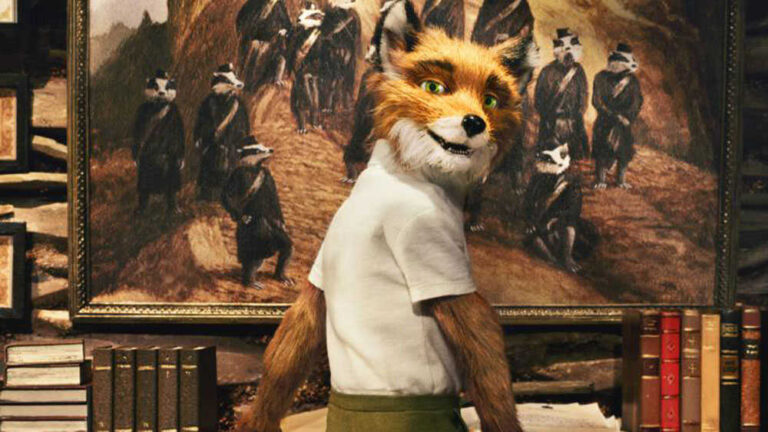
Mr. Fox (George Clooney, Fantastic Mr. Fox), Foxy to his friends, used to really be someone. He used to be the best thief in his small community of woodland animals. He used to have freedom before he became tied down. As much as he loves his wife, and is trying to understand his son, there’s something missing. He’s in mourning for who he used to be. So, he tries a little of the old magic.

Foxy finds himself at the apex of the greatest set of scores of his career. He justifies his actions with lies because it just feels so good to be a thief again. It’s so good that he can’t see how his actions are tearing his life asunder as the men he’s stealing from go to great lengths to try and catch him. Even as he sees the destitution he’s forced into, he still attempts to bargain for more time, for one more score, for just a little taste of the magic of his past. He’s willing to give up everything for that taste, until he finally sees the people right in front of him and he has to do a bargaining of a different kind with Mrs. Fox (Meryl Streep).

This is where Foxy is separate from other con artists. For him, the deal he struck with Felicity was out of love. While heโ€™s lied and stolen against her wishes, itโ€™s Felicityโ€™s rationality that brings Foxy back from the clouds. As much as he tries justification with her, itโ€™s the pessimist inside Felicity, that lightning she always paints, that holds her ground against him. The last bargain Foxy strikes is getting to stay with Felicity. 

It’s the same with the biggest bargainer of them all, Royal Tenenbaum (Gene Hackman, The Royal Tenenbaums). Unlike Foxy, Royal fails to see the hurt he’s caused because heโ€™s too self absorbed. He traded lies in his former career as a lawyer and in every interaction he has with people. Royal is the kind of con artist that’s greedy for attention more than for wealth. He’s a narcissist who cons people with things they want to hear in order for them to like him. With his children, though, he made a mistake. He chose a favorite.

When Royal chose Richie (Luke Wilson) over Chas (Ben Stiller) and Margot (Gwyneth Paltrow) he exposed his lies to the two of them. If Royal were to tell it himself, he would say he needed to toughen the two of them up, that he needed to build them into the geniuses he knew they could become by challenging their perception of his affection for them. Yet, in that bargain he lost them, seemingly forever. It’s as Royal loses the last comfort of his old life that he grieves for the life he could have had if he had gotten out of his own way. That’s when he begins to bargain for it back with his ego driven nostalgia of the beatific past heโ€™s told himself existed.

He weasels his way back into the family in the most blatant lie a person tells for attention. He tells people he’s dying. It’s a way for him to regain their love through sympathy. It blows up in his face, of course, because he can’t win what he didn’t have with Chas and Margot. They see right through him because, in a way, he knows he deserves this ostracization. That’s just his greatest bargaining move of all, though. He’s set up this obvious ploy, this ruse that he barely hides in order to be caught by Henry (Danny Glover). In a way he plays both sides in order to get back on the inside. He anticipates every angle and changes tack as the pieces slide into place. At least that’s what he wants us to think because what he wants us to think is all we’ll ever really know or understand of Royal Tenenbaum. 

Sam Shakusky and Suzy Bishop (Jared Gilman and Kara Hayward, Moonrise Kingdom) feel that no one outside of the two of them will ever understand their grief. They have seen the people in front of them for a long time and have realized, those people are doing it wrong. The two young people have been unseen, unheard, pushed, and pulled. They’ve had it with hypocritical adults and their arbitrary rules. They mourn for a time they don’t believe ever happened. A time when it felt like they were truly cared for and loved. Their only way forward is to buy some time with the only other person who understands.

In spite of their ostensible immaturity, Sam and Suzy know that their love for one another comes from a genuine knowledge of a kindred spirit. Their time spent playing house isn’t just fun and games, but to prove that they know how to do this better than their parents and all adults. They have a nostalgia for the life they haven’t experienced yet because they know if they’re caught, they will never experience it with each other. Adults tear down, separate, belittle, and scoff at what they don’t understand.

These adults donโ€™t know how far Suzy and Sam are willing to go. They couldnโ€™t possibly fathom the lengths of these teens’ bargaining tactics. The two of them turn to the classic literary lovebird trope and walk out onto a roof in a hurricane, intimating that if their love isnโ€™t acknowledged, this will be the end of it. Because of their age, because of the obstinance of adults, itโ€™s only logical that this step be taken. They’re secretly hoping logic will prevail, that these adults aren’t as far gone as they assume they are. Luckily for these two, the adults aren’t and get them off the ledge.

Sam and Suzy want time. Royal wants the family he neglected. Foxy seeks a return to the notoriety and glamor that comes with being his small world’s best thief. Bargaining and denial are so intertwined when one is in grief. Yet, the clever person, or fox, knows that the difference is that the person bargaining thinks they are in control even as they give themselves to the powers of fate. The bargainer makes the attempt, they try to force the hand and sometimes live to shrug, smirk, and try again. In spite of the drastic measures they take to escape their grief, the bargainer gets little except for the perspective on how their coping affects those they love. They can’t bargain for love, though, they have to earn it by doing the hardest thing a con artist has to do. They have to tell the truth.
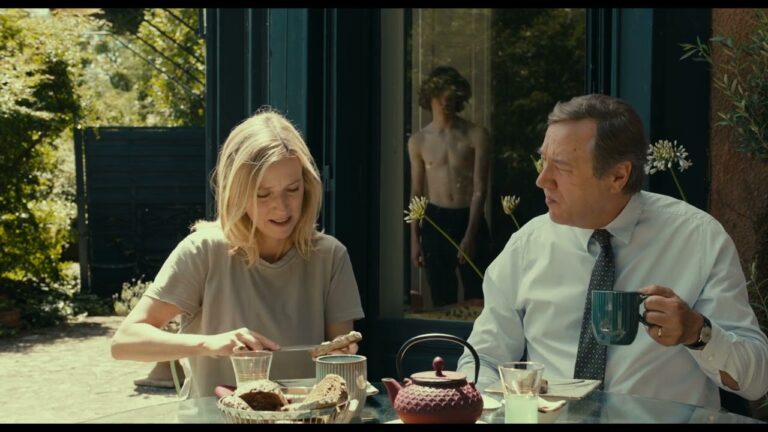
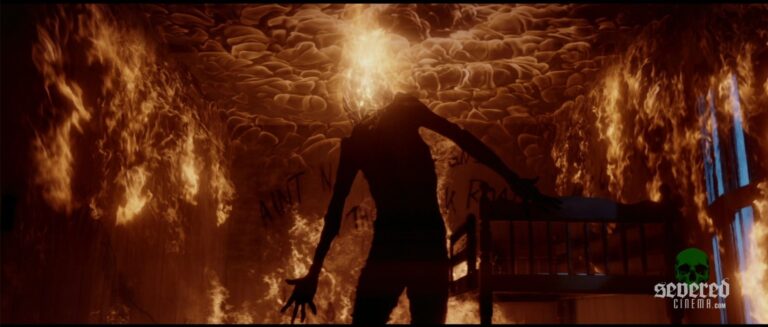
Movie Review (NYFF 2023): ‘Last Summer’ is a Precarious Balancing Act


Director: Catherine Breillat
Writer: Catherine Breillat
Stars: Lea Drucker, Olivier Raboudin, Samuel Kircher

Synopsis: Follows Anne, a brilliant lawyer who lives with her husband Pierre and their daughters. Anne gradually engages in a passionate relationship with Theo, Pierre’s son from a previous marriage, putting her career and family life in danger.


With Last Summer, Catherine Breillat has made her return to filmmaking after a decade. The auteur filmmaker has been away from cinema for a while, but one thing is apparent: the provocative nature of her films has not lessened during this hiatus. With her latest, Breillat confronts her audience with a taboo subject, but is also able to interject a palpable sense of youthfulness and beauty into a story that will have many doing all they can to block the on-screen images from their minds. The film is centered around Anne (Lรฉa Drucker) and Pierre (Olivier Raboudin), and the seemingly calm and affluent life they live with their young daughters. Her stepson, Thรฉo (Samuel Kircher), moves into their home after getting in trouble at school, and the lens of the film immediately shifts. Breillat composes nearly every frame with Anne firmly rooted in the center of it all. In the hands of Drucker, this performance soars into a realm of intrigue. It forces the audience to grapple with why exactly Anne would choose to throw a brick through the glass house so perfectly crafted by herself. Pushing her audience further than that, Breillat seems to be prodding us with a different question: why not? And what happens after itโ€™s shattered? Iโ€™m talking, of course, about the relationship this stepmother and stepson develop.

In a smart move, Breillat does not abuse a โ€œwill they/wonโ€™t theyโ€ approach to the moral dilemma of Last Summer. On the contrary, she rather quickly tosses her lead character, and subsequently the audience, into a trial by fire. Itโ€™s a fitting notion, considering that Anne is a lawyer. The film opens mid-conversation between Anne and an underage client who appears to be going to court after being sexually assaulted. With a very pragmatic approach, Anne describes whatโ€™s likely to happen. In the courtroom, her client will be inappropriately labeled and her trauma will be belittled. Anne makes the keen observation that victims are usually the ones that end up the accused. Within her very blunt statements on how the court case will play out, Anne is shown to be very matter-of-fact, as well as having an innate understanding of the difference between right and wrong. Her relationship with her husband is one that they have clearly settled into for quite some time. Both are clearly operating on very busy timetables, so the little time they get with one another is rather muted, almost on the verge of pure pragmatism. The barest of pleasantries are shown, but it doesnโ€™t appear that thereโ€™s a wall between the two. Anne reminds Pierre she loves a body that is โ€œlived inโ€, and proceeds to tell a story from her youth during blatantly hollow sex. Enter Thรฉo, who Breillat quickly uses as her manipulative thematic vessel with a massive grin. The complexities of Anne as a character are now absolutely blown open, as the morals and ideologies we have seen from her thus far are thrown to the wayside in favor of reprehensible actions and a complete surrender to both our deepest emotions and basest desires.

So much of Last Summer hinges on all parties involved nailing a precarious balancing act. While it would be easy for Breillat to turn audiences against the film and its characters almost immediately, she takes a far more interesting approach. Instead, she forces us to witness all these acts and grapple with the choices made, and the emotions fueling them. A fine set of performances are necessary for something like this; luckily the film has them in spades. Drucker is deeply captivating in a particularly dual-wielded approach. On one hand, Anne desperately tries to balance all that she has willingly thrown herself into. Even so, half of her performance convincingly captures pure self-destruction in a mostly believable way. At one point, Anne reveals her biggest fear; itโ€™s not losing everything, but rather, making everything disappear for no clear reason. The other half of Druckerโ€™s magnificent performance, and itโ€™s what makes the third act so electric, is how she handles Anneโ€™s self-preservation. A single line of dialogue, in perhaps the most climactic scene in the film, feels as if Breillat is directly addressing her viewers through Anne. Drucker delivers it with such a soothing venom that I was unable to contain myself in my seat. Thereโ€™s also Kircherโ€™s debut performance, which accurately captures just how annoying an entitled 17-year-old can be. His nihilistic attitude and lackadaisical approach to life is both relatable, but also wholly annoying for anybody looking back on that age. Itโ€™s when the two performers are brought together that the magic occurs. We witness Druckerโ€™s guard coming down in real time, and itโ€™s difficult to tell if she knows itโ€™s occurring or not. Itโ€™s a part of her character that she keeps hidden, as we all have assuredly done when realizing a crush is developing.

Even when the act Thรฉo puts on runs dry, thereโ€™s a wit about his character thatโ€™s played pitch perfect. One scene early on shows Anne looking at Thรฉo as he breaks down his thoughts on relationships. Itโ€™s something that any rational person would be put off by, yet Breillat cuts to Anne, and we remember this is not a rational relationship or a rational film. Anneโ€™s eyes are engrossed and deeply attentive, hanging on every word out of the boyโ€™s mouth. When discussing the film, Breillat emphasized how she felt there had to be stakes beyond the macro-conflict. Thus, she partly depicts this relationship through the frenzied lens of spontaneous teenage love. Last Summer is a cinematic minefield waiting to detonate, and any scene with supporting characters nearby has us wincing at the thought of the two being discovered. The fact that Breillat is able to convincingly walk this tightrope for 100 minutes is proof of undeniable talent.

Even so, one might hope for a bit more characterization regarding Anne and why she makes the decisions shown. The notion of depicting teenage love is an interesting one, and self-destructive behavior in film is inherently enticing to watch. Still, Drucker is doing an immense amount of lifting in making this relationship feel as genuine as it could be all things considered, and the script providing some support could be helpful in bringing that third act home in a mightier way. Thatโ€™s not to say that the ending of this film isnโ€™t deeply shocking; its final image is fascinatingly haunting, but with such a strong third act choice being made by Breillat, more avenues being explored would bring forth even more of an impact. Yet with Last Summer, Breillat, after four decades of filmmaking, proves that a compelling secret being withheld is always a lively cinematic experience; even if the lie in this case is meant to repulse and shock us on some level.

Grade: B-

Movie Review: ‘Dark Harvest’ is Memorable Despite Awful Writing


Director: David Slade
Writer: Michael Gilio
Stars: Casey Likes, Eโ€™myri Crutchfield, Elizabeth Reaser

Synopsis: A legendary monster called Sawtooth Jack terrorizes residents in a small Midwestern town while he rises from the cornfields every Halloween and makes his way toward those who are brave enough to confront him.


This piece was published during the 2023 SAG-AFTRA strike. Without the labor of the actors currently on strike, the movie being covered here wouldnโ€™t exist.

David Sladeโ€™s latest movie, Dark Harvest, is a strange beast. On the one hand, it has one of the worst screenplays of the year, with characters so paper-thin who deliver the most ridiculous lines (such as โ€œYou got a gun?โ€ โ€œI got a gun.โ€ or, โ€œWhere did you learn how to do that?โ€ โ€œI know things.โ€) in the most nonchalant ways imaginable. On the other hand, the film contains some of the most creative action setpieces of the year and an overarching story that feels so expansive itโ€™s almost criminal how Slade and screenwriter Michael Gilio undersell it at almost every turn.

Based on the book of the same name by Norman Partridge, Dark Harvest takes place in 1963, where, from our understanding, high school teenagers must participate in โ€œThe Runโ€ every Halloween night to keep the townโ€™s crops safe. โ€œThe Runโ€ consists of the boys being unable to eat for three days before the event, so their lust for food will convince them to run towards Sawtooth Jack (Dustin Ceithamer), a creature who magically appears every Halloween. Whoever kills Sawtooth Jack first gets to win a very nice car and get out of town.

Richie (Casey Likes) wants to achieve this after his brother, Jim (Britain Dalton), won The Run last year. He wants to win to join his brother wherever he may be, but as The Run continues, he learns about the townโ€™s dark secret and Sawtooth Jackโ€™s origins, putting him on a path to end the curse once and for all.

Itโ€™s in this specific moment that Dark Harvest becomes interesting, but one has to go through an expository-driven first act that is filled with so many tired clichรฉs that itโ€™s easy to think the film wonโ€™t progress to a somewhat satisfying turn. Itโ€™s particularly hard to invest ourselves in a movie with no interesting characters. Every male character is one-dimensional: they all exude machismo in some way (either through smoking cigarettes, dressing up like Danny Zuko from Grease, or fighting man to manโ€ฆwith knives, of course!) and think theyโ€™re the coolest dude in town. Thereโ€™s no difference between Richie and Riley Blake (Austin Autry), except that the latter-mentioned character acts more like a bully. Remove that, though, and they both have the same arc.

The only character with a modicum of development is Kelly Haines (Eโ€™myri Crutchfield), who acts as Richieโ€™s love interest. However, her arc is also associated with some of the filmโ€™s most problematic moments, as she is the townโ€™s only Black girl and is frequently dehumanized with racial slurs hurled towards her.

When the two characters kiss for the first time, itโ€™s in front of the town, in which its citizens all look on with utter disgust. This only serves as a reminder of how deeply-rooted their racism is, if you didnโ€™t understand it through their constant insults of its only Mexican kid, Bud (Alejandro Akara), who is far more underdeveloped than Kelly. Still, Slade and Gilio give Kelly enough agency throughout the movie that she not only stands up to herself in these difficult moments but also helps Richie at his attempt to defeat Sawtooth Jack.

Then, weโ€™ve got Officer Jerry Ricks (Luke Kirby), who could be an interesting antagonist for Richie/Kelly but is played with such an overexaggerated tone by Kirby that it falls completely flat on its face. There isnโ€™t a scene in which Ricks isnโ€™t yelling incessantly like a cartoon character who got his toe stubbed by Bugs Bunny or something of that ilk. I donโ€™t know what he was exactly doing here, but itโ€™s embarrassing.

It wouldnโ€™t have been that big of a problem if the other performances had balanced things out, but it saddens me to report that none of the actors give any noteworthy turns here. Even Elizabeth Reaser, who previously collaborated with Slade on The Twilight Saga: Eclipse and Nightmare Cinemaโ€™s This Way to Egress, canโ€™t muster up something at least palatable as Richieโ€™s mother, especially during one of the filmโ€™s bigger emotional moments.

Even Likes delivers his lines with no sense of engagement to the story. If the main actor canโ€™t seem to care about the film he stars in, how do you expect the audience to want to watch the whole thing? Well, there is something Slade can do to at least make the film semi-compelling, which is to make its core sequence, The Run, feel like the most exhilarating extended horror action setpiece in ages.

Cinematographer Larry Smith consistently shoots Dark Harvest frenetically, shaking the camera in various ways to disorient the viewers. But he ups the ante during The Run. He creates some extremely cathartic and truly vivid images, particularly during a sequence set in a cornfield where Sawtooth Jack reawakens and starts to murder some of The Runโ€™s participants in one creatively bloody way after another. I expected the film to be violent, but not quite like this. And itโ€™s all the better for it. There isnโ€™t a single action setpiece in Dark Harvest that feels stale โ€“ Sladeโ€™s penchant for self-aware campiness with the same energy as Anthony Dod Mantleโ€™s lens in 28 Days Later creates some incredibly gnarly stuff that practically saves the film from being a complete failure.

A final plot twist, which reveals not only the origins of Sawtooth Jack but expands upon the townโ€™s connection to The Run, also helps to lift Dark Harvest and give it some form of emotional investment. It also brings massive weight to the movieโ€™s ending, which could shock some people, even if one can see it coming a mile away. Still, its impact works, and its post-credit scene may or may not set up a Dark Harvest 2, making us want to clamor for more, even if Partridge only wrote one book. 

Releasing Dark Harvest on VOD with little to no promotion might have been a mistake for Amazon, as it marks the final movie to be distributed by United Artists Releasing before it merged into Amazon MGM Studios earlier last month. It was a sign of an absolute lack of confidence from the studio after its release was delayed many times due to the COVID-19 pandemic. As a result, Dark Harvest may not find a big reach for a broader audience to turn it into a cult classic like Sladeโ€™s 30 Days of Night. However, those who have seen it will probably be inclined to recommend it to others, even if every actor does completely shoddy work and the screenplay is, by all accounts, terrible. Thereโ€™s just enough good in it to make it the next great midnight movie classic, and that might be enough for anyone looking for a killer time at the movies during Spooky Season.

Grade: C+

Movie Review: ‘Totally Killer’ is a Starter Slasher


Director: Nahnatchka Khan
Writers: David Matalon, Sasha Perl-Raver, and Jen D’Angelo
Stars: Kiernan Shipka, Olivia Holt, Charlie Gillespie

Synopsis: When the infamous “Sweet Sixteen Killer” returns 35 years after his first murder spree to claim another victim, 17-year-old Jamie accidentally travels back in time to 1987, determined to stop the killer before he can start.


Nahnatchka Khan takes tired concepts, like the horror and teen comedy genres, and doesn’t make them fresh again, but somehow incredibly entertaining. That’s because Don’t Trust the B—- in Apartment 23 and Fresh Off the Boat writer/director (and frequent Ali Wong collaborator) adapts an American black comedy slasher into an often hilarious cultural critique of a decade known for its social faux pas. In other words, the film is Totally Killer.

Khanโ€™s film follows Jamie (Kiernan Shipka), a 17-year-old high school student rebelling against her overbearing and controlling mother, Pam (Julie Bowen), and her needy father, Blake (Lochlyn Munro). Jamie wants to go to a costume party with her best friend, Amelia (Kelcey Mawema), but Pam wants her daughter to stay home and hand out candy to the trick-or-treaters. Thatโ€™s because, in 1987, Pam had her three best friends murdered by the Sweet 16 Killer.

Frankly, Jamie is sick of hearing about it. Blake drops her off, and Pam hands out the candy. Thatโ€™s until the Sweet 16 Killer returns wearing their famous Max Headroom masks. The killer is equipped with a giant knife. But make no mistake, the joke is on them, because Pam is a kick-ass mom who has been taking self-defense classes for years. 

After hiding numerous weapons around the house (she makes the fatal mistake of talking too much), Pam makes a valiant attempt to survive the attack but is found stabbed to death by some grade schoolers looking for free diabetes-inducing treats. 

Now that her mother is the fourth victim on the notorious killer’s list, Pam begins to try to save her mother by traveling back to a time dominated by big hair, colorful neon shirts with shoulder pads, and acid-washed jeans, where all the rage is to stop the killer, which means it will save her mother in the futureโ€”no matter the consequences.

Totally Killer was written by David Matalon, Sasha Perl-Raver, and Jen D’Angelo. Typically, too many hands in a script would make things chaotic and incoherent. However, Khan’s film hits the right note of clever satire, biting commentary, and horror thrills to create a consistently entertaining, yet not all surprising, streaming dark comedy with fun twists of nostalgia. Just like Happy Death Day and Freaky, respectively.

Totally Killer has a much lighter touch because the film is more comic and fantasy-based than anything. Yet, since the film is produced by Jason Blum when murders occur, they can be sobering because they are particularly jarring. I mean, who wants to see Claire Dunphy scream for her life and get stabbed a couple dozen times in the back for fun (even though I could see Phil Dunphy finally snapping)? Since the film really is a comedy, the writers make the horror count.

While the script can be very clever with its jokes, particularly when Kiernan Shipka’s deadpan reactions to the politically incorrect actions, statements, and overall attitude towards women clash with today’s feminist principles, the time travel plot is glossed over without real thought or care, with a flimsy excuse of a conductor. It’s as if they wanted to do Back to the Future but had the Netflix streaming dud When We First Met in the background, threw a photobooth into the script, and washed their hands of it. Not to mention, why not just go back to the night of her mom’s murder and not decades prior?

However, thatโ€™s a minor complaint, because Khanโ€™s film doesn’t want to redefine the time travel genre. Totally Killer is meant to provide an entertaining and smart social commentary, in which it slays often and well. Itโ€™s an entertaining slasher entry for people who are non-horror enthusiasts, but want to dip their toes in those bloody good waters that October has to offer.ย 

Grade: B

Women InSession: David Lean Retrospective

This week on Women InSession, we discuss the career of the great David Lean, a filmmaker with big epics and stellar early works! From Brief Encounter to Oliver Twist to The Bridge on the River Kwai to Lawrence of Arabia, Lean has so many memorable films that make him noteworthy in the story of Hollywood.

Panel: Kristin Battestella, Zita Short, Amy Thomasson

On that note, check out this week’s show and let us know what you think in the comment section. Thanks for listening and for supporting the InSession Film Podcast!

Subscribe to our Podcasts RSS
Subscribe to our Podcasts on iTunes
Listen on Spotify
Listen on Stitcher
Women InSession – Episode 58

To hear this Extra Film episode and everything else we do, download our apps on the Amazon Market for Android and the Podcast Source app on IOS devices. The mobile app covers all of our main shows, bonus podcasts and everything else relating to the InSession Film Podcast. Thanks for your wonderful support and for listening to our show. It means the world to us.

Op-Ed: Norman Jewison: Good Director in a Terrible Business

A film director who can work with different genres touching on many facets of life is a chameleon. One of these film directors is Norman Jewison. Alive today aged 97, Jewison is a living treasure who has worked with talent across multiple generations in films that remain landmarks in filmmaking. He talked about racial matters, political follies, and traditional moments in life under a comic umbrella. Jewison was a particular mainstream director who also kept his independence and avoided getting caught up in the Hollywood glam that would also spit out A-list directors who ended their careers earlier. 

Opening Takes

Norman Jewison was born in 1927 in Toronto, Canada. In contrast to his last name, he is not Jewish but was raised a Protestant. As a kid, he became interested in theatre and would attend college as a writer and director of amateur productions. After graduating, Jewison moved to London as a part-time writer and actor for the BBC before returning to Canada and getting work as an assistant director for the newly established Canadian Broadcasting Corporation, the CBC. He wrote, directed, and produced numerous shows that got the attention of executives for NBC in New York who subsequently hired him. Working with Andy Williams, Harry Belafonte, Jackie Gleason, and July Garland, Jewison developed a positive reputation that led to Tony Curtis hiring him to direct his first feature film, 40 Pounds of Trouble, in 1962.ย 

Jewisonโ€™s first movies were comedies. After he directed the Rock Hudson-Doris Day vehicle Send Me No Flowers in 1964, Jewison sought to get into more serious ground and made his breakthrough with The Cincinnati Kid starring Steve McQueen in 1965. The Cold War satire followed this up, The Russians Are Coming, The Russians Are Coming in 1966 with Alan Arkin and Carl Reiner, which resulted in four Academy Award nominations including Best Picture. It was the first Oscar nomination for Jewison, who was the producer. There would be more nominations coming, but it would come from much more serious material.

Studying The Racial Divide

After he served in the Royal Canadian Navy during the latter half of the Second World War, Jewison traveled to the American South. Encountering the Jim Crow laws and witnessing open segregation influenced the director to make stories that combated such prejudice. His chance came with In The Heat Of The Night (1967), the story about a Philadelphia cop (Sidney Poitier) coming through a Mississippi town and being forced to work with a racist sheriff (Rod Steiger) to investigate a murder. It was a story in the thick of the Civil Rights movement where racial views remained even after laws that abolished segregation were enacted. Jewisonโ€™s touch, however, made it more accepted by audiences who would not be as interested in more serious subjects. 

In The Heat Of The Night won five Oscars, including Best Picture, while Jewison was nominated for Best Director. The ceremony was delayed by two days after the assassination of Dr. Martin Luther King Jr. Two more films by Jewison returned to the subject of racism. First, another Best Picture nominee, A Soldier’s Story (1984), is about a Black JAG Officer who investigates the murder of a Black soldier in Jim Crow Louisiana, and then in 1999 with The Hurricane. It told the true story of boxer Rubin Carter (Denzel Washington), who is falsely convicted of murder and gets help to fight for his freedom with the help of Canadian activists who see his conviction based on racial profiling. 

Gift Of Tone

Jewisonโ€™s experience in musicals from TV, namely Judy Garlandโ€™s comeback special in 1961, allowed him to direct two notable films: Fiddler on The Roof (1971) and Jesus Christ Superstar (1973). For Fiddler, a musical set in 1900s Russia with themes of anti-Semitism it would mean more Oscar nominations including Best Picture, Director, and Lead Actor (the enchanting Topal), and winning three. He went from Judaism to Christianity for Superstar, adapting the acclaimed rock opera from Andrew Lloyd Webber and Tim Rice, but did not have the same acclaim as Fiddler did.

Other genres were touched on by Jewison. 1975โ€™s Rollerball was a science-fiction dystopia drama starring James Caan that told about a future with a violent sport controlled by computers and run by corporations where death is part of the game. Next, came 1978โ€™s F.I.S.T., a labor union crime drama with Sylvester Stallone and Rod Steiger loosely based on the Teamsters and their former disappeared leader, Jimmy Hoffa.  Jewison returned to the religious film drama in 1985 with Agnes of God, set in a convent in Quebec, Canada. After a nun (Meg Tilly) suddenly gives birth to a stillborn child and claims her pregnancy was from an immaculate form, a psychologist (Jane Fonda) investigates to see if the nun is mentally fit for trial. 

Heart Of Charm 

In between, Jewison would go back to comedies with films like Gaily, Gaily (1969), โ€ฆAnd Justice For All (1981), Best Friends (1982), and Other Peopleโ€™s Money (1991). But it was in 1987โ€™s Moonstruck that Jewison struck gold with this Italian-American tale of a widow (Cher) being wooed by a one-handed opera aficionado (Nicholas Cage). Cher and Olympia Dukakis took acting Oscars in addition to Best Original Screenplay while also being nominated for Picture and Director for Jewison. His last films were the HBO teleplay Dinner With Friends in 2001 and The Statement with Michael Caine in 2003.

Rooted in his native Canada, Jewison left Hollywood for London in the late 60s due to its politics and then returned to Toronto a decade later. In 1988, Jewison opened the Canadian Film Centre, a film school that helped new writers, directors, and producers get involved with establishing their careers and starting new projects for multiple production outlets. Jewison is Chair Emeritus of the CFC. Having never won a competitive Oscar, Jewison was awarded the Irving G. Thalberg Award in 1999 and later the Directorโ€™s Guild of America Lifetime Achievement Award in 2009. 

Norman Jewisonโ€™s range of work is legendary and more than daring to try serious topics while also fading back to more lighthearted movies. The quality was consistent from his days on TV in the 1950s to the 2000s upon retirement, completing a filmography equal to other legends of Hollywood. His autobiography, This Terrible Business Has Been Good to Me, tells of how he was able to work within the system, give behind-the-scenes anecdotes, and keep his creative freedom to have such a roaring success.

Follow me on Twitter: @brian_cine (Cine-A-Man)

Movie Review: ‘The Royal Hotel’ is a Necessary Challenge


Director: Kitty Green
Writers: Kitty Green and Oscar Redding
Stars: Julia Garner, Jessica Henwick, Hugo Weaving

Synopsis: US backpackers Hanna and Liv take a job in a remote Australian pub for some extra cash and are confronted with a bunch of unruly locals and a situation that grows rapidly out of their control.


Kitty Greenโ€™s sophomore feature directorial effort, The Royal Hotel, is not easy to watch. At first, it starts out in a rather conventional manner, as it follows Hanna (Julia Garner) and Liv (Jessica Henwick) taking a job at a bar in a highly remote place in Australia to make money. Livโ€™s credit card has been maxed out, and the two canโ€™t finish their backpacking trip if they do not find employment. Arriving at The Royal Hotel, the owner, Billy (Hugo Weaving), described the job as easy enough and should theoretically be simple once they get accustomed to the tasks they must perform. 

However, it quickly becomes a nightmare, as Hanna and Liv are consistently catcalled by some of the men in the bar, including Matty (Toby Wallace), who has made some sexual advances towards Hanna, and Dolly (Daniel Henshall), who at first appears friendly but slowly starts to show his true nature to the girls. The film is inspired by Pete Gleesonโ€™s 2016 documentary Hotel Coolgardie, chronicling two Finnish backpackersโ€™ stint at a local hotel in Coolgardie after their credit cards were stolen in Bali. 

Gleesonโ€™s vรฉritรฉ documentary is extremely disturbing. The audience gets to see firsthand the verbal abuse Steph and Lina receive from the patrons, including their boss, who consistently berates them and โ€œjokesโ€ about their nationality to diminish their efforts. Itโ€™s a fascinating watch at times, especially when Gleeson attempts to sew a narrative thread between the girl and the late โ€˜Canman,โ€™ who acts as a protector figure for them. But the final twenty minutes or so are sickening, as Gleeson films one of the men taking advantage of Lina while on a camping trip after she had one too many drinks while the others sit and do nothing to prevent this from happening. It also raises many ethical questions on vรฉritรฉ filmmaking: how far are the filmmakers willing to go in capturing this story without breaking the artifice? Way too far, as the camping trip caused Lina to contract an infection, resulting in permanent eyesight loss in one eye and over 30% in the other. 

Greenโ€™s film does not show any rape but alludes to the menโ€™s intentions through their verbal and non-verbal interactions with the protagonists. She also transposes many key sequences from the documentary into the world of fiction, making The Royal Hotel more of a character-driven thriller that isnโ€™t afraid of challenging the audience on toxic masculinity. 

In the film, Liv seems more open-minded to the culture than Hanna and consistently gaslights her into thinking everything is fine, most notably when Billy calls her a โ€œsweet cโ€”tโ€ within minutes after they arrive. Liv believes itโ€™s just an expression they coined here, while Hanna doesnโ€™t believe it is. This scene establishes the dynamic between the two throughout most of the film. Liv wants to be more independent in meeting new people and exploring what this town offers, but Hanna quickly wants to go home. The documentary sees both characters as equals who experience Coolgardie together and put up with the patronsโ€™ commentary to make money, while Greenโ€™s film pits a quasi-rivalry against the two as the film progresses. 

At some point, the dynamic becomes redundant, but thatโ€™s when Green morphs the film into something far more unsettling than it initially introduced itself as. Near its midpoint, the filmโ€™s centerpiece scene involves a tense conversation between Hanna and Dolly (which Green takes massive inspiration from Linaโ€™s conversation with Pikey in Hotel Coolgardie, though with a far less humorous tone). His behavior was already misogynist by then but becomes even more disturbing as he begins to make Grizzly sounds at her (alluding to the fact that she is Canadian, though is pretending to be one) and throw pennies on the bar floor. 

The most difficult part of the scene is watching Hanna attempting to regain control but feeling completely helpless as none of the other customers around her want to de-escalate the situation and move Dolly out of the bar. Itโ€™s as if the town has adopted these actions as normal โ€“ and acceptable โ€“ towards women and wonโ€™t do anything to protect them from harm. Itโ€™s one of the most terrifying depictions of toxic masculinity ever put on film, and the scene will stay with you long after the credits have rolled.

The Royal Hotel takes an even more brutal and unnerving turn during its final act. While most of the abuse shown before the climax is verbal, Green shows barbaric acts of physical abuse near the movie’s end. Itโ€™s not as violent as some other films that have depicted the same subjects as The Royal Hotel, but its sharp cuts by editor Kasra Rassoulzadegan and wide shots from cinematographer Michael Latham convey its excessive brutality with aplomb. Earlier scenes establish the setting and characters, but it also allows Green to slowly crank up the sense of atmospheric dread as the men become more violent toward the protagonists. 

The sound design effectively conveys such, with many scenes occurring when the bar is overflowing with patrons. You canโ€™t hear a single discernable sound nor keep track of everything around you. You have to shout at people to get their attention, but as the men drink more beer, their violent behavior becomes more erratic. The tension is at a maximum and never diminishes, even when the cook, Carol (Ursula Yovich), attempts to regain control in the bar, while Billy drowns out his sorrows and never once takes the womanโ€™s side. 

Julia Garner gives the best performance of her career as Hanna, especially during its latter half. Iโ€™ll admit her earlier work hasnโ€™t been my cup of tea, but in The Royal Hotel, she delivers a far bigger breakthrough performance than the ones that put her on the map in Greenโ€™s The Assistant and Ozark. A particular shot that occurs near the end involving Garner still hasnโ€™t left my mind, showcasing how incredibly talented she can be. Her emotional progression, just through her eyes and facial expressions, from the moment we get introduced to her to its final shot, shows a massive, top-to-bottom transformation in her psyche. She first appears reserved and terrified, and naturally so. But something clicks inside of her that gives Hanna enough power to stand up for herself once and for all. 

Henwick is also terrific as Liv but doesnโ€™t have enough screentime for her arc to shift meaningfully, unlike Hanna, who isnโ€™t the same person she once was as soon as they walked into that bar. Livโ€™s arc feels truncated, especially during its latter half, when she couldโ€™ve focused more on her before fully returning to Hanna. At 91 minutes, the film feels too long in some areas and too short in others. Plenty of cyclical scenes in the bar couldโ€™ve easily been trimmed down, while Green couldโ€™ve also helped flesh out the character relationships more because there was far more to tell with Liv. Regardless, The Royal Hotel remains a must-see, despite how difficult the watch will be for anyone sitting in front of it. Garner performs exceptionally, while Weaving and Henshall are terrifying to watch on screen. Green has never avoided discussing difficult subjects in her documentaries Ukraine is Not a Brothel and Casting JonBenet. With The Assistant and The Royal Hotel, she uses the world of fiction to craft deeply unsettling but necessary films that challenge audiences on the questions of power dynamics and toxic masculinity.

Grade: A-

Podcast: Best Horror Films of 21st Century (so far) – Episode 555

This weekโ€™s episode is brought to you by Mission: Impossible – Dead Reckoning Part One. Follow us on Social Media for your chance to win a free digital code!

This week on the InSession Film Podcast, Jacob Throneberry joins JD to discuss the best horror films of the 21st Century so far and in honor of Guillermo del Toro’s birthday we rank his filmography! Plus, JD has a few thoughts on the Netflix rom-com Love at First Sight.

Review: Dumb Money

On that note, check out this week’s show and let us know what you think in the comment section. Thanks for listening and for supporting the InSession Film Podcast!

– Love at First Sight (6:01)
JD recently caught up with the Netflix rom-com Love at First Sight and had a surprising response to the film. It also inspired a story he wanted to tell as it relates to his own life and how it connects to the film.

– Guillermo del Toro (16:04)
Recently, the great filmmaker Guillermo del Toro celebrated a birthday, and since he’s a favorite of ours, we figured we devote some time talking about his movies. Specifically, we did a fun ranking going through his entire filmography.


RELATED: Listen to Episode 516 of the InSession Film Podcast where we discussed our Top 10 Movies of 2022!


– Best Horror Films (49:41)
With October now in full swing, we thought it would be fun to get into the spooky spirit by talking about the best horror films of the 21st century so far. Regardless of how you feel about the movies themselves, there’s no denying that the 2000s was very different from the 2010s with the genre. There was a clear turn that reinvigorated the realm of horror, for better, or just in a new way. There’s been some debate about what that means exactly (which we avoid for this conversation), but regardless, we had a great time talking about the horror films we love and see as the best of this century to this point.

– Music
The Shape of Water – Alexandre Desplat
Children of the New Dawn – Jรณhann Jรณhannsson

Subscribe to our Podcasts RSS
Subscribe to our Podcasts on iTunes
Listen on Spotify
Listen on Stitcher
InSession Film Podcast – Episode 555

Next week on the show:

Wes Anderson Roald Dahl Shorts

Help Support The InSession Film Podcast

If you want to help support us, there are several ways you can help us and we’d absolutely appreciate it. Every penny goes directly back into supporting the show and we are truly honored and grateful. Thanks for your support and for listening to the InSession Film Podcast!

VISIT OUR DONATE PAGE HERE

Movie Review: ‘Testament’ is a Hackneyed Mess


Director: Denys Arcand
Writer: Denys Arcand
Stars: Rรฉmy Girard, Marie-Mai, Guylaine Tremblay

Synopsis: In an era of political correctness, identity evolution, protests, cultural scandals, activism, media storms, and other disputes, an elderly man no longer having faith in humanity, discovers new landmarks and thus his happiness


Denys Arcand isnโ€™t shy in provoking and eliciting strong reactions from the public. Whether it was through his satires The Decline of the American Empire or the Academy Award-winning The Barbarian Invasions (Arcand is still the only French Canadian filmmaker to have won an Oscar), there isnโ€™t a single person who comes out of his films feeling indifferent, regardless if you liked it or not. But itโ€™s been a while since heโ€™s made something as memorable, or at least as interesting, as his Oscar-winning film. Days of Darkness pushed far too many buttons of provocation just because he thought he could, despite Marc Labrรจche and Diane Kruger attempting to salvage the film, while The Fall of the American Empire is just plain bad.

Has Arcand lost his filmmaking and screenwriting touch? Or has he always been a โ€œbitter, old, reactionary crank,โ€ as some have recently qualified him? With his latest movie, Testament, he seems to approach the latter as he attempts to criticize our societyโ€™s alleged obsession with political correctness and fails miserably at discussing any of the themes and messages he tries to convey.

It doesnโ€™t help that the story is too scattered for its good. The film starts with Jean-Michel Bouchard (Rรฉmy Girard, a frequent Arcand collaborator), who has lost all will to live. He walks every day in the cemetery, longing for his hopefully peaceful demise, though he keeps himself busy by working a day or two at the archives and tending with his friends at the Parizeau-Duplessis retirement home. Herein lies the first part of his โ€œsatire,โ€ the home is, of course, named after two of Quรฉbecโ€™s most controversial Premiers: Jacques Parizeau and Maurice Duplessis.

In that problematically-named retirement home lies a mural that glorifies a scene of genocide against Indigenous people, with which many activists who suddenly show up at the front door take issue. This causes a massive political scandal, with the Health and Social Services Minister (Caroline Nรฉron) urging the homeโ€™s director, Suzanne Francoeur (Sophie Lorain), to find a solution. She hires two painters (Gaston Lepage & Louis-Josรฉ Houde) to remove the mural, which appeases the activists. 

However, when the Deputy Minister of Culture (played here by controversial playwright Robert Lepage, whose shows SLฤ€V and Kanata were both canceled after being accused of cultural appropriation) finds out that the mural has high artistic value and was painted by one of the most renowned artists in history, more scandal is created, as nationalist protestors want the mural to be shown again. Oh, and did I forget to mention thereโ€™s a subplot involving the retirement homeโ€™s library being turned into a video game center for no reason other than an excuse for Arcand to make tired jokes about old people not being able to adapt to new technologies? Yeahโ€ฆ

By describing the plot, weโ€™ve already lost our central protagonist and his arc, which is about Jean-Michel slowly realizing that there is more to his life than he believes. Had the film solely focused on that introspective character’s journey, it wouldโ€™ve been one of Arcandโ€™s best because Girard gives one of his most compassionate performances. Sure, he is a consistently good actor and always gives his all with whatever character he portrays, but he always gives just a bit extra when working with Arcand. The core of The Barbarian Invasions was about Rรฉmyโ€™s battle with cancer, and some of the later scenes in the film are simply heartbreaking to watch. In Testament, Girard takes a far more meditative approach than he did in the Oscar winner, and the results are simply staggering.

One scene in particular, in which he quasi-confesses his love to Suzanne after she believes heโ€™s been having an affair with Flavie (Marie-Mai, in her first non-dubbed film role), who visits him every week, is the film at its best. Itโ€™s a poignant meditation on the meaning of life and what we, as individuals, must do to reawaken our spirit and want to continue living, even if it seems pointless to go on when weโ€™ve seemingly lost everything. Arcand tries to visually represent this through Guylaine Tremblayโ€™s character, who begins to drink, smoke, and binge-eat fast food after her ultra-fit boyfriend dies of a stroke seconds after finishing a long bike run. Thereโ€™s a bit of exaggeration in her mannerisms, but Jean-Michelโ€™s actions, as he learns more about Suzanne and her family, convince him there is more to his life than he had thought. In my opinion, thatโ€™s the heart of Arcandโ€™s film, and it more than succeeds.

However, he seems too busy attempting to criticize Quรฉbecโ€™s alleged penchant for โ€œwokeโ€ ideologies, joking about cultural appropriation, activism, the use of pronouns, gender identity, intersectional feminism, climate change, and even openly mocking several minorities under the guise of โ€œsatire.โ€ Arcand may not be a right-wing figure, but he โ€“ and conservatives in general โ€“ fail to realize that the word โ€œwokeโ€ means โ€œbeing alert to racial prejudice and discrimination.โ€ So, if you believe something slightly left-leaning is โ€œwoke,โ€ it means the above definition and not what you think woke is. But that doesnโ€™t stop Arcand from making โ€œjokesโ€ that are profoundly transphobic, misogynist, racist, and, above all else, unfunny. 

The only times I chuckled were during its National Assembly session parodies, where the satire of parties like the Coalition Avenir Quรฉbec and Quรฉbec Solidaire are so close to reality it becomes naturally funny. Renรฉ Richard Cyrโ€™s Culture Minister dozing off in the background seems an apt descriptor of our current legislature because we all know, deep down, that they do absolutely nothing, which Arcand cheekily points out through the provincial governmentโ€™s response to COVID-19.

How is it inadmissible that a society that has grown to be more progressive over time wants to fix the errors of our past? Anything dated and or/offensive should absolutely be recontextualized or, if needed, removed, but Arcand posits this perfectly acceptable response as anti-art or anti-culture through the commentaries of his painters who are openly saddened to be erasing what they believe to be โ€œimportant art,โ€ but also through his own words. Last week, Arcand appeared on Tout le monde en parle and said โ€œfuck offโ€ to anyone who told him that he shouldโ€™ve consulted the Indigenous community before making the film:

Arcand: I do not believe in consultations. Itโ€™s now the latest trend when we have to talk about Indigenous people or whatever. Weโ€™re always supposed to consult. Iโ€™m completely opposed to this. I think the creative process is an absolutely personal act that comes from deep within ourselves. Itโ€™s like if you asked Shakespeare if he went to Italy to ask the Capulets and Montagues if they agreed with his interpretation of Romeo & Juliet โ€“ fuck off! Heโ€™s writing a play called Romeo & Juliet. If you disagree with it, just donโ€™t see it. Consultations are made for governments, unions, and municipalities wanting to know if closing Camilien-Houde is a good idea, for example, but not for writing fiction. 

Marc Labrรจche: Did you ever say, โ€œI shouldโ€™ve not written this scene like that,โ€ or โ€œI shouldโ€™ve opened my eyes more about something that escaped me?โ€

Arcand: Of course! All the time. Every day. Iโ€™d love to have more talent and skills. But I never said to myself, โ€œOh, I shouldโ€™ve consulted!โ€

This declaration shows immense contempt for individuals who deserve to be properly represented on screen instead of perpetuating the same dangerous โ€“ and racist โ€“ stereotypes that have plagued moviegoersโ€™ screens for many years. We have recently started to see Indigenous creatives being at the forefront of mainstream titles like Reservation Dogs or the upcoming Echo, but Arcand seemingly wants to continue portraying them in an offensive light instead of asking pertinent questions about how a more open and welcoming society can repair past wounds and aid in reconciliation, or involving them in the creative process. It may be a personal act, but asking them what they think of your script before it gets shot doesn’t hurt.

Testament asks all the wrong questions and perpetuates even more dangerous stereotypes passed off as โ€œjokesโ€ and โ€œsatire,โ€ positioning Arcand as a bitter, old, reactionary crank instead of a serious auteur who revolutionized Quรฉbec cinema with his American Empire series. Even his exploitation film Gina has a hidden political subtext that goes far deeper in its messaging than it has any right to, especially compared to his hackneyed Testament. Who knows if the title itself means this will be Arcandโ€™s last film, but if it does, heโ€™s leaving us with quite the whimper that could make some viewers rethink his past films as products of their time instead of some of Quรฉbec cinemaโ€™s greatest treasures.

Grade: D+

Interview: Tanner Beard of the Mammoth Film Festival

Multi-hyphenate Tanner Beard is best known for his work as a prolific producer of independent films but he has also distinguished himself in other professional fields. He co-founded the Mammoth Film Festival in 2018 and recently served as a voice actor in Andreas Dejaโ€™s Mushka (2023). As the festival rapidly expands in scope and ambition, it has begun to gain increased prominence on the independent film circuit. Beard is passionate about bringing small-scale productions to a wider audience and believes that film festivals play a valuable role in elevating the profile of obscure indie movies. 

Zita Short had the opportunity to sit down with Beard and discuss recent developments in his career. 

Zita Short: What led you to get involved with the production of Mushka?

Tanner Beard: I was lucky, I guess. I was shooting a movie with the director of photography, who happened to be one of the producers of Mushka. He invited me to work on the film. It was a lucky chain reaction. 

ZS You recently received the Tim Burton โ€œNative Burbankโ€ Visionary Award, what do these sorts of accolades mean to those working in the entertainment industry?

TB: The Tim Burton award was definitely one that I ended up calling some people about. Itโ€™s pretty cool. I appreciate it whenever a movie that my production company has put out gets an accolade of any kind. Youโ€™re really proud of it because you can kind of place it in your house or in your garage. So winning the Tim Burton award was one for the books for me personally. I would be completely lying if I said that wasnโ€™t awesome. 

To go back to Mushka, it was kind of a blast to work with the legends of the industry. The director, Andreas Deja, worked on Disney movies that I saw growing up. I never thought Iโ€™d get to work with somebody like that. To add my voice to his piece of art was an amazing honor. 

ZS: Is it easier to become an interdisciplinary artist in the modern world?

TB: Itโ€™s a good question. I donโ€™t know if it ever gets easier. However, you do get to go into each new project with more experience under your belt. That means that thereโ€™s a different way to attack each project. Still, itโ€™s never easy. Itโ€™s always hard to make a good one. Then again, itโ€™s more fun when you know what youโ€™re doing. You donโ€™t have to worry about making the same mistakes twice. That can make it more fun to do. Itโ€™s always hard. You can make thirty-five movies and on your thirty-sixth still have no idea what youโ€™re doing. I like so many different elements of the film industry. It may seem like I try to put my finger in every single pie. Thatโ€™s only because I enjoy it. I like to produce, I like to edit, I like to act, I like to help produce the outcome of a movie. Sometimes you only get to serve a limited number of roles on the set of a film. Serving in all of those capacities is an honor. Iโ€™m also egotistical (laughs). 

ZS: What challenges are involved in founding a film festival in the streaming era?

TB: The number one thing for us is taking care of the films that are still playing in competition. We have a lot of films making their world premiere and they might be bought and sold at this festival. It can be quite a lot of fun to see the growth and become a part of that charitable camaraderie. Weโ€™re a 501-C3, so weโ€™re a non-profit organization doing this. We have to turn a profit in order to keep the festival going. In terms of the difficulty level, I definitely have to keep an eye on the employees and make sure theyโ€™re not overloaded with work. Organizing this festival, when youโ€™ve got so many films on your hands, can be a real challenge. We chose Mammoth Lakes, California as the destination for the festival and thatโ€™s a big draw. Itโ€™s really the source of the festivalโ€™s allure. We like to have a lot of like-minded individuals come out and celebrate how hard it is to make movies. Itโ€™s a tremendous amount of fun and itโ€™s really becoming something. 

ZS: Why do you think that short films struggle to find an audience outside of the film festival circuit and what can be done to remedy this problem?

TB: I donโ€™t know if the problem will ever be remedied. People might learn to just start watching shorts. I think shorts are a beautiful way to tell a story that is only owed a certain amount of time or to experiment with seeing if itโ€™s owed more time. Itโ€™s a great way to have something tangible that does have a short shelf life when we think of the festival circuit. Sometimes short films move beyond that setting. Some people do like to watch shorts. You can get on YouTube and see all sorts of shorts that are amazing. Iโ€™ve watched some that way. Then you have something like Amazon, where they group a bunch of different shorts together under different classifications. 

I like to make rough drafts before producing final versions of anything. Thatโ€™s just how I grew up. I like shorts, on a personal level, and I appreciate the fact that they provide directors with the chance to tell a short-form story. When you look at something like Black Mirror, you see how effective short-form, one-off storytelling can be. Maybe itโ€™s not a short in your mind but an episode of something. I think short films are important for the growth of the industry. It can provide artists with a smaller reward for the risks that they take but thereโ€™s still risk in it. It still costs money to make a short film. Film festivals cost money to go to. 

Still, making a short helps you to understand the field that youโ€™re competing in. You canโ€™t get any information back if you donโ€™t put anything out there. Sometimes making a short is a great entryway in the industry. Iโ€™m an advocate for them. We show shorts at the Mammoth Film Festival and we have some good ones. Itโ€™s always a heated competition. 

ZS: Would you describe yourself as a hands-on producer?

TB: When you call somebody a producer, you should think of an entire soccer team. Each player has a job that they need to do. Theyโ€™re all producers or players on the team; you have your forward, your guard, your goalie. Thatโ€™s how I feel about producing sometimes. On occasion, you are the goalie. Other times, youโ€™re the coachโ€™s assistant. Thatโ€™s just how it is in this profession. I like to be way more hands-on because I grew up making my own movies. Iโ€™m not afraid of doing the work and being down in the trenches. Other times, itโ€™s the satisfaction that comes with having done something. You connect the dots that can only be witnessed if youโ€™re looking at a project from the outside. 

You can really benefit a film if you know how the members of the production crew work. Just getting from A-Z can be a big part of producing or executive production (which is a whole lot easier, sometimes). It can be tough when youโ€™re on a set and you have to inform people that itโ€™s been raining for three days in a row and you have to move everything from outside to inside. With that kind of producing, you have to be quick on your feet. Even if itโ€™s the wrong answer, you have to commit to it in order to avoid losing your crew. It varies. Thatโ€™s why you have so many people who tell you that theyโ€™re a producer. Itโ€™s hard to figure out what they mean sometimes. Iโ€™m a part of that crew. You just never know. Thereโ€™s no movie thatโ€™s the same. 

ZS: Do you have any amusing anecdotes from your time in the industry?

TB: If something doesnโ€™t go wrong, itโ€™s almost like you canโ€™t trust it. With the Mammoth Film Festival, weโ€™ve definitely dealt with some blizzards out there. At the end of the day, it actually enhanced the experience instead of ending the festival. When working on movies, you get really concerned about rain. Sometimes you need it not to rain on a specific day and it inevitably ends up not going your way. Thatโ€™s why so many people donโ€™t know what a producer does on set. They have to solve so many problems in order to ensure a positive outcome for the movie. You generally find that itโ€™s all a blur and you donโ€™t really remember what you produced. When people ask you what a producer is, you end up telling them about flat tires and actors who donโ€™t show up on time. Sometimes you can really impress them by telling them that you got McConaughey to do a movie. You just never know what kind of job youโ€™re getting yourself into. Being in the field is a lot more noble, as the profession goes. Being amongst other producers is fun. 

ZS: What are your plans for the future of the Mammoth Film Festival?

TB: The town of Mammoth itself is experiencing a tremendous amount of growth. Weโ€™re seeing more and more hotels springing up. More people are learning about the festival, the competition is growing, the sales are increasing, the marketplace is continuously growing. As long as we can keep getting movies bought and sold there, as well as getting an agent or meeting other talented people in the industry, it represents growth. We love movies so much. There are agents who are willing to work anywhere and there are agents who count The Goonies (1985) as their favorite movie. You want to bring all those people together and let them grow and seed. When we see movies that premiered at Mammoth on airplanes, we know that weโ€™re really doing something cool. You feel like youโ€™re seeing your little boy up there. Itโ€™s kind of funny but our main thing is just to keep growing. 

ZS: Do you find yourself actively seeking out opportunities to work on a diverse range of projects?

TB: I was talking to a buddy of mine recently and we were reflecting on the fact that there arenโ€™t many genres that we havenโ€™t tackled. We were talking about how funny it was that I, as a kid from West Texas, was able to go to Bangladesh and work on a film production. How did I end up in that position? Itโ€™s whatโ€™s lovely about this business. It teaches you so much about things that you never thought you would have had an interest in. I hope I get to tackle every movie genre once. I do like Westerns and Iโ€™ve never had the chance to make one. Hopefully Iโ€™ll get around to that someday. 

ZS: What are your thoughts on the WGA and SAG strikes that have taken place in 2023?

TB: Iโ€™m obviously not in the mix and I donโ€™t know whatโ€™s happening in the big meetings. You have to sit back, wait and provide support. Iโ€™m still kind of waiting to see what happens. Weโ€™re hearing good news. Itโ€™s also complicated because, as guild members, we have a different set of guidelines to act under. I definitely support my unions and weโ€™re all out there battling for the little guys. Iโ€™m an indie film guy so I support anything that helps independent film productions get off the ground. I donโ€™t work on big productions, not that I wouldnโ€™t ever want to, but right now Iโ€™m all about indies and festivals. 

Podcast Review: Dumb Money

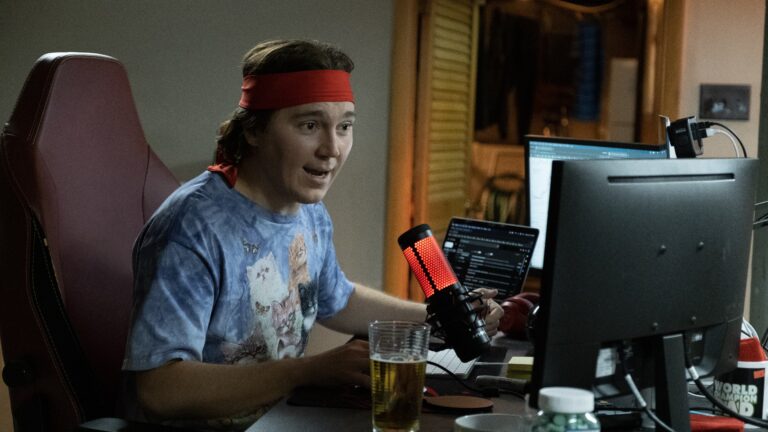
On this episode, JD and Brendan review Craig Gillespie’s latest film Dumb Money, starring Paul Dano and Pete Davidson! It’s no wonder why Hollywood wanted to tell this story given its David vs Goliath appeal, however there’s a debate to be had about its execution. And we do our best to sift through why some of it works and why some of it doesn’t.

Review: Dumb Money (3:00)
Director: Craig Gillespie
Writers: Lauren Schuker Blum, Rebecca Angelo
Stars: Paul Dano, Pete Davidson, Seth Rogen

Subscribe to our Podcasts RSS
Subscribe to our Podcasts on iTunes
Listen on Spotify
Listen on Stitcher
InSession Film Podcast – Dumb Money

Movie Review: The Wes Anderson Shorts on Netflix are Superiorly Crafted Fables


Director: Wes Anderson
Writers: Wes Anderson (based on stories by Roald Dahl)
Stars: Benedict Cumberbatch, Ralph Fiennes, Dev Patel

Synopsis:

The Wonderful Story of Henry Sugar: Chronicles a variety of stories, but the main one follows Henry Sugar, who is able to see through objects and predict the future with the help of a book he stole.

The Swan: A small brilliant boy is tormented by two large idiotic bullies.

The Rat Catcher: In an English village, a reporter and a mechanic listen to a rat catcher explain his clever plan to outwit his prey.

Poison: When a poisonous snake slithers onto an Englishman’s stomach in India, his associate and a doctor race to save him.


Several prominent directors or directing teams have taken on anthology films or film series. Most notable, of course, are the Coen Brothers’ Western anthology The Ballad of Buster Scruggs and Steve McQueen’s epic series Small Axe. Some anthologies like the Cities of Love project or the V/H/S films knit short films by multiple filmmakers together around a theme. Wes Anderson and his partners at Netflix have chosen to keep this set of films, all based on Roald Dahl short stories, as four separate shorts. Though they are complete films that can be viewed in any order, these films compliment each other and have a great deal in common in how they’re shot and work thematically. (This reviewer chose to watch them in this order: The Wonderful Story of Henry Sugar, The Swan, The Rat Catcher, and Poison.)

Wes Anderson has been inching toward near complete artifice in his films for a long time. Often they look like they take place not in the real world, but on intricate sets. With these four shorts, Anderson takes that artifice to a new level. Anderson and his brilliant production designer Adam Stockhausen have built incredible sets that are intricately detailed and move with the action. Often, the actor speaking stands still as the location around him, which can be said for all characters because there are no women in these films, moves, thus creating no need for a cut in editing to a new location. One of the standouts is the ever changing background behind the titular Henry Sugar in The Wonderful Story of Henry Sugar, as the background lifts and moves him from room to room without Henry moving much of a muscle.

All four films, shot by director of photography Robert Yeoman, rely heavily on stationary, but no less exciting, action. Yeoman’s camera packs the scenes with deep backgrounds and incredible close ups. Some of the most intricate moves of Yeoman’s camera are the overhead shots and movements of characters in Poison. He slides through walls and among the rafters to make a film about a man trapped in bed feel dynamic.

The films all feel like they have very long scenes or like they were shot in long takes, but that is the mastery of editors Adam Weisblum and Barney Pilling. The two of them have impeccable timing moving from a wide to a close up and from character to character. It’s never more impressive than in The Rat Catcher, the action of which takes place nearly in only one space in front of a newspaper office and garage as a reporter and mechanic speak with the titular rat catcher. The subtle shifts in perspective and point of view are captured with a beautiful fluidity by Weisblum and Pilling.

All that said, the shorts are each exhausting in a way. Because of the way Anderson chose to adapt the stories with narration of the dialogue and plot in full, there is nothing but wall to wall dialogue for 17 or so minutes. 40 minutes in the case of The Wonderful Story of Henry Sugar. It’s quite daunting. The actors speak so quickly and the scenes move so fast that there’s almost a whiplash in the viewer’s brain as they try to keep up. 

Each of the shorts also engages in a theater of the mind aspect that, while interesting from the idea that the audience could supply their own images, is a little silly to see actors pretending to hold things in their hands. The most strange example of this is when the titular rat catcher explains how he is going to kill the rats with a tin of poisoned oats, but actor Ralph Fiennes holds nothing in his hands, just has them in the shape of a tin.

It often does feel like you can lose focus watching the films because of the constant narration. Even as aspects of the story play out as the actors speak, the mind creates its own images on top of the images on screen. It’s enough to make one zone out and have to catch themselves up on the action on screen while attempting to disregard the action in their heads. It would be as if puppeteers stared at the audience continually as they manipulated their tools and spoke the voices and gave narration. There’s too much for the brain to focus entirely. It can make you miss something important in the background as our eyes are being drawn to the speaker, constantly in the foreground.

The stories themselves are fascinating, though. It’s clear that Roald Dahl has been a great influence on Wes Anderson. The stories, like Anderson’s films, have a whimsy to them that mask a darkness underneath that crawls under a person’s skin. The most nerve wracking and gut wrenching of the shorts coming out of this dark sandbox is The Swan. The unnerving escalation of the two older teens bullying and doing great harm to Peter Watson is disturbing. It makes the viewer thankful that Anderson didn’t choose a more overtly dramatized version for this film as seeing a child in this kind of peril would have been truly horrifying. It’s the short that will haunt you the most, but also has the most to say.

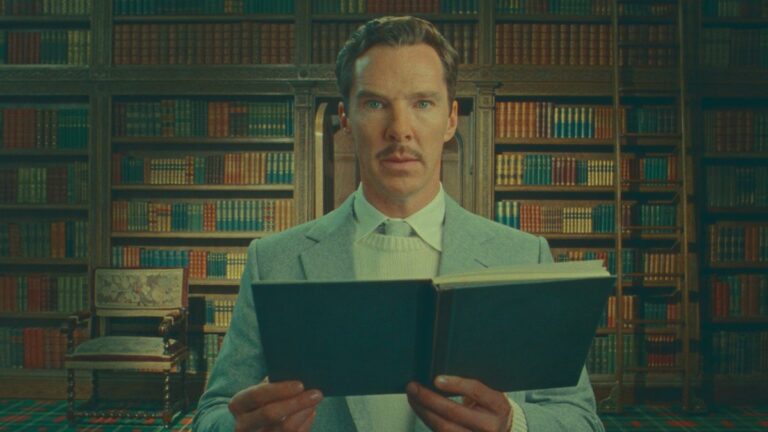
Taken together, these four shorts are funny, exciting, beautifully crafted and deftly acted by an incredible troupe. Though they can be a bit much all in a row. Take them in individually. Savor the terrific performance of Benedict Cumberbatch in The Wonderful Story of Henry Sugar. Appreciate the intricate minimalism of the sets of The Swan. Marvel at the deft editing of The Rat Catcher. Be awed by the incredible camerawork of Poison. These four shorts are a welcome addition to the Anderson canon and an obvious labor of love by all involved.

Grade: B

Movie Review (NYFF 2023): ‘The Settlers’ is a Necessary History


Director: Felipe Gรกlvez Haberle
Writers: Antonia Girardi, Felipe Gรกlvez Haberle, and Mariano Llinรกs
Stars: Mark Stanley, Sam Spruell, Alfredo Castro

Synopsis: A mixed-race Chilean, rides south on an expedition led by MacLenan, a former Boer War English captain and Bill, an American mercenary, to fence off land granted to Spanish landowner Josรฉ Menรฉndez.


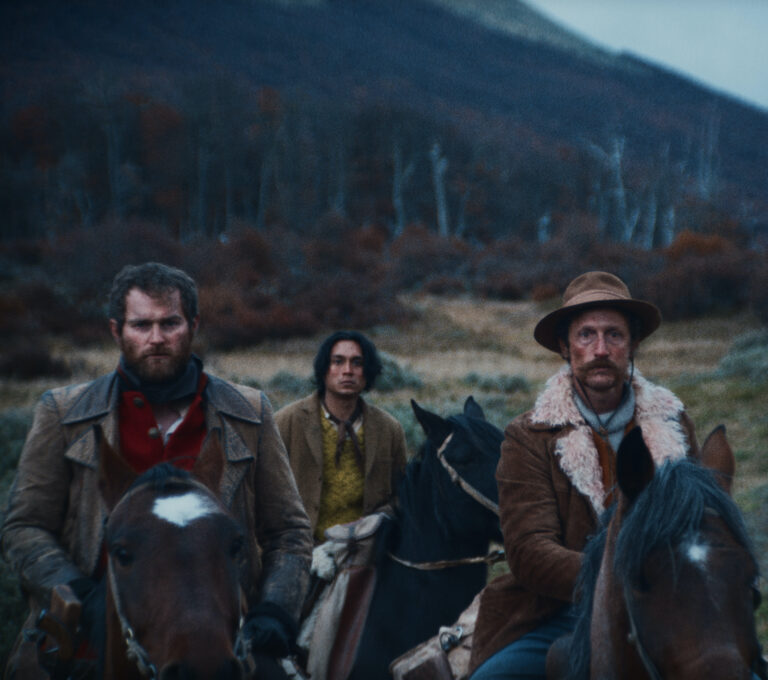
Itโ€™s not a stretch to say that the relevance of the Western film genre has diminished greatly since its height. While certain tropes and stylistic choices appear all over as inspired remnants in contemporary film, there are very few true Westerns being made today. Enter Felipe Gรกlvez Haberleโ€™s The Settlers, an impressive narrative feature debut which threads the needle between genre takedown and ode. Importantly, Gรกlves Haberle addresses an essential fact: Western films were, inherently, propagandistic by nature. In Hollywoodโ€™s mission to sanitize the history of America, the cowboy became a mythical figure. The Old West, through the likes of John Ford, Sam Peckinpah, Clint Eastwood, and more; became an idealized time period. The Settlers is able to recognize some inherent beauties found during the time of the cowboy, but never fails to highlight the ugly evil that lurked in the shadows of icons like The Lone Ranger or The Man With No Name.

 Opening in 1907, the film takes place across the vast, mostly empty landscape of Chile. We are introduced to Josรฉ Menรฉndez (Alfredo Castro) and his slew of overworked employees. While he is known throughout history as a massive landowner in Chile, the film introduces him in another manner. Harsh, bold letters appear across the entire screen to reveal his moniker: The God of White Gold. The whole film is broken up into mythically-named chapters, and likewise treats character introductions in a similar manner. While its impact may not be understood at first, Gรกlves Haberle is cleverly using these moments to imprint the idea of myth-making onto the audience. If we build up these people and this time period as larger than life, surely the acts we witness will feel all the more impactful. Menรฉndez enlists the aid of Alexander MacLennan (Mark Stanley), a British lieutenant he has hired to clear a path to the Atlantic Ocean for his sheep to safely be sold. Along the journey, he is forced to bring Bill (Benjamรญn Westfall), a caricature of a Texas cowboy, and Segundo (Camilo Arancibia), a half-Mapuche, half-Spanish scout forced to work by Menรฉndez. This slow burn of a film actually sets the stage for the remainder of its runtime rather quickly. That being said, the film might have benefitted from a bit more table setting as far as familiarizing its audience with the historical context in which the film takes place.

As the film plays on though, itโ€™s clear Gรกlves Haberle is less interested in a direct depiction of history, and more in highlighting how countless atrocities during that time have been swept under the rug. While discussing the filmโ€™s setting and events, he made it known that they are โ€œnot part of the official version of the history of Chileโ€ฆ they are not included in the school curriculum either.โ€ On the surface, The Settlers is a stark and upsetting depiction of the cruel violence of colonization. The events of this film make way for something far more frightening, however. Thereโ€™s a jump through time in the final act of the film. The audience is ripped away from wide open land and brought into the seemingly haunted home of Menรฉndez himself. We are introduced to Vicuรฑa (Marcelo Alonso), an envoy of the Chilean president. Confronting Menรฉndez for the atrocities he committed in the name of expansion, one might expect to see some form of retribution. But alas, this is a film that doesnโ€™t shy away from real-world horror. Gรกlvez Haberle made a point to note that the villains of this film still have streets, parks, and rivers named after them. Instead, the two discuss how to โ€œaddressโ€ a deeply flawed history without destroying a sense of nationalism among the people of Chile. In other words, the two are looking to save the power they have amassed by being cold, heartless men. Vicuรฑa makes his thoughts abundantly clear, even when speaking in metaphors: โ€œWool stained with blood loses all value.โ€

 The first 80 minutes of the film are framed through the lens of Segundo. Serving mainly as a witness to these horrors, he rarely speaks to the two bigots he has been forced to accompany. At most, he has five lines of dialogue for the majority of the film. But Arancibiaโ€™s near dialogue-free performance is utterly felt. With eyes that could stare directly through a soul, the anger and fear clash up against one another as he is eventually forced to partake in this evil. Itโ€™s only in the final moments of the film when heโ€™s at his most vocal. Smartly, Gรกlvez Haberle frames the final 20 minutes of the film in a totally different manner. While itโ€™s the most we hear Segundo speak, he loses all his agency in the presence of those who visit his humble abode. The entire film is framed through Segundoโ€™s viewpoint, yet he is treated with nothing but racism and belittlement by nearly every character in the film. Itโ€™s a startling way to treat your lead character, but itโ€™s a damningly effective portrayal of a history that has been washed away through ignorance. The Settlers takes a bold, often overtly-violent approach to tackling an essential subject, but when addressing a history that has been pushed aside for so long, a statement such as Gรกlvez Haberleโ€™s film is necessary.

Grade: B

Movie Review: ‘Priscilla’ is a Work of Art


Director: Sofia Coppola
Writers: Sofia Coppola, Sandra Harmon, and Priscilla Presley
Stars: Cailee Spaeny, Jacob Elordi, Ari Cohen

Synopsis: When teenage Priscilla Beaulieu meets Elvis Presley, the man who is already a meteoric rock-and-roll superstar becomes someone entirely unexpected in private moments: a thrilling crush, an ally in loneliness, a vulnerable best friend.


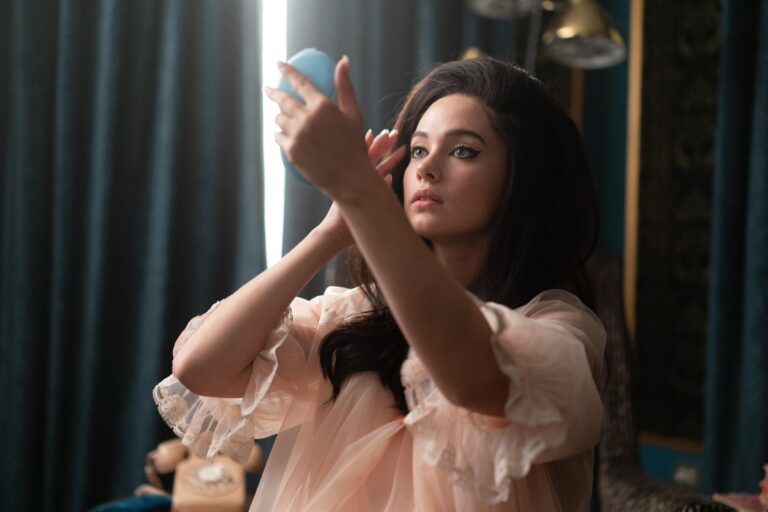
Thereโ€™s a line Aaron Sorkin once wrote years ago that immediately popped into my head while watching Sofia Coppolaโ€™s minimalist biography of Priscilla Presley. Coppola evokes a sense of innocence (and purity lost) from a simpler time that was anything but wholesome. Priscilla is that anti-Baz Luhrmann Elvis movie. One that strips away the lore, the razzle-dazzle, and exposes what Sorkin was talking about when he wrote, โ€œThe things we do to women.โ€

Whatโ€™s wrong with the way these two met and fell in love? Priscilla (Cailee Spaeny) was only 14 years old then, and Elvis (Jacob Elordi) was 24 while stationed in Germany. The teenager, who wasnโ€™t old enough to drive, smoke, or have a drink, was approached by one of Elvisโ€™s buddies at a local diner. This buddy had no business taking a pubescent teen to party on that German Army base. The excuse is that Elvis liked to talk to people from home because he was homesick. As if, somehow, that made everything okay.

Thatโ€™s the start of Priscilla, based on the nonfiction book Elvis and Me by Priscilla Presley and Sandra Harmon. The other patrons at the party hardly batted an eye when the King of Rock and Roll invited the teenager to his room, where they would meet in a few minutes. Like any man of power, his entourage never said anything because they wanted to be part of it all. Elvis was always surrounded by his buddies, no matter the situation or intimate occasion.

Like most celebrities, Elvis was insecure and the film captures the insecurities of the rich and famous. Coppolaโ€™s adaptation subtly highlights these themes that led to Elvis practically using Priscilla for multiple purposes that never took her feelings and needs into account, but only his own. In the film, Coppola draws a powerful comparison. When Elvis is granted permission from Priscillaโ€™s father to stay in Graceland with him, he goes on the road and leaves her an adorable poodle to keep her company.

The white pup has its small fenced-off area, its own Graceland. When Elvis returns, you see the similarities. Elvis is using Priscilla as his companion. She cannot bring home friends from school. Priscilla has to stay at home and cannot get a part-time job or talk to any office assistants working in the house. Elvis even dresses her, tells her how to wear her hair and makeup, and changes her hair color, making a teenage girl look like sheโ€™s trying to seem older than her age.

Coppolaโ€™s Priscilla is a beautiful prison of lonely isolation. This is never more apparent than when we see Spaenyโ€™s stoic and soulful gaze out of the window, framed by some white windowsills and the blue wildflowers of Tennessee swaying slowly in the wind. The performances bring the long courtship and marriage to a terrible light. Elordi is very good here, displaying a spot-on accent and playful, disarming charm, but he can also be ignorantly controlling and abusive without warning, with a quick-trigger temper.

The extraordinarily tall actor has Elvis use his tremendous size to impose fear, towering over Priscilla. Then thereโ€™s the emotional abuse, threatening to send his wife away or leave her, using her tears as validation (and in another incredible scene where Priscilla calls his bluff; he crumbles in fear she will leave him forever). Even the use of pregnancy is another way to keep Priscilla in the home, preventing her from having the power of free will or choosing to have a life of her own.

Then you have Spaeny, who gives a thoughtful performance. The Devs and Mare of Easttown star won the Volpi Cup for Best Actress at the Venice Film Festival, and her performance is extraordinarily instinctual here, displaying realism when someone suffers in silence despite the trappings of wealth around them. Spaeny conveys complex emotions and situations with subtlety and nuance well beyond her years. When you leave the theater, you’ll know this is one of the year’s standout performances.

There are times when Priscilla lacks energy, and it is a film that will be hard to embrace for mainstream audiences (especially anyone looking for a companion piece to last year’s Elvis). Yet, that’s beside the point. Coppola’s film is a work of art and has much to say about why we reached the tipping point of the fourth wave of feminism in the past decade.

It’s the things we do to women.

Grade: A

Movie Review (NYFF 2023): ‘Do Not Expect Too Much From the End of the World’ is All Jokes


Director: Radu Jude
Writer: Radu Jude
Stars: Nina Hoss, Dorina Lazar, Uwe Boll

Synopsis: An overworked and underpaid production assistant has to shoot a workplace safety video commissioned by a multinational company. But an interviewee makes a statement that forces him to re-invent his story to suit the company’s narrative.


After delivering what I consider his worst work to date with the Golden Bear-winning Bad Luck Banging or Looney Porn, Radu Jude corrects his wrongs with an ambitious, complex, and experimental (even somewhat moving in its latter half) picture in Do Not Expect Too Much From the End of the World, which might be one of his best works to date. It is playful and testing in its satirical nature while implementing some metatextual passages that comment on capitalism, the 2020s influencer era, and Romaniaโ€™s history (both past and present) without feeling self-righteous or overly pretentious.

Plenty of filmmakers have been inspired by the legendary and inspirational French filmmaker Jean-Luc Godard (who sadly passed away last year; his last piece of work making the festival rounds throughout 2023). Many have openly spoken about his influence in their respective works; like Tarantino, Jarmusch, Soderbergh, and even Hartley, just to name a few. However, none have acquired the persona or similar stylistic visual representation of two of Europeโ€™s most fascinating filmmakers: Leos Carax and Radu Jude. While the former has been covering the grounds for a few decades now, the latter is now rising into popularity because of his 2021 feature, Back Luck Banging or Looney Porn โ€“ an absurdist take on our frustrations during the pandemic era, privacy, sex, labeling, and social media.

That film wasnโ€™t my cup of tea. Its satire didnโ€™t flow as easily as Jude wanted, ending in a confounding and mixed experience. However, his latest work might be at the top of his filmography. Do Not Expect Too Much From the End of the World, a title that has plenty of meanings (all of them relating to life in the 21st century),  is a film that explores the screen-infected minds of modern society โ€“ while questioning the reasons why such a phenomenon has transpired โ€“ as well as Romaniaโ€™s history (both present and past). And it is all viewed through the eyes of two women named Angela. The first one we see is from a 1980s Romanian film, Angela Moves On, played by Dorina Lazar. Jude often intercuts his movie with that one to create a parallel portrait of how the world has remained the same and changed in different aspects. 

Angela, played by Lazar, is a taxi driver who spends her day driving around Bucharest during the Ceausescu reign. Via an intertitle, Radu Jude mentions that his film and Angela Moves On are โ€œin conversationโ€ with one another โ€“ finding their connections through the city’s poverty and the misogyny that both leads face during their journeys. In Do Not Expect Too Much From the End of the World, Angela (played by Ilinca Manolache with an oozing personality) is cut from the same cloth yet is far more rebellious on her terms. Sheโ€™s a sleep-deprived and overworked production assistant. Some Austrian entrepreneurs have hired the company she works for to do a safety video for their Romanian team. What we mostly see throughout the course of Judeโ€™s film is Angelaโ€™s lengthy and draining workdays, which range from fourteen to eighteen hours. In essence, sheโ€™s trapped without time to do anything for herself. 

Her job requires a lot of multitasking, as she drives around Bucharest, like Lucian Bratuโ€™s, doing errands for her companyโ€™s heads. The main thing she has to do is look for people who have been disabled at their workplace. She records those willing people saying that it was their fault instead of their bosses and they didnโ€™t take the necessary safety precautions. In exchange, they receive five hundred euros. Itโ€™s completely unjust and part of the satire that Jude wants to play with in his latest work. How does paralysis or dismemberment equivalent to that little money? Why would you take responsibility for something your bosses could have avoided in the first place? Jude plays with this notion of unfair and harsh working conditions with these scenes, Angelaโ€™s unpaid overtime, witty and hilarious lines by her bosses like โ€œRespect the rules, because if you donโ€™t, youโ€™re f*ckedโ€, as well as the constant ringing of the protagonistโ€™s phone โ€“ often suggesting that thereโ€™s another favor being asked.  

Angela is a project-based worker, so she needs these calls to come in. But at what cost? Each time sheโ€™s in her car, a feeling of angst is felt. She roams around for her companyโ€™s sake and not her activities. Her time is limited, but when her company needs her, Angela needs to go out of her way to solve their problems. One of the few things we see her do to take the edge off is making videos with her foul-mouthed persona named Bobita โ€“ aggressively saying plenty of obscenities about women and their privates (think of it like an Andrew Tate-like persona). These scenes are an odd combination where Jude puts plenty of themes in a blender to see what emerges. What does it all amount to? This amalgamation of scattered ideas paves the way for a purposefully fragmented vision that blends time and setting all together. And that comes with the inclusion of the aforementioned Lucian Bratu film. 

Do Not Expect Too Much From the End of the World is set between two different timelines, films, and societies (the modern and the haunted past). Through this double-sided lens, we see the directorโ€™s farcical vision and despair-addled reflection of todayโ€™s political and societal norms. He takes absurdism and creates controversial cinema with it โ€“ an element many filmmakers shy away from due to their incapability to make it work effectively. Jude laughs and worries about our pointless ways of living; desperate to make sense of it all, he curates unique pieces of work that transcend its irony and knack for exaggeration. Through the eyes of Angela, both Jude and Bratuโ€™s, we see how the world changes in its aesthetics, yet morality and desperation stay the same. And it feels that nobody has an answer to why this tends to happen as the years go by, not even Angela in that cinematic realm or Jude in the real world. 

Thatโ€™s why there are jokes about everything โ€“ religion, the royal family, politicians, TikTok, and even the intellectuality of Europeans. All of this on paper sounds like a mess (or, as we Puerto Ricans say, โ€œun mogoyo de tres pares). But, in the hands of a filmmaker who doesnโ€™t fear letting his thoughts go loose and express all of his worries, it ends up as a fruitful and thought-provoking project with plenty of anomalous layers.

Grade: A

Women InSession: Book to Film Adaptations

This week on Women InSession, we talk about some of our favorite book to film adaptations, why they work and the challenges of transitioning a story from the page to the screen! The two mediums are obviously very different, thus making the art of adaptation a unique skill that some films have truly mastered. Whether it’s faithful to the book or not, it’s made for some iconic films over the years.

Panel: Kristin Battestella, Zita Short, Amy Thomasson, Shadan Larki

On that note, check out this week’s show and let us know what you think in the comment section. Thanks for listening and for supporting the InSession Film Podcast!

Subscribe to our Podcasts RSS
Subscribe to our Podcasts on iTunes
Listen on Spotify
Listen on Stitcher
Women InSession – Episode 57

To hear this Extra Film episode and everything else we do, download our apps on the Amazon Market for Android and the Podcast Source app on IOS devices. The mobile app covers all of our main shows, bonus podcasts and everything else relating to the InSession Film Podcast. Thanks for your wonderful support and for listening to our show. It means the world to us.

Movie Review (NYFF 2023): ‘Maestro’ is Pure Oscar Bait


Director: Bradley Cooper
Writers: Bradley Cooper and Josh Singer
Stars: Bradley Cooper, Carey Mulligan, Matt Bomer

Synopsis: This love story chronicles the lifelong relationship of conductor-composer Leonard Bernstein and Felicia Montealegre Cohn Bernstein.


Even though Maestro contains an array of dynamic set pieces that serve as visual cinematic eye candy, Bradley Cooperโ€™s biopic about one of the greatest composers to ever walk to the Earth, Leonard Bernstein, ends up being prosaic due to the focus on showcasing the actor-turned-filmmakerโ€™s talents on and off the screen instead of that of its subject. 

Last year, Cate Blanchettโ€™s Lydia Tรกr, the fictional lead character from Todd Fieldโ€™s masterpiece named after the conductor herself, said many things, some of which had reason (mainly relating to artistry) and others paved the way for her downfall. One of the first things you hear her say and details you know about her during the interview she has with Adam Gopnik from the New Yorker is her love and admiration for two of the most recognizable and acclaimed composers of all time, Leonard Bernstein and Gustav Mahler โ€“ the two shapeshifting the landscape of classical music as a whole at different points in time. She recalls the maneuvers filled with elegance and poise, with the addition of a rebel-like vision and effervescent charisma needed to reconstruct some of those beloved pieces from the Austro-Bohemian Romantic composer. 

Although fictional, Tรกrโ€™s words are inspired by those who have lauded these maestrosโ€™ works. Like Tรกr, Bernstein had an obsession with Mahler, to the point where he played plenty of his symphonies throughout the 1960s and 80s. All of this is explained in full detail, as well as the other aspects of his complex and legendary life, in the 2021 documentary Bernsteinโ€™s Wall by Douglas Tirola. However, we have never seen a feature film depicting or inspired by his life throughout the different stages of his career. We have witnessed biopics about Mahlerโ€™s trajectory and relationship with his wife Alma via Ken Russellโ€™s film back in 1974. But what about Bernstein? โ€“ as Lydia Tรกr would have yelled. Well, actor and filmmaker Bradley Cooper is up for the task with a film called Maestro, the title given out of respect to an accomplished musician with enormous talent. 

From the title alone, Cooper is already giving out flowers to the conductor. Maestro begins with Leonard Bernstein (Bradley Cooper) being interviewed while sitting at one of his most prized possessions, the piano. In a song by British recording artist Sampha, he sings about nobody knowing him like the piano; that may also be true for Bernstein, but thereโ€™s someone who does so to another level, one that transcends his artistry and masterfulness, Felicia Montealegre (Carey Mulligan). Heโ€™s playing some somber pieces, one of which is inspired by his late wife. Bernstein loved her very much, telling the camera crew that he misses her โ€“ Feliciaโ€™s presence is still lingering in these now haunted walls where he resides and the gardens accompanying it. 

This first glance at an old, but not completely broken, Bernstein offers the viewer what would be the core of the story Cooper wants to tell โ€“ the love he has for both the craft and his wife, more so the latter. Thereโ€™s some poignancy in these initial frames captured by cinematographer Matthew Lebatiqueโ€™s eye with such ease and elegance, albeit it is missing the daring nature present in his work with Daren Aronofsky. After this scene, we travel back in time, where color switches to monochrome in a stylistic exercise by Cooper thatโ€™s just for flash rather than a storytelling mechanism. We see the moment when Bernstein meets the love of his life at a party, just moments after conducting with the New York Philharmonic. Immediately, you sense a connection between the two, which is elevated by the lead pairโ€™s chemistry and talent. 

Their personalities match with one another, even with Bernsteinโ€™s complex persona. The two have a high level of confidence and liveliness, amongst other similar qualities, that attracted them to one another. They will end up together for years to come. But these moments that lit their spark are featured to make the audience understand the reason why this film is seen through her lens. There are plenty of sequences in whichthis is shown: a woman who stands beside her love through thick and thin, as well as through fame and artistry. This induces instances where she must live in the shadow of her husbandโ€™s grandiose stature. At the center of it all, thereโ€™s the stage โ€“ the theater or podium. This setting or object thatโ€™s at the center of the spotlight shows us the ups and downs of this relationship, full of tides. 

A playfulness within the scene-to-scene transitions helps map out how they stand in union โ€“ the roles they play in each otherโ€™s lives. They both love the arts, but even more so, they love one another. We have seen similar relationships depicted on the big screen in ways that thereโ€™s space for a fully-fledged exploration of both players. However, what the actor-turned-filmmaker does with Maestro is dwelling in the classic and predictable biopic structure that makes its presentation lackluster and its ideas surface-level. There are a couple of reasons why the film falls flat. But the reason I would like to point out is the filmโ€™s mundane emotional resonance โ€“ the crux of Maestro and the key to Bernsteinโ€™s passion for the craft, the love he has for his wife. 

Of course, Cooper and Mulligan are great performers. (Mulligan cast as a Latina woman, alongside her accent and lines about her homeland โ€“ both of which are pretty abasing, was weird to understand the reasonings for it.) And they do some intriguing work here that doesnโ€™t rank amongst their best but does show us some new abilities they might have been keeping secret. However, the complexity of the main characterโ€™s relationship is not explored in a way that I would find personally engaging due to the creaky screenplay that Cooper and Josh Singer (Spotlight, First Man) have concocted. The film does have scenes that, on paper, seem complex, as Leonard and Felicia have some confrontations and discussions about several topics. But the words encrypted in the script donโ€™t match the passion and sheer emotion that the actors contain within their portrayals. You end up feeling that this is more of a showcase for Cooperโ€™s growth as a director and actor.

He experiments with many techniques to see if he can nail them (and in most cases, he does so) instead of focusing on its subject โ€“ the main reason why people are anticipating this picture. You see how Cooper embodies the late great maestro with such panache as if he has transformed into another being. While I still prefer his work on his adaptation of A Star is Born, which I also deem as underwhelming, I truly appreciate how he can get into character so efficiently. He lets the music puppeteer into his every act and does vice versa as he conducts. And, in a sense, thatโ€™s also part of the problem. Cooper operates under a guise that he is forcing onto himself rather than acting naturally. While occasionally stilted, he makes the better of it, even if it doesnโ€™t feel technically real โ€“ veering into a version of Bernstein thatโ€™s not true-to-life but embraces the fanciful. 

It helps him veer into interesting territories, storytelling and performance-wise. Yet, I donโ€™t believe it is enough to shake off the feeling that thereโ€™s plenty missing from the film. Most of those aspects that Maestro lacks keep it at a distance on a thematic and psychological level. Bradley Cooperโ€™s sophomore feature ends up being unimpressive and uninspired, unlike the talents of the conductor being portrayed by this filmโ€™s director. The few lines that Lydia Tรกr dedicated to honor her admiration for the maestro are of more worth than Cooperโ€™s two-hour Oscar bait tour-de-narcissism.ย 

Grade: C-

Podcast Review: Flora and Son

On this episode, JD and Brendan review John Carney’s new film Flora and Son! We are big fans of Carney, especially Once and Sing Street, and have been looking forward to this all year. There are few filmmakers that can capture the heart of music like Carney, and it makes his films a distinct experience. Flora and Son may not be his best film, but there’s still much to admire.

Review: Flora and Son (3:00)
Director: John Carney
Writers: John Carney
Stars: Eve Hewson, Jack Reynor, Orรฉn Kinlan, Joseph Gordon-Levitt

Subscribe to our Podcasts RSS
Subscribe to our Podcasts on iTunes
Listen on Spotify
Listen on Stitcher
InSession Film Podcast – Flora and Son

Movie Review: ‘Paw Patrol: The Mighty Movie is Perfect for Tiny Viewers


Director: Cal Brunker
Writers: Cal Brunker and Bob Barlen
Stars: McKenna Grace, Taraji P. Henson, Marsai Martin

Synopsis: A magical meteor crash lands in Adventure City and gives the PAW Patrol pups superpowers, transforming them into The Mighty Pups


Whether you wanted one or not, a sequel to PAW Patrol: The Movie is here in PAW Patrol: The Mighty Movie. Reviewing a movie like this is always daunting, as its target audience isnโ€™t adult moviegoers but small children. However, children canโ€™t roam free on their own in the theater. Their parents are quasi-forced to sit through the film and enjoy (or endure) whatโ€™s in front of them while their kids are distracted by the colors and bright animation on the screen. Most animated movies these days are indeed distractions. Small children will enjoy how pretty it looks, but those looking for a deeper message or at least something to grasp wonโ€™t get much out of them. PAW Patrol: The Mighty Movie is no different. However, it is far superior to the first movie. 

Part of the reason why itโ€™s a better movie has to do with the fact that the PAW Patrol become full-fledged superheroes, with a meteor carrying magical crystals giving each respective member of the crew superpowers: Skye (Mckenna Grace), for example, can fly, while Chase (Christian Convery) can travel at super-speed. It plucks powers from the Justice League and Fantastic Four. It wraps them into the Mighty Pups, where the team now has to go after Victoria Vance (Taraji P. Henson), who wants to steal the crystal for her gain, and Mayor Humdinger (Ron Pardo), who returns from the first film to exact his revenge on the PAW Patrol.

As you can see, the plot is not very sophisticated, and one doesnโ€™t expect it to be with a film titled PAW Patrol. But the film contains more than enough compellingly crafted action sequences to at least mildly entertain adults and blow away small childrenโ€™s minds. One kid sitting in front of me was at his first movie and couldnโ€™t believe the scenes where Skye could destroy meteors with the power of flight or when Chase dodged Vanceโ€™s electroshocks in bullet-time fashion. Did I expect to see visual references from The Matrix in a PAW Patrol movie? Absolutely not. Nor did I see an Olivia Rodrigo needle drop coming within one of the first action sequences that reintroduce audiences to the world โ€“ and team โ€“ that comprise the PAW Patrol.

These elements make the filmย  surprisingly off-kilter, with enough direct references to appease adults. At the same time, kids get their first exposure to what the power of cinema can achieve. Of course, the story isnโ€™t at all developed convincingly. There are too many plot holes to explain exactly what Vance wants to do with the crystals or how they work. How can the crystals magically bind to the pups and somehow give them powers? And how are they suddenly able to hone them instantly? In superhero origin stories, it takes weeks, if not months (and sometimes two movies), for a hero to finally understand their place in the world and master their powers.

In PAW Patrol: The Mighty Movie, it takes five seconds. Skye realizes she can fly, and weโ€™re supposed to buy into the fact that sheโ€™s now the filmโ€™s Supergirl (the cape during the climax was a nice touch). They do, however, play around with the concept of how the powers work through Liberty (Marsai Martin), who has a hard time figuring out what her powers are, until they magically appear during the climax, in a moment everyone, except the kids (who yelled out WHOAAAAA) saw coming.

The animation is also nicely done. Itโ€™s not as detailed as Spider-Man: Across the Spider-Verse, but that feels like an apples-and-oranges situation. We canโ€™t compare the two because they donโ€™t appeal to the same audience. PAW Patrolโ€™s animation is more towards small children, with strong sequences of action that are never too violent nor too edgy but with the right amount of kinetics to engage the smallest possible viewer. I was even surprised when the meteorite blew up the Patrolโ€™s tower, though it was a light thrill.

The animation work is primarily aimed at small children, in which characters feel like cartoons and the world doesnโ€™t only feel lived in and grounded in reality but with enough fantastical elements to blow the small kids away. However, that doesnโ€™t prevent Mikros Animation from crafting some truly incredible textures on the titular pups and playing with light and color to enhance the action sequences on screen.

As a result, PAW Patrol: The Mighty Movie is completely inoffensive. No, it wonโ€™t change cinema. Yes, itโ€™ll be forgotten in a day for adult viewers who went to see it with their kids, but it doesnโ€™t matter. What matters is whether or not the smallest viewer will have the time of their lives. I can confidently say they absolutely will, and thatโ€™s the only thing in the world worth caring about with a movie like this. Take your kids and watch them have an incredible time on the silver screen. They may get hooked for life.

Grade: B-

Movie Review: ‘More Than Ever’ is a Textured Character Study


Director: Emily Atef
Writers: Emily Atef, Lars Hubrich, and Josune Hahnheiser
Stars: Vicky Krieps, Gaspard Ulliel, Bjรธrn Floberg

Synopsis: Hรฉlรจne and Mathieu have been happy together for many years. The bond between them is deep. Faced with an existential decision, Hรฉlรจne travels alone to Norway to seek peace and meet a blogger she found on the internet.


For many writers, terminal illnesses only serve as a source of dramatic tension when they can provide a fatalistic ending to a story that wouldnโ€™t be quite as romantic if it concluded with two lovers walking off into the sunset together. Teenage girls have spent decades lusting after Byronic heroes who suffer from mysterious illnesses, so itโ€™s only natural that most filmgoers have an idealized vision of what life as the victim of a terminal illness is like. Itโ€™s all tearful deathbed confessions and intense declarations of love. If you throw a loving, supportive husband into the mix and set the story in a series of picturesque locations, you can expect that certain viewers might start to get the wrong idea. 

Emily Atefโ€™s More Than Ever (2022) is no Camille (1936) but it also refrains from being the anti-melodrama that one might expect it to be. It dispenses with many of the tropes that we associate with the โ€˜sick girlโ€™ genre but it doesnโ€™t necessarily play out as Love Story (1970), as reimagined by the Dardenne brothers. When approaching this sort of material, which has traditionally been the stuff of sappy melodrama, directors tend to employ a visual style that provides an obvious counterpoint to the content of the narrative. Atef is confident enough to avoid obviously signaling that this isnโ€™t your grandmotherโ€™s four-hanky picture. Her exploration of one womanโ€™s struggle with major existential questions is absent of the sort of art school affectations that typically weigh down this sort of genre experiment. This is a full-throated melodrama that tackles weighty issues head-on and itโ€™s all the better for it.

We get an inkling of what Atef is working towards early on, when we drop into the filmโ€™s narrative at a surprisingly late point in the game. Hรฉlรจne (Vicky Krieps), is introduced as a successful young urbanite who maintains a stable, loving relationship with her husband Matthieu (Gaspard Ulliel). Their comfortable lives are thrown into turmoil when Hรฉlรจne learns that she suffers from terminal lung disease. Matthieu tries his hardest to meet her on her level and relate to her struggles but Hรฉlรจne comes to feel that she needs to get away from everything and everyone sheโ€™s ever known. She begins to interact with Mister (Bjรธrn Floberg), a Norwegian blogger who suffers from a terminal disease and ends up traveling to Norway to live with him. Matthieu agrees to this arrangement, on the condition that he will still be able to contact and visit her. However, Hรฉlรจne feels herself drifting further and further away from the people that she knew in her previous life and begins to question whether she wants to cut off contact with Matthieu altogether. 

This is one of those films that subtly advances a mildly provocative thesis statement. Our heroine endures grief and trauma while wrestling with the knowledge that thereโ€™s no way to escape from the fact that sheโ€™s dying. The finality of this statement is almost impossible to come to terms with, so she starts to address the problems in her life through a utilitarian lens. As time goes on, we see her compartmentalizing her emotions and treating those who are close to her like pawns on a chessboard. One naturally assumes that she is attempting to limit the amount of damage that her eventual death will cause, but there is a darker undercurrent to her attempts to organize the final months of her life down to the nth degree. She is convinced that she is taking control of her life and regaining the sense of independence that she lost when those around her began to treat her like an invalid. Itโ€™s easy to get swept up in the excitement that she feels when she starts to put her life back in order but, as the film comes to a sudden, unexpected close, you are left with plenty of questions about the toll that Hรฉlรจneโ€™s actions could take on her mental health. 

This is just one of many ways in which this thoughtful drama creeps up on you. Atefโ€™s generous, carefully controlled style of direction helps to bring out the best in both Krieps and Ulliel, while also introducing unexpected tonal shifts into the progression of the narrative. There isnโ€™t one flashy showpiece that serves as a selling point for this quiet, emotionally restrained film but itโ€™s strong enough to stand on its own terms. Itโ€™s the sort of finely observed, textured character study that tends to fly under the radar but it should find an audience among fans of European art cinema. 

Grade: A-