



Director: Jim Henson
Writers: Dennis Lee, Jim Henson, Terry Jones
Stars: David Bowie, Jennifer Connelly, Toby Froud
Synopsis: Teenage Sarah journeys through a maze to save her baby brother from the Goblin King.
Released in 1986, Labyrinth arrived at a curious crossroads in popular cinema. It was the final feature film produced by Jim Henson before his death, a lavish fantasy aimed at younger audiences yet steeped in a distinctly adult sense of longing and theatricality. Starring a young and earnest Jennifer Connelly and an unmistakably charismatic David Bowie, the film blended fairy-tale peril, musical bravado, and handcrafted spectacle. Four decades on, Labyrinth has flourished, becoming a cult classic whose magic seems to deepen with time. Earlier this year, it came back to the big screen, so many audiences were able to experience the magic of this movie in the cinema.
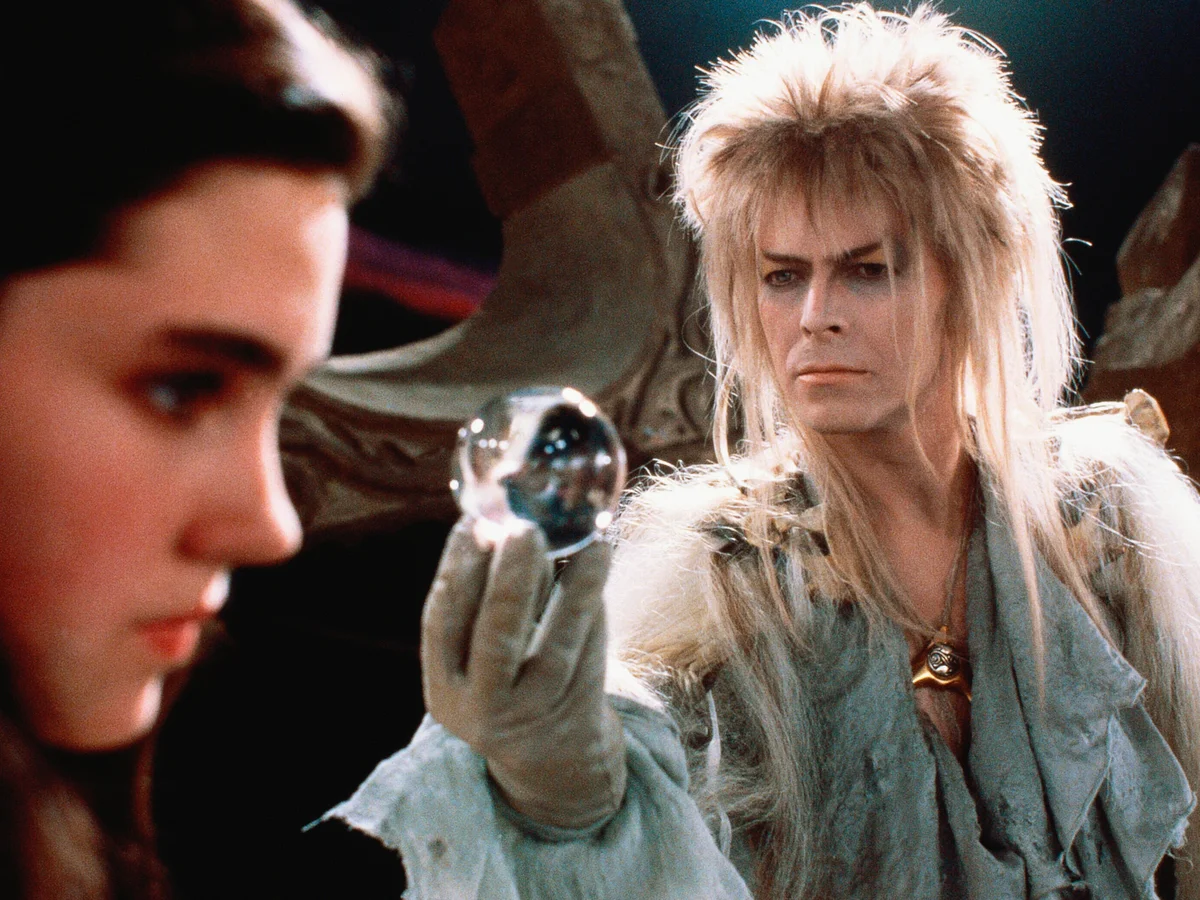
At its heart, Labyrinth tells a deceptively simple story. Sarah (Connelly), a restless teenage girl frustrated with responsibility and yearning for escape, wishes her baby brother away to the Goblin King, Jareth (Bowie). Regretting her words, she must navigate a shifting maze filled with riddles, creatures, and temptations to rescue him before time runs out. What unfolds is a classic coming-of-age journey, filtered through dream logic and theatrical fantasy.
Upon release, Labyrinth struggled to find its audience. Critics were divided, some praising its imagination while others found its tone uneven, unsure whether it was meant for children, adults, or somewhere in between. At the box office, the film underperformed, reportedly failing to recoup its substantial budget in the US. But overseas in the UK the film performed much better. In an era dominated by more straightforward family fare and the rising spectacle of special effects, Labyrinth was perhaps too strange, too theatrical, and too sincere to land cleanly.
Time, however, has been kind. As the initial expectations fell away, viewers began to appreciate the film on its own terms. Home video and repeat viewings allowed its layers to emerge: the sly humor, the emotional undercurrents, and the sheer confidence of its world-building. What once seemed awkward now feels boldly individual, and it is suitable for all ages.
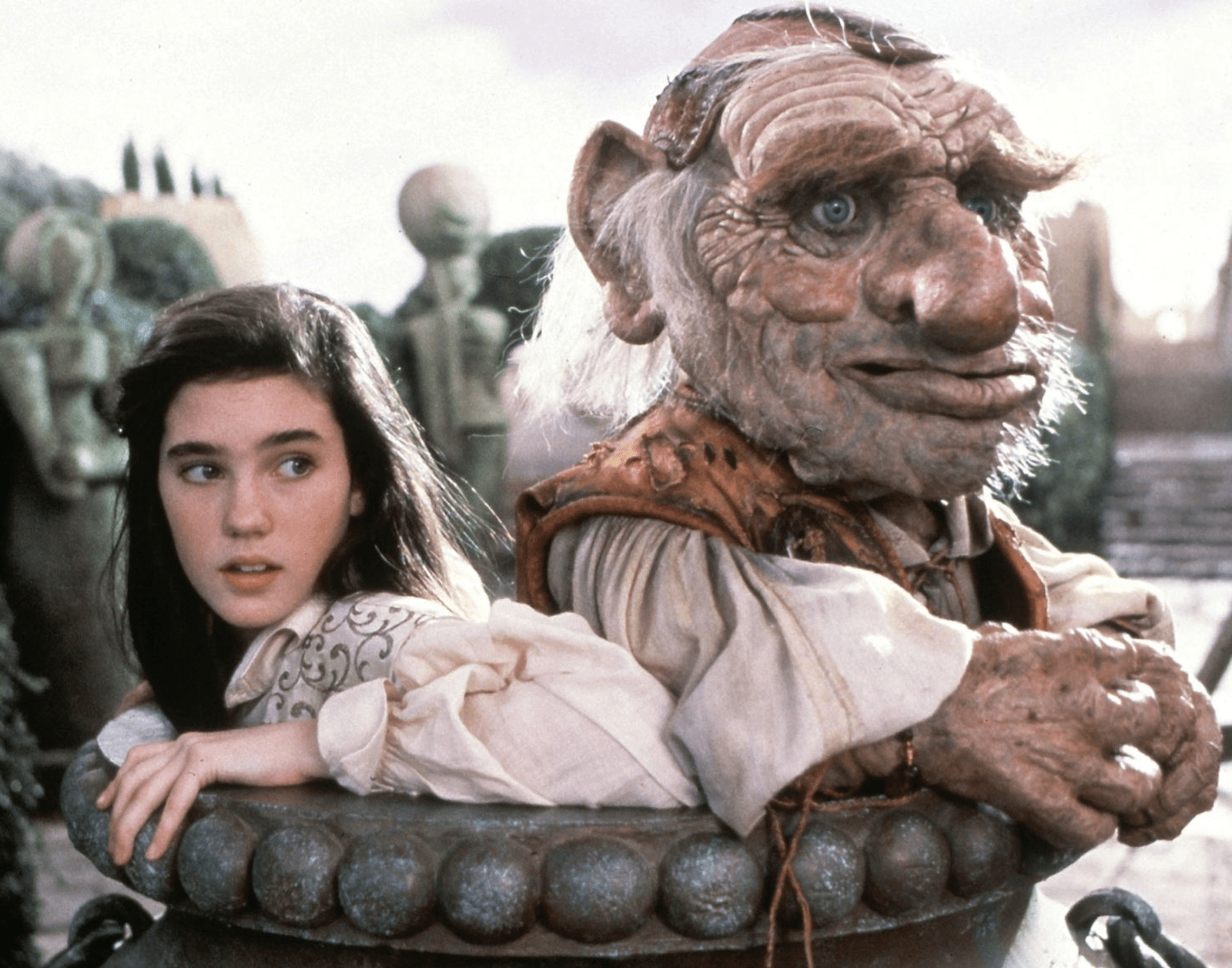
A major reason for the film’s enduring appeal lies in Jim Henson’s puppetry. Working through his Creature Shop, Henson and his team populated the labyrinth with a menagerie of tactile, expressive beings; each with its own personality, flaws, and physical presence. From the gruff charm of Hoggle to the gentle loyalty of Ludo and the gallant absurdity of Sir Didymus, these characters feel alive in a way that transcends technique. When watching, you might see some strings behind little creatures, but this only adds to the charm of puppetry. With the world building, you can look around the screen and see puppets moving, reacting and helping add to each scene.
The production was famously ambitious. With a reported budget in the mid–$20 million range, Labyrinth was a costly endeavor for its time, especially for a fantasy that relied more on craftsmanship than cutting-edge technology. The film’s visual identity rests firmly on practical artistry: sets, costumes, and puppets painstakingly designed and performed – the ending scenes clearly inspired by Escher are brought to life with quirky camera tricks and being hand crafted. While many effects-heavy films of the era now feel dated, Labyrinth retains a timeless quality precisely because its magic is handmade.
Presiding over it all is David Bowie’s Goblin King, Jareth; one of cinema’s most singular antagonists. Bowie approaches the role not as a conventional villain but as a seductive trickster, equal parts threat and invitation. His musical numbers, written specifically for the film, which include “Magic Dance” and “As the World Falls Down,” have been released as singles, covered by other artists (just go on YouTube), and contain fabulous quotes for millions of merchandise items.
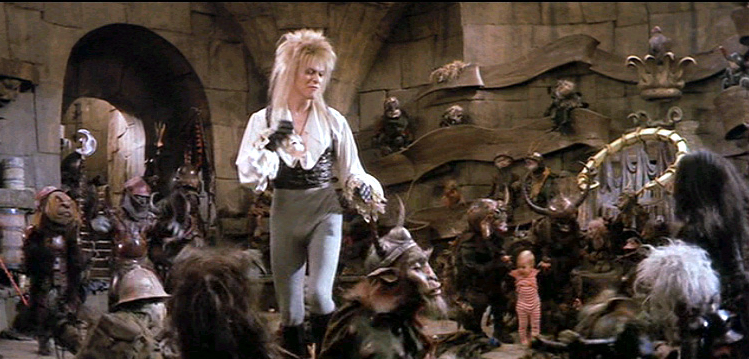
What ultimately makes Labyrinth a memorable, favorite piece of cinema after 40 years is its trust in its audience, young and old, to grapple with ambiguity, to laugh at its oddities, and to feel the pull of its emotional truths. The choice to favor puppetry over CGI gives the film a warmth and immediacy that modern fantasy often struggles to replicate. In a world where stories are now predicted and edited to fit algorithms and targets, Labyrinth’s story, rooted in the universal fear of growing up and losing imagination, feels fresh and remains perpetually relevant. Labyrinth may not have conquered the box office in 1986, but it has conquered something more lasting: the hearts of generations who return to its winding paths, finding new meaning each time. Forty years on, the maze still shifts, the goblins still sing, and the magic will remain forever.