


The 85th Academy Awards had a slew of Best Picture contenders that appealed to every demographic of the Academy. We got a new spin on the Western genre with Django Unchained, a political thriller riddled with controversy in Zero Dark Thirty, and an epic musical being adapted for the big screen with Les Misérables. But the Best Picture prize went to Ben Affleck’s Argo, which ended up sweeping the whole season winning at Golden Globes, Critics’ Choice Awards, BAFTA, and Producers Guild of America. However, the film’s director was nowhere in sight in the Best Director category at the Academy Awards.
How is it that a film like Argo swept the televised awards for Picture and Director, yet Ben Affleck still missed the latter’s lineup at the Oscars? Even stars and directors, like Bradley Cooper and Quentin Tarantino, from other Oscar-nominated films were baffled by this decision. So, with Ben out of the race, who else was going to take the prize?
In a shocking turn of events, Ang Lee nabbed his second Oscar for Best Director for his box-office hit, Life of Pi. And I’ll be frank: I personally found the film to be pretty to admire, but I could never get emotionally attached to the story. When Ang Lee was announced as the winner, I was honestly shocked that he managed to win the category. Then again, when you have the quote unquote “frontrunner” that swept the major precursors for Best Director out of the race, almost any of the five in the field that ended up winning it would stun you. In this article, I want to dissect this Best Director race and discuss how Ang Lee managed to sideswipe the competition to get this Oscar.
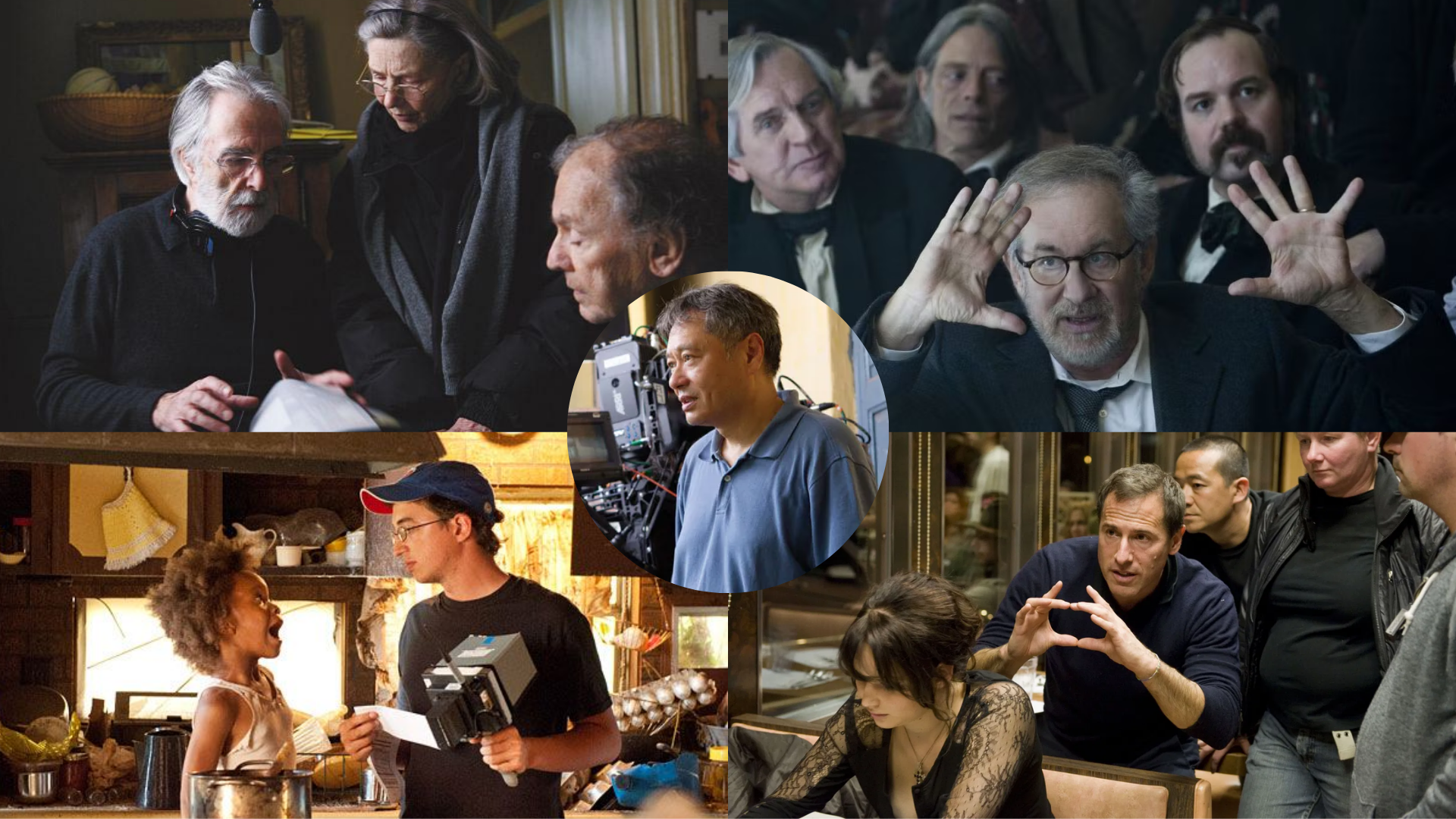
Before I go any further, I want to bring up that this was the last time (so far) in which the Directors’ Guild of America only had aligned with the Oscars in two nominees: Ang Lee for Life of Pi and Steven Spielberg for Lincoln; the other nominees at the guild included Ben Affleck for Argo, Kathryn Bigelow for Zero Dark Thirty, and Tom Hooper for Les Misérables. I would argue that while Hooper did receive a DGA and Critics’ Choice nomination for Best Director, it’s not the type of directing that the branch would nominate. It also falls into the more recent trappings of remakes/reimagining a known source material for a modern audience being shunned by the branch. The only two remakes to get in for Best Director during the preferential ballot era were True Grit and West Side Story; both of which had more known and respected auteur filmmakers behind the camera.
As for Zero Dark Thirty, I’d have to imagine that Kathryn Bigelow missed this time as the film didn’t have enough time to build momentum for a Best Director nod like her previous film, The Hurt Locker. Keep in mind that The Hurt Locker had a world premiere at Venice the year before it actually came out in 2009. That hype as well as the Summer release date was able to projectile itself into the Best Director conversation. Whereas Zero Dark Thirty had its film come out in December for a limited theatrical run, so it can qualify for the Academy Awards. So, maybe it was kicked out for not being able to hype itself up in time to get a spot even though it made it in for the televised precursors? It’s honestly a headscratcher how that one missed.
As for Argo, I’d have to imagine that the directing branch as a whole either didn’t see Affleck as an auteur director like Lee or Spielberg. Or worse they assumed he was safe for a spot, but voted for a more favorable contender from the picky group. Either way, I’ve never witnessed such a baffling decision like this, where the supposed “frontrunner” in the race wins all of the televised groups but still gets kicked out of the club.
Instead, the director’s branch decided to nominate Michael Haneke for Amour, Benh Zeitlin for Beasts of the Southern Wild, and David O. Russell for Silver Linings Playbook. Haneke played for the more international side of voters, as well as having a successful campaign by Sony Pictures Classics. It also helped that Amour had won the Palme d’Or prize at the Cannes Film Festival earlier that year, cementing his chances at some awards buzz.
Benh Zeitlin not only had critical acclaim for his directorial debut, but even won a few prizes along the way for Beasts of the Southern Wild. The Fox Searchlight contender started its way from Sundance, where it won the Grand Jury Prize: Dramatic category and ended up being screened at Cannes, winning the directorial debut prize, the Caméra d’Or (aka “Golden Camera”). There was also a breakthrough performance by Quvenzhané Wallis that was getting recognition by critics and voters, resulting in an Academy Award nomination for Best Lead Actress.
Now for the elephant in the room: David O. Russell was a highly respected and beloved filmmaker, who had a comeback with The Fighter. Not only did that prove he could direct a big ensemble film, but Silver Linings Playbook showcased that he can still do comedy for a broader audience. It also helped that he wrote the adaptation of Matthew Quick’s novel, which is a factor the branch has been favoring more as the years have gone by. Add in the fact that Silver Linings Playbook had Harvey Weinstein campaigning the film and you got yourself a Best Director nominee in play.
As for Steven Spielberg, Lincoln was a much stronger contender than his last Best Picture nominee, War Horse. Not only did this have the support in the below-the-line categories, but the film had acting support, getting three nominations for Daniel Day-Lewis, Sally Field, and Tommy Lee Jones in for their respective categories. The film was also written by a more respected writer by the name of Tony Kushner, who was previously nominated for co-writing Munich.
While the film did score 12 nominations, Lincoln only walked away with two wins for Best Lead Actor and Production Design; the latter of which was considered a major upset. Outside of that, the Steven Spielberg-directed film couldn’t muster up another major win for its actors or Best Adapted Screenplay. You’d think a movie about Abraham Lincoln directed by the three-time Oscar winner and had Daniel Day-Lewis in the titular role might’ve been an automatic lock for a Best Picture win.
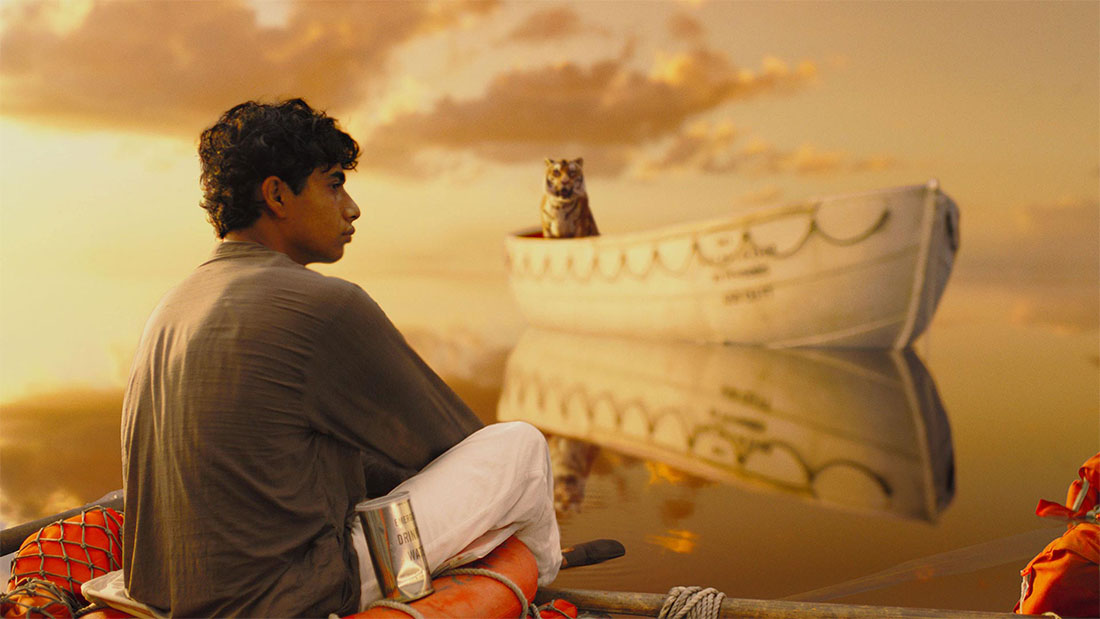
In regards to Life of Pi, the film was adapted by Oscar-nominated screenwriter, David Magee, who was translating Yann Martel’s popular novel into this visual technical achievement film. This was also a project that was being passed around to various directors, ranging from the likes of M. Night Shyamalan, Alfonso Cuarón, and Jean-Pierre Jeunet. Eventually, the book landed in the hands of Ang Lee, who’s been known for pushing the boundaries of visual effects with Hulk and would later direct Gemini Man.
It had its world premiere at the New York Film Festival as the event’s opening film, which garnered critical acclaim and would go on to gross more than $609 million worldwide. After defying expectations on how successful the film would become to audiences and making a profit for 20th Century Fox, the question remained: can Ang Lee pull off a win for Best Director? The answer was revealed on February 24th, 2013, in which he managed to win the prize without winning a single televised prize.
How exactly did he do this? Well, Life of Pi not only scored 11 nominations, but it was favored to win a couple of technical categories, such as Best Visual Effects, Original Score, and Cinematography. The film itself is gorgeous to look at, and even offers a beautiful score by Mychael Danna. I have my own personal gripes in regards to the CG tiger, as I’m always aware when it’s real and when it’s being imitated by computer effects. I’m aware that there are rules and regulations in regards to training animals for a film set, but at that point you might as well resort to making the whole thing an animated movie as opposed to shooting it as a live-action/CG-hybrid film.
Putting my personal issues aside, I think another reason why Ang Lee managed to win was because he was the only nominee to have shown up at the precursors. Despite losing all of the Best Director prizes to Ben Affleck, Ang was still nominated at Golden Globes, Critics’ Choice, DGA, and BAFTA. And if you’re nominated at all four precursors, your chances of winning the prize might help you in a fractured race.
I also believe that while the other directing contenders were lifted by their actors, Life of Pi works on the strength of its direction. If anything, it’s because of Ang Lee’s directing that we got a terrific debut performance by Suraj Sharma, as he’s working off of tennis balls on sticks and the actor putting all of his trust into the director. Without that trust being put into Lee, the performance wouldn’t be as good as what it is.
Something else to consider is that while Steven Spielberg could’ve been in the running for Best Director, it’s really challenging to win the category a third time; the only people who’ve done it were:
- William Wyler [Mrs. Miniver, The Best Years of Our Lives, and Ben-Hur]
- Frank Capra [It Happened One Night, Mr. Deeds Goes to Town, and You Can’t Take It With You]
- John Ford [The Informer, The Grapes of Wrath, How Green Was My Valley, and The Quiet Man]
I do wonder if the fact that Lincoln wasn’t this towering, technical achievement is what might’ve prevented Steven from winning his third directing Oscar. And it is important to remember that Lee had only won one directing prize for Brokeback Mountain. Had Ang Lee won another Best Director Oscar with Crouching Tiger, Hidden Dragon, I don’t know if he would’ve been able to secure a third win with Life of Pi.
As I’m wrapping up here, I wished I was more invested with Life of Pi like my colleagues have been over the years. I gave it another shot and came away from it still feeling the same way. It’s a movie I admire for its ambitions and the technical work for the most part is pretty spectacular. I just wished I was more invested in the material, as I came away from it respecting it rather than loving it.
I do ask that everyone reading this article checks out the short documentary called Life After Pi. The film goes into the visual effects company, Rhythm & Hues Studio, that helped bring the movie to life only to declare Chapter 11 bankruptcy two weeks prior to winning the Oscar for Best Visual Effects. It also explores the rapidly changing landscape of visual effects artists, who are responsible for bringing our favorite TV shows and movies to life; some of their credits include Babe, The Golden Compass, and Game of Thrones. Even if you have seen this documentary, I encourage you to pass this movie along to everyone so that they’re made aware of this situation.