Home Blog Page 74

Movie Review: ‘Venom: The Last Dance’ is Entertaining and Uneven


Director: Kelly Marcel
Writers: Kelly Marcel, Tom Hardy
Stars: Tom Hardy, Juno Temple, Alanna Ubach

Synopsis: Eddie and Venom are on the run. Hunted by both of their worlds and with the net closing in, the duo are forced into a devastating decision that will bring the curtains down on Venom and Eddie’s last dance.


On the surface, it’s a head-scratcher how Venom has become a viable film franchise despite critical drubbing. However, if we’ve learned anything, the audience defines a hitโ€”not to mention one with staying power; which explains how Venom: The Last Dance came to be. The Tom Hardy franchise makes money, all while people still pay for the theatrical experience instead of waiting to stream it on their phones.ย 

Venom 3: First Reactions After the Premiere

That’s nothing to dismiss nowadays when it has become harder and harder to put people in bedbug-infested seats and eat and drink overpriced concessions. The Venom films fought to be different. There has always been something punk rock about raging against the Hollywood suites, delivering a special effects-laden comic book film on their own terms. Now, the original scribe of the franchise, Kelly Marcel, takes the reins in her directorial debut with the franchise’s strongest effort, which, at its best, is pure punk rock comic book anarchy goodness, for better or worse.

The third chapter in the Venom saga features our anti-heroes, Eddie (Tom Hardy) and his parasite-like best friend, Venom (also voiced by Hardy), a symbiote with whom he has forged a special bond over the years as they navigate the world together. Now, escaping to an alternate timeline, Eddie and Venom try to outrun two forces: the God of the Symbiotes, Knull, and Rex Strickland (12 Years a Slaveโ€™s Chiwetel Ejiofor), an officer in the United States Army trying to rein in all the symbiotes around the world, with Venom being the last.

Along with Dr. Payne (Ted Lassoโ€™s Juno Temple) and her right-hand woman (Clark Backo), they run the infamous Area 51 Military Base in Nevada, which is being decommissioned in a matter of days. However, before they do, Eddieโ€™s old friend, Detective Mulligan (Stephen Graham), is brought in since he is still attached to his symbiote, Toxin, who attempts to explain what the military group does not: if Venom lives, the world will end. Rhys Ifans (Notting Hill) also has a small role, appearing to do his best Peter Stormare on happy pills impression, bringing some offbeat comic relief to the story.

Venom: The Last Dance Trailer breakdown

Marcel has always had a talent for adapting her storytelling and comic style to a wide range of genres. I mean, who else can write a heartwarming family film like Saving Mr. Banks, the smoldering โ€œsexcapadesโ€ of Fifty Shades of Grey, and the sardonic wit of the Venom franchise? So many superhero films fall into the cookie-cutter, follow-the-rulebook, step-by-step, paint-by-numbers formula that the genre has grown tired over the past few decades.

Does Venom: The Last Dance have that? Sure, in droves. The โ€œlastโ€ entry in the Venom franchise falls back into comic-book superhero tropes and sometimes feels rudderless. In particular, the beginning of the film features helpful but excessive exposition, explaining the background of the Venom character. Additionally, whenever the story tries to tie in the Area 51 cast of characters, it feels more like an extension of the previous films than anything original to contribute to the genre. Then, there is the ultimate eye-rolling moment where an essential character does something so dumb that it costs their friends and colleagues dearly. It seems to be only written to move the story to the third act, which is contrived.ย 

Where Venom: The Last Dance excels is when it focuses on its roots as a dark buddy comedy. Hardy revels in the role, playing the straight man to his alter-oppositional-defiant ego, Venom. The writing is hilarious, with Hardyโ€™s Eddie serving as the straight man to Venom’s ominous quips, which can range from deranged to childlike. The humor comes fast and is absurdist to a degree. The scene with Eddie navigating the world with his symbiote partner has always been rebellious and anti-establishment, defying Hollywood blockbuster conventions. Yet, Marcel is brave enough to outline a hilarious dance number seen with an old friend that manages to keep the film, to a degree, lively and fresh.

Venom: The Last Dance' - Trailer for Third Movie Bites Heads Off, Dances,  Venomizes a Horse - Bloody Disgusting

The final result can be uneven, but the third act has more emotion and heart than youโ€™d expect. (Though I think Hardy and Marcel downplayed the moment too much, the disconnect from the buildup made me feel that Hardy was adding a neurodivergent anti-social quality to his character.) However, the Venom franchise is a Marvel entry with shades of what DC Comics has done so well for years with the Batman franchise. Venom has always been a metaphor for the duality of mental health issues (in this case, schizophrenia), as well as the social isolation and alienation of the downtrodden and castoffs that society turns its back on.

Like I said, at the very least Venom: The Last Dance is entertaining, has a wicked sense of humor, and goes its own way, for better or worse.

You can watch Venom: The Last Dance this Friday only in theaters!

Grade: B-

Episode 607: Top 5 True Crime Movies

This weekโ€™s episode is brought to you by Transformers One. Follow us on social media for your chance to win a FREE digital code!

This week on the InSession Film Podcast, inspired by Woman of the Hour, we discuss our Top 5 true crime movies! We also talk box office, Blade‘s delay, Nolan’s new vampire movie and The Academy dismissing Hans Zimmer’s Dune: Part Two score.

– Opening / Box Office (3:28)
We open the show this week with more box office discussion as we get into the expected success of Smile 2. However; what’s even more compelling is that The Wild Robot continues to show out in its fourth week with another $10 million, despite it also being released on PVOD last week.

– Blade / Nolan / Zimmer (13:35)
Before getting to our top 5, we had to spend some time lamenting the MCU once again as it was announced that Blade was being pulled from the schedule indefinitely. The news itself isn’t surprising, but you do feel terrible for Mahershala Ali and the time he’s devoted to the project. It was reported that Christopher Nolan is doing a vampire movie set in the 1920s and good lord that sounds incredible. Finally, there was confounding news that Hans Zimmer’s Dune: Part Two score is ineligible for the Oscars this year, and it just doesn’t sit right.


RELATED: Listen to Episode 516 of the InSession Film Podcast where we discussed our Top 10 Movies of 2023!


– Top 5 True Crime Movies (1:02:41)
Coming off the heels of Anna Kendrick’s incredible debut film Woman of the Hour, we wanted to talk about more true crime movies. There are many, many great films that make up the category and narrowing it down to just five was very challenging, but we had a great time talking about why these movies absolutely rule.

– Music
I Believe in Fitness – Steve Jablonsky
A Time of Quiet Between the Storms – Hans Zimmer

Subscribe to our Podcasts RSS
Subscribe to our Podcasts on iTunes
Listen on Spotify
Listen on Stitcher
InSession Film Podcast – Episode 607

Next week on the show:

Venom: The Last Dance

Help Support The InSession Film Podcast

If you want to help support us, there are several ways you can help us and we’d absolutely appreciate it. Every penny goes directly back into supporting the show and we are truly honored and grateful. Thanks for your support and for listening to the InSession Film Podcast!

VISIT OUR DONATE PAGE HERE

Chasing The Gold (NYFF 2024): The Cinematography of ‘The Brutalist’ Breaks All The Rules in the Best Way

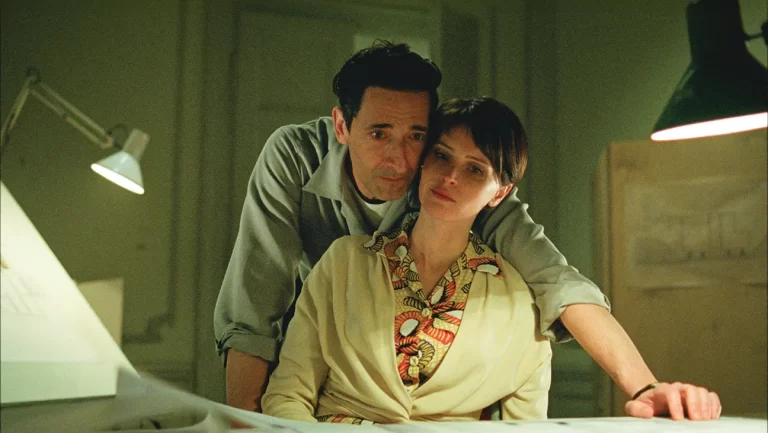
Around midway through Brady Corbetโ€™s The Brutalist, celebrating its U.S. Premiere in the Main Slate of the 62nd New York Film Festival, Lรกszlรณ (Adrien Brody) and Harrison Lee Van Buren (Guy Pearce) sit down to have lunch. Van Buren pulls out a manila envelope containing images of Lรกszlรณโ€™s architectural achievements back in Budapest after being forced out during World War II. Lรกszlรณ begins to become teary-eyed. Van Buren apologizes for upsetting him, but Lรกszlรณ reassures him that the tears are a mix of shock, pride, and happiness. Of the pictures, he says, โ€œI didnโ€™t realize these images were still available, much less of any consequence.โ€ Itโ€™s a touching exchange of dialogue with much to unpack. The Brutalist is full of dense scenes much like this one. But, in this single line, one of the primary lenses through which to view the film is discovered. It certainly rings true when contemplating this film within the context of the state of cinema. Itโ€™s hard to believe that a film like this was even possible to be made anymore, let alone be one that cinephiles (and hopefully general audiences) will rabidly flock to. And, of course, the imagery of this film wouldnโ€™t exist without Lol Crawley, the Director of Photography of The Brutalist and frequent collaborator of Corbetโ€™s. The only thing that is able to match the scope of Corbetโ€™s script seems to be his vision. And Crawley seems to have brought it to life in sprawling and exciting fashion courtesy of VistaVision. Looking at a later conversation between Lรกszlรณ and Van Buren, this sentiment is reaffirmed. Lรกszlรณ explains he was drawn to architecture because his work could remain standing as a testament to artistry. With The Brutalist being shot on film, the same holds true: There is now an essential, tangible, and lifelong quality to Corbetโ€™s staggering feat of filmmaking.

The Brutalist' Review: Adrien Brody in Brady Corbet's ...

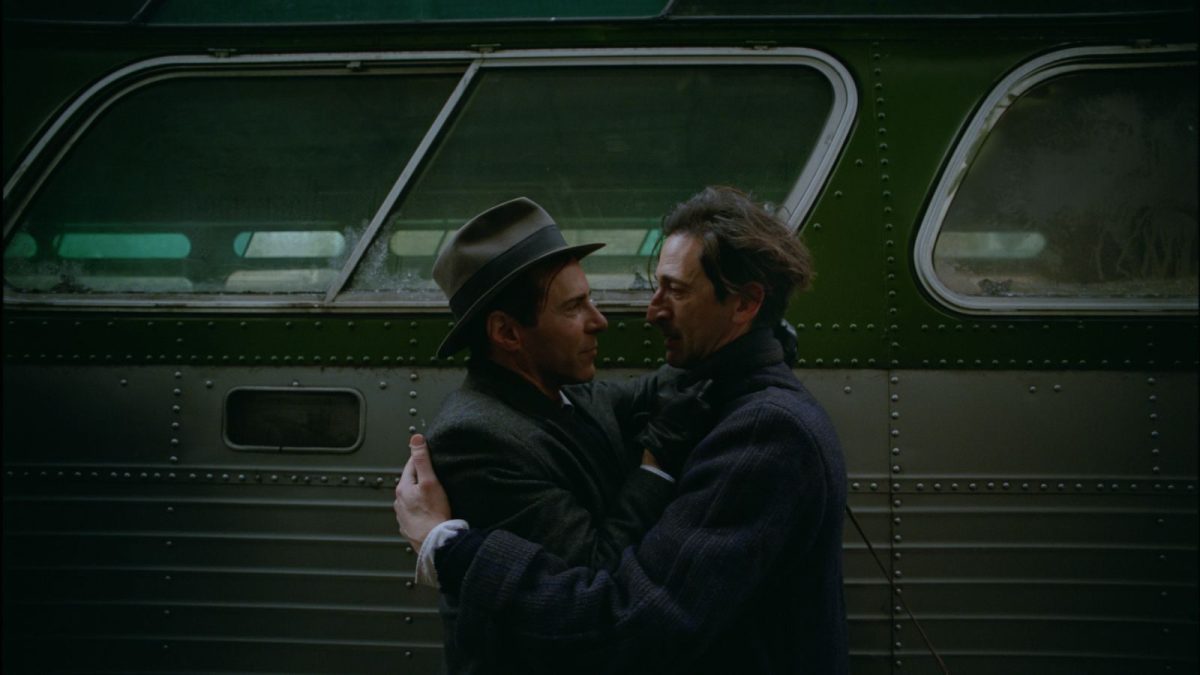
As the first of many reels of The Brutalist begin to unspool, the audience is sent into a bit of a visual tailspin. Crawley focuses on a sleeping Lรกszlรณ, and in tandem with the score, jolts the audience out of the overture and directly into the film. Itโ€™s a dizzying and claustrophobic form of table setting for any film. But to do so for a 215-minute film, one can sense that the filmmakers trust the audience to come on board at the sheer scale of everything occurring. Trapped within the frame, both literally and within the circumstances Lรกszlรณ finds himself in during his journey to America, he finally makes it onto one of the exterior decks of the ship heโ€™s aboard. Crawley captures the burst of light with blinding effect, and what was once chaotic now takes on a form of triumph. Still relying on the use of a whirling camera, we see Lรกszlรณ and a colleague cheering with excitement, but the audience remains unsure as to what theyโ€™re looking at. Only after the camera essentially flips backward, do we see a glimpse of what Crawley will reveal: Itโ€™s the tip of the torch on the Statue of Liberty. Barely able to take in the full scale of such an iconic landmark, Crawleyโ€™s camerawork captures the larger-than-life symbolism the statue came to represent for those coming into the country. Itโ€™s through these images that range from subtle to direct thatย  Crawleyโ€™s brilliant work on The Brutalist shines bright.

Take, for example, one of the many times Crawley utilizes deeply intense framing or one-takes, sometimes in conjunction with one another, to pull attention to the moments that might come to define a life. Itโ€™s often working hand-in-hand with the edit (masterfully done by Dรกvid Jancsรณ), but how Crawley manages to get up close and personal with the subjects without necessarily feeling like a close-up is staggering. Itโ€™s as if weโ€™re standing an inch from whoever is on screen, focusing intently on them as they consider what their next action may or may not be. One scene that comes to mind like this takes place early on in the film. Lรกszlรณ is sharing a post-dinner celebration with his cousin Attila (Alessandro Nivola) and Audrey (Emma Laird), Attila’s wife, who have lived in Philadelphia for some time and have warmly taken him in. For the first time in the film, thereโ€™s an enveloping warmth to the imagery. Whereas everything in the first 30 minutes or so is made up of cold, stark imagery, this dining room is basking in the glow of dusk. But one gets the sense that Lรกszlรณ, still becoming acclimated to the life he escaped and the new life he has found himself in, is a bit out of his depth. The warm glow coming in through the shades is merely meant to offset this emotional dissonance we feel in our lead character. Itโ€™s this push and pull of the cinematography that makes it clear Crawley is working completely in line with the ideas present all throughout The Brutalist. So much of this film is about the internal and external conflicts we face on a daily basis, and whether the changes that inevitably come with a life lived force us to change. Is it even possible to hold onto our present selves when the past and future are both waging war on the choices we make? Itโ€™s one of the many juxtapositions present in the film, and of course, it doesnโ€™t stop there. In fact, it only kicks into high gear from here on out. Once Lรกszlรณ begins bringing his brutalist architectural designs to life, Crawley is allowed the freedom to let loose and work beautifully alongside the script.

Thatโ€™s not to say that at any point the first chunk of this film feels restrained. In fact, quite the contrary could be argued. The shot-on-VistaVision-film choice is such a bold undertaking at any level, but it pays off exponentially with each passing scene. Aside from being a visually rich film that works wonders alongside the thematic core of The Brutalist, itโ€™s also straight-up one of the most aesthetically stunning films of the year. Despite the harsh, at times intentionally rough edges of brutalist architecture, Crawley captures the designs with a beauty and grace that is second to none. And the same can be said for the opposite notion. Thereโ€™s such visual beauty in the scenes depicting ugliness and deplorability. The cinematography of any particular scene works in complete tandem with the thematic elements at play. One frequent technique Crawley returns to throughout the film is an extreme use of shadows. Rather than being another example in the all-too-often contemporary occurrence of a scene being underlit, Crawley very intentionally relies on deep shadows to convey a sense of dread and frustration.

During one unexpected, and unjust, confrontation between Attila and Lรกszlรณ, Crawley shrouds Attilaโ€™s face completely. The expressions Nivola is making cannot be made out in any capacity, but his tone is felt. For Lรกszlรณ, having been panickily awoken in his small storage room serving as living quarters, this scene takes the form of a claustrophobic nightmare in his mind.ย  Thereโ€™s also a deeply shocking scene in the second half of The Brutalist that relies heavily on shadows. Lรกszlรณ and Van Buren travel to Italy in search of a piece of marble for the altar of Lรกszlรณโ€™s project. Everything filmed in Italy arguably forms the centerpiece of The Brutalist. Thereโ€™s a staggering, otherworldly beauty in how Crawley captures this location. He reverts back to a shaky handheld camera, following these characters shrouded in complete fog. Itโ€™s as if this location, where many of the overarching ideas of The Brutalist coalesce and crystallize into a clear, devastating picture, exists in another realm. Crawley captures these massive, immovable blocks of marble with both reverence and horror. Thereโ€™s an unexplainable beauty to them. And yet, seeing the sharp edges form tight alleyways and labyrinthian passages to walk through gives them a frightening quality. Crawleyโ€™s imagery gives them a form representing the cold interiors of men and the harsh exterior of a world that allows for such evil to exist within. In the pivotal scene of this sequence, and arguably the film, the empty halls being explored come to take on pure metaphor: such intrigue and menace exists amidst the emptiness, which could represent the true darkness found in banally evil mindsets.

NYFF: 'The Brutalist' is the movie epic of the year โ€“ The Pace Press

The Brutalist is sprawling in its scope. Yet, Crawley finds a way to unify the visuals of the entire film. Impressively, he also does so by utilizing a varied visual language. As such, the film can excite and engage at a momentโ€™s notice. Whenever there is a massive shift in tone or visual identity, itโ€™s wholly intentional on Crawleyโ€™s part. Itโ€™s a prime example of the cinematography of a film working in complete tandem with the vision of its director. The Brutalist was, by all accounts, a complete labor of love and determination. One scene takes the form of what feels like a 1980s pop music video. In another scene, Crawley intentionally shatters the 180ยฐ rule. With that term, itโ€™s time for a quick cinematography lesson! The 180ยฐ rule is one of the fundamental building blocks of cinema. In the most basic of definitions, itโ€™s a guideline of sorts that filmmakers can use to help orient their audience. In any standard dialogue scene that follows the 180ยฐ rule, the characters will always be facing the same direction for the duration of a scene. If a character is on the left side of the screen and another is on the right, they will each be looking toward the opposite end of the frame. And the camera will remain this way for visual consistency. This is so the audience will know which way each character is facing in relation to the space theyโ€™re inhabiting.

In The Brutalist, Crawley breaks this rule as a way of highlighting an immediate loss of identity due to outside influence. Itโ€™s disorienting by design. At one point, Crawley even forms a sequence out of imagery and style that can often be seen in typical home videos. These shifts in stylistic endeavor all dazzle, but they also serve a thematic purpose. All in all, The Brutalist is practically a peak example of what this column highlights from a cinematography perspective. Cinema is a visual medium. At a very fundamental level, when the images that make up a film look stunning, itโ€™s cause for excitement and joy. But when those images also feed into the very essence of a film, forming a symbiotic relationship between our eyes and our emotions, thatโ€™s what elevates a film from beautiful to powerful. Crawleyโ€™s work on this film is exceptional and is just one of the many elements that come together to make The Brutalist one of the finest examples of American filmmaking this decade.

The Brutalist celebrated its U.S. Premiere in the Main Slate of the 62nd New York Film Festival.

Movie Reviewย (NYFF 2024): โ€˜Nickel Boysโ€™ is a Daring, Moving Masterpieceย 


Director: RaMell Ross
Writers: RaMell Ross, Joslyn Barnes
Stars: Ethan Herisse, Brandon Wilson, Aunjanue Ellis-Taylor, Hamish Linklater, Fred Hechinger, Daveed Diggs

Synopsis: Elwood Curtis’ college dreams are shattered when he’s sentenced to Nickel Academy, a brutal reformatory in the Jim Crow South. Clinging to his optimistic worldview, Elwood strikes up a friendship with Turner, a fellow Black teen who dispenses fundamental tips for survival.


In a 1996 interview with Charlie Rose, the late, great critic Roger Ebert gave what is, for my money, the foremost quote about the cinematic experience. When Rose asked why Ebert believed โ€œno other artform touches life the way movies do,โ€ he replied, โ€œIt takes us inside the lives of other people. When a movie is really working, we have an out-of-body experience.โ€ Rose laughed: โ€œYouโ€™ve seen too many movies, Roger.โ€ Standing his ground, Ebert countered, challenging his interviewer to recall a time where he found himself so wrapped up in the story unfolding on screen that he wasnโ€™t aware of his surroundings, let alone where his car was parked or what was going to happen the next day. โ€œYou only care about whatโ€™s going to happen to those people next. When that happens, it gives us an empathy for other people who are there on the screen that is more sharp and more affective and powerful than any other artform.โ€ย 

Watch the first trailer for potential Oscar heavyweight 'Nickel Boys' - The  Manual

In the years since the COVID-19 pandemic vacated movie theaters for an extended period and influenced studios to explore the streaming landscape en masse, that sensation has been increasingly rare. Anomalies existed in certain cases, of course. I can specifically recall the various feelings that washed over me when I watched films like Top Gun: Maverick, Nope, TรR, Bones and All, and Aftersun, all in 2022. And while the out-of-body viewing experiences returned to a semi-regular state in 2023, the film year was dominated by two titles, and neither Oppenheimer nor Barbie really had that โ€œyou only care about whatโ€™s going to happen to those people nextโ€ quality that Ebert described. Christopher Nolanโ€™s masterpiece is a biopic; even if you lacked a passing knowledge on J. Robert Oppenheimerโ€™s life, you understood that the film about his lifeโ€™s work and the consequences that followed his world-altering invention was rooted in truth, its outcomes thus predetermined. Greta Gerwigโ€™s Barbie was, well, a movie about Barbie(s), as well as an exploration of identity and gender roles in modern society. When Margot Robbieโ€™s Barbie tells a doctorโ€™s office receptionist โ€œIโ€™m here to see my gynecologist!โ€ at the end of the film, we arenโ€™t exactly left wondering how that appointment went as we wander aimlessly into the parking lot, clicking the lock button on our keys in an effort to set off a โ€œbeepโ€ that sends us in the proper direction of our vehicle.

On the other hand, RaMell Rossโ€™ Nickel Boys feels like โ€“ and, in many ways, is โ€“ a revelation, not solely because of the technical command that lies within, and not evenstrictly due to the magnetic turns from its breakout star duo and the established supporting players that surround them. Adapted from Colson Whiteheadโ€™s Pulitzer Prize-winning novel of the same name, Rossโ€™ film is uniquely-striking in just how potent and formidable it is, both as a feat of storytelling and as a triumph in emotional hijacking. It sounds dramatic, but to say that my facilities were rendered useless while watching it open this yearโ€™s New York Film Festival is not aย  hyperbolic way to describe the circumstances of my first viewing of the film. In fact, it may not be intense enough.ย 

Indeed, I am certain that I was out-of-body while watching Nickel Boys, both on the festivalโ€™s first official day and its last, yet what might be an even stronger plaudit is the fact that my knowledge of the filmโ€™s events โ€“ both from having seen it once already and from having read Whiteheadโ€™s novel years ago โ€“ did not remotely hinder the viewing experience. It couldnโ€™t have, even if it actively tried: The film is so sensitive and immense; it is wholly indicative of having a visionary talent at its helm. No amount of plot awareness could possibly take away from the judicious emotional onslaught it offers. Much like Rossโ€™ prior film, the Oscar-nominated Hale County This Morning, This Evening, its artistic ambitions are features, not bugs or gimmicks, no matter how many short-sighted viewers wish to reduce them to such empty terms.ย 

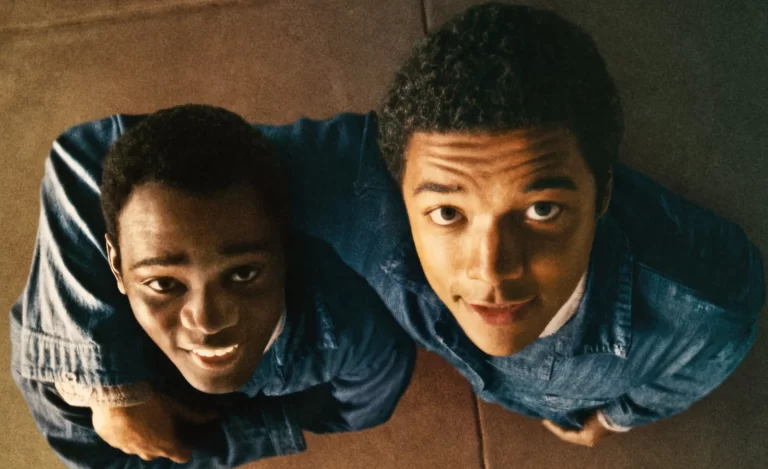
Of course, Ross didnโ€™t craft Nickel Boys with such praise as an objective. That he and his film deserve it are a natural byproduct of its mastery, both in terms of craftsmanship and narrative prowess. The proceedings entirely take place in Jim Crow-era Florida, beginning with Elwood Curtis (played as a child by Ethan Cole Sharp and as a teen by Ethan Herisse) coming of age in two separate life stages. During his youth, we only see Elwood in reflections โ€“ in an iron moving back and forth across an ironing board as his โ€œNanaโ€ (Aunjanue Ellis-Taylor) steams a bedsheet; in a store window displaying an array of television sets, all of which are broadcasting Martin Luther King, Jr.โ€™s โ€œHow Long, Not Longโ€ speech, which he gave in Montgomery, Alabama on March 25, 1965 immediately following the Selma-to-Montgomery March he led. As he matures, he comes into clearer view, though still only in reflections for a time, as Rossโ€™ film is shot entirely from a point-of-view perspective. Cinematographer Jomo Fray (All Dirt Roads Taste of Salt) places his camera in lock-step with the two main characterโ€™s eyelines and head movements, only ever breaking that gaze in favor of retreating behind their shoulders, as it primarily does with one character (portrayed by the back of Daveed Diggsโ€™ head) later in the picture.

His name is Turner (Brandon Wilson, giving the finest performance in a film full of them); he and Elwood meet a few days after the latter arrives at Nickel Academy, a facility dubbed a โ€œreform school.โ€ Though Elwood, a standout student, was supposed to begin taking advanced courses at Melvin Griggs Technical School โ€“ โ€œImagine a textbook with nothing to cross out,โ€ Mr. Hill (Jimmie Fails), Elwoodโ€™s high school teacher, tells him โ€“ he never made it there. Despite Nanaโ€™s pleas that โ€œhe just got into the wrong car,โ€ having hitched an unfortunate ride with a smooth-talking, well-dressed Black man that police accuse of stealing the car he drives. Simply put, a young Black man in the Deep South during the 1960s was implicated if present, actual guilt was of no consequence.ย 

Elwoodโ€™s โ€œbehaviorโ€ requires rehabilitation, something he hopes to be a smooth process considering how mild-mannered Nickel looks as he makes his way down its driveway while sitting in the back of a squad car, his second such situation in a matter of days. If only he was allowed to exit the car with his fellow passengers, both young White men, who might as well be going to an entirely different establishment than Elwoodโ€™s future home. This, of course, is the more menacing side of Nickel, the one domineered by the vacant, soulless Mr. Spencer (Hamish Linklater), a cruel White man who continuously warns the boys of โ€œa placeโ€ for those who misbehave, somewhere they wonโ€™t like. Heโ€™ll โ€œsee to it personally.โ€ย 

Turner, who is introduced in one of the single best cinematic moments Iโ€™ve seen in many years, becomes something of a saving grace for Elwoodโ€™s sanity, insofar as that is possible in a place this vacuously cruel. We learn this the moment Elwood arrives. Ross, when not cutting to the opening scene from The Defiant Ones, featuring the voice of Sidney Poitier singing “Long Gone,” deploys the harshest, most ominous notes from Scott Alario and Alex Somers’ score. These notes, featuring sharp violin strums and the light taps of a drumstick against what sounds like a hollow pipe, evoking the sound of a strike against a jail cell’s bar.

Nickel Boys' Review: RaMell Ross' Superb Colson Whitehead Adaptation

The juxtaposition between the darkness this sequence is imbued with and the early scenes in which a seemingly-joyful Elwood spends time lying beneath the Christmas tree as his grandmother lets tinsel fall towards his body, or when he triumphantly joins a protest of a local screening of The Ugly American, show the brilliant cognizance employed by Ross in knowing that Elwood can both be raced and have faith in the countryโ€™s potential to be better, more accepting.

The way that Ross, the filmโ€™s co-writer, Joslyn Barnes, and Fray capture the similarities and differences between their two main characters are subtle yet distinct, and beautifully so. Ross has mentioned previously that he was curious while reading the source material about when Elwood was raced, and in the film, we see him repeatedly looking down at his fingertips, his forearms, even his grandmotherโ€™s knee in the bathtub; there was certainly a time in Turnerโ€™s life when he realized he was raced, but we donโ€™t see it occur, as if it was so long ago in Turnerโ€™s somewhat jilted existence that he views it as having always been the case. While enjoying the solace of their dormโ€™s sparse rec room, Elwood journals and writes letters to Nana, while Turner scours the instructions on old toy pamphlets; when the boys sneak off to hide from the trials of the day in a storage shed, Elwood reads โ€œPride & Prejudiceโ€ as Turner listens to a ball game. The most concrete difference between the two lies in how Elwoodโ€™s naivety to societyโ€™s treatment of young men like him is, in a sense, disguised as optimism. He wonders aloud, โ€œHow can they do that?โ€ when a note from his grandmother tells him that Nickelโ€™s staff wouldnโ€™t let her see him because he was โ€œsick,โ€ a falsity, not realizing that the answer to his rhetorical question is as simple as โ€œbecause they can.โ€ Turner, meanwhile, is fully aware that the only way someone like him can leave Nickel is to run. Still, they share kindred dreams for the future, one that features them both, free men in a world that leaves them be. Would that it were so simple.

As fascinating, gutting, and brilliant as Nickel Boys is, the same could be said for the experience that is watching (or reading) Ross talk about his film, as I was able to do twice at this yearโ€™s New York Film Festival. The first time came at a post-screening press conference on the festโ€™s first day, and the second during a discussion between him and Barry Jenkins. Besides being as much of an intellectual treat as it sounds, their exchange was full of further insight into how Ross came to adapt Whiteheadโ€™s novel. He has spoken at length in multiple interviews on when he realized the film needed to be seen from a โ€œsentient perspective,โ€ as it was called on-set โ€“ โ€œImmediately,โ€ is the short answer, โ€“ but what is even more fascinating about Nickel Boysโ€™ construction is how the director and his crew gained a better understanding of who Elwood and Turner were as human beings beyond the page. As Ross described it, โ€œThe primary exercise in writing the film [was] using adjacent imagesโ€ฆ images that are one step removed from literal narrative thrust.โ€ Ross went on to share that he believes โ€œcinema skipped photographyโ€ฆ when you make a [single] image, thatโ€™s it. Itโ€™s done. When you make a film, youโ€™re sacrificing the singularity of the image for narrative length.โ€ That process, in his eyes, sees a filmmaker going about things like, โ€œThis will do, because this will get us here, and itโ€™s about getting here.โ€ Ross balks at that. Instead, he wants his script and the images created from the words he and Barnes wrote to serve โ€œthe human process of being a poetic looker.โ€ย 

In and of itself, thatโ€™s both a beautiful way to put things and a beautiful idea at its core. But it represents something about Rossโ€™ filmmaking sensibilities that transcends ability entirely, something that is more intrinsically linked to his humanity than his talent. Nickel Boys is many things, but above all, it is an immense statement about love. About how it can be communicated through photography, both when fixed and in motion, and how that should inherently be the pulse that propels a work of art forward, just as it does this film, perhaps more than any work of art in recent memory.ย 

While wrapping up their talk, Jenkins brought up his debut, 2008โ€™s superb Medicine for Melancholy, a film that, fittingly, is as romantic a movie as was released during the 2000s. In noting how its festival run afforded him the opportunity to see the world, Jenkins told a story that dinner guests everywhere would salivate over if afforded the opportunity to bear witness: It was the day after Barack Obama was elected president, and ironically, Jenkins found himself at a dinner full of โ€œthese very hoity-toity Argentine intellectualsโ€ who asked him, โ€œWhat has the U.S. ever given to the world?โ€ One guest answered for him: โ€œYour people, they made jazz.โ€ Another person chimed in: โ€œThe instruments, they werenโ€™t for you until they were. And once they were, this whole new sound came out of them.โ€ Jenkins then turned to address Ross directly, saying, โ€œWhen I shout you outโ€ฆ itโ€™s because the tools are now in your hands. And different sounds, different images come out of them.โ€ If Nickel Boys is any indication โ€“ and it undoubtedly seems to be โ€“these tools have never been in a better pair of hands.

Nickel Boys opened the 62nd New York Film Festival and will be released in theaters by Amazon MGM Studios on December 13.

Grade: A+

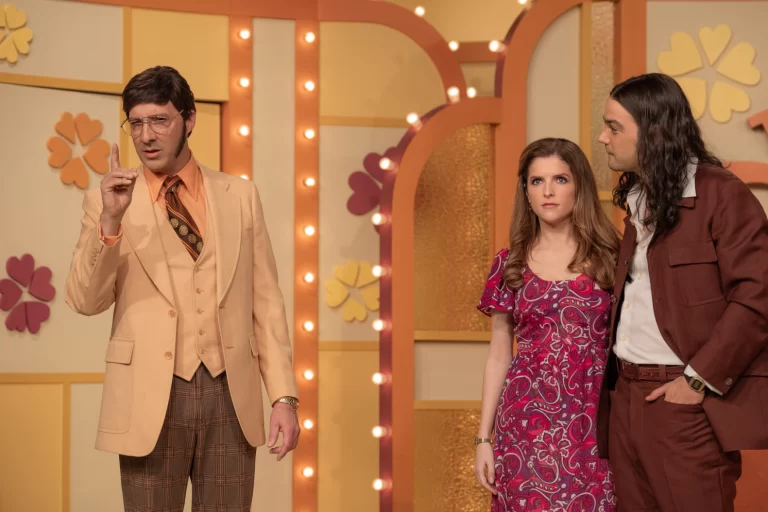
Movie Review: ‘Woman of the Hour’ is a Towering Directorial Debut for Anna Kendrick


Director: Anna Kendrick
Writer: Ian McDonald
Stars: Anna Kendrick, Daniel Zovatto, Tony Hale

Synopsis: Sheryl Bradshaw, a single woman looking for a suitor on a hit 1970s TV show, chooses charming bachelor Rodney Alcala, unaware that, behind the man’s gentle facade, he hides a deadly secret.


When an actor gets to direct a motion picture for the first time, the response is usually met with trepidation rather than excitement. Some high-profile stars have made a successful jump, while others have failed to do anything meaningful with the cinematic language. Recently, Kevin Costner has been living in delulu land by making his four-chapter Horizon: An American Saga that nobody outside Film Twitter (sorry, itโ€™s true) wants to see, partly financed by his own money, while Brady Corbet is receiving the most significant praise of his directing career for his 215-minute VistaVision shot The Brutalist.ย 

Anna Kendrick Makes Directorial Debut With 'Woman of the Hour' Trailer

With Woman of the Hour, itโ€™s now Anna Kendrickโ€™s turn to make her mark in filmmaking. After a buzzy world premiere at the Toronto International Film Festival, crickets occurred until Netflix finally picked it up for a direct-to-streaming release in the United States on October 18. On the other hand, Canadians (like yours truly) got a wide, exclusive theatrical release from VVS Films and experienced Kendrickโ€™s debut the way she intended. The result is a jaw-dropping drama that bursts with confidence at every turn to destabilize its viewers right as it opens with a cold and calculating sequence.ย 

But Kendrickโ€™s confidence isnโ€™t showy, a symptom that has plagued many actor-turned-director debuts. Instead of utilizing techniques to their fullest extent, the director usually indulges themselves in aesthetic platitudes and lose sight of the goals they wanted to lay out in their film. Kendrick never does so and immediately grabs our attention with its opening shot, a reflection of Rodney Alcalaโ€™s (Daniel Zovatto) camera as he takes a picture of the movieโ€™s first victim. Itโ€™s hard to depict any serial murderer in a way that neither humanizes nor sympathizes with them. Unlike Ryan Murphyโ€™s appalling Dahmer: Monster – The Jeffrey Dahmer Story, which attempted to justify the actions of Jeffrey Dahmer by positing him as simply a misunderstood individual, Kendrick never falls into the traps that have plagued many movies and television series on pathological abusers and killers.ย 

Thereโ€™s no humanity in Alcala, even if he attracts young female victims by showing a more vulnerable side of him before violently raping and killing them. Itโ€™s simply a faรงade, and we quickly realize this by the second Kendrick and cinematographer Zach Kuperstein showcase how he photographs and subtly objectifies women.ย 

Kendrick smartly does not linger on the killings either; she shows enough for us to understand the extent of his manipulation and disturbing pattern of extreme, sadistic violence. One such scene depicts Alcala pushing victim Amy (Autumn Best) off a cliff, but we donโ€™t see the impact. Instead, we quickly cross-cut to flashbacks involving Rodney being friendly to them before committing his crimes and the โ€˜present-dayโ€™ storyline involving Sheryl Bradshaw (Kendrick) attempting to make a big break within Hollywood.ย 

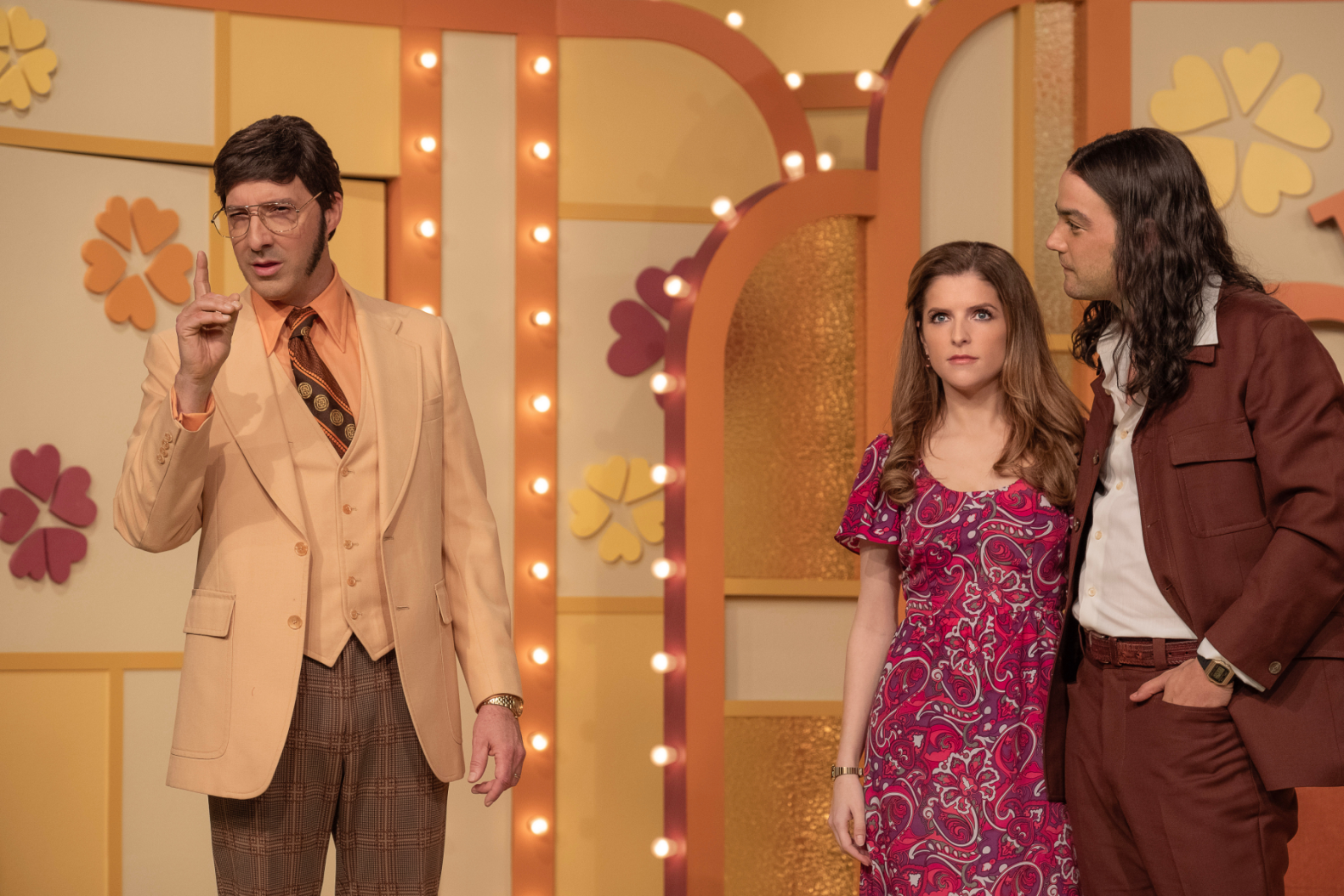
Her agent has tapped her to participate in an episode of The Dating Game and thinks it will bring her good exposure on screen. But the game is in and of itself deeply sexist, hosted by a man (Tony Hale) who seemingly takes pleasure in objectifying women and making jokes at their expense. Down on her luck, Sheryl reluctantly accepts and participates in the game in which she has to match between Bachelor 1 (Matt Visser), Bachelor 2 (Jedediah Goodacre), and Bachelor 3, who turns out to be Rodney.ย 

Now, Kendrick, being the intelligent filmmaker she is, has been constantly communicating to the audience with flashbacks that donโ€™t serve to humanize the character of Rodney but instead to viscerally exacerbate the terror in such an upsetting way that the reveal of him being in the show hits like an actual punch to the stomach. This is felt through the eyes of audience member Laura (Nicolette Robinson), who recognizes Rodney from an event that led to the death of her best friend. While this parallel storyline doesnโ€™t go as far as it should, how Kendrick visualizes discomfort when Rodney lurks out of the shadow feels more than a simple upset.ย 

It’s startling how she blocks the camera to create this sense of dread, in which women feel like thereโ€™s always someone lurking behind them. Itโ€™s blocking worthy of M. Night Shyamalan, always in service of the atmosphere and visual style that feeds the story Kendrick wants to tell. It makes moments of raw emotion all the more effective, particularly in its nighttime parking scene, which is so terrifying for reasons that transcend the mere stalker/prey setting, which is, in and of itself, distressing.ย 

This occurs throughout the entire movie. Kendrick shows us what she wants to show and operates with a complete mastery of the craft, with cathartic jumps in time that are always in service of her deeper message and are steeped in subtext and meaning. Of course, itโ€™s not subtle, but itโ€™s done in a way that humanizes the victims and gives them agency, even if they ultimately fall for Rodneyโ€™s fake persona. Kendrick treats Sheryl with the utmost compassion and respect. Sheryl is an average human being, unfortunately, led in a path of darkness that she wonโ€™t know until itโ€™s far too late. But she sees past Rodneyโ€™s posture and knows heโ€™s not who he presents himself as.ย 

Woman of the Hour' review: Anna Kendrick asks, 'what are girls for?'

To be honest, I kept waiting for Zovatto to show up in the film until I realized that he was playing Rodney all along after forty minutes or so had passed. Thatโ€™s how good he is here, a petrifying display of torment that effectively crawls under your skin and goes beyond directly scaring you. This is riveting, psychologically active work that constantly changes depending on the victims he chooses, which makes him all the more chilling in front of any woman. And as Sheryl, Kendrick delivers a career-best performance that she unfortunately had not had the privilege to show until now.ย 

I was never a massive fan of Kendrick, the actor. But itโ€™s not entirely her fault as the movies that she starred in did her no favors (The Twilight Saga and Pitch Perfect films, for example, while commercially successful, arenโ€™t very good). Here, sheโ€™s not only in complete control of her movie but of her lead performance, which is often very funny (sheโ€™s got a rather dark sense of humor that very much plays in this criticโ€™s comedic sensibilities), but, more importantly, quietly devastating.ย 

However, the most impressive aspect of Woman of the Hour isnโ€™t necessarily Kendrickโ€™s performance (itโ€™s very good, donโ€™t get me wrong), but in how she operates her film. Rarely have we seen a directorial debut this towering, controlled in what she wants to show inside the frames (and leave outside), and confident in how she structures its multiple storylines (sprinkled with images that tip the hat to some of her cinematic influences). It may not reinvent the wheel, but itโ€™s so assuredly well-crafted and constantly captivating to watch that one canโ€™t help but admire the work Kendrick has put in as a filmmaker in such an impeccable debut. Hereโ€™s hoping her next directorial effort comes out much sooner than later.ย 

Grade: A

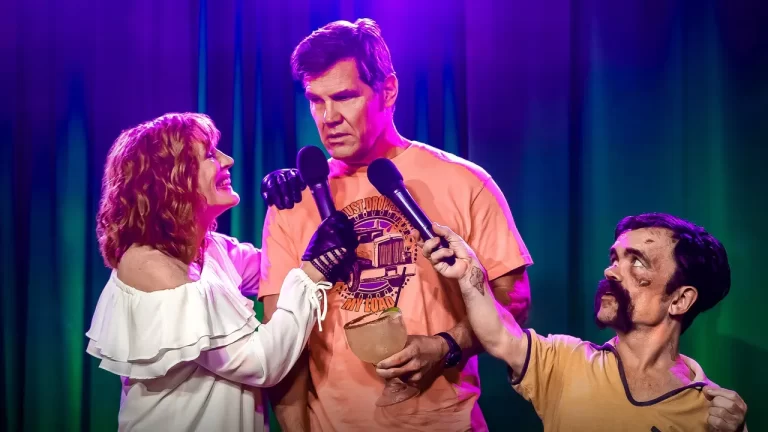
Movie Review: ‘Brothers’ is Charmless and Laugh-Free


Director: Max Barbakow
Writers: Etan Cohen, Macon Blair
Stars: Josh Brolin, Peter Dinklage, Taylour Paige

Synopsis: Two criminal twin brothers, one who is trying to reform, embark on a dangerous heist road trip. Facing legal troubles, gunfights, and family drama, they must reconcile their differences before their mission leads to self-destruction.


The Prime Video comedy Brothers has all the makings of an under-the-radar hit, potentially striking all the right notes. For one, it comes from director Max Barbakow, behind the brilliant COVID-19 release Palm Springs. Perhaps no film was more embraced during the pandemic than Andy Samberg’s new classic, which found a home on Hulu when we needed it most.

Brothers Trailer: Josh Brolin, Peter Dinklage Are Twins in Movie

Next, you have two stars known for their dramatic work yet equally recognized for their charismatic and funny interviews. However, Brothers may prove that personality doesn’t always fully translate on screen. In this case, itโ€™s a tediously familiar buddy comedy that never entirely comes together. As if taking likable leads and making them unlikable is somehow comedy gold.

The result is a charmless, practically laugh-free experience with little suspense. Nothing in Brothers feels fresh or done well enough that you can give the recycled nature of the script a pass. There is a reason why this film is just a reprocessed effort in the streaming wars aimed at producing content, not perfecting it. 

Brothers follows a pair of fraternal twins, Moke (Josh Brolin) and Jady (Peter Dinklage), who have been on the wrong side of the tracks their entire childhood. One reason is that Jady is a mastermind of criminal activities, relying on his brotherโ€™s intuition and smarts, such as picking locks to grab some quick cash. It wasn’t their fault; their father was long gone, and their mother preferred her men to be criminals with no muscles and even smaller brains.

Fast-forward to adulthood, Jady finds himself leaving prison on good behavior with the help of a shady prison guard (Academy Award winner Brendan Fraser). However, Moke has turned his life around. He has bought a house and is having his first child with his girlfriend, Abby (Taylour Paige of Beverly Hills Cop: Axel F). However, Moke loses his job because he never disclosed his previous criminal history, putting his family’s future in doubt.

Of course, due to the nature of movies, having Jady come back into Mokeโ€™s life comes with a well-timed opportunity. This involves a cross-country road trip to land the score of a lifetime. Then, they throw in the monkey wrench of their long-lost mother (Glenn Close), who shows up to micromanage their operation. Moke must resist killing her before grabbing the cash that will secure his familyโ€™s future. 

Brothers 2024 Movie Cast, Characters & Cameos (Photos) | The Direct

Brothers wants to be the hybrid love child of better comedy films like Twins, Step Brothers, and even Ruthless People, but it feels more like a step-child of Masterminds. While it is fun to see Dinklage revel in the role of an arrogant and apathetic criminal, Brolin struggles to find humor in a role that requires him to be a sad sack.

All of this is forced by Macon Blair (Small Crimes), whose screenplay is as contrived as they come. It is as if the filmmakers want to put a spin on tokenism to show the juxtaposition that these leads are supposed to be twin brothers when they look nothing alike in an attempt to establish some sort of baseline comedy, which is a jaw-dropping miscalculation.

Most scenes are ludicrous, even for a comedy, and not in a good way. One of the few silver linings is a moment in which Dinklageโ€™s Jady has an affair with a prison pen pal who has a pet orangutan that is so out of place it feels like it was lifted from a different movie. However, the characters are paper thin, not to mention the plot, as if a beloved cast playing grimy characters is worth your time or subscription.

There was a reason why a film like Brothers was not screened for critics. (For that matter, itโ€™s mind-boggling that it was given a very limited theatrical release.) The film never had the backing to go beyond its trappings and plays it too safe. It makes you wonder why innovative storytellers like Barbakow and Blair waited so long to make a movie with so little appeal that follows the genre rule book step by step.

If they needed four years to make Brothers, by all means, letโ€™s wait eight more for their next project.

You can stream Brothers exclusively on Prime Video on October 17th.

Grade: D+

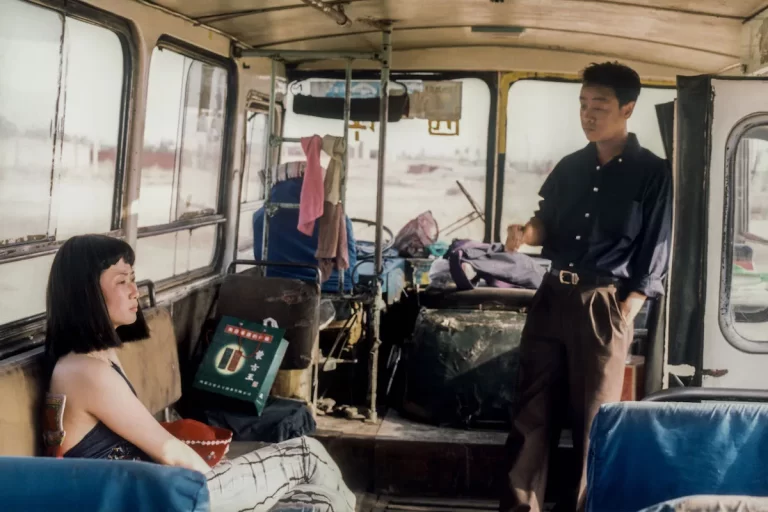
Movie Review (NYFF 2024): โ€˜Caught by the Tidesโ€™ Manages to Achieve Originality With Familiar Material


Director: Jia Zhangke
Writers: Jia Zhangke and Jiahuan Wan
Stars: Zhao Tao, Li Zhubin

Synopsis: In early 2000s China, Qiao Qiao and Guao Bin share a passionate but fragile love. When Guao Bin disappears to try his luck in another province, Qiao Qiao decides to go looking for him.


Of the two films at this yearโ€™s New York Film Festival to follow a jilted lover as she travels from city to city in order to find the devious man who abandoned her without warning, Jia Zhangkeโ€™s Caught by the Tides is the one that manages to weave a narrative that remains as mesmerizing as it is unconventionally-masterful. The other picture in question, Miguel Gomesโ€™ Cannes-award winning Grand Tour, is certainly a brilliant, compelling work in its own right, a genre-bending tale that fuses its 1917-set plot and modern documentary footage together, something Caught by the Tides does in a similar fashion. But thereโ€™s something to be said for the significance of Zhangkeโ€™s latest, a poetic triumph in illusory construction that, with less, achieves more than other films of a similar ilk, if those titles even exist.

Caught by the Tides' Review: Jia Zhang-ke's Melancholy Love Story

The conceit, insofar as there is one beyond the general idea of a woman searching for her missing mate, is much more about the magnitude of Zhangkeโ€™s career, as well as how his long-time muse and partner, Zhao Tao, has been a stalwart in his filmography. His latest is hardly the first time Tao has been the focal point in one of the directorโ€™s narratives. Yet what makes it the most fascinating role sheโ€™s ever taken on is that it is quite literally 20-plus years in the making. Consisting almost entirely of footage from the archive Zhangke has been curating throughout the various stages of his storied career, Caught by the Tides takes the Chinese masterโ€™s cutting-room floor material โ€“ most of which includes a wordless Tao, who began working with Zhangke in his 2000 film, Platform โ€“ and puts it to imaginative, remarkable use.ย 

As per usual with Zhangkeโ€™s films, Tidesโ€™ structure allows it to say more about Chinaโ€™s ever-transforming socioeconomic climate than any of his other films, a surprise considering how heavily that narrative element is deployed in practically everything heโ€™s made. Whether itโ€™s a story about the tender barrier that exists between youthful ignorance and eventual maturation โ€“ Platform, Unknown Pleasures, and Mountains May Depart โ€“ or a chronicle how lives can inexplicably become marred by random acts of violence and the persistence of the countryโ€™s implicit underworld politics โ€“ A Touch of Sin and Ash is Purest White โ€“ Zhangke has never been one to shy away from getting his most important message across: That he doesnโ€™t recognize his home anymore, and that such a sensation only becomes more apparent in the years since he began his filmmaking career.

Caught by the Tides is no exception to that rule, instead serving as an assertion that it is as pertinent now as it was in the early 2000s. When the filmโ€™s electric soundtrack falls away to make room for natural sound or some occasional dialogue, we often hear radio and television newscasts reporting that the nationโ€™s water level continues to rise around the Three Gorges Dam (a structure that not only decimated 13 cities and displaced the inhabitants in the process, but played a prominent role in Zhangkeโ€™s 2006 drama, Still Life). It would make for a far more poignant cog in Caught by the Tidesโ€™ ย machine if not for our cognizance of how similar its beats are to those of Still Life, not to mention the fact that Tao is periodically seen wearing the same outfit in this film that she wore throughout the former. For those who are new to Zhangkeโ€™s work, these sections may play out more naturally, even if they are too slight to digest properly. As for how such choices will go over completists, wagers should be set on one of two responses: Frustration at obvious repetition, or nostalgic admiration for the connection the director still has to his earliest work all these years later, even if partial attribution should go to his love for Tao.ย 

Caught by the Tides' Review: Jia Puts Old Footage to Poetic New Use

That this film moves with Tao like the tide does the moon should be no surprise, then, considering the intimacy that Zhangke and Tao have developed over the course of their entwined careers and life together. Regardless of its familiar elements, those of which occasionally felt like Zhangke wasnโ€™t sure where else to turn other than back in the direction from which he came, Caught by the Tides is all the more captivating a project considering how, while carving out its own narrative, it consciously (and fondly) looks back upon a master at work, something plenty of films tend to do with a heavier hand than they should ever deploy. Films like Neo Soraโ€™s Ryuichi Sakamoto | Opus, a documentary consisting of one last performance from the legendary Japanese composer, and Jean-Luc Godardโ€™s Exposรฉ du film annonce du film โ€œScenario,โ€ a snapshot of Godardโ€™s storyboarding process that played as part of the Spotlight section at this yearโ€™s New York Film Festival, are gentle exceptions. But in Caught by the Tidesโ€™ case, it feels fitting for Zhangke to remain behind the camera, charting his directorial escapades through something both familiar and wholly original. As Tao once said of working with Zhangke on Mountains May Depart, the evolution of their partnership has afforded her more freedom to fill in โ€œblanksโ€ where necessary. What better way to celebrate the magic of cinema, not to mention a love born from it, than to take what couldnโ€™t fill those old blanks and make something beautiful and new from their contents?

Caught by the Tides will be released in theaters by Sideshow and Janus Films on an unspecified date โ€œin the coming months,โ€ per Variety.

Grade: B+

Podcast Review: Woman of the Hour

On this episode, JD and Brendan are joined by Megan Kearns of Spoilerpiece Theater to discuss Anna Kendrick’s directorial debut Woman of the Hour! We love Kendrick as an actress, but the idea of her moving behind the camera very much piqued our interest. The buzz coming out of TIFF last yea was quite positive, and yet there’s an argument that the early reactions undersold just how good it is.

Review: Woman of the Hour (4:00)
Director: Anna Kendrick
Writer: Ian McDonald
Stars: Anna Kendrick, Daniel Zovatto, Nicolette Robinson, Tony Hale

Subscribe to our Podcasts RSS
Subscribe to our Podcasts on iTunes
Listen on Spotify
Listen on Stitcher
InSession Film Podcast – Woman of the Hour

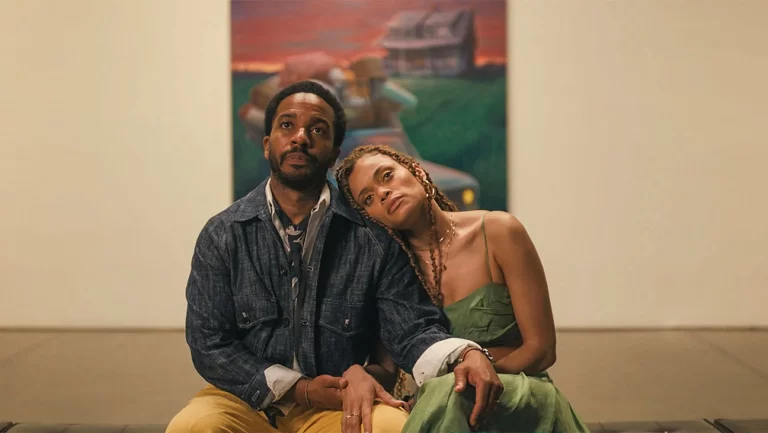
Movie Review: ‘Exhibiting Forgiveness’ is Intimate, Raw, and Hopeful


Director: Titus Khapar
Writer: Titus Khapar
Stars: Andrรฉ Holland, Andra Day, John Earl Jelks

Synopsis: A Black artist on the path to success is derailed by an unexpected visit from his estranged father, a recovering addict desperate to reconcile. Together, they struggle and learn that forgetting might be a greater challenge than forgiving.


โ€œI did you like my Daddy did me.โ€ -Laโ€™Ron Rodin

Artist/filmmaker Titus Khaparโ€™s debut feature Exhibiting Forgiveness asks why we forgive those in our lives who have caused us harm and reverberating trauma. Titus Khapar lands on the answer that we often donโ€™t do it for the perpetrator, but for the sake of closing a chapter so we can move on. Exhibiting Forgiveness is a complex and layered piece of cinema that points to how religion in Black communities can both hurt and heal and highlights how the search for forgiveness requires more than a partial apology to be authentic.

Exhibiting Forgiveness' Review: Andrรฉ Holland in Titus Kaphar's Debut

Andrรฉ Holland, in a genuinely astonishing performance, playsย  Tarrell Rodin a successful visual artist living with his singer songwriter wife Aisha (Andra Day) and his young son Jermaine (Daniel Berrier). Tarrell is a gentle husband, as well as an involved and loving father. He lives hours away from his hardscrabble life in poverty-stricken New Jersey where he was brought up. Tarrell might have escaped the physical reality of his childhood with his abusive drug addicted father Laโ€™Ron (John Earl Jelks) but the psychological scars are ever present in his nightmares and form the basis of much of his art. Tarrell struggles with exorcising the ghosts of his past. The final link he feels he can break is to bring his mother Joyce (Aunjanue Ellis-Taylor) close to his family and out of New Jersey, โ€œbecause sons look after their mothersโ€. To do this, he has to return to the neighborhood where he was raised โ€“ a space which is both figuratively and literally filled with Laโ€™Ron as he turns up at Joyceโ€™s invitation hoping to forge a renewed connection with his son and his grandchild (who he has never met).

Laโ€™Ron is recently clean after years of crack and alcohol abuse. He has โ€œrediscoveredโ€ the Bible and promises Tarrell heโ€™s a different man. Joyce is pushing hard for reconciliation, but Tarrell refuses to countenance Laโ€™Ronโ€™s presence or hear him out. It isnโ€™t until his stepbrother Quentin (Matthew Elam) tells him that Tarrell needs to do it for Joyceโ€™s sake not for Laโ€™Ronโ€™s that he agrees to spend time with him.

Tarrell films Laโ€™Ron as he โ€œinterviewsโ€ him about what brought him to the point of addiction and what he thinks justifies being let into Tarrell or Joyceโ€™s life again. Laโ€™Ron was the son of an unhinged preacher who used violence on his own family and justified it as Godliness. After telling Tarrell an horrific story of his grandfather holding a gun to his grandmotherโ€™s head when Laโ€™Ron brought Tarrell and Joyce to visit him just after he was born, he ends it with saying โ€œHe was a good man.โ€ Tarrell rejects Laโ€™Ronโ€™s interpretation of โ€œgoodโ€ because no โ€œgoodโ€ man would beat his wife or son in the name of the Bible or for any other reason. โ€œHe taught me about hard work, I taught you about hard work. And look at you. Youโ€™re a success,โ€ is essentially Laโ€™Ronโ€™s justification. When Tarrell rejects Laโ€™Ronโ€™s self-serving re-writing of the narrative, Laโ€™Ron loses his temper and throws a cup at the wall. โ€œThereโ€™s the man I know,โ€ Tarrell says, and he leaves.

Tarrell is burdened by such fierce resentment and justified anger at the PTSD his upbringing has wrought upon him that he canโ€™t understand why Joyce wants him to forgive Laโ€™Ron so much. Khapar, uses a flashback technique and Tarrellโ€™s paintings (which are Khaparโ€™s paintings) to illustrate Laโ€™Ronโ€™s monstrousness as a father caught in addiction. Laโ€™Ron was pitiless with both Tarrell and Joyce โ€“ his only focus being the next score and working Tarrell and himself to the bone to get it. Tarrell misses that perhaps why Joyce needs him to forgive Laโ€™Ron is so in part he will forgive her for not leaving him sooner, and so he will learn that he must practice forgiveness to be good with God.

Tarrellโ€™s mental state begins to spiral further as he loses his touchstones and the only person who remains consistently around him is Laโ€™Ron. As patient as she has been with Tarrellโ€™s broken psyche, Aisha tells him he must find a way to get his act together because heโ€™s beginning to frighten Jermaine with the intensity of his panic attacks and how they manifest as blind violence (Tarrell punches holes in walls). If Tarrell doesnโ€™t face up to the damage done, he is bound to repeat it no matter how hard he consciously represses his anger.

Tarrellโ€™s child self played by Ian Foreman places him back into the past by wheeling his paintings in front of the houses in Orange New Jersey like a magical portal into a foundational hell. Although the device can be read as a little self-indulgent it is important to remember that Titus Khapar is a visual artist who has used his art and specifically erasing figures in his work to investigate how the white gaze has cut Black people out of history. Ian Foremanโ€™s Tarrell tells the adult Tarrell not to go back inside the house on Gordon Street, but Tarrell has never left it.

Exhibiting Forgiveness' Review: A Fraught Reunion - The New York Times

Titus Khapar also points out how the personal and political artwork of Black artists and POC artists is still reliant on the โ€œgazeโ€ and patronage of rich white people. His agent Janine (Jamie Ray Newman) positively drools over the paintings he has been creating at the beginning of the film thinking in dollar signs. Sheโ€™s forcing him back into a new exhibition mere weeks after the last. Tarrell doesnโ€™t get time to โ€˜beโ€™ after major upheavals in his personal life. Like Laโ€™Ron, Tarrell has learned that he must be an exemplary worker in front of White people to be considered of value.

Exhibiting Forgiveness stumbles a little in the dialogue with some of it coming across as clichรฉ โ€“ but it doesnโ€™t stumble in its intention or the acting. Andrรฉ Holland gives a towering performance and clearly learned the fundamentals of drawing and painting so the brushstrokes he places on canvas seamlessly blend with Khaparโ€™s style. Aunjanue Ellis-Taylor rarely misses as a performer, and in Exhibiting Forgiveness her Joyce is both resilient and ashamed. What holds it all together is John Earl Jelks as the pitiless, pitiful, and self-pitying Laโ€™Ron. The interactions he has with Aunjanue Ellis-Taylor, Ian Foreman, and Andrรฉ Holland are electric. He may be clean, but he will never come clean about what he did.

Andra Day as Aisha gets to once again display her sublime talent as a vocalist with Aisha recording the song โ€œBricksโ€ which forms the thematic foundation for Exhibiting Forgiveness. Written by Jherek Bischoff and Cassandra Battie and performed by Day, the song is a poetic summary of the struggle Tarrell is going through and the one Joyce and Aisha have acted as support networks for. The often-unacknowledged burden of Black women unknotting the destructive behavior of Black men.

Exhibiting Forgiveness is about finding a way forward by acknowledging the harm of the past and understanding the context out of which it grew. Tarrell says to his father, โ€œYou took the past and I forgive you. But the future, thatโ€™s mine.โ€ Tarrell doesnโ€™t forgive Laโ€™Ron because he fundamentally deserves to be forgiven, he doesnโ€™t โ€“ he forgives him so he can stop the pernicious loop of damage and put an end to the fear that he will become the worst of Laโ€™Ron.

Exhibiting Forgiveness is intimate, raw, and hopeful. Tarrell takes control of his story and his art. Titus Khapar does indeed shift the gaze by honoring the work Black men and women do to acknowledge the past and its hold upon them and move forward into a future of their own making.

Grade: A-

Movie Review (Festival du Nouveau Cinรฉma 2024): ‘The Second Act’ Shows Human-Made Cinema is Worth Saving


Director: Quentin Dupieux
Writer: Quentin Dupieux
Stars: Lรฉa Seydoux, Vincent Lindon, Louis Garrel

Synopsis: Florence wants to introduce David, the man she’s madly in love with, to her father. But David isn’t attracted to her and wants to throw her into the arms of his friend Willy. The characters meet in a restaurant in the middle of nowhere.


Quentin Dupieux is not a serious filmmaker. His films should not be taken seriously. They should instead be approached ironically, knowing that he doesnโ€™t really want to say anything beyond flipping off the audience for wasting their precious time with him at every turn. Yet, many film critics unfamiliar with his work insist that thereโ€™s a deeper meaning behind his provocation or surface-level humor, partly explaining why The Second Act is one of his worst-reviewed movies. They think Dupieux is trying to say something about cinemaโ€™s (doomed) future in an era where streaming services (ergo, the Netflix logo appearing at the top of this) and artificial intelligence attempt to kill art as we know it.ย 

Tout ce qu'il faut savoir sur ยซ Le Deuxiรจme Acte ยป de Quentin Dupieux, qui  ouvre le Festival de Cannes - Elle

But he doesnโ€™t have anything to say, and he knows it. In fact, he has repeated on multiple occasions that his films โ€œdonโ€™t have any messages except to relax you and make you feel good. Itโ€™s like a calming bath, with a little bit of acid in it, to distract you from this distressing world we live in.โ€ Once you know this inextricable fact from Dupieuxโ€™s body of work, one begins to approach The Second Act as a meaningless distracting affair that will culminate in nothing and is designed to make the audience pissed off at the lengths Dupieux takes to upset people. Itโ€™s all paradoxical, and if youโ€™re trying to extract some form of sense into this work, youโ€™re not only missing the point entirely but going to have a terrible time with it. I saw many reviews where the throughline was, โ€œHeโ€™s trying to say something but isnโ€™t saying anything.โ€ Exactly. Heโ€™s not saying anything. Youโ€™re just the butt of the joke!ย 

But I can see why people may think Dupieux is saying something. In the first degree, the movie is absolutely designed to make you vehemently angry, with glib jokes that poke fun at everything and everyone, which include reactionary boomers who have a narrow-minded viewpoint of the world (in this case, homosexuality) and far-left activists who have to be careful in using the right words to not offend anyone. In fact, this is how the movie starts: with an almost unbroken 20-minute-long dolly shot of David (Louis Garrel) and Willy (Raphaรซl Quenard, always incredible with Dupieux) walking towards a cafรฉ named The Second Act to meet Florence (Lรฉa Seydoux) and her father, Guillaume (Vincent Lindon).ย 

In this very long scene where the two walk (and walk ad infinitum, a classic joke from Dupieux), one is more attuned to the times, while the other isnโ€™t afraid of making deeply transphobic remarks if Florence ends up being so. But he corrects himself once he realizes people are (literally and figuratively) watching by looking at us and apologizing. Itโ€™s probably the only time that Dupieux has ever apologized to us, and it immediately jolts our attention that he has broken (once again) the fourth wall. It seems he wants to ensure no one gets offended until we realize the two are shooting a film and playing fictitious characters.ย 

Just like his last project, Daaaaaali!, was one long dream within a dream (within a dream within a dream), The Second Act is one massive metatextual film thatโ€™s never fully clear when it is the fake movie (apart from a Georges Delerue-esque score that punctuates moments of intense drama whenever the characters are in the fake movieโ€™s diegesis), and when the movie on the making of the movie kicks into gear, only to reveal that itโ€™s also part of the movie, and so on and so forth. He has no set rules in his movies, and one has to suspend their disbelief at every turn to know that he will break any convention he possibly can to make this experience feel somewhat discombobulating for the viewer.ย 

But thatโ€™s part of the fun of watching a movie like this. You eventually surrender to its unconventional narrative trappings because each actor goes from one ironic undertone to another. The most impressive of the bunch is Lindon, who breaks the fake movieโ€™s diegesis just as the plot is starting to be set in motion and prompts another 20-minute-long dolly walk, this time with Florence (we eventually see how Dupieux pulled both sequences off with a bravura final shot that should give Jean-Luc Godardโ€™s voiceover opening credits of Le Mรฉpris a run for its money). Itโ€™s there that most should realize this film isnโ€™t going anywhere, but they eventually make their way to the cafรฉ, where a nervous waiter, Stรฉphane (Manuel Guillot), canโ€™t pour wine without violently shaking his hands. The movie is now in total shambles because he has to practice doing it right before they can shoot again, which culminates with Dupieuxโ€™s sickest punchline in years (that he eventually repeats at the end, further hammering home that his films always swerve around in circles with no exceptions).ย 

Of course, Dupieux is an acquired taste. If you donโ€™t vibe with any of his previous films, chances are The Second Act wonโ€™t do much for you. But the thrill of watching his movies is seeing respectable actors, such as Benoรฎt Poelvoorde, Alain Chabat, Jean Dujardin, Adรจle Exarchopoulos, Anaรฏs Demoustier, and Gilles Lellouche, among others, perform in ways youโ€™ve never seen them on screen before. And it seems unreal that he would ever work with Lรฉa Seydoux, Vincent Lindon, and Louis Garrel, three of Franceโ€™s biggest stars, with legitimate global reach (Dujardin won an Oscar for The Artist but hasnโ€™t a presence in other markets than France as strongly as Garrel and Seydoux).ย 

Thatโ€™s why it feels miraculous to see them in this movie and deliver some of the best work of their careers. Garrel, in particular, an actor who is usually restrained in his emotional composure and intonations (see, for example, Martin Bourboulonโ€™s The Three Musketeers diptych), now goes all in on Dupieuxโ€™s proposition and delivers a farcical turn thatโ€™s both unflinchingly hilarious and deeply sincere. Lindon has already tapped deep into his vulnerabilities throughout his career, most recently in Julia Ducournauโ€™s Titane. Now, he just wants to let loose (a little bit) and have fun. Heโ€™s in perfect synchronicity with Quenardโ€™s always ironic tone, leading into some of the filmโ€™s funniestย  โ€“ and most surprising โ€“ laughs.ย 

Of course, with any Dupieux film, the highs of its gonzo comedy can often be brought down by scenes that go on for far too long, which he tends to do, even if his movies have never exceeded 95 minutes. You could feel this exhaustion near its conclusion, which seems par for the course for such a cyclical movie. But he smartly understands that itโ€™s getting a bit long, leading him to wrap the movie in an experimental fashion that boldly asks filmmakers to leap more primal techniques as cinema becomes more expensive and is now (as in the case of the fake movie Dupieux showcases) led by artificial intelligence. Itโ€™s the only image in The Second Act from which you can extract meaning because Dupieux urges all of us to think about how a human can move a camera so it can be employed to its fullest potential.ย 

Artificial intelligence does not have the power to do what Dupieux does here, nor does it have the knowledge to create a human movie with characters steeped in reality and, above all else, emotion. The soul of The Second Actโ€™s final shot is staggering. Itโ€™s an almost rallying cry against the trappings of A.I. that will never create something as meaningful as the mile-long track to pull off four impressive dollies that are always in different variations (medium shots, close-ups, extreme close-ups, long shots, you name it).ย 

A.I. may take away many things in cinema and kill the artform in ways that the doomers might have predicted long ago, especially if studio executives put their anti-art plans in motion. However, it will never remove a humanโ€™s desire for creativity, especially if they have ideas they want to see realized on screen. Human beings have an innate desire to create to survive, whether in the arts or in life. Without human-born creativity, weโ€™re as good as dead. As a result, the final shot of The Second Act is a potent reminder of this fact, and itโ€™s up to us to resist this affront to imagination and emotion by supporting human-made creativity, such as, among others, the trolls of Quentin Dupieux.ย 

LE DEUXIรˆME ACTE Bande Annonce (2024) Nouvelle, Louis Garrel, Vincent Lindon

Of course, this film isnโ€™t much of a jab at the audience as Daaaaaali!, only because he eventually reveals a vulnerable side of himself and tells us that the thing he loves doing the most may not be worth it anymore if it goes in the direction itโ€™s heading. Like the Titanic hitting an iceberg (an apt metaphor used countless times in this film), the movie industry is close to hitting it straight ahead and killing itself for the worse, potentially damaging in ways that shouldโ€™ve never been teased in the first place (for example, the use of digital necromancy or generative A.I. used to create opening credits sequences).ย 

It may not happen as quickly as some have stated, but it will occur if they do not reverse course now. As such, a change is in order, and Dupieux may be among the few filmmakers to instill it. Ironically, sure, but flipping off the audience in every movie could prove more effective than the audience thinks it is because they automatically attempt to reject it. However, by resisting, they, too, are conditioned to look away at robot-made garbage and call it out as the anti-art piece of hubris it is.ย 

I was wrong when I initially said that you could not extract meaning from Quentin Dupieuxโ€™s films. I should have said most of his films because The Second Actโ€™s final image represents, in a simple gesture, why human-made cinema is worth saving by people who care so deeply about an art form thatโ€™s sadly in shambles. By doing this, Dupieux instills a warning to everyone: never accept machine-driven work. Always support human-made art. One path will ensure the perennity of cinema, while the other will destroy it. Which one will you take?

Grade: A

Movie Review: ‘Your Monster’ is a Whirlwind of Chaotic Beauty, Romance, and Spooky Fun


Director: Caroline Lindy
Writer: Caroline Lindy
Stars: Melissa Barrera, Meghann Fahy, Tommy Dewey

Synopsis: After her life falls apart, soft-spoken actress Laura Franco finds her voice again when she meets a terrifying, yet weirdly charming Monster living in her closet. A romantic-comedy-horror film about falling in love with your inner rage.


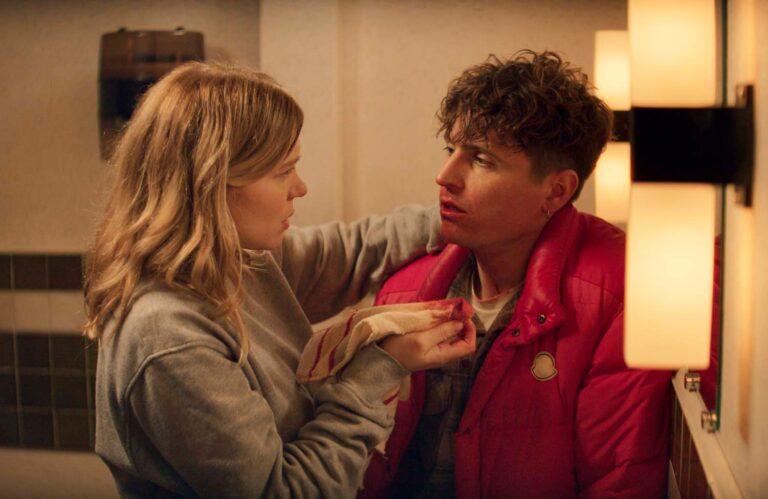
Your Monster is, hands-down, the most fun Iโ€™ve had with a rom-com in recent memory. Itโ€™s like a Beauty and the Beast story, but instead of a fancy castle, itโ€™s set in your momโ€™s house, and the Beast is a total grump with a serious case of “get out of my closet” syndrome. Add in some delicious rom-com vibes, a dash of horror, and Melissa Barrera delivering a performance so fabulous that you canโ€™t take your eyes off her, and youโ€™ve got a film that’s an absolute blast!

Your Monster' Review: Melissa Barrera in Droll Musical-Horror-Rom-Com

Barrera plays Laura Franco, and letโ€™s just say, her life is a total mess at the start. Sheโ€™s just gone through surgery, her terrible playwright boyfriend Jacob (Edmund Donovan, who you’ll definitely want to boo off the screen) has dumped her, and now sheโ€™s recovering in her momโ€™s empty house. Yep, her mom is MIAโ€”no texts, no notes, nothing. But donโ€™t worry, her bestie Mazie (played by Kayla Foster, whoโ€™s bubbly in all the best ways) is by her side, doing her best to keep Laura from totally falling apart.

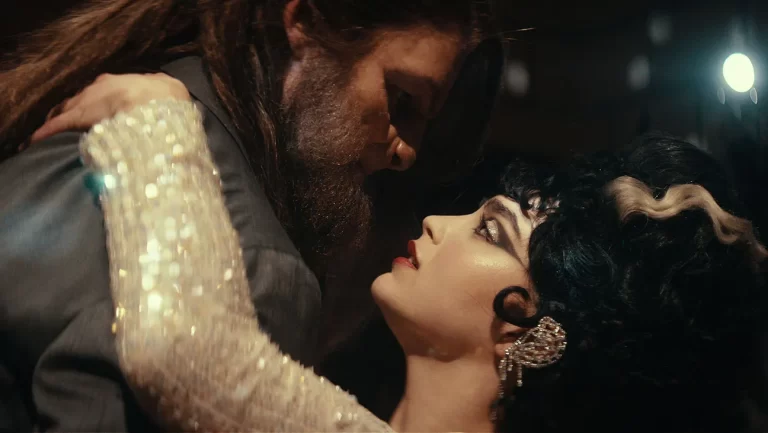
Now, this is where things take a turn way off the rom-com map. One night, during a super creepy thunderstorm, Laura meets the monster in her closet. And when I say โ€œmonster,โ€ I mean full-on monsterโ€”sharp teeth, growly voice, and absolutely no chill. Heโ€™s been living there for years, and heโ€™s not happy about Laura moving back in. In fact, he gives her two weeks to pack up and get out. Yep, two weeks! Imagine having an eviction notice from a creature living behind your shoesโ€”wild, right? But as you probably guessed, things donโ€™t go as planned.

So hereโ€™s where Your Monster really shines. The movie is technically a romantic comedy, but itโ€™s got all these little quirky twists that make it feel like a breath of fresh air. Itโ€™s not just about the will-they-or-wonโ€™t-they, itโ€™s about how Laura starts piecing her life back together with a little help from, well, her childhood closet monster (Tommy Dewey). The chemistry between Barrera and Dewey is so much fun to watchโ€”itโ€™s awkward, sweet, and downright swoon-worthy in parts (seriously, thereโ€™s a scene with Szechuan chicken that had me melting). Itโ€™s giving major โ€œweird but wonderfulโ€ vibes, and I am here for it.

But donโ€™t let the cutesy parts fool youโ€”this movie has some depth. Lauraโ€™s not just some damsel waiting to be saved. Sheโ€™s struggling to figure out who she is after a breakup and a major health scare, and Monster (yes, thatโ€™s his nameโ€”love the simplicity) isnโ€™t just your average growly guy. Heโ€™s got his own baggage too, and their relationship becomes this fun, messy, heartwarming journey of self-discovery for both of them. By the time Laura is ready to go after a part in Jacobโ€™s Broadway play (one he literally wrote for her while they were together), youโ€™re fully rooting for her. The way the film balances light, funny moments with real emotional beats is what makes it so special.

Your Monster (2024) โ€“ Plot & Trailer | Horror-Comedy | Heaven of Horror

The visuals in Your Monster are stunning. Will Stoneโ€™s cinematography turns even the smallest sets into whimsical playgrounds, and thereโ€™s a Halloween party that is absolutely to die for. The lights, the costumes (thank you, Matthew Simonelli!), the vibesโ€”itโ€™s a rom-com dream come true. And letโ€™s not forget the soundtrack. Itโ€™s a mix of classic love songs and original music that just wraps you up in the feels.

As the movie heads toward its grand finale, things get surprisingly intenseโ€”think Black Swan, but with more monster claws and romantic swooning. Itโ€™s one of those films that doesnโ€™t shy away from its horror roots, but still manages to keep everything feeling light and fun. The final act is a bold mix of heart and humor, with just enough blood to keep it exciting.

At its core, Your Monster is a love letter to anyone whoโ€™s felt lost, brokenhearted, or like their life is falling apart. Itโ€™s about finding the strength to move forward, even if you need a little push from the monster living in your closet. And honestly? Thatโ€™s what makes this movie so special. Itโ€™s not just cuteโ€”itโ€™s got layers, and it knows how to tug on your heartstrings while making you laugh and squeal in delight.

Bottom line: If youโ€™re looking for a rom-com thatโ€™s equal parts charming, hilarious, and a little spooky, Your Monster is your new obsession. Get ready to fall in love with monsters, messy lives, and the magical, chaotic beauty of it all.

Grade: A

Chasing The Gold: Interview with Josh Margolin, Writer/Director of ‘Thelma’

When I wrote my original Chasing the Gold piece about why June Squibb should be nominated for Best Actress at the Oscars, I did it for the love of the performance and the film. That piece has been an absolute blessing, as it has now led to two career highlights. First, I was given the chance to speak with the incomparable June Squibb about her work in Thelma. The second is what follows, which is my interview with the terrific writer/director of Thelma, Josh Margolin.ย 

We discuss writing, filmmaking and what it is like to write using people you know and love as the basis for characters. It was a very fun conversation. Also, after all this, if you’re not yet convinced about the film’s excellence, check out InSession’s most prolific festival correspondent Alex Papaioannou‘s review of Thelma from back in January when he saw it at Sundance. Enjoy the interview!

Interview: Josh Margolin on honouring his grandmother in action love letter  Thelma and the stunt work of June Squibb - The AU Review

Zach Youngs: What was the film that made you want to pursue filmmaking?

Josh Margolin: Oh, man. That’s a great question. It’s funny because it’s hard to remember an exact moment when it all clicked for me. In some ways, it’s hard to remember a time before I didn’t think I wanted to do this. I’ll say one moviegoing experience that really stuck with meโ€” or that I stillย  think about sometimes because it felt really seminalโ€” was going to see Minority Report in theaters. The [film is a] mixture of ideas, visual mastery, and excitement. I just couldn’t stop thinking about it. There’s something about it that just cracked something open for me.

ZY: Where do you start when you’re writing a script?

JM: I usually start from an idea or a nugget of a story that I can’t get out of my head. I keep thinking about it, dreaming about it, and getting excited about picturing it. Usually, I just start writing down things I want to see or sequences that are coming into my head and feeling vivid and interesting to me. Sometimes that’s happening simultaneously with the concept itself feeling crystalized. I can say with [Thelma], it was really about starting from this nugget of an idea based on something that happened in real life and getting excited about starting to explore the different ideas [this nugget] was bringing up in me through this particular lens, which for this movie was a lo-fi action thriller. I also wanted to explore the trials and tribulations of aging, anxiety, family, and all those things, as well as celebrating my grandma’s spirit, tenacity, and grit.

ZY: What was the real event that inspired Thelma?

JM: My grandma, Thelma, she got a call from someone pretending to be me saying I was in jail, in an accident with a woman, I needed to be bailed out, [and] she needed to send money. She’d gotten calls like this in the past, but for some reason, wrong day, wrong moment, she was caught off guard enough that she totally bought into it and panicked. [My family] couldn’t reach me, so they panicked. Luckily, in real life, they called my girlfriend, who was able to say, “He’s here. He’s asleep.” Everything was fine, and we were able to intervene before she sent the money, but it came down to the wire. Seeing [my grandma] get duped in this way as she was living alone for the first time in her 90s also started to signal this new era for her and pricked up some of my fears about this new era she was entering. I think the swirl of anxieties I was swimming in at the time, paired with that incident, is where Thelma was born.

ZY: Since Thelma is based on your grandma, are the other characters in the film also based on family members?

JM: A lot is drawn from real people, but I would say a lot is also exaggerated. Particularly with the parents. They probably have the narrowest portrayal because they sort of have to be the de facto antagonists of the movie, aside from perhaps the real antagonist. They are the forces of doubt heading in both Daniel [Fred Hechinger] and Thelma’s [June Squibb] direction. With all of those characters, Thelma and beyond, I tried to take as much DNA from real life as possible and then funnel it into what was serving the movie. I always wanted to write it so it felt true and resonant with the feelings of the people I know, but also, certain things needed to be crystalized or simplified or focused for the needs of the story.

ZY: When your family saw the movie, did they see themselves?

JM: I was nervous at first. [But] I think they got a kick out of it. Especially because my parents [saw] Clark [Gregg]ย  and Parker [Posey] play versions of them in the movie. There was also enough distance of, “O.K., right. I’m not looking in a mirror as much as I’m looking at things I recognize in myself.” I was pleasantly surprised and relieved that everybody was very game and excited about it. I was definitely stressed out about it.

ZY: After you finished the script, what was the process like for getting the film made?

JM: It was a very homegrown process. I brought the script into a writer’s group that my producer Zoรซ [Worth] hosts along with Chris Kaye, my other producer. [The group is made up of] my partner in life and often in work Chloe Searcy, and a couple of our pals. That was kind of the first stop after I had a full draft of it. They were all really encouraging. I ended up teaming with Zoรซ and Chris to produce the movie because they had been looking to make an indie. In some ways it was super surreal to see it build piece by piece and then suddenly be in production in the Fall of 2022, which was a very short window compared to some gestation times for movies. I think some of the actors connecting to it in the early days and jumping on board really helped create the snowball that eventually picked up enough pieces to gain that momentum that put it on its feet. Obviously, you have to adapt to different things, and there are realities around that, but I think by being pretty bullish about it and having the benefit of being like, “Well, this may never happen,” – we were able to just keep charging ahead. Our first day was in my grandma’s actual condo, and that was a very surreal feeling to start this process in the real location where I spent my whole childhood with her, so it was very full circle in a way.

ZY: Were you very protective of that environment? How much did production end up changing?

JM: I had a great production designer, Brielle Hubert, who did an awesome job with the movie. So much of [the set] was there because my grandma had accumulated a lifetime of things. It’s hard to fake that, especially on a low-budget [movie]. So having the real space was something [Brielle] and my director of photography David [Bolen] were excited about. Brielle ended up shaping certain environments in subtle ways. There weren’t any huge redos. She would make sure everything felt correct to the character in the movie and that nothing was pulling us out of that reality. That place had such strong bones, so it didn’t change in any fundamental ways, and I felt that when they did want to make adjustments, it felt right.

ZY: Did you always want to direct Thelma yourself?

JM: I did always want to direct the film. That was another piece of why it felt great to go into it with pals who saw it similarly. I think I started off wanting to be a director of some kind and I pivoted a little more toward performance and then I kind of swung back. I did feel really strongly that I wrote [Thelma] because I wanted to make something. I wrote this because this felt like a story I really wanted to tell. I think at no point did it feel like one that I wanted to write and then pass off because it’s such a personal story for me and one that I felt that I had a lot of stake in. I felt very protective of the tone of the movie. I wanted to make sure it all felt of a piece.

ZY: How do you feel about awards buzz around the film?

JM: Honestly, it’s been hard to wrap my head around. It’s been very cool and very humbling. I’m just amazed that so many people have connected with it in the way that they have. I was talking to my producers and saying, “So far everything past getting this movie out has felt like gravy.” Everything past getting into Sundance has felt like gravy. It’s been amazing that people have continued to see it and it has made its way out into theaters. The fact that it’s even in any of these conversations just feels very surreal to me and very humbling. It was such a bootstraps indie that we were making in my grandma’s condo and now it’s in this conversation in any capacity that feels really wild to me.

ZY: What’s next for you? Has Marvel called you yet?

JM: [Laughs]! My plan A is trying to write another original movie that I hope can feel fun and personal but cinematic and theatrical in its own right. Transitioning from the release of the movie to going back into “writing brain” has been really fun.ย 

ZY: It was really nice talking to you, Josh.

JM: Yeah, great talking to you, thanks for taking the time.ย 

Women InSession: Alien, Aliens & Body Horror

This week on Women InSession, in the spirit of spooky season, we discuss ALIEN, ALIENS and some of our favorite body horror films! There have been some great body horror movies in recent years, but it’s a genre that has been prominent over the decades, and we had a lot of fun going through the ones we like the most.

Panel: Kristin Battestella, Jaylan Salah

On that note, check out this week’s show and let us know what you think in the comment section. Thanks for listening and for supporting the InSession Film Podcast!

Subscribe to our Podcasts RSS
Subscribe to our Podcasts on iTunes
Listen on Spotify
Listen on Stitcher
Women InSession – Episode 106

Chasing the Gold: Festivalpalooza

This week on Chasing the Gold, Shadan and Erica are joined by ISF writer Hector A. Gonzalez, who’s seen 115 movies during all of the festivals this year! So we talk about his experiences and what films he thinks will be the biggest players this awards season.

On that note, check out this week’s show and let us know what you think in the comment section. Thanks for listening and for supporting the InSession Film Podcast!

Subscribe to our Podcasts RSS
Subscribe to our Podcasts on iTunes
Listen on Spotify
Listen on Stitcher
Chasing the Gold – Festivalpalooza

Podcast Review: Piece by Piece

On this episode, JD and Brendan discuss the Morgan Neville documentary about Pharrell Williams Piece by Piece! While using LEGO animation is a unique way to tell this story, there’s sadly a lot to the film that leaves plenty to be desired.

Review: Piece by Piece (4:00)
Director: Morgan Neville
Stars: Pharrell Williams

Subscribe to our Podcasts RSS
Subscribe to our Podcasts on iTunes
Listen on Spotify
Listen on Stitcher
InSession Film Podcast – Piece by Piece

Movie Review: ‘Freydis and Gudrid’ Explores the Soul Musically


Director: Jeffrey Leiser
Writer: Jeffrey Leiser
Stars: Micaรซla Oeste, Kirsten Chambers, Bray Wilkins

Synopsis: A group of merchants and vikings navigate dramatic events both within and without in this epic musical based on the Icelandic Vinland sagas. As secrets are exposed, two women have a reckoning.


My relationship with opera, like many Egyptians, started with Aรฏda, Giuseppe Verdiโ€™s tragic masterpiece set in the Old Kingdom of Egypt, which premiered in my homeland in December 1871. This hasn’t necessarily made me an opera expert, but despite the language barrier, this seductive, complicated art form has stayed with me as a companion and turned me into a different kind of person who appreciates musicals and musical theater.

Film, on the other hand, is a creative medium that can be stretched to its extremities to create a differenceโ€”something similar to operatic cinema. Beautiful Icelandic landscapes intertwine with theatrical singing, actors lining up and facing the camera. It all feels like fourth wall-breaking but alienating from an average film viewing experience.

Freydรญs and Gudrid: An Original Viking Opera Hits High Notes in Drama and  Romance โ€” Original Cin

In his Norse operatic film adaptation, Freydรญs and Gudrid, director Jeffrey Leiser defies the macho Viking lore, by giving the voice and the presence to his two female protagonists; Freydรญs mourns the death of her brother and takes on a journey with the pregnant Gudrid and her husband Karlsefni to retrieve the brotherโ€™s corpse and bring it back to Greenland and avenge his death. On the voyage, Freydรญs and Gudrid have a reckoning. Their relationship starts antagonistic, with rivalry over past wounds. But the shared hardships and the burden of war weigh down on both of them, so they find a moment of peace after years of unnecessary grudges.

Sam Kreugerโ€™s cinematography works well within constraints and budgetary limitations. Despite most of the scenes taking place in front of a green screen, he manages to perfectly capture the essence of ancient Icelandic folklore through a careful black-and-white backdrop of the events.

A film like this commands a niche audience. Freydรญs and Gudrid is not the average movie-watching experience, for it defies what comprises a traditional musical film setting, with hits and misses throughout, making it difficult to fully connect with it. It demands attention and a profound love for opera, albeit too much for its own good. The curiosity for the Vikings’ lore is interwoven with Lesierโ€™s talent in composing and orchestrating the film’s songs and music. His passion for writing music and big-scale musicals shows in the careful crafting of the film as a long opera from start to finish. Not once does he slip or lose command of his tools.

One of the most interesting elements of this film is how different Freydรญs and Gudrid are from one another. The two titular film characters are played beautifully by professional opera singers (Micaรซla Oeste) and (Kirsten Chambers), respectively. Leiser showcases the differences between their characters, while Freydรญs is bloodthirsty and hell-bent on revenge, always seeking the next fight, Gudrid is motherly, nurturing, and kind.

Freydรญs and Gudrid (2024) Movie Review: Ambitious Operatic treatment of the  Vinland Saga is frustratingly hollow - High On Films

This feature may not be what many would call โ€œtheir cup of tea,โ€ but in a world where modern audiences are tired of seeking the mundane, one remake, sequel, and prequel after the other; originality must be praised and admired for choosing the courageous act of showing a brand new cinematic language. It may have benefited from a bigger budget and been more fitting for the big screen, but it serves its purpose, which is not to distract from the characters singing the story.

Admittedly, this film may have worked as an opera on stage with more satisfaction, but Leiserโ€™s decision to bring it to a wider audience to watch it on the big screen is the perfect way of demystifying art. Itโ€™s not the History Channel series, nor Robert Eggersโ€™ epic, The Northman. It has nothing to do with how Marvel explores the Norse lore, but it works for the uniqueness factor, the dazzling songs, and two great female singing performances. Freydรญs and Gudrid is an exploration of the soul, an enchanting parting of the traditional into the unknown.

Grade: B+

Movie Review: ‘Smile 2’ Easily Outpaces the Original


Director: Parker Finn
Writer: Parker Finn
Stars: Naomi Scott, Kyle Gallner, Drew Barrymore

Synopsis: About to embark on a world tour, global pop sensation Skye Riley begins experiencing increasingly terrifying and inexplicable events. Overwhelmed by the escalating horrors and the pressures of fame, Skye is forced to face her past.


Six days have passed since Rose Cotter self-immolated in front of her policeman ex-boyfriend Joel (Kyle Gallner) passing the parasitic monstrosity to him. Joel has made the decision to save himself by murdering someone else in front of a witness. A couple of syndicate connected drug dealers who killed an innocent mother and child are his targets. Desperate and sleep deprived, Joelโ€™s planning skills arenโ€™t finely honed. He manages to kill one of the dealers, but a shoot-out ensues, and his planned witness dies leaving an accidental witness. Although free of the parasite he still meets a grisly end as he flees other members of the syndicate. Crushed by a passing truck, Joelโ€™s body and blood leave a ghastly bloody slick on the New Jersey road shaped like a pulpy red smile.

I'm Really Pleased With How It Came Out:' Smile 2 Director Explains The  Movies Brutal Opening Scene

Parker Finnโ€™s sequel to his 2022 debut horror feature Smile begins with a remorselessly bleak tone. The muted colors of a New Jersey drug den are replaced by a gothic-pop film clip showing the dark tressed superstar Skye Riley (Naomi Scott) singing her hit single โ€˜Grieved You.’ Skye, now with short blonde hair, is on the Drew Barrymore show discussing her comeback โ€˜Too Much for One Heartโ€™ tour. Skye has been out of the public eye after being hospitalized due to a car crash that claimed the life of her actor boyfriend Paul Horton (Ray Nicholson). Both were intoxicated and Skye is promising her fans she is now sober, her days of cocaine and alcohol bingeing behind her. โ€œIโ€™m a different person.โ€

Media scrutiny hasnโ€™t gone away, nor has her massive fandom. Skyeโ€™s ushered out of the studio by her โ€˜stage-motherโ€™ Elizabeth (Rosemarie DeWitt) and Elizabeth/Skyeโ€™s personal assistant, Joshua (Miles Gutierrez-Riley). Elizabeth is checking Skyeโ€™s approval on social media and Joshua is doing what he can to keep both women happy. Skye puts in her earbuds to block them both out and the scene transitions to her rehearsing choreography with backup dancers for the tour. Sheโ€™s the center of attention and a ragdoll. The routine is intensely physical, and Skye is still suffering from the multiple physical injuries (back surgery, internal surgery, and a knee surgery with a scar that mimics a grin) and the mental trauma from the accident. With her history of addiction, she isnโ€™t allowed any painkillers. She texts Lewis Fregoli (Lukas Gage) a high school friend and drug dealer for some Vicodin.

Lewis was the accidental witness in New Jersey. When Skye arrives at his apartment, he is paranoid, confused, and places a sword at her throat. In Skyeโ€™s eyes heโ€™s in the middle of a psychotic episode. Heโ€™s also snorting massive amounts of cocaine. He tries to tell her about the weird spooky shit that has been going on โ€“ the thing that follows him around smiling. He takes a weight and smashes his own face in after smiling at her. Skye is the new host.

Parker Finnโ€™s choice of a much larger canvas for his โ€˜viral possessionโ€™ horror pays off. In placing the parasite inside someone who is constantly followed by fans, the media, potential stalkers, and who must remain secretive about her issues because of the millions of dollars being invested in her tour; Finn points at media virality itself. Skyeโ€™s very public substance abuse issues before the accident mean that sheโ€™s already considered someone who can relapse at any moment. Elizabeth โ€˜handlesโ€™ her daughter rather than listening to her.ย 

Skyeโ€™s expensive New York apartment in a suitably faux-gothic building is a prison. Her bedroom is dark with Edvard Munchโ€™s โ€˜The Vampireโ€™ on the wall next to tasteful bondage photography and Maria van Oosterwijkโ€™s dark Dutch floral still life hangs over her bed as oversized wallpaper. Skyeโ€™s reputation as a tortured pop poet comes from a โ€˜darknessโ€™ inside her. She has unattended mental health issues, including trichotillomania as an anxiety response. Her brand is โ€˜damaged, but sexyโ€™ โ€“ a trope used often in pop culture for women.

The only person Skye feels she can turn to is her childhood best friend, Gemma (Dylan Gelula) who she alienated during her addiction phase. Gemmaโ€™s immediate acceptance of her honest apology seems like a positive step, especially as Gemma listens to Skyeโ€™s story about Lewis and the strange things sheโ€™s been experiencing. Gemma offers some comfort including staying with her overnight. But Skyeโ€™s reality is warping, infected by the parasite and the sense that she is indeed the narcissistic diva and toxic human that she suspects she has been since the โ€˜fame monsterโ€™ took over her life.

Smile 2' Review: Naomi Scott in Parker Finn's Horror Sequel

Smile 2 is an incredibly slick production. Parker Finn and cinematographer Charlie Sarroff up the ante from the first film by using extended takes and dizzying angles, and Cristobal Tapia de Veerโ€™s score is a sophisticated sonic nightmare. Unlike M. Night Shyamalanโ€™s recent โ€˜concertโ€™ film conceit in Trap, the production feels like itโ€™s a full scale multi-million-dollar tour being staged. Naomi Scott, who is in every scene after the opening, is a genuinely talented singer/dancer and actor. Lady Raven (Saleka Night Shyamalan) wasnโ€™t convincing as a pop star who would have legions of devoted fans, whereas Naomi Scottโ€™s Skye Riley is the real deal as an edgy pop princess fans could, and would, become parasocial with.

A tattoo behind Skyeโ€™s ear is of an angel/devil whispering into it. Parker Finn set the rules in the first film that the monstrosity liked wearing the skin of people whose minds were already compromised. People fighting internal demons such as guilt, childhood trauma, and grief. Skye has been fighting for control of her life since she became famous. Whether Elizabeth is a caring mother or a woman looking for payment on the investment of her time and work acting as her daughterโ€™s manager is up for interpretation. Unlike Smile where Sosie Baconโ€™s Rose had some form of support network that gave the audience a sense of how the parasite was playing with her mind, Smile 2 launches into the effect on Skye being almost immediate. Skye canโ€™t admit to the authorities that she was at Lewisโ€™ drug strewn apartment. She canโ€™t tell Elizabeth. She canโ€™t tell the harmless and hapless Joshua. Music gave her everything she thought she wanted, and it ruined her life.

Parker Finn uses an excellent combination of practical and digital effects. Although some of the scenes come from the body horror 101 playbook – there is a lot of viscera- he combines them well with the glitter and glamour of the โ€˜perfect packageโ€™ that famous people are supposed to project. Skye already feels monstrous because of her scars and the entire tour is about her emerging from a cocoon as a beautiful butterfly (there are some inevitable Cronenberg homages โ€“ the cocoon is a chamber reminiscent of The Fly).

One of the more disturbing scenes features Skye hallucinating an obsessed fan getting into her apartment and stripping naked with his stained underwear on the polished black tiles leading to her bathroom. Another is when her backup dancers attack her waiting for her to move before they get closer.ย 

Smile 2 is a pitiless experience. Expect the requisite jump scares and being uncertain which parts of the movie are inside Skyeโ€™s infected mind and which are real. Skye already exists in a state of โ€˜unrealityโ€™ before she becomes a host: whether that be her depression, addiction issues, the pressures to deliver for the tour, or her inability to go anywhere without being recognized and asked to โ€˜performโ€™ humility, gratitude, and grace.ย 

Smile 2 easily outpaces its predecessor. It isnโ€™t only the increased budget and scope that makes the film more enthralling, itโ€™s the idea that โ€˜Skye Rileyโ€™ is already a skin Skye is wearing and sheโ€™s hemmed in by parasitic attention. The old Skye, the new Skye, the infected Skye โ€“ none of them have control. Smile 2 is a cruel beast waiting to go viral.

Grade: B

Podcast Review: Saturday Night

On this episode, JD and Brendan are joined by the great Bryan Sudfield to discuss Jason Reitman’s new film Saturday Night! His resume hasn’t been great the last decade or so, but Reitman brings the goods this time with a frenetic, chaotic look at the first episode of Saturday Night Live.

Review: Saturday Night (4:00)
Director: Jason Reitman
Writer: Jason Reitman, Gil Kenan
Stars: Gabriel LaBelle, Rachel Sennott, Cory Michael Smith, Dylan O’Brien

Subscribe to our Podcasts RSS
Subscribe to our Podcasts on iTunes
Listen on Spotify
Listen on Stitcher
InSession Film Podcast – Saturday Night

Episode 606: Top 10 Horror Films

This weekโ€™s episode is brought to you by Twisters. Follow us on social media for your chance to win a FREE digital code!

This week on the InSession Film Podcast, inspired by Variety’s horror rankings last week, we discuss our Top 10 horror films of all-time! We also talk about the discourse around that article and Joker: Folie ร  Deux’s continued downfall at the box office.

– Opening / Box Office (8:23)
We open the show this week by briefly talking about football and JD’s fun weekend with his Lions beating the Cowboys. However, we quickly turn our attention to our weekly segment “Is the Parade On or Off?” with more discussion about the box office. We specifically get more into Joker: Folie ร  Deux‘s historical downfall and its 81% drop. We also talk about Terrifier 3‘s win over the weekend and The Wild Robot‘s continued success.

– Variety Article Discourse (48:44)
Last week, Variety dropped their Top 100 horror films of all-time and it ended up sparking some fascinating discourse. Some of it, however, was truly mind-boggling. Specifically with The Texas Chainsaw Massacre at #1 (spoiler alert). There were people who could not for the life of them understand that decision. Which then provoked others to ardently defend the film and “how could there be any other film at #1?” The extremism was once gain wild, and so we had to talk about it.


RELATED: Listen to Episode 516 of the InSession Film Podcast where we discussed our Top 10 Movies of 2023!


– Top 10 Horror Films (1:10:29)
In the spirit of spooky season, and Variety’s article as inspiration, we decided to discuss our favorite horror films of all-time as well. We didn’t go too in-depth on each one for the sake of time, but we do reveal our Top 10. 

– Music
The Exorcist Theme – Robert Miles
Halloween – John Carpenter

Subscribe to our Podcasts RSS
Subscribe to our Podcasts on iTunes
Listen on Spotify
Listen on Stitcher
InSession Film Podcast – Episode 606

Next week on the show:

Woman of the Hour

Help Support The InSession Film Podcast

If you want to help support us, there are several ways you can help us and we’d absolutely appreciate it. Every penny goes directly back into supporting the show and we are truly honored and grateful. Thanks for your support and for listening to the InSession Film Podcast!

VISIT OUR DONATE PAGE HERE

Interview (Femme Filmmakers Fest): Johanna and Jonathan Gustin of ‘Dicks That I Like’

At this yearโ€™s Femme Filmmakers Fest, Zita Short had the chance to speak with director Johanna Gustin and director of photography Jonathan Gustin about their short film Dicks That I Like (2024).ย 

Zita Short: What do you think the unique potential of short-form cinema is when compared to long-form feature films?ย 

Johanna Gustin: The typical process that a young filmmaker goes through when trying to break into the industry involves making one short and then several shorts and then a feature film. Leaving that aside, there is an accessibility to short-form productions that ensures that you can reach a wide audience. You put your video up online and everybody can watch it. I guess I didnโ€™t make this film for everyone. I didnโ€™t make it with a super broad audience in mind. You can make a short film with a very niche audience mind and avoid worrying about monetization. Itโ€™s always nice if you can monetize but you donโ€™t have to. The bar for entry is very desirably low.ย 

Zita Short: What was the development process for this short film like?

Johanna Gustin: One of the joys of short documentaries is that the journey from first conception to shooting can be very, very short. I had been peripherally aware of Daniella, the subject of the documentary, for a little while, because she was notorious in Berlin expat circles for holding these workshops. I called her up and she told me that she was holding a couple of sessions soon and would be open to us shooting them. Everything went by so quickly after that. We ended up renting 200 dollars worth of lights.ย 

One of the things about shooting a documentary is that you have to be very open to the project completely changing once you get involved in the process. Initially I thought this documentary would be more focused around the workshops themselves, but I began to really connect with Daniellaโ€™s art and decided to incorporate more of her photography work into the short. I found her photographs so beautiful and I wanted to explore the female gaze on the male body. There were still a lot of the same interests in there but my focus shifted somewhat.ย 

Jonathan Gustin: There were multiple workshops that we shot so the film really came together in the edit. We had a lot of footage and we had to cut a lot of it down to get to the point where we are now. We kind of stitched everything together to come out with the finished product.ย 

Zita Short: With the increasing popularity of documentary films in the mainstream sphere, we see the line between scripted content and documentary filmmaking beginning to blur. Do you think this development is positive?

Johanna Gustin: I would love it if we saw more documentaries being financed. This is a very multifaceted question that requires a complicated answer. I think part of that is that YouTube and streaming have changed everything. Part of the problem is that television networks donโ€™t want to finance anything anymore. Starting with the reality television shows of the 1990s, we saw this whole popular documentary renaissance emerge. A lot of that might look like fairly trivial content from the outside but I donโ€™t really think you have to work that hard to go from something like โ€œTeen Momโ€ to a more complex true crime documentary that asks thorny questions about ethics. I also think that thereโ€™s a path from consuming mainstream documentaries to consuming really weird, indie documentaries that are on Vimeo and YouTube. If you go down a weird YouTube algorithm, you have interesting documentary-based storytelling at your fingertips.ย 

Jonathan Gustin: As a documentary filmmaker I feel like the last few years have seen a lot of development in terms of experimentation with the documentary form.ย 

Johanna Gustin: I think that thereโ€™s a big concern about documentaries being authentic. There is this very postmodern concern with authenticity and weโ€™ll see how that gets monetised by big studios. This has become a real point of difference for the documentary genre and Iโ€™ll be interested to see how it affects the industry. I am hopeful that it will create growth and allow people within the community to gain more opportunities.ย 

Zita Short: Youโ€™re based in the Berlin expat community at a time when the city is making an active effort to attract creative types and intellectuals. Do you think itโ€™s important for governments to provide financial support for the arts?

Johanna Gustin: I think that funding is hugely important. We recently attended another short film festival and kept noticing how every second filmmaker was Canadian. One of the reasons for this over-representation was that the Canadian government provides significant funding for locally produced short films. We have moved back to the United States after being based in Berlin and we are concerned about the struggles that you have to go through in securing funding here. Berlin is not perfect and presents its own problems but the attitude that people have is completely different. When you are surrounded by other artists in a big city you have the confidence to go out and shoot a film in a guerrilla fashion. Itโ€™s just not possible to have major artist communities in big American cities anymore for a variety of complex financial reasons. We think that Berlin might end up going the same way as so many American cities and become unaffordable for the average young artist. We even arrived in Berlin too late to experience the heyday of Berlin. It might as well be Paris or New York City at this point.ย 

Jonathan Gustin: We are now based in the Bay Area so the rent is still high.ย 

Johanna Gustin: Itโ€™s not easy.ย 

Zita Short: The documentary engages with a lot of second-wave feminist theory about female solidarity and the power of collective action. Could you discuss how these workshops help women to achieve empowerment?ย 

Johanna Gustin: All of the workshops that we focused on featured a diverse set of women. They had all come to this place, to sculpt a dick, for different reasons. There is something therapeutic about the sessions but they also avoid being overly prescriptive. Everyone wants and needs something different. They get into some intense conversations about being a woman in the arts. They didnโ€™t necessarily anticipate that being the case. None of them were uncomfortable or appeared to regret it. It was an empowering experience for all of them.ย 

Not that there arenโ€™t things to criticize about second-wave feminism. I think this current wave that we are in is more intersectional and broad and group-focused. I think you see that in the documentary. Feminism is not just one thing.ย 

Jonathan Gustin: We were also really moved by the female-only workshops. There was just something different about them. A specific energy in the room. In the edit Johanna picked the all-female workshop.ย 

Johanna Gustin: I think it would have been a very different documentary if we had chosen footage from a different day. So much of modern-day feminism involves showing men all of the ways in which sexism is still present and pervasive. There was absolutely that tension present in the workshops that involved men.ย 

Zita Short: What inspired you to go into filmmaking?

Jonathan Gustin: I get bored very easily and filmmaking gives you the chance to constantly try new things. I always feel as though something exciting will occur on the next project and I just canโ€™t imagine doing anything else.ย 

Johanna Gustin: I came to filmmaking later in life. Jonathan, as someone who grew up with German arts funding, had enough of a safety net to go into the entertainment industry from a young age. I kept trying to sideline my interests and go into something more practical. Thatโ€™s a very American attitude. It wasnโ€™t until I met Jonathan, who was already working in the industry, that I felt confident enough to follow my ambitions. I realized that the thing I thought I wasnโ€™t very good at was something that I needed to pursue. Itโ€™s great that I was able to come at this with several decades of life experience behind me.ย