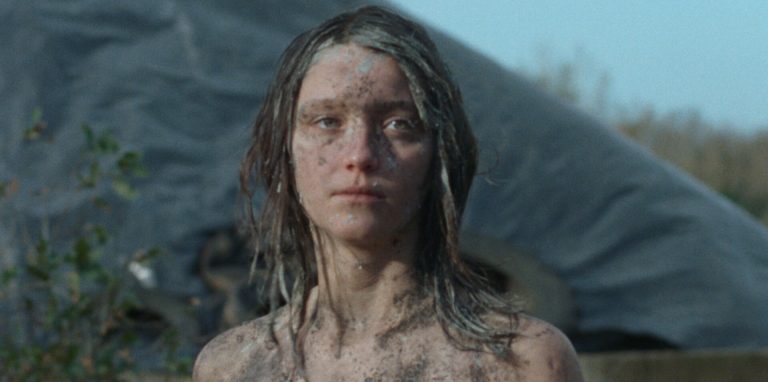
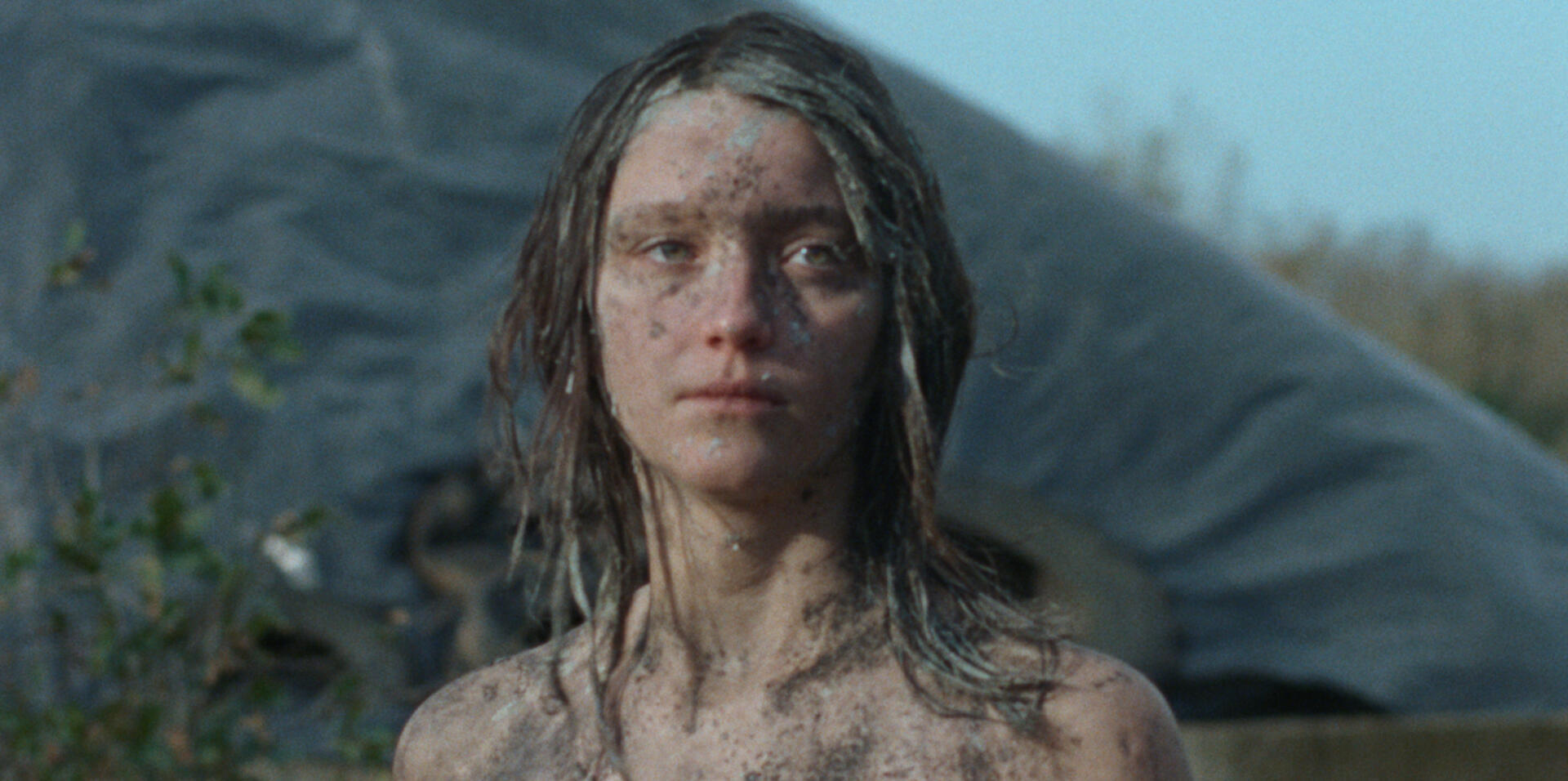
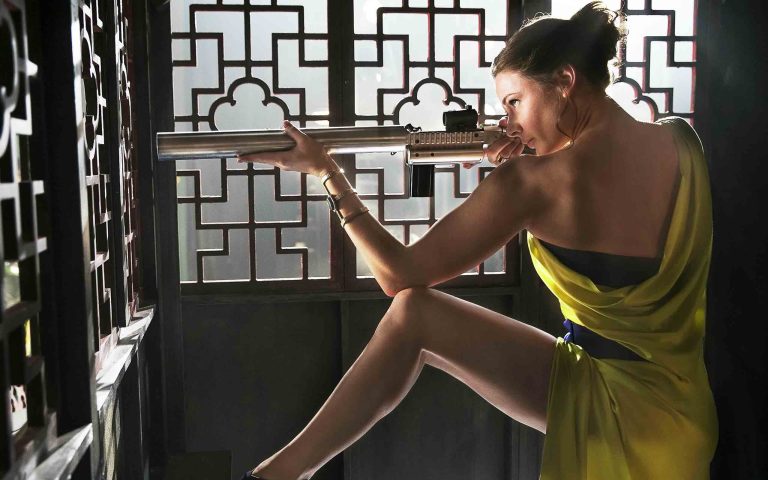
I still remember the first time I saw Pam Grier in a movie.
It was my early cinephilia days, I was on a Quentin Tarantino marathon, a.k.a. keeping up with releases before “Inglorious Basterds,” which was probably the first QT movie I ever saw. I had seen Pulp Fiction at a film criticism workshop screening before; it was a required viewing as part of our “curriculum,” but it still hadn’t grown on me as a film lover.
Jackie Brown was the penultimate Tarantino film I watched. I remember how back then I finished the marathon with a sense of euphoria that, of course, left me back in 2017 with the illusion of “Here’s to many Tarantino movies to come!” only to get one only in 2019 and be faced with the epic Tarantino drought ever since.
But the experience of watching Jackie Brown for the first time, to me, was incomparable. There’s always a magical moment when I watch a movie, then I get fascinated by a particular actor in it, so I isolate them from the entire movie and start fantasizing about them for a long time afterward, hunting them down as people, not just the characters in the movie I watched. It happened to me most recently with Austin Butler in Elvis, but way before that there was Maggie Cheung in In the Mood For Love, and Marcello Mastroianni in La Dolce Vita.
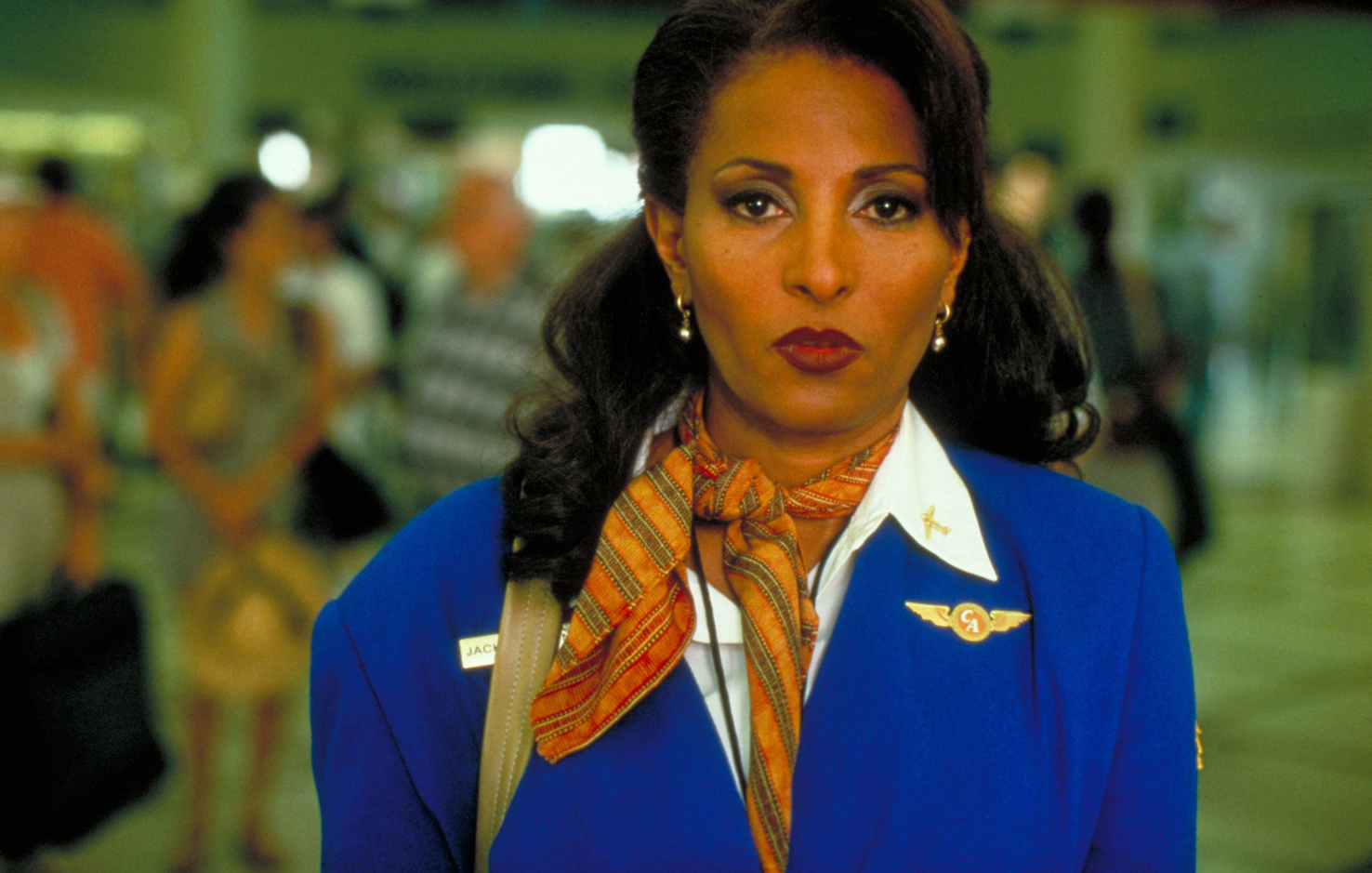
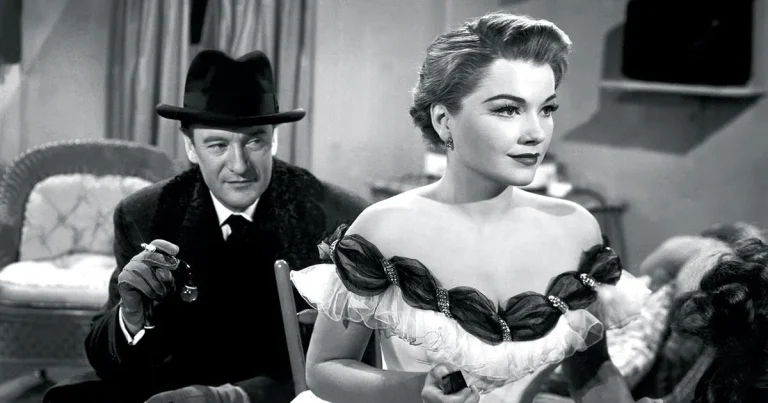
Pam Grier here took my breath away, although this wasn’t even the Pam Grier of her heyday as the Blaxploitation bombshell. But there was something about her performance here that spoke to me on strange levels, ones I couldn’t comprehend when I was watching this masterpiece at the time. Grier plays Jackie Brown with such fluidity; earthy toned and calm, serene, despite playing a scary woman living in a scary world. There is something about a tired, aging woman who carries her sexuality and independence with grace and pride, but also feels wary of the burden she’s been carrying all her life. I can’t imagine any actor other than her to play this woman. To me, she embodies the experience of a Black woman over forty, a non-White woman with zero privilege, growing older, and tired of chasing life and the dream of a luxurious retirement. Her street smart and her coy seduction of Max Cherry (Robert Forster), but also that sultry voice that she uses to deliver her lines in the perfect tone and rhythm, that’s why she stands out in every scene she’s in, even opposite major actors and mega movie stars.
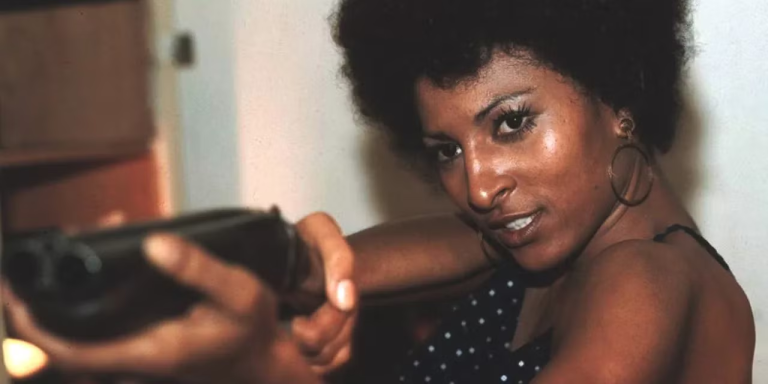
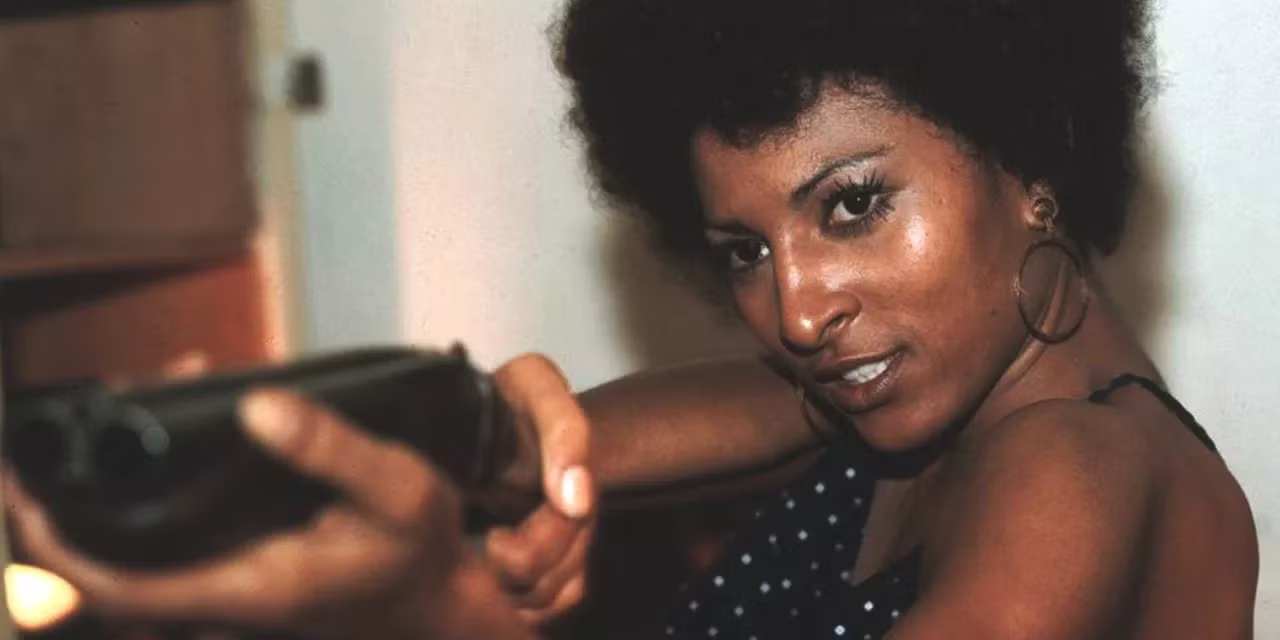
After Jackie Brown, I was expectedly blown away by the dazzling Grier. I searched for her every other project, and opened the Blaxploitation goldmine, consuming one hit after the other; Coffy, Sheba, Baby, and Foxy Brown. Blaxploitation is a fun genre, and no one can imagine it without Grier, whose athleticism, eroticism, and beauty have helped carve those movies into the hearts and souls of fans for many years. She has been a passionate advocate for the genre, and rightly so. It was likely the first time Black people had a distinct voice in American art, despite the negative criticism associated with it, particularly regarding the reinforcement of stereotypes about Black individuals. In every Blaxploitation film she is in, Grier plays an action star. She handles guns like a pro. She kicks men to the curb and she does that in heels. She’s smart, she’s energetic, and she’s seductive. Her afro and her wigs, as well as her form-fitting dresses make it difficult to keep your eyes off her anytime she’s on screen. I adored Grier’s Blaxploitation performances. I saw her as a badass, brave, tall, sexy, and violent, unafraid of committing whatever visceral act of depravity to save herself. Admittedly, the sexual violence was at times too much, but seeing her coming on the other side strong and avenging the men who wronged her was so cathartic.
I see Grier as an icon. A form of sexuality on screen mixed with a physical presence unlike any action star pre the sexy sultry action star of the late ‘90s and aughts. But how she plays it in those films; unabashed, sexual, violent, and sometimes sadistic, gives her an aura of fearlessness and intensity that are usually preserved for other more “airbrushed” stars, favored by Hollywood while the big execs have tried to not-so-coyly shove her accomplishments under the rug, delusionally thinking they can shove her into the pit of forgetfulness.
But no one forgets a face like Pam Grier, or the sweltering, intense performances she has given in every role she plays. Happy 76th birthday to this icon and hopefully we get to see a Grieraissance sometime soon.
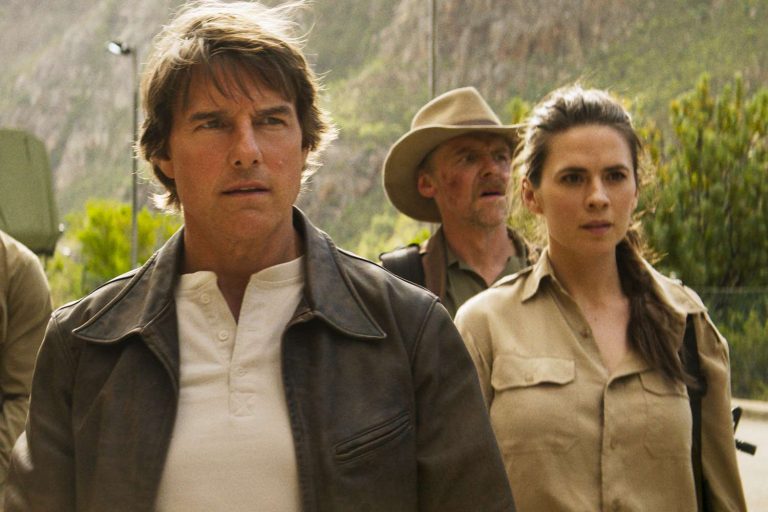
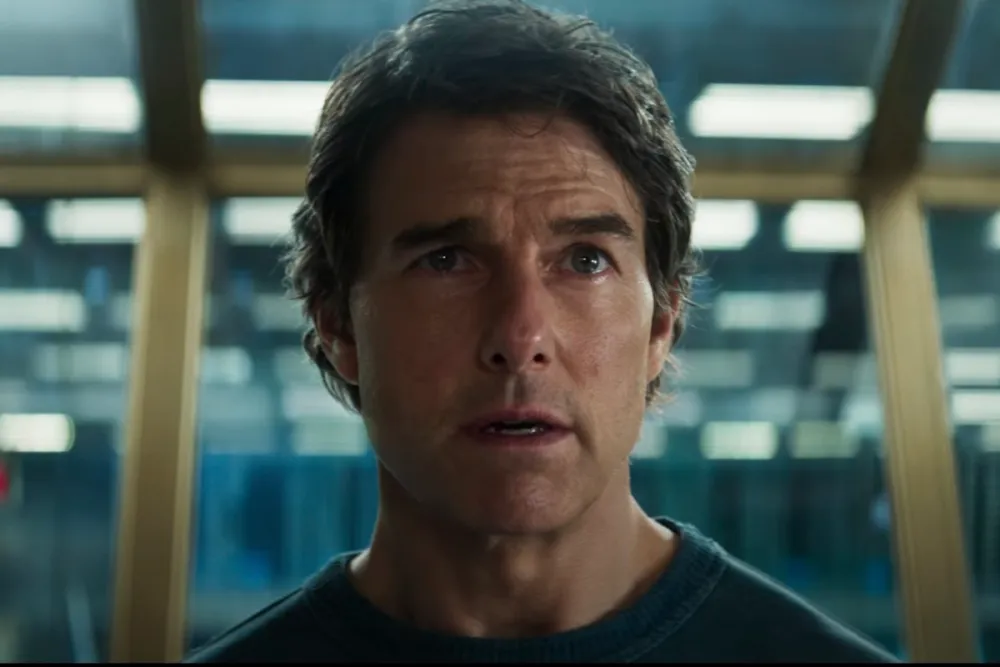
On this episode, JD and Brendan are joined by the great Griffin Schiller of FilmSpeak to discuss Christopher McQuarrie and Tom Cruise’s latest (and last?) mission with Ethan Hunt in Mission: Impossible – The Final Reckoning! This is one of the most cathartic reviews we’ve maybe ever had on the show. Mission: Impossible is a franchise we love, but these last two films disappointed in ways that left us frustrated and we purged those emotions in a way that ended up therapeutic.
Review: Mission: Impossible – The Final Reckoning (4:00) Director: Christopher McQuarrie Writer: Christopher McQuarrie, Erik Jendresen Stars: Tom Cruise, Hayley Atwell, Ving Rhames, Simon Pegg, Angela Bassett
This week on Women InSession, we discuss the legendary costume designer Edith Head and her astounding career that includes a record eight Academy Awards for Best Costume Design! Renowned for her impeccable eye for detail and ability to enhance a character through costume, Head worked for some of the best filmmakers and actors in her era, helping shape some of the most iconic images ever put to film. Which is to say, we had a really fun time with this conversation.
On that note, check out this week’s show and let us know what you think in the comment section. Thanks for listening and for supporting the InSession Film Podcast!
Synopsis: Alpha, 13, is a troubled teenager who lives alone with her mother. Their world comes crashing down the day she comes home from school with a tattoo on her arm.
It is fair to say, and has been said many times at this point, that the pandemic was a cursed time for all of us, brooding in enclosed rooms, dealing with our unshielded minds, and fear lingering in the possibility of being infected with this disease that took the lives of many around the world. All of us were scared; it was a time nobody wants to repeat. At Cannes this year, there is a blatantly obvious (and outright trepid) film about said time, in all of its political madness and societal hysteria, in Ari Aster’s Eddington. But there is another picture about a disease that consumes people inside and out in Julia Ducournau’s Alpha (screening in competition at the 2025 Cannes Film Festival), the follow-up to her Palme d’Or-winning Titane.
From the director who brought us touching pictures from bloody, brutal, and strange canvases–a father-daughter story intertwined with John Carpenter’s Christine in the aforementioned 2021 picture and a story about sisters and their sins of the flesh in Raw–you never know what to expect, which is a testament to her visionary artistry and brilliance. And so her next move is completely unexpected: a very personal and mournful rumination on the AIDS crisis, the loss of loved ones, our fear of death, and the succumbing nature of grief and loneliness. This is not feral or as violent as her previous features, but Alpha is equally tantalizing in its observations of the flesh and how it taints the soul, and vice versa. Ducournau switches from the Cronenbergian style of body horror. However, this is in a more poetic manner rather than visceral, to the existentialism of the works of Clive Barker and the dark poems of Edgar Allen Poe.
“This shift redefines Ducournau’s voice in horror—now steeped in vulnerability and emotional risk, rather than just visceral shock. It proposes the question: “How are you born into the world when everything around you is dying,” as she stated in an interview before the film’s world premiere. The answer to that question is not easily decipherable, even after seeing Alpha, since it is a very tricky picture to pick apart. However, Ducournau ensures that her response comes from within–her deepest fears and worries rooted in her past experiences. The film has a bruised heart, beating slowly, yet at a pace where one can still sense each ounce of pain and sincerity Ducournau felt then and still does. But it is a heart, and whether bruised or not, the cast and crew care for it, to the point you feel moved, vastly so.
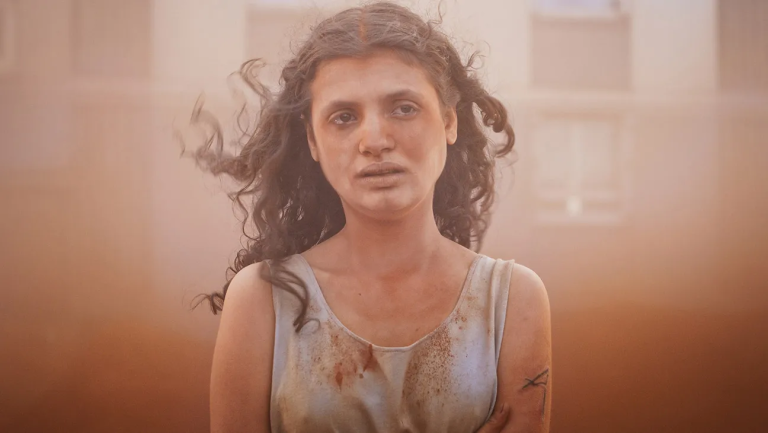
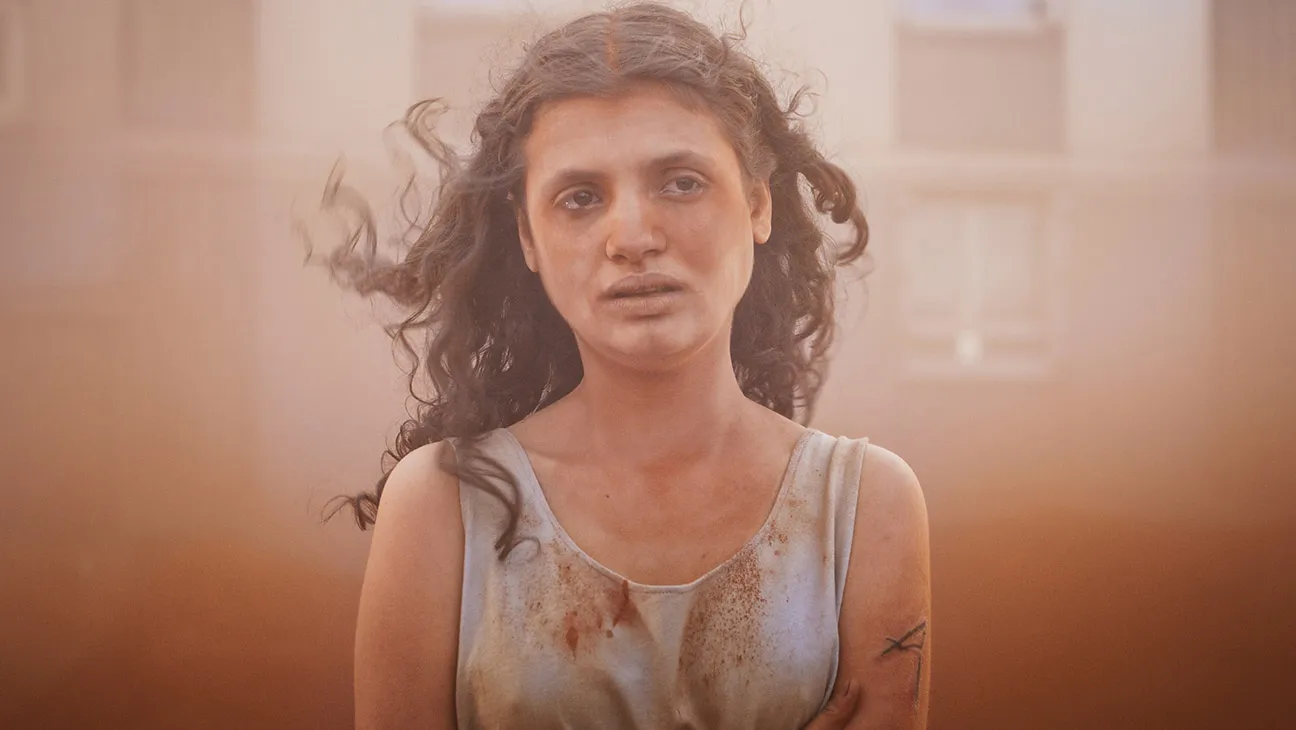
Alpha follows the titular character, played by newcomer Mélissa Boros (another excellent addition to Ducournau’s talented selection of young lead actresses), a thirteen-year-old girl going through the growing pains of adolescence. Alpha shows signs of the atypical behavior a teenager goes through, rage, defiance, and everything in between. Ducournau’s protagonists have had this angst and terror inside them, whether from the beginning (Agathe Rouselle’s Alexia) or gradually (Garance Marillier’s Justine). But no matter which one of these it is, they have an innocence to them–a search for nurture and care in the moments of darkness. And the young Alpha is no different, with discontent on the outside while vulnerable on the inside. She sees her life in disarray and disrepair, just like the classrooms and bathrooms in her school, all deteriorated and torn apart.
The film’s color palette matches the brooding deterioration with desaturated colors, emphasizing greys and blacks, that diverges from cinematographer Ruben Impens’ more lively lens in his previous Ducournau collaborations. Still, the feeling in the atmosphere remains palpable, even if it is a feeling one wouldn’t want to be in the presence of for far too long. As this disrepair in the school is not noticed by her classmates, you get the feeling that this sensation the film basks on–the grey color-tainted lens covering, and eating, the scenery whole–is seen through the eyes of Alpha. The young girl envisions this dystopian world through freezing-cold glasses of decay. Later, this perception becomes more collective, where Ducournau exhibits her most mature and moving storytelling in her directorial career.
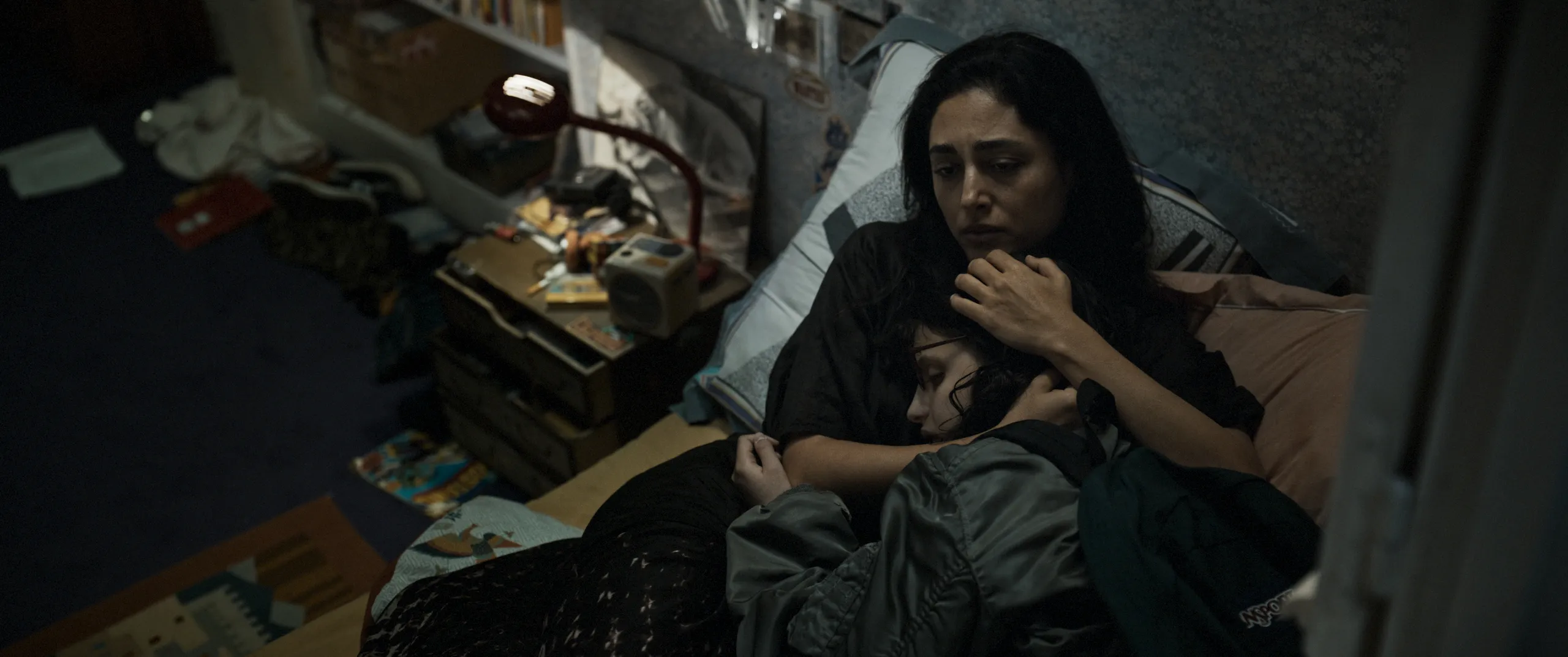
At this point in the narrative, it is all on Alpha, who wanders through this world in this saturated state of mind. In one of her acts of teenage defiance, Alpha gets a tattoo–a giant capitalized letter A on her arm–alongside some other classmates, all sharing the same dirty needle. The tattoo does not look good and isn’t healing properly. Once she gets home, and her mother (Golshifteh Farahani) finds out about it, panic amongst the household occurs not because of her rebellious ways specifically, but of what the needle might have transmitted to her. There is a possibility that Alpha has contracted a deadly blood-related disease that turns people into marble statues, stone cadavers with a sand-ish color that causes chills down your spine once you see them.
It reminded me of the burial shrouds in David Cronenberg’s latest work, The Shrouds. Instead of seeing a body in a bag, with a screen as an attachment to see your loved one decompose, it is people turning into raw material–both being monuments for the dead, their headstone. These are two creative ways of having filmmakers explore their fears of death and the grieving process. In the Cannes press conference for Alpha, Ducournau elaborated plenty on her references, particularly the small easter eggs she placed about Edgar Allen Poe in the film, saying plenty about that specific image of the statues and how it reflects her existential dread. And it is curious, and utmost fascinating, how Cronenberg and Ducournau–the labeled king and queen of body horror by many (including me)–made poetic films that, on one side of their multilayered story, reflect their mortality and fears of one day venturing into the void.
When those scenes appear, whether the shrouds or marble statues, there’s a coldness that strips the films of any amount of life for a few seconds and feels the worries of the auteurs, the darkness overcoming the light–drowning in the pool of existence. It is just not a coincidence, as also at last year’s Cannes there were many other features, from veteran directors specifically, that talked about memory and existence in different ways, shapes, and forms: Paul Schrader’s Oh, Canada, Francis Ford Coppola’s Megalopolis, Leos Carax’s It’s Not Me, Jean-Luc Godard’s Scenarios, etc. The pandemic caused them to reflect. Time was running out, or at least it seemed like that to many; as Schrader said during the Q&As for his film: “If I’m going to make a film about death, I’d better hurry up.”
These filmmakers were in a “rush” to make a picture that channeled their own lives; we watched and traversed through their memories, experiences, woes, and joys via a uniform canvas, being distinct compared to the rest of their work, and very personal. While Ducournau does not explore legacy like the rest of the aforementioned projects, as she is still young in the medium, she does present herself in a new light with an unexpected swing towards the mature, without the shock. She utilizes her dark memories from her time as a kid during the ‘80s and ‘90s, the time of the AIDS crisis, and adds in the trepidation of the COVID pandemic to paint a portrait of the melancholy waves both periods were riding on. She saw many people pass away during these times, which left a mark on her, leading to the creation of Alpha, a film that wants to remember those we lost.
This is only one angle of the film’s narrative. As it develops, Ducournau constructs a touching brother-sister story amidst the terror boiling from the effects of a rebellious tattoo. That part of the story is also rooted in a needle, used by a past addict. Alpha’s estranged uncle, Amin (Tahar Rahim, in a Machinist-like role), re-enters her life after many years, with flashbacks to when she was five years old, where she draws with a marker the scars on his arm, a symbolic, quick image of the beauty in destruction, and vice versa. He comes back, a ghost from the past. And Alpha fears death is knocking at her door, waiting to collect. The last image of Ingmar Bergman’s The Seventh Seal started to appear in my mind. Her bones go cold; her body gets numb. The greys become greyer, and the shadows loom heavily.
Everybody in her class set her to the side, with the belief that they’ll get infected. The community ostracizes her entire family. And Amin helps her navigate this life of distress and adversity. The two of them, affected by a needle, find mutual understanding in pain and melancholy. Alpha begins to care for Amin, even as his emotions fluctuate from this withdrawal. Her mother cares for the two connected, misguided souls, as the worries grow stronger, a resistance to fixing what has been broken for years. This is where Ducournau, alongside editor Jean-Christophe Bouzy, breaks the canvas and plays with time, memory, and dreams to create a new abstract mural that unites the wounds, literally and metaphorically, of the past, present, and possible futures. It is an uncanny presentation, often rich in poetic prose and vivid imagery, focusing on the nature of reality.
The messy fractures of lineage and genre work for and against the film, with Ducournau often placing the viewer in between the thin line of distance and closeness, yet always with a sense of compassion shining through the darkness, even at its most mournful scenes, which there are plenty of. Ultimately, Ducournau basks in the dread that consumes the people who lose someone they love, finding beauty in passing from one plain to another. Alpha is contrived with abstractions and despair, never letting go until you do; like grief, you must let go to stop the emotional bleeding. But it is a maneuver so personal and pensive that you can’t help but accept this dance with death for two hours.
Director:Matt Palmer Writers:Matt Palmer, Donald McLeary Stars: India Fowler, Fina Strazza, Katherine Waterston
Synopsis:When the “it” girls competing for prom queen at Shadyside High start to disappear, a gutsy outsider discovers she’s in for one hell of a prom night.
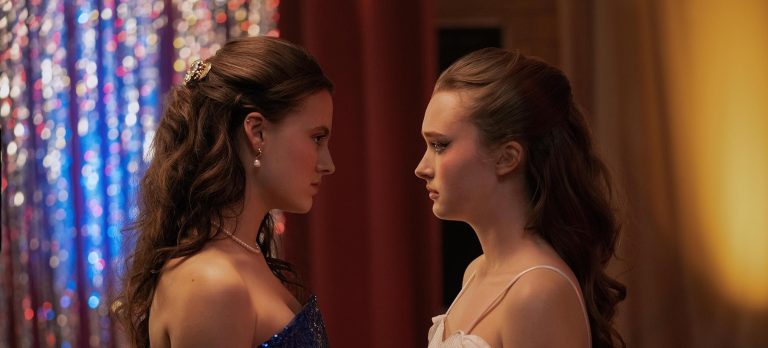
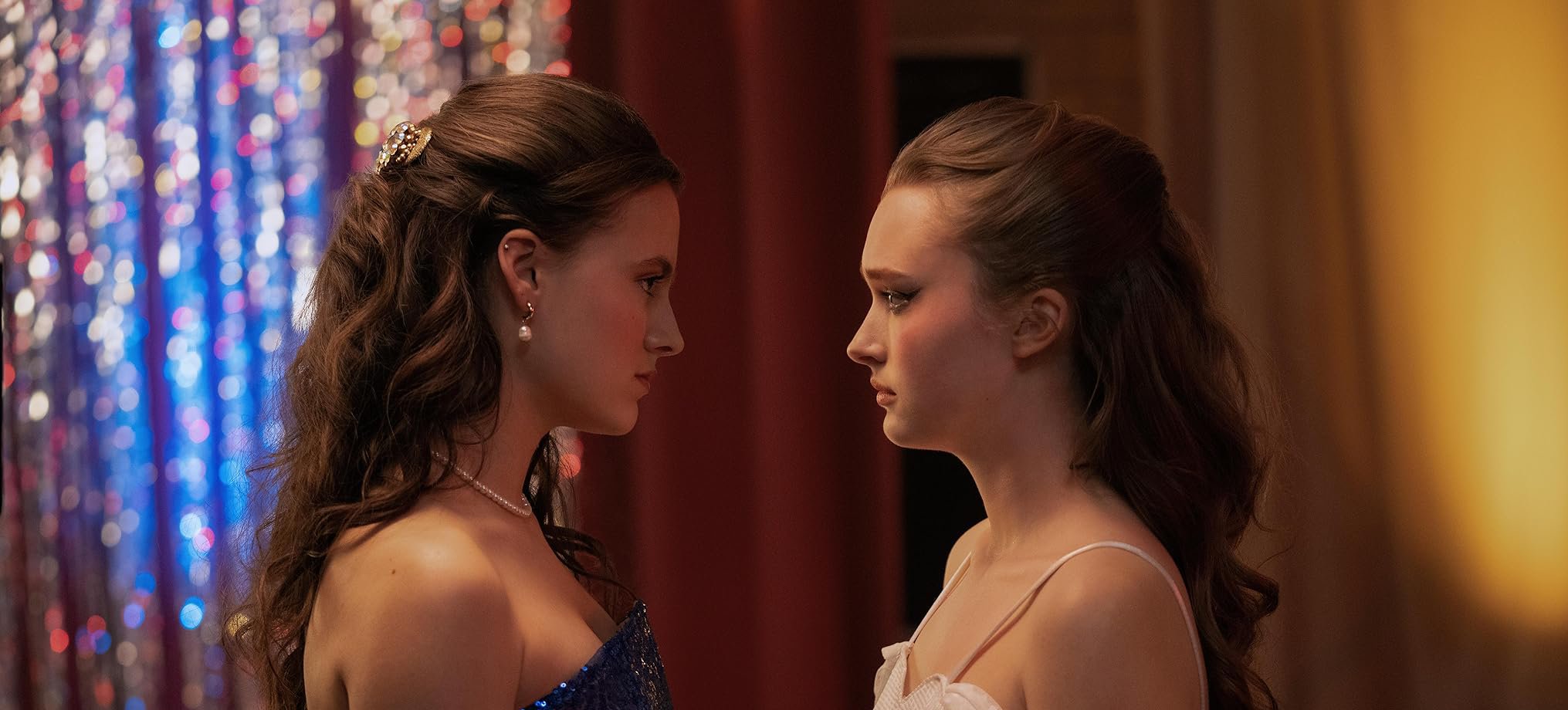
After an experimental release strategy with the initial trilogy, the Fear Street franchise has now returned on Netflix for a new installment, specifically adapting R.L. Stine’s The Prom Queen. While it doesn’t reinvent the wheel of slasher pictures, the movie still solidifies itself as a welcome return for one of Netflix’s best series, ensuring they can make as many installments as they can every couple of years. Why not have a lean, meat-and-potatoes, 89-minute-long slasher that has a well-defined beginning, middle, and go-for-broke conclusion that’s perfectly attuned to the sensibilities of 80s filmmaking, where the subgenre blew up, not only in cinemas, but on VHS? Sometimes, that’s all you need in a movie to be entertained.
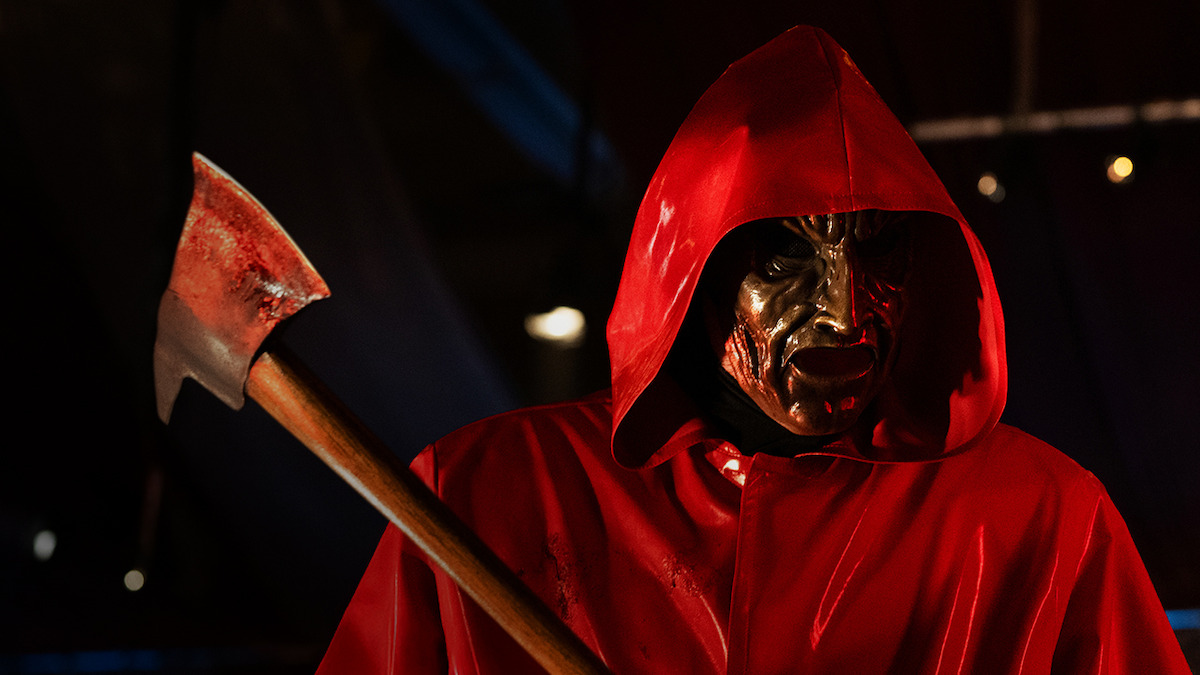
Director Matt Palmer takes over the reins from Leigh Jeniak and presents a relatively easy going time where you fully know how the story will pan out. However, in this case, it almost doesn’t matter, even if it rips heavily from the Prom Night franchise. If you’ve seen any of these films, Prom Queen has virtually no surprises. One knows exactly who the masked assailants who attack Shadyside High’s prom are, and you don’t even need to put two and two together to figure it out. As soon as the moving pieces are all introduced, we know who the killers will murder first, and who will end up as the movie’s final girl.
Though for the benefit of this review, and for the people who want to check it out, I will not reveal a thing. Let’s just say that, even with a giallo-like twist, worthy of Dario Argento, that occurs as five minutes are left to the movie which caught me completely off-guard and actively improved upon who the telegraphed killers were, the movie goes through the motions and offers little to no excitement in the storytelling department.
Even the characters are as paper-thin as it gets, including the protagonist, Lori Granger (India Fowler), who vies to become the school’s prom queen after a traumatic event in her family made her Sunnyside High’s laughing stock, notably to its pack of popular girls, with leader Tiffany Falconer (Fina Strazza) constantly finding ways to humiliate Lori.
Lori, of course, gets the most development, but it’s not as interesting as in the first Fear Street installment, when we actively spent as much time as possible with the characters to solidify their dynamic before many of them were killed off in gratuitous, often cartoonishly violent ways. That’s why, for Prom Queen, the main attraction isn’t the relationship (or lack thereof) between the characters, but the kills, alongside another incredible, synth-heavy score from The Newton Brothers, which, in many ways, recalls the work of John Carpenter, without feeling like a blatant carbon copy.
Seeing masked killers exact their blood-soaked plan in motion through often hilariously perverse slaughters is what makes slashers like these so unabashedly fun. The retro aesthetic from cinematographer Márk Györi frequently combines the emulsion of 35mm film with the sheen of a VHS camcorder brilliantly, adding some verve and texture to a movie that desperately needs one, especially in how it stages its practical kills. Utilizing weapons at their disposal, including a paper trimmer for the movie’s funniest sequence, Palmer showcases how schools are filled with as many dangerous objects as possible that, in the wrong hands, can lead to our gory demise. This ensures Prom Queen always has some forward momentum and never stops delivering on what we want to see out of such a movie like this, even if it stumbles along the way.
When it eventually reaches its denouement and throws at us an unexpected reveal, it solidified the deal for me that Prom Queen may be the best installment in the Fear Street franchise since Part One: 1994. It’s fully aligned with the sensibilities that have made giallo stand the test of time for genre aficionados, and delivers a lean, but fiendishly good time at the movies. And if you’re watching it with friends, the experience may be even better, though one hopes Netflix comes out of their “streaming or nothing” shell and finally embraces the potentialities that theatrical can have for some of their titles like this one. Here’s hoping their tune will change when Greta Gerwig shows them what they’ve been missing next year…
Director: Mark O’Connor Writers: Luke McQuillan, Mark O’Connor Stars: Luke McQuillan, Aidan Gillen, Daniel Fee
Synopsis: Danny, an ex-soldier homeless in Dublin, meets Will, a teen fleeing a drug gang. Their encounter forces them to confront their pasts while navigating the harsh realities they face.
Everyone has experiences in their lives that leave scars. Whether those scars are visible to others or not, they alter our lives, challenging us in new ways. When misfortune leads to desperation, those seeking to prey on others at their lowest make themselves known. Amongst the Wolves weaves a narrative that attempts to blend a thrilling crime tale with a psychological journey for the film’s lead. Life becomes bleak for Danny (Luke McQuillan) when his life takes a downward turn that is seemingly impossible to reverse. There’s a lot packed into this film, leaving the most compelling moments with more to say.
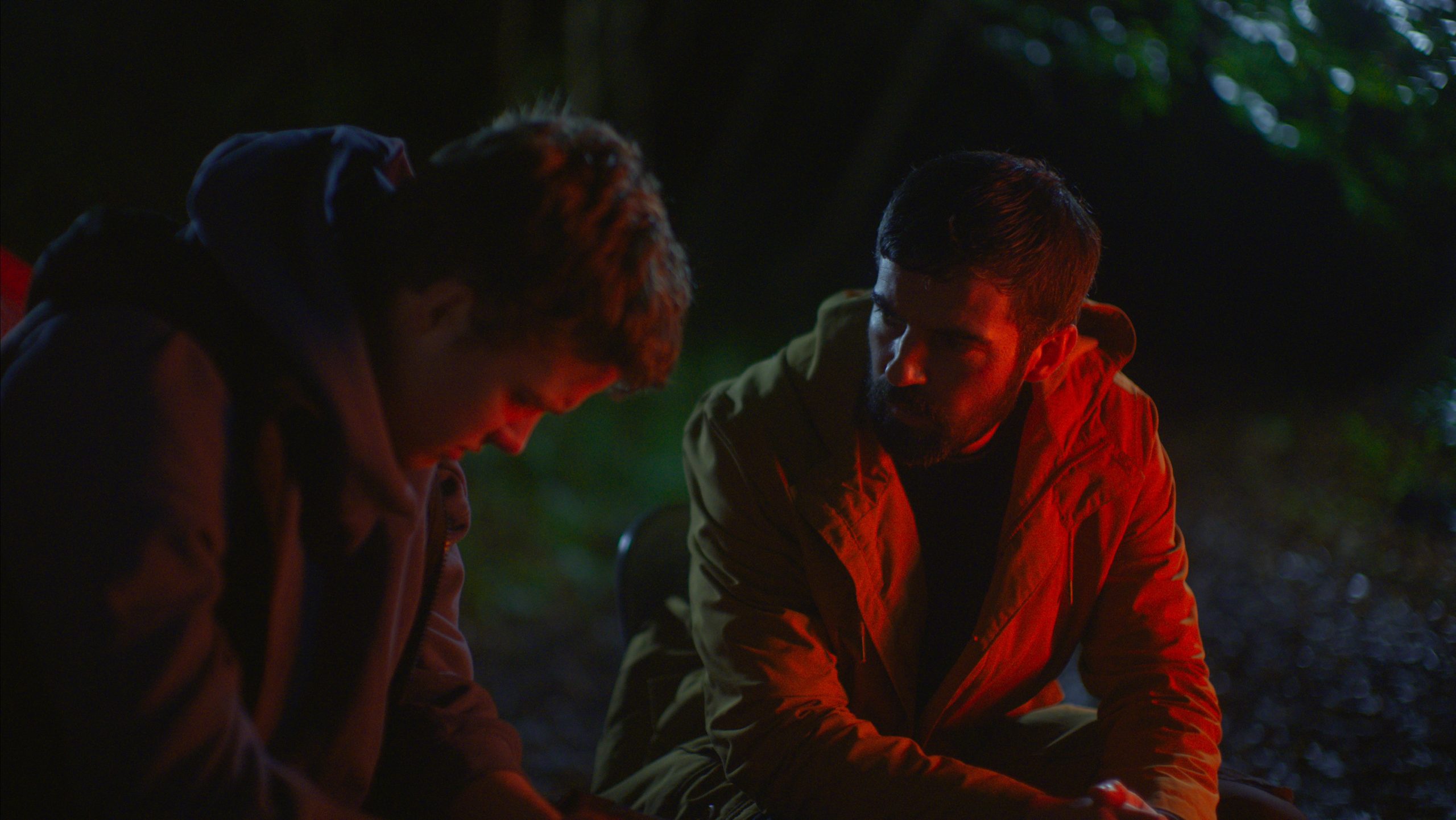
We first meet Danny in the shroud of night, rummaging through trash bags outside of a clothing donation drop-off. Cleaning off a pair of children’s cleats he has found, he’s confronted by a group of young men whose intentions are anything but kind. Amongst The Wolves quickly shows just how down on his luck Danny is; without a home or his family by his side, he reflects on his life and the choices he has made to get to where he is. A veteran who is haunted by flashbacks of his past, he keeps to himself until he stumbles upon Will (Daniel Fee), a young man hiding in the woods from dangerous drug lords. The film is at its best while it is exploring Danny’s dark and often muddled past; moments where he must face his mistakes make for the most tragic and memorable bits of the story.
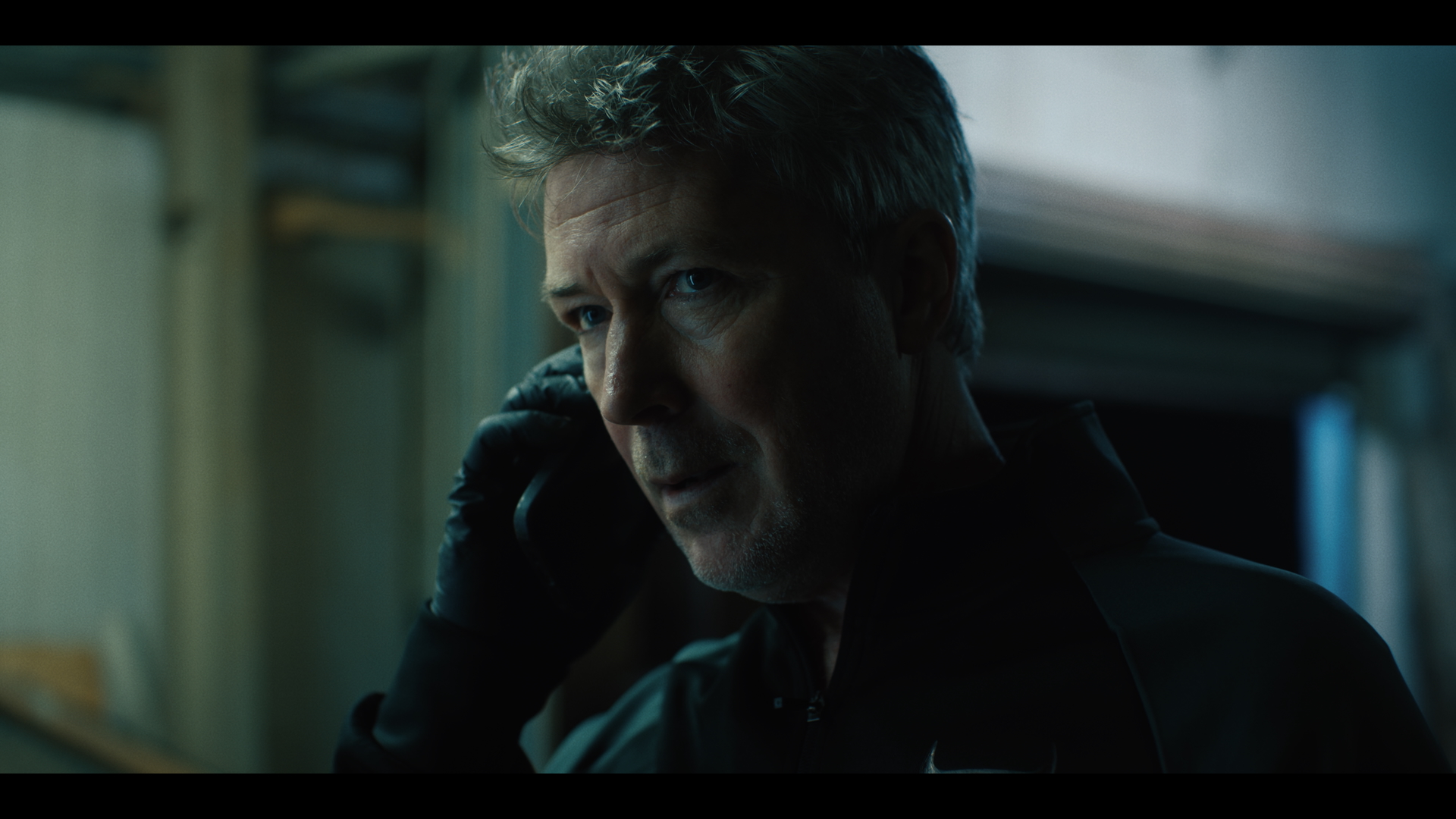
Danny and Will form an unlikely pairing; one is an ex-soldier at the lowest point of his life, and the other made one small mistake that will end up costing him something money can’t buy. They both bond over their situations; Danny sees himself as someone who needs to redeem himself for his past, which isn’t fully revealed to the audience outside of flashbacks that give just enough insight to show his flaws. Will needs Danny’s help to fend off crime boss, Power (Aidan Gillen) and his band of violent thugs. It’s easy to get lost in Amongst The Wolves with Danny constantly on the move, and new plot lines popping up with each new character that is introduced. Danny’s life is almost too chaotic to believe, leading the film to a resolution that takes away from the more important conversations this film attempts to create.
Where Amongst The Wolves hooked me was its leading performance from McQuillan, fully embracing his character’s shortfalls and playing him with just enough empathy. Danny is a character that you root for even when he gives you all the reasons not to. McQuillan’s best work is in the subtleness of his approach to the character; he has a quiet demeanor and often only makes eye contact when it’s absolutely needed. But he’s able to ramp up his performance during action sequences or when he’s holding someone up that owes his new friend, Will, some money. The rest of the cast is serviceable; Fee, who has his feature film debut here, has few moments outside of his scenes with McQuillan to showcase his acting abilities that unfortunately don’t leave much of a lasting impression. Gillen gives a rather on-the-nose performance as the main villain and feels like characters he’s played already in his filmography.
Writer and director Mark O’Connor juggles a lot of themes in Amongst The Wolves, tying into the culture of the land whether it be through the court systems with Danny’s ongoing child custody battle or how homelessness is viewed and treated. When O’Connor is exploring the societal impacts of losing all that you love and care for is where the film shines, showing a man who is imperfect but still worthy of a better life. It shows how untreated PTSD chips away at all aspects of life. Sadly, the film loses its focus with its attempt to be some kind of high-stakes action thriller, and the touching story of a man trying to redeem himself gets lost. O’Connor gives the female cast, Danny’s wife Gill (Jade Jordan), and charity worker love interest Kate (Louise Bourke), little to do outside of being obstacles for Danny or showing his more tender side.
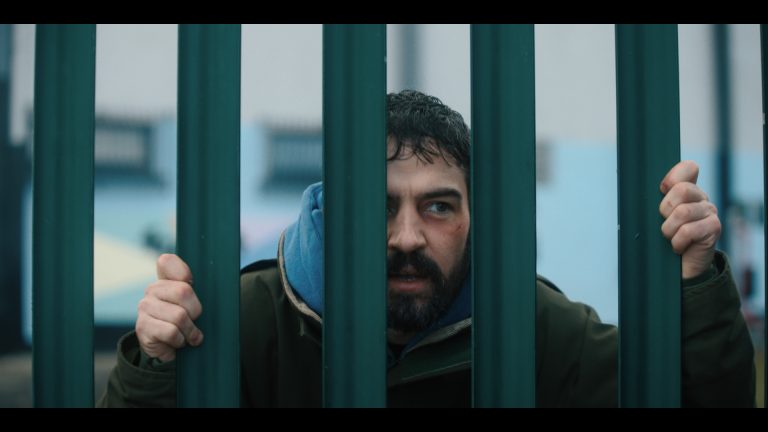
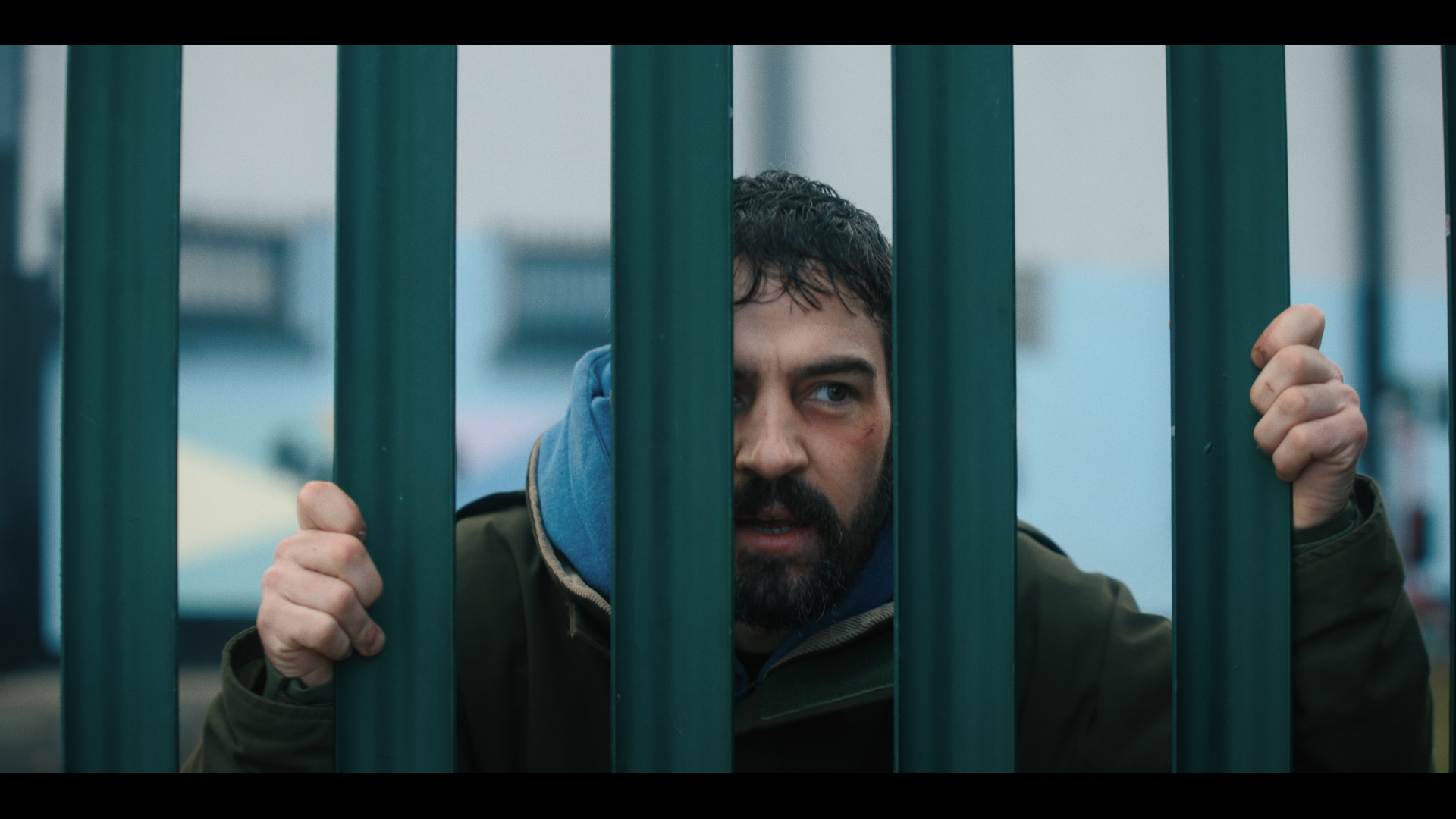
The film’s visuals crank up the bleakness of Danny, and even Will’s circumstances, with its gloomy backdrop of Ireland. Everything is either drowned out by the nonstop rain or caked in grime and dirt. Danny can often be seen with dried blood in his hair from a previous tussle, or hands filthy from sleeping on the soaked ground. Power and his band of punch-happy followers don a mask at the end of the film that, although it is completely out of place next to the modest clothing each character wears, showcases sleek design. Ignas Laugalis, the film’s cinematographer, captures the mundane beauty in the smaller details of the film, the way the sun peeks through the windows of a charity shop, or the quiet sadness of Danny watching his son through a barred fence just out of reach of his old life. At times, you can almost smell the rain or the fresh dewy morning of the forest through Laugalis’ visuals.
Overall, there’s enough to enjoy within Amongst The Wolves from its lead performance to its often scenic visuals that make the film worth a watch. Its refusal to stick with one genre over another is ambitious, and although it doesn’t completely pay off, there’s a conversation to be had about mental health and the treatment of those society deems unworthy, and its impact on all aspects of life.
On this episode, JD and Brendan review the charming French rom-com Jane Austen Wrecked My Life, from first-time director Laura Piani! We don’t get enough romantic comedies anymore, and this film is another example of why there should be more. It leans into convention only for it to pull its Jane Austen rug out from under you and cleverly tap into thematic ideas that make Austen’s writing so appealing.
Review: Jane Austen Wrecked My Life (4:00) Director: Laura Piani Writer: Laura Piani Stars: Camille Rutherford, Pablo Pauly, Charlie Anson
Director: Shih-Ching Tsou Writers: Sean Baker, Shih-Ching Tsou Stars: Janel Tsai, Nina Ye, Shi-Yuan Ma
Synopsis: A single mother and her two daughters relocate to Taipei to open a night market stall, each navigating the challenges of adapting to their new environment while striving to maintain family unity.
Sean Baker has become a filmmaker who has everyone’s eyes on him, now more than ever, after Anora, his rendition of the Cinderella story, earned him multiple Oscar wins, including Best Picture. It was a surprise for many, me included, especially after seeing it at the Cannes Film Festival last year. But Baker didn’t become the director he is today–focusing on sex workers’ lives since Starlet–without the films he made in the 2000s, particularly his sophomore feature, Take Out, which he co-directed with Taiwanese filmmaker Shih-Ching Tsou. Much like the Safdie Brothers, who gradually honed their hectic, stress-inducing style with more dramatic features like Daddy Longlegs, Baker and Tsou created a film that showed their talents and knack for the craft, relying on the nitty-gritty elements of the setting to capture it with honesty. While Tsou later transitioned into a producing role, Baker remained behind the camera.
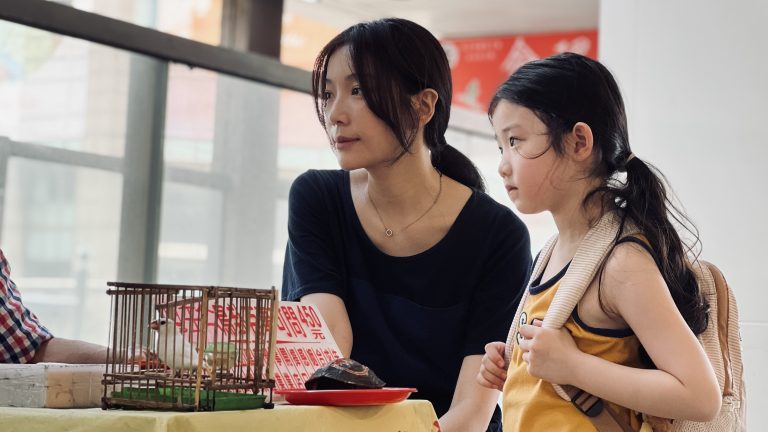
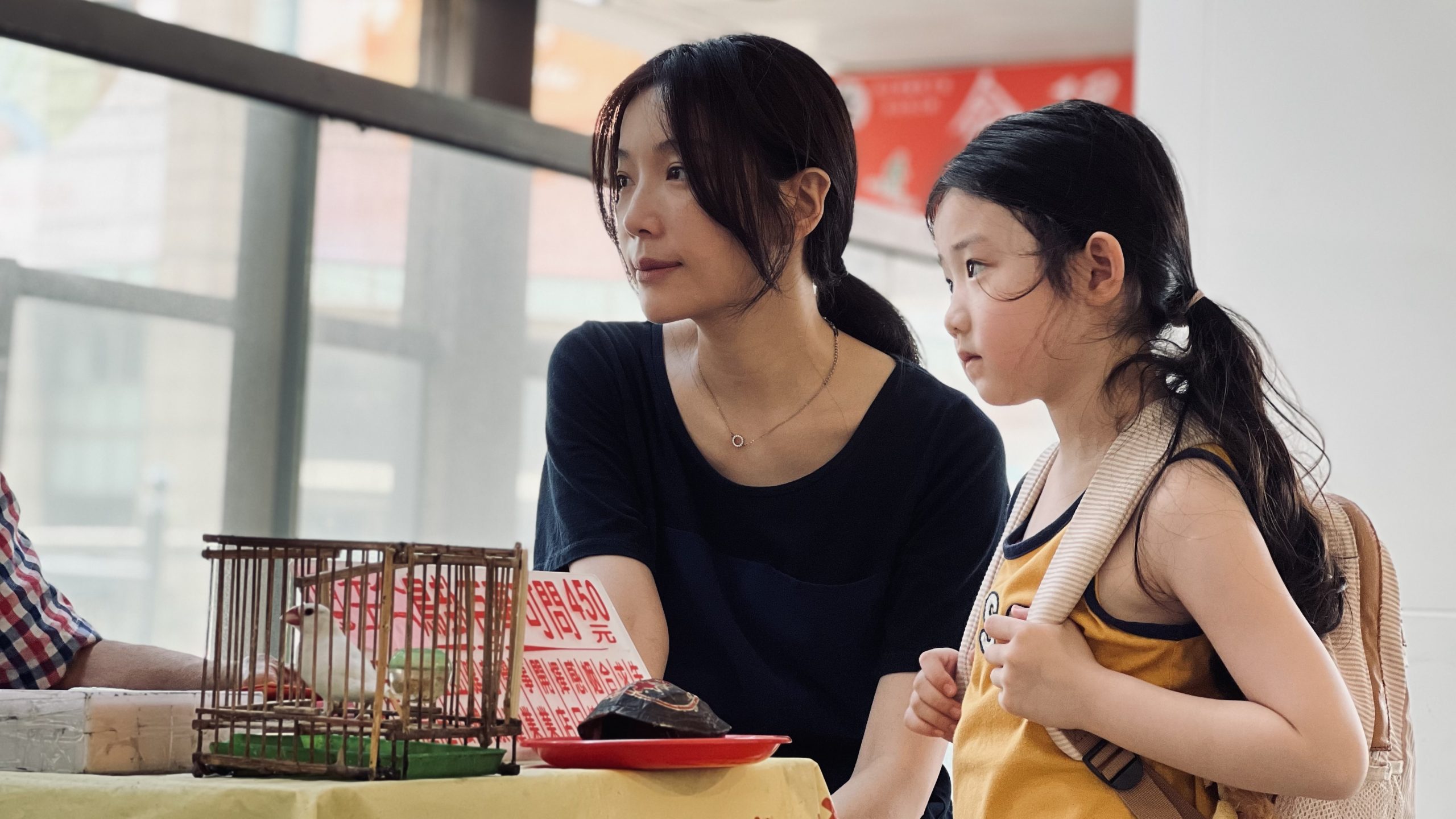
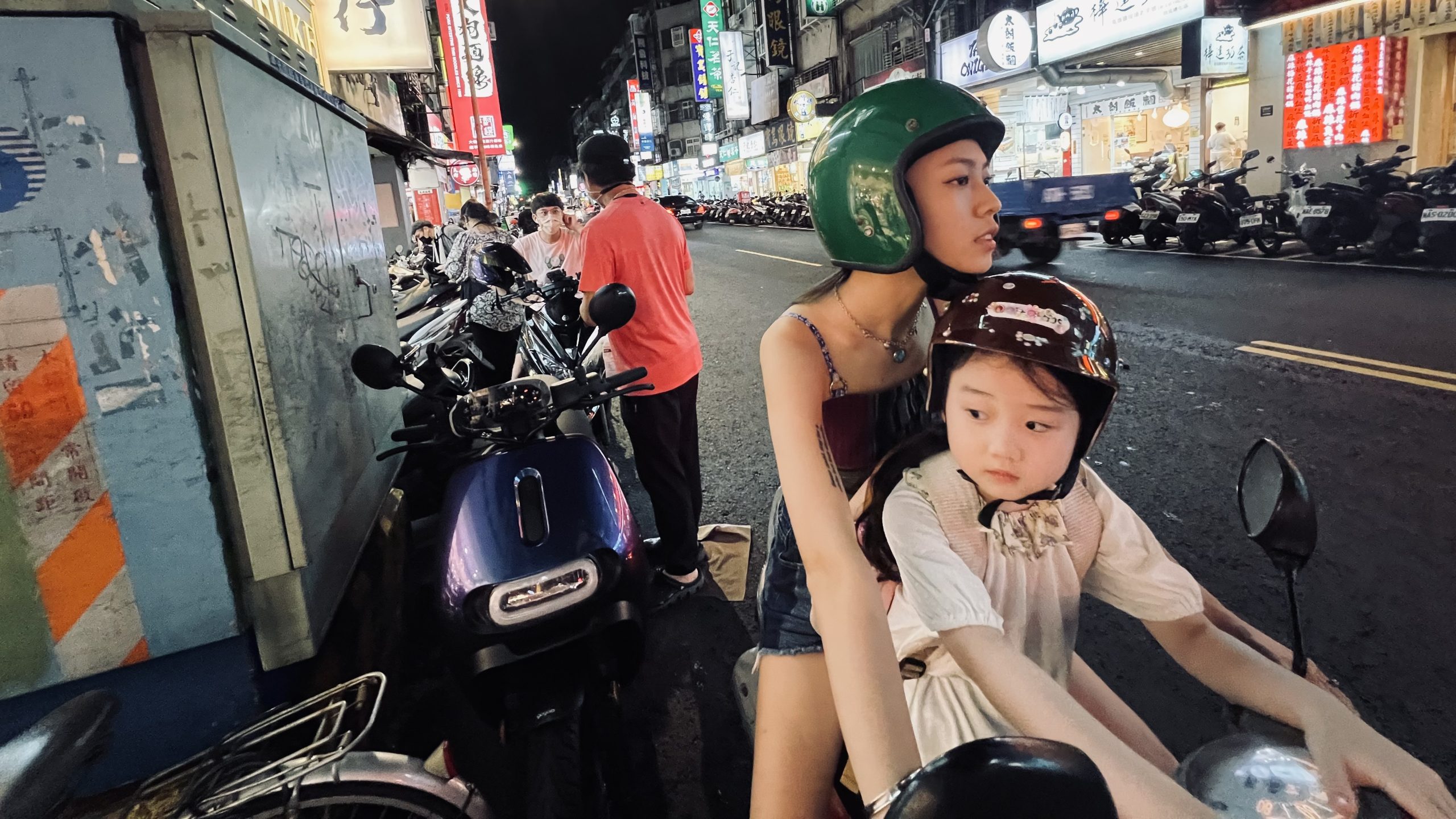
Their paths still crossed, as Tsou is equally responsible for many of Baker’s works getting financing. Yet one would have liked her to have made more pictures. Her influence is still felt on Baker’s works, but Tsou took twenty-one years to place herself again behind the camera with Left-Handed Girl (screening at the 2025 Cannes Film Festival in the Semaine de la critique). Much like Take Out, Left-Handed Girl is a human and grounded story, highlighting the working-class life. Instead of the streets of New York, we get the Taipei night market, both basked in the neon lights from the shop signs and restaurants that brighten up the cold streets. The film follows a mother, Shu-Fen (Janel Tsai), who, after many years, returns to Taipei with her daughters, I-Ann (Ma Shih-yan) and I-Jing (Nina Yeh), to open up a noodle stand in the night market.
Shu-Fen struggles to keep the shop afloat, as ex-husbands and estranged fathers return to her life after the departure. All the while I-Ann, the eldest of the two daughters, has great difficulty adapting to this new life. I-Jing explores the city with an innocence that Tsou and Baker, who is a co-writer and editor in the film, explore through a playfulness in the movie’s look and style–oversaturating the bright colors to create a dream-like sensation and, simultaneously, hiding the coldness that lurks in the streets of Taipei at night, without shying away from uneasy narrative developments. But also, her ventures provide some disarray into their lives, sending the story to realistic and exaggerated territories, although it keeps moving. Tsou may elevate the drama with various plot scenarios that each member of this family goes through. Yet, Left-Handed Girl feels authentic and raw, with each secret kept and lie told paving the way for these characters’ respective progressions.
Like Baker, Tsou has a way with actors; she directs them to genuine performances, as if they were playing themselves rather than characters in a film. Sure, the framing of the film does not make it documentary-esque. However, these are true-to-life works, which never fail to see the humanity in the characters and the actors portraying them. Through the film, you sense both the sensibilities of Tsou and Baker, one in the director’s chair and the other in the writing and editing room. But the two never overlap; you never feel that they are trying to one-up or that one’s style and technique is sensed more than the other because Baker and Tsou’s collaborative effort matches each other to perfection.
Director: Lynne Ramsay Writers:Ariana Harwicz, Lynne Ramsay, Enda Walsh Stars: Jennifer Lawrence, Robert Pattinson, LaKeith Stanfield
Synopsis: In a remote forgotten rural area, a mother struggles to maintain her sanity as she battles with psychosis.
Every time Lynne Ramsay has a new film ready for us, it is cause for celebration. Since she makes films so sporadically, her last one being You Were Never Really Here back in 2017, each release feels like an event for cinephiles worldwide, much like Terence Malick, Apichatpong Weerasethakul, and Jane Campion, amongst others. This high anticipation comes from her reputation as a singular, prominent director with a unique vision and knack for grim, psychological storytelling. Like those filmmakers mentioned, Ramsay emphasizes images, poetry, and feeling rather than dialogue and exposition; she shows the importance of crafting daunting, textured imagery left imprinted in our minds for an extended period.
Some examples of her striking imagery are the opening of Ratcatcher, the Christmas tree with flickering lights against the boyfriend’s dead body in Morvern Callar (my favorite film by Ramsay), and the red paint-covered house in We Need to Talk About Kevin. Many contemporary directors don’t give this much attention to the images they create. That’s why Ramsay stands out in the medium. Her imagery has meaning, creating a poetic visual language distinct to her. After eight long years, Ramsay has a new visceral experience, Die, My Love (screening in competition at the 2025 Cannes Film Festival), adapted from Ariana Herwicz’s novel of the same name.
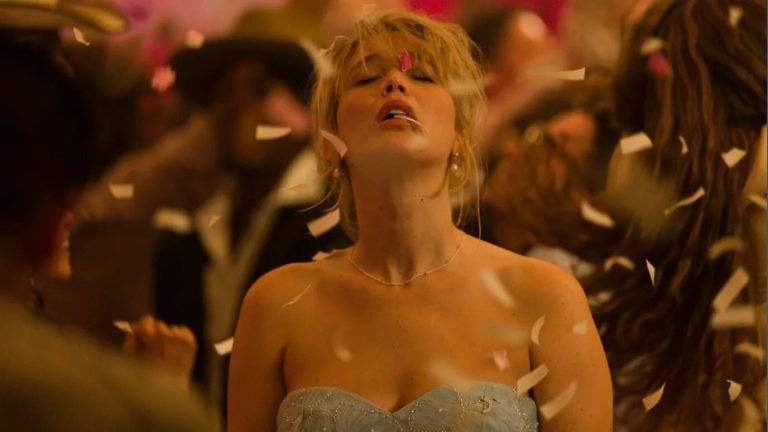
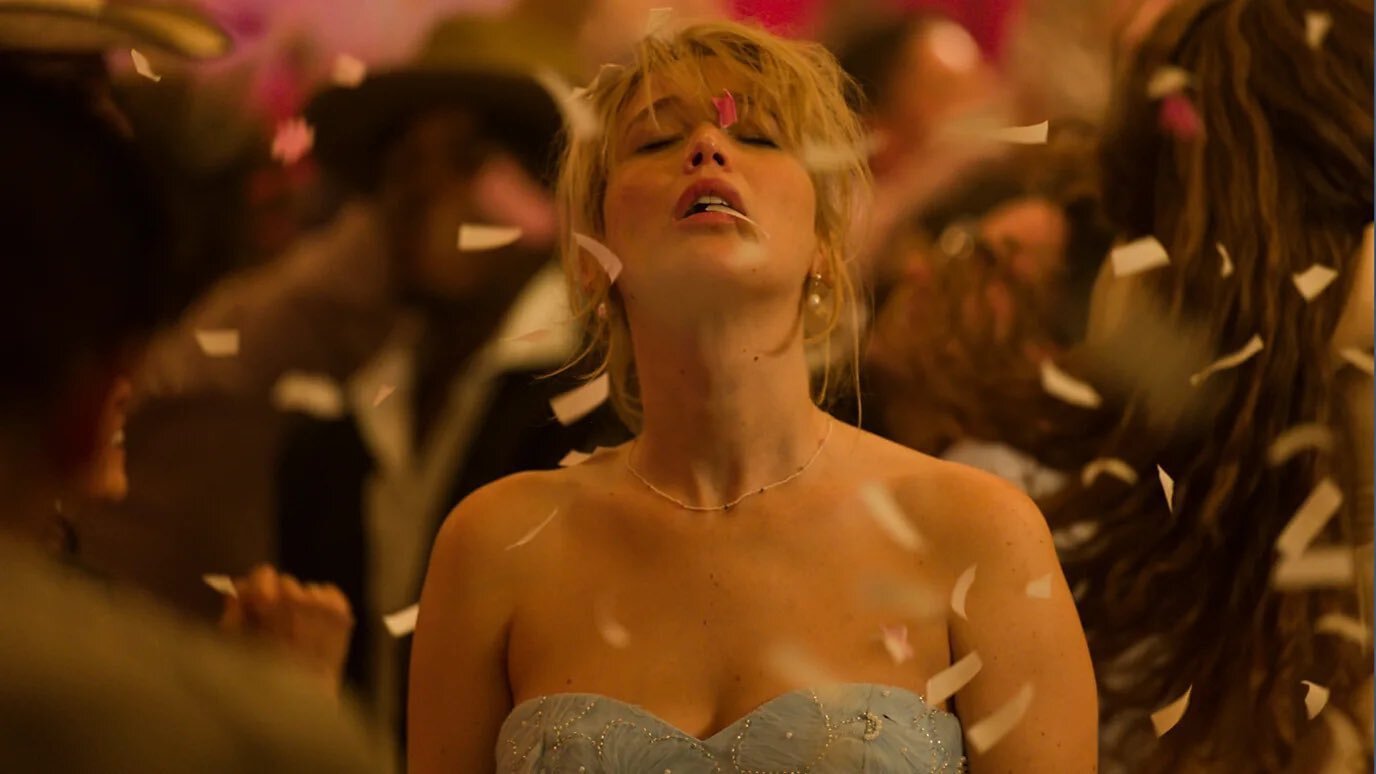
Once again working with source material, Ramsay presents the fragmented story of Grace (a magnificent Jennifer Lawrence), a writer who becomes increasingly uneasy on her isolated estate in the countryside. After living in New York for a while, Grace moves to the home of her partner’s, Jackson (Robert Pattinson), now-deceased uncle, Harry, who killed himself a while ago. This huge house seems like the perfect place for them to start their family, as Grace and Jackson are expecting their first child. The two are in love, desperately and passionately; they cannot be without one another, with Lawrence and Pattinson’s chemistry oozing from the screen in these initial moments. However, this idyllic start soon starts to unravel.
As the days pass, Grace withdraws from both her picture-perfect “white picket fence” life and her newborn. She exhibits some erratic, violent behavior. She spends most of her time alone in the house, unable to write as her thoughts are blurred, and cleaning a spotless house. It is all getting to her head. She reaches out to Jackson for salvation, but Grace is too far submerged in melancholy to recover from this easily. The self-harm is not only physical, but also psychological, the latter becoming an even more significant affliction. Her psyche distorts once Karl (LaKeith Stanfield), her motorbike-riding neighbor, appears on screen.
You don’t know if Karl is actually real or a figment of Grace’s deteriorating mental state. Fantasy and reality blur in a way only Ramsay can render, where chaos and grace rarely meet, but when they do, the result is devastating emotional catharsis. The protagonist remains unnamed in the novel, with Herwicz immersing us in her stream-of-consciousness. Ramsay retains that intimacy by embodying the character as Grace, giving us a similarly unfiltered glimpse into her unraveling mind. And she, although in a more streamlined yet equally unconventional fashion, crafts a very similar experience for the viewer. You are inside Grace’s head, going through every nook and cranny, memory and feeling, to a point where it becomes an exasperating view, but deliberately so.
Think back to her previous feature, where Joaquin Phoenix’s Joe, a traumatized veteran, is overtaken by his nightmares and isolation, leading him on a downward spiral, with reality being blurred with each step he takes. The same happens to Grace, as she dismantles her house–the only place where she can reign in her pain with utmost control–and Ramsay lets Lawrence fiercely play in that madhouse. And it isn’t the first time Lawrence has been placed on a deconstructed, mad canvas. In the 2017 feature from Aronofsky, mother!, she was tasked with showcasing frenzy and madness for two hours straight; with each passing minute, the setting became as frenetic as Lawrence’s performance.
The difference between the visions of Aronofsky and Ramsay is that the latter adds more humanity and empathy to the character Lawrence plays, instead of being a conduit for distress and suffering as it is in mother!. It is symbolic in Aronofsky’s film, and her character’s pain adds to the parable. Yet, I think some of it is done for exasperation and provocation (and I liked the film for such off-the-wall behavior). In Die, My Love,Ramsay uses the distress to reflect on postpartum depression, a topic rarely discussed in cinema, as well as blindsided love and domestic life. This is why each movement, expression, and look Lawrence’s Grace does, whether violent or gentle, feels genuine and heartbreaking.
The violent or brash moments aren’t even the ones that feel the most dangerous; the tender and gentle scenes have a trepidation to them, where you don’t know when Grace is going to strike and eat Jackson alive, like a lion watching its prey from afar, waiting for the perfect moment. It is the effect of Ramsay’s double-headed love story, where devotion fills the atmosphere in desolation, and chaos is the natural sensation. And after resting with the film for some days now, I have grown to like it more for that. Even when Jackson can’t do anything to save or help his despondent Grace, the commitment transmits–the unwillingness to let the love, as its title says, die and rot amidst it all.
On this episode, Brendan is joined by ISF writer Joey Gentile to discuss the new horror film Final Destination Bloodlines! While it is well-scripted and overall a fun movie, this is perhaps one of those cases where the general critical consensus sees a different version of the film than we did. There are some clever elements to its twist on generational trauma, but on the whole this is akin to The Oscars giving out legacy Oscars to actors who deserved it long ago.
Review: Final Destination Bloodlines (4:00) Director: Zach Lipovsky, Adam Stein Writer: Guy Busick, Lori Evans Taylor Stars: Kaitlyn Santa Juana, Teo Briones, Richard Harmon, Tony Todd
In the light of Star Wars’ modern state, looking back at older films puts a depressing spin on nostalgia. Having been a half-decade or so removed from the last truly good film in the franchise (I’ll leave specifics up to the imagination) and perhaps more than two decades beyond the last one to have a lasting impact on the cinematic landscape, the galaxy far, far away that we’re all accustomed to appears rather bleak.
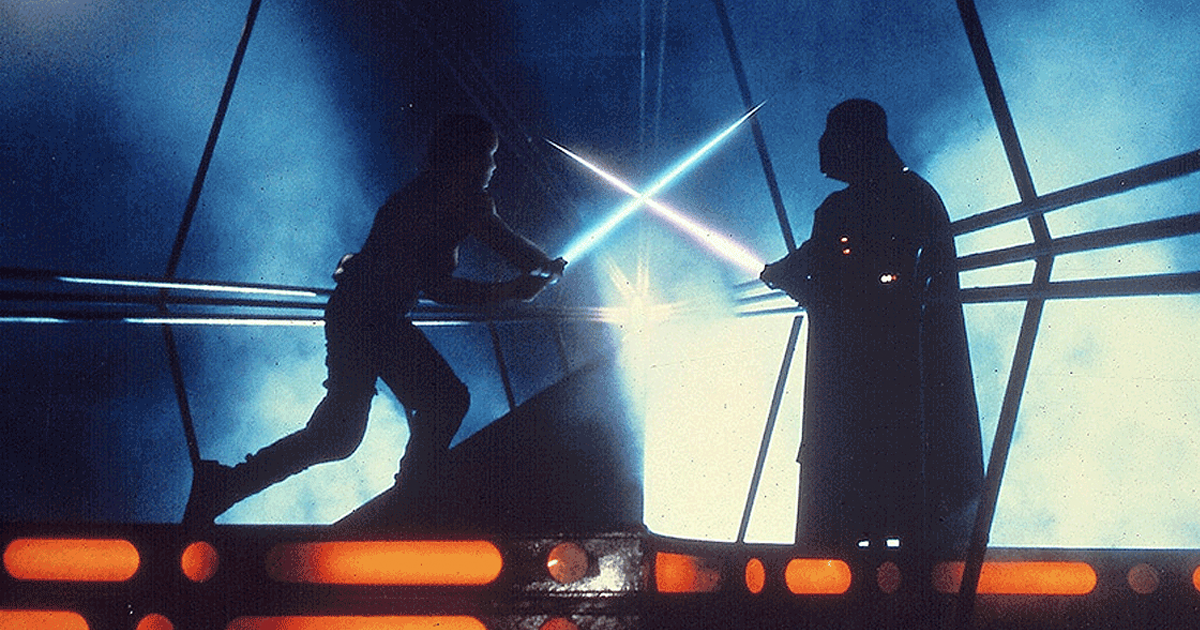
Yet the franchise’s defining talisman, The Empire Strikes Back, shines as spotlessly as ever, even 45 years after release. While it’s become popular to mince one’s ranking of the Star Wars films, as the internet loves to argue about nothing else more, anyone who has ever put Empire anywhere but first place is kidding themselves. It seems to be one of the only movies to ever possess the ability to remove the watcher from their current plane of existence and transport them directly into the frame. You’re a pile of snow on Hoth, a cloud on Coruscant; you get the picture.
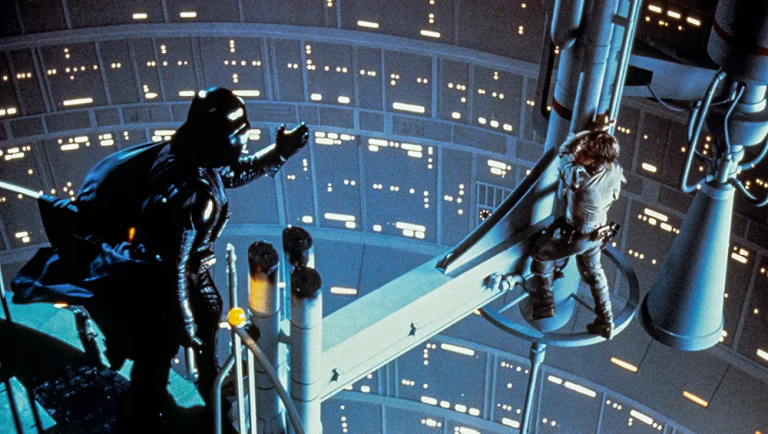
Beyond the basic but legendary quotability, an underrated quality of a movie’s long standing impact, Empire stills boasts the most honest inspection of the series’ most consistent themes: breathless suppression, hapless hope, and damning love. The latter is what gets Han frozen in carbonite by the hand of the former; the middle ideal is what drives Luke throughout the entire series, though most intensely in Empire. Lying with a severed limb in the face of his newfound father, the same face that he thought he’d defeated just one film ago, Skywalker cries out in languishing denial.
He knows the truth as well as the audience does, but to see a character hold to his core trait, hope, in the face of such a truth… Well, that’s what makes him the arguable face of Sci-Fi cinema to this day. In another way, his wail is a war cry for the weary and defeated who suffer under similar such protocols as the one’s Darth Vader imposes. Whether in personal life or on a much larger scale, you can throw Empire on for anyone and, if nothing else, they’ll sink into the same silence during the father reveal scene that their parents did 45-years-ago. This unfailing sequence, upheld by undying longevity, is a capsule for the feeling that the entire film elicits. Everything great about The Empire Strikes Back is wrapped up into the one scene that still, to this day, nobody can forget. It’s a beautiful, once in a lifetime occurrence on the cinematic landscape. I’m not sure we’ve had anything like it — maybe not anything even close — since.
And that’s just one scene. Consider the aforementioned Han and Leia “I love you” moment in the bowels of Vader’s control, moments before Solo is frozen in carbonite and hauled out of sight for the rest of the film. Or the opening, surprisingly long detail on Hoth, from the quieter moments with Luke and Obi-Wan’s force ghost to the full-scale battle that displays an unreal mastery in practical effects and superimposed visual scale. If you shoot something in camera, it’ll always look good; Empire, both on Hoth and everywhere else, is the best example of that to this day.
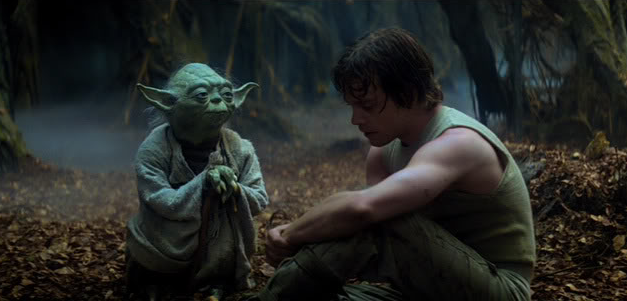
Oh, and Yoda is introduced here. No big deal, right? This is a film with clips, cuts, and tidbits shared across social media in thousands, if not millions of forms, and it hasn’t lost a single stroke of popularity. Even as the franchise actively worsens and its output grinds to an almost complete halt, audiences set their watches back 45-years now and again to experience what really started it all. A New Hope was first, sure, but there wouldn’t be a Star Wars as it stands today without The Empire Strikes Back. The original definition of a classic, and unarguably one of the greatest, most influential movies ever made. Happy 45th birthday… here’s to a trillion more.
Director:Laura Wandel Writer: Laura Wandel Stars:Léa Drucker, Anamaria Vartolomei, Alex Dascas
Synopsis: Against hospital protocol and court restrictions, a compassionate nurse finds herself caught between helping a distraught mother and maintaining professional standards of care.
The Dardenne Brothers (Jean-Pierre and Luc) are a director pairing that is as influential and inspiring as they are daring, becoming bolder as they have aged. Ever since The Promesse in 1996, they have remained a staple in French cinema (and constant Cannes Film Festival attendees–with their latest film again in competition this year) and shifted the cinematic landscape with their storytelling. They are known for their hyper-realist, socially conscious narratives, focusing on the struggling working-class, placing the characters on a journey that tests their morals, without melodramatic or sentimentalist beats attached for sympathy with the characters. Much like their storytelling, every aspect of their filmmaking is stripped down, from natural lighting to hand-held cameras, which employs a sense of intimacy and authenticity to the film.
It is as natural and grounded as it can be. You are immersed in the lives of these characters; you may have even encountered or known people who have gone through similar scenarios and communicated with someone who underwent such troubles. Their films feel less like constructed narratives and more like fragments of real lives—intimate, unvarnished, and eerily familiar. They have inspired many with this style and technique, one of the best modern examples being Laura Wandel, whose latest work, Adam’s Sake (L’Intérêt d’Adam, the opening film of the 2025 Cannes Film Festival’s Semaine de la critique), is not only influenced by them but also backed by the Dardennes.
Wandel, whose previous film, Playground, an honest and realistic drama about bullying and the toll it takes on both the children and their parents, put the spotlight on her as a storyteller akin to the Dardennes, although with a bit more dramatic sensibilities than that of Rosetta or The Son. Playground wasn’t the best film about the topic, but when watching it, you felt so connected with the story because it felt real–it made you think back about the days in high school and middle school. And even though her follow-up feature has more specific scenarios than her debut, Adam’s Sake has that same effective realist sting that she utilized before, cementing her as a potential heir to the Dardenne style of filmmaking.
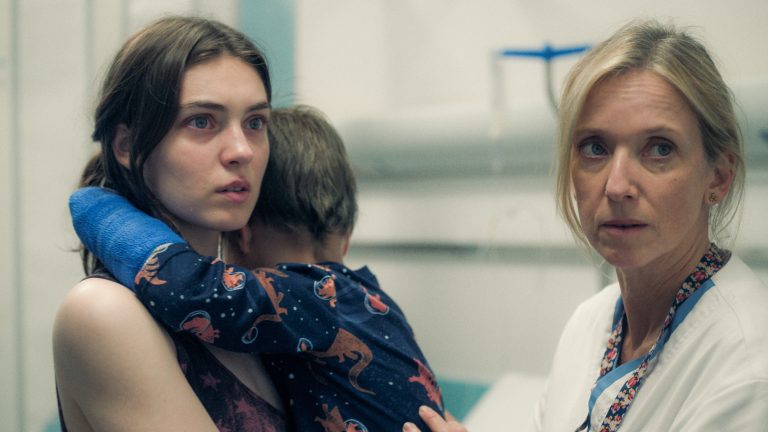
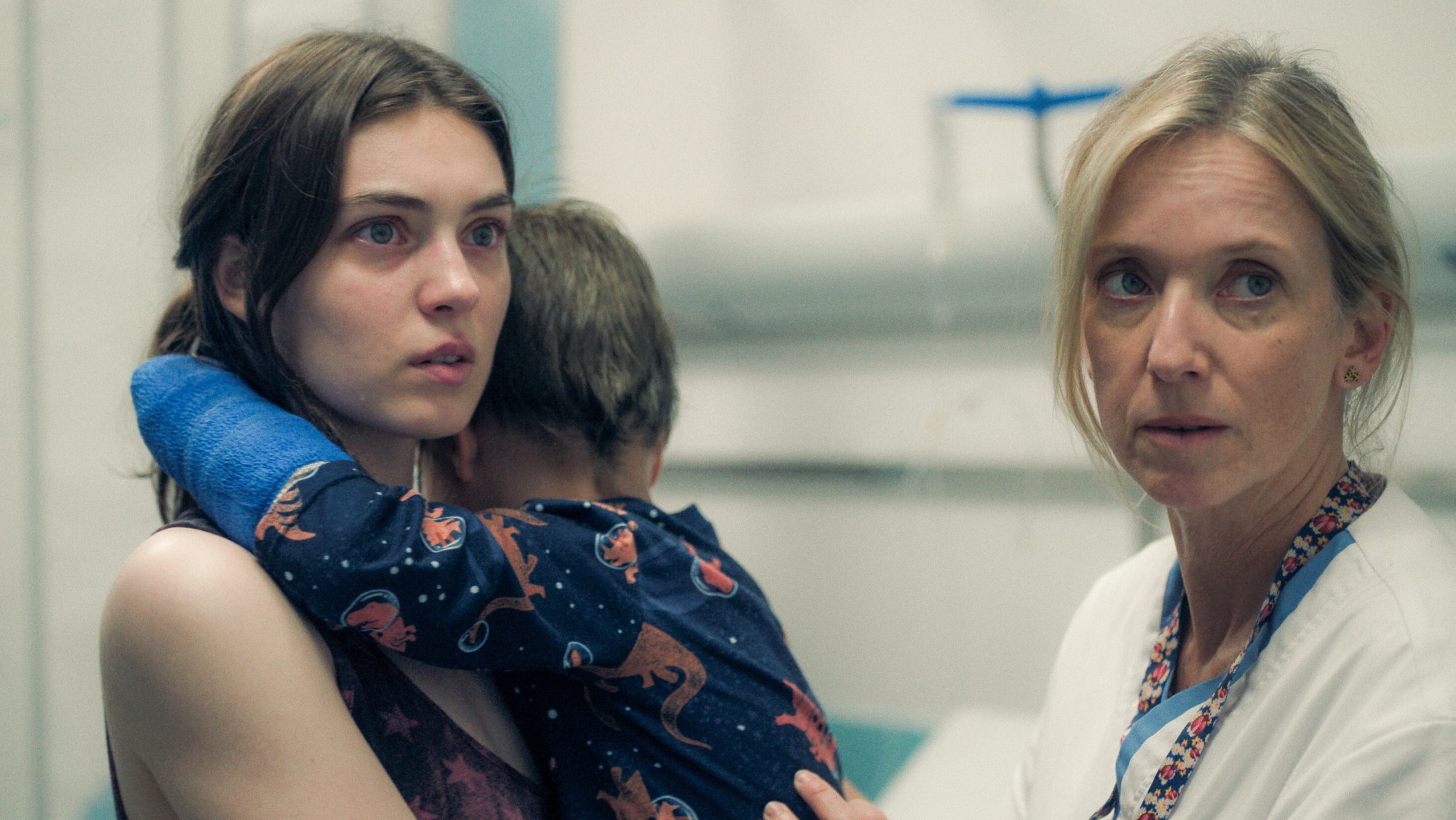
Laura Wandel unfolds the narrative almost in real time, with each passing minute becoming as crucial as the next, set around a hospital with tons of chaos. And it is about to get even more tense. The film follows Lucy (Léa Drucker, who never misses a beat in her performances), the head nurse in an unnamed pediatric ward, constantly crawling with patients and their desperate parents. She has been following the case of a child called Adam (Jules Delsart), a four-year-old kid overcoming some serious health issues because of the poor diet restrictions imposed by his mother, Rebecca (Anamaria Vartolomei). The kid already has a broken arm from malnourishment, and he’s beginning to show signs of decline.
Lucy knows that Adam needs proper treatment to keep him healthy, but she has trouble making Rebecca cooperate with the care. The audience becomes frustrated, not because of the story beats, but because of the mother’s negligence, whose child is suffering and needs better care. However, Wandel begins to show the backend of the setting–how cruel and manipulative health institutions are to people–and that frustration switches to understanding. This change is gripping, effective to the point where you feel you are in Lucy and Rebecca’s position. Once more details about Rebecca and her child are shared, the story becomes even more powerful. Rebecca has been given court access to Adam twice a day because he can’t eat anything without his mother.
It becomes apparent that Rebecca and Adam don’t want to, and can’t, be without one another. The two mirror each other; Vartolomei and Delsart deliver performances so convincing you’d think they were mother and child. Child performances are nearly always mesmerizing because most haven’t had the experience that the rest of the cast might have had. But Delsart is something else. He slightly matches Drucker and Vartolomei, two of the best European acts working today, in terms of performance. Each second that passes, you feel a lingering sensation of forced separation, as an institution moves to distance this unbreakable bond. Lucy does her best to keep them together, but something bigger than her wants to prevent it. She fights back against an institution that strips people of their humanity.
Adam’s Sake explores more than the nurse and patient relationship; Wandel wants you to see them as humans and their protectors, who should (yet don’t) keep them safe. Wandel is very wise, so she does not judge her characters’ actions, whether it is Rebecca malnourishing her son or Lucy’s over-involvement in the case. This is an element that makes the film as effective as it is. There are many scenes in which Wandel could have swung towards melodrama, having her lead belt out their “Oscar scene.” However, she distances herself from that behavior and lets us linger in the moment, as if it were a real pediatric case.
We stay with these characters, corridor to corridor, hospital bed to hospital bed, and Wandel invites us to sit with the situation, to reflect without easy resolution. She questions the psychology behind the mother-son, doctor-patient, and institution-civilian relationships in a tad heavy-handed way, dwelling on the characters’ distress in many moments. Considering the muted nature of Adam’s Sake, one expects that Wandel didn’t rely on the stress-inducing pot-boiler act. Adam’s Sake is not a revelation in the same way as Playground was, but it affirms Laura Wandel as a filmmaker of striking empathy and formal precision. She refuses to moralize or manipulate emotions and allows the story to speak with raw honesty, echoing the Dardenne brothers’ legacy while charting her path. If the Dardennes represent the gold standard of realist European cinema, Wandel is well on her way to joining that conversation.
Synopsis: Rescued from Earth’s nuclear annihilation, four friends crash-land on an unknown planet and courageously set out to locate a new home capable of sustaining their species.
Momoko Seto has spent the great majority of her film career crafting animated shorts and pieces about nature. Her films are somewhat unconventional, but they are interesting because she experiments with animation and live-action footage to create parables about the world surrounding us and why we must protect it at all costs. It is related to her studies at Le Fresnoy, the National Studio for Contemporary Arts, and her work in the CNRS (National Scientific Research Center), where she combines her love for science and admiration for cinema in her documentaries. The films that most reflect this intertwining are the ones in her Planet scenes, which began in 2009 with Planet A and continues with her latest work, and feature-length debut, Dandelion’s Odyssey (Planètes, screening at the 2025 Cannes Film Festival sidebar, Semaine de la critique).
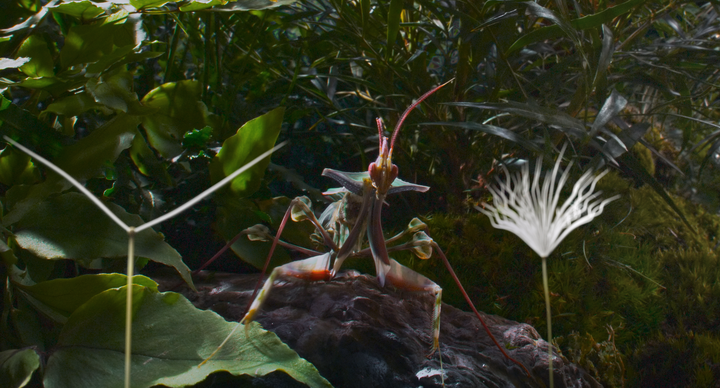
Dandelion’s Odyssey is a very intriguing picture conceptually, like most of Seto’s decades-long work. She plays with the concept of stop-motion animation and the silent film tropes, particularly slapstick comedy, to keep the story fresh and interesting for viewers of all ages as Seto extends her narrative from ten minutes to seventy-two. There are moments where you feel you are watching real animals wandering around the animated plains, and others where it feels like a stop-motion picture from a big studio. This intertwining between documentary and animation kept me hooked on the film for half of its runtime. But these intriguing, mold-breaking techniques in its production can’t take you far enough if you have a weak structure and narrative. This odyssey is quite a drag, feeling like a chore as it runs its course.
A bombastic score, similar to the ones heard in the MCU’s most suspenseful moments, introduces the film, as the stars in the galaxy unite to form a dandelion. The vast void of space is now embalmed in the flowers’ pappus, which dissipate upon uneasy blow, turning the screen entirely black, once again into a void, hinting at a forthcoming cataclysm. Each freckle of the pappus falls onto the Earth’s soil. It plants itself into the ground and is reborn as a full-grown dandelion. The flower sits upon the plains, abiding by the rule of nature, alongside other insects and animals that wander the terrain. But sooner rather than later, paradise becomes hell for every living creature. A series of nuclear explosions bolstering the land in sheer flames, with only two dandelions managing to escape–the select survivors of the planet once called Earth.
They float into space, reaching the moon, as the dandelions bask upon a planet becoming a great ball of fire. It is a striking image that calls back to disaster and end-of-the-world films, although it has a more visually stimulating and dread-inducing atmosphere than most pictures in the subgenre could concoct. With no sense of direction or a place to call home, the dandelions float in the void of space, entering a black hole which transports them into a new galaxy, with mystical creatures all over. The rest of the film follows these dandelions going from one planet to another in search of a place to call home and begin their species lineage anew. On these planets, some beautiful scenery and landscapes immediately grab your attention.
There’s a beauty that feels palpable and ultra-realistic, as if these flowers and animals were right there with you. Seto uses varied animation styles to create distinct textures and moods for each planet, whether an ice-covered land or a dangerous tundra. The images don’t have much depth, as the film’s message about protecting the Earth gets across early in the expedition. The one that struck me the most was seeing a planet bursting into flames, but that is because of the existential crisis that sometimes talking about the nothingness of space causes. Outside of that one, the great majority didn’t move me. I did feel intrigued. My continued engagement stemmed mainly from fascination with the film’s technical ingenuity, especially in how Seto came up with the specificity of these planets. Nevertheless, concerning the story being told, my interest fades vastly.
The use and potency of the imagery aside, the main reason why Dandelion’s Odyssey drags on is that the concept is better suited for a short rather than a feature-length film. Seto has created many successful shorts in the past few decades, even winning a handful of awards for some of them. She wants to utilize the same formula that worked in the short film format in a lengthier, broader canvas, front and back. And as she extends this story and formula from ten minutes to seventy-plus, there’s a feeling that halfway through, it repeats the same beats over a different landscape. It becomes quite boring; the film is not dull per se, as the technical elements arouse genuine interest, but it is definitely repetitive and tedious. I wish Seto would venture into other territories and continue to play with the medium. She has a unique and innovative vision as a filmmaker; the only thing keeping her from achieving her top potential is the scope of her concepts.
Synopsis: When reed cutter Johan discovers the lifeless body of a girl on his land, he is overcome by an ambiguous sense of guilt. While taking care of his granddaughter, he sets out on a quest to track down evil.
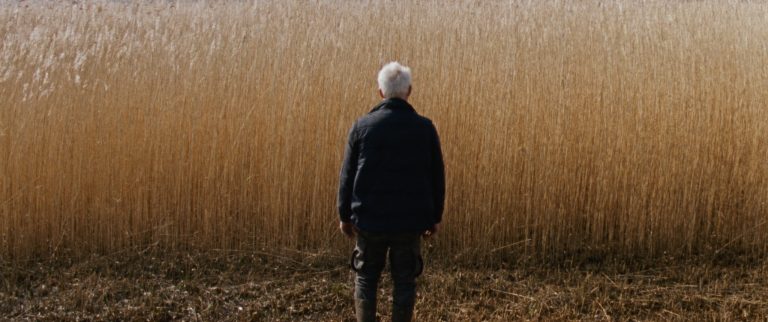
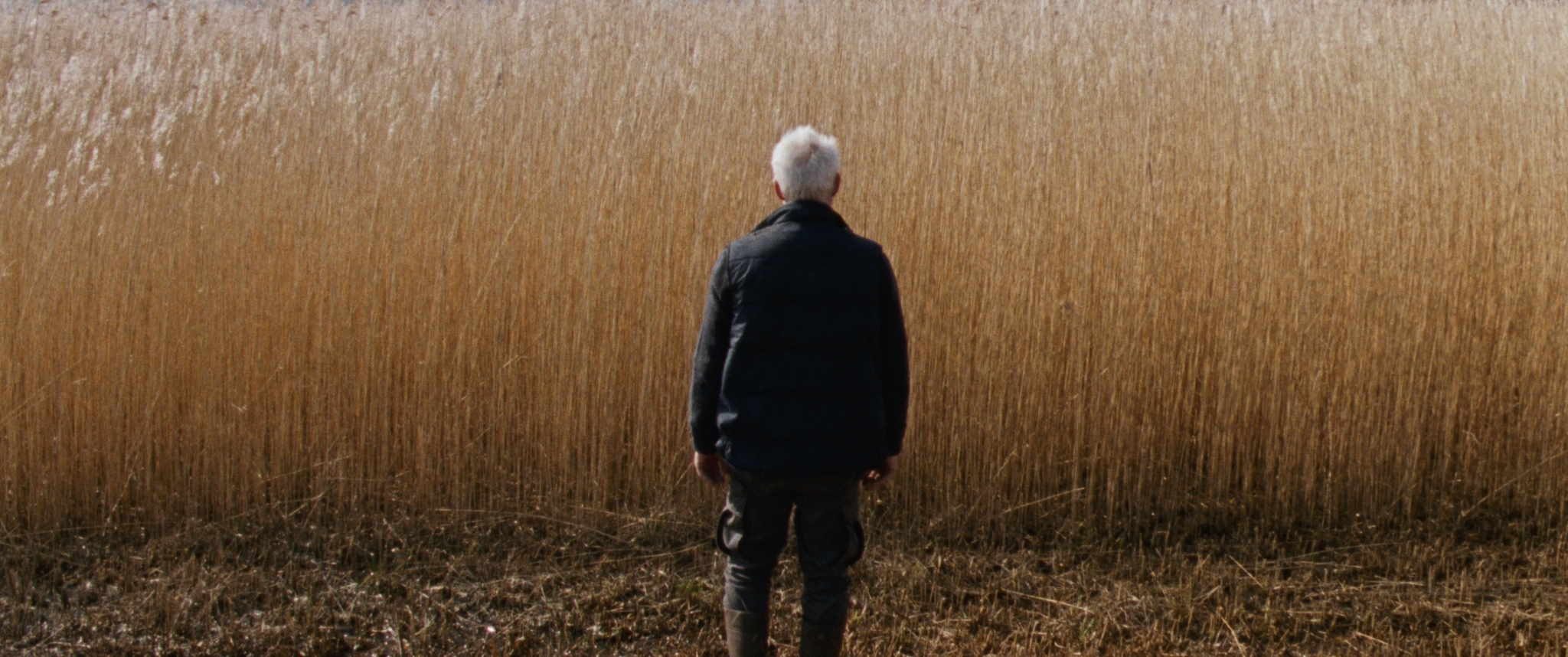
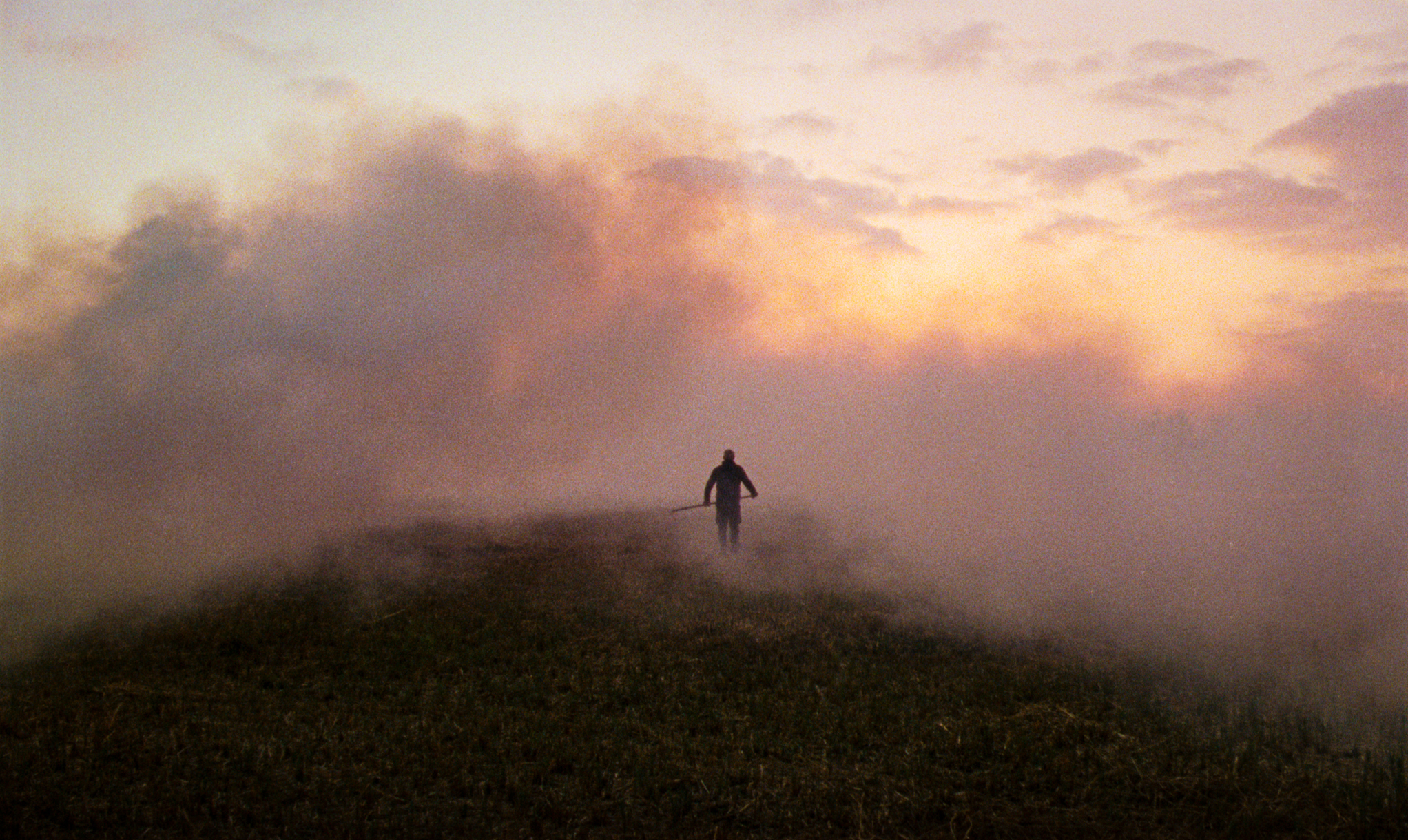
Something gloomy occurs whenever the wind blows in director Sven Bresser’s Reedland (Rietland, screening at the 2025 Cannes Film Festival in the Semaine de la critique). An unraveling of secrets, mysteries, or dark paths happens each time the wind hits those Dutch plains and wheat fields, which are soon bathed by blood and oil. In this tonally creaky and nearly compelling Dutch drama, there are troubles all around; the poison these characters consume is rooted in such, cursing those who have done misdeeds. We see these troubles, changes, and internal fights through the eyes of Johan (Gerrit Knobbe), an elderly man who lives a calm life until he sees something unusual in his land.
Reedland begins with that same blow upon a beautiful field similar to the one seen in Terrence Malick’s Days of Heaven, without the sunlight kissing every inch of it. The wind hitting the wheat soothes the viewer’s ears, immediately calming us before Bresser switches gears later in the narrative. We see Johan tending the grain and taking his time during the process. The first ten minutes follow this man’s routine; no dialogue is spoken, just mere silence and the sounds of nature back these introductory scenes. We don’t know much about this man, but you can paint the picture through a few shots of old photographs. His partner has passed, and he misses her plenty.
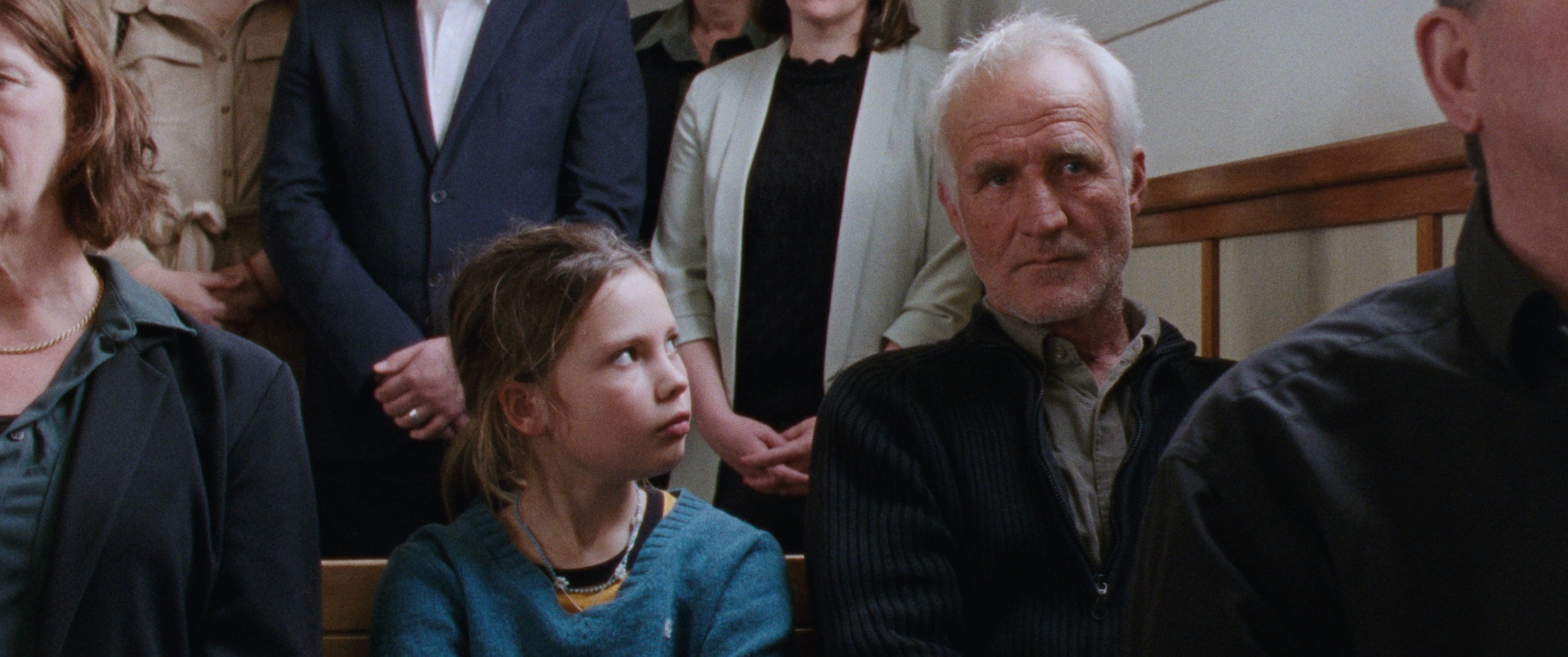
Johan currently cares for his granddaughter, whom he protects more than anything. Everything he does is simply to keep her safe. But once the dead body of a young girl appears in his field, something changes in him that shakes him to the core. Even though Knobbe does not express much with his performances as Johan, this finding has profoundly affected him. It recalls something in his past, yet he is suppressing it. The police arrive and investigate the area, questioning Johan, who worked there the night before. It leads nowhere, and overcome with a strange feeling, Johan embarks on an investigation of his own, searching for the truth and justice for that poor woman. As that happens, the effects of industrialization are taking their toll.
The possibility of every farmer and agriculturist, including Johan, losing their land becomes higher than ever, with companies wanting to buy them out and machines ready to replace them. After a while, the once beautiful wheat fields coat the skies with a sinister atmosphere. Johan’s mind becomes tainted; his routine becomes a burden. The toll of it all eats up his soul inside and out. But his granddaughter keeps him alive. The film often depends more on cold, foreboding atmosphere than dialogue, shifting the focus from the actors, who still deliver engaging performances, to Sam du Pon’s striking cinematography. However, some tonal shifts during the film took me out of the film and its story, making the project inert rather than inspiring. For example, the fart scene; it does not match with the rest of the movie at all.
These tonal shifts may be attempts to inject levity into the film’s steadily darkening narrative, but they feel unnecessary, or at least clumsily executed by Bresser. And that goes to the rest of the scenes that caused me this reaction, like the one featuring a chat room pop-up ad. Reedland benefited from basking in the darkness to tell its tale. Instead, Bresser wanted to dismantle his built atmosphere by including these scenes. It pains me to say this because the last fifteen to twenty minutes of Reedland are excellent. It concludes with a fantastic sequence of a children’s play version of ‘The Flooded Village,’ where we see the director as playful and adventurous. The tension and atmosphere carefully built during the first act are thrown away. These incomprehensible changes in tone taint the film’s most effective element. Some noteworthy aspects in Reedland work very well, but the lasting impression is disappointment from its lack of commitment.
Director:Julia Kowalski Writer:Julia Kowalski Stars:Maria Wróbel, Roxane Mesquida, Wojciech Skibinski
Synopsis: In a remote village, Nawojka grapples with dark urges she believes stem from an ancestral curse. Her world shifts when Sandra moves in next door, offering a glimpse of freedom from her family’s rigid control.
Not every horror coming-of-age story about a distressed girl in a drowning town refers to Brian De Palma’s 1976 classic, Carrie. Still, the elements from said picture are smeared across the conceptually similar films after it. The lonely girl in a small, cold town who has secret abilities she can’t seem to control. A parent who neglects her and suppresses her mysticism. A set of bullies who wear down the young girl and end up as the catalyst for the impending tragedy. Lastly, an older mother-like figure who embraces the girl and helps her come face-to-face with her true self. These stories have been told time and time again. Yet these stories remain fascinating because skilled filmmakers reframe them through new perspectives and settings.
Julia Kowalski’s sophomore effort, Her Will Be Done (Que ma volonté soit faite, screening at the 2025 Cannes Film Festival in the Quinzaine des cinéastes) is yet another example of a reinterpretation of this tale that remains truly fascinating because of its unique perspective, location, and horror influences. In the film, the girl with uncontrolled supernatural abilities is Nawojka (Maria Wróbel), a twenty-year-old who dreams of being free after spending her whole life working at the family farm. The lines “My mother knelt before Satan. The evil was in her. It is inside me too.” provide Her Will Be Done with a fiery introduction. Nawojka’s parents stare at a bonfire, bearing subtle, yet malevolent, grins on their faces, as though they seem ready to accept this evil in their souls, no matter the cost.
The flames rise, rise, and continue to rise, to the point where it swallows the screen. And when it does, the young Nawojka wakes up. Was it a dream or a memory? Whether it is one or the other, it doesn’t seem like this was the first time Nawojka has had this vision. Upon waking, it becomes clear how lonely she is in the small house with her father and two brothers, who act like wild animals at any moment. They are harsh and mean for no reason on some occasions and nonjudgmental in others. But there’s a particular disdain towards her from the two brothers, as if she’s guilty of their mother’s passing. While working at the farm one day, she notices a woman outside the window, Sandra (Roxane Mesquida, an underused French talent who should get more recognition).
Nawojka stares at her with much interest and curiosity, fascinated by the messy-haired, free-spirited wanderer. With the arrival of Sandra into her eyesight and later life, as the two connect, and who is deemed a witch by the locals, Nawojka begins to experience some trance-like episodes. During these trances, she can’t control herself and berates herself for things that aren’t her fault, like the insults thrown out at Sandra or her mother’s passing. These episodes are depicted in two forms, both of which call back to Luca Guadagnino’s reimagining of Suspiria. Either it is seeing Nawojka convulse as queasy, squeamish sounds and groans are heard, or hallucinogenic collages appear on screen, both of which are equally creepy and effective.
Kowalski lets the camera linger for enough time on the disturbing scenes to make the viewer uneasy, and nearly always she succeeds in doing so. Although there are sequences that are provocative because of the inclusion of murder of animals by euthanasia (not the only film at Cannes this year that does that) and brutal, cold-blooded killings, Kowalski is wise enough to distance her lens and not dwell on it; instead, the film cuts away, leaving the gore up to the imagination of the viewer and letting the crimson red spill out of the frame instead of in. The movie descends into madness as Nawojka and Sandra slowly connect and understand each other’s grievances, the pain and toll the city and its people have done to them.
One of the few moments of happiness happens when the two are together. But sooner rather than later, Kowalski makes the atmosphere feel darker and colder than before. The film will shift from the mundane to something fresh and distinctive because of her bravery in her imagery placement. Her Will Be Done, like Carrie, is a tale not solely about female independence but also female empowerment and the challenges of traditional gender roles. Kowalski explores the societal expectations placed on women in these male-dominated small towns as women struggle for autonomy and potential, embracing their unique abilities, literally and metaphorically. The film falters in sparse moments when the dialogue becomes too repetitive.
Similar scenes were being thrown one after the other, which tended to bother, specifically during its most horrific scenes. For example, the brothers’ bullying of Nawojka or Sandra tends to happen often. And most of those scenes are constructed in the same manner or contain similar dialogue. They are crucial to the other being told about women’s autonomy. However, I do feel there could have been a diverse way of exploring the sexist men’s dynamics instead of repeating the same routine. Nevertheless, I felt entranced by the other and its potent imagery because of Kowalski’s boldness and steady direction with the performances. Her Will Be Done can be considered one of the many in the vast landscape, although Kowalski and her team offer a different angle to a recurrently told story.
This week on the InSession Film Podcast, inspired by the incredible two-season run of Andor, we thought it would be really fun to discuss the characters that we’d like to see get the same treatment as Cassian Andor with their own spinoff show!
– Opening Banter (0:42) We begin the show this week with JD telling a crazy story in regards to his latest beer league hockey game (which also effected the recording of this episode) and how it connected to the new 2025 movie Eephus, one of the best surprises of the year.
– Andor / Rogue One (15:24) While we didn’t have a chance to have a full discussion on Andor (Brendan hasn’t seen Season 2 yet), JD wanted to give some brief thoughts on how the show stuck the landing and we debate if/how it effects Rogue One in hindsight. The rich depths we get with Cassian is tremendous in Andor, and when coupled with the remarkable nuances with Jyn in Catalyst, you would think Rogue One is a much stronger film as a result. It is, to some degree, but maybe not as great as we’d like it to be.
– Top 5 Characters To Get Andor Treatment (36:29) Okay, so this one was a lot of fun. It’s also quite different form a lot of other lists we do because it’s purely subjective. It simply comes down to which characters you want to see again for whatever reason. Which means this list could go in a million different directions, involving any type of genre, style or performance. So while challenging, that’s also what makes it really fun and boy did we have a good time having this conversation. With that said, what would be your Top 5?
If you want to help support us, there are several ways you can help us and we’d absolutely appreciate it. Every penny goes directly back into supporting the show and we are truly honored and grateful. Thanks for your support and for listening to the InSession Film Podcast!
Director:Oliver Laxe Writers:Santiago Fillol, Oliver Laxe Stars: Sergi López, Bruno Núñez Arjona, Stefania Gadda
Synopsis: A father, accompanied by his son, goes looking for his missing daughter in North Africa.
In the world of Mad Max, created in 1979 by George Miller, the Wastelands are a form of purgatory. This post-apocalyptic hellscape catches everyone and places them in a cycle of violence, suffering, and potential redemption. The Wastelands become a place where people like Max, Furiosa, or Immortan Joe confront their guilt, trauma, and the chance for change. Lost souls roam through the desert, ending in either damnation or salvation, wherever their respective journeys lead them. As the endless, barren desert is bolstered in fire, fury, and blood, it all feels like a loop, purgatory’s waiting, and the cyclical penance. For his latest work, Sirat (screening in competition at the 2025 Cannes Film Festival), Oliver Laxe takes this symbolic representation of the wasteland and barren desert, without excessive violence or Ozploitation elements.
The Spanish-French filmmaker turns it into something so outlandish, adventurous, and remarkably moving that you are surprisingly fascinated by everything he offers. Mad Max meets Zabriskie Point, as many have described it, Laxe puts us, and the characters, through the ringer, on a proverbial odyssey where we walk the bridge between life, hope, and death. It swings constantly and could lead to damnation in one misstep. It is a daunting and expressive journey that confounds and inspires, with Laxe making some of the boldest and adventurous moves in his time as a filmmaker that ultimately grip you in a quiet but unrelenting emotional hold.
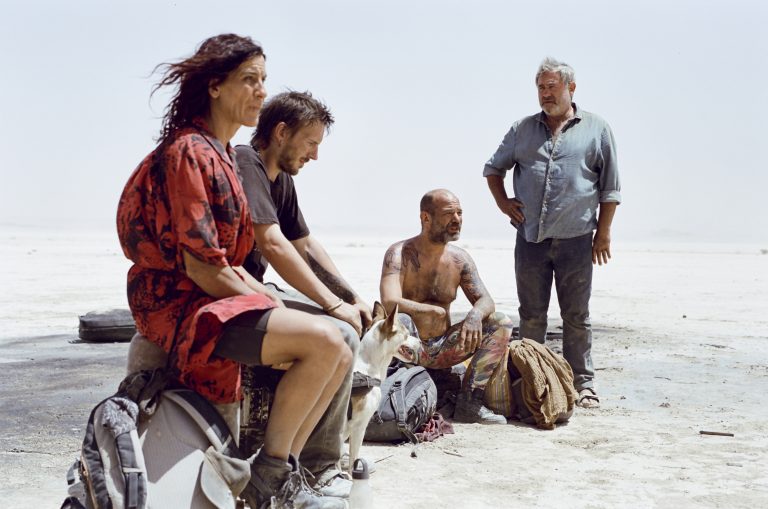
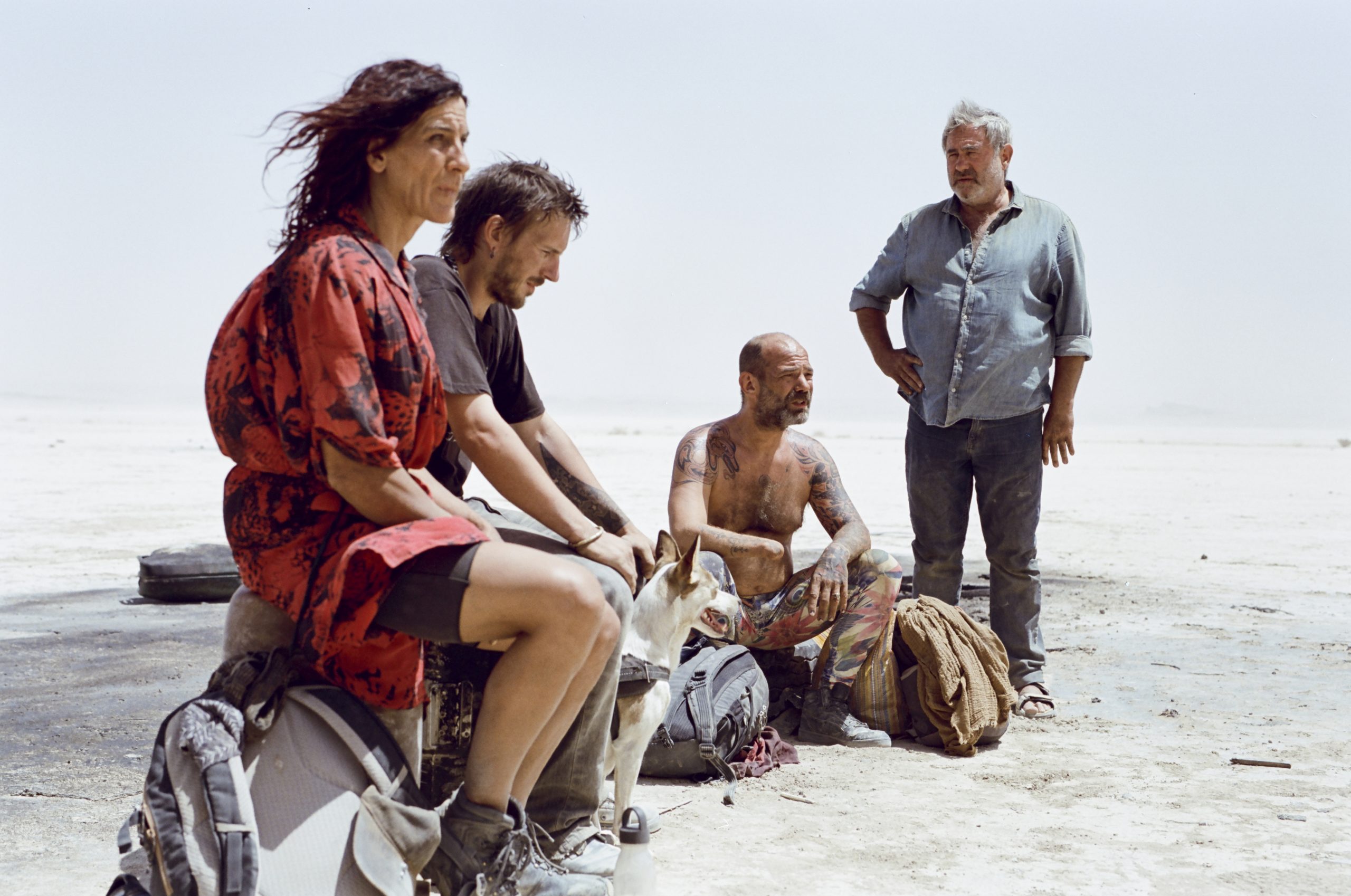
Sirat begins with some workmen setting up giant speakers and sound equipment on a rock cliff in the Moroccan desert for what appears to be a rave party. Kangding Ray’s magnificent score begins to pulse through the barren land. The basslines vibrate through the sand like a spell, waking both the living and the dead. A post-apocalyptic music festival in the vein of Coachella and Burning Man is constructed in minutes. Within the partygoers and drug-takers, there’s Luis (Sergi López) and his son, Esteban (Bruno Núñez), joined by their terrier, Pippa. Luis is out there searching for his daughter, who has been missing for five months, and rumor has it that she’s at the rave party.
He shares photos of her with the partygoers, hoping somebody knows about his daughter’s whereabouts. In a place covered with people dancing their hearts out, or what’s left of it, Luis and Esteban are outsiders, suffering the disappearance of a loved one and holding out for fate to reunite them again. Luckily, the two meet a ragtag group of ravers, who look like they have been through hell and back, and are happy to share that another party is scheduled soon on the other side of the desert. The party is terminated by a soldier announcing that a state of emergency has been declared. Everybody packs quickly, regrouping with eerie calm to head elsewhere.
War has broken out and reached their location, but everyone seems to have been prepared for it; you get the feeling that they all have gone through similar perils, which leads them to be mentally organized for what comes next, even if they don’t know where to head out to. Luis makes a quick decision: follow the ravers to the other location. This leads them towards a perilous venture through the Sahara with dangers lurking around every corner, some of which feel inspired by Henri-Georges Clouzot’s masterpiece, Wages of Fear—the dangers lie not only in the road ahead but also in their fractured mental states and growing desperation.
Laxe is no Clouzot, nor reaching the level of William Friedkin, who made an equally excellent remake of Wages of Fear in Sorcerer. Hence, the mastery of holding an audience captive through tension, introspection, and existentialism is not here. However, he manages to completely control the various tones displayed in Sirat with tremendous confidence. Laxe implements the Mad Max element of a wasteland as a purgatory with dashes of mysticism, the title coming from the separation of paradise and hell. But there are also similarities with Fury Road, without the spectacle and popcorn entertainment, yet with the same amount of tension and shocking moments, some of which do leave you speechless and without room to breathe.
The characters head towards salvation, even if everything in their way impedes them from doing so. They wander through sun-flared lands for what seems like eternity. “Is this what the end of the world feels like?” A character replies, “It’s been the end of the world for a long time.” Time does not move in the world of Sirat; things may change, incidents tend to occur, but everything remains still. The only thing moving is the people dancing in the face of death and near reach of deliverance. Even though it is set in a location where there isn’t much to it, Laxe focuses on the story’s setting, detailing every inch of the locations, from the grains of sand and dust covering the screen to the vehicles the characters travel in.
Sirat is built from this specificity, constructing his parable about release in a world of decay from the outside in. Oliver Laxe crafts more than a dystopian odyssey–he constructs a spiritual trial by fire, where nothing is guaranteed and grace must be fought for through exhaustion, despair, and communion. The film’s power lies in its atmosphere and willingness to sit with stillness and ambiguity. Laxe doesn’t offer salvation, only the possibility of it. The bridge of Sirat is not one you cross once, but repeatedly in search of hope. It’s sun-scorched, soul-searching, and stress-inducing, but ultimately unforgettable and admirable–a true standout in the Cannes selection and modern Spanish cinema.
Director:Eric Aronson Writer:Eric Aronson Stars: Paul Guilfoyle, Taylor Gray, Alexandra Templer
Synopsis: To stage a masterpiece of a heist, you need time, friends, and balls. Steve has two of the three
Art thieves are complicated criminals. On the one hand, they seem to have a sense of art history and the value of the medium. On the other hand, they seem nuts because they are taking something that is catalogued and has no other like it on Earth and thus, nearly impossible to move without someone noticing. It takes a certain type of thief to be modestly successful at art theft. Which is not what you think when you meet the crew in Any Day Now.
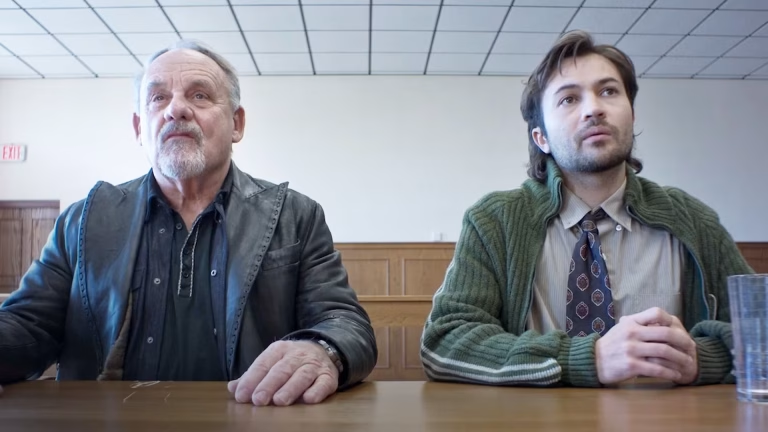
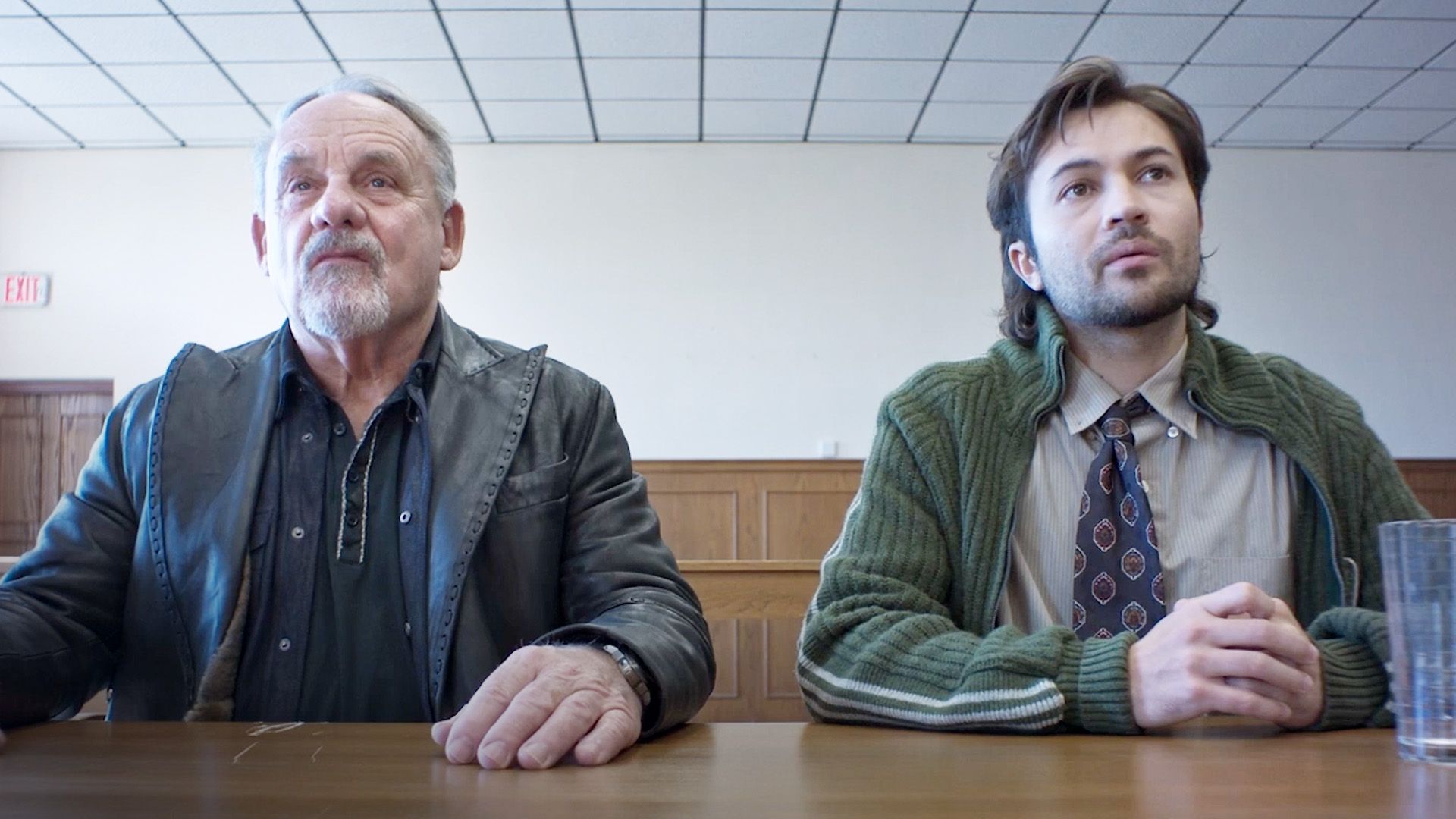
Writer and director Eric Aronson’s script doesn’t give us much confidence that the crew of art thieves led by Marty (Paul Guilfoyle) could rob a liquor store, much less a guarded museum. At one point, a member of the crew is brought in to intimidate a drug dealer and in a confusing move with a shotgun, seemingly blows his own testicles off. It’s unclear whether it was intentional or not. Much of Aronson’s script evolves that way as we are stuck with point of view character Steve (Taylor Gray), who knows next to nothing about what is happening.
This is both a benefit and a detriment to Aronson’s script. The idea that we’re always on our back foot when it comes to Marty and his schemes is refreshing. This way of revealing things as they become necessary makes sure that the audience shouldn’t be ahead of the action in predicting the outcome of any one plot point. It’s an intriguing way to keep the audience interested.
It’s too bad the other main plot is such a dud. We have seen the lovelorn guy many times before. We’ve seen the girl of his dreams who doesn’t know how he feels and doesn’t understand her own self worth, many times before. We’ve seen the doormat guy who worries about losing his best friend since childhood even though that friend is an incredibly crappy adult. These plot points drag down the more interesting characters and plots.
Marty is a fascinating character. His charm is in his mystery, though, so he never would have worked as the focal character of this film. There is a scene that perfectly encapsulates how he is willing to save Steve from his pushover relationship with friend and roommate Danny (Armando Rivera) while also reminding Steve that he’s a pushover for Marty now. As Steve and Danny’s band play Massachusetts anthem, “Roadrunner” by Johnathan Richman and the Modern Lovers, Marty makes his way to the stage and stares down Danny until he gets the microphone from Danny. Marty then begins to croon the Boston standard, “Dirty Water” by The Standells. He gets the band into it and the crowd into it and completely takes over the space that Danny once held in the crowd’s hearts and minds. It’s a scene that evolves the two overbearing relationships in Steve’s life without forcing the issue with unnecessary dialogue.
The scene is all the more rich for Paul Guilfoyle’s bruiser charisma. Guilfoyle has been a character actor for a long time and he can give us all we need to know about a character with only a word and a gesture. His presence is felt in every scene he’s in not because he’s speaking, but because he’s thinking. Marty is always thinking and Guilfoyle makes this plain with every look he gives. It’s a masterfully subtle performance that conveys everything dangerous and enticing about Marty.
For the most part, Any Day Now is an enjoyable film. It’s not the best of heist movies, or relationship dramas for that matter, but it has characters and instances that make it intriguing to watch. It’s hard not to want to know what is going to happen when the mystery is held back so well. It’s worth tracking down for Paul Guilfoyle’s performance and for the intrigue of the heist plot.
Director: Christian Petzold Writer:Christian Petzold Stars: Paula Beer, Barbara Auer, Matthias Brandt
Synopsis: A young music student’s life takes an unexpected turn when her boyfriend tragically dies in a car crash, forcing her to reshape her path forward.
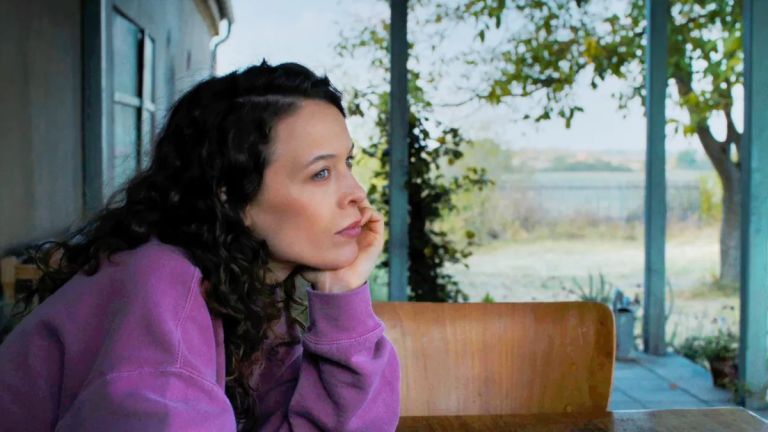
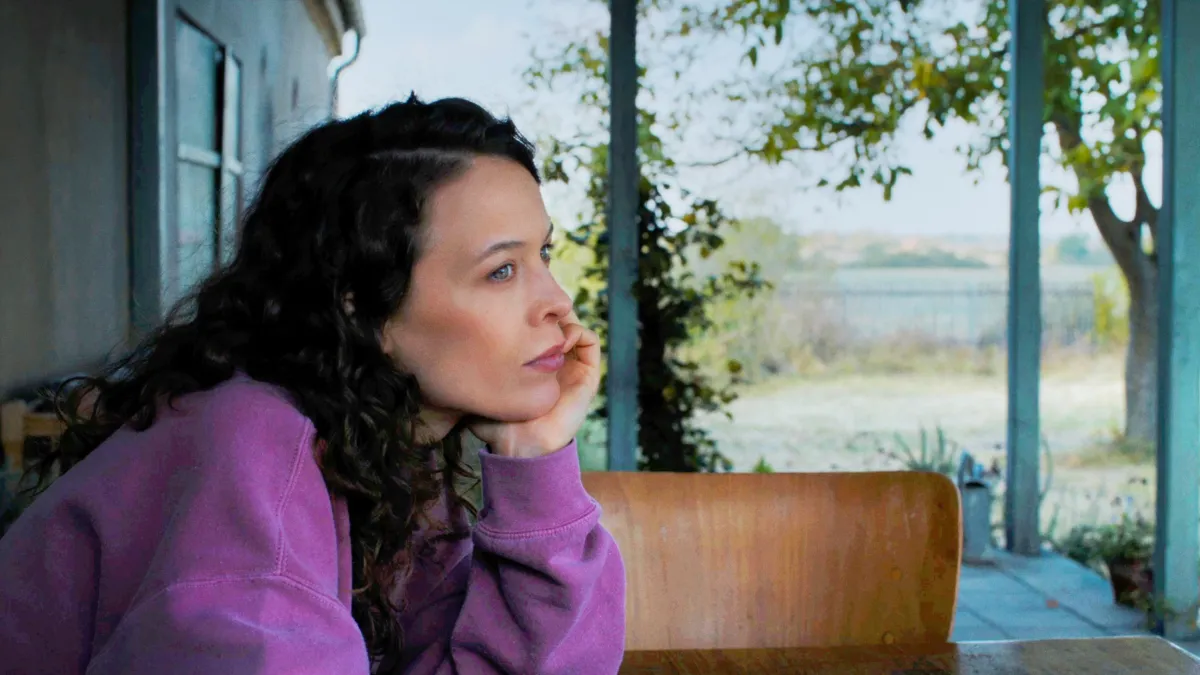
One of the most magnificent duos in modern cinema is the collaboration between German filmmaker Christian Petzold and his current muse, Paula Beer. After making many films with another, equally talented, German actress, Nina Hoss, Petzold landed with Beer as one of the leads in his 2018 feature, Transit. Ever since, both have evolved for the better in their respective crafts—Petzold as a director, Beer as an actress–becoming top-tier acts in the European scene, although some part of me still feels they are undervalued in their fields. The two are elegant, with significant poise and control in their work.
Petzold grows into a filmmaker who does more with less, depending on the tactility in the emotional underpinnings of his narrative rather than style and innovation. Meanwhile, Beer has emphasized finding the truths in her characters, which leads to honest, authentic performances that connect easily with the audience. Their latest (and fourth) collaboration, Mirrors No. 3 (Miroirs No. 3, screening at the 2025 Cannes Film Festival in the Quinzaine des cinéastes), is the smallest regarding production (and runtime, running under ninety minutes). Still, it may be their best, and most touching, one yet. If the only issue it has is that you wish you’d spent more time with the characters, that says the whole story.
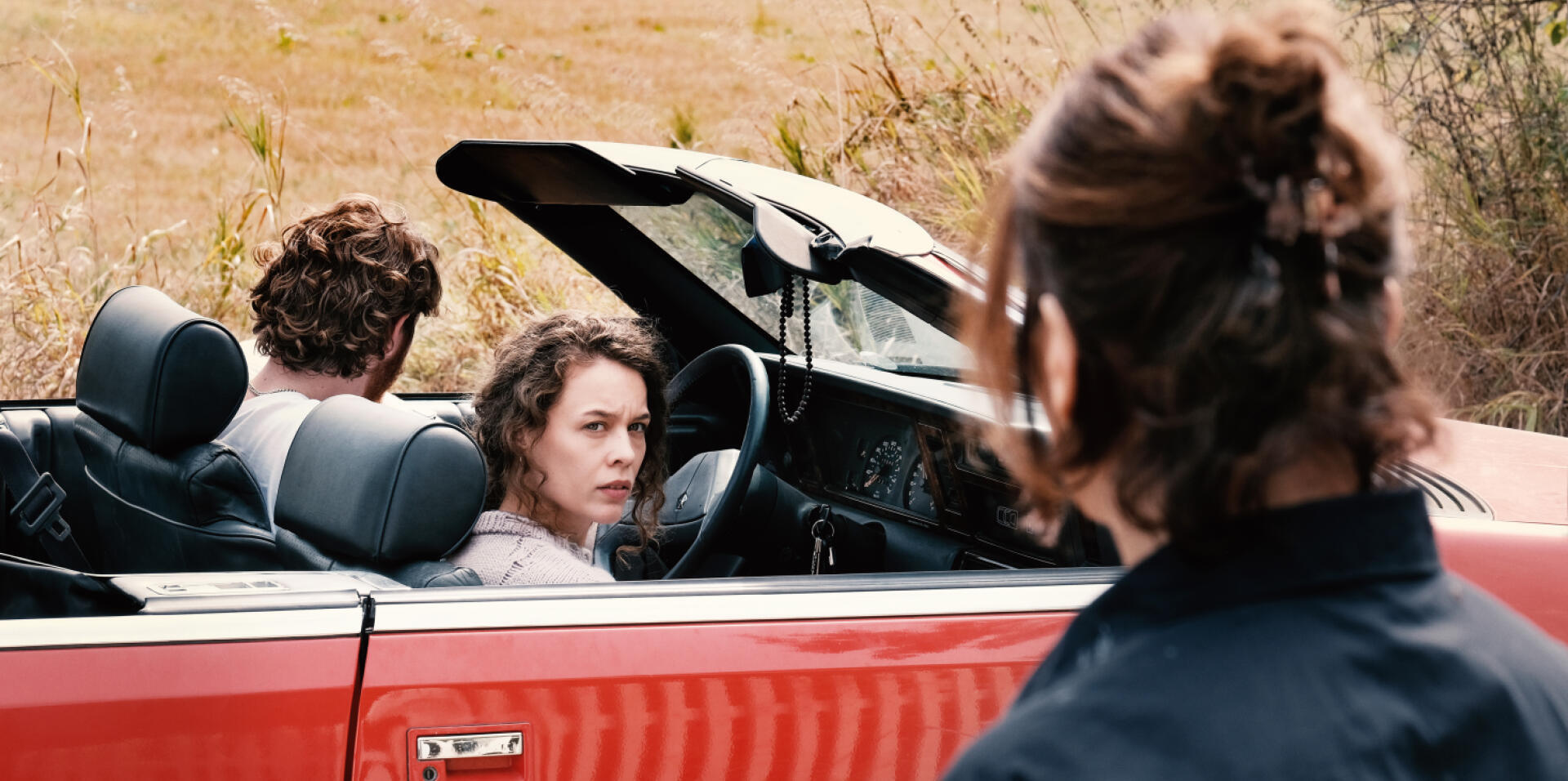
Petzold and Beer deliver an honest, intimate portrait of strangers and the pain they carry, centering around a young piano student from Berlin named Laura (Beer), played by the talented German actress. Named after Ravel’s piece of the same name, Mirrors No. 3 follows Laura, who is changing her heart during a road trip with her boyfriend Jakob. They are going to the pier to meet with a producer willing to work with Jakob for his upcoming record. He needs Laura to be there for the whole weekend, but she wants out–enraging Jakob vastly, enough to drive her back to the station, leaving her alone during the next couple of days. But they don’t make it there; a car accident occurs and kills the impatient boyfriend, with Laura surviving, yet being shaken to the core.
The accident is not shown, only a moment before and after, so details are missing from this introduction. Petzold’s ambiguous nature remains high, and we are meant to slowly decipher the many secrets and metaphors he presents us during the film’s development. The only person who can be considered a witness to this tragedy is a middle-aged woman named Betty (Barbara Auer). She invites Laura to her humble farmhouse nearby after leaving the wreckage. After a while, Laura asks her to stay indefinitely, and Betty is happy to do so, yet surprised at the request. From here, a mother-daughter relationship arises, even though they are strangers.
Their quick bonding becomes similar to that of a parent and their child, with the white picket fence Betty was painting the first time we see her being part of the family picture Petzold is constructing. While Laura remains a mysterious figure that is hard to read, like most of her characters during the beginning of the narrative, Betty is much clearer. By mere accident, she calls Laura by a different name, Yelena, revealing the root of the pain she holds from the loss she can’t move past. It is a moment of clarity in a still and unsettled canvas, framed by Petzold’s usual cinematographer, Hans Fromm.
That moment, along with one where Betty requests Laura to play a Chopin piece, helps provide the audience with a path towards understanding the character of Betty while forging the next steps for Laura after these events. A sympathy built on anxiousness, secrecy, and grief is built, and the audience begins to see how these characters deal with their respective griefs. These are strange ways to deal with the loss of a loved one. But who are we to judge? We all have had different ways of expelling our sorrows, which are difficult to explain yet help us move forward.
Other members later join this reflective journey, including Betty’s husband, Richard (Matthias Brandt), and son, Max (Enno Trebs), who live in the car-repair shop they manage nearby. Like in Afire, the appearance of Beer’s character begins to stir the household, with some members being warm towards her, while others feel like she is a burden, questioning her relationship with Betty. But sooner rather than later, she becomes the key to solving their sorrows. And later on, the roles are reversed for Laura’s pains and woes. The four form a unit that begins with distance and ends with a level of compassion. Not only is Betty suffering the loss of the named Yelena, but Richard and Max as well, in a different manner that is more internal rather than outwardly expressive.
That is how Petzold works. He puts more emphasis on the effects that an incident has rather than the moment of impact itself. Everything that has caused the characters to be this way, apart from the image of Laura in the wreckage, is alluded to. And even by removing the aforementioned image, Mirrors No. 3 would retain its tact and eloquence, although with more ambiguity and mystery to the stranger–mirroring Petzold’s recurrent interest in how the presence of a bystander can subtly alter the emotional trajectories of those around them, implemented by Pier Paolo Pasolini in his 1968 masterpiece Theorem, albeit without the provocation or existentialist crisis. We don’t know Laura as a whole; it is only the version that Betty reconfigures to fit the image of her loved one.
With an aptitude for emotional opacity and inner turmoil, Beer offers a haunting and touching performance, with her smiles and looks indecipherable, adding layers to the enigmatic narrative. We grieve and worry alongside her; she is a mirror into herself, but one that takes time to show its reflection to the audience. The film is ghostly, not in the manner of frights or scares, but in how memory can quietly distort our perception or save us from sinking into our woes. Mirrors No. 3 is elliptical as Petzold moves his minor-key symphony of human connection into profoundly moving territories. Its fleeing nature creates echoes that linger as you deconstruct each character’s mask to reveal what they are hiding–a work of quiet devastation and unexpected grace.
Director: Richard Linklater Writer:Holly Gent, Laetitia Masson, Vincent Palmo, Jr. Stars: Guillame Marbeck, Zoey Deutch, Aubry Dullin
Synopsis: Follows the production of Jean-Luc Godards’s “Breathless”.
As every cinephile must know, the French New Wave is one of cinema’s most important film movements. Influenced by Italian Neorealism and the works of Alfred Hitchcock, French film critics from the Cahiers du Cinema magazine (François Truffaut, Eric Rohmer, Jacques Rivette, and the godfather of the movement, Jean-Luc Godard) and the Left Bank directors (Agnes Varda, Chris Marker, Alain Resnais) assembled in proposition for a new vision for filmmaking and the cinema being shown in their country at the time, which they criticized as trite and unimaginative (the “tradition de qualité”, as they referred it to). Some aspects present in films that emerged from this movement are talk of modern situations, directors having complete control of their movies, and a focus on showcasing realistic portraits rather than pure fiction.
After the release of Claude Chabrol’s Le Beau Serge, Truffaut’s The 400 Blows, and Godard’s Breathless (À bout de souffle), just to name a few, cinema changed forever. A breath of fresh air roamed through the medium and reached international markets–inspiring many for years to come. Even to this day, the works made from the French New Wave have influenced people to become filmmakers or view cinema differently–timeless pieces that conjure the magic of art and prove to be more than artistic, but revolutionary ones. To honor such a movement and those involved in it, which many have done multiple times with books, documentaries, and art installations, American filmmaker Richard Linklater gives them an homage with his latest feature, Nouvelle Vague (French New Wave, screening in competition at the 2025 Cannes Film Festival).
Nouvelle Vague is an act of love from Linklater, who has been inspired by Truffaut, Rivette, and Godard not in style or technique but in the free-spiritedness of their work. Unfortunately, it is an act of love that they would have hated, and very much so, as it goes against what they were implementing back in the late 1950s. Yet Linklater does not care about such; he aims to showcase his love and admiration for a time and place, and the people in it, which is long gone, but its effect is still felt, like cinematic aftershocks after their shattering artistic earthquake.
In the same style and spirit, although with some elements being stripped down for a more relaxed fit rather than being a straight rip-off, Nouvelle Vague is a film about the making of the iconic Breathless from 1960 following Jean-Luc Godard (Guillaume Marbeck), Jean-Paul Belmondo (Aubry Dullin), Jean Seberg (Zoey Deutch, who is excellent in the film and very spot-on with her accent work and posture), François Truffaut (Adrien Rouyard) as they make a film that will change cinema forever and cement Godard as an icon of the art form. Every movement Linklater creates in the production is made to reenact or allude to past creations of those who inspired him, and he wants to celebrate with this piece.
You see this in the shooting style—cinematographer David Chambrille was tasked with matching the essence of Raoul Coutard (the cinematographer of Breathless)—the sound mixing, and even in the casting choices, with each actor looking very similar to the people they are interpreting. From beginning to end, you sense how Linklater wanted to take the audience and his cast and crew back to 1950s France, creating an immersive experience. With such celebration, there is an abuse of nostalgia, an issue that occurs in some of his features, particularly his period pieces, Everybody Wants Some and Apollo 10½: A Space Age Childhood, where although he nails the specifics of the time and place, there’s a rumination that is all remembrance without discussion.
That issue then travels to Linklater’s 1950s France set in Nouvelle Vague, where the memory of the ghost of the legends is there, but there are no assertions on why this time, place, people, and films were so important and influential. He treats the setting and topic with his hangout film panache. We get the behind-the-scenes look of the production–Godard’s on-the-spot direction, his relationship with Beauregard, meetings, the mechanics of their techniques, line readings–as well as reenacted scenes, which do feel quite tacky and the film could have been done without them. Nevertheless, Linklater does something that provides his film with plenty of magic, one that fractures time and memory in a playful way that I vastly appreciated.
Some “fictionalized” scenes shift the film from its hang-out, history lesson persona to an encapsulation of the movement and all of its participants. In one of those scenes, we see Jean-Luc Godard having a fascinating conversation with Roberto Rossellini (Laurent Mothe), a prominent figure in Italian neorealist cinema, with films like Germany, Year Zero and Paisan. Godard viewed Rossellini as a foundational figure in modern cinema. Hence, a conversation between a student and his hero helped build the figure of Godard within the confines of the movie’s purpose, showing the “passing of the baton” in revolutionary filmmaking. I do not know if this conversation ever happened, and I haven’t found a source of information confirming it.
Linklater has people who knew Godard in his production team, so it may be true. But this brings a mysticism to Nouvelle Vague that is captivating and outright magical, a feeling missing for most of the picture. Another short sequence with the same effect is when we see Robert Bresson shooting his 1959 film Pickpocket in an abandoned Parisian tunnel. This is yet another filmmaker (and film) that inspired many filmmakers, from Paul Schrader and Abel Ferrara to Chantal Akerman and Andrei Tarkovsky. Linklater himself has not been inspired by Bresson per se, but that is beyond the point of including him. If you are encapsulating this period, he must be included as one of the best figures to emerge from it.
Yet again, it is a minor scene that fades rapidly when put into the microcosm of Nouvelle Vague, like many of the cameos that appear here and there (Agnes Varda, Claude Chabrol, Jean Cocteau), yet it helps Linklater navigate this artistic world of filmmakers, poets, storytellers, and activists. The screenplay struggles with placing all these people on the canvas; most appear for seconds and disappear. And their backstories and influence are not referred to. That is up for the audience to pick up on if you know your cinema history, or be lost upon if you haven’t. At the time, neither Godard, Truffaut, nor producer Georges de Beauregard knew what they had their hands on, yet believed in it through and through. Now, it has reached the point where many see it as one of the best films in cinema history.
For someone who does not know what the French New Wave and the founders entail, Nouvelle Vague will be just another movie about making movies. The film has conversations and dialogue that allude to the inspirational nature, yet it is too far between. This is the opposite of what happens with David Fincher’s Mank, where the impact of Mankiewicz’s screenplay is seen through a microscope–how every conversation, action, open bottle, cigarette burned, and discussion leads to the creation of Citizen Kane. In contrast, Linklaker’s piece lets these historical moments float in and out like half-remembered dreams, more concerned with evoking a time than interrogating it. Reverence is through and through in the director’s gaze, but it comes with a cost, and that is depth.
A romanticization of this movement’s chaos, brilliance, and rebellion builds as the characters interact with one another, albeit without the contradictions or the radicality. It feels safe, way too neat and clean, without the grittiness of French New Wave. And while there are things to like and appreciate, Nouvelle Vague ultimately ends as trite. At least, it is a better and more honest homage than a previous Cannes Film Festival film, Godard Mon Amour (Le Redoutable) by Michel Hazanavicius, which was an embarrassing attempt at uncovering the next stage of Godard during the production of La Chinoise. That was pastiche. Linklater does not amount to doing such things because he respects Godard and company plenty.