Home Blog Page 132

Poll: What is your favorite “superhero comedy” NOT from the MCU?

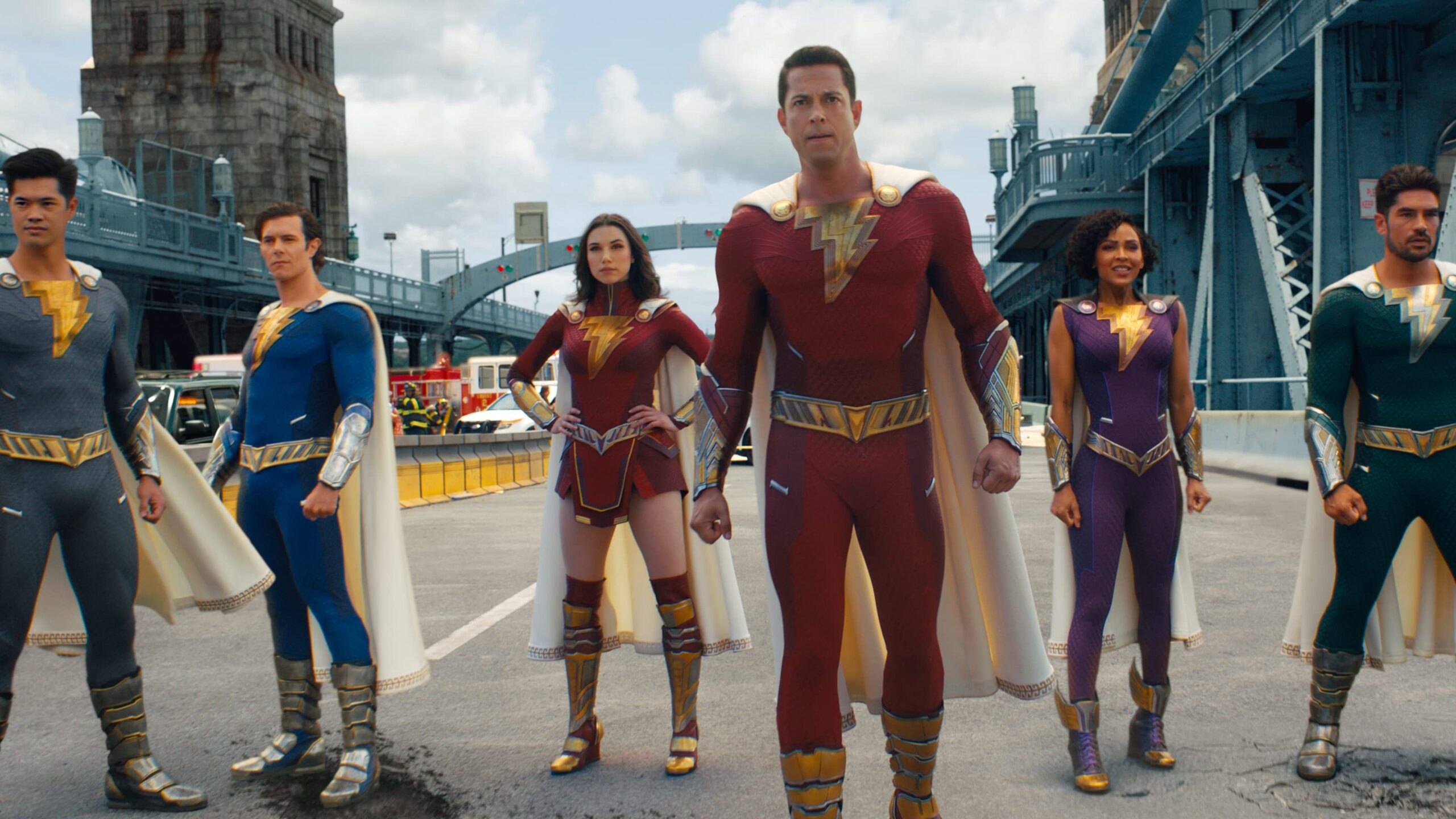
Why so serious? Some of the best superhero films don’t take themselves too seriously, whether they be direct spoofs or just light-hearted fun. Shazam! certainly fits that mold, but it’s not the only one, nor did it kickstart the so-called “superhero comedy”. Let’s celebrate the heroes that didn’t just save people’s lives, but made them laugh along the way.

What is your favorite “superhero comedy” that isn’t from the MCU? Because let’s face it, nearly every MCU film is a “comedy” of sorts.


Movie Review: ‘As Bestas’ is a Gripping Tale of Xenophobia and Gentrification


Director: Rodrigo Sorogoyen

Writer: Isabel Peña and Rodrigo Sorogoyen

Stars: Marina Foïs, Denis Ménochet, Luis Zahera

Synopsis: A middle-aged French couple moves to a local village, seeking closeness with nature where their presence inflames two locals to the point of outright hostility and shocking violence.


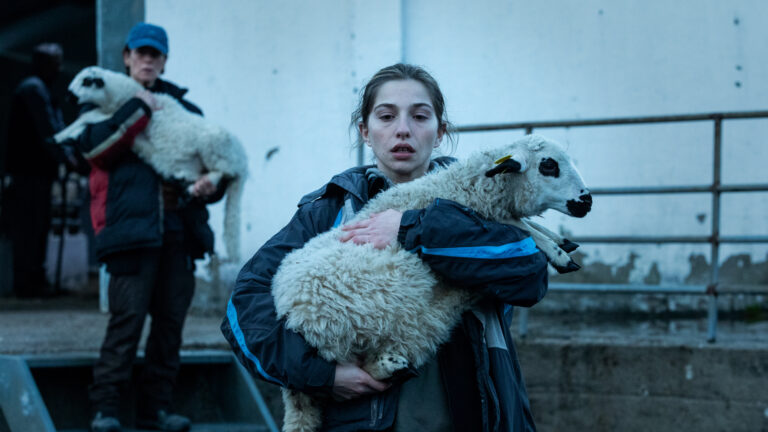
The multi-Goya Award-winning feature by Madrid filmmaker Rodrigo Sorogoyen, As Bestas (The Beasts), is a gripping and unnerving portrayal of European gentrification and xenophobia with plenty of tension-filled moments, heartbreaking discussions, and powerful performances all around. 

As the world slowly changes, a rising wave of racism and xenophobia appears in Western civilization (and culture). Hatred slowly deteriorates the minds of those with loathing in their hearts, rotting their souls to the point of no return. In the last couple of years, we have seen more movies discussing these topics and supremacist ideologies. It almost feels like a resurgence; many filmmakers were inspired by today’s world to create urgent stories and narratives about them, like Cristian Mungiu with his brilliant picture R.M.N or Beth de Araujo’s surprising yet faulty Soft & Quiet. Even if the film depicting these topics doesn’t work in their entirety, there’s a piercing factor due to the reality we are living in. You can add another movie to that list with Rodrigo Sorogoyen’s As Bestas (The Beasts). This movie has the Madrid filmmaker implementing his usual tension-filled directorial techniques with a story about the fissures between locals and immigrants in the region of Galicia, all leading up to a fascinating and gripping picture – deserving of its Goya Award for Best Film earlier this year and has Sorogoyen at his finest. 

As Bestas (The Beasts) opens with slow-motion footage of two different beasts – wild horses roaming around the meadows and humans holding one of them down – at Galicia’s Rapa das Bestas festival. This “celebration” involves cutting the manes of wild horses that live freely in the mountains in a semi-feral state. Sheer intensity oozes out of the screen due to the brutality and force of these workers trying to knock a horse down to the ground, even if the scene only lasts a few seconds. Something about this short sequence of brutality hints at an eeriness and echo of violence that might transpire during this story’s runtime. It also contrasts its setting; Galicia offers beautiful sights, as well as deep-rooted traditions, such as the aforementioned one, that have stayed for centuries. After that introduction, we meet the central pairing of the film, Antoine and Olga (Denis Ménochet and Marina Foïs), a French couple who live happily in their Galician countryside village home where they farm various vegetables (such as lettuce and tomatoes) and rehabilitate old abandoned houses. 

Their setting and contemporary living are idyllic, but things will not stay like that for long. Some of their neighbors view them as if they shouldn’t belong there. Brothers Xan (Luis Zahera) and Lorenzo (Diego Anido) resent them, often referring to him as “Frenchy” (a hateful “description” that goes back to the times of Napoleon), because Antoine and Olga voted against the construction of a wind turbine that would give them money. But would that cash be enough for them to live a new life elsewhere? Antoine doesn’t think it is a buyable option, as his land is profitable and prosperous. Meanwhile, Xan is blinded by the mere idea of having some currency in his pockets, viewing it as their hopeful escape. That cash might have been their only way out of a place filled with misery and hardship, even though it wasn’t enough to change their current state. Antagonistic repression is now haunting Antoine and Olga’s daily lives, caused by the hate-riddled neighbors who are blistering with anger because of their decisions. 

They want to make their life a living hell so that they leave “their territory” for good. This vendetta, getting more brutal and cruel by the second, will have long-lasting consequences for everyone entangled in it. Within this urban vs. rural feud between Antoine and Xan, Rodrigo Sorogoyen explores gentrification and xenophobia amidst the infrastructures of class and immigration. These multi-layered topics are explored by intertwining one another during the story’s two-hour runtime. From the moment As Bestas begins, you are hooked and entranced by Sorogoyen’s vision of these similarly true-to-life scenarios, fueled by the uncertainty of the two brother’s malicious actions. As the film transpires, you get the haunting sense of impending doom. Moments of silence keep the audience on tenterhooks, waiting for something vicious to happen because Xan and Lorenzo’s souls are rotten. 

Rodrigo Sorogoyen is known for delivering tension-filled pictures, but nothing in his filmography could have prepared you for what As Bestas (The Beasts) brings to the table. The films of Jon Boorman (Deliverance) and Sam Peckinpah (Straw Dogs) come to mind due to the film’s thriller-like narrative developments. However, without the exploitation aspects of their work and, on this occasion, it is set in a contemporary setting. And there are moments in which one begins to think that Sorogoyen might lose the humanistic side of the story for a more Straw Dogs-inspired one. But he knows well enough not to dwell on those over-the-top tendencies. Instead, he divides the film into different frames during its two halves centering on the two partners in the leading characters, Antoine and Olga. The former’s story has more disturbing thriller-esque elements, containing heavy amounts of suspense both during its conversational set-pieces, particularly the numerous bar scenes, and the eerie chasing sequences in the woods. 

The latter has a more contemplative and meditative emotional core that discusses grief, family, and justice while implementing some detective plot trappings. However, both halves contain two important and intriguing dialogue scenes – one between Antoine and Xan while the other centers on Olga and her daughter, Marie (Marie Colomb), who steals the show during her short runtime. These two pivotal scenes demonstrate the film’s thesis between two different perspectives and age groups, swinging viewers’ emotions from left to right. Much like in Cristian Mungiu’s R.M.N., Sorogoyen’s movie has a more profound impact on the audience because the world hasn’t changed one bit – there are still people with hate in their hearts, and little to no change is happening. The harsh reality of our times is demonstrated through these piercing dialogue scenes more so than the ones where Xan and Lorenzo torment the French couple. And while Sorogoyen and Isabel Peña’s screenplay is strong, the performances of the film’s main quintet hold it together. 

As Bestas (The Beasts) is occasionally disturbing because of its intertwining between longing, disdain, and loss in its three acts. While Antoine and Olga yearn for a more profitable set of crops, Xan and Lorenzo ensure their dreams don’t come to fruition, all ending at the hands of grief, in whichboth parties will suffer a casualty of some sort. Nevertheless, you can see why many admire it. As Bestas is not your typical film that ravages through the European awards bodies (such as the Goya and César awards). But more than that, it is a film we need now, containing such a sense of urgency, unlike most movies that were nominated for the Oscars recently. 

Grade: A

Movie Review: ‘Cinco Lobitos’ is a Moving Portrait of Motherhood


Director: Alauda Ruiz de Azua

Writer: Alauda Ruiz de Azua

Stars: Laia Costa, Susi Sánchez, Ramón Barea

Synopsis: Amaia, who has just become a mother, decides to return for guidance after her partner is temporarily away, to her parents’ house along the Basque coast.


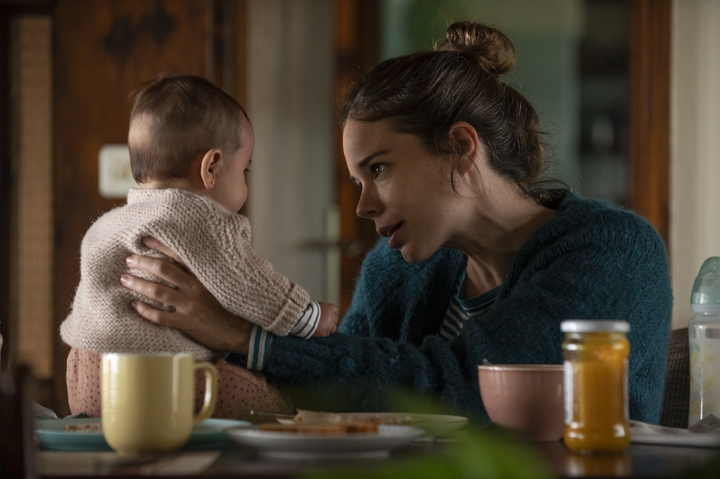
Through a humanistic grasp of its topics and a touching, career-best performance by Laia Costa, Alauda Ruiz de Azua’s Cinco Lobitos (Lullaby) gracefully tackles the felicity and torment of being a mother – making this film one of the best (and most moving) feature-length directorial debuts in recent Spanish cinema.

Was 2022 the greatest year in Spanish cinema? Maybe we can agree with that statement in a few years’ time. Many releases left a heavy impression on me, both emotionally because of their topics and cinematically by the way in which they presented themselves to the audience. The deftness of the Spanish filmmakers that released projects last year was off the charts; it definitely felt like an awe-inspiring movement, as if everyone was trying to best each other. From Rodrigo Sorogoyen’s Goya Awards success As Bestas (The Beasts) to Carla Simón’s Golden Bear-winning Alcarràs, fans of international cinema got a glimpse of the magisterial talents, both new and on the rise, from the people who call “La Piel del Toro” (The Bull Skin) their home. Although I really love those two aforementioned films (both were on my best-of-the-year list), there was one film that genuinely left me in awe for various reasons. That film was Alauda Ruiz de Azua’s comforting and stirring feature-length directorial debut, Cinco Lobitos (Lullaby). 

A thirty-something-year-old freelancer living in Madrid, Amaia (Laia Costa), just had her first child with Javi (Mikel Bustamante). They are delighted and joyful about this special gift that life has brought them. Coincidentally, Amaia and Javi are struggling with the emotional fallout of having a newborn child. It’s a monumental ordeal, even at the best of times – occasionally feeling like an exhausting haul of demands. But the worries and anguish of a mother have been fueled by love. Things get worse for Amaia when Javi disappears for weeks on a work trip (or another endeavor). She’s left alone to face all of the trials and tribulations of being a mother, with nobody to help her. Her need to take on freelance assignments to avoid relinquishing clients intertwines with the pressures of helming the role of a caretaker for the first time. Amaia is on the brink of shutting down entirely, so she goes to her parent’s home in the Basque Country for assistance. 

As you may expect, her parents, naïve Koldo (Ramón Barea) and the controlling Begoña (Susi Sánchez), will make things both more accessible and irritating, comparing what they went through with Amaia’s recent experiences. Although they are helping her, Amaia notices that her parents’ relationship is fractured, far beyond what she could imagine. By looking into Amaia’s eyes, you notice that she has seen (or heard) all of these fights before – the screaming matches, the quick comment that transitions into a bigger fight, amongst others. But she’s shocked by the degree of toxicity which it has reached. It’s heart-crushing for Amaia to see them constantly fighting while dealing with her child’s needs. All of this brings her down emotionally. A more profound sensation of slight melancholy intertwines with her internal thoughts about the past when Begoña falls ill. She’s constantly thinking about her parent’s relationship when she was young. This small detail that many people might not capture is seen in Laia Costa’s eyes. 

The anguish of the past makes her remember what has happened before and how it relates to her current situation. Cinco Lobitos (Lullaby) isn’t quite an in-depth exploration into our guardians’ past lives like in Charlotte Wells’ Aftersun or Céline Sciamma’s Petite Maman, as its focus is on other topics regarding motherhood. Yet, Alauda Ruiz de Azua takes some time to explore the duality between the roles of being a mother and a caretaker at different stages of one’s life – the reversal and exchange of such positions as the people we care about the most turn ill. It demonstrates how life throws punches at us while still bringing gifts into our hands that are worth the hits. Alauda Ruiz de Azua presents us with an unvarnished and humanistic portrayal of the postnatal mental and physical chaos that parents, primarily mothers, endure. There are no heroes and villains and non-stereotypical portrayals; the complexity of ordinary people and the detailed intricacy of human relationships drive the film to its awe-inspiring triumph.

Motherhood is a theme ever present in Spanish cinema, primarily seen within the expertly-crafted melodramatic affairs of legendary filmmaker Pedro Almodóvar (Parallel Mothers, All About My Mother, Julieta). It seems to be a narrative fixation that always tends to work because of his directorial and screenwriting maneuvers. Almodóvar may do a couple of callbacks to his other features while on a new project, but he manages to reinvent himself throughout each of them. That’s one of the reasons why Alauda Ruiz de Azua’s directorial debut ends up working in its totality – she embraces the past films of her country that tackle the topic of motherhood while implementing a deeper sensation of emotional tactility. Every emotion the film draws out, and narrative decisions feel human, occasionally documentary-esque due to its raw depictions of widely-known topics – the ups and downs of motherhood, absent fathers, and the cross-generational role women play as caretakers of us all.

It is truly impressive how not a single scene in this film feels artificially sweetened by the manipulative or excessively theatrical tendencies seen in most dramas. Alauda Ruiz de Azua exposes the worst instincts of her characters at their respective positions and makes them relatable and endearing due to Cinco Lobitos’ grounded nature and tender heart. Although the director deserves many rounds of applause and acclaim for her work, equal amounts of praise need to be given to the film’s lead, Laia Costa, who is slowly turning into one of the most fascinating actresses to watch in Spanish cinema. She is an actress that, like great modern European talents such as Adele Exarchopoulos and Paula Beer; you can’t take your eyes off of her. It makes the audience feel an array of emotions, all transmitted not only by the sharp screenplay but Costa’s facial expressions. Easily, Cinco Lobitos is one of the best films to have passed through the festival circuit last year. And better yet, when compared to the hundreds of directorial debuts that arise yearly, this one stands out. 

Grade: A

Painter With A Camera: Derek Jarman’s Artworks By Celluloid

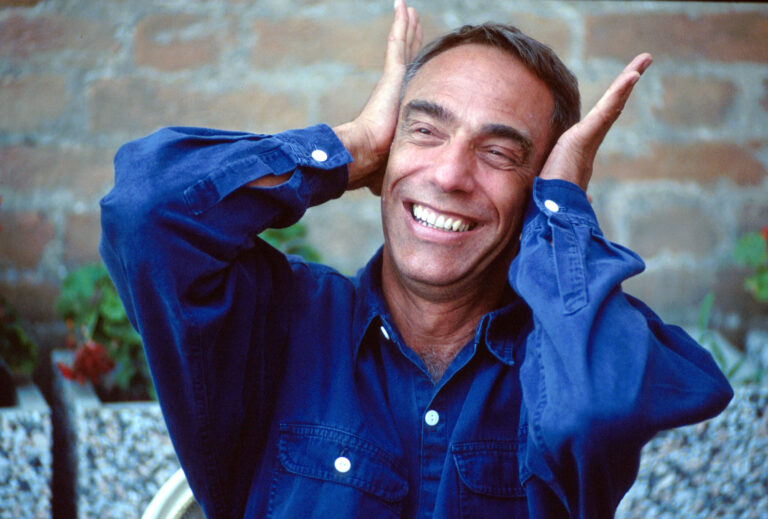
This past February, I got to sit down and watch fully closely the work of a British film renegade, one open to gay themes when it was still such a closeted subject. One of the more outspoken figures in the 1980s and 90s, Derek Jarman was never meant to shoot mainstream works. Watching the social upheaval and decay leading to the long era that was Thatcher’s Britain, Jarman did not conform to the Victorian values she advocated for. Even as he was dying of AIDS, Jarman did not slow down, working all the way to the day of his death in 1994.

Born during World War II, Jarman came of age in the Swinging Sixties of London as an art student. He also worked on stage productions as a stage and costume designer, but Jarman finally worked in movies as a production designer in Ken Russell’s scandalous The Devils. It was a style that resonated with Jarman’s art instincts and was edgy in putting out the more graphic images and shots that initially made the film X-rated. Eventually, Jarman moved on to make his own experimental short films before he got his chance to make his full-feature debut and do it in a bluntly, queer style.  

Here are some of his most notable films:


Sebastiane (1976)

As in later works, Jarman would take a historical subject and reimagine it in a modern and queer way; the first scene itself makes the orgy scene in Eyes Wide Shut very tame. Widely controversial when released, it depicts the life of St. Sebastine and his legendary martyrdom which Jarman purposely makes the film strongly homoerotic. The men are naked throughout (at least one erection is shown) and it dresses up the titular saint as a gay icon, a man who refuses to fight in battle because of his strong convictions as a Christian that war is wrong. The dialogue is all in Latin as it was spoken back then, giving Sebastiane the very rare title of an English production that needed English subtitles.


Caravaggio (1986)

Like Sebastiane, Jarman takes the life of a figure rooted in history – in this case, the 17th-century artist Michelangelo Merisi da Caravaggio – and inserts postmodern anachronisms from eras much later than they appeared. The titular character goes from street rat to painter thanks to the investment of a Vatican-connected priest and still indulges in drink and sex with men and women. In addition, this film was the debut of two major actors working today: Tilda Swinton and Sean Bean. Bean plays a street fighter, who Caravaggio brings in as a muse and Swinton is the fighter’s girlfriend who also has eyes on the painter. Despite the modern touches, Jarman follows the story of Caravaggio’s demise.   


War Requiem (1989)

Jarman’s film is entirely based on Wilfred Owen’s poems put in the requiem score by Benjamin Britten in 1961. Jarman could not add original dialogue or special effects to the movie; only the score and voiceovers reciting the poem could be played. Yet, Jarman makes it a formal picture with haunting shots that reflect the pain of war not just from the First World War, but throughout the 20th century. The inserts of archive footage from wars after the Second World War places Owen’s words as a call for pacifism instead of bloodshed. This film is notable because it is the last movie done by Sir Lawrence Olivier before his death and continues the collaboration with Tilda Swinton and Sean Bean.


Blue (1993)

The last movie Jarman saw released before his death only has, per the title, blue on the entire screen. Just full of blue, with no action. It reflects Jarman’s state at the time, going blind with only shades of blue being seen through his eyes. The rest is a voiceover monologue with several voices, including himself, Swinton, and Nigel Terry. It talks about what his daily life is like as a man with advanced AIDS and the prejudice he dealt with as a gay man under the Conservative/Thatcher era that showed little care for the pandemic and its victims. This is Jarman’s farewell to life and acceptance that he is going to die, but leaves behind an impressive legacy for others to follow.


Follow me on Twitter: @brian_cine (Cine-A-Man)

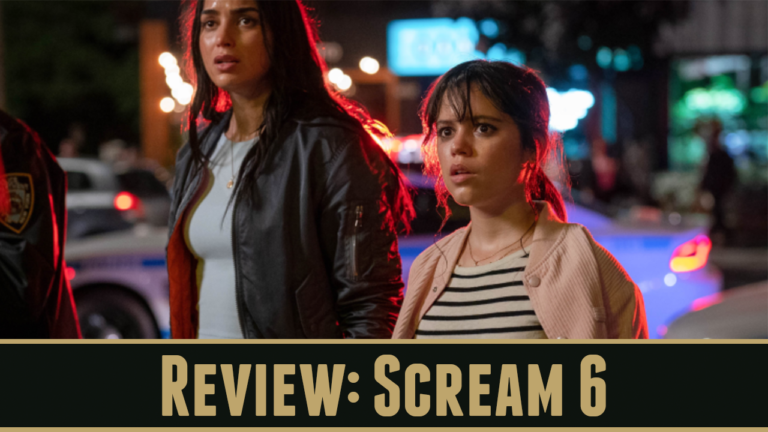
Movie Review: ‘Scream VI’: New York, New Problems


Directors: Matt Bettinelli-Olpin and Tyler Gillett

Writers: James Vanderbilt, Guy Busick, and Kevin Williamson

Stars: Courteney Cox, Melissa Barrera, Jenna Ortega

Synopsis: In the next installment, the survivors of the Ghostface killings leave Woodsboro behind and start a fresh chapter in New York City.


Note: This review contains mild spoilers

My ranking of the series in favorite to least will always be number 3 first, and my ranking of the series from best film to least will always be number 2 first, with this new outing for Ghostface falling into the 3rd slot for both rankings. So my official ranking of my favorite of these movies is 3,2,6,1,5,4 and my official ranking of the movies in order from best to not is 2,3,6,1,5,4.

After a return to the big screen last January for the first time in over a decade, many were wondering if the Scream series had any life left in it, and after delivering the least scary entry into the franchise the directing duo and writers behind Scream 5 were back and brought Ghostface with them to the big apple. A trope that was done in the most fun and ridiculous way back in 1989 with another horror titan in Jason Voorhees in Friday the 13th part 8: Jason Takes a Cruise Ship… I’m sorry I mean Manhattan, Jason takes Manhattan, many including myself wondered if taking Ghostface to New York could work at first, totally forgetting that Ghostface already took Hollywood so why not New York? And guess what, the masked killer could. A huge win for this team that was sorely needed after the last installment. Honestly, the  last two installments of this series were clunkers. However, this time a big factor was missing from the story, Neve Cambell. But after seeing this movie and sitting with it for a few days past the press screening here in Cleveland I truly feel it was for the best. This worked in almost every way possible. It felt like finally the series belonged to Ghostface and not Sidney, which was welcoming, let that woman rest in the world of this story. Her absence is addressed and it works perfectly. 

This is Ghostface like we’ve never seen them before, brutal as all hell, vicious, and absolutely the most tension filled and perfectly timed comedic entry in the series. The return of Kirby (Hayden Panettiere) seems a bit awkward because she feels like she exists purely  for fan service, and Gale (Courteney Cox) is used sparingly, but perfectly, in probably the best chase scene in the movies since Sarah Michelle Gellar in Scream 2. I also would like to shout out the work of Jenna Ortega and newcomers to the series; Devyn Nekoda and Tony Revolori who were pretty solid standouts in their roles. Another large positive is the setting of New York City, which feels like its own character, the promise of large crowds and feeling safe in them truly means nothing to our latest batch of victims. For example, the attack in the bodega was absolutely sublime and tension filled to the brim. 

There is something in the writing, development, and performance of Samantha (Melissa Barrera) that just isn’t working for me here, and I hate to say it but I do think it’s Barrera herself as I also found her a weak spot in In the Heights, as well. She’s just not clicking with me and, especially compared to Jenna Ortega, is the weak spot in this pair of final girls. And as much as I’m praising this movie, I didn’t love the motive as it’s already been done in one of the sequels. The reason the movie is so high in my rankings is that it’s like nothing we’ve seen in the sense of the brutality, tension, and fun for the series.

So, what next? Well, yours truly has an idea that hasn’t been done before in this series or in any horror movie franchise yet to date that would be the biggest twist in a horror movie since Amanda’s reveal in Saw 2 ( yes I’m this confident) but alas I am not signed onto the seventh film, so if anything I say- kill off almost all of the 57 survivors this movie has, don’t bog it down with the SIX killers this movie has, but do keep up the intensity and brutality this movie has and send Ghostface to space, because in space- NO ONE CAN HEAR YOU SCREAM!!!….. ( I kid on that part)

Grade – B+


Movie Review: ‘Champions’ is a Heartwarming Retread


Director: Bobby Farrelly

Writer: Mark Rizzo, Javier Fesser, and David Marqués

Stars: Woody Harrelson, Kaitlin Olsen, Kevin Iannucci

Synopsis: A former minor-league basketball coach is ordered by the court to manage a team of players with intellectual disabilities. He soon realizes that despite his doubts, together, this team can go further than they ever imagined.


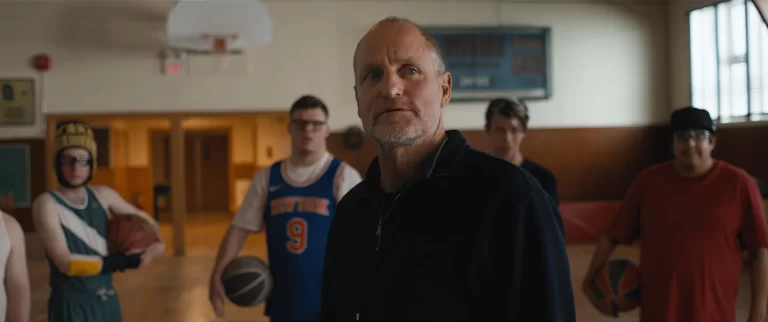
On paper Bobby Farelly’s Champions – adapted from the 2018 Spanish film Campeones – sounds like a winner. It ticks almost every box in the well-worn subgenre of feelgood sports dramedy (if that sounds unfamiliar to you, think Bad News Bears, Mighty Ducks, or any form of narrative where a drunk professional is court ordered to coach a group of outsiders who he then leads to victory). Here we have Woody Harrelson as the likeable coach, a capable love interest in Kaitlin Olsen, a group of really funny, endearing kids, a director who has plenty of experience in this arena, and a blueprint taken from a successful foreign language film. What could go wrong?

Perhaps the problem with Champions is that we’ve seen this all before, and done much better. If it ticks all those boxes, then it ticks them a little too easily. You feel like you can almost see the script in the movie; each plot beat is so staggeringly obvious, each development so mind-numbingly mundane. In an overcrowded field, Champions hardly stands out. While it is a perfectly serviceable middle-of-the-road effort, it’s hard not to feel like Farrelly’s talents might have been better focused elsewhere.

Marcus Markovich (Harrelson) is an assistant basketball coach trying to make his way to the NBA. He’s coaching a J League team in Des Moines, Iowa, hoping to build a reputation that will land him somewhere better. The problem is that his head coach isn’t listening to his suggestions for plays because Marcus focuses only on the stats and not on the players themselves. This leads to an altercation with his head coach which causes Marcus to be fired from the team. 

Furious about this development, Marcus goes out, gets drunk, and accidentally crashes his car into a police cruiser. Cut to a typical courtroom scene where a judge sentences a gruffly reluctant Marcus to 90 days community service as the coach for a team of intellectually challenged kids called The Friends. 

Marcus doesn’t know the first thing about intellectual disability, as evidenced by his instant reference to the R word. Nevertheless, he assumes his role and begins to teach these kids the fundamentals of basketball. There’s Johnny (Kevin Iannucci) who never showers and has Down’s Syndrome (or as he puts it, he’s a “homie with an extra chromie”), Showtime (Bradley Edens) who insists on taking 3 pointers with his back turned to the hoop, Craig (Matthew Von Der Ahe) who likes to remind everyone of his sexual prowess, and Cosentino (Madison Tevlin) who won’t hesitate to tell you what she thinks of you and is the de-facto leader of the team. They are a tight-knit group, each very funny and with their own unique personalities that are given some time to develop. 

Johnny’s sister Alex (Kaitlin Olsen) also plays a part, transporting the kids to away games in the RV she uses to stage Shakespeare plays to high school kids for a living. It’s in these moments she begins to build a friendship with Marcus that may or may not lead to something mo-oh, of course it leads to something more, who are we kidding?

As Marcus and Alex’s relationship blossoms, so too does the team’s performance on the court, and Marcus begins to learn something about treating each person as an individual and appreciating their differences.

That, in a nutshell, is Champions. It’s true that it’s hard to dislike a movie whose premise is so big-hearted, whose message is so achingly positive and motivational. It’s also hard to dislike a movie where the kids themselves are so funny and likeable. Ultimately, though, there’s a phoned-in aspect to Champions which it can’t seem to hide. As though even the movie itself realizes its whole existence is a worn-out cliché. 

Harrelson, in particular, seems to have checked out, rarely ever unveiling that puppy dog charisma he’s so well known for. Marcus doesn’t really have an emotional arc because from the beginning he’s accepting of these kids and so there is very little bad behavior that needs to be challenged. Even the DUI which lands him here seems to be a one-off event, as there’s never any evidence of alcohol problems in the first place. There’s some clumsy metaphor about needing to understand the personal lives of his players if he wants to be a better coach, but it’s tacked on and feels unearned when the moments do come. These movies usually rely on the emotional journey of their protagonist to convince the audience to invest, but here there is no journey for Marcus.

Olsen is better as Alex. She easily channels her shtick as Dee from It’s Always Sunny in Philadelphia, except more palatable for a mainstream audience. Alex is bitter about the way life has gone for her, her dreams of acting stardom all but vanished as she approaches middle age, and clings perhaps a little too closely to her younger brother as a way of mining some purpose for her life. If there is any meaningful emotional arc through Champions, it’s hers as she learns to let go of her little brother and allow him to live his life.

The rest of the cast – Ernie Hudson as the head coach who provides some wise counsel for Marcus; Cheech Marin as the caretaker of The Friends; Matt Cook as Marcus’ assistant coach who just wants his approval – never get much in the way of character development and so warrant only a passing acknowledgement here. They are, again, perfectly serviceable but never amount to anything more.

Champions is a movie that knows full well what it is. It doesn’t try to reinvent the wheel or do anything at all different from its predecessors. Its secret weapon lies within its kid actors, who do so well at imbuing their characters with funny, endearing personalities. You feel this movie is for them, and that’s no bad thing. Fans of the genre will probably enjoy this, but if you’re looking for something new, you’d be better off looking elsewhere.

Grade – D


Podcast: Recapping the 2023 Oscars – Episode 525

This week’s episode is brought to you by Koffee Kult. Get 15% OFF with the code: ISF

This week on the InSession Film Podcast, JD and Brendan discuss the 2023 Oscars! We talk everything from the winners and snubs, to the speeches and even the ceremony itself.

On that note, check out this week’s show and let us know what you think in the comment section. Thanks for listening and for supporting the InSession Film Podcast!

– 2023 Oscars (9:16)

This year’s Academy Awards was one of the best in recent years. It had a great structure and flow, it trimmed off a lot of fat and there was a celebratory reverence that made the night a lot of fun. It also features some great, and historic, winners as well. We did our best to cover the entire gamut of the night and the themes that defined this year’s Oscars.

[divider]

RELATED: Listen to Episode 516 of the InSession Film Podcast where we discussed our Top 10 Movies of 2022!

[divider]

– More Oscars Talk + Q&A (1:00:44)

In the back half of the show we continue to discuss the Oscars and we bring up a few listener questions.

Show Sponsor: First Time Watchers Podcast

– Music

Remains – Volker Bertelmann
Naatu Naatu – MM Keeravaani, SS Rajamouli
The Return of the Eagle – Atli Örvarsson

Subscribe to our Podcasts RSS
Subscribe to our Podcasts on iTunes
Listen on Spotify
Listen on Stitcher
InSession Film Podcast – Episode 525

[divider]

Next week on the show:

The new DCEU / Shazam! Fury of the Gods

[divider]

Help Support The InSession Film Podcast

If you want to help support us, there are several ways you can help us and we’d absolutely appreciate it. Every penny goes directly back into supporting the show and we are truly honored and grateful. Thanks for your support and for listening to the InSession Film Podcast!

VISIT OUR DONATE PAGE HERE

Op-Ed: Art Imitating Life

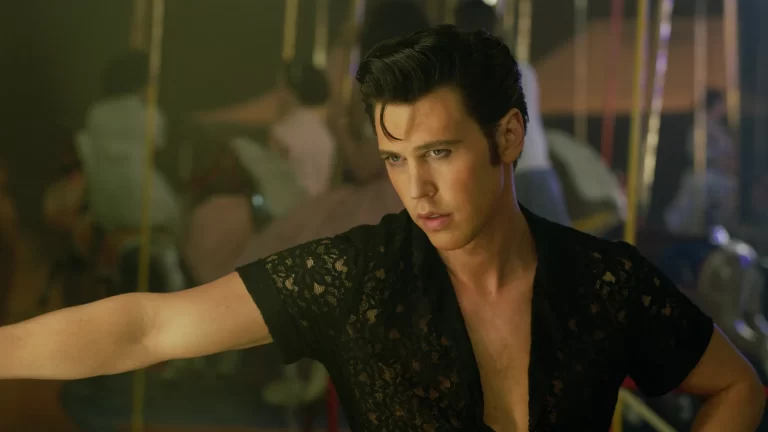
In the past few years, it has felt almost predetermined that an actor cast as a major historical, political, or cultural figure in a biographical film will be in the running, or even the front runner, for an acting Oscar at the end of awards season. This year, we have two actors inhabiting arguably the two biggest American cultural icons nominated for both Best Actor and Best Actress, that is Austin Butler as Elvis Presley and Ana de Armas as Marilyn Monroe, the former of which is predicted by many to be the eventual winner in his category. It has been announced that in the coming years we can expect biopics of such Hollywood legends as Cary Grant, Gene Kelly, Buster Keaton, Fred Astaire, and Ginger Rogers, musicians Leonard Bernstein and Amy Winehouse, and historical figures Napoleon Bonaparte and J. Robert Oppenheimer. 

This onslaught of biopics feels like a specifically modern trend, hand-in-hand with the never-ending slate of remakes, reboots, and sequels taking up space in our theaters and on our streaming services. In terms of the Oscars, is this a pattern as old as the award itself, or a trend that indicates the changing tastes of the Academy?

The first person to ever win an Oscar for portraying a real person was George Arliss all the way back in 1930, when he won for portraying British Prime Minister Benjamin Disraeli in Disraeli (1929). Arliss, a respected actor of both stage and screen, made a career of playing notable historical men, including Alexander Hamilton and Voltaire. He had in fact already played Disraeli in a 1921 silent version of the film, and holds the title of earliest born actor to win an Oscar. Though Disraeli is a  name fairly unknown to 21st century Americans, we can imagine 1930 Academy voters viewing the film and man similarly to how 2018 voters would have viewed Darkest Hour and Winston Churchill. 

The 1930s, a decade that largely celebrated period pieces and costume dramas in multiple categories, gave three other men the Best Actor award for their portrayals of real life people: Charles Laughton as King henry VIII in The Private Life of Henry VIII (1933), Paul Muni as Louis Pasteur in Story of Louis Pasteur (1936), and Spencer Tracy as Father Edward Joseph Flanagan in Boys Town (1938). Flanagan is the only of these three figures who was alive at the time of his portrayal.

1936 was the first year an actress was awarded for playing a real life person, when Luise Rainer won for playing Anna Held, the partner of Florenz Ziegfeld in The Great Ziegfeld. This was also the year that first introduced the supporting acting categories. It should be noted that not all real life portrayals are created equal. In 1937, for example, Joseph Schildkraut won the second ever Best Supporting Actor award for playing Captain Alfred Dreyfus, the figure at the center of the Dreyfus Affair, a major, and relatively recent historical event, in the Best Picture winning film The Life of Emile Zola. That same year, Alice Brady won the Best Supporting Actress award for her portrayal of Molly O’Leary in In Old Chicago. Molly O’Leary, for those out of the loop, is the woman whose cow allegedly started the Great Chicago Fire by kicking over a lantern in 1871. It is safe to assume that 1937 Academy members were not impacted by feelings of nostalgia and familiarity when they voted for Brady in this role. That is to say that while some actors win Oscars for playing real life people, that person may not be on the same level of recognition as Dreyfus, Presley, or Monroe. 

Throughout the twentieth century, actors winning Oscars for playing real people was an infrequent constant, at around 3 times per decade. Among supporting actors and actresses, that rate seems to have plateaued, with the most recent winners being Daniel Kaluuya as Fred Hampton in Judas and the Black Messiah (2020), and Alicia Vikander as Gerda Wegener in The Danish Girl (2015). For leading actors and actresses, however, that number has not only increased, but skyrocketed. 

In the past 22 years, 14 actors and 11 actresses have won Oscars for playing real life people. The roles themselves range in familiarity, from Queen Elizabeth II and Freddie Mercury to Erin Brokovich and Ron Woodruff. Both of last year’s leading acting awards went to real life figures: Will Smith as Richard Williams in King Richard and Jessica Chastain as Tammy Faye Bakker in The Eyes of Tammy Faye. This is, of course, not taking into account actors who were only nominated for playing real people, such as: Dick Cheney, Johnny Cash, Sam Cooke, Tonya Harding, Muhammed Ali, Laurence Olivier, Jackie Kennedy, Fred Rogers, George W. Bush, Mark Zuckerberg, Marilyn Monroe (this time played by Michelle Williams), Leo Tolstoy, Howard Hughes, Mary Todd Lincoln, Harriet Tubman, Jackson Pollock, Julia Child, Alan Turing, Nelson Mandela, Frida Khalo, Richard Nixon, Lucille Ball and Desi Arnaz, to name a few.

The increase is clear, the reason less so. Of course, we as humans are naturally attracted to what we know, and the same can be said for the films we watch and the actors we love. It also adds a factor of simplicity when judging an actor’s performance. Instead of relying on one’s understanding of nuance or acting skill, a voter can merely assess whether or not an actor did a good enough job of portraying a historical figure accurately. If the impression is uncanny enough, they earn a nomination, so it would appear. In the case of modern socio-political figures like Erin Brockovich, a vote may be given as a declaration of support for the figure’s real-life achievements.

Of course, an actor who wins an Oscar for playing a real life person cannot always be assumed to have won based on this alone. Marion Cotillard’s performance as Edith Piaf in La Vie en rose (2007) is considered one of the greatest in the category’s history, the same could be said for Phillip Seymour Hoffman’s titular performance in Capote (2005). Should Austin Butler win this year for Elvis, it would be for a stunning, passionate performance well deserving of praise. While it is not the only factor that scores an actor a win, the influence of a character’s existence in reality cannot be denied. Whether or not this trend continues into the next decade has yet to be seen. With the amount of biopics set to be released in the next few years, audiences and voters may get tired of the constant presence of real life figures on their screen, and seek out original characters and material for future consideration.


 

Podcast Review: Scream VI

On this episode, JD, Brendan and Jay review Scream VI and how it compares to its predecessors in the franchise! Despite how we felt about the new Scream last year, this one seems to have a better understanding of a Scream film should be, but with a new and captivating tone.

Review: Scream VI (8:30)
Director: Matt Bettinelli-Olpin, Tyler Gillett
Writers: James Vanderbilt, Guy Busick
Stars: Melissa Barrera, Jenna Ortega, Dermot Mulroney

Subscribe to our Podcasts RSS
Subscribe to our Podcasts on iTunes
Listen on Spotify
Listen on Stitcher
InSession Film Podcast – Shazam! Fury of the Gods

Women InSession: William Holden Retrospective – Episode 29

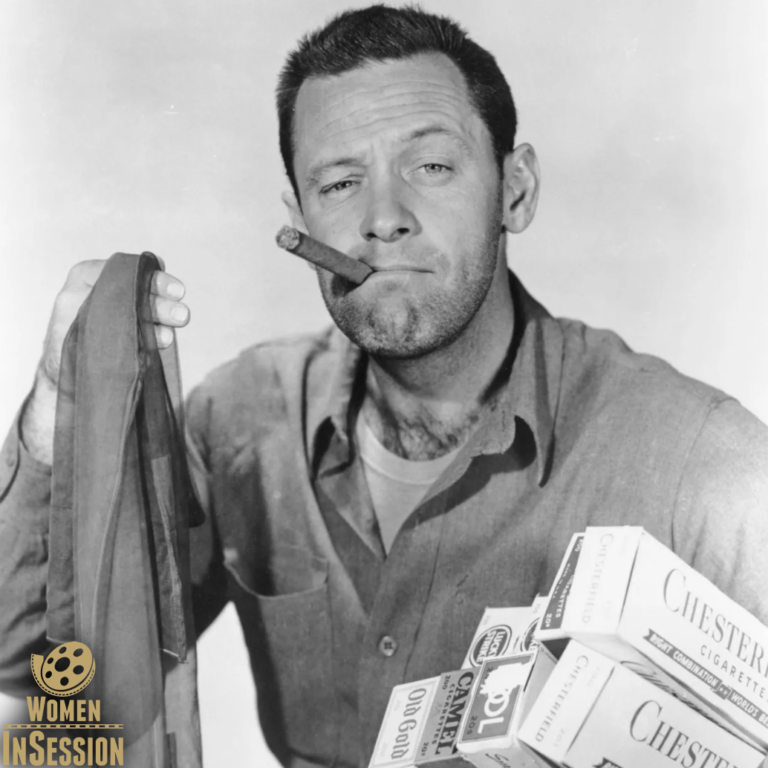
On Episode 29 of Women InSession, we discuss the life and career of the great William Holden! He isn’t talked about or revered in the the same way others are from his era, but Holden is accountable for many great performances in his time.

Panel: Kristin Battestella, Amy Thomasson

On that note, check out this week’s show and let us know what you think in the comment section. Thanks for listening and for supporting the InSession Film Podcast!

– Music

The Return of the Eagle – Atli Örvarsson

Subscribe to our Podcasts RSS
Subscribe to our Podcasts on iTunes
Listen on Spotify
Listen on Stitcher
Women InSession – William Holden Retrospective

[divider]

To hear this Extra Film episode and everything else we do, download our apps on the Amazon Market for Android and the Podcast Source app on IOS devices. The mobile app covers all of our main shows, bonus podcasts and everything else relating to the InSession Film Podcast. Thanks for your wonderful support and for listening to our show. It means the world to us.

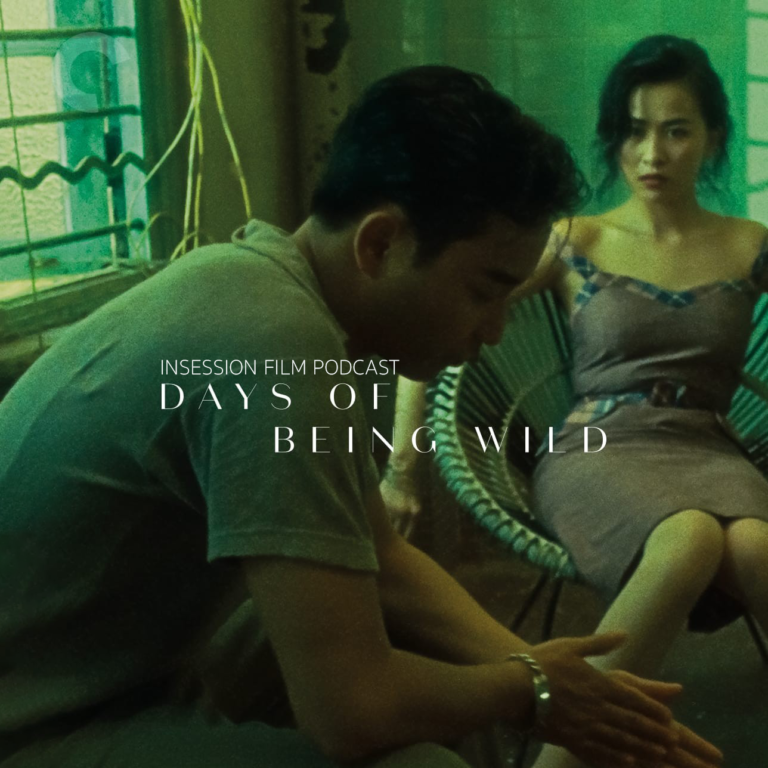
Movie Series Review: Days of Being Wild

On this episode, Ryan and Jay continue our Wong Kar-wai Movie Series with his 1990 film Days of Being Wild!

Review: Days of Being Wild (8:30)
Director: Wong Kar-wai
Writers: Wong Kar-wai
Stars: Leslie Cheung, Andy Lau, Maggie Cheung

Subscribe to our Podcasts RSS
Subscribe to our Podcasts on iTunes
Listen on Spotify
Listen on Stitcher
InSession Film Podcast – Days of Being Wild

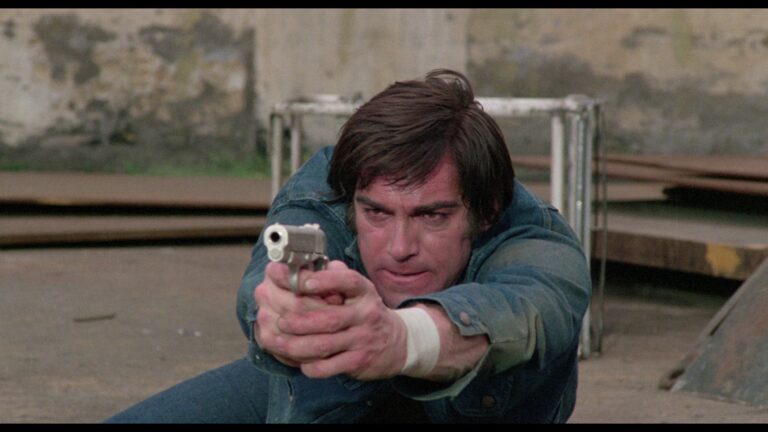
Years Of The Poliziotteschi: Italy’s Films Of Lead And Blood

Gangster crime dramas date back to the early years of sound and the obsession with the Italian Mafia came when it was first recognized as an existing organized crime unit. Italy’s post-war economic boom began to collapse in the late 60s and throughout the 70s, and so did the political structure. The rise of terrorist groups, namely between neo-fascists and communists, descended Italy into chaos, even going so far as the infamous kidnapping and murder of former Italian Prime Minister Aldo Moro in 1978. Birthing out of this madness was a new genre in Italian cinema that was influenced by American and French dramas and would later influence a future generation of directors including Quentin Tarantino, Guy Ritchie, Paolo Sorrentino, and Matteo Garrone. 


The Decay Of Honor

The word poliziotteschi is a combination of “poliziotto” (policeman) and “esco” (related to). Common to the background of the Poliziotteschi genre are characters from both the police and organized crime. The system they worked in was full of corruption and no one can be really trusted, even those in the hierarchy of the police. All of the leading characters are cynical and have to fight for themselves to survive. Working outside the law and becoming vigilantes, they have to work to achieve justice in such films as Kidnap Syndicate and The Big Racket. While law enforcement condemned these movies for glorifying vigilantism, the general reaction to this was that someone, anyone, has to see justice done since the police can’t do anything.

These movies portray political activists and militant groups negatively, needing to destroy them as they are a nuisance in Italian society. Whether they are far-right or far-left is no different to the police and Mafia. This was all against the backdrop of the “Years of Lead,” this social upheaval full of violence and uncertainty across the country. The fear from conservatives of a Marxist upheaval and the fight from leftists from neo-fascist revivalism was exploited in these movies, presenting a complicated view of this period where there was total anarchy. It is reactionary and presents the audience with no heroes in a no-win situation. 


Neo-Violence

Establishment contemporary critics were appalled by this trend, but, in parallel to Hollywood’s new style with the MPAA system, Italian cinema found freedom in putting their blood in color. Carlo Lizzani’s Bandits In Milan, arguably the first film of the poliziotteschi genre, was based on a real bank heist that went awry, leading to deaths and destruction. Enzo G. Castellari’s High Crime was influenced by recent American crime dramas such as Bullitt and The French Connection and would help popularize cop thrillers. Shootouts, bombings, and strangulations involving women and children are depicted, shocking audiences while playing the real-life tragedies that no one is innocently spared. Cops, politicians, their wives, and their children were always targeted by these figures and so it was not too much of a reach to have these stories play out. Even the posters themselves, such as Shoot First, Die Later, Gang War In Milan, and Colt 38 Special Sqaud blasted out their violent content as a snippet of what to expect.


Bosses Of The Genre

Many directors got their start by making movies in this capacity after a period of being collaborators with other established directors. Fernando Di Leo was known as one of Sergio Leone’s writers for his Spaghetti Westerns. Ruggero Deodato learned how to direct from his mentor, Roberto Rossellini. Elio Petri got his start as an assistant under Giuseppe De Santis for his film, Bitter Rice. Others such as Umberto Lenzi and Sergio Sollima were already directing films and were transitioning from other genres. Petri’s Investigation Of A Citizen Above Suspicion would go on to win the Oscar for Best International Feature. 

The actors who became noted for their roles in poliziotteschi films were not always Italian; in fact, major stars from abroad would star in several major films. Charles Bronson, Joseph Cotten, Alain Delon, Jack Palance, Leonard Mann, Eli Wallach, and James Mason are among many notable names that would be cast in at least one film. Henry Silva was one major American star who was recast in multiple films, playing the hitman. This includes The Italian Connection, Il Boss, and Cry Of A Prostitute. Antonio Sabato Sr., Adolfo Celi, Gian Maria Volonte, Angelo Infanti, Maurizio Merli, and Mario Adorf were among the main stars in several films.

The spaghetti Westerns of Sergio Leone and Cold War spy thrillers that boomed in the 1960s gave way to the grittiness and realism of the 1970s when many countries were changing. Europe was at its most heightened sense of vulnerability because political terrorism was becoming too commonplace and organized crime was only starting to be confronted head-on. By 1980, the genre began to fall out of favor as it became much of a parody and the subsequent decade saw this genre become an actual series of spoofs when the real-life violence started to subside. The legacy of this genre is a reflection of 1970s Italy and poignant moments from these blood-soaked crime stories that were later repeated in other major works of a crime drama like Sorrentino’s Il Divo and Garrone’s Gomorrah. Even today, the reality is that the fight between cops and powerful syndicates still exists and doesn’t go away.

Follow me on Twitter: @brian_cine (Cine-A-Man)


Movie Review: ‘La Piedad’ is a Provocative Take on Motherly Attachment


Director:  Eduardo Casanova

Writer: Eduardo Casanova

Stars: Manuel Llunell, Ángela Molina, Macarena Gómez

Synopsis: Follows the toxic relationship between a mother and her son, drawing a parallel between the dictatorship in North Korea and the people.


The provocative and occasionally telenovela-like La Pietà (La Piedad) has Eduardo Casanova dwelling once again, for better or worse, on exploitation and vulgarity, this time to deliver a terrifying interpretation of the “mommie dearest” attachment. There are many instances in which the Spanish filmmaker’s screenplay causes a risible reaction from the audience. But, it does manage to leave an impression on the viewer because of its shock factor imagery. 

One thing that Spanish filmmaker Eduardo Casanova has repeated in multiple interviews and Q&As is that “art has to provoke”. Of course, a little exploitation edge doesn’t do much harmin most independent or arthouse films. Still, Casanova believes that provocation should be one of the essential facets in crafting a feature film from the ground up. Many, including me, disagree with his statements, even though he has created some titillating images because of such an inclination to kitsch. At the very least, one could say that he has a distinctive style; you immediately know when you are watching one of his films. Throughout his young career, he has been curating his filmography to cement himself as the new generation of Spanish filmmakers’ John Waters – a director that dwells on trashiness and vulgarity to uplift his surrealistic and comedic stories. With his latest work, Pietà (La Piedad), Eduardo Casanova returns to shock and revolt the audience by intertwining the themes of obsessive motherly love with dictatorship.

Pietà begins by foreshadowing the introduction to the film’s second half. A mother, Libertad (Angela Molina), and son, Mateo (Manel Llunel), are awaiting the results of some medical tests. Before we hear whether or not they are all right, the film jumps to the events that transpired three days earlier. A bright pink-colored musical dance sequence, in which the Korean song’s lyrics aren’t subtitled, is shown. As Libertad dances the choreographed pastel waltz, Mateo smiles in astonishment at her mother’s talents. Yet, there’s something eerie about it. The mother-son relationship between Libertad and Mateo seems obsessive and strange. The guardian seems to apply manipulation and torture of some kind to control all of their children’s decisions. The first glimpse of this is shared with the audience via the glances the mother-son duo share during the dance. After the dance class, they head home, where news about North Korea having the first “real-life” unicorn is shared in television broadcasts. 

Not even ten minutes into the film, the audience is divided into love or hate stances. These narrative twists and turns cause the audience to be annoyed or intrigued about what’s to come. Later in the story, it is revealed that Mateo has late-stage cancer. He’s worried about it, but his mother is even more anxious. Libertad loves him so much that she’s willing to do whatever she must to stay with him for a more extended period of time. The rest of the film involves toxic mother-son dynamics that capture the film’s thematic essence of suffocating affection and protection in uniquely bizarre, yet ultimately baffling ways. Pietà (La Piedad) can’t be put into a straightforward genre checklist because it takes inspiration from many of them in seemingly randomized instances. There are more than a handful of confusing moments that are unclear whether it is meant to be taken seriously or comically self-aware. Knowing Casanova’s work and hearing him talk about the film afterward in the Q&A, I began to think that all that transpired in the movie, by his own understanding, is meant to be seen as a profound exercise in excess, although it clearly isn’t. 

Eduardo Casanova wants to interlace the topics of smothering motherly dependence and dictatorship in a way that would make the film a challenging experience for the viewer due to the provocation in its themes and the implementation of body horror aesthetics (which are done admirably). However, that intertwining doesn’t find its footing at all because of its lackluster and occasionally farcical Telenovela-like screenplay by the man himself. The extended metaphor of the mass psychosis and Stockholm syndrome-based relationships has a clear line of thought and ingenuity, periodically lifted by the jet-black comedy that arises amidst Casanova’s pink world. Nevertheless, it is eventually hindered because of his constant mockish “look at me” reminders and provocative artistic standings. One positive aspect of this filmmaking approach is his distinctiveness and proper shocks amidst unfavorable world-building. He is crafting some unique images that feel like horrific paintings. It is noticeable that Casanova takes his time curating his stirring sequences because they are memorable. A couple of days have passed since I saw the movie, and there are still images stuck in my head. 

The main problem with Eduardo Casanova’s latest is that the four-way division between campiness, satire, self-seriousness, and provocation is too thin-layered to explore its ideas properly. I know Casanova desperately wants to leave an impression on the audience, hence the shock factor elements. Yet, it comes as a double-edged sword. It does its job by startling the viewer effectively, although he never delivers a fully operative analysis of the topics he wants to discuss. Pietà, for the most part, arrives empty-handed outside of the ridiculous extremities of intriguing exploitation. Like in his previous full-length feature, Skins (Pieles), he somewhat taps into vulgar camp filmmaking. This is his best facet as a director because Casanova’s ideas are creative and strangely fascinating. But he never actually does something worthy of those concepts. Ultimately, it ends up as a mixed, albeit interestingly shocking, bag of pink-colored comedic horrors, for better or worse. 

Grade: C+


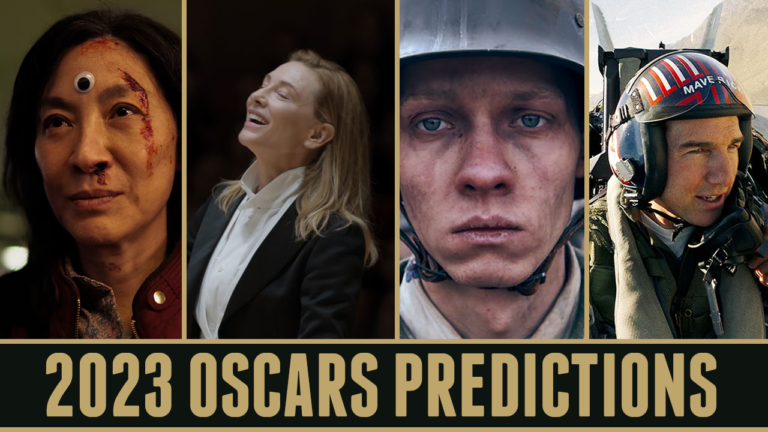
Chasing the Gold: 2023 Oscars Predictions

This week’s episode is brought to you by Koffee Kult. Get 15% OFF with the code: ISF

This week on the InSession Film Podcast, JD is joined by the great Brian Rowe to give our predictions to the 2023 Oscars! It seems as if this year is locked up in many categories, but could there be a few surprises? We discuss that and much more.

On that note, check out this week’s show and let us know what you think in the comment section. Thanks for listening and for supporting the InSession Film Podcast!

Subscribe to our Podcasts RSS
Subscribe to our Podcasts on iTunes
Listen on Spotify
Listen on Stitcher
Chasing the Gold – 2023 Oscars Predictions

[divider]

[divider]

Mobile App

To hear this Extra Film episode and everything else we do, download our apps on the Amazon Market for Android and the Podcast Box app on IOS devices. The mobile app covers all of our main shows, bonus podcast’s and everything else relating to the InSession Film Podcast. Thanks for your wonderful support and listening to our show. It means the world to us!

[divider]

Help Support The InSession Film Podcast

If you want to help support us, we would greatly appreciate it! For more info, CLICK HERE.

Movie Review: ‘Return To Seoul’ is Not To Be Missed


Director: Davy Chou

Writer: Davy Chou

Stars: Park Ji-min, Oh Kwang-rok, Guka Han

Synopsis: A twenty-five-year-old French woman returns to Korea, the country she was born in before being adopted by a French couple, for the very first time. She decides to track down her biological parents, but her journey takes a surprising turn.


Davy Chou’s exceptional character study is about the haunting empty void of hollow identity and the non-existent end to finding closure. Equipped with a simply stunning turn by newcomer Park Ji-min, Return to Seoul is wonderfully nuanced. A multi-layered and deeply felt cinematic experience of the trauma of childhood abandonment that is inherent to international adoption.

The story follows Frédérique Benoît (Ji-min). Known as “Freddie,” she is a French Korean woman who was given up for adoption at the Hammond Home (The most prominent adoption agency in South Korea). Now, Freddie returns to South Korea for the first time. Why? The obvious answer is to locate her biological parents. The other appears to be not a search for personal identity but a cultural one.

Freddie is a tiny tornado looking to leave a wake in the Korean cultural establishment. She is staying with Tena (Guka Han), who is a French-speaking translator, her guide to Korea, and her helping hand with Hammond. While having dinner with Tena and her friend, Dongwan (Son Seung-Beom), begins to run to surrounding tables. One by one, she pairs young single men and women at a table. She begins saturating her new friends with an overflowing amount of soju. Freddie is now almost mocking the Korean tradition of pouring one’s drink by caring to serve the entire room, as opposed to just one. She is now rebelling against a culture that rejected her.

Freddie is not trying to fit into her new surroundings, but making those around, who are highly malleable, conform to her. Chou’s script continuously pits east versus west cultural norms against each other. Freddie frequently experiences triggers by her biological family’s unearned concern and guilt-ridden apologies discomforting. Her biological father (Oh Kwang-rok) is a tragic figure, reliving the haunting events of giving up his daughter almost a quarter century ago. So much so that his wife shares with Freddie that he drinks and cries every night before he sleeps, ruminating over her.

The trauma of childhood abandonment makes for a significantly more complex story. Also, being seen through a lens of international adoption is deeply felt throughout Chou’s phenomenal film from different angles. The script really stands out because you learn about individual characters’ triggers, viewing them in other lights, which makes even the smallest of roles three-dimensional. It’s a multifaceted experience. Freddie goes through crescendo-decrescendo patterns and behavior patterns, even during periods of descending and ascending maturity through different life stages. It’s breathtaking, really. Specifically, seeing Ji-min’s burning aggression and anger, heartbreaking sadness, and withdrawal takes us on her journey. All lead to mental health diseases such as major depressive and bipolar disorder and self-medicated substance abuse.

Yes, Freddie was raised in a loving environment, but feeling lonely and isolated. It’s quite a high-wire act Chou clears here. You get the perspective of what some call the child mill of the adoption industry in Korea. (With over 200,000 adoptions since what the Asian Centennial calls the “child diaspora” sparked in 1955 by Bertha and Henry Holt). A simple Google search will also shine a light on the overrepresentation of females in the Korean (and international) adoption system. You’ll also see a reflection of the unspoken bond between other adoptees she connects with in Seoul. The theme of the hot-button topic of international adoption is particularly interesting. This practice has been cut by 72% since 2005—a result of many questioning the practice that was becoming an issue of forced cultural migration. Here, the character of Freddie is a product of intended and unintended consequences that have come full circle.

Return to Seoul is a soul-stirring film (pun intended) that slowly sneaks up on you. As a viewer, Chou will have you asking yourself where the story is taking you. The film’s constant emotional material, like rocks on the bottom of the riverbed, displays devastating effects that shape familial generations. Nevermore apparent in one of the film’s very best scenes, where her biological father makes sure he locates a cab for her with a preset destination to avoid Seoul’s famed Itaewon district because Freddie is achieving a period of sobriety. By the film’s end, you will be in awe of Ji-min’s jaw-dropping arc of maturity and how she deals with yet another moment of disappointment.

Return to Seoul‘s complex portrait of the trauma that comes from abandonment that leads to ethnocultural identity confusion is spectacular —a one-of-a-kind experience that cannot be missed.

Grade – A+


Podcast: Top 5 Sports Movies – Episode 524

This week’s episode is brought to you by the film Devotion. Follow us on Twitter for your chance to win a FREE Blu-ray!

This week on the InSession Film Podcast, inspired by Creed III, Brendan and JD talk about their Top 5 sports movies! We also discuss who will be the next breakthrough star in Hollywood similar to Jonathan Majors this year.

On that note, check out this week’s show and let us know what you think in the comment section. Thanks for listening and for supporting the InSession Film Podcast!

– Top 5 Sports Movies (10:05)

This is actually the second time we’ve done this exercise as we talked about our favorite sports movies all the way back on Episode 8 back in 2013. So, we felt it was time to bring it back and revisit what makes these movies so inspiring and fun.

[divider]

RELATED: Listen to Episode 516 of the InSession Film Podcast where we discussed our Top 10 Movies of 2022!

[divider]

– Next Breakthrough Star (1:17:44)

Jonathan Majors has come a long way since The Last Black Man in San Francisco back in 2019. He’s shown incredible charisma and range in just a short time, and has become one of Hollywood’s most notable breakthrough’s in some time. So we thought it would be fun to discuss a few other candidates who could be the next one to have a similar run in the near future.

Show Sponsor: First Time Watchers Podcast

– Music

About Today – The National
Glasgow – Jessie Buckley
The Return of the Eagle – Atli Örvarsson

Subscribe to our Podcasts RSS
Subscribe to our Podcasts on iTunes
Listen on Spotify
Listen on Stitcher
InSession Film Podcast – Episode 524

[divider]

Next week on the show:

2023 Oscars

[divider]

Help Support The InSession Film Podcast

If you want to help support us, there are several ways you can help us and we’d absolutely appreciate it. Every penny goes directly back into supporting the show and we are truly honored and grateful. Thanks for your support and for listening to the InSession Film Podcast!

VISIT OUR DONATE PAGE HERE

Women InSession: Top 5 Worst Best Picture Nominees – Episode 28

On Episode 28 of Women InSession, we discuss our least favorite Best Picture nominees! Some of these come from a place of bafflement, some from frustration and others from fury. Either way, these are the films that should have never have been nominated for Hollywood’s biggest prize.

Panel: Kristin Battestella, Zita Short, Amy Thomasson

On that note, check out this week’s show and let us know what you think in the comment section. Thanks for listening and for supporting the InSession Film Podcast!

– Music

The Return of the Eagle – Atli Örvarsson

Subscribe to our Podcasts RSS
Subscribe to our Podcasts on iTunes
Listen on Spotify
Listen on Stitcher
Women InSession – Top 5 Worst Best Picture Nominees

[divider]

To hear this Extra Film episode and everything else we do, download our apps on the Amazon Market for Android and the Podcast Source app on IOS devices. The mobile app covers all of our main shows, bonus podcasts and everything else relating to the InSession Film Podcast. Thanks for your wonderful support and for listening to our show. It means the world to us.

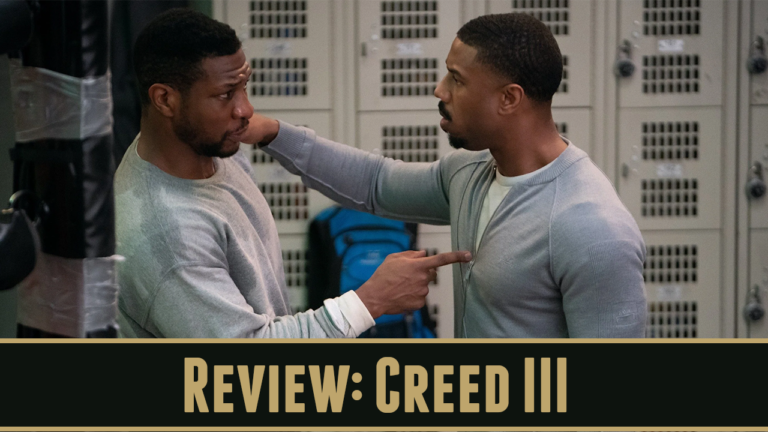
Podcast Review: Creed III

On this episode, JD, Brendan and Ryan discuss Michael B. Jordan’s directorial debut in Creed III! Between Jordan behind the camera, and the inclusion of Jonathan Majors, there’s plenty to love about the latest in the Rocky/Creed franchise. But does it land all of its punches? We discuss.

Review: Creed III (8:30)
Director: Michael B. Jordan
Writers: Keenan Coogler, Zach Baylin
Stars: Michael B. Jordan, Jonathan Majors, Tessa Thompson

Subscribe to our Podcasts RSS
Subscribe to our Podcasts on iTunes
Listen on Spotify
Listen on Stitcher
InSession Film Podcast – Creed III

Cool Eighties Comedies

In our turbulent times, it’s always pleasant to retreat to these epitome of cool, nostalgic comfort comedies.


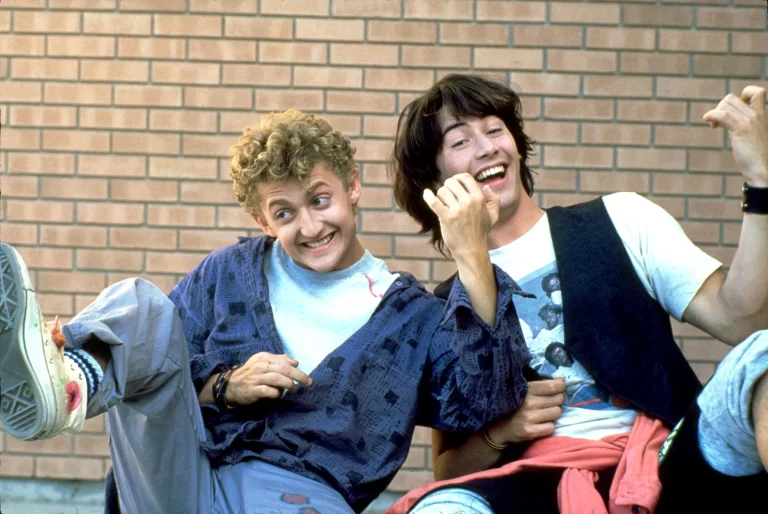
Bill and Ted’s Excellent Adventure

Time traveler George Carlin (Dogma) must help Alex Winter (The Lost Boys) as Bill S. Preston, esquire and Keanu Reeves (The Matrix) as Ted “Theodore” Logan save the future in this memorable 1989 teen classic. The Wyld Stallyns duo uses their phone booth time machine to collect famous figures – including Billy the Kid, Sigmund “Freud Dude,” “Beeth-Oven,” “So-Crates,” and Abraham Lincoln – to pass their history class. Although the onscreen antics and paradoxical premise are preposterous and some of the derogatory comedy is dated, it almost doesn’t matter. Our actors look and sound the tweedle dee and tweedle dumb part; their quirky humor, witty chemistry, and time travel mayhem balance anything nonsensical or silly. Sharp dialogue and air guitar exclamations provide chuckle worthy moments that have seeped into the cultural lexicon almost because of the terrible fashions, simplistic eighties effects, and the bizarre vision of a future utopia brought together by cool music montages. You can tune in to this fun, nostalgic time capsule at any point in the movie and see something that keeps you coming back. Excellent!


Clue

Butler Tim Curry (The Rocky Horror Picture Show) invites mysterious guests Eileen Brennan (The Sting), Christopher Lloyd (Back to the Future), Madeline Kahn (Blazing Saddles), and more to a foreboding mansion for a fifties dinner party serving murder, blackmail, and red herrings in this 1985 based-on-the-board-game farce. Be it “Flames…on the side of my face…” or “One plus two plus one plus one,” each member of the ensemble has a memorable moment, trademark, or catchphrase. Sure, cliche victims or accomplices serve their purpose and the killer plots are up for debate, but the outrageous set ups, slapstick situations, and self-aware lightning clashes punctuate the clever word play and deadpan dialogue. Risqué puns and double talk timing provide mature chuckles as well as laugh out loud moments thanks to a smart script that works for viewers young and old. The nom de plume attire of each character and quirky eighties score peppered with good old doo wop on the phonograph create a high end old fashioned film noir mixed with an eighties comedic pace perfect for repeat viewing. Multiple endings toy with character deliveries, subtext, and the whodunit of it all without pulling the rug out from under the audience via pleasant deductions and winks.


Crocodile Dundee

“That’s a knife!” Paul Hogan and Linda Kozlowski (also of the lesser but still fun Crocodile Dundee II) steam it up in this 1986 Down Under fish out of water romp. Granted, some of the Bushman in New York scenes don’t work today, the foreign slang will still be tough for some, and a few conversations are offensive and racially questionable. The music, rad eighties styles, casual drug party scenes, and veiled Reagan era subtext are of their time as well. After a great Australian start with the titular encounters, Indigenous humor, and lovely Outback locales, the typical American explorations drag the middle of the film. Fortunately, the culture clash charm and genuine onscreen chemistry carry the clichés. The classic New York scenery is also now sentimental, and multiple viewings are needed to pick up all the visual gags and winking bemusements culminating in a surprisingly pleasing subway confession. There’s man’s man adventure and around the world romance – something for everyone, mate!


Summer School

Much in this 1987 comedy starring Mark Harmon (NCIS) and Kirstie Alley (Cheers) wouldn’t fly today. Director Carl Reiner (The Jerk) populates the eponymous course with slackers, a beach bum gym teacher, goofy field trips, juicy foreign exchange students, strip clubs, study bribes, and a Texas Chainsaw Massacre classroom viewing. Fortunately, shoulder pads, one earring styles, surf boards, cute dogs, and lighthearted tunes maximize the eighties innocence amid going to jail on roller skates and not so raunchy innuendo. Peppy montages assure everyone has their absurd moment as punchlines, visual gags, food, oral fixations, and performances accentuate the comedy rather than rely on today’s gross out extremes. Serious issues such as family troubles, student/teacher crushes, teen pregnancy, toxic behaviors, and dyslexia are also touched upon; grades are not a reflection of an underachiever’s potential but not every smug educator is in it to prevent failing youths from slipping through the system. The number of students changes, the big test doesn’t mean much, and the parents are inexplicably pleased with the havoc, but such charming preposterousness makes for a laid back re-watch.


The War of The Roses

From throwing plates and kitchen appliances mayhem to sauna dangers, almost cooked pets, and chandelier disasters – Kathleen Turner, Michael Douglas, and director Danny DeVito poke fun at their previous Romancing the Stone and Jewel of the Nile adventures in this dark 1989 divorce comedy. The sharp, innuendo loaded script starts blissfully enough with naughty gymnastics and humble struggles before making partner workaholics and the perfect mansion filled with all the curated best antiques. The classy manor and decades old splendor provides the perfect backdrop as the sexy suggestions devolve and the creative violence escalates in the yuppie keeping up with the Joneses upstanding pressures. The stars are at their peaks with witty deliveries and clever physicality accenting the divided chemistry. The passage of time transitions, boxy fashions, and eighties hairstyles may be too of the past now, and the brief saucy is probably tame today. However, adults of a certain age will appreciate the bitter marital minutiae as the deranged exploits culminate in a cynical yet entertaining crescendo.


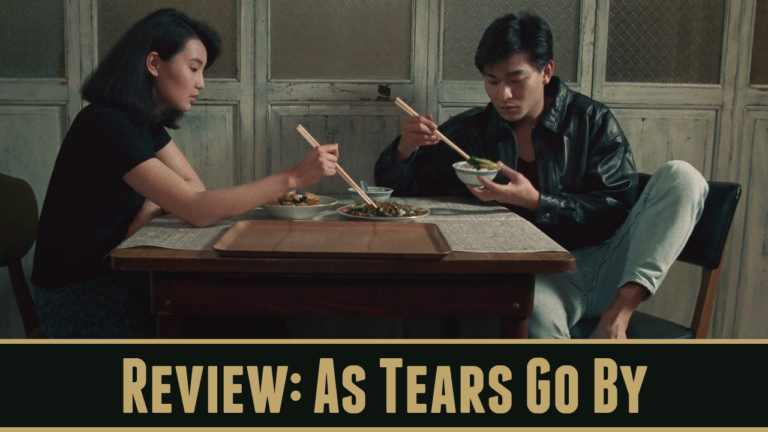
Movie Series Review: As Tears Go By

On this episode, Ryan and Jay begin our Wong Kar-wai Movie Series with his 1988 debut film As Tears Go By!

Review: As Tears Go By (8:30)
Director: Wong Kar-wai
Writers: Jeffrey Lau, Wong Kar-wai
Stars: Andy Lau, Maggie Cheung, Jacky Cheung

Subscribe to our Podcasts RSS
Subscribe to our Podcasts on iTunes
Listen on Spotify
Listen on Stitcher
InSession Film Podcast – As Tears Go By