Home Blog Page 124

Women InSession: Critic Spotlight – Amy Thomasson

This week on Women InSession, we thought it would be fun to create a series where we spotlight various critics, get to know them and their history with cinema, and ultimately what they love about film. And to start, we begin with our very own Amy Thomasson!

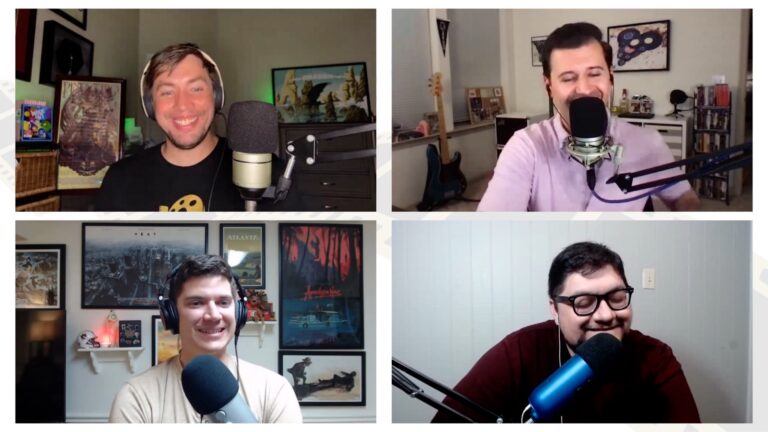
Panel: Kristin Battestella, Zita Short, Amy Thomasson

On that note, check out this week’s show and let us know what you think in the comment section. Thanks for listening and for supporting the InSession Film Podcast!

Subscribe to our Podcasts RSS
Subscribe to our Podcasts on iTunes
Listen on Spotify
Listen on Stitcher
Women InSession – Episode 45

To hear this Extra Film episode and everything else we do, download our apps on the Amazon Market for Android and the Podcast Source app on IOS devices. The mobile app covers all of our main shows, bonus podcasts and everything else relating to the InSession Film Podcast. Thanks for your wonderful support and for listening to our show. It means the world to us.

Movie Review: ‘Joy Ride’ is the Funniest Comedy of the Year


Director: Adele Lim
Writers: Cherry Chevapravatdumrong, Teresa Hsiao
Stars: Ashley Park, Sherry Cola, Stephanie Hsu, Sabrina Wu

Synopsis: Follows four Asian-American friends as they bond and discover the truth of what it means to know and love who you are, while they travel through Asia in search of one of their birth mothers.


With Jennifer Lawrence bringing the capital “R” back to “raunchy” in No Hard Feelings, coming out this Friday, this summer promises to be the return of the female R-rated driven comedy. That’s because the year’s funniest comedy comes only a few weeks later: Adele Lim’s Joy Ride! An uproarious, gut-busting, laugh-out-loud comedy that knows how to push the envelope of a conventional road trip comedy to its limits. Then, somewhat unexpectedly, locating a poignant theme of identity in the middle of such wild debauchery to tie everything together.

The story follows Audrey (Ashley Park), a kick-ass lawyer crushing the competition in a middle-aged white man’s world. Audrey has racked up over 3,000 billable hours, a statistic important in her uber politically correct sensitive boss (Timothy Simmons), who thinks a promotion is in order, which means a move to Los Angeles. A goal and career-oriented professional, a career move of this magnitude has always been her dream. The problem is Audrey doesn’t know how to tell Lolo (Sherry Cola), a free spirit and emerging “positive body image artist” (which amounts to creating miniature playground equipment in the shape of male and female sexual organs), who happens to be her best friend since they were in grade school, bonded by their Chinese heritage.

However, Audrey was adopted by Caucasian parents and has never learned to speak fluent Chinese or Mandarin. So, to close a deal on the business trip that will seal her promotion, Audrey brings Lolo along to be her translator. Everything seems to be going to plan until Lolo drops the news that she’s bringing her anomalous cousin, “Deadeye” (Sabrina Wu), a chronically online socially awkward BTS-head who joins them on their adventure. Along with the help of Audrey’s college roommate, Kate (Stephanie Hsu), a streaming soap star who doubles as a hot mess of a born-again Christian, tags along to charm Audrey’s potential new clients. Unfortunately, the potential clients refuse to sign on the dotted line because Audrey is unaware of where she comes from. The group then embarks on a road trip to locate Audrey’s birth mother and search for the identity that was left behind for her.

Joy Ride is Lim’s first feature film behind the camera, after writing the screenplays of such wonderful films as Crazy Rich Asians and the animated movie Raya and the Last Dragon. Here, scribes Cherry Chevapravatdumrong (Awkwafina Is Nora from Queens) and Teresa Hsiao (Fresh Off the Boat) work with her story treatment to create one of the year’s funniest films. I’m not sure we’ve seen a film push the envelope this far without tearing it apart since the Farrelly brothers’ comedies of the ’90s. The script is an eccentric mix of hard R-rated (Lolo), nonsensical (Wu), and even some cringe (Hsu) comedy concepts that blend famously. Including an eye-opening, jaw-dropping, raunchy comedic sex scene(s) involving all the characters that will go down as one of the raciest yet most hilarious in movie history.

While the writing is very funny and instigates some genuine belly laughs, those lines and gags are brought to life by a fantastic cast. For me, the film’s best jokes come from the amusing Wu, whose naรฏve, oddball, yet empathetic performance has a direct line to my funny bone and even my heart. Hsu, last year’s Academy Award nominee, has the film’s funniest sceneโ€”which brings new meaning to the phrase, “You don’t stare the devil in the eyes and come out without some of his sins”โ€”which will probably elicit more audible gasps than laughs initially. Still, you’ve never seen anything like it. Cola, who you will see later this year in the awkwardly charming Sundance favorite Shortcomings, is Joy Ride’s wildcard yet strangely grounded best friend because she has a self-awareness that’s out of place in the group, never pretending to be anything she’s not.

Then you have Tony Award nominee Ashley Park, who starts as a straight woman, then gets to let loose as the film goes along and does a little bit of everything in the comedy. Iโ€™m not sure just anyone can show the range she has here, delivering the filmโ€™s most poignant moments while making the consumption of pounds of blow, pills, and other drug paraphernalia in the strangest of places to when being unexpected drug mules was thrust upon her, like a legend, but Park doesโ€”as I said, utterly delightful, laugh-out-loud, dirty debauchery.

Finally, at the core of the film is Audrey’s identity. To understand the themes the film touches upon, albeit incredibly briefly at times, you should check out the Amanda Lipitz Netflix documentary Found. That film follows four Chinese girls who were adopted and brought to the United States, embarking on a journey back to China in search of their cultural identity. This encompasses Audrey and is used to drive the story. Not only does it allow very funny situations to continuously top each other, which can obviously be illogical and unbelievable at times, but it also helps give the outrageous comedy an emotional connection that makes at least one of the characters three-dimensional and provides the viewer with something to hang their hat on. Yes, the film has heart, but let’s make no mistake, Joy Ride is the best R-rated comedy since, well, No Hard Feelings. However, as comedies go, Adele Lim’s road trip movie will have a hard time giving up the “funniest film of the year” accolade stamp that most critics and fans will indeed embrace. Even when some of the jokes do not work, Joy Ride unapologetically goes beyond the limits of your typical comedy, uninhibited and without regrets.

Grade: A-

Poll: What is your favorite film of 2023 so far?

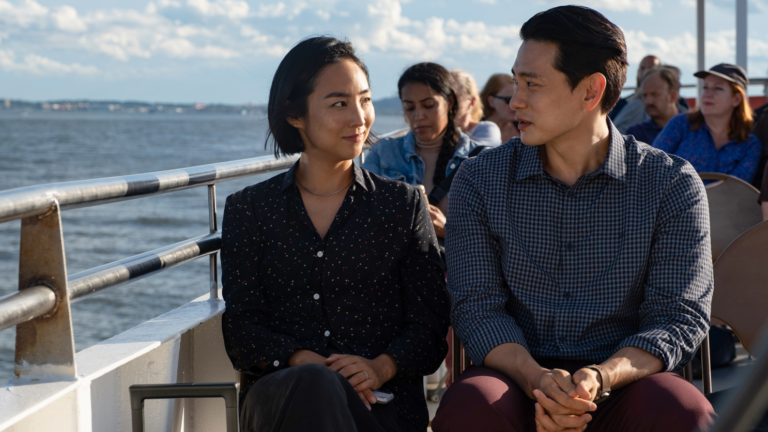
It’s that time of the year. We’re at the mid-way point and it’s been an interesting year for cinema so far. There have been some unexpected duds, some big time surprises and of course a few gems that will no doubt make it to the end of the year. We’ll talk about them all on the podcast this weekend, but for our poll, we wanted to ask you for your favorite of the year at this point. Are you a Past Lives stan? Perhaps a champion for Across the Spider-Verse? Hell, maybe you’re in the basket for John Wick: Chapter 4. Either way, be sure to vote and let us know!

With that said, what is your favorite film of 2023 so far?


Criterion Releases: July 2023

Welcome to the dog days of summer, passing through another independence day, and a new batch of hot releases via the Criterion Collection. The only film is a re-release, a French New Wave staple, while Martin Scorsese gets another film of his on the C shelf and two independent 90s flicks get their due. On top of that, a collection of B-Westerns in the 1950s come out that were as cinematic as any John Ford-John Wayne film made in the same era and remain a hidden part of the genre. Here are the films coming out this July. 

The Ranown Westerns: Five Films Directed by Budd Boetticher (1957-1960)

A series of low-budget westerns from Boetticher would finally be his breakthrough in a long career going back to the 1930s. Collaborating on films with actor Randolph Scott and writer Burt Kennedy, the Ranown Cycle is actually a total of seven films, but only these five are part of the collection. The Tall T, Decision At Sundown, Buchanan Rides Alone, Ride Lonesome, and Comanche Station are all connected through storylines of greed, allegiance, quiet motives, and the thin line of morality. Other notables that took part include Maureen Oโ€™Sullivan, Lee Van Cleef, and James Coburn, who made his film debut in Ride Lonesome. 

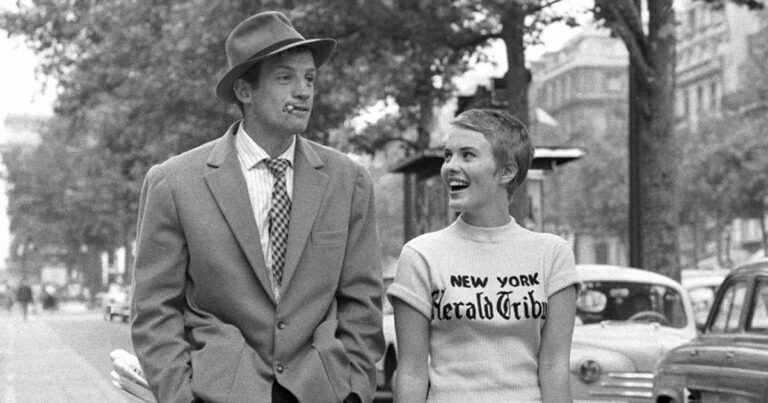
Breathless (1960)

Jean-Luc Godard joined his friend, Francois Truffaut, in establishing the phenomenon that was the New Wave on screen with this frolicking crime story of a wanna be gangster (Jean-Paul Belmondo) who kills a police officer and goes into hiding with his lover (Jean Seberg). The jump cuts, the jazz score, the radical film techniques to make this film; it wasnโ€™t a wave, but a tsunami of change that permanently put Godardโ€™s name in film history and built up a new sea of French directorial talent that would follow after.

After Hours (1985)

A film in the middle of Scorseseโ€™s resume is this dark comedy starring Griffin Dunne who goes on a whim to hook up with a woman (Rosanna Arquette) and travels New York Cityโ€™s bizarre underworld. Wanting to get home, he finds himself trapped from escaping due to mistaken identity and finds SoHo as rooms of unique characters. Comic duo Tommy Chong & Cheech Marin, plus Linda Fiorentino, Teri Garr, and Catherine Oโ€™Hara also star in a modern Scorsese story of New Yorkโ€™s business life and a move from conformism to surrealism.

One False Move (1992)

Carl Franklinโ€™s noir follows two drug runners who scramble away from a killing scene in LA and drive eastward to Arkansas where a police chief is aware of their activities because of a woman that is connected between the two. Bill Paxton, Billy Bob Thornton (who co-wrote it), Cynda Williams, and Michael Beach star in this cross-country drive that has no boundaries and delivers a shocking secret that wraps all of them together. It came close to going straight-to-video, but enough acclaim from film festivals got it a theatrical release, and now, it is here.

The Watermelon Woman (1996)

An important point in the unwrapping of queer cinema, Cheryl Dunne wrote, directed, and starred in this comedy of identity and discovery. An aspiring filmmaker works on a documentary about an unknown Black actress whose life parallels hers as a lesbian who begins dating a white girl (Guinevere Turner). Learning more about the titular character also means delving into Hollywoodโ€™s history with Black women in the racist stereotypical mammy roles and representing gay characters. With only $300,000 to make this film, Dunneโ€™s exploration into a subject that had never been told before is an incredible discovery and one that needs to be portrayed more.

Follow me on Twitter: @brian_cine (Cine-A-Man)

Podcast: The Current State of Cinema – Episode 540

This weekโ€™s episode is brought to you by Koffee Kult. Get 15% off with the code: ISF

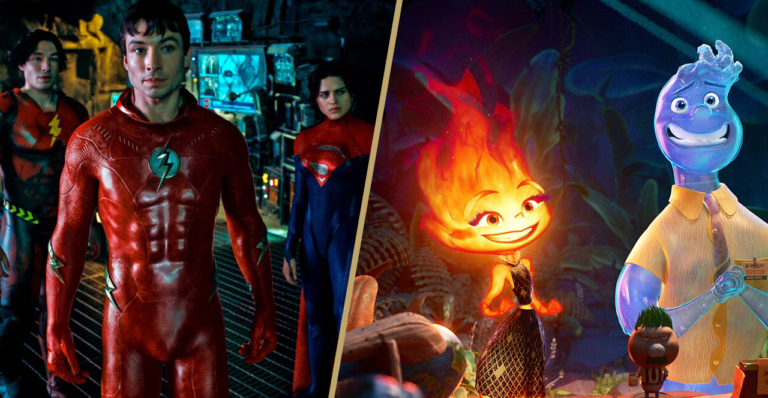
This week on the InSession Film Podcast, we discuss the current state of cinema in the wake of Pixar and The Flash underperforming severely at the box office. There’s also the news surrounding TCM and Warner Bros. doing everything in their power to destroy themselves. But we end the show on a happy note by discussing our rankings of the Andersons – Paul Thomas and Wes!

On that note, check out this week’s show and let us know what you think in the comment section. Thanks for listening and for supporting the InSession Film Podcast!

– Current State of Cinema: Part 1 (7:20)
In this segment, we focus our attention to TCM and the importance of preserving film history. We also talk about Pixar’s recent failures and what may be the cause of this rut they find themselves in at the moment regarding box office success.


RELATED: Listen to Episode 516 of the InSession Film Podcast where we discussed our Top 10 Movies of 2022!


– Current State of Cinema: Part 2 (53:45)
In this segment, we turn our attention to the world of superhero movies and the big action blockbusters we get these days, and why movies like The Flash, Black Adam and Transformers: Rise of the Beasts, among others, are severly underperforming compared to expectations.

– Andersons Rankings (1:36:00)
We end the show by talking about two great filmmakers and our rankings of both Paul Thomas Anderson and Wes Anderson.

Show Sponsor: First Time Watchers Podcast

– Music
Moonrise Kingdom – Alexandre Desplat
Canto at Gabelmeister’s Peak – Alexandre Desplat

Subscribe to our Podcasts RSS
Subscribe to our Podcasts on iTunes
Listen on Spotify
Listen on Stitcher
InSession Film Podcast – Episode 538

Next week on the show:

Best Movies of 2023 So Far

Help Support The InSession Film Podcast

If you want to help support us, there are several ways you can help us and we’d absolutely appreciate it. Every penny goes directly back into supporting the show and we are truly honored and grateful. Thanks for your support and for listening to the InSession Film Podcast!

VISIT OUR DONATE PAGE HERE

Movie Review: ‘Run Rabbit Run’ is Standard Horror Fare


Director: Daina Reid
Writer: Hannah Kent
Stars: Sarah Snook, Greta Scacchi, Damon Herriman

Synopsis: Sarah Snook plays a fertility doctor who believes firmly in life and death, but after noticing the strange behavior of her young daughter, must challenge her own values and confront a ghost from her past.


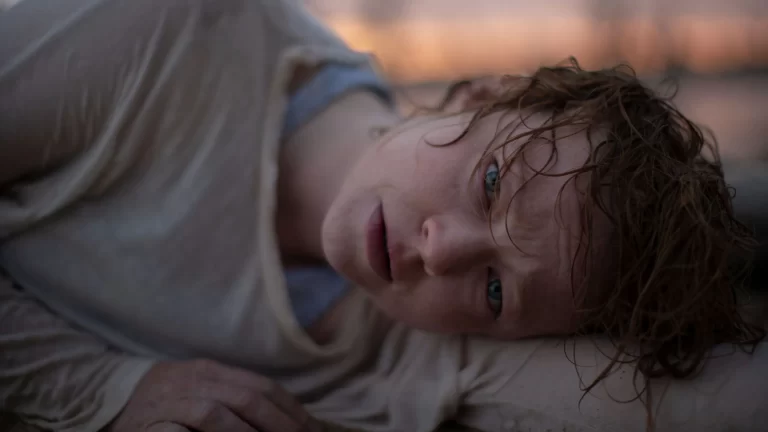
The new Netflix psychological horror thriller, Run Rabbit Run, conquers the genre if you want to judge the film solely as a visual medium. Cinematographer Bonnie Elliott successfully builds enough tension and horror goodness by incorporating a wide range of subjective camera shots, from extreme close-ups to an effective wide-angle tracking shot over the desolate Australian landscape, causing the viewer to feel uneasy about where the story is heading as it progresses. However, novelist Hannah Kent’s script relies too heavily on standard horror tropes that are repetitive, which are practically the same scenes. The result is the cinematic equivalent of knocking your head against a wall, expecting a different result.

Run Rabbit Run follows a single mother named Sarah (Sarah Snook), an obstetrician who is co-parenting her daughter Mia (Lily LaTorre) with her ex-husband, Peter (Damon Herriman). Mia is a precocious child who has started to take an interest in her family and its traumatic history. Much of that has to do with Sarah’s mother, Joan (Greta Scacchi), who has been suffering from dementia for years now. From the viewer’s standpoint, we know very little about Sarah’s past, which is where Kent’s script excels, by releasing tiny reveals, like a good mystery thriller, of the happenings that lead to their family’s dark backstory. As the film makes headway, Mia begins to refer to herself as Alice, Sarah’s younger sister who went missing when she was a small child.

Sarah has never discussed her family trauma with her “Bunny,” a pet name her parents gave Mia. How is this possible? Sarah begins to wonder if her ex-husband is telling Mia about her past as some power play or if Sarah is talking in her sleep. Either way, her adorable little girl develops a case of oppositional defiant disorder seemingly out of nowhere, frequently becoming uncooperative, rebellious, and hostile toward her mother as she continues to stake her claim as her motherโ€™s lost sister. Mia’s teachers even become concerned, saying the child’s extreme anxiety leads to her gothic and morbid drawings on the back of her school assignments.

Daina Reid knows something about psychological horror, having received a 2019 Emmy nomination for Outstanding Directing for a Drama Series for her work on The Handmaid’s Tale. (Reportedly, Elisabeth Moss was set to star in Reid’s film but backed out because of scheduling conflicts.) Darkly atmospheric, with a chilling score by Mark Bradshaw and Marcus Whale, Run Rabbit Run has all the visual and auditory splendors when it comes to a compelling psychological horror thriller. Also, the obsession with putting a child in danger will naturally lend itself to the viewers easily feeling a sense of dread and uneasiness.

However, while you may think you are in for a psychological horror steeped in imagery, Kent’s script repeatedly begins to use the same scenes of Sarah confronting Mia about knowing family secrets and wanting to be called Alice. This happens at least a half dozen times and is not even used as an effective storytelling tool to reveal new information and advance the story. Every time it happens, Mia puts on her bunny mask, and Snook’s Sarah becomes agitated and accidentally injures her child. The same scenario repeats itself, which becomes monotonous and unpleasant. And by the film’s third act, the reveal is rather apparent, turning it into a generic thriller. Even a secondary reveal that can be seen as abstract is completely illogical since this would be the first place anyone would look at when someone goes missing.

Reid and Kent’s mistake is immersing the viewer in Australian horror themes and symbolism without fine-tuning the story’s plot for errors and varying the scenes involving psychological horror. For instance, the constant appearance of a giant white rabbit holds significance in the land of Down Under, as its introduction has resulted in overgrazing and devastating impacts on the country’s indigenous flora and fauna. The statement about overpopulation seems evident, as humans also contribute to overpopulation. Additionally, Australian gothic themes such as repression, being bound by secrets and lies, the conflict between nature and culture, and even elements of mysticism make appearances. While one can appreciate the filmmakers’ attempt to incorporate unique Australian cultural themes, the overall experience feels like camouflage for a derivative thriller. What Run Rabbit Run is really about is a metaphor for a childโ€™s vicarious trauma, but that point is muddled and not at all brought to the forefront as it should have been.

The film has a small cast, and these are all fairly standard horror performances. I will say Snook’s mental well-being crumbling in front of our eyes is startlingly effective. Yet, by the film’s end, the monotonous, unpleasant repetitiveness goes from a killer creepy yarn to a mundane psychological horror thriller imitation we have seen done better in Australian horror fares like Relic and The Babadook. Run Rabbit Run would have been better off with an increased focus on the family’s dark past and highlighting the vicarious trauma angle to enhance the viewer’s experience and the depth of its themes.

Grade: C-

Women InSession: The Adventures of Priscilla, Queen of the Desert

This week on Women InSession, in celebration of Pride Month, we discuss the Stephan Elliott film The Adventures of Priscilla, Queen of the Desert! This is a film that doesn’t wholly hold up by today’s standards, but in context, it was progressive for its time. We talk about that, its silly antics and what makes it such a special film.

Panel: Kristin Battestella, Amy Thomasson, Dave Giannini

On that note, check out this week’s show and let us know what you think in the comment section. Thanks for listening and for supporting the InSession Film Podcast!

Subscribe to our Podcasts RSS
Subscribe to our Podcasts on iTunes
Listen on Spotify
Listen on Stitcher
Women InSession – Episode 44

To hear this Extra Film episode and everything else we do, download our apps on the Amazon Market for Android and the Podcast Source app on IOS devices. The mobile app covers all of our main shows, bonus podcasts and everything else relating to the InSession Film Podcast. Thanks for your wonderful support and for listening to our show. It means the world to us.

Podcast Review: Asteroid City

On this episode, JD and Brendan discuss Wes Anderson’s latest film Asteroid City! This once again sees an extensive cast and has all of the great Anderson quirks, but it’s equally the most somber and melancholic since The Royal Tenenbaums in 2001. We’re in a new era of Wes, and have a had a great time breaking down what’s so compelling about that.

Review: Asteroid City (3:00)
Director: Wes Anderson
Writers: Wes Anderson
Stars: Jason Schwartzman, Scarlett Johansson, Tom Hanks, Jeffrey Wright

Subscribe to our Podcasts RSS
Subscribe to our Podcasts on iTunes
Listen on Spotify
Listen on Stitcher
InSession Film Podcast – Asteroid City

The Curse Of The Sibling: A Comparison In Separate Careers

I am a huge fan of Succession like many people are and am sad to see it end. The struggle for power among three siblings for their fatherโ€™s media empire, influenced by the Murdoch family at Fox, is one of the most dynamic shows in the last decade that gets in your veins from the start even if you hate all of the characters. I like Cousin Greg; he is a little out there, not totally aware and nervous for his small piece of the pie, but far from being the asshole the others are. Another thing that amazes me is Kieran Culkin, not just because of his role as Roman, but also his career trajectory compared to his older brother, Macaulay. He was the ultimate child star thanks to Home Alone, and while he still has a good career as an adult, Kieran has shot past him. 

There are many siblings as such, some being serious rivalries. Some have successfully worked together like Joel & Ethan Coen, the Dardenne Brothers, the Weinsteins (actually, forget them), and the Marx brothers. Others work separately – and those who just flat-out hate each other like Liam and Noel Gallagher. Then, there are those where one sibling is way more successful than the other, but there is zero envy with any of it. Frank Stallone is not complaining about what his brother Sylvester has been doing. And then, there are these other siblings.

Olivia de Haviland & Joan Fontaine

One of the most bitter sibling rivalries in Hollywood, the always strained relationship stemmed back to childhood when Joan resented her mother for always preferring her older sister Olivia as the favorite. When Joan got into the acting business after Olivia, she was told she couldnโ€™t use her legal surname, so she used her motherโ€™s. When both were nominated for Best Actress at the Oscars in 1942, it was Joan who won for Suspicion, and going to the stage, Joan snubbed Oliviaโ€™s hand in congratulations. When Joan approached Olivia after her own Oscar win in 1947 for To Each His Own, Olivia returned the favor and ignored her. 

The final straw was in 1975 following their motherโ€™s death; Joan was on stage touring and claimed Olivia never informed her, while Olivia claimed she sent a telegram but was told Joan wouldnโ€™t be able to make it. Years later, when the sisters were invited to the same Oscars ceremony, someone had booked their hotel rooms next to each other and Joan was able to switch to another floor. Joan lived and died in California in 2013, while Olivia lived for decades in Paris until her passing in 2020, aged 104. 

Boris & David & Mikhail Kaufman

All three brothers from the former Soviet Union studied movies in the 1920s and would go on to play separate parts in the path of cinema. David was the oldest; he is widely known in film history as Dziga Vertov after he Russianized his name following the October Revolution of 1917. He would make movies for the pro-Communist side in that countryโ€™s civil war and experiment with various techniques in his mini-series known as Kino-Pravda, or โ€œfilm truth.โ€ But it was his 1929 avant-garde documentary Man With A Movie Camera that made him a permanent influence for generations after, the film was listed as the greatest documentary ever in Sight & Soundโ€™s Greatest Documentaries poll in 2014.

Vertov would spend his whole life in Russia, making movies through the 1930s before making way for younger directors and editing film magazines. Meanwhile, his younger brotherโ€™s career continued. Mikhail would be Vertovโ€™s main cameraman for all of his film shorts, plus Movie Camera until a falling out between the two ended the professional relationship. The separation allowed Mikhail to make his movies and work in the Soviet film system, running different studios throughout the whole nation until his retirement in the 1970s. While he and his older brother were confined to Russia, the youngest brother would leave for France.

Boris sought to be even more independent and get away from the troublesome Eastern side of the continent. In his twenties, Boris met Jean Vigo, a major figure in French cinema even after just making four features in his lifetime, all of them shot by Boris. It allowed him to work with other French directors in the 1930s before World War II forced him to flee to North America. He was still making shorts and documentaries when Elia Kazan, preparing to shoot On The Waterfront, hired Boris because of his knowledge of on-location work which Kazan sought to replicate. 

It resulted in an Oscar for Best Cinematography and a second nomination for Baby Doll. Boris then collaborated with director Sidney Lumet on seven features, including 12 Angry Men, The Fugitive Kind, and The Pawnbroker. He would shoot another film for Kazan, Splendor In The Grass, and work with Jules Dassin, George Roy Hill, and Otto Preminger before retiring in 1970. Boris died a few months after Mikhail died in 1980, but his work remains the more notable of the three thanks to his move to New York and the exposure to working with some of Hollywoodโ€™s best directors. 

Herman J. & Joseph L. Mankiewicz 

There wasnโ€™t a rivalry here and both had successful careers, but the younger brother had a little more success than the older one. Herman was the oldest and is widely known for co-writing Citizen Kane with Orson Welles, winning an Oscar. The story of how that project came to be was later portrayed in David Fincherโ€™s Mank, written by his father, Jack Fincher. Herman wrote many screenplays, credited or not, including The Last Command, The Wizard Of Oz, and The Pride Of The Yankees. He sadly died in 1953 from complications of alcoholism while Joseph was one of the biggest writers/directors in Hollywood.  

After success as a producer with MGM, Joseph went to 20th Century Fox to move into the directorโ€™s chair. With head Darryl F. Zanuck as producer, Joseph would write and direct A Letter To Three Wives and All About Eve, giving him consecutive Oscars for both Adapted Screenplay and Director, 4 Oscars in two years, while Eve went on to win Best Picture. He continued to have success as an independent with Julius Caesar, The Barefoot Contessa, and his final directorial effort, Sleuth. In the middle of it, Joseph took over the wallet-burning Fox production Cleopatra. He took the job because of the massive offer from Zanuck but came to regret it because of the financial loss it suffered, nearly ending his career. 

Emilio Estevez & Charlie Sheen

The sons of actor Martin Sheen, both at times came together on projects while their personal lives were different. Charlie made his breakthrough in Oliver Stoneโ€™s Platoon and Wall Street (the latter co-starring his dad) and later transitioned to TV success with Spin City and Two And A Half Men. Post-firing from Men has been very much covered in the press, from his turbulent relationships to his use of drugs, and then his stunning announcement that he tested positive for HIV after being extorted multiple times to keep it private. 

Emilio, his older brother, was part of the Brat Pack in the 1980s thanks to his performances in The Outsiders, The Breakfast Club, and St. Elmoโ€™s Fire. He also went behind the camera starting with the 1986 crime drama Wisdom when he was only 24 years old. He would direct several TV shows and movies, including teaming up with Charlie in Rated X, where they played a pair of real-life porn-producing brothers. He would also direct his father in 2010s The Way, and recently reprised his role as Gordon Bombay in the TV sequel to the famous Mighty Ducks franchise he starred in.

Warner Brothers

I wrote an article about these four brothers and how they went from a united front to a civil war where one brother, whose own Succession story is fascinating, came out with full control. Albert, Jack, Harry, and Sam all formed their first distribution company in the 1900s in Pittsburgh where they hailed from before moving to Los Angeles. On April 4, 1923, Warner Bros. Inc. began and remains 100 years later a major studio in Hollywood. To make a major challenge to their competitors, they pioneered making movies with sound, resulting in The Jazz Singer in 1927, changing movies forever. It was a bittersweet moment, however; Sam died unexpectedly the day before the filmโ€™s release.

Jack, the youngest of the four, took full control as head of production left void by Sam, causing friction with his two surviving brothers. His leadership style brought admiration and disgust to many, especially Albert and Harry who saw their brotherโ€™s actions costing them money. In 1956, the three men put the studio on the market, but Jack established a syndicate where he bought back all the stock once they sold them on having virtual sole control of the studio. Albert and Harry never spoke to their brother again and Jack never attended their funerals, outliving them both and retiring in the mid-1970s. 

Follow me on Twitter: @brian_cine (Cine-A-Man)

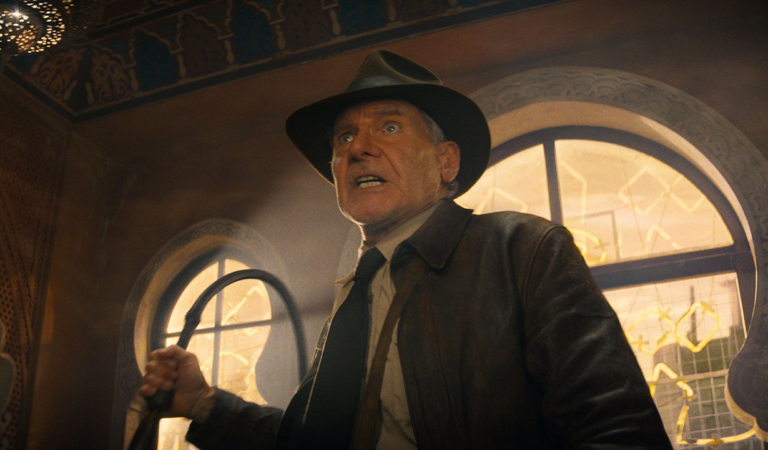
Video Review: Indiana Jones and the Dial of Destiny

Watch as JD reviews James Mangold’s latest film Indiana Jones and the Dial of Destiny, starring the great Harrison Ford, Phoebe Waller-Bridge and Mads Mikkelsen!

Movie Review: ‘No Hard Feelings’ Is An Escape From Reality


Director: Gene Stupnitsky
Writers: Gene Stupnitsky and John Phillips
Stars: Jennifer Lawrence, Andrew Barth Feldman, Laura Benanti

Synopsis: On the brink of losing her home, Maddie finds an intriguing job listing: helicopter parents looking for someone to bring their introverted 19-year-old son out of his shell before college. She has one summer to make him a man or die trying.


At first glance, rom-coms appear to have a lack of depth, and can either be a huge hit or miss. Often, they succumb to clichรฉs and contrived drama, easily avoidable conflicts. However, occasionally, they manage to transcend these shortcomings and offer something truly unique and profound. Typically, their plots are straightforward, their tone light-hearted, and they make for enjoyable and effortless viewing. The new raunchy rom-com, No Hard Feelings, starring Jennifer Lawrence, falls into the category of an easy and mindless first watch. While the initial jokes are amusing, the film gradually loses its charm when subjected to deeper contemplation. The overall tone lacks consistency, the characters and conflicts feel forced and artificial, and the general plot veers uncomfortably close to being predatory.

Maddie (Lawrence) works as an Uber driver and a bartender, struggling to make ends meet as the cost of living skyrockets due to her hometown’s newfound status as a summer vacation spot for the ultra-wealthy. Desperate for a car after hers is repossessed, she decides to respond to a Craigslist ad from two helicopter parents who are seeking someone to help their son come out of his shell. The premise seems unnecessarily convoluted, and itโ€™s never made clear why exactly she canโ€™t make ends meet. The film attempts to address themes like gentrification and wealth, but it fails to provide substantial commentary on these topics. Instead, it relies on contrived and overly complicated plot developments solely for the sake of advancing the storyline, a pattern that persists throughout the film.

Following their initial encounter, Maddie and Percy (Andrew Barth Feldman) couldn’t be more different from each other. Maddie embraces her true self without apologies but is surprisingly afraid of commitment, even refusing to leave her hometown due to fear. Percy, on the other hand, is painfully awkward, barely venturing outside his room after a traumatic bullying incident in high school. He becomes deeply attached to anyone he connects with, including Maddie. These character types may seem familiar, and if you’ve read the plot synopsis, you can probably anticipate where the film is heading as you become acquainted with the characters and their situation. While the comedy provides solid support, the predictability of numerous plot points diminishes its uniqueness over time.

The film heavily relies on the initial contrast between its two main characters to generate upfront comedy. With Maddie, an experienced and assertive individual, attempting to seduce the shy and socially awkward Percy, there are plenty of humorous moments as they interact and get to know each other. However, this dynamic often goes a step too far, with Maddie becoming overly aggressive in her pursuit of Percy. While he may find her attractive, it’s clear that he is uncomfortable with her advances. This undermines the film’s purpose of helping Percy integrate into society, as Maddie seems oblivious to the social cues he is giving. It gives the impression that only through sex can one feel comfortable and confident enough to make friends and expand their social circle.

Additionally, the decision to create a 13-year age difference between the characters further compounds the issue. Jennifer Lawrence, known for portraying characters older than her actual age (such as playing a 35-year-old single mom in Joy at the age of 25), does not appear “old” at her current age of 32. The ad that Maddie responds to specifically requests someone in their early to mid-20s, and she answers it at the age of 32. It’s puzzling why the film couldn’t have asked for someone in their early 20s and made Lawrence’s character closer to her mid-20s. This adjustment would significantly reduce the predatory undertones of the age gap and enhance the humor of the “old” jokes throughout the film, knowing that her character is actually quite young.

The true saving grace of this film, despite its numerous flaws, lies in the undeniable chemistry between Lawrence and Feldman. Their dedication to comedy shines through, keeping the movie afloat. As they develop a deeper connection throughout the story, it becomes genuinely heartwarming to witness. Despite the predictable nature of their individual character arcs, it remains captivating to explore the reasons behind their current personas and see how they mutually facilitate personal growth. It is truly rewarding to witness the positive impact they have on each other’s lives.

No Hard Feelings is a perfect option for a mindless and enjoyable date night or a feel-good movie experience. Whether you choose to see it in the theater or wait for its release on streaming platforms, it can be just as effective as a cozy home viewing with snacks and a blanket, offering an easy escape from reality. However, beyond the strong performances by Lawrence and Feldman, the film falls short and might leave audiences slightly disappointed when it comes to any further depth or thought-provoking elements.

Grade: C+

Podcast Review: Elemental

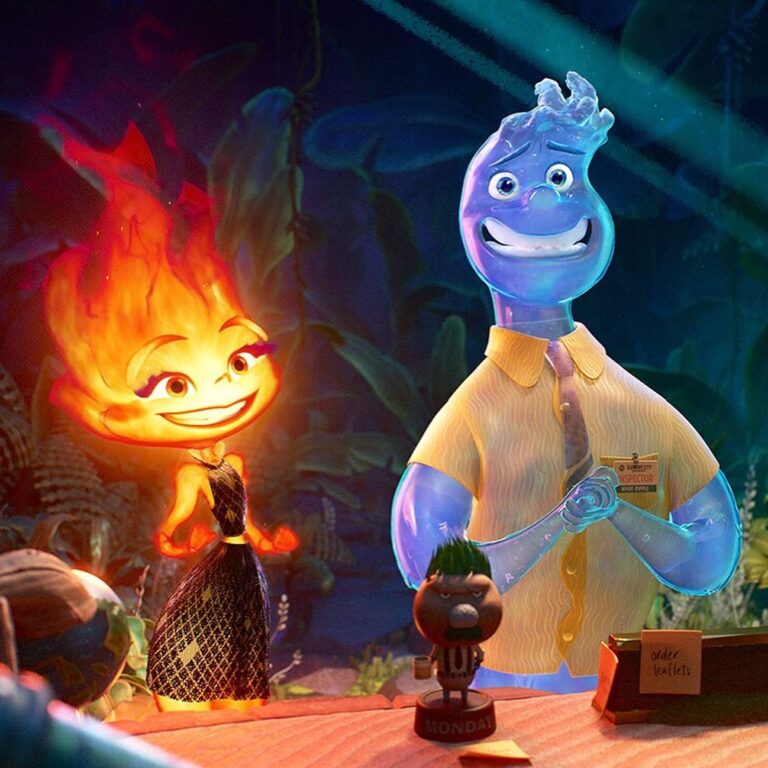
On this episode, JD and Brendan discuss Pixar’s latest film Elemental! Pixar’s run from 1995 – 2010 is unprecedented, and it’s understandable that they wouldn’t be able to maintain that same pace. Since Toy Story 3, it’s fair to say that things have been more uneven, but Elemental is one of those movies that brings them closer to being what we expect from Pixar.

Review: Elemental (3:00)
Director: Peter Sohn
Writers: John Hoberg, Kat Likkel, Brenda Hsueh
Stars: Leah Lewis, Mamoudou Athie, Ronnie del Carmen

Subscribe to our Podcasts RSS
Subscribe to our Podcasts on iTunes
Listen on Spotify
Listen on Stitcher
InSession Film Podcast – Elemental

Movie Review: ‘Extraction 2’ is a Massive Improvement


Director: Sam Hargrave
Writers: Joe Russo
Stars: Chris Hemsworth, Golshifteh Farahani, Olga Kurylenko

Synopsis: After barely surviving his grievous wounds from his mission in Dhaka, Bangladesh, Tyler Rake is back, and his team is ready to take on their next mission.


I didnโ€™t care for the first Extraction. Apart from a sleekly constructed oner that occurred near the filmโ€™s beginning, the movie re-treads a dull (and problematic) white savior story shot with the racist piss-yellow filter that I thought Hollywood didnโ€™t use anymore. However, the movie was a COVID-19 hit for Netflix, and a sequel was almost immediately greenlit. I was convinced it would be the same old stuff when Extraction 2 opened with yet another scene with Tyler Rake (Chris Hemsworth) in Bangladesh, with that yellow filter plastered all over the frame. 

But that doesnโ€™t last long, with Rake being rushed to a hospital in Austria and forced to retire after the first film’s events. Rakeโ€™s retirement also doesnโ€™t last long, as he is visited by an unnamed man (Idris Elba) who tells him that his ex-wifeโ€™s (Olga Kurylenko) sister (Tinatin Dalakishvili) is imprisoned in a Georgian prison cell. Rake arrives with Nik (Golshifteh Farahani) and Yaz (Adam Bessa) to help out, andโ€ฆitโ€™s not that simple of an extraction. Ketevanโ€™s (Dalakishvili) husband (Tornike Bziava) is waiting for Rake to arrive, whilst her son, Sandro (Andro Japardize), communicates with his uncle (Tornike Gogrichiani), who leads a ruthless criminal organization. 

This leads into the filmโ€™s first action sequence, which is an unbroken one-take that goes from the prison walls to the prison courtyard, then leads into an insane car chase in the woods with bikers trying to blow up Rake and Nikโ€™s cars, which then finishes on a moving train, with Rake trying to fight off a helicopter with a minigun, while Nik tries to keep the train going but has to face off with enemies of her own. At some point, Rakeโ€™s fist catches fire, and he starts punching dudes left and right with it until it extinguishes itself as he punches more people. Yes, some will criticize that itโ€™s not a truly โ€œunbrokenโ€ cut and that the digital cuts are quite obvious. However, when the craft is so strong, from its masterful camerawork, which logically follows each respective character and switches to multiple perspectives throughout the scenes naturally, and its staggering stuntwork, thereโ€™s no shortage of moments where youโ€™re likely to slap your seat in utter excitement, having witnessed an action sequence for the ages. 

In that twenty-one-minute scene, thereโ€™s so much your brain canโ€™t process that you will immediately suspend your disbelief and enjoy the ride. Hargrave and cinematographer Greg Baldi pull no punches in crafting a mind-melting, maximalist action setpiece that will surely be in your top five of the year. Itโ€™s not an issue that the digital cuts are obvious since itโ€™s likely impossible to craft a setpiece like this in one continuous take. Hargrave understands this and knows the audience understands it too. But he doesnโ€™t care โ€” he makes you believe the impossible is possible and crafts four terrific action scenes in one. 

The thrills continue with a sequence inside a cramped apartment room. And while it isnโ€™t as sleek as the filmโ€™s main attraction, it has its fair share of moments in which Rake creatively uses the environment around him to defeat a slew of infinite (yet amazingly disposable) villains. Hemsworth is in top form as Rake and will perhaps be remembered as a bigger action star in films of the Extraction franchise than in his tenure as Thor in the MCU. He is a fully-fledged action star, giving his own spin to the โ€œSad Action Hero canon.โ€ He gives a far deeper performance here than in the original, particularly in scenes where he recalls the last time he saw his late son and with his ex-wife, wonderfully portrayed by Olga Kurylenko. 

However, the show-stealer of Extraction 2 is Golshifteh Farahani, whose arc greatly expands from the first and is a major part of the action. Granted, she was heavily involved in the first filmโ€™s climax. However, in Extraction 2, she outshines Hemsworth on several occasions, particularly during specific moments in the filmโ€™s core action sequences, from the engine car fight to the rooftop shootout and culminating in a John Woo-esque gun duel between Nik and Zurab in a chapel. Farahani is a bonafide action star and is one of the very best parts of the movie. 
If Extraction 2 had a compelling plot, it likely would be as good as John Wick: Chapter 4. But the film ultimately fails at crafting a compelling antagonist that isnโ€™t riddled with stereotypes and clichรฉs,  just like Sandroโ€™s arc has been done one too many times before not to feel predictable. However, one will seemingly forget its flaws and think theyโ€™re minor nitpicks since the audience has clicked on Extraction 2 to see Hemsworth kicking ass in more ways than one. In that regard, the movie delivers and is one of the year’s best and most inventive action pictures. Itโ€™s a damn shame that Netflix didnโ€™t release it in every cinema possible, but hereโ€™s hoping the third one gets the IMAX treatment. Iโ€™ll be there on day one.

Grade: A

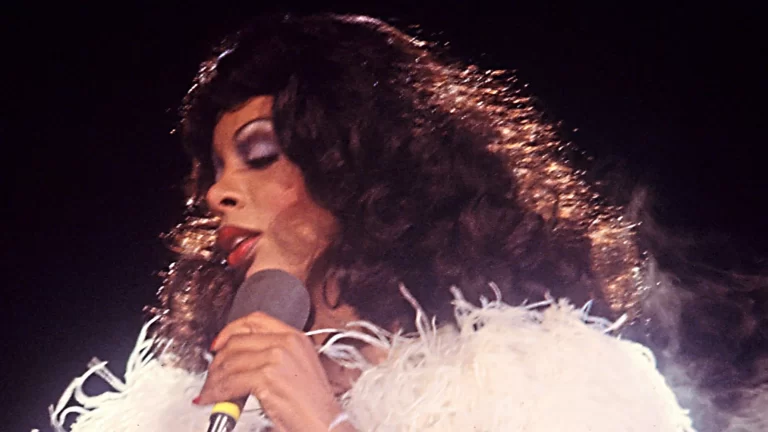
Movie Review: ‘Love To Love You, Donna Summer’ Covers New Ground


Director: Brooklyn Sudano and Roger Ross Williams
Stars: Michael McKean, Barbra Streisand, Brooklyn Sudano

Synopsis: Follows the life of iconic singer Donna Summer.


These days, itโ€™s easy to forget that there was a time when it wasnโ€™t socially acceptable to take disco music seriously. It was seen as a vulgar, trashy genre that lacked depth and sophistication. Even pioneers of the genre, such as Giorgio Moroder and Wally Holmes, were dismissed as coke-snorting party animals who indulged in mindless pleasure. The divas who served as the public face of the genre had an even more difficult time gaining respect from audiophiles and critics. Over the years, efforts have been made to rehabilitate the reputation of the genre but there is still a lingering sense, in some circles, that it was a frivolous fad that should be left in the past. 

No one seems more primed for a critical re-evaluation than Donna Summer, who was one of the most commercially successful recording artists of the 1970s. In addition to delighting audiences with her brassy stage persona, Summer recorded some of the most innovative songs of the 1970s. โ€œI Feel Loveโ€ and โ€œLove to Love You Babyโ€ signaled the fact that the Moog synthesizer could be employed to create a futuristic, otherworldly soundscape that made club-goers want to get up and dance. She also became a prominent gay icon, who projected an air of breezy sexuality that stood in stark contrast to the brand of prim conservatism that had been typically associated with pop singers. She managed to personify a very specific time in American history and her large body of work has served as a major influence on modern dance music. 

For the most part, Love to Love You, Donna Summer (2023) serves to elevate Summerโ€™s position in the canon of American popular music. This approach serves the documentaryโ€™s subject well, as it manages to set itself apart from the likes of Miss Americana (2020) and Angรจle (2021). Those were intimate exposรฉs that devoted a considerable amount of their running times to exploring the personal lives of their subjects. This documentary has an unusually strong sociopolitical dimension that regularly comes to the fore. There are times when it even begins to feel like an editorial on the mistreatment of women of color in an industry that is largely dominated by white men. I say this as a compliment, as it has become increasingly difficult to find family-approved bio-docs that are willing to expand their scope beyond the personal. Roger Ross Williams and Brooklyn Sudano endeavor to move beyond the conventions associated with this genre in order to produce something that feels more politically charged. Itโ€™s this unique perspective that provides this documentary with its backbone and prevents it from drifting into bathos. 

Longtime fans will also be given the opportunity to pore over recently unearthed archival footage and in-depth analysis of some of the deeper cuts from Summerโ€™s discography. Itโ€™s nice to hear them play the biggest hits, but it really does count for something when they begin to consider the later stages of her career. Like so many stars who created an iconic stage persona, Summer was forced to reinvent herself in the years following the disco boom. The backlash to the genreโ€™s success was swift and she struggled to avoid being seen as a passรฉ cultural commodity in the early 1980s. This documentary provides us with a window into how the music industry handles these ups and downs and details Summerโ€™s conflicted response to the changes that swept through the disco scene during this period. We get to view her as a canny businesswoman who knows how to play all the right angles for maximum effect. This is a quality that we associate with many pop stars but this documentary is unusually candid in its treatment of this issue. 
If youโ€™re already a dedicated fan of Summer, youโ€™ll walk away from this documentary feeling satisfied. It covers ground that hasnโ€™t been trodden over in the countless biographies that have been written about her and avoids making too many generalizations about her career. More surprisingly, this is a documentary that still presents a certain appeal for those who are not all that familiar with her work. Everybody is interested in the inner workings of an industry that works very hard to project a shadowy, mysterious aura and Love to Love You, Donna Summer gives you a peek behind the curtain. This is more than just a promotional puff piece and for that we can all be glad.

Grade: B

Podcast: Wes Anderson / Big Announcement – Episode 539

This weekโ€™s episode is brought to you by Koffee Kult. Get 15% off with the code: ISF

This week on the InSession Film Podcast, inspired by Asteroid City coming out soon, we discuss the greatness of Wes Anderson and what makes him such a captivating filmmaker. We also end the show with a big announcement and reminiscing on the last five years.

On that note, check out this week’s show and let us know what you think in the comment section. Thanks for listening and for supporting the InSession Film Podcast!

– Wes Anderson Discussion (3:00)
Wes Anderson is such a distinct filmmaker that we have come love over the years. AI can try and mimic him, but there’s only one Wes Anderson and he’s the best at what he does. His visual prowess. His framing. His humor and characters. There’s so much to love about his films and get into the depths of that in this discussion.


RELATED: Listen to Episode 516 of the InSession Film Podcast where we discussed our Top 10 Movies of 2022!


– Big Announcement (1:07:35)
In the back half of the show, we have an announcement to make. It’s bittersweet, but we have a fun time reminiscing and looking back at all the fun we’ve had the last five years.

Show Sponsor: First Time Watchers Podcast

– Music
Moonrise Kingdom – Alexandre Desplat
Canto at Gabelmeister’s Peak – Alexandre Desplat

Subscribe to our Podcasts RSS
Subscribe to our Podcasts on iTunes
Listen on Spotify
Listen on Stitcher
InSession Film Podcast – Episode 538

Next week on the show:

Best Movies of 2023 So Far

Help Support The InSession Film Podcast

If you want to help support us, there are several ways you can help us and we’d absolutely appreciate it. Every penny goes directly back into supporting the show and we are truly honored and grateful. Thanks for your support and for listening to the InSession Film Podcast!

VISIT OUR DONATE PAGE HERE

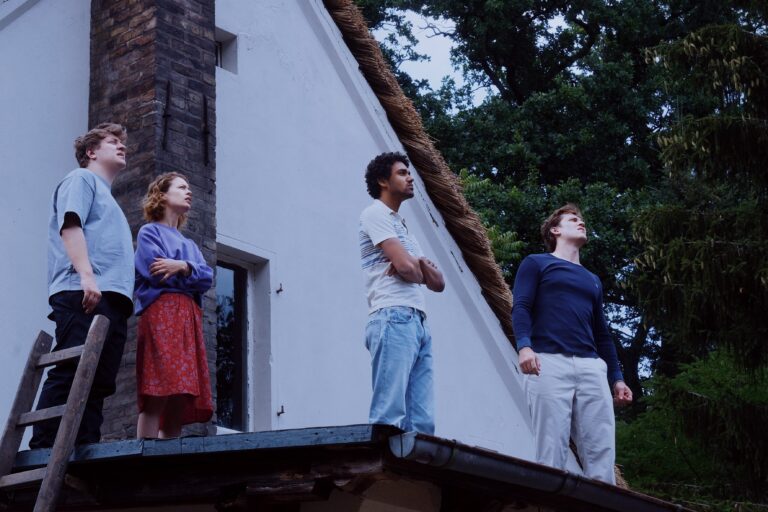
Movie Review (Tribeca Film Festival 2023): โ€˜Afireโ€™ Holds the Audience in a Trance


Director: Christian Petzold
Writers: Christian Petzold
Stars: Thomas Schubert, Paula Beer, Enno Trebs

Synopsis: A group of friends in a holiday home by the Baltic Sea where emotions run high as the parched forest around them catches fire.


Christian Petzold is a chameleonic director, though not in the sense that people might expect when a person is described with such an adjective. The German filmmaker has been able to dwell within several genres โ€“ neo-noir (Jerichow), thriller (Something to Remind Me), heist (Cuba Libre), horror (Yella) โ€“ without losing touch on his central theme, addressing current social predicaments in Germany. Although some of his DFFB (German Film and Television Academy Berlin GmbH) contemporaries, Angela Schanelec and Thomas Arslan, also tackle that topic in fascinating ways, none do so to the same effect as Petzold. The way he translates and expresses his ideas through images holds his contemporary dispositions within a classicist glance, learning from old forms and stories to bring life to newer ones. It is admirable what he has been able to achieve throughout the years. With each decade that passes, Petzold demonstrates new mechanisms and techniques inspired by legendary auteurs โ€“ his form keeps aging like fine wine. 

Most recently, Christian Petzold has been doing a series of films centered around elemental and fantasy-like atmospheres. Undine was the introductory piece to the triptych whose underpinning principle is mythology. And it was one of those films that grew on me as I rewatched and thought about it afterward. The aforementioned film told the tale of the mythical water nymph but with a present-day twist. It used the rich history of German architecture as a metaphor for its leading doomed romance, delivering a haunting and sentimental picture that hypnotized the viewer. Via its mythical elements, Petzold explored the intertwinings between desire and memory, how the former can amend our lives. And now, he has crafted another film in which he blends mythos with realism. He turns this mixture into a devastating and occasionally hilarious tragicomedy โ€“ Afire (Roter Himmel), which won the Silver Bear Grand Jury Prize at this yearโ€™s Berlin Film Festival. 

When you thought he had shown us the best of his skills in previous projects like Phoenix and Transit, Petzold switches gears in Afire. He crosses different boundaries and genres to provide an allegory of the climate crisis through the eyes of a man who canโ€™t come out of his shell. As its German title suggests, which translates to red sky, Petzold is working with another element this time around, fire โ€“ both literal (forest fires) and metaphorical (our incandescent hearts) flames that awaken our souls. However, by setting the film on the German Riviera, near the Baltic Coast, he also relies on aquatic imagery to fuel the clash between the charactersโ€™ respective emotions. The beautiful landscapes and characters we meet will continue to retain their allure, even after they are devoured by impending tragedy. So, when this journey ends, Afire presents us with a beautiful truth many will relate to. 

The story begins by introducing two of its leading players: Leon (Thomas Schubert), a wunderkind-like novelist working on his second book titled โ€œClub Sandwichโ€, and his closest friend Felix (Langston Uibel), an art student. Haunted by the feeling of wanting to find artistic integrity in his sophomore novel, Leon has a quite resentful attitude toward the world; heโ€™s quite obsessed with himself and the work he has been able to curate during his young career. He finds himself struggling with his writing because he lacks life experience; his social and interpersonal isolation drags him back, both as a person and a writer. You can say that he personifies main character syndrome without feeling it exhausting for the audience. The two of them are making their way to Felixโ€™s family summer house on the northern Baltic Sea coastline. But things begin to go wrong as the car engine wears down, and they have to continue their travels on foot. 

Upon their arrival, Felix and Leon notice that someone else is living in the cottage โ€“ you hear the washing machine buzzing, a pair of high heels scattered across the floor, and leftover food on the fridge. Their skepticism and suspicion turn into curiosity and jaundice. Felixโ€™s mom lets them know that they are not alone as Nadja (played by Petzoldโ€™s current muse, Paula Beer), a Russian woman who claims to be a seasonal worker, inhabits one of the rooms. Immediately, you sense the aura of mystery around the recondite woman and Leonโ€™s antipathy toward her. Leon awaits his publisher, Helmut (Matthias Brandt), who doesnโ€™t seem to have the best news imaginable for the manuscript heโ€™s concocting. As time passes without his appearance, Leonโ€™s attitude affects everyone around him. His dynamics with the people living in the house get even more fractured when Nadjaโ€™s lover, a David Hasselhoff-like lifeguard named Devid (Enno Trebs), enters the scene. 

The machismo and constant seduction that Devid expresses through his body language and the stories he shares make Leonโ€™s life a living hell. His first response is tuning out and distancing himself from this jovial crew. You would think that Petzold might depict the usual narrative strands of a love triangle with his latest work Afire. And although moments represent the intertwinings between three people and their respective seductions, thereโ€™s more than meets the eye. Interpersonal dynamics unpredictably shift amongst these characters in quite funny โ€“ relying on comedy more than youโ€™d expect โ€“ and devastating ways, especially for the ever-wounding and brooding Leon. But Nadjaโ€™s wistful presence awakens an inner fire inside his heart. The problem is that he canโ€™t share those emotions. Leon doesnโ€™t contain the inner calm to connect or feel joy with these people. I believe that aspect is what draws intrigue to Schubertโ€™s character. 

Although really unpleasant, rude, and self-obsessed, you end up feeling for him because thereโ€™s a relatability factor with his isolation, even if you are confronted by his frustratingly narcissistic persona. Thatโ€™s why Nadja and Devidโ€™s appearance at the house by the coast is a blessing and a curse for him. Throughout the entire runtime, you question whether Leon can express himself personally without hiding via that arrogance-riddled mask. In some cases, Afire can be viewed as a modern-day version of Pier Paolo Pasoliniโ€™s masterpiece, Theorem. In the aforementioned film, a stranger turns an Italian household upside down, seducing every family member and disappearing afterward. That helps them actualize and realize themselves in ways that are very specific to each person. Petzold does not include the existentialist crisis and the emptiness of the bourgeois that Pasolini depicted in his characters. Yet, he wants to see how the presence of one specific person can change your life for better or worse. 

In addition, both Theorem and Afire contain symbolic and literal ash in them, which serves a purpose to each respective filmโ€™s antithesis, one coming from Mount Etna and the other from forest fires. However, the ash in both films can be interpreted as a rebirth of some sort โ€“ the characters rise from the ashes onto a journey that has equal dashes of misfortune and hopefulness. Thatโ€™s why, in the end, you feel an equal balance of detachment and sorrow from the main character. You sense his preoccupation with supercilious banalities in the face of damnation because, in some way, shape, or form, it has happened to us, alongside his inability to connect with all of these things that we consider emotionally moving. We havenโ€™t seen Petzold depict characters in this manner. And it is quite surprising how he made us relate to such an antagonistic person. 

Even if Hans Fromm โ€“ Petzoldโ€™s cinematographer of choice โ€“ deserves significant props for lensing these beautiful and striking images, the tactility in the small castโ€™s performances deserves equal praise. As Thomas Schubert portrays a man with such repressed intensity, Paula Beer channels the opposite. She brings life to the world Leon is darkening via his persona. These two are generational talents in the making; both deserve everyoneโ€™s attention. You wonโ€™t see many actors portraying complex emotions as easily as them. While thereโ€™s some restraint regarding style and innovation, Petzold trusts his cast to carry Afireโ€™s emotional weight on its back. And they genuinely deliver the necessary breadth to hold the audience in a trance. 

Grade: A

Podcast Review: The Flash

On this episode, JD and Brendan discuss DC’s latest film The Flash and what it means for the future of the DCEU! The last regime over at Warner Bros. didn’t work out, and while this is the last film to come over in the old canon (so to speak), there was some optimism that this film could stick the landing and pass the torch to James Gun and company. Sadly though, that wasn’t really the case.

Review: The Flash (5:00)
Director: Andy Muschietti
Writers: Christina Hodson, John Francis Daley, Jonathan Goldstein, Joby Harold
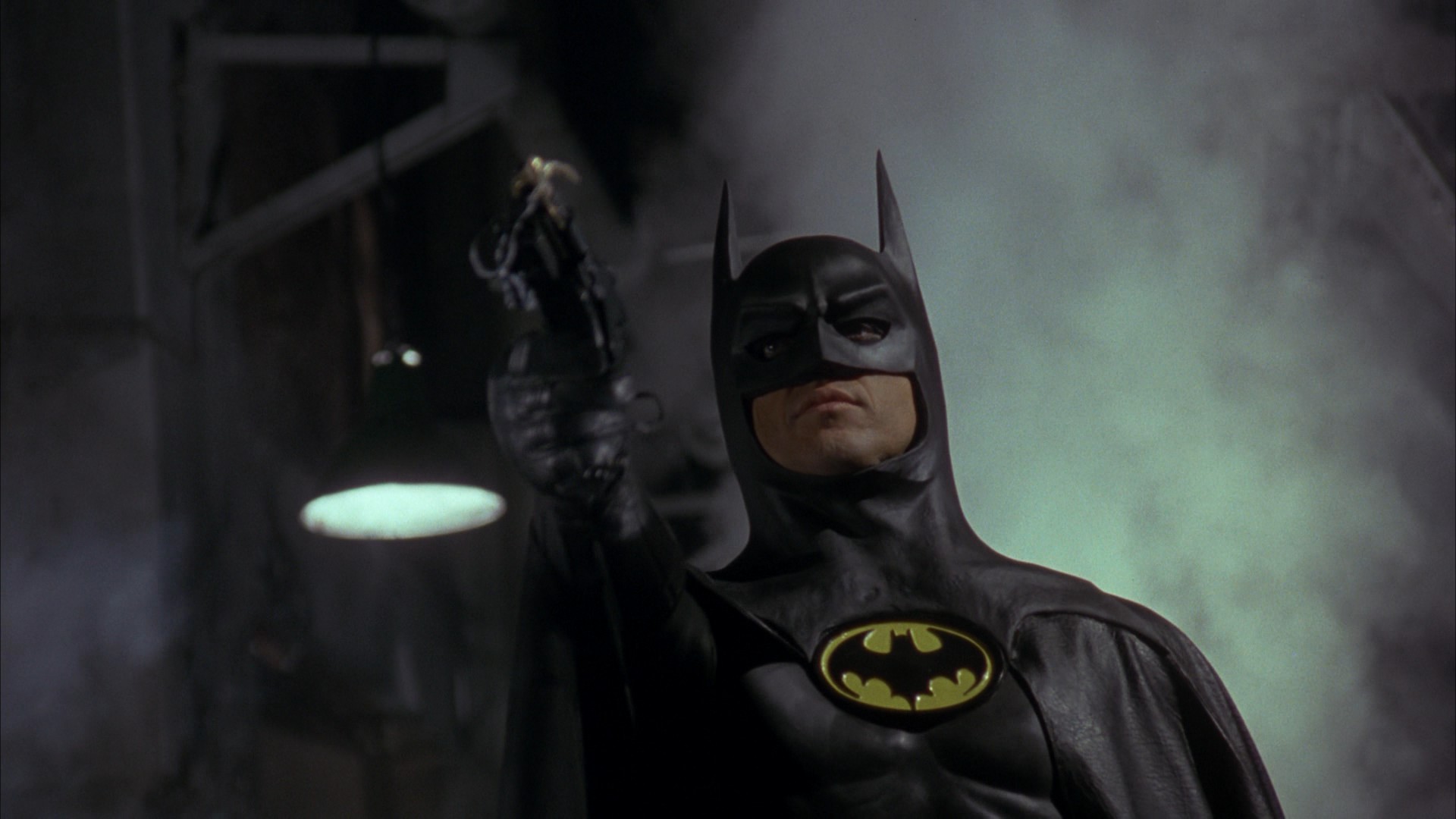
Stars: Ezra Miller, Michael Keaton, Sasha Calle

Subscribe to our Podcasts RSS
Subscribe to our Podcasts on iTunes
Listen on Spotify
Listen on Stitcher
InSession Film Podcast – The Flash

Women InSession: Tootsie / The Birdcage

This week on Women InSession, in celebration of Pride Month, we discuss Sydney Pollack’s Tootsie and Mike Nichols’ The Birdcage! We love both of these movies and had a great time getting into the performances, direction and what makes it all so compelling.

Panel: Kristin Battestella, Amy Thomasson

On that note, check out this week’s show and let us know what you think in the comment section. Thanks for listening and for supporting the InSession Film Podcast!

– Music
The Return of the Eagle – Atli รƒโ€“rvarsson

Subscribe to our Podcasts RSS
Subscribe to our Podcasts on iTunes
Listen on Spotify
Listen on Stitcher
Women InSession – Episode 43

To hear this Extra Film episode and everything else we do, download our apps on the Amazon Market for Android and the Podcast Source app on IOS devices. The mobile app covers all of our main shows, bonus podcasts and everything else relating to the InSession Film Podcast. Thanks for your wonderful support and for listening to our show. It means the world to us.

Poll: What is your favorite DC Comics film?

The Flash was first announced almost ten years ago at this point, but it’s finally coming out in theaters this weekend. Warner Bros. execs are very confident in the film claiming that it’s one of the best superhero movies ever made. We’ll certainly discuss that and more on the podcast this week, but it’s also the inspiration for our poll this week. DC Comics have churned out tons of great stories over the years, many of which have been turned into feature length films. Some have been great. Some have been…not so great. Regardless of where you stand, we simply want to know what your favorite movie is based of DC Comics.

With that said, what is your favorite DC Comics film?


Video Review: Elemental

Watch as JD reviews Pixar’s latest film Elemental, directed by Peter Sohn and starring Leah Lewis and Mamoudou Athie.