

Home Blog Page 112

Movie Review: ‘Leave the World Behind’ is Best Left Forgotten


Director: Sam Esmail
Writers: Rumaan Alam, Sam Esmail
Stars: Julia Roberts, Mahershala Ali, Ethan Hawke

Synopsis: A family’s getaway to a luxurious rental home takes an ominous turn when a cyberattack knocks out their devices, and two strangers appear at their door.


In film criticism, there are many overused phrases. Letโ€™s take a look at one of them: Style over substance. Many critics, amateur and professional, overuse this term, usually when they fail to understand a film and feel like it is all for looks. But, of course, style is important! Film is a visual medium, after all. One director who I have seen attacked for this is Guillermo del Toro, most notably during the aftermath of the release of Crimson Peak, a film with plenty of substance. But we are not here to talk about GDT, unfortunately. We are here to discuss the work of Sam Esmail, Leave the World Behind. And to put it succinctly, you, Sam Esmail are no Guillermo del Toro.

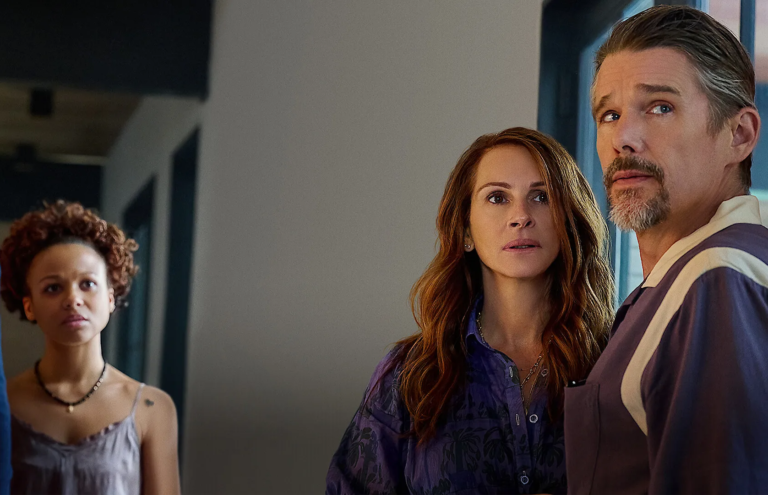
Leave the World Behind follows a near-unlikeable family, the Sandfords, on their impromptu vacation to a beach house. Amanda (Julia Roberts) wakes up her husband, Clay (Ethan Hawke), telling him that they are packed and ready to go, once the kids wake up. She also spouts a detailed, wordy monologue about how much she despises humanity, because of course she does. The family arrives at a gaudy, ostentatious house and makes themselves comfortable. This is all fine and good until the owner (or is he?), G.H. (Mahershala Ali) arrives with his daughter Ruth (Myhaโ€™la) asking to stay because a blackout happened in the city.

So back to style. Esmail, along with cinematographer Tod Campbell, seriously need to calm down. Esmail seems quite aware that he is working with a beautiful set, but not every camera motion needs to be kinetic and swinging across or through floors, ceilings, and staircases. Speaking of things that are extra, the score from Mac Quayle is obvious to the point of annoyance. In case you were wondering if this was a thriller, this Us wannabe makes that perfectly clear. Esmail is fortunate that he has been able to attract top level talented actors, itโ€™s just a shame about the lines that his and Rumaan Alamโ€™s script forces upon them.

Almost none of the plot, focused on cyberattacks from an unknown entity, works in the least, except for when it allows for private moments between actors, particularly Roberts and Ali. G.H. solemnly discussing the possibilities of the end of life as we know it, his private focus on protecting his family, all while coming to grips with the likelihood of his wife dying, is certainly the high point of the film. Unfortunately, those high points are few and far between. Roberts overacts her way through numerous nonsensical moments, while Hawke is his slacker dad self. The kids arenโ€™t given much to do. Rose (Farrah Mackenzie) apparently loves Friends and โ€œthe Sorkin Yearsโ€ of The West Wing. How old is this kid? And her older brother Archie (Charlie Evans) is apparently only present to be petulant and have bad things happen to him. Itโ€™s all just seriously exhausting and not in any kind of thought provoking way. 

When news of this film broke, I found myself surprised that this gathering of Oscar Winners (Roberts, Ali) and nominees (Hawke) were involved in a movie that was not getting any kind of theatrical window. Well, that will show me. A spectacular cadre of performers does not necessarily lead to a good, or even watchable movie. I would say that the script needed another pass, but in terms of pseudo-apocalyptic movies, Leave the World Behind is barely a blip. There are only mildly interesting ideas, but they have all been done better previously and likely will be done better in the future. Esmailโ€™s film is all style, no substance, and a waste of talent.
Grade: D-

Classic Movie Review: ‘Stalker’ Seeks the Truth


Director: Andrei Tarkovsky
Writers: Arkadiy Strugatskiy, Boris Strugatskiy, Andrei Tarkovsky
Stars: Alisa Freyndlikh, Aleksandr Kaydanovskiy, Anatoliy Solonitsyn

Synopsis: A guide leads two men through an area known as the Zone to find a room that grants wishes.


This film was viewed as part of the event, โ€œTarkovsky: 6 Films, Master Works by a Master of Cinema,โ€ at the Kentucky Theatre, accompanied by a Q&A by Raymond De Luca, Assistant Professor of Russian Studies and International Film Studies at the University of Kentucky

To get my own biases out of the way, this is the film in the Tarkovsky canon that I was most excited to finally see on the big screen. Stalker is, big surprise here, still a difficult film to engage in, but has more moments of acting stylistic choices that are recognizable to more modern cinephiles. But, this is still a Tarkovsky film. Deeper meaning and the human psyche and struggle still reign supreme. 

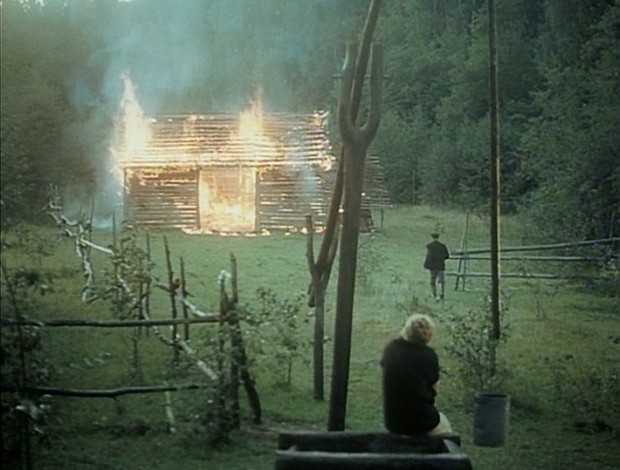
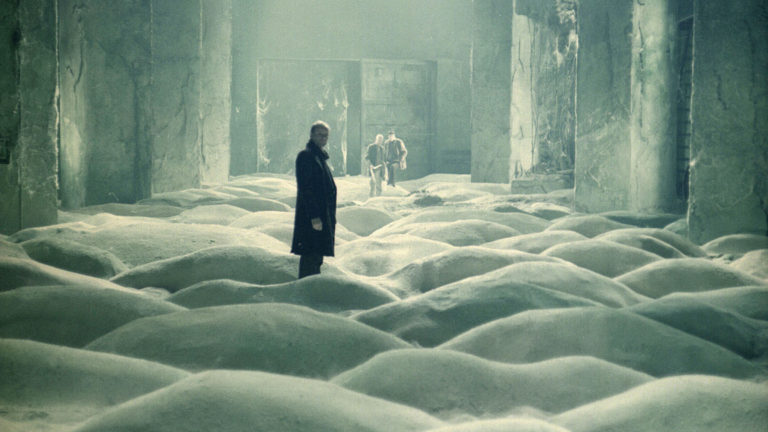
Stalker follows, well, a stalker or guide as he brings two men, one writer and one professor, into a forbidden place known only as โ€œThe Zone.โ€ This zone, which the government guards, is said to hold a room which grants a personโ€™s deepest wish or desire upon entering. Additionally, the laws of physics and nature seem not to apply here, which affords Tarkovsky and cinematographer Aleksandr Knyazhinskiy many opportunities to distract viewers and create a non linear journey.

The question that many get stuck on with Stalker is, what exactly is the zone?  Many interpretations arise, which is likely what Tarkovsky wants. There could be a clear analogue to an environmental disaster, especially given the fact that the Russian government attempts to keep people out on pain of death. Given the themes of the film, there is also a likelihood that the zone is purgatory; a waiting place to be judged before moving on to heaven or hell. This is the lens I have always seen this through, though many scholars also see the meaning of the zone as simply the struggle to make meaning at all.

But letโ€™s examine the purgatory angle. Before being brought into the zone, the world is tedious, painful, and a constant struggle. The stalker argues with his wife, the writer cannot write, and the professor struggles with any meaning at all. The outside world is slow and filmed in a dirty looking sepia tone. The people in power are armed with weapons aimed at destruction and hiding the truth. The idea of life on earth as pain and struggle ring quite true with Catholic teachings. When the zone is finally entered, the surrounding nature is in full color, a dramatic shift. But it is not obviously beautiful or heavenly in any way. At first glance, it is normal to our eyes. 

And then there is the room itself. We are misguided at first, thinking that our characters can wish for whatever they want. But the characters balk at that. What if an evil person was brought here and inflicted worldwide pain. Should the room be destroyed? But the story told of an old stalker near the beginning of the film is important. Stalkers never enter the room, but one did. This stalker, Porcupine, entered the room to wish to save his dying brother. But the room only provides what you most want. Porcupine was given riches, his brother died, and he understood his fault of greed.

It is also important to note the three men. The Stalker, a man of faith. The Writer, a man of art. The Professor, a man of science. The professor fights to destroy a possible evil, an academic exercise in thought. The writer battles to understand it with incessant questioning, an artistic enterprise. The stalker accepts it as a matter of faith, and attempts to bring others in, a proselytizing process. When he is accused of doing this selfishly, The Stalker (Aleksandr Kaydanovskiy) performs a stunning monologue about his desire to help others that will stick with you. Later, after being rejected, he weeps with his wife, understanding that riches and class differences keep us all from connecting with faith. 

Stalker can draw a number of conclusions. One of those is that all three versions of man featured here are necessary in the search for truth. The artist is necessary for the expression of faith in a human way. The professor is necessary in order to process and deliver the information to humankind. And the man of faith is the beginning. If we do not believe, there is no hope. As an addendum, there is a lack of modernity in the zone, which shows us that the more advanced we become, in our urge to have the power of gods, the further we get from our faith. 

Stalker is an impressive work, even now almost 45 years later. It challenges us, whether we are people of faith or not. In a dramatically fantastic artistic career, Stalker is Tarkobvkyโ€™s greatest achievement, and one of filmโ€™s greatest accomplishments, as well.

Grade: A+

2024 Golden Globe Nominations

The 2024 Golden Globe Nominations have been announced, and overall it’s one of the best we’ve seen from Hollywood Foreign Press Association (HFPA). The Color Purple missing in Picture, Comedy or Musical does sting a little bit, but overall they did a great job. Celine Song getting in for Director is very exciting. Same with Greta Lee and her nomination for Best Actress. Original Score absolutely rules. One of, if not, the best lineups we’ve ever seen at the Globes. Joaquin Phoenix getting in for Beau is Afraid is a huge surprise, and perhaps ironic since he’s funnier in Ridley Scott’s Napoleon. There is much more to say, so stay tuned as we’ll have more in the coming days and weeks, but this is a great crop of nominees despite a few notable snubs.

Here are the film nominees in each category.

Best Motion Picture, Drama
Oppenheimer
Killers of a Flower Moon
Maestro
Past Lives
The Zone of Interest
Anatomy of a Fall

Best Motion Picture, Comedy or Musical
Barbie
Poor Things
American Fiction
The Holdovers
May December
Air

Best Director, Motion Picture
๏ปฟBradley Cooper, Maestro
Yorgos Lanthimos, Poor Things
Greta Gerwig, Barbie
Christopher Nolan, Oppenheimer
Martin Scorsese, Killer of the Flower Moon
Celine Song, Past Lives

Best Performance by an Actor in a Motion Picture, Drama
Bradley Cooper, Maestro
Cillian Murphy, Oppenheimer
Leonardo DiCaprio, Killers of the Flower Moon
Colman Domingo, Rustin
Andrew Scott, All of Us Strangers
Barry Keoghan, Saltburn

Best Performance by an Actor in a Motion Picture, Musical or Comedy
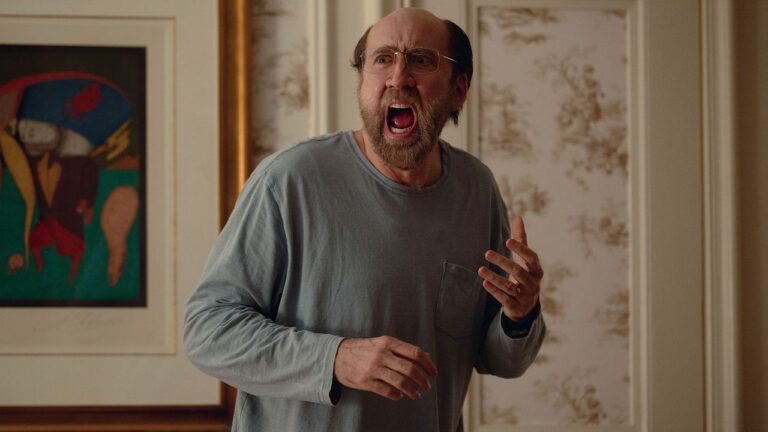
Nicolas Cage, Dream Scenario
Timothรฉe Chalamet, Wonka
Matt Damon, Air
Paul Giamatti, The Holdovers
Joaquin Phoenix, Beau Is Afraid
Jeffrey Wright, American Fiction

Best Performance by an Actress in a Motion Picture, Drama
Lily Gladstone, Killers of the Flower Moon
Carey Mulligan, Maestro
Sandra Hรผller, Anatomy of a Fall
Annette Bening, Nyad
Greta Lee, Past Lives
Cailee Spaeny, Priscilla

Best Performance by an Actress in a Motion Picture, Comedy or Musical
Fantasia Barrino, The Color Purple
Jennifer Lawrence, No Hard Feelings
Natalie Portman, May December
Alma Pรถysti, Fallen Leaves
Margot Robbie, Barbie
Emma Stone, Poor Things

Best Performance by an Actor in a Supporting Role in a Motion Picture
Willem Dafoe, Poor Things
Robert DeNiro, Killers of the Flower Moon
Robert Downey Jr., Oppenheimer
Ryan Gosling, Barbie
Charles Melton, May December
Mark Ruffalo, Poor Things

Best Performance by an Actress in a Supporting Role in a Motion Picture
Emily Blunt, Oppenheimer
Danielle Brooks, The Color Purple
Jodie Foster, Nyad
Julianne Moore, May December
Rosamund Pike, Saltburn
Daโ€™vine Joy Randolph, The Holdovers

Best Screenplay, Motion Picture
Greta Gerwig and Noah Baumbach, Barbie
Tony MacNamara, Poor Things
Christopher Nolan, Oppenheimer
Eric Roth and Martin Scorsese, Killers of the Flower Moon
Celine Song, Past Lives
Justine Triet and Arthur Harari, Anatomy of a Fall

Best Original Score, Motion Picture
๏ปฟJerskin Fendrix, Poor Things
Ludwig Gรถransson, Oppenheimer
Joe Hisaishi, The Boy and the Heron
Mica Levi, The Zone of Interest
Daniel Pemberton, Spider-Man: Across the Spider-Verse
Robbie Robertson, The Killers of a Flower Moon

Best Original Song, Motion Picture
โ€œAddicted to Romance,โ€ She Came to Me
โ€œDance the Night,โ€ Barbie
โ€œIโ€™m Just Ken,โ€ Barbie
โ€œPeaches,โ€ Super Mario Bros.
โ€œRoad to Freedom,โ€ Rustin
โ€œWhat Was I Made For,โ€ Barbie

Best Foreign Language Film
Anatomy of a Fall
Fallen Leaves
Io Capitano
Past Lives
Society of the Snow
The Zone of Interest

Best Animated Feature Film
๏ปฟThe Boy and the Heron
Elemental
Spider-Man: Across the Spider-Verse
The Super Mario Bros. Movie
Suzume
Wish

Cinematic and Box Office Achievement in Motion Pictures
๏ปฟBarbie
Guardians of the Galaxy Vol. 3
John Wick: Chapter 4
Mission: Impossible – Dead Reckoning Part 1
Oppenheimer
Spider-Man: Across the Spider-Verse
The Super Mario Bros. Movie
Taylor Swift: The Eras Tour

Podcast Review: Dream Scenario

On this episode, JD and Brendan take a look at Nicolas Cage’s latest film Dream Scenario! This is a film that perfectly exhibits why we love Cage in these weird, eccentric roles, however there is a debate to be had about the storytelling and if it fully takes advantage of its interesting conceit.

Review: Dream Scenario (4:00)
Director: Kristoffer Borgli
Writers: Kristoffer Borgli
Stars: Nicolas Cage, Julianne Nicholson, Michael Cera

Subscribe to our Podcasts RSS
Subscribe to our Podcasts on iTunes
Listen on Spotify
Listen on Stitcher
InSession Film Podcast – Dream Scenario

Movie Review: ‘The Taste of Things’ Should Be Savored


Director: Anh Hung Tran
Writers: Marcel Rouff and Anh Hung Tran
Stars: Juliette Binoche, Benoit Magimel, Emmanuel Salinger

Synopsis: The story of Eugenie, an esteemed cook, and Dodin, the fine gourmet with whom she has been working for over the last 20 years.


Food on film is basically its own genre at this point. Throughout numerous cultures and film styles, food is a standard. Tampopo, Eat Drink Man Woman, Big Night, and Like Water For Chocolate are just a few fabulous examples of the power of food on celluloid. It is not enough to simply film well composed dishes in order to make greatness. This is not your instagram feed, it must contain actual substance. There are few food films of greater substance than this yearโ€™s The Taste of Things.

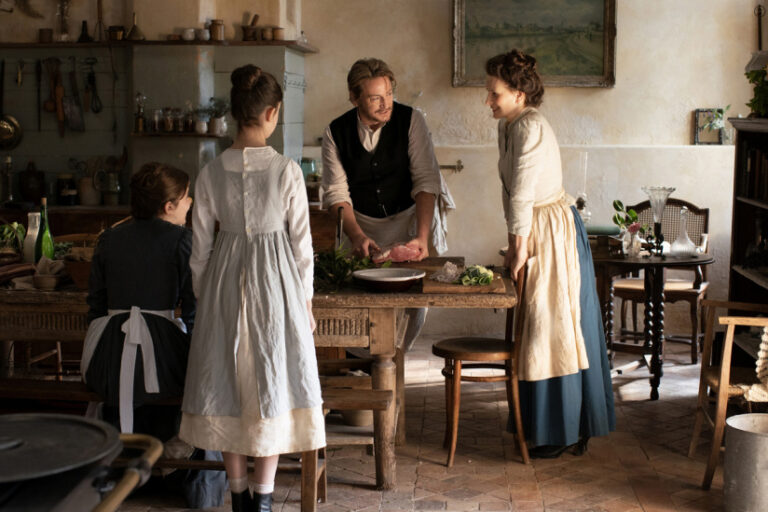
The Taste of Things follows the relationship between a chef, Dodin Bouffant (Benoit Magimel), and his cook, Eugenie (Juliette Binoche). It should be no surprise that much of this working, and loving, relationship is built through, and inside their shared kitchen space. Masterfully crafted by director Anh Hung Tran, and beautifully photographed by cinematographer Jonathan Ricquebourg, nearly the first quarter of the movie consists of Dodin and Eugenie preparing a lavish meal. They are assisted by Violette (Galatea Bellugi) and a possible new apprentice in Pauline (Bonnie Chagneau-Ravoire).

This opening sequence of events may seem borderline unnecessary on first watch. Even if it was, it would be worth it just to see Eugenie and Dodin cook. But it is so much more than what it seems. As the moments build, we see the unspoken bond between the two. They only say a handful of words to each other, but there is a trust, a comfort, a love that is evident. It becomes more obvious as Dodin and Eugenie separately work with Pauline to see her level of skill. She is just beginning but obviously has that something. One could imagine that Eugenie also had that something, which makes her irreplaceable.

The scenes involving Pauline are also completely necessary, though they may seem to be โ€œjustโ€ showing the intricacy of flavors in Dodinโ€™s creations. He is, after all, the Napoleon Bonaparte of the culinary world. Of note, Napoleon, among other things, is known for tactical brilliance and providing unexpected strategy. Dodin, indeed, provides the unexpected. But to return to Pauline, her incredibly sensitive palate shows how complex the flavors are, and how difficult they are to create. This leads us, once again, back to Dodin and Eugenie. The language of their love is this exact creation, so even when it seems simple, there is complexity underneath.

There may be other characters, but they are mostly ancillary. This is, first and foremost, a love story. Binoche and Magimel are perfectly cast, and perfectly complementary. Binoche has always been a beautifully grounded and natural performer, and Tran uses this to its supreme advantage. Eugenie has no desire to be in the room when Dodin is performing the courses for guests. She knows her importance and how talented Dodin is, in and out of the kitchen. It pleases her to keep distance, with the knowledge that her work was done perfectly.

Even if all of this is true, the film is empty without the private, stolen moments between our two lovers. And, as is appropriate to them, there are few grand gestures. They are direct, flirtatious, and sometimes smirking. Due to Binocheโ€™s controlled performance, none of these interactions is over the top, but they are all deeply felt and they stir both Dodin and the audience watching these intensely private exchanges. We know their love, their bond immediately.

The Taste of Things is not a movie to be rushed, but to be savored like a grand meal. Dodin and Eugenie have built their relationship, year after year, dish after dish, to its grand heights in the supposed autumns of their lives. It may begin with a sense of awe at the sumptuousness of the food, but ends with an understanding of connection, love, and moving forward. If we are lucky, we get to see a movie like this once a year. The Taste of Things is patient, focused, passionate, and a reward for the audience.

Grade: A+

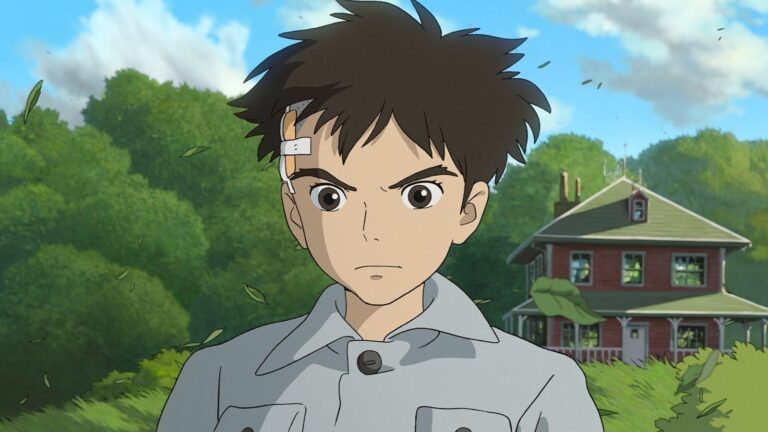
Movie Review: ‘The Boy and the Heron’ is an Instant Classic From a Master


Director: Hayao Miyazaki
Writer: Hayao Miyazaki
Stars: Soma Santoki/Robert Pattinson, Takuya Kimura/Christian Bale, Yoshino Kimura/Gemma Chan

Synopsis: A young boy named Mahito yearning for his mother ventures into a world shared by the living and the dead. There, death comes to an end, and life finds a new beginning. A semi-autobiographical fantasy from the mind of Hayao Miyazaki.


The Boy and the Heron is an animated masterpiece and one of the yearโ€™s best films. Hayao Miyazakiโ€™s latest film opus works on many levels. It is a family film of profound humanity, exquisite artistry, and the simple joy of creativity. On the surface, the โ€œGodfather of Mangaโ€ seems too high-brow for mass audience consumption, but that couldnโ€™t be further from the truth. Miyazaki is akin to Tolstoy in the way that he wrote for the masses and the working class. Miyazaki is practically cut from the same cloth, evoking the interconnectedness of life with stunning imagery and a youthful exuberance for children of all ages, young and old.

The Boy and the Heron starts with Miyazaki using the well-known directorโ€™s simplified designs, particularly for the characters. Here, the story is set in 1943, at the height of the Pacific War. In a devastatingly lyrical scene, 12-year-old Mahito Maki (Soma Santoki/Robert Pattinson) loses his mother during an air raid while she works as a nurse at a local hospital. Fast forward months later, Mahito’s father, Shoichi (Takuya Kimura/Christian Bale), who owns a munitions factory, remarries his late wife’s sister, Natsuko (Yoshino Kimura/Gemma Chan).

Obviously, it’s a confusing time for Mahito. His father produces the same type of explosives that killed his mother, and his aunt is a younger, spitting image of her. Now, he’s abandoned at his “new mother’s” estate for safety reasons while his father returns to work. Mahito has no friends or anyone his age to socialize with. Natsuko is pregnant, which makes matters even more complex, further playing into the child’s fears that he will eventually be replaced, just like his mother. Mahito begins to act out, treating his new mother as if sheโ€™s hot to the touch, coldly distancing himself from her as if he accepts her; the memory of his mother will be lost forever.

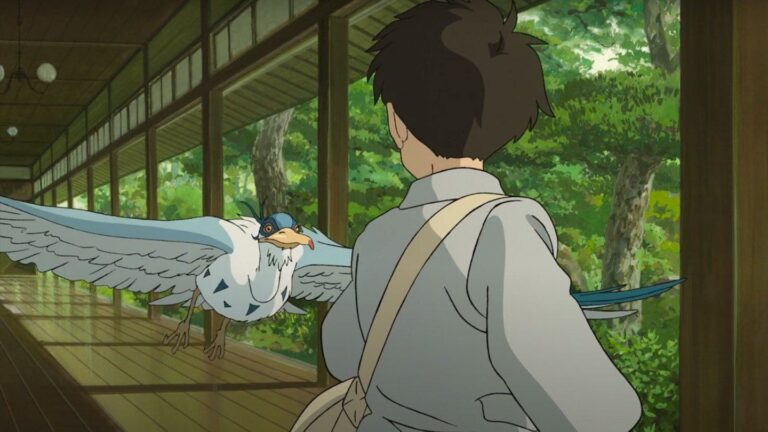
As the story progresses, Mahito is attacked by a mysterious gray heron. In an act that seems like a form of diversion and as a way to cope with his grief, Mahito takes it upon himself to end the feud between the gawky-looking bird and himself once and for all. However, in a twist of fate, the heron tells Mahito his mother is, in fact, alive. While chasing his new feathered nemesis, Mahito runs across a sealed-up tower in ruins near his auntโ€™s home. Now, arming himself only with a bow and arrow made up of the heronโ€™s feathers, Mahito searches for hope or, perhaps, closure.

The Boy and the Heron is a rare work of art that can be accessible to everyone. Funny, charming, exciting, and suspenseful while leading to an incredibly moving conclusion, few films explore grief with this type of tenderness and care. However, that doesnโ€™t mean the viewer can’t have some fun along the way. Where Mr. Miyazakiโ€™s film excels is in getting lost in the supporting characters. You have a fearless chatter of man-eating parakeets that go from frightening to downright wondrous. The reveal of the heronโ€™s true identity is splendid and adds comic relief throughout. Then you have the handful of โ€œold maids,โ€ who look like weathered and aged Precious Moments porcelain figurines that were lost to time forever. These are all exceptional and exciting moments packed with humor and a splash of grandeur.

The legendary filmmaker’s “simple” visuals are brought to the forefront. However, you’ll notice that everything in the background is an endless array of breathtaking paintings. It feels like an homage that evokes masterpieces from Claude Monet, Edgar Degas, and Camille Pissarro. As scenes unfold, the backgrounds come alive with classic works, resembling a stroll through a breathtaking garden with cherry blossom trees. The environment inside the tower is akin to grand oil paintings, where you can observe the details of the tapestries on the wall. The stunning shading of the yellow room is downright Confucian, evokes Hokusai (or even Edward Hopper) where Mahito meets his Granduncle, hints not at joy or warmth but at the idea that young cocky energy and restless vitality should proceed with caution when facing overwhelming power.

Mr. Miyazaki and cinematographer Atsushi Okui use various color palettes to reflect the emotional state of the characters throughout the journey in the script. The Boy and the Heron‘s interconnectedness revolves around systems, not just Mahito but the family as a whole. In line with the director’s holistic approach to the family unit and how the group functions within their world, including the environment, The Boy and the Heron is a grand adventure full of compassion, mindfulness, loving-kindness, and self-awareness that emerges from dark times to the other side where the light awaits. 

If this is Mr. Miyazaki’s grand farewell, he did so with an instant classic thatโ€™s one of the year’s best films.

Grade: A+

Classic Movie Review: ‘Mirror’ Reflects Ourselves


Director: Andrei Tarkovsky
Writers: Aleksandr Misharin, Arseniy Tarkovskiy, Andrei Tarkovsky
Stars: Margarita Terekhova, Filipp Yankovskiy, Ignat Daniltsev

Synopsis: A dying man in his forties remembers his past. His childhood, his mother, the war, personal moments and things that tell of the recent history of all the Russian nation.


This film was viewed as part of the event, โ€œTarkovsky: 6 Films, Master Works by a Master of Cinema,โ€ at the Kentucky Theatre, accompanied by a Q&A by Raymond De Luca, Assistant Professor of Russian Studies and International Film Studies at the University of Kentucky

Well, we have arrived. Tarkovskyโ€™s most difficult, and possible, most personal work, Mirror. I am not going to pretend like I understand every single moment and reference in this incredibly dense, poetic film. But I can give you my perspective. It does seem like the further we get into Tarkovskyโ€™s filmography, the more confusing and effortful it becomes. But I would still argue that it is also rewarding, in the end. 

This is now the second time I have watched Mirror and I still find myself intimidated to speak about it. Having a non cinephile watch Mirror is akin to beginning to listen to music by taking in the most complex symphony ever created. Yes, you can understand that there is greatness, but it can be difficult to pinpoint. Like many of his works, Mirror is not entertainment, but art, and almost designed to confuse. Mirror appears to be loosely based on Tarkovskyโ€™s life, even featuring poetry written by his father, which was a problematic relationship for the director throughout his life. But interestingly, the film is, in many ways, owed to his relationship with his mother. 

Like memory itself, this film is non linear in structure, and not completely dependable as far as its narration. Even more than previous works, Mirror features many difficult to understand, dream-like sequences. Tarkovsky also continues to engage in the use of different color structures (black and white, color, sepia) as he did in Solaris and will continue to do in Stalker. Tarkovsky is again focusing on the internal, but in a slightly more obvious way. That is, Mirror is focused on one man and his own memories and important moments in his life. 

It is an interesting film to engage with, specifically within the oeuvre of Tarkovsky. In many of his films, Tarkovsky seems to be seeking for truth in humanity (more on that in an upcoming review of Stalker). But here, truth is more evasive. There is no simple way to engage in truth from inside one manโ€™s brain. The way that we see our memories, our experiences, our dreams, are not grounded in any kind of truth that is attributable to the many. It only feels true to us. And the difficulty of this movie actually seems to prove that point. Mirror makes me think of times that I have tried to tell other people my own experiences. I usually end up speaking in circles, unable to truly show them what I mean. I know it and they never will. In many ways, this is the tragedy of human existence and the limits of our communication.

But even if you cannot find the grasp of memory and dreams, no matter how much musicality and poetry is involved, film is a truly visual medium. Tarkovsky, as usual, takes full advantage of this fact with fastidious crafting of images. The opening of the film, wildly confusing on first watch, is a microcosm of both Mirror and life. It features a young woman teaching a child with a stammer to speak. The child struggles and she appears to hypnotize him. And with a snap of her finger, the child speaks clearly. When we look back at our own lives and learning – speaking, reading, riding a bike, dressing ourselves – it seems to pass in an instant, in a snap. This is why in Tarkovskyโ€™s film, it is difficult to make sense of the order, structure, and style. But on repeated watches, like with all great works of art, it teaches us less about what Tarkovsky meant, and much more about ourselves, our experiences, our memories, our mothers.

Grade: A

Podcast Review: The Boy and the Heron

On this episode, JD and Brendan review Hayao Miyazaki’s new film The Boy and the Heron (aka How Do You Live?), which would be an astonishing way to leave if Miyazaki does finally retire. Coming off his magnum opus that is The Wind Rises, it was always going to be interesting to see what he does, and Miyazaki does not disappoint.

Review: The Boy and the Heron (4:00)
Director: Hayao Miyazaki
Writers: Hayao Miyazaki
Stars: Soma Santoki, Masaki Suda, Yoshino Kimura, Takuya Kimura

Subscribe to our Podcasts RSS
Subscribe to our Podcasts on iTunes
Listen on Spotify
Listen on Stitcher
InSession Film Podcast – The Boy and the Heron

Movie Review: โ€˜Monsterโ€™ is a Truth Told in Three Touching Perspectives


Director: Kore-eda Hirokazu
Writer: Yuji Sakamoto
Stars: Sakura Ando, Eita Nagayama, Soya Kurokawa

Synopsis: A mother demands answers from teacher when her son begins acting strangely.


Hirokazu Kore-eda has adopted a more schmaltzy approach to telling his stories for the past few years. This has made his most recent features, except for Shoplifters, somewhat detached from reality. They never reach a satisfactory emotional point. It is quite disappointing, considering his brilliant early features that channel the energy of Yasujirล Ozuโ€™s narrative style. Kore-eda knows how to portray domestic melancholy in a humanistic way, unlike other directors who might do so in more theatrical and melodramatic ways. The tangible and grounded emotions have made cinephiles worldwide heavily relate to his films. So, when you see such a talent falter, even slightly, you ache for them to regain their mojo. Indeed, Kore-eda has done so with Monster, a heartbreaking Rashomon-like style picture divided into three sharply written parts. 

After a quick trip to South Korea with Broker, Kore-eda is back in his native land of Japan. His latest project begins with blazing fires in the night sky, where we see a hostess bar burning to the ground. As the chaos emerges and the sirens continue to drown out the sound of worry and sadness, people gather around the flames. They are curious as to what might have caused it. The film starts with a simple premise, yet as it extends, it transitions into something equally heartbreaking and hopeful in its examinations of truth. We first see a fifth grader, Minato (Soya Kurokawa), and his mother, Saori (Sakura Ando), who have tried to live a humble life after the tragic death of his father. But the young boy hasnโ€™t been the same since; lately, something has been bothering him to the point of changing his attitude from quiet and sweet to troubled and disturbed. 

One day after school, Minato comes home with a strange look on his face. Saori canโ€™t seem to figure out whatโ€™s wrong with him at first glance. His looks are distant, and he feels separated from the person his mother knows. But when Saori hears that her sonโ€™s teacher, Mr. Hori (Eita Nagayama), has been bullying and behaving violently against him, she asks for justice for his actions. However, the meeting between her and the principal, with Hori present, doesnโ€™t go the way she expected. Sheโ€™s received with fake apologies and no motive for improving the care of the students. Kore-eda leaves plenty of details behind in each different perspective so that in the next angle, we can slowly connect the dots. Whether the detail is minor or consequential, a lighter or a bruised arm, they all have a place within the storyโ€™s search for truth. They are connected with the introductory flames that Kore-eda uses as a scene to separate each perspective. 

You can compare Monsterโ€™s narrative structure to the likes of Rashomon and, most recently, The Last Duel. But Kore-eda doesnโ€™t copy the exact format of the aforementioned films. Unlike them, this filmโ€™s three perspectives tell one version of the story โ€“ but through three different sets of eyes. Meanwhile, Kurosawa (brilliantly) and Scott offer iterations of the tale. The first stance in Monster leaves you with many questions and little to no answers, leaving room for contemplation. And as it continues with the other two perspectives, it recontextualizes what you saw before. The title of Kore-edaโ€™s latest is misleading, referring to the beast that surges from within โ€“ forged by our emotions and painful experiences โ€“ rather than a literal figure of malevolence. None of the characters are handled in a way that could be lessened to such superficial traits. 

It is the idea behind being a monster, a person eaten alive by their suffering, and how that causes one to make brash decisions. The viewer ponders around to whom this title should apply, whether it is Minato, Hori, or the educational system and its corrupt nature. Kore-eda wants you to reevaluate how we see their actions โ€“ taking glimpses through each perspective โ€“ instead of targeting them wholly, diminishing them as simple personas of protagonists and antagonists. Kore-eda is known for using empathy as his way of โ€œmanipulatingโ€ the viewer. But in Monster, that constant swindling comes in a matter that doesnโ€™t feel forced or excessively maneuvered. The root of this filmโ€™s empathy is sourced from the inability of people to accept or embrace incomplete pictures. 

There are constant conversations between characters about what they know and donโ€™t know, referring to the actions taking place and the backstories accompanying them. Your opinion of them changes from one side to another, from malevolent to innocent and vice-versa, upon each detail and mystery unraveled. For the first time since 1995โ€™s Maborosi, Kor-eda is not the credited screenwriter. This shows you why this film deviates from his usual form of storytelling, depending on techniques he isnโ€™t accustomed to. Its mood and atmosphere are more lenient on bleak and melancholic tones rather than hopeful, like most of Kore-edaโ€™s filmography. 

This moral tale of the effects words and actions have on children does have some unnecessarily convoluted moments; Sakamoto does these narrative tricks with some much-needed subtlety and cautiousness. Yet some parts of the web-like narrative donโ€™t work because of Sakamotoโ€™s need to over-entangle each plot point. If Kore-eda had written this, he likely would have made it far more straightforward โ€“ and, coincidentally, more effective in the process. Another element that elevates the film is the cinematography of Ryลซto Kondล, who has previously worked with Kore-eda in Shoplifters. He creates beauty out of internal damnation, using a slightly poetic visual language that adds notes of melancholy to the film. Kore-edaโ€™s previous films lacked those piercing effects in their cinematographies, which led them to have less of an identity. Kondลโ€™s work makes Monster stand out because of its different ways of expression, varying from the perspectives. It is a fascinating change of pace, creating a more pensive piece rather than one more open on an emotional level. 

Grade: B

Podcast Review: May December

On this episode, JD and Brendan discuss Todd Hayne’s new film May December, starring Julianne Moore, Natalie Portman and Charles Melton! The film has been slightly polarizing, but it’s one of the most fascinating films to talk about given its melodrama, character motives and murky content. And boy did we have a lot of fun with this conversation.

Review: May December (4:00)
Director: Todd Haynes
Writers: Samy Burch
Stars: Natalie Portman, Julianne Moore, Charles Melton

Subscribe to our Podcasts RSS
Subscribe to our Podcasts on iTunes
Listen on Spotify
Listen on Stitcher
InSession Film Podcast – May December

Chasing the Gold: Acting Categories / Best Director

This weekโ€™s episode is brought to you by Koffee Kult. Get 15% OFF with the code: ISF

This week on the InSession Film Podcast, JD is joined by ISF Awards Editor Brian Rowe and Shadan Larki to discuss the Acting Categories and the Best Director race in regards to the 2023 Oscars! We’re about a month away from Nomination Morning, but things are heating up and it’s starting to take shape. The next few weeks are going to be very interesting and we had a lot of fun speculating on what we think will happen.

On that note, check out this week’s show and let us know what you think in the comment section. Thanks for listening and for supporting the InSession Film Podcast!

Subscribe to our Podcasts RSS
Subscribe to our Podcasts on iTunes
Listen on Spotify
Listen on Stitcher
Chasing the Gold – Acting Categories / Best Director

Mobile App

To hear this Extra Film episode and everything else we do, download our apps on the Amazon Market for Android and the Podcast Box app on IOS devices. The mobile app covers all of our main shows, bonus podcast’s and everything else relating to the InSession Film Podcast. Thanks for your wonderful support and listening to our show. It means the world to us!

Help Support The InSession Film Podcast

If you want to help support us, we would greatly appreciate it! For more info, CLICK HERE.

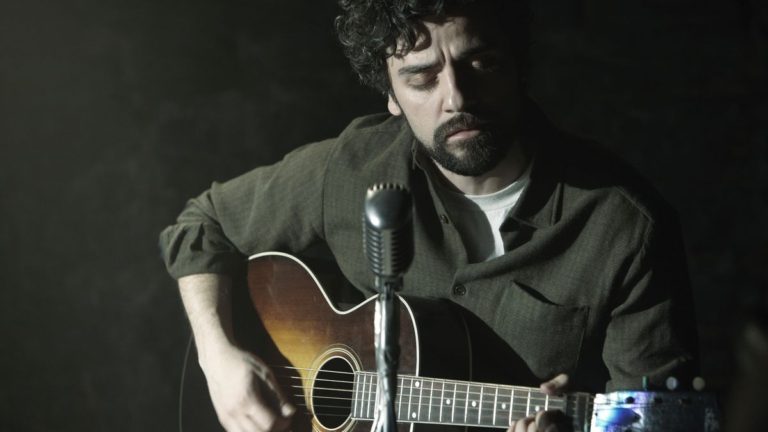
Video Essay: Inside Llewyn Davis – 10 Years Later

It’s hard to believe that it’s been 10 years since the release of the Coen brothers masterpiece Inside Llewyn Davis. For those that listened to our Best of the Decade (2010s) show, you’ll know that this film was heavily represented as we talked about how it’s one of the best films we’ve seen over the last decade. So, as the film prepares to celebrate this great anniversary, I wanted to spend some time talking about why it’s, not just the best film of 2013, why it’s one of my all-time favorite films.

Movie Review: ‘Silent Night’ is a Cacophony of Bad


Director: John Woo
Writer: Robert Archer Lynn
Stars: Joel Kinnaman, Catalina Sandino Moreno, Scott Mescudi

Synopsis: A grieving father enacts his long-awaited revenge against a ruthless gang on Christmas Eve.


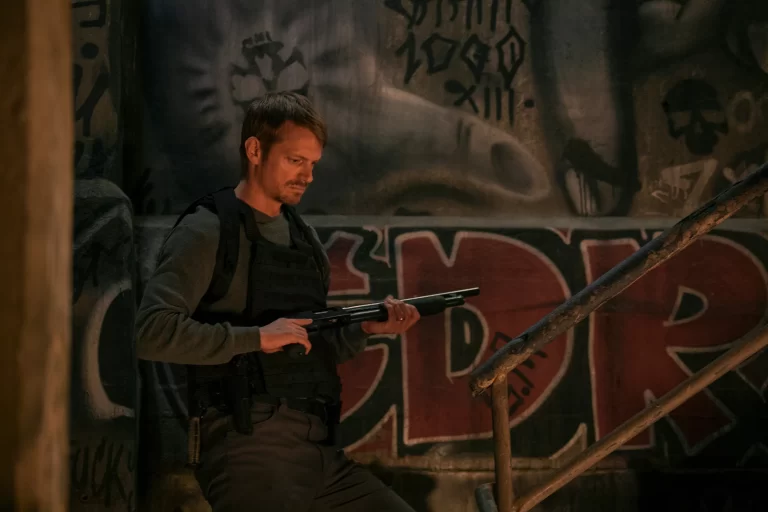
A silent film has a certain novelty in the digital era. It’s like a black and white aesthetic or shooting on film instead of digital. The choice is bold especially in the action genre in which the characters are often quipping, growling, or berating between bursts of gunfire. Silent Night isn’t completely devoid of dialogue though; any dialogue that is exposition is spoken in voice over. Any shouting during battle is done by characters not seen to be speaking on screen, as well. There are a few short, muffled, inconsequential lines spoken by main characters, but that’s it. It’s too bad this intriguing conceit is wrapped up in a massive turkey.

The lack of dialogue is a gimmick that gets old very soon and completely destroys any of the realism the filmmakers wish to have with their everyman hero. In fact, it creates an incredibly depressing film. With no dialogue to distract from the plot, we’re forced to sit in the silence of this man’s grief and the reminder that children can die. All we know of the main character is his one motivation in life and it’s not enough to build a movie on.

The conceit is even worse when the training montage, which should have been a few minutes with a rocking song before the mayhem, is a very long chunk of the film. It’s drawn out and crushingly boring. There’s a reason main characters in these revenge films are former military, cops, or assassins, because you can skip them being bad at shooting a gun and driving a car in an aggressive way. This everyman is so painfully inept at what he wants to accomplish. It’s really awful watching someone who hasn’t been in a real fight with another human try and fight someone. Bad fights by people who don’t understand how to fight only belong in comedies. In an action movie it’s just pitiable and not in the way to get an audience on your side.

The whole film has a student thesis feel. It plays like someone who watched a lot of action films thought they could do it. Silent Night is entirely derivative of films from the ’80s and ’90s heyday of the action film. Even the way time is passed in the film is hackneyed and eye-rolling. Based on writer Robert Archer Lynn’s previous credits of micro budget indies, that’s not too much of a stretch. Especially since this is his first produced screenplay in sixteen years and probably spent that time stewing in an executive’s slush pile with only a quick rewrite to make it more relevant now.

A lot of these revenge films, especially the modern variety have something to say. Silent Night feels like it’s just echoing political talking points about urban blight. It’s set in a Texas city that is overrun by Latino drug gangs. The police are powerless, the people are in fear, and the federal government does nothing. It’s very much using talking points of several prominent fear mongers to indicate that you could do what the police cannot and in one scene of complicity between Brian (Joel Kinnaman) and Det. Vassell (Scott Mescudi) what they secretly want you to do because their hands are tied by the law.

You have to wonder what made action movie legend John Woo want to attach his name to this lame duck of a movie. It’s obvious that Woo is trying to make a film his way. He and cinematographer Sharone Meir pull off some dynamic moves and tracking shots, but you can’t polish something so ridiculous. It’s so ridiculous that it’s not even a fun bad movie. At one point, the reflection of Brian’s memories are projected onto a Christmas bauble and the overwrought music is so maudlin that the silliness is lost in the uncomfortableness of the situation. Silent Night runs head first into every clichรฉ possible, but skips out on Woo’s own clichรฉs which would have at least made the movie interesting to watch.

There is typically something positive to say about any film, but Silent Night isn’t worth the digital space it takes up. It’s hard to say that an action movie where people are gruesomely killed is supposed to be fun, but the fantasy is supposed to be escapist at least and not so moodily depressing. This is just dour melancholy for an hour and forty-five minutes. Even Lars Von Trier wouldn’t make an action movie this morose. Avoid this one at all costs.

Grade: F

Women InSession: Critic Spotlight – Erica Richards

This week on Women InSession, we continue our critic spotlight series as we get to know Erica Richards and talk about how her experience in academia and video production has helped shaped her as a critics!

Panel: Kristin Battestella, Zita Short, Shadan Larki, Erica Richards

On that note, check out this week’s show and let us know what you think in the comment section. Thanks for listening and for supporting the InSession Film Podcast!

Subscribe to our Podcasts RSS
Subscribe to our Podcasts on iTunes
Listen on Spotify
Listen on Stitcher
Women InSession – Episode 64

To hear this Extra Film episode and everything else we do, download our apps on the Amazon Market for Android and the Podcast Source app on IOS devices. The mobile app covers all of our main shows, bonus podcasts and everything else relating to the InSession Film Podcast. Thanks for your wonderful support and for listening to our show. It means the world to us.

Movie Review: ‘Wonka’ is Madcap Movie Magic


Director: Paul King
Writers: Simon Farnaby, Paul King, and Roald Dahl
Stars: Timothรฉe Chalamet, Hugh Grant, Olivia Colman

Synopsis: With dreams of opening a shop in a city renowned for its chocolate, a young and poor Willy Wonka discovers that the industry is run by a cartel of greedy chocolatiers.


The new Wonka film is designed to be family-friendly viewing. To that point, the prequel to the beloved childrenโ€™s classic, Charlie and the Chocolate Factory, succeeds beautifully on that level and then some. Director Paul King captures the overall mischievous nature of the iconic character in a film that is nearly perfect for family holiday viewing in part because the film never takes itself too seriously. So, while this translation may (albeit intentionally) lose that dark, sardonic humor and cynicism diehard Dahl-heads may love, King and company create a touch of madcap movie magic that makes Wonka the near-perfect big-budget holiday viewing for the entire family.

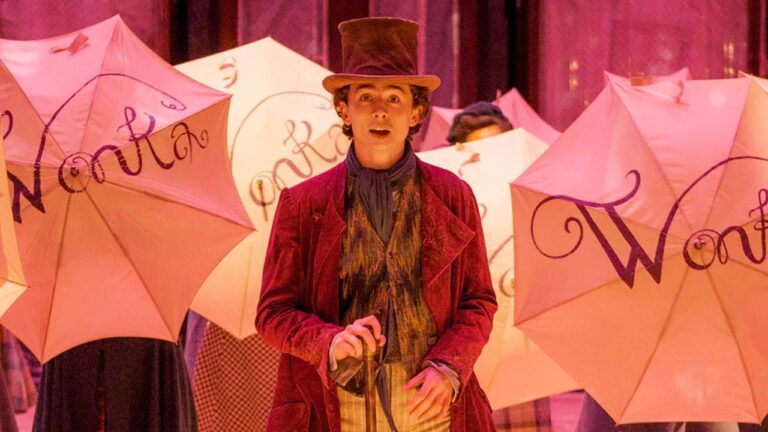
Written by Paul King and Paddington 2 collaborator Simon Farnaby, this Wonka prequel follows the titular character as he arrives in town, waiting to distribute his delicious confections to the world and looking to settle in the chocolatier district of 1930s London. When he arrives, the innocent Wonka (a wonderful Timothรฉe Chalamet) begins a festive song and dances through the cold nighttime streets, giving away all his money to those who need it most. Wonka, about to spend the night freezing on a cold, hard park bench, is approached by a shadowy figure named Bleacher (Tom Davis), who offers him shelter.

Wonka follows and is given a warm bed by Mrs. Scrubbit (a menacingly funny Olivia Colman). So, whatโ€™s the catch? She asks Wonka to sign the contract while encouraging him to ignore the fine print. Even when a local neighborhood child, Noodle (Calah Lane), who works there, tries to warn him, he signs his life away. It turns out Noodle is Mrs. Scrubbit’s and Bleacher’s property. The duo preys on unsuspecting visitors, and they sign into indentured servitude. Along with Abacus (Jim Carter), Piper (Natasha Rothwell), Rottie (Rakhee Thakrar), and Larry Chucklesworth (Rich Fulcher), they are locked in the bottom of the innโ€™s basement, scrubbing the days away.

However, they have no fear. With the help of Noodle and her friends, combined with Wonkaโ€™s precocious nature, they sneak out of the grounds to help build Wonkaโ€™s business. Thatโ€™s until big business does what corporate fat cats do. Led by Slugworth (Paterson Joseph), Fickelgruber (Mathew Baynton), and Prodnose (Matt Lucas), they work together to sabotage Wonkaโ€™s efforts in small business, watering down their product (quite literally) and paying off local political figures to keep their pretty standard treats in the mouths of the community they serve. Frankly, itโ€™s the same plot lifted from David Simonโ€™s The Wire, where Avon Barksdale and Stringer Bell sell inferior products under various labels to control the space, but this is Warner Brothers going for congenial Disney fare, so I digress.

From there, Wonka can be a silly but often charming viewing experience that’s too much goddamn fun to ignore. While anyone can appreciate Timothรฉe Chalamet’s lovely magnetic quickness that he brings to the Willy Wonka role, establishing and spreading a consistent tone throughout the picture, the supporting characters truly shine in King’s film. For one, Keegan-Michael Key is hilarious as a Chief of Police addicted to the chocolate fix the sugar-fat cats have him hooked on as he addresses their needs with amusing intimidation and unlawful arrests.

However, it’s the delightful Hugh Grant, the Wonka world’s first Oompa-Loompa. This is where you may get some of that quintessential Dahl-biting humor. Grant’s delivery (and his silence) is perfection. He steals every scene he’s in. The famous onset (or off) prickly and posh performer has found quite the niche with comic-supporting turns in the likes of Dungeons & Dragons: Honor Among Thieves, Operation Fortune: Ruse de Guerre, and Glass Onion: A Knives Out Mystery. As the young kids say, Grant slays in the role. In other words, he’s funny as hell, and a prequel to his character must be considered.

Neil Hannon and Joby Talbot wrote the music for Wonka, and some beautiful song and dance numbers are tremendous, enchanting fun that bring some unexpected poignant heart. The signature show stopper is Chalametโ€™s lovely rendition of the Gene Wilder classic, “Pure Imagination.” That’s the genius of assigning the Paddington 2 team to helm the new Wonka franchise. At the same time, the film will have its cynical detractors, which is fine. But those musical numbers in the movie have much more heart than expected. Along with Wonka’s backstory, covering the time with his mother (played by Sally Hawkins) has some heavy melancholy notes, sprinkling the film with some depth when needed. The final product is a whimsical and addictive family film. While you may argue some of the guts have been ripped out of the source material (it would be unfair to compare this to the original), Wonka is a delightful, fizzy, and delectable treat. While the filmmakers may lay it on delectably thick, including the film’s laden special effects and a third act that can border on saccharine, Wonka’s modern spin could potentially be a new holiday classic for mainstream movie fans. It should have long legs for years to come.

Grade: B+

Podcast: Nicolas Cage Character Draft – Episode 563

This weekโ€™s episode is brought to you by Koffee Kult. Get 15% OFF with our code: ISF

This week on the InSession Film Podcast, with Dream Scenario coming out soon, we thought it would be fun to do a Nicolas Cage character draft! We also discuss the new Furiosa trailer, Will Smith’s confirmation of I am Legend 2 and whether or not we believe Kevin Feige about RDJ coming back to the MCU.

On that note, check out this week’s show and let us know what you think in the comment section. Thanks for listening and for supporting the InSession Film Podcast!

– JD’s Gloating (1:30)
We apologize once again as we had to start off the show with some more InSession Sports given JD’s Michigan Wolverines winning the B1G Championship once again and other chaos happening around College Football. It’s a sport we love, we can’t help ourselves.

Furiosa Trailer / I am Legend 2 / RDJ (17:08)
As noted above, there were some interesting developments over the last week or so that we wanted to talk about. We all loved Mad Max: Fury Road when it came out a few years ago, so of course we had to touch on the new Furiosa trailer and why it has so many hyped up. The I am Legend 2 news is interesting because its story is specifically pulling from the DVD alternate ending, which isn’t something you see all that often.


RELATED: Listen to Episode 516 of the InSession Film Podcast where we discussed our Top 10 Movies of 2022!


– Nicolas Cage Character Draft (54:59)
Cage is one of the most unique actors of our time. No one has been more meme-ified. No one has more manic energy. He’s a captivating screen presence no matter the movie. There’s no shortage of fascinating characters for this draft and we had a great time talking about what makes Cage so much fun.

– Music
Brothers In Arms – Junkie XL
Children of the New Dawn – Jรณhann Jรณhannsson

Subscribe to our Podcasts RSS
Subscribe to our Podcasts on iTunes
Listen on Spotify
Listen on Stitcher
InSession Film Podcast – Episode 563

Next week on the show:

Wonka

Help Support The InSession Film Podcast

If you want to help support us, there are several ways you can help us and we’d absolutely appreciate it. Every penny goes directly back into supporting the show and we are truly honored and grateful. Thanks for your support and for listening to the InSession Film Podcast!

VISIT OUR DONATE PAGE HERE

Podcast Review: Napoleon

On this episode, JD and Brendan discuss Ridley Scott’s latest film Napoleon, starring the strangely hilarious Joaquin Phoenix! It does appear, sadly that this is another Kingdom of Heaven situation for Ridley Scott as we do know that a 4-hour version is coming to AppleTV soon. The theatrical cut has its limitations and we do our best to talk about what those are here, and what we hope for in the final version.

Review: Napoleon (4:00)
Director: Ridley Scott
Writers: David Scarpa
Stars: Joaquin Phoenix, Vanessa Kirby

Subscribe to our Podcasts RSS
Subscribe to our Podcasts on iTunes
Listen on Spotify
Listen on Stitcher
InSession Film Podcast – Napoleon

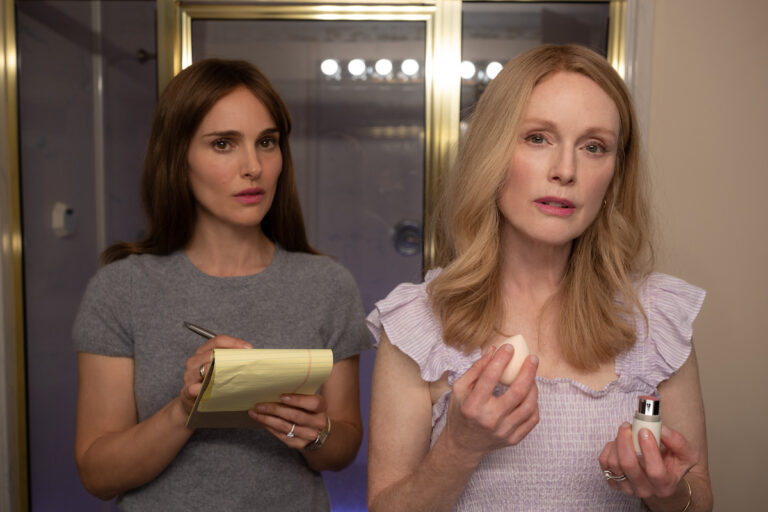
Movie Review: ‘May December’ Balances the Absurd and the Dark


Director: Todd Haynes
Writers Samy Burch
Stars: Julianne Moore, Natalie Portman, Charles Melton

Synopsis: Twenty years after their notorious tabloid romance gripped the nation, a married couple buckles under pressure when an actress arrives to do research for a film about their past.


The Oscars are no strangers to films that delve into controversial topics, especially when the focus is on a relationship involving an adult and a minor. In recent years, they’ve nominated films like Licorice Pizza and Call Me By Your Name, both centering around a romance between a character in their mid-20s and a character whoโ€™s in their late teens. Defenses of these films often range in argument. Some arguments assert that such relationships occur in real life and deserve a realistic depiction, despite the social unacceptability. Others assert that main characters in films donโ€™t need to be morally good characters, and advocate for more films that explore characters existing in an ambiguous gray area, neither wholly good nor bad. While both arguments are valid, I find neither particularly applicable in these instances. I believe that a film should explore controversial topics, but it crosses a line when it starts to endorse them. Iโ€™ve previously spoken out about the problematic nature of the former, highlighting the dangerous precedent these films set with the tones they establish. Both of the mentioned films lean towards romanticizing the relationship between the two main characters, almost as a type of poignant romance that goes against societal standards, and one that they can overcome.

May December follows Elizabeth Berry (Natalie Portman), an actress chosen to portray the “real-life” figure Gracie Atherton-Yoo (Julianne Moore). Elizabeth travels to Savannah, Georgia, to delve into the lives of Gracie and her husband, Joe Yoo (Charlies Melton), who gained tabloid attention for their illicit affair when Gracie was 36 and Joe was just 13. I approached the film with some apprehension due to the subject matter and the poor execution of similar films that have come before. The film focuses on these characters as adults, providing ample space to explore the nuanced consequences of their relationship. This approach allows the characters to navigate the moral gray area in which they reside, helping the audience understand the motivations behind their actions without ever justifying them. May December intricately examines the problematic relationship at the heart of the film, all while incorporating a playful and campy atmosphere reminiscent of a daytime soap opera.

The most intriguing aspect of May December lies in the relationship at the film’s center between Moore and Melton’s characters. Todd Haynes skillfully crafts the dynamic between these two, revealing the disturbing nature of its conception while portraying them as a seemingly normal couple. Gracie,(Moore), stands out as one of the most captivating characters to grace our screens in quite a while. Clearly a deeply troubled individual, she exhibits multiple instances of an unstable nature, experiencing crying fits and breakdowns over the most minute nuisances in everyday life, suggesting that thereโ€™s something more going on underneath the surface. As the film progresses, we gain insight into how she perceives her relationship with a man she pursued while he was still a minor, and how she constructs a narrative to justify it to herself. Joe (Melton), now an adult, initially appears to navigate the disturbingly unique predicament adeptly. However, as the story unfolds, we realize he’s merely cosplaying as an adult, still emotionally and mentally stunted at the age when Gracie initiated contact with him. Haynes doesn’t shy away from addressing the troublesome nature of this courtship, yet he skillfully infuses profound humanity into the characters at its core.

The addition of Portmanโ€™s character into their life only further highlights the rift between the two, and how starkly different they are from each other. As the film progresses, their relationship only continues to crumble apart, as Portman begins to pry into their personal lives and unravel the core of their connection. Adding another layer of complexity to the narrative, Portman’s character, Elizabeth, sets the stage for the film’s exploration of not only personal relationships but also its stylistic choices. Following the pattern of the other characters in the film, Elizabeth is nearly as morally ambiguous as the others. With a polite and charming demeanor, as an actor, you can see what kind of lengths sheโ€™ll go to as part of her pseudo investigative journalism, trying to truly tap into who Gracie is as a human, even if that means causing colossal shifts in her everyday life, all for the chance at trying to make future her character on screen appear more โ€œrealโ€.

Stylistically, Haynes effortlessly balances the dark and serious tones of the context when necessary and isnโ€™t afraid to poke fun at the inherent absurdity of the film’s nature as well. Particularly, the use of the score truly emphasizes moments of over-the-top dramatization, giving the film an almost daytime soap opera quality that makes it incredibly entertaining to watch. Conversely, he knows when to focus on the seriousness of the matter, directing the performers to heartbreaking places that will shake you to your core. The dichotomy of the campy tones of the film alongside the intense realism provides for a fantastic viewing experience. Although Haynes might occasionally grapple with pacing issues and trying to establish the exact direction of the film, once youโ€™re settled in, it easily becomes one of this yearโ€™s best viewing experiences.


While May December on its surface might seem like an off-putting film about an incredibly controversial topic, the way it deals with the themes, narratives, and characters it presents is flawlessly executed. With hilarious moments of absolute absurdity intermingled with some of the most intensely dramatic scenes in film this year, it’s undoubtedly an experience that will not disappoint.

Grade: A-

Podcast Review: Poor Things

On this episode, JD and Brendan discuss the latest film from Yorgos Lanthimos in Poor Things, starring an incredible Emma Stone! In many respects this may be his strangest film yet, which is saying something, but it’s also up there as some of his best work. At least depending on who you ask.

Review: Poor Things (4:00)
Director: Yorgos Lanthimos
Writers: Tony McNamara
Stars: Emma Stone, Mark Ruffalo, Willem Dafoe

Subscribe to our Podcasts RSS
Subscribe to our Podcasts on iTunes
Listen on Spotify
Listen on Stitcher
InSession Film Podcast – Poor Things

Classic Movie Review: ‘Solaris’ Unmoors the Audience


Director: Andrei Tarkovsky
Writers: Stanislaw Lem, Fridrikh Gorenshteyn, Andrei Tarkovsky
Stars: Natalya Bondarchuk, Donatas Banionis, Jรผri Jรคrvet

Synopsis: A psychologist is sent to a station orbiting a distant planet in order to discover what has caused the crew to go insane.


This film was viewed as part of the event, โ€œTarkovsky: 6 Films, Master Works by a Master of Cinema,โ€ at the Kentucky Theatre, accompanied by a Q&A by Raymond De Luca, Assistant Professor of Russian Studies and International Film Studies at the University of Kentucky

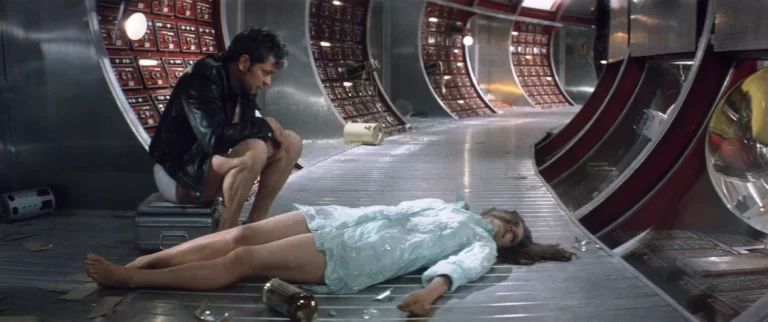
In my watch of (hopefully) all of the great works by Andrei Tarkovsky, we come to probably his most well-known film, Solaris. Now donโ€™t assume that this is more approachable due to this fact, it is likely only known due to a remake from some guys named Steven Soderbergh and George Clooney. That film hewed closer to the original source novel, and, as a side note, Tarkovsky definitely does not care about being deferential to source material. Solaris is a prime example, instead focusing on Tarkovskyโ€™s views on humanity and supposed technological progress. 

I would argue that this is, so far, the most opaque and confusing Tarkovsky work (but donโ€™t worry, Mirror is just around the corner to blow this out of the water as far as that goes. The plot of Solaris, such as it is, focuses on psychologist Kris Kelvin (Donatas Banionis) who is being shipped to a space station, wherein every member is either perished or undergoing an emotional crisis. Not shockingly, Kelvin endures his own terrifying emotional collapse while onboard. 

But, as you may have noticed, plot is not terribly important to Tarkovsky. It is a means to an end. Tarkovsky also seems to desire his audience to feel unmoored and confused throughout the runtime. This is a feature, not a bug. We feel exactly as Kelvin does, unsure of what is real or if anything means anything. One could write an entire feature on his use of light, color, and focus during Solaris, and in my opinion, get no closer to truth or awareness. So, although these visuals are stunning and capture the attention, our focus should be on the internal and not the external.

As with all great science fiction, outer space reflects on our inner space and what it means to be human. I wonโ€™t go as far as to say that none of the events in outer space matter, but they force us (and the characters) to reflect on what matters and where we are headed.  This is highlighted by the fact that the most important interaction with the โ€œaliensโ€ is when they take the form of Kelvinโ€™s dead wife, Khari (Natalya Bondarchuk). 

Although it is unclear why at the outset of Khariโ€™s appearance, there is a deep sadness present in the spaces between their grateful and loving interactions. We, as humans, are constantly poisoned by our deep seeded regret and loss. There are losses that we never recover from. There is ground that we can never make up. Itโ€™s another jab to the audience, that Kelvin is a clinical psychologist. This is a man who (we assume) deals with loss, regret, pain, and pathology on a daily basis. And yet, he is unable to let go. 

In an early scene in the film, Tarkovky forced us again, to look at ourselves. In a mockery of a space shuttle launch, he shows us Tokyo. At the time, Tokyo had just created a labyrinthine series of highways to show off our modernity and progress. This scene, in a true test of patience, lasts nearly seven minutes, almost challenging you to take a break, at least mentally. These highways, gorgeous to look at, also hide poverty and struggle. 

Tarkovsky, in this moment, and throughout the runtime, forces us to face the fact that we are so focused on our great triumphs, that we forget the people we have lost and where our focus should be. Solaris is a success in many ways, but his unwillingness to not leave his audience behind creates a grand challenge. This is not so great for a first time watch, but tends to be more rewarding (and more frustrating) on repeated viewings.

Grade: A-