



ComMANNdment #7: Women Will be Secondary
Many arguments could be made as to why Michael Mann’s movies focus solely on men: the occupations we are following, the stereotypical nature of men as criminals, or that Mann is a man (sorry about that) and does not want to write complex, female characters. However, it would be an error on my part to not point out the obvious lack of depth in Mann’s female characters and how more often than not they are used for exploitative, sexual purposes: underwritten with unnecessary sex scenes.
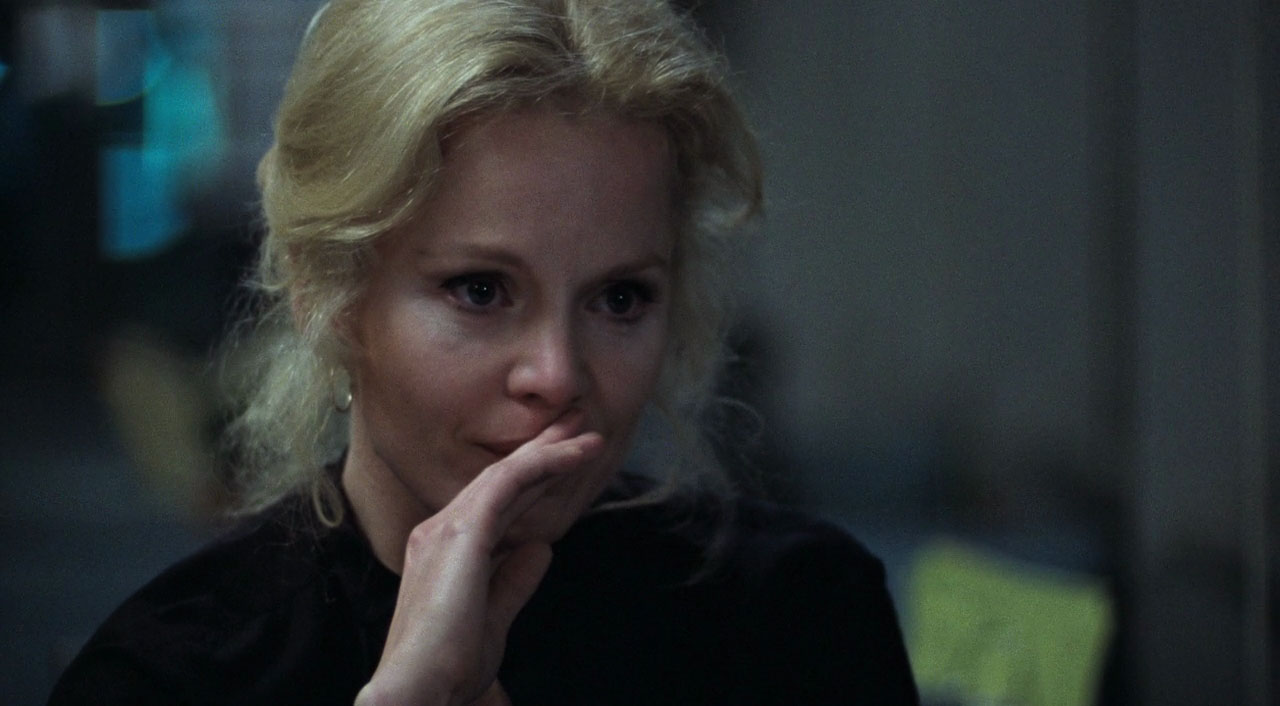
Tuesday Weld in Thief as Jessie holds her own and I attest that her scene of intimacy with James Caan was both brief and tasteful. Jessie’s backstory rivals Frank’s as far as complicated, crime filled histories are concerned and it makes me want to know more about the intricate details of her life with her now deceased first husband. Credit both Mann for the writing and Weld for the performance on that one. However, by the end of the movie Jessie (and their newly acquired David) are shed by Frank because he has put their lives at risk by standing up to Leo. Is it necessary that Frank gets Jessie and David to leave for their protection? Sure. Could more have been given to Jessie’s character to show how much she cares about the solidity of her new family? Absolutely.
If Jessie escaped Thief relatively unscathed, then by comparison Alberta Watson as Eva in The Keep did not. Poor Eva is both a victim of being underwritten and put in not just one, but two unnecessary sex scenes. As far as being underwritten goes, I need to acknowledge two sides to this idea. The fact that Paramount hacked the final cut of this movie to bits does not help Eva’s being underdeveloped. The same studio also kept an overly long scene between Woermann and Kaempffer without being trimmed, the attempted rape of Eva (woman as victim of sex), and her passionate sex scene with Glaeken (women as sex-starved vixen) and felt they were worthy of remaining. And while it is easy to dunk on poor executive choices, Mann did write the screenplay and shoot the film, and this trend continues down the line.
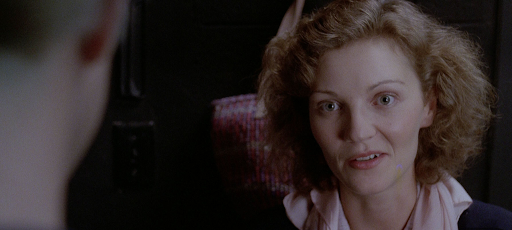
Manhunter gives us two for the price of one as far as underwritten female characters go: Kim Greist as Molly (Will’s wife) and Joan Allen as Reba (Francis’ short-lived love interest). While each of these actors are involved in a sex scene, the gratuitous nature of both is tuned down: no nudity, the sexual encounters do not occupy a lot of screen time, and the threat of violence in both are non-existent (Dolarhyde being incapable of harming Reba at that moment). From a narrative standpoint, both Molly and Reba do play pivotal roles, but only in relation to their male counterparts. For Molly, she is the physical embodiment of the life that Will wants to have – the phone call he makes to her late at night just to hear her voice says a lot about their relationship, but it is more impactful to Will than to Molly. For Reba, her entire arc is to be the object of sexual desire for Francis and to willingly make sexual advances towards him with the ultimate conclusion of almost being killed. All we know in relation to these characters is what they mean to the complicated, lone male figures that make up this movie.
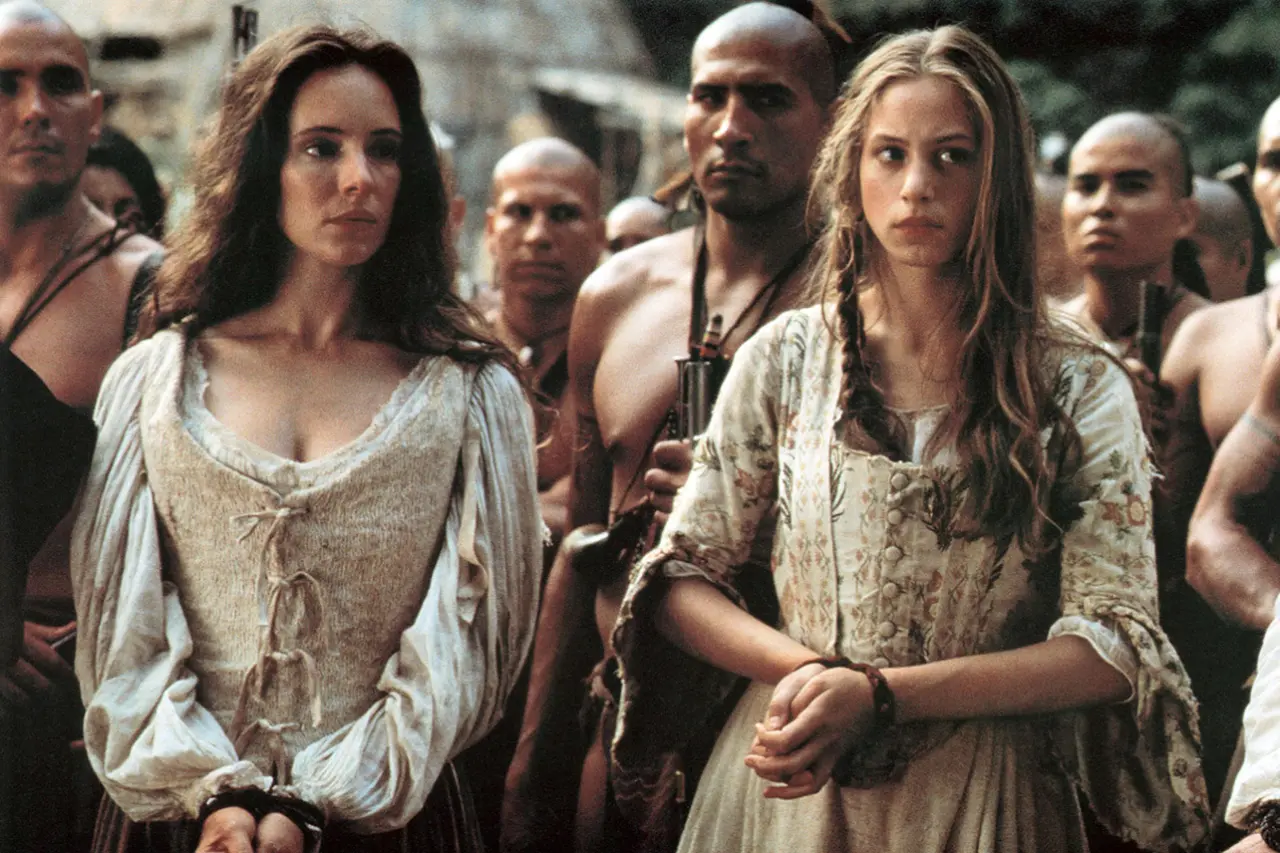
The Last of the Mohicans is where the underwritten aspect takes a different shape as we explore Cora and Alice. Not to shun her, but Alice’s character is simply smaller: she is a side character and her overall arc is not what we are focusing on when we watch the film. And yet we still see the connection between her and Uncas and the pain that occurs internally for her when she sees him fall under Magua’s knife and pushed off the side of the cliff. While Alice and Uncas are secondary characters, we still feel for them and their quietly emotional resonance – proving that they are not underwritten. This brings us to Cora – who I believe is the most fully formed, well-rounded, and vocal female that Mann has brought to screen. Played in a career-best performance by Madeline Stowe, Cora is observant and not one to form to social norms – we see this when she rebukes Duncan’s offer of marriage. Cora is also not afraid to both speak her mind and admit when she was wrong, the former shown when she tells her father that she should be hanged as well and the latter when she starts to see Nathaniel in a new light and not as the savage man that she believes he is during their first interaction. This segues nicely into their romantic relationship and whether their sex scene is necessary. Simply put, the scene in which Cora and Nathaniel finally kiss and embrace each other romantically feels passionate, immediate, and absolutely not gratuitous. There is no nudity in the scene and yet the eroticism leaps off the screen. With the background of war ever-looming in our minds and death always waiting nearby, their love feels reactionary to time being against them, but never feels unnecessary. There will always be exceptions to the rules and The Last of the Mohicans proves that this ComMANNdment does not fit here.
At this point in Mann’s career, most of his films have one main female character of any note. Given the epic and sprawling nature of the storyline in Heat, we now get multiple underwritten women. While I could have included both Lauren and Lillian in this list, I feel like their parts are just small enough to leave alone. Instead, I will choose to focus on our three lead’s significant others: Justine (Diane Venora), Eady (Amy Brennerman), and Charlene (Ashley Judd). To begin, a brief preamble: I think all these performances are solid and may be Ashley Judd’s best work. Any criticisms here are only of the characters as written. These women are very surface level and stereotypical: Justine is sexually frustrated and has become so addicted to pills that she ignores every warning sign from her daughter that something is wrong; Eady is the quiet, somewhat nerdy sexually deprived woman who is so in need of a man that she immediately falls for the wrong one; and Charlene – the vixen with a complicated (and possibly criminal) past who is in too deep but just can’t shake the “love” she feels for Chris. These women, all three of them, get pushed around and only makes decisions in relation to the men in their lives: Justine ends up back in Vincent’s arms as he heroically brings Lauren to the hospital, Eady willingly decides to fly to New Zealand with a known criminal associated with robbery and murder, and Justine determines that she should alert Chris to the police who are waiting for him instead of letting him get caught and possibly ending a cycle of crime and violence for their son. Our men here get full backstories, just not the women.
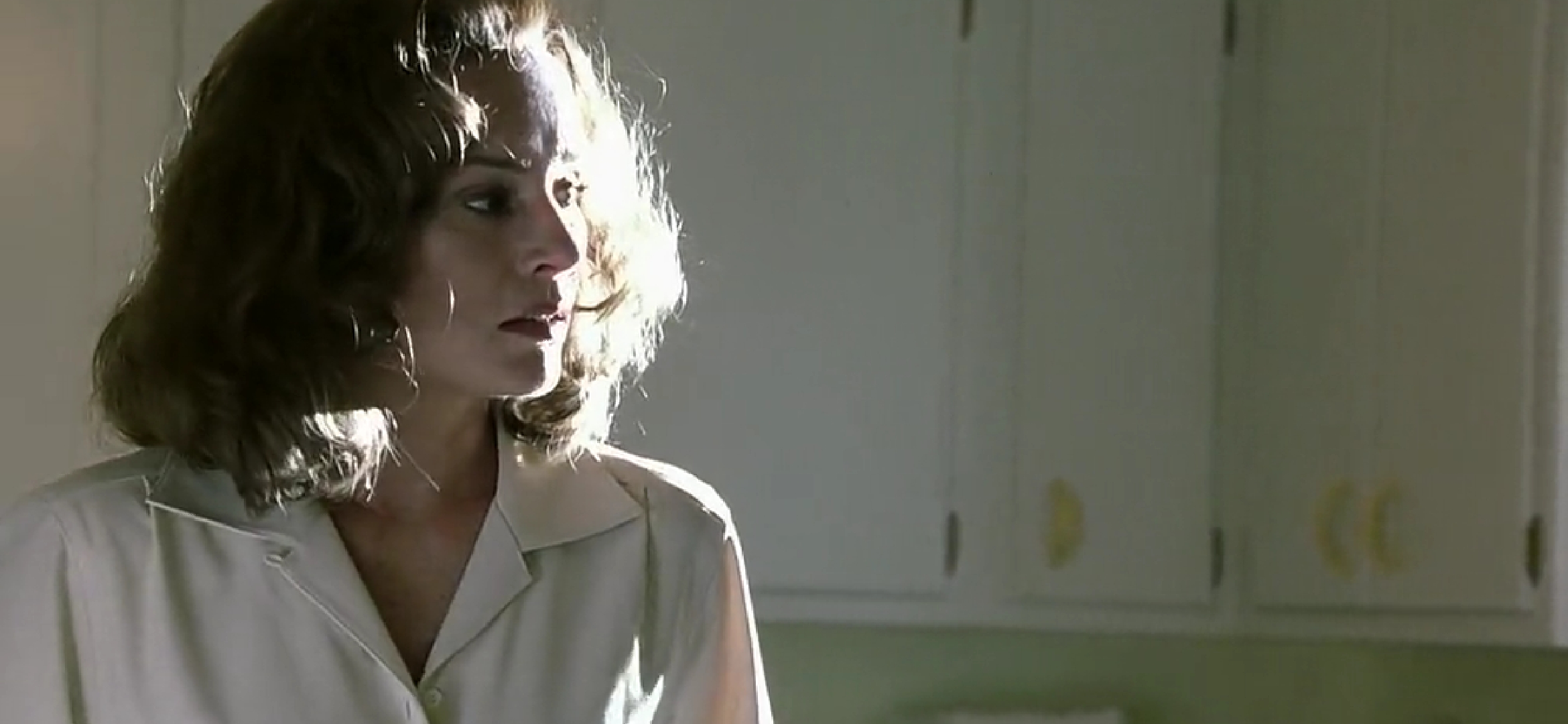
Right off the bat I can announce with a wry smile that there is no unnecessary sex scene in The Insider…YAY! MANN DID IT! … However, he still commits the first part of this filmmaking (or should I say storytelling?) sin – underwritten women. This is the second consecutive film in which Diane Venora plays a wife and mother who is simply there to propel and set up future choices and character development for the co-male lead of a Michael Mann film. Liane Wigand, as written on the page and then subsequently shown on screen, is a hard woman to support. Our first interaction with her is early in the film when Jeffrey arrives home early from work after having been fired (an event that she is unaware of at the moment, to her credit). She seems to be relaxed while having a cold beverage outside on a nice day at their very lavish house. Later that day, Liane asks where her coffee mug is and Jeffrey says that she should check the car. Jeffrey claiming to need soy sauce at that precise moment also goes outside as Liane asks about the boxes in his car. He finally admits to having been fired and instead of an embrace of empathy Liane reacts with mild hostility asking about how they are going to pay for bills and health medications (in a “save the cat” moment earlier, we see Jeffrey give his daughter medicine for her asthma in a calm and educational manner).
After he assures her that money will continue coming in and that health benefits won’t be terminated, he leaves in the car with Liane left to wallow in her selfishness. An exasperated and half-hearted “Jeffrey!” gets said, but at this point we know what Mann is trying to do: planting the seed of the wife who won’t support her husband when things get tough. The loop of this idea gets closed right before Jeffrey goes down to Mississippi to give his deposition. Bergman has arranged for security to stay with the Wigands after threats had been made – a decision that Liane does not approve of. That night, while Jeffrey is working downstairs, she goes to see him. She sits on the stairs and says, “I don’t think I can do this. I want to stand by my husband…but I don’t think I can do this anymore. I’m so sorry.” Jeffrey asks if they can talk about this after he gets back and she says yes, but the look on her face tells us what we already know but that Jeffrey can’t see yet: she is going to leave him. I want to make it clear that I am not saying Diane Venora is doing a bad acting job in the film, but this character is only here to put new and difficult obstacles in her husband’s path (and to the point of talking about Crowe’s performance – it works! Crowe gives a detailed and precise performance that brought him his first Academy Award nomination).
During the film Ali, our titular character makes comments about being a womanizer and one who cannot keep his eyes (or hands) off of women. Given this personality trait in combination with a woman’s place within the Islamic community, it doesn’t take much to show women as subservient and objects of lust only. Over the course of the film, we see Ali marry two different women and meet one who will eventually be his third wife (not to mention the fourth he married in real life that we don’t see). If we focus on Sonji (Jada Pinkett Smith) and Belinda (Nona Baye), each of them are essentially replaced for different reasons. Sonji converts to Islam even though her lifestyle and personality clashes with core Islamic principles and her “assets” that drew in Ali initially also become the fuel that burns out their marriage. With Belinda, we meet a woman who believes in Islam and is an active partner of Ali: she genuinely cares for him. However, when she starts more freely speaking her mind and calling out Ali’s infidelities, she becomes another woman to be shunned by the heavyweight champ. I understand that the real Muhammad Ali married multiple times and that the film should not change history, but as presented women seem to be nothing more that sexual beings meant to be quiet and subservient to men – furthering the stigma that Mann has a hard time telling stories with strong female characters.

Jada Pinkett-Smith returns to this ComMANNdment for Collateral, but this time only as the underwritten woman. The introduction to her character is brilliantly setup in a Hitchcockian style: bring her in early, let her have an impact on our lead, make it seem like she will only be another idea in Max’s life that he won’t follow up on, and then have her come back full circle when we were least expecting it. GREAT! Her initial scene with Max is pleasantly aggressive and they both let their guards down and enjoy a very nice moment with each other. Here’s the rub: when she returns to the film it is for no other purpose than to become the damsel in distress for Max to save. In another movie with another character, it might not be so glaring, but in Collateral, it feels noticeable. On the phone, we hear her as a powerful woman in control of herself and very determined. Yes, she admits to getting nervous the night before her first day in court, but goes on to explain that her feeling of trepidation goes away. She is capable and the movie does her a disservice by making her seem helpless when Vincent arrives at her law office. Can Max be there to help? Of course – he doesn’t want her to die and knows what Vincent is capable of. Could she be more helpful and less “woe is me” during the movie’s finale? Absolutely. Mann was so close to not committing this cardinal sin, but the third act of this film falls into standard thriller movie tropes and the woman needing to be rescued just couldn’t be ignored.
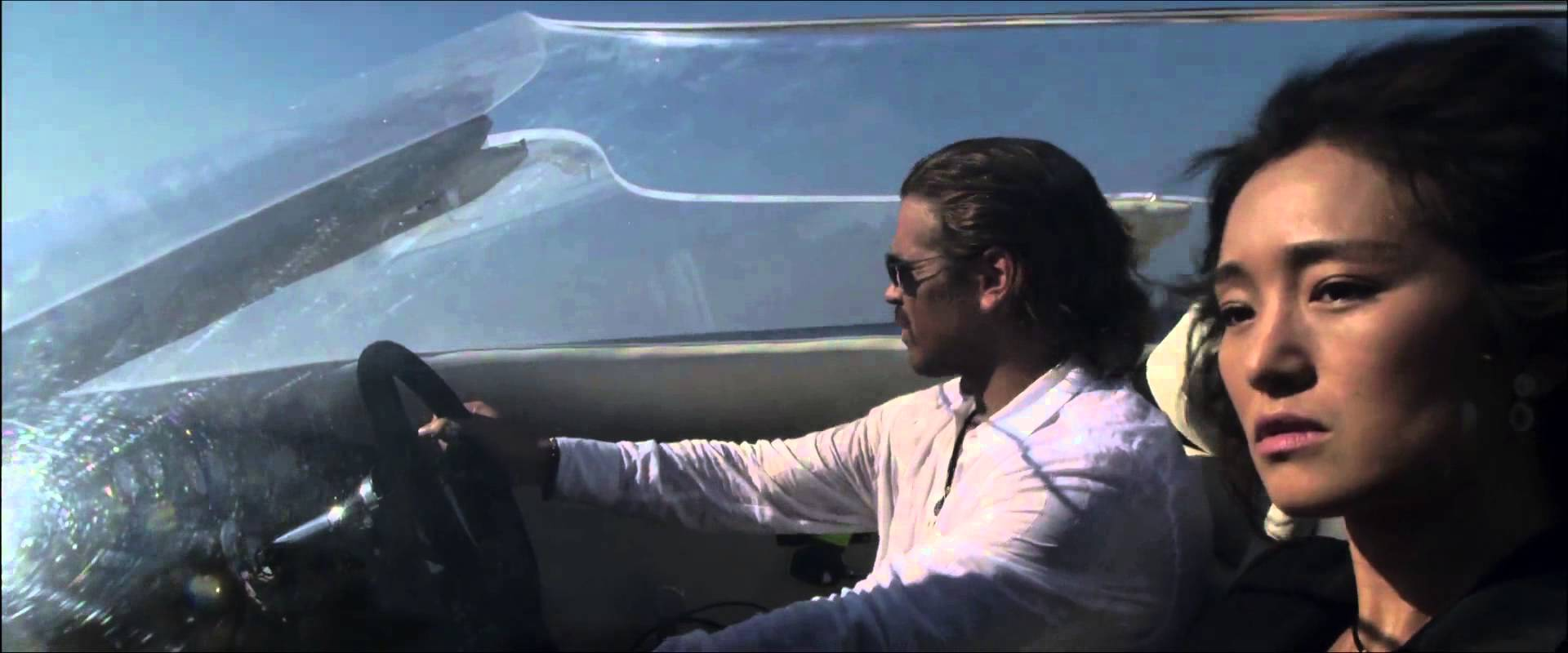
Women are pawns or sex objects (or both) in Miami Vice…I wish I could make a strong case against this, but I can’t. A great example of a strong, female character who isn’t (at least overly) sexualized is Gina, played by Elizabeth Rodriguez: she holds her own in the shootouts and feels like her own person. However, I need to focus on Gong Li, Naomie Harris, and the bevvy of women in the opening scene – let’s start in that Miami club. If you watch the theatrical version of the film, you are introduced to women dancing in the club. This sets up the expectations that this is a “man’s world” (or “Mann’s world” if you like bad humor) where women will be viewed as objects to be pursued sexually. With Naomie Harris as Trudy, it is clear what Mann is trying to do: create a relationship between her and Rico that is compassionate while also giving her agency as a solo figure within this police unit. The problem here is that Harris is both used sexually (her shower/sex scene with Foxx) and as a pawn after she is kidnapped by the Aryan Brotherhood as leverage for the drug delivery. Additionally, Gong Li as Isabella is set up in the same way. She is a smart, savvy businesswoman who is out for herself, and yet becomes immediately enamored with Sonny, has sex with him, and then becomes the damsel in the final shootout. Miami Vice marks Mann’s ninth theatrically released film, but it will still take a few more swings before we get to a woman who truly holds her own in a film.
Mann may have went back around eight decades or so, but the connective tissue from Miami Vice to Public Enemies is strong: both have two, strong, male leads; both are about opposing sides of the law; and both feature women as purely supporting parts that are merely there to be eye candy or as pawns and/or obstacles for our leads to use. And while the female cast of Miami Vice is solid (and I will say nothing disparaging about them here), Public Enemies has some of the most talented actresses being reduced to damsels in distress or slid into one scene (in the case of Carey Mulligan – what a career she would go on to create after this film). Marion Cotillard is both underwritten and part of an unnecessary sex scene. You could say that the first time Billie and Dillinger have sex it is at least shot tastefully: no nudity, darkly lit, mostly a romantic and passionate vibe. However, this is not the scene that feels unnecessary: it is the Phoenix hotel bathtub scene. At this point, Billie has accepted that Dillinger is a criminal whose life could be taken at any moment. Instead of having a rational conversation about how this relationship is going to work, she is nude in a bathtub and waiting for him to have his way with her. I wish I could say it gets better for Billie, but it does not. She becomes a pawn of the FBI and is tortured to the point of urinating all over herself. I understand that this is showing the depravity and awful interrogative techniques used by the FBI, but I cannot help but see this character as a tool to get Dillinger to have more exciting scenes. Billie is left cold, alone, and offscreen.
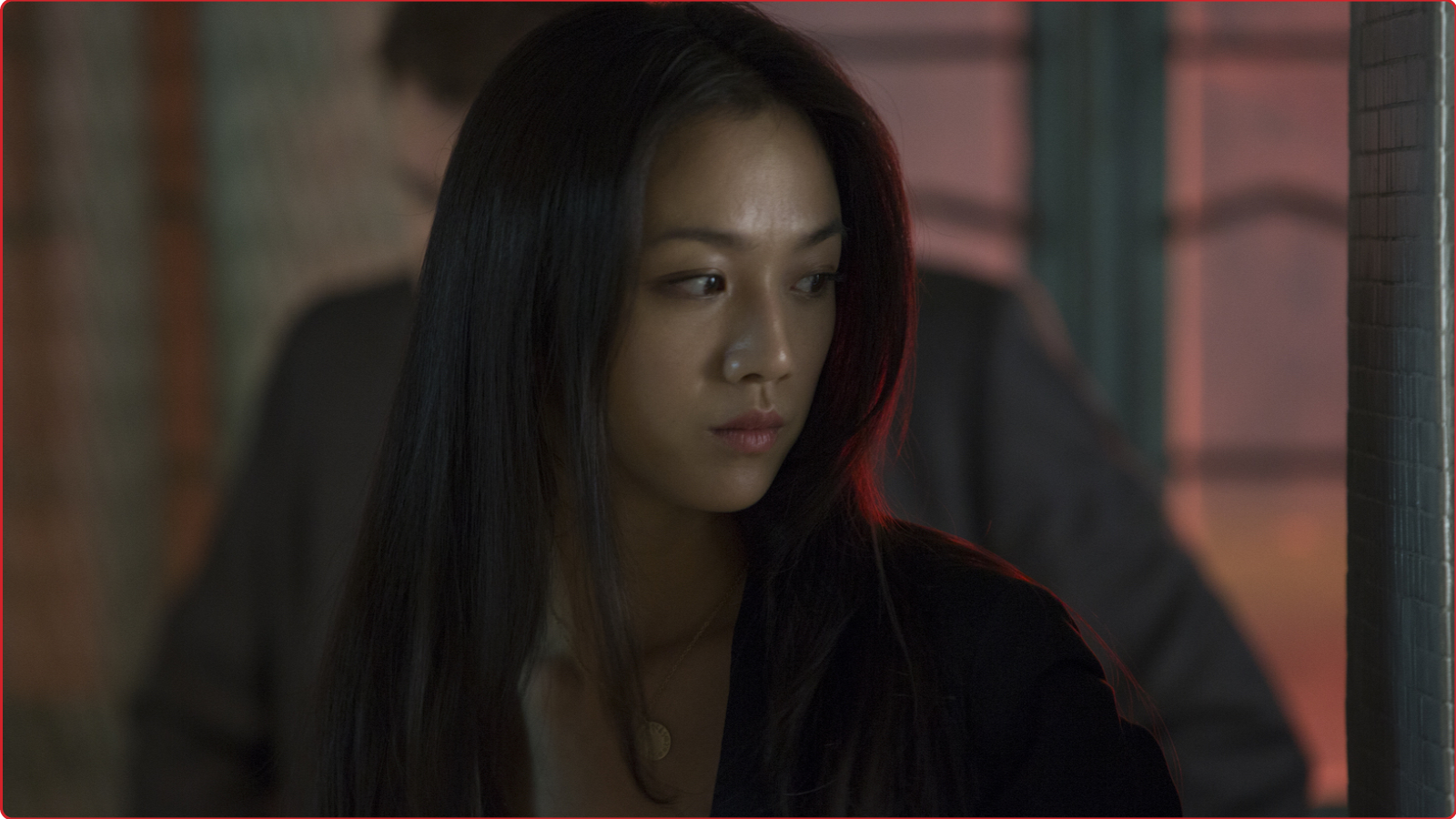
If you want to see how two different levels of female actresses can be underwritten in different ways, look no further than Tang Wei as Lien and Viola Davis as Carol in Blackhat. We’ll start with Lien as this character is also included in some unnecessary sex scenes. The film tells us early on that Lien is highly educated, successful in the world of computers, and does not need a man to tell her what to do. Given all of that information, why is it that she almost instantly becomes a cyber-moron in relation to Hathaway? Why does she become so infatuated to the point of becoming incapable of basic tasks? Later, after three members of their team have been killed, Lien becomes a more pivotal figure, but I would also point out that she continuously responds to Hathaway’s beck and call – as if she were his servant. And on top of all that, after almost no real chemistry between these two, Lien and Hathaway begin a sexual relationship – why? To throw one more complication into the mix and have Hathaway and Dawai start to question each other? To really earn that R rating? To reinforce just how in love these two are?
Okay…enough about Lien – let’s move on to Carol. Viola Davis is an astounding actress with a screen presence that is nothing short of magnetic. When she convinces/coerces “Gary the stock guy” to provide her team with information, you are utterly enthralled with her. In fact, the most grounded and relatable part of the film is her character because Carol has to walk this fine line between upholding the laws of justice in relation to Hathaway while also trying to catch the bad guys. Mann almost got through the movie without screwing this character up…and then he pulled out 9/11. From a chauvinistic standpoint, I understand why Mann puts in unnecessary sex scenes: nudity can help get butts in seats. But why overly complicate a character whose motivations were perfectly fine the way they were? And as if to fully make the point while visually talking down to us, the last image Carol sees before she dies is a tall building – not unlike the World Trade Center towers that fell. With all due respect to a director that I highly admire, Mr. Mann very much bungled this character.
The two-sided nature of this ComMANNdment gives me plenty to talk about. We must start with this: not only does Ferrari give us two female characters with fleshed out backstories and true points-of-view, but Penelope Cruz as Laura steals the film and is easily the best performance in the movie. Her motivations are believable, her jealousy is understood, and her actions are loud, strong, and very cinematic. And even though I am low on Woodley’s performance, Lina is understandable and sympathetic: her son is going to be christened soon and she wants to know what his last name will be. These two form opposite ends of Enzo’s love spectrum – and I do mean love as HE believes that he loves both. Twelve feature films in and Mann has got female characters with strong objectives…but he couldn’t resist himself with the unnecessary sex scenes. There are two worth mentioning – we’ll start with one that is unnecessary because of the character involved. After meeting the whole Ferrari team at a lunch, we later see De Portago in his hotel room with his girlfriend, Linda (too many female “L” names in this movie), and, in a moment of celebration, he runs in naked and they start to have sex. What we’re supposed to take away from this is that they are in love and it will be even more devastating when he dies and she is there waiting for him at the finish line. The other sex scene involves Laura and Enzo and it occurs when he asks her to sign over her share of the company to him. Their passion takes them over and they have sex right there on the kitchen table…even though their loathing for one another (or least her to him) is at its highest. The scene feels disingenuous, especially when you clock the title card at the end saying that Lina and Enzo got together as soon as Laura died. Mann got himself two great female characters in this movie – it’s just a shame that he had to force in unnecessary sex scenes.