



“There is no land of tolerance. There is no peace. Not here, or anywhere else. Women and children, whole families destroyed, simply because they were born different from those in power.”

These words uttered by Magneto (Sir Ian McKellen) in the original X-Men, which turns 25 this month, are used to try rationalizing his diabolical plan to Rogue (Anna Paquin) to turn world leaders into the mutants they fear in order to protect mutantkind. However, his speech proves to be as much about the state of America as it is about the mutant conflict.
Magneto’s words have rung more true since that fateful Presidential election this past November and were seared deep into my head in the days after it took place. Because no matter how much progress has been made in America, like the Supreme Court legalizing same-sex marriage ten years ago, there are still always those trying to undo it. Even people who claim to not be racist, xenophobic, sexist, and/or homophobic still saying these forms of bigotry weren’t a dealbreaker when they voted Trump into office, has only made me, and surely most of us, believing Magneto’s words about there being no peace or tolerance in what’s supposed to be the land of opportunity even more.

As long as there are those who excuse intolerance as well as those exercising it, maybe the dream of peaceful co-existence between humans and mutantkind that Professor Charles Xavier (Patrick Stewart) and his X-Men fight for is just that. A dream. Then again, even an optimist like Professor X would attest to the fact that the time to reach that dream is as slow as the evolution of the mutant gene. As he says in the opening narration of X2: X-Men United, “Sharing the world has never been humanity’s defining attribute.” Something we learned the hard way in November. Yet, like the X-Men, we still fight on.
Although the comics that X-Men is based on were always known for the mutant conflict being an allegory for the struggles facing various marginalized groups, the film and its story remain as timely as ever. During the film’s beginning, Senator Robert Kelly (Bruce Davison) is proposing the Mutant Registration Act which would force mutants and their abilities to be publicly identified, and the way Kelly describes mutants as if they’re a threat provides echoes of how RFK Jr. is antagonizing autistic citizens. Also, given how Kelly’s attempted legislation would force mutants to be ‘outed’ to the public, Senator Kelly could easily serve as a stand-in for Florida Gov. Ron DeSantis whose “Don’t Say Gay” bill caused a ripple effect across the country, prompting other states to propose similar anti-LGBTQ legislations on queer and trans youths.
The moment after Kelly receives thunderous applause where Professor Xavier crosses paths with Magneto and attempts to reason with him becomes the thesis of Magneto’s arc. Despite his attempt at protecting his species, Magneto’s warned by Professor X, and the other X-Men throughout the film, not to carry out his plan to avoid continuing the cycle of hate that, as both a mutant and Holocaust survivor, he’s painfully experienced. Even when Magneto and his Brotherhood of Mutants kidnap the hateful Senator Kelly, Kelly reminds Magneto that he’s giving him more of a reason to distrust mutantkind.

Interestingly, after the aforementioned scene involving two figures who possess the same ideology with different methods, we’re then introduced to a character who falls somewhere in the middle. The character we all know and have to come to love as Wolverine (Hugh Jackman, in his star-making role). A gruff nomadic cage fighter, Wolverine is someone who initially tries drifting through life without looking for a place in the fight with humankind. As much as he believes fighting for a peaceful ideal the way the X-Men are in a world afraid of his existence is a doomed venture, he’s not looking for the same fight as Magneto. Instead, he’s just trying to survive each day.
It’s when he and Rogue cross paths that he has a small change of heart. After drifting through life in solitude, Wolverine gives Rogue a lift in his mobile home and finally opens up to someone else as they both converse over the struggle of living with their abilities, forming a quick sense of community. Even after being rescued and put under the care of the X-Men, Wolverine prioritizes being a surrogate father for Rogue, focusing on her well-being above all else. In the middle, as he first is about joining the X-Men, he still encourages Rogue to give them a chance when she tries running away on the promise he’ll look after her and also because communities only feel strength in numbers.
Furthermore, Wolverine becomes a more vital character in the climax by calling Magneto out on his faulty plan in a rather bold manner. When Magneto kidnaps the X-Men before carrying out his plan to transfer his abilities to Rogue for her to power his radiation device, he angrily explains his fear of government leaders who decide the fate of mutants through policies and executive orders. Yet, what fully compels Magneto to move forward with his plan is when Wolverine dares to tell Magneto he’s not as noble to his own cause, delivering what is arguably the best line in the whole movie (“If you were really so righteous, it’d be YOU in that thing!”). By attempting to risk the life of a young mutant while believing he’s a hero in his own mind, Magneto becomes prone to the same hypocrisy as the politicians he aims to dismantle.
In hindsight, as X-Men plays into our current political zeitgeist, it’s Wolverine whose arc is the most difficult for us to navigate in real life. As easy as it is to be a Magneto and fully succumb to rage and anger, it takes great strength to be a Wolverine or an X-Man by finding community and choosing not to live in isolation.
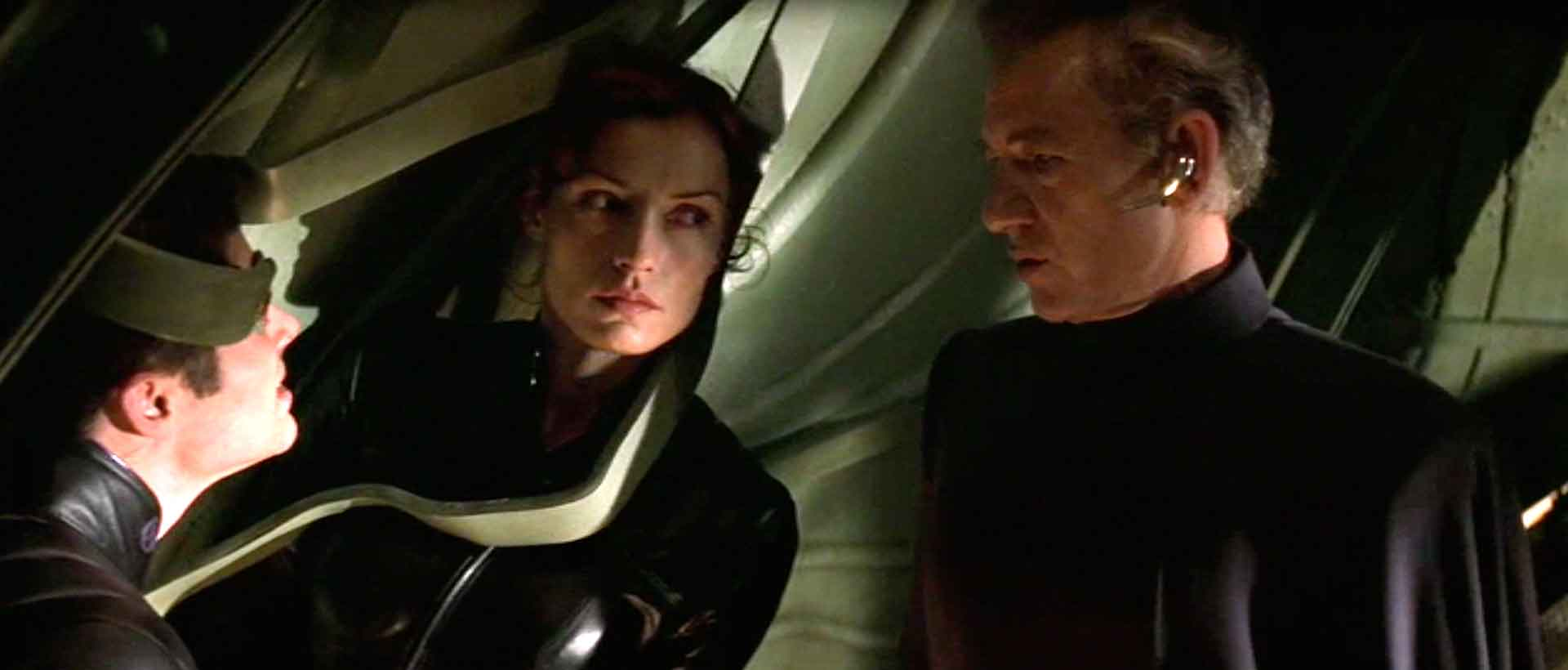
As I write this article, I still feel as angry as I did the days after Election Day. With each passing executive order, I feel the need to go back to Magneto’s select words where he dispels the belief of the American Dream. My sleepless nights grow more sleepless while my panic attacks become more physically crippling than usual. But because communities see strength in numbers, I still aim towards the same path as the titular heroes who were the heroes of my childhood. I know that as we protest on the streets and also make our voices heard when midterm elections come, it won’t fix things instantly. But us peacefully coming together while angrily denouncing every decision made by the Trump administration allows us to challenge the presidency’s aims to make us feel alone and powerless.
After all, it’s a step toward the very dream that Professor X would want if he were real.