Directors: Jean-Pierre Dardenne, Luc Dardenne
Writers: Jean-Pierre Dardenne, Luc Dardenne
Stars: Lucie Laruelle, Babette Verbeek, Elsa Houben
Synopsis: In a shelter in Liège, Belgium, a group of young women face the challenges and exhilaration of motherhood. Looking ahead to an uncertain future, the new mothers aspire to break free of the past and not repeat the cycles of neglect, abuse, and abandonment that have defined their young lives.
The Dardenne brothers may be far removed from their most-known – and acclaimed – film, the Palme-d’Or winning Rosetta, but they are still making deeply human and necessary pieces of work, as illustrated in their latest effort, the quasi-anthological docudrama Young Mothers. Were it not for a framing device that interlinks each of the four women’s stories together, Jean-Pierre and Luc Dardenne could’ve easily made four separate shorts focusing on each of the people we meet over the course of its 106-minute runtime. All of them live in a shelter for young mothers in Liège, and have respective challenges they try to overcome in their individual lives.
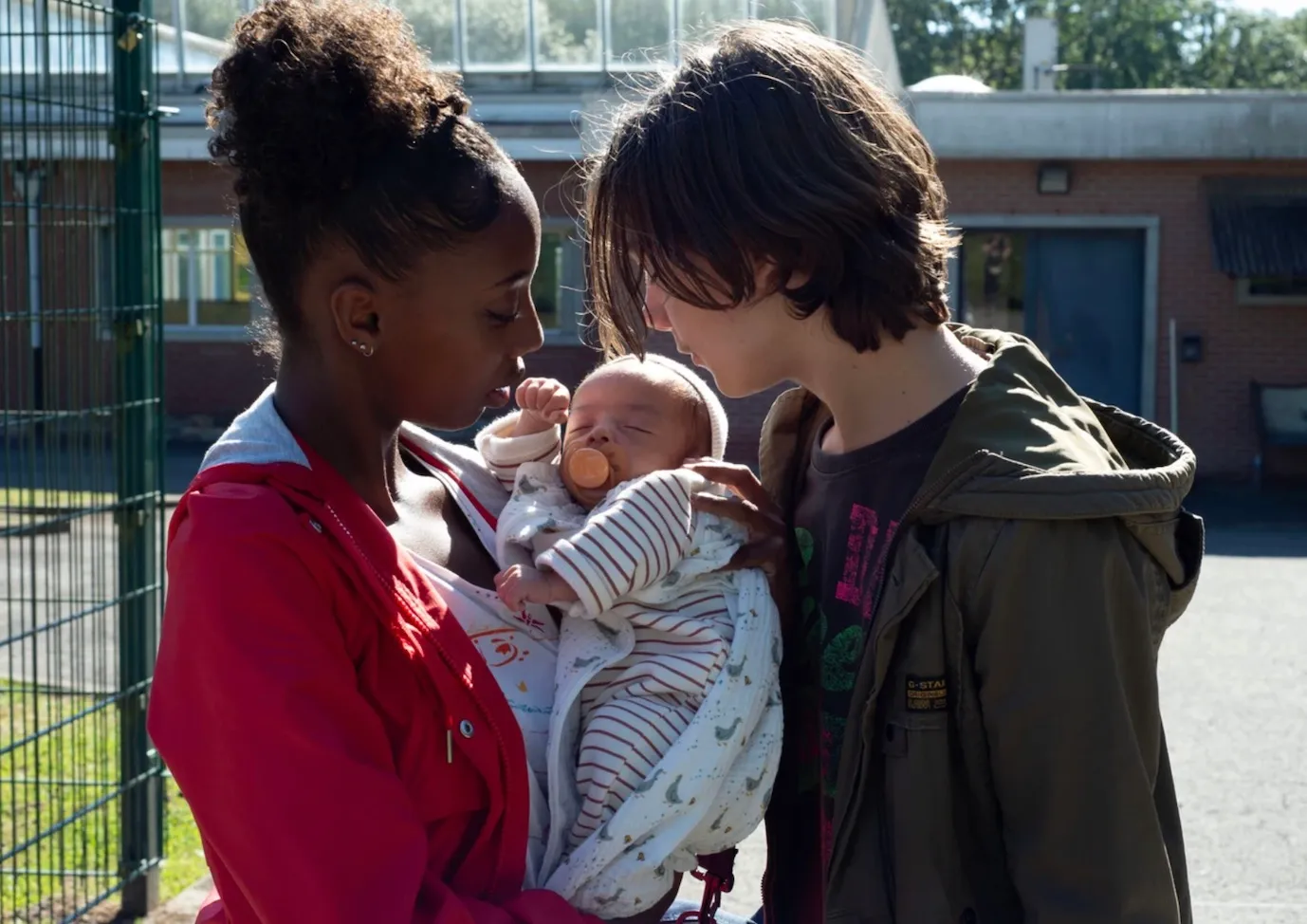
The Dardennes begin by introducing us to Jessica (Babette Verbeek), a 15-year-old who will soon give birth to a baby and would like to meet her biological mother, Morgane (India Hair), to understand why she was given up, before she welcomes a child into the world. However, their meeting doesn’t go as planned, with Morgane experiencing great resentment for her past life and prefers to keep her daughter away instead of confronting the choices she made head on. We then explore the women’s shelter, and quickly alternate between three different stories, one focused on Perla (Lucie Laruelle) wanting to build a life with her delinquent boyfriend, Robin (Günter Duret), who, after being released from juvie, wants to break up with her.
Another discusses the fractured relationship between Ariane (Janaïna Holloy Fokan) and her mother, Nathalie (Christelle Cornil), after the birth of her daughter, Lili. Ariane wants to put her in the foster system, while her mother vehemently refuses, and attempts to manipulate her daughter into thinking that her past issues with alcoholism and abusive relationships will quickly get better if Lili is in her life, which we know from her facial expressions that it isn’t true. This one is a bit more button-pushing than the others, especially when Cornil’s performance nears soap-opera-like theatrics, especially when she gets on her knees. Yet, the Dardennes always seem to compensate with a profound sense of humanism, especially in its fourth story, focusing on recovering addicts Julie (Elsa Houben) and Dylan (Jef Jacobs) attempting to get out of the shelter system and build a life they are proud of without the risk of relapsing.
In that segment, the tears flowed hard on this critic’s face, as the silences on both Julie and Dylan’s faces speak much louder than the dialogue given to the actors, as good as they may be. Moments when they sit together and are actively challenged by the temptation to use again are extremely powerful, but the most compassionate sequences are when the film shines the most. Without revealing too much, the Dardennes hold back on music until the very end, where Julie and Dylan visit their former music teacher, who has given them both valuable life lessons they are still learning from, and introduce their own child to the world of music, with Mozart’s “Rondo a la Turca” playing on the piano.
The piece has a much deeper significance than what’s shown on screen, especially if the viewer pays close attention to how Julie’s spoken poem has a different meaning when the professor plays it on the piano. Both have different interpretations and don’t convey the same message. It’s almost as if it gives permission for the character that the life she will have with Dylan and their baby will be fine, even if there will be some predictable setbacks along the way. However, if they are together, perhaps they’ll be fine and won’t go back to who they once were while using.
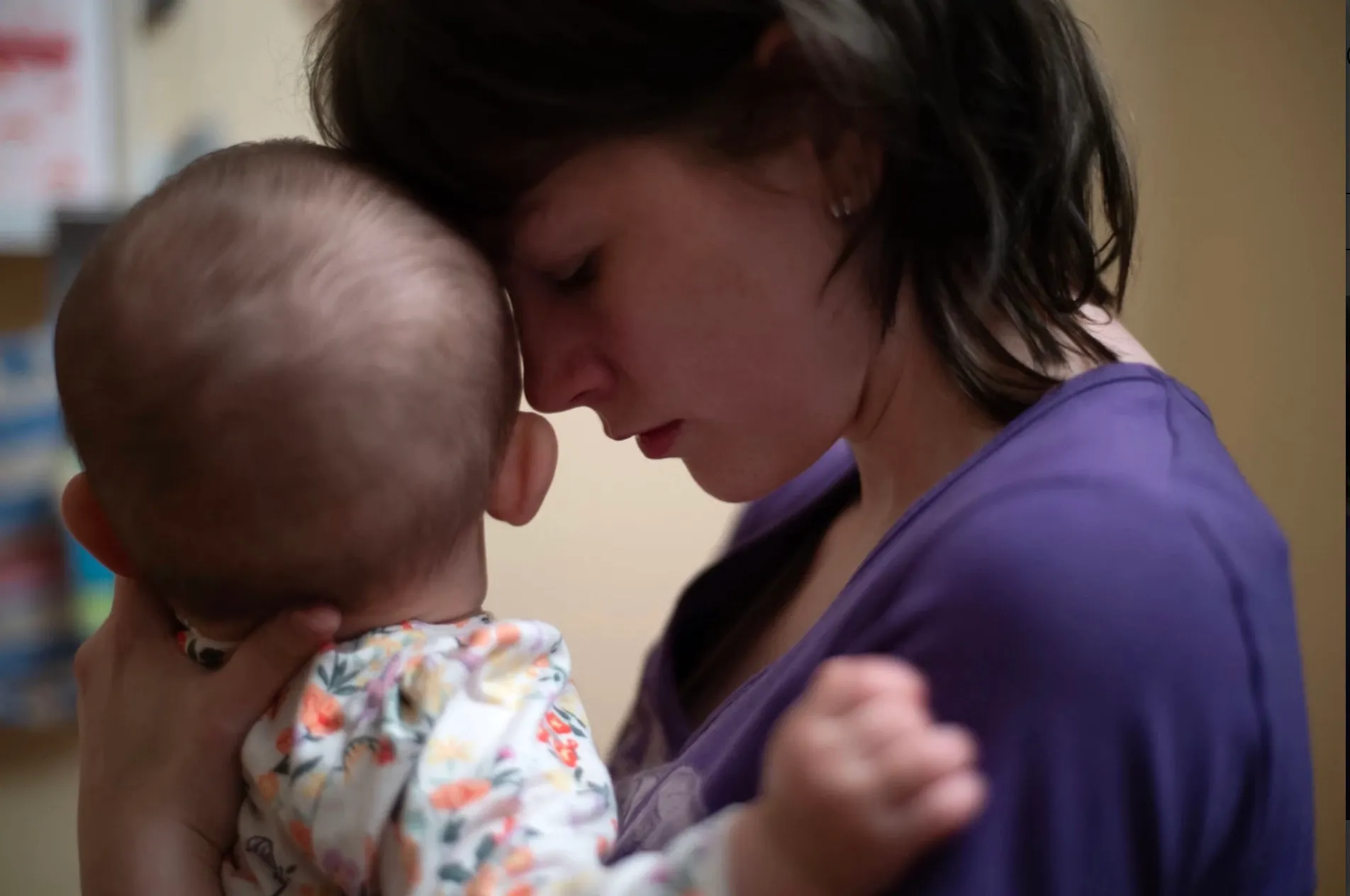
Bar none, though, the most devastating sequence occurs when Ariane is still unsure if Lili should be given away, but straps her baby down in the car seat, potentially seeing her face one last time. I genuinely have no idea if the baby’s acting was spontaneous or arranged, but her facial reaction, recognizing her mother, with a beaming smile on her face, is so powerful that the Dardennes don’t need to say anything else. Her decision is respectable, and completely understandable given that Ariane does not want her child to grow up in an unstable – and abusive – environment, as she’s known throughout her life, with her mother even finding ways to justify it during a tense exchange, stating “He hit me harder than he hit you.” However, saying goodbye may very well be the hardest possible part that someone may not fully recover from.
The other stories are a bit clichéd, but the naturalism of the performances lends so much dramatic power to the film’s most important scenes that it almost doesn’t matter. And apart from Ariane’s mother’s overacting, every emotion feels so natural and in tune with the harsh reality of the women’s lives that we can’t help but feel immense compassion for the stories they share. The movie’s aesthetic, shot entirely with natural light and a camera always over-the-shoulder, also enhances the sense of immersion we feel as an invisible observer inside the shelter, as we alternate between the four women’s journeys toward a better – and more hopeful – life.
Jean-Pierre and Luc don’t make it easy on their protagonists, but they manage to instill as much hope as possible for each of the characters we meet, through the figure of Naïma (Samia Hilmi), a mother who has successfully overcome the shelter system and is now building a life she’s proud of as a train conductor. She is the primary inspiration for all the other women we meet in the film. If she can do it, as hard as her life was, we, too, can aspire for something better than where we are at this moment. It won’t be effortless, but what awaits us on the other side, if we overcome the challenges we face, will be more than rewarding – it will be life-changing.