



Director: Alex Huston Fischer, Eleanor Wilson
Writer: Alex Huston Fischer, Eleanor Wilson, Ursula Wills
Stars: Olivia Colman, Alexander Skarsgård, Elizabeth Debicki
Synopsis: An ostracized fisherwoman commissions the local basketmaker to weave her a husband, but when her wicker creation proves unexpectedly extraordinary, his presence ignites jealousy and upheaval that threatens their quiet village.
Marriage is an institution fraught with problems and, as such, has been the subject of endless arguments and legislation. Throughout history, it has been inextricably linked with women being seen as chattel or property. Many of the romantic ideals we have, like taking a man’s name, are tied to these antiquated gender roles. This is not even to mention cultural norms like having the woman’s father “give her away,” wearing a white wedding dress (tied to purity in American weddings), and the expectation of the man to propose. Yes, there are many points against marriage, at least the traditional type, for progressive people. However, this does not mean that marriage cannot be romantic or worthy, especially as times and expectations change. Many women keep their names, wear a dress of any color they choose, and don’t have to be given away by anyone at all. And this is the true joy of not only romance and progress; we can take age-old ideas and change them for our own purposes. We can take what we need and leave the rest. In Wicker, from romantically paired directors, Alex Huston Fischer and Eleanor Wilson, the ideas of marriage, patriarchy, and even gendered expectations are turned on their head, taking turns that make you both laugh and swoon.
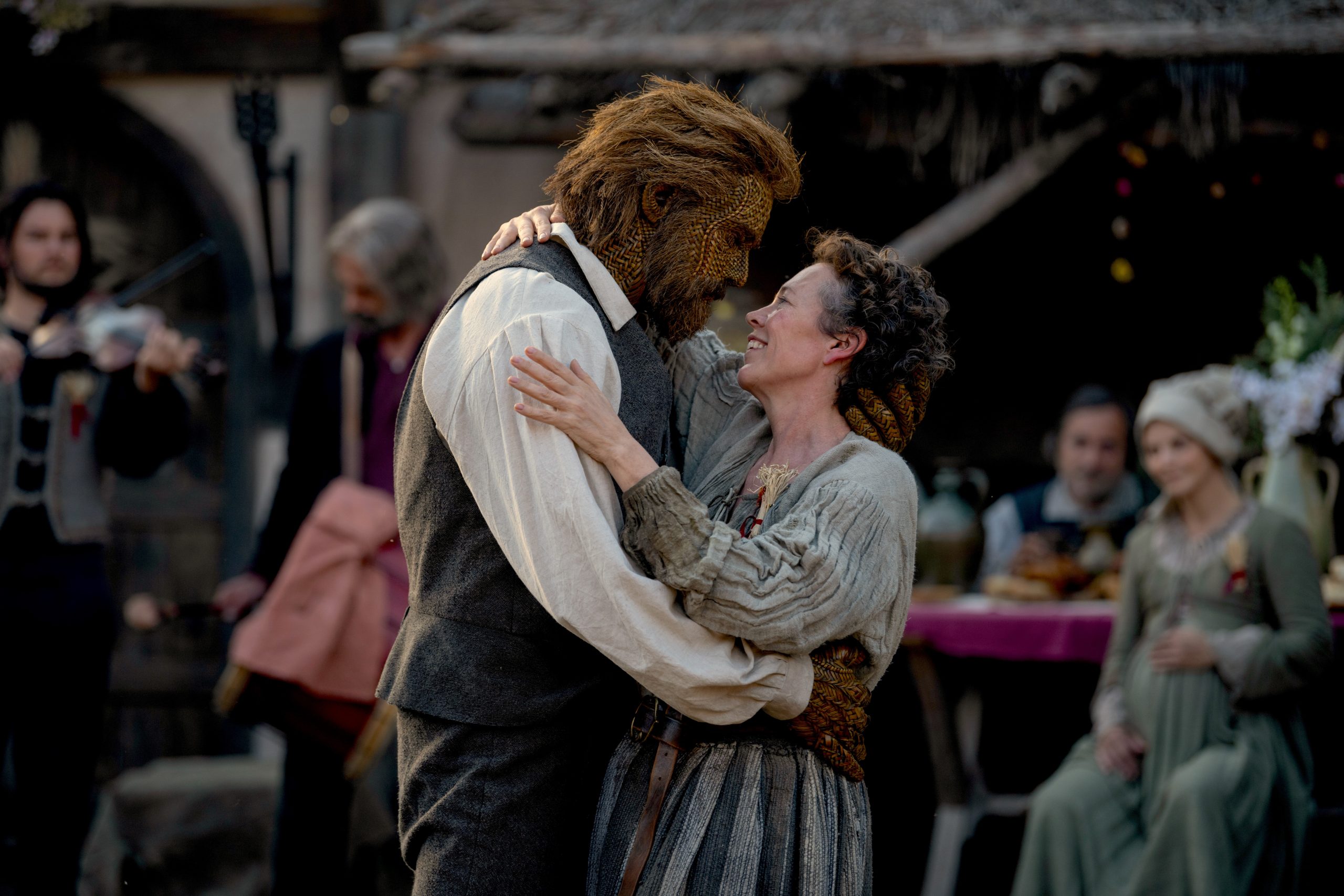
Wicker, based on the short story “The Wicker Husband” by Ursula Wills-Jones, opens with a view of the day of The Fisherwoman (Olivia Colman), expertly edited by Sofi Marshall. This is more than setup, it forces the realization that the life of The Fisherwoman is not empty. Yes, she seems lonely and is treated poorly by the townspeople, especially the Tailor’s Wife (a delightfully devious Elizabeth Debicki), but she is accomplished and tremendously productive in her work. This sequence also allows the village to be introduced, and shows us the hierarchy present, which will help us understand what comes next, and why The Fisherwoman makes the choices that she does.
Near the introduction, the village hosts a wedding. Fischer and Wilson smartly take advantage of the fantasy setting to take numerous (earned) shots at the patriarchy connected to weddings. In particular, the decision to eschew wedding rings and replace them with full collars that lock around the woman’s neck is both pointed and deeply funny as the husbands must attempt to lock it around their tucked in veil. Plus, the intricate detailing and structure of the collars is quite stunning. There is nothing quite like a gilded cage.
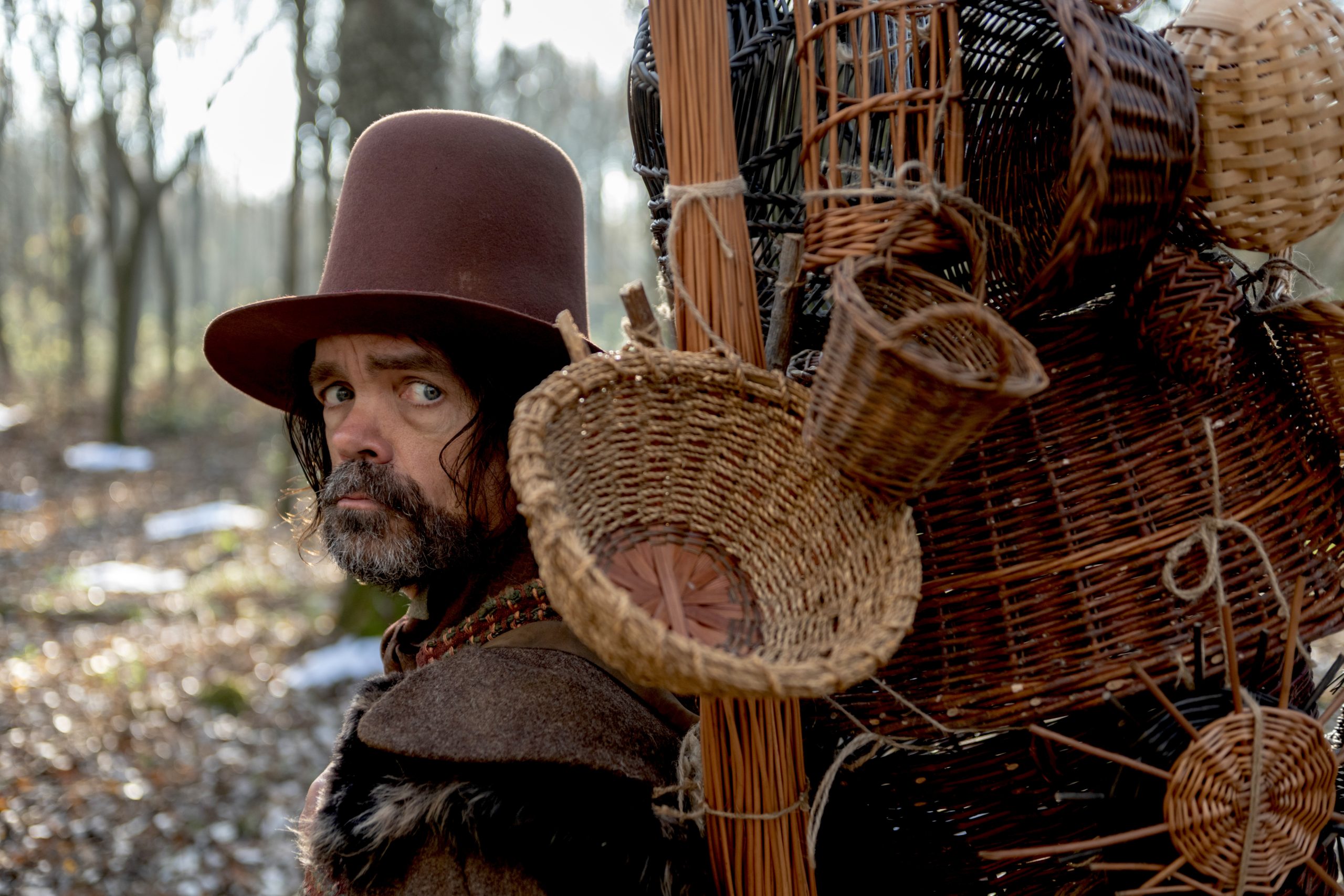
It will likely not be a surprise that soon after this, given the title, The Fisherwoman visits The Basketmaker (Peter Dinklage), who was introduced as one of the only friendly townspeople, and requests that he build her a husband. To her surprise, and god bless Ms. Colman’s expressive face in this and many other moments, he agrees and tells her to return in one month. The camera pans outside of his hut to the moon above. The use of the moon’s phases as time is a clever invention and removes the need to show the passing weeks in between the creation. Dinklage, clearly having the time of his life, spouting Shakespeare-inspired soliloquies, on his own desires as well as the nature of love itself, from the adapted screenplay by Fischer and Wilson, all while miming the building of The Wicker Husband (Alexander Skarsgård). Colman, for her part, embodies not only her character’s physicality, but is able to portray her wounded psyche. This is no surprise, as she is one of our best actors, but there is a subtlety on display that is often lacking in a film of this type.
His unveiling does take time, as he makes his way through town, borrowing clothes for his upcoming nuptials to the shock and fear of the townspeople. All of these are painted with a comedy brush, and Skarsgård’s vocal performance sells this perfectly. We are also treated to a few jokes about his anatomy, which balance the film’s tones between a fable with a lesson and near sex comedy. When they do meet at the chapel to marry, The Fisherwoman pointedly refuses the collar with a simple, “We won’t be needing that.” With those five words, the thesis comes into clear view. Not every marriage is a tool of the patriarchy. With the right partnership, your lives can open up and become not just added to by love but can even grow exponentially.
Finally, when the married couple return to her home, we are shown the creation of The Wicker Husband in full for the first time. It is a truly incredible suit that is nearly all a practical design from the team at WETA. It is completely believable and the way it, and Skarsgård move makes it feel strangely natural. Prosthetic Makeup Designer Joe Dunckley and Lead Makeup Artist Sarah Rubano should not only be proud, but also awarded for their work. Even knowing Skarsgård’s voice, he simply becomes The Wicker Husband thanks to both the performance and the costume. Despite Skarsgård’s kind, loving performance, the film is not a pure, chaste romance.
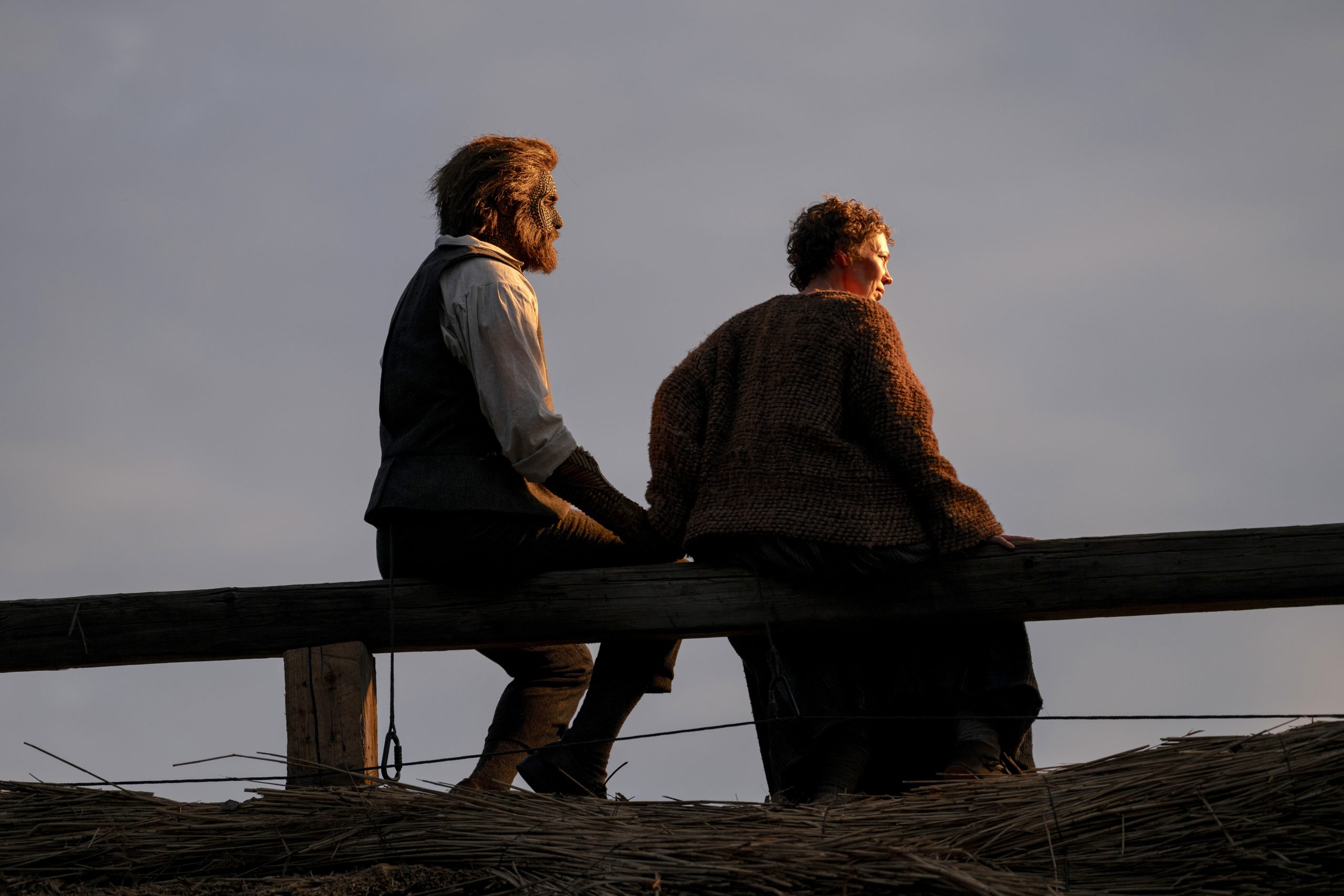
Moving quickly past their awkward meeting, the fable gives way to literal bed-breaking sex. This is all filmed in a savvy way, thanks to cinematographer Lol Crawley, focusing on The Fisherwoman’s pleasure, something we saw all too rarely in film. The woman is not performing a male-driven version of sexuality, instead The Wicker Husband meets her where he is needed. This, and many scenes after, shows the simple truth of The Wicker Husband. He wishes to love his wife and be useful. With Skarsgård’s carefully chosen words and slowed tempo, he says quite simply, “This bed is broken. Bring me a hammer. I will fix it.” It would be so easy to make The Wicker Husband excessively charming, but instead, the focus is on being a good partner. It is an incredibly intelligent lesson in how easy it can be to fulfill your role as a husband, if you simply pay attention to what is needed.
Of course, things get much more complex once he is reintroduced to the village, but generally, his consistent kindness and willingness to listen provides a gentleness that belies not only his size, but the suit’s nearly mechanical look and feel. There are a few moments that could have been fleshed out more, especially with The Basketmaker, but the film is so romantic, so funny, so moving, that it is easy to ignore those and simply get swept up by Wicker. As the film takes some twists and turns, a few quite surprising, we are also treated to the imperfections of our heroes. We all have faults, traumas, and moments of anger that are difficult to control. The Fisherwoman is no different. In a lesser film, we would find someone to despise but Wicker allows us to see our most human sides, even when our ugliness seeps out in jealousy, frustration, or mistrust.
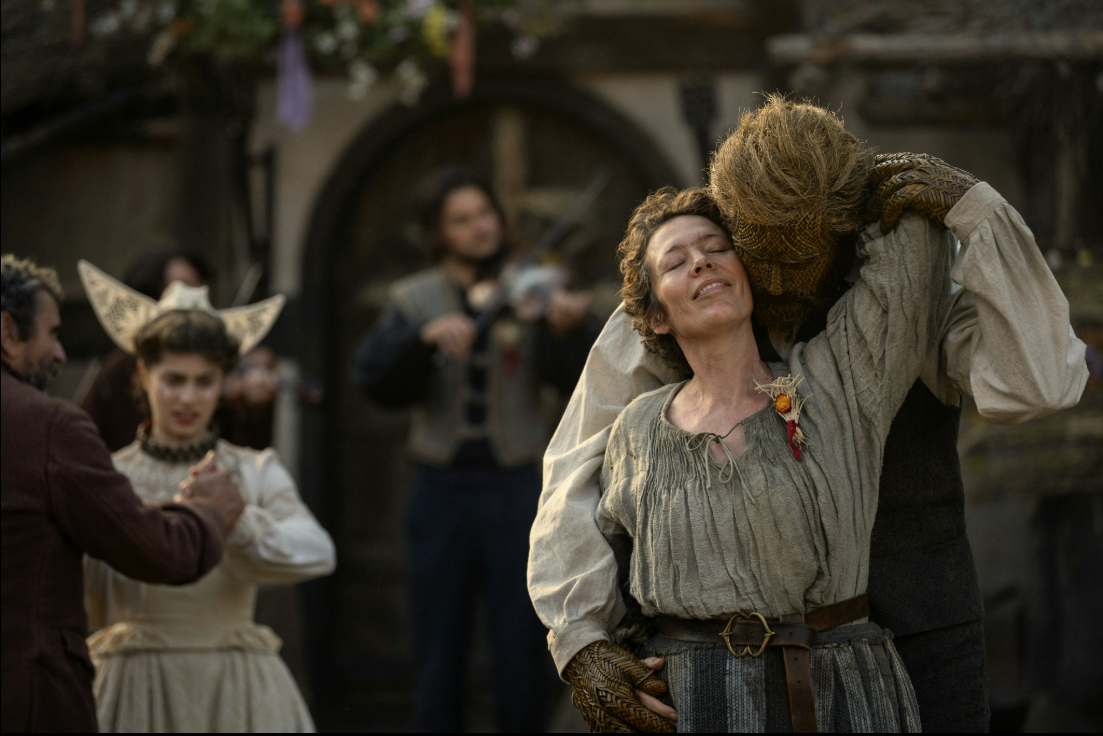
Wicker manages what many films struggle with: different tones and different styles that manage to fit as neatly together as the Basketmaker’s creations. It is a swoon worthy romance, a laugh out loud comedy, and an important fable. Fischer and Wilson give us a look inside at a healthy relationship, fighting to survive against all odds. Maybe if we connect with one another, don’t judge purely on appearances, and simply be good to our partners, we can share a dance, a meal, and live happily ever after.