



Director: Ken Russell
Writer: Ken Russell, John Whiting, Aldous Huxley
Stars: Vanessa Redgrave, Oliver Reed, Dudley Sutton
Synopsis: In 17th-century France, Father Urbain Grandier’s protection of the city of Loudun from the corrupt Cardinal Richelieu is undermined by a sexually repressed nun’s accusation of witchcraft.
Even with all the legendary status Ken Russell’s The Devils has amassed in the years since its original 1971 release and immediate censorship, history and infamy alike simply prove unable to lessen the conceptual blows delivered within this film. More than just an infamous piece of cinema lore and intrigue, this newly remastered, definitive version of Russell’s The Devils actively feels like a transgressive and shockingly timely piece of art. It is so full of rage and sadness alike, introducing ideas about people being caught in a battle between church and state. All of Russell’s interests in this film have been begging to be explored and unleashed upon unwitting audiences in their full glory. Of course, at the time of this film’s release, it was met with immediate controversy and outright revulsion from critics and most audiences. For many cinephiles, such contextual knowledge only ignited further intrigue regarding what The Devils had waiting in store for those desperately hoping for a potential release. It’s something that only felt more impossible the further time trudged onwards. And yet, The Devils is currently playing in multiplexes and independent theaters around the world. How beautiful that, even 55 years after its initial release, so many will be introduced to the beautiful madness of this film for the first time? All the time in the world couldn’t lessen the impact of Russell’s film; the wait has arguably only made this moment all the more revelatory.
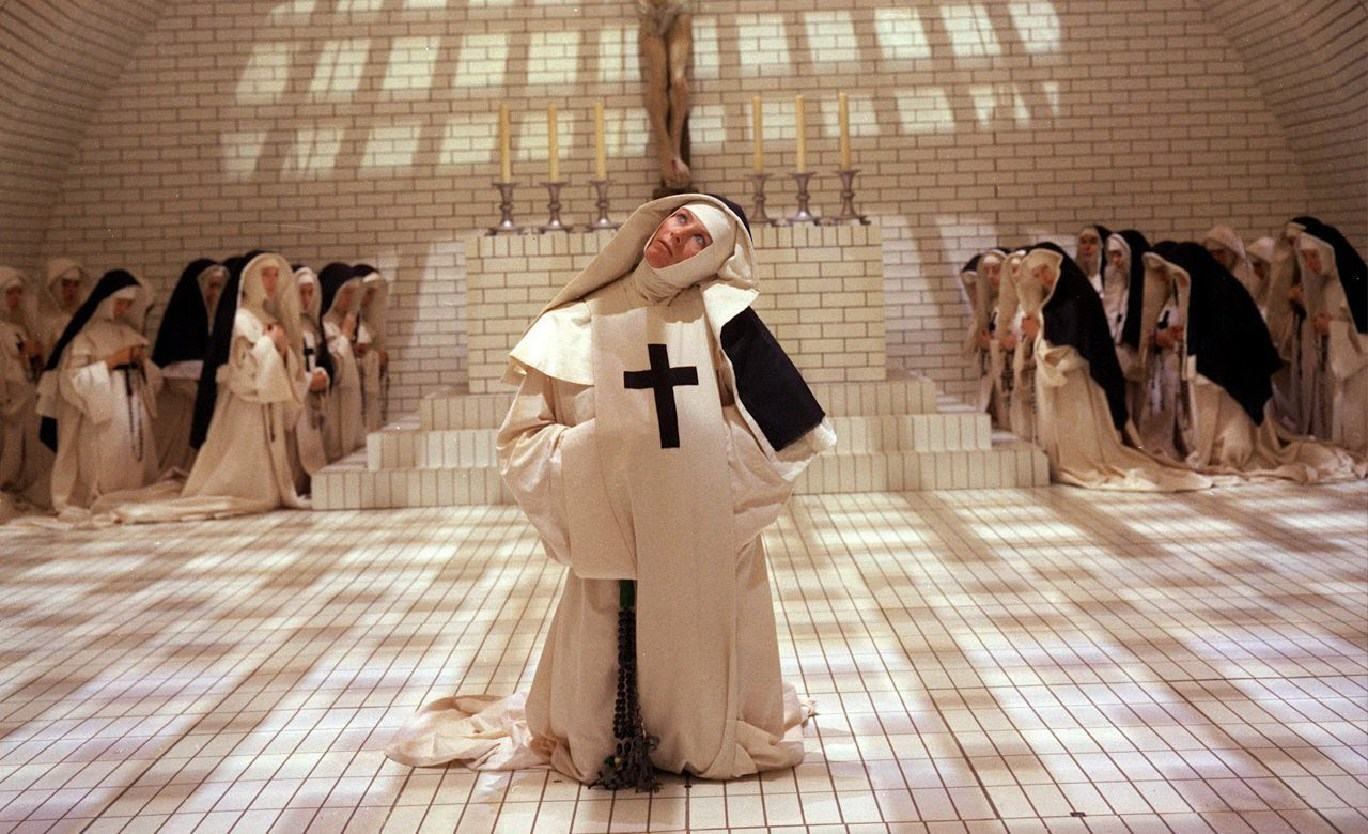
Through the sheer power of striking imagery and its powerful conspiracy story comes a film which so immediately presents its central ideas to the viewer. Some might expect that, for a film to sustain itself on a central idea so broad, it would quickly lose steam the longer it plays out. But Russell’s film sets out to dissect every conceivable inch of its target, and Russell wildly succeeds in that regard. The Devils explores both the hypocrisies and manipulative powers of the church and political state in such a way that this cinematic indictment never loses a moment of impact. In fact, each new sequence confirms The Devils to be even more shocking, more brilliant, and more interested in the human condition in ways its infamy or legendary status could never fully overextend potential expectations for first time viewers of the film.
To even be aware of The Devils is to understand the depths of controversy it was immediately met with. It shouldn’t come as much of a shock upon finally experiencing the film. This film so immediately makes clear its frustrations with the manipulation of religion in the name of preserving power over the masses. The Devils is not just a film designed to provoke believers and people of faith. It is instead a film designed to instill curiosity towards the realities of human behavior in such a way that demands answers. There’s no escaping the sheer loathsomeness of the conduct on display in the name of religion. It’s a well-worn topic throughout history. Even still, Russell captures imagery amidst the production design of Derek Jarman which would neatly complement any gruesome horror film. It’s a viscerally upsetting experience, full of moments that speak not only to an unforgiving world, but a cruelty within humans that seems impossible to reckon with. And yet, The Devils is just that; a film shining a spotlight on all the impulses which make us innately human. We may greatly contradict ourselves, remaining hopelessly cruel, sinful, and stubborn. We can be burdened by shame and emotion and envy, and still, Russell seems incapable of anything other than exploring the profound depths that potentially lie within each of us.
One of the most striking elements of The Devils is just how extraordinary it looks. The film takes place almost entirely within the city walls of Loudun, a fortified town in Western France temporarily being led by Catholic priest Urbain Grandier (an astonishing, powerfully imposing Oliver Reed). Jarman’s sets primarily rely on black-and-white facades and raw materials. The results are brilliantly cinematic. Beyond the contrasts of its monochromatic tones or the distinctly prison-like metals clashing against colorfully stained glass commonly found in churches lies an oppressive sense of confinement wherever Russell takes his camera. Each location feels restrictive. When coupled with the already-repressed population, The Devils overwhelms its audience with a palpable feeling of captivity. If these people are to be stuck within the walls of their town and the limits of their own abilities to express themselves as fully human, then so too must the audience feel stuck in time and place. It’s immensely effective in achieving the pure horror present within The Devils. While this may not be a horror film in the traditional sense, it is unquestionably utilizing the fundamental characteristics of the genre to great effect. Beyond the body horror and moments of violence depicted, The Devils is a film expressly interested in interrogating larger issues within society. And so, Loudun becomes a microcosm for the unknown world beyond its walls. The ever-compelling Grandier becomes not just a scapegoat, but a scathingly honest lens through which Russell explores the intricacies of the human condition.
One might initially expect Grandier to be the primary antagonist of The Devils. He’s a showboat, and an obvious womanizer, moving around town with the cloth of his priesthood as a great shield. And yet, Reed and Russell imbue this character with such a compelling sense of contradiction. He might be the most honest character in the film despite his philandering antics. It makes for a character that is rich for exploration and understanding. So of course, it’s only befitting that those in power outside of Loudun with much more rigid beliefs desperately want to cast him and his followers aside. To allow personal expression and more loose interpretations within the world of religion is to lose control of a population one potential sin at a time. As Grandier proclaims against those who seek to strip him of his legitimacy, his power, his humanity, and his relationship with God, “they are not concerned with fact, law, or theology, but with political experiment.” There’s a disgusting pride in the behaviors of those who are slandering Grandier. They wear prideful smirks and manipulate reality and people alike to benefit their own political victories. Any notion of standard human expression, such as the repressed Sister Jeanne des Agnes (Vanessa Redgrave) grappling with her own feelings of passion and lust, are cruelly warped to be used against people rather than embraced for merely being a larger part of the human condition.
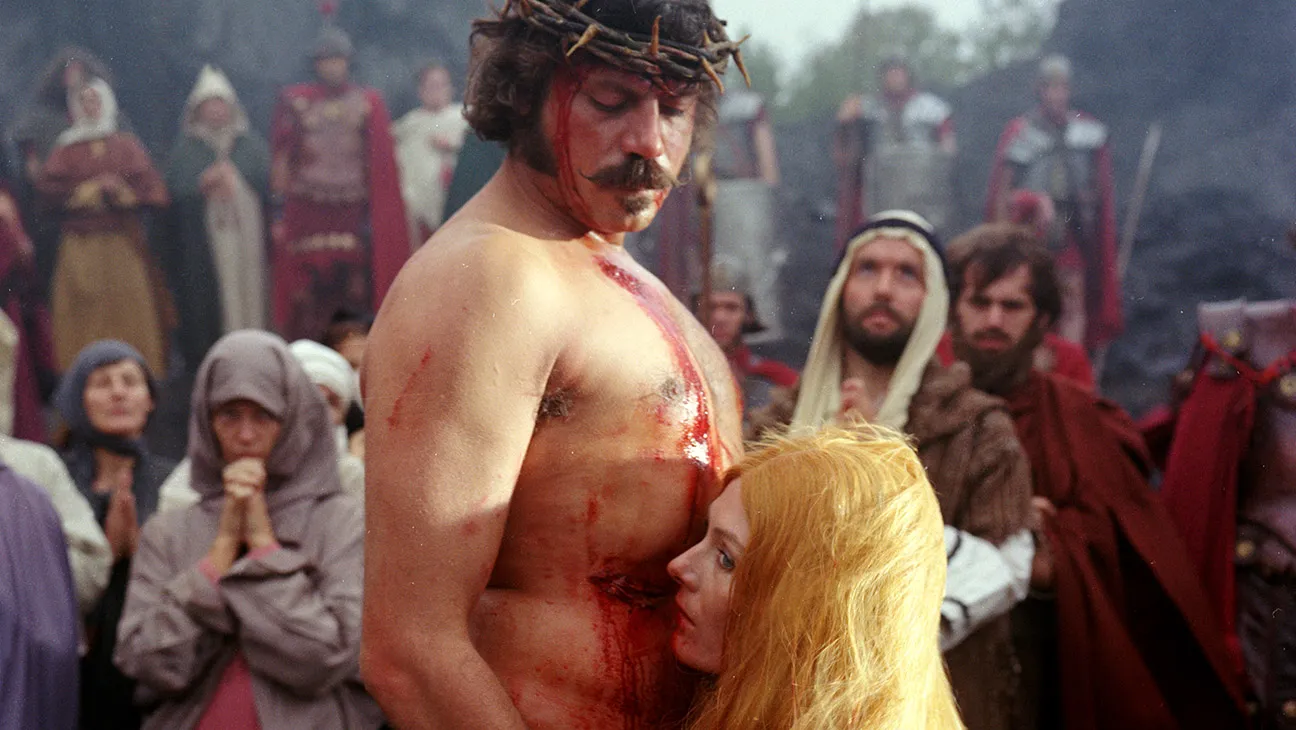
As The Devils continues to play out, it more and more reveals the viciousness of humanity. Hellfire is doled out in the name of “justice,” all the while any inkling of rebellion or questioning of the larger systems of power are snuffed out by any means necessary. There is no space for the truth, or even any part of uninhibited humanity, to exist when those in power seek to rule with an iron fist built on a foundation of lies. The more repression becomes a means of holding power over a group of people, the more liable it is that shame can be built into a powder keg of sorts. And once Russell has his audience completely captivated with this tale of deceit and dangerous political upheaval, he lights the match for chaos to ensue. What transpires within the sequence that was the primary excision all those years ago can best be described as a cinematic circus of blasphemous transgressions. It is so incredibly shocking even by today’s standards. And yet, this dazzling sequence is not empty provocation by Russell. It is merely indicative of what happens when a forcefully repressed society completely breaks free of its shackles. It’s hypnotic, and pulsing, and vibrant, and frightening, and magnificently powerful. Frustratingly, just as repression is manipulated by the powers that be, so too is the uninhibited nature of people warped to benefit those in charge. Perhaps the most striking element of Russell’s screenplay is just how often his scope flips back-and-forth in any given moment. It speaks to the malleable nature of power in ways that are both thematically strikingly and purely entertaining for the sake of the film. The Devils is a deeply compelling text to be pored over academically, but it also just plays out like a very thrilling film from the moment it begins to its damning finale. The monochromatic worldview of Loudun ultimately spills out into the rest of the world as the credits roll. Russell ends The Devils with a chilling notion. It’s perhaps something we are still feeling the reverberations of decades later: lies can often become the historical truth, and when such illicit victories are allowed to fester for so long, is it only a matter of time before the rest of the world and humanity alike are doomed to snuff out any honesty or authentic human expression as Russell depicted in the events of this film? It’s quite telling that a film from 1971 can be released in its full glory in 2026 and still so acutely speak to the moment in which audiences are experiencing all it contains within its runtime. Russell’s The Devils seeing the light of day in such a distinct manner is a massive victory for cinephiles everywhere.
The brand-new restoration of Ken Russell’s definitive version of The Devils is currently playing in theaters.