



Director: Marina Zenovich
Synopsis: An intimate portrait of cyclist Moriah Wilson, raised by a fierce, loving family, whose singular drive propelled her to athletic brilliance before her life was tragically cut short by murder.
True crime documentaries have a familiar rhythm that includes crime, investigation, and resolution, all neatly packaged for consumption. That’s mostly likely why they’re so popular amongst audiences. The Truth and Tragedy of Moriah Wilson, is Netflix’s deeply affecting portrait of the young cyclist whose murder shocked the sporting world in 2022. This is not a documentary driven by twists or revelations. Instead, it’s a study in the absence of a life interrupted, and the effects that follow. The documentary is one hour and thirty-seven minutes long, which makes it a nice, well-rounded piece of film. A perfect binge for true-crime fans.

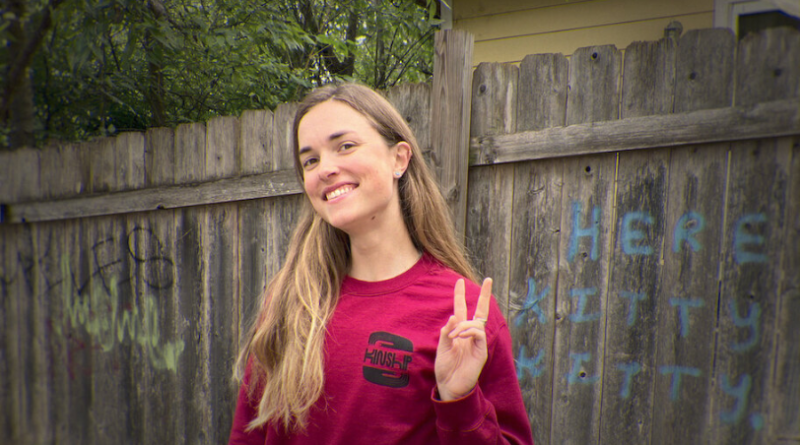
At its center is Moriah “Mo” Wilson, a rising star in competitive cycling whose discipline and focus are framed by a fiercely supportive upbringing. The film spends its early moments carefully constructing her world: family home videos, recollections from loved ones, glimpses of her training and achievements. It’s a deliberate choice, and an effective one. By the time the narrative turns toward tragedy, you’ll feel like you know Mo, and that makes what happened to her even more heart-wrenching.
The case itself, her murder and the subsequent manhunt that captured national attention in May 2022, is handled respectfully and carefully. The filmmakers shift the focus to those left behind: her family, friends, and the wider community trying to process an unthinkable loss. This emphasis on perspective is where the documentary finds its strength. Her parents speak with a mixture of pride and devastation, grappling with the dual reality of celebrating her life while mourning its abrupt end. Friends recall small, specific moments that might seem insignificant in isolation but, collectively, form a portrait of a happy, clever, and determined girl.
The film’s pacing unfolds the story slowly, allowing space for reflection rather than pushing relentlessly toward the trial’s outcome. There are no flashy reconstructions or stylistic flourishes designed to heighten drama. The documentary is layered with home videos throughout Mo’s life, complemented by intimate interviews with her close loved ones and people who worked on her case. There are also so many photos of her winning medals and making a life for herself. All of this creates moments of unexpected lightness, stories that prompt smiles as much as tears, reminders that Mo’s life cannot be defined solely by its ending. These glimpses of joy are crucial, preventing the film from becoming overwhelmingly heavy and underscoring its commitment to balance.
That said, The Truth and Tragedy of Moriah Wilson is not without its limitations. Viewers expecting a detailed investigative breakdown may find the film’s focus frustratingly narrow. The mechanics of the case, while present, are not explored in depth, and the broader cultural context surrounding the crime is only lightly touched upon. The documentary is less interested in the “why” of the crime than in the “what now” of its aftermath. However, there is an exciting cat-and-mouse chase when the suspected killer is on the run, and the police and FBI must track them down.
Ultimately, The Truth and Tragedy of Moriah Wilson is a quiet, compassionate piece of filmmaking. It doesn’t seek to shock or to solve, but to honor and to understand. In doing so, it offers something rare within the true crime genre: a space not for speculation, but for empathy. When the legal proceedings do come into focus, justice, the film suggests, is not a clean resolution but a complicated, often unsatisfying attempt at closure. And in that space, Mo’s life continues to resonate through those who refuse to let it be reduced to a headline.