



Director: Takashi Yamazaki
Writer: Takashi Yamazaki
Stars: Minami Himabe, Jon Kunimura, Masami Nagasawa
Synopsis: Set in 1949, the Shikishima family confronts a fresh catastrophe two years after surviving their previous ordeal with the legendary monster.
The roof of Alice Tully Hall felt close to being blown off by a kaiju blast during the 64th New York Film Festival’s Spotlight Gala screening. It was the world premiere of Takashi Yamazaki’s Godzilla Minus Zero, and the energy in the room felt as massive as the King of Monsters himself. One might be taken aback upon initially reckoning with the programming choice of a full-blown genre blockbuster’s inclusion in the festival lineup. But beyond it just being a wonderfully fun pick that’s indicative of both Dennis Lim’s and the selection committee’s excellent cinematic taste and the limitless potential within contemporary blockbuster filmmaking, it’s fairly easy to tell that this also isn’t your average monster movie. Much like its predecessor, both of Yamazaki’s Godzilla Minus films each feel like lofty dramas grappling with their own distinct emotional cores, and they both just so happen to star Godzilla in a stellar supporting role. But it’s also clear from the opening moment of Godzilla Minus Zero that Yamazaki understands the audience’s innate desire to see kaiju mayhem. He, of course, is quite the fan of Godzilla’s legacy himself. But both his films draw a crucial line in the sand despite their ability to deliver exactly what audiences want out of a Godzilla film.
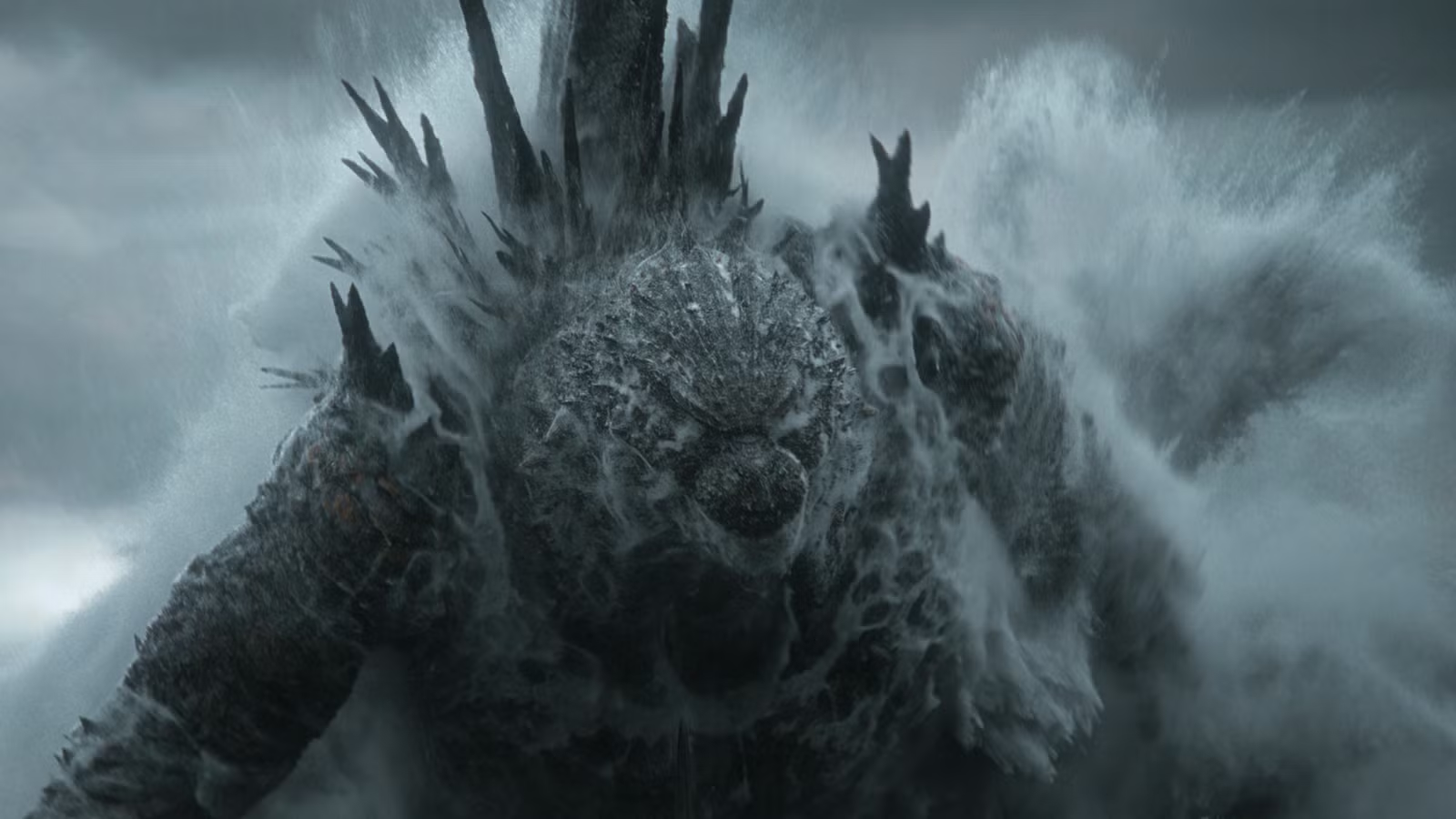
The introduction to Godzilla Minus Zero is a thrilling single-take capturing absolute mayhem. As a group of scientists film the carnage surrounding them while running through rubble and away from shocking mutilation or death, it’s difficult not to think about the entire concept of war films and bombastic action setpieces in cinema. Yamazaki immediately poses a question to his audience and himself with this sequence: How can a filmmaker balance raw spectacle, of which this film has immense amounts, with the abject terror of such carnage? It’s an incredibly challenging balance for a filmmaker. Yet Yamazaki seems to have an innate ability to carve right into the most fundamental truths about such potential horrors of reality, and provide his audiences with a kaiju spectacle that always remains human-centric. If the lens of this film is channeled from the top-down, in this case how Godzilla views everything around him, the film would feel quite hollow. Just like Godzilla Minus One, Yamazaki still makes a film with Godzilla capturing and affecting its lens, but this film’s view comes from the bottom-up, allowing people’s worlds to be completely upended by the behemoth roaming through the streets of the small towns or major cities they once called home. It’s the type of scenario which reckons with a new reality that would shake anybody to their core. It’s what makes the family-centric core of this film’s screenplay so emotionally effective.
This film once again follows the Shikishima family, now a defined unit, as they try to live some semblance of a normal life. And yet, how could they ever possibly attain a shred of serenity after all they’ve been through? Beyond just the effects of their Godzilla encounters, Yamazaki introduces new faces and more deeply examines returning cast members with a varied series of each one being an individual who is doing all they can to deal with their own trauma in a post-WWII Japan. Yamazaki never abandons the roots of the Godzilla franchise in this regard, often to the point of shock at how willing he is as a filmmaker to explore imagery and ideas that would often seem impossible in a Hollywood film of this stature. There’s an exceptional reframing and reaffirmation of Godzilla Minus One within some of the choices made in this film that are simply stellar. Furthermore, Yamazaki is able to set the stage for so many ideas that are equal parts enthralling and shocking that it feels miraculous they are all able to work in tandem with one another so well. It speaks to his talent in crafting characters the audience cares deeply about, and the Shikishima family, alongside many of the other essential supporting characters in this film, ground the madness that Yamazaki has in store for his audience. And all the adoration built up for these characters is what makes Yamazaki’s film a genuinely grim and upsetting one.
The Shikishima family is put in quite the tough position in this sequel. It’s particularly tough on young Akiko (Sae Nagatani), who is terrified once again of the possibility that “something scary is coming.” For Koichi (Ryunosuke Kamiki), he is attempting to balance his desire to fight for the safety of his country with the responsibility of protecting Akiko and being present for her. Noriko (Minami Hamabe) is made even more active in this film’s plot, as she and Koichi both reckon with the pain of feeling unable to console a child who is terrified. In any case, Yamazaki explores the gray area of inaction, and whether that’s something which should be felt with shame or understanding how responsibilities shift as we move through life. It’s really compelling character work on a small scale that still feeds into the larger workings of the film’s thematic explorations. As interested as Yamazaki is in all the interpersonal relationships he has formed, he’s just as willing to explore larger geopolitical relationships as well. Japan’s response to the disasters of this film, in addition to U.S. interventionism, are thoroughly examined. Importantly, Yamazaki only ever reveals information coming down from the top and shows his audience the responses of the people it affects most. Volunteer pilots are lied to about the safety of a mission, leading some to abandon their post while others merely note that “a man’s gotta eat.” How Yamazaki can so effortlessly depict the varied responses to such loftily frightening circumstances is indicative of a writer fully empathetic to the human condition and all its contradictory forms.
Now, so much of this film does explicitly revolve around its human characters, but this is still the 39th Godzilla film in the franchise (the 34th produced by Toho)! Fans of the greatest monster of all time can rest assured knowing that this franchise is still in more than capable hands. And quite frankly, this film contains imagery audiences might almost be unlikely to believe were it not playing out spectacularly right before their very eyes. Yamazaki and the VFX team know how to craft not just spectacle, but awe-inspiring visuals that equally strike fear and astonished disbelief in an audience. Godzilla Minus Zero looks dazzlingly great, and the film is full of moments which could best be described as spine-tingling, or potentially, insane. For all the emotional horror and tragedy this film can expertly unleash on its audience, Yamazaki also turns in what feels like one of the best monster movies ever made. Its scale is so lofty that it feels unmatched, with less than a handful of rivals who could genuinely go toe-to-toe against it. And there’s one particular masterstroke in the third act that confirms Yamazaki’s fundamental understanding of what makes Godzilla such an enduring and essential figure not just in cinema, but in pop culture and history itself at large.
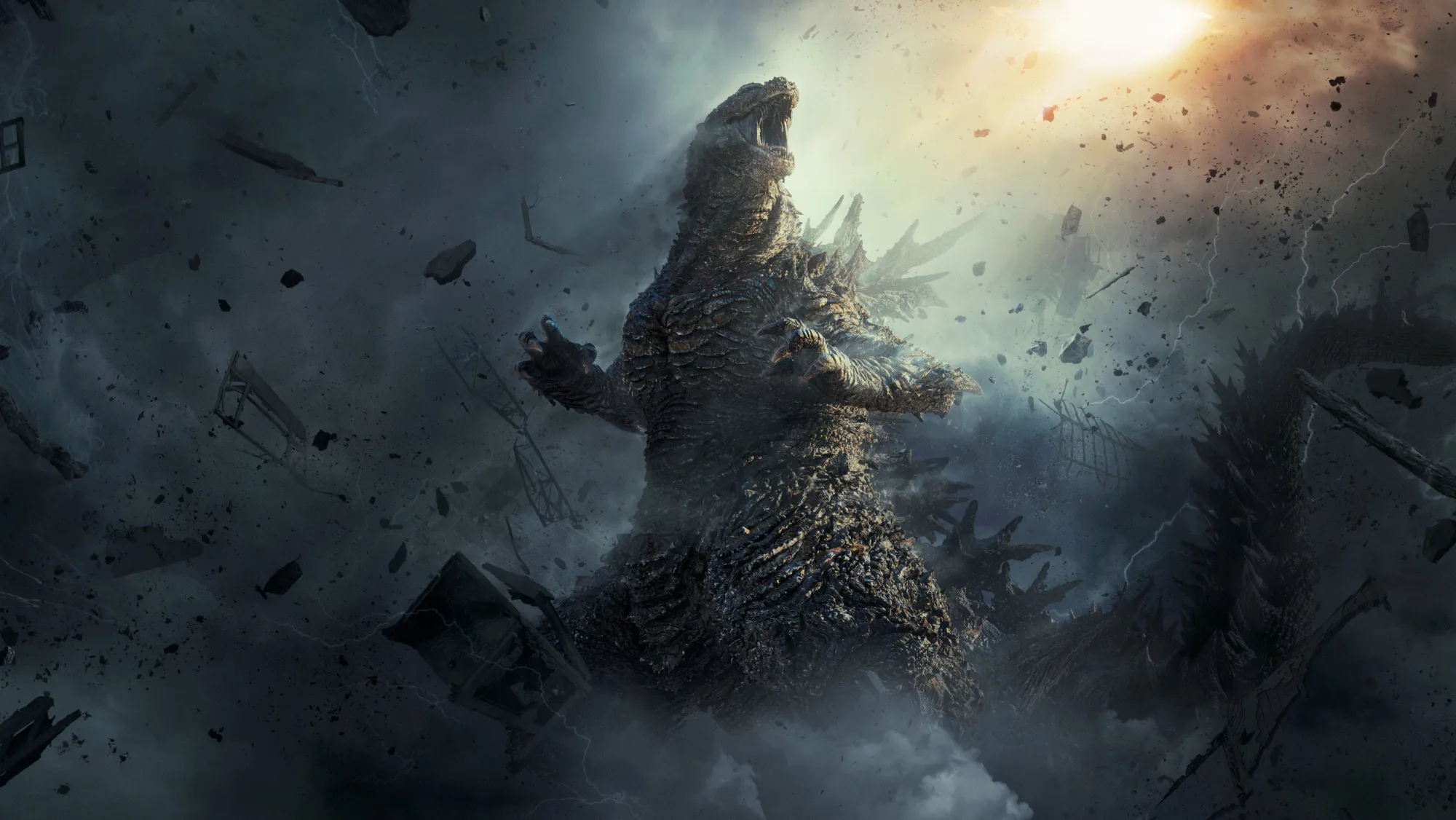
If Godzilla Minus Zero does anything, it reaffirms that the legacy of Godzilla can continue to evolve while remaining true to the roots of the franchise. It is also indicative of, despite being a period film, an ability to examine and represent the emotions and ideas of present day life through the past. That examination of past and present is an interesting point of view for the film to hold, as so much of the Shikishima family drama this time around boils down to parents being terrified of leaving their child in a world haunted by unfathomable tragedy and horror. Despite all the unthinkable that Yamazaki is able to somberly convey with genuine respect and earnestness, this film has a tinge of hopefulness to it which is undeniable. One amazing sequence involving a fixed camera exhibits the minutiae and dedication we must provide in order to leave the next generation with a chance for a brighter future. All we can do is remain steadfast in the belief that there is a chance for a better tomorrow, and that those who we surround ourselves with can ultimately fight for it together with an unrivaled passion that cannot be replicated or manipulated by any external force.
Godzilla Minus Zero celebrated its World Premiere as the Spotlight Gala film of the 64th New York Film Festival.