


Have you heard? It was a rather jam-packed weekend at the movies. Multiplexes are thriving again, or “we’re so back,” one might say. What a time to be alive? Too much, but we have to find joy somewhere; what better place than at your local cinema, where you can likely be treated to an offering to scratch any itch. Perhaps you’re in the mood for a gritty, based-on-truth thriller starring Robert Pattinson as To Catch A Predator host Chris Hansen, that being Lance Oppenheim’s narrative debut, Primetime. Or maybe you want to take your kids to the latest animated flick from the minds behind Puss & Boots: The Last Wish, the delightful and vibrant Forgotten Island. Need a dose of adrenaline, or better yet, your first dose of leading man Mahershala Ali in, oh, five years? Check out Bassim Tariq’s Your Mother Your Mother Your Mother. Brad Pitt and a dog can be seen fighting for survival in Heart of the Beast. Hell, Avengers: Endgame is returning to theaters and becoming the first film to officially play in the long-anticipated, Marvel-invented “Infinity Vision.” Surely, you must have bought your tickets already.
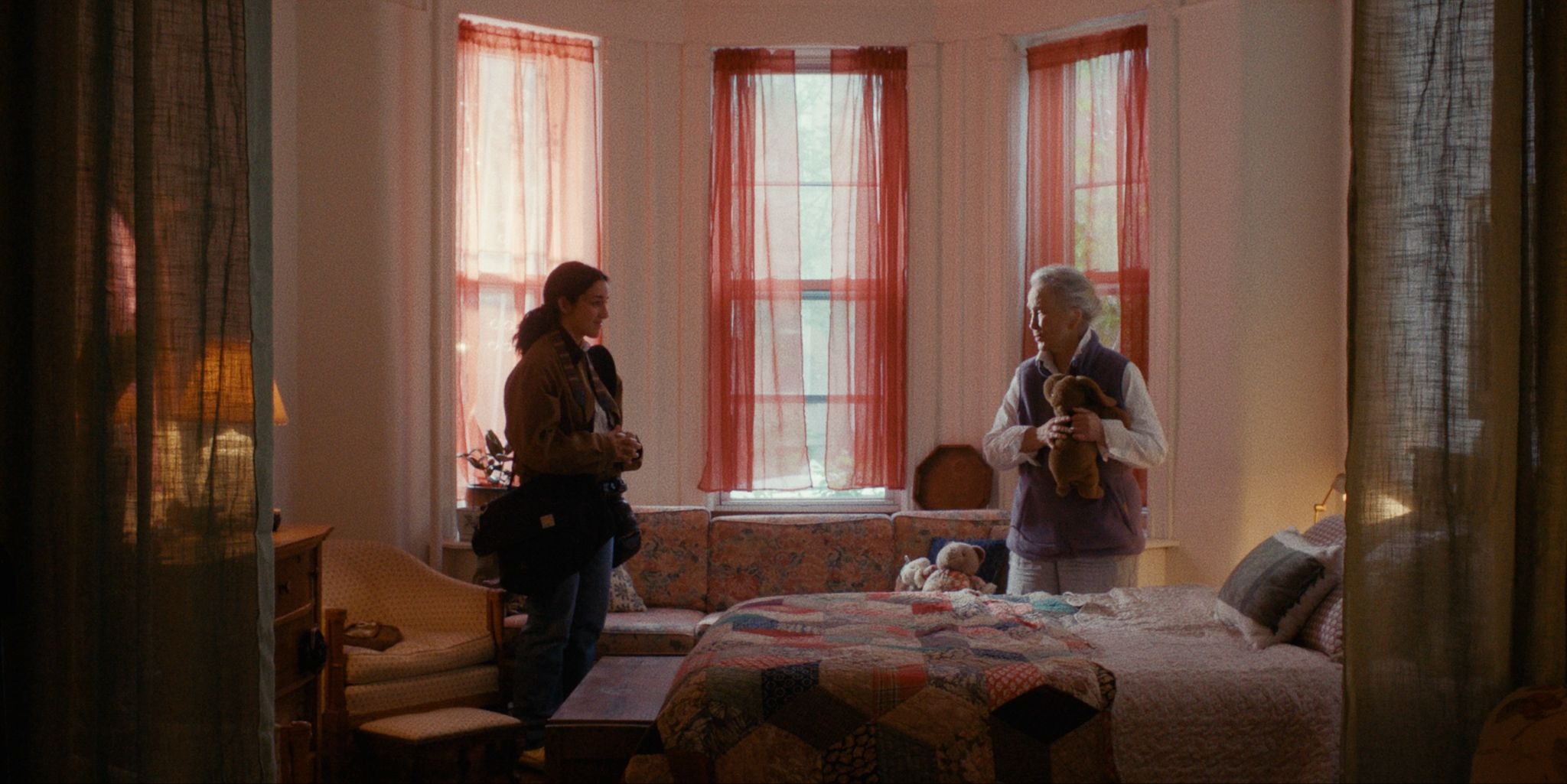
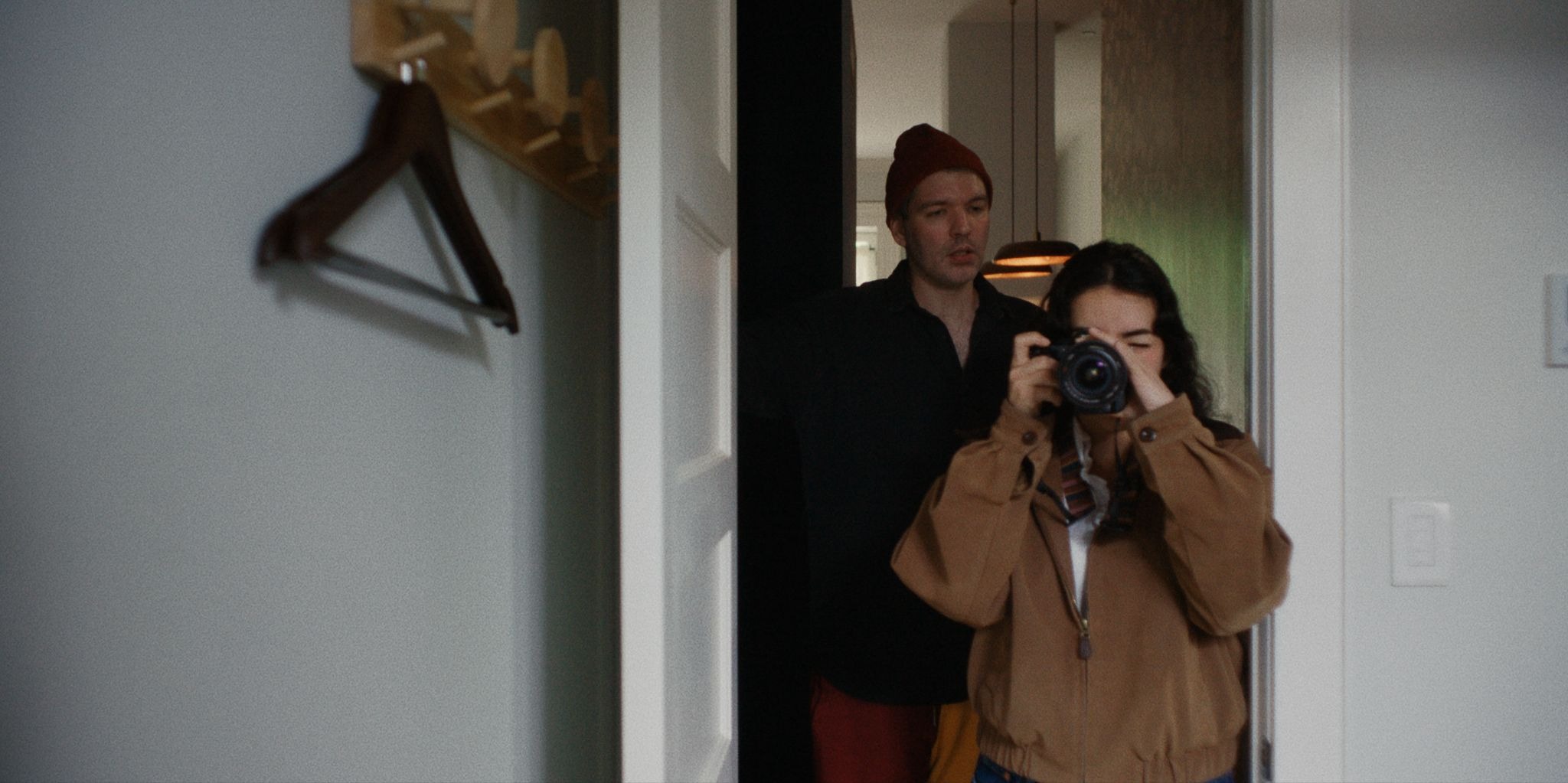
But if you happen to live in New York – cue the eyerolls, warranted and frequent – I’d suggest you venture over to Film Forum, where the best new release of the weekend is celebrating its theatrical premiere. Paula Gonzalez-Nasser’s tremendous feature debut, The Scout, arrives one year and change after it took its first bow at the Tribeca Film Festival. An intimate and remarkably personal drama that follows a film and television location scout and she searches for locales appropriate for a TV pilot’s setting, it was hands-down the best film I saw at the 2025 edition of the fest and promised the arrival of a genuine filmmaking talent in González-Nasser, who based the film on her real-life experiences. Over the course of a single day, Sofia (a soft and remarkable Mimi Davila in her first proper leading turn) experiences personal revelations in moments most of us would consider unassuming, though as I wrote in my InSession Film review last June, watching Sofia operate in a rut-adjacent routine for 89-minutes is never unfulfilling or uninteresting. Rather, it’s a film that capitalizes on the beauty of mundanity in a way that is as authentic as I’ve seen in some time. Basking in that experience is where the film’s tender nature derives from. I had the pleasure of speaking with the director and star about exactly that, among other topics aplenty. Our conversation has been edited and condensed for clarity.
InSession Film: Paula, I know the genesis for this film was your time spent as a film scout. But can you offer a little more background into exactly how that experience shaped The Scout?
Paula Gonzalez-Nasser: Yeah, it was definitely not an idea I had while I was scouting.
I think that I was very much not aware of what was interesting about the job while I was doing it. I think it took me having some distance away from the job to realize, “Wait a second, that was such a crazy job.” And it was a very interesting vessel for a story of a character whose day-to-day looks very different, even though it’s kind of the same as it adds on.
And to be honest, when I was thinking of what to make for my first feature – because I had produced a few small micro-budget features – and I was thinking, “Okay, now that we kind of know what we can do, what does that look like in terms of what’s interesting to me? I wanted to write something. And I think when I finished it, I texted [Mimi] and said, “Hey, can I talk to you about this movie idea that I’m having and have written with you in mind? No pressure, though.” [Laughs.]
But in terms of the scouting idea, I love anthology stories. I love short vignettes and repetition, because I love Chantelle Ackerman, and I think that’s very huge in her work. I saw The Meetings of Anna, and I thought, “Oh, that’s a little bit like what my life was like scouting,” except that in that story, you know, she’s like an accomplished filmmaker in Europe showing her film, and in this story, she’s an invisible person who has to interact with people in New York City. I thought that was such a great character to explore, someone who has to put on different faces. And I just thought Mimi was the perfect vessel for that, because I think she’s naturally a very curious person in general. She could talk to anyone at any party for hours and find out so many things about them.
Mimi Davila: [Not speaking, but making facial expressions and hand motions that are consistent with someone being extremely flattered, if not flat-out stunned.]
IF: Mimi, I kind of have to ask about your facial reactions.
MD: This is the first time I’m hearing that part of the reason why you wrote this is because I could be in it!
PGN: Yeah! I mean, I had only made a short film before this (aside from my projects in school), which I don’t think were even remotely exploratory of what my voice was because I didn’t know who I was or what I wanted to do. After [the short film] Limestone, Mimi and I just had such a good understanding of how to work with each other. So I just was like, “If I’m going to do a first feature, which seems scary, I want to do it with someone that understands me and not try and meet somebody from scratch and try and build that relationship over the course of, you know, 10 days.”
MD: That makes me so emotional because I think it’s rare to find a director that trusts their actor as much as [Paula]. I’m not trying to shine light on myself, but a director really trusting an actor, even if they don’t have a big name or anything, that bears so many fruits. I just think people need to hear that. Because at the end of the day, filmmaking is at its best when you have that kind of trust and intimacy with someone and you let it go outside of your own idea and let it evolve into something.
And I’m just like, how lucky am I that I met you?
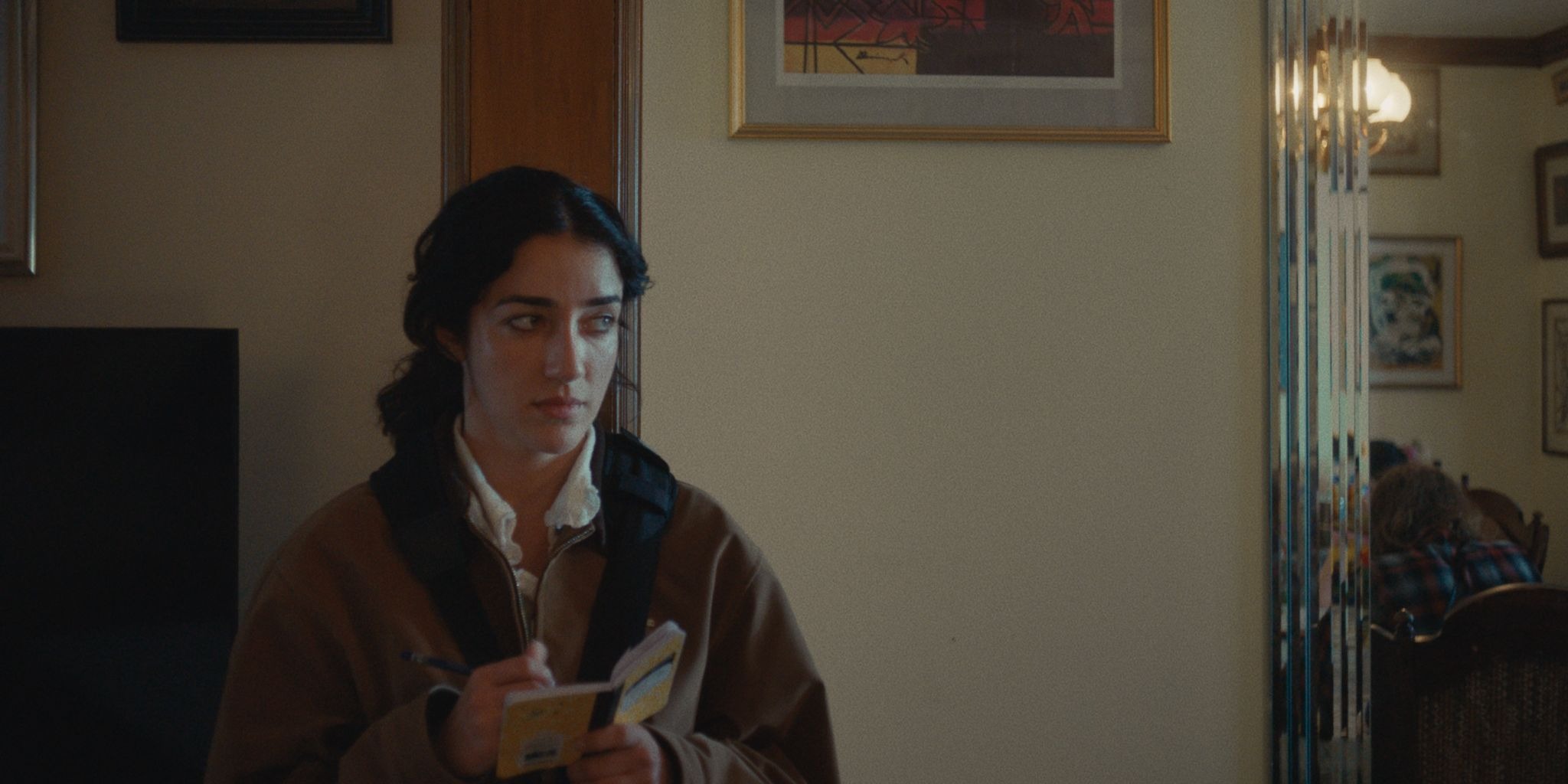
IF: Obviously, the character in [The Scout] is named Sofia, not Paula. But it’s important to understand the truth of the experiences that inspire a film like this. What was the collaborative process like of realizing the character as a unit given the true elements?
MD: Paula told me about the practical and technical aspects of it. I would ask her really simple things, like, how am I supposed to use the camera? How would you walk around the space with the camera? I think the emotional life of the character is really a product of our relationship and our trust. It’s a fusion of her and I. We didn’t really speak about that in literal ways. I don’t remember us talking that much about it. I think it was just stuff that happened as a result of working together.
PGN: It’s not until now that I’m sort of realizing we never really talked about my experiences. And we weren’t trying to recreate those experiences. We were sort of like, “Let’s have these new experiences.”
And I would feed [Mimi], like you said, technical information about what a scout would and wouldn’t do. I think that’s where I was picky. Just because we were depicting what this job entails.
But as far as how this character would react to these situations, that was its own thing. Sophia was her own character. She wasn’t me. She wasn’t Mimi. She was this fusion that we were reacting to. And if you felt like something was off, you would adjust it. If I felt like there was a technical thing, like, “Oh, she wouldn’t really ask this here,” we would take it back. Or if you wanted to make sure that a story beat was being told. Because, again, as you know, the film is just a simple following.
MD: And you would sometimes direct me if I wasn’t exactly hitting a beat you needed to get through.
PGN: Yeah, and that’s true. There’s not a lot of places to hide in this film, both in the edit and performance-wise. So a lot of it did fall on you every single take. Because we would have these long takes to nail the emotional arc, the beats, and the technical aspects of the job. We kind of had to review ourselves a lot in that way. It was really fun to not be able to hide. I think I’ve worked on so many films that are great edit-wise because they, in their shooting style, lend themselves to be able to be molded in the edit. But this film was pretty straightforward. I mean, the assembly came together in like two days.
These are the scenes, and there’s only so much coverage that we have. Does it work? And if it doesn’t, how are we going to move things around? And that was its own challenge, the edit. But it was really fun, too.
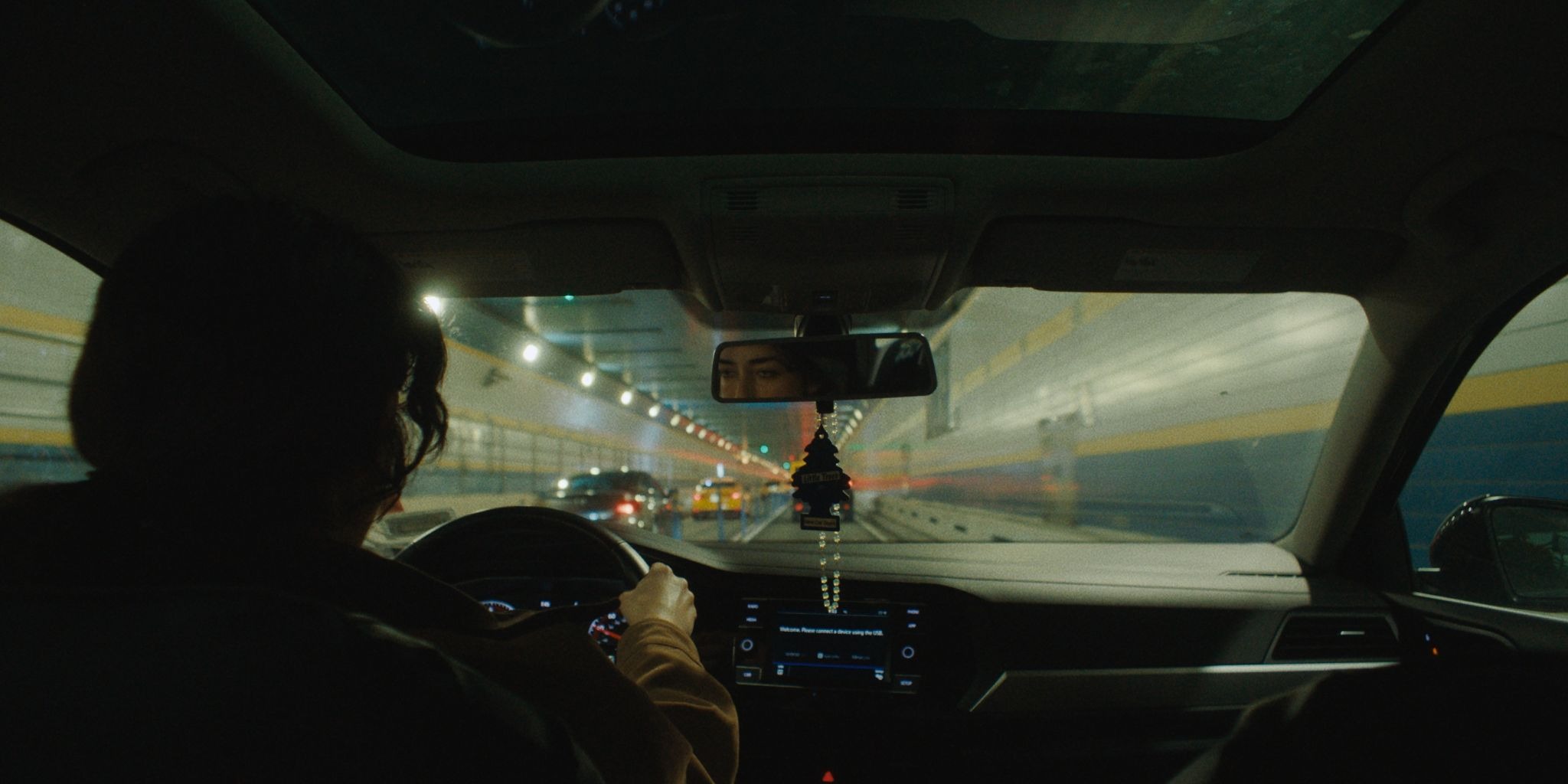
IF: How long was the shoot itself? You had the benefit of it all being set in one place, New York. Even if you’re traveling through the dreaded Lincoln Tunnel and other tunnels.
PGN: It was actually the Queens Midtown Tunnel. And that was intentional only because the Lincoln Tunnel tolls were insane. Even though I liked the Lincoln Tunnel visually more.
IF: It nearly passes as the Lincoln Tunnel, just so you know. All of the cars just happen to be going in the same direction.
PGN: Very good. Okay, I’m glad. The Lincoln Tunnel is even more constricting also. So it has this crazier feel when you’re going through it. But anyway, we shot for ten and a half days.
Five days in the first week, then a half day, then we took a two-day break. And then we did another five days.
IF: You kind of spoke to this a little bit, but the film is very much a simple following. And it isn’t so… I guess you could use the words “plot-dependent,” as another feature might be. It’s very much observational. We are just with this person. And the plot, insofar as we want to use that word, is the experience that this person is having. What drew you to that approach, Paula? And for you, Mimi, was that a unique experience as an actor? The docu-fictional, things unfolding naturally kind of narrative?
PGN: I take that as a compliment. Thank you. I’m drawn to stories like that. You know, right before we shot this, we saw [Wim Wenders’] Perfect Days. I love looking at someone’s life with a magnifying glass, no matter how insignificant a part of their life is. Because there’s so much actually underneath the surface of an ordinary day. And again, not to talk about Chantal Ackerman all the time, but that’s what she was so interested in. A woman’s ordinary day can be so charged and so political and so interesting, even though her work is often described as “nothing happens.” I think everything happens. And also, because this was always going to have to be a small film, and we were going to have to make it for very little money, I think there’s only so much that we can do within the scope that we have.
So the scope always had to be very contained. Luckily, that is what interests me. But we couldn’t… If we wanted to do her life throughout the season of this job, or through the three months that she’s starting, I think that would make the scope a little bigger and the stakes a little higher. There would be a lot more, I guess, action or plot heavy things. But when you set something in a day, how much can actually really happen? So that always drew me to it.
MD: I’m cheating right now, and I’m looking up this quote that I want to say. Okay, I’m going to botch it, but it’s about Eleonora Duse. What was said about her is the reason why she was so miraculous is that she could reveal the extraordinary through the ordinary. And I think that’s what this story does. That was very evident on the paper; the way [Paula] wrote it, it was already there. I was scared at first because I come from a background of doing a lot of character work, but my dream has always been to do something like this. I mean, this is an actor’s dream, a character study. So I was afraid because I was like, “Am I going to be interesting enough to do this?” And so it was scary. But it’s the kind of scary that you want to take on. That I want to take on.
IF: Was the experience of shooting in New York – with all the permits and red tape that comes with it – at all similar to working as a film scout?
PGN: That’s a great question. Yes, in hindsight. The shoot was very fun. I wouldn’t say it was very stressful, but it was more stressful than I often remember it to be. When you’re shooting everything in such a condensed timeline, nothing can go wrong. Or, there’s not a lot of room to change things around. Basically, what you set up that day, that’s what it’s going to be.
Filming was a similar feeling [to scouting] in that you’re going against the grain of the city. Production in New York city doesn’t really work at any scale. You’re sort of trying to take over a space that was not designed to be taken over. I mean, when you’re working on a [low-budget] shoot with trucks and campers and all this stuff, even though you have the permits and you are allowed to be there, the city is actively fighting you. You’re being disruptive, annoying the shit out of a neighborhood… And they should get upset! In the past, it was often my job to liaison for productions, but I would always be like, “Actually, these residents are right. This woman’s trying to get her baby to sleep, and here’s this 30-foot truck with an idling engine on the entire day and fumes going into her apartment. She should be upset!”
But for this shoot, it was so small. We didn’t even have to get parking permits because we just had an equipment van that we legally parked every day and everybody just took the train to set. But even that, you’re sort of going against the grain and you’re sometimes having to move during rush hour. And it’s like, “Oh, we’re never going to make it to this other place.” But as far as shooting in public, the city is great because New Yorkers are so used to seeing a camera and people filming everywhere that they’re, like, trained. They’re the perfect backdrop. All the exteriors were so easy because of that. The interiors and the private spaces were actually difficult because they didn’t already look amazing. We had to make them look good, while anything we shot outside was perfect as is. I mean, cars and bikers zooming past Mimi as she’s opening a door, it looks choreographed in a great way. and the synchronicity of like bikers was zooming past Mimi as she’s opening a door and it’s just, it looks choreographed in a great way.
IF: Mimi, how was that experience different potentially from the projects you’ve worked on in the past?
MD: The outdoor scenes, for sure. Because there’s so much life going on all the time, there’s so much to act off of. Even the architecture itself. We did a night where we were just shooting me walking and walking and walking and walking. And there were reflections, stairs, art… It really works well with the story because New York is so much bigger than all of us. It’s so grandiose. I think part of the heart of the story is how one can feel so small working all the time, being devoured by institutions and powers that are so much larger. That was very inspiring to me during the performance.
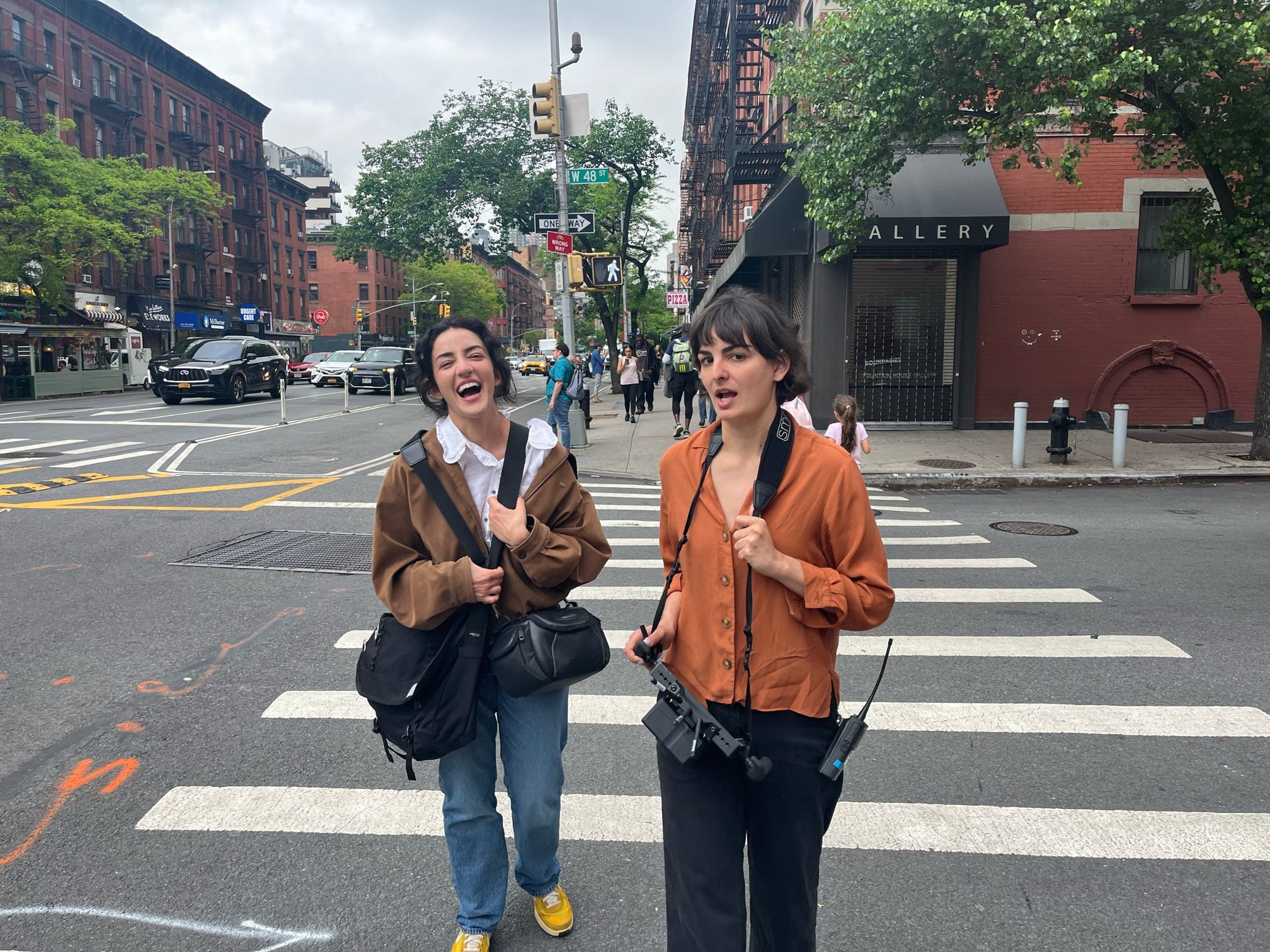
IF: Paula, do you know what you’re going to be doing next by any chance? And if so, can you talk about it?
MD: Can you?!
PGN: [Laughs.] I can definitely talk about it. The answer is I don’t know. That’s a great question. I know the idea is that you should know, but also when you’re working on a movie like The Scout, where it’s so small and everyone on the team is performing so many different roles, it is so consuming and you want to be as involved as possible – especially in your first film – to really get it out there and have it be shown to as many people who want to connect with it as possible. So I feel like I’ve just been in Scout mode for the past few years, and that’s neither bad nor good. That’s just what our life has been.
And Mimi, too. She’s been really an integral part of this whole process. We did shoot a movie; Mimi directed a film that I helped on as the first AD, so we’ve been doing that, and I’ve been working on other friends’ projects who worked on my films. We’re kind of just always working on each other’s stuff and it’s less, like, “What do I have in the works now?” My producer Ryan [Martin Brown] shot a feature that we’re editing now. I just like to work that way. Until I have something that I’m like, this is what I want to devote four years of my life to, I’m kind of a little bit like, “Let’s pump the brakes and really decide what we want to give our time to.” And I feel like I still have so much to learn just from this film. I am learning so much from it and what worked and what didn’t and what it is that we even want to do next. I know I want to work with Mimi again! We have talked about several ideas that we could shoot, not even in New York, but maybe in Florida where we’re both from. So hopefully something like that is what’s next, but we’ll see.
IF: It was last summer, 2025, when The Scout officially premiered. It’s now the fall of 2026. I would love to hear from both of you what it’s like to finally have the film enter the world officially where people get to see it.
MD: It doesn’t feel that long for me because I think it’s also rare. We shot it in 2024. Sometimes you work on a movie and you’re like, where the heck did it go? Like, it got caught up in the edit, or someone got into a fight, the producer left the company… You don’t know what happened. So the fact that it got made, edited, and premiered in a very timely fashion and is getting a theatrical release, I’m like, this is amazing.
PGN: I second Mimi. It has felt like a long time that we’ve been breathing and living this movie, but at the same time, our edit timeline was actually… I wouldn’t say fast, but for a film where you’re all doing everything and your producer is also your editor and they’re trying to live and pay rent, it was pretty fast. That we got to premiere it at Tribeca is so special, but I think what’s really breathing so much life into it is just how excited our distributor [Greenwich Entertainment] has been. And the fact that Film Forum wants to show it is making me excited about it all over again, like we’re just showing it for the first time again. We’re really grateful.
The Scout is now playing exclusively at New York’s Film Forum. It will expand into further cities and theaters in October.