



Directors: Chuko and Arie Esiri
Writer: Chuko Esiri
Stars: Sophie Okonedo, David Oyelowo, India Ria Amarteifio, Toheeb Jimoh, Ayo Edibiri
Synopsis: A Lagos society wife prepares for a party while reflecting on her youth and the choices that led her to marry a respected man instead of her poet boyfriend.
Did we ever get an answer to the age-old question “who’s afraid of Virginia Woolf?” Not concretely, though the best answer may exist in the great author’s own writing: Her characters, more than likely. High-class intellectuals of all ages, Woolf’s creations were written to walk a psychological tightrope above a field of emotionally disruptive land mines rather than mere thorns. Their lives, routinely thrown for a loop by the feelings of those in their circles, presented as challenging primarily in the context of interpersonal relationships, as well as one’s connection to the world around them. None of Woolf’s novels did it quite as successfully (nor famously) as Mrs. Dalloway, the tale of a society woman who reflects on choices that have led her to her present existence while dating back to her teenage years, those of long summers and young, complex love. It’s a text that is practically begging to be adapted; it has inspired precious few attempts and even fewer successes.
It was probably the appropriate time for that trend to be bucked, and for it to come in the form of a reimagining as elegant and sharp as brothers Chuko and Arie Esiri’s Clarissa is a gift one shouldn’t reject based on its apparent quietude nor simple pleasures. The Esiri’s second feature – following 2021’s criminally underseen Eyimofe: This Is My Desire – certainly has those qualities in spades, but what it lacks in volatility it more than makes up for in gentle consideration of its characters to the point where they are tangible beings, not realizations left on the page. Much of what made Woolf’s novel such a beguiling, renowned text was its uncanny ability to turn a style that mirrors one’s stream of consciousness into a universal experience. The Esiri twins expand that framework into something uniquely cinematic and contemplative; their vision of Mrs. Dalloway is one propelled forward by what its characters are not saying more than what they are, internal monologue or not.
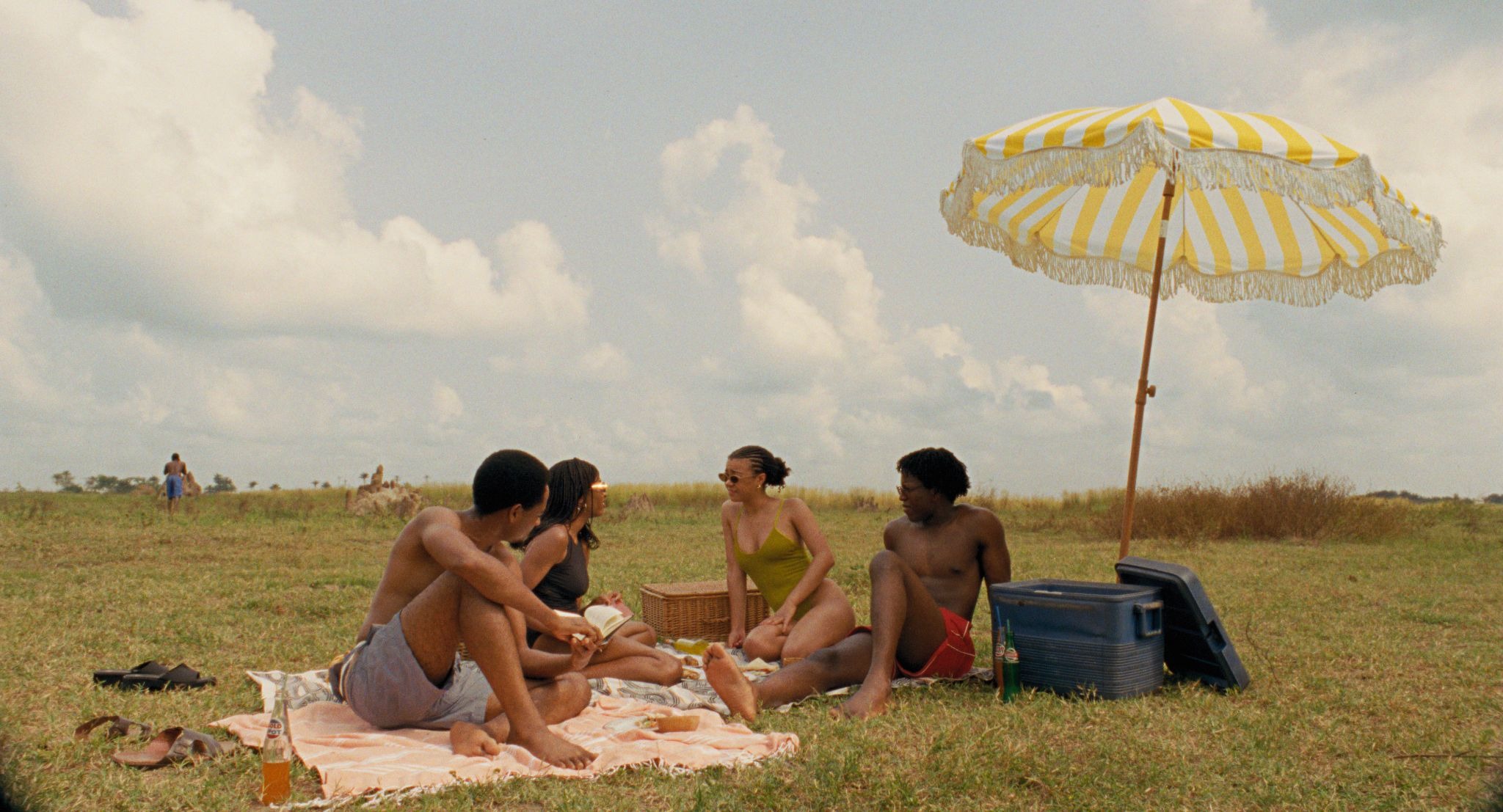
Played as an adult by the ever-transcendent Sophie Okonedo and as a young woman by an enchanting India Ria Amarteifio, our titular character evolves from a teen basking in the spoils of a semi-charmed life to a woman of the house tasked with the tedious to-dos of party preparation, though her exasperation at said tedium appears to be preinstalled, a symptom of a life still charmed but hardly exciting. In her youth, Clarissa was curious and well-read, a lethal combination that drew the similarly creative Peter (Toheeb Jimoh) to her orbit like a moth flutters toward a flame; in the present day, having married the more sensible man (Jude Akuwudike) and leaving her childhood will-they-won’t-they (David Oyelowo plays adult Peter) to forever wonder “why didn’t they,” Clarissa is at a loss, but not one she’s willing to express in words. It’s her attitude that leaves her emotional state vulnerable, whether she’s snapping at her household/kitchen staff or trudging through the day with regard only for the errands that need completing before the guests arrive.
Okonedo is astonishing here. Only half the film is hers, given the Esiri’s eloquent toggling technique that seamlessly shifts from one time period to the other and back again, but her air reverberates throughout. Even as we watch her younger counterpart navigate adolescent confusion about what and who is right for her – an inner conflict that is only intensified by the connection she shares with Sally, played by Ayo Edibiri and Nikki Amuka-Bird in the two timelines – we long for Okonedo’s interpretation of how the past has impacted her in the present. Her time on the periphery is not a weakness of the film, rather a recognition of an undersung performer’s immense talent. That the Esiris know precisely when and how to wield her poise is an even greater asset, something only Janet Planet’s Annie Baker has adequately done in recent memory.
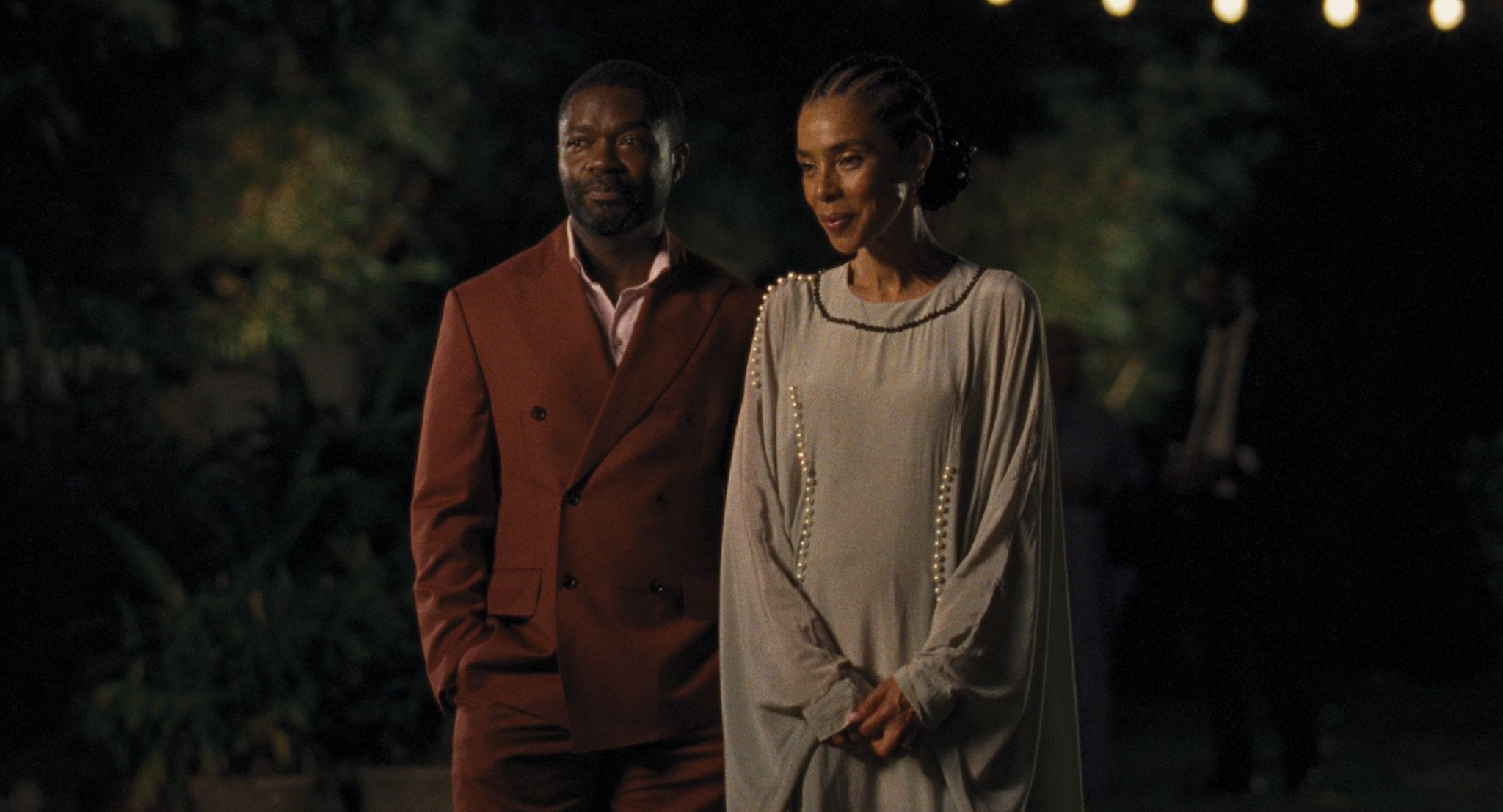
Even stronger is how the co-directors weave in the elemental presence of Septimus (played by the revelatory newcomer Fortune Nwafor), a young military officer whose post-traumatic response to a violent conflict with the jihadist group Boko Haram while serving in the Nigerian army has left him vacant, a soul housed within a body yet maintaining no connection to one another. That Nwafor hardly says anything in the film makes the performance that much stronger, and his unspoken link to Clarissa haunts an otherwise dreamlike picture like an indescribable nightmare. Often donning a tank top and glistening with sweat, Nwafor’s physical turn works wonders with Jonathan Bloom’s 35mm cinematography, an actor and a craftsman playing off one another’s gifts like partners in a dance routine. This tends to go for how Bloom films the entire cast, like when Amarteifio and Jimoh are in close proximity and the choreography turns sensual with the perfect touch of restraint, but it’s particularly astonishing when Septimus is our focal point.
It would be expected for a film called Clarissa, similar to a novel called Mrs. Dalloway, to only allow its nominal subject to ever truly take center stage, yet Chuko Esiri’s intricate screenplay affords opportunities for all. The sophomore feature would not nearly be as strong without it, though its resounding sense of connectivity should also be credited to its movement from London to Nigeria, from a community dominated by individuals to one populated by families, blood or otherwise. The essence of Mrs. Dalloway and Woolf’s sensibilities remain, but Clarissa is entirely a story of its own merits. One can only hope that the Esiri brothers carry the eloquence of their ambitious effort here into the future, but it’s worth basking in the present for a while. The past will always be there, but in the end, moving forward is all we have.
Clarissa had its U.S. premiere at the 64th New York Film Festival. NEON will release it in limited theaters on Dec. 11.