



Director: Taratoa Stappard
Writer: Taratoa Stappard
Stars: Ariana Osborne, Toby Stephens, Umi Myers
Synopsis: A Maori Gothic Revenge Horror set in Victorian England, 1859.
Gothic horror film Mārama, writer-director Taratoa Stappard takes familiar elements and reframes them through an Indigenous perspective, crafting a film that is as much about historical reckoning as it is about spectral terror. The result is a genre-bending work that is visually striking, thematically ambitious, and unconventional. As the first co-release between Dark Sky Films and Watermelon Pictures, Mārama signals a commitment to bold, boundary-pushing storytelling. It may not be a flawless execution, but it is a striking and thought-provoking one.
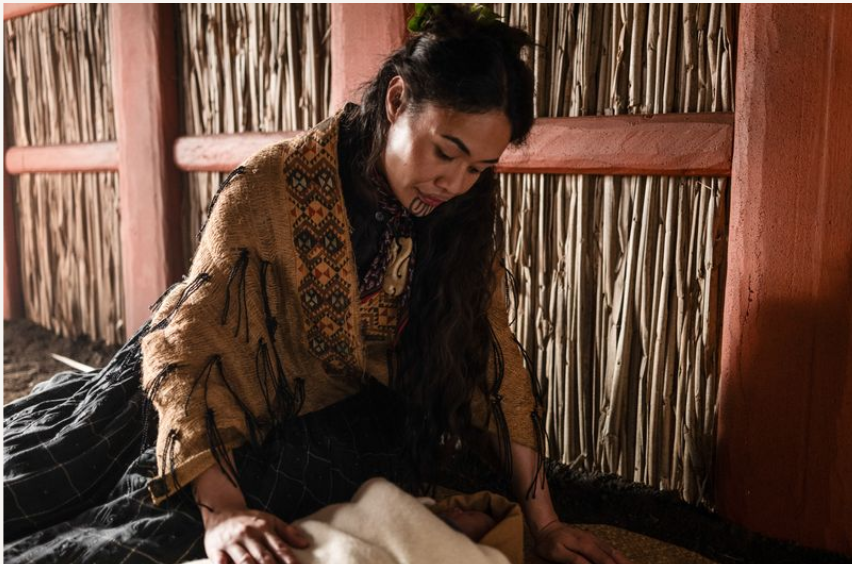
Set in North Yorkshire in 1859, the film follows a young Māori woman, played by Ariāna Osborne, who is summoned from Aotearoa (New Zealand) to England. As she uncovers the truth about her family’s past, her journey into the unknown becomes far more unsettling. She is forced to confront not only a legacy of colonial violence but her deeply personal connection to it.
Osborne’s performance carries the weight of the narrative with intensity, allowing grief, anger, and resilience to surface naturally. Her excellent and compelling performance is one of the many reasons to watch this film. The supporting cast adds texture to this world, all with an unnerving chemistry that will keep audiences guessing. Toby Stephens brings a measured menace to his role as the Englishman tied to the protagonist’s past, embodying an authority that feels both refined and deeply unsettling. Umi Myers and Erroll Shand round out the ensemble with performances that, while occasionally underwritten, contribute to the film’s broader sense of unease.
Visually, Mārama leans into gothic tradition while subtly subverting it. The Yorkshire setting is rendered in muted, cold tones, vast landscapes, austere interiors, and looming architecture that feels almost sentient in its watchfulness. Yet these familiar aesthetics are disrupted by the presence of Māori cultural elements, creating a visual and thematic tension that runs throughout the film. The result is a kind of cultural dissonance that mirrors the protagonist’s own experience. In this, it’s beautifully clever.
From natural sounds of the ocean to hearing every heavy breath, the stillness keeps the film grounded. There are classical, striking violins and soft piano sequences to help drive the scenes along. As dialogue can be sparse, we’re observing the actors and the visuals around them. But what is most intriguing is the local indigenous singing, which is both beautiful and powerful.
The “haunting” in Mārama is not just supernatural, but historical. Colonial violence is treated as an active force. This approach gives the film a weight that elevates it beyond standard gothic fare, even if it occasionally struggles to balance its ideas with narrative momentum. The film is, of course, very dimly lit, building a strong sense of tension and intrigue. There are one or two jump scares that might catch you out. Spoiler: there’s a scene with a mirror fairly early on that caught me off guard. A typical horror trope, but it was still effective.
The pacing can feel uneven, particularly in the middle act, where the film lingers on atmosphere at the expense of progression. While the slow burn enhances the sense of dread, it also risks diluting the urgency of the protagonist’s journey. There are moments where the story feels caught between introspection and escalation, never fully committing to either.
Additionally, the film’s blending of genres, gothic horror, historical drama, and revenge narrative, doesn’t always cohere seamlessly. Some transitions feel abrupt, and certain plot developments arrive with less impact than they might have with tighter structuring. Yet these rough edges are also indicative of a film willing to take risks, to push beyond the confines of a single genre.
By centering an Indigenous voice within a traditionally Eurocentric genre, Mārama reshapes the conversation around who gets to tell these stories, and whose histories are allowed to haunt them. It’s a film that asks its audience to look beyond the surface-level chills and consider the deeper, more uncomfortable truths embedded within.In the end, Mārama is a stylish Gothic horror, filled with tension and suspense. The film challenges and reshapes the gothic genre, leaving behind an eerily unnerving feeling. With themes of identity, family, love and loss, this is a perfect film for fans seeking more meaning from the genre.