



Director: Jafar Panahi
Writer: Jafar Panahi
Stars: Vahid Mobassari, Mariam Afshari, Ebrahim Azizi
Synopsis: A small mishap triggers a chain reaction of ever-growing problems.
Jafar Panahi is a punk filmmaker, not in the stylistic or aesthetic sense of Derek Jarman with Jubilee or Alex Cox with Repo Man, but in spirit and attitude. Since the beginning of his career, Panahi has been a bold and brave director, often navigating the censorship and restrictions imposed by the Iranian regime in his films. He’s resilient and determined to tell these stories and share the injustices many people living in Iran and the Middle East face daily, which has gotten him in a lot of trouble, including arrests and imprisonments. However, through unconventional filming methods, Panahi has managed to convey his messages to the world on the big screen. Each of his pictures is a testament to his fearless persona, in which he addresses his current predicament and speaks about the need for justice for the Iranian people. Whether in house arrest or unable to leave his country, Panahi made films in his way, the punk attitude showing through each scene.
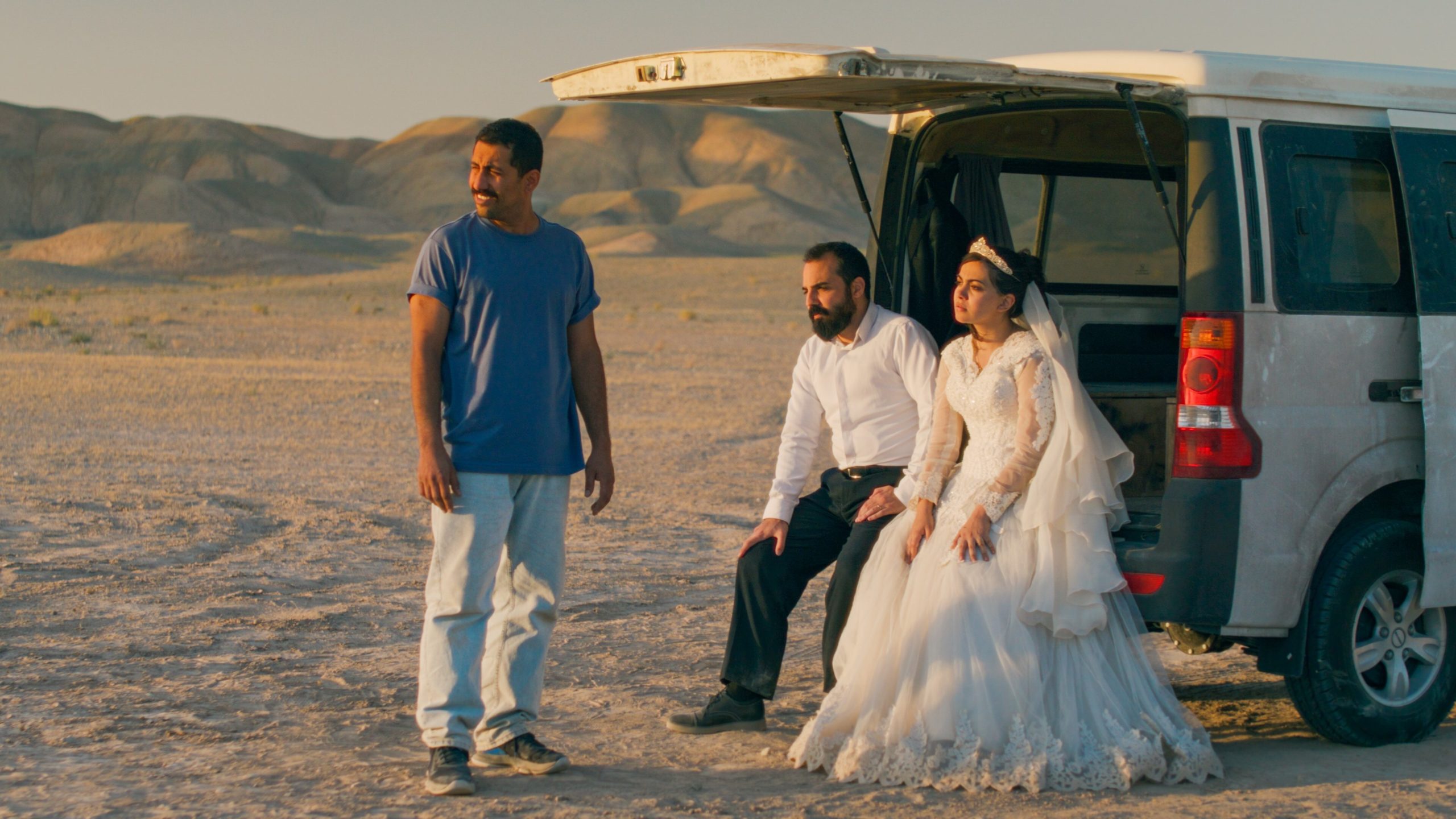
Now, after many years of being under surveillance and arrested, he presents us with his first “free” film in a long while, and it is as bold as before and critical as ever. It Was Just An Accident (Un Simple Accident, screening in the Piazza Grande at the 2025 Locarno Film Festival and the most recent winner of the Palme d’Or) may not be his most accomplished work, but that does not matter in the least. What is important about Panahi’s latest, outside of its message, is the composition of the project itself – even in freedom, he still defies those suppressing forces that have stripped Iranians of their humanity, with a narrative that feels like it has been a long time in the making, a social critique bolstered by angst and noncompliance. There was a nice moment at the Cannes Film Festival where, as a surprise to everyone, he appeared, and everyone stood up and applauded the man. We all know his story and his legacy as a pioneering, punk cinematic figure. At that very moment, I knew something special was amidst us.
Like some of Panahi’s pictures, Accident begins in a car, where a man (Ebrahim Azizi) is driving his pregnant wife (Afsaneh Najm Abadi) and daughter back home in the dark of night. The streets are all empty, and the darkness covering them provides an ominous atmosphere wherever they travel. You begin to suspect whether they are heading to their house to rest, or if someone is following them and they are trying to escape the situation. This uncertainty during the film’s introductory passage paves the way for the other narrative beats, where doubt and disquietude fuel the characters’ every move. It all comes together through a series of conveniences, which causes them to think twice (or thrice) about their decisions. The first one, the simple accident from its French title that sets the path, is that the man hits and kills a dog with his car.
From there, he heads to a warehouse near the accident site to investigate some trouble with their car. The worker at the warehouse recognizes the sound of the man’s prosthetic leg. The squeak perturbed him, shaking him to the core. This is why, after fixing up the car, he silently follows him to his house. The next thing you know, the worker knocks out the man and ties him up in the desert. That worker is Vahid (Vahid Mobasseri). Vahid believes that the man he abducted is Eghbal (known as “Peg Leg”), an officer who spent months torturing him during his imprisonment. Panahi reverses the roles, turns the tables, and makes us think about the characters’ moral ambivalences, whether it is true that Vahid has captured the right man or abducted an innocent bystander and turned to violence when potentially facing the man who beat him repeatedly as a form of revenge.
The seemingly simple accident that began the film has now evolved into a complex and ethically charged scenario. The man says that his prosthetic leg is from an accident from the previous year, and he has the fresh scars to prove it. However, Vahid is still convinced that he is indeed the one who tortured him. The only source of information to confirm his identity is a mere sound, as Vahid was blindfolded during the times he was mistreated and beaten. Facial recognition can’t be made. That is why Vahid drives around in search of someone who can help him identify Eghbal. He comes across a wedding photographer, Shiva (Maryam Afshari), her ex-boyfriend, Hamid (Mohammad Ali Eliyas Mehr), and the couple she’s currently photographing, all to sort out this situation. Every one of them has been mistreated, one way or another, by the hand of Eghbal, holding onto that pain and trauma to this very day. They have nightmares about their harsh experiences, scarred for life, and unable to shake the suffering away.
What will be the man’s fate? They still don’t know if that is truly Eghbal. So, where does that leave them? From place to place, these people search for answers and remain in the same spot from which they began, full of doubt and anger. But as the day keeps going, they begin to crack; their thirst for vengeance diminishes, and signs of mercy are shown. The group considers the “impossible” act of forgiveness. It Was Just an Accident thrives on that dilemma, where strangers, tied by a lingering suffering, are stuck in a void where morals and ethics are constantly shifting to reveal hard truths and saddening realities. Vahid and those who accompany him await redemption for what happened in the past, yet that redemption never arrives, and they must confront that reality. The opportunity then arises for them to expel their woes, sorrows, and grievances. Through Panahi’s canvas and the purgatory-like desert plains, they resound loudly, resulting in an equally liberating and exhausting experience for the characters and a confrontational one for the audience watching.
“I had a guilty conscience, but became used to it with time” is one of the lines in the finale that details the adaptability to wrongdoing, as the potential former captor grew comfortable with actions as time went by. At the same time, Panahi in Accident does not let the outrage fade over time, keeping the injustices highly visible and present. There are a few moments of “levity” with some slight jokes, and it adds some relief to the situation for the viewer. However, that element in the film does not detract from the edge and urgency of Accident. Many have tried to silence Jafar Panahi, but no matter how hard they try, he remains undeterred. Each time around, Panahi gets louder and angrier. This is the reason why we must protect and cherish someone like him, a filmmaker and activist who uses the medium as a means to deliver dissertations on the political climate in Iran. He’s a filmmaker who is as ungovernable as his cinema.