


Director: Radu Jude
Writer: Radu Jude
Stars: Adonis Tanța, Gabriel Spahiu, Oana Mardare, Ilinca Manolache
Synopsis: In modern-day Transylvania, vampire hunts and labor strikes collide with sci-fi twists, romance, and AI-crafted tales, as multiple storylines blend folklore, classic horror, and contemporary elements into a fresh take on Dracula’s legend.
Since some filmmakers have opted to use artificial intelligence in their projects, people—film critics, cinemagoers, and filmmakers alike—have been openly, and justifiably so, criticizing them for their actions against art and the beauty of the creative process. Everything about AI, in any sense, is rid of humanity and ideas; it is all fake and pure dribble. Many within the film industry have expressed interest in working with this new technology, which has been met with dismay by many. Others have openly criticized them to the point where some have even made films about such an inclination towards AI in cinema. One of them was French director Quentin Dupieux, known for consistently creating withering and hilarious satires about modern-day living and pop culture, with his latest work, The Second Act (Le Deuxième Acte).
In said film, four actors–formed by a quartet of France’s top talent: Léa Seydoux, Louis Garrel, Vincent Lindon, and Raphaël Quenard–are put through hell and back in the set of the first film written and directed by artificial intelligence. This blurred the lines between reality and performance, with the AI influencing the creative expression of the actors and their public image regarding their involvement in a project led by this technology. The satire, although interesting on paper, didn’t develop into a substantial exploration of the topic and became quite repetitive. Enter Romanian provocateur Radu Jude, never one to shy away from commenting on any subject. He has decided that it is his turn to throw his hat in the ring against AI.
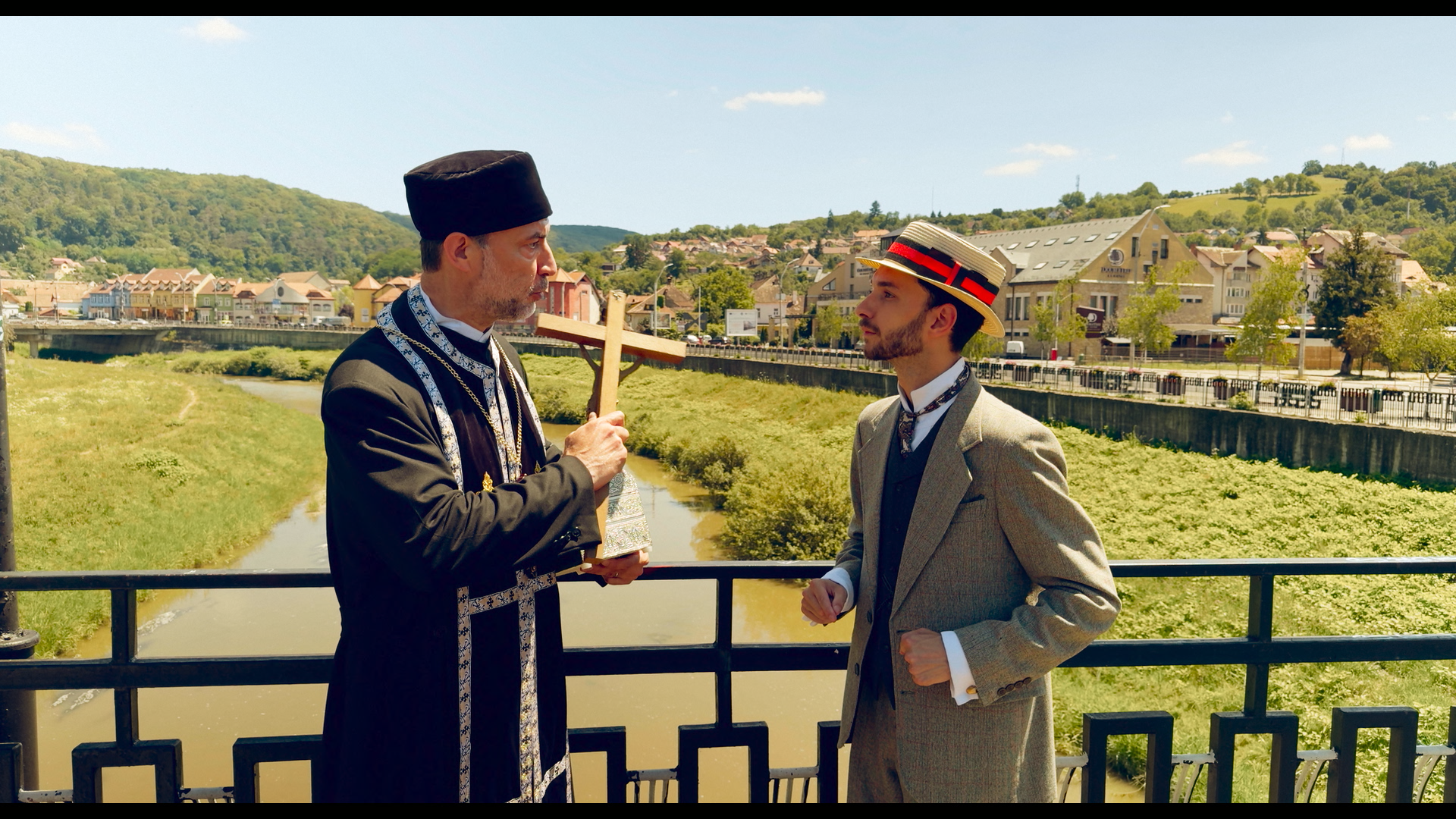
In Dracula (screening in the Concorso Internazionale at the 2025 Locarno Film Festival), his three-hour dissertation on generative AI, the vampirism of capitalist societies, and Romanian history, Jude, as always, places a boatload of ideas and commentary on current and ongoing situations. All seen through some provocative and creatively manic scenarios that few filmmakers have the gall to opt for. While some jokes and quips do lose their effect amidst the demanding structure and runtime, there are major props to be given to Jude and his team for being upfront about the topics at hand and bold as ever. Dracula is divided into fourteen chapters, narrated by a film director (whom Adonis Tanța also provides the voice for) meant to serve as a surrogate for Jude.
These chapters cover a range of topics, but they center on the central theme of vampirism – someone or something preying on the unsuspecting, consuming the humanity of those in these respective situations, whether political or art-related. The director is currently at a loss for ideas for his new film about the classic titular monster. This creative block has driven him to the point of considering bankruptcy and seeking help from artificial intelligence. He seeks the least artistic and unethical approach to conceive a project. To his assortment of immoral producers, this director reveals each pitch generated by Chat GPT to them, which includes a Dracula TikTok, where we see how the vampire would behave on social media, an erotic musical theater, and The Office-like workplace satire.
Each of these pitches, and the many more presented, captures the abhorrent nature of work produced by artificial intelligence. You never know what to expect. Each segment of Dracula begins on a high note and evolves into an even more ballistic, hysterical, and utterly strange commentary. It starts with AI-generated images of Dracula, accompanied by vulgar and raunchy quotes. This barrage of images sets the tone and establishes the satirical texture of the film. But by the time you get to the story of a farm-woman and what grows in her cornfield, you may have thought you have seen it all from Jude. Never have you seen him in this unrestrained fashion, where he comes up with the most ridiculous things and gets away with it because it all adds up to a wonky yet ultimately fascinating thematic thread.
This isn’t the first time he has utilized the collage structure as the backbone for his satirical portraits of modern society. The Golden Bear-winning Bad Luck Banging or Looney Porn also incorporated this element into its story, albeit not to the same degree as his latest. In the film, Jude discussed hypocrisy and societal judgment in Romanian society. It is fragmented, utilizing archive footage and his film scenes to illustrate the various ways the media shapes people’s perceptions. The “scandalous” event that sets the story in motion develops into something far more unsettling and provocative. In Dracula, Jude delves even more into prodding the audience, with dashes of exploitation smeared around each chapter.
This exploitation comes with reason. Radu Jude ties vampirism with the higher powers (business people, producers, politicians) plaguing society and exploiting the rights of every human. Add that to the double-edged sword use of generative AI in the film–a part of his critique towards its use in cinema, but he has a “necessity” of using it to make his point–and you have a project that will easily make many viewers mad or feel entirely bothered. However, the two films, Bad Luck Banging and Dracula, become muddled with their overemphasis on each satirical quip and play in image. Nearly three hours long, Jude presents us with one comment after another that is easy to become exhausted by, especially when many of them repeat a previous point made earlier, only done more exaggeratedly. Yet, since the whole ordeal is so absurd and madly creative, you decide to go with what Jude brings your way, even if it becomes frustrating.
Like before, everybody is liable, from the actors to the subjects of the jokes, and it adds to the limitless expression of Jude’s filmmaking. He never cares what everyone thinks; Jude just rolls with it, and if anybody is bothered, well… he did what he intended. Dracula is a satirical epic that holds no punches and leaves no room for breathing, where people are heckled, and the viewer is provoked. It isn’t his most thought-provoking work in his lengthy, audacious career. But Dracula marks a point where he is tired of things going the way they are, and why people must remain vigilant about corrupt politicians and the bankruptcy of AI. For all its flaws, Jude’s fearless boldness and dynamism ensure Dracula stands out in his oeuvre.