



Director: Sophy Romvari
Writer: Sophy Romvari
Stars: Eylul Goven, Amy Zimmer, Iringó Réti
Synopsis: A family of six settles into their new home on Vancouver Island as internal dynamics are slowly revealed through the eyes of the youngest child.
Throughout her young career, Canadian filmmaker Sophy Romvari has dedicated herself to exploring her and her family’s history through meditative shorts that encapsulate the feeling of being at a distance in life. Whether induced by grief after losing a loved one or loneliness from fragmentation, Romvari confronts herself in her work to communicate what she holds deep inside, resulting in a haunting and emotionally relieving experience for the viewer–a weird contradiction that just outright moves you. Through her memories and the stories shared, we ponder our own families and grievances relating to such; what begins as personal portraits becomes a collective mirror into our own experiences.
The two shorts of Romvari that I enjoy the most, Still Processing and It’s Him, both stories about grief and the importance of images (and how they move us), remind me of a film that, ever since I saw it, I haven’t been able to get out of my mind. And that’s Lucy Kerr’s brilliant debut, Family Portrait (which also played at the Locarno Film Festival two years ago). A collective experience of a family photo, a token of remembrance, transpires to a melancholic outlook of lost time and affliction in Kerr’s picture, where she has her lead (played by Deragh Campbell) trying to catch the “uncatchable”–time through portraits and moments through moving images. And I believe Romvari is doing the same with her work, in both her documentaries and fictional stories.
She tries to freeze time in her pictures and make those moments she couldn’t bask in more into immortal ones, thanks to the effect cinema has. In addition, they serve as an examination of lives before her own. Her feature-length debut, Blue Heron (screening in the Concorso Cineasti del Present section at the 2025 Locarno Film Festival), follows the cinematic pattern that Romvari has been pursuing in her career so far. By utilizing her family history as the foundation for her film, Romvari sparks conversations about memory, the passage of time, and the beautiful, ominous mystery of the details that remain, all viewed through the eyes of a child experiencing a significant change in her young life, serving as a surrogate for the director.
In Blue Heron, a Hungarian family of six settles into their new house in a neighborhood outside Vancouver, as seen in the film’s remarkable opening shot, which hints at ghost story-adjacent voyagerism – the audience as spectral figures who see and hear things they aren’t supposed to. Accompanying the opening shot is a line that paves the way for the film’s second half and Romvari’s dissection of unearthed memories, tying together the past through cinema. The line refers to Sasha, the younger child in the family, being unable to remember much from her childhood; her memories are blurred by tragic events, new horizons, and blundering experiences that hindered her young mind and heart, only for her to try and piece them together years later.
The parents of the family (played by Iringó Réti and Ádám Tompa), who remain unnamed, have relocated for a fresh start. The cause of the move is undetermined, but one suspects that one of the reasons is the self-destructive behavior of the eldest son, Jeremy (Edik Beddoes). The mother and father don’t know how to address the situation to their children, which is why they occasionally talk in their native Hungarian language to avoid their English-only-speaking children–sons Henry (Liam Serg) and Felix (Preston Drabble), and daughter Sasha (Eylul Guven)–getting worried about his worsening condition. However, the kids still notice that something is wrong, and helping him becomes a daunting task.
Rather than opting for the clichés of films about parents and their troubled children, Romvari ensures that Jeremy is empathetic; she does not want Jeremy to be mistreated by the audience because of his psychological issues, or to dwell on the over-sentimental quandaries that come with the dramatic heightening of the material. Romvari remains truthful and grounded, without the need to pound the hammer of overwrought insincerity. The Canadian filmmaker focuses mainly on the toll Jeremy’s behavior takes on the family rather than the actions, allowing a space for the characters’ (and the audience’s) meditation on the matter, and how varying these perspectives are.
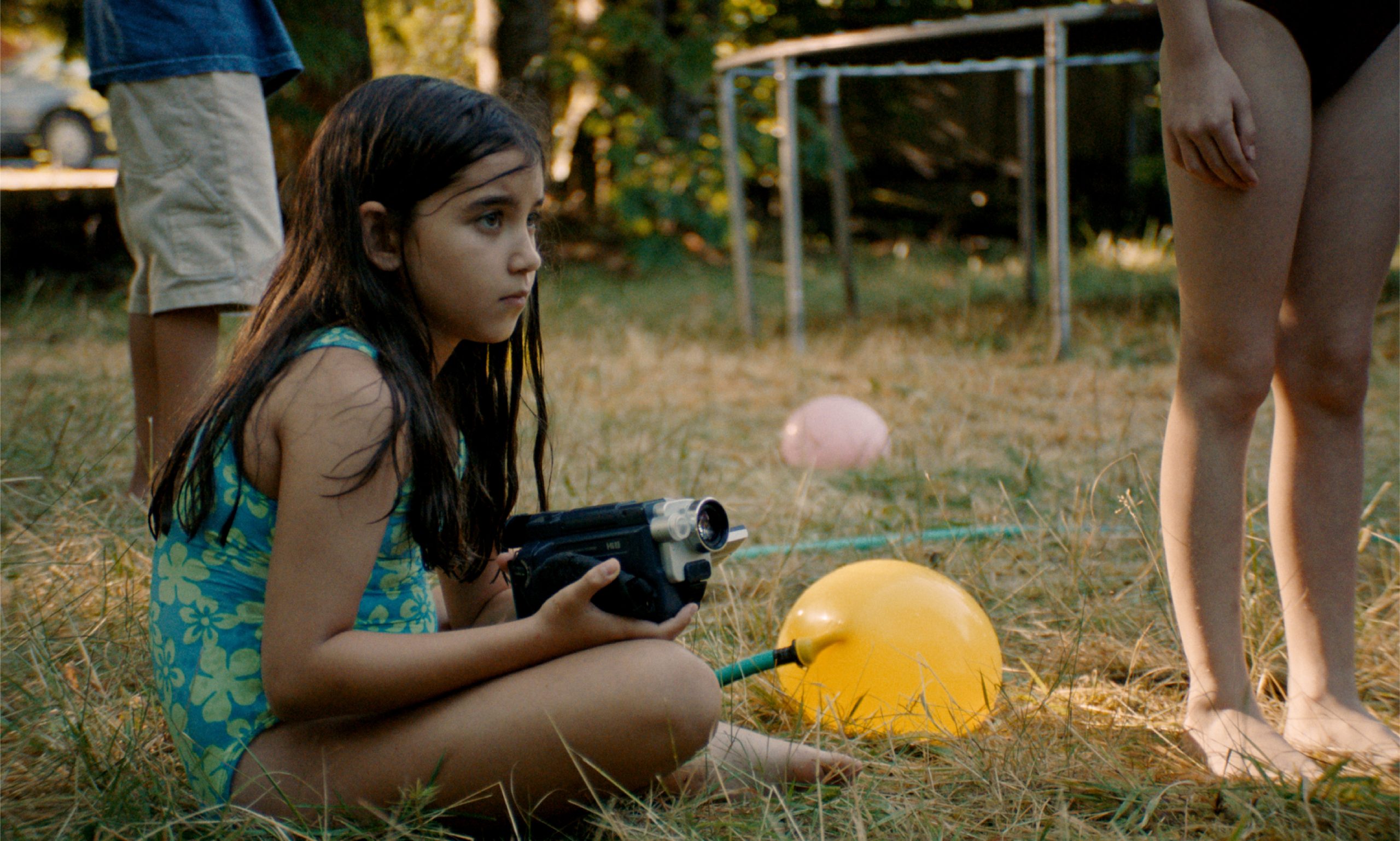
A young child in Sasha, who hears and sees things she doesn’t understand wholly but slowly comprehends the weight of it all; parents who try their best to attend to his needs, yet can’t because they need to care for their other three kids; the inability of affording proper treatment to get a diagnosis for Jeremy’s behavior. The first half of Blue Heron is marked by this toll of being unable to act, becoming an emotional experience with each moment of silence or burst of pain. There are moments when Sasha’s parents utilize a camera to take photographs of happy moments they would like to preserve in time–the camera, a key tool of immortality, and Romvari’s gadget for self-reflection and remembrance in her cinema–and frame them as stamps for when the dark cloud of bereavement didn’t strike.
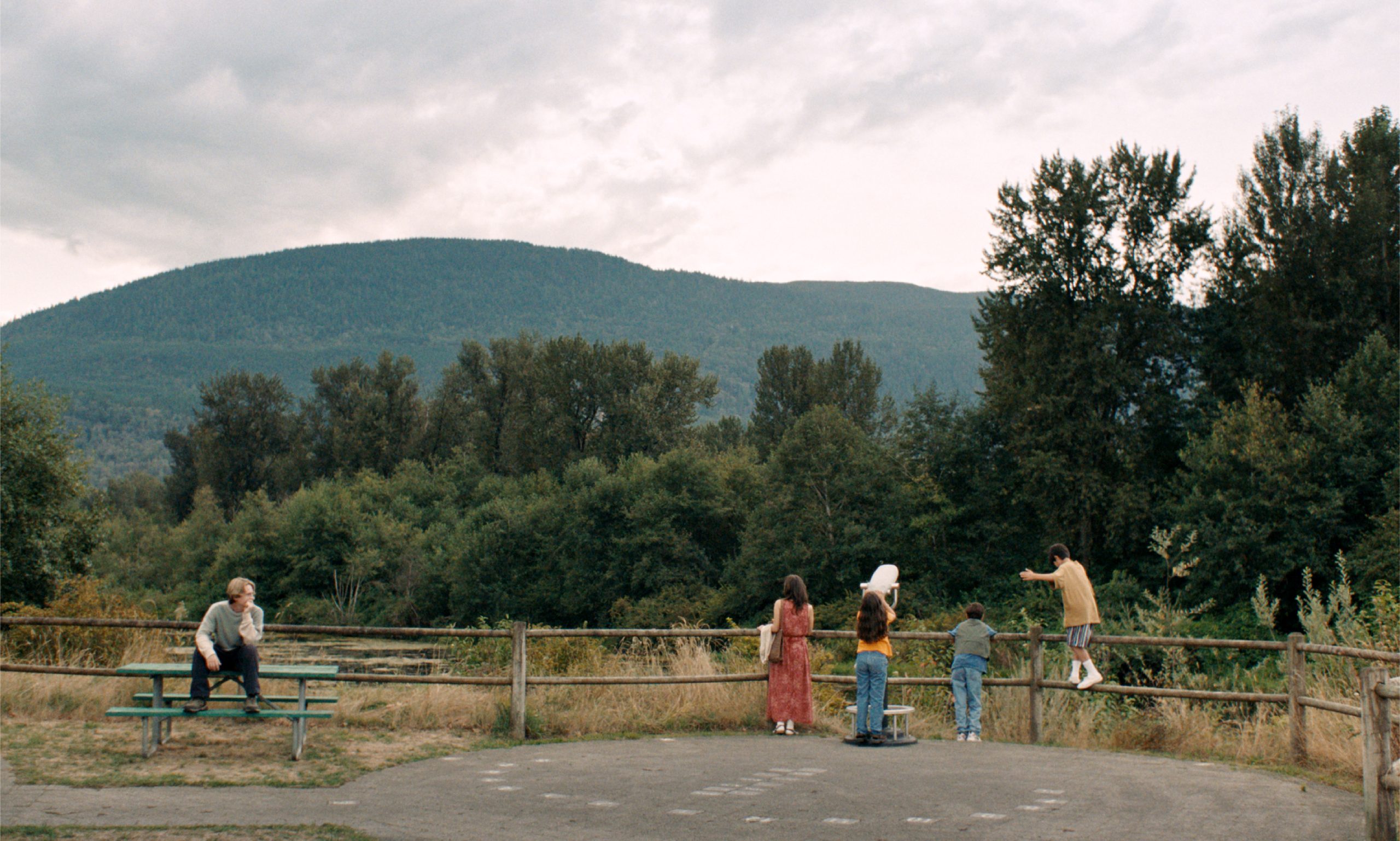
Nevertheless, the darkness from the household always finds its way into the picture, much like the aforementioned Family Portrait, where a family takes quick snaps of moments in bright, beautiful places yet can’t erase the sadness that comes from within them. (Or, as another example, one of the most shattering moments in Steven Spielberg’s The Fabelmans: Sammy Fabelman filming while his parents enter a serious argument, never noticing his ignorance until very late.) The coldness of glancing at pictures… decades later, you look and think back on what happened during, before, or after such events. Sometimes, there is bliss; on other occasions, it is quite the opposite. That is what Sophy Romvari has done with her work so far and in her debut picture.
She reflects without nostalgia and ponders on the root of photographs and moving images. What does a camera signify if not a capsule of tokens of life? The second half of Blue Heron explores this search for meaning in the remnants of distilled images. Sasha (now played by Amy Zimmer), twenty years having passed, reaches out to ghosts from the past and spectators from her present for answers about Jeremy and whether there was a way to change things back then. It is a search for truth through testimonials and archive footage, which makes the film operate from the perspective of a repair technician, fixing up a camera to restore past experiences.
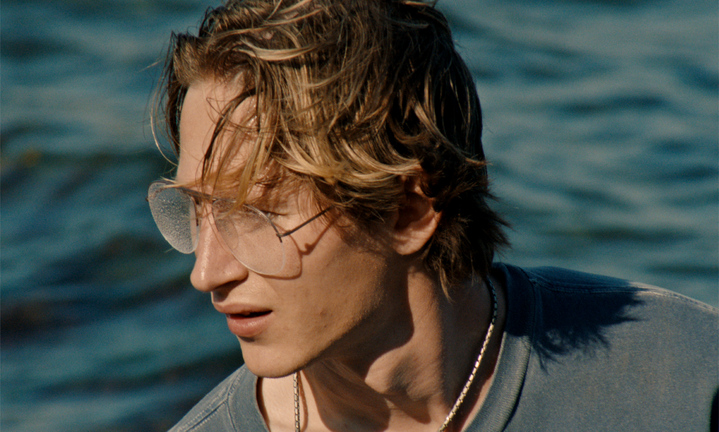
As the film heads toward a moving, chilling finale, Romvari lays out her final reflections with care and honesty. The search through photographs and testimonials becomes an act of both reckoning and healing for Sasha and Romvari. This is an attempt to piece together fractured memories and understand her past from multiple perspectives. The images we see and the stories we hear preserve and distort Sasha’s memories. But through the distortion lies truth, and it shapes her present. Blue Heron is patient and passionate, often allowing the audience to bask in the coldness of the unfolding situations instead of letting the warmth envelop the cinematic passages. The bittersweet impression in the film’s climax stings plenty because of that. However, Romvari makes it crucial for us to understand the impact and importance of being swayed by our past, whether in joyful moments or those we would like to forget, and the pictures—mental or physical—we carry with us on our journeys across time.